Understanding ACOS: More Than Just a Metric
For any Amazon seller using sponsored ads, Advertising Cost of Sales (ACoS) is a critical performance metric. Calculated as (Ad Spend / Ad Revenue) * 100, it represents the percentage of sales revenue spent on advertising. While the common goal is to lower this number, chasing the lowest possible ACoS can be a strategic mistake. An extremely low ACoS might indicate that your campaigns are too restrictive, missing out on broader audiences and sacrificing significant sales volume.
Conversely, a high ACoS isn't always a sign of failure. During a product launch or a campaign to dominate a category, a higher ACoS can be a necessary investment to rapidly increase sales velocity, improve Best Seller Rank (BSR), and gather crucial early reviews. The key is to stop viewing ACoS as a simple score to be minimized and start treating it as a strategic lever. The optimal ACoS is not the lowest one, but the one that aligns with your specific business objective, whether it's maximizing total profit, accelerating growth, or liquidating inventory.
In practice, many brands misread what the ACoS is really telling them. For example, we’ve seen a sports audio brand selling bone conduction swimming headphones on Amazon US assume their “bad performance” was purely a design issue—“our images aren’t as pretty”—and immediately plan to refresh all creatives. But once their listing and ad performance were diagnosed, it became clear that the constraint wasn’t simply aesthetics or keyword coverage; it was a deeper trust and clarity problem reflected in reviews, page structure, and how buyer questions were (not) answered. The ACoS looked high, but the root cause wasn’t “ads are bad”; it was that paid traffic was driving into a decision funnel that failed to de-risk the purchase. This kind of misdiagnosis is common when ACoS is treated as an isolated metric rather than a signal embedded in the entire buying journey.
Optimizing Your Amazon Ads for Lower ACOS (Ads Quant Module)
Reducing your Advertising Cost of Sale (ACoS) without sacrificing sales volume demands a relentless focus on data-driven optimization. This involves three core activities: precise keyword targeting using long-tail and exact match types, continuous bid adjustments based on performance, and aggressive negative keyword management to eliminate wasted spend. Manually executing these tasks is time-consuming and prone to error, often leading to missed opportunities or budget overruns.
A typical pattern we encounter is teams reacting to a rising ACoS by making broad, opinion-driven changes: pausing entire campaigns that contain a few poor performers, slashing bids across the board, or chasing new keyword themes based purely on intuition. In the swimming headphone case, the brand was ready to “turn off what looks expensive and push harder on what feels right” without actually quantifying which search terms were producing profitable orders and which were just draining budget. That kind of guesswork often ends up cutting away valuable, high-intent traffic while leaving genuinely wasteful queries untouched.
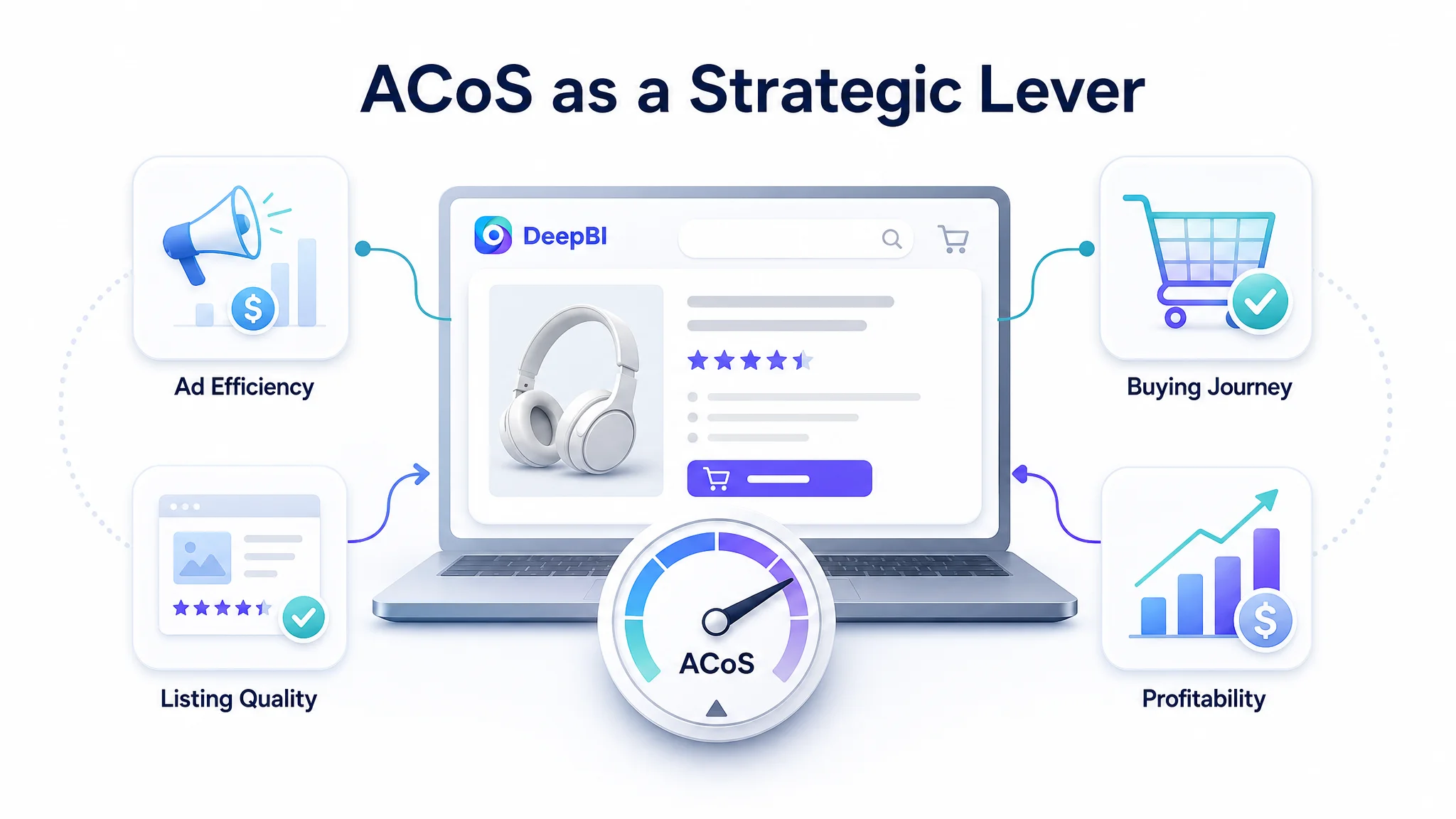
DeepBI’s Ads Quant Module automates and refines this entire process. It employs a "Four-layer traffic funnel" that systematically moves from exploration and pre-screening to precise targeting and scale-up. This structure allows the system to identify and concentrate ad spend on high-converting keywords while actively filtering out low-quality traffic that inflates ACOS.
In a case like the swimming headphones, this means the system can distinguish between queries such as “bone conduction swimming headphones 32GB” that lead to high conversion and queries like “wireless running earphones” that might generate clicks but almost no orders for that specific underwater-use product. Instead of treating all clicks as equal, the funnel ensures that only queries repeatedly proving their ability to convert are promoted into higher-budget, exact-match campaigns.
Furthermore, the module’s "dynamic bid and budget adjustment mechanism" provides stability and foresight. By analyzing performance data from the past seven days—including clicks, conversions, spend, and ACOS—it makes informed optimizations. This approach prevents short-term market fluctuations from derailing your long-term strategy, ensuring your ad spend is consistently allocated for maximum efficiency and sales impact. In the earlier example, rather than reacting to one or two expensive days on a key keyword by shutting it down, the system looks at multi-day behavior, respects sample size, and adjusts bids to where the term remains profitable relative to your target ACoS.
Enhancing Listing Quality to Boost Conversion (Listing Module)
Driving traffic from a well-tuned ad campaign to an unoptimized product page is a primary cause of high ACOS. Even the most effective advertising will fail if the destination doesn't convert clicks into sales. Your main images, keyword-rich titles, benefit-driven bullet points, and engaging A+ Content are the final, critical steps in securing a purchase. Wasting ad spend on a listing that leaks potential customers is a direct path to poor performance.
We see this frequently when teams jump straight to “make it look nicer” instead of asking “where exactly are shoppers losing trust?” In the swimming headphone brand’s case, the internal diagnosis was: “Our images don’t look premium enough; let’s overhaul everything.” But when DeepBI scored their listing against a category-leading benchmark, the numbers told a different story: the main image gap was minimal, while the largest quantified deficit was in reviews and decision clarity. The listing score was 68 vs the competitor’s 86, with an 11‑point gap concentrated in reviews and a smaller but meaningful gap in how the title, images, bullets, and A+ were sequenced to answer a swimmer’s core questions.
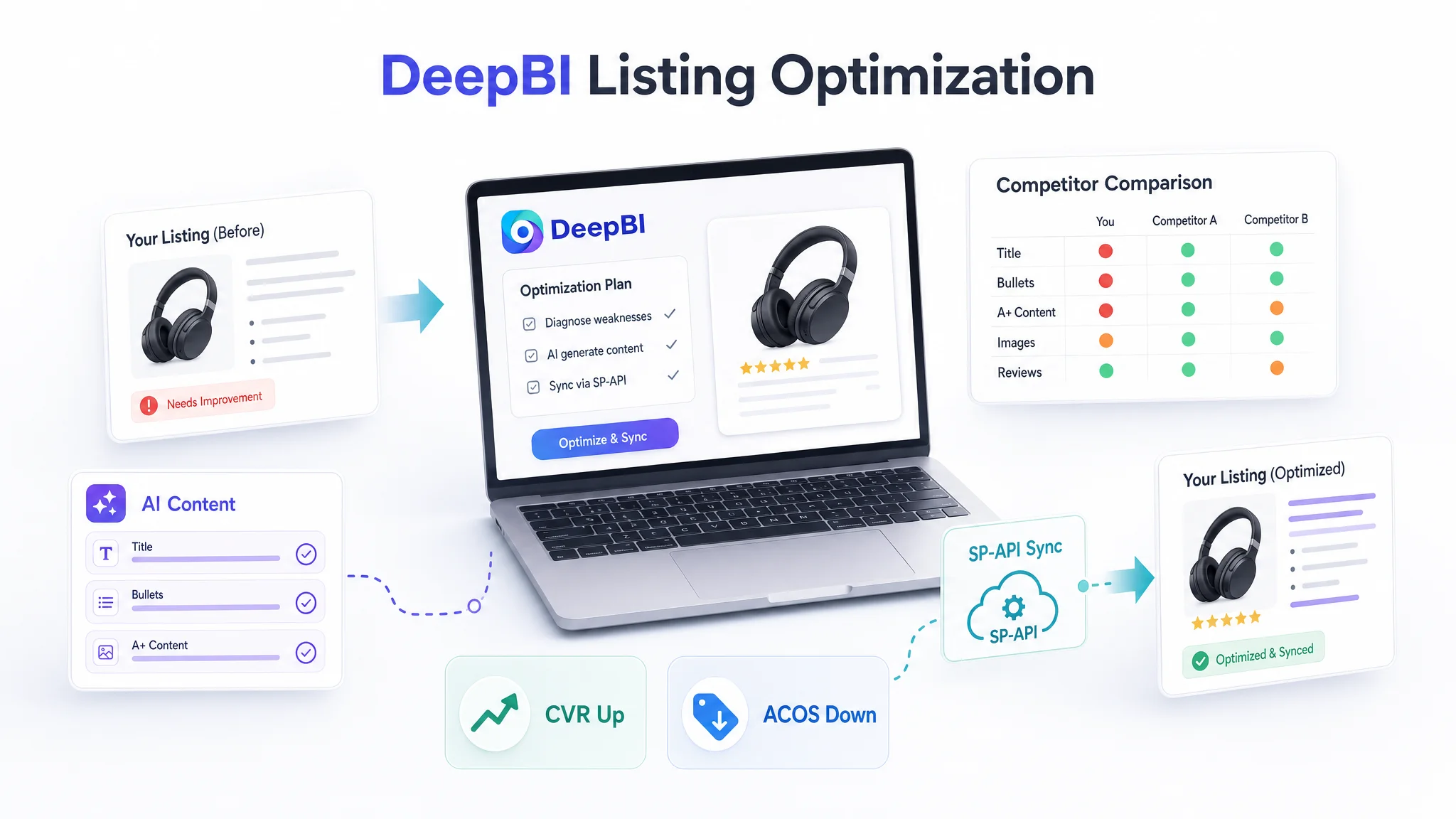
This is where DeepBI's Listing Module transforms ad spend efficiency. The platform begins with a smart diagnosis, scoring your listing elements against top competitors to pinpoint specific weaknesses that are suppressing your conversion rate (CVR). From there, it uses AI-powered content generation to create optimized assets. Unlike general AI tools prone to "hallucinations" that can lead to product-image mismatches and negative reviews, DeepBI builds a "Product DNA" map to ensure all generated content is authentic and compelling.
In the headphone example, this diagnosis didn’t just say “images: 25 vs 26, bullets: 7 vs 8”; it exposed how the listing’s logic diverged. The title stacked technical jargon instead of clearly mapping out what the buyer gets and in which scenarios. The main image sequence prioritized hybrid audio explanation while delaying the one thing swimmers care most about: proof it really works underwater and how to safely use it. Bullet points buried mode-switching and waterproof constraints in dense text, even though reviews already complained about confusion in these areas. A+ content jumped between specs and lifestyle scenes without a linear story that reduces risk first and then sells benefits.
The system provides multiple options with front-end previews for main images, A+ content, titles, and bullet points. Once you select the best version, a "one-click application" securely syncs the changes to your seller backend via the Amazon SP-API, reducing a 30-minute manual update to seconds. In practice, this makes it feasible to restructure a page around a clear decision sequence rather than just polishing copy. In the swimming headphone case, the planned changes included:
- Reordering main images so the early visuals proved underwater reliability and clarified MP3 vs Bluetooth usage before diving into more technical audio claims.
- Rewriting bullets around scenarios and risk (“Can I swim with this today?”, “Do I need my phone?”, “Will it fit under a cap?”) instead of leading with internal engineering language.
- Rebuilding A+ modules so each block had a single job: explain waterproof behavior, show how to upload music, map battery life to real routines, and visually prove fit under actual swim gear.
By systematically improving your listing, you increase its CVR. A higher CVR means more sales from the same number of ad clicks, directly lowering your ACOS and maximizing the return on every advertising dollar. Just as importantly, a structured diagnosis helps you avoid the common trap of spending heavily to “beautify” what’s already good enough, while leaving the real trust leaks untouched.
Driving Organic Traffic for Sustainable ACOS Reduction (Organic Traffic Module)
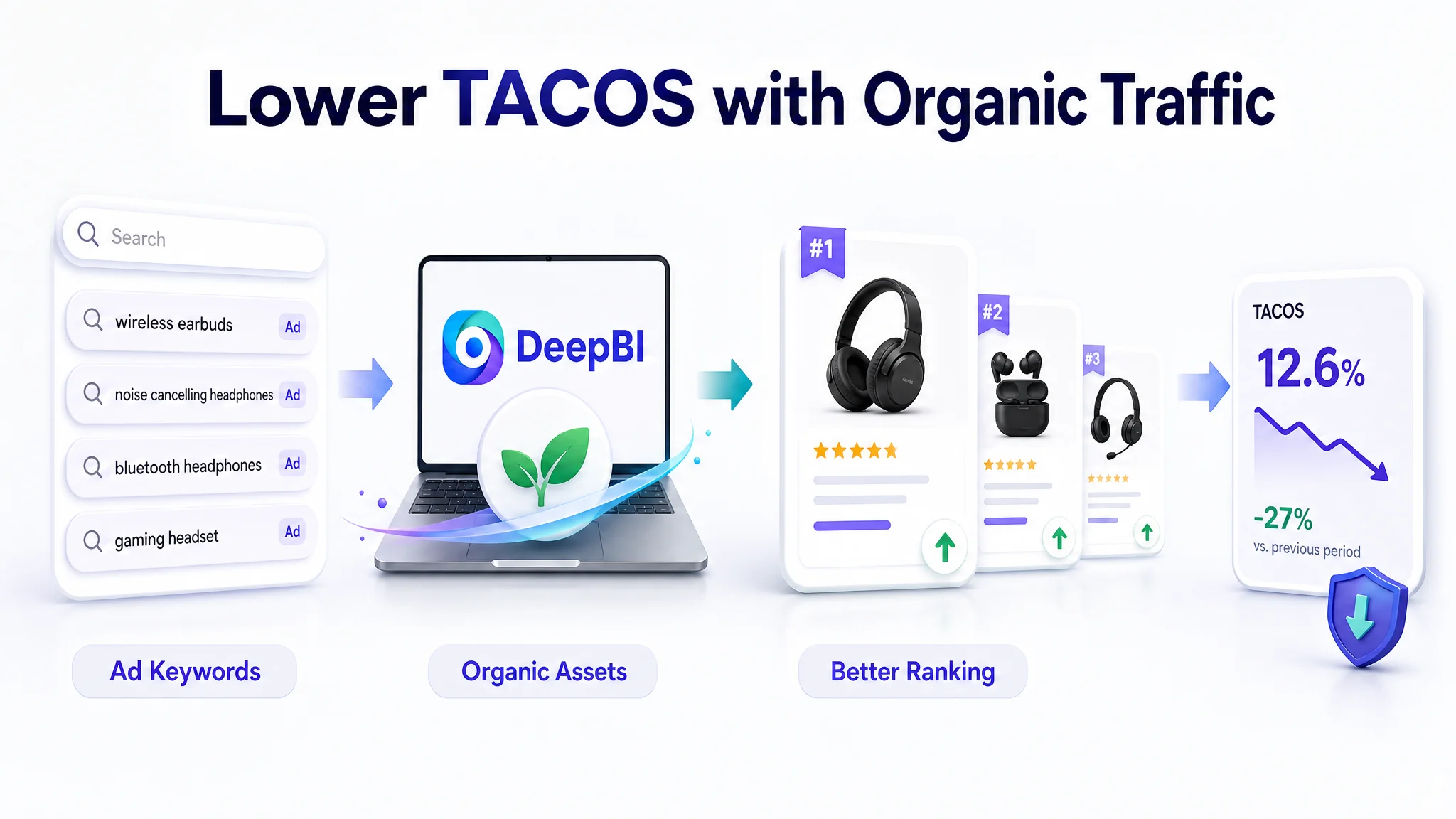
While optimizing ad spend is crucial for managing ACoS, the ultimate goal for sustainable profitability is to reduce your Total ACoS (TACOS). This is achieved by increasing the proportion of organic sales, thereby decreasing your overall reliance on paid advertising. The most effective way to boost organic sales is by improving your product's organic keyword rankings, which are heavily influenced by factors like sales velocity, review quality, and listing relevance.
A powerful, yet often overlooked, synergy exists between paid ads and organic performance. Strong ad campaigns that generate high sales velocity send positive signals to Amazon's algorithm, which can directly improve your organic ranking for those same keywords. This creates a virtuous cycle where paid traffic fuels organic growth.
A common mistake is treating ads and organic as separate worlds: one team “owns” PPC, another “owns” SEO, and both chase their local KPIs. In situations like the swimming headphone listing, that siloed view can be especially damaging. Ads might be driving initial visibility on high-intent terms (e.g., “swimming headphones IPX8”), but if the listing and reviews don’t align to answer those searcher intents, the product fails to turn that ad-driven momentum into stable organic ranking. The result: the brand keeps paying to stay visible on queries where it should, over time, be able to compete more organically.
DeepBI’s Organic Traffic Module, conceptualized as a "fifth-layer funnel," systematizes this process. The platform screens your advertising data to identify high-performing keywords—those with high CTR, CVR, and significant order value. Instead of leaving these proven converters solely in your ad campaigns, DeepBI helps you build a long-term organic asset. It facilitates a "Top of Search reinforcement" strategy by creating targeted campaigns specifically designed to dominate search results for these high-value keywords. This approach delivers the dual growth of immediate ad-driven sales volume and a sustained lift in long-term organic ranking, making your business more profitable and resilient.
Applied to a product with a complex use-case like swimming headphones, this means you’re not only bidding on “bone conduction headphones” in general, but deliberately reinforcing the subset of terms where your listing, reviews, and A+ content now answer the buyer’s questions best—such as “swimming MP3 headphones no phone” or “IPX8 bone conduction for pool.” Over time, this targeted reinforcement helps push those terms from ad-dependent visibility toward stronger organic placement, contributing to a healthier TACOS and cushioning you from ad cost volatility.
Holistic Approach: Integrating DeepBI Across All Pillars
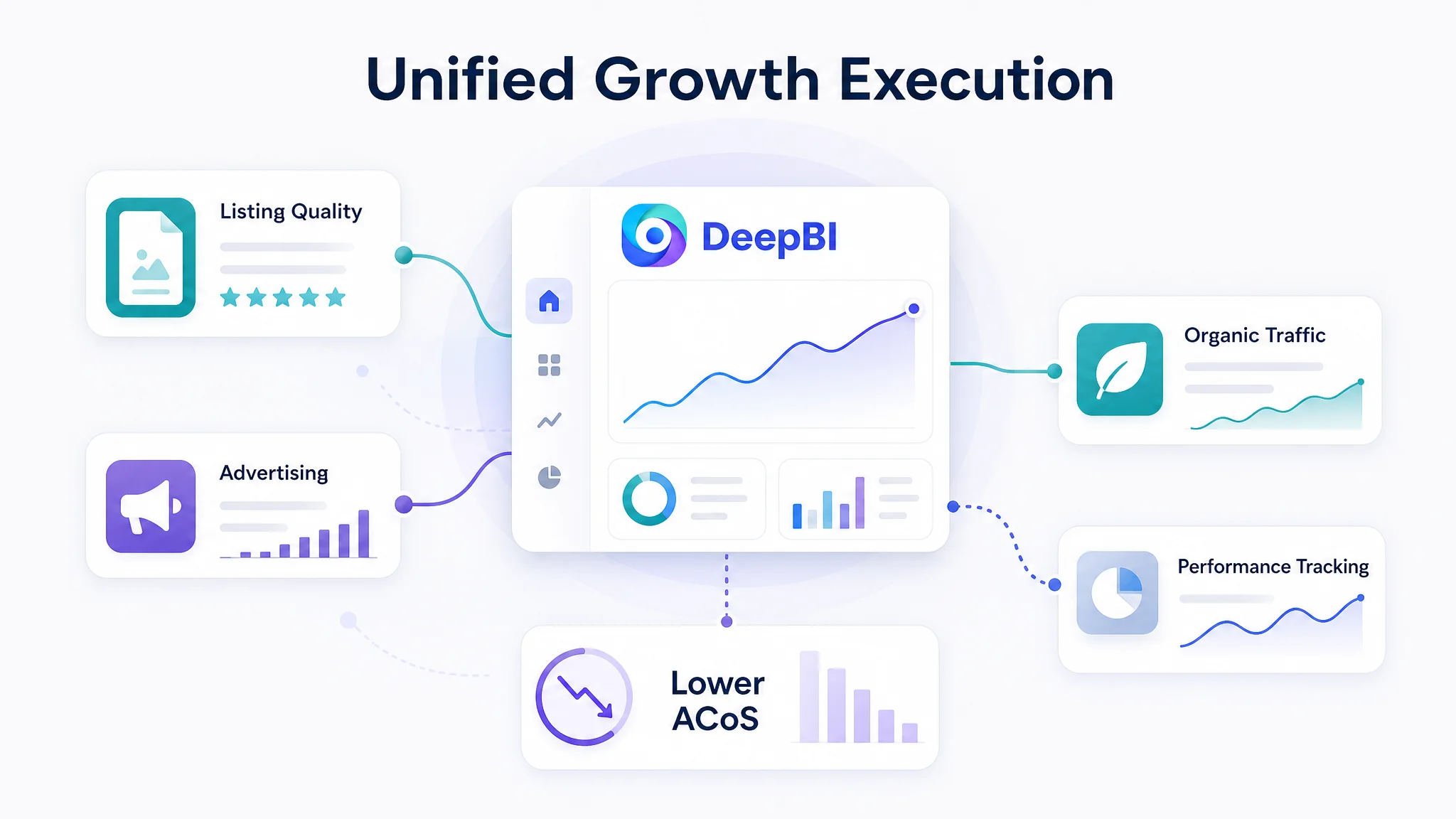
Successfully lowering ACoS without sacrificing sales volume is not a siloed task. It demands a coordinated strategy that recognizes the deep interconnection between your advertising campaigns, listing quality, and organic traffic. An improvement in one area directly impacts the others; for example, a higher conversion rate from an optimized listing makes every ad dollar more effective, while successful ad campaigns can boost organic ranking.
In real operations, disconnection between these pillars is often what keeps ACoS stubbornly high. In the swimming headphone case, the team initially tried to solve an ACoS and sales problem through design changes alone, treating images, copy, and reviews as separate tasks brought in “later.” DeepBI’s diagnostic view forced them to see the chain in order: product experience and reviews shape trust; trust and clarity shape listing conversion; listing conversion shapes ad efficiency; ad efficiency and velocity shape organic rankings. Once this sequence was clear, the prioritization of work changed—clarifying mode usage and expectations came before visual polish, and on-page trust-building was recognized as a prerequisite to scaling ads.
This is where an integrated system becomes a competitive advantage. DeepBI provides a unified platform to break down these operational silos. Instead of managing separate tools for keyword research, ad management, and listing optimization, you can analyze data, generate strategy, and execute across all pillars from a single command center.
The platform functions as a powerful executor, automating tasks like visual analysis and performance tracking. For instance, after updating listing images, DeepBI can automatically monitor the impact on ad CTR, providing a clear feedback loop. In a situation like the headphone brand, this means you can see whether a reordered image sequence not only improves click-through but also actually reduces bounce and increases add-to-cart and orders, rather than just generating more window-shopping. This data-driven approach empowers your team to focus on core decision-making, ensuring that AI enhances, rather than overrides, human strategic oversight for long-term, sustainable growth.
Conclusion: Achieving Profitable Growth on Amazon
Reducing your Advertising Cost of Sales (ACoS) without sacrificing sales volume is not about finding a single magic bullet. It requires a comprehensive, multi-faceted strategy that integrates sophisticated campaign management, precise keyword targeting, and continuous listing optimization. Simply cutting bids or pausing campaigns can harm your sales velocity and organic rank, leading to a downward spiral. The key is to make every advertising dollar work harder by improving conversion rates and targeting the most profitable customer segments.
The experiences of brands like the swimming headphone seller underline a broader lesson: what looks like an “ad problem” or a “design problem” is often a misordered decision problem. If you put budget behind a page that doesn’t clearly reduce buyer risk, ACoS will stay high no matter how clever your bidding is. By contrast, when you diagnose where trust is actually breaking, restructure your listing around the buyer’s sequence of questions, and then let your ad and organic strategies reinforce the strongest keywords, ACoS becomes a lever you can deliberately control instead of a number you chase.
This is where a data-driven approach becomes a competitive necessity. Manually analyzing performance data and optimizing every variable is a monumental task prone to error and missed opportunities. By leveraging intelligent tools like DeepBI, sellers can automate complex analyses and execute a more dynamic advertising strategy. This empowers you to move beyond reactive adjustments and proactively shape your market position. Ultimately, embracing this blend of smart strategy and powerful technology is the most reliable path to not just lower ACoS, but sustainable, profitable growth on the Amazon marketplace.