
Why Amazon Competitor Analysis is Essential for Your Business
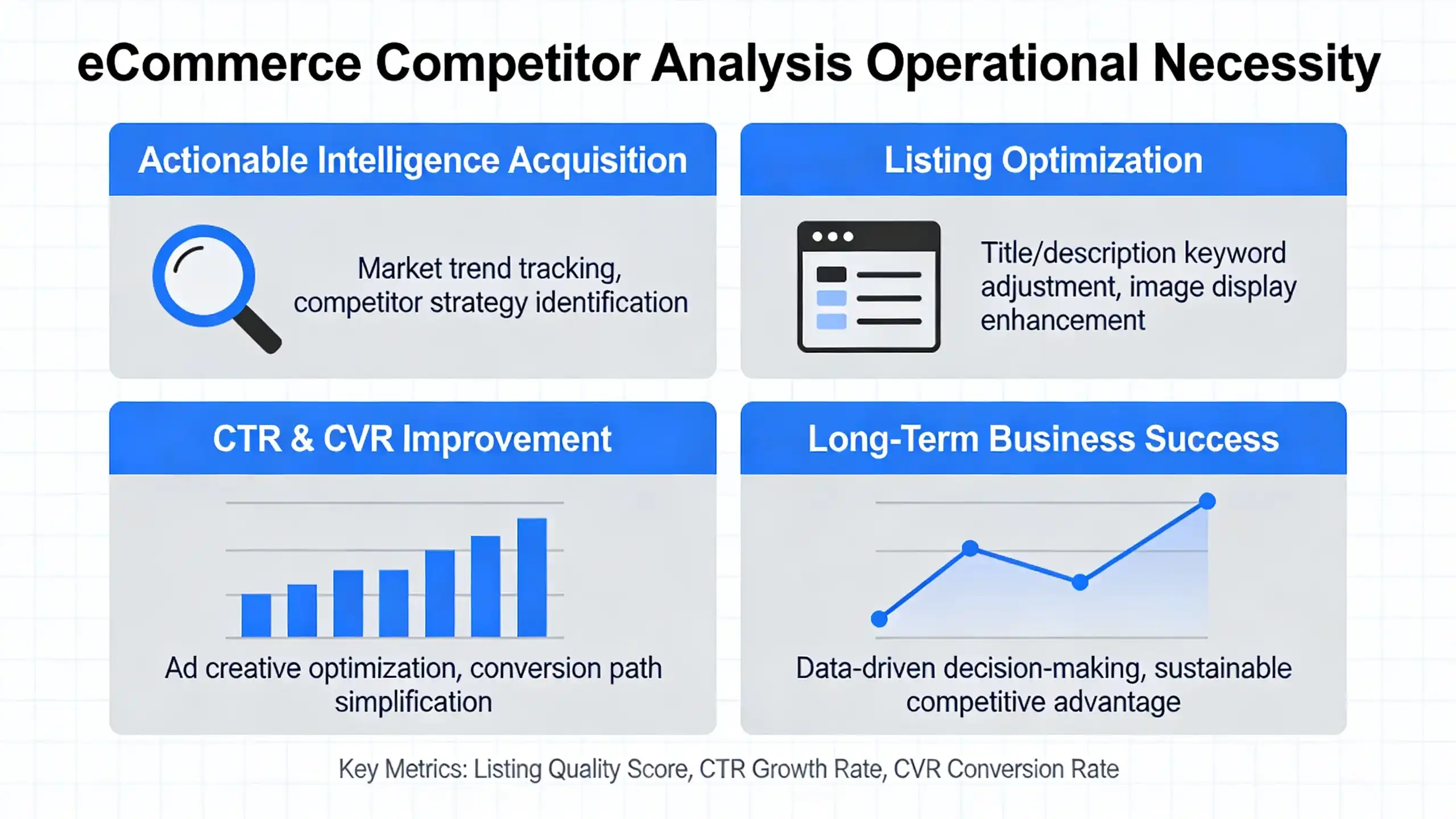
The Amazon marketplace is more crowded than ever. With nearly 2,000 new sellers joining every single day, the competition is fierce and relentless. In this high-stakes environment, simply having a good product is no longer enough to guarantee success. To stay ahead and build a sustainable competitive advantage, a systematic approach to competitor analysis is not just beneficial—it's an operational necessity.
By dissecting your rivals' strategies, you can unlock a wealth of actionable intelligence. A thorough analysis allows you to identify emerging market trends before they become mainstream, uncover untapped opportunities in product niches, and pinpoint weaknesses in your competitors' offerings that you can exploit. This insight provides the data needed to optimize your own product listings, refine pricing strategies, and sharpen marketing campaigns for maximum impact on key metrics like Click-Through Rate (CTR) and Conversion Rate (CVR).
Ultimately, this process transforms your decision-making from reactive guesswork into a proactive, data-driven discipline. It helps mitigate the risks associated with new product launches and strategic pivots, ensuring your investments are sound. For any FBA seller serious about long-term success, mastering competitor analysis is the foundational step toward building a resilient and consistently growing business on the world's largest eCommerce platform.
What Exactly is Amazon Competitor Analysis?
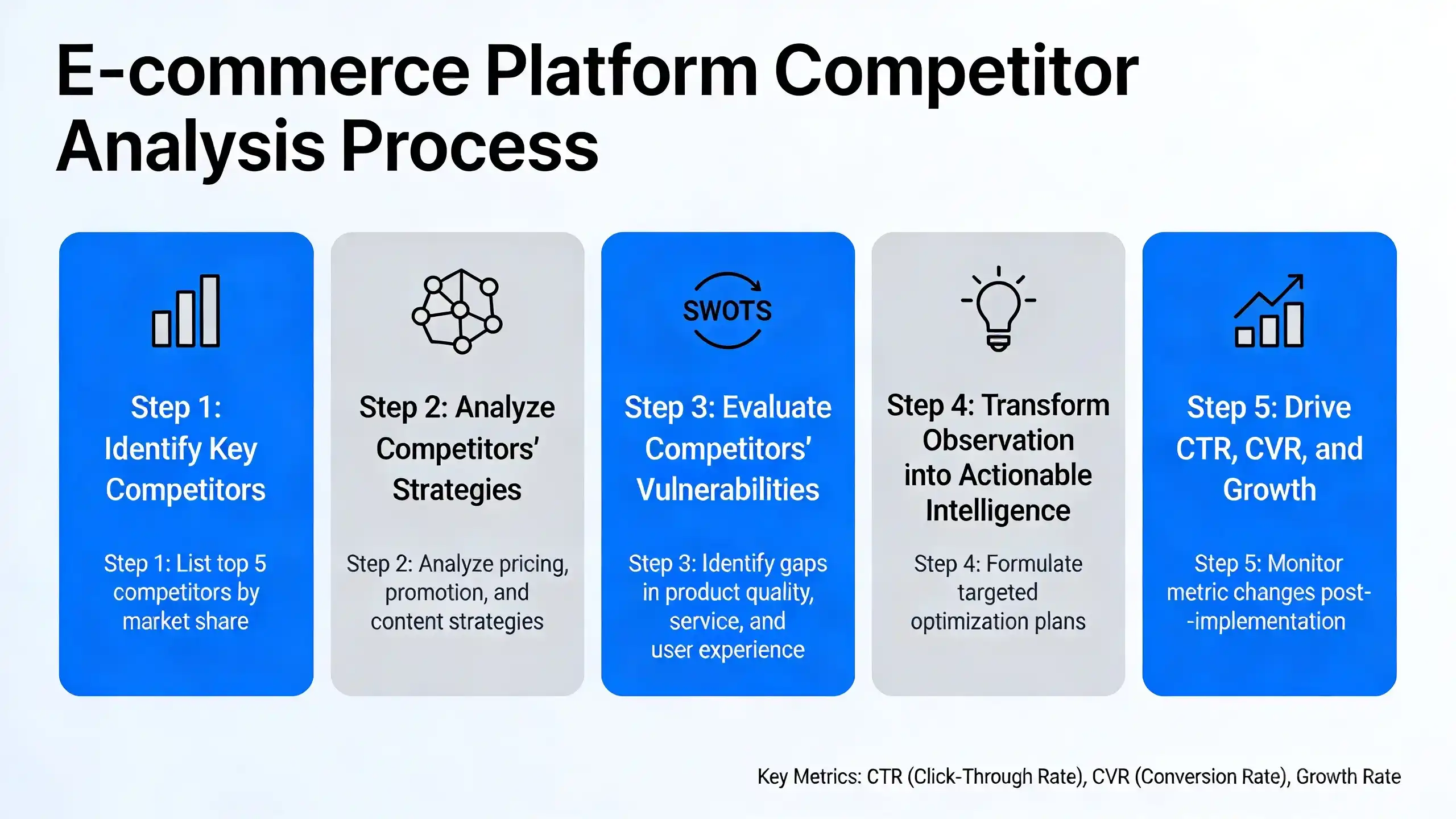
Amazon competitor analysis is the systematic process of identifying and evaluating your rivals on the marketplace to gain a strategic advantage. This goes far beyond simply knowing who sells similar products. It involves a deep dive into their entire Amazon strategy, from pricing and keyword targeting to customer service, advertising campaigns, and supply chain efficiency.
The primary purpose is to uncover your competitors' strengths and weaknesses. By understanding what they do well, you can benchmark your own performance and adopt successful tactics. More importantly, by identifying their vulnerabilities—such as negative review trends, inconsistent stock levels, or poorly optimized listings—you can pinpoint opportunities to attract their customers and capture market share.
Effective analysis transforms every aspect of a competitor's listing into actionable intelligence. For instance, it reframes their product images not just as aesthetic displays but as a core commercial engine designed to drive critical KPIs. A deep look at their visual strategy can reveal how they are optimizing for higher click-through rates (CTR) and conversion rates (CVR), providing a blueprint for enhancing your own visual merchandising and outperforming them on the search results page. Ultimately, it’s about turning market observation into a repeatable, data-driven process for growth.
Key Elements of Competitor Analysis
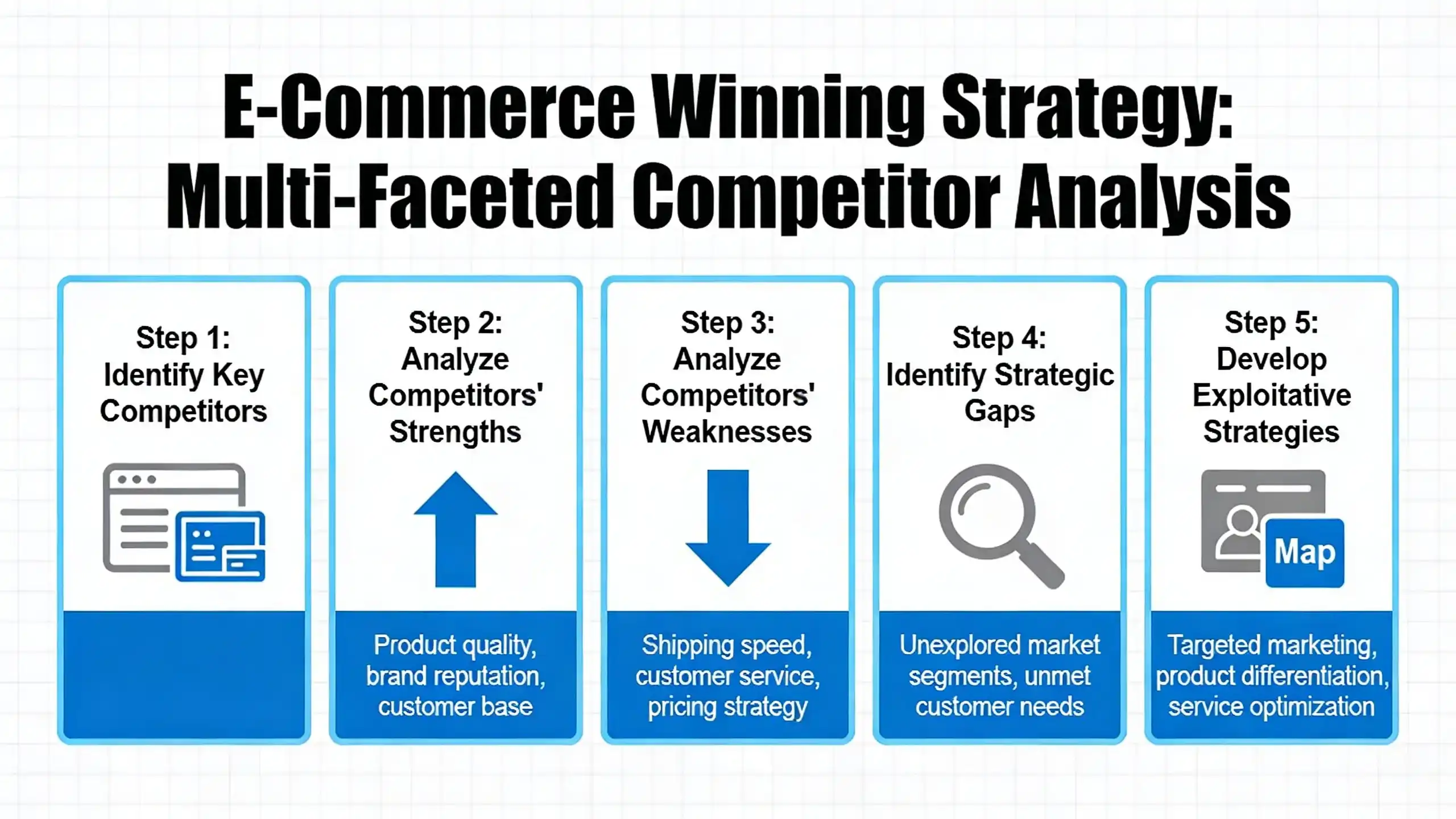
To build a winning strategy on Amazon, you must move beyond simple product comparisons and conduct a multi-faceted competitor analysis. A comprehensive evaluation provides a 360-degree view of your rivals' operations, revealing their strengths, weaknesses, and the strategic gaps you can exploit. A rigorous analysis should dissect the following core components:
- Product Listing Optimization: This involves a structured deconstruction of competitor listings. Analyze their titles, bullet points, product descriptions, main images, and A+ Content. Scrutinize how they present their product's features and benefits to attract clicks and drive conversions.
- Pricing Strategies: Track competitor price points, historical price changes, and the use of coupons or promotions. This reveals their pricing philosophy and how they position their product's value against its cost.
- Keyword and SEO Performance: Identify the primary and long-tail keywords your competitors are ranking for, both organically and through paid advertising. Understanding their keyword strategy is crucial for capturing relevant traffic.
- Sales Volume and Trends: Monitor their Best Seller Rank (BSR) and use estimation tools to gauge their sales velocity and trajectory. This helps you understand their market momentum and seasonal performance patterns.
- Advertising Tactics: Observe their sponsored product placements, display ads, and storefront design. Analyzing their advertising footprint gives you insight into their budget allocation and campaign focus.
- Customer Reviews and Feedback: Systematically analyze the "Voice of the Customer" (VoC) through their reviews and Q&A sections. This is the most direct way to uncover product flaws, unmet customer needs, and opportunities for differentiation.
- Market Share and Brand Positioning: Assess their overall presence within the category. Evaluate their brand messaging, visual identity, and how they are perceived by customers to understand their position in the market landscape.
Step 1: Identify Your True Competitors
The first step to outmaneuvering the competition is to accurately identify who you are up against. On Amazon, this goes beyond a simple keyword search. Your competitors fall into two main categories: direct and indirect. Direct competitors sell products nearly identical to yours, targeting the same audience at a similar price point. Indirect competitors solve the same customer problem but with a different type of product, potentially capturing market share you hadn't considered.
A thorough manual analysis requires evaluating several key criteria to determine which ASINs are worth tracking:
- Product Similarity: Do they offer the same core features and benefits?
- Target Audience: Are they appealing to the same customer demographics and pain points?
- Price Range: Are their products priced within a competitive threshold of yours?
- Sales Volume: Does their Best Seller Rank (BSR) indicate they are a significant player in the category?
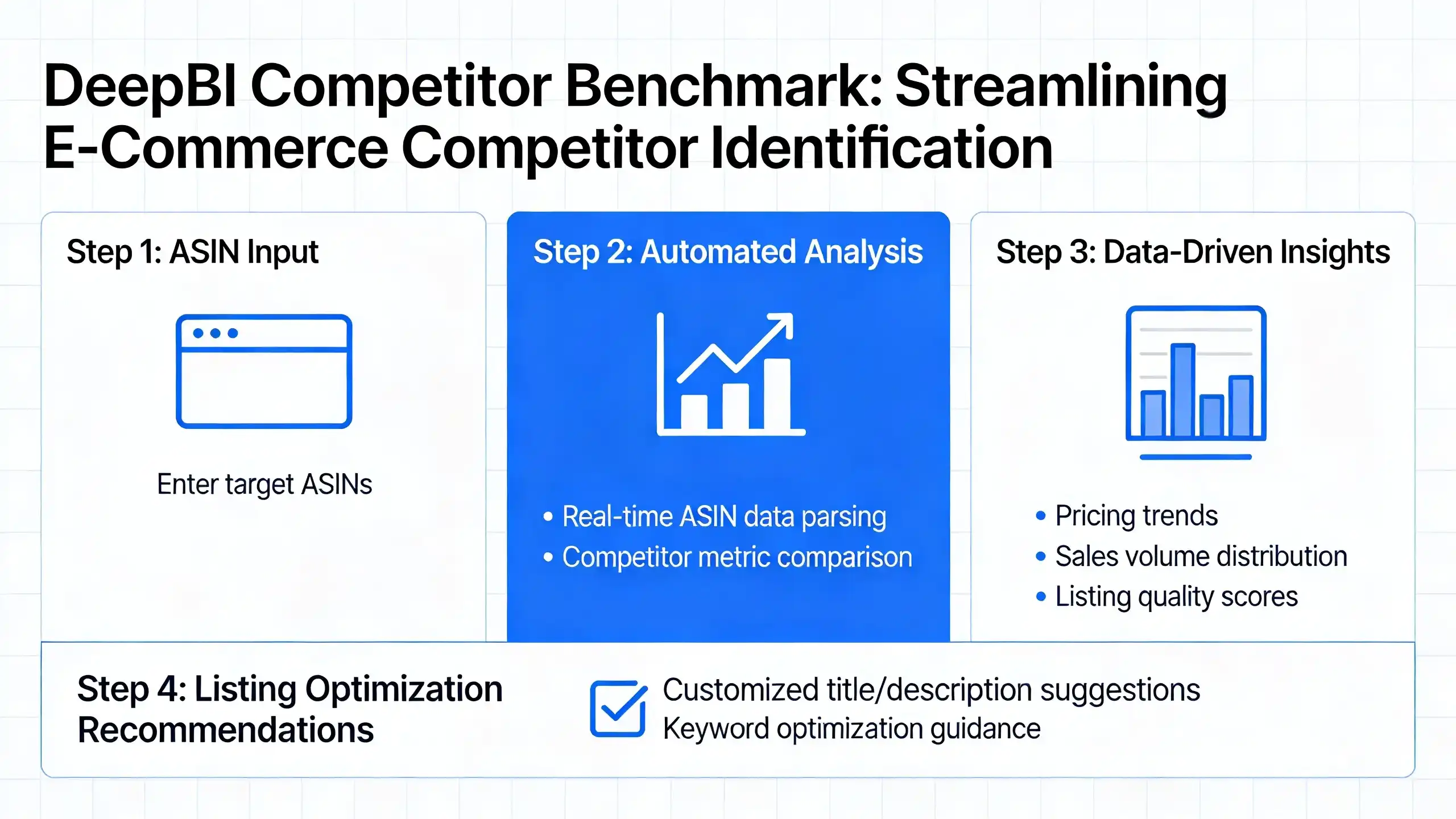
This manual process can be time-consuming and prone to missing key players. DeepBI streamlines this crucial first step with its Competitor Benchmark capability. Instead of manually sifting through thousands of listings, you can leverage DeepBI to automatically identify high-competition benchmarks from a vast pool of ASINs. This builds a data-driven comparison system, providing clear, actionable insights and clarifying the most impactful directions for your own listing optimization efforts.
Step 2: Analyze Competitor Product Listings
Once you've identified your key competitors, the next step is a granular analysis of their product listings. Manually, this involves dissecting every element that influences a customer's purchasing decision: the keyword optimization in their titles, the persuasiveness of their bullet points, the clarity of their product descriptions, the quality of their images, and the effectiveness of their A+ Content. The goal is to identify their strengths to emulate and their weaknesses to exploit.
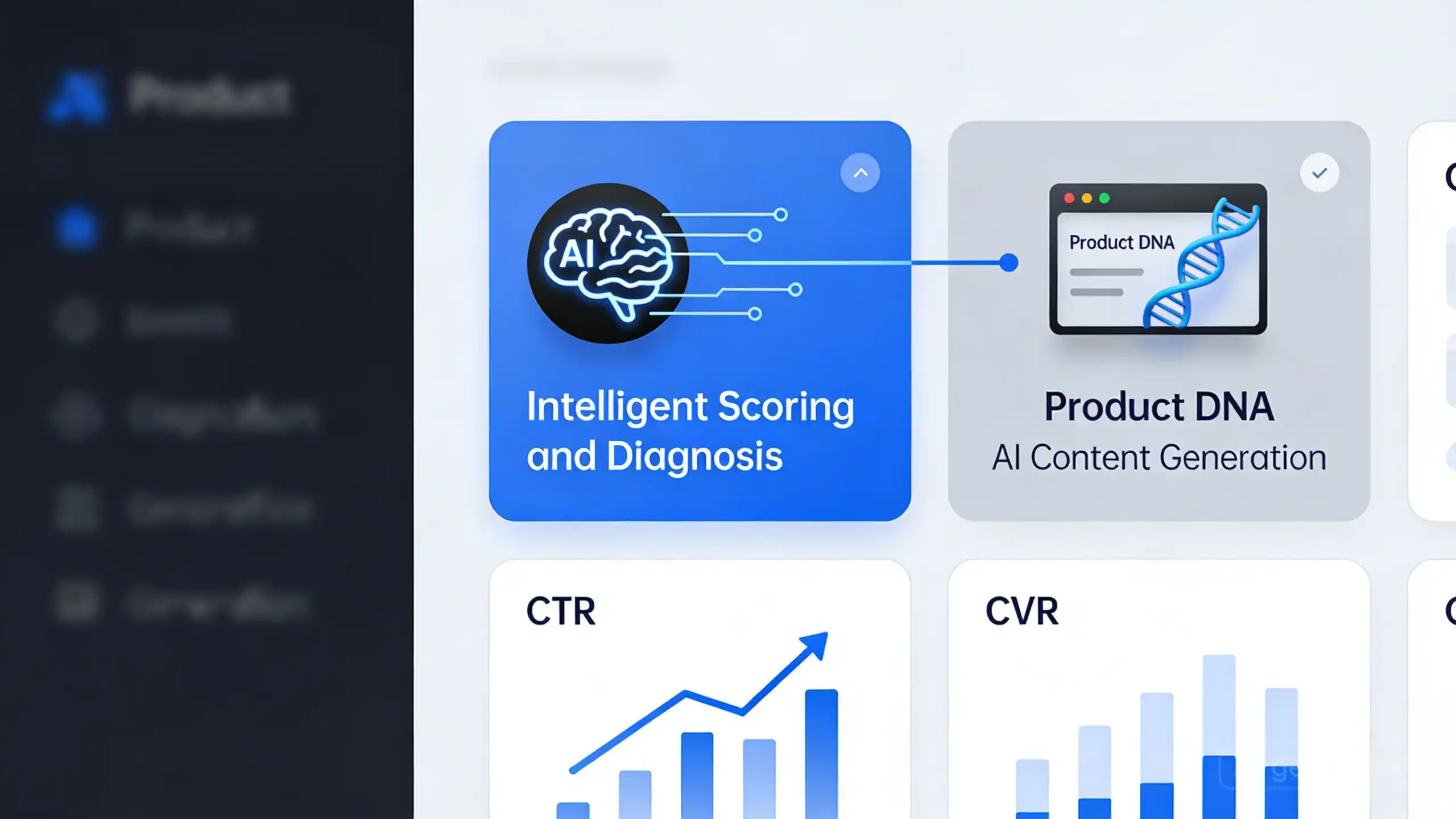
This process, however, can be time-consuming and subjective. DeepBI automates and objectifies this critical step with its Intelligent Scoring and Diagnosis module. Using distributed data capture and multi-dimensional semantic analysis, the system automatically benchmarks your listing against top competitors. It provides clear, data-driven scores for your main image, title, bullet points, and A+ Content, instantly revealing where you lag behind and what needs improvement to boost your Click-Through Rate (CTR) and Conversion Rate (CVR).
Following diagnosis, DeepBI’s AI Content Generation helps you create superior listing elements. Crucially, this is not a generic AI tool prone to "hallucinations" that could misrepresent your product. Instead, it operates based on your product’s unique "Product DNA"—a map of its core, unchangeable attributes. This ensures all AI-generated content maintains "product entity consistency," preventing the kind of product-image mismatches that lead to negative reviews and returns.
Step 3: Evaluate Competitor Pricing Strategies
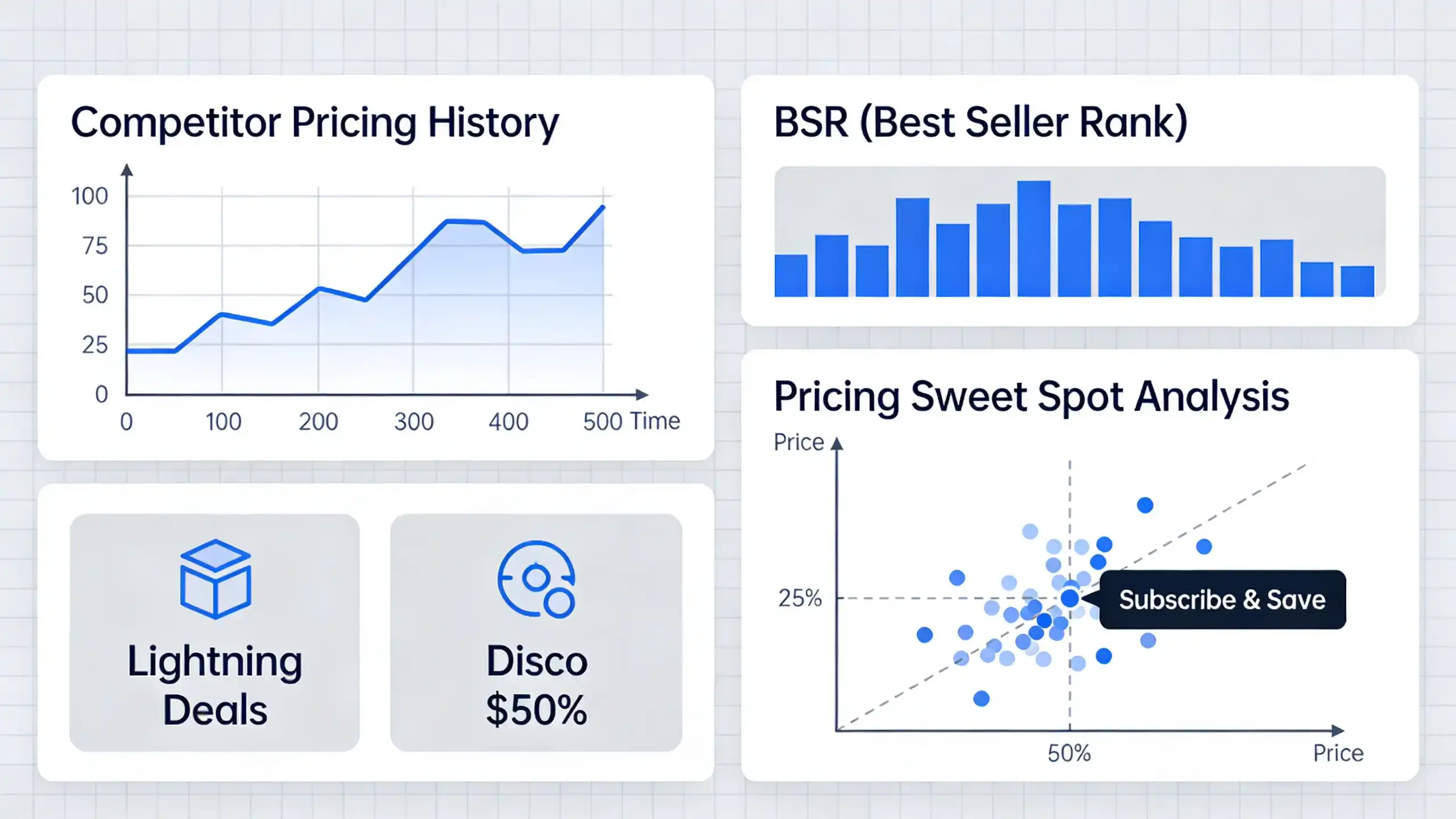
Price is one of the most powerful levers on Amazon, directly influencing customer choice, sales velocity, and your Best Sellers Rank (BSR). A comprehensive analysis goes beyond simply matching the lowest price; it involves decoding the strategy behind your competitors' numbers. Start by tracking their price history to identify patterns. Do they maintain a stable premium price, or do they frequently use discounts and promotions to drive sales during key periods?
Analyzing their use of coupons, Lightning Deals, and "Subscribe & Save" offers provides insight into their sales velocity tactics and how they manage their inventory and BSR. However, price must be weighed against perceived value. If a customer sees two similar products with similar review ratings, price is often a significant factor, and they may lean towards the cheaper option. Yet, other elements like superior branding, unique features, or a better warranty can justify a higher price point.
By mapping competitor prices against their product features and review scores, you can identify the "pricing sweet spot." This is the point where you can maximize your profit margin without deterring customers. This analysis reveals opportunities to either strategically undercut a key competitor or confidently price higher by effectively communicating your product's superior value.
Step 4: Uncover Competitor Keyword and SEO Strategies
Understanding your competitor's keyword strategy is fundamental to capturing market share. This involves identifying the search terms they rank for organically and the keywords they target through paid advertising. A thorough analysis reveals their primary traffic sources, informs your own listing optimization, and exposes gaps in their approach that you can exploit.
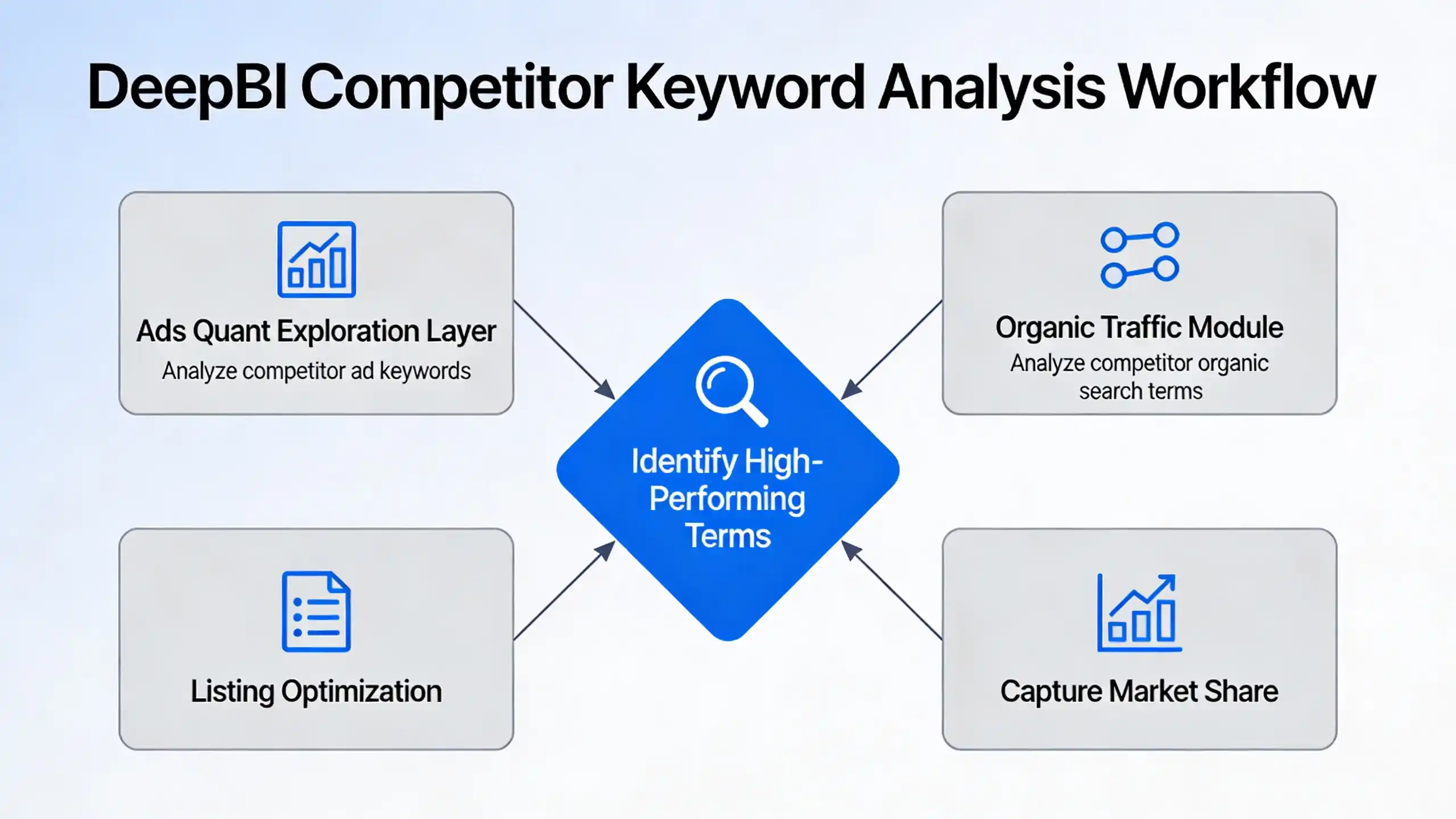
DeepBI streamlines this intelligence gathering with a powerful, data-driven workflow. The process begins in the Ads Quant Exploration Layer, where you can analyze competitor ASINs to uncover the exact keywords driving their advertising traffic. This provides a direct view into their paid acquisition strategy, revealing the high-intent search terms they are willing to spend money on to attract customers.
The true strategic advantage comes from bridging this advertising data with your organic SEO plan. By taking the list of competitor ad keywords and processing it through DeepBI's Organic Traffic Module, you can use the Keyword Screening feature to filter for top-performing terms. This function allows you to isolate keywords with the highest Click-Through Rate (CTR), Conversion Rate (CVR), and order volume. By prioritizing these proven, high-value keywords in your own product listings, backend search terms, and ad campaigns, you can systematically improve your organic rank and divert profitable traffic away from your competition.
Step 5: Assess Competitor Sales Performance and Trends
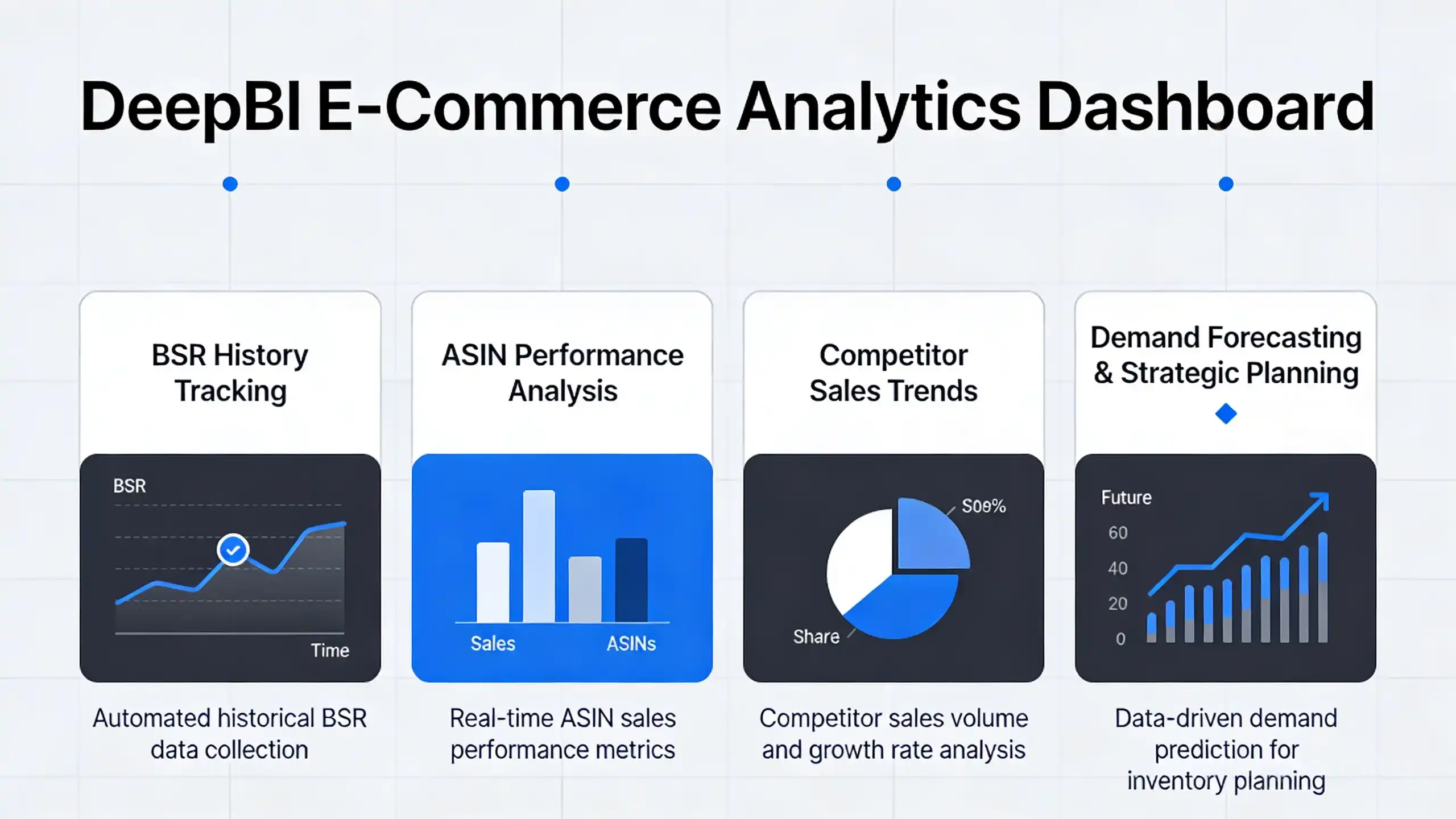
Understanding a competitor's sales velocity is critical for gauging market size and potential revenue. While exact sales figures are private, you can derive powerful estimates by analyzing proxy metrics like the Best Seller Rank (BSR). A lower BSR corresponds to higher sales volume, making it a reliable indicator of an ASIN's performance. The key is not just a single snapshot but tracking this metric over time to uncover trends.
DeepBI’s competitor tracking capabilities automate this process, allowing you to monitor the BSR history of any ASIN. By analyzing these historical charts, you can identify crucial patterns that inform your strategy. For example, a consistent drop in BSR every quarter may indicate a successful promotion cycle you can counter. A sharp, seasonal improvement in rank reveals peak demand periods you must prepare for.
This data-driven approach moves beyond guesswork. It allows you to map out a competitor's growth trajectory, spot signs of declining market share, and accurately forecast demand for your own products. By understanding the sales rhythm of top players, you can more effectively time your product launches, plan inventory levels, and identify strategic gaps in the market left open by your competitors' seasonal or operational weaknesses.
Step 6: Examine Competitor Advertising Tactics
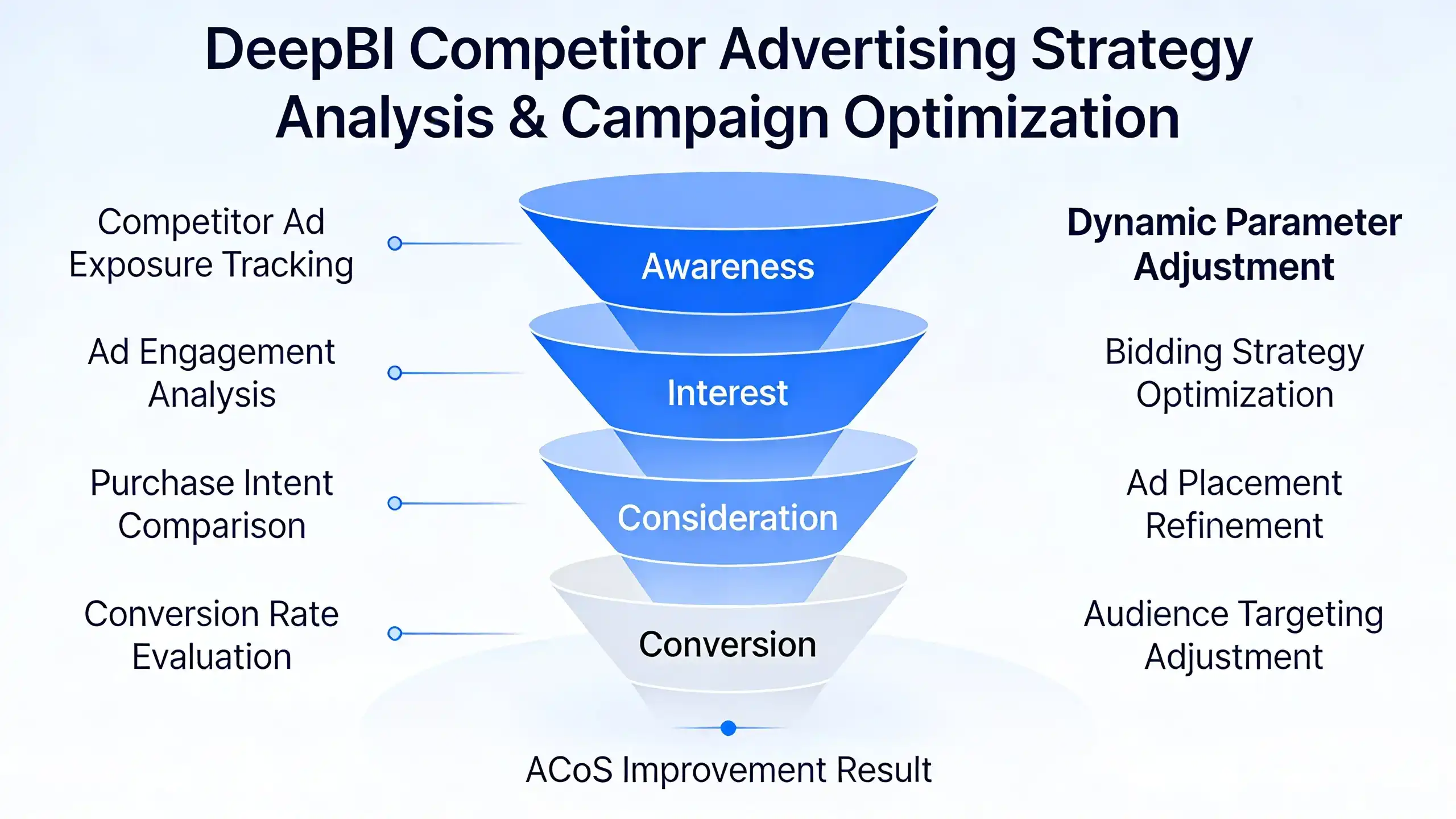
Deconstructing your competitors' advertising playbook is crucial for capturing market share. Begin by analyzing their Sponsored Products (SP) campaigns to understand their messaging through ad copy, their aggressiveness via bidding strategies, and their focus through targeted keywords and ASINs. This analysis helps you estimate their ad spend efficiency and the depth of their market penetration. A rival consistently bidding on high-volume keywords is likely investing heavily to dominate that niche.
To systematize this process, DeepBI provides a powerful strategic framework. The Four-Layer Traffic Funnel allows you to categorize a competitor's advertising maturity, determining if they are in the broad 'Exploration' phase or executing a focused 'Precision' or 'Scaling' strategy. Understanding their position in this funnel enables you to predict their next moves and develop an effective counter-strategy.
While you analyze the competition, DeepBI's Dynamic Parameter Adjustment feature works to optimize your own campaigns. It automatically fine-tunes your bids and budgets on a daily basis, reacting to performance metrics to improve your ACoS. This automated management not only sharpens your competitive edge but also provides a real-time benchmark for what efficient, data-driven advertising looks like, giving you a clearer lens through which to evaluate competitor tactics.
Step 7: Monitor Customer Reviews and Feedback
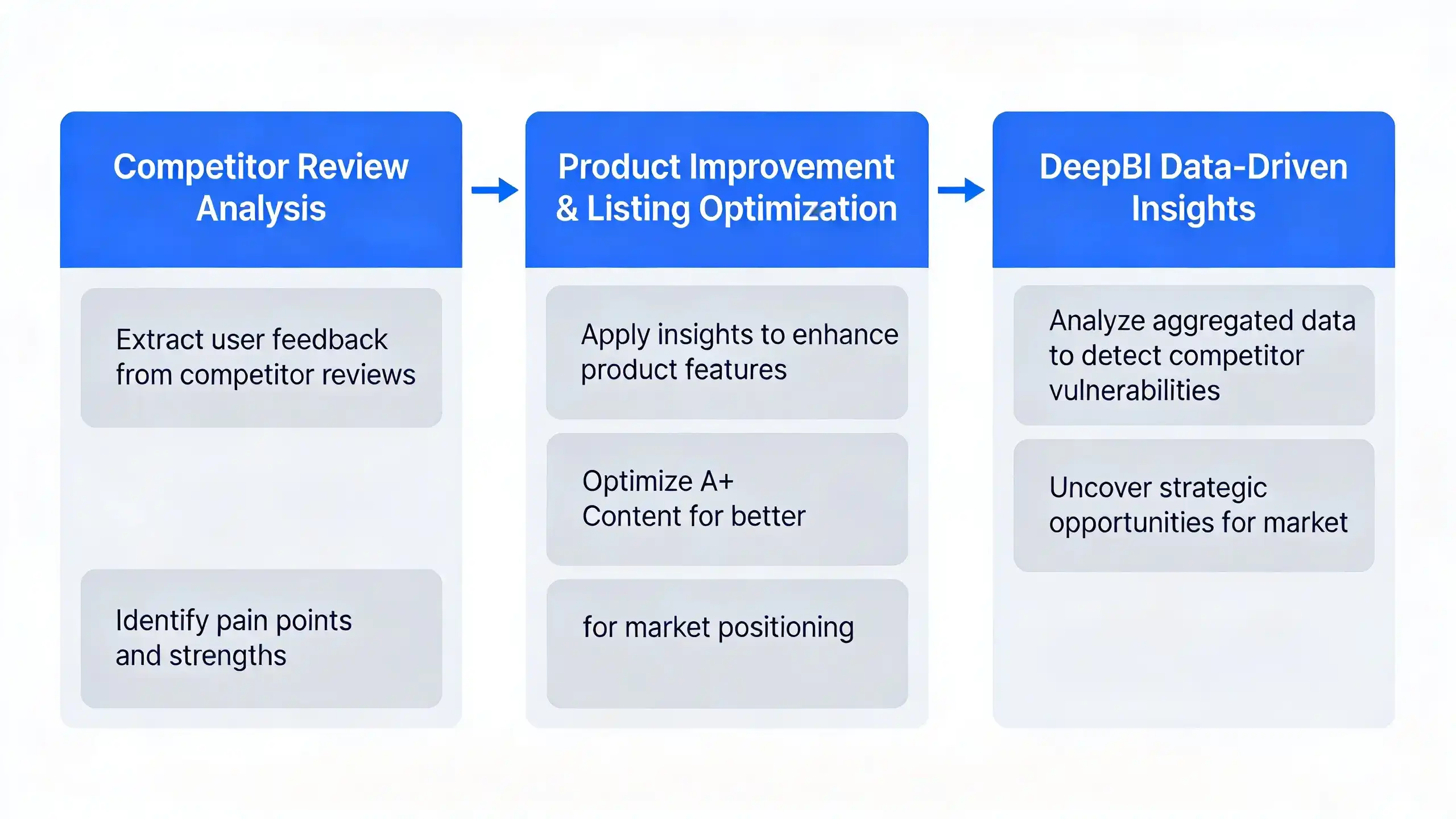
Your competitors' customer reviews are a direct line to market intelligence, revealing unfiltered feedback on product strengths, weaknesses, and unmet needs. Systematically analyzing this feedback provides a clear roadmap for both product improvement and listing optimization. By identifying recurring complaints—such as a product being smaller than expected or a specific component failing—you uncover critical pain points that your own product can solve. Conversely, consistent praise highlights the features and benefits that resonate most with customers, which you should emphasize in your own marketing copy.
This analysis is fundamental to creating a listing that converts. The insights gained from competitor reviews allow you to proactively address potential customer concerns in your bullet points, product descriptions, and A+ Content. Most importantly, it reinforces the principle of 'product entity consistency.' If competitors receive negative reviews for exaggerating features or using misleading images, it’s a powerful reminder to ensure your own listing presents your product with complete authenticity.
While DeepBI does not offer standalone review management, its Listing module intelligently incorporates review data as a key diagnostic factor. The system analyzes patterns, such as review volume and the velocity of negative feedback, as part of its comprehensive listing scoring. This allows you to see how customer sentiment is impacting a competitor's market position, helping you identify vulnerabilities and strategic opportunities.
Step 8: Benchmark Market Share and Growth
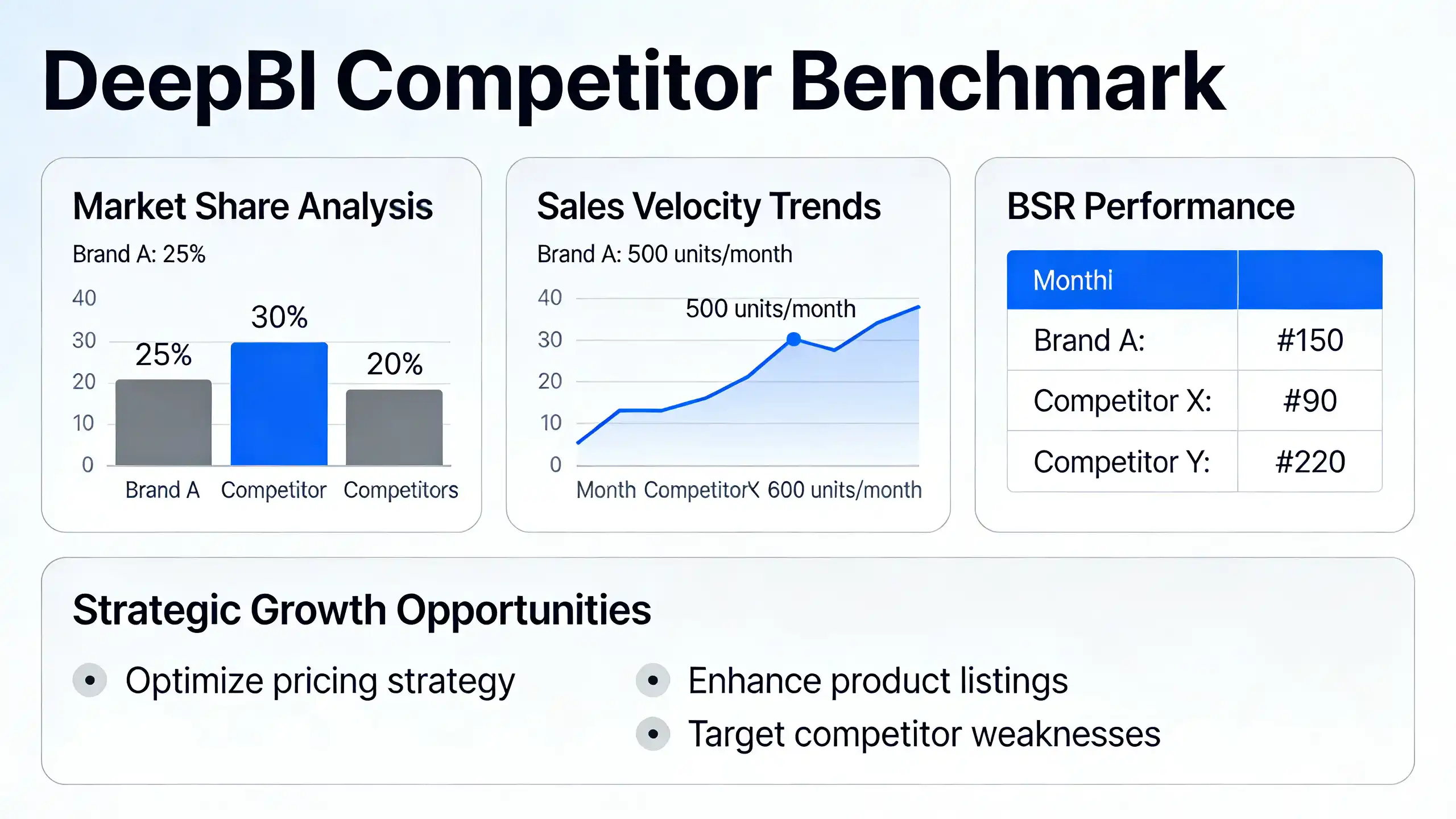
Understanding a competitor's product is only one piece of the puzzle. To truly grasp your position in the market, you must analyze their overall market share and growth trajectory. This involves moving beyond single-ASIN metrics to assess their brand-level dominance, sales velocity, and how their market share is trending over time—are they a rising star or a fading leader?
Comparing your brand's performance against these key players is crucial for strategic planning. By benchmarking your sales volume, revenue growth, and average Best Seller Rank (BSR) against top competitors, you can accurately identify opportunities for expansion and threats that require a defensive response. For instance, if a competitor's growth is stagnating in a sub-category where you are strong, it may be the perfect time to increase ad spend and capture their market share.
This is where a comprehensive tool becomes indispensable. DeepBI's Competitor Benchmark capability is designed specifically for this purpose. It allows you to directly assess where your brand stands relative to high-performing competitors, transforming raw sales data into actionable intelligence. The platform provides clear, side-by-side comparisons, highlighting gaps and opportunities so you can make informed decisions on pricing, inventory, and marketing to either challenge the leaders or defend your position.
Leveraging DeepBI for Superior Competitor Insights
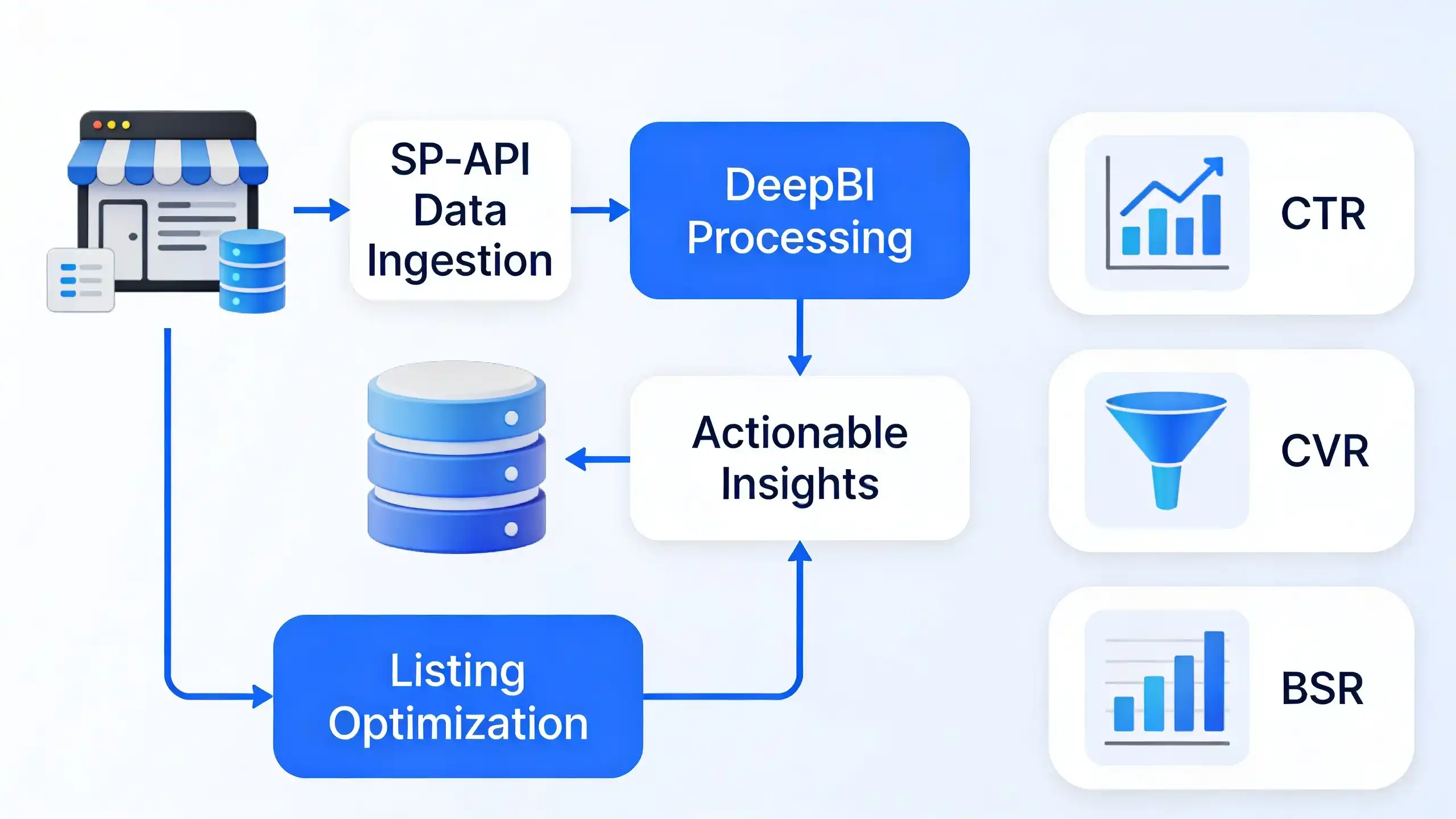
Manually executing the competitor analysis steps—from identifying rivals to deconstructing their listings and marketing funnels—is a complex and time-consuming process. DeepBI transforms this fragmented workflow into a cohesive, integrated system. By automating the laborious process of data collection and analysis, the platform provides a single source of truth, allowing you to move from discovery to decision-making with unprecedented speed. This isn't just about gathering data; it's about structuring it for strategic advantage.
The true power of DeepBI lies in its ability to convert raw competitor data into clear, actionable insights. Built on Amazon's official Selling Partner API (SP-API), the platform ensures the highest degree of data accuracy and reliability. It translates market signals and performance metrics into specific, executable recommendations designed to improve your key performance indicators, from Click-Through Rate (CTR) to Conversion Rate (CVR). The system is designed as an intelligent executor, presenting unambiguous suggestions that empower you to make informed decisions without the risk of AI-driven fabrications or violations of Amazon's guidelines.
Ultimately, DeepBI streamlines the entire competitive intelligence cycle. It handles the heavy lifting of data aggregation and interpretation, freeing up your team to focus on high-level strategy and execution. By embedding accuracy and efficiency into the core of your analysis, you can consistently identify market opportunities, mitigate threats, and optimize your listings to outperform the competition and improve your Best Sellers Rank (BSR).
Conclusion: Transform Your Amazon Strategy with Competitor Intelligence
Navigating the hyper-competitive Amazon marketplace without a clear view of your rivals is no longer a viable strategy. Success today demands more than intuition; it requires a deep, systematic understanding of competitor actions, from their keyword and pricing tactics to their product launch velocities and customer feedback patterns. This intelligence is not merely interesting—it is the foundation of a resilient and proactive business that can anticipate market shifts rather than just react to them.
The era of manual tracking and strategic guesswork is over. With advanced analytics platforms like DeepBI, sellers can automate the collection and analysis of competitor data, transforming it into a clear strategic advantage. This shift allows you to move from speculation to data-driven certainty, making precise decisions that optimize your listings, refine your marketing spend, and improve critical KPIs like Click-Through Rate (CTR) and Conversion Rate (CVR).
Ultimately, embracing competitor intelligence is about taking control of your brand's destiny on Amazon. By integrating these insights into your daily operations, you equip your business to not only compete but to lead. The path to sustained growth and market leadership is paved with superior data. Start leveraging competitor intelligence today to build a more profitable and dominant presence in your category.