Introduction: The Imperative of Competitive Intelligence on Amazon
The Amazon marketplace is no longer just a sales channel; it is a hyper-competitive arena where millions of sellers vie for the same customer attention. In this crowded environment, simply having a great product is not enough to guarantee success. Growth hinges on a seller's ability to not only understand their own performance but to strategically outmaneuver the competition. This requires moving beyond basic monitoring and embracing a proactive approach: systematically identifying and exploiting the weaknesses in your competitors' listings and strategies.
For any seller, but especially those managing hundreds of SKUs, manually analyzing the competitive landscape is a monumental task—time-consuming, prone to human error, and often yielding insights that are outdated by the time they can be implemented. True competitive advantage is born from a more sophisticated, data-driven methodology. It involves dissecting every element of a rival's presence, from their main image's impact on Click-Through Rate (CTR) to the sentiment hidden within their customer reviews, and pinpointing the specific gaps you can fill.
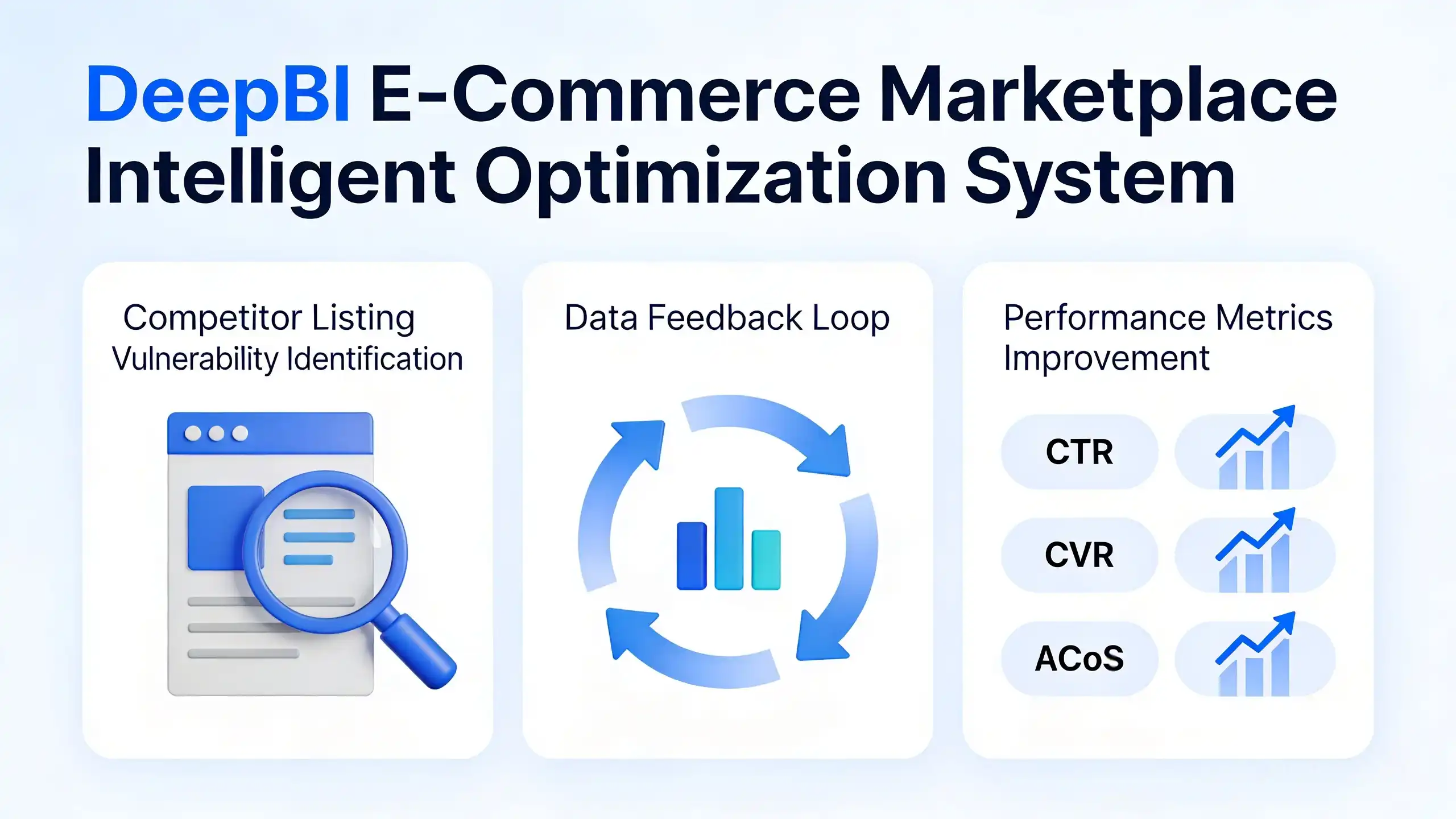
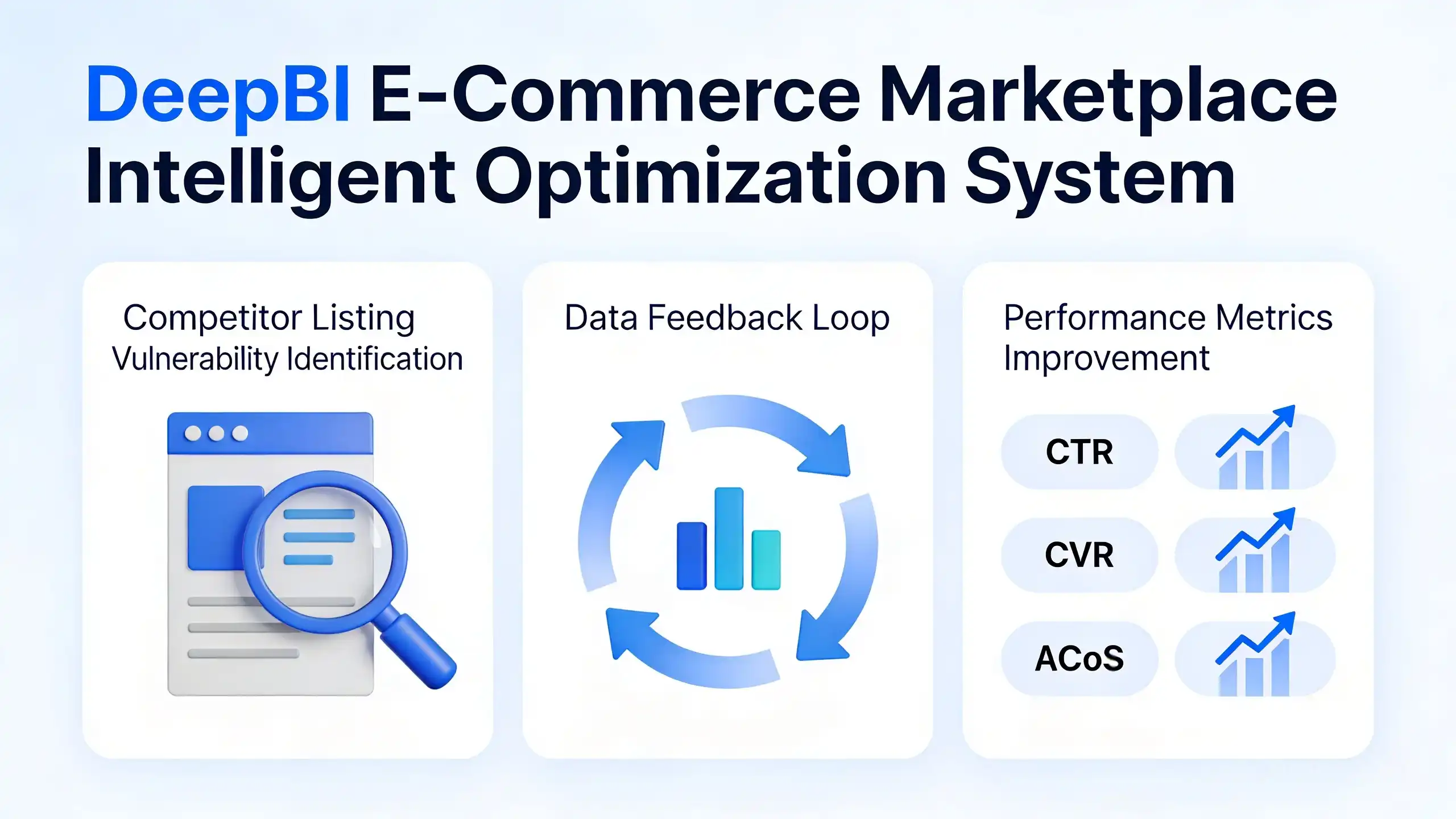
This is where intelligent systems like DeepBI become indispensable. By connecting the dots between diagnosis, planning, and execution, such platforms transform competitive analysis from a reactive chore into a core commercial engine. They empower sellers to turn data into decisive action, systematically enhancing their own listings to capitalize on competitor vulnerabilities and drive superior performance. This guide will explore how to leverage this powerful approach to uncover hidden opportunities and build a sustainable edge in the world's most competitive marketplace.
 Defining "Weakness" in the Amazon Ecosystem
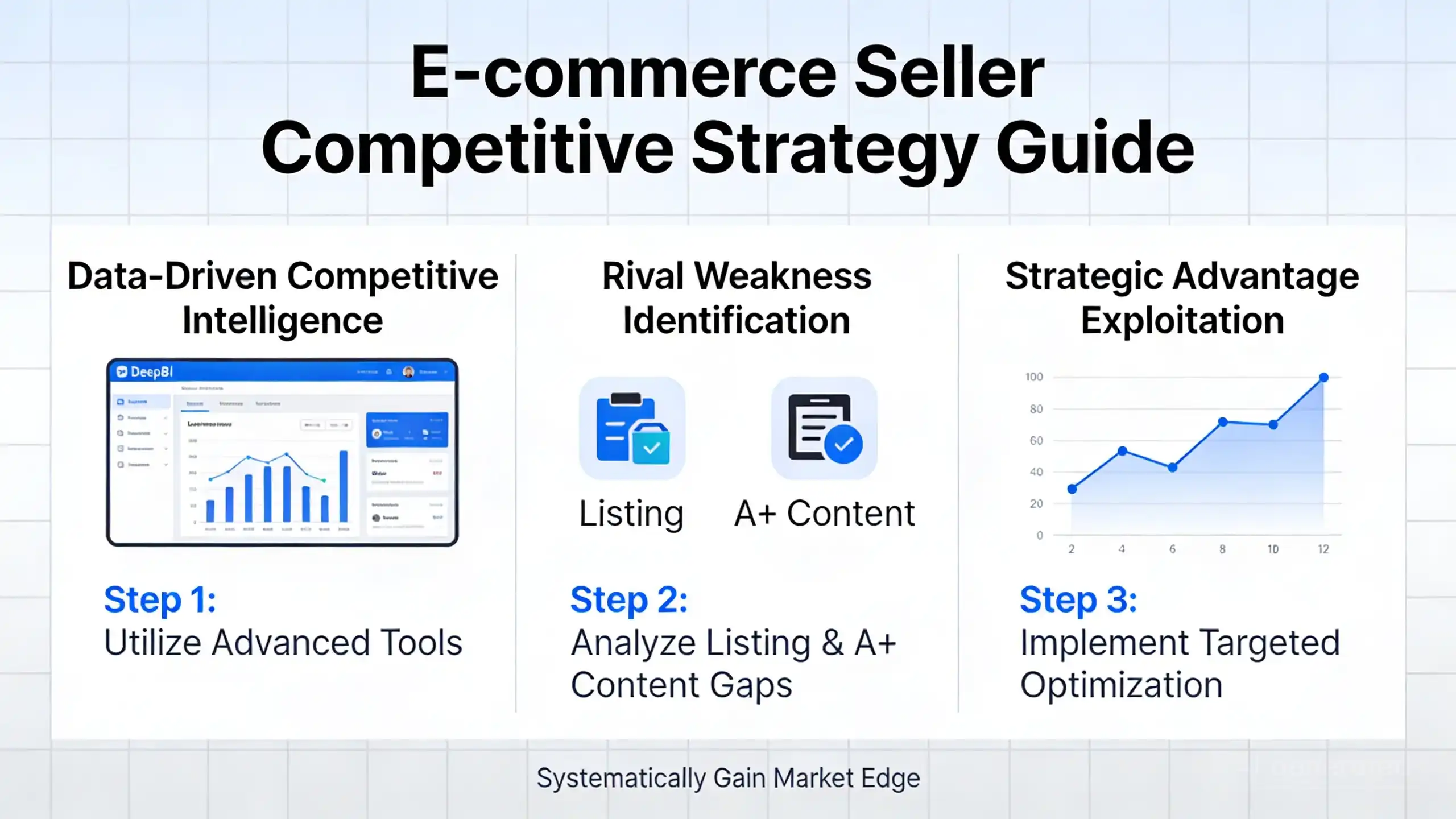
On Amazon, a competitor's "weakness" is not merely a flaw; it is a strategic opportunity. It represents any area where their performance, processes, or customer perception creates an opening for you to capture traffic, sales, and market share. Identifying these vulnerabilities requires a systematic approach that looks beyond surface-level metrics. A comprehensive framework for spotting weaknesses includes:
- Product Listing Quality: This covers everything from visual appeal to descriptive accuracy. A significant weakness is a mismatch between product images and the actual item, often a risk when using general-purpose AI tools that can alter a product's design. This leads directly to destructive negative reviews and returns. Other examples include unoptimized titles, sparse bullet points, or low-quality A+ Content.
- Pricing and Promotion Strategy: A competitor may have inconsistent pricing that alienates customers or a promotional strategy that erodes profit margins without significantly boosting BSR. Pricing too high without a clear brand or feature justification is an easily exploitable weakness.
- Advertising Effectiveness: High ad spend doesn't guarantee success. A competitor with a consistently high Advertising Cost of Sale (ACoS) on critical keywords may be struggling with inefficient campaigns. Similarly, a low Click-Through Rate (CTR) on their sponsored ads suggests their main image or title fails to capture shopper attention, indicating a weak creative-to-conversion funnel.
- Customer Reviews & Service (VoC): A pattern of negative reviews highlighting the same defect or complaint is a goldmine of competitive intelligence. When a competitor ignores this "Voice of the Customer" data, it signals a weakness in their product quality control or customer service responsiveness.
- Inventory Management: Frequent stockouts, especially on high-velocity ASINs, are a critical failure. Each day a competitor is out of stock is a day you can capture their sales and improve your own ranking.
 Methodologies for Competitor Weakness Identification
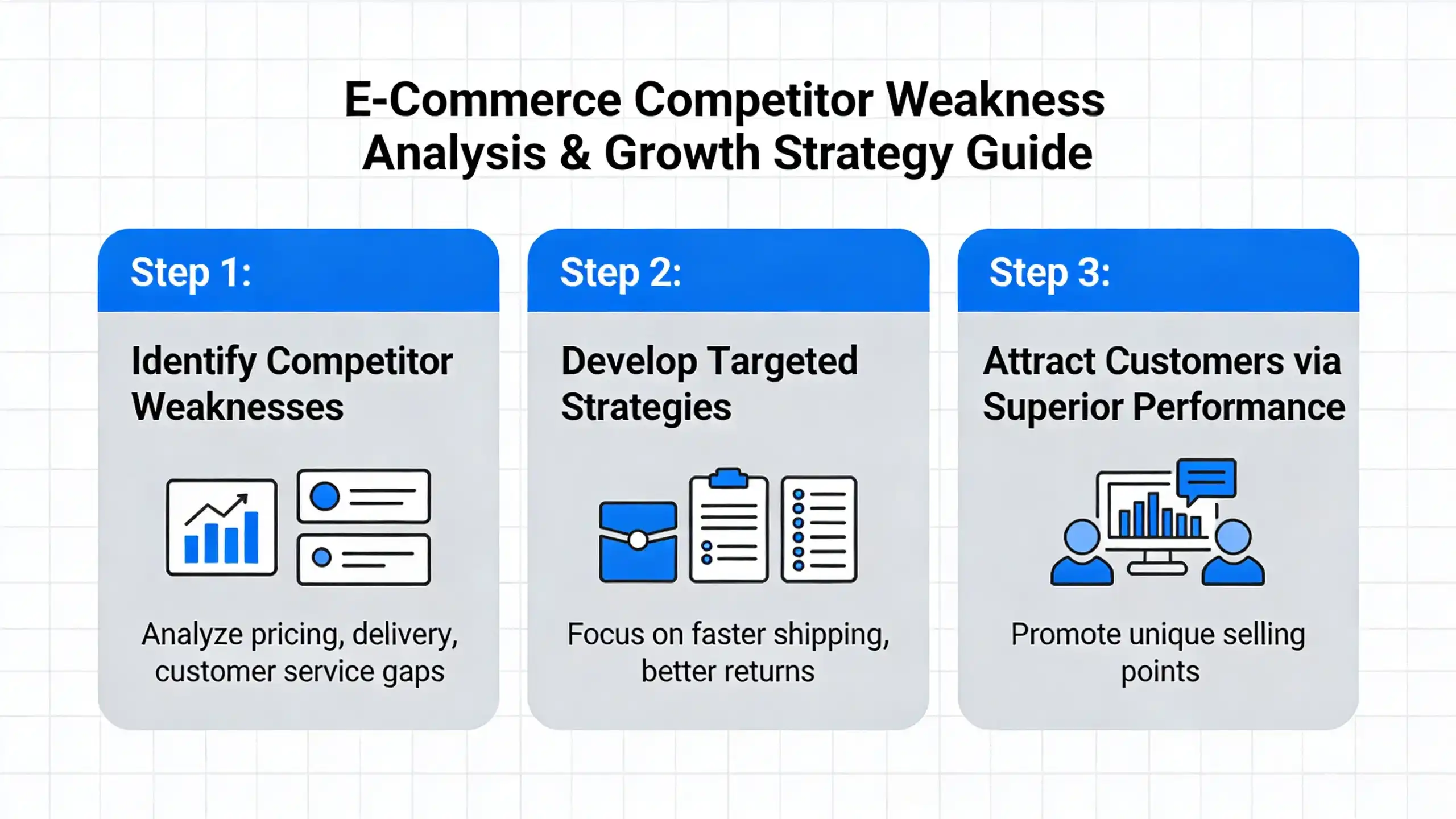
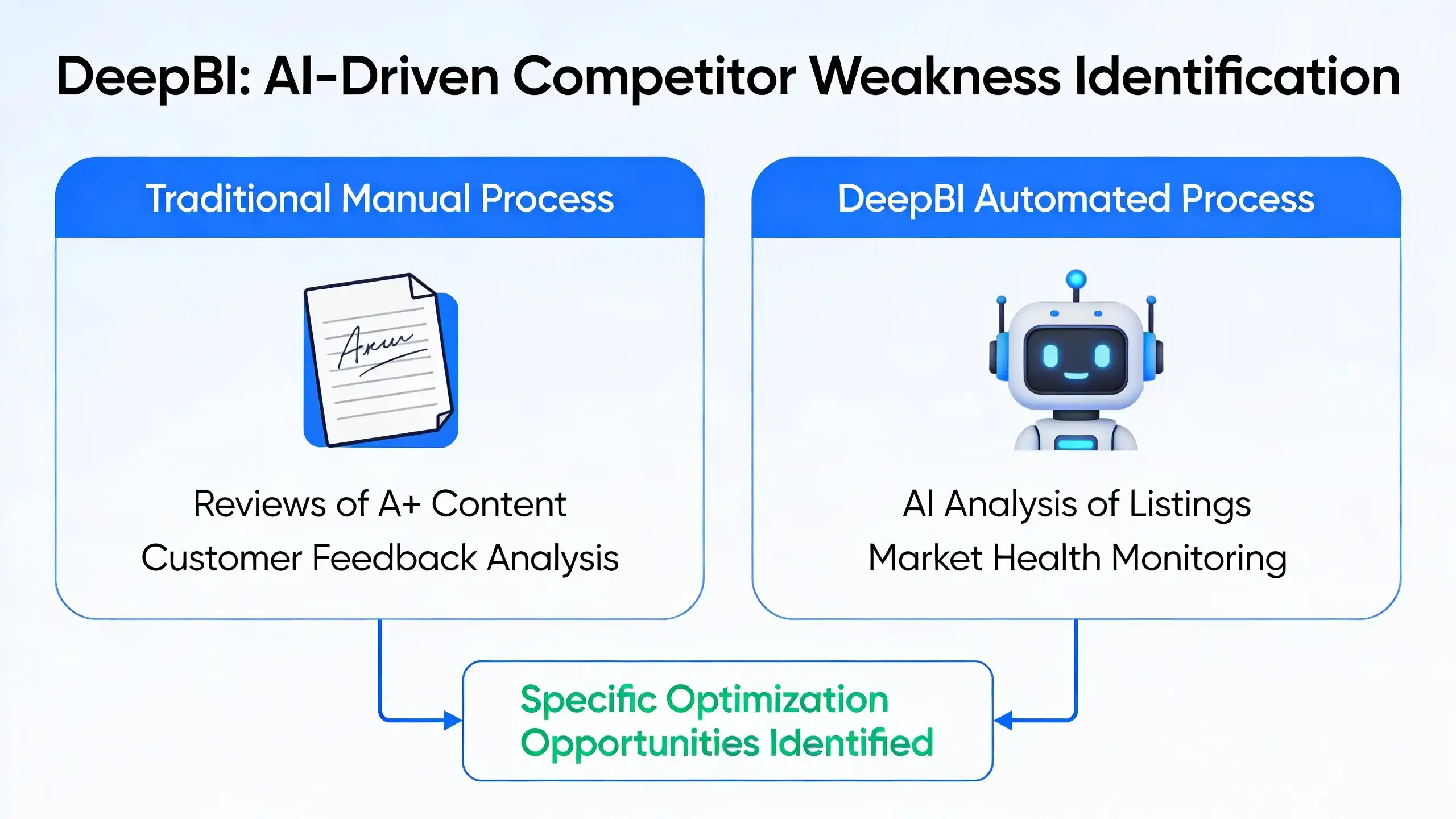
Identifying competitor weaknesses requires a multi-faceted approach, progressing from manual observation to sophisticated, data-driven analysis. The process begins with foundational manual methods: systematically reviewing competitor product pages, storefronts, and A+ Content to spot inconsistencies or gaps in their value proposition. This is complemented by analyzing customer feedback, mining their reviews and Q&A sections for recurring complaints, product flaws, or unmet needs that signal market opportunities.
While effective, these manual methods are time-consuming and often fail to capture the full picture. A more advanced strategy involves aggregating data using keyword research tools and competitive intelligence platforms to analyze sales trends and search performance. However, this data often remains in silos.
This is where integrated platforms provide a decisive advantage. DeepBI streamlines this entire process by centralizing and analyzing disparate data sources for comprehensive competitive benchmarking. Its Intelligent Scoring and Diagnosis feature functions as an automated market health check system. By leveraging multi-dimensional semantic analysis across distributed data, it automatically benchmarks competitor listings against established best practices. This process identifies specific content gaps, keyword optimization opportunities, and other weaknesses, transforming fragmented data points into a coherent, actionable optimization strategy. This breaks down the traditional silos between diagnosis and planning, creating an end-to-end intelligent optimization workflow.
 Analyzing Key Areas for Competitor Vulnerabilities
Identifying where your competitors are underperforming is the first step toward capturing their market share. A systematic analysis across their listings, pricing, advertising, and organic presence can reveal critical vulnerabilities that you can exploit with a data-informed strategy.
Listing Content and Optimization Gaps
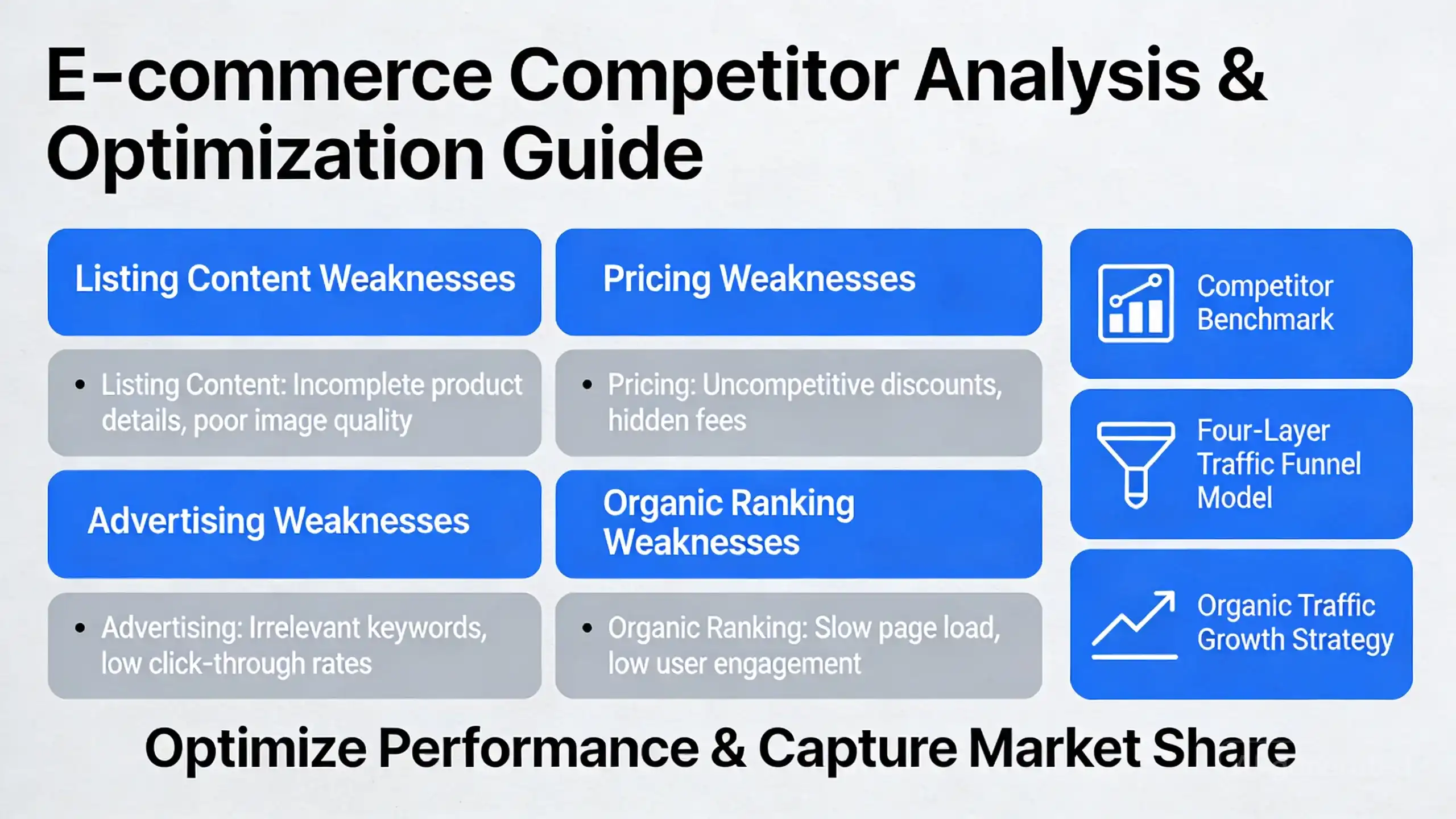
A competitor's product listing is a rich source of actionable intelligence. Start by scrutinizing their text elements—titles, bullet points, and descriptions—for weak keyword integration, unclear value propositions, or grammatical errors. A common flaw is failing to structure bullet points in a "pain point-solution" format, which weakens their persuasive power.
Next, evaluate their visual content. Low-quality images, an insufficient number of visuals, or unconvincing A+ Content can significantly depress conversion rates. Top sellers often deconstruct their A+ pages into logical modules to tell a compelling story; competitors who fail to do this present an opportunity. Tools like DeepBI's Competitor Benchmark can automate this analysis, comparing your listing elements directly against top performers to highlight specific areas for improvement.
Pricing and Promotional Strategy Flaws
A competitor's pricing and promotional cadence can reveal strategic weaknesses. Look for pricing that seems misaligned with the product's perceived value—either too high for its features or too low, suggesting margin issues. Frequent, erratic price changes can also signal instability and erode customer trust.
Analyze their use of deals, coupons, and other promotions. Are they impactful and strategic, or do they appear random and ineffective? A lack of a coherent promotional strategy is a vulnerability. Finally, assess their fulfillment method. Slower shipping times or higher costs compared to the FBA standard can be a decisive disadvantage, creating an opening for sellers with superior logistics to win the Buy Box.
Advertising Campaign Inefficiencies
While you can't see a competitor's ACoS, you can infer advertising inefficiencies from observable data. Identify high-intent keywords where their ads appear inconsistently or not at all, suggesting either a budget limitation or a gap in their targeting strategy.
Examine their ad creatives and copy. A weak main image or uncompelling headline can lead to a poor Click-Through Rate (CTR), wasting their ad spend. By adapting a framework like DeepBI's Four-Layer Traffic Funnel Model, you can systematically analyze the customer journey, identify keywords where competitors are inefficiently targeted, and discover opportunities to capture traffic they are failing to convert.
Organic Ranking and Visibility Gaps
Strong organic ranking is a long-term competitive moat, and gaps in a competitor's visibility are significant opportunities. Use analytics tools to find high-volume, relevant keywords where competitors are not ranking on the first page. Their poor performance on a cluster of related search terms may indicate they have neglected this topic in their overall organic optimization.
Furthermore, assess their brand authority. A weaker brand presence or a lower volume of positive reviews can negatively impact their organic placement and customer trust. A methodology like DeepBI's Organic Traffic Growth Strategy helps formalize this search by identifying high-value keywords where competitors have a weak organic presence, allowing you to target these terms for sustained, long-term traffic growth.
 Translating Weaknesses into Actionable Strategies
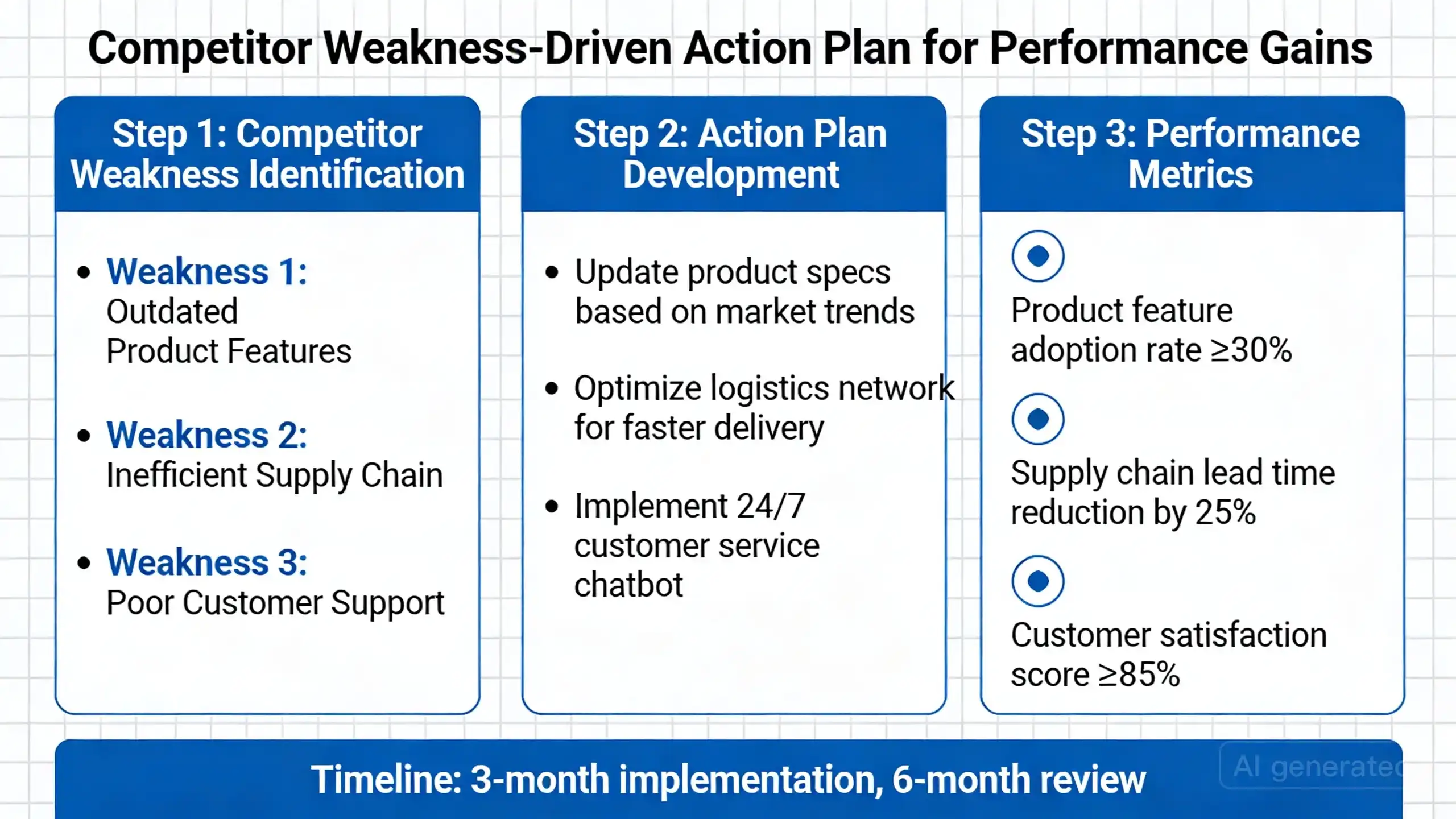
Identifying a competitor's weakness is only half the battle; the real advantage comes from translating that insight into swift, decisive action. A comprehensive strategy converts analytical findings into tangible improvements across your Amazon presence:
- Listing Enhancement: Systematically upgrade titles, bullet points, images, and A+ Content to fill the gaps your competitors leave open.
- Strategic Pricing: Adjust pricing models and promotions to offer superior value where competitors are overpriced or inflexible.
- Targeted Advertising: Reallocate ad spend to capture traffic from competitor-neglected keywords or strategically outbid them on high-value terms.
- Customer Experience Improvement: Proactively address common pain points and feature requests discovered in competitor reviews to build brand loyalty.
This is where analysis meets execution. DeepBI’s AI Image and Text Generation module transforms this strategic framework into optimized assets at scale. Unlike general AI tools that risk "hallucinations" and product mismatches, DeepBI operates as an automated production system. It establishes a "Product DNA" map to ensure every generated image and text description is authentic to your product, mitigating the risk of negative reviews. Vague goals are replaced with precise, AI-executable instructions. Once approved, new content is synced to your listing in seconds via API, not the dozens of minutes required for manual uploads. This rapid deployment is then tracked against ad reports, allowing you to measure the direct impact of your changes on KPIs like Click-Through Rate (CTR) and close the optimization loop.
 Conclusion: Sustained Competitive Advantage with DeepBI
Navigating the Amazon marketplace successfully requires more than a strong launch; it demands continuous vigilance and a proactive strategy for identifying and capitalizing on competitor vulnerabilities. The era of relying on subjective aesthetics and disconnected workflows is over. Such traditional methods often create a gap between analysis, execution, and performance measurement, leaving sellers uncertain about the true impact of their efforts.
DeepBI bridges this gap by providing an end-to-end, closed-loop system. It moves beyond simple diagnosis, connecting data-driven insights directly to automated delivery and, crucially, tracking the subsequent impact on key metrics like CTR through event tagging. This transforms competitive intelligence from a reactive exercise into a proactive growth engine. To build a lasting advantage, sellers must embrace this data-driven methodology. Adopting a platform like DeepBI is not just about gaining insights; it's about operationalizing intelligence to consistently outmaneuver the competition and secure a sustainable market position.