The Strategic Imperative: Why Campaign Structure Matters
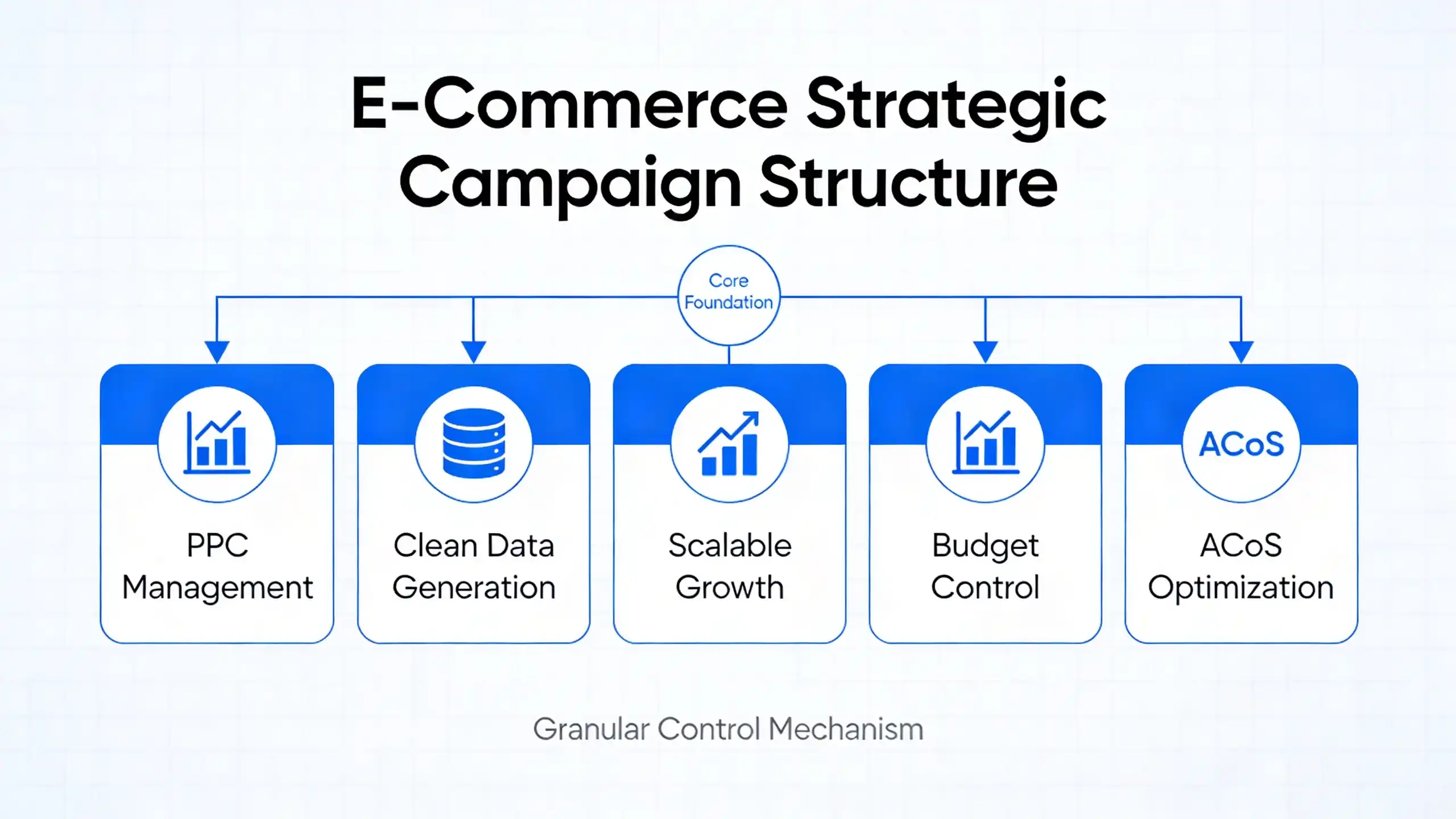
In the competitive Amazon marketplace, simply running PPC campaigns is not enough. Many sellers launch ads with a basic setup, only to find themselves struggling with uncontrolled spending, confusing performance data, and an inability to scale effectively. The root of these issues often lies in a neglected, yet fundamental, element: campaign structure. A strategic campaign structure is far more than an organizational preference; it is the architectural foundation upon which all successful advertising efforts are built.
A well-designed structure brings order to the inherent complexity of Amazon PPC. It provides the control necessary to allocate budgets with precision, separating brand defense from new customer acquisition or high-margin products from loss leaders. This segmentation is critical for generating clean, interpretable data. Without it, performance metrics become a blended average, hiding valuable insights and making it nearly impossible to determine which specific strategies are driving growth and which are draining your budget.
Ultimately, your campaign structure directly dictates your ability to optimize and scale. It enables you to make informed, data-driven decisions—from harvesting high-performing keywords to adjusting bids and managing ACoS at a granular level. It transforms your advertising from a reactive expense into a proactive, scalable engine for growth.
 Understanding Amazon's Algorithm: The Foundation of Effective Structure
To build a winning PPC strategy, you must first understand the engine driving it: Amazon's A9 algorithm. The platform operates on two primary, interconnected objectives. First, it aims to provide the best possible shopper experience by showing the most relevant products that are likely to lead to a purchase. Second, it seeks to maximize its own revenue, a significant portion of which comes from advertising. A successful campaign structure is one that aligns perfectly with both of these goals.
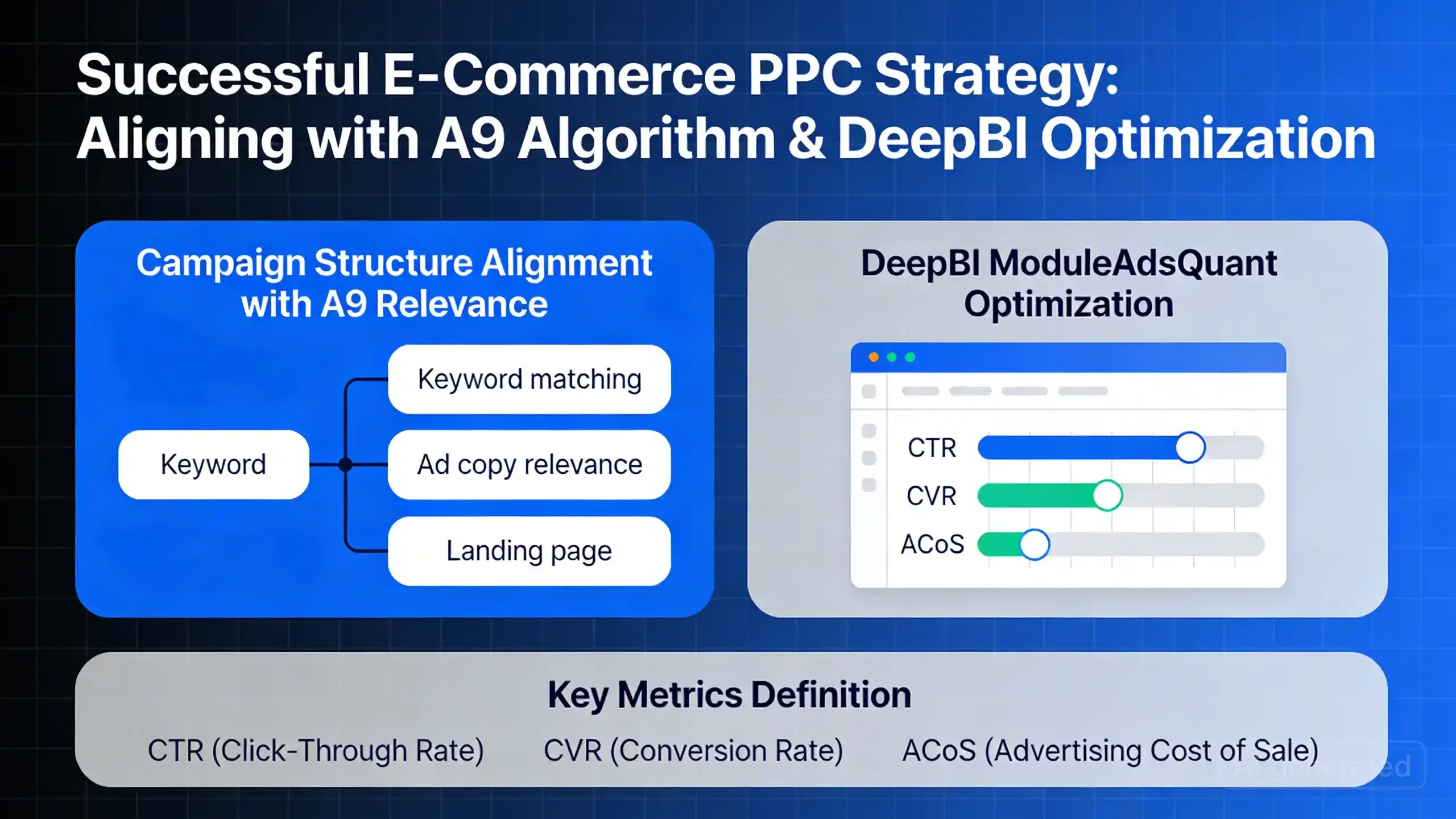
The Amazon ad auction is not a simple highest-bid-wins system. It's a complex interplay between your bid and your ad's relevance, which is determined by factors like historical click-through rate (CTR) and conversion rate (CVR). An ad with high relevance can win a top placement even with a lower bid than a less relevant competitor. This is because Amazon predicts your ad is more likely to satisfy the customer and generate a sale, thus fulfilling both of its core objectives.
A well-organized campaign structure is your primary tool for signaling relevance. By tightly grouping related keywords, products, and ad copy, you demonstrate to the algorithm that your ad is an excellent match for a specific search query. This alignment can improve your ad rank, increase visibility, and ultimately lower your Advertising Cost of Sales (ACoS). To effectively manage this, tools like DeepBI's ModuleAdsQuant provide a data-driven approach, enabling sellers to analyze performance metrics and ensure their campaign structure is optimized to meet the algorithm's demands.
 Core Components of an Amazon PPC Campaign
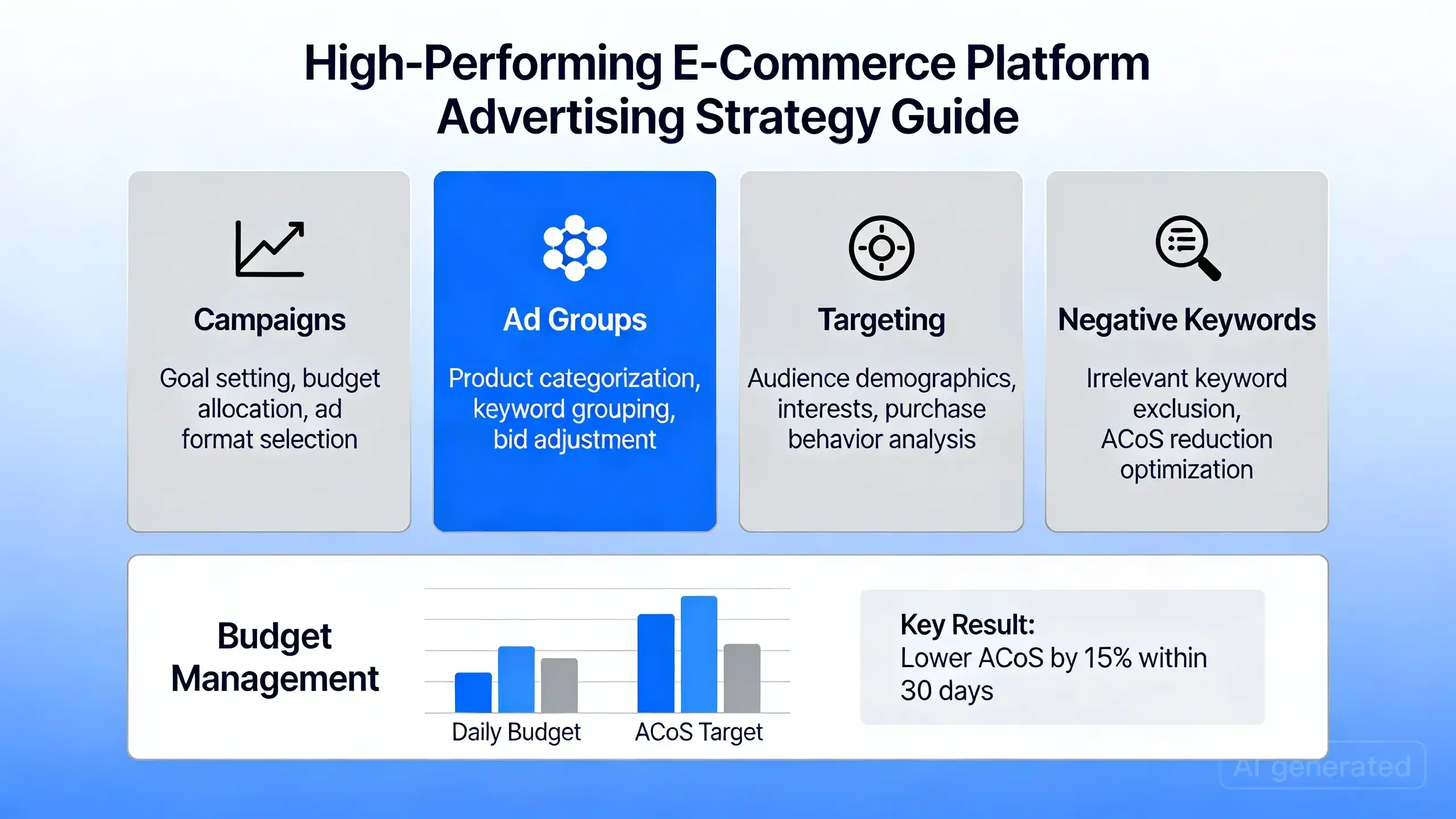
To construct a high-performing Amazon advertising strategy, you must first master its fundamental building blocks. Think of these components as the essential tools and materials for building a robust campaign structure. Each element serves a distinct purpose in controlling budget, targeting customers, and organizing your advertising efforts.
At the highest level is the Campaign. This is where you set your overall daily budget, campaign duration, and choose the ad type—such as Sponsored Products, Sponsored Brands, or Sponsored Display. Each campaign type offers different placements and creative options tailored to specific marketing goals.
Within each campaign, you create Ad Groups. These are containers used to organize your advertising around a tightly-themed set of products and their corresponding targeting. For example, an ad group might contain several variations of a single product, all targeted with the same set of keywords.
Targeting itself is managed through two primary methods:
- Keywords: You can bid on customer search terms using different match types. Broad match offers the widest reach, phrase match provides more control by requiring the keyword phrase to be present, and exact match gives you the most precise control over which searches trigger your ad.
- Product Targeting: This allows you to place your ads on specific product detail pages (targeting ASINs) or within search results for certain categories, brands, or features.
Finally, Negative Keywords are a critical tool for budget efficiency. By adding terms as negative keywords, you prevent your ads from appearing for irrelevant searches. This simple action stops wasteful spending, focuses your budget on qualified traffic, and directly helps to lower your Advertising Cost of Sale (ACoS).
 Designing Effective Campaign Structures: Strategies and Models
The optimal Amazon PPC campaign structure is not a one-size-fits-all template but a strategic choice tailored to your catalog, budget, and business goals. The core decision lies on the Granularity Spectrum, balancing the high control of Single Keyword Ad Groups (SKAGs) against the manageability of broader structures. While granular campaigns allow for precise bid adjustments and highly relevant ad copy to maximize CTR, they demand significant management overhead.
Several proven models serve as foundational building blocks for a robust structure:
- Brand vs. Non-Brand Separation: This is non-negotiable for clear performance analysis. Isolate branded search terms to defend your brand space at a low ACoS, while allocating a separate budget to non-brand campaigns focused on customer acquisition.
- Match Type Segmentation: By creating separate campaigns or ad groups for broad, phrase, and exact match types, you can channel budget effectively. Use broad match for keyword discovery and bid most aggressively on high-converting exact match terms to maximize CVR.
- Goal-Oriented Campaigns: Structure campaigns by their strategic purpose. Discovery Campaigns use auto-targeting or broad match to harvest new keywords. Defensive Campaigns protect your product detail pages by bidding on your own ASINs, while Aggressive Campaigns target competitor ASINs to capture market share.
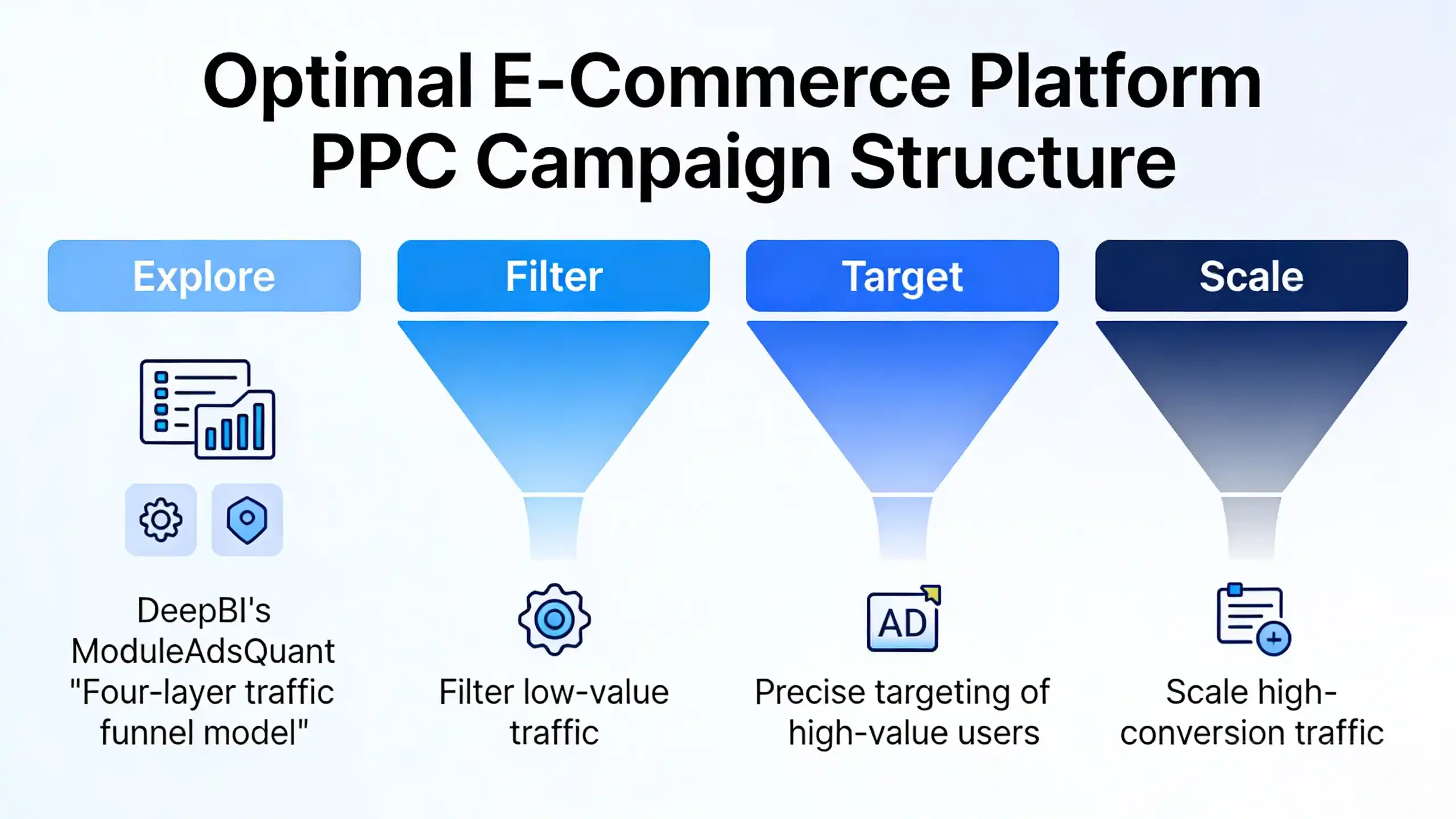
A sophisticated strategy integrates these models into a cohesive system. For example, DeepBI's ModuleAdsQuant "Four-layer traffic funnel model" provides a framework to Explore with discovery campaigns, Filter out irrelevant traffic, Target high-intent keywords in dedicated campaigns, and Scale the proven winners.
 The Art of Naming Conventions: Organization and Clarity
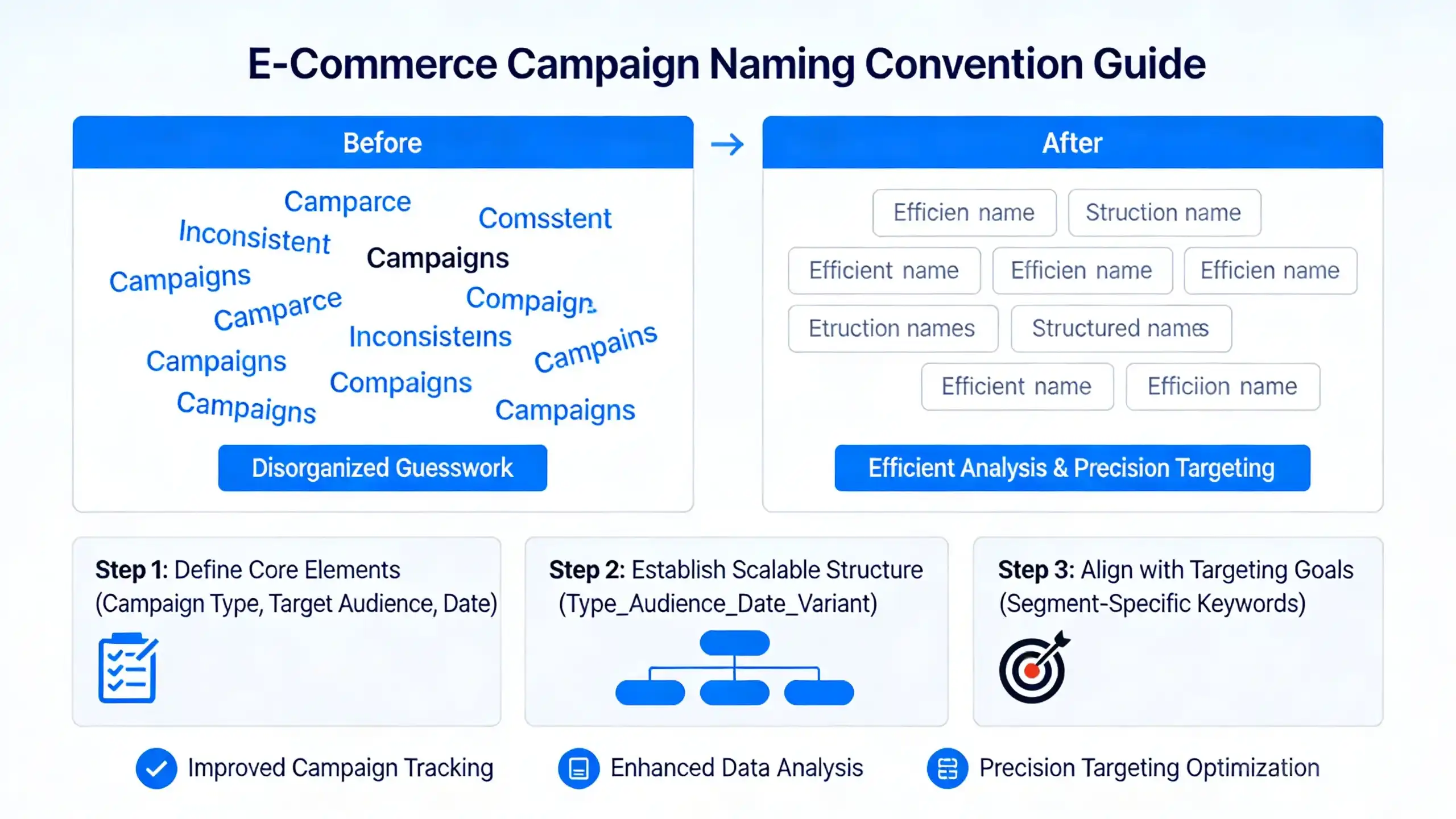
Without a systematic approach, managing a growing number of campaigns can feel like groping in the dark. When you encounter a problem, such as a core product suffering from a low Click-Through Rate (CTR) and high Advertising Cost of Sales (ACoS), a disorganized account structure makes it nearly impossible to diagnose the root cause. You are left guessing whether the issue lies with the match type, targeting strategy, or a specific ad group. Without clear names, you cannot efficiently filter advertising reports to find data-driven answers, turning optimization into a frustrating exercise in trial and error.
This is where a logical naming convention moves you from chaos to clarity. A scalable system provides instant context for every campaign and ad group, streamlining analysis, reporting, and team collaboration. An effective naming structure should be consistent and contain key identifiers. Consider a format that includes:
- Product Identifier (e.g., ASIN or internal SKU)
- Campaign Type (e.g., SP, SB, SD)
- Targeting Strategy (e.g., Auto, Keyword, Product)
- Match Type (e.g., Broad, Phrase, Exact)
- A unique identifier or date for versioning
For example, a name like SKU123-SP-KW-Broad-2024Q3 immediately tells you this is a Sponsored Products campaign using broad match keyword targeting for a specific product, launched in Q3 2024. This discipline significantly reduces manual errors and improves management efficiency, allowing you to filter and analyze performance with precision. It is the foundation for moving from guesswork to precision targeting and scalable growth.
 Granularity and Management: Balancing Control with Efficiency
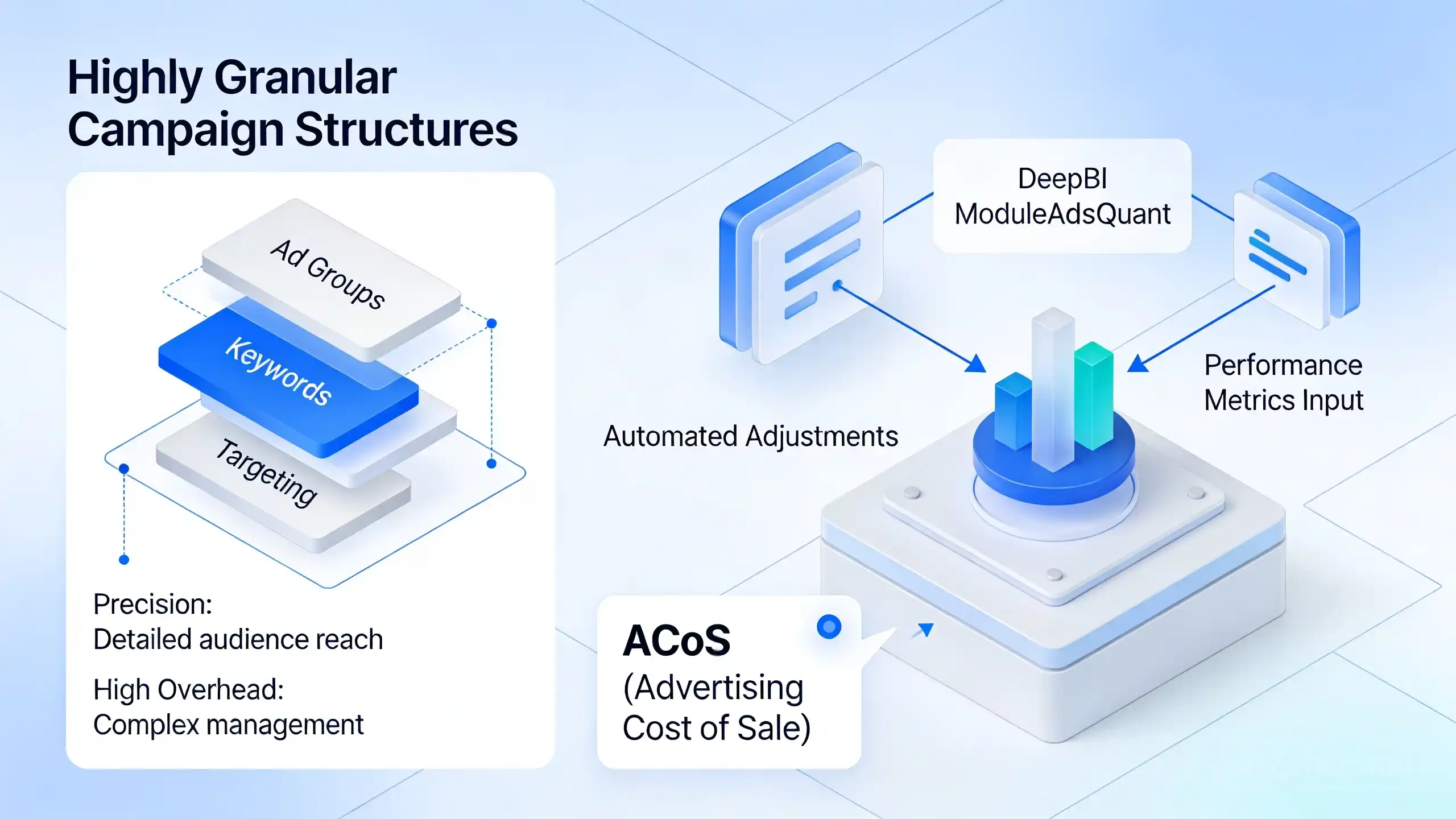
Highly granular campaign structures offer unparalleled control, allowing for precise bidding on individual keywords and targets, which often leads to better data analysis and improved ACoS. However, this level of detail comes at a cost: significant management overhead. As the number of campaigns and ad groups multiplies, so does the time required for monitoring and adjustments, creating a risk of management burnout and costly errors.
To balance precision with efficiency, successful sellers employ strategies to manage this complexity effectively. Key approaches include:
- Automation: Using software to handle repetitive tasks like bid adjustments and budget allocation.
- Bulk Operations: Leveraging spreadsheets or specialized tools to make changes across many campaigns simultaneously.
- Clear Reporting: Developing dashboards that consolidate performance data, making it easier to spot trends and identify priorities without getting lost in the details.
Automation is a particularly powerful lever for managing granular accounts. For example, DeepBI's ModuleAdsQuant includes a "Dynamic parameter adjustment mechanism" that directly addresses this challenge. The tool automates bid and budget changes by continuously analyzing performance metrics—such as clicks, conversions, spend, and ACOS—from the past seven days. This reduces manual workload and ensures that optimization is an ongoing process, not a periodic task.
Ultimately, the right level of granularity depends on your account's maturity and performance. For high-volume products or keywords that show significant potential, increasing granularity can unlock superior performance. Conversely, if certain segments are underperforming or have low traffic, consolidating them can simplify management and free up resources to focus on higher-impact areas.
 Continuous Optimization and Scaling: Evolving Your Structure
A well-designed campaign structure is not a "set it and forget it" asset; it is a dynamic framework that must evolve with your performance data. The most successful Amazon sellers treat PPC management as a continuous iterative cycle: test, analyze, and refine. This process is fundamental to maximizing return on ad spend (ROAS) and achieving sustainable growth.
The core of this optimization loop is data-driven analysis. By closely monitoring key performance indicators (KPIs), you can identify opportunities for structural improvement. Consolidate or pause ad groups and keywords that consistently show high ACoS and low conversion rates to prevent budget drain. Conversely, when you identify high-performing campaigns with strong click-through rates (CTR) and conversion rates (CVR), it's time to scale. This can involve gradually increasing budgets or graduating top-performing search terms from broad match campaigns into their own exact match campaigns for greater control and visibility.
Ongoing refinement also heavily relies on the strategic use of negative keywords. Regularly review search term reports to identify and negate irrelevant queries that trigger your ads. This simple but powerful action sharpens your targeting, reduces wasted spend, and directly improves your ACoS over time.
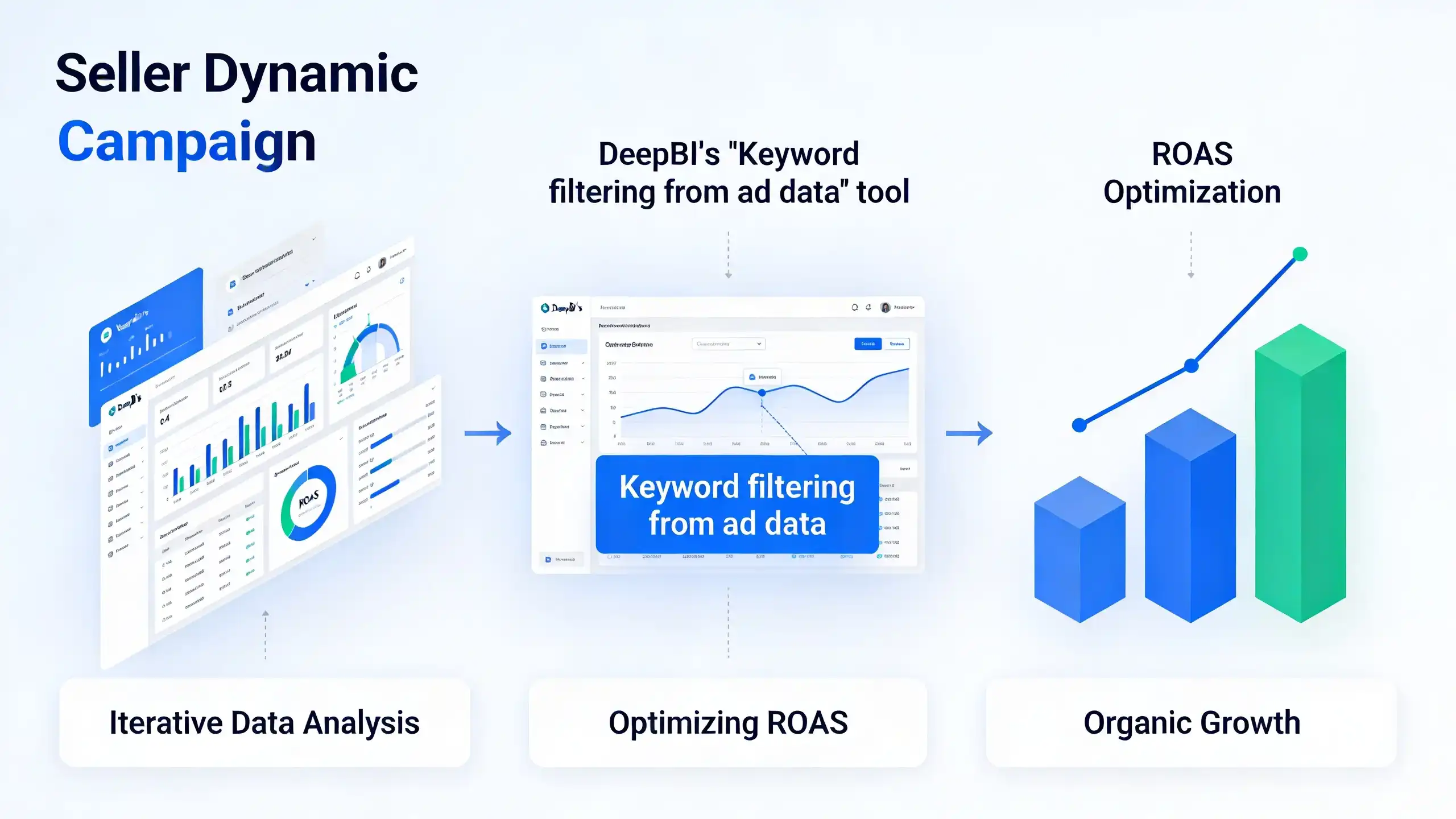
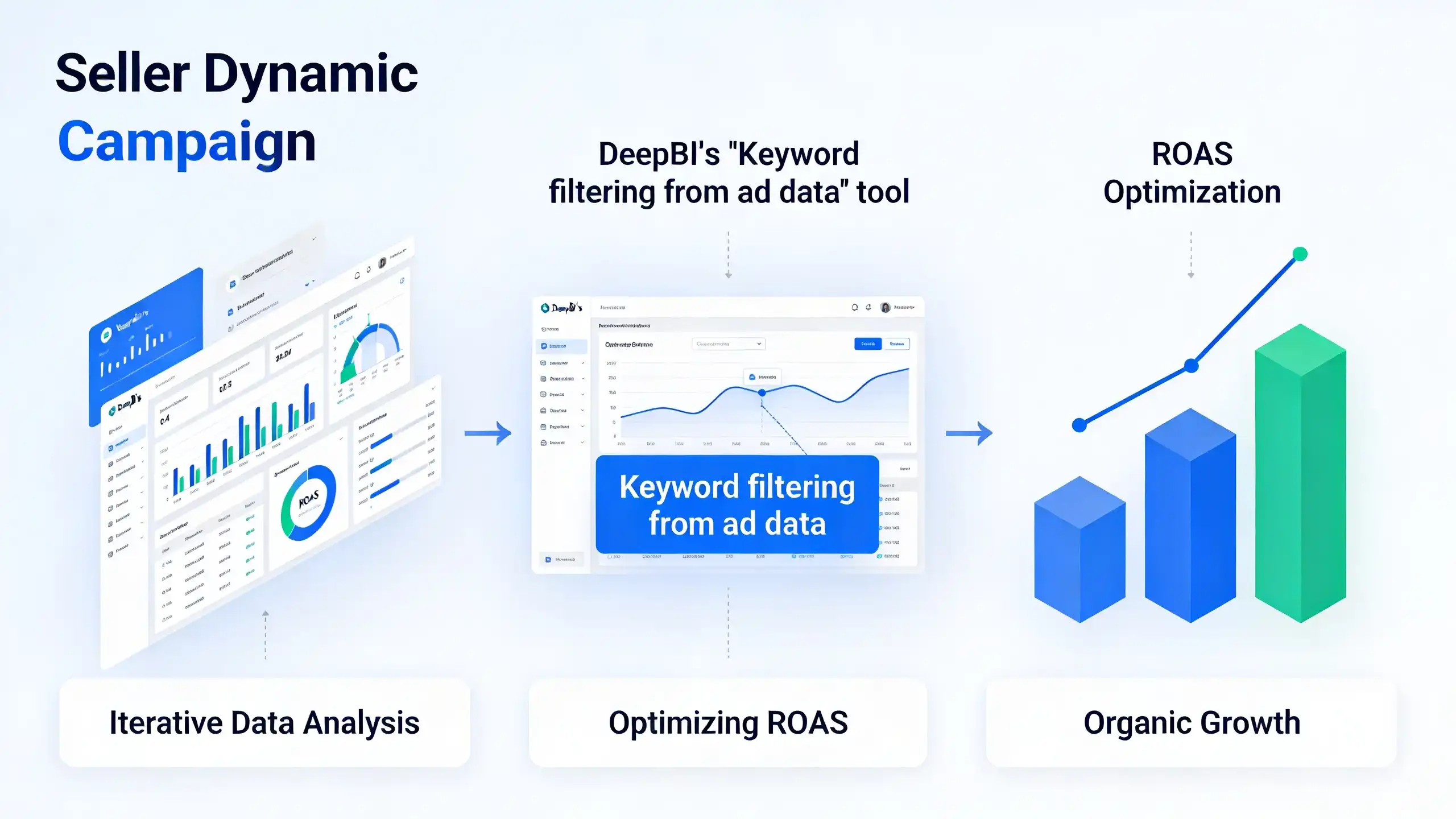
Ultimately, a sophisticated ad structure does more than just optimize ad spend; it fuels organic growth. By leveraging tools with features like DeepBI's 'Keyword filtering from ad data,' you can systematically isolate keywords that deliver high CTR, CVR, and significant order volume. This data provides a clear roadmap for the 'Fifth-layer funnel (organic traffic growth strategy),' where these proven, high-conversion keywords are used to build targeted campaigns. The sales velocity generated from these optimized campaigns sends strong signals to Amazon's algorithm, directly boosting your product's organic ranking and Best Seller Rank (BSR).
 The Role of Listing Quality: Maximizing Conversion from Ad Traffic
A meticulously structured advertising campaign is only half the equation for success on Amazon. Its primary function is to drive qualified traffic to your product detail page. However, if that page isn't optimized to convert visitors into buyers, even the most brilliant ad strategy will result in wasted spend and a high Advertising Cost of Sale (ACoS). Think of it as paying to bring customers to your store, only to find the doors locked and the windows uninviting. The ad campaign delivers the traffic; the listing must secure the sale.
A high-converting listing is built on several critical elements working in concert:
- A compelling main image that grabs attention and accurately represents the product.
- An SEO-optimized title that is both discoverable and informative.
- Persuasive bullet points that highlight key benefits and solve customer problems.
- Engaging A+ Content that tells a brand story and deepens product understanding.
- Competitive pricing and a strong social proof foundation through positive reviews.
The synergy between ad performance and listing quality creates a powerful feedback loop. A higher Conversion Rate (CVR) from an optimized listing signals relevance to Amazon's algorithm, which can improve your ad rank and potentially lower your cost-per-click (CPC).
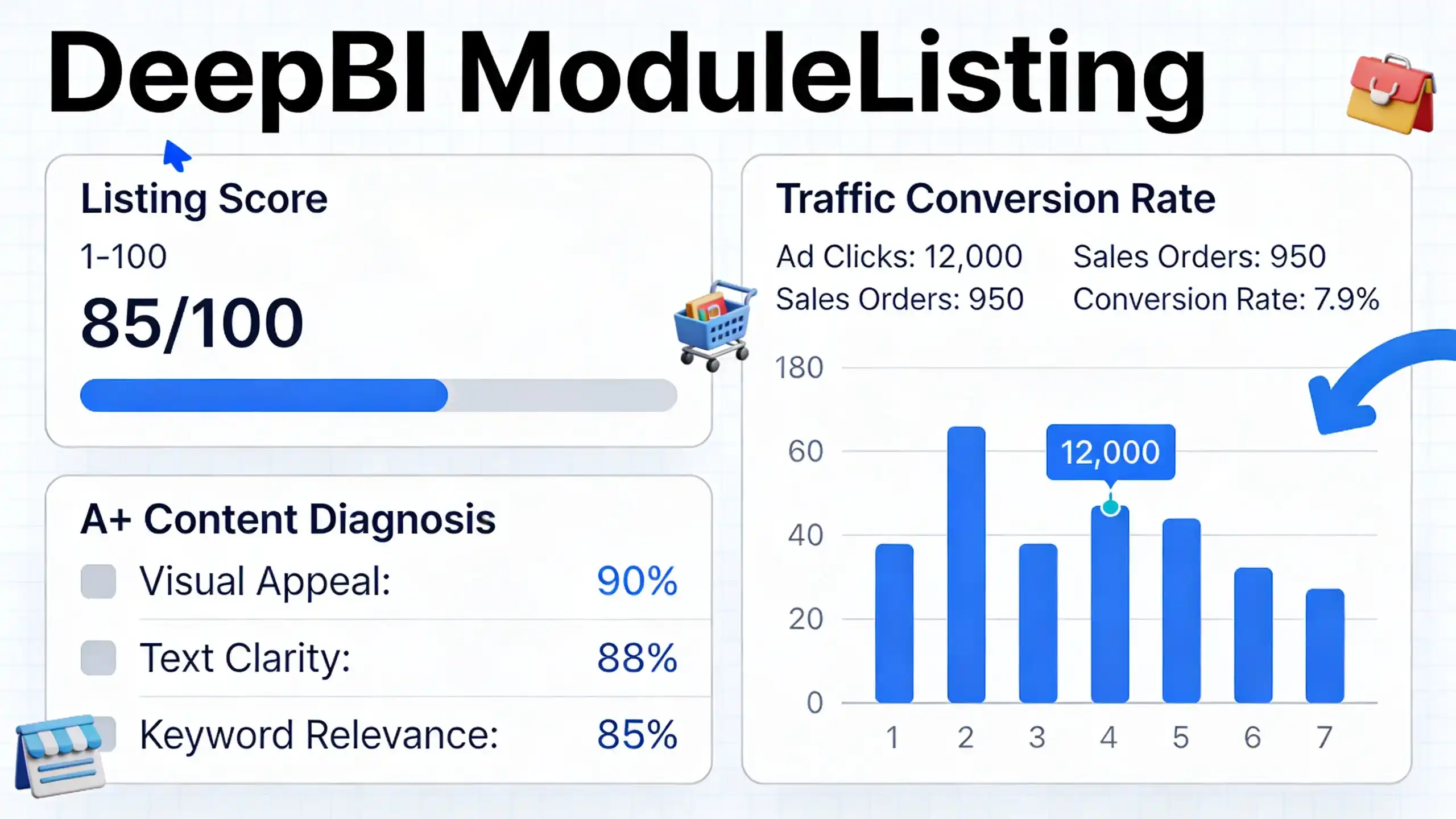
To move this process from guesswork to a data-driven methodology, DeepBI’s ModuleListing offers an "Intelligent scoring and diagnosis" feature. This tool provides a multi-dimensional analysis of your main images, titles, bullet points, and A+ Content, benchmarking them against top competitors. It replaces vague advice with precise, actionable insights, ensuring that the valuable traffic your ads generate lands on a page fully optimized to maximize conversion.
 Conclusion: DeepBI's Role in Streamlining Your Amazon PPC Strategy
Achieving sustained success on Amazon requires more than just launching campaigns; it demands a meticulously crafted PPC structure. This strategic foundation is what enables superior budget control, operational efficiency, scalable growth, and the deep performance insights necessary to outmaneuver competitors. Without it, even the most aggressive ad spend can lead to wasted resources and missed opportunities.
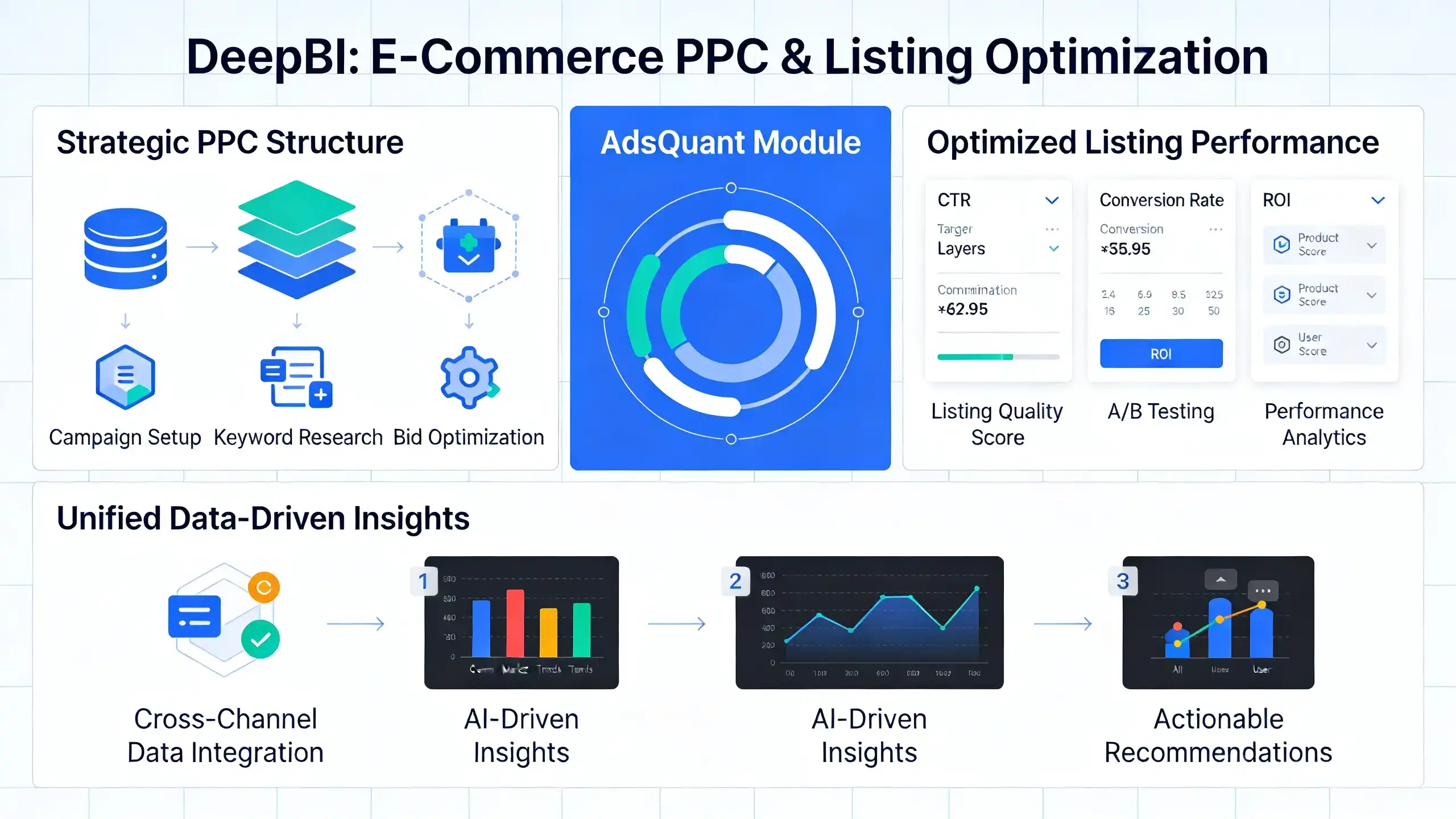
This is where a holistic approach, powered by the right technology, becomes a game-changer. DeepBI streamlines this entire process by integrating critical functions into a single, intelligent platform. Its AdsQuant module provides the framework for designing and optimizing your campaign architecture. Simultaneously, the OrganicTraffic and Listing modules connect ad performance to the complete customer journey. For instance, the system can directly track how changes to your listing images impact the Click-Through Rate (CTR) of your ad campaigns, closing the loop between advertising and conversion.
By adopting a data-driven methodology with DeepBI, you transition from reactive adjustments to proactive strategy. The platform acts as a powerful executor, providing the unified data you need to make smarter decisions and build a truly optimized, high-performance Amazon business. [Contact us to learn how DeepBI can transform your PPC strategy].