

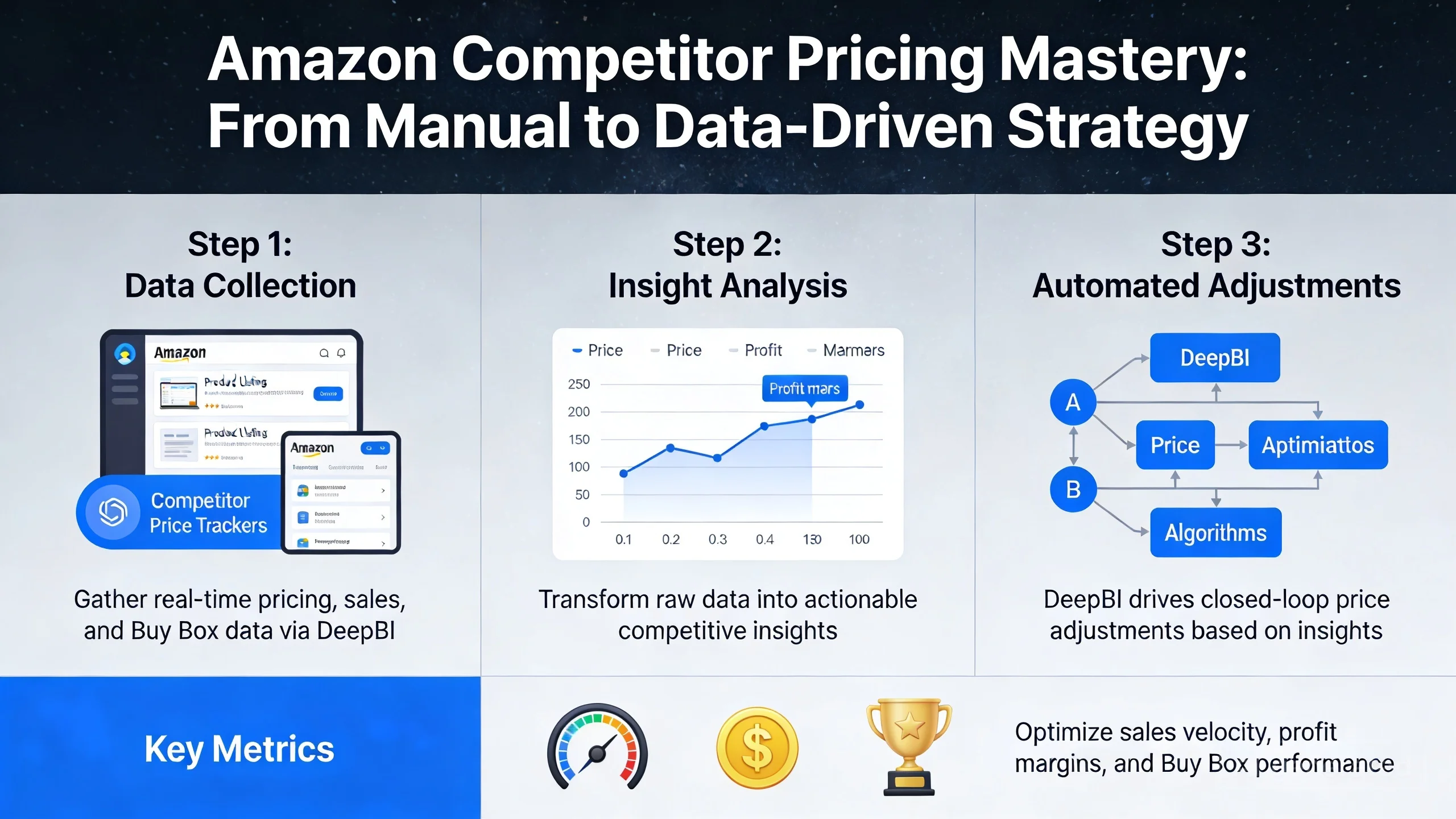
In the hyper-competitive Amazon marketplace, pricing is not just a number—it is your most powerful lever for driving sales velocity, defending market share, and protecting profit margins. Yet, many sellers remain trapped in a reactive cycle of manual price checks and simplistic "race-to-the-bottom" repricing rules. This approach is not only time-consuming but also disconnected from critical business intelligence, leaving money on the table and creating vulnerabilities that savvy competitors can exploit. Thriving on Amazon requires moving beyond guesswork and gut feelings toward a sophisticated, data-driven pricing strategy.
This guide introduces a systematic framework for mastering competitor pricing. We will break down the silos that traditionally separate market analysis, strategic planning, and price execution. By building an end-to-end intelligent system, you can transform raw competitor data into actionable insights and automated adjustments that align with your specific goals—whether that's maximizing profit, liquidating inventory, or capturing the Buy Box. With a tool like DeepBI, this level of strategic automation is no longer a theoretical advantage but a practical capability. It enables a closed-loop process, starting with a quantitative diagnosis of the competitive landscape and ending with precise, automated price delivery, ensuring you are always positioned for optimal performance.
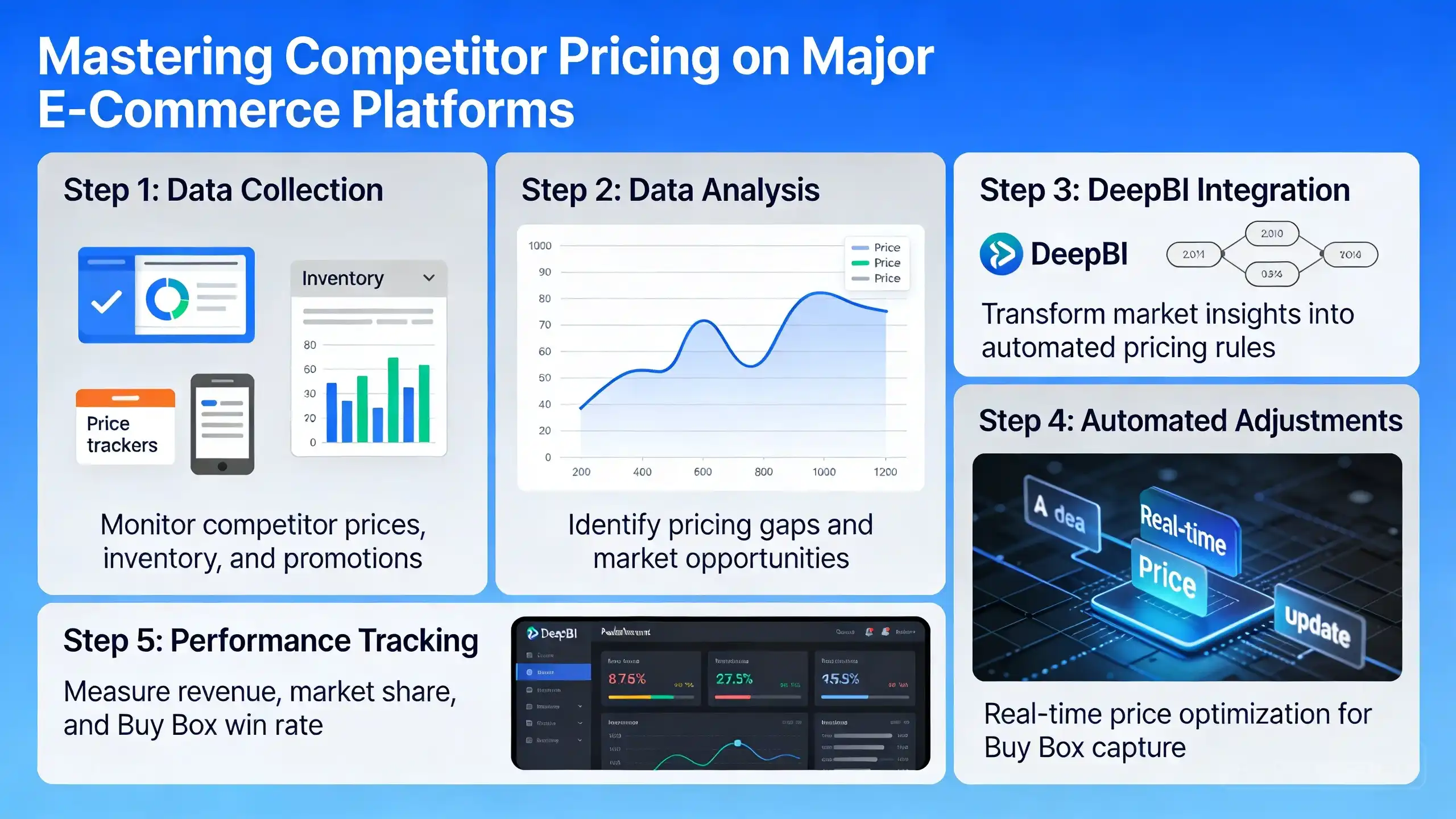 The Dynamic Amazon Marketplace: Why Pricing is Paramount
On Amazon, pricing is not merely a number—it's a primary driver of growth and a critical lever for survival. The platform's sheer scale has created a hyper-competitive ecosystem where millions of sellers vie for customer attention. This intensity results in constant and rapid price fluctuations, where a winning price one hour can become unprofitable the next. A "set it and forget it" approach is a direct path to diminished profitability, either by being priced out of the market or by leaving money on the table.
The challenge is amplified by today's informed consumers. Shoppers have access to sophisticated price-tracking tools like Camel Camel Camel, allowing them to monitor price histories and wait for the optimal moment to buy. This transparency makes your pricing strategy more public and more critical than ever.
Therefore, effective pricing on Amazon must be dynamic. It requires a strategic approach that looks beyond simple cost-plus calculations. To win the Buy Box, improve your Best Seller Rank (BSR), and protect your margins, you must continuously analyze competitor movements, inventory levels, advertising performance, and overall market velocity. In this environment, a data-driven, responsive pricing strategy isn't just an advantage; it's a fundamental requirement for sustainable success.
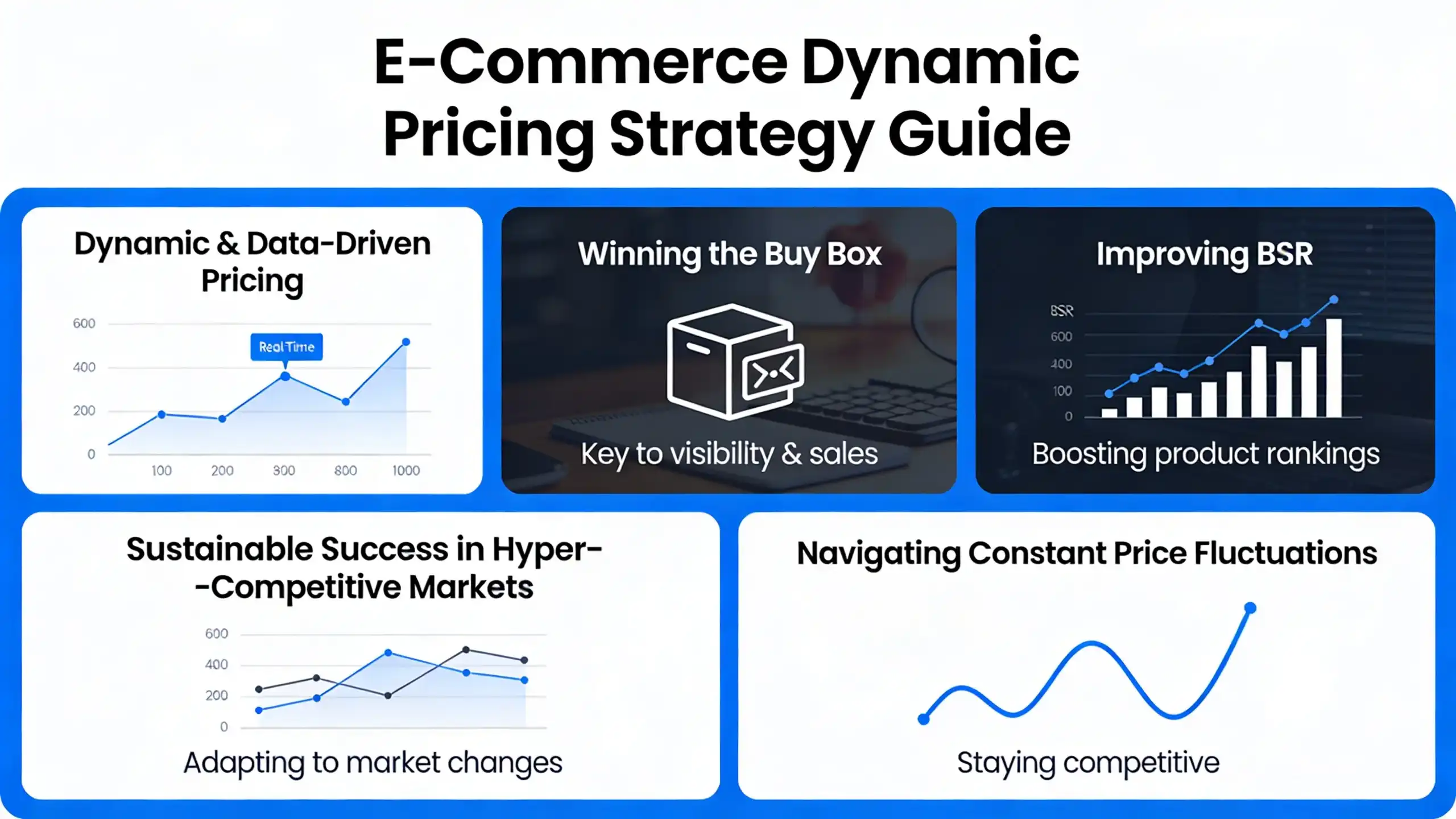 Understanding Amazon's Pricing Ecosystem
To compete effectively, sellers must first grasp the core mechanics of Amazon's marketplace. Pricing isn't just about covering costs and making a profit; it's a strategic lever for visibility, sales velocity, and market share. Before you can optimize your pricing, you must understand the environment you're operating in, starting with the most critical element: the Buy Box.
The Amazon Buy Box: Your Gateway to Sales
The "Add to Cart" button, known as the Buy Box, is the most valuable real estate on any Amazon product detail page. Since the vast majority of sales are processed through it, winning the Buy Box is non-negotiable for achieving significant sales volume.
Ownership is awarded by Amazon's algorithm based on a combination of factors designed to give the customer the best possible experience. Key variables include:
- Price: Your landed price (product price + shipping) must be competitive.
- Fulfillment Method: Fulfillment by Amazon (FBA) is heavily favored due to its fast, reliable shipping promises.
- Seller Metrics: Consistently strong performance in areas like order defect rate, shipping time, and customer feedback is crucial.
While a low price is a powerful factor, it is not a silver bullet. A seller with a slightly higher price but using FBA and maintaining a perfect seller rating can often beat a cheaper FBM offer.
Common Amazon Pricing Strategies
Sellers typically adopt one of several pricing models, each with distinct advantages and disadvantages on the Amazon platform.
- Cost-Plus Pricing: This is the simplest method: calculate your total costs and add a fixed markup. However, its simplicity is its downfall in a dynamic marketplace. It ignores competitor actions and customer demand. Furthermore, accurately calculating total costs—including fluctuating advertising spend (ACoS) and other variable overheads—is a significant challenge, often leading to mispriced products and eroded profit margins.
- Value-Based Pricing: This strategy sets prices based on the perceived value to the customer. While powerful in traditional retail, it's difficult to execute on Amazon, where direct price comparisons are central to the shopping experience.
- Competitive Pricing: This involves setting your prices in relation to your direct competitors. It's a reactive strategy essential for winning the Buy Box but can lead to price wars if not managed carefully.
- Dynamic Pricing: The most sophisticated approach, dynamic pricing involves automatically adjusting prices in real-time based on competitor moves, demand, inventory levels, and strategic goals. This is the ultimate strategy for maximizing both sales and profitability on Amazon.
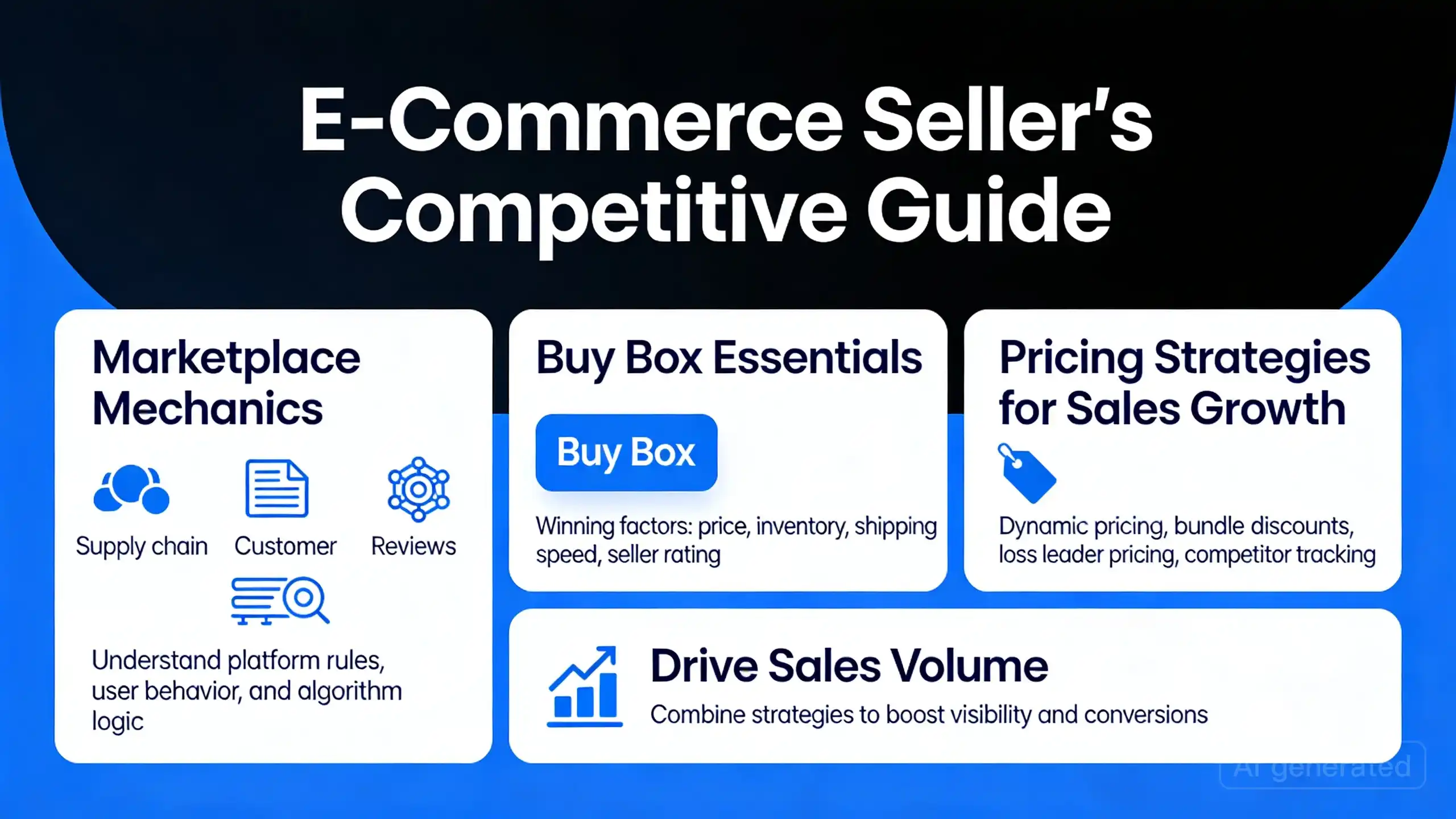 The Imperative of Competitor Pricing Analysis
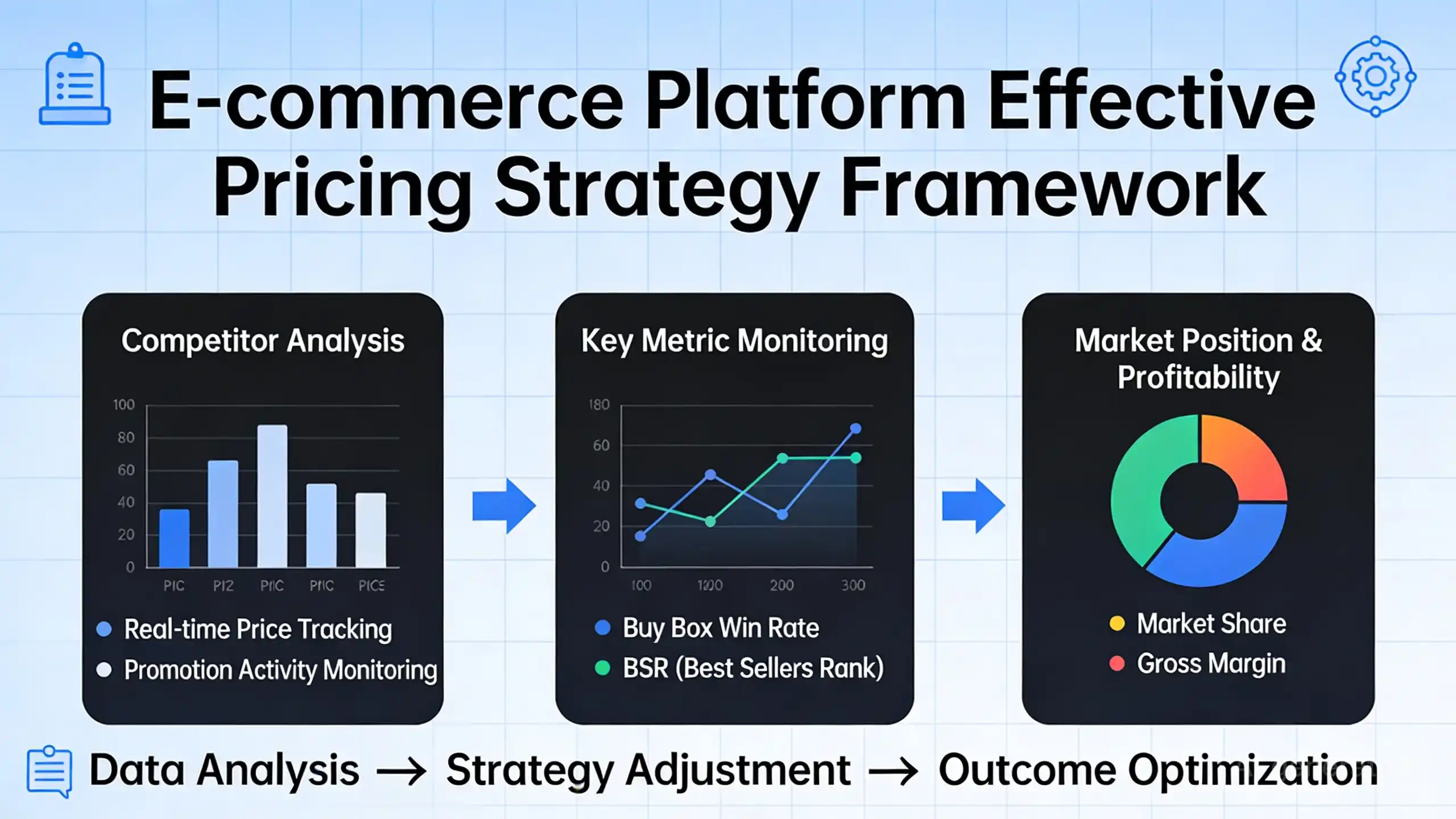
On Amazon, pricing is not a "set it and forget it" activity; it's a dynamic battlefield where market position is won or lost daily. Effective competitor analysis is the foundation of any successful pricing strategy, directly influencing your Buy Box win rate, Best Seller Rank (BSR), and overall profitability. The goal is to maintain a competitive edge without blindly racing to the bottom.
First, you must accurately identify your competitive landscape. This includes:
- Direct Competitors: Sellers offering the exact same product (competing for the same ASIN) or highly similar items that are direct substitutes in the customer's mind.
- Indirect Competitors: Brands selling different products that solve the same core customer problem, influencing perceived value and price ceilings.
Once you know who to watch, the focus shifts to collecting actionable data. This isn't just about the sticker price. A comprehensive analysis requires monitoring several key metrics continuously:
- Pricing: The current Buy Box price, historical price fluctuations, and any repricing patterns.
- Stock Levels: Competitor inventory status, as stockouts create opportunities to capture market share.
- Promotions: Active coupons, lightning deals, or other discounts that temporarily alter the effective price.
- Seller Health: Seller ratings and recent review velocity, which impact customer trust and Buy Box eligibility.
This analysis must be an ongoing process. Daily or even hourly monitoring is essential in fast-moving categories, as a single competitor's price change or promotion can instantly shift market dynamics.
 Implementing Dynamic Pricing Strategies on Amazon
To stay competitive, sellers must move beyond static pricing. Dynamic pricing allows you to adjust your prices in real-time based on market conditions, competitor actions, and demand fluctuations, directly impacting your ability to win the Buy Box and maximize profitability.
Manual vs. Automated Repricing
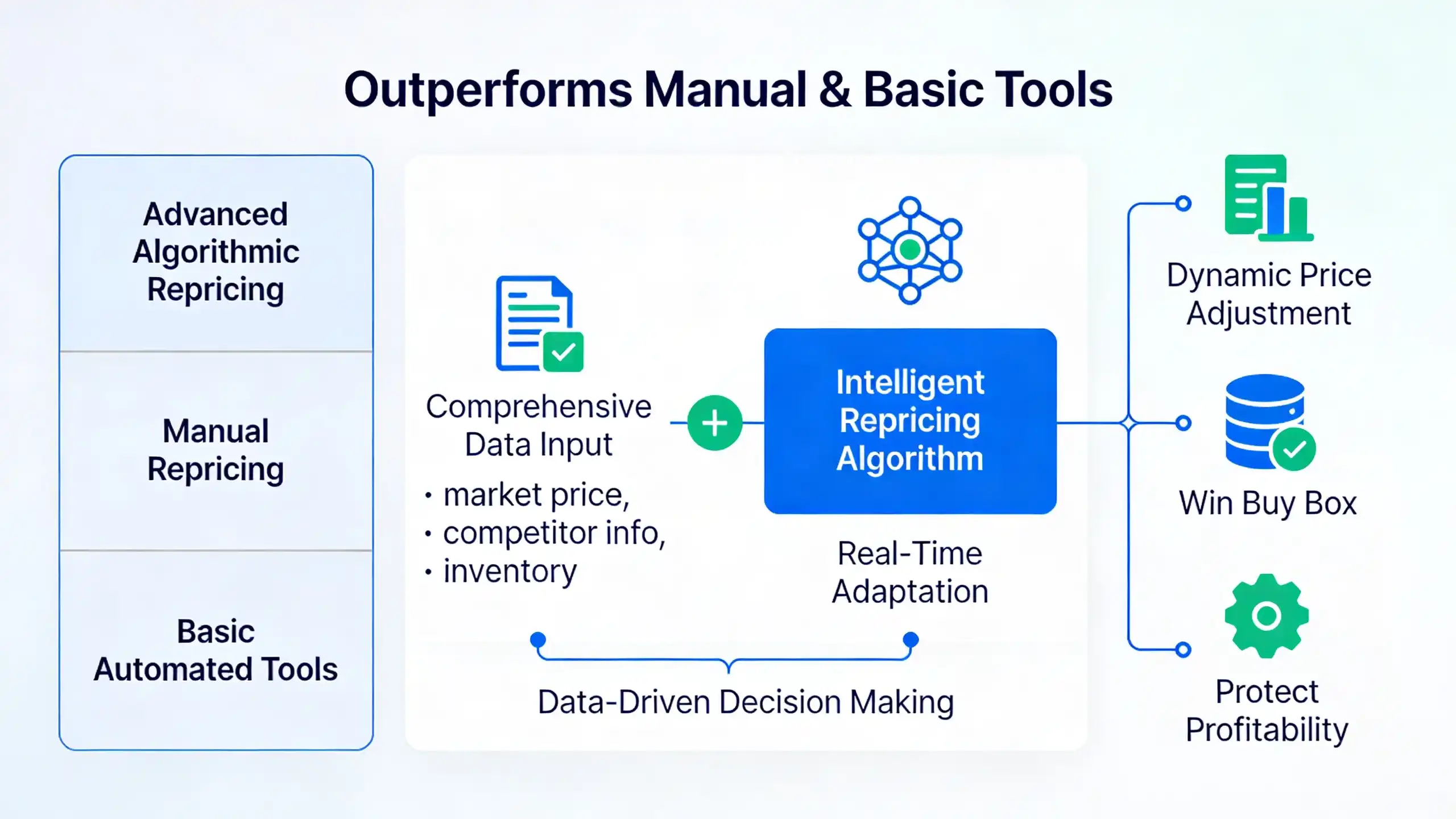
Manually adjusting prices on Amazon is an exercise in futility. The marketplace operates 24/7, with competitors changing prices constantly. By the time you identify a competitor's price drop and update your own, you've likely already lost hours of potential sales. This reactive approach is not scalable and leaves significant revenue on the table.
Automated repricing tools offer a solution. While Amazon's native 'Automate Pricing' tool is a useful entry point, it has notable limitations. Its rules are often basic, primarily reacting to the current Buy Box price without deeper analysis. This can lead to a "race to the bottom," where the tool aggressively lowers prices to win the Buy Box, inadvertently eroding your profit margins. It lacks the sophisticated algorithms to consider factors like competitor stock levels, seller ratings, or sales velocity, making it a less strategic option.
Algorithmic Repricing: The Future of Amazon Pricing
Advanced algorithmic repricing represents the next evolution in pricing strategy. These third-party systems analyze a vast array of data points beyond just the lowest price, including competitor fulfillment methods, stock depth, seller feedback scores, and historical sales data. This holistic analysis allows for more intelligent pricing decisions.
These tools typically offer two approaches:
- Rule-Based Repricing: You set specific, conditional rules, such as "Price $0.01 below FBA competitors with a seller rating above 95%." This provides control but requires careful setup.
- AI-Driven Repricing: Machine learning algorithms analyze market dynamics to find the highest possible price at which you can still win the Buy Box. Instead of just undercutting, the AI aims to maximize your margin on every sale.
Regardless of the method, the key is setting intelligent floor (minimum) and ceiling (maximum) prices. This ensures that automation wins you sales without ever sacrificing your core profitability.
 Leveraging DeepBI for Superior Pricing Intelligence
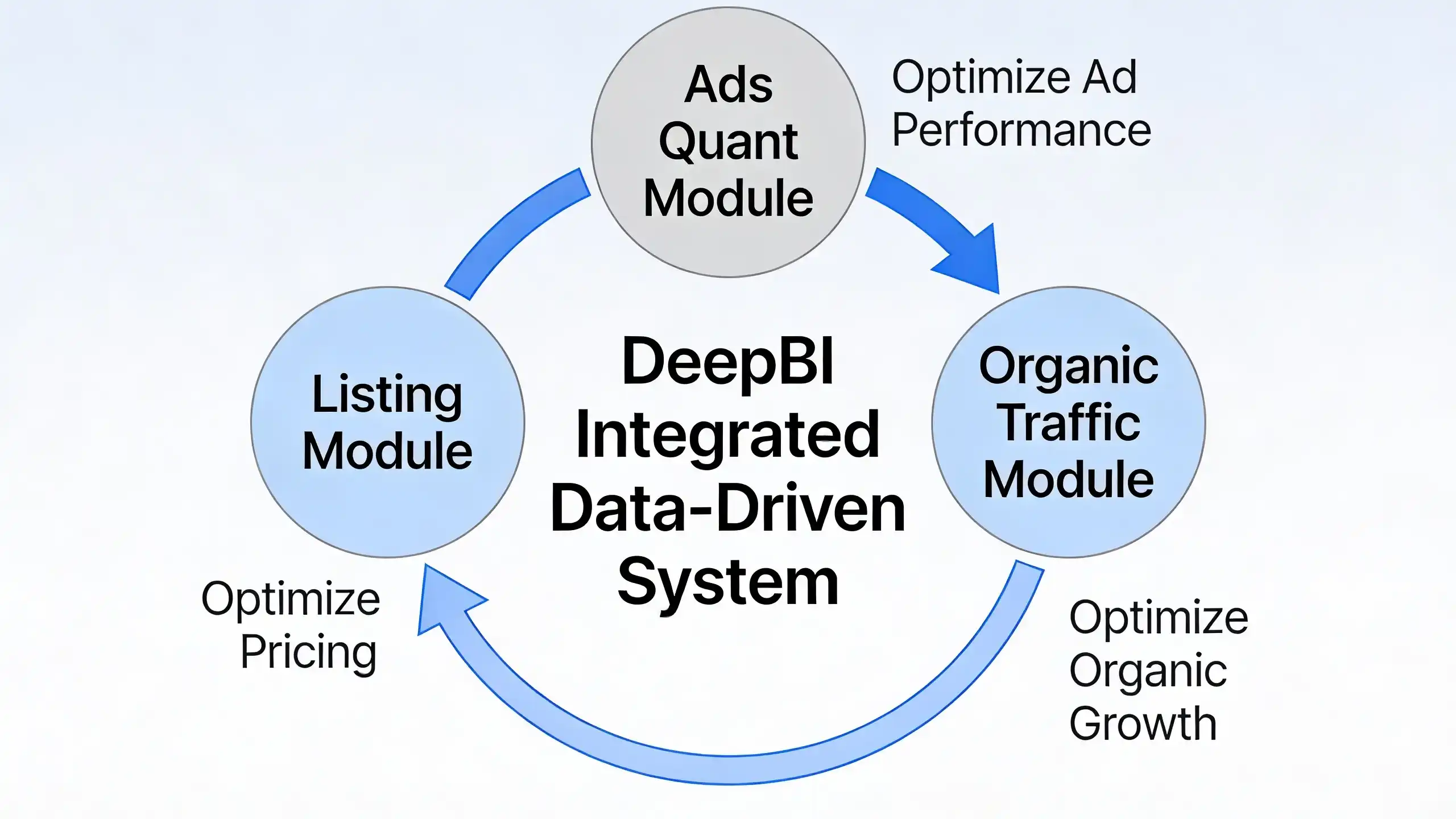
Effective pricing on Amazon requires moving beyond manual checks and reactive adjustments. It demands a holistic, data-driven system that connects pricing decisions to real-time performance metrics. DeepBI provides this integrated intelligence, turning pricing into a lever for comprehensive growth.
The process begins with the Listing Module, which automates competitive benchmarking. It identifies high-performing competitor ASINs and analyzes their pricing strategies, content quality, and sales velocity. This provides a data-backed foundation to set an optimal price for your own products, eliminating guesswork.
This intelligence flows directly into your advertising. The Ads Quant Module links pricing to ad performance through dynamic bid adjustments. If a competitor changes their price, your bids can automatically adapt to protect visibility and maintain ACoS targets. Furthermore, by using DeepBI’s traffic funnel model to identify your most profitable keywords and ASINs, you can strategically adjust pricing for these high-value segments to maximize conversion rates (CVR) and ROI.
Crucially, DeepBI measures the ripple effect on organic sales. The Organic Traffic Module tracks how price changes impact your keyword rankings and sales velocity. This allows you to see the direct effect on your Best Seller Rank (BSR) and refine your strategy to boost natural orders. By connecting listing optimization, ad performance, and organic growth, DeepBI creates a closed-loop system for superior pricing intelligence.
 Beyond Price: Other Factors for Amazon Success
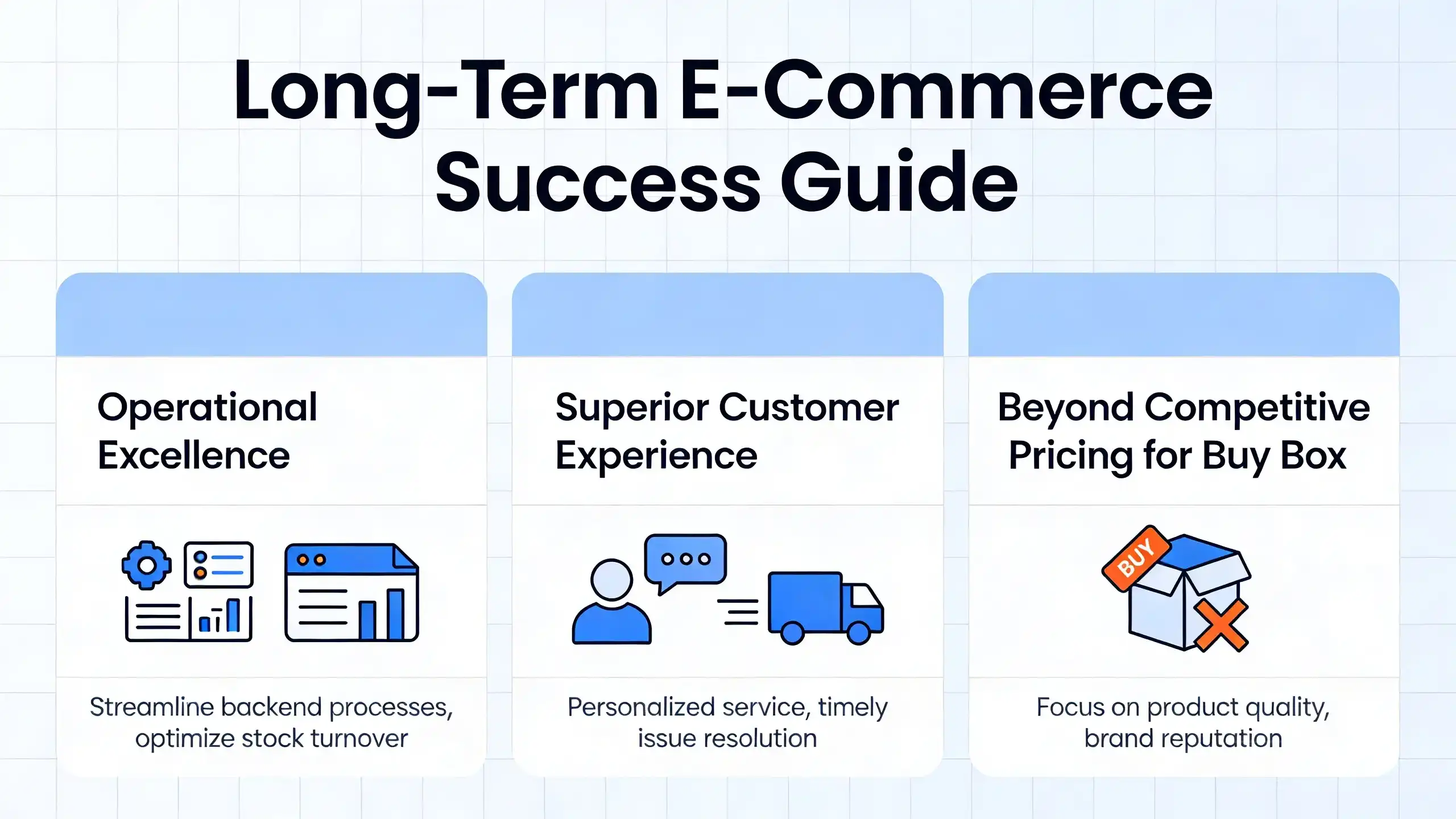
While a competitive pricing strategy is a powerful lever for winning the Buy Box, it is only one component of a sustainable Amazon business. Relying solely on being the cheapest option is a race to the bottom that erodes margins and brand value. Long-term success is built on a foundation of operational excellence and a superior customer experience.
Several other factors are critical for driving conversions and building momentum:
- Product Quality and Customer Reviews: A high-quality product is the ultimate driver of positive reviews. This social proof is often more influential than a small price difference, directly impacting your conversion rate (CVR) and Best Seller Rank (BSR).
- Brand Reputation: While Amazon is a highly price-sensitive marketplace, brand consciousness varies significantly by category. For products in electronics, fashion, or specialized goods, a trusted brand name serves as a powerful signal of quality and reliability, commanding customer loyalty beyond price alone.
- Fulfillment Speed and Reliability: The Prime badge is one of the most powerful conversion drivers on the platform. Utilizing Fulfillment by Amazon (FBA) ensures your products meet customer expectations for fast, dependable shipping, giving you a significant advantage over slower Fulfillment by Merchant (FBM) offers.
- Optimized Product Listings: Your product detail page is your digital salesperson. High-resolution images, a benefit-driven title, clear bullet points, and compelling A+ Content work together to communicate value, answer customer questions, and improve your click-through rate (CTR) from search results.
- Exceptional Customer Service: Prompt and helpful responses to customer inquiries and proactive management of returns or issues protect your seller feedback rating and build a loyal customer base.
 Developing Your Amazon Pricing Strategy: A Step-by-Step Guide
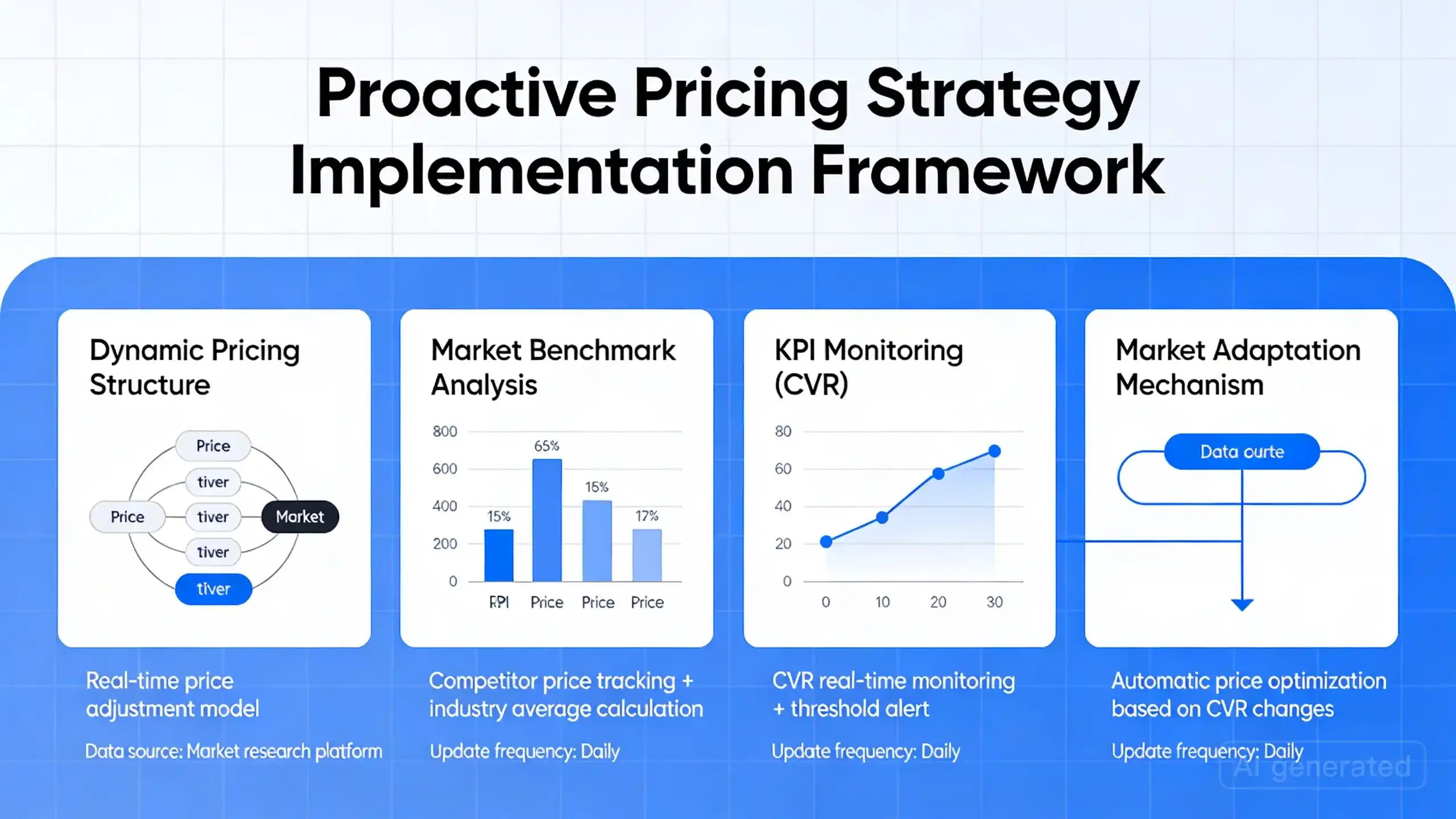
Moving from reactive price adjustments to a proactive strategy requires a structured approach, shifting from "groping in the dark" to precision targeting. Any optimization detached from real market benchmarks is a waste of resources. A robust pricing framework is built on a clear, sequential process that balances internal financial health with external market pressures.
- Define Your Financial Foundation: Before analyzing any competitor, define your own success metrics. What is your target profit margin? What are your overall business goals (e.g., market share growth, profit maximization)? Clearly identify your target audience and their price sensitivity. This internal clarity is non-negotiable.
- Calculate Your True Costs: Determine your price floor by calculating your total cost per unit. This must include not only the cost of goods sold (COGS) but also Amazon fees (FBA, referral), shipping, marketing spend (PPC), and a portion of overhead. Without this number, you cannot price for profitability.
- Conduct In-Depth Competitor Analysis: With your financial guardrails in place, use a tool like DeepBI to systematically track key competitors. Monitor their pricing changes, stock levels, sales velocity, and BSR fluctuations. This data provides the market context needed to position your product effectively.
- Implement, Monitor, and Adapt: Set your initial price based on your financial goals and market analysis. Implement a dynamic pricing strategy, but monitor its impact on key KPIs like conversion rate (CVR), sales volume, and profit margins daily. Be prepared to adapt quickly to competitor moves or changes in market demand, creating a continuous cycle of review and optimization.
 Conclusion: The Future of Amazon Pricing is Intelligent and Integrated
The era of setting and forgetting your prices on Amazon is definitively over. In a marketplace defined by fierce competition and rapid fluctuations, a static or reactive pricing strategy is a direct path to lost sales and eroded profit margins. The core principle for modern sellers is clear: survival and growth depend on adopting a dynamic, data-driven approach that responds intelligently to competitor actions and market shifts in real time.
This requires moving beyond manual spreadsheet analysis and embracing sophisticated automation. Tools like DeepBI are at the forefront of this evolution, providing the necessary integration of competitor monitoring, historical data analysis, and strategic repricing rules. By automating the collection and application of pricing intelligence, you can protect your Buy Box share, optimize your ACoS, and improve sales velocity without sacrificing your bottom line. Ultimately, the future of successful Amazon selling lies not just in having a great product, but in leveraging intelligent, integrated systems to make smarter, faster decisions. The brands that master this will lead their categories. image