The Foundation: Understanding Amazon Listing Conversion
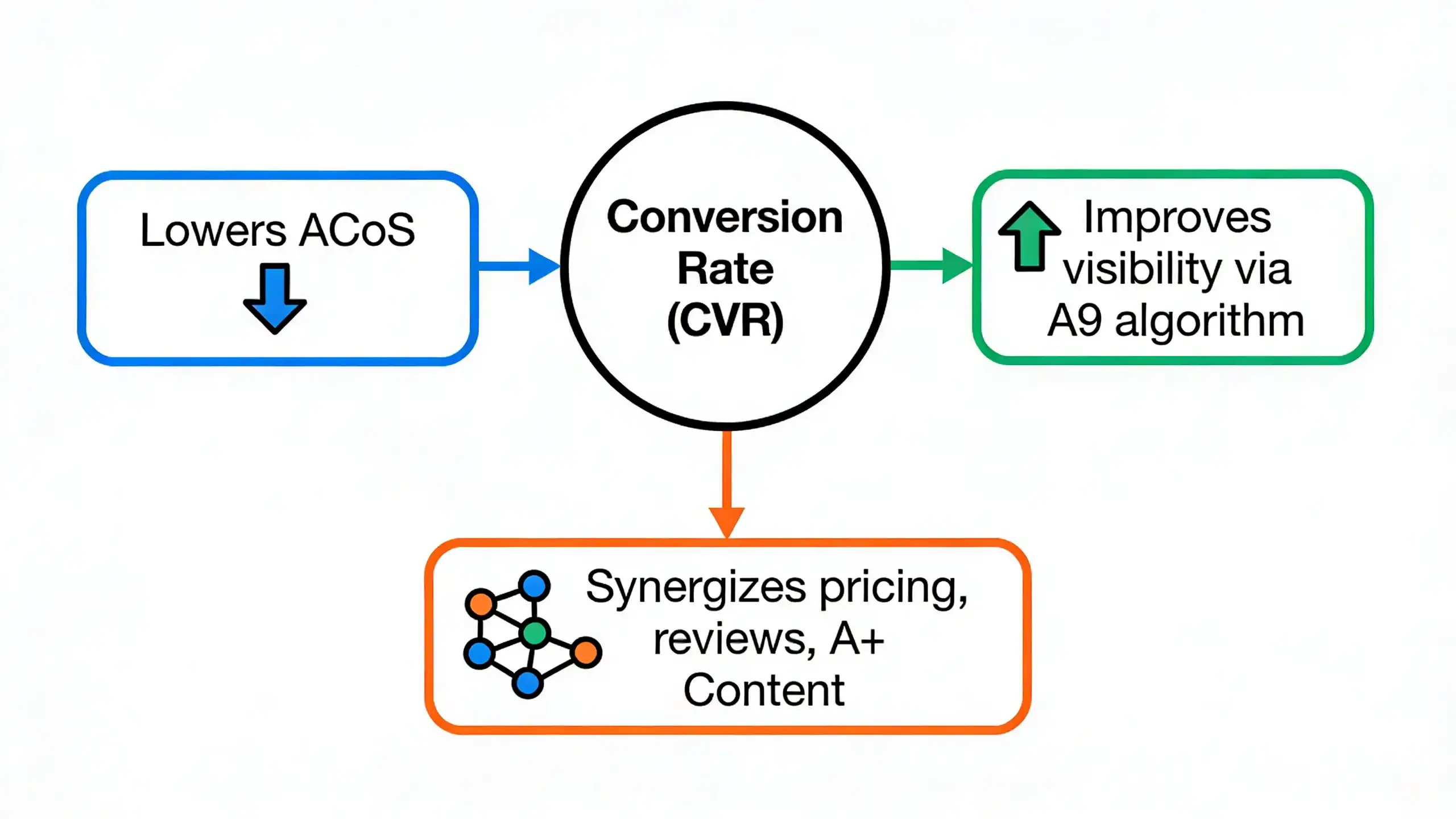
While driving traffic to a product page is a crucial first step, the ultimate measure of a listing's effectiveness is its ability to convert visitors into customers. Your Conversion Rate (CVR)—the percentage of shoppers who make a purchase after landing on your page—is the most important metric for sustainable growth on Amazon. It directly reflects how well your listing persuades potential buyers, builds trust, and resolves their questions.
A high CVR is the engine of profitability and visibility. It allows you to generate more revenue from the same amount of traffic, which lowers your Advertising Cost of Sale (ACoS) and maximizes your return on ad spend. More importantly, Amazon’s A9 algorithm rewards listings that convert efficiently. A strong CVR signals a positive customer experience, which Amazon translates into a better Best Seller Rank (BSR) and higher placement in organic search results. This creates a virtuous cycle where higher conversion leads to better visibility, which in turn drives more high-intent traffic.
Mastering conversion requires a comprehensive view of your listing. Success is not about a single trick but the synergy of several core elements: competitive pricing, strong social proof from customer reviews, and, most critically, the persuasive power of your content—from the title and bullet points to your images and A+ Content.
Pillar 1: Optimizing Core Listing Elements for Maximum Impact
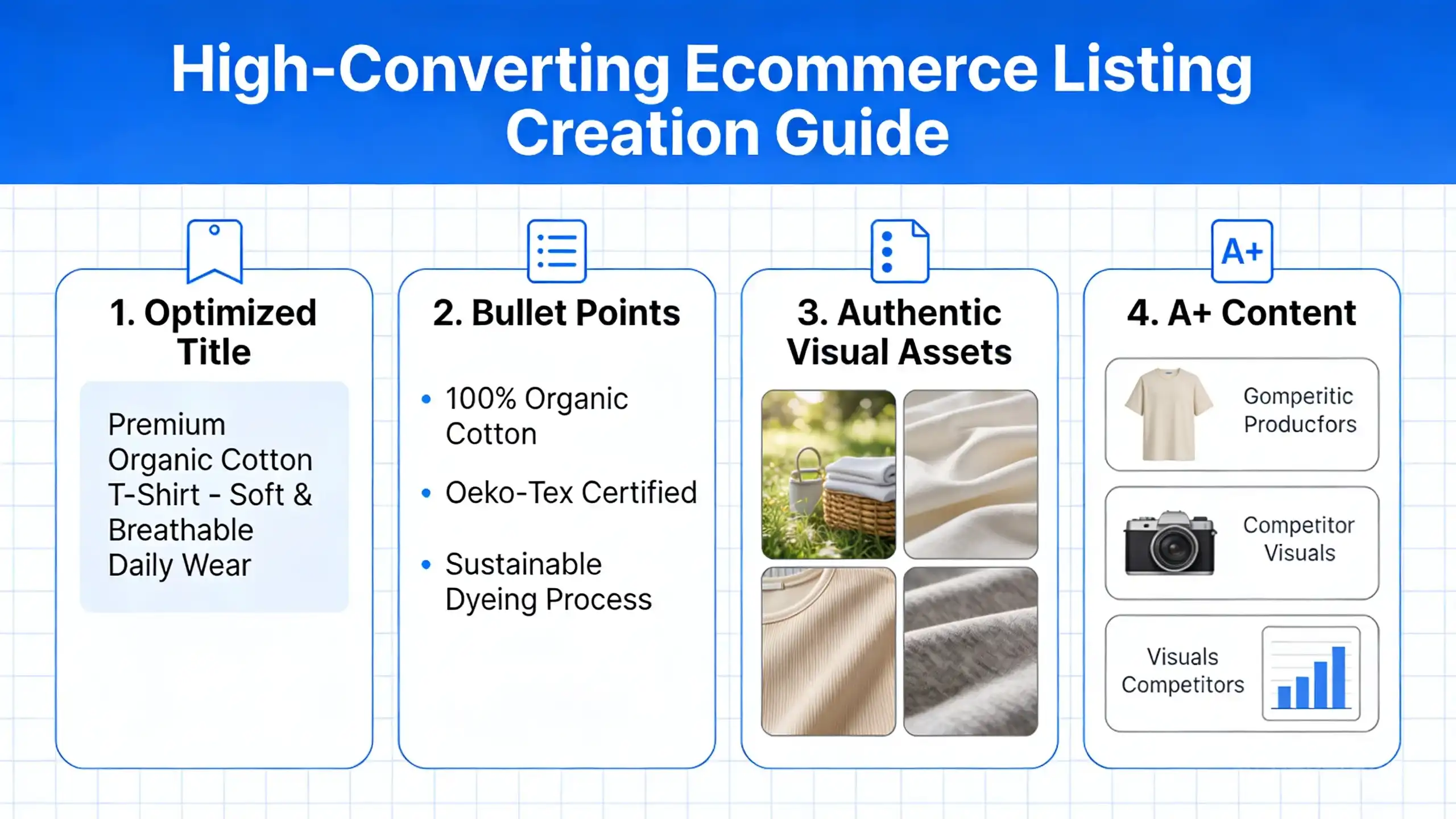
A high-converting Amazon listing is built upon a foundation of meticulously optimized elements. Success hinges on mastering both the textual and visual components that guide a customer from discovery to purchase, as these directly influence key metrics like Click-Through Rate (CTR) and Conversion Rate (CVR).
Crafting Compelling Titles and Bullet Points
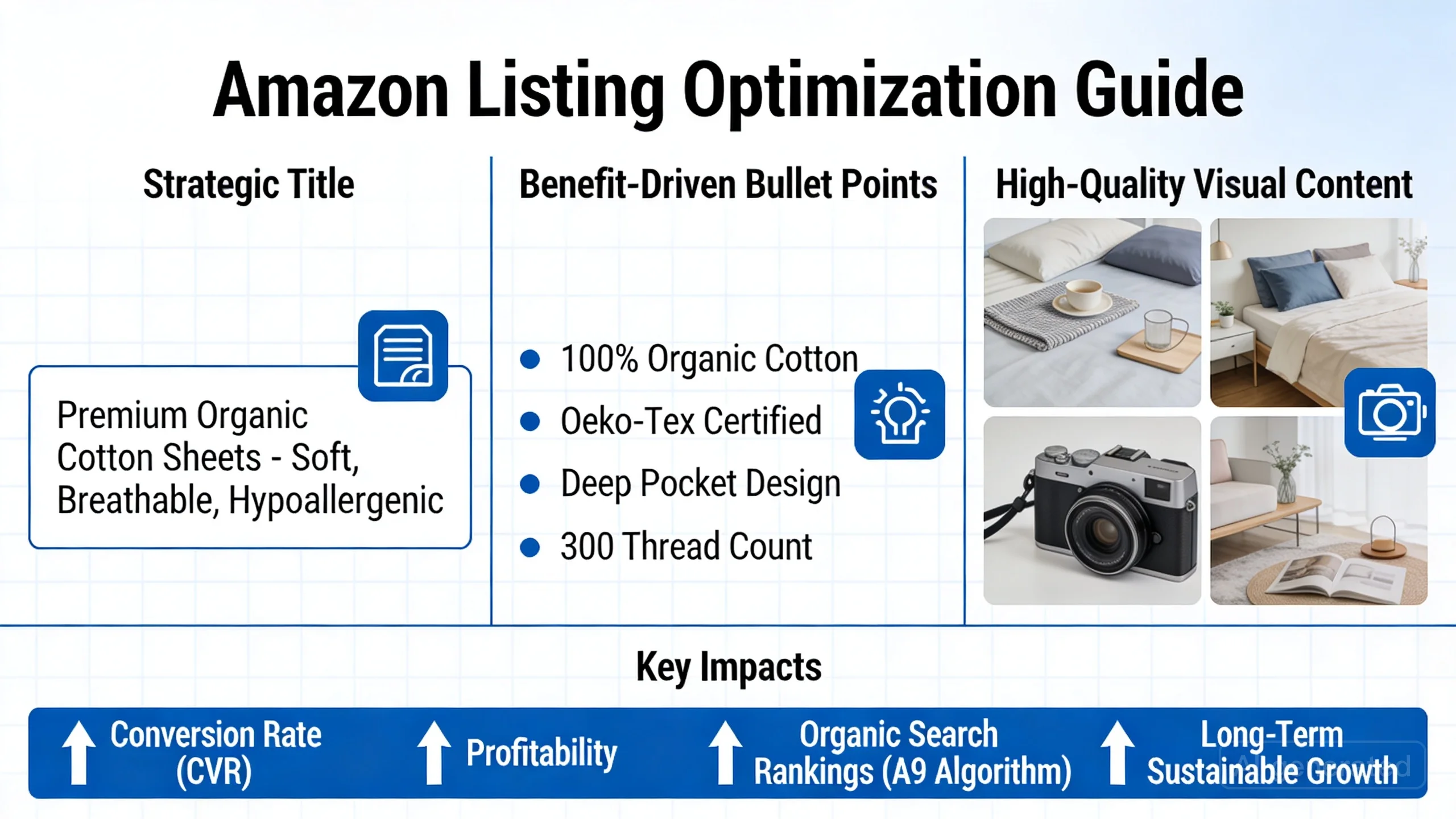
Your title and bullet points are the primary tools for capturing both algorithmic attention and shopper interest. An effective title must strategically integrate high-volume keywords to improve search ranking while also being clear and compelling enough to earn the click. Bullet points should transcend a simple list of features; they must be benefit-driven, translating technical specifications into solutions for customer pain points. AI-driven text generation, when grounded in a deep understanding of the product's core attributes, can create copy that is simultaneously optimized for search visibility and persuasive impact, shortening the path to purchase.
Enhancing Product Images and A+ Content
While text draws customers in, visuals are what often close the sale. Your image stack—including high-resolution main images, lifestyle shots, and data-rich infographics—is your most powerful conversion asset. However, using generic AI for image creation introduces significant risk. "AI hallucinations" can lead to mismatches between the product and its depiction, resulting in negative reviews and costly returns.
A commercially-focused visual production system avoids this pitfall by locking in the product's authentic attributes as an unbreakable constraint. This approach transforms abstract goals like "showcase battery life" into precise, executable instructions for an infographic designed to boost CVR. A+ Content further elevates the customer experience, using brand storytelling and detailed modules to build trust, answer deeper questions, and solidify the purchase decision.
Pillar 2: Data-Driven Diagnosis and Competitive Benchmarking
Effective listing optimization moves beyond subjective opinion and relies on a rigorous, data-informed diagnostic process. Key performance indicators like Click-Through Rate (CTR) and Conversion Rate (CVR) are the ultimate measures of success. A low CTR often signals a problem with your main image or title, while a high bounce rate or low CVR points to weaknesses in your bullet points, A+ Content, or overall value proposition.
To understand what "good" looks like, you must benchmark your listing against the market. This involves identifying top direct and indirect competitors and systematically deconstructing their approach to images, copy, and enhanced content. However, manually tracking competitors and quantifying these differences is a time-consuming and often inaccurate process.
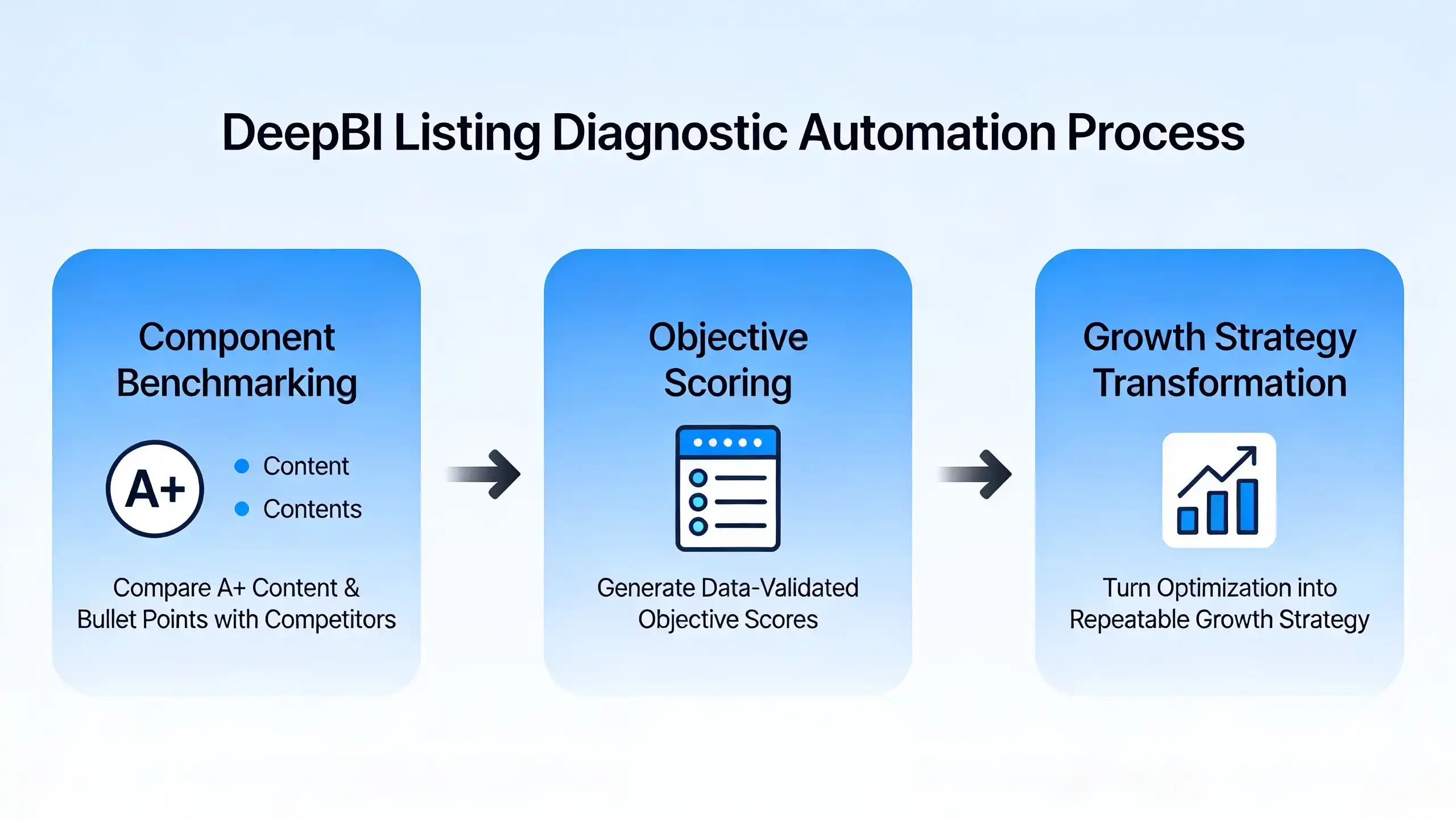
This is where an automated approach provides a decisive advantage. DeepBI’s Intelligent Scoring and Diagnosis functions as an automated market health check. Using distributed data crawling and multi-dimensional semantic analysis, it automatically identifies your true competitors and benchmarks your listing against theirs. The system provides objective scores for your main image, title, bullet points, and A+ Content, instantly revealing your weakest links. It also helps you select high-performing ASINs as benchmarks to define a clear optimization path, transforming the process from a guessing game into a repeatable, data-validated growth strategy.
Pillar 3: Driving Qualified Traffic to Your Optimized Listing
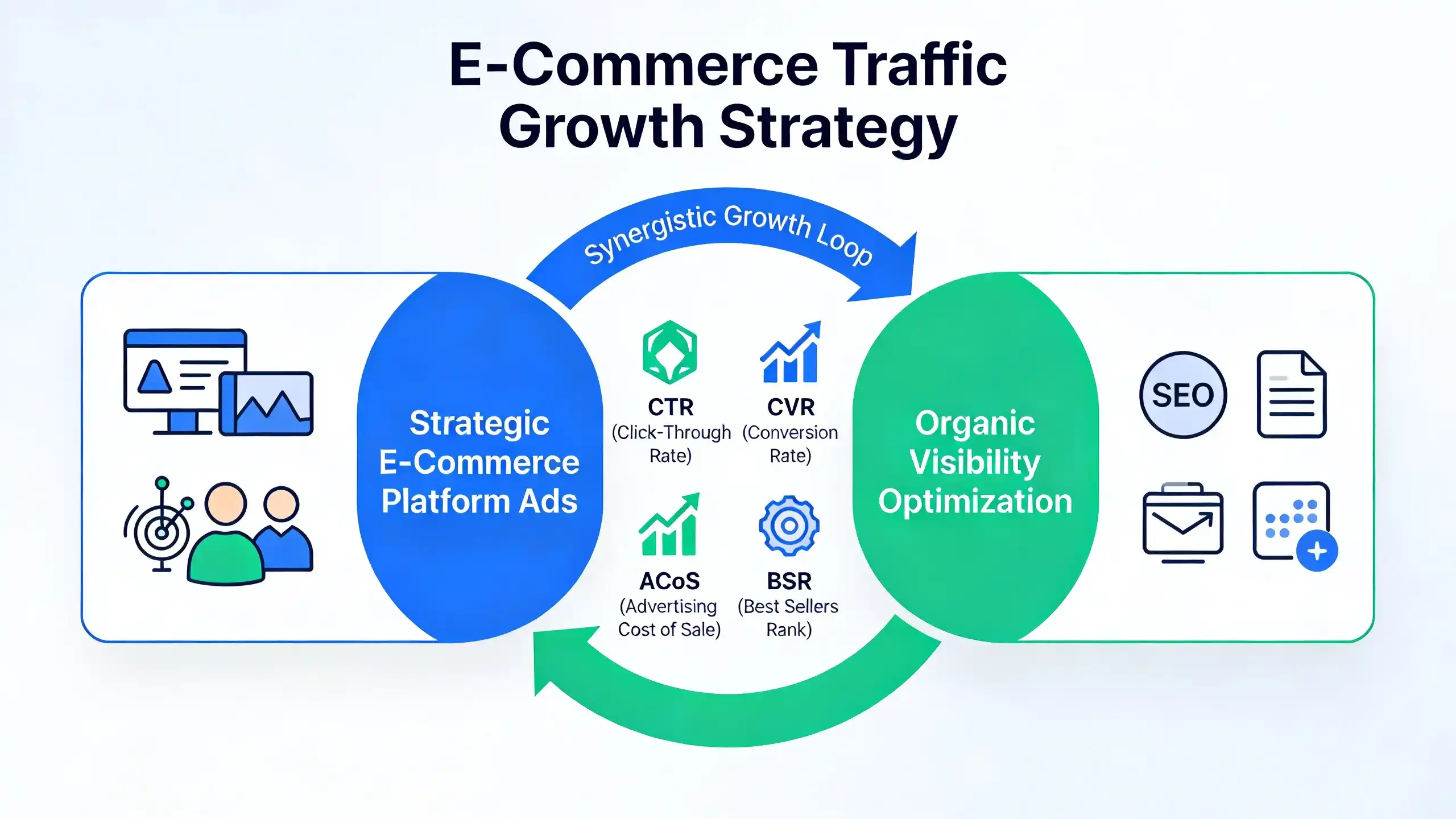
An expertly crafted listing is only half the battle; without a steady stream of high-intent buyers, its conversion potential remains untapped. Driving qualified traffic is the engine that powers sales velocity. This requires a dual-pronged approach that integrates strategic advertising with a deliberate push for organic visibility, creating a synergistic effect where each component strengthens the other.
Strategic Amazon Ads for Conversion
The primary goal of Amazon Ads is not just to generate clicks but to attract shoppers who are ready to buy. Targeted Sponsored Products (SP) campaigns are essential for placing your product directly in the path of these high-intent customers. To move beyond simple keyword bidding, a structured approach like a four-layer traffic funnel ensures ad spend is deployed effectively. The "precise layer" focuses the budget on high-conversion keywords and ASINs to capture immediate sales, while a "scaling layer" targets broader terms to maintain a stable volume of traffic.
To maximize your return on investment, this process must be dynamic. By automatically adjusting bids and budgets daily based on real-time performance data, you can continuously optimize your campaigns. This ensures your ad spend is allocated to the targets most likely to convert, which directly improves your Conversion Rate (CVR) and lowers your Advertising Cost of Sales (ACoS).
Boosting Organic Visibility and Ranking
Paid advertising does more than generate immediate sales; it provides crucial data and momentum for long-term organic growth. A powerful symbiotic relationship exists between ad performance and organic ranking. Sales generated through ads improve your Best Sellers Rank (BSR) and signal to Amazon's algorithm that your product is relevant for specific keywords, which in turn boosts your organic position for those terms.
A sophisticated organic growth strategy leverages this connection. By analyzing your ad campaign data, you can identify the keywords that consistently deliver the highest Click-Through Rate (CTR), CVR, and order value. These are your proven converters. By systematically reinforcing these keywords in your listing and targeting them to achieve Top of Search placement, you create a powerful growth loop. This dual progress in both ad performance and organic ranking drives a sustainable flow of free, highly qualified traffic to your listing.
The DeepBI Advantage: A Holistic Approach to Conversion Optimization
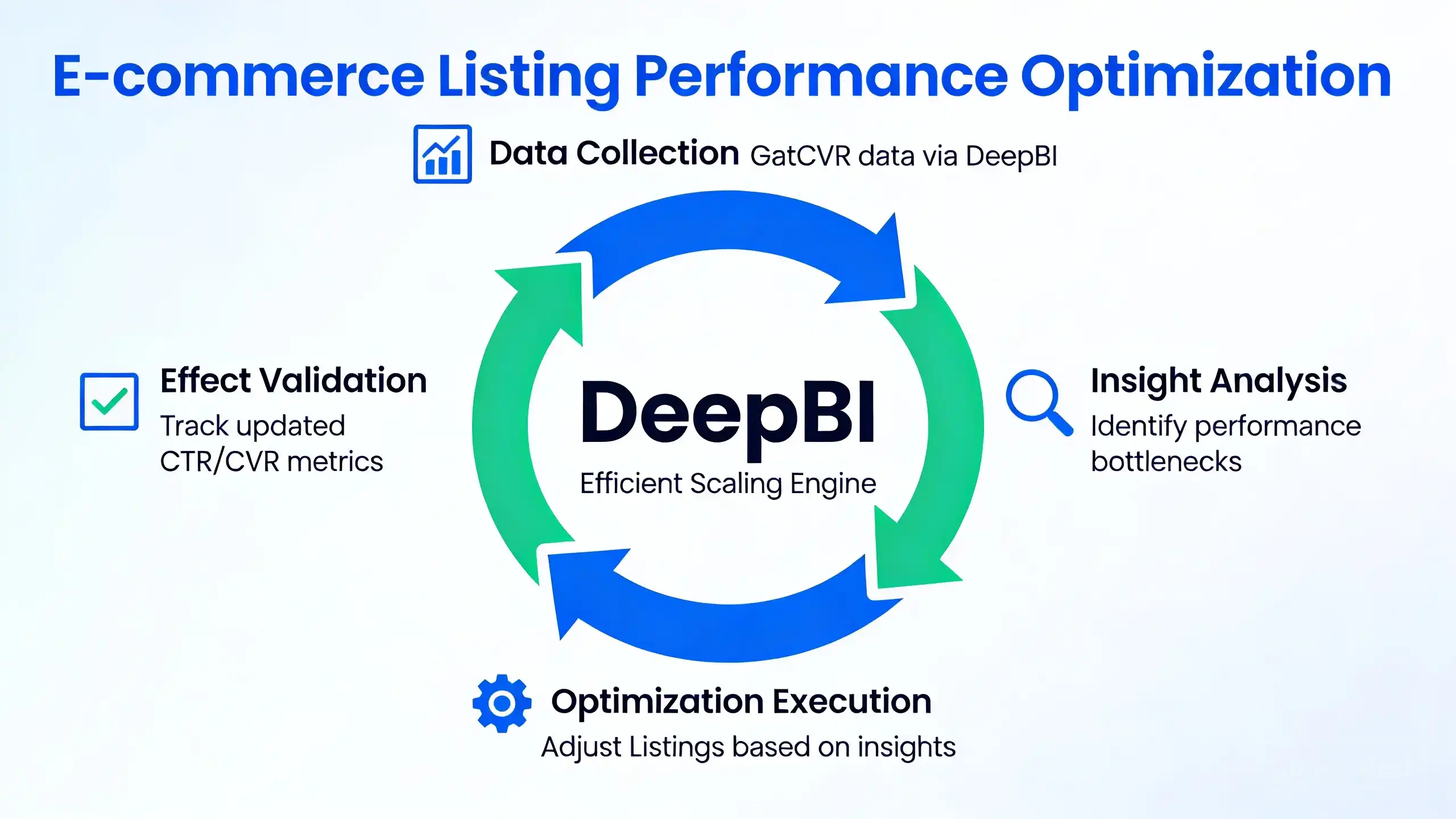
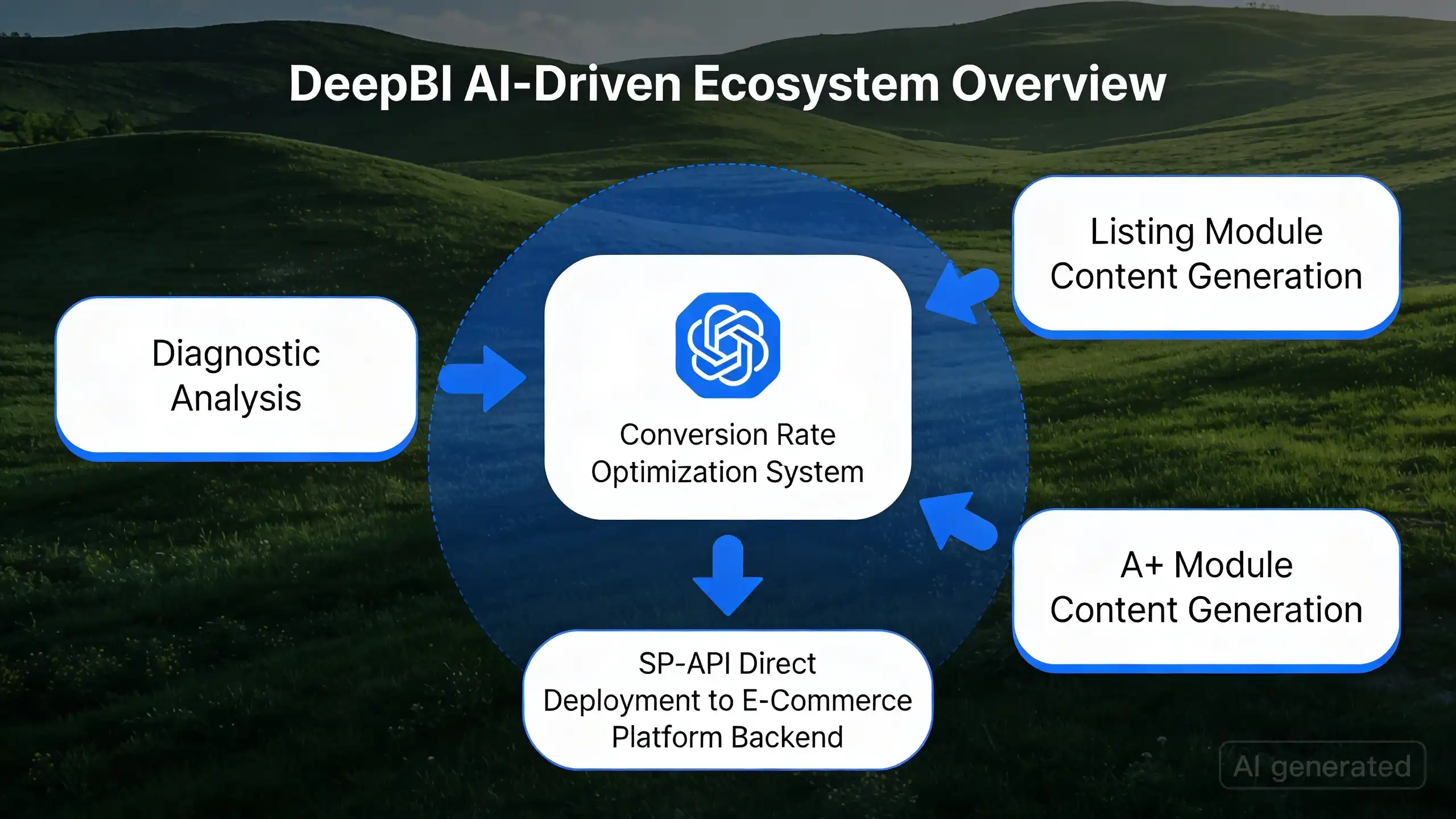
Optimizing individual elements like ad campaigns or product titles in isolation yields limited results. True conversion rate optimization (CRO) requires a unified strategy where listing content, advertising data, and organic ranking signals inform one another. DeepBI provides this integrated ecosystem, transforming fragmented tasks into a cohesive, data-led workflow. The platform moves beyond generic advice, using AI to conduct a deep diagnostic analysis of your listings and generate precise, actionable strategies.
Instead of vague suggestions like "improve image quality," DeepBI delivers engineered instructions that specify parameters such as composition, camera angle, and lighting. Its AI capabilities extend to restructuring A+ page modules and rewriting bullet points into a compelling "pain point-solution" format. This methodology creates a direct path from data analysis to the generation of high-quality content.
The most critical step is closing the loop from strategy to execution. DeepBI achieves this with its "One-Click Apply" feature, which securely synchronizes optimized content directly to your seller backend via the official Amazon SP-API. This not only dramatically reduces the listing update cycle time but also creates a robust framework for version control and A/B testing. By unifying analysis, strategy, content creation, and deployment, DeepBI establishes a continuous optimization engine designed to systematically elevate your conversion rates.
Conclusion: Sustained Growth Through Continuous Optimization
Mastering the Amazon marketplace is not a one-time achievement but a continuous process of adaptation and refinement. The most successful sellers understand that optimizing a listing for conversion is not a task to be completed once and forgotten. Instead, it is a dynamic cycle of hypothesis, implementation, and data-driven validation. Relying on intuition or outdated best practices leads to stagnant CVR and declining market share. The key to sustained growth lies in building a systematic improvement process where every change is measured against core performance metrics.
This is where a data-centric approach becomes a competitive necessity. By implementing changes and then systematically tracking their impact on KPIs like CTR and CVR, you transform optimization from an intuitive art into a calculated strategy. For sellers managing extensive catalogs, this level of rapid, data-backed iteration is only feasible with advanced tools. Platforms like DeepBI enable this continuous improvement cycle at scale, allowing you to deploy and validate visual and copy updates across hundreds of listings with high efficiency. Adopting this methodology is a fundamental shift toward building a resilient, high-conversion Amazon business poised for long-term success.