The Foundation of Conversion: Understanding Your Amazon Listing
Your Amazon product listing is not just a digital catalog entry; it is your primary sales tool, your virtual storefront, and the engine of your conversion rate. In a marketplace where customers make decisions in seconds, a fully optimized listing is the critical factor that separates top sellers from the competition. It directly influences your product's visibility in search results, its ability to attract clicks, and its power to persuade shoppers to complete a purchase.
Why Listing Optimization is Critical for Amazon Success
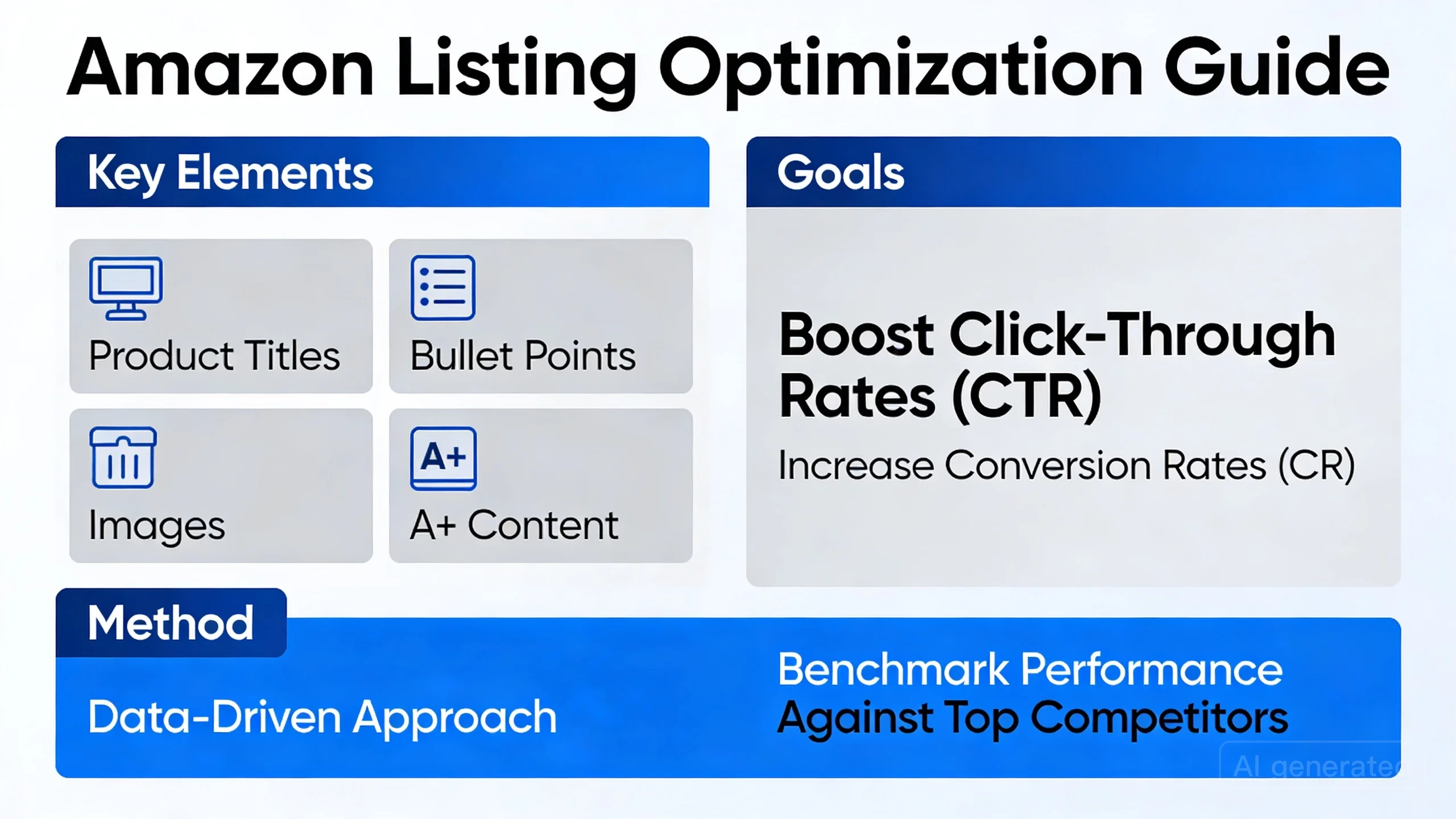
Effective listing optimization transforms your product page from a simple aesthetic display into a commercial engine designed to drive key performance metrics. The primary goal is to increase both the Click-Through Rate (CTR) from search results and the Conversion Rate (CVR) on the product detail page. Traditional optimization efforts often fail because they rely on disconnected workflows and subjective judgments that are difficult to measure. Without a data-driven feedback loop, it is nearly impossible to quantify whether a change to an image or a bullet point actually improved performance or wasted resources. A systematic approach ensures every element is tested and refined to maximize its commercial impact.
Key Elements of a High-Converting Listing
A successful Amazon listing is a cohesive system where each component works in concert to attract, inform, and convert shoppers. Understanding these core elements is the first step toward mastering optimization.
- Product Title: The most important element for keyword ranking and grabbing initial shopper attention in search results.
- Bullet Points: Your opportunity to quickly communicate the most compelling features and benefits, answering a customer's primary questions before they scroll.
- Product Images and Video: The visual heart of your listing. High-quality imagery demonstrates the product's value, builds trust, and is often the single most influential factor in the purchase decision.
- A+ Content: An enhanced brand content section that allows for deeper storytelling, detailed feature callouts, and brand-building, helping to overcome final purchase hesitations.
 Data-Driven Diagnostics: Identifying Optimization Opportunities
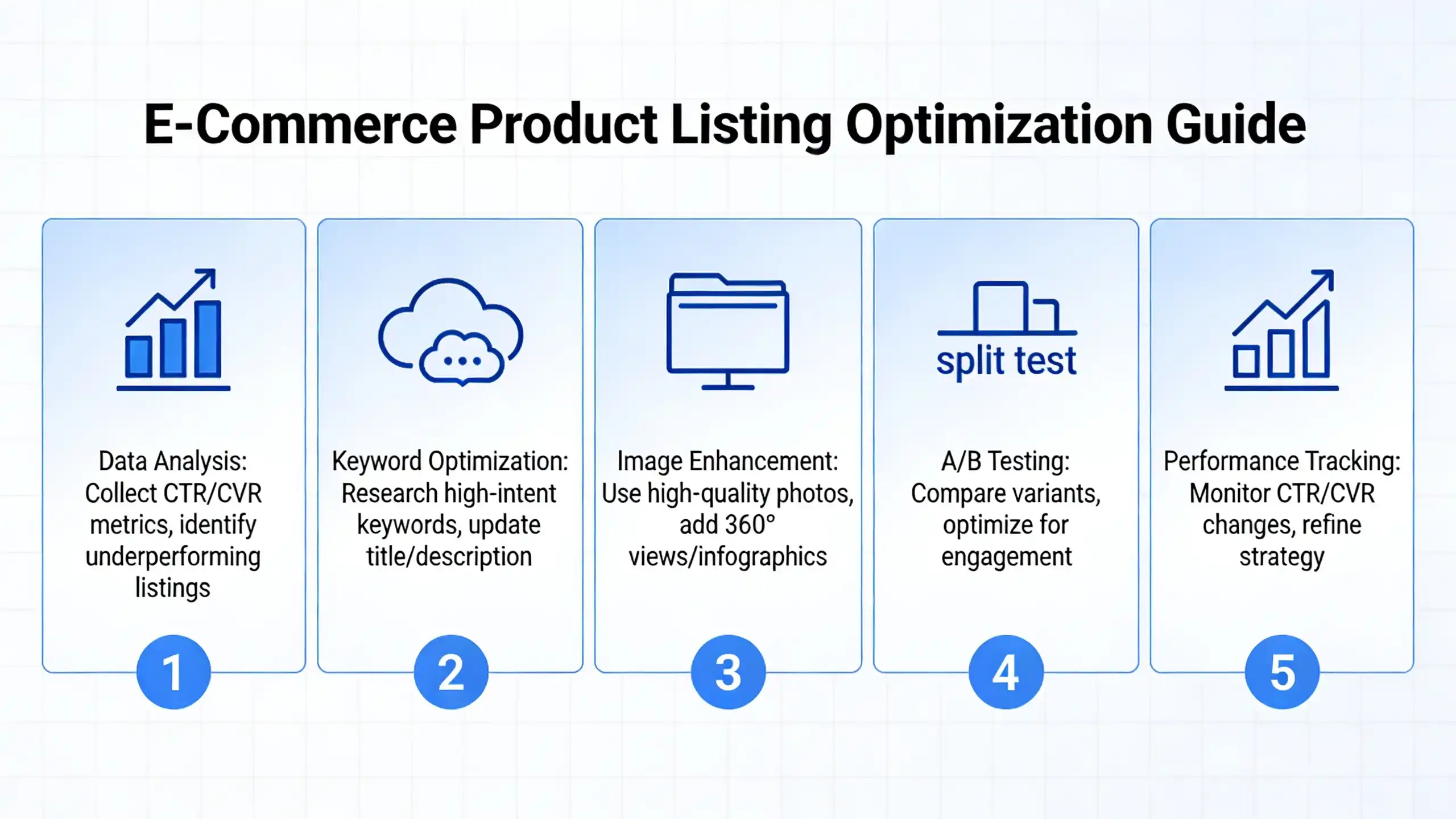
Effective optimization begins not with creative guesswork but with a clear, data-informed diagnosis of your listing's current performance. To improve key metrics like Click-Through Rate (CTR) and Conversion Rate (CVR), you must first understand where the greatest opportunities for improvement lie.
Benchmarking Against Top Competitors
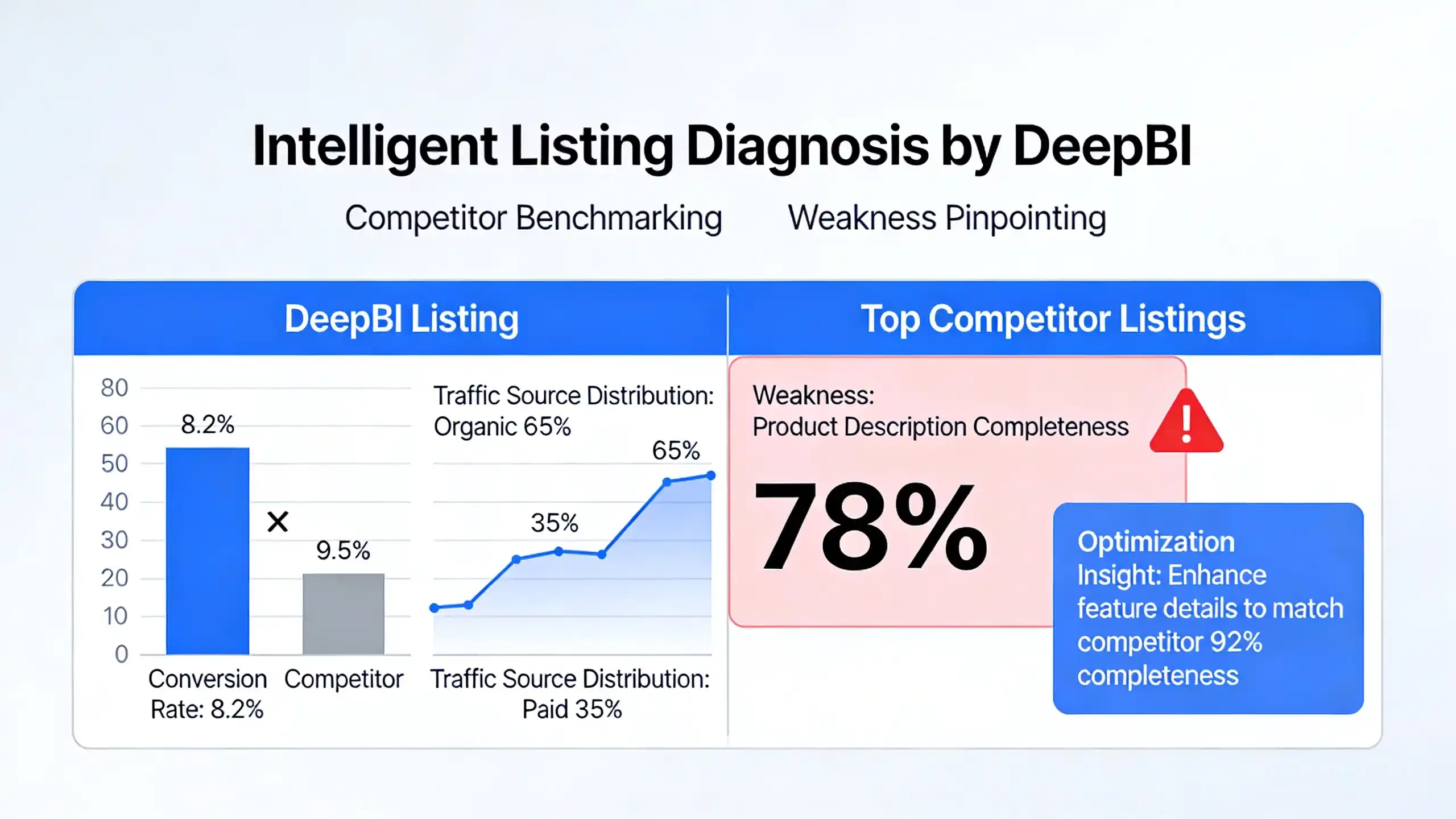
Optimization cannot occur in a vacuum. The first step is to benchmark your listing against the top-performing competitors in your category. This comparative analysis establishes a clear performance baseline, revealing the gap between your listing and the market leaders. By understanding what "best-in-class" looks like—from keyword strategy to image quality—you can set realistic and impactful optimization goals.
Pinpointing Weaknesses in Your Current Listing
Once a benchmark is established, you must conduct a granular analysis to identify the specific elements holding your listing back. Is your main image failing to capture attention in search results? Does your title lack high-volume keywords, hurting visibility? Are your bullet points unpersuasive, causing a drop in conversions? A comprehensive diagnostic approach moves beyond intuition to pinpoint the exact weaknesses across your title, images, and A+ Content that require immediate attention.
Leveraging DeepBI for Intelligent Listing Diagnosis
DeepBI provides an intelligent scoring and diagnosis engine that functions as an automated market health check system. It moves beyond simple checklists by using a multimodal AI to conduct a rigorous, data-driven comparison of your listing against top competitors. The system delivers a detailed report highlighting specific strengths and weaknesses, providing the clear, actionable insights needed to begin a targeted optimization cycle. This diagnostic phase is the critical first step in an end-to-end process designed to close the performance gap.
 Crafting Compelling Listing Content
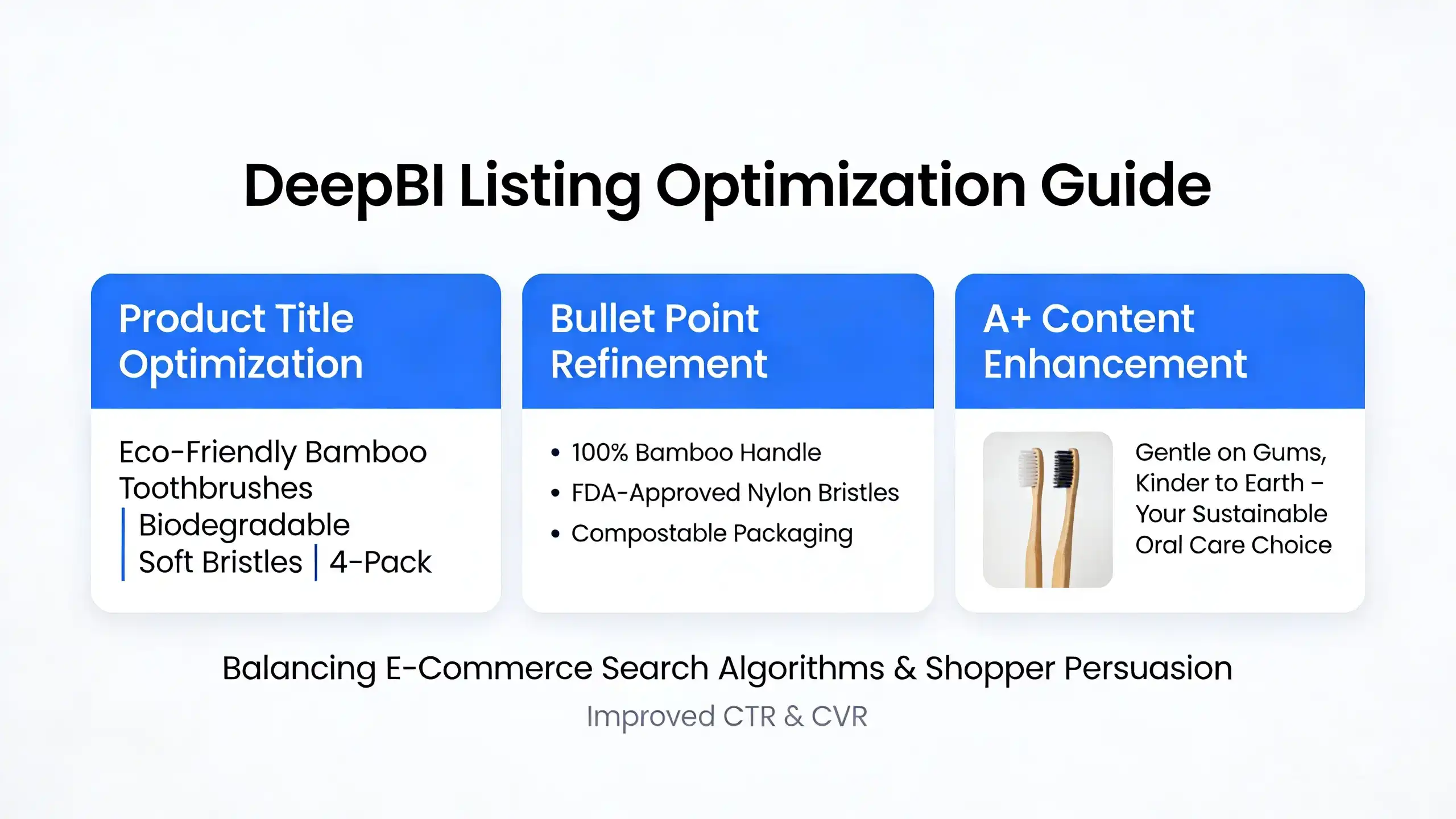
Effective listing content must serve two masters: Amazon's search algorithm and the human shopper. Striking the right balance is key to driving both traffic and sales. Your title, bullet points, and A+ Content must work in concert to attract clicks and persuade customers to purchase.
Optimizing Product Titles for Search and Conversion
Your product title is the most critical piece of SEO real estate on your listing. It should lead with primary keywords while clearly communicating the product's core benefit and key specifications. A well-crafted title improves search visibility and Click-Through Rate (CTR) by instantly qualifying your product for the right audience. To accelerate this process, DeepBI's AI can generate multiple title variations, each optimized for different keyword strategies and customer perspectives, allowing you to test and identify the highest-performing version.
Writing Benefit-Oriented Bullet Points
Shoppers scan bullet points for quick answers to their most pressing questions. Instead of listing dry features, frame each bullet point as a direct solution to a customer pain point. This "pain point-solution" structure transforms a feature list into a compelling sales pitch, directly impacting your Conversion Rate (CVR). DeepBI helps systematize this by restructuring your inputs into a persuasive, benefit-driven format that resonates with customer needs.
Developing Persuasive Product Descriptions and A+ Content
A+ Content is your opportunity to tell a brand story and visually demonstrate value. Go beyond simple text and images by deconstructing your A+ page into logical modules that guide the customer through a compelling narrative. DeepBI elevates this process by translating abstract goals like "show durability" into precise, AI-executable design blueprints. For example, it can specify an exact visual layout, scene, and text overlay to create a high-impact infographic that proves a product's value, ensuring your content is not just compliant but also highly persuasive.
 Visual Excellence: Images and Video that Convert
Visual assets are your most powerful tool for capturing attention and driving sales on Amazon. They are not merely decorative; they are strategic conversion assets that directly influence customer behavior, from the initial click on a search results page to the final purchase decision. A comprehensive visual strategy leverages different formats to guide the customer journey and build trust.
The Power of High-Quality Main Images
Your main image is the single most critical factor for earning a click from a crowded search results page, directly impacting your Click-Through Rate (CTR). While sellers often rely on subjective judgment to choose a main image, a data-driven approach yields far more reliable results. By systematically testing new main images and linking their publication dates to advertising reports, you can create a feedback loop. This allows you to quantitatively measure the impact of a visual change on your CTR over the following 7–14 days, turning optimization from a guessing game into a measurable process.
Detail Images and Lifestyle Shots
Once a shopper clicks through to your listing, your secondary images must build confidence and drive conversion. Detail images highlight key features and material quality, while lifestyle shots help customers visualize the product in their own lives. However, using AI to create these assets introduces a significant risk: image-product mismatch. Any AI-generated image that alters the product's core material, color, or design can lead to customer disappointment and negative reviews. To prevent this, a strict principle of "product entity consistency" must be enforced, ensuring AI enhances the scene without ever misrepresenting the physical product.
Integrating Product Videos for Enhanced Engagement
Product videos elevate your listing by demonstrating functionality, showcasing benefits in action, and telling a more compelling brand story. A well-produced video can significantly increase engagement and improve your Conversion Rate (CVR) by answering questions that static images cannot. As with all visual assets, authenticity is non-negotiable. A video must be an accurate representation of the product experience. Misleading demonstrations or exaggerated features will quickly erode customer trust, leading to increased returns and damage to your brand's reputation.
 Driving Conversion Through Strategic Keyword Integration
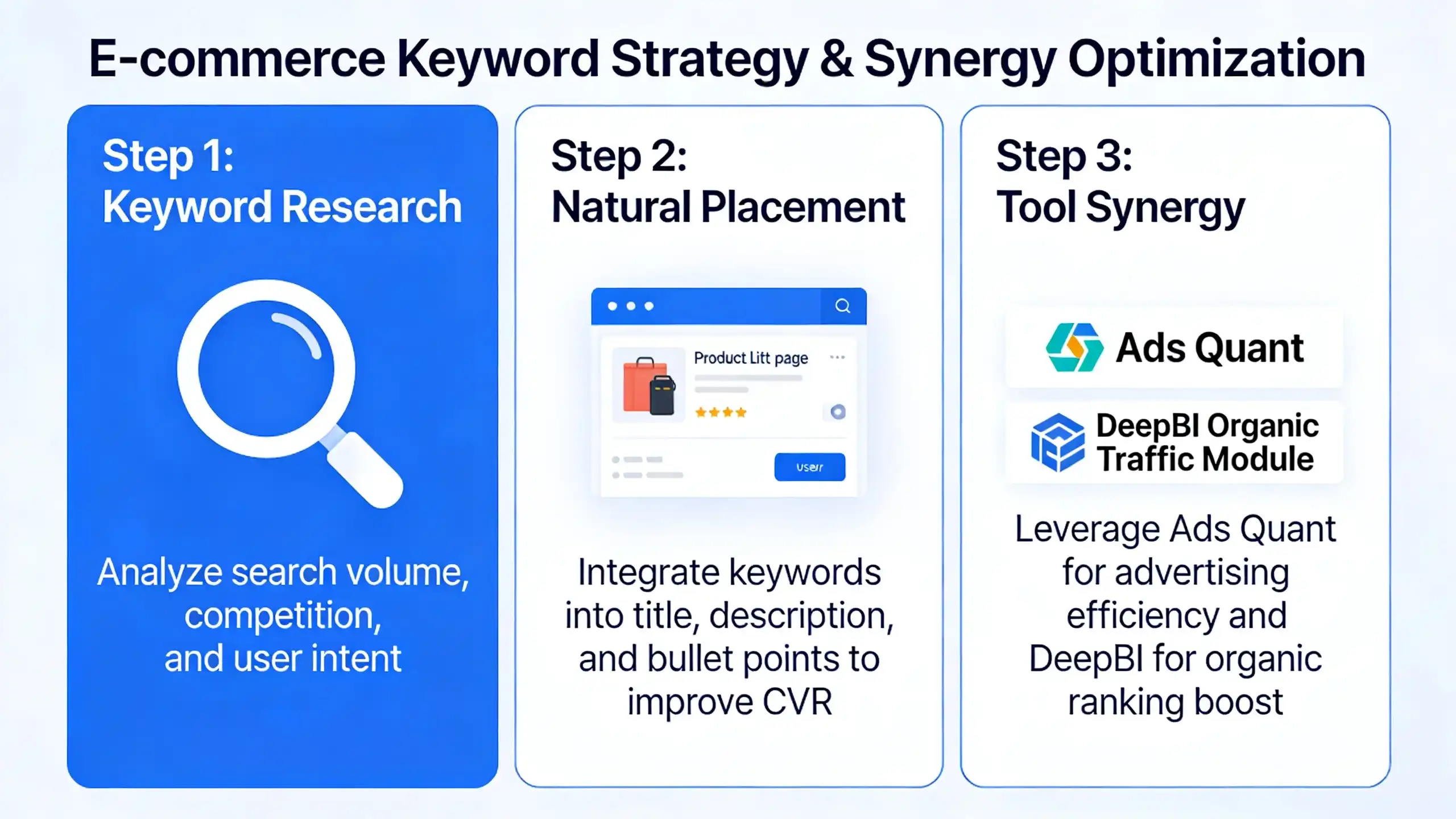
An effective keyword strategy is not just about attracting traffic; it is about attracting the right traffic that converts into sales. By strategically researching, placing, and refining keywords, sellers can create a powerful flywheel effect that boosts both advertising efficiency and organic visibility.
Researching High-Impact Keywords
The foundation of a high-converting listing is the identification of keywords that align with customer search intent. This involves moving beyond broad, high-volume terms to uncover specific, long-tail keywords that signal a strong intent to purchase. The goal is to build a comprehensive keyword map that balances reach with relevance, ensuring your product appears before shoppers who are ready to buy.
Natural Keyword Placement in Listing Content
Once identified, keywords must be integrated seamlessly into your listing's title, bullet points, and product description. The era of "keyword stuffing" is over; modern algorithms prioritize listings that are readable and persuasive to human shoppers. Natural, benefit-driven language that incorporates your target keywords improves the customer experience, which in turn contributes to a higher Conversion Rate (CVR) by building trust and clearly communicating value.
The Synergy Between Ads and Organic Keywords
An optimized listing creates a powerful positive feedback loop between your paid and organic marketing efforts. When you direct traffic from Ads Quant campaigns to a listing with a high CVR, your advertising spend becomes more efficient, resulting in a lower ACoS. This increased sales velocity signals relevance to Amazon's algorithm, which in turn boosts your organic ranking. To capitalize on this, you can use DeepBI's Organic Traffic module for keyword screening, identifying the highest-performing keywords from your ad data and strategically embedding them into your listing to further amplify this cycle of growth.
 Continuous Improvement: Monitoring and Iteration
Optimizing your Amazon listing is not a one-time task but a continuous cycle of testing, measuring, and refining. Market trends, competitor actions, and customer behavior are constantly changing, requiring you to adapt your strategy to maintain and improve your product's performance. A static listing quickly loses its competitive edge, leading to declining traffic and sales.
Tracking Key Performance Indicators (KPIs)
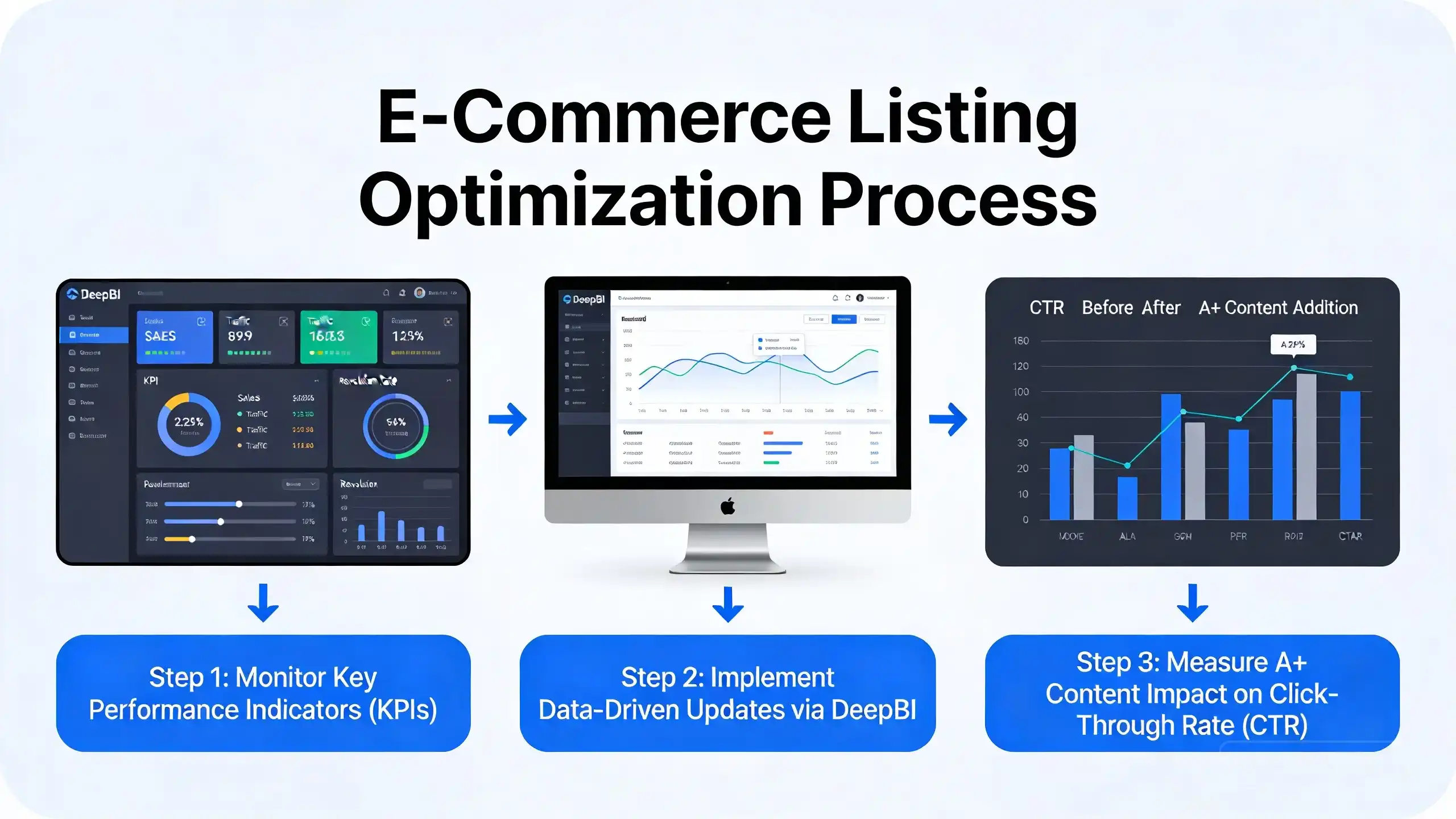
Effective optimization begins with diligent monitoring of core business metrics. The most critical KPIs for your Amazon listing include:
- Click-Through Rate (CTR): Measures the effectiveness of your main image and title at capturing shopper attention in search results.
- Conversion Rate (CVR): Indicates how well your listing page—from images and bullet points to A+ Content—persuades visitors to make a purchase.
- Advertising Cost of Sale (ACoS): Reflects the efficiency of your ad spend in generating sales, which is heavily influenced by your listing's conversion power.
Tracking these metrics provides a clear, data-backed view of your listing's health and helps identify areas for improvement.
Iterative Optimization Based on Performance Data
Performance data should directly guide your optimization efforts. By establishing a data feedback loop, you can make informed, incremental changes rather than relying on guesswork. For example, a low CTR might signal the need to test a new main image, while a poor CVR could point to weaknesses in your A+ Content or bullet points. Integrating advertising data into this process allows you to see which visual or textual elements resonate most with your target audience, enabling you to refine your content to systematically improve conversions and lower ACoS.
DeepBI's Role in Sustained Listing Performance
DeepBI streamlines the entire iterative optimization cycle. Once AI-generated content is ready, you can deploy it directly to your listing with the "One-Click Apply" feature, which operates securely through Amazon's official Selling Partner API (SP-API). This integration adheres to the principle of least privilege, ensuring it only accesses image assets without touching sensitive business data.
Crucially, after a new image is published, DeepBI automatically tags the event in your advertising reports. This creates a direct, measurable link between the content update and its impact on business metrics like CTR, closing the feedback loop and empowering you to quantify the true value of each optimization.
 Conclusion: Unlocking Your Amazon Listing's Full Potential
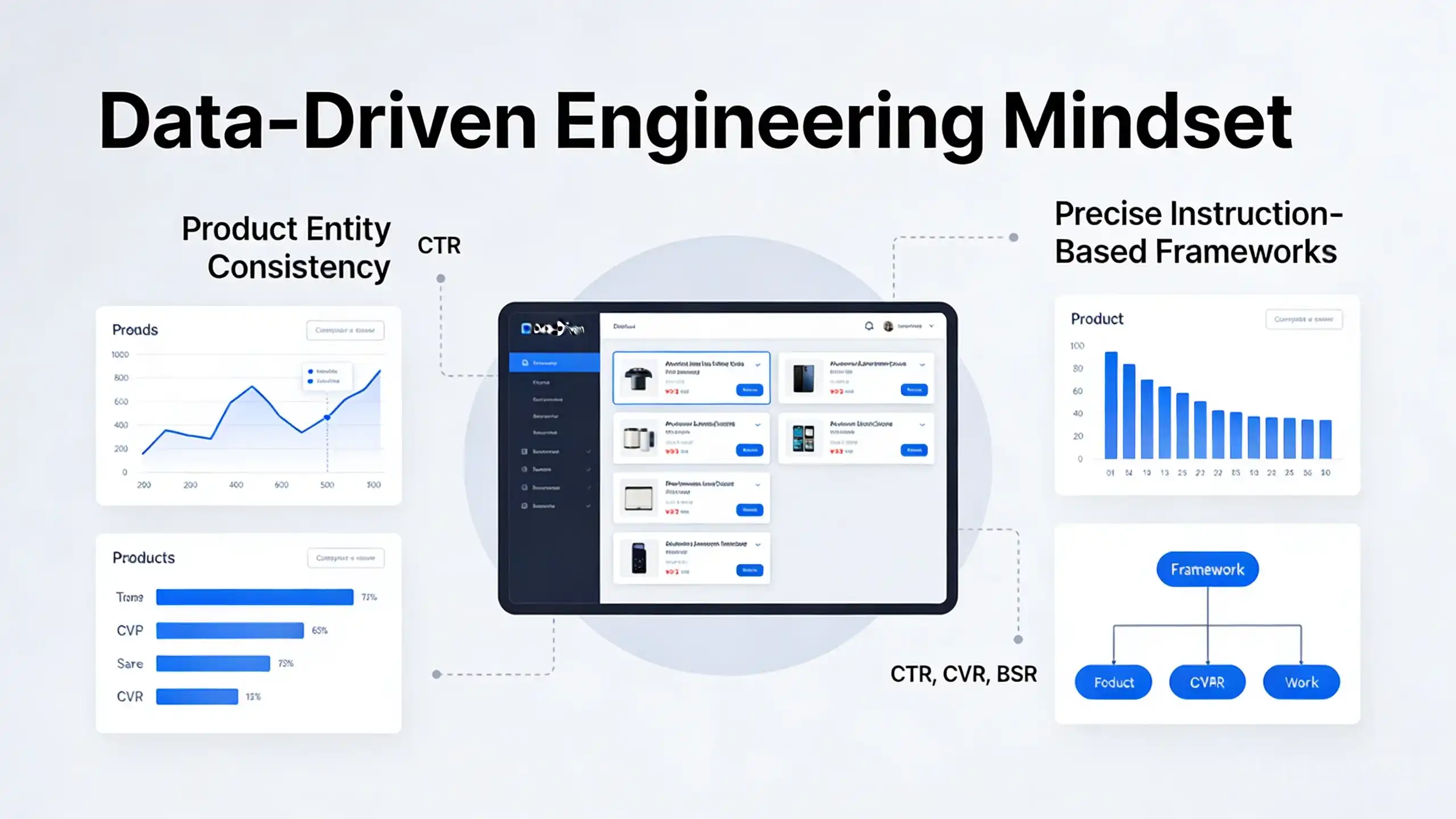
Mastering Amazon requires a fundamental shift from subjective adjustments to a data-driven, engineering mindset. The highest principle of effective listing optimization is maintaining "product entity consistency"—ensuring every visual and textual element accurately reflects the product's core DNA. This is not about altering the product's reality but about presenting it in the most compelling way possible. True optimization respects the hierarchy where the product's inherent attributes are the ultimate constraint.
The era of vague feedback like "improve the image texture" is over. Today, unlocking higher conversion rates means translating abstract business goals into precise, AI-executable instructions. Instead of guesswork, top sellers now operate with parameterized commands that define specific variables such as composition, camera angles, and lighting distribution. This methodical approach eliminates the ambiguity and subjective errors that often derail optimization efforts.
By adopting this instruction-based framework, you ensure that every change is a calculated move to enhance performance metrics like Click-Through Rate (CTR) and Conversion Rate (CVR). This continuous cycle of precise testing and implementation is the key to systematically improving your Best Sellers Rank (BSR) and unlocking the full commercial potential of your Amazon listings.