Understanding ACOS: The Foundation of Amazon Profitability
For any Amazon seller using sponsored ads, Advertising Cost of Sale (ACoS) is a critical metric for measuring campaign profitability. Calculated as (Ad Spend ÷ Ad Revenue) × 100, ACoS reveals the exact percentage of sales revenue consumed by advertising. In essence, it measures the direct efficiency of your ad campaigns: a lower ACoS signifies greater profitability, while a high ACoS can quickly erode product margins.
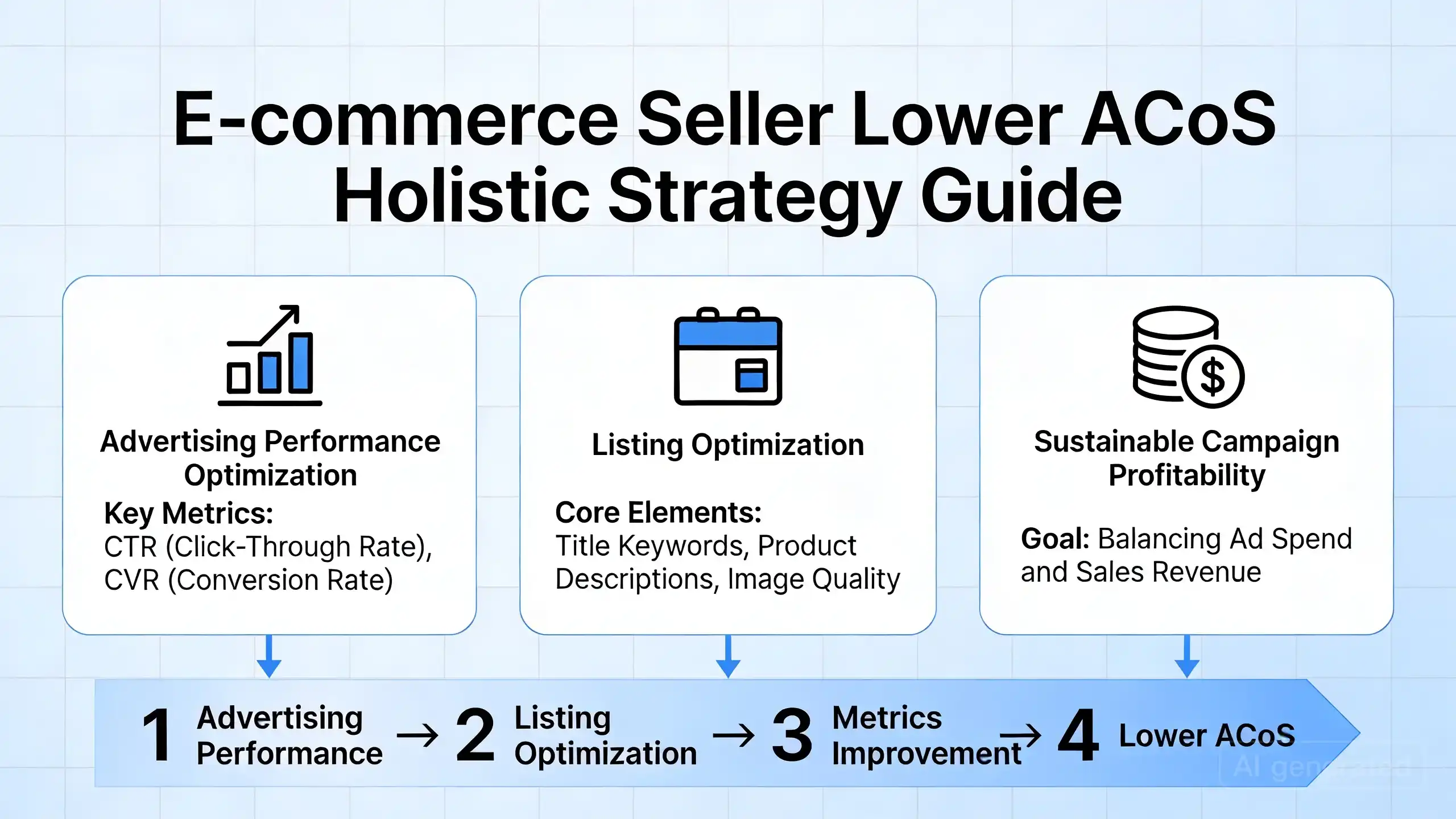
However, treating ACoS as a simple bidding and keyword management problem is a common mistake. Effective ACoS optimization demands a holistic strategy that acknowledges the deep connection between advertising performance and listing quality. Key metrics like Click-Through Rate (CTR) and Conversion Rate (CVR) are the fundamental drivers of ad efficiency, and both are heavily influenced by the content and presentation of your product detail page.
A successful approach to lowering ACoS must extend beyond the advertising console. It requires a continuous improvement cycle that feeds ad performance data back into the optimization of core listing elements. This strategy transforms assets like product images from mere aesthetic displays into a powerful commercial engine that actively drives down advertising costs. By enhancing the entire customer journey—from the initial ad impression to the final purchase decision on the listing—sellers can achieve sustainable profitability and scalable growth.
Optimizing Your Listing for Higher Conversion and Lower ACOS
Your advertising campaigns drive traffic, but your product detail page secures the sale. A low Conversion Rate (CVR) is a direct drain on your ad budget; every click that fails to convert increases your ACOS. To achieve ad profitability, you must transform your listing into a high-performance conversion asset. This process begins with a data-driven diagnosis to identify and eliminate the friction points that cost you sales.
Enhancing Product Imagery and A+ Content
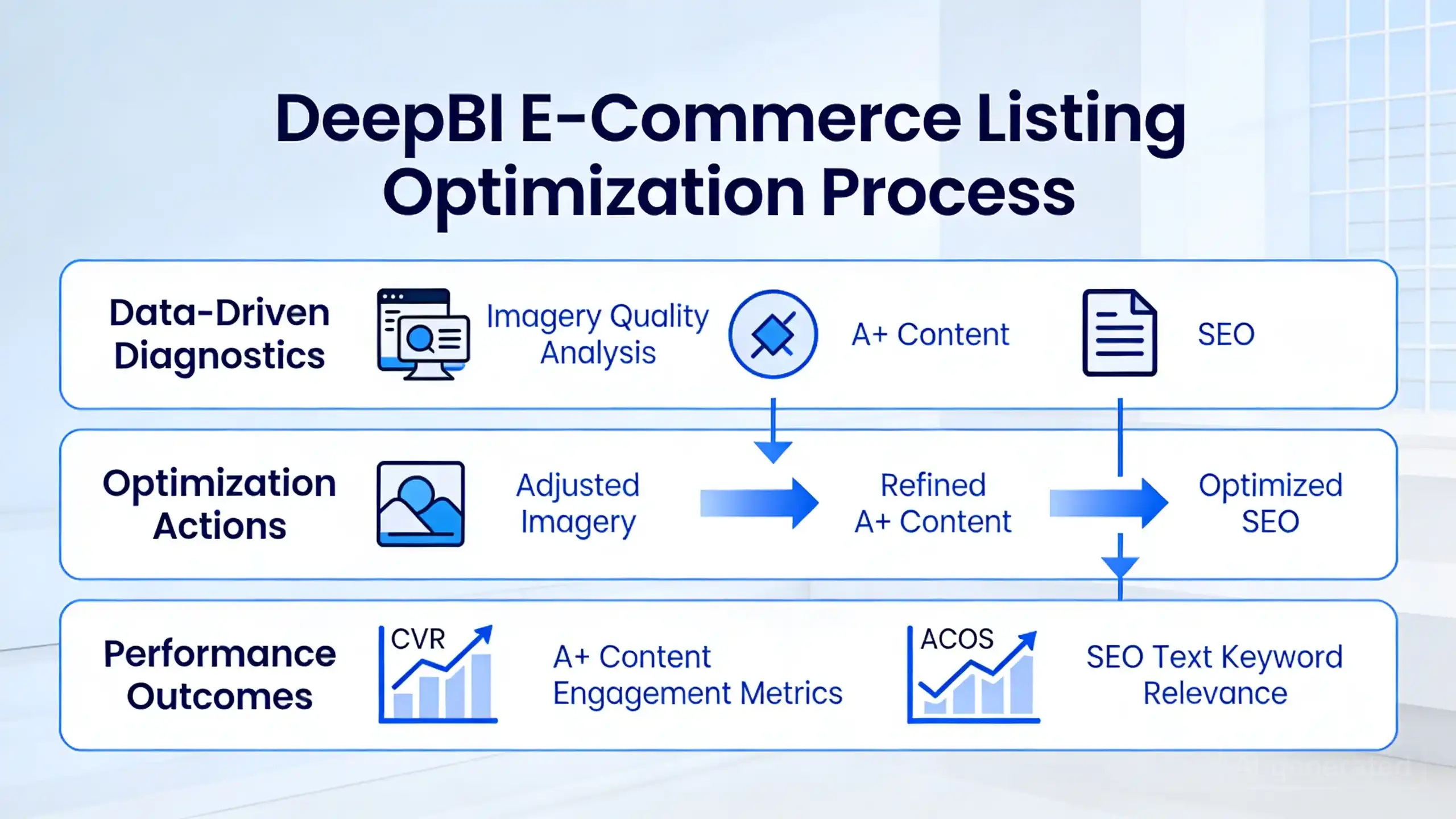
Visuals are your most powerful conversion tool. Generic or misleading images can destroy trust and tank your CVR. DeepBI moves beyond subjective feedback by providing precise, executable instructions for visual optimization. Instead of vague advice like "improve texture," the system generates parameterized commands specifying composition, lighting, and camera angles.
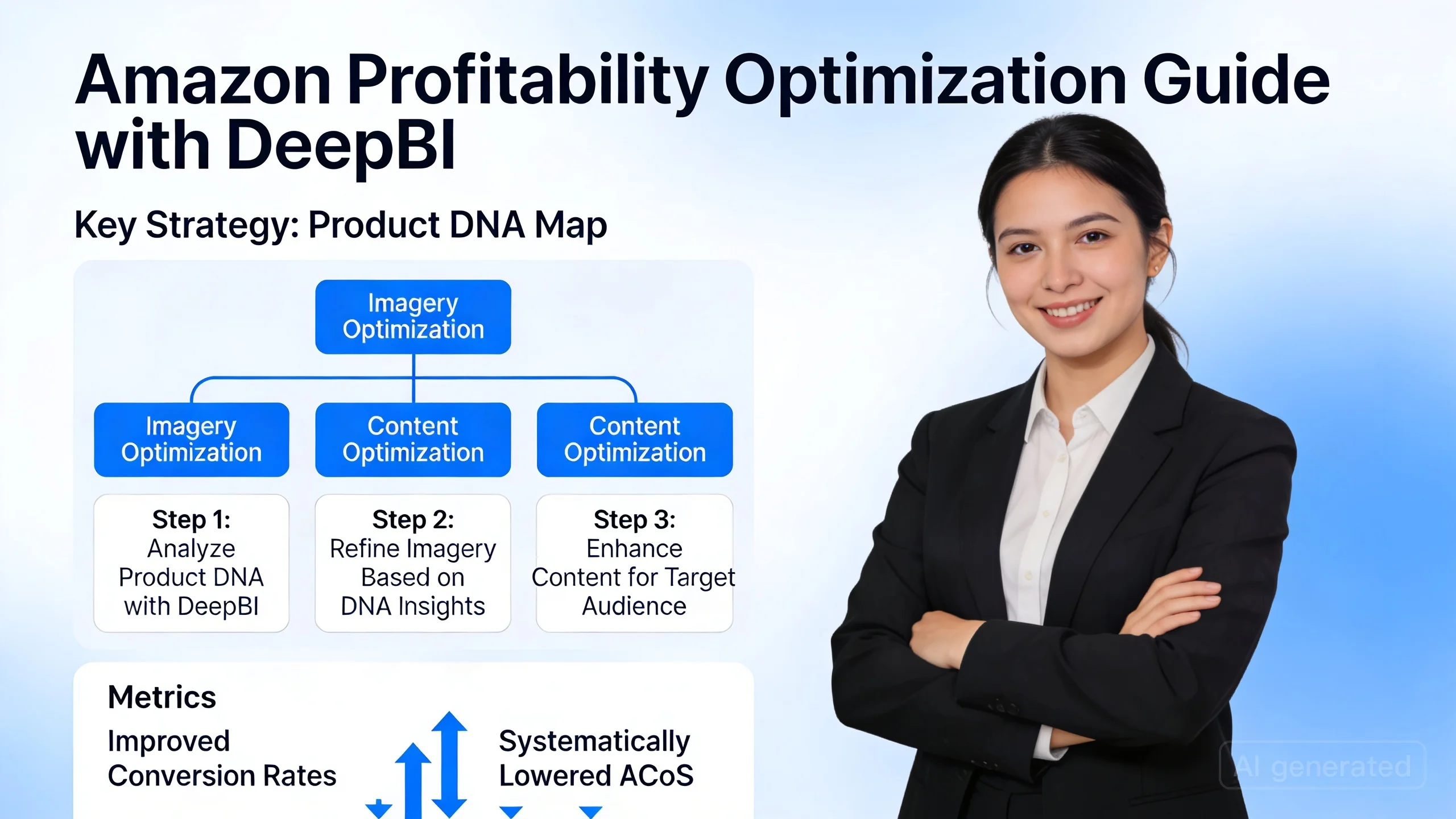
To ensure authenticity, DeepBI utilizes a "Product DNA" map that constrains the AI, preventing it from making alterations that deviate from your product's actual material or design. This focus on "product entity consistency" helps mitigate the risk of negative reviews caused by a mismatch between the listing's visuals and the physical product, thereby protecting your CVR and brand reputation.
Crafting SEO-Rich Titles and Bullet Points
Your listing's text must serve both search algorithms and human shoppers. Effective titles and bullet points improve discoverability and persuade customers to buy, directly impacting your CVR. DeepBI’s smart diagnostics use multi-dimensional semantic analysis to score your listing's text elements against top competitors. This automated benchmarking pinpoints weaknesses in your title, bullet points, and A+ content copy. By identifying keyword gaps or unconvincing benefit statements, DeepBI helps you prioritize copywriting efforts to make every word work harder, turning more clicks into profitable sales and lowering your ACOS.
DeepBI's Ad Quant Strategies for ACOS Reduction
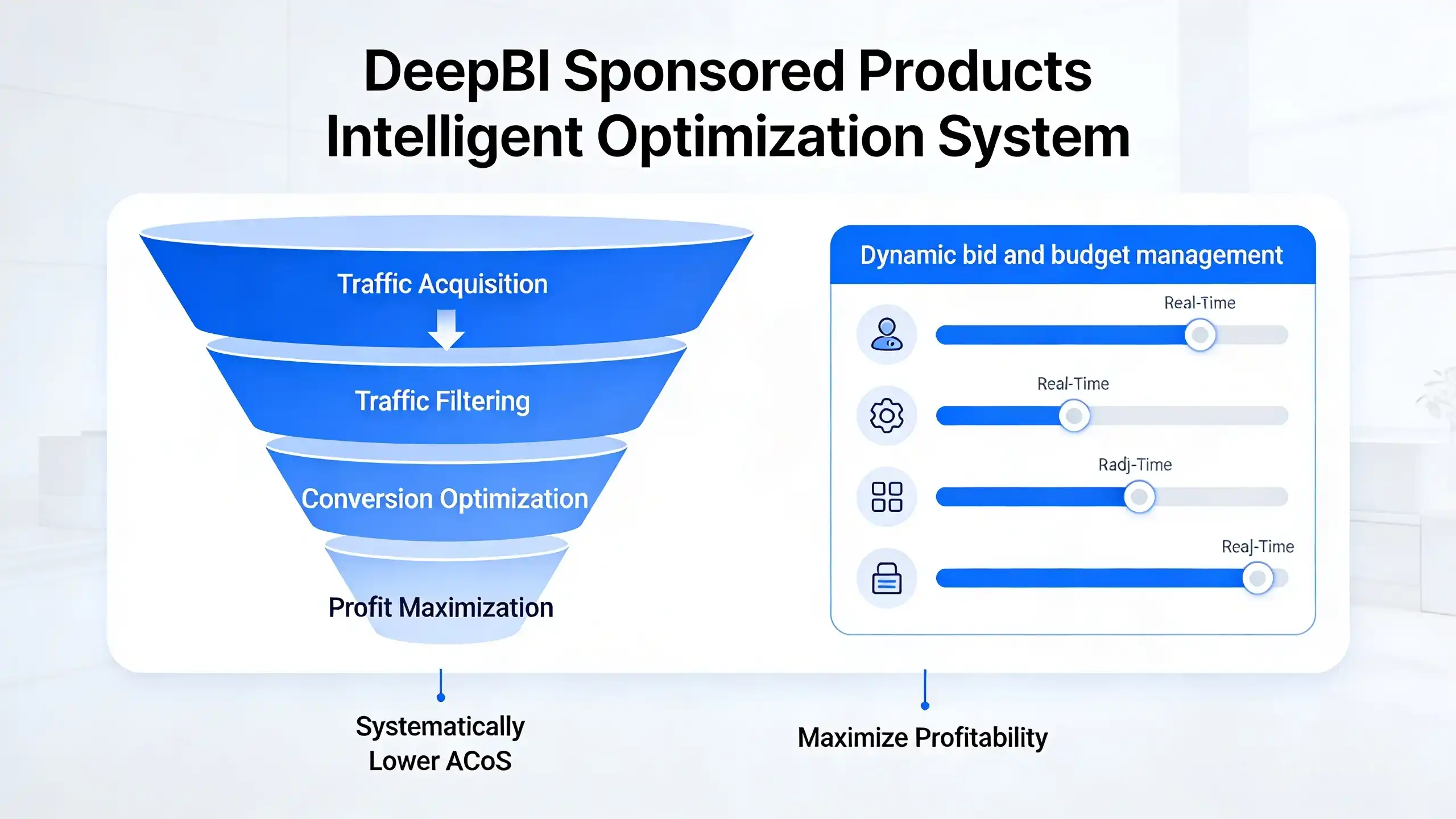
Effective ACoS reduction requires a systematic approach that bridges market diagnosis with campaign execution. DeepBI moves beyond reactive bid adjustments by implementing an end-to-end intelligent optimization system for Amazon Sponsored Products. This framework dismantles the operational silos between analysis, planning, and delivery, ensuring every dollar of ad spend is informed by a comprehensive understanding of market dynamics. By managing advertising as an integrated component of the sales funnel, sellers can shift from chasing individual keyword performance to strategically steering traffic for maximum profitability.
Leveraging the Four-Layer Traffic Funnel
A common pitfall leading to high ACoS is a one-size-fits-all ad strategy that fails to account for the customer journey. DeepBI addresses this by structuring campaigns around a four-layer traffic funnel, aligning ad types and targeting with specific goals at each stage, from awareness to purchase. The process starts with an automated market diagnostic that assesses the product's competitive standing and identifies opportunities. This data-driven foundation enables the precise allocation of resources, ensuring that top-of-funnel ad spend builds momentum that is effectively captured by high-conversion, bottom-of-funnel campaigns, ultimately improving the overall CVR and lowering ACoS.
Dynamic Bid and Budget Management
Static bids and budgets are poorly suited for Amazon's dynamic marketplace, often leading to overspending on underperforming targets or missing profitable opportunities. DeepBI enables a dynamic management model where bids and budgets are adjusted according to real-time performance data and strategic goals. By automating the link between diagnostic insights and campaign settings, the system allows sellers to implement rules that safeguard profitability. This transforms ad management from a tedious manual process into a responsive, data-driven engine that continuously optimizes for the target ACoS, ensuring capital is allocated efficiently to the campaigns with the highest potential return.
Driving Organic Traffic to Sustainably Lower TACOS
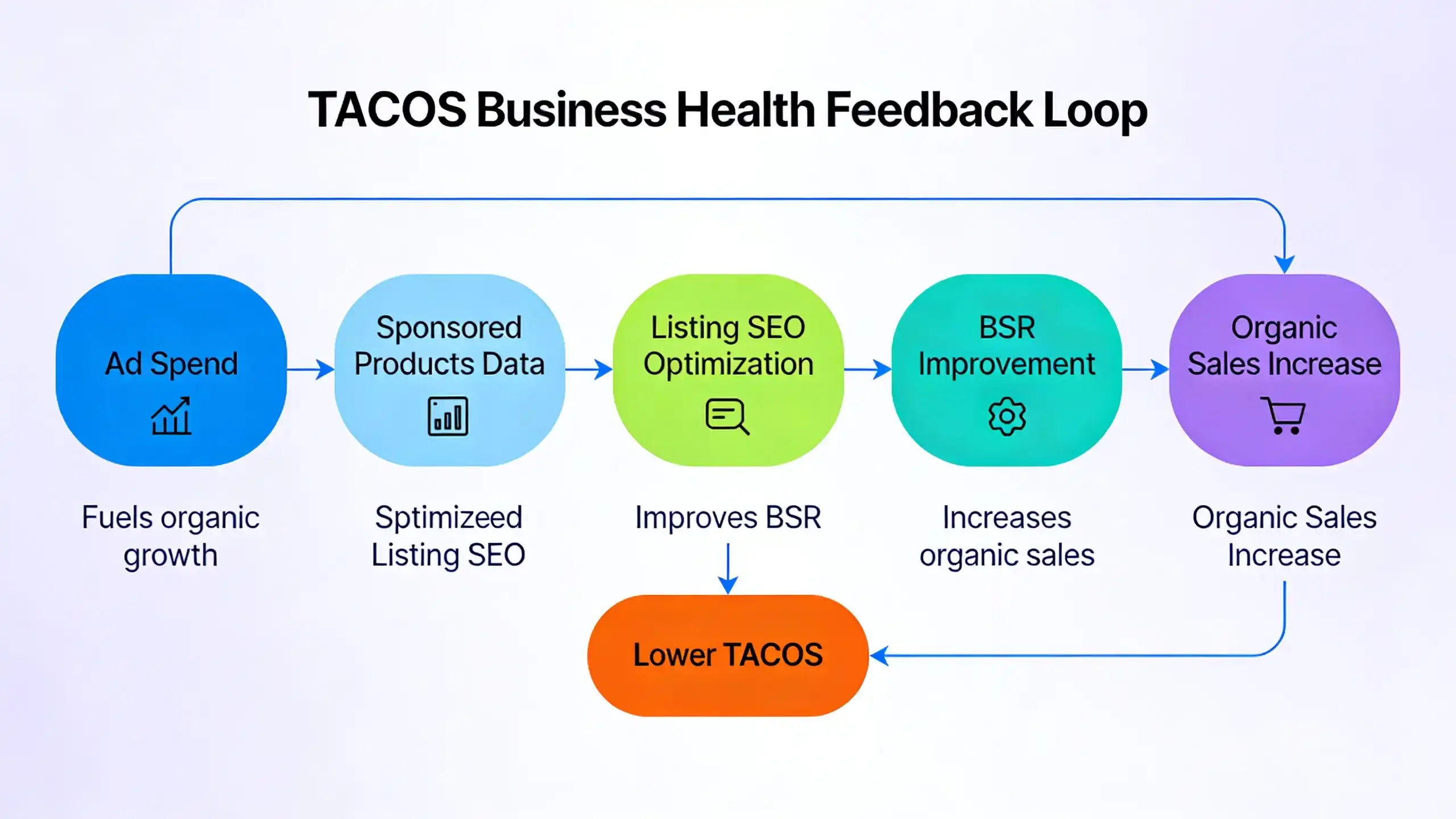
While ACoS measures the efficiency of ad campaigns, Total Advertising Cost of Sales (TACOS) offers a more comprehensive view of your business's health. Calculated as (Total Ad Spend ÷ Total Sales), TACOS reveals how advertising investment impacts overall revenue, including organic sales. A declining TACOS indicates that your brand is growing sustainably, as organic sales increase relative to ad spend. The ultimate goal is to use paid advertising as a catalyst to fuel a self-sustaining cycle of organic growth, progressively reducing dependency on ads and improving overall profitability.
Identifying High-Value Keywords from Ad Performance
Your advertising data is an invaluable resource for organic optimization. By analyzing Sponsored Products campaign reports, you can identify the exact customer search terms that not only drive clicks (high CTR) but also convert into sales (high CVR). These proven keywords should then be strategically integrated into your product listing's title, bullet points, and backend search terms. This process elevates your ad spend from a simple sales driver to a powerful market research tool, allowing you to refine your listing's SEO based on real-world customer behavior and capture more high-intent organic traffic.
Boosting Top of Search Rankings
Successful advertising campaigns directly influence your product's organic ranking on Amazon. When ads generate consistent sales for specific keywords, Amazon's algorithm recognizes your product's relevance for those terms. This sales velocity improves your Best Seller Rank (BSR) and elevates your organic position in search results. As your organic rank climbs, you gain more visibility and generate more sales without paying for clicks. This positive feedback loop, where paid placements build a foundation for organic dominance, is the key to systematically lowering your TACOS over time.
Measuring Success and Continuous Optimization
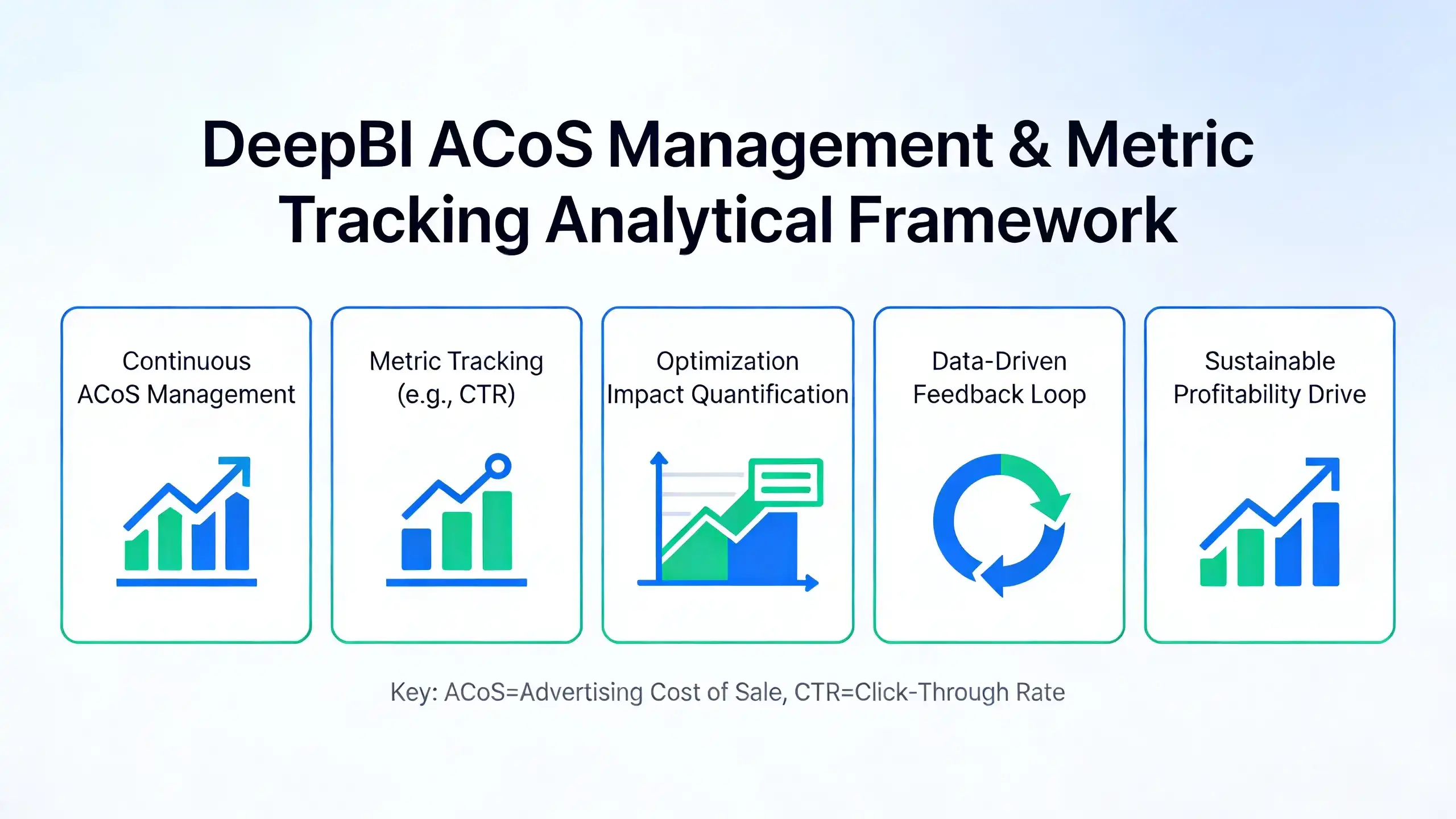
Effective ACoS management is not a one-time task; it is a continuous cycle of measurement, analysis, and adaptation. Without a systematic approach, sellers risk making decisions based on intuition rather than data. The key to transitioning from guesswork to precision targeting is a firm commitment to ongoing performance monitoring.
To build a clear picture of your advertising effectiveness and overall business health, you must consistently track a core set of metrics. Beyond ACoS, these include:
- Conversion Rate (CVR): Indicates how effectively your ads and listings persuade shoppers to buy.
- Organic Keyword Rankings: Shows the impact of ad-driven sales velocity on your organic visibility.
- Total Advertising Cost of Sales (TACOS): Measures ad spend against total revenue, revealing the true impact of advertising on your bottom line.
Regularly reviewing these KPIs allows you to adapt your strategies based on real-time insights. DeepBI provides the analytical framework for this optimization cycle, functioning as an automated diagnostic system. For example, after publishing a new main image, the system can automatically tag the event in ad reports. This helps you quantify the direct impact of that visual optimization on business metrics like Click-Through Rate (CTR), closing the loop between action and measurable results. This data-driven feedback is the engine of sustainable ACoS reduction and long-term profitability.
Conclusion: A Holistic Approach to Amazon ACOS Reduction
Achieving a sustainably low ACoS is not a one-time fix but the result of continuous strategic integration. True profitability on Amazon emerges from the powerful synergy between three core pillars: high-quality listings, precision-targeted advertising, and dominant organic traffic. A compelling listing with strong visual assets boosts conversion rates (CVR) for both paid and organic channels. Efficient ad campaigns drive the initial sales velocity needed to improve Best Seller Rank (BSR) and organic visibility. As organic rank climbs, your reliance on costly advertising diminishes, creating a self-reinforcing cycle of growth.
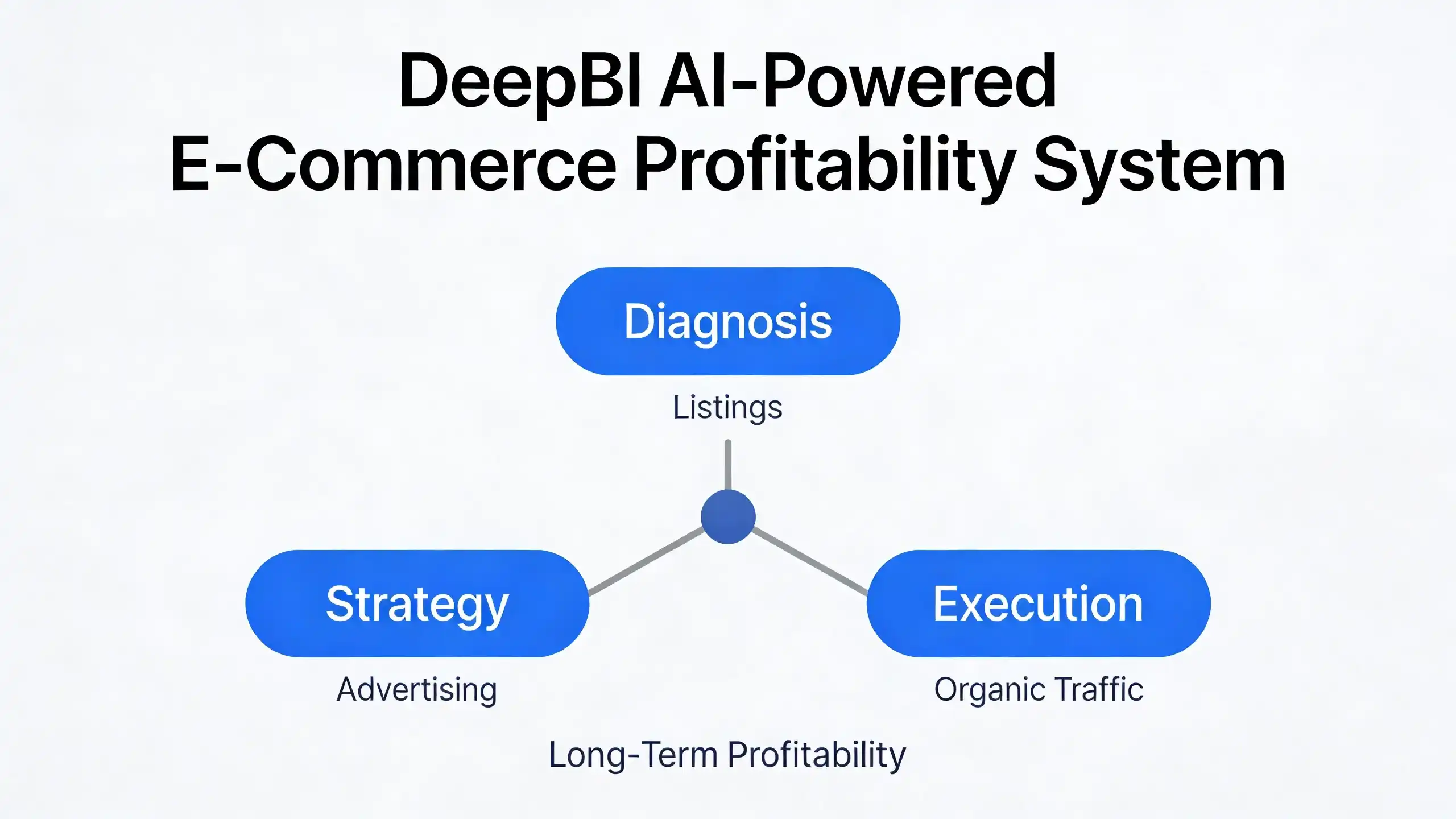
Managing this complex ecosystem requires more than manual adjustments. DeepBI provides an AI-powered, Amazon-focused system that integrates diagnosis, strategy, and execution across these growth pillars. It functions as an automated market analysis engine to identify opportunities and an automated visual production system to execute listing improvements. By acting as a data-driven executor rather than a passive tool, DeepBI empowers sellers to move beyond isolated tactics. It enables a holistic approach to operations, ensuring every action—from optimizing an A+ page to adjusting a bid—contributes to the ultimate goal of long-term, stable profitability.