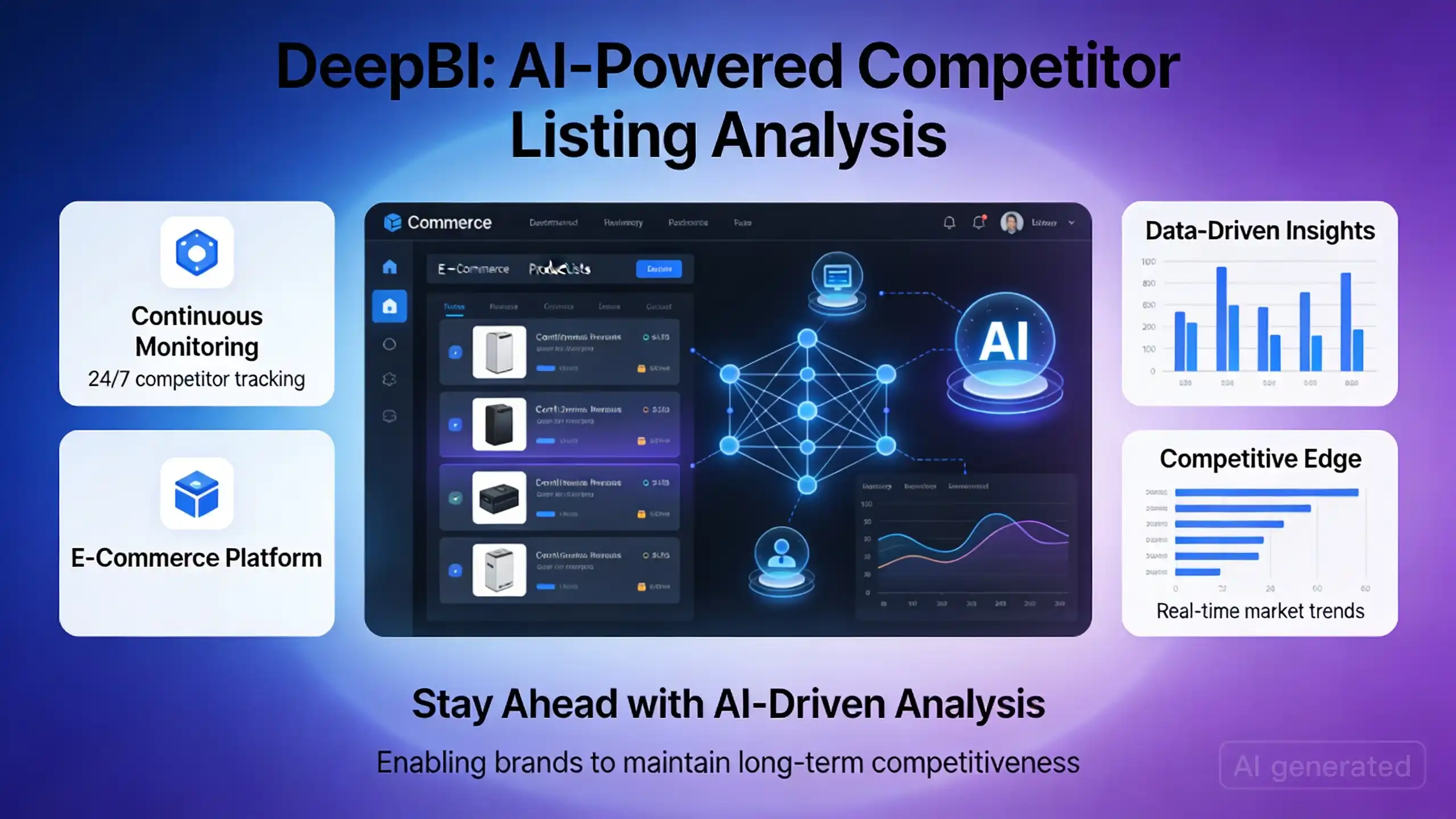
The Indispensable Role of Competitor Listing Analysis in Amazon Success
In the hyper-competitive Amazon marketplace, where new sellers emerge daily, simply launching a product is not enough to guarantee success. To gain a sustainable edge, FBA sellers must adopt a proactive, data-driven approach. At the core of this strategy is rigorous competitor listing analysis, a foundational practice for achieving market leadership and consistent growth.
What is Amazon Competitor Listing Analysis?
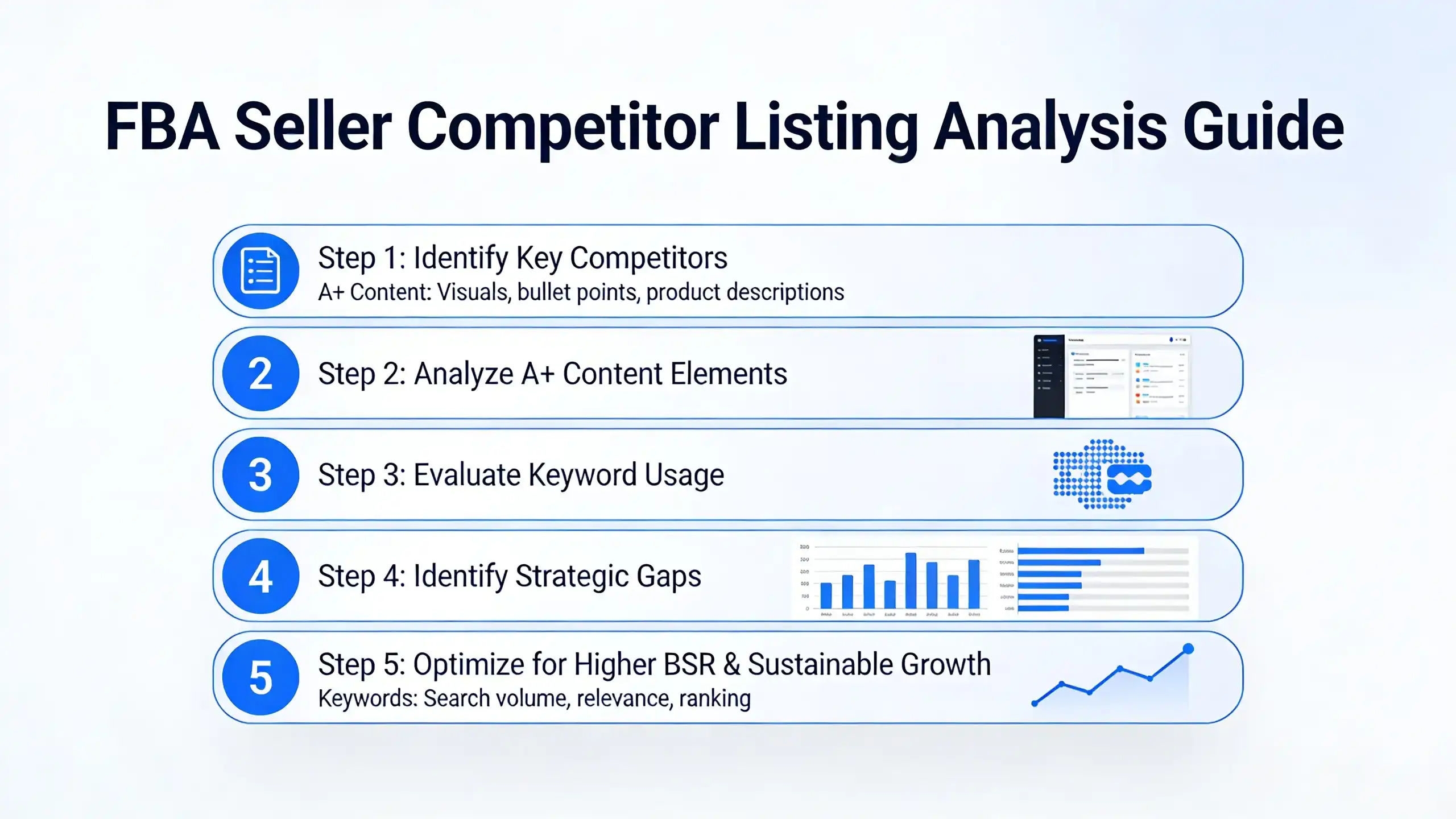
Amazon competitor listing analysis is the systematic process of deconstructing and evaluating the product detail pages of your top rivals. This goes beyond a casual glance at their sales rank; it involves a deep dive into every element of their listing—from title structure and keyword choice to image quality, the persuasiveness of bullet points, the depth of A+ Content, and their pricing and review strategies. The objective is to reverse-engineer their tactics to understand what drives their performance, revealing both their strengths and exploitable weaknesses.
Why Competitor Listing Analysis is Crucial for FBA Sellers
This analysis is not about imitation but about strategic differentiation and optimization. By understanding how competitors position themselves, you can identify unmet customer needs, discover content gaps, and refine your own value proposition to stand out. Top sellers recognize that every component of a listing serves a commercial purpose. For instance, visual assets have evolved from mere aesthetic displays into a core commercial engine that directly drives click-through rates (CTR) and conversions. A thorough analysis uncovers these high-impact strategies, allowing you to improve your own listing's performance, boost your Best Sellers Rank (BSR), and ultimately build a more resilient and profitable business.
 Identifying Your Amazon Competitors
Before you can outperform the competition, you must first accurately identify who they are. A comprehensive competitor analysis begins with a systematic mapping of your market rivals. This process is not a one-time task but an ongoing intelligence effort to stay ahead of market shifts and emerging threats.
Defining Your Competitive Landscape: Direct vs. Indirect Competitors
Understanding the different types of competitors is crucial for focusing your strategic efforts. Your rivals fall into two main categories:
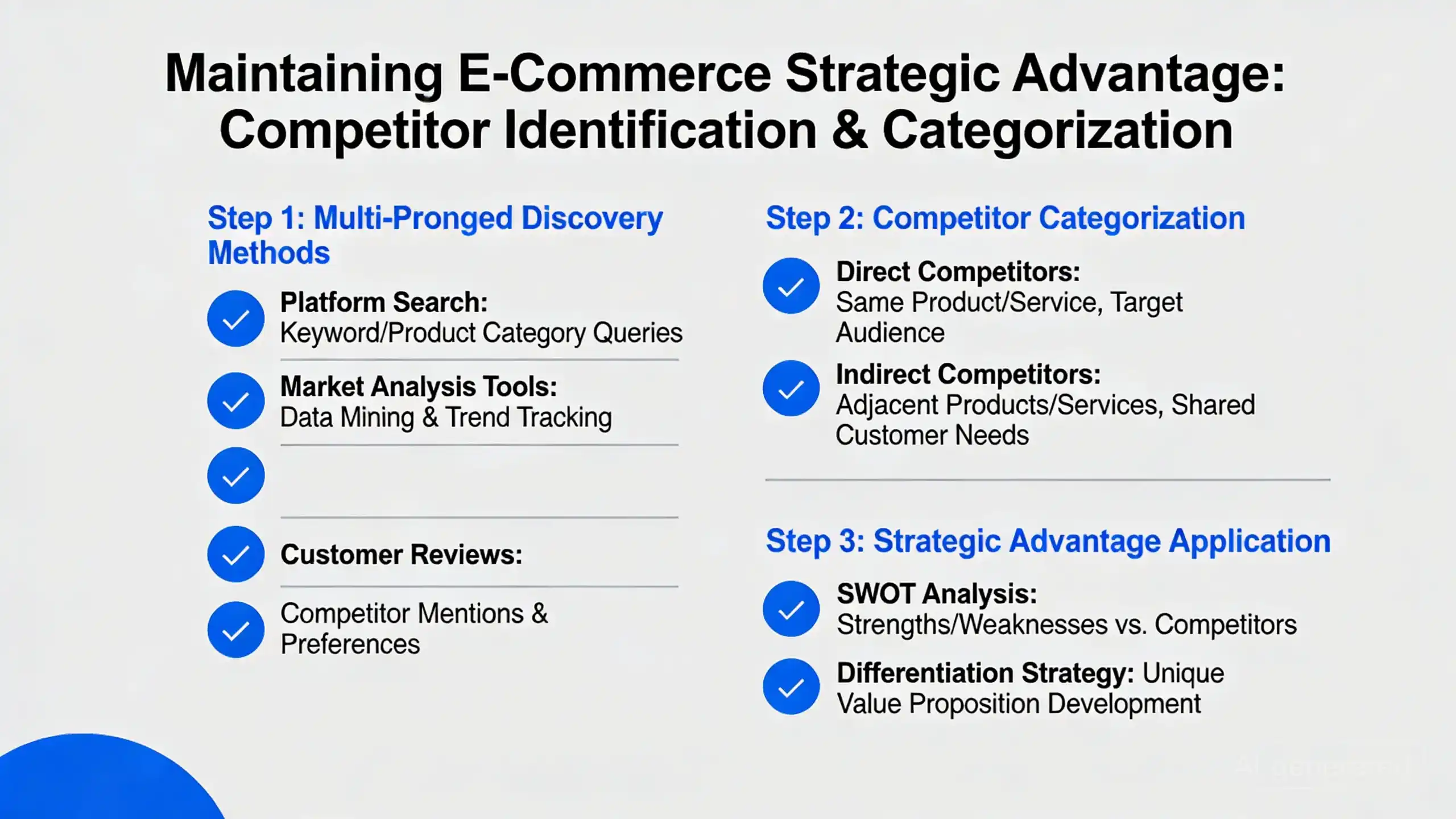
- Direct Competitors: These are the sellers offering products that are nearly identical to yours. They target the same customer base, compete for the same keywords, and operate at a similar price point. If you sell a 12-inch non-stick ceramic frying pan, other brands selling 12-inch non-stick ceramic pans are your direct competitors.
- Indirect Competitors: These sellers offer different products that solve the same fundamental customer need. For the frying pan example, this could include cast iron skillets, stainless steel sauté pans, or even electric griddles. While they may not compete for the exact same search terms, they are vying for the same share of your customer's budget.
Methods for Discovering Competitors on Amazon
Leverage Amazon's own platform to build a detailed list of your competitors. A multi-pronged approach ensures you do not miss key players.
- Primary Keyword Search: Search for your most important, high-volume keywords on Amazon. The top organic and sponsored results on the first page are your most visible and immediate competitors.
- Best Sellers Rank (BSR) Analysis: Navigate to your product's most specific sub-category and analyze the top 100 best-sellers. These are the market leaders who have proven their ability to drive sales and volume.
- Product Detail Page Intelligence: Examine the "Frequently bought together" and "Products related to this item" carousels on your own listings and those of known competitors. Amazon's algorithm is directly showing you the other options your target customers are considering.
 Deep Diving into Competitor Listings: A Data-Driven Approach
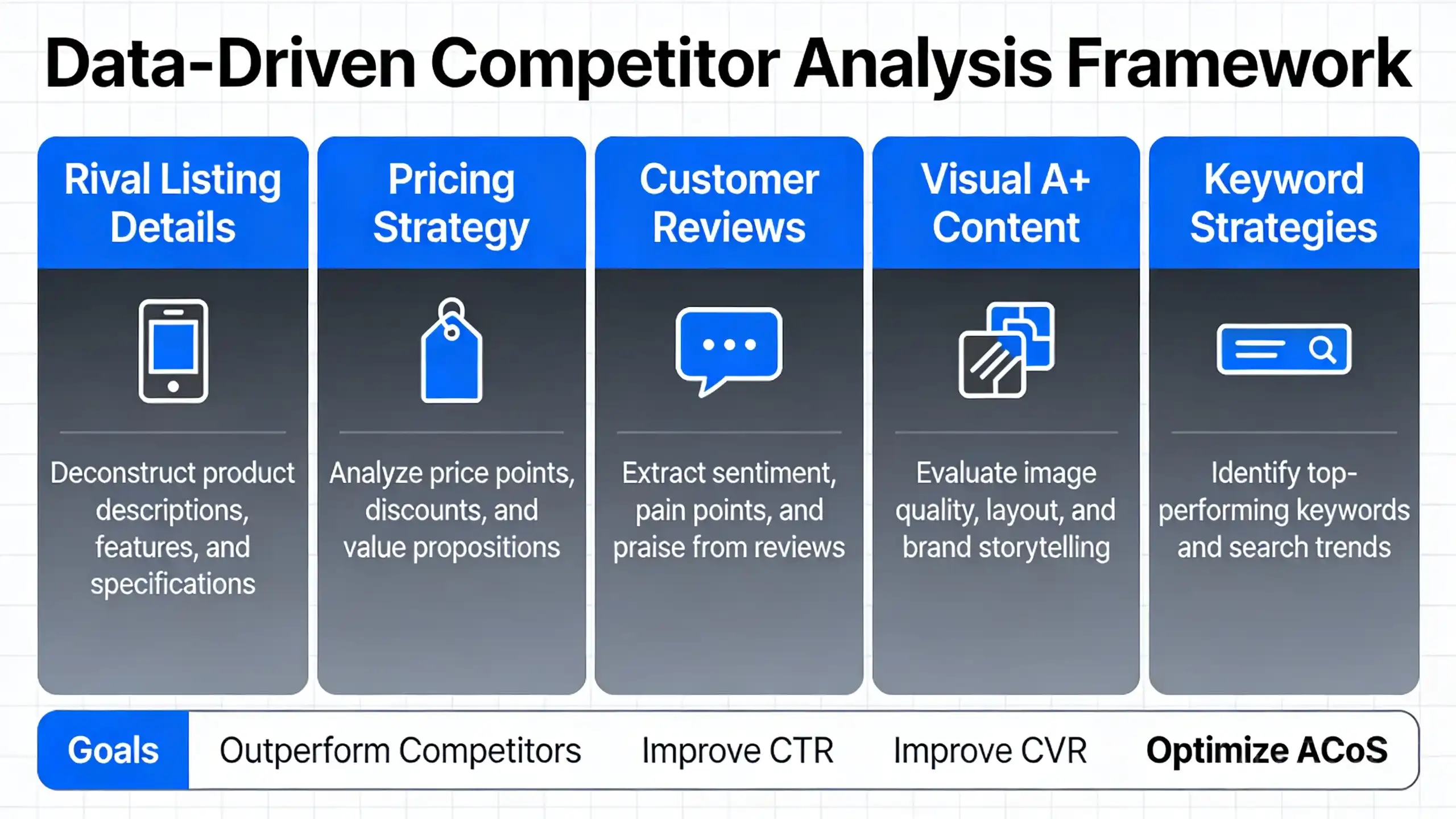
Effective competitor analysis moves beyond surface-level observation into a structured, quantitative audit. The traditional approach of relying on subjective aesthetics and disconnected stages of diagnosis and execution is both inefficient and risky. A data-driven framework, however, creates a closed loop from diagnosis to delivery, allowing you to systematically deconstruct and outperform rival listings.
Analyzing Product Details and Features
Begin by dissecting the competitor's title, bullet points, and product description. Note whether they are targeting high-value keywords in the title. More importantly, analyze the structure of their bullet points. A powerful technique is to frame each point as a "pain point-solution" loop. Identify the specific customer problem they are highlighting and how their feature is positioned as the definitive answer. This reveals their core messaging strategy and the customer needs they prioritize.
Pricing Strategies and Value Proposition
Evaluate a competitor's price not in isolation, but in the context of the value they offer. Compare their price against their product features, review count and quality, brand authority, and visual presentation. This analysis helps you map their position on the price-value spectrum. While price is often a key deciding factor for shoppers comparing similar items, brand trust and unique features can justify a premium, revealing opportunities for you to compete on value rather than just price.
Deconstructing Customer Reviews and Feedback
Competitor reviews are a goldmine of strategic insights. Systematically analyze their 1- and 2-star reviews to identify recurring product flaws, customer frustrations, and unmet needs. Conversely, examine their 4- and 5-star reviews to understand what features and benefits resonate most strongly with their audience. This data provides a clear roadmap for improving your own product and crafting marketing messages that address known market weaknesses.
Visual Content and A+ Content Analysis
Go beyond a simple aesthetic judgment of your competitor's images and A+ Content. Instead, deconstruct their visual strategy. Analyze how their main images and A+ modules work together to tell a story, overcome objections, and demonstrate value. For example, a vague benefit like "long-lasting" is weak. A top competitor might translate this into a specific infographic on their main image, detailing "12-hour continuous use." Applying ad data to your own visual optimization creates a powerful feedback loop, allowing you to test and validate which images improve CTR and CVR, ultimately lowering ACoS.
Keyword Strategy and Search Visibility
Reverse-engineer your competitor's search strategy to understand how they capture traffic. Use analytics tools to identify the primary and long-tail keywords for which they rank. Examine where these keywords are placed—in the title, bullet points, or backend search terms. This intelligence reveals their organic and paid search footprint, highlighting valuable keyword opportunities you may have overlooked and informing a more competitive advertising strategy.
 Translating Insights into Action: Optimizing Your Own Listings
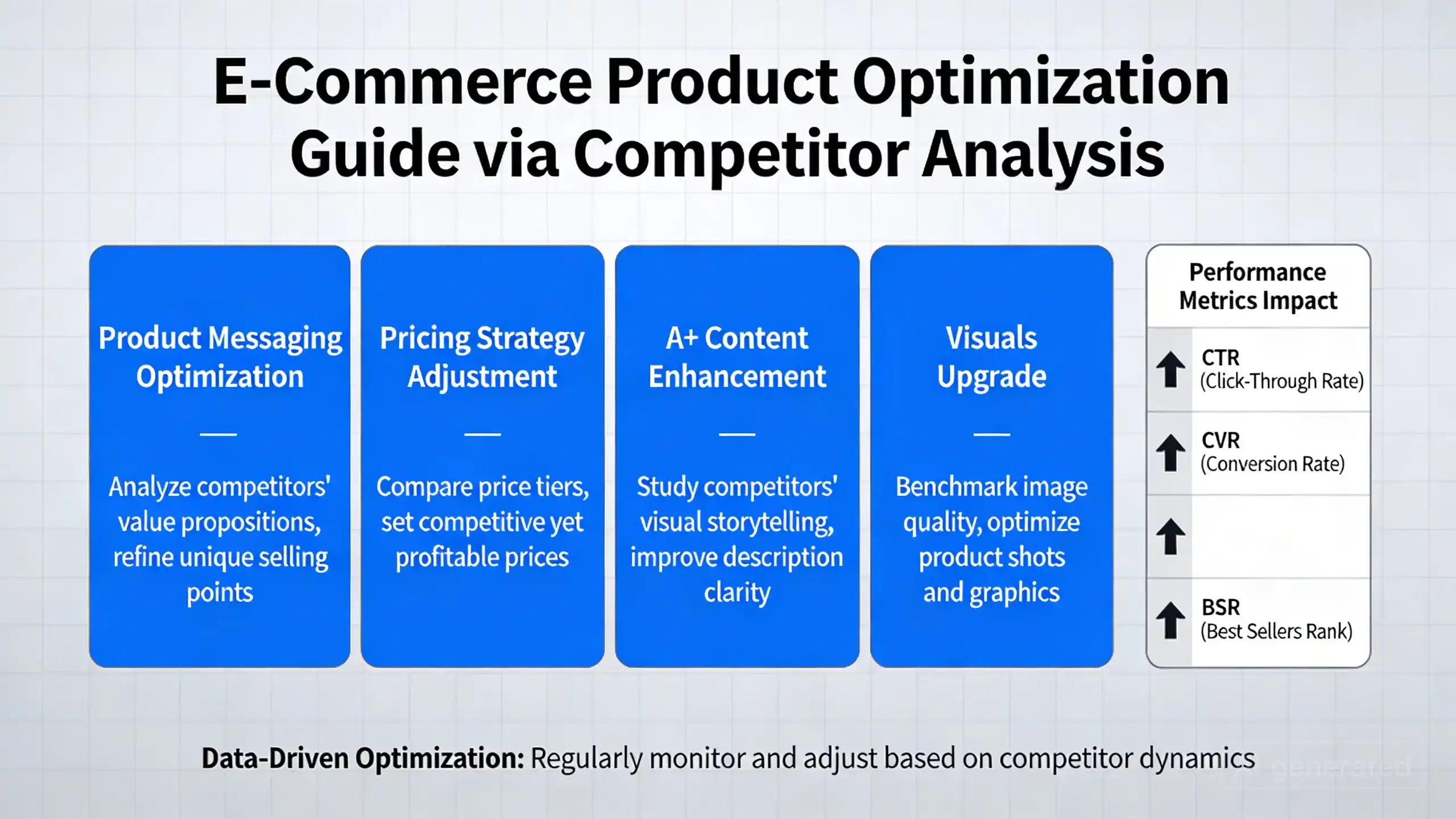
After analyzing top competitors, the next critical step is to channel those insights into tangible improvements for your own product listings. This process transforms data into a competitive advantage, directly impacting key performance indicators from click-through rate (CTR) to conversion rate (CVR).
Enhancing Product Information and Messaging
Use your analysis of competitor titles, bullet points, and descriptions to identify high-performing keywords and compelling value propositions you may be missing. Integrate these terms naturally into your own copy to improve search visibility and relevance. Refine your messaging to directly address customer questions and highlight the unique benefits that your analysis revealed are most effective in your niche.
Refining Your Pricing Strategy
Competitor pricing data provides a clear benchmark for your own strategy. Determine if you are positioned correctly as a premium, value, or mainstream option. Use insights into competitor promotions and sales velocity to inform your own pricing adjustments, ensuring you remain competitive without sacrificing profit margins. Test different price points to find the optimal balance that maximizes sales and Best Seller Rank (BSR).
Improving Visuals and A+ Content
Transform vague ideas like "improve image quality" into specific, AI-executable tasks. Advanced systems can convert strategic goals into parameterized instructions for lighting, composition, and background, ensuring creative changes are precise. This process is constrained by a "Product DNA" map, which guarantees that AI-generated visuals remain authentic to your physical product, preventing mismatches. By integrating performance data like CTR, you can guide visual optimization toward what demonstrably attracts clicks.
Leveraging Review Insights for Product and Listing Improvement
Mine competitor reviews for recurring themes, both positive and negative. Identify common customer complaints and feature requests to proactively address these points in your own bullet points and A+ Content. Highlighting how your product solves these known issues can significantly boost customer confidence and conversion. This feedback is also invaluable for guiding future product development and iteration.
 Connecting Listing Insights to Broader Growth Strategies
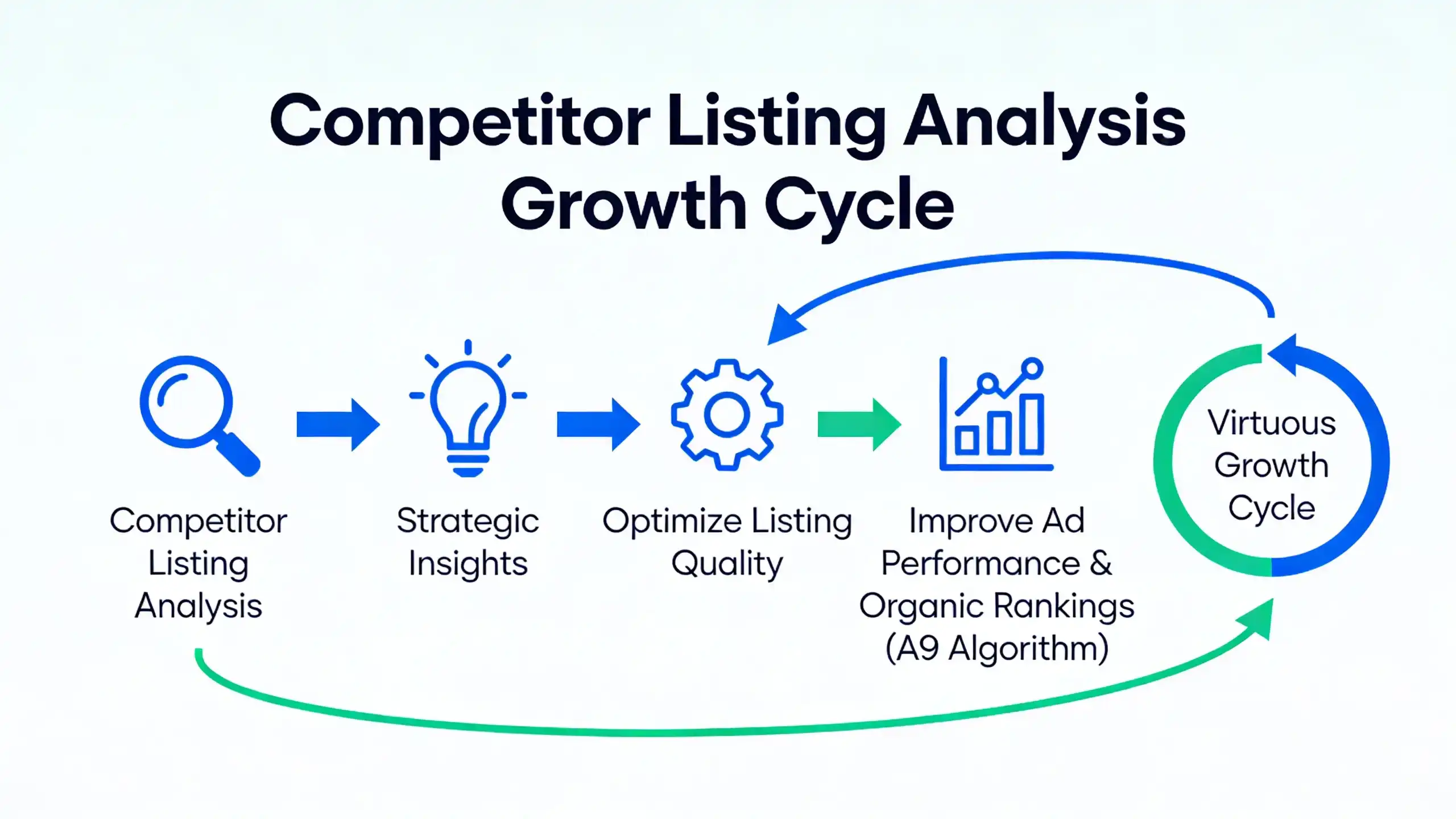
Insights from competitor listing analysis are not isolated tactical wins; they are strategic fuel for your entire Amazon growth engine. A deep understanding of what makes competing listings successful allows you to build a powerful, integrated strategy where listing quality, advertising performance, and organic visibility reinforce one another.
Informing Your Amazon Advertising Campaigns
A high-performing product listing is the foundation of an efficient advertising strategy. Insights gained from competitor analysis—such as superior image angles, benefit-driven copy, or more effective keyword targeting—directly improve the core assets your ads promote. A well-optimized listing naturally achieves a higher Click-Through Rate (CTR) and Conversion Rate (CVR) from paid traffic, which in turn lowers your Advertising Cost of Sale (ACoS). This creates a direct feedback loop; for instance, after updating your main image based on competitor weaknesses, you can track the event in your ad reports to quantify the immediate uplift in CTR, validating your optimization efforts with hard data.
Boosting Your Organic Traffic and Rankings
The benefits of a superior listing extend far beyond paid campaigns into the realm of organic visibility. Amazon's A9 algorithm rewards listings that convert. When your optimized listing generates a higher CVR, it signals to Amazon that your product is a strong match for customer searches. This effect is amplified by your advertising success. The increased sales velocity driven by efficient, high-converting ads is a powerful factor in improving your Best Sellers Rank (BSR) and organic search position. This creates a virtuous cycle: a better listing improves ad performance, which boosts sales velocity, which then elevates your organic ranking, leading to more non-paid traffic and sales.
 DeepBI: Your AI-Powered Partner in Competitor Listing Analysis and Growth
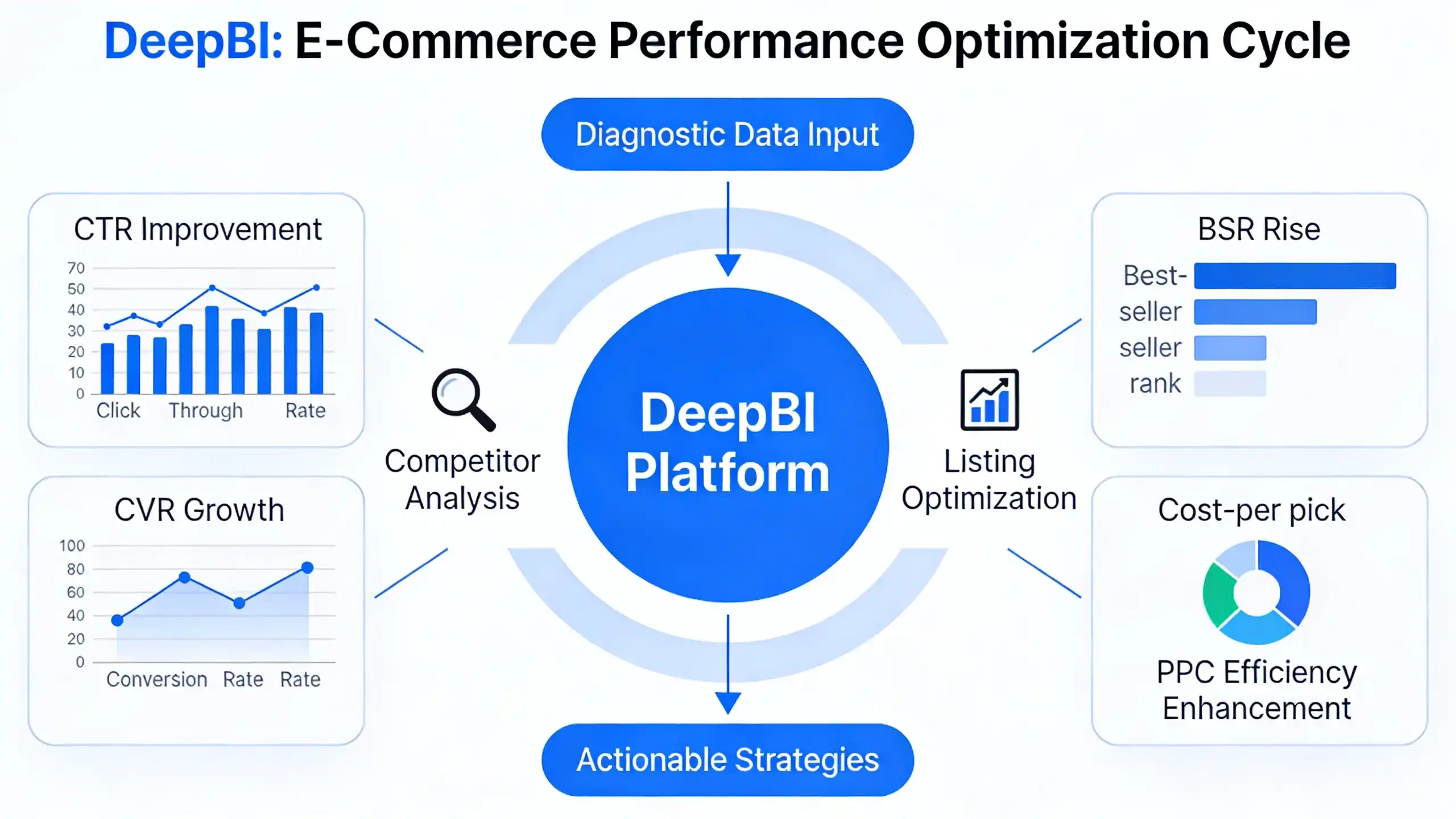
Effective competitor analysis is not a one-time project but a continuous cycle of diagnosis, strategy, and execution. DeepBI serves as an end-to-end system that automates this entire workflow, transforming raw competitor data into tangible listing improvements and measurable growth. It moves sellers from manual guesswork to a data-driven optimization engine.
Streamlining Competitor Benchmarking and Diagnosis
DeepBI functions as an "automated market health check system," not just a simple scoring tool. It conducts a rigorous, data-driven evaluation of competitor listings against your own, identifying specific weaknesses and opportunities with precision. This initial diagnostic phase shifts your strategy from broad assumptions to targeted action, generating a detailed analysis that serves as the foundation for all subsequent optimization efforts.
Generating Actionable Optimization Strategies
Based on its diagnosis, DeepBI generates a concrete optimization plan. It replaces vague, subjective advice like "improve image quality" with precise, engineered instructions. For example, instead of abstract suggestions, it provides a parameterized plan detailing specific requirements for composition, camera angles, lighting distribution, and color tones. This plan is designed for direct execution by AI content generators, bridging the gap between analysis and asset production.
Driving Holistic Growth Across Listing, Ads, and Organic Traffic
By connecting deep analysis with AI-powered execution, DeepBI creates a flywheel effect for your Amazon business. A strategically optimized listing, built on competitor insights, directly improves key performance indicators. Enhanced images and copy boost Click-Through Rate (CTR) and Conversion Rate (CVR), which in turn improves your Best Seller Rank (BSR) and organic visibility. This higher conversion potential also makes your PPC campaigns more efficient, lowering your ACoS and maximizing return on ad spend.
 Conclusion: Sustained Growth Through Continuous Analysis
The path to enduring success on Amazon is not paved with one-time victories but with consistent, strategic adaptation. Competitor listing analysis is not a task to be completed and forgotten; it is an iterative cycle crucial for survival and growth in a fiercely competitive marketplace. Static strategies are quickly outmaneuvered, making ongoing monitoring of pricing, keywords, and visual merchandising an absolute necessity for maintaining relevance and market share.
This is where intelligent automation becomes a decisive advantage. Tools like DeepBI transform the overwhelming task of continuous analysis into a manageable, strategic workflow. It functions not as a simple scoring tool but as an automated market health check system, empowering you with the data-driven insights needed to make informed decisions. By leveraging AI as a powerful executor for complex data collection and analysis, you can shift your focus from manual research to high-level strategy. Embracing this continuous, AI-powered approach ensures your brand not only reacts to market shifts but anticipates them, securing a lasting competitive edge and driving long-term, profitable growth.