For many Amazon sellers, advertising feels like a constant battle to lower Advertising Cost of Sales (ACoS). While important, a narrow focus on ad metrics misses the ultimate goal: maximizing total, sustainable profitability. True success on Amazon isn’t just about running efficient ads; it’s about building a powerful, compounding system where your advertising and product listings work in concert to dominate your niche. In this complex ecosystem, even a perfectly optimized campaign will fail if it drives traffic to a listing with a low Click-Through Rate (CTR) or Conversion Rate (CVR), wasting ad spend and damaging your Best Seller Rank (BSR).
The root of the problem often lies in the disconnect between ad management and listing optimization. Visual assets, from the main image to A+ Content, are not just for display—they are the core commercial engine that drives clicks and conversions. To achieve genuine ad profitability, sellers need a holistic strategy that diagnoses and improves every component of the customer journey.
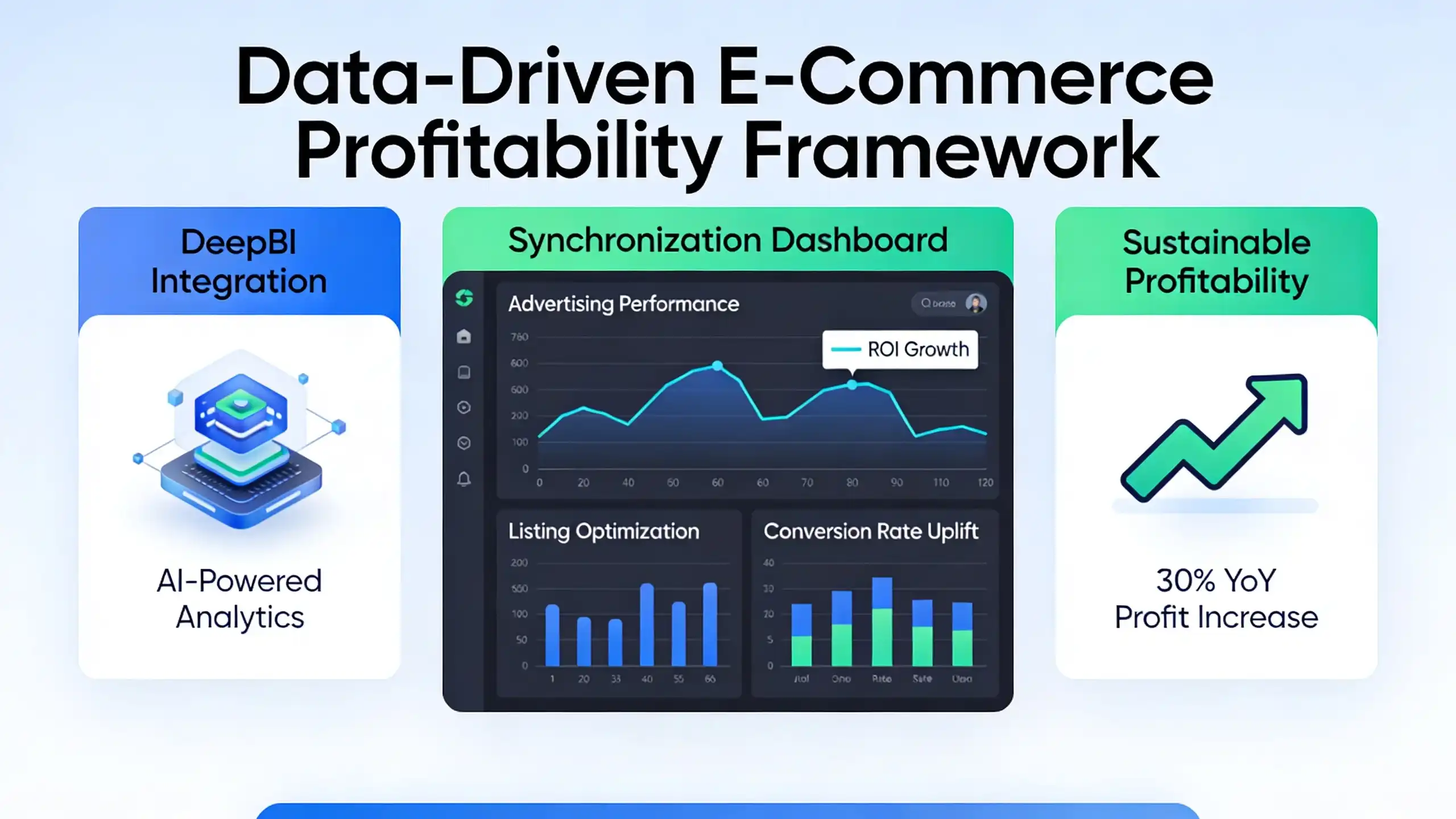
This guide introduces a data-driven framework for achieving this synthesis. We will explore how to move beyond surface-level metrics to build a closed-loop optimization process. By leveraging an end-to-end intelligent system like DeepBI, you can connect diagnosis, planning, and execution, transforming your listings into high-performance assets that turn ad spend into predictable profit.
 Understanding the Pillars of Amazon Ad Profitability
Achieving sustainable growth on Amazon requires moving beyond tactical ad management to a strategic understanding of profitability. Many sellers focus narrowly on campaign execution, but true success lies in building a system that connects advertising inputs to overall business outcomes. This means looking past surface-level metrics to see how advertising truly impacts your bottom line.
Beyond ACOS: Key Metrics for True Profitability
While Advertising Cost of Sale (ACoS) is a useful metric for campaign efficiency, it provides an incomplete picture of profitability. A low ACOS doesn't guarantee profit if your product margins are thin or if it comes at the expense of total sales volume. To gain a comprehensive view, you must track a broader set of KPIs:
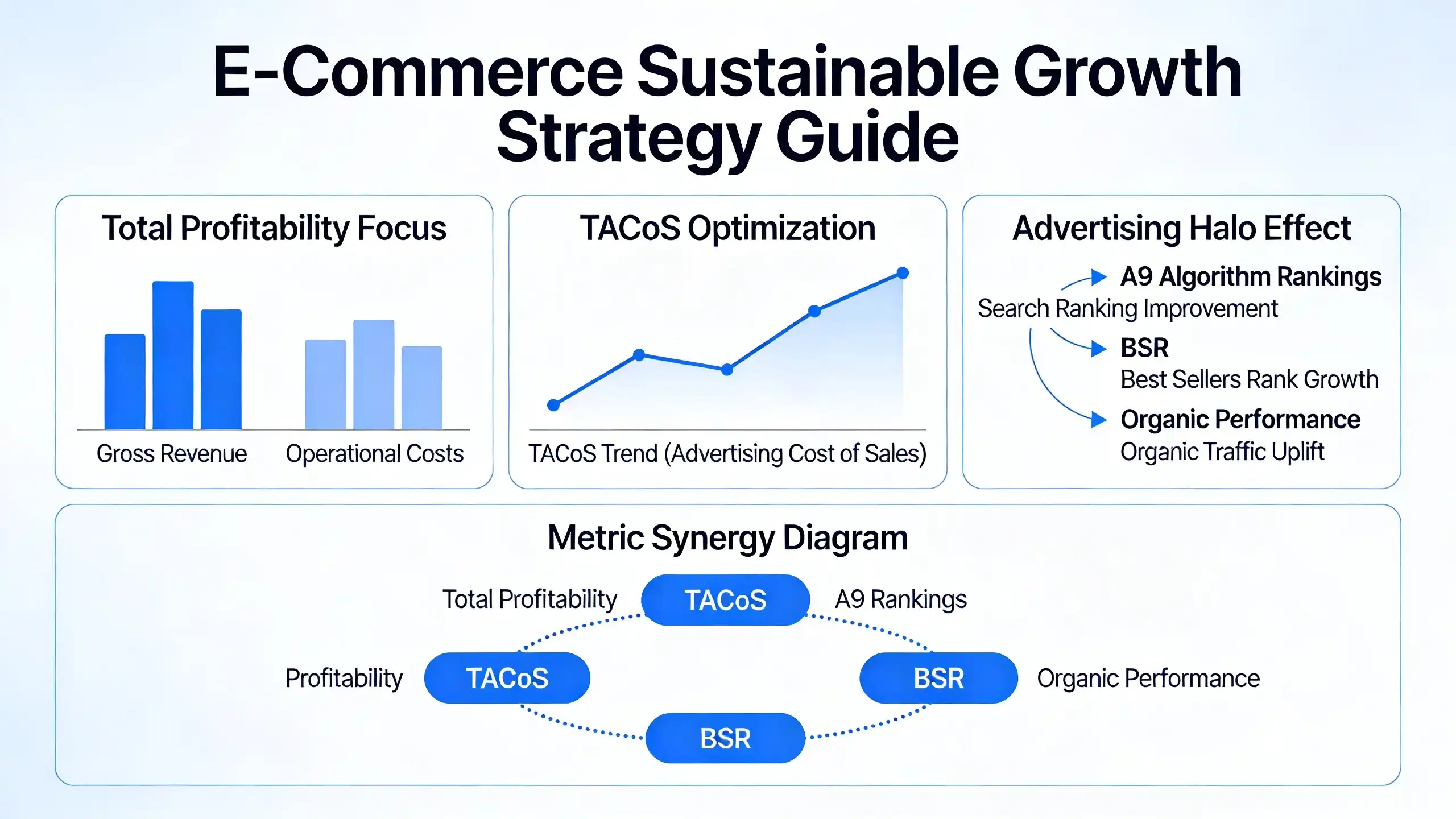
- Total ACoS (TACoS): Calculated as (Ad Spend ÷ Total Sales), this metric reveals the relationship between your advertising investment and your overall business growth, including organic sales. A decreasing TACoS over time indicates your ads are successfully boosting organic performance.
- Profit Margin: Before running ads, you must know your true profit per unit after factoring in all costs: cost of goods sold (COGS), Amazon referral and FBA fees, and shipping. Without this baseline, you cannot accurately assess ad profitability.
- Return on Investment (ROI): This is the ultimate measure of success. Calculated as (Gross Profit - Ad Spend) ÷ Ad Spend, ROI tells you exactly how much profit you generate for every dollar spent on advertising.
The Interplay of Ad Spend, Sales, and Organic Performance
Effective advertising on Amazon does more than just generate immediate sales; it creates a powerful "halo effect" that boosts organic performance. When ads drive traffic and conversions, your product's sales velocity increases. This signals to Amazon's A9 algorithm that your product is relevant and popular, leading to a higher organic search ranking and a better Best Seller Rank (BSR).
This improved organic visibility generates more high-margin sales that you don't pay for directly, creating a virtuous cycle. Strategic ad spend becomes an investment in long-term organic ranking, not just a cost center for short-term sales. The goal is to measure the impact of ad spend on total sales, using TACoS to ensure your advertising is efficiently scaling your entire Amazon business, not just your ad-attributed revenue.
 Setting Up for Profitability: Strategic Campaign Structure
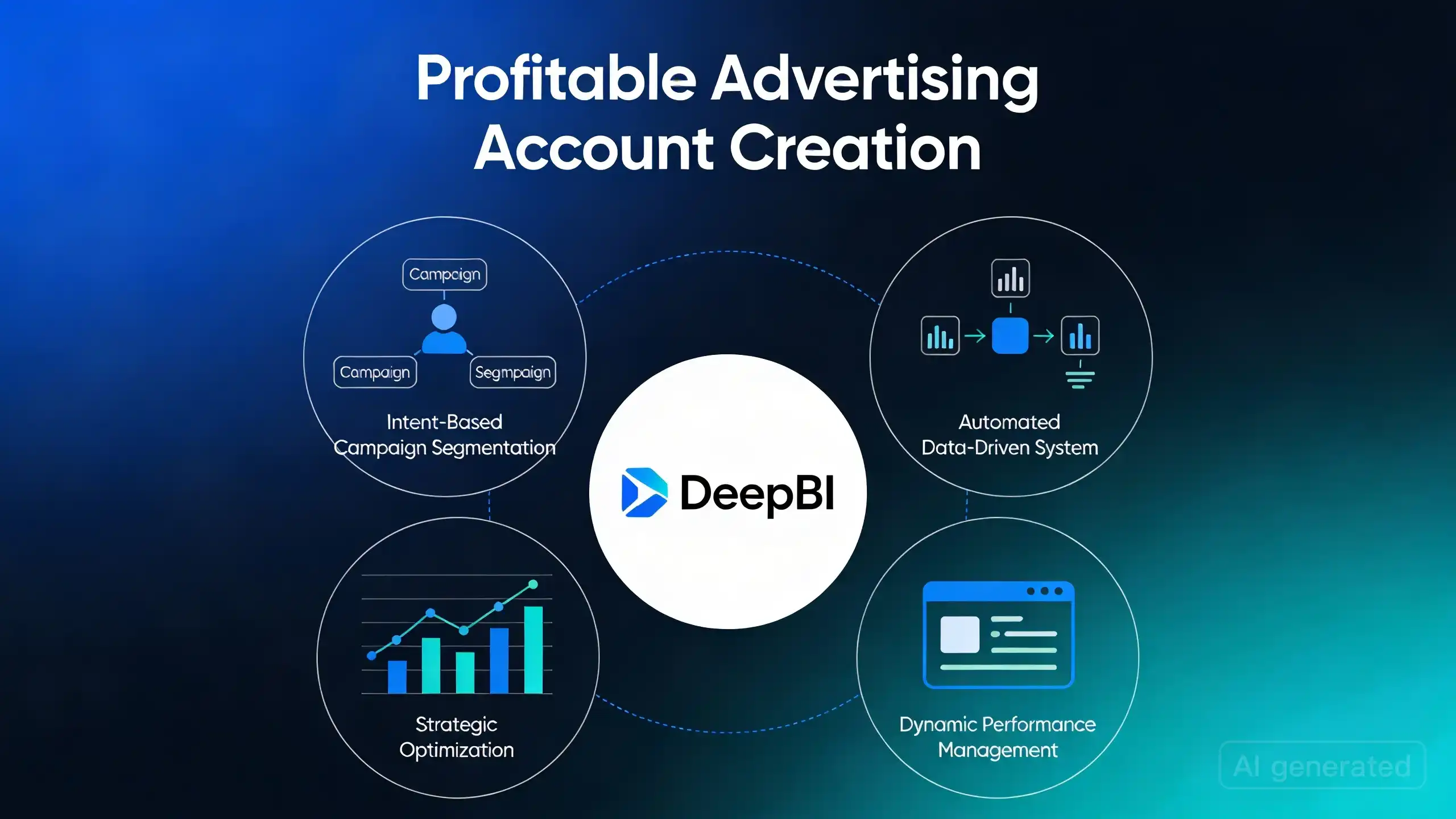
A profitable advertising account is built on a foundation of strategic structure, not just ad spend. Many accounts underperform due to a disorganized campaign portfolio where different strategic goals are mixed, making effective optimization impossible. By structuring campaigns with clear, distinct purposes, you can isolate variables, apply targeted strategies, and accurately measure the true return on every advertising dollar.
Intent-Based Campaign Segmentation
The core principle of a strong campaign structure is segmentation by intent. Each campaign should have a single, well-defined objective, which dictates its type, targeting, and bidding strategy. This prevents a scenario where a keyword discovery campaign with a high ACoS drags down the perceived performance of a highly profitable, mature campaign.
Common strategic objectives include:
- Discovery & Exploration: Use Automatic and Broad Match campaigns to uncover new, high-intent customer search terms and profitable ASIN targets. These campaigns are expected to have a higher ACoS as their primary goal is data acquisition, not immediate profit.
- Performance & Ranking: Target proven keywords with Phrase and Exact Match campaigns. The objective here is to drive conversions and improve organic rank for your most important terms, justifying a more aggressive bidding strategy.
- Brand Defense: Employ Product Targeting (PAT) campaigns on your own product detail pages. This defensive maneuver prevents competitors from siphoning off your hard-earned traffic at the point of purchase.
- Profit Harvesting: Isolate top-performing, high-volume keywords in dedicated Exact Match campaigns. With conversion data established, these campaigns can be fine-tuned with precise bids to maximize profit margins and achieve a low target ACoS.
Leveraging DeepBI for Structural Optimization
DeepBI transforms this structural theory into an executable, data-driven practice. It functions as an end-to-end intelligent system, breaking down the silos between ad performance diagnosis, strategic planning, and automated execution.
The platform’s Ads Quant module provides the data needed to build this intent-based structure from the ground up. It identifies the optimal keywords and ASIN targets for each stage of the sales funnel—from broad exploration to precision targeting—allowing you to populate your discovery, performance, and profit campaigns with validated targets.
Furthermore, DeepBI’s dynamic parameter adjustment mechanism automates the ongoing management required to maintain profitability. By making daily bid and budget adjustments based on a 7-day performance window, the system ensures each campaign remains aligned with its specific ACoS or growth target. This elevates your advertising management from reactive adjustments to an automated, holistic health check on your entire campaign architecture.
 Deep-Dive into Ad Performance Evaluation with DeepBI
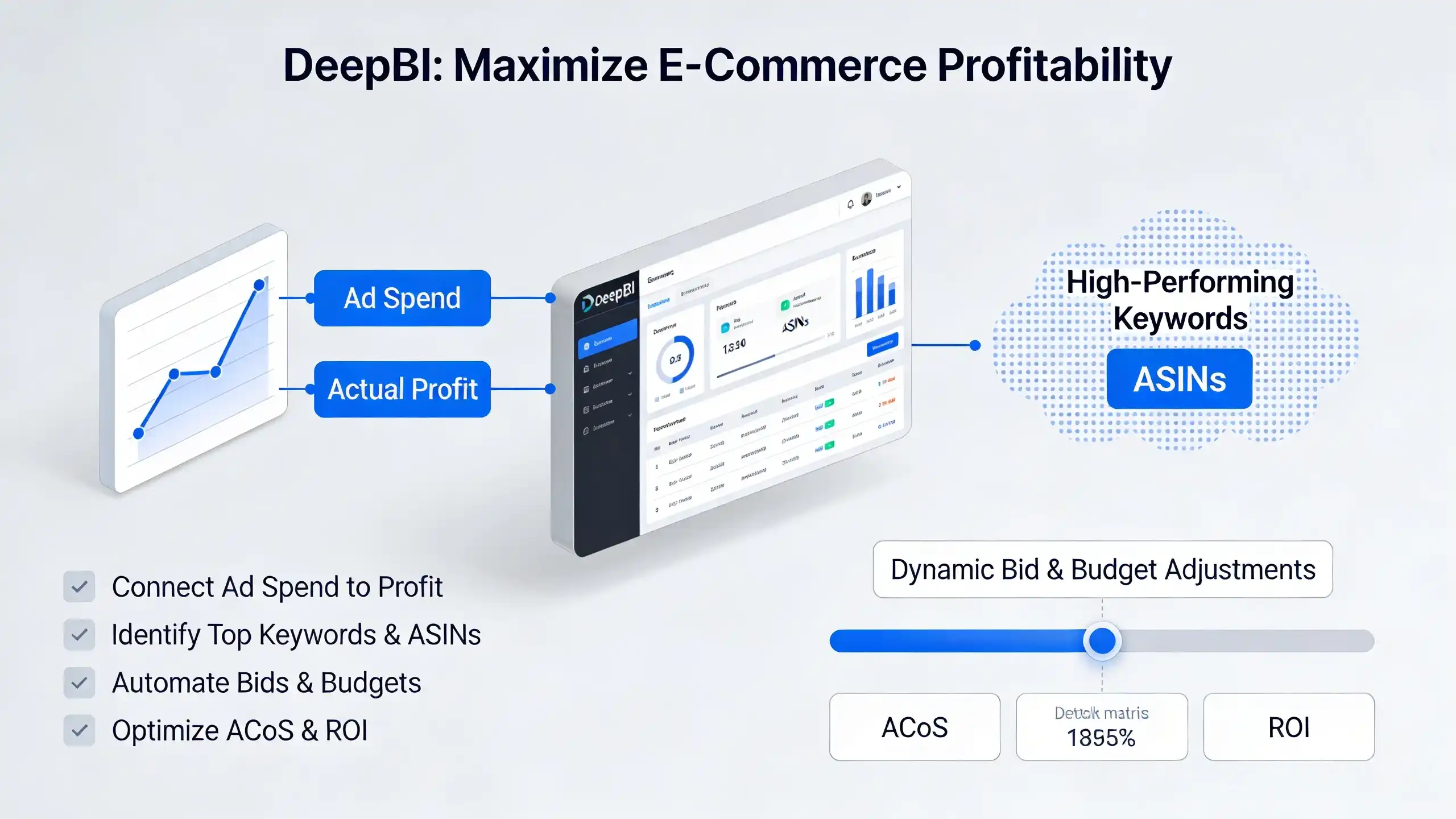
Effective advertising on Amazon requires moving beyond surface-level metrics like impressions and clicks to understand true profitability. DeepBI provides the analytical depth to connect ad spend directly to profit, enabling sellers to make data-driven decisions that enhance their bottom line. By segmenting performance data by campaign, ad group, and keyword, you can systematically uncover inefficiencies and reallocate your budget to high-impact activities.
Analyzing Ad Spend Efficiency and ROI
True ad efficiency is measured by its return on investment (ROI), not just a low Advertising Cost of Sale (ACoS). DeepBI allows you to track ad spend against the actual sales and profit it generates, providing a clear picture of financial performance. The platform offers detailed analytics on ACoS, ROI, and the effective ad spend ratio, helping you quickly distinguish between campaigns that drive revenue and those that drain your budget. This granular view empowers you to move beyond vanity metrics and focus on what truly matters: profitable growth.
Identifying Profitable Keywords and ASINs
Success in Amazon advertising hinges on targeting the right audience. DeepBI's Ads Quant module facilitates a "precision layer" strategy, helping you identify high-performing keywords and competitor ASINs that deliver strong conversion rates and healthy profit margins. Instead of just chasing clicks, you can analyze targets based on their actual contribution to your sales. This process includes leveraging the "4 Core Campaign Types"—Automatic, Phrase Match, Exact Match, and Product Targeting—as a framework for discovery and optimization. Furthermore, by identifying and implementing negative keywords and ASINs, you can proactively eliminate unprofitable traffic and protect your ad spend.
Dynamic Bid and Budget Management for Profit Maximization
Once profitable targets are identified, the next step is to scale them effectively. DeepBI automates this process through a dynamic parameter adjustment mechanism. The system automatically adjusts bids and budgets daily based on a rolling 7-day performance window, using metrics like clicks, conversions, spend, and ACoS. This approach avoids knee-jerk reactions to short-term fluctuations and ensures that your bid strategies are consistently aligned with profitability goals, not just visibility. This allows for a disciplined "scaling layer," where you confidently increase investment in proven winners to maximize your overall return.
 Bridging Ads and Organic: The Holistic Profitability View
Viewing advertising in isolation is a critical mistake. On Amazon, paid and organic performance are deeply intertwined, and successful sellers leverage this relationship to build a powerful growth engine. The key is to shift focus from a narrow view of ad efficiency to a holistic understanding of total business profitability.
How Ad Performance Elevates Organic Rank and Sales
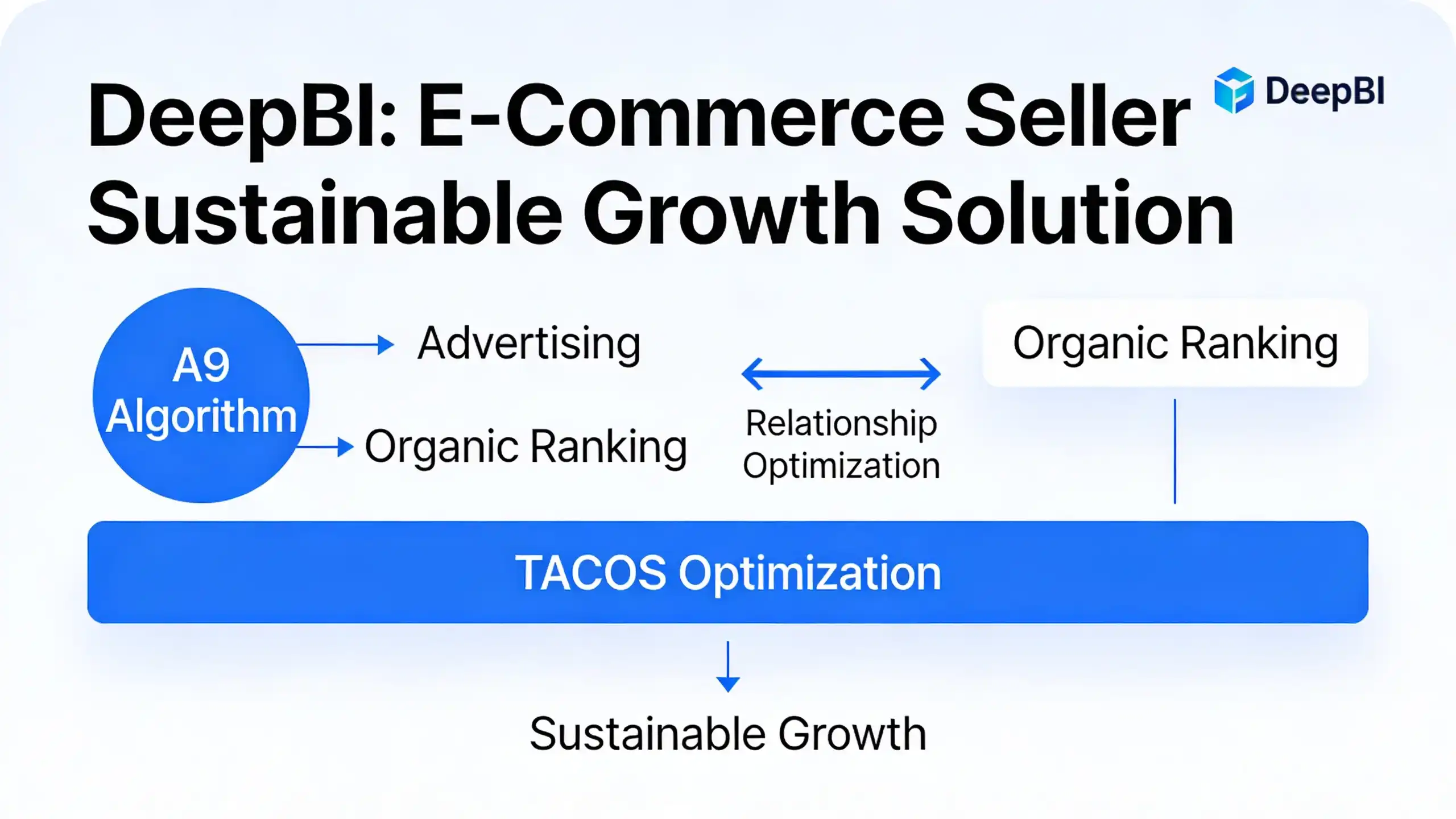
Effective advertising campaigns trigger a "flywheel effect" that directly boosts your organic standing. When ads drive sales for specific keywords, this increased sales velocity signals product relevance and popularity to Amazon's A9 algorithm. In response, Amazon rewards your product with a higher organic ranking for those same valuable search terms.
This upward momentum creates a virtuous cycle:
- Increased Visibility: Higher organic rank leads to more organic impressions and clicks, reducing your dependence on paid traffic.
- Enhanced Trust: The sales driven by ads accelerate the accumulation of customer reviews and ratings. This social proof improves your listing's credibility, leading to a higher organic Conversion Rate (CVR).
- Data-Driven Optimization: Ad reports provide invaluable market data. By identifying keywords with high Click-Through Rates (CTR) and CVR from your ad campaigns, you can strategically optimize your product title, bullet points, and backend search terms to solidify and expand your organic ranking.
Sustaining this momentum requires continuous, strong ad performance to keep the flywheel spinning and protect your hard-won organic positions.
Optimizing for Total ACOS (TACOS) with DeepBI
To accurately measure the flywheel effect, you must look beyond Advertising Cost of Sales (ACoS). The superior metric is Total ACoS (TACOS), which calculates your ad spend against your total revenue.
TACOS = Total Ad Spend ÷ (Ad Sales + Organic Sales)
While ACoS measures the efficiency of an ad campaign in isolation, TACOS measures the impact of your advertising on the overall health of your business. A decreasing TACOS over time is a clear indicator that your ad spend is successfully fueling organic growth.
This is where a data-driven strategy becomes essential, as any optimization detached from real market benchmarks is a waste of resources. DeepBI’s Organic Traffic module is designed for this purpose. It enables you to:
- Analyze ad data to pinpoint keywords with the highest CTR, CVR, and order value.
- Use these proven keywords to build highly targeted ad campaigns, such as bidding for "Top of Search" placements.
This targeted approach simultaneously drives immediate ad sales and accelerates the organic ranking for your most profitable keywords, systematically lowering your TACOS and building a more sustainable, profitable Amazon business.
 Enhancing Listing Conversion: The Profitability Multiplier
The Role of Listing Quality in Ad Profitability
Driving traffic to a product detail page is only half the battle. Even the most precisely targeted and cost-effective advertising campaigns will fail if the listing itself doesn't persuade shoppers to buy. A weak listing acts as a bottleneck, wasting ad spend and suppressing potential revenue.
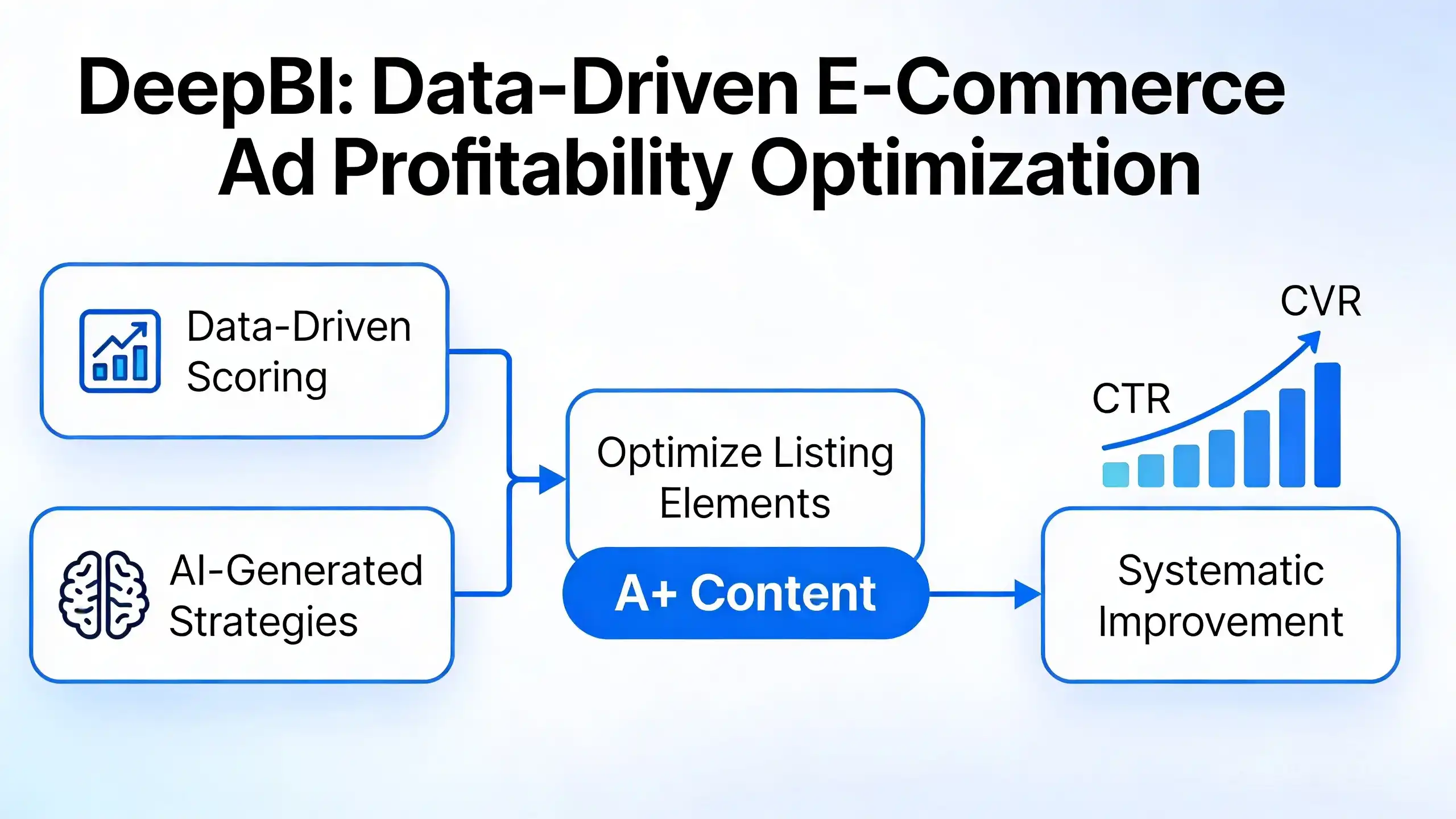
Every element of your listing serves a critical function in the sales funnel. A compelling main image is essential for capturing attention in search results and driving a higher Click-Through Rate (CTR). Once on the page, a clear, benefit-driven title, persuasive bullet points, and immersive A+ Content work together to build value and increase the Conversion Rate (CVR). Finally, strong customer reviews provide the social proof needed to build trust and close the sale. Optimizing these components directly improves the return on your advertising investment, leading to a lower ACoS and higher overall profitability.
DeepBI's Listing Optimization for Higher Conversion Rates
DeepBI transforms listing optimization from a subjective guessing game into a data-driven science. Its Listing module provides intelligent scoring and diagnosis, benchmarking your content against top competitors to pinpoint specific weaknesses in main images, titles, bullet points, and A+ Content.
Instead of offering vague advice, DeepBI generates structured, actionable optimization strategies. Its AI moves beyond ambiguous suggestions to provide precise, engineered instructions covering parameters like composition, camera angles, and lighting. For AI-powered image generation, DeepBI establishes a "Product DNA" map, creating a hard constraint that ensures product authenticity and prevents "AI hallucinations" that can lead to negative reviews. This positions the tool as a commercial production system, not just a creative aid.
Once content is generated, it can be applied with a single click via the Amazon SP-API, reducing a manual process that takes over 30 minutes to mere seconds. Crucially, DeepBI closes the feedback loop by automatically tracking the impact of image updates on ad CTR, allowing you to measure the direct impact of your optimizations on performance. This systematic approach creates a direct link between enhanced listings, improved ad conversion, and greater profitability.
 Continuous Optimization for Sustained Profitability
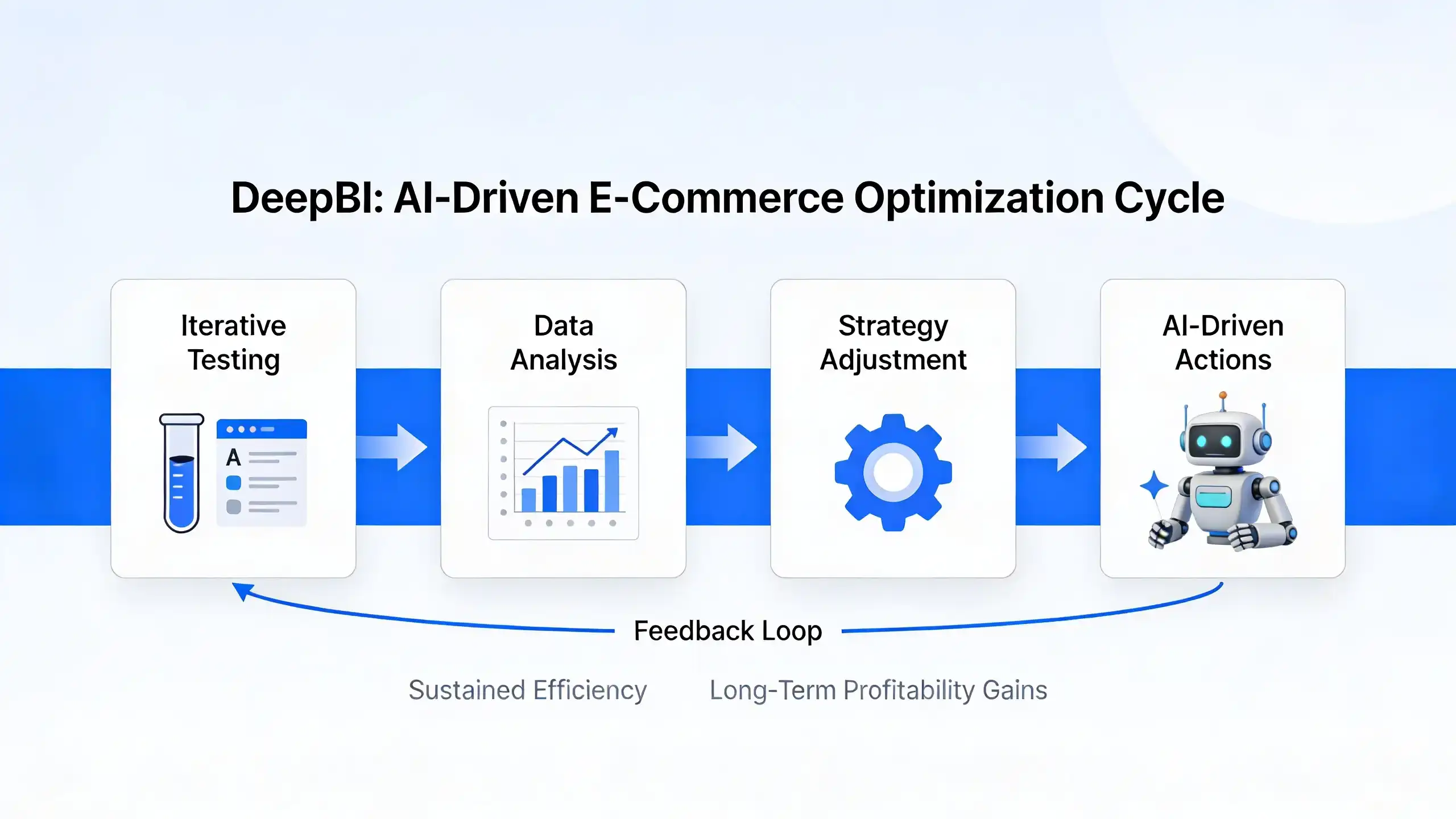
Achieving your target ad profitability is a milestone, not a final destination. The Amazon marketplace is a dynamic environment where competitor strategies, customer behavior, and platform algorithms constantly evolve. Sustained success depends on a commitment to continuous monitoring, testing, and data-driven refinement.
Iterative Testing and Data-Driven Adjustments
Long-term profitability is built on a foundation of consistent, incremental improvements. This requires a disciplined approach to performance analysis and iterative testing. Instead of making sporadic, reactive changes, sellers should regularly review key metrics like CTR, CVR, and ACoS to understand performance trends.
This data provides the basis for structured A/B testing on critical ad components, including creative, ad copy, keyword targeting, and bidding strategies. By systematically testing one variable at a time and analyzing the results, you can make informed decisions that compound over time. This process demands patience and consistency, as the goal is not a single breakthrough but a continuous cycle of optimization that steadily enhances campaign efficiency and profitability.
DeepBI's Automation for Ongoing Profitability Gains
Manually executing this continuous optimization cycle is resource-intensive and prone to human error. DeepBI streamlines this entire process by establishing a powerful collaboration between the seller and the AI. You act as the strategist, setting the high-level business objectives—such as prioritizing profit margins or aggressive growth—and defining key parameters like target ACoS.
DeepBI functions as the expert executor. It translates your abstract business strategy into precise, AI-driven actions. The system continuously analyzes performance data, adjusts bids, and optimizes targeting 24/7 to stay aligned with your goals. This automated execution eliminates the need for constant manual intervention, ensuring that your campaigns are always being refined based on the latest data for stable, long-term profitability gains.