On Amazon's crowded digital shelf, visibility is only half the battle. The other, more critical half is earning the click. Your Organic Click-Through Rate (CTR)—the percentage of shoppers who see your product in search results and choose to click on it—is one of the most powerful signals you can send to Amazon's ranking algorithm. A high CTR tells Amazon that your listing is a compelling and relevant answer to a customer's query, directly influencing the A9 algorithm to reward you with higher search placement, which in turn generates more visibility and sales.
However, optimizing the visual and textual elements that drive clicks has historically relied more on subjective judgment than on quantifiable data. Sellers often struggle to connect a change in their main image or title to a specific uplift in performance, making it difficult to know what truly works.
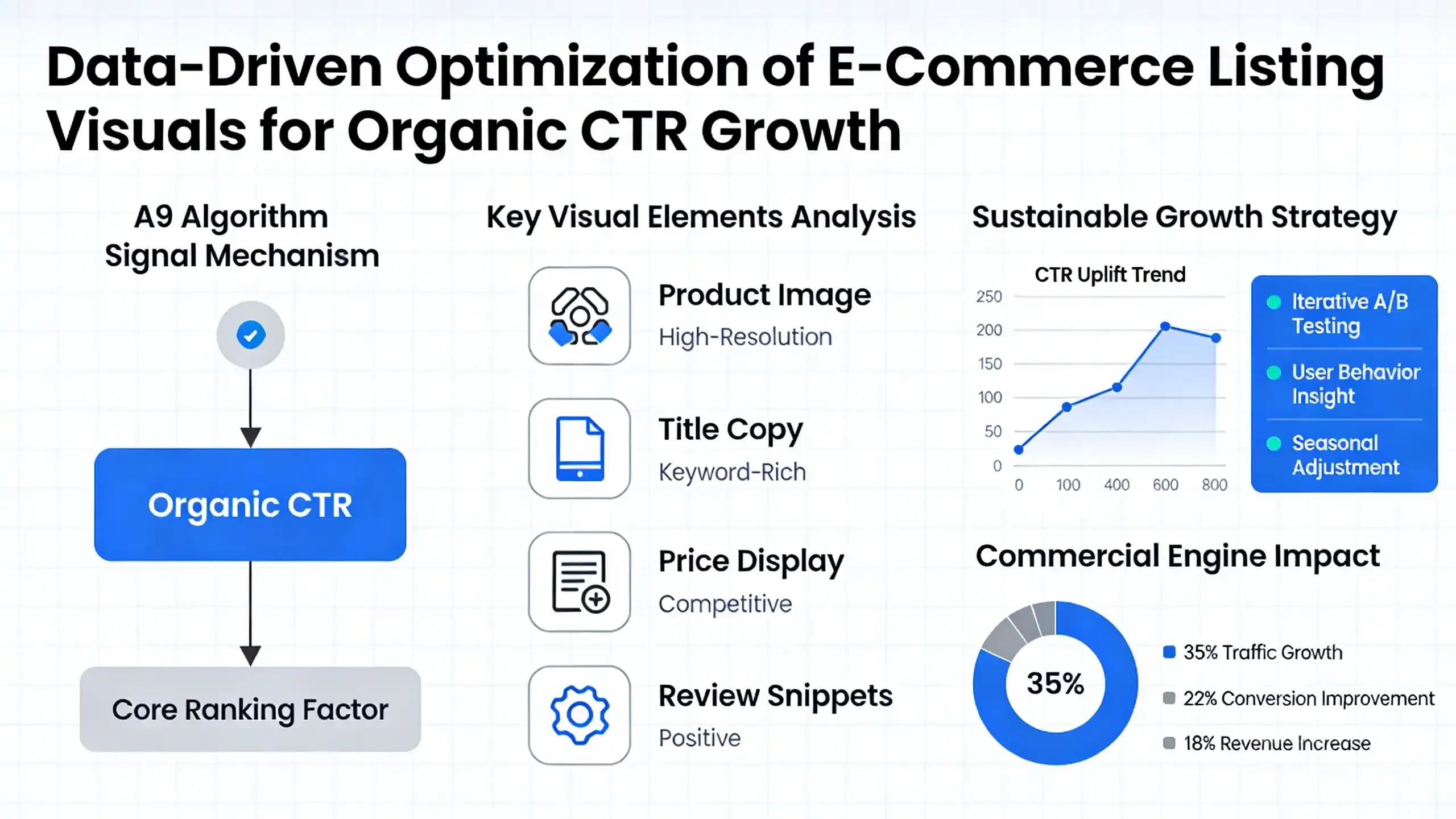
This is where a data-driven approach becomes essential. The goal is to transform your product visuals from a simple 'aesthetic display' into a 'core commercial engine' that actively drives CTR and conversions. By leveraging a system that creates a closed data loop—connecting listing optimizations directly to performance metrics—you can finally measure the real-world impact of your efforts. This guide provides a blueprint for mastering your organic CTR, moving beyond guesswork to implement a data-backed strategy for sustainable growth on Amazon.
 Understanding Amazon's Algorithm: The Foundation of Organic CTR
Amazon as a Search Engine: Performance × Relevancy
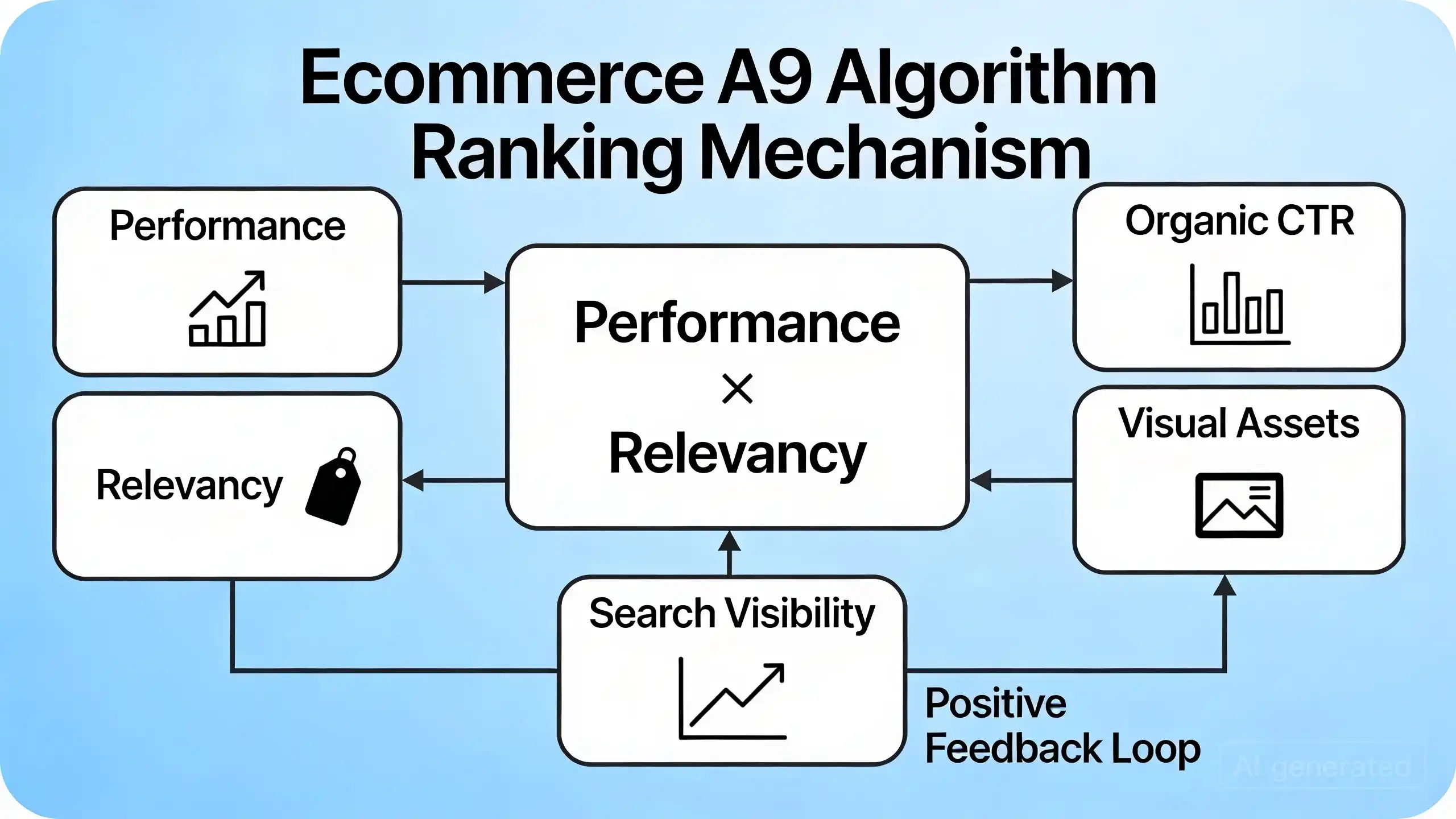
To master organic click-through rate (CTR), you must first understand that Amazon is not just an e-commerce platform; it's a powerful product search engine. Its A9 algorithm's primary goal is to maximize revenue by showing customers the products they are most likely to buy. To achieve this, it ranks products based on a core principle: Performance × Relevancy.
- Relevancy is determined by how well your listing's keywords, title, and attributes match a customer's search query.
- Performance is a measure of your product's commercial success. This includes historical sales velocity, conversion rate (CVR), and, critically, your organic CTR. Amazon evaluates these metrics across various "lookback windows"—short-term, mid-term, and long-term—to assess both recent momentum and sustained success.
Why Organic CTR Matters: The Algorithm's Signal
Organic CTR is one of the most direct signals you can send to Amazon's algorithm. A high CTR tells Amazon that, among all the options on a search results page, your product is the most visually compelling and relevant to customers. It's a powerful vote of confidence from shoppers before a purchase is even made.
This is why visual assets have evolved from mere 'aesthetic display' to a 'core commercial engine' that drives clicks. Your main image, in particular, is your primary tool for capturing attention and earning that initial click. A higher CTR directly improves your "Performance" score, which boosts your search ranking, leading to more visibility and creating a positive feedback loop. Tracking how visual updates impact CTR is essential, as it validates your optimization efforts and confirms you are sending the right signals to the algorithm.
 Key Drivers of Organic CTR on Amazon
A high organic click-through rate (CTR) is a direct signal to Amazon that your product is relevant and appealing to customers. Achieving this requires a holistic approach that goes beyond simple keyword stuffing. Several core components of your presence on the search engine results page (SERP) work together to either capture or lose a potential customer's attention. Understanding and optimizing these drivers is the first step toward improving your ranking and sales velocity.
The Power of Your Product Listing: Visuals, Title, and Bullet Points
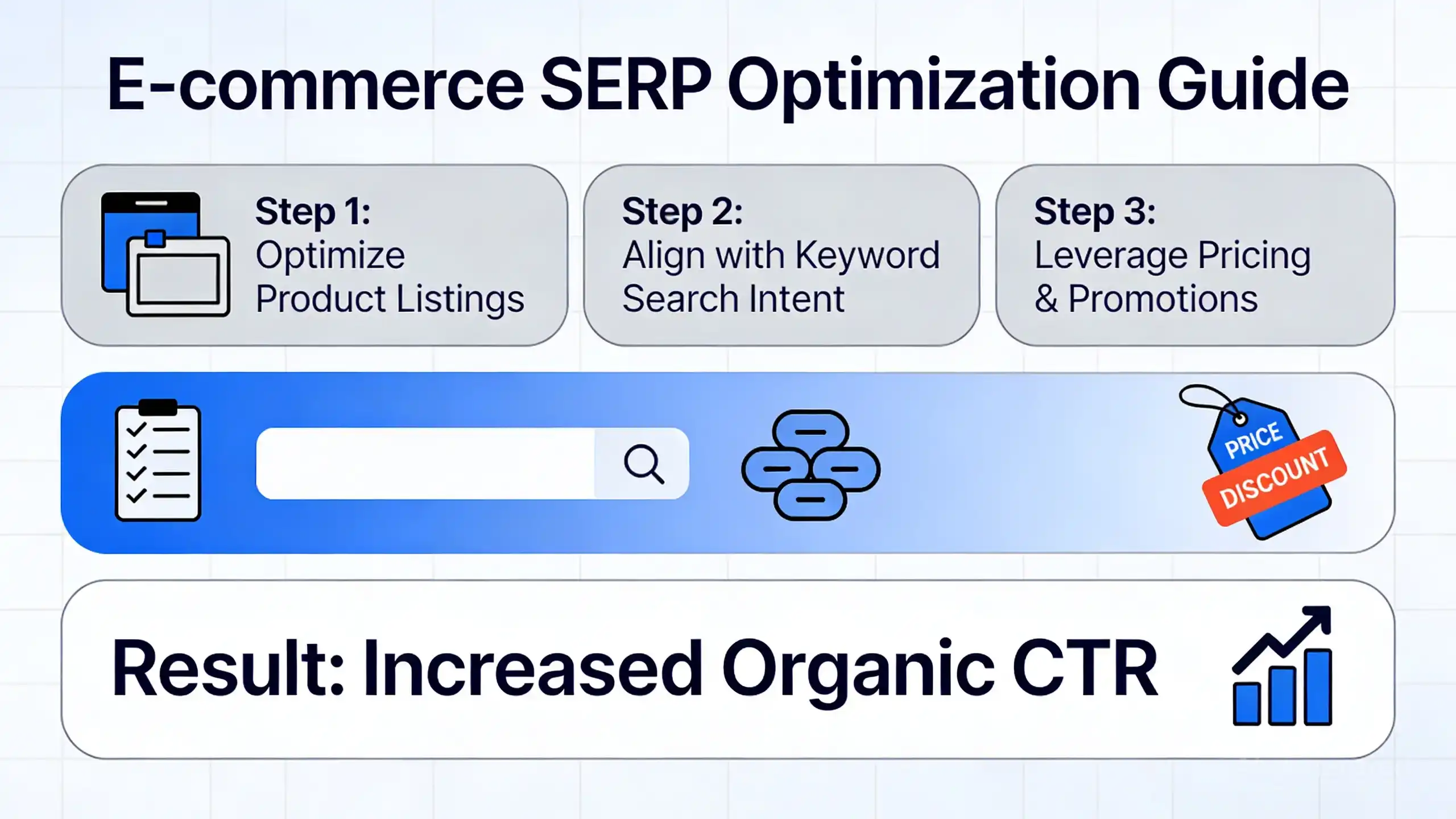
Your product listing is your digital storefront on the SERP. The main image, title, and the first few bullet points are the primary assets that influence a shopper's decision to click. A high-quality main image that is clear, compelling, and compliant with Amazon's technical standards (e.g., pure white background) is non-negotiable. Your title must be both keyword-rich and readable, instantly communicating the product's core benefit. Furthermore, structuring your bullet points to follow a "pain point-solution" framework can quickly demonstrate value, convincing shoppers that your product is the answer they are looking for. A quantitative audit of these elements is crucial for identifying weaknesses before they impact your CTR.
Keyword Relevance and Search Intent
Your product can have the best visuals and copy, but it won't earn clicks if it doesn't appear in front of the right audience. High CTR is fundamentally tied to the alignment between the customer's search query and your product's presentation. This means ensuring your most important keywords are strategically placed in your title and throughout your listing. More importantly, it involves understanding the intent behind those keywords. Is the customer searching for a specific feature, a solution to a problem, or a particular brand? A listing that directly addresses the implied search intent in its title and main image will consistently achieve a higher CTR than a generic, broadly-targeted competitor.
Pricing and Promotions: Influencing Click Decisions
On a crowded search results page, price is often a primary decision-making factor. A competitively priced product will naturally attract more attention. However, you can further influence click decisions using visible promotions. Badges for Coupons, Prime Exclusive Discounts, or Deals create visual contrast and a sense of urgency or added value. These promotional signals can make your listing stand out and are often the tipping point that persuades a customer to click on your product over a competitor's, even when core product features are similar. Analyzing competitor pricing and promotional strategies is therefore essential for positioning your offer effectively.
 Optimizing Your Listing for Maximum Organic CTR
To win the click on a crowded search results page, every component of your product listing must be engineered for maximum appeal. This involves a continuous cycle of testing and refinement across your title, images, and social proof elements to improve your Click-Through Rate (CTR).
Crafting Compelling Titles and Bullet Points
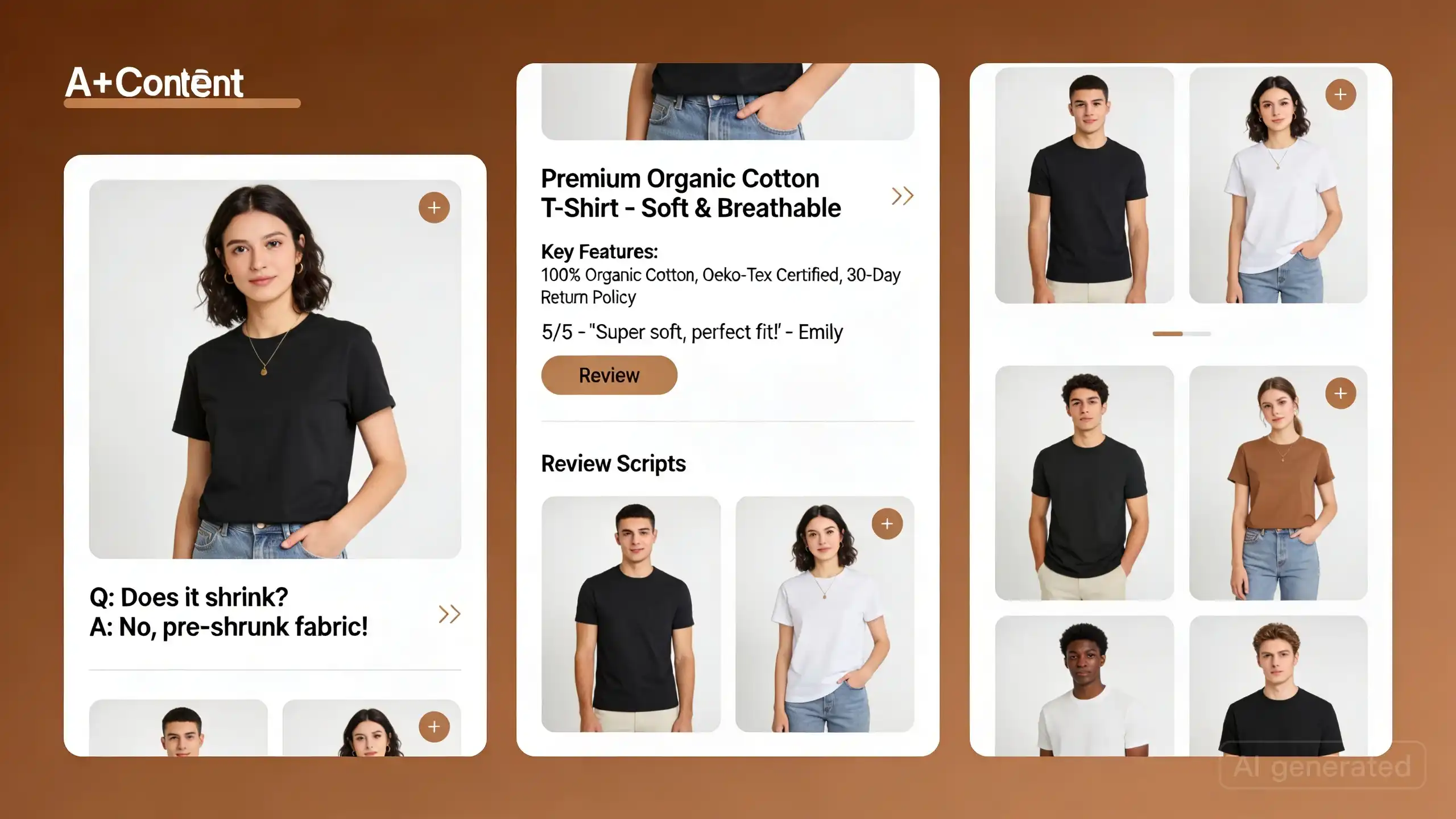
Your product title is your primary headline. It must grab attention while being algorithm-friendly. Front-load your most important keywords and unique value propositions—such as brand, key feature, or material—so they are immediately visible on mobile. Use bullet points to expand on benefits, not just features. Frame them to answer the customer's core question: "What's in it for me?" Make them scannable and easy to digest to quickly build purchase confidence.
High-Impact Main Images and A+ Content
Your main image is the single most influential factor on your organic CTR. Vague directives like "improve the look" are ineffective. Modern optimization translates strategic goals into precise, executable instructions for visual assets. For example, instead of just showing a product, an instruction might specify a 45-degree angle, a specific background scene, and a high-impact infographic in the bottom-left corner highlighting a key benefit like "12-hour battery life."
Crucially, these enhancements must never alter the product's actual appearance. AI-driven optimization should be constrained by "product entity consistency," ensuring that the material, color, and design remain authentic to prevent negative reviews caused by a mismatch between the image and the delivered item.
Leveraging Customer Reviews and Q&A
Social proof is a powerful, non-negotiable driver of clicks. A high star rating and a significant number of positive reviews create a "halo effect" that builds immediate trust. Shoppers are far more likely to click on a 4.5-star product with 1,000 reviews than a competitor with no rating. Proactively engage with the Q&A section to address potential customer objections before they even visit your page. Answering common questions about size, compatibility, or usage builds confidence and reduces friction, encouraging a click-through to learn more.
 Driving Organic CTR with DeepBI's Listing Optimization
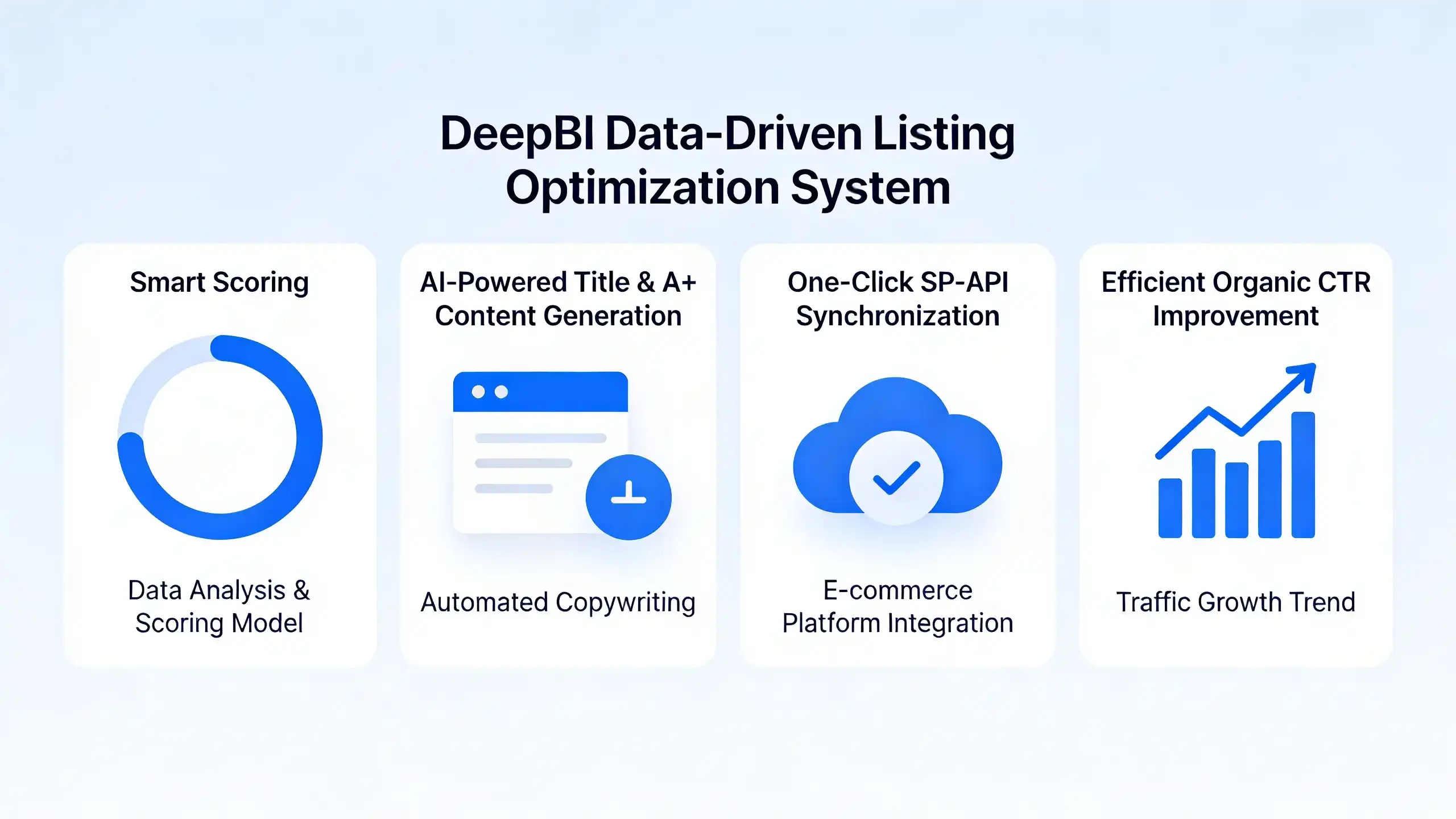
Optimizing your Amazon listing is a direct lever for improving organic Click-Through Rate (CTR), but subjective guesswork often leads to inconsistent results. DeepBI’s Listing Optimization module replaces ambiguity with a data-driven system designed to identify and execute high-impact changes that attract more clicks.
Smart Scoring and Competitive Benchmarking
Instead of relying on vague advice like "improve your image," DeepBI provides a quantifiable analysis of your listing's core elements. The platform’s Smart Scoring engine benchmarks your main image, title, and bullet points against top-performing competitors. It doesn't just identify weaknesses; it provides precise, engineered instructions for improvement, focusing on parameters like composition, camera angle, and keyword density. This transforms optimization from a subjective art into a data-backed science, pinpointing exactly what to change to improve your listing's appeal in search results.
AI-Powered Content Generation for Titles, Bullets, and A+
General-purpose AI tools pose a significant risk, as "AI hallucinations" can create content that misrepresents your product, leading to negative reviews and returns. DeepBI functions as an automated commercial production system, not a creative drawing board. Before generating any content, it establishes a "Product DNA" map, setting a hard constraint that ensures all AI-generated visuals and text are authentic to the actual product. This allows you to safely leverage AI to create keyword-rich, conversion-focused titles, bullet points, and A+ Content that are both compelling to shoppers and true to your brand.
Streamlined Listing Updates via SP-API
The final barrier to effective optimization is often the slow, manual process of updating listings in Seller Central. DeepBI eliminates this friction entirely. Once your optimized content is ready, you can synchronize it directly to your Amazon listing with a single click via the SP-API. This reduces an operation that once took over 30 minutes down to mere seconds. This rapid deployment capability allows you to quickly test changes and, by using DeepBI's ad reports, create a powerful feedback loop to measure the direct impact of your listing updates on organic CTR.
 The Role of Advertising in Boosting Organic CTR
While seemingly separate, your paid advertising strategy is a powerful catalyst for organic performance. Effective Amazon Ads campaigns don't just generate immediate sales; they create a data-driven feedback loop that directly enhances your organic click-through rate (CTR) and search ranking over time. By treating ad spend as an investment in data and visibility, you can accelerate your product's journey to the top of organic search results.
Using DeepBI Ads Quant to Drive Targeted Traffic
The primary function of advertising in this context is to generate initial traffic and sales velocity. For new or underperforming listings, a well-managed ad campaign, orchestrated through a tool like DeepBI's Ads Quant module, can deliver the first wave of qualified buyers. This initial surge in sales is a critical ranking signal for Amazon's algorithm. It proves your product's relevance and desirability, giving it the momentum needed to start climbing the organic ranks and improving its Best Sellers Rank (BSR).
Identifying High-Performing Keywords from Ad Data
Your ad campaigns are a real-world testing ground for keyword effectiveness. Ad data reveals not just which keywords attract clicks, but more importantly, which ones convert to sales. By analyzing your campaign reports, you can identify keywords with a high conversion rate (CVR). These are your proven, money-making terms. Once identified, these high-performing keywords should be strategically integrated into your product title, bullet points, and backend search terms to align your organic listing with demonstrated customer purchasing behavior.
The Feedback Loop: Ads to Organic Ranking
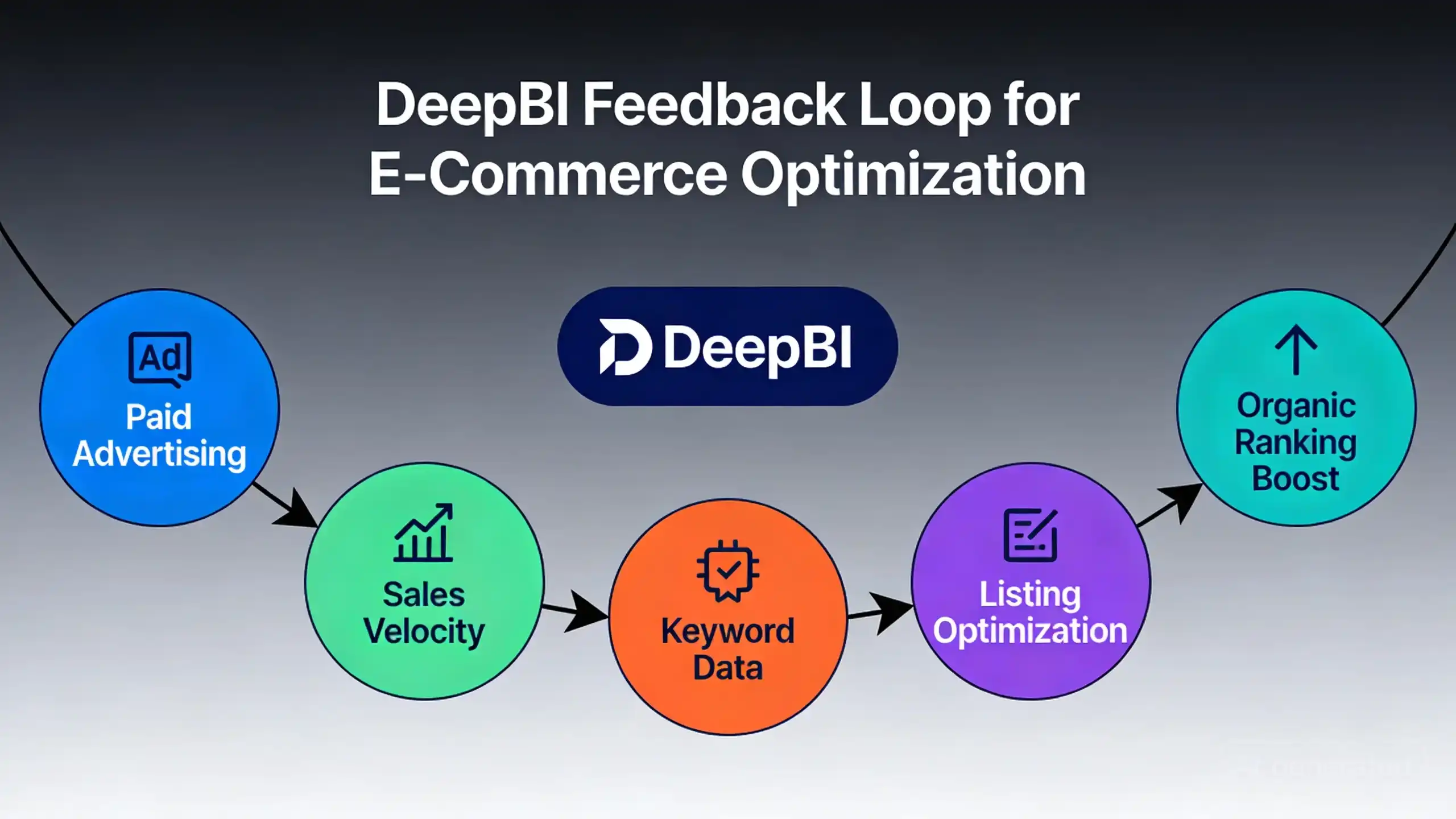
This process creates a powerful, self-reinforcing growth cycle. It begins with targeted ads driving initial sales. This sales velocity signals relevance to Amazon, which rewards your listing with improved organic rankings. As your product appears higher in search results, it naturally attracts more organic clicks, leading to a higher organic CTR and more organic sales. This, in turn, further solidifies your ranking. This virtuous cycle, where paid media directly fuels organic success, is fundamental to building a sustainable and healthy growth model on Amazon.
 DeepBI's Organic Traffic Strategies for Sustained CTR Growth
Effective organic growth isn't about guesswork; it's about leveraging every available data point. A truly powerful strategy transforms paid advertising from a simple sales driver into a rich source of intelligence for your organic ranking efforts. DeepBI provides a structured framework to systematically convert ad performance insights into sustained organic visibility and higher click-through rates.
From Ad Data to Organic Keyword Prioritization
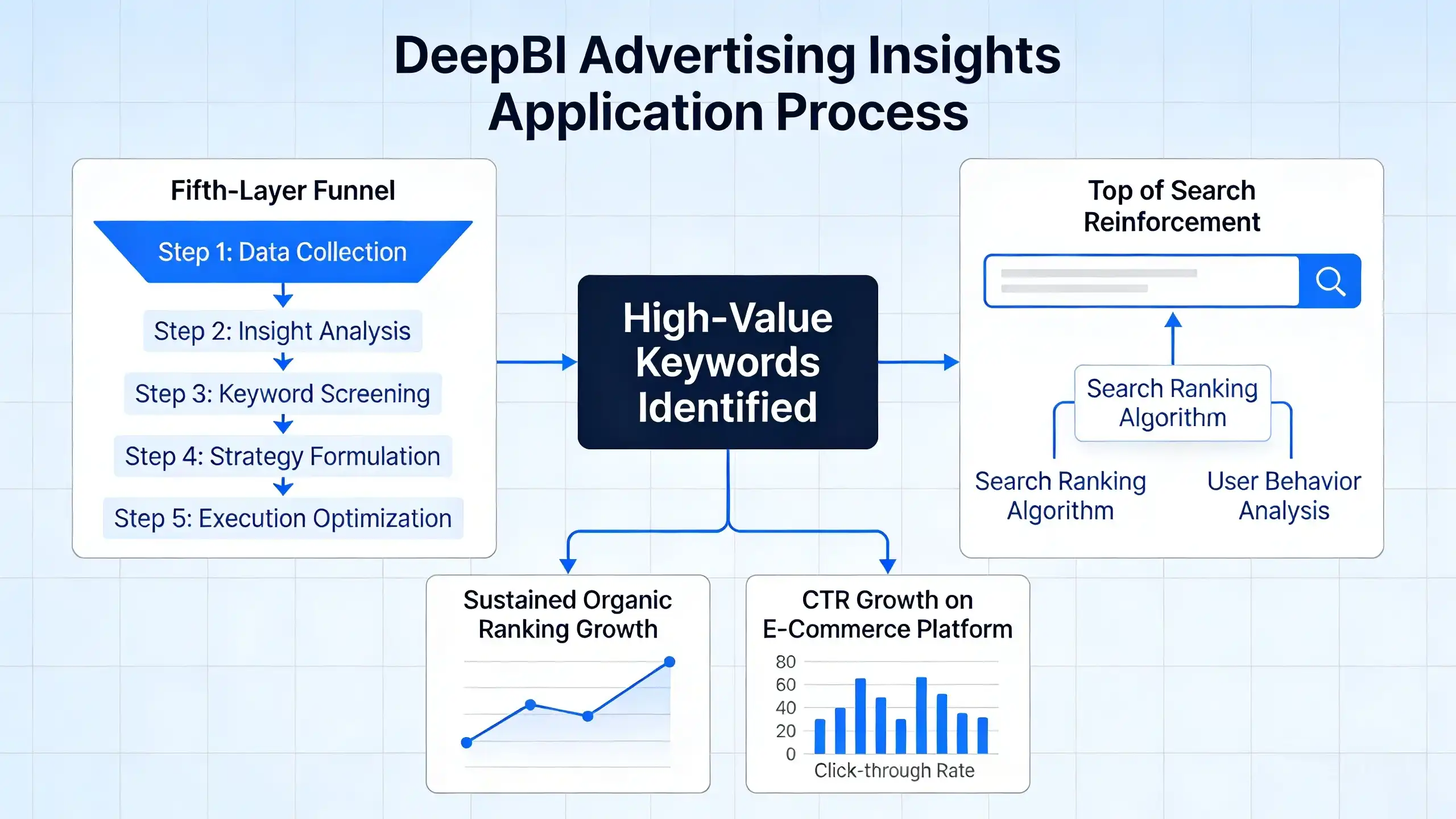
Paid advertising serves as the ultimate testing ground for keyword performance. DeepBI operationalizes this concept through its Fifth-Layer Funnel, the Organic Traffic Growth Strategy. This system meticulously analyzes your advertising data to identify a trifecta of high-value keywords: those with high click-through rates (CTR), high conversion rates (CVR), and high average order values. By isolating keywords already validated by real customer purchasing behavior, you can confidently prioritize which terms to target for organic ranking pushes, focusing resources where they will generate the greatest return.
Top of Search Reinforcement for High-Value Keywords
Once your most valuable keywords are identified, the objective shifts to capturing dominant organic placement. DeepBI’s Top of Search Reinforcement module is designed for this purpose. It enables the creation of targeted, aggressive advertising campaigns with the specific goal of pushing your product to the top of Amazon's search results for those proven keywords. This strategic ad spend acts as a catalyst, accelerating your organic rank and helping you secure the prime digital shelf space needed to maximize long-term organic visibility and CTR.
Measuring and Iterating for Continuous Improvement
Achieving a top rank is a milestone, not a final destination. Sustaining that position requires continuous monitoring and adaptation. DeepBI closes the loop by providing the tools to track the organic performance of your targeted keywords over time. By observing shifts in Best Seller Rank (BSR), organic position, and session data, you can accurately measure the impact of your ranking campaigns. This creates a virtuous cycle where ad data informs organic strategy, and the resulting organic performance data refines future advertising tactics, ensuring your CTR growth is both significant and durable.
 Common Misconceptions and Advanced Considerations
To truly master Amazon's search algorithm, sellers must move beyond surface-level tactics and understand the nuanced interplay of various performance metrics. This involves correcting common misunderstandings and appreciating the deeper factors that influence long-term ranking success.
The Indirect Impact of Brand Story and Profit Margin
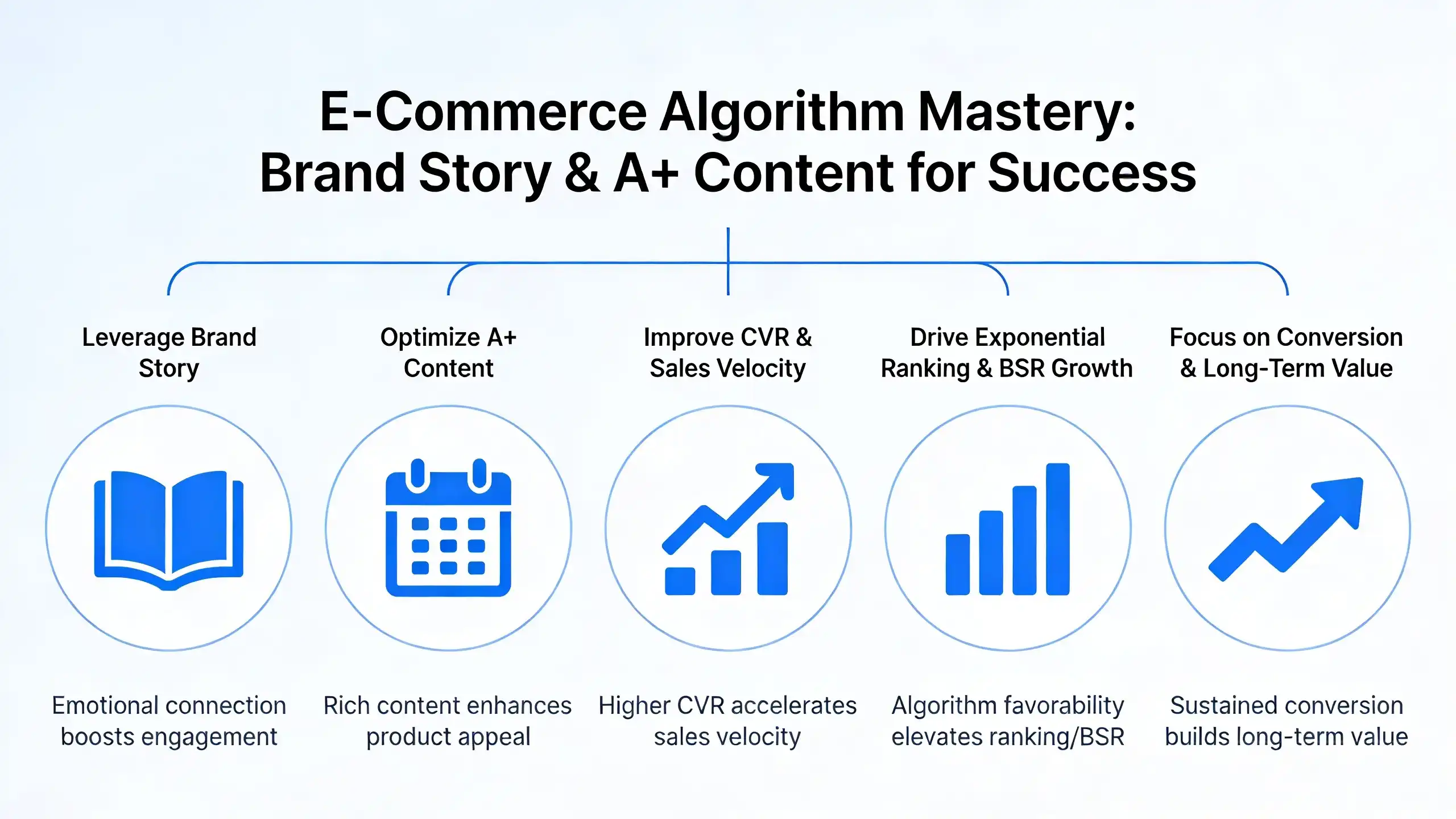
A common misconception is that Amazon's A9 algorithm directly factors in your brand story or profit margins when ranking products. It does not. However, these elements have a powerful indirect influence. A compelling brand story, communicated through A+ Content and your storefront, can build trust and increase your Conversion Rate (CVR). Similarly, a healthy profit margin enables more aggressive advertising spend, which drives traffic and sales. This boosts your sales velocity—a critical, direct ranking factor. In short, strong branding and financials fuel the metrics that Amazon's algorithm actually rewards.
Understanding Sales Velocity and Ranking Dynamics
While it's widely known that higher-ranking products sell more, many sellers overestimate the predictability of this effect. There is no universal multiplier stating that the #1 spot sells "2x" more than the #2 spot. This sales drop-off between ranks varies dramatically by category, keyword search volume, and even the customer's device. The crucial takeaway is that the relationship is exponential; top-ranking positions capture a disproportionately high share of sales. Even a small improvement in Best Seller Rank (BSR) can create a significant lift in sales velocity, which in turn reinforces and solidifies your ranking.
Beyond CTR: Conversion Rate and Customer Lifetime Value
While a high Click-Through Rate (CTR) is essential for getting shoppers to your page, it's only half the battle. Amazon ultimately prioritizes products that convert. A listing with a high CTR but a low CVR signals a mismatch between what the customer expected and what your page delivered. The algorithm will eventually penalize this poor experience. Looking further, consider Customer Lifetime Value (LTV). While not a direct, real-time ranking input, products that generate repeat purchases or encourage larger basket sizes are more valuable to Amazon. This long-term value can influence visibility through programs like Subscribe & Save, creating a sustainable competitive advantage.