Introduction
In the hyper-competitive Amazon marketplace, simply having a great product is no longer enough. Millions of sellers are vying for the attention of a finite pool of customers, and the difference between thriving and failing often comes down to a single factor: search visibility. Many sellers treat Amazon as a simple retail platform, but its true power—and complexity—lies in its function as the world's largest product search engine. To win, you must master the art and science of ranking high in its search results.
This is the domain of Amazon Search Engine Optimization (SEO), a strategic process designed to align your product listings with the A9 algorithm to maximize organic traffic. Effective SEO is the engine of sustainable growth, reducing reliance on paid advertising and building a long-term competitive advantage. Every component of your listing, from backend keywords to primary images, plays a critical role. For example, the function of visual assets has evolved from mere 'aesthetic display' to a 'core commercial engine' that directly drives key performance indicators like Click-Through Rate (CTR) and Conversion Rate (CVR).
This guide provides a comprehensive framework for dominating Amazon's search results. We will dissect the core pillars of visibility, from keyword research and listing optimization to leveraging data for continuous improvement. By applying these data-driven strategies, you can transform your listings from passive digital shelves into powerful magnets for organic traffic, ensuring your products are not just listed, but discovered.
 Understanding Amazon SEO: More Than Just Keywords
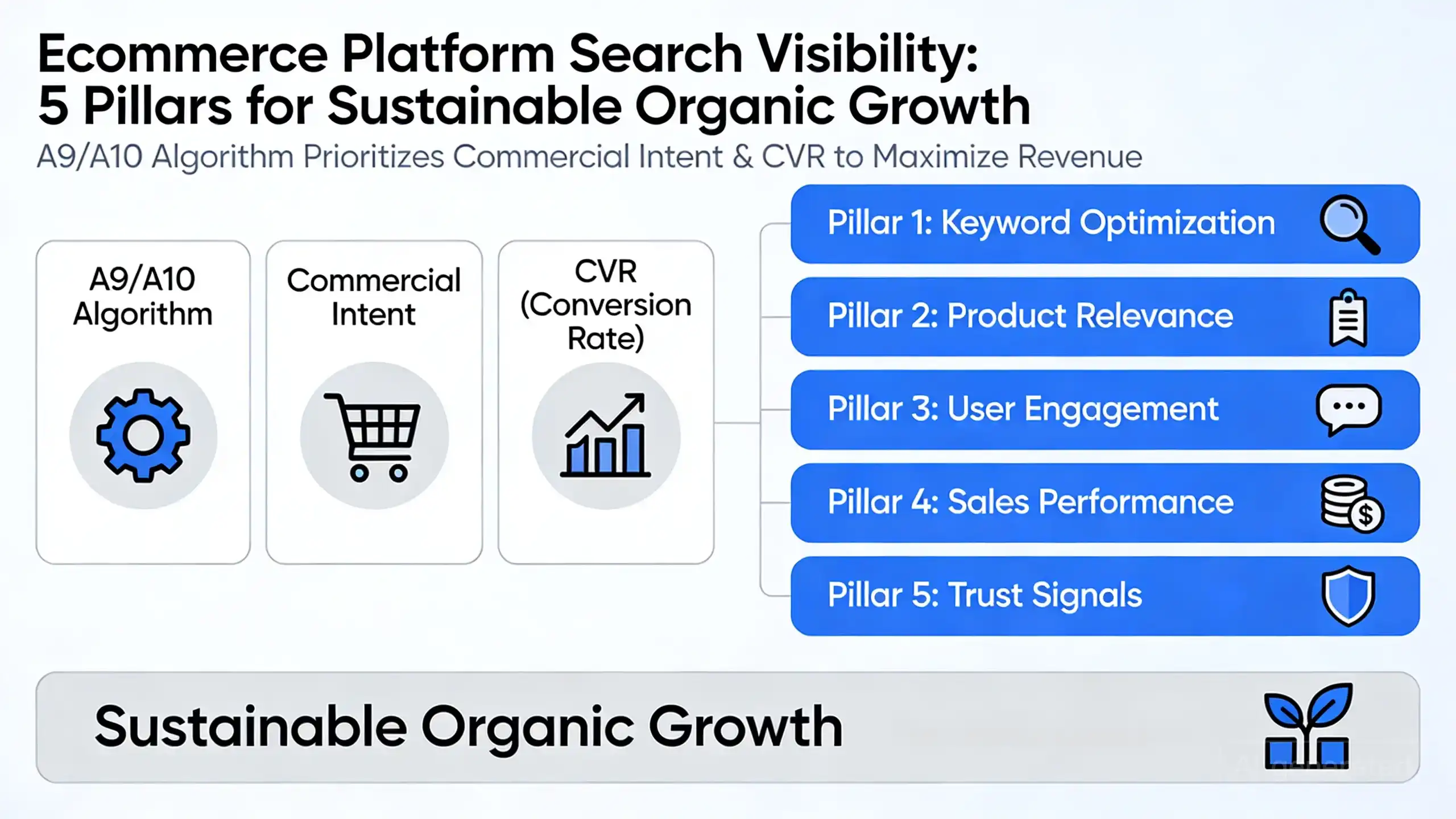
To achieve sustainable organic growth on Amazon, sellers must move beyond a narrow focus on keywords and adopt a comprehensive strategy. Success hinges on understanding that Amazon operates as a sophisticated product search engine, not merely a digital retail shelf. Its algorithm, often referred to as A9 or A10, is engineered with a singular goal: to maximize revenue per customer by presenting the products they are most likely to purchase.
Why Amazon is a Search Engine, Not Just a Marketplace
Unlike traditional search engines that prioritize information relevance, Amazon’s algorithm prioritizes commercial intent and conversion. Every search query is interpreted as a potential purchase. The platform analyzes customer behavior, historical sales data, and listing information to predict which product will result in the highest satisfaction and, ultimately, a sale. This means that factors directly influencing conversion rate (CVR)—such as price, review quality, and shipping speed—are just as critical to your search ranking as the keywords in your title. A product that converts well is a product Amazon wants to show to more customers.
The Core Pillars of Amazon Search Visibility
Amazon itself has outlined five fundamental components that collectively determine how products are discovered and ranked. Mastering these pillars is essential for improving visibility:
- Search Box: This is the starting point where Amazon interprets customer queries, matching them against indexed product information.
- Search Filters: Customers use filters (e.g., brand, price, Prime eligibility) to narrow results. Being correctly categorized and indexed for these attributes is crucial for staying visible as customers refine their search.
- Search Results Page: This is where the algorithm’s ranking decisions become visible. Placement is determined by a combination of text relevance and performance metrics.
- Sales Rank: The Best Sellers Rank (BSR) is a powerful, public-facing indicator of a product's recent sales velocity compared to others in its category. A strong sales rank signals to the algorithm that a product is popular and desirable.
- Advertising: Sponsored placements directly impact visibility and can also influence organic rank over time by driving traffic and sales, thereby improving sales history and BSR.
 Optimizing Your Product Listings for Maximum Relevance and Conversion
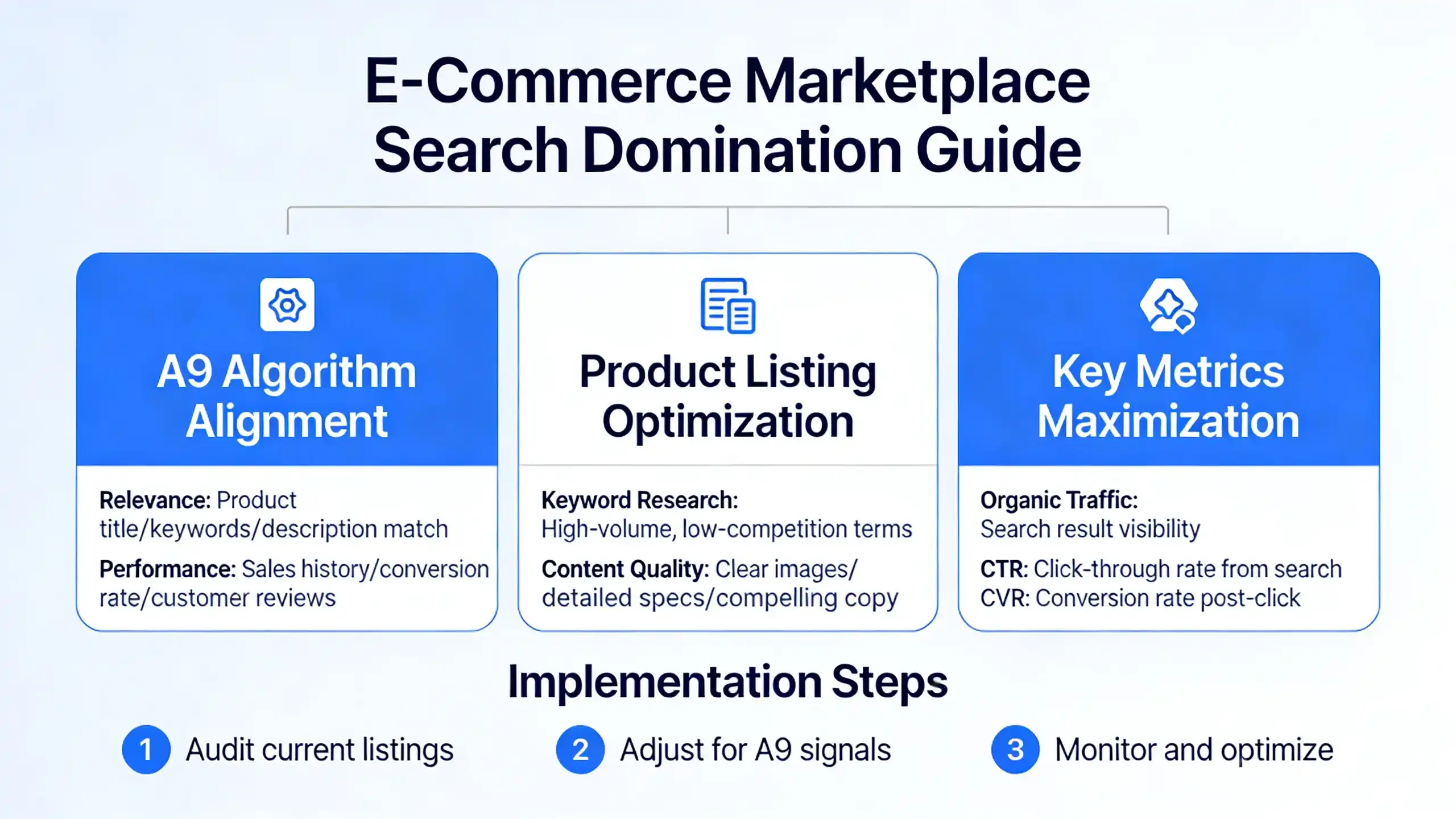
A high-quality, conversion-optimized listing is the bedrock of Amazon success, directly influencing both organic search ranking and paid campaign efficiency. It ensures that the traffic you acquire—whether through organic search or paid ads—has the highest possible chance of converting into a sale. A fully optimized listing maximizes relevance for Amazon's algorithm and resonates deeply with customer needs.
Keyword Research and Strategic Placement
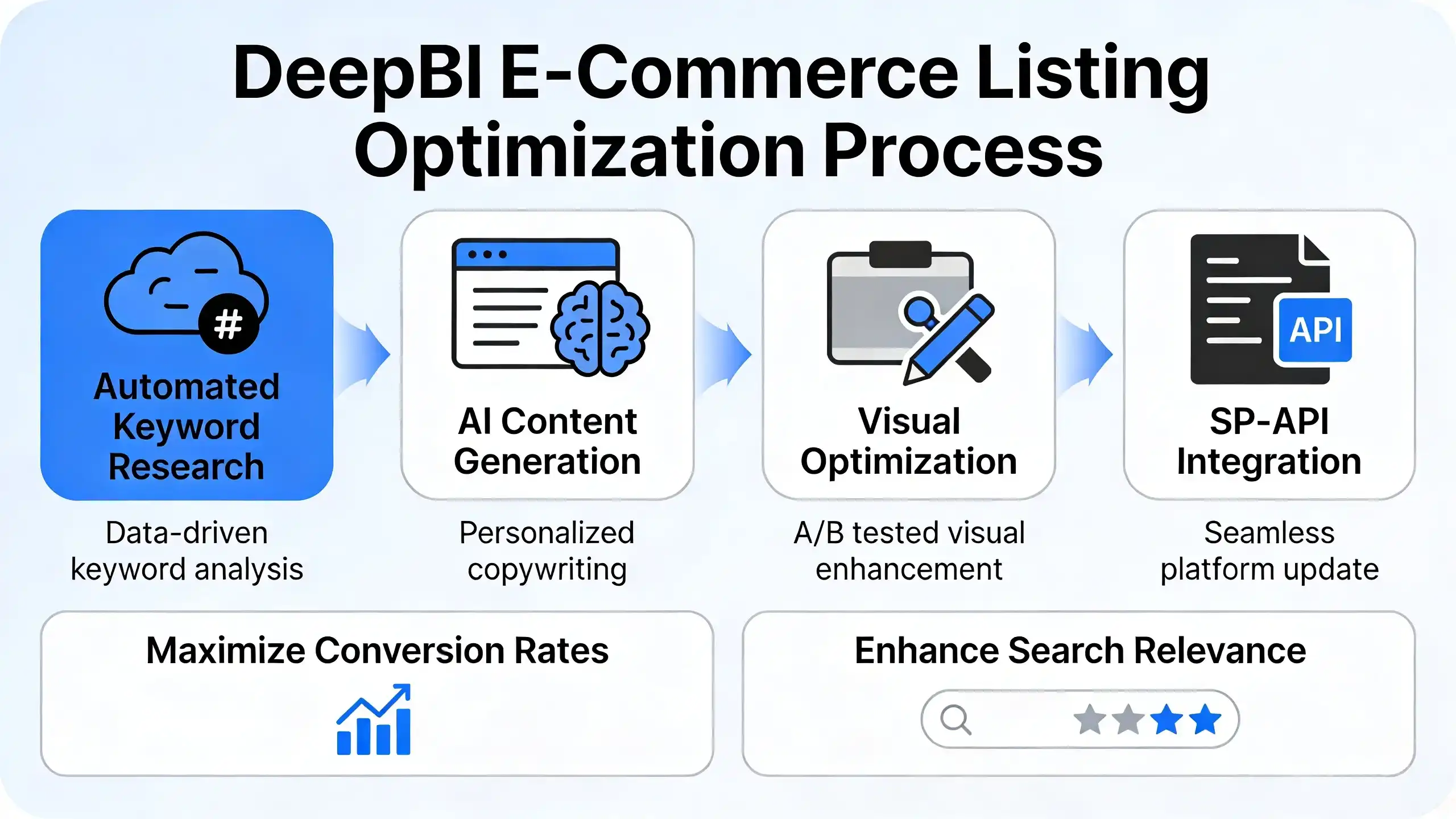
The foundation of a relevant listing is meticulous keyword research. Identifying high-volume, commercially relevant keywords is the first step to aligning your product with customer search queries. For maximum algorithmic impact, these keywords must be strategically integrated into your listing's title, bullet points, and backend search term fields. The goal is not to stuff keywords but to place them naturally where they provide the most value to both the algorithm and the shopper. DeepBI's intelligent scoring and diagnosis module automates this discovery process by benchmarking your listing against top-performing competitors, instantly revealing keyword gaps and strategic opportunities.
Crafting Compelling Product Content: Titles, Bullet Points, and Descriptions
With the right keywords identified, the focus shifts to crafting persuasive content. Your product title is the single most important element, serving to both capture algorithmic relevance and entice shoppers to click. Beyond the title, your bullet points and description must go beyond listing features; they must translate features into clear benefits that solve customer pain points. DeepBI’s AI content generation excels here, transforming abstract optimization goals into concrete, conversion-focused copy. For instance, instead of a vague suggestion like "highlight durability," the system generates precise, benefit-driven phrases for titles and bullet points that are proven to resonate with target audiences.
The Power of Visuals: High-Quality Images and A+ Content
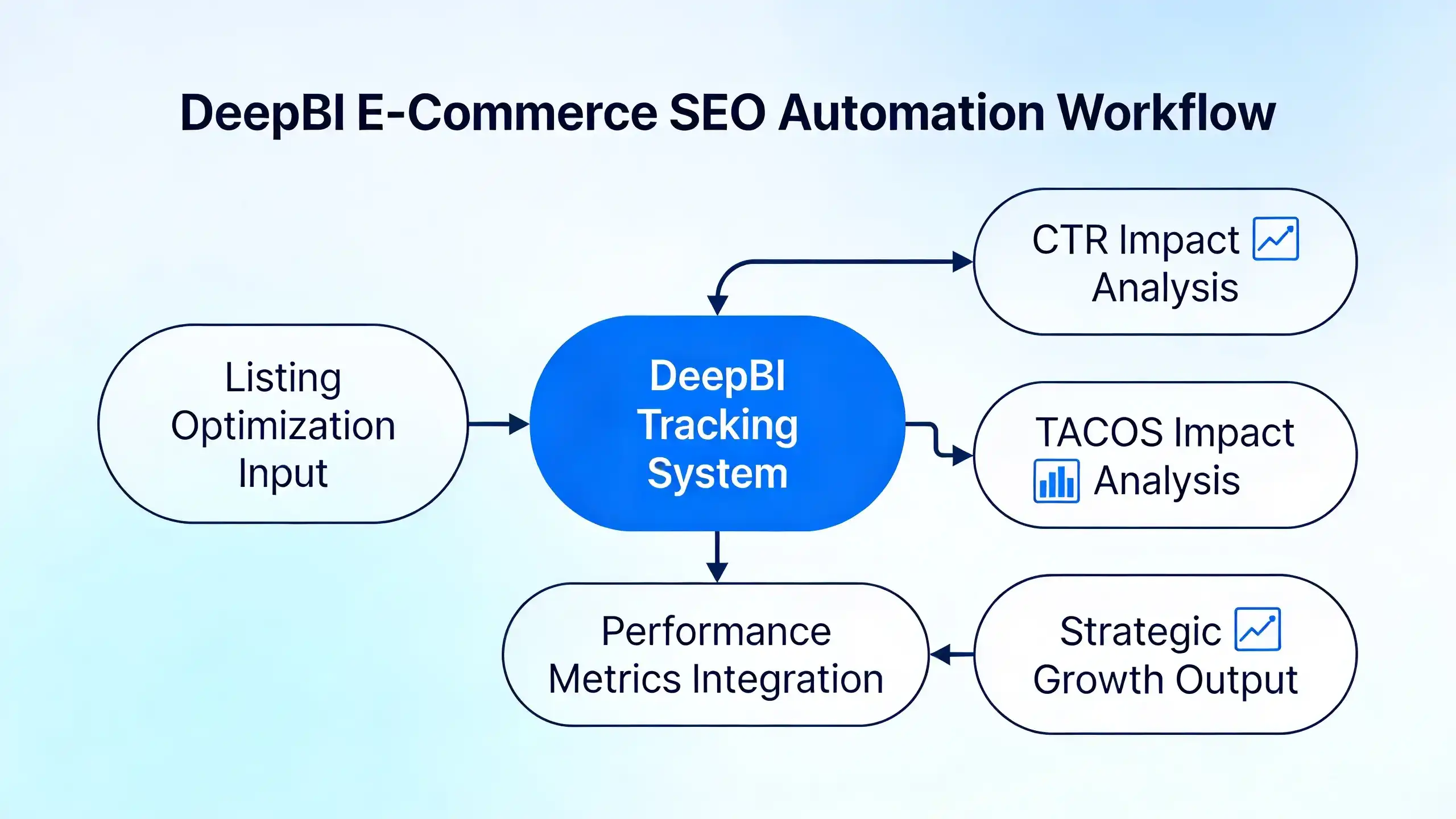
Compelling visuals are critical for improving both Click-Through Rate (CTR) and Conversion Rate (CVR), which in turn signals to Amazon that your listing is valuable, indirectly boosting organic rank. However, using general AI tools for image creation can be risky, often leading to "AI hallucinations" that misrepresent the product and cause negative reviews. DeepBI solves this by first creating a "Product DNA" map, which acts as an ultimate constraint to ensure all AI-generated visuals are authentic to the physical product. Furthermore, to solve the challenge of measuring visual impact, DeepBI automatically marks a "visual iteration event point" in your ad reports whenever a new image is published. This allows you to directly track the impact of visual updates on your ASIN's CTR, closing the feedback loop between optimization and performance.
Pricing, Promotions, and Customer Reviews: Building Trust and Value
A listing optimized with relevant keywords, compelling copy, and authentic visuals naturally leads to a better customer experience and a higher conversion rate. This improved performance directly fuels a greater volume of positive customer reviews—a critical factor for building trust and improving search rank. Competitive pricing and strategic promotions complete this value proposition. Finally, DeepBI streamlines the entire update process. Instead of a manual, 30-minute process of downloading, renaming, and uploading assets, DeepBI’s one-click application feature seamlessly syncs all optimized content and visuals directly to your Amazon listing via the SP-API, reducing execution time to mere seconds.
 Leveraging Amazon Advertising to Fuel Organic Rank
While often viewed as a tool for immediate sales, a strategic Amazon Advertising campaign is one of the most powerful catalysts for long-term organic growth. The core principle is simple: well-managed ads drive sales, and sales drive visibility. This creates a flywheel effect where paid traffic systematically boosts your organic ranking, creating a more sustainable and profitable sales ecosystem. The key is not just to spend on ads, but to manage them with a clear focus on efficiency and data-driven optimization.
Ads as a Data Goldmine for Organic Strategy
Every ad campaign functions as a real-time market research tool, generating invaluable data that can directly inform your organic keyword strategy. When you run Sponsored Products campaigns, you gain precise insights into which keywords generate the highest Click-Through Rates (CTR) and Conversion Rates (CVR) for your product. This paid data effectively de-risks your organic SEO efforts. Instead of guessing which keywords to prioritize in your listing title, bullets, and backend search terms, you can use ad performance reports to identify and double down on the search queries that are proven to convert customers. This transforms ad spend from a simple sales expense into a strategic investment in market intelligence.
Driving Sales Velocity and BSR with Targeted Campaigns
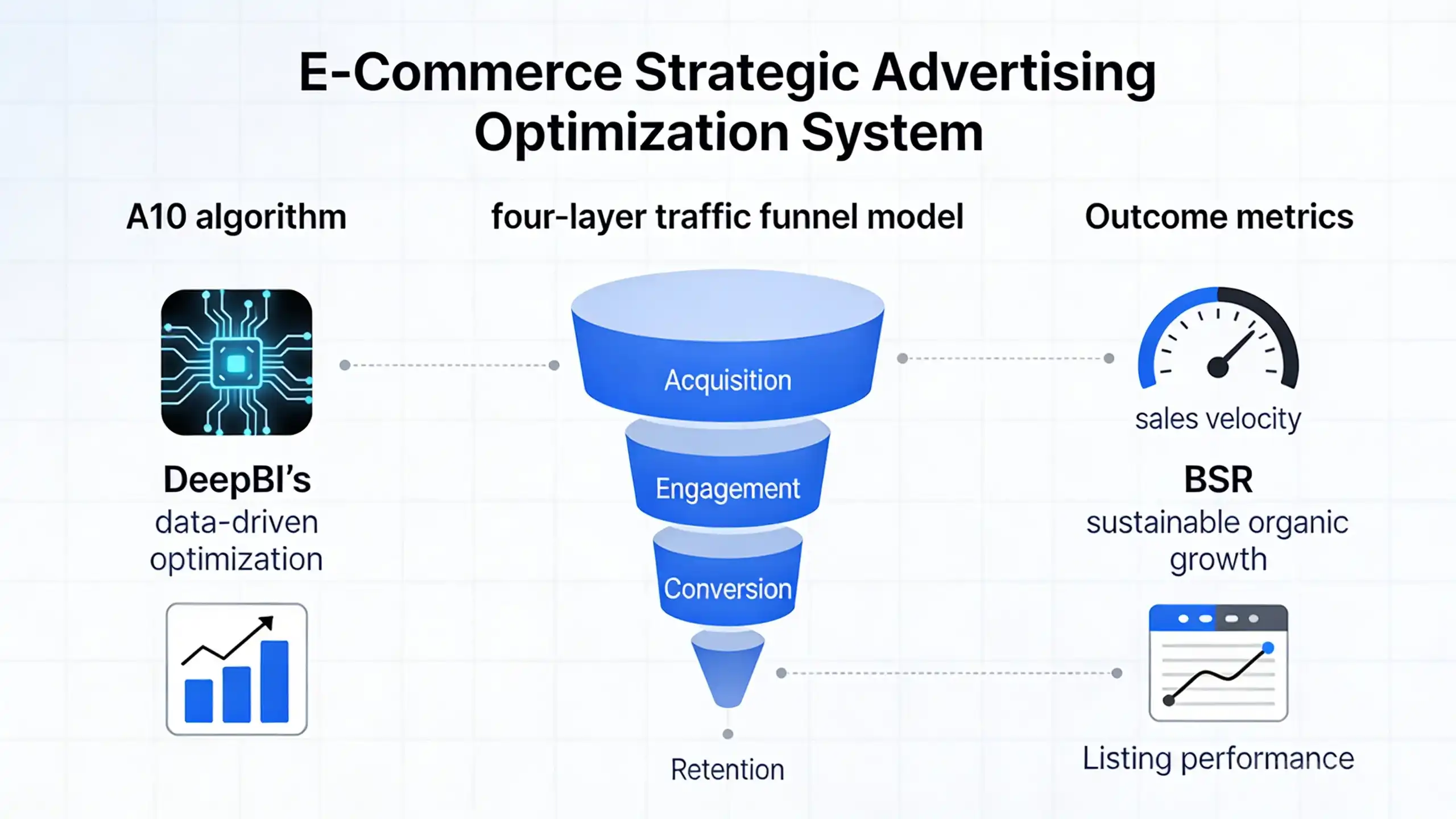
Amazon's A10 algorithm heavily rewards products with strong sales history and momentum. This is where the indirect power of advertising becomes clear. Increased sales generated by ad campaigns directly improve your product's sales velocity—the rate at which it sells over a given period. This surge in sales is a primary signal to Amazon that your product is relevant and popular, which in turn can significantly improve its Best Seller Rank (BSR). A better BSR is a powerful factor in the organic ranking algorithm.
To maximize this effect, ad spend must be highly efficient. This is where DeepBI's dynamic parameter adjustment mechanism excels. By performing daily optimizations on bids and budgets, the system works to maximize sales while maintaining your target ACoS. This ensures every ad dollar is working as hard as possible to generate sales, directly fueling the sales velocity and BSR improvements that are critical for climbing the organic search rankings.
Strategic Ad Types: Sponsored Products, Brands, and Display
Different ad formats contribute to organic growth in distinct ways. While Sponsored Products are the primary engine for driving direct sales and capturing high-intent shoppers, Sponsored Brands and Sponsored Display build crucial top-of-funnel awareness and brand equity. A comprehensive strategy leverages all three to create a halo effect that supports organic discovery.
DeepBI's Ads Quant module organizes this complexity through a four-layer traffic funnel model:
- Explore: Discover new, long-tail keywords and audience targeting opportunities.
- Pre-screen: Test and validate the performance of these new targets with a controlled budget.
- Precision: Allocate more budget to the proven, high-converting keywords and ASINs.
- Scale-up: Expand successful campaigns to maximize reach and market share.
This systematic approach ensures that your entire advertising portfolio—from brand awareness to direct conversion—is aligned with the strategic goal of identifying high-potential traffic sources that drive the sales velocity necessary to fuel sustainable organic growth.
 Advanced Strategies for Sustained Organic Rank Improvement
Achieving a high organic rank is not a one-time setup; it requires a continuous, multi-faceted strategy that aligns with Amazon's core business drivers. Long-term success depends on mastering sales velocity, delivering an exceptional customer experience, and maintaining operational excellence.
The Critical Role of Sales Performance and Velocity
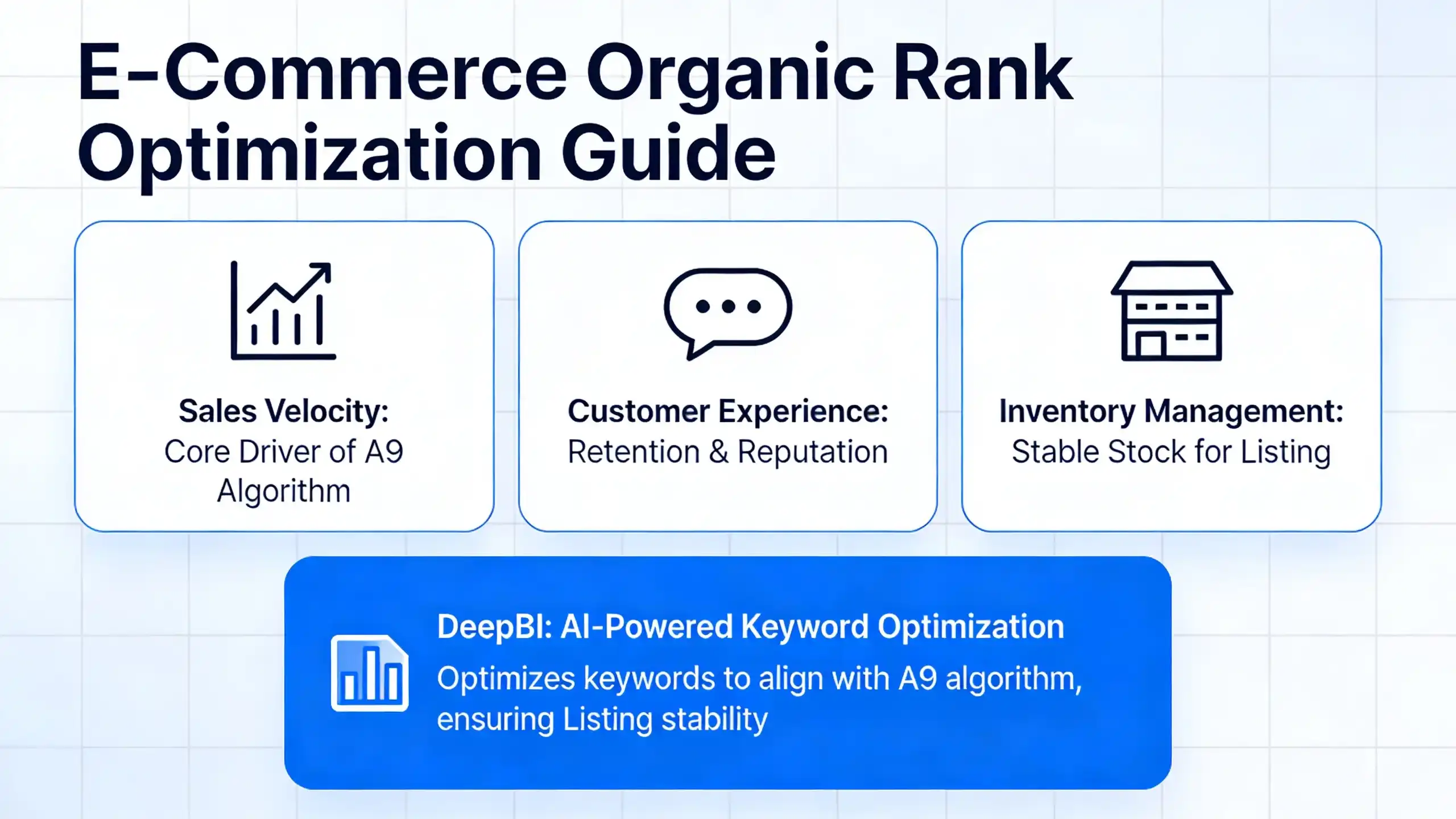
Consistent sales volume and velocity are the most powerful signals you can send to Amazon's A9 algorithm. A product that sells well is a product Amazon wants to show to more customers. To sustain this momentum, sellers must strategically reinvest advertising insights into organic growth. DeepBI’s organic growth strategy provides a data-driven framework for this, acting as a fifth layer of the sales funnel. It filters advertising reports to isolate keywords that not only have high Click-Through Rates (CTR) and Conversion Rates (CVR) but also generate high order values.
Armed with this intelligence, you can confidently allocate resources to reinforce Top of Search (ToS) positions for your most profitable terms. This creates a powerful feedback loop where targeted ad spend drives sales, which in turn boosts organic rank and captures even more organic traffic, solidifying your market position.
Enhancing Customer Experience and Seller Metrics
Amazon's algorithm is built to reward sellers who uphold its customer-obsessed principles. Your seller metrics are direct inputs that influence your product's visibility. Key factors include:
- Fast Shipping: Utilizing FBA or maintaining excellent Seller Fulfilled Prime metrics signals reliability and meets customer expectations for speed.
- Low Return Rates: A low rate of returns indicates a high-quality product and an accurate, trustworthy listing, which Amazon favors.
- Positive Seller Feedback: Your overall seller rating and Account Health are direct measures of your trustworthiness and have a significant impact on the algorithm's perception of your brand.
- Proactive Customer Service: Responding to buyer inquiries quickly and resolving issues effectively contributes to a positive customer journey, which Amazon tracks and rewards.
These elements are not secondary concerns; they are critical, long-term ranking factors that demonstrate your value as a seller within the Amazon ecosystem.
Inventory Management: Avoiding Stockouts and Maintaining Availability
A stockout is one of the most damaging events for your organic rank. When your product becomes unavailable, its sales velocity drops to zero, causing its Best Seller Rank (BSR) to plummet. The A9 algorithm registers this halt in sales history and will quickly de-rank the listing in favor of in-stock competitors. Once you restock, you face the costly and time-consuming challenge of rebuilding the sales momentum you lost. Therefore, diligent inventory planning is a non-negotiable component of any serious Amazon SEO strategy. Maintaining consistent availability is fundamental to protecting the ranking you have worked hard to achieve.
 Measuring Success and Continuous Optimization with DeepBI
Key Metrics for Tracking Search Visibility and Organic Growth
Effective Amazon SEO requires diligent tracking of key performance indicators. To measure the true impact of your optimization efforts, monitor a blend of metrics that provide a complete picture of your organic health:
- Organic Keyword Rank: Your product's position in search results for specific, high-value keywords.
- Organic Sales & Natural Order Share: The volume and percentage of sales generated without paid advertising, directly reflecting SEO strength.
- Best Seller Rank (BSR): A dynamic ranking that indicates sales velocity compared to other products in the same category.
- Total Advertising Cost of Sale (TACOS): This metric reveals the relationship between ad spend and total revenue, helping you gauge whether ad-driven sales are successfully boosting organic visibility and sales.
The Iterative Process of Amazon SEO
Amazon SEO is not a one-time task; it is a continuous cycle of analysis, refinement, and adaptation. The marketplace is dynamic, and sustained visibility requires an iterative approach. Instead of relying on manual checks, you can leverage a tool that provides a holistic view of performance across your listings, ads, and organic traffic.
DeepBI functions as an "automated market health check system," connecting your optimization activities directly to business outcomes. For example, when you update a listing image, the system can automatically tag the event, allowing you to quantify the direct impact on metrics like Click-Through Rate (CTR) and, subsequently, TACOS. This data-driven feedback loop transforms SEO from guesswork into a strategic process. By automating data collection and analysis, DeepBI empowers efficiency-focused teams to move beyond constant manual intervention and focus on high-level decision-making for long-term growth.
 Conclusion: A Holistic Approach to Dominating Amazon Search
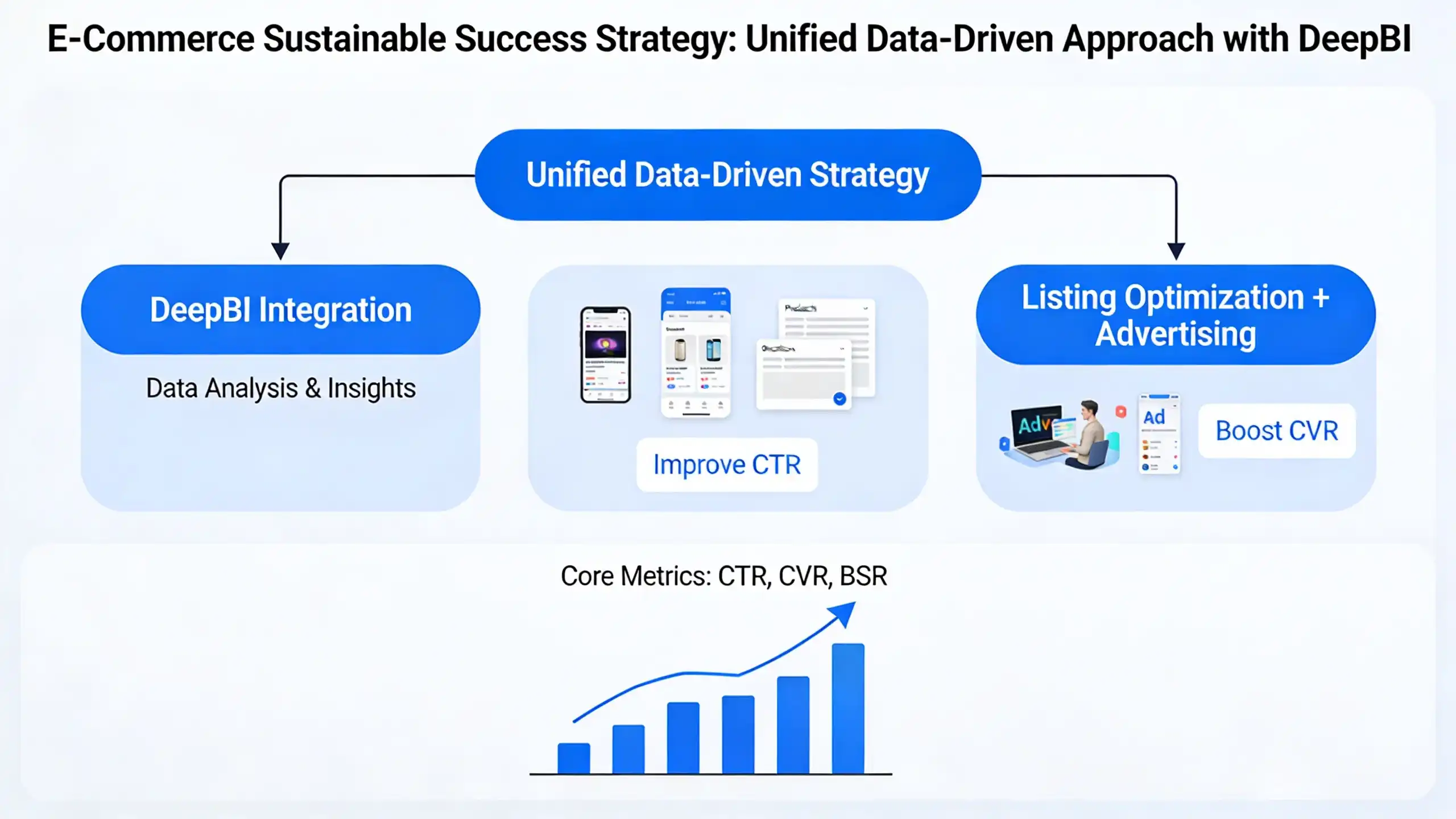
Achieving sustainable success on Amazon requires moving beyond isolated tactics and embracing a unified, data-driven strategy. The era of treating listing optimization, advertising, and organic ranking as separate functions is over. A truly effective approach recognizes that these elements are deeply interconnected, with each one influencing the performance of the others. The old method of operating on subjective feelings and disconnected workflows—essentially "groping in the dark"—is inefficient and risky.
To win, you must treat Amazon as the powerful search engine it is. This means adopting a mindset of "No diagnosis, no optimization." Every decision, from keyword placement in your title to your advertising bid strategy, must be informed by data and aimed at improving core metrics like CTR, CVR, and BSR. By leveraging a comprehensive tool like DeepBI, you can move from guesswork to precision targeting, ensuring that your efforts are cohesive and impactful. This holistic methodology is the definitive blueprint for building lasting search visibility and securing your position as a market leader.