

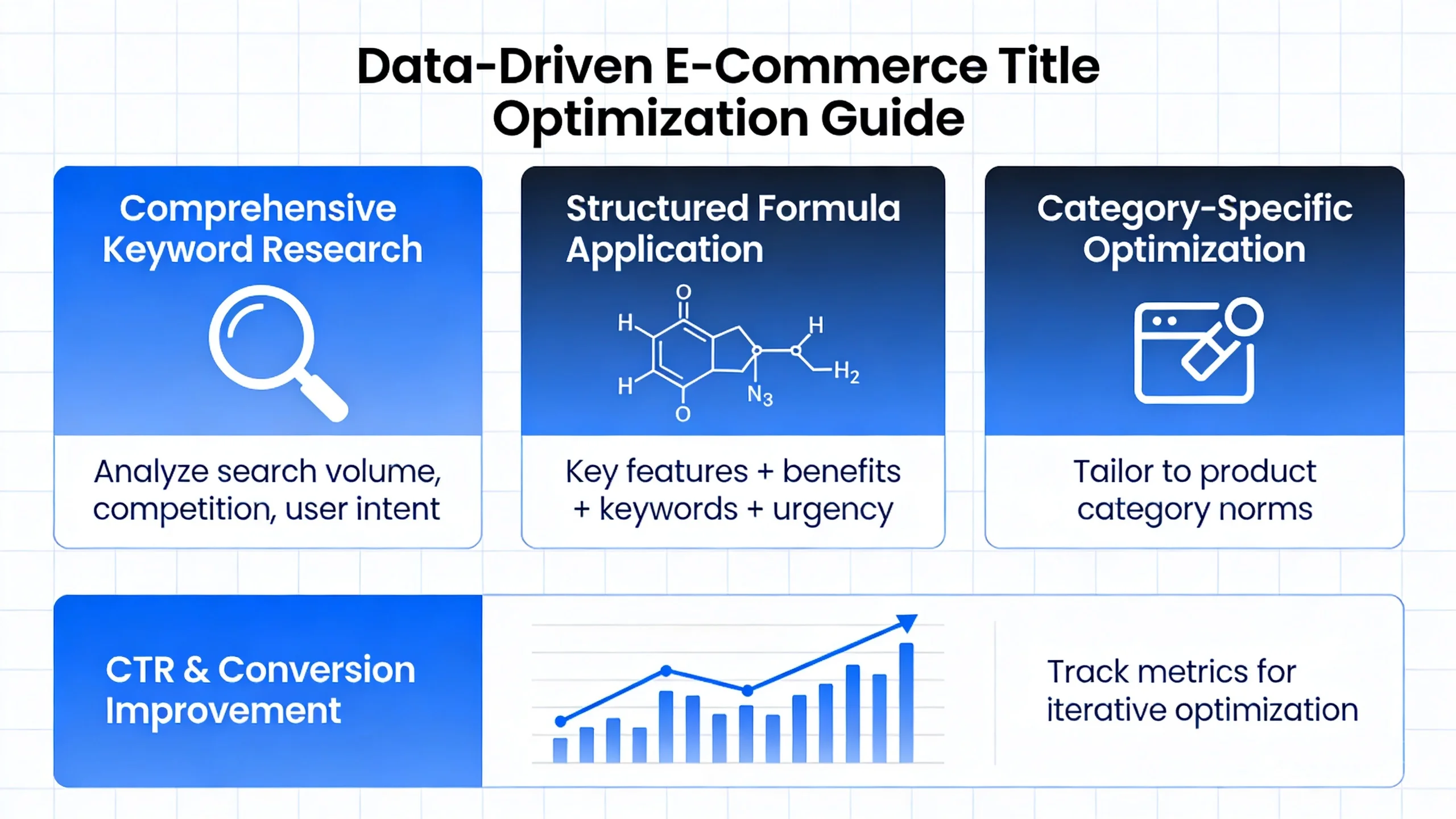
Introduction
In the hyper-competitive Amazon marketplace, rising traffic costs and the constant pressure to improve both click-through rates (CTR) and conversion rates (CVR) are major challenges for sellers. Your product title is the frontline in this battle. It's often the first, and sometimes only, element a potential customer sees. A powerful, well-optimized title directly impacts your product's visibility in search results, drives qualified clicks, and is a critical factor in the final purchase decision. However, crafting the perfect title within Amazon's strict character limits is a complex blend of art and science, often bogged down by guesswork and subjective choices.
This is where a data-driven approach becomes a game-changer. Generic AI tools can fall short, but a specialized solution can transform your listing strategy. DeepBI is an AI-powered system designed specifically for Amazon listing optimization, moving sellers from intuition-based decisions to a model driven by performance data. By analyzing high-converting search terms and competitive landscapes, DeepBI provides the intelligence needed to construct titles that not only attract the right audience but also convince them to convert. This guide will explore how to leverage DeepBI to master the art of title optimization, creating a powerful flywheel effect where better listings attract more precise traffic, leading to healthier, sustainable growth for your Amazon business.
Understanding Amazon SEO and Product Listing Fundamentals
Why Amazon Product Titles are Crucial for Visibility and Conversion
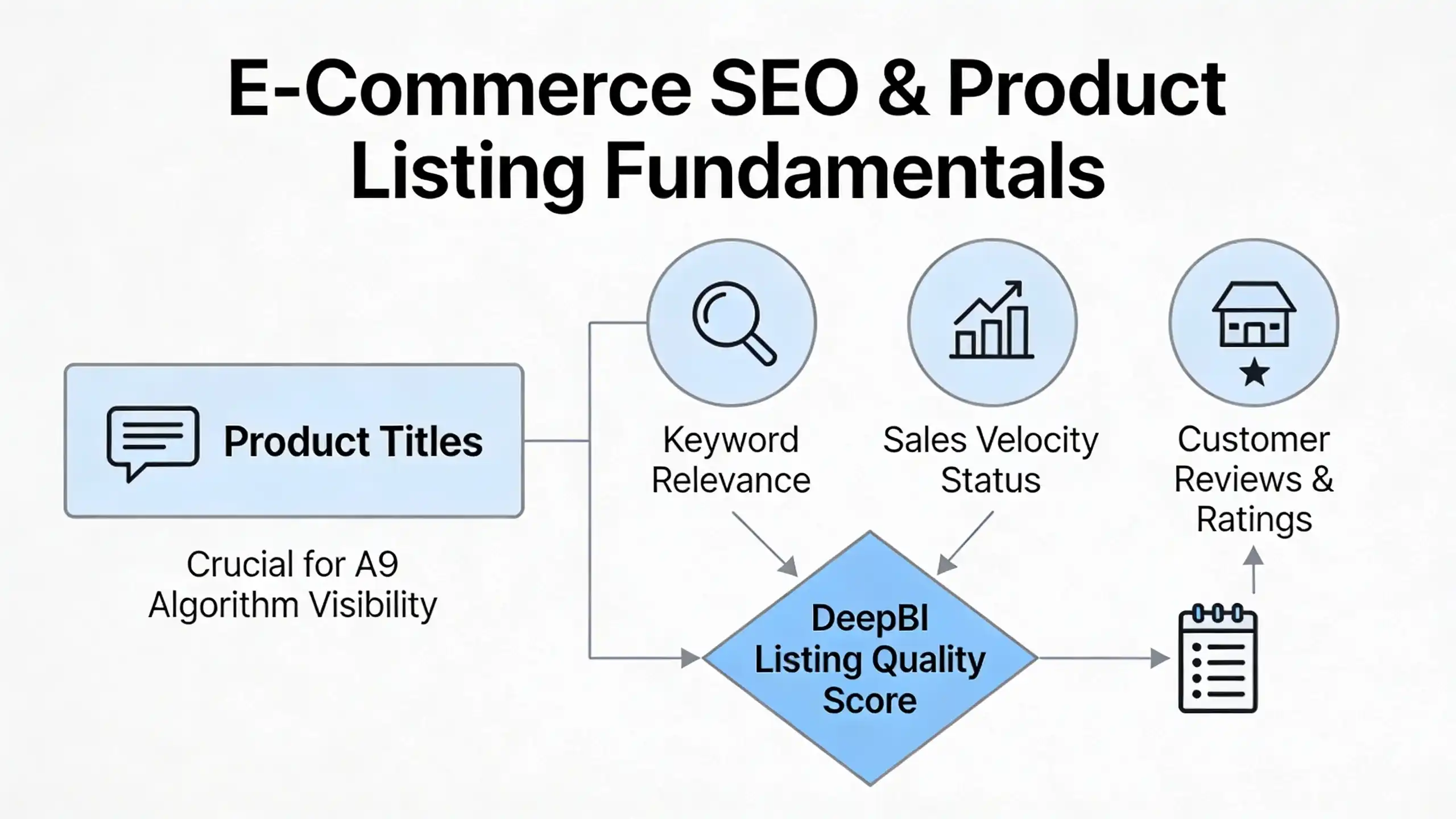
Your product title is the single most important element for discoverability on Amazon. It serves a dual purpose: capturing the attention of human shoppers and signaling relevance to Amazon's A9 search algorithm. For customers, a compelling title is the primary driver of the Click-Through Rate (CTR)—the percentage of shoppers who see your product and click on it. It acts as a digital storefront sign, promising a solution to their needs. For the algorithm, the title is the most heavily weighted field for keyword indexing. A title packed with relevant, high-volume search terms tells Amazon exactly when to display your product, directly impacting visibility and setting the stage for a higher Conversion Rate (CVR).
Key Ranking Factors on Amazon
While the title is paramount, it operates within a broader ecosystem of ranking signals. Success on Amazon depends on understanding how these elements work together to influence your product's position in search results.
Key performance factors include:
- Keyword Relevance: The direct match between the terms in your entire listing—especially the title—and a customer's search query.
- Sales Velocity: The volume and consistency of your sales. Strong, steady sales signal a popular product, which Amazon rewards with higher visibility.
- Customer Reviews & Ratings: The quantity and quality of reviews provide the social proof that influences purchasing decisions, directly impacting CVR and search ranking. DeepBI leverages review data to generate its Listing Quality Score but does not manage or generate reviews.
- Inventory Status: Maintaining consistent stock levels is non-negotiable. Frequent stockouts can erase ranking gains and halt your sales momentum.
Amazon's Official Guidelines for Product Titles
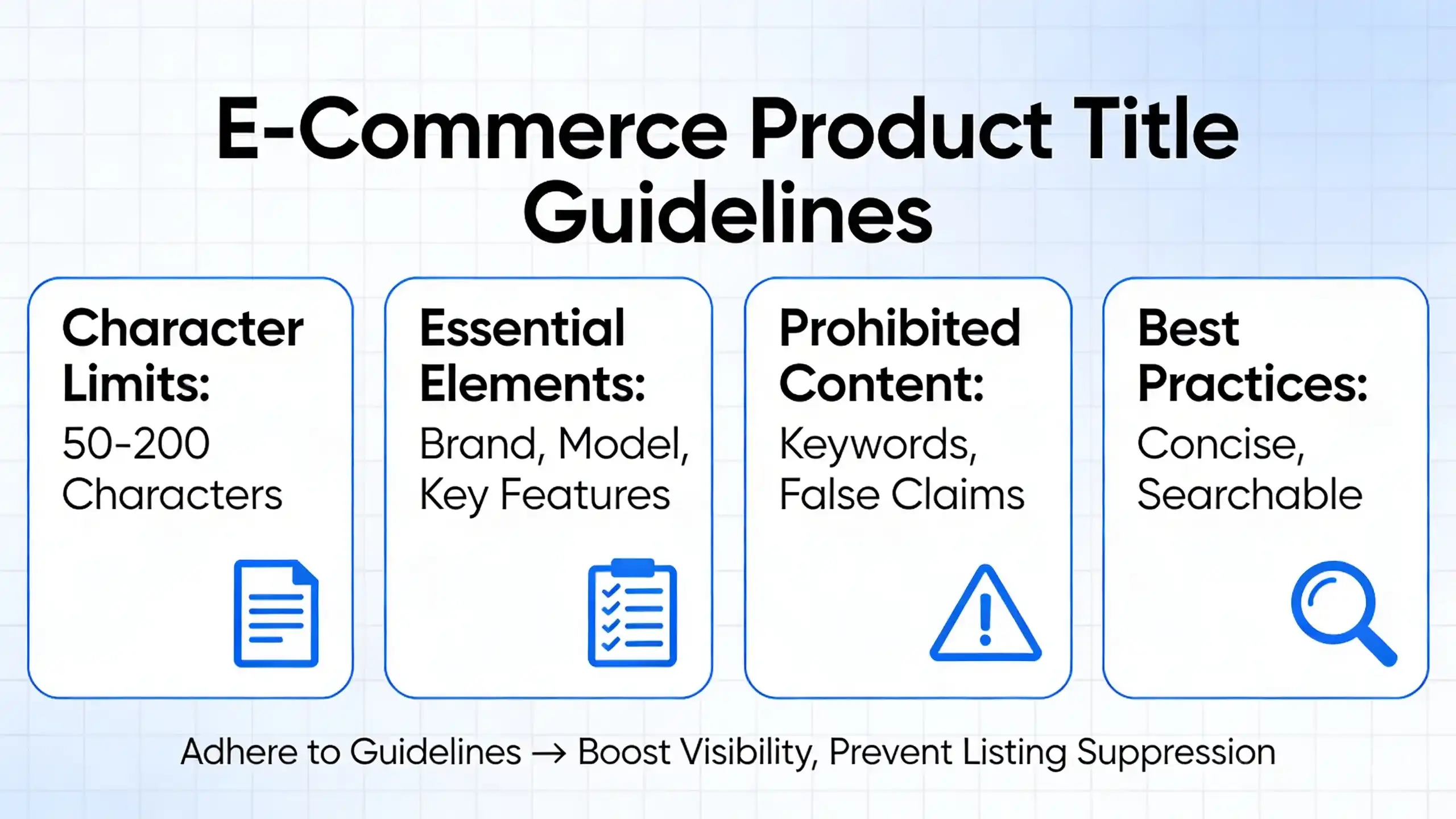
Adhering to Amazon's title guidelines is the foundational step toward ensuring product visibility and compliance. A failure to meet these standards can result in your listing being suppressed from search results, effectively making it invisible to customers.
Essential Elements and Character Limits
For most categories, Amazon allows product titles up to 200 characters in length. However, this is a general guideline, not a universal rule; specific categories often have shorter limits. It is critical to consult the category-specific style guide to confirm the exact requirements and avoid violations.
A compliant and effective title typically follows a clear structure that prioritizes key information:
- Brand Name: Always start with the brand to build recognition.
- Product Type: Clearly state what the item is (e.g., "Wireless Mouse," "Yoga Mat").
- Key Attributes: Include essential features like material, color, size, or a key benefit.
- Quantity: If selling a pack or bundle, specify the count (e.g., "Pack of 2").
This formula ensures that the most critical information is presented upfront, improving both search relevance and customer comprehension.
Prohibited Content and Best Practices
Amazon strictly polices title content to maintain a professional and trustworthy shopping environment. Titles must not contain:
- Promotional Messaging: Phrases like "Sale," "Free Shipping," or "100% Quality Guaranteed."
- Subjective Commentary: Claims such as "Best Seller," "Top-Rated," or "Hottest Item."
- Seller Information: Do not include your seller name or other business-specific details.
- Symbols and Special Characters: Avoid using symbols like ©, ™, or decorative characters.
For best practices, always capitalize the first letter of each word (Title Case), use numerals for numbers (e.g., "2" instead of "two"), and spell out units of measurement (e.g., "6 inches" instead of "6\"").
Strategic Approaches to Crafting High-Converting Amazon Titles
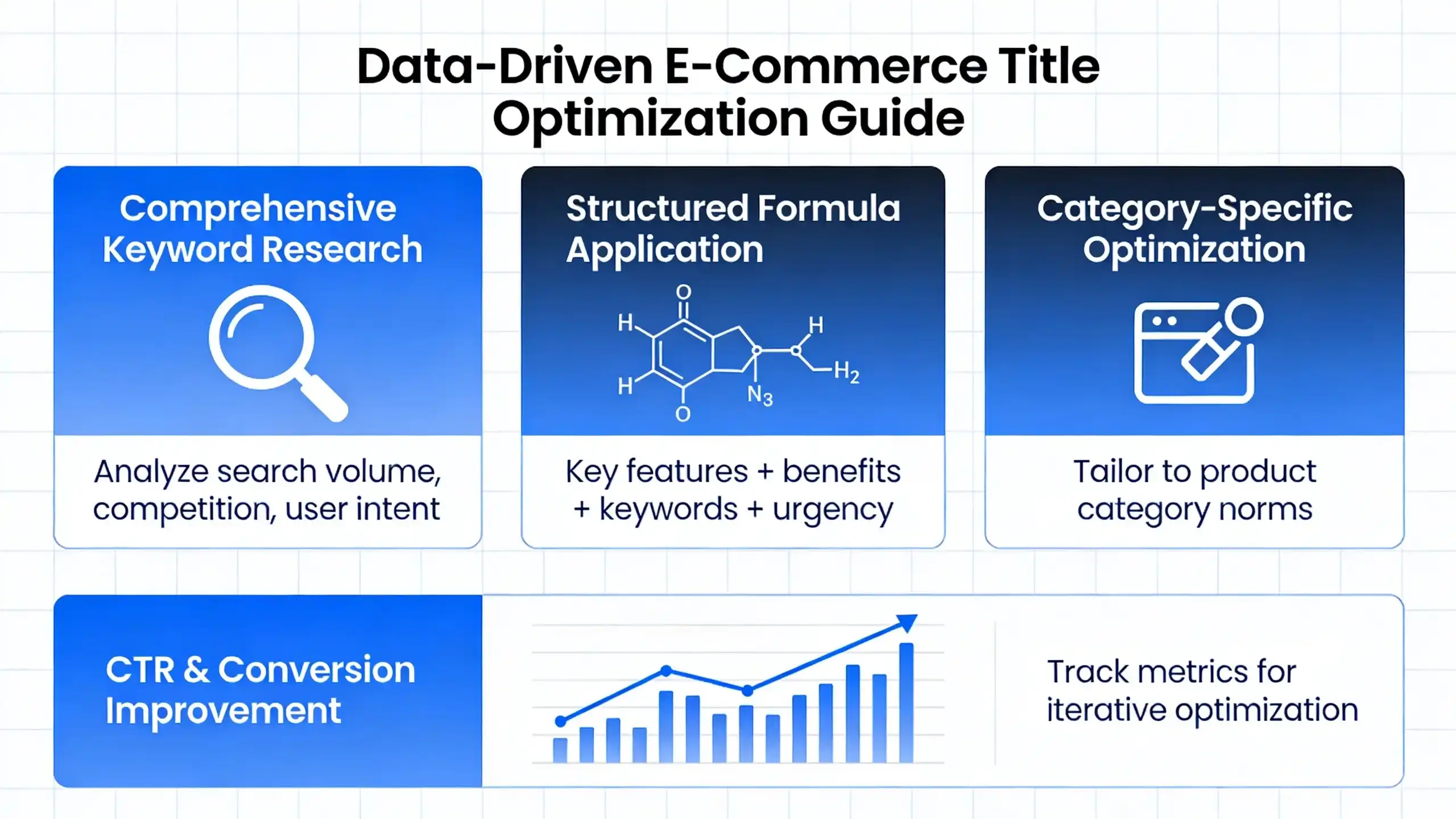
Crafting a high-converting title requires a disciplined approach that balances keyword relevance, brand identity, and clarity, all within Amazon's character limits. Moving from guesswork to a data-driven methodology is crucial for improving click-through rates (CTR) from search results and boosting on-page conversion. A well-structured title acts as the primary tool for turning a shopper's initial interest into a confident click.
Keyword Research and Integration
The foundation of any effective title is comprehensive keyword research. This involves identifying not only high-volume, short-tail keywords but also specific, long-tail phrases that signal strong purchase intent. The goal is to embed these terms naturally, prioritizing the most critical keywords at the beginning of the title to capture both algorithmic attention and customer interest immediately. This strategic placement ensures your product appears in relevant searches and communicates its core function instantly.
Incorporating Brand, Key Features, and Benefits
A proven formula for title construction helps organize information logically for the shopper. A standard, effective structure is:
[Brand Name] + [Main Keyword/Product Type] + [Key Feature 1] + [Key Feature 2] + [Size/Color/Quantity]
This format establishes brand recognition, clearly states what the product is, and highlights unique selling propositions that differentiate it from competitors. By presenting essential information upfront, you reduce friction in the customer journey and provide the necessary details to support a quick purchasing decision, effectively converting your digital listing into tangible business value.
Category-Specific Title Optimization Examples
Title structure is not one-size-fits-all; it must be adapted to category-specific norms and customer expectations.
- Electronics: Prioritize model numbers, compatibility, and technical specifications.
Example:* "[Brand] Noise Cancelling Headphones, Model X5, Bluetooth 5.2, 40H Playtime, Over-Ear Headset with Mic for [Device Compatibility]"
- Apparel: Focus on material, style, and target audience.
Example:* "[Brand] Women's 100% Cotton V-Neck T-Shirt, Classic Fit Short Sleeve Top, Pack of 3 (Black/White/Gray)"
- Home Goods: Emphasize dimensions, material, and use case.
Example:* "[Brand] Queen Size Sheet Set, 4-Piece 1800 Thread Count Microfiber Bedding, Wrinkle & Fade Resistant (Dark Gray)"Leveraging DeepBI for Advanced Title Optimization
Manual title optimization is often a process of guesswork, leading to inconsistent results and wasted effort. DeepBI transforms this process into a data-driven strategy, leveraging AI to diagnose, generate, and deploy high-performance titles with precision and efficiency.
DeepBI's Intelligent Scoring and Competitive Benchmarking
Effective optimization begins with accurate diagnosis. Many sellers fall into the trap of "survivor bias," benchmarking only against the top best-seller, which may not be a relevant competitor in terms of features or price point. DeepBI overcomes this by using distributed data crawling and multi-dimensional semantic alignment to identify your true competitors. It then generates a comprehensive listing score that evaluates every element, including title quality. This score is enriched by analyzing user review data, such as review volume and negative feedback signals, providing a clear, data-backed roadmap for what needs improvement.
AI-Driven Content Generation for Optimized Titles
Based on its competitive analysis, DeepBI's AI engine generates high-converting title options. This isn't a generic text generator; it operates based on a meticulously mapped "product DNA" profile. This ensures every AI-generated phrase is anchored to your product's actual features, preventing the "AI hallucinations" that can lead to customer complaints and returns. The system excels at translating dry specifications into compelling, benefit-driven language. For example, a simple feature like "10000mAh" is transformed into a value proposition like "All-Day Power for Uninterrupted Travel," directly addressing customer pain points and boosting click-through rates (CTR).
Streamlining Implementation with DeepBI's One-Click Application
The final step in the optimization cycle—implementation—is often a point of friction, involving manual copy-pasting that is slow and prone to error. DeepBI eliminates this bottleneck with its one-click application feature. Through a secure integration with Amazon's Selling Partner API (SP-API), you can synchronize your newly optimized title directly to your Amazon listing in seconds. The system provides a clear before-and-after comparison for a final quality check, ensuring strategic changes are executed flawlessly and dramatically reducing the listing update cycle time.
Measuring and Iterating on Title Performance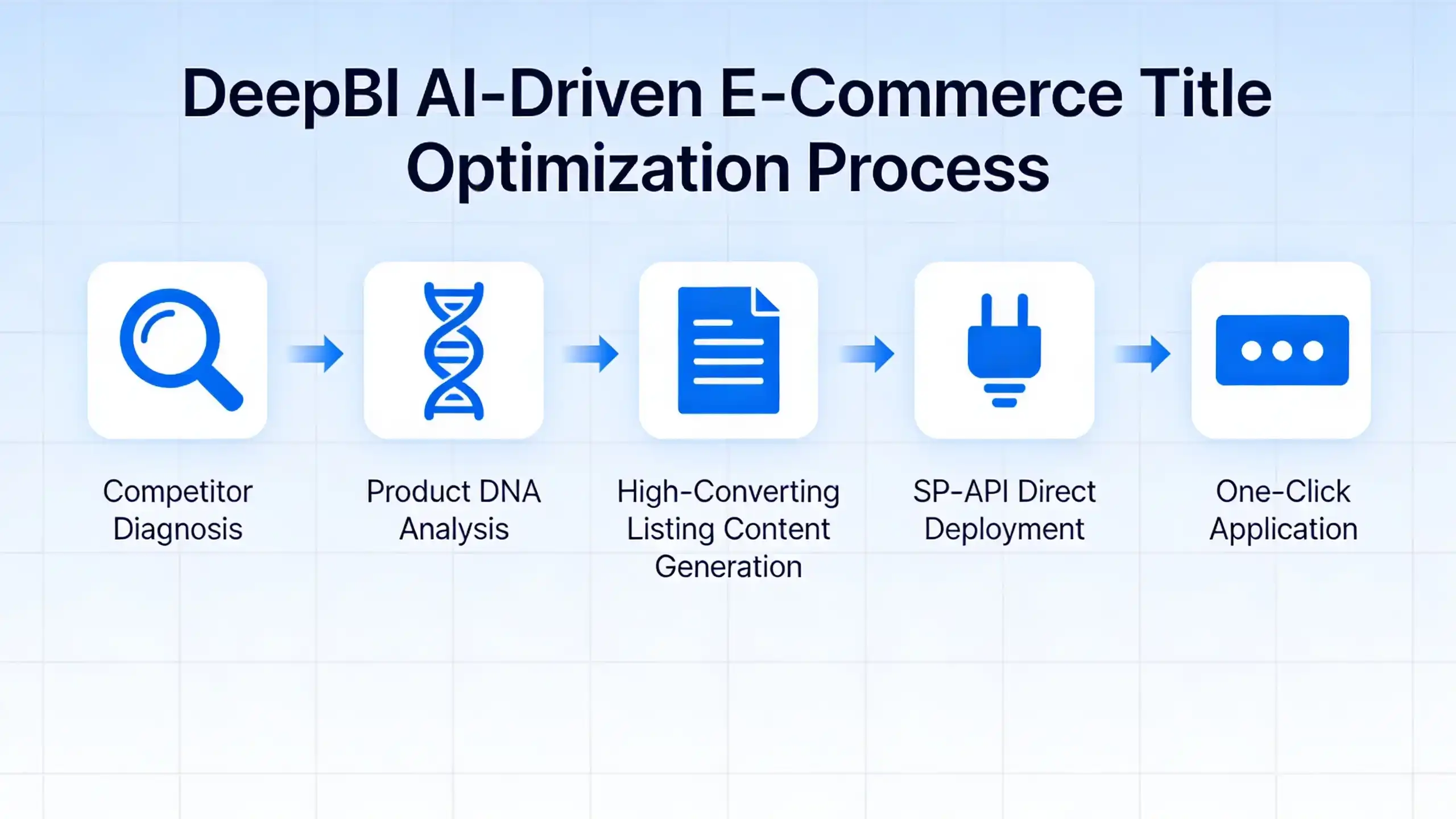
Optimizing your product title is not a one-time fix but a continuous cycle of implementation, measurement, and refinement. To ensure your efforts translate into tangible business growth, you must establish a clear framework for tracking performance and adapting your strategy based on data.
Key Metrics for Title Effectiveness (CTR, CVR)
Once you've deployed a new, optimized title, its success must be quantified. The two most critical metrics for this are Click-Through Rate (CTR) and Conversion Rate (CVR).
- Click-Through Rate (CTR): This measures the percentage of shoppers who click on your product after seeing it in search results. A higher CTR is the first and most direct indicator that your new title is successfully capturing customer attention and interest.
- Conversion Rate (CVR): This tracks the percentage of visitors who complete a purchase after clicking on your listing. An effective title sets accurate expectations, ensuring that the traffic it drives is relevant and more likely to convert.
To measure the impact accurately, mark the date of your title change. Then, closely monitor the change in your CTR and CVR over the subsequent 7-14 days. This creates a data feedback loop, allowing you to directly correlate the title update with performance shifts.
Continuous Optimization and Adaptation
The Amazon marketplace is dynamic, and a winning title today may be average tomorrow. A proactive approach to optimization is essential for maintaining a competitive edge.
This involves creating a perpetual improvement cycle. Conceptually, you can A/B test different title variations to identify which combination of keywords, features, and structure resonates most with your target audience. Simultaneously, keep a close watch on your top competitors' title strategies and adapt to emerging market trends or shifts in customer search behavior. By using performance data from your CTR and CVR analysis, you can feed these insights back into your optimization process, ensuring each iteration is more informed and effective than the last.