一、The Pivotal Role of Amazon Main Images in Driving Sales
On a crowded Amazon search results page, your main image is your single most powerful tool. It’s the first, and often only, chance you get to capture a shopper's attention and stop their scroll. This initial visual handshake determines whether a potential customer clicks on your listing or scrolls past to a competitor.
Why Your Main Image is the First Impression and Conversion Catalyst
Think of your main image not as a simple product photo, but as your primary commercial engine. Its function has evolved beyond mere aesthetic appeal; its core job is to drive the initial click that begins the customer journey. In a sea of similar products, a compelling, clear, and benefit-driven main image acts as a powerful differentiator. It communicates value instantly and serves as the essential catalyst that converts a passive browser into an engaged shopper, compelling them to learn more about your product. A weak main image breaks this chain before it even starts, costing you valuable traffic and potential sales.
Understanding Click-Through Rate (CTR) on Amazon: Definition and Impact
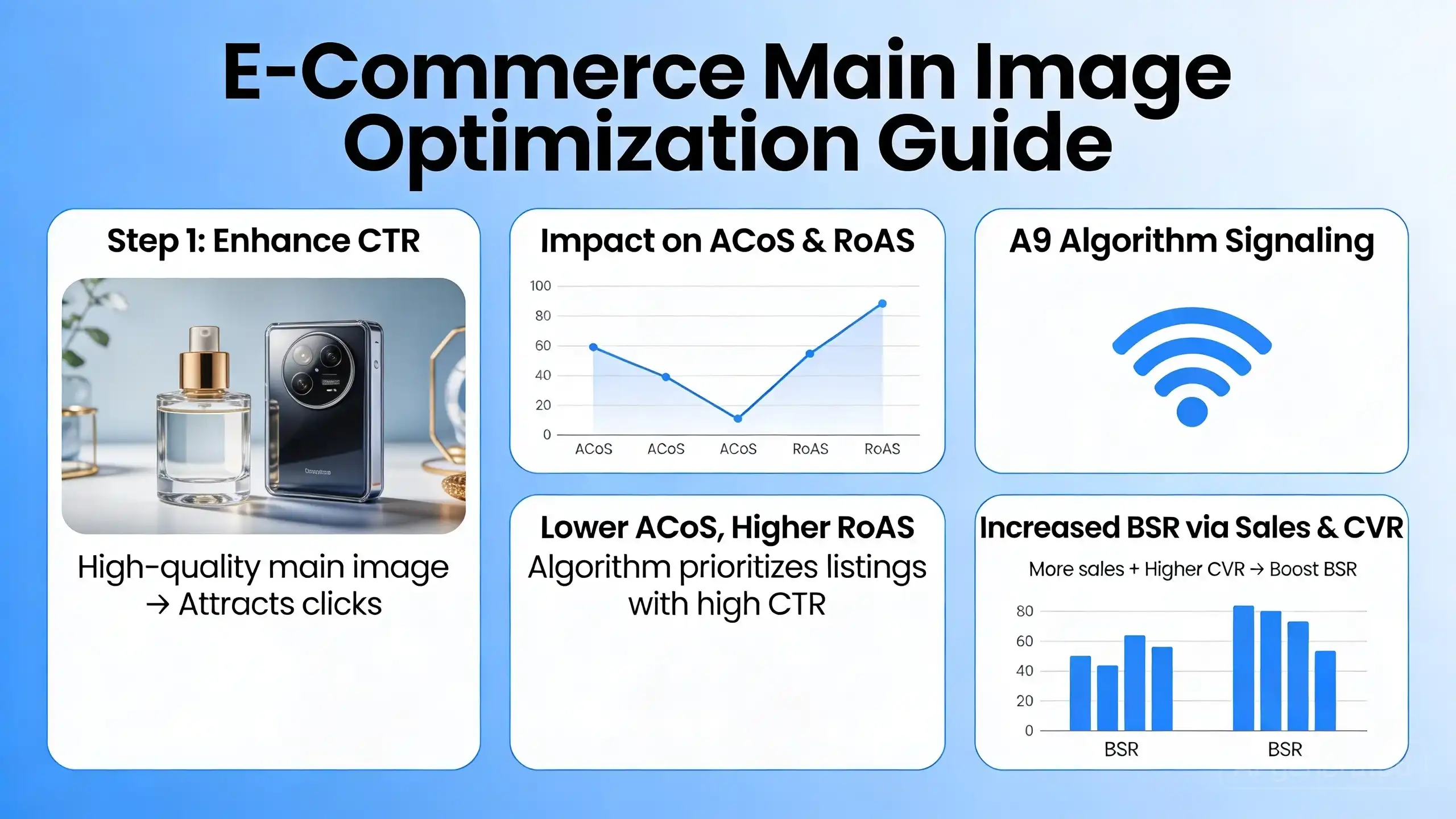
Click-Through Rate (CTR) is a critical Amazon metric calculated by dividing the number of clicks your listing receives by the number of times it was shown (impressions). A high CTR is a powerful signal to Amazon's A10 algorithm that your product is relevant and appealing to customers, which can directly improve your organic search ranking and visibility.
This impact extends directly to your advertising performance. A listing with a high organic CTR is also more likely to perform well in paid campaigns. A compelling main image increases the effectiveness of your Sponsored Product ads, leading to more clicks for the same ad spend. This efficiency can significantly lower your Advertising Cost of Sale (ACoS) and improve your Return on Ad Spend (RoAS), making your entire marketing budget work harder.Amazon's Main Image Guidelines: Compliance and Best Practices
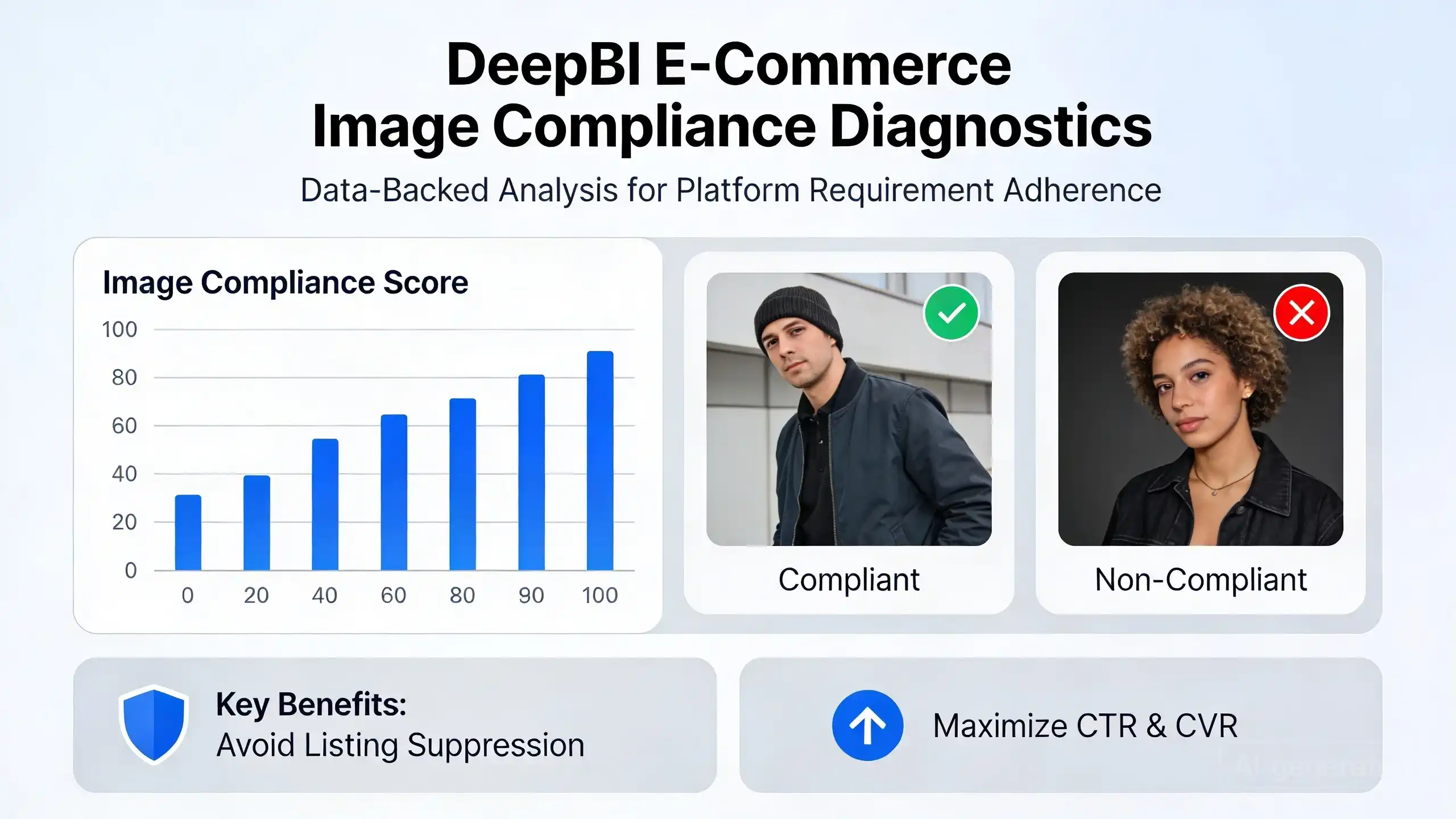
The main image is your product's digital handshake with a potential customer. It's the single most critical element for capturing attention in crowded search results and driving click-through rate (CTR). However, before you can optimize for clicks, you must first ensure strict compliance with Amazon's rules to avoid having your listing suppressed, rendering it invisible to shoppers.
Essential Technical and Content Requirements
Amazon enforces a clear set of standards to create a uniform and professional shopping experience. Adhering to these is non-negotiable for maintaining visibility.
- Technical Specifications: Images should be high-resolution, with at least 1000 pixels on the longest side to enable the zoom function, a key driver of customer confidence and conversion. The background must be pure white (RGB 255, 255, 255), and accepted file formats include JPEG, PNG, GIF, or TIFF.
- Content Rules: The image must be a professional photograph of the actual product. It cannot be a drawing or illustration. The product should occupy at least 85% of the image frame and be shown clearly without any packaging. Crucially, the main image must be free of any additional text, logos, watermarks, or inset graphics. Only the product being sold should be depicted; props or accessories not included in the purchase are prohibited.
Common Pitfalls and How to Avoid Them
The most significant penalty for non-compliance is listing suppression, where your product is removed from search results and category browsing until the issue is fixed. This directly translates to zero visibility and lost sales.
Common mistakes that trigger suppression include using off-white or lifestyle backgrounds, adding promotional badges like "Made in USA" or "Sale," or showing multiple product variations in a single main image. Another frequent error is including accessories that are sold separately, which can mislead customers and lead to negative reviews.
To avoid these pitfalls, regularly audit your main images against the latest version of Amazon's category-specific style guides. Treat compliance not as a creative constraint but as the foundational requirement for market access and the starting point for all strategic optimization.
二、Advanced Strategies for Main Image Optimization
Moving beyond basic compliance with Amazon's white-background rule is critical for standing out. Top-performing sellers treat their main image not as a simple product photo, but as their primary commercial engine for driving click-through rates (CTR). The goal is to make your product instantly compelling in a sea of competitors.
Leveraging Visual Storytelling and Product Focus
Your main image must communicate value in a single glance. Instead of just showing the product, use creative angles and composition to tell a story. Showcase its scale by placing it next to a familiar object, highlight a premium material with focused lighting, or use a unique perspective to emphasize a key design feature. The strategy is to translate a core selling point—like the power of a 10,000mAh battery—into a visual promise of reliability and freedom from "power anxiety." This transforms a static image into a powerful statement of benefit, capturing shopper attention before they even read your title.
The Power of Data Analysis and Iterative Testing
The most effective main image is not a matter of opinion; it's a matter of data. The only way to know which visual approach resonates most with your audience is through systematic testing. By running A/B tests on different main image variations, you can gather concrete CTR data to identify the undisputed winner. This data-driven process replaces vague, subjective feedback with precise, actionable insights. Instead of guessing, you can analyze specific parameters like composition, lighting, and camera angles to engineer an image that is scientifically optimized to maximize clicks and initiate the customer journey.
三、Beyond the Main Image: Holistic Listing Optimization
A high-impact main image is your entry ticket to earning a click, but it's the synergy of your entire listing that secures the sale. A potential customer who clicks through is actively seeking reasons to buy, and every element—from the title to the reviews—must work in concert to build confidence and drive conversion. Isolated optimizations create a disjointed experience; a holistic strategy ensures every component reinforces the core value proposition, turning initial interest into a completed purchase.
Crafting Compelling Titles and Bullet Points
Your title and bullet points serve a dual purpose: they must be rich with relevant keywords to satisfy Amazon's search algorithm and compelling enough to persuade a human shopper. Simply listing technical specifications is a missed opportunity. Instead of a flat feature like "10000mAh," a high-converting approach frames it as a solution: "Superb Efficiency (Benefit) + 10000mAh Power Core (Data) + End Travel Power Anxiety (Pain Point Solved)." DeepBI facilitates this shift by analyzing high-converting search terms (Winning Terms) to help you craft copy that not only ranks well but also speaks directly to customer needs, significantly boosting your listing's CVR.
Enhancing A+ Content and Product Descriptions
A+ Content is your most powerful tool for visual storytelling and brand differentiation. However, treating it as one long, scrolling image fails to guide the customer's decision-making process. A more effective strategy, employed by DeepBI, is to deconstruct the A+ section into logical modules: an introduction, core feature showcases, pain point resolutions, and brand story. This structured approach moves beyond subjective aesthetics to build a persuasive, data-informed narrative. By analyzing the layout and flow of top-performing competitor listings, you can design A+ Content that systematically addresses customer questions and objections, leading them logically toward the "Add to Cart" button.
The Role of Customer Reviews and Feedback in Optimization
Customer reviews are not just social proof; they are a direct and invaluable source of market intelligence. Analyzing the language in 5-star and 1-star reviews reveals what customers truly value and the pain points your product solves. This feedback is a goldmine for refining your titles, bullet points, and A+ Content to mirror the voice of the customer and address their primary concerns head-on. A comprehensive optimization system uses multi-dimensional benchmarking against competitors to reverse-engineer what resonates in the market. This allows you to proactively integrate proven messaging and objection-handling into your listing, creating a powerful feedback loop that continuously improves CVR.
四、DeepBI: Your AI-Powered Partner for Amazon Listing Excellence
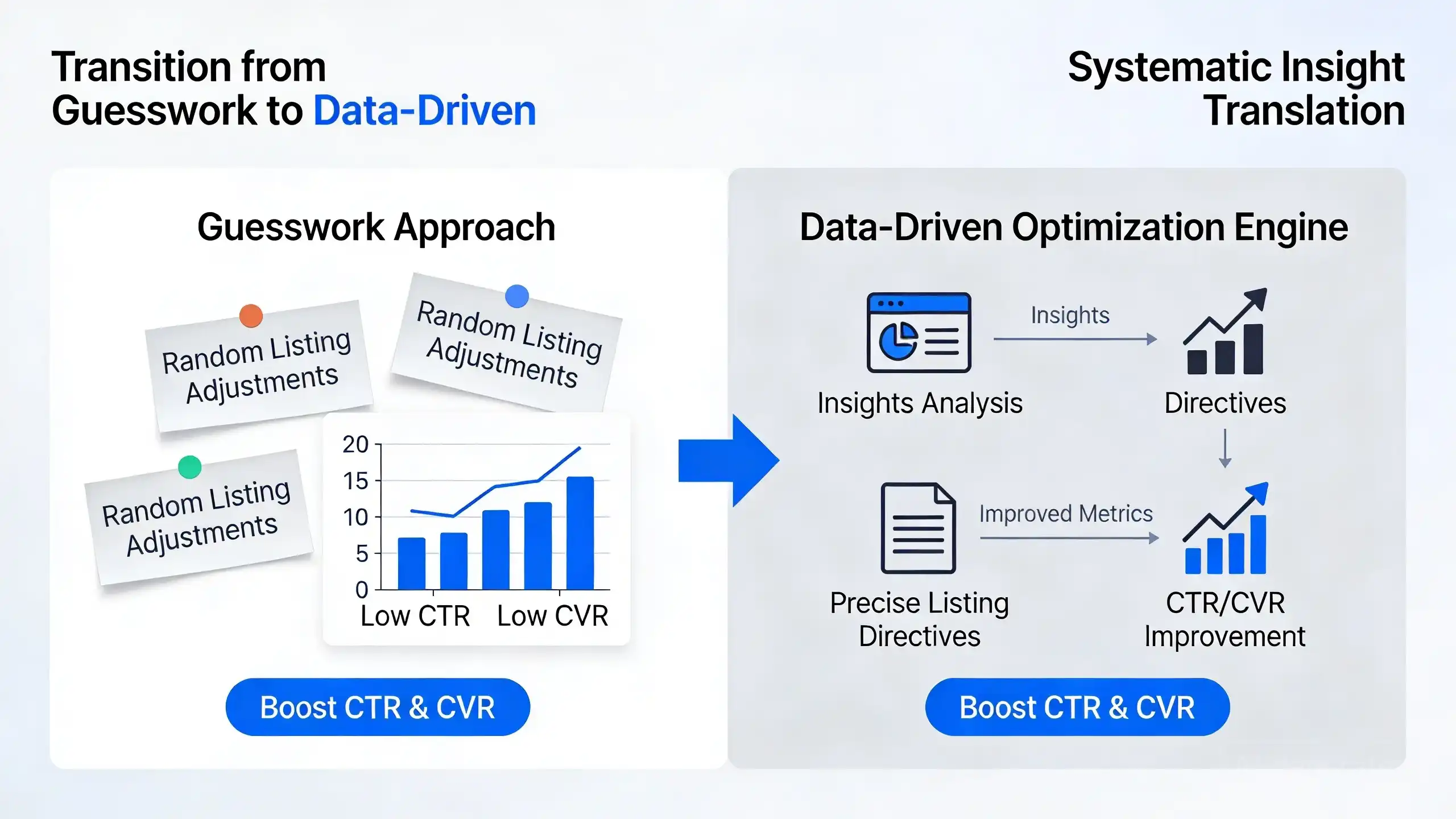
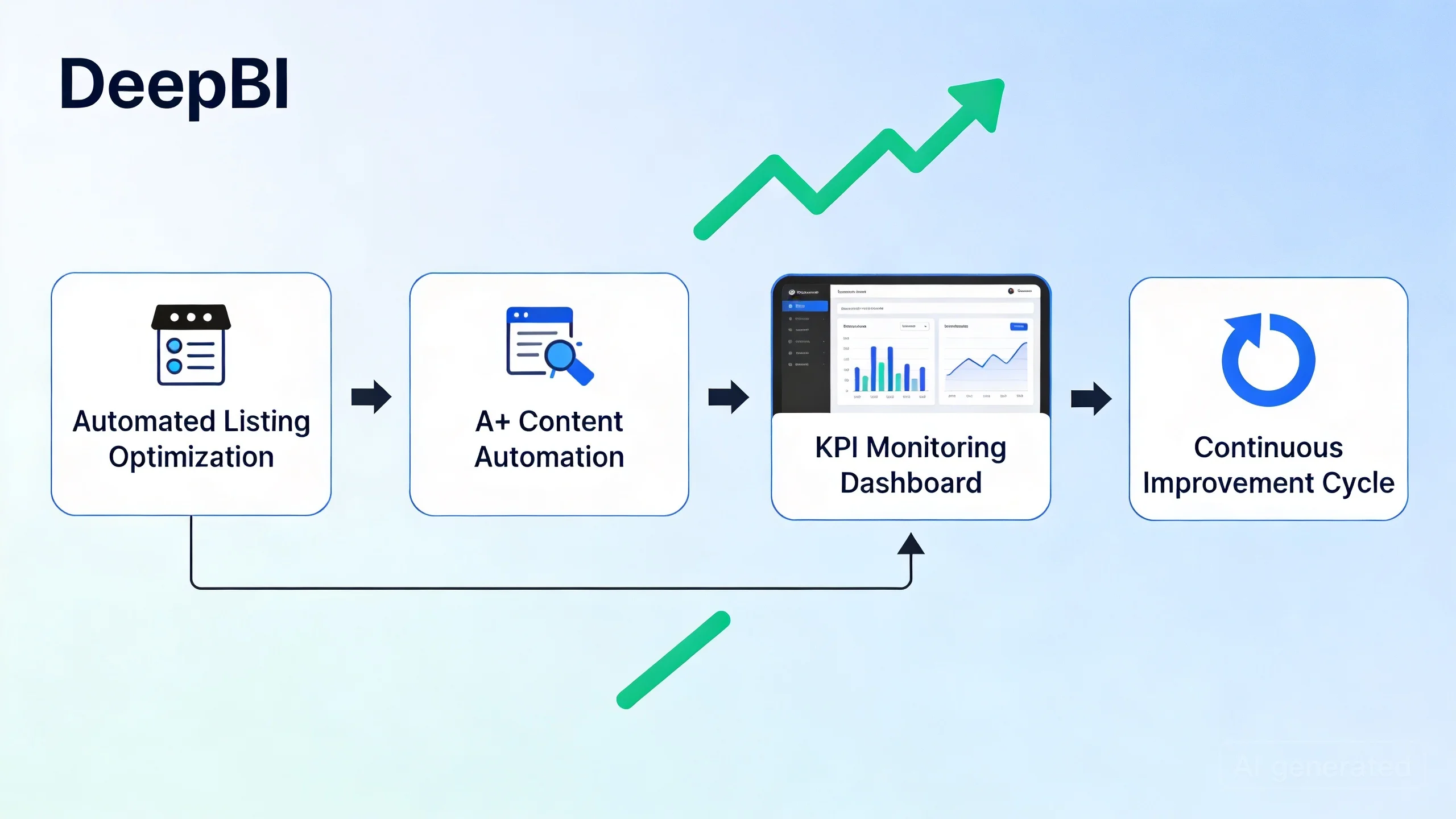
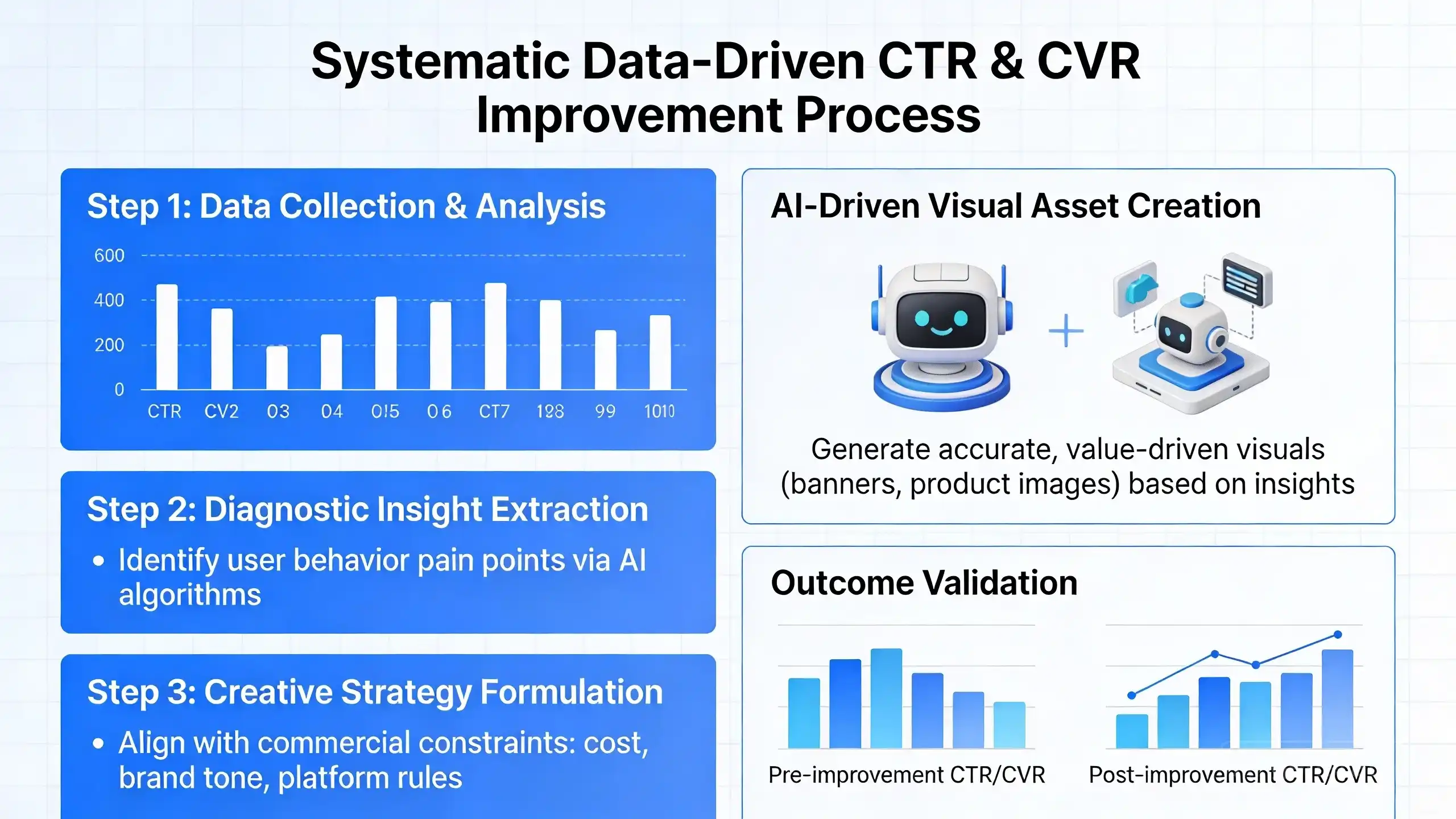
Moving beyond subjective guesswork and manual adjustments is the key to scaling on Amazon. DeepBI provides a comprehensive, AI-powered system designed to standardize and accelerate your entire listing optimization workflow. It transforms reactive, intuition-based decisions into a proactive, data-driven strategy, systematically improving the core metrics that drive sales. By integrating diagnostics, content generation, and implementation, DeepBI creates a repeatable process for enhancing visibility and conversion.
Data-Driven Diagnostics and Competitive Benchmarking
Effective optimization begins with an accurate diagnosis. DeepBI’s intelligent scoring system analyzes every element of your listing—from titles and bullet points to images and A+ Content. It benchmarks your ASINs against top-performing competitors and Amazon's algorithmic best practices, providing a clear, quantitative report on specific weaknesses and opportunities. This data-first approach eliminates ambiguity, allowing you to focus your efforts precisely where they will have the greatest impact on your Best Seller Rank (BSR).
AI-Generated Content and Visuals for High Conversion
Once opportunities are identified, DeepBI leverages its advanced AI to generate high-performance listing content. The system crafts compelling titles, benefit-driven bullet points, and keyword-rich descriptions tailored to attract and convert your target audience, all while adhering to Amazon's strict character limits and style guidelines. This ensures your messaging is not only compliant but also engineered to maximize Click-Through Rate (CTR) from search results and Conversion Rate (CVR) on the product detail page.
Streamlined Implementation with One-Click Publishing
Closing the gap between strategy and execution is critical. DeepBI streamlines the final step with direct integration into the Amazon backend. After reviewing and approving the AI-generated optimizations, you can publish the changes to your listings with a single click. This dramatically reduces the manual labor and potential for error associated with updating content, shortening the listing optimization cycle and allowing your team to implement data-backed improvements faster than the competition.
五、Measuring Success and Continuous Improvement
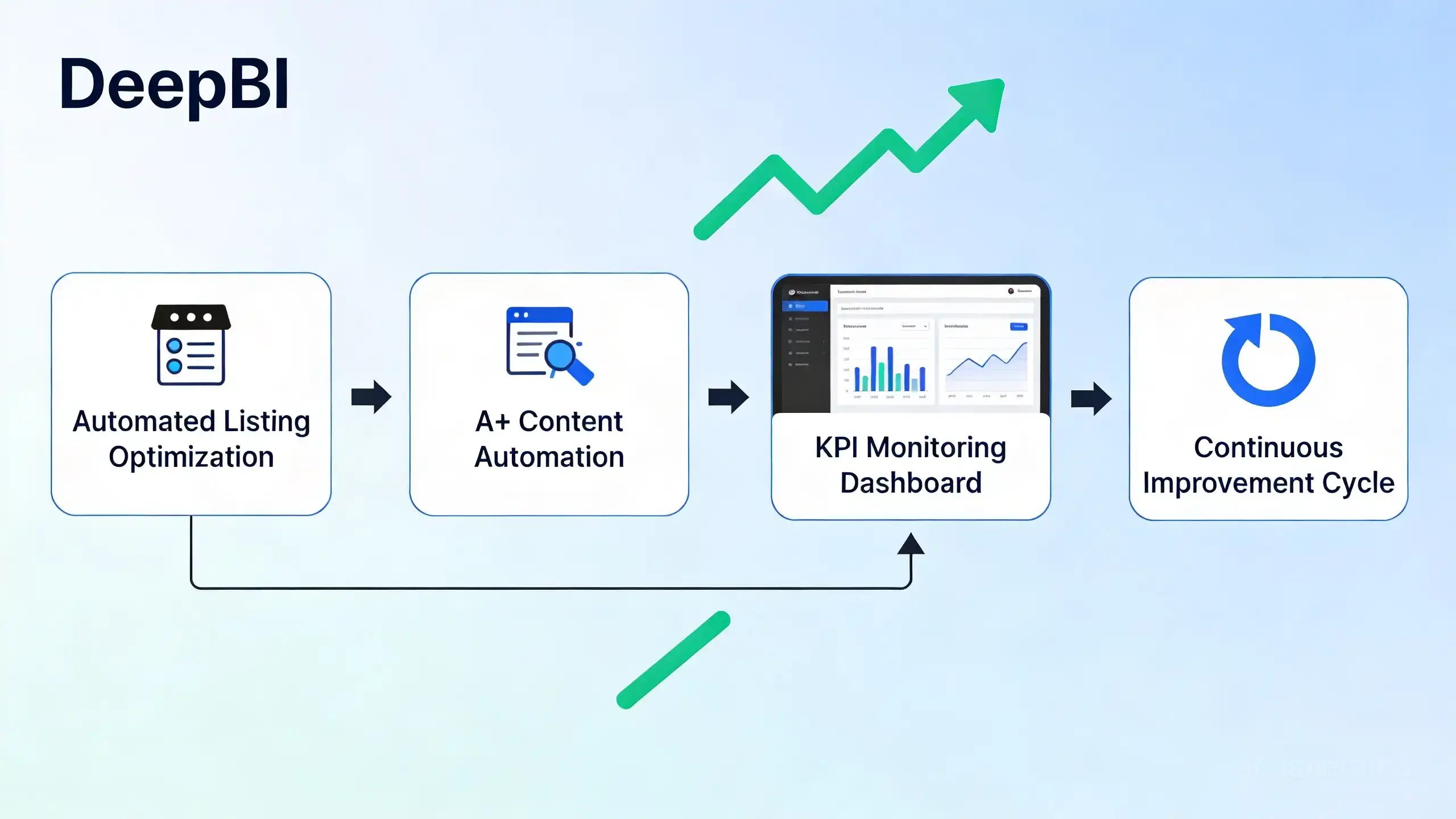
Optimizing your Amazon listing is not a one-time task but a dynamic process. To truly capitalize on your efforts, you must track performance accurately and commit to a cycle of continuous improvement. This approach turns guesswork into a data-driven growth strategy.
Key Metrics for Tracking Listing Performance
While Click-Through Rate (CTR) is a vital indicator of your main image's initial appeal, it's only part of the story. A comprehensive performance analysis includes several other key metrics:
- Conversion Rate (CVR): This measures the percentage of visitors who purchase after clicking. A high CTR paired with a low CVR may indicate your main image is attracting the wrong audience or that the rest of your listing fails to meet expectations.
- Sales Velocity & BSR: The ultimate proof of successful optimization is an increase in sales and a corresponding improvement in your Best Sellers Rank (BSR). These metrics reflect market acceptance and enhanced organic visibility.
- Advertising Cost of Sales (ACoS): For sponsored campaigns, ACoS is critical. If a new image boosts clicks but not conversions, your ACoS will rise, eroding profitability. Effective optimization should improve or maintain ACoS efficiency.
Iterative Optimization: A Cycle of Analyze, Optimize, and Deploy
The most successful sellers treat optimization as a continuous loop. This iterative process allows you to move away from "blind trial and error" and instead build a "data evidence chain" that validates each strategic decision. The cycle is simple but powerful:
- Analyze: Regularly review the key performance metrics above to identify bottlenecks and opportunities. Is your CTR lagging, or is CVR the primary issue?
- Optimize: Based on your analysis, form a clear hypothesis and implement a targeted change. This could be A/B testing a new main image, refining bullet points, or adjusting your A+ Content.
- Deploy & Measure: Launch your changes and closely monitor the impact on your KPIs. Let the data confirm whether your hypothesis was correct, then use these new insights to inform the next round of analysis.
六、Conclusion: Elevate Your Amazon Presence with Strategic Optimization
In today's hyper-competitive Amazon marketplace, success is no longer guaranteed by a great product alone. It is won or lost on the digital shelf, where your main image and listing content are the critical drivers of both click-through rates (CTR) and conversion rates (CVR). Relying on subjective aesthetics or generic AI tools is a gamble that few sellers can afford, often leading to stagnant performance and rising ad costs.
The path to sustained growth lies in shifting from guesswork to a data-driven strategy. By leveraging a platform like DeepBI, you can translate high-performing advertising data and search terms directly into optimized visual and textual content. This approach replaces ambiguous feedback with precise, actionable directives, ensuring your listing resonates with customer intent. Adopting this continuous optimization mindset transforms your product pages from static assets into powerful conversion engines. This creates a virtuous cycle: a better listing attracts more precise traffic, leading to healthier, long-term growth and a stronger competitive advantage on Amazon.