

The Imperative of Amazon Listing Optimization
Why Every Detail Matters: Impact on CTR, CVR, and Sales Velocity
On Amazon, your product listing is your digital salesperson, working 24/7. Every component—from the title and main image to the bullet points and A+ Content—directly influences critical performance metrics. A keyword-rich title and a compelling primary image are essential for boosting your Click-Through Rate (CTR) in crowded search results. Once a shopper clicks, the quality of your copy and visuals determines the Conversion Rate (CVR). High CTR and CVR combine to accelerate sales velocity, a key factor in improving your Best Sellers Rank (BSR) and organic visibility. Neglecting any of these details means leaving money on the table and losing ground to competitors.
The DeepBI Advantage: AI-Powered Optimization for Amazon Sellers
DeepBI replaces subjective guesswork with data-driven precision. Instead of offering vague advice like "make images look more premium," our AI generates specific, executable commands detailing composition, camera angles, and lighting. We transform dry specifications like "10000mAh" into compelling value propositions that address customer pain points, such as "Ultimate Efficiency with a 10000mAh Power Core to end your travel power anxiety." Our system analyzes detail pages in logical modules, ensuring each section is optimized to match user browsing behavior. Crucially, DeepBI enforces a strict "product entity consistency" rule, preventing AI-generated visuals from misrepresenting the product's material or design. This protects you from devastating "item not as described" reviews, safeguarding your brand's reputation and bottom line.
Deconstructing the Amazon Listing: Key Elements for Success
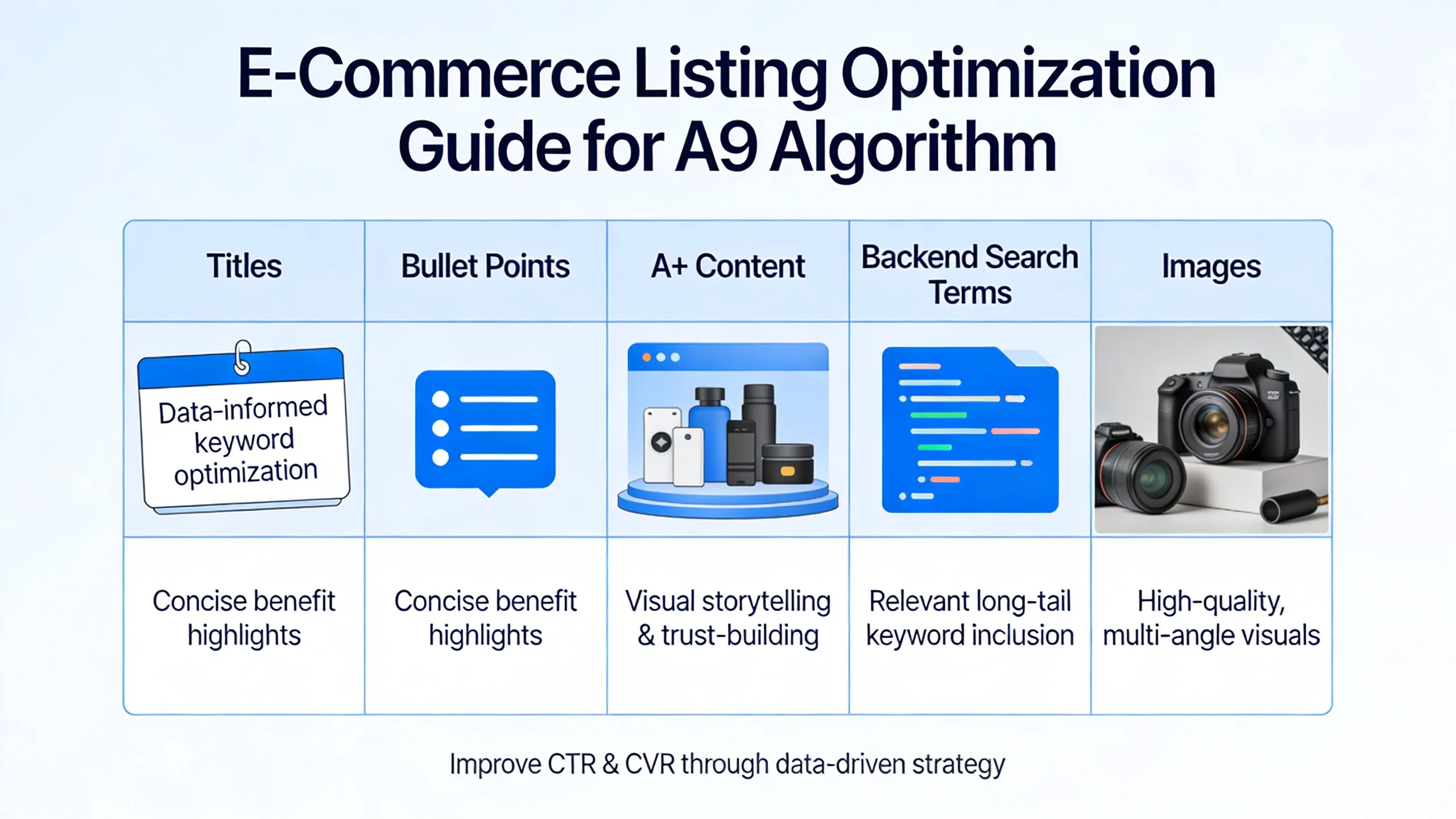
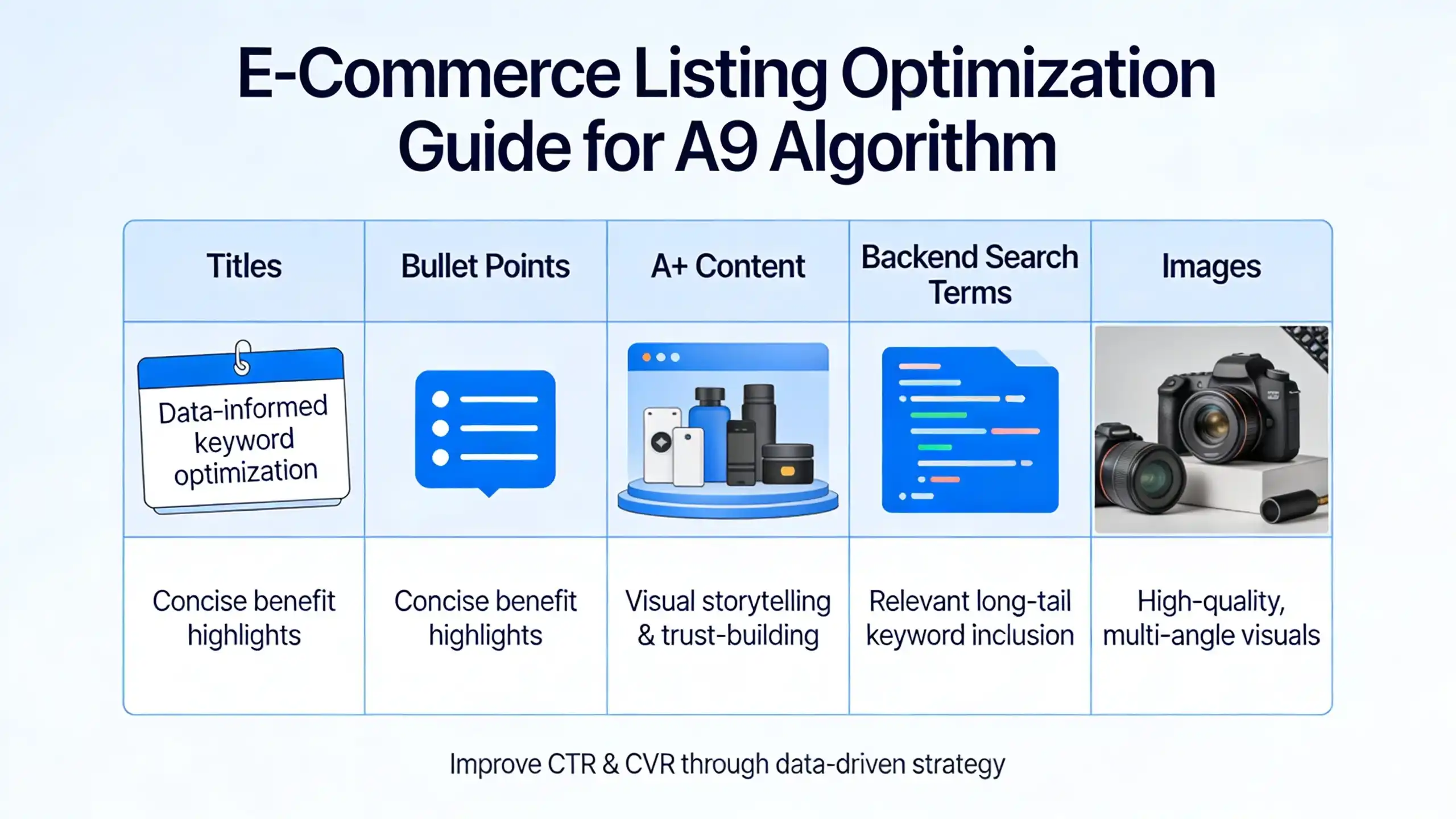
A high-performing Amazon listing operates like a finely tuned engine, where every component must work in concert to attract, engage, and convert shoppers. Systematically optimizing these elements is the key to shifting from guesswork to a data-informed strategy that measurably improves key metrics like Click-Through Rate (CTR) and Conversion Rate (CVR).
Crafting Compelling Product Titles: SEO and User Experience
Your product title is the most critical element for search visibility. An optimal title balances high-volume keywords for Amazon's A9 algorithm with clear, benefit-driven language for human shoppers. A data-led approach involves identifying and embedding high-converting search terms directly into the title, ensuring you attract the most qualified traffic and maximize your CTR from the search results page.
Maximizing Bullet Points: Highlighting Features and Benefits
The five bullet points serve as your primary sales pitch. Instead of merely listing technical specifications, translate them into tangible customer benefits. Each bullet should address a potential pain point or desire, clearly explaining how your product provides the solution. This section is crucial for building purchase confidence and directly impacts your page's CVR by answering key questions before they are asked.
Elevating with A+ Content: Visual Storytelling and Brand Building
A+ Content transforms your product page from a simple listing into an immersive brand experience. Use this space for visual storytelling, showcasing your product in various use cases, highlighting unique technology, and reinforcing your brand's value proposition. High-quality infographics, comparison charts, and lifestyle images can significantly increase engagement and CVR by building the trust needed to secure a sale.
Beyond the Visible: Backend Search Terms and Image Strategy
Two of the most powerful optimization levers are not immediately visible to customers: backend search terms and the image stack. Backend terms allow you to target long-tail keywords, synonyms, and common misspellings without cluttering your public-facing content. Meanwhile, a strategic set of images—including infographics, lifestyle shots, and feature callouts—visually validates your claims, reduces uncertainty, and guides the customer toward making a purchase.
DeepBI's Optimization Workflow: From Diagnosis to Deployment
DeepBI transforms listing optimization from a series of disconnected tasks into a cohesive, data-driven workflow. The platform is designed to systematically identify weaknesses, generate high-converting assets, and deploy them with maximum efficiency, closing the loop between insight and tangible impact on metrics like CVR and Best Sellers Rank (BSR).
Intelligent Scoring and Competitor Benchmarking
The process begins by overcoming the common pitfall of "survivor bias," where sellers mistakenly benchmark only against top competitors, leading to misaligned strategies. DeepBI first establishes a relevant competitive set and provides an objective listing quality score. This analytical baseline ensures that your optimization efforts are grounded in a realistic market context, targeting the right performance gaps from the outset.
Multi-Dimensional Diagnostics: Pinpointing Weaknesses
With a clear benchmark established, DeepBI conducts a comprehensive diagnostic analysis across every critical element of your listing—from the title and bullet points to the main images and A+ Content. The system moves beyond a simple overall score to pinpoint the specific components that are underperforming, thereby identifying the root causes of a low Click-Through Rate (CTR) or conversion friction.
AI-Powered Content Generation: Text and Visuals
Once weaknesses are diagnosed, DeepBI's AI engine generates optimized content. Unlike generic AI tools that can produce inaccurate "hallucinations" or subjective human designs that may look good but fail to sell, DeepBI operates on "Visual Logic Reasoning." It translates abstract business goals into precise, executable instructions for its AI, ensuring the generated text and images are strategically aligned, product-accurate, and engineered to drive conversions.
Seamless Integration: One-Click Application with DeepBI
The final step eliminates the friction of manual updates. Instead of a tedious process of downloading, renaming, and uploading assets, DeepBI's "One-Click Apply" feature uses Amazon's official SP-API to sync optimized content directly to your listing's backend. This automated delivery engine ensures that high-impact changes are deployed in milliseconds, preventing operational errors and minimizing the time from diagnosis to live optimization.
Measuring Success and Continuous Improvement
Optimizing an Amazon listing is not a one-time task but a continuous cycle of testing, measuring, and refining. An analytical framework is essential for transforming this process from an intuitive exercise into a strategic growth engine. By focusing on the right metrics and adopting an agile approach, sellers can consistently enhance visibility and conversion rates.
Key Metrics for Listing Performance
Effective listing optimization begins with clear, measurable goals. Every element of your product detail page—from the main image to the A+ content—should be viewed not as a simple aesthetic display but as a commercial asset designed to drive specific outcomes. To measure the impact of your efforts, focus on these critical Amazon KPIs:
- Click-Through Rate (CTR): This measures the effectiveness of your main image and title in capturing shopper attention in search results.
- Conversion Rate (CVR): This indicates how well your listing content (images, bullet points, description) persuades visitors to make a purchase.
- Sessions and Page Views: Tracking traffic helps you understand the visibility your listing is achieving.
- Best Seller Rank (BSR): A key indicator of your product's sales velocity compared to others in its category.
Iterative Optimization: Adapting to Market Dynamics
The Amazon marketplace is constantly changing. To stay ahead, sellers must move from unstructured trial-and-error to a methodical process built on a chain of evidence. This approach treats each change as a hypothesis to be tested against key performance metrics. For example, when optimizing a title within Amazon's strict character limits, data should guide which keywords will have the most impact on CTR.
This iterative cycle allows you to adapt to competitor strategies and shifting consumer behavior. Furthermore, leveraging the right tools can dramatically accelerate the process. By reducing the time it takes to implement changes—from over 30 minutes manually to mere seconds—you can increase the frequency and precision of your optimizations, creating a powerful feedback loop for sustained growth.
Conclusion: Future-Proofing Your Amazon Strategy with DeepBI
The Amazon marketplace demands more than intuition; it requires a strategic, data-informed approach to achieve and maintain visibility. Relying on manual optimization or generic AI tools often leads to inconsistent results and missed opportunities, negatively impacting key metrics from CTR to CVR. The path to sustained success lies in leveraging a system that is both intelligent and deeply integrated with the realities of e-commerce.
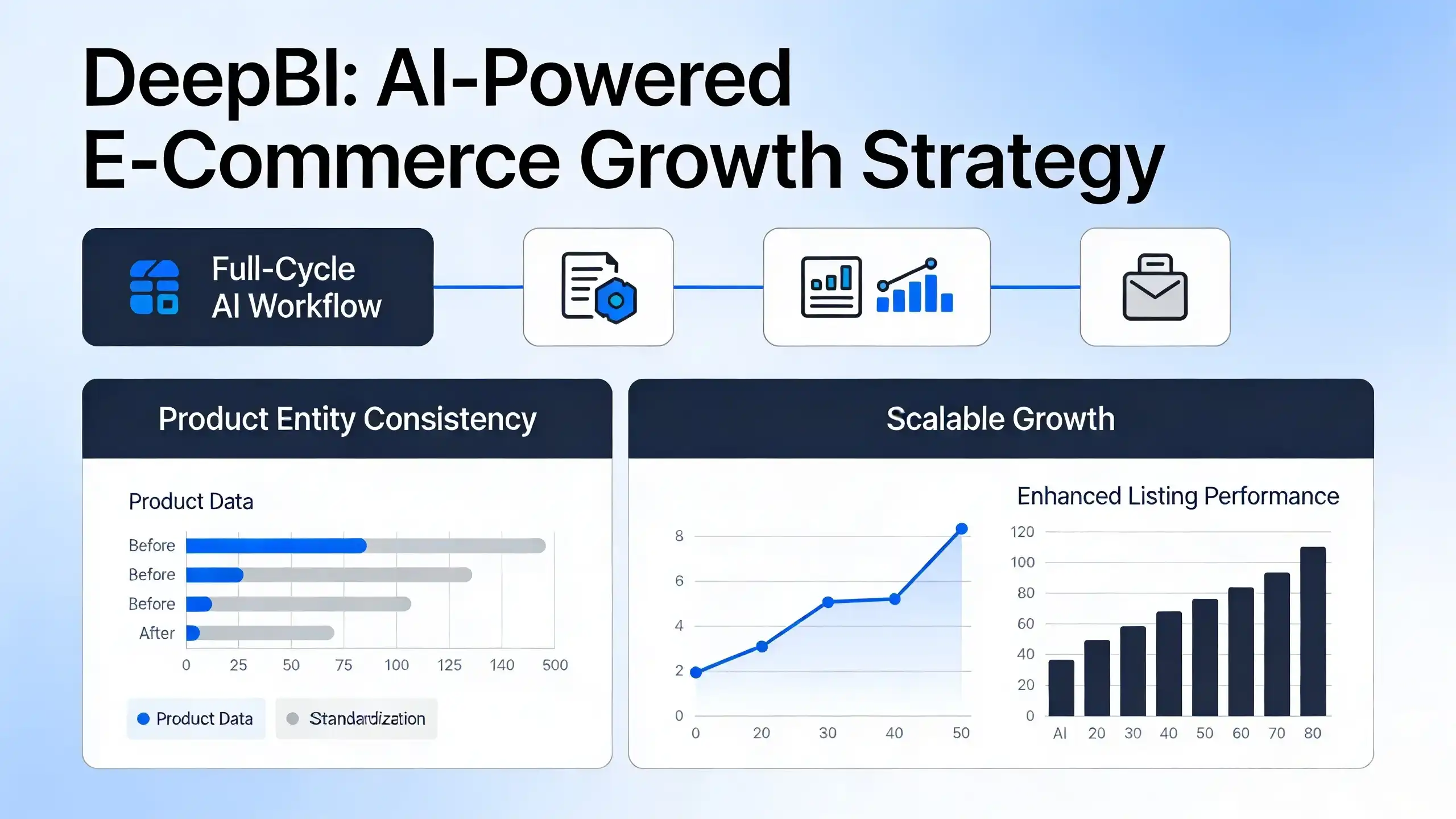
DeepBI provides this strategic advantage by implementing a full-cycle, evidence-based workflow. It moves beyond simple content generation to offer AI-powered diagnostics, dynamic competitor benchmarking, and seamless one-click deployment. Crucially, DeepBI’s system enforces "product entity consistency," ensuring all AI-generated visuals remain true to your product, thereby preventing costly returns and brand-damaging reviews. This disciplined, AI-assisted process not only accelerates your listing optimization cycle but also builds a reliable foundation for scalable growth. By systematically enhancing every listing element, you can consistently improve performance and secure a lasting competitive edge.