Introduction
The Amazon marketplace offers an unparalleled growth channel for apparel brands, but it is also one of the world's most competitive digital retail environments. For every successful clothing line, countless others struggle for visibility, buried deep within search results. In a category driven by style, fit, and visual appeal, simply listing a product is insufficient. Without a meticulously optimized product detail page, even the highest-quality apparel will fail to capture shopper attention, leading to low traffic, poor conversion rates, and a diminished return on advertising spend.
Success on Amazon demands a strategic shift in perspective. Brands must evolve from treating their listings as simple product catalogs to viewing them as powerful, data-driven sales instruments. Every component—from the title and bullet points to backend keywords and A+ Content—must work in concert to attract, engage, and convert customers. This holistic approach to optimization is the key to breaking through the competitive noise and securing a defensible market position.
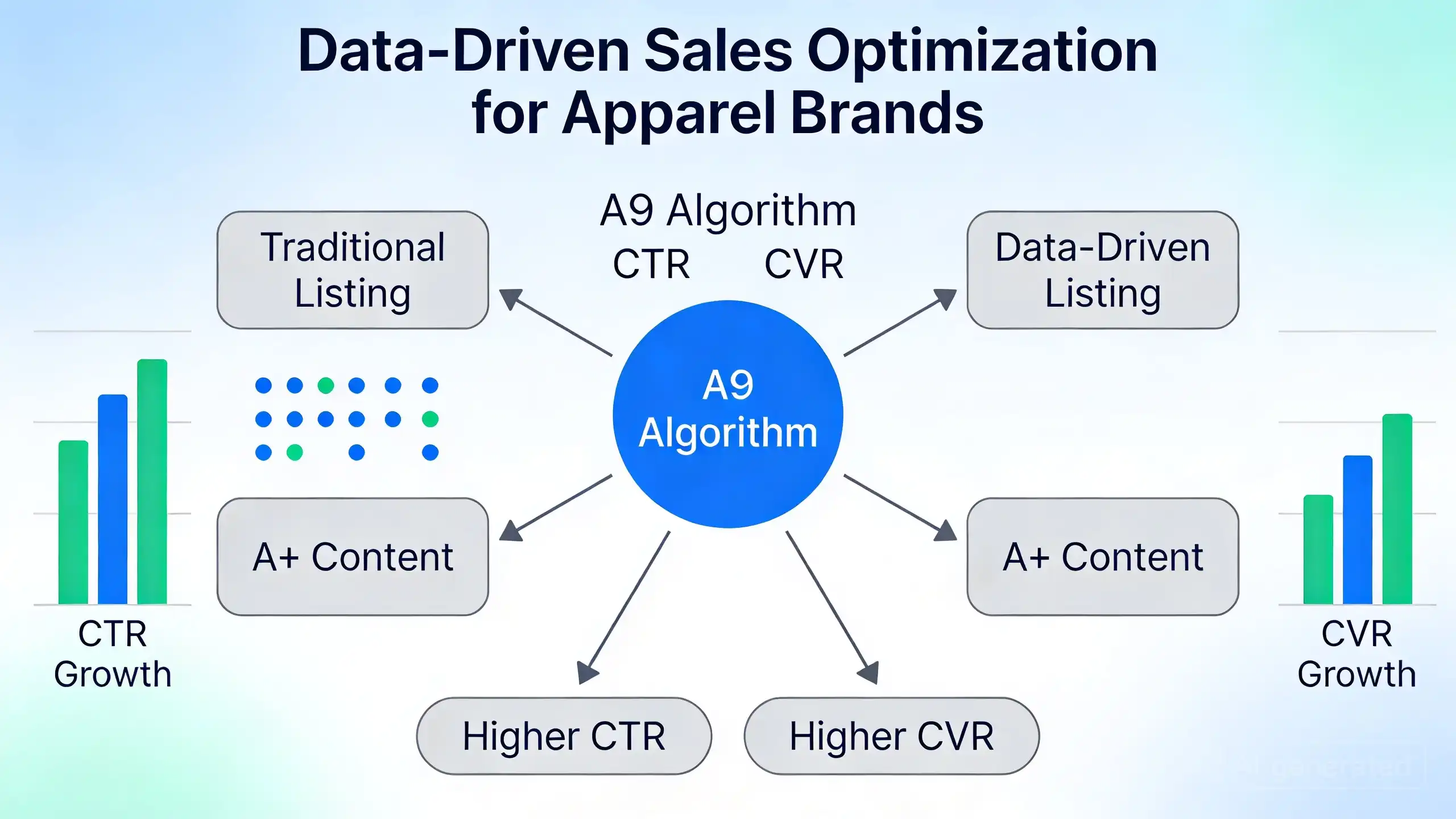
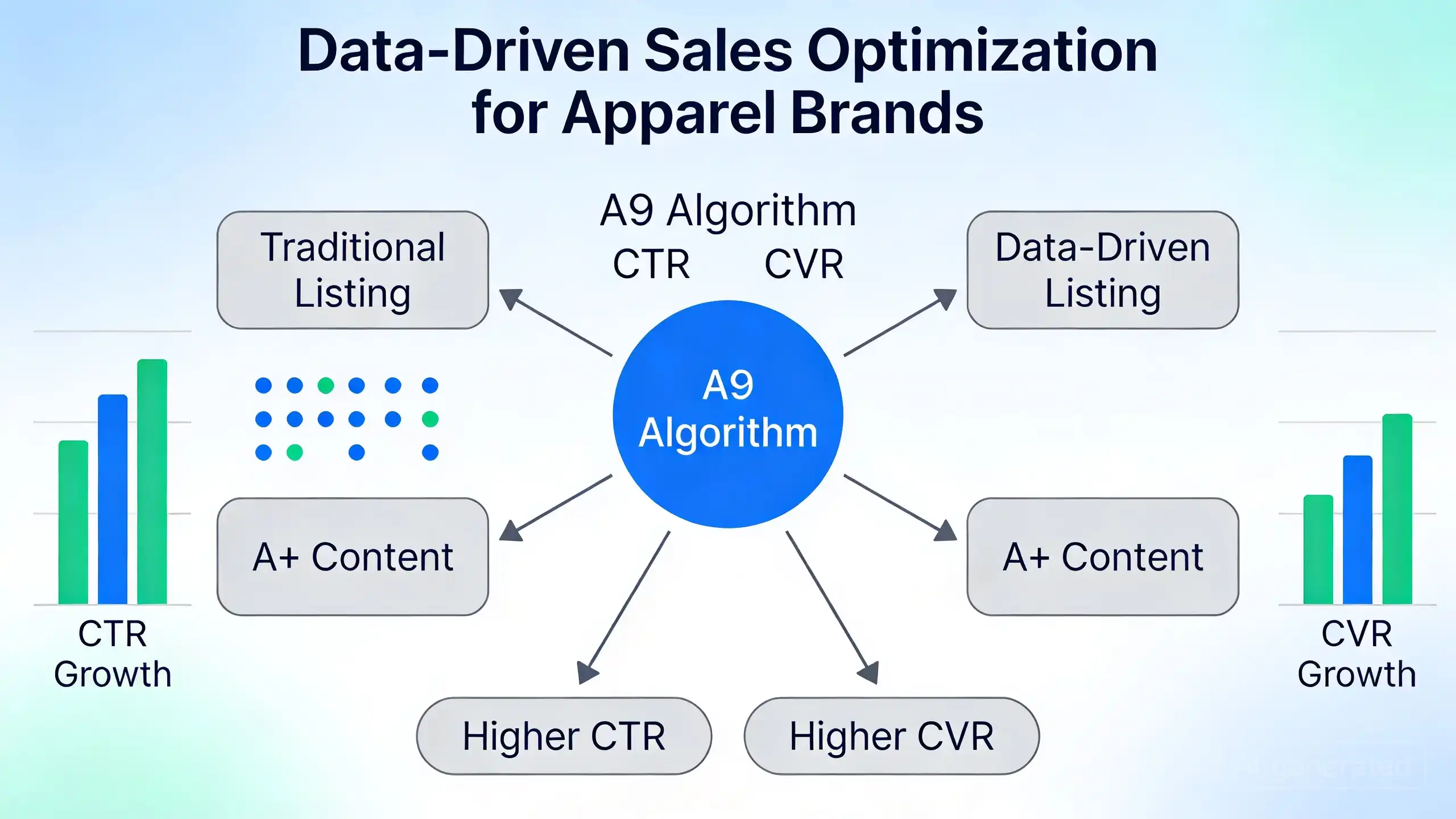
This guide provides a comprehensive framework for transforming your apparel listings. We will deconstruct each element of the product detail page, offering actionable strategies grounded in Amazon's A9 algorithm and modern e-commerce principles. The objective is to elevate every listing asset, particularly visual content, from a mere aesthetic display into a core commercial engine that actively drives higher click-through rates (CTR) and conversion rates (CVR), ultimately fueling sustainable growth on the platform.
 Why Apparel Listing Optimization is Crucial on Amazon
In the highly competitive Amazon apparel marketplace, your product listing serves as your digital storefront, showroom, and fitting room. Unlike other categories, fashion purchases are deeply visual and sensory. Customers cannot touch the fabric, see the true color in person, or try an item on for fit. This gap between the online experience and the physical product places immense pressure on your listing to communicate value, build trust, and secure sales.
Effective listing optimization is the primary method for bridging this experiential gap. It involves more than just uploading images and writing a description; it is about strategically presenting your product to enhance both brand perception and performance. A well-optimized listing with high-quality, accurate visuals and detailed information on sizing, fit, and materials directly impacts key Amazon metrics. It improves your product's visibility in search, leading to a higher click-through rate (CTR). Once a shopper lands on your page, compelling content and precise details build confidence, significantly boosting your conversion rate (CVR).
Conversely, a poorly managed listing can be detrimental to your brand. Inaccurate visuals or descriptions that misrepresent an item's color, material, or design can lead to customer dissatisfaction, negative reviews, and high return rates. These outcomes not only depress sales but also damage your brand's reputation and search ranking over time. Therefore, mastering listing optimization is not merely a best practice—it is a fundamental requirement for survival and growth in the Amazon apparel space.
 Understanding the Pillars of an Optimized Apparel Listing
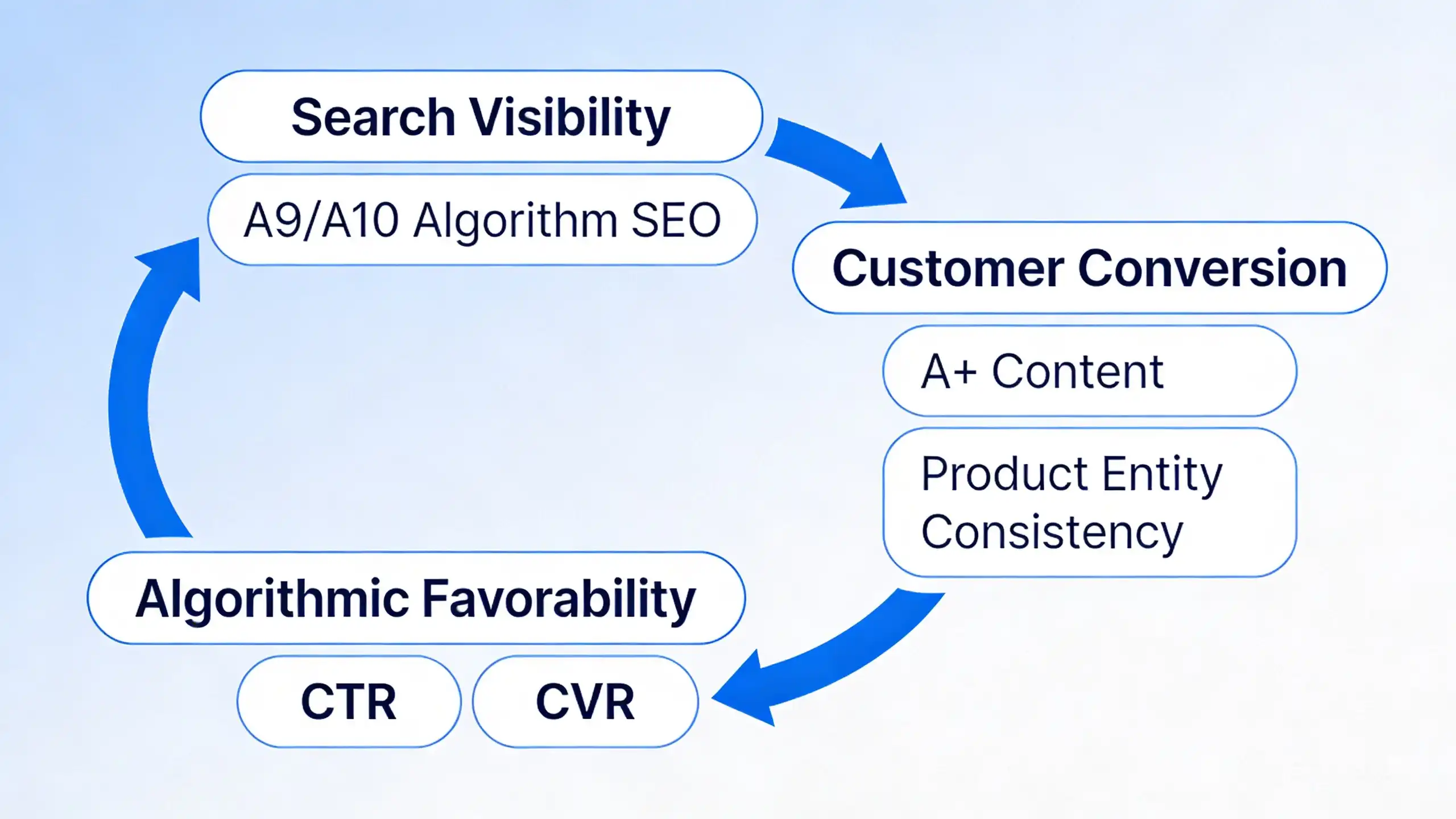
A high-performing apparel listing on Amazon is built upon three interconnected pillars: search visibility, customer conversion, and algorithmic favorability. Achieving success requires mastering all three, as they operate in a continuous feedback loop to drive your product's ranking and sales velocity.
First, customers must be able to find your product. This is achieved through search engine optimization (SEO) tailored for Amazon's A9/A10 algorithm. Shoppers use specific keywords to search for clothing, and your listing's title, bullet points, and backend search terms must align precisely with this search intent to appear in the results.
Once a shopper clicks on your listing, the focus shifts entirely to conversion. At this stage, compelling visuals, informative product descriptions, A+ Content, and positive customer reviews become critical. However, the pursuit of attractive imagery introduces a significant risk: "image-product mismatch." Any visual optimization that alters the product's true material, color, or design can mislead customers, inevitably leading to negative reviews and returns. Therefore, the highest principle of optimization is "product entity consistency." Authenticity in your presentation is non-negotiable, as it directly protects your conversion rate and brand reputation.
Finally, Amazon's algorithm rewards listings that deliver an excellent customer experience. It tracks metrics such as Click-Through Rate (CTR), Conversion Rate (CVR), and customer reviews. A listing that converts well and satisfies customers will be ranked higher, generating more visibility and creating a powerful, self-reinforcing growth cycle.
 Deep Dive into Key Optimization Areas for Apparel
Keyword Research and Integration for Fashion Products
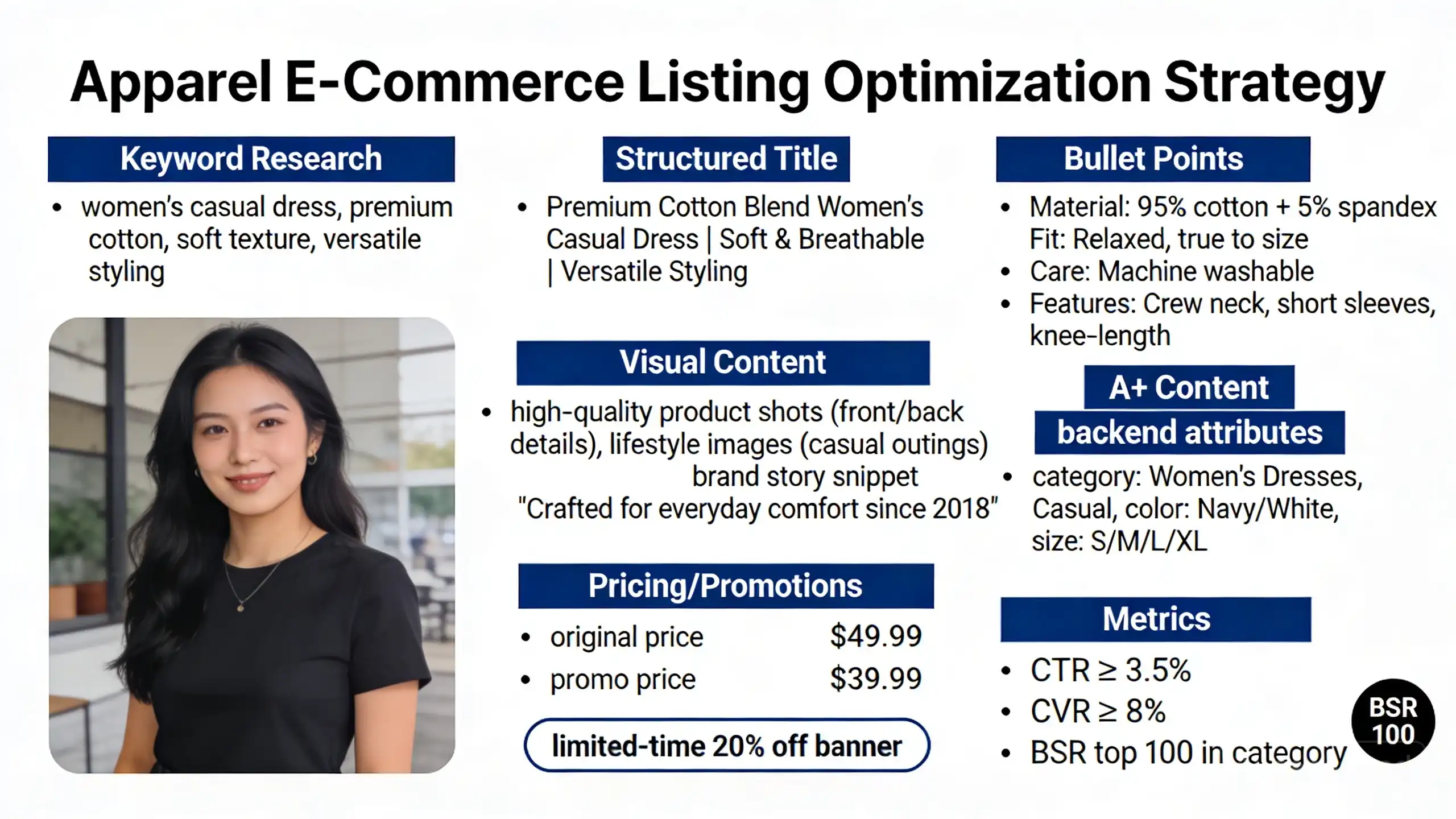
Effective keyword strategy for apparel goes beyond generic terms. Focus on attributes unique to fashion: style (e.g., "bohemian maxi dress"), material ("100% linen shirt"), occasion ("cocktail party dress"), fit ("slim fit tapered jeans"), and specific color/size combinations. Incorporate long-tail keywords that capture high-intent searches. Utilize competitive analysis tools to identify high-performing keywords from rival listings. Strategically place these terms in your title, bullet points, and backend search term fields to maximize discoverability without keyword stuffing, ensuring you appear in the most relevant customer searches.
Crafting Compelling Titles and Bullet Points
Your title is the first point of contact. A powerful formula is: Brand + Product Type + Key Features (Material, Style, Gender). This structure informs both the customer and Amazon's algorithm instantly. Use the five bullet points to expand on key selling propositions. Dedicate each point to a specific benefit, such as fabric feel, care instructions, sizing guidance, unique design details, or ideal use cases. This scannable format allows shoppers to quickly absorb the most critical information, directly impacting their purchase decision and improving conversion rates (CVR).
Visual Content: The Heart of Apparel Listings
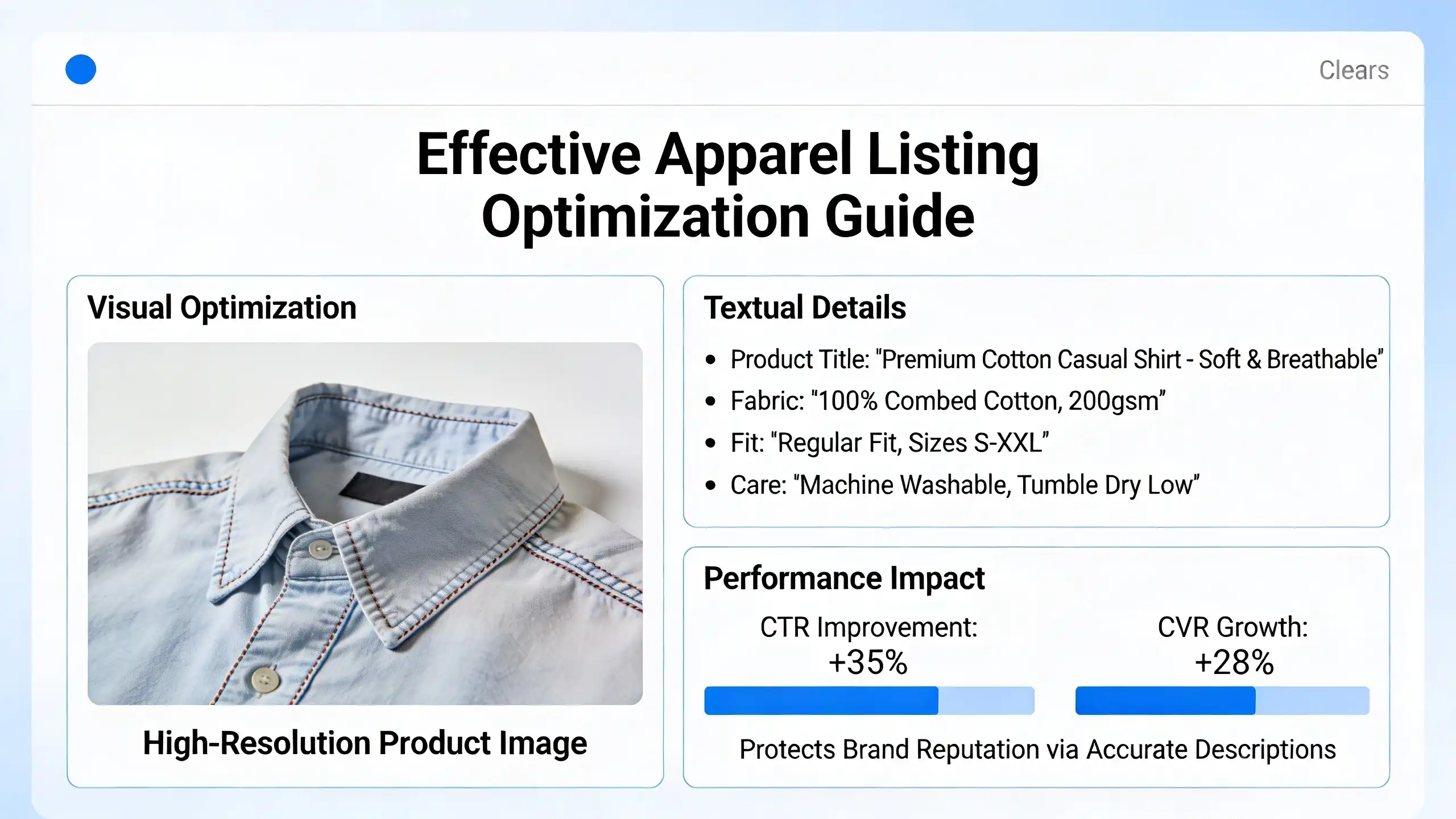
In fashion, visuals drive sales. Your gallery must include a professional, white-background main image, supplemented by lifestyle shots showing the garment in context. Infographics can effectively communicate features like fabric technology, while accurate size charts are non-negotiable for reducing returns. To elevate this further, leverage A+ Content for brand storytelling and detailed product showcases. However, using general AI for image creation risks "product-image mismatch," which can lead to negative reviews. Advanced systems mitigate this by creating a "Product DNA" map, ensuring every AI-generated visual is 100% authentic to the physical item, protecting brand reputation and post-sale satisfaction.
Product Description and Backend Attributes
The product description is your opportunity to address every potential customer question. Provide comprehensive details on fabric composition, fit and feel, specific measurements, washing instructions, and suitable occasions. This preemptively answers customer queries, building trust and reducing friction. Equally important are the backend attributes. Meticulously fill out all relevant fields, including subject matter, style keywords, and other item specifics. This feeds crucial data to Amazon's A9 algorithm, enhancing your product's filterability and discoverability in nuanced searches.
Pricing Strategy and Promotions
Your pricing must be competitive yet reflect the value of your product. Analyze competitor pricing for similar items, but factor in your brand positioning, material quality, and unique features. To stimulate sales velocity and improve Best Seller Rank (BSR), strategically deploy Amazon's promotional tools. Use coupons to increase click-through rates (CTR) from search results, run Lightning Deals for short-term sales spikes and increased visibility, and leverage Prime Exclusive Discounts to appeal to Amazon's most loyal customer base.
 Leveraging DeepBI for Apparel Listing Optimization
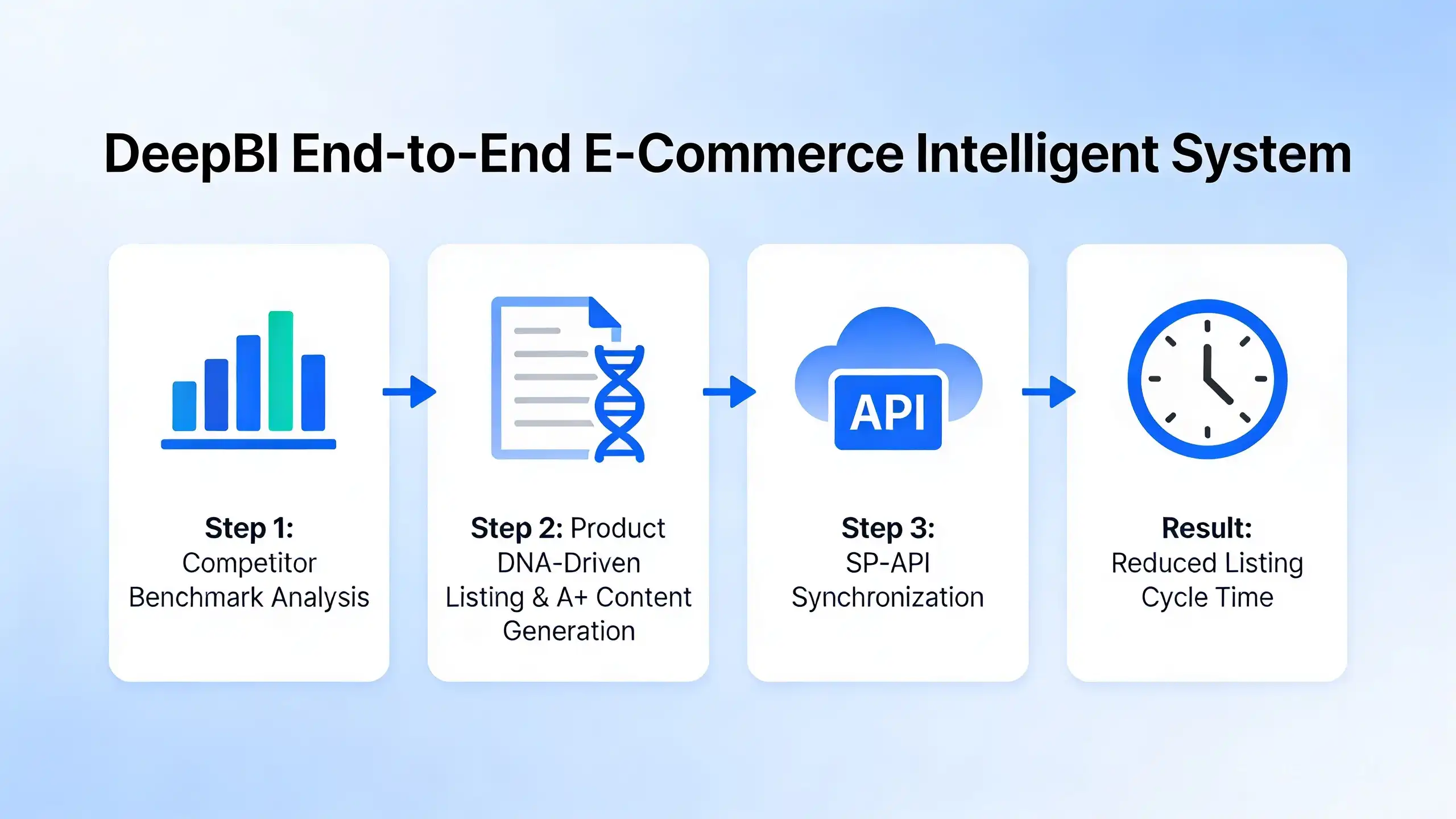
To compete effectively in the crowded apparel category, brands must move beyond subjective guesswork and adopt a data-driven optimization strategy. DeepBI provides an end-to-end intelligent system designed for Amazon. It begins by using distributed data crawling and multi-dimensional semantic alignment to identify top-performing competitors, establishing a clear benchmark for success. Your listing is then assigned a detailed, multi-dimensional score covering its main image, title, bullet points, A+ content, and user reviews. Note that review data, including volume and negative signals on the first page, serves as a crucial input for this diagnostic score, not as a tool for review automation.
Based on this analysis, DeepBI generates high-conversion assets. Unlike general-purpose AI tools prone to "hallucinations" that can cause product-image mismatches and lead to returns, DeepBI operates as a constrained production system. It constructs a detailed "Product DNA" graph for your item, using it as the ultimate constraint to ensure all AI-generated main images, detail shots, and A+ content remain authentic to the physical product. This data-driven approach also produces optimized titles and bullet points that are fully integrated with the visual strategy.
Finally, DeepBI closes the loop by eliminating deployment friction. The platform seamlessly synchronizes all optimized assets—from AI-generated images and A+ content to titles and bullet points—directly to your Amazon listing via the official SP-API. This one-click application transforms a manual upload process that could take 30 minutes into a task completed in seconds. This creates a closed-loop system from analysis to generation to launch, dramatically reducing your listing cycle time.
 Monitoring Performance and Iterative Optimization
Launching an optimized listing is not the final step but the beginning of a continuous improvement cycle. Without a systematic approach to performance tracking, brands operate without clear direction, unable to distinguish effective changes from ineffective ones. The principle is simple: without diagnosis, there can be no meaningful optimization. To achieve precision targeting, you must monitor a core set of metrics that reveal the health of your apparel listings.
Key performance indicators (KPIs) provide the necessary feedback for data-driven decisions. These include:
- Click-Through Rate (CTR): Measures the effectiveness of your main image and title in attracting shopper clicks from search results.
- Conversion Rate (CVR): Indicates how well your entire listing—from images and A+ Content to bullet points—persuades visitors to purchase.
- Sales Velocity & Best Seller Rank (BSR): Reflect your product's market momentum and competitive standing.
- Customer Reviews: Offer direct qualitative feedback on product quality, sizing accuracy, and overall satisfaction.
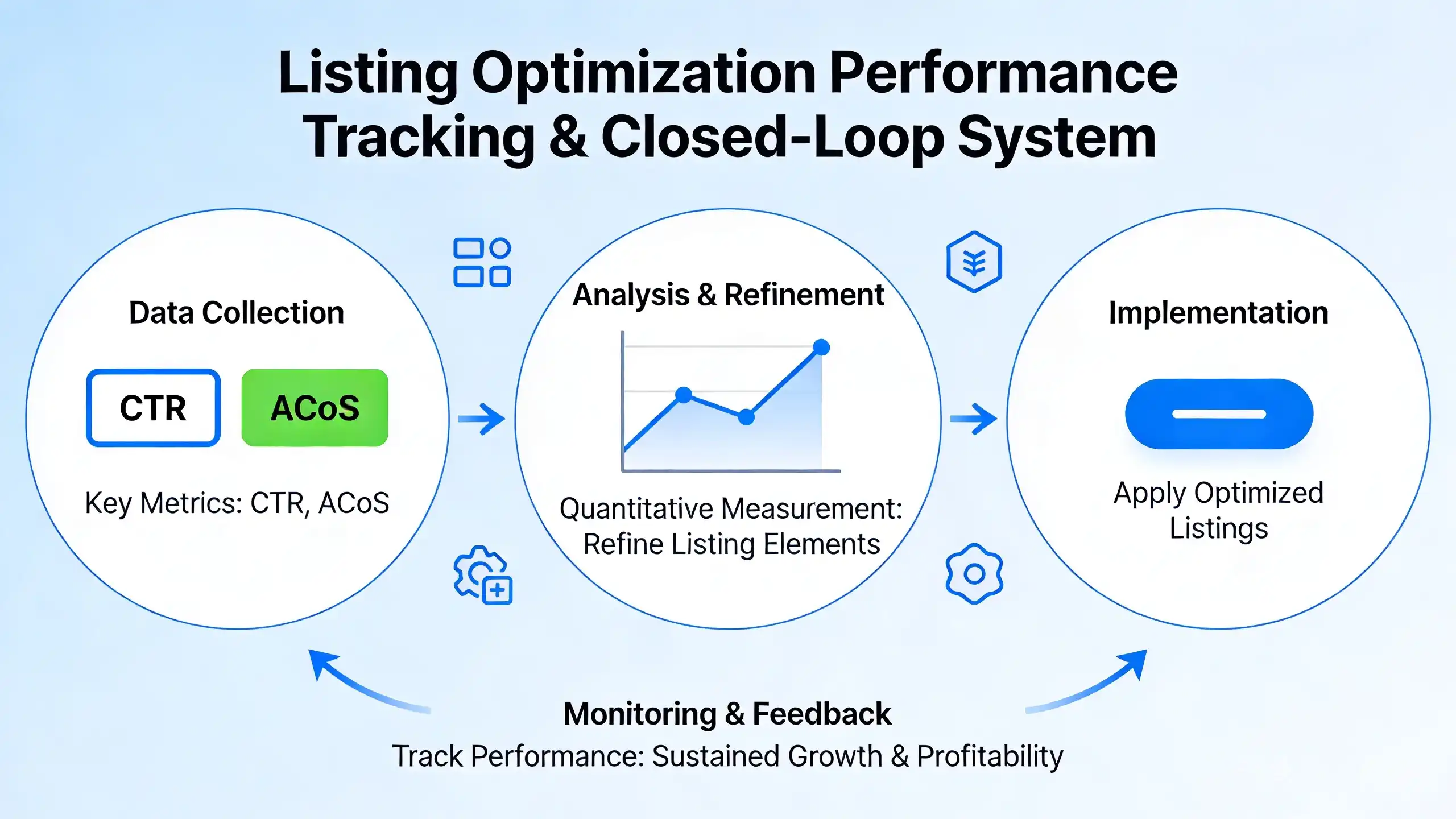
An effective strategy implements a closed-loop system that connects diagnosis with delivery. After publishing new content, it is crucial to mark an event point and track the subsequent impact on metrics like CTR and Advertising Cost of Sales (ACoS). This creates a powerful data feedback loop, allowing you to quantitatively measure the results of your efforts. By systematically testing, analyzing, and refining listing elements based on hard data, you can build a scalable process for sustained growth and improved profitability.