Introduction
The Amazon electronics category is one of the most saturated and competitive marketplaces in the world. For sellers, gaining visibility and capturing customer attention is a daily battle where fractions of a percentage point in performance can mean the difference between profit and loss. Many brands find themselves in a frustrating cycle: ad spend is high, but key metrics like Click-Through Rate (CTR) remain stubbornly below the category average, leading to poor conversions. This scenario often points not to a failing product or a flawed advertising strategy, but to a fundamental weakness in the product listing itself.
Your product's title and main image are the two most critical assets in this fight. They are the first, and sometimes only, impression you make on a potential buyer scrolling through a sea of similar options. These elements don't just describe your product; they are the primary drivers of customer engagement, directly influencing whether a shopper clicks to learn more. A compelling, strategically crafted title and a high-impact set of images can dramatically improve CTR, which in turn boosts your listing's relevance and ranking in Amazon's algorithm. This article provides a deep dive into optimizing these two foundational elements, moving beyond guesswork and aesthetic preference to a data-driven approach that elevates your listing from a simple digital placeholder to a core commercial engine designed to drive both clicks and conversions (CVR).
Understanding the Amazon Listing Ecosystem for Electronics
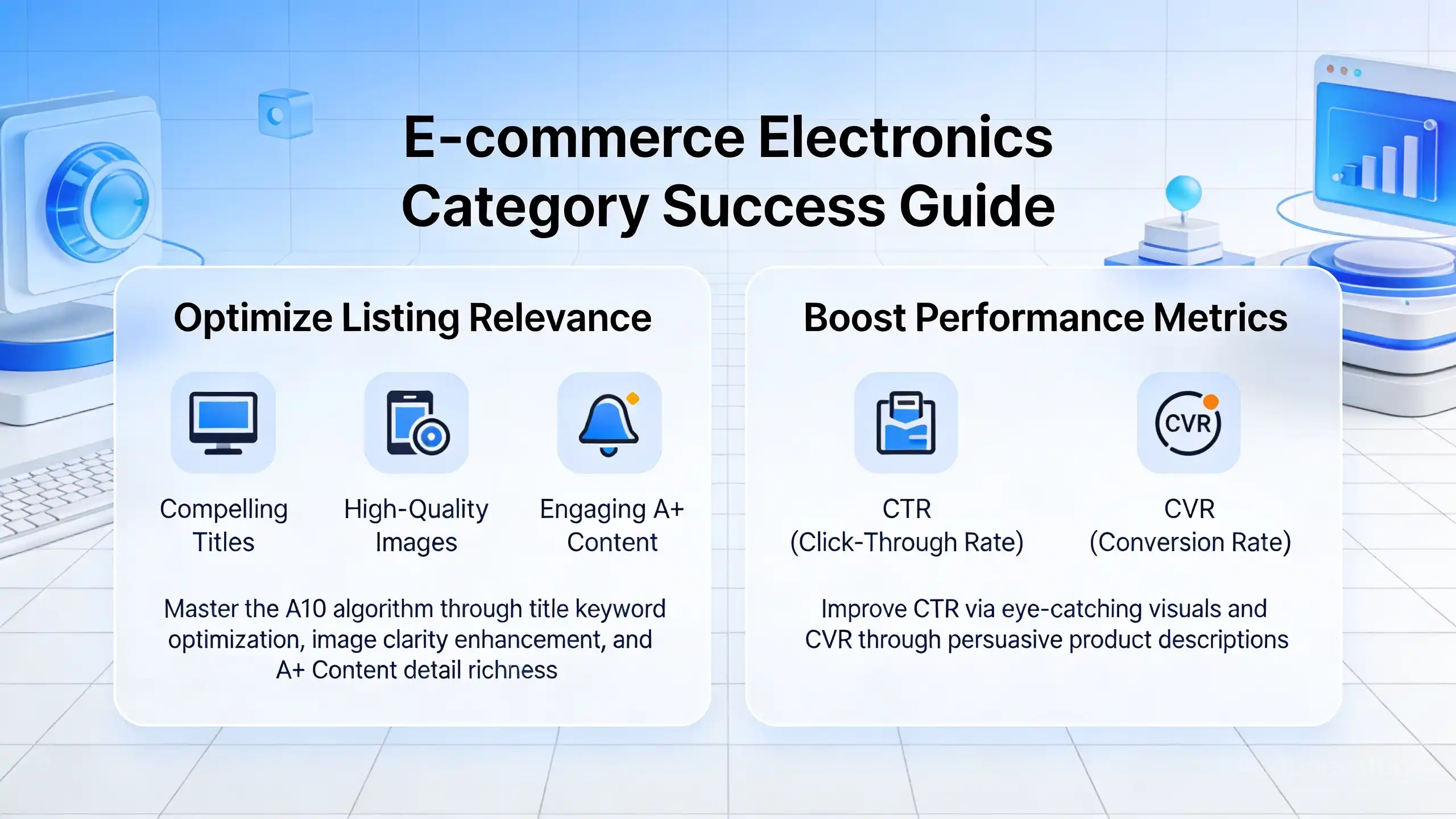
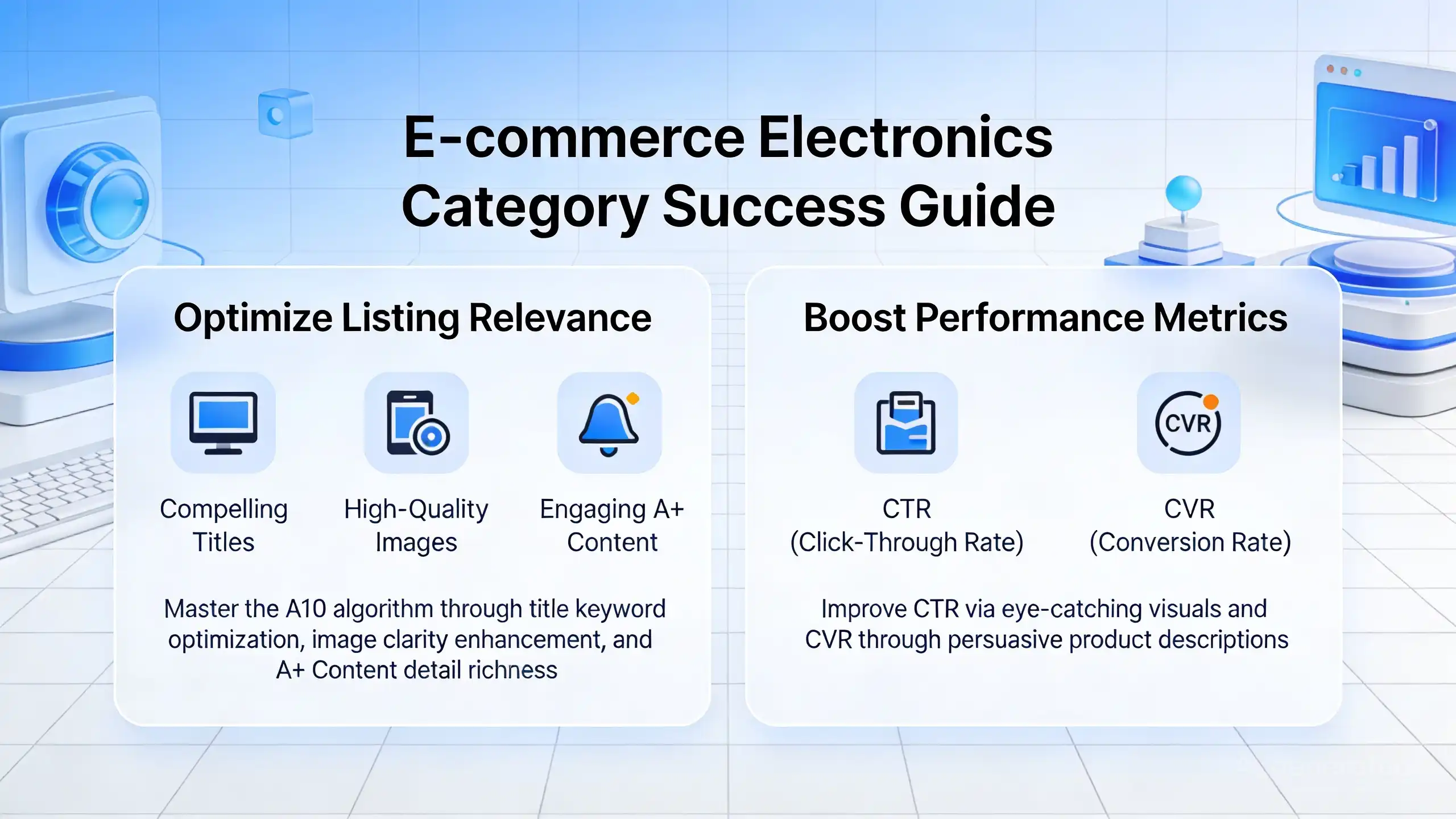
Success in the competitive electronics category on Amazon hinges on mastering its unique ecosystem, which is governed by the A9/A10 search algorithm. This algorithm functions as a two-stage filter, prioritizing listings based on both relevance and performance. First, it assesses relevance by matching the keywords in your product title and backend fields to a customer's search query. If your listing is deemed relevant, it enters the second stage.
Here, the algorithm evaluates performance signals to rank the relevant products. The most critical metrics are Click-Through Rate (CTR) and Conversion Rate (CVR). A high CTR indicates that your main image and title are compelling enough to attract clicks amidst a sea of competitors. A high CVR demonstrates that your entire listing—from detailed secondary images showcasing technical specifications to A+ Content—effectively persuades shoppers to purchase.
For electronic products, this dynamic is amplified. Rapid innovation cycles mean features must be communicated quickly and clearly. Complex technical details, such as connectivity options or battery capacity, are often better demonstrated visually than described in text. A listing that fails to visually and accurately represent the product risks not only poor performance metrics but also damaging negative reviews and returns due to a mismatch between customer expectation and reality. Therefore, optimizing titles and images is not just a marketing task; it is a fundamental requirement for driving visibility and sales velocity within Amazon's algorithm.
 Crafting High-Impact Titles for Electronic Product Listings
The product title is one of the most critical elements of your Amazon listing, serving a triple function: it informs the algorithm for search ranking, provides essential information to the shopper, and ultimately drives the click-through rate (CTR). A poorly constructed title fails on all three fronts, rendering your product invisible and unappealing.
The Anatomy of an Effective Electronic Product Title
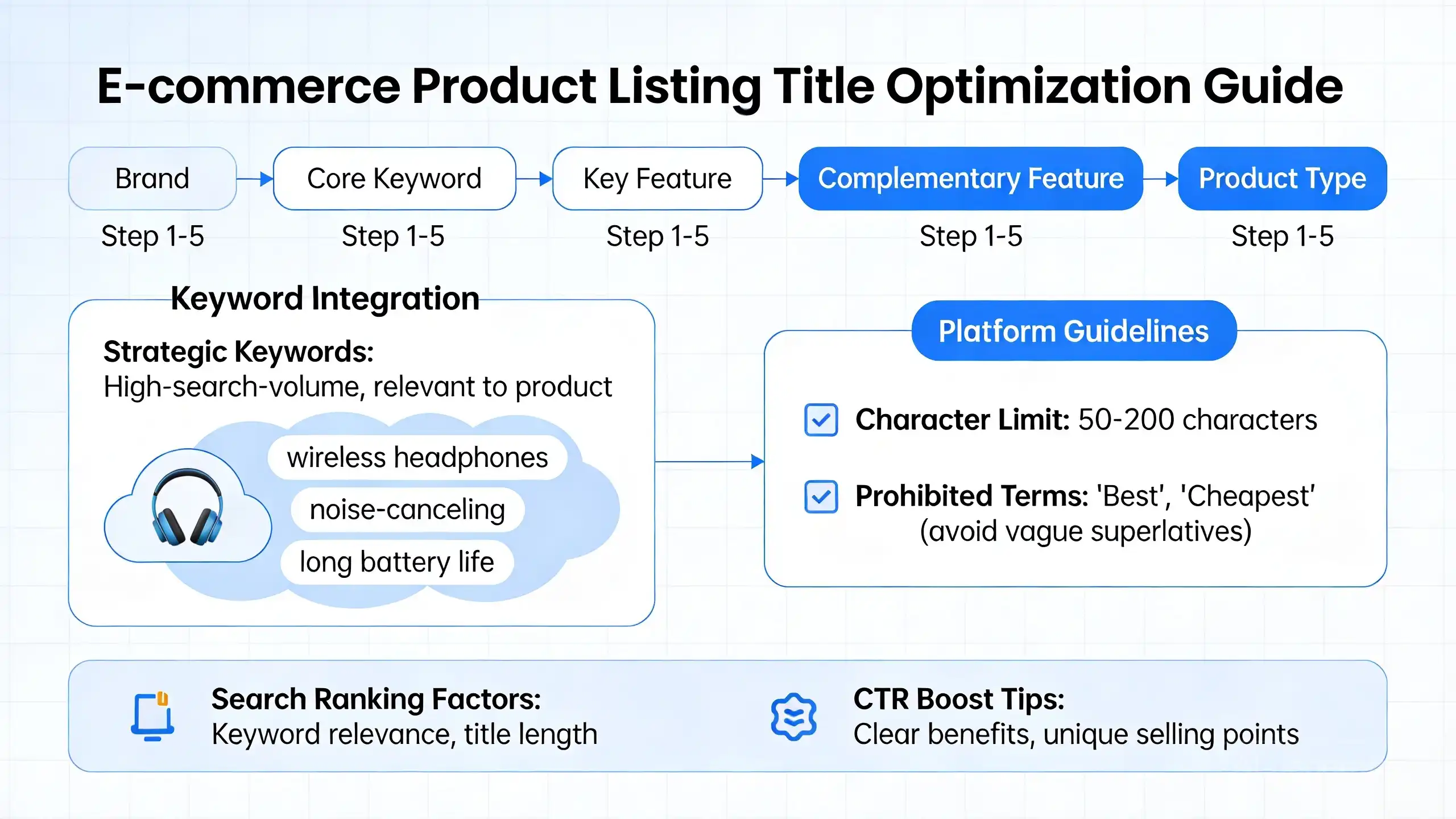
A high-performing title for an electronic product follows a clear, logical structure that balances keyword relevance with human readability. The goal is to convey the most critical information instantly. A standard, effective formula includes:
[Brand Name] + [Product Line/Series] + [Key Feature/Spec 1] + [Key Feature/Spec 2] + [Product Type] + (Compatibility/Use Case)
This format ensures that a potential buyer can immediately identify the brand, model, key technical specifications, and primary application without needing to click into the listing.
Keyword Research and Integration for Titles
Integrating relevant keywords is essential for discoverability, but "keyword stuffing" is detrimental. Instead of cramming in every possible term, focus on embedding the most valuable, high-intent keywords naturally within the title structure. For electronics, these often relate to specific technologies, compatibility, or features that customers search for, such as "Bluetooth 5.3," "4K UHD," "Noise Cancelling," or "USB-C PD." The objective is to match the precise language your target audience uses when searching.
Best Practices for Title Optimization
Adherence to Amazon's platform guidelines is mandatory. Exceeding category-specific title character limits can lead to your listing being suppressed or blocked by the system entirely. To maximize impact, front-load the most crucial information—brand, model, and primary feature—within the first 80 characters to ensure it remains visible on mobile devices. Treat your title as a key component in a regular listing audit; a well-optimized title is a foundational element of a high-scoring, healthy product page.
 Mastering Product Images for Electronic Listings
For complex electronic products, images are not just decoration; they are a primary driver of the purchase decision. They bridge the gap between technical specifications and customer understanding, building the trust necessary to convert a browser into a buyer.
The Power of Visuals in Electronic Product Sales
In e-commerce, customers cannot physically inspect a product. High-quality images must do the work of a salesperson, demonstrating features, build quality, and functionality. For electronics, this is especially critical. A single image that misrepresents a port, button, or the product's physical structure can lead to a "product-image mismatch." This is a direct cause of customer dissatisfaction, negative reviews, and costly returns, eroding both brand trust and profitability. Authentic, clear, and compelling visuals are therefore non-negotiable for communicating value and securing customer confidence.
Types of Images Essential for Electronic Products
A complete image set for an electronic product should go beyond a simple studio shot. To maximize conversions, sellers should provide:
- Main Image: A high-resolution photo on a pure white background, strictly adhering to Amazon's guidelines.
- Infographic Images: Graphics that highlight key technical specifications, unique features, dimensions, and included accessories. These visuals translate dense product data into easily digestible selling points.
- Lifestyle Images: Photos showing the product in its intended environment—a laptop on a desk, a smart speaker in a living room, or headphones being worn. This helps customers visualize the product in their own lives.
- Detail and Scale Shots: Close-ups of important ports, buttons, and textures, as well as images that provide a sense of scale, help manage customer expectations and reduce post-purchase issues.
Optimizing Image Quality and Content
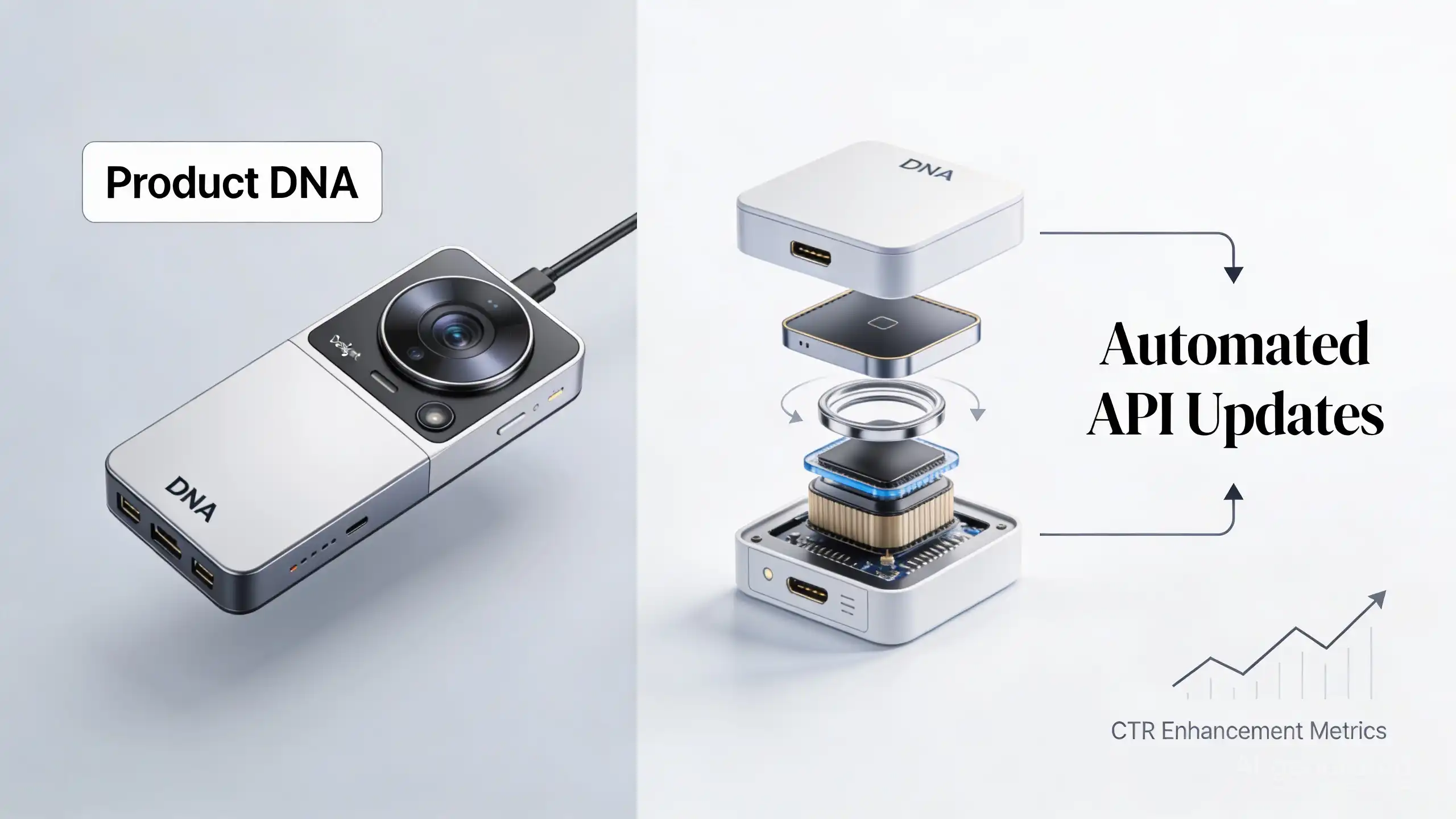
Beyond meeting Amazon's basic requirements for resolution and background, true optimization involves a systematic approach to both creation and deployment. While AI tools offer new possibilities, using general-purpose AI can be risky, as "AI hallucinations" can alter product details and create authenticity issues. Best practice involves using systems that lock in a product's core attributes—a "Product DNA"—to ensure all generated visuals are 100% true to the physical item.
Furthermore, optimization effectiveness should not be a matter of subjective judgment. After publishing a new image, sellers should track its direct impact on key metrics like Click-Through Rate (CTR) to create a data-driven feedback loop. Finally, the process of updating images should be seamless. Relying on manual uploads is slow and inefficient. An automated, API-based approach can reduce a 30-minute upload process to mere seconds, ensuring that optimized visuals are deployed quickly to capitalize on market opportunities.
 The Interplay Between Titles, Images, and Overall Listing Performance
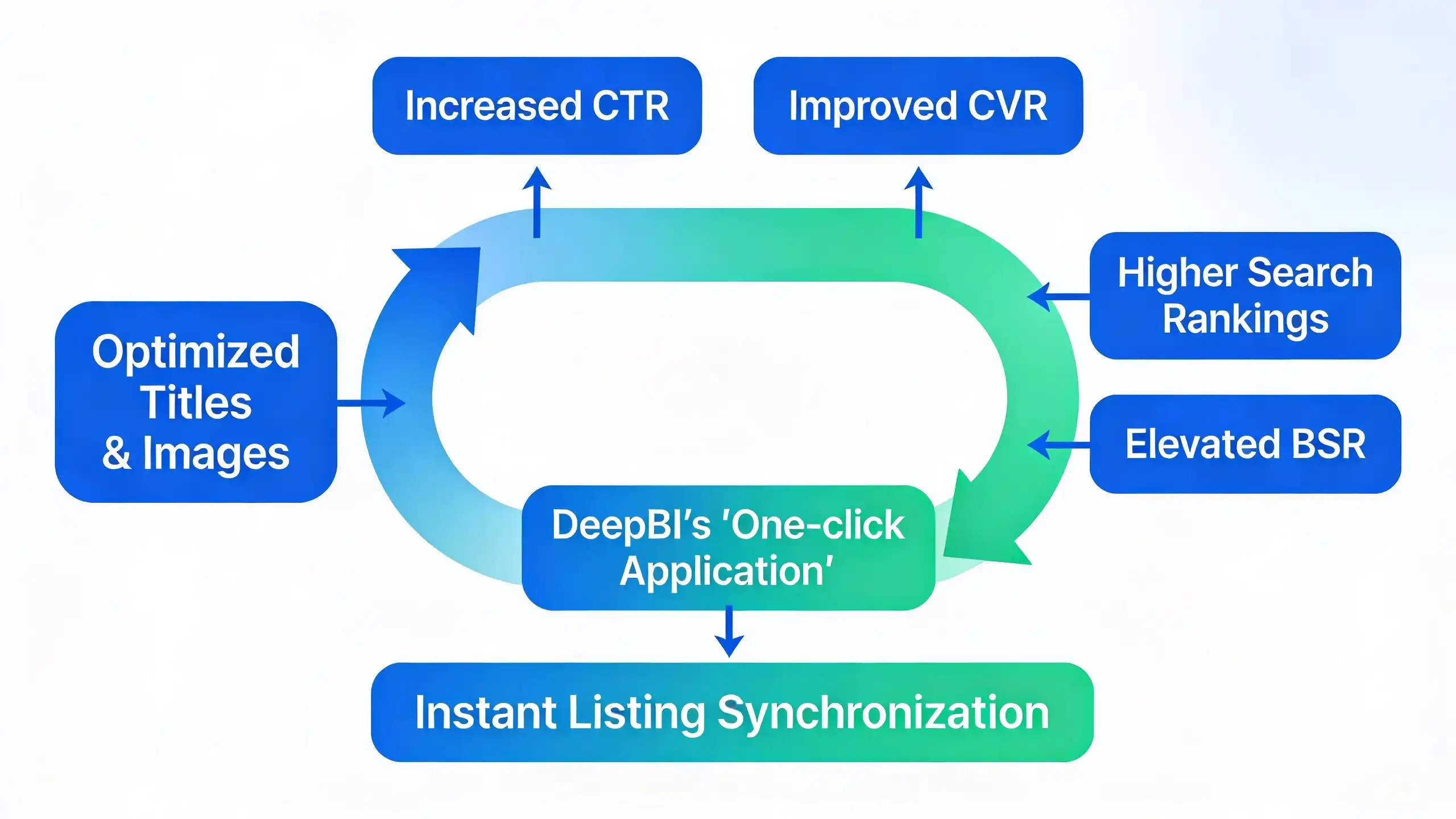
Optimized titles and images are not isolated elements; they are the primary drivers of a powerful, self-reinforcing performance loop on Amazon. On the search results page, a compelling title and main image work together to capture shopper attention, directly boosting your Click-Through Rate (CTR). A higher CTR is the first signal to Amazon’s algorithm that your product is relevant to the search query.
Once a shopper clicks, the focus shifts to Conversion Rate (CVR). The complete set of images and the full title must deliver on the initial promise, providing clear information and setting accurate expectations. This is where many AI-driven tools fail, producing visually appealing but inaccurate images that lead to "product-image mismatch." This mismatch is a direct cause of negative reviews, returns, and a damaged CVR. By using a constrained system that locks in product authenticity—what we call "Product DNA"—you ensure that visuals are true to the physical item, building buyer trust and reducing post-sale issues.
This synergy between CTR and CVR creates a virtuous cycle. Higher engagement and conversion rates lead to increased sales velocity, which Amazon's algorithm rewards with improved search rankings and a better Best Seller Rank (BSR). This, in turn, generates more organic traffic, feeding the cycle. However, this loop can be broken by slow implementation. Manually updating listings can take dozens of minutes, delaying the impact of your optimizations. DeepBI’s "One-click Application" feature closes this gap, using an API to sync optimized content in seconds, ensuring your improvements immediately begin contributing to this positive feedback loop.
 Advanced Strategies and Continuous Optimization
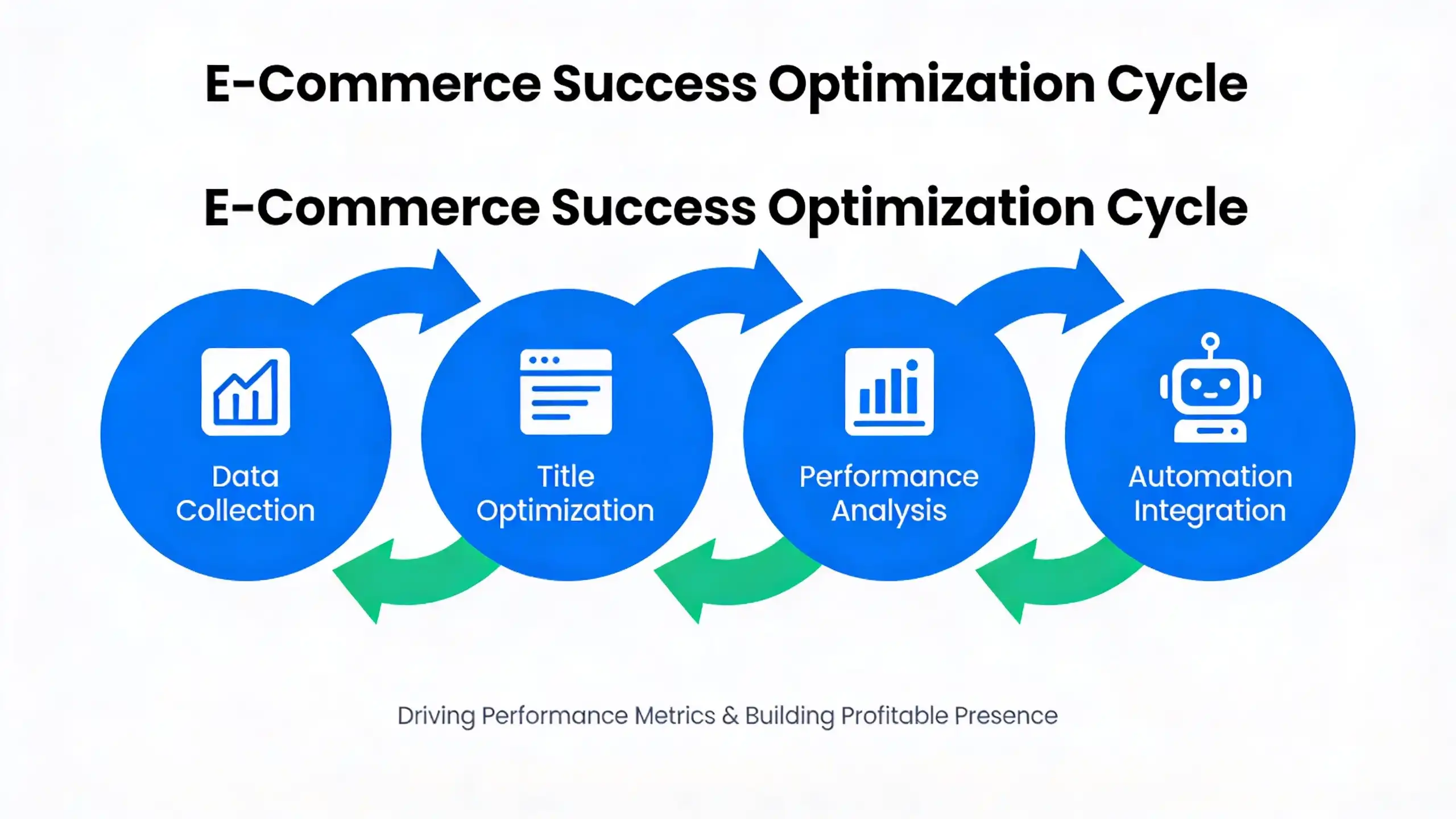
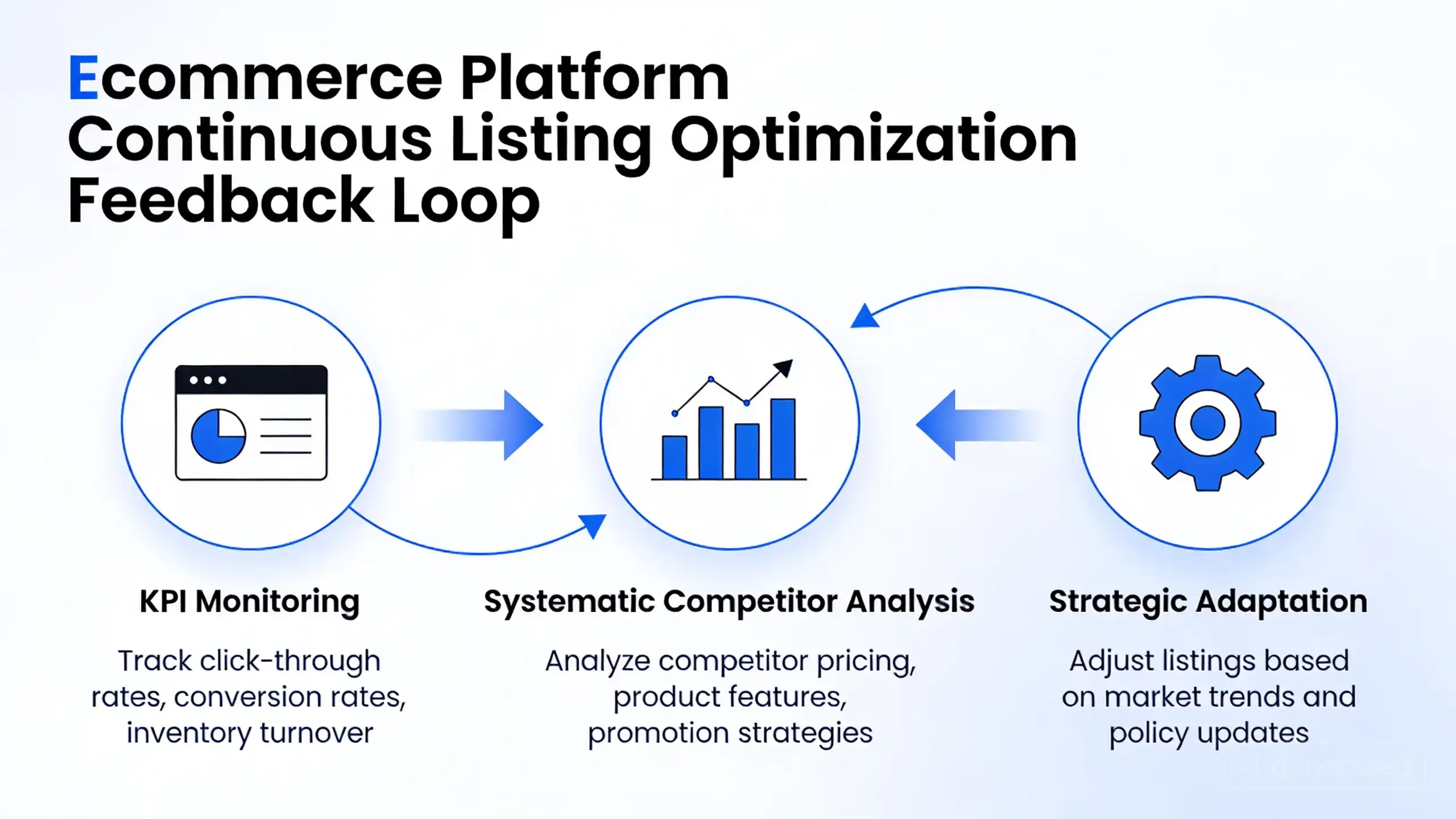
Optimizing your Amazon listings is not a one-time setup but a continuous cycle of improvement essential for staying competitive. Top-performing sellers treat this process as an ongoing "automated market health check," moving beyond subjective judgment to a data-driven feedback loop. The core of this strategy is the relentless monitoring of key performance indicators (KPIs) such as:
- Click-Through Rate (CTR)
- Conversion Rate (CVR)
- Total Sales and Session Volume
- Organic Keyword Rank (BSR)
A change in any of these metrics signals a shift in the market or customer behavior that requires a response. When a new title or image is deployed, for instance, advanced systems can tag this as a "visual iteration event," allowing you to directly track its impact on CTR over the subsequent 7-14 days. This closes the loop between action and outcome.
Furthermore, a proactive strategy involves systematic competitor analysis. By using sophisticated tools to deconstruct the visual and textual elements of top-performing competitor listings, you can identify emerging trends and strategic gaps. This analysis informs your next round of iterative testing. As the market evolves with new technologies and Amazon policy updates, especially in the fast-paced electronics sector, your ability to adapt is crucial. Leveraging new tools like AI for visual creation must be done strategically, using constraints like a "Product DNA" map to ensure authenticity and prevent the product-image mismatches that lead to negative reviews.
 Conclusion
In the hyper-competitive electronics marketplace on Amazon, your product title and images are not mere decorations; they are your primary sales agents. They are the critical drivers of customer engagement, directly influencing click-through rates, conversion, and ultimately, your sales velocity and Best Seller Rank. Moving beyond subjective tweaks and guesswork is essential for any seller aiming for market leadership.
The future of Amazon success lies in a systematic, data-driven, and continuous optimization cycle. This means abandoning ambiguous creative briefs in favor of precise, engineered instructions and replacing manual, time-consuming updates with automated, API-driven workflows that can reduce operational tasks from minutes to seconds. Most importantly, it involves closing the feedback loop by directly linking changes in your visual assets to performance metrics like CTR, transforming optimization from an art into a science. By ensuring AI-driven enhancements are constrained by your product's core attributes—its "Product DNA"—you can innovate on presentation without risking authenticity or customer trust. Adopting this strategic, technology-enabled approach is the definitive way to build a resilient, scalable, and profitable presence on Amazon.