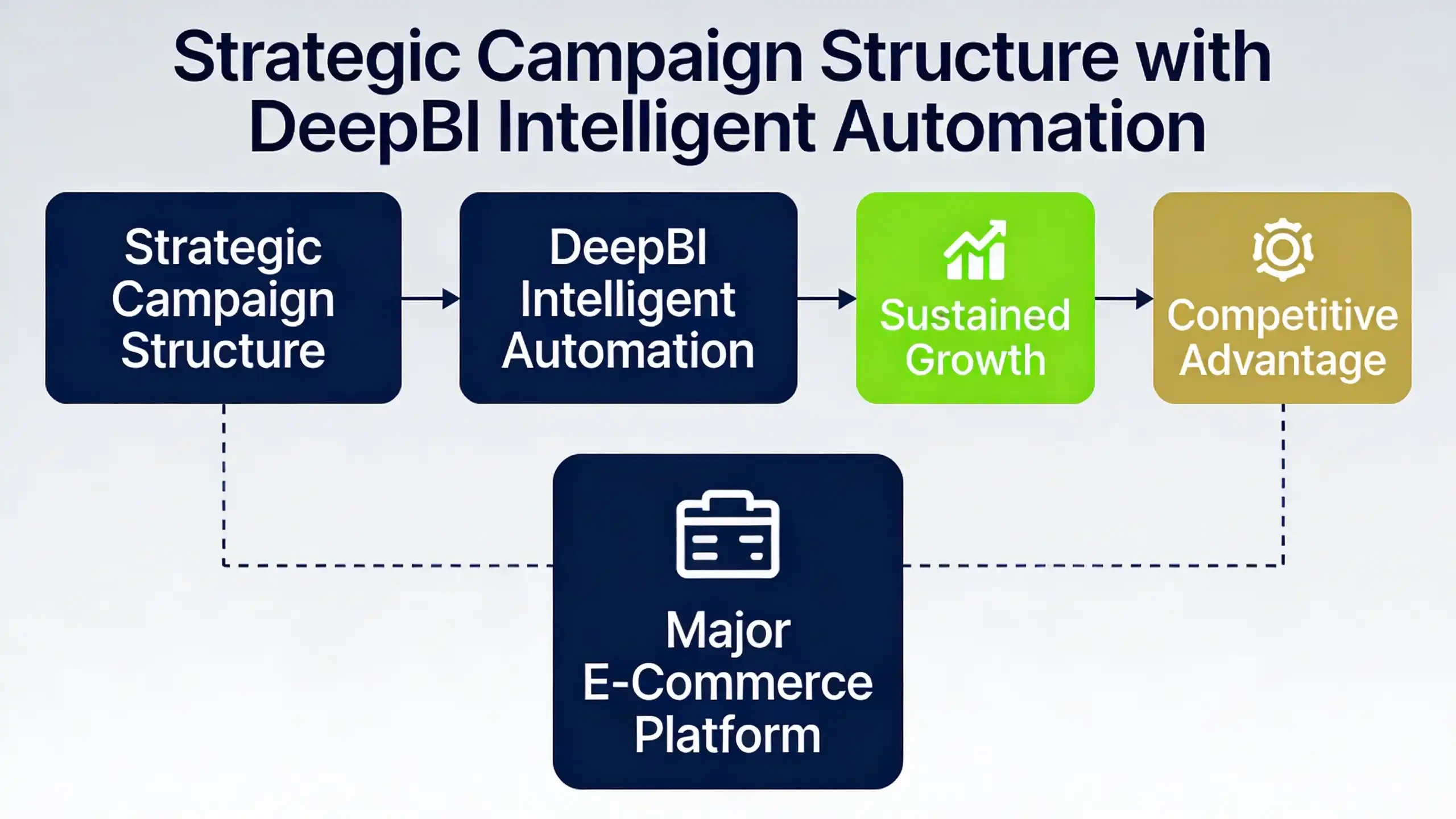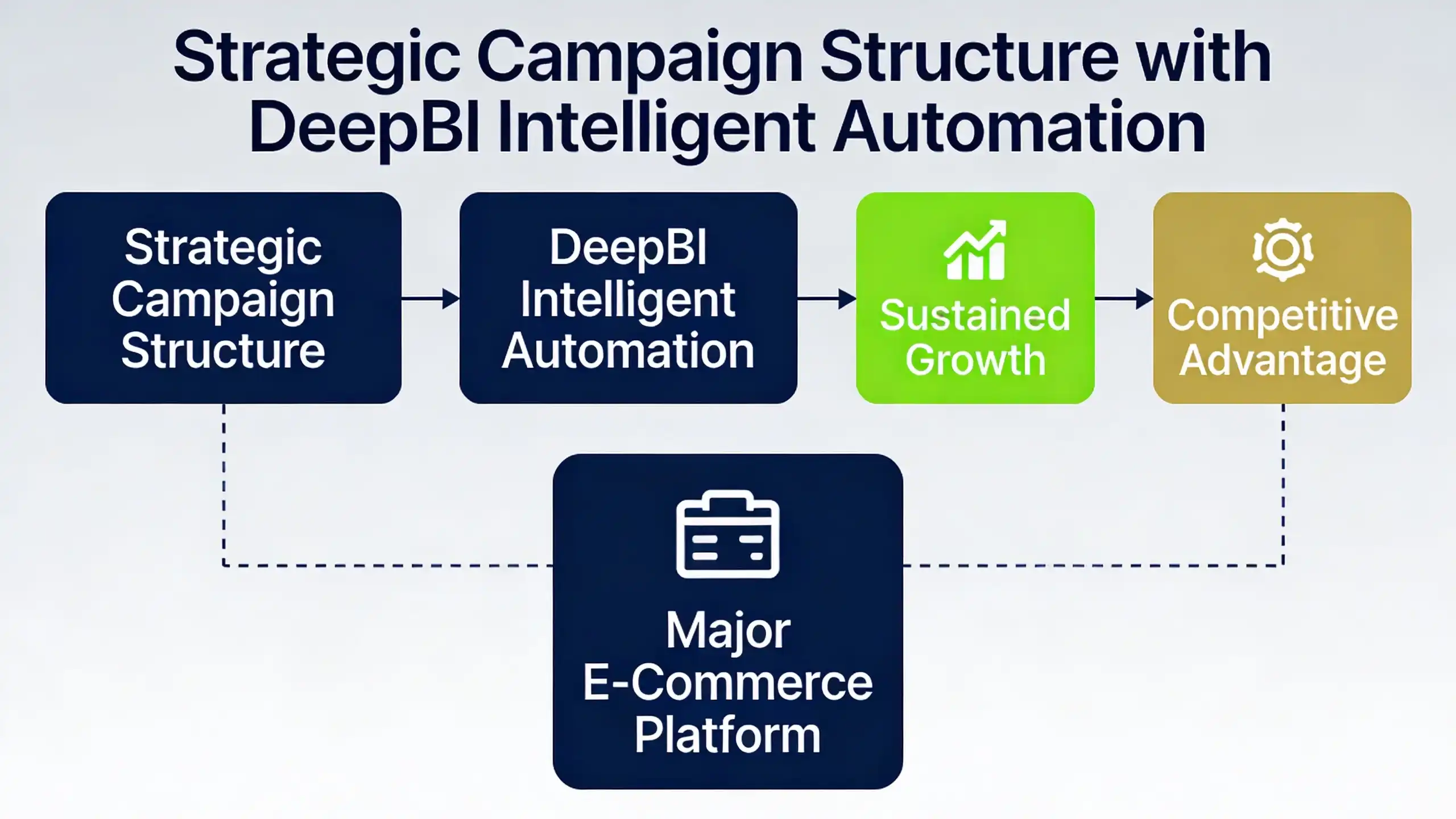
The Strategic Imperative of Amazon Campaign Structure
In Amazon advertising, campaign structure is not a mere organizational preference—it is the strategic foundation upon which all profitable PPC activity is built. Before you can optimize bids, allocate budgets, or refine targeting, you must have a logical framework in place. Without it, even the most sophisticated strategies will fail to deliver consistent returns.
A poorly designed structure creates a cascade of negative consequences. Performance data becomes fragmented and unreliable, making it impossible to distinguish high-performing keywords from those that drain your budget. This leads directly to inefficient ad spend, inflated ACoS, and an inability to scale winning strategies. When you cannot clearly attribute sales to specific campaigns or ad groups, optimization becomes a guessing game, and significant growth opportunities are inevitably missed.
Conversely, a robust and intentional campaign structure provides the clarity needed for decisive action. By segmenting campaigns logically—whether by product line, match type, or strategic objective—you enable clean performance attribution. This clarity empowers you to confidently shift budgets to top performers, prune wasteful spend, and make data-driven decisions that directly impact your bottom line. Ultimately, a sound structure is the prerequisite for transforming raw advertising data into actionable business intelligence and sustainable growth.
 Foundational Principles for Effective Campaign Design
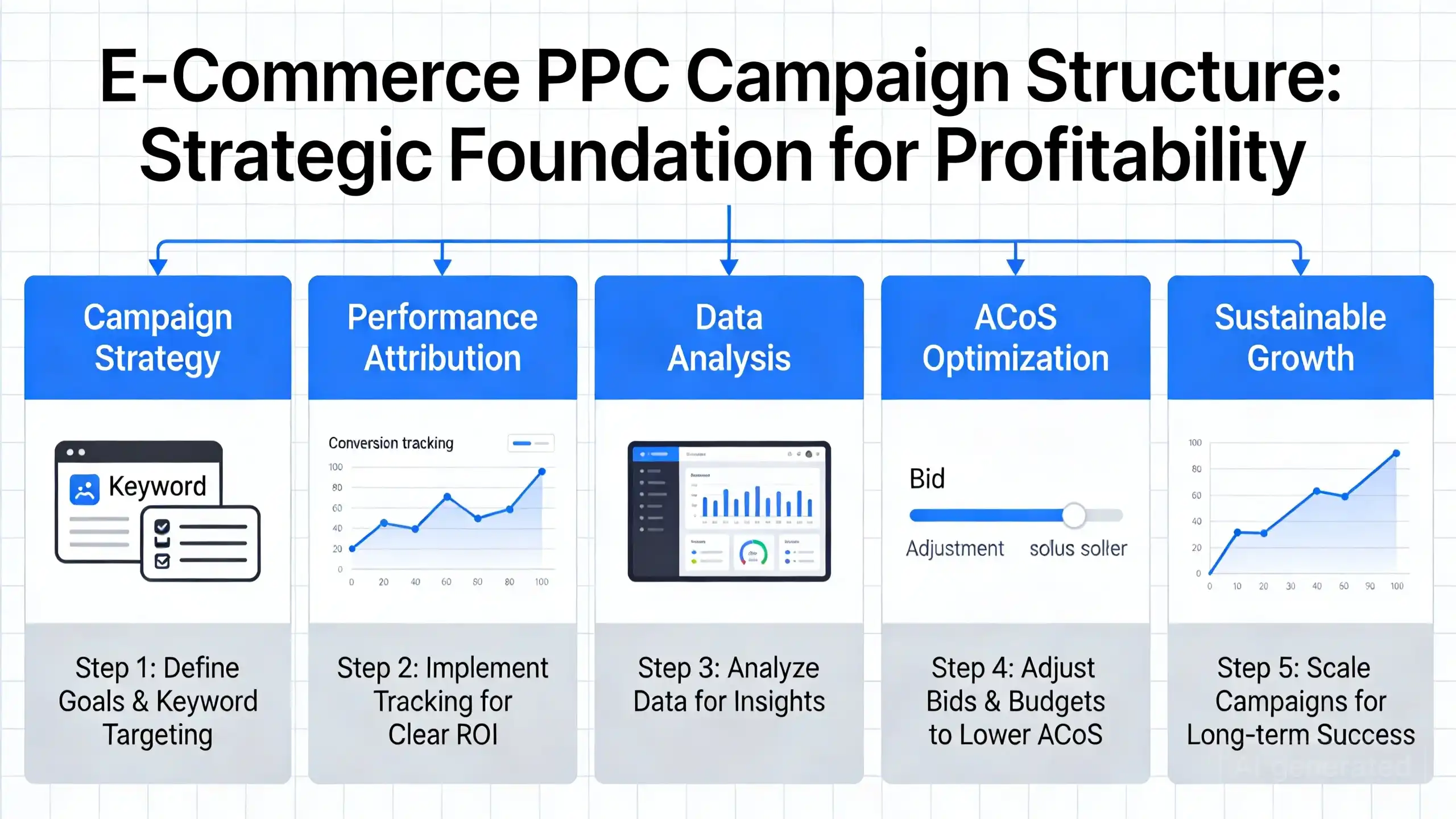
An effective Amazon advertising strategy is built on a logical and scalable campaign structure. Without a solid foundation, even the most advanced bidding strategies will fail, as budgets are misallocated and performance data becomes impossible to interpret. Mastering a few core principles of campaign architecture is the first step toward achieving control and driving profitable growth.
The Granularity Spectrum
Campaign structure exists on a spectrum of granularity. At one end is full aggregation, where all products and keywords are lumped into a single campaign and ad group. This approach is simple to launch but offers virtually no control, as high-performing products are dragged down by poor performers. At the other extreme is hyper-segmentation (e.g., one keyword per campaign), which provides maximum control but creates an unmanageable administrative burden.
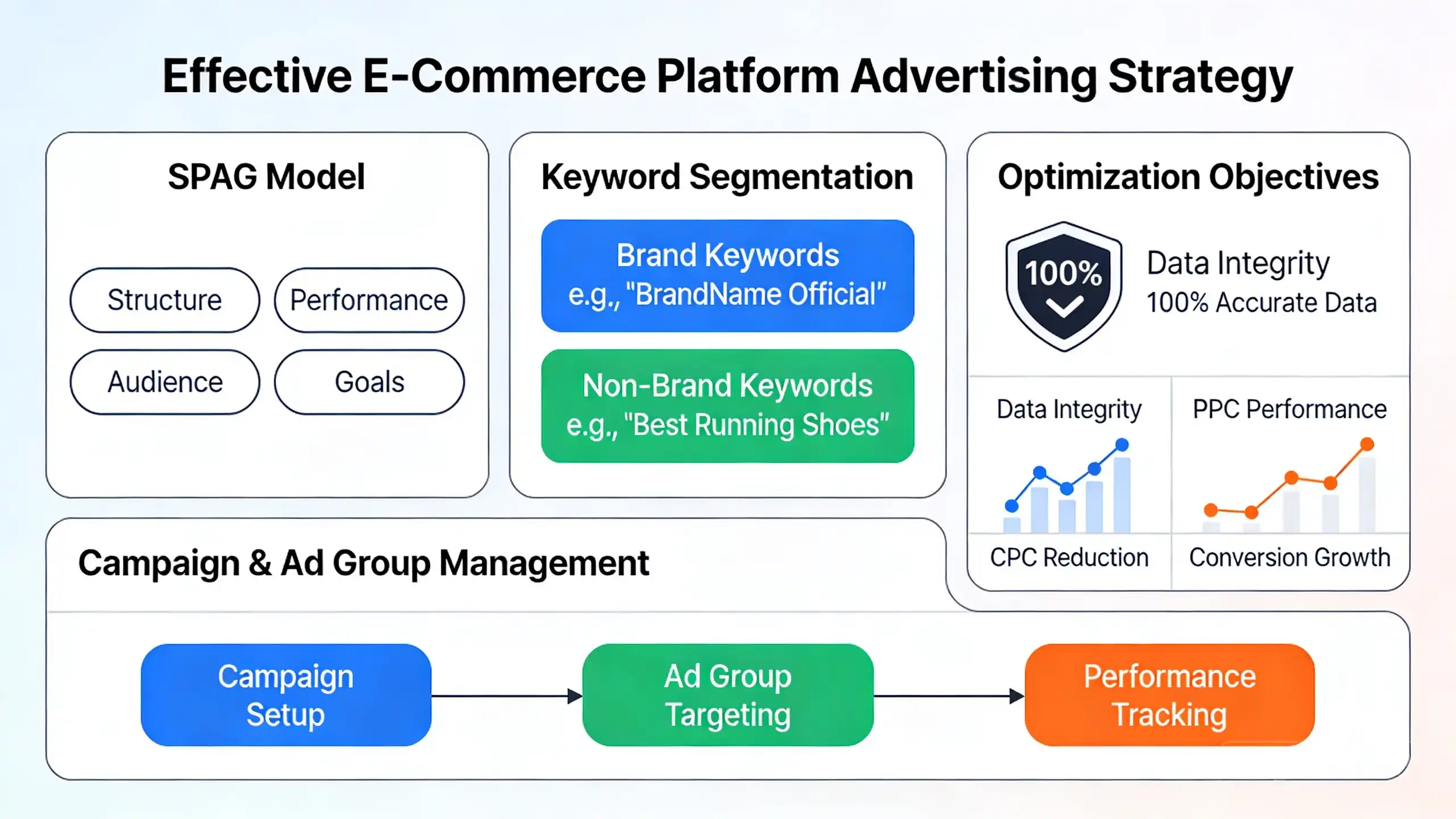
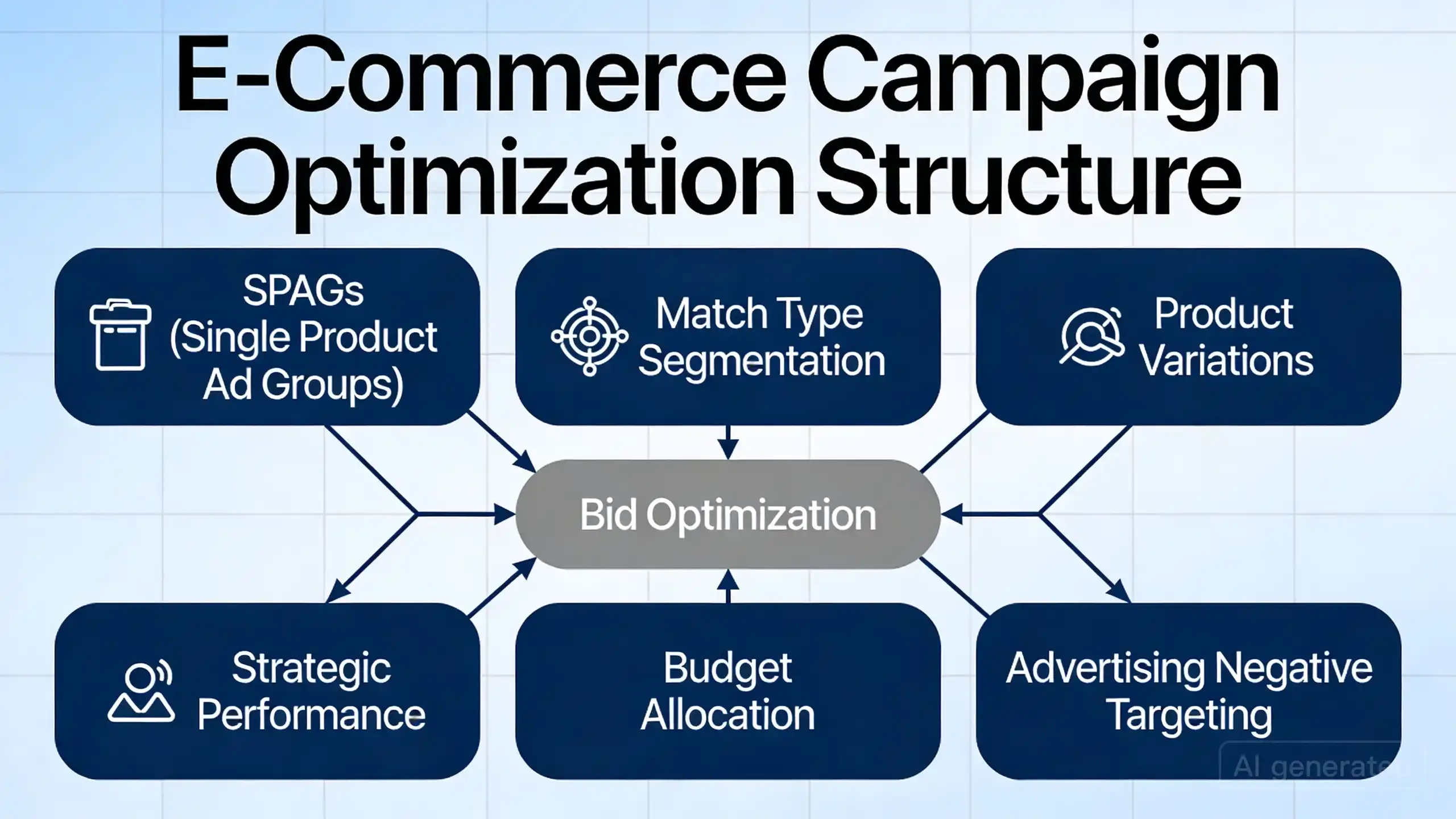
The strategic sweet spot for most sellers is the Single Product Ad Group (SPAG) model. In this structure, each ad group contains only one parent ASIN. This provides the ideal balance, enabling precise control over bids and targeting at the individual product level without creating overwhelming complexity.
Defining Campaign Roles
To maintain clarity, it's crucial to understand the distinct role of each level in the PPC hierarchy. A simple and effective mental model is: Campaigns have settings, Ad Groups have targeting, and Products have performance.
- Campaigns: This is where you define the overall strategy, daily budget, and portfolio allocation. A campaign's purpose might be to launch a new product, defend a brand term, or maximize profitability on a mature ASIN.
- Ad Groups: Within a campaign, ad groups exist to organize targeting. For a single product, you might have separate ad groups for automatic targeting, keyword targeting, and product (ASIN) targeting.
- Products (Ads): The product itself is what ultimately performs. Its click-through rate (CTR) and conversion rate (CVR) are the true measures of success, which the surrounding structure is designed to optimize.
Brand vs. Non-Brand Segmentation
Separating brand and non-brand search terms into different campaigns is a non-negotiable rule for data integrity. Mixing them effectively destroys your ability to make informed decisions.
Brand keywords (searches including your brand name) naturally have extremely high CTR and low ACoS because the customer is already seeking you out. Non-brand, or generic, keywords are for discovery and will inherently have a lower CTR and higher ACoS. When combined in one campaign, the stellar results from brand terms will mask the wasted ad spend on ineffective non-brand terms, creating a deceptively low average ACoS. By splitting them, you can set appropriate goals for each: a low ACoS for brand defense and a higher, but controlled, ACoS for new customer acquisition.
Best Practices for Structuring Amazon PPC Campaigns
A well-organized campaign structure is the foundation of profitable advertising on Amazon. It provides the control, clarity, and scalability needed to manage bids effectively, optimize budgets, and extract actionable insights from performance data. Implementing a logical structure from the outset prevents costly inefficiencies and simplifies ongoing management.
Single Product Ad Groups (SPAGs): The Baseline for Control and Performance.
For the vast majority of sellers, the Single Product Ad Group (SPAG) model is the gold standard. This structure assigns only one unique SKU to each ad group, providing unparalleled control. The primary benefits are precise bidding and clear attribution. When a keyword's performance changes, you can adjust its bid knowing it will only affect one specific product. This makes it simple to manage toward a target ACoS for each item in your catalog.
In contrast, Multi-Product Ad Groups (MPAGs) create optimization chaos. Imagine an ad group containing both a high-margin premium product and a low-margin budget product. If you set a single bid for the keyword "running shoes," you cannot effectively manage profitability. A bid high enough to win impressions for the premium shoe will likely result in an unprofitable ACoS for the budget shoe. Lowering the bid to protect the budget shoe's margin will cause the premium product to lose visibility. SPAGs eliminate this forced compromise.
Match Type Segmentation: Gaining Granular Control.
Segmenting your campaigns by keyword match type—Broad, Phrase, and Exact—is another critical layer of control. Each match type serves a distinct strategic purpose and requires a different bidding approach.
- Broad Match campaigns are for research and discovery, using lower bids to capture a wide net of customer search terms.
- Phrase Match campaigns test keywords with demonstrated potential, justifying moderate bids.
- Exact Match campaigns are for your proven, high-converting keywords, where aggressive bids are used to maximize impression share and drive sales.
Mixing these in a single campaign forces you to set a single bid that is simultaneously too high for exploratory terms and too low for your top performers, guaranteeing wasted ad spend and missed opportunities.
Product Variation Strategy
A common misconception is to advertise only the best-selling variation of a product. This is a mistake. To maximize discoverability and sales, all relevant product variations should be included in campaigns bidding on your main keywords. Amazon's algorithm is designed to maximize revenue by showing shoppers the most relevant product for their specific search. If a customer is looking for a "blue water bottle," you want your blue variation to appear, not just your top-selling black one. By making all variations available to the advertising algorithm, you empower it to match the right product to the right customer, increasing overall CVR and sales for the entire product family.
Strategic Negative Targeting: Refining Traffic and Preventing Internal Competition.
Negative targeting is essential for refining ad traffic and improving efficiency. Using negative keywords to filter out irrelevant search terms (e.g., negating "repair" for a new product) is a fundamental practice that protects your budget and improves your Click-Through Rate (CTR).
Equally important is the strategic use of negative ASINs to prevent internal competition. For instance, in a campaign for a premium product, you might negatively target your own budget-friendly ASINs to ensure your ads guide customers through a clear sales funnel rather than competing with each other. However, avoid the oversimplified advice to negate all your own products in every campaign. This is impractical for large catalogs and can limit the algorithm's ability to find new, profitable placements. The best approach is targeted and strategic, applying negative ASINs only where there is a clear business case to prevent ad cannibalization or direct traffic flow.
 Leveraging DeepBI for Advanced Campaign Structure Optimization
Transitioning from theoretical best practices to real-world execution requires robust data and intelligent automation. DeepBI provides the essential toolkit for building and managing a high-performance Amazon campaign structure, turning complex strategies into automated, data-driven workflows.
DeepBI's Role in Data-Driven Structuring
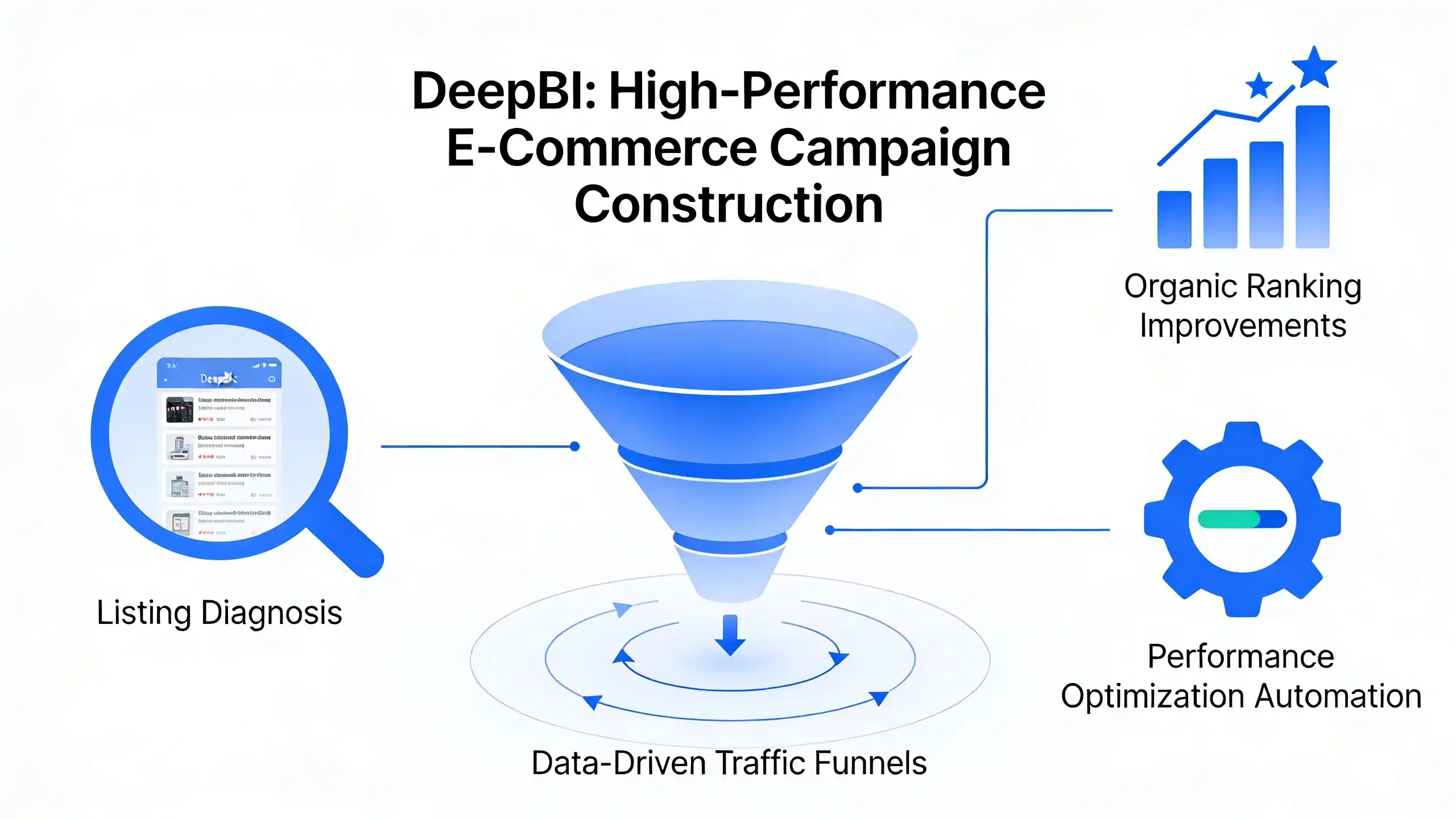
A successful campaign structure is built on a foundation of precise data, not guesswork. DeepBI provides this foundation by transforming raw data into strategic insights. The platform’s four-layer traffic funnel model—encompassing exploration, screening, precision, and scaling—offers a clear framework for segmenting keywords and ASINs. This allows you to build campaigns that methodically move targets from broad discovery to high-conversion precision phases.
Furthermore, DeepBI’s listing diagnosis acts as an "automated market health check system." It scores products on competitiveness and conversion potential, identifying which listings are strong enough to warrant dedicated Single Product Ad Groups (SPAGs). This ensures your advertising budget is strategically focused on products with the highest probability of success, maximizing return on ad spend (RoAS).
Automating Optimization with DeepBI
Building the structure is only the first step; continuous optimization is what drives sustained growth. DeepBI automates this critical process. Its dynamic parameter adjustment mechanism analyzes performance metrics like clicks, conversions, and ACoS over the past seven days to execute daily, automated bid and budget adjustments. This keeps your campaigns finely tuned for peak efficiency without requiring constant manual oversight.
DeepBI also creates a powerful synergy between paid and organic growth through its fifth-layer organic funnel. By analyzing ad performance, the system identifies keywords with high Click-Through Rates (CTR) and Conversion Rates (CVR). It then enables you to launch targeted campaigns for these terms, not only capturing immediate ad sales but also systematically improving the organic ranking for your most valuable keywords.
 Implementing and Maintaining an Optimized Structure
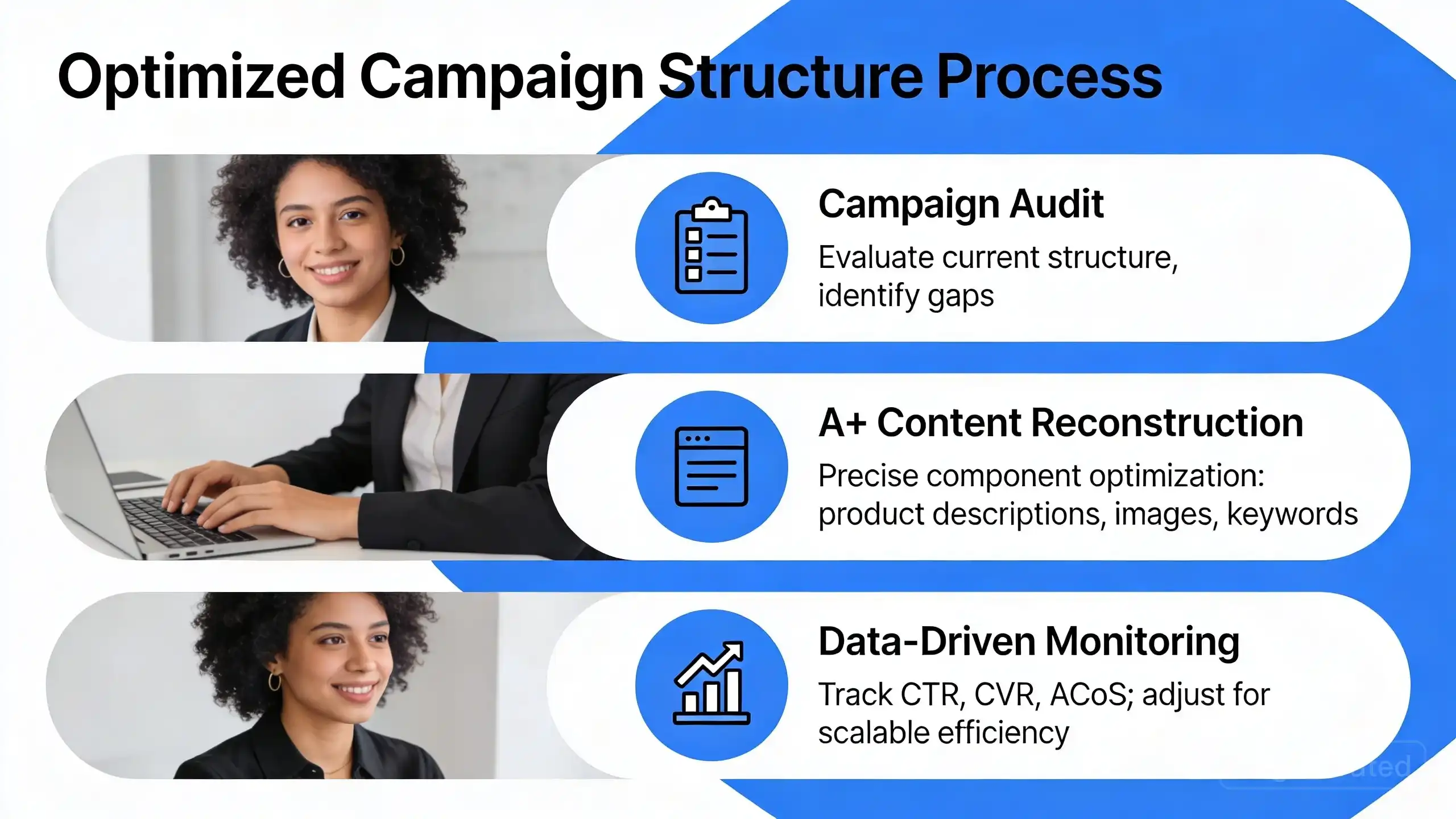
Transitioning to an optimized campaign structure is a deliberate, multi-stage process. Begin with a comprehensive audit of your existing campaigns to identify performance gaps and successful elements. From there, design your new architecture, systematically planning the structured reconstruction of every component, from keywords and ad groups to titles and A+ content. During execution, precision is paramount. The goal is to losslessly translate your business strategy into a functional campaign setup, eliminating the human errors and inconsistencies that can dilute performance and inflate ACoS.
An optimized structure is not a "set it and forget it" solution; it is a living system that requires continuous maintenance. Ongoing monitoring is essential to connect specific actions to business outcomes. For instance, when a new main image is deployed, you must be able to track its direct impact on metrics like Click-Through Rate (CTR) in your advertising reports. This data-driven feedback loop allows for constant refinement, enabling you to iterate based on real-world performance and systematically improve both CTR and Conversion Rate (CVR) over time.
As your product catalog and advertising budget expand, the integrity of your campaign structure becomes critical. A disciplined approach, enforcing principles like product entity consistency across all campaigns, prevents structural decay and ensures manageability at scale. This systematic framework is designed for efficiency, reducing the manual overhead of campaign management and allowing your team to focus on strategic analysis rather than repetitive tasks. By maintaining a clean and logical structure, you ensure that your advertising efforts remain effective and scalable.
 Conclusion: The Unseen Advantage of a Well-Structured Amazon PPC Account
In the hyper-competitive Amazon marketplace, long-term success is built on a strategic foundation, not just daily tactical adjustments. While bid management and keyword research are critical, their ultimate effectiveness is dictated by the underlying campaign structure. A logical, scalable, and meticulously organized account is this foundation—an often-overlooked asset that directly drives profitability, enables efficient scaling, and creates a durable competitive advantage. This is the unseen advantage that top sellers leverage: transforming PPC advertising from a reactive expense into a predictable and powerful growth engine.
Achieving this level of operational excellence requires a potent combination of human strategy and machine execution. A well-conceived structure provides the clear blueprint for success, defining how data is collected, how budgets are allocated, and how performance is measured. Advanced tools like DeepBI then act as the tireless executor of this strategy, implementing your decisions with a speed and precision that is impossible to replicate manually. This strategic partnership—your expert methodology amplified by intelligent automation—is the definitive formula for unlocking sustained growth and establishing a dominant position on Amazon.