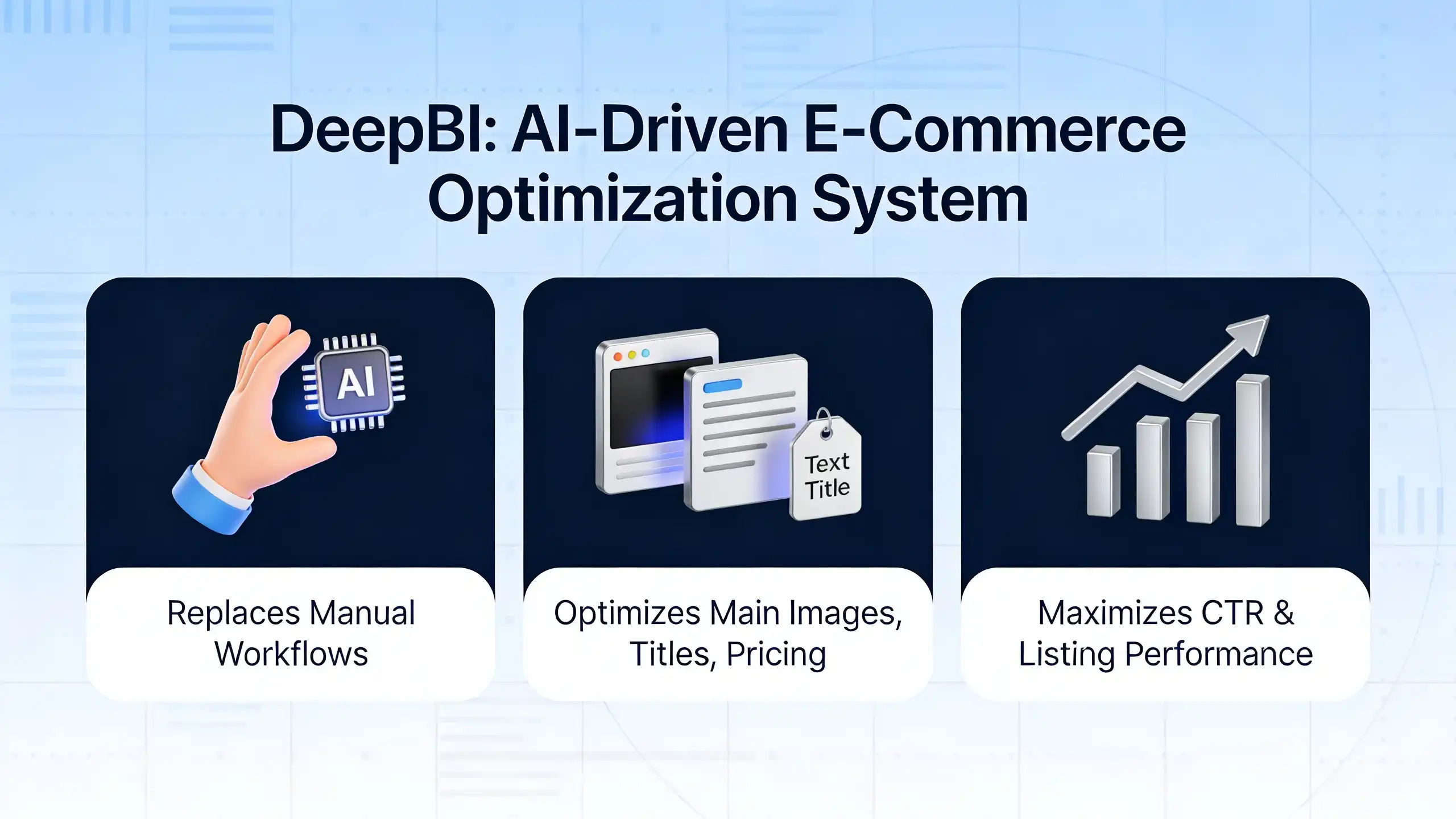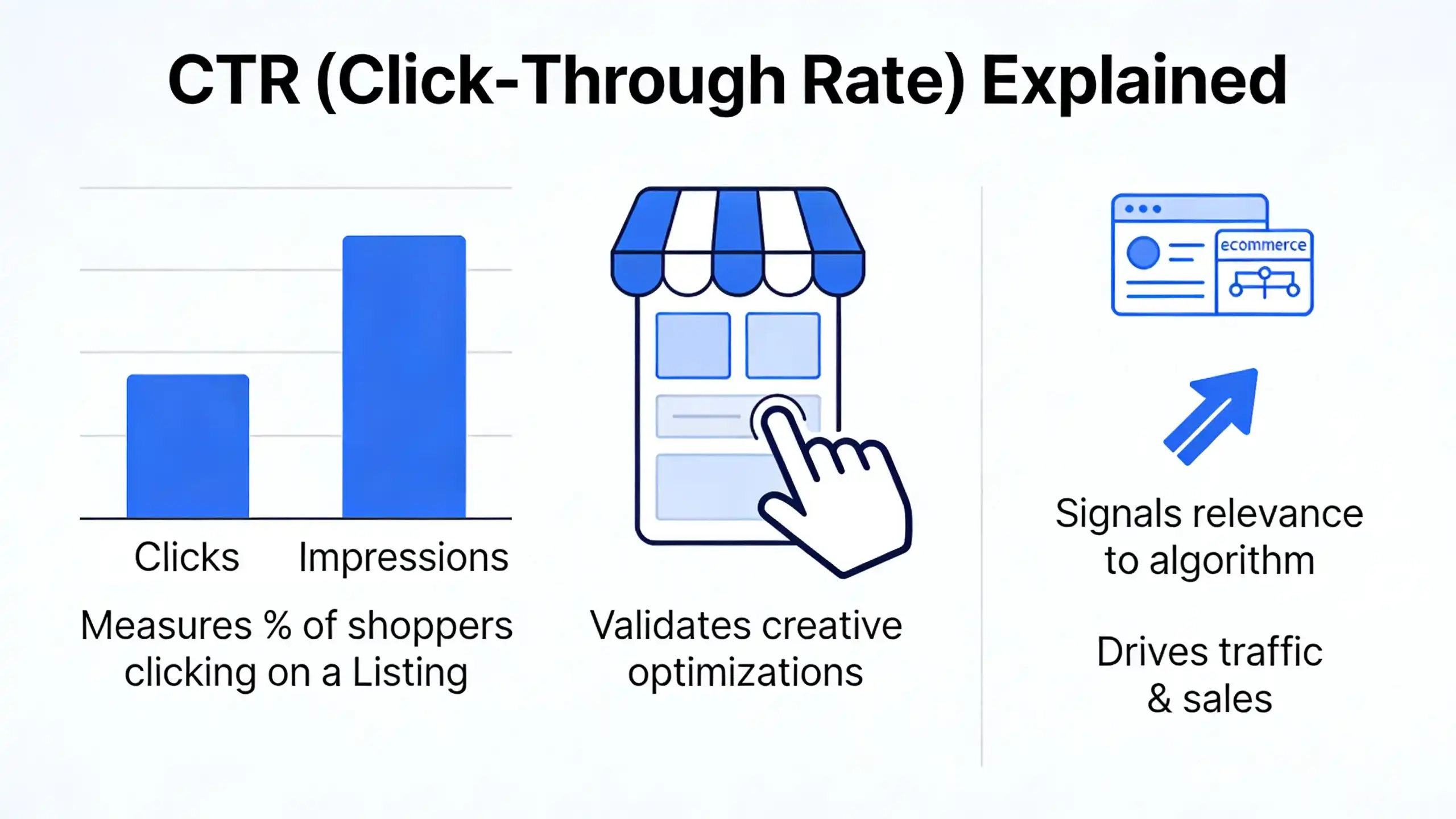
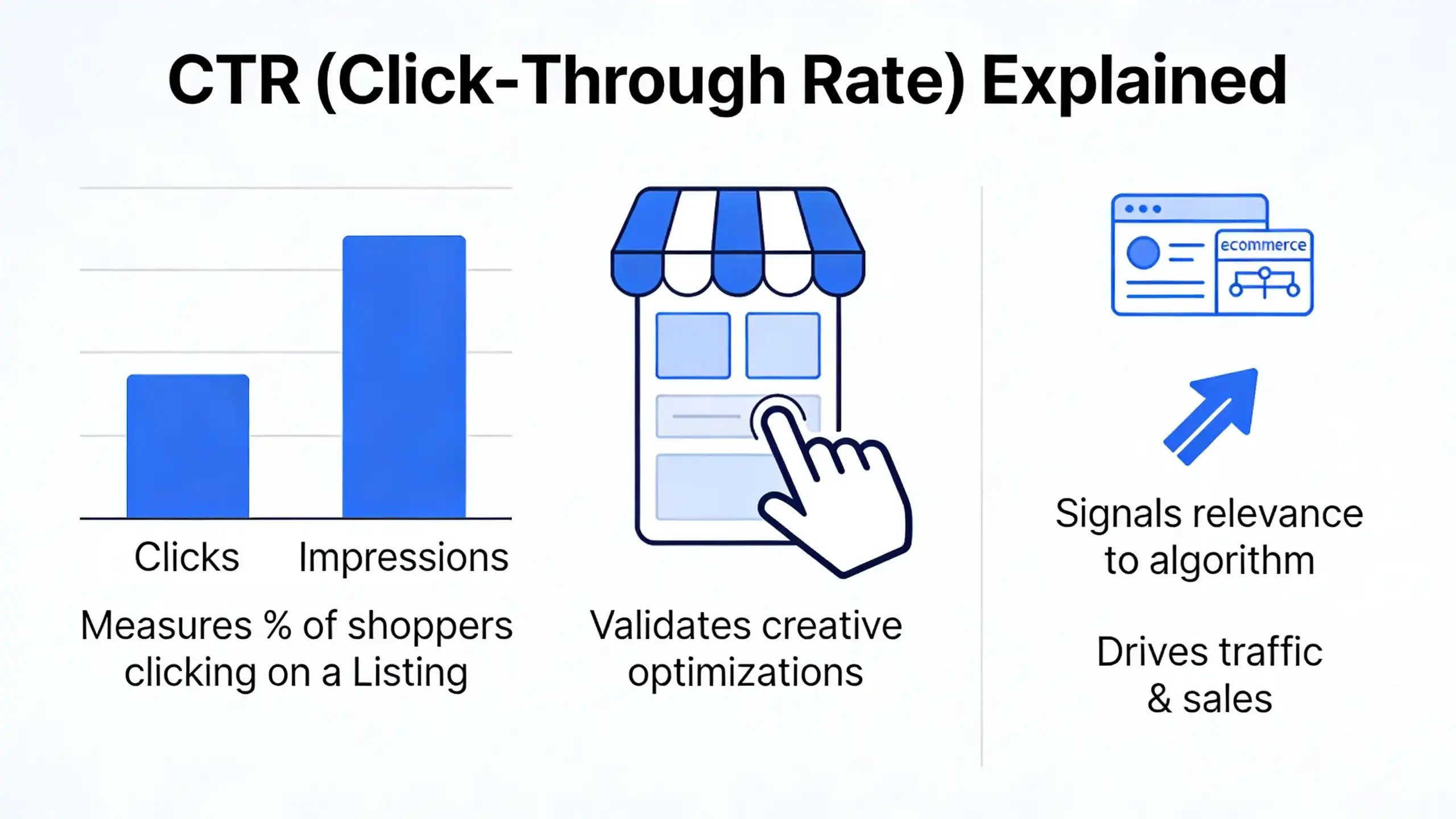
In the hyper-competitive Amazon marketplace, visibility is everything. But what good are impressions if they don't translate into customer engagement? This is where your Click-Through Rate (CTR) becomes one of the most critical levers for growth. Defined as the percentage of shoppers who see your product in search results and click on it, CTR is a direct measure of your listing's initial appeal.
A high CTR signals to Amazon's A9 algorithm that your product is relevant and compelling to customers. This positive feedback can boost your organic ranking, creating a virtuous cycle of increased visibility, more traffic, and ultimately, higher sales. Conversely, a low CTR tells the algorithm your listing is failing to capture interest, which can suppress your ranking, waste ad spend, and leave potential revenue on the table.
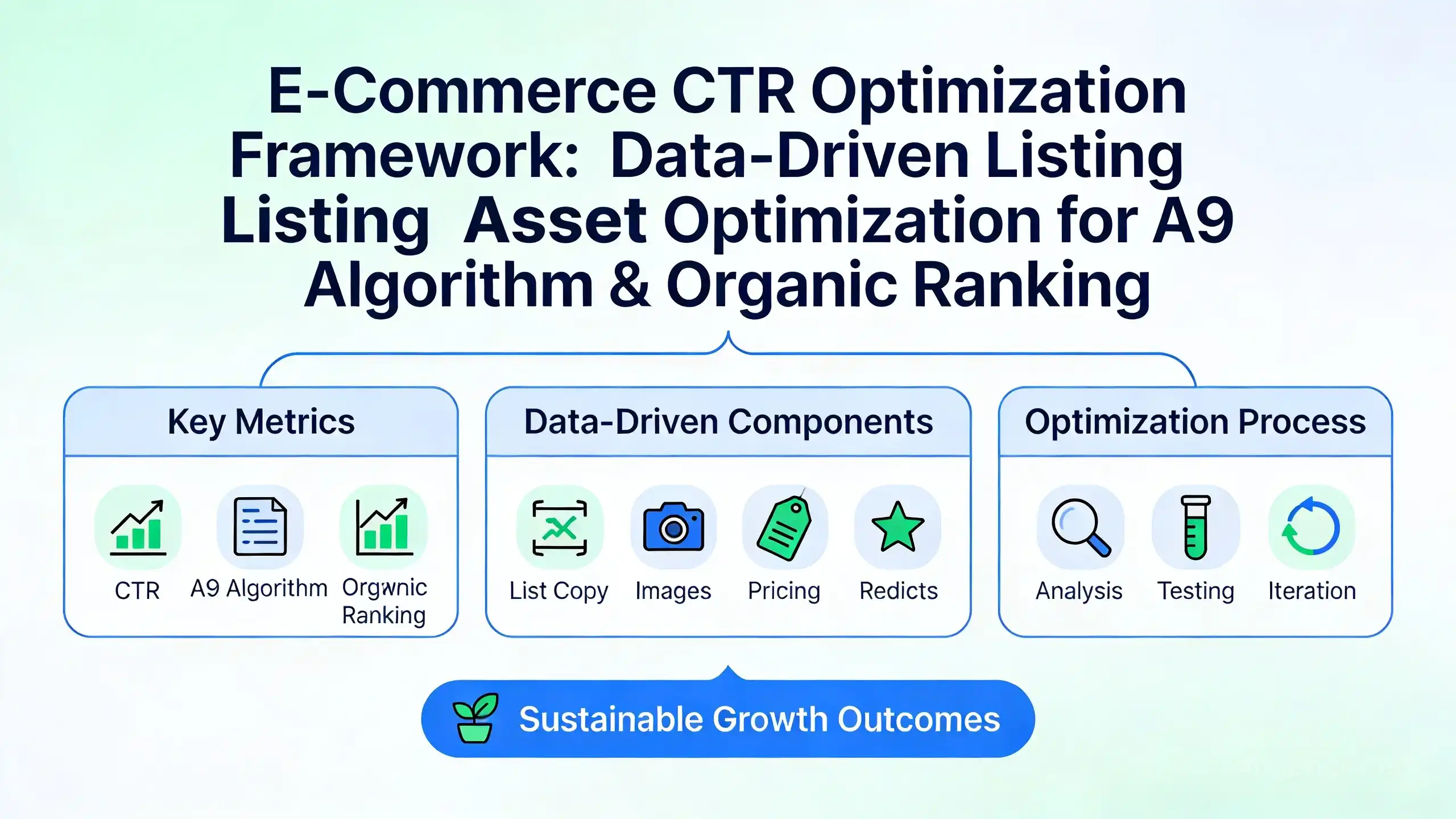
Many sellers find their products stuck with a CTR below the category average, leading to high ad spend with poor conversion. This often stems from a traditional optimization process that relies on subjective aesthetics rather than hard data. To break this cycle, you must elevate your visual and text assets from mere 'aesthetic displays' to a 'core commercial engine' that drives clicks. This guide provides a data-driven framework to systematically diagnose, optimize, and track your listing performance, turning ad data into actionable insights that improve CTR and fuel sustainable growth.
 The Critical Role of CTR in Amazon Success
What is CTR and Why Does it Matter?
Click-Through Rate (CTR) is the percentage of shoppers who see your product in search results or ads and proceed to click on it. This metric is a direct measure of your listing's relevance and initial appeal. A high CTR signals to Amazon’s algorithm that your product is a strong match for customer searches, which can lead to better ad placements and improved organic search rankings over time.
Beyond its algorithmic impact, CTR is the gateway to sales. If shoppers don't click, they can't convert. For many sellers, the greatest challenge is quantifying the business impact of creative optimizations, particularly for images. CTR solves this problem by providing a clear, data-driven feedback loop. By tracking how CTR changes after updating a main image, you can move from subjective judgment to objective validation, confirming whether your visual strategy is successfully driving traffic.
Key Factors Influencing Listing CTR
A customer’s decision to click on your product is made in seconds, influenced by the information presented on the search results page. Optimizing these elements is crucial for maximizing traffic.
- Main Image: This is your single most important asset for earning the click. A high-quality main image must not only comply with Amazon's standards, like having a pure white background, but also be composed to grab attention and instantly communicate the product's core value.
- Product Title: Your title must be optimized for both search algorithms and human shoppers, blending relevant keywords with compelling, easy-to-read copy that encourages a click.
- Price: Shoppers are highly price-sensitive. Your product's price point, including any visible discounts, is a primary factor in their consideration set.
- Reviews: The average star rating and the total number of reviews serve as immediate social proof, building the trust required to win the click over a competitor.
- Badges and Promotions: Official Amazon badges like 'Best Seller' or 'Amazon's Choice,' along with promotional flags for coupons or deals, act as powerful visual magnets that increase visibility and trust.
 Pillar 1: Optimizing Your Main Image for Maximum Clicks
The Psychology Behind the First Impression
In the crowded Amazon search results page, your main image is your single most important tool for earning a click. Customers make split-second, often subconscious, judgments based on this one visual. A compelling main image instantly communicates your product's identity, quality, and relevance, stopping the scroll and inviting the customer to learn more. A weak or unprofessional image, however, ensures your listing will be ignored, no matter how good your product or price may be. This first impression directly dictates your initial Click-Through Rate (CTR), setting the stage for all subsequent performance metrics.
Best Practices for High-Performing Main Images
To capture customer attention and comply with Amazon's standards, your main image must adhere to several non-negotiable best practices. These rules are designed to create a clean, trustworthy, and consistent customer experience.
- High-Resolution and Product Focus: The image must be high-quality, sharp, and well-lit. The product should occupy at least 85% of the frame, making it instantly recognizable.
- Pure White Background: Amazon mandates a pure white background (RGB 255, 255, 255) for the main image in most categories. This isolates the product and removes distracting elements.
- Show the Product Accurately: The image must represent the product exactly as the customer will receive it. Avoid including accessories or props that are not part of the sale.
- Adhere to All Guidelines: Always follow Amazon's category-specific image guidelines to prevent your listing from being suppressed, which would make it invisible to shoppers.
Leveraging DeepBI for Visual Optimization
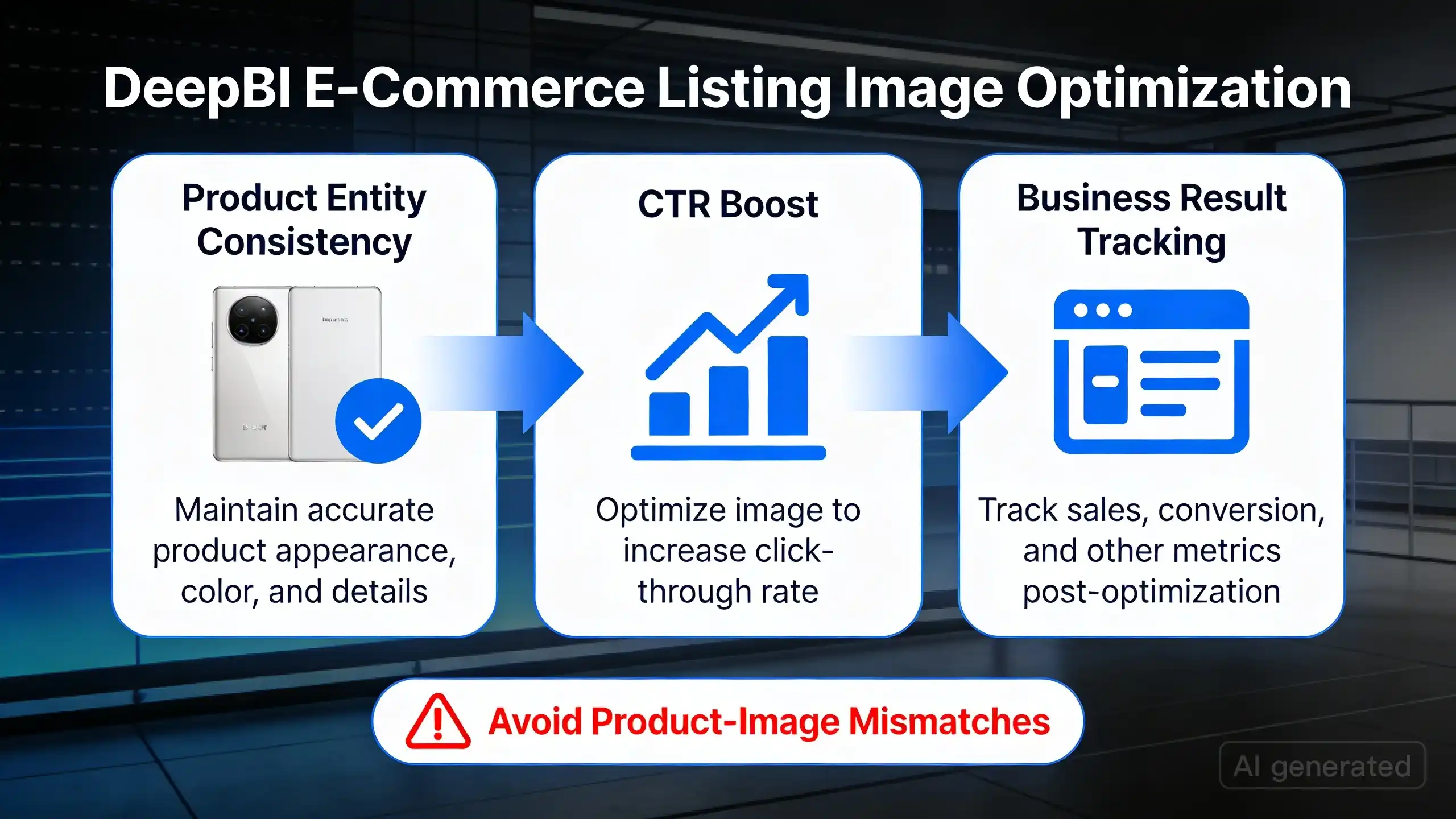
While manual optimization is essential, leveraging AI can accelerate performance—but it comes with risks. General-purpose AI image generators can create "AI hallucinations," altering a product's structure or color and leading to a "product-image mismatch." This discrepancy is a primary driver of destructive negative reviews and costly returns.
DeepBI is designed as a commercial production system to mitigate this specific risk. It operates on the core principle of 'product entity consistency.' Before any optimization, the system maps the product's core attributes—its "Product DNA"—and uses this as an unbreakable constraint. The AI is strictly prohibited from altering the product's material, color, or industrial design.
This allows the system to safely generate high-impact visuals by optimizing external elements like backgrounds and context while ensuring the product itself remains 100% authentic. Furthermore, once an image is published, DeepBI automatically links it to advertising reports, allowing you to track the direct impact on CTR and close the loop between creative changes and measurable business results.
 Pillar 2: Crafting Compelling Titles and Bullet Points
While your main image is the initial hook, your listing's text is what secures the click and drives the conversion. Well-crafted titles and bullet points answer a shopper's core questions, build trust, and clearly articulate your product's value, directly impacting both your Click-Through Rate (CTR) and Conversion Rate (CVR).
The Art of the Search-Optimized Title
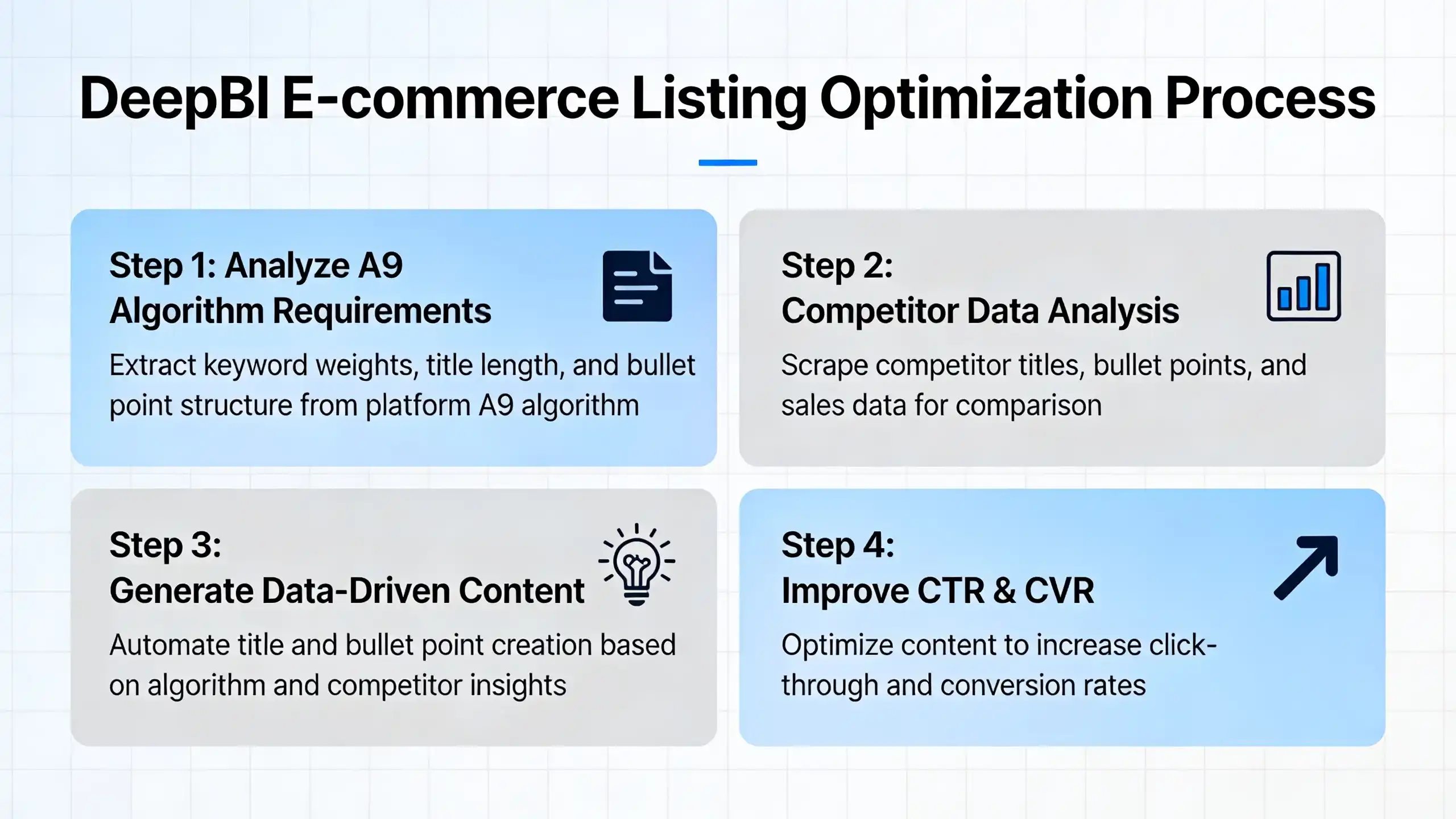
Your title is your most powerful piece of SEO real estate. The goal is to balance keyword density for Amazon's A9 algorithm with human readability. A successful title integrates high-volume search terms naturally while front-loading the most critical information and unique selling proposition (USP). It must be compelling enough to earn the click in a crowded search results page, all while strictly adhering to Amazon's category-specific character limits to avoid suppression.
Engaging Bullet Points That Convert
Move beyond a simple list of features. The most effective bullet points follow a "pain point-solution" structure. Each point should start by identifying a common customer problem or desire and then immediately present your product's feature as the definitive solution. This closed-loop format resonates with shoppers by demonstrating a clear understanding of their needs, transforming a feature into a tangible benefit and making a stronger case for purchase.
DeepBI's Role in Textual Content Enhancement
Manually optimizing text against countless competitors is a significant drain on resources. DeepBI automates this analysis by systematically deconstructing your listing's text and comparing it against top performers. Our multi-agent system analyzes the textual elements, extracts high-impact selling points, and identifies optimization opportunities. It then generates a data-driven plan to restructure your titles and bullet points, enabling your team to focus on core strategy instead of manual analysis and accelerate your listing optimization cycle.
 Pillar 3: Strategic Pricing and Promotions to Attract Buyers
On a crowded Amazon search results page, price is often the fastest filter for shoppers. Alongside your main image and title, your price is a primary data point that determines whether a customer clicks on your listing or a competitor's. An uncompetitive price can severely depress your Click-Through Rate (CTR) before a buyer even considers your product's features.
Competitive Pricing for Higher CTR
If your product is priced significantly higher than comparable items without a clear justification visible in your main image or title, potential buyers are likely to scroll past. Effective pricing isn't just about being the cheapest; it's about positioning your product to reflect its perceived value. Conduct regular competitive analysis to ensure your price is aligned with customer expectations for your category and feature set. A strategically positioned price invites clicks by signaling a fair deal, which is the essential first step toward conversion.
The Impact of Promotions and Deals
Promotions are a powerful tool for making your listing visually stand out and creating a sense of urgency. Amazon's promotional badges—like the bright orange coupon tag or the "Limited Time Deal" banner—are designed to catch the eye and interrupt a shopper's scrolling. This visual distinction is critical for improving CTR.
Displaying a strikethrough price next to a lower sale price provides an immediate, compelling reason for a customer to click. It psychologically frames the purchase as a smart financial decision, leveraging the fear of missing out on savings. By utilizing coupons, Lightning Deals, or other promotions, you create a powerful visual hook that differentiates your offer from standard-priced competitors, directly driving more traffic to your product detail page.
 Pillar 4: Harnessing the Power of Social Proof: Reviews and Ratings
In a crowded marketplace, customer reviews and ratings are powerful signals that cut through the noise. They function as instant trust indicators on the search results page, directly influencing a shopper's decision to click. A high star rating paired with a substantial number of reviews reduces perceived risk and validates a product's quality, making it a far more compelling choice than a lower-rated competitor. This social proof is a fundamental driver of click-through rates.
The Direct Link Between Reviews and CTR
On Amazon's search results page, your product appears alongside numerous alternatives. Shoppers use mental shortcuts to make quick decisions, and the star rating and review count are among the most prominent. A product with 4.5 stars and over 1,000 reviews is subconsciously seen as a proven, reliable option. This immediate credibility encourages a click, as the shopper feels more confident that the product will meet their expectations. Conversely, a low rating or a negligible number of reviews can deter clicks, regardless of how compelling your main image or title may be.
Strategies for Accumulating Quality Reviews
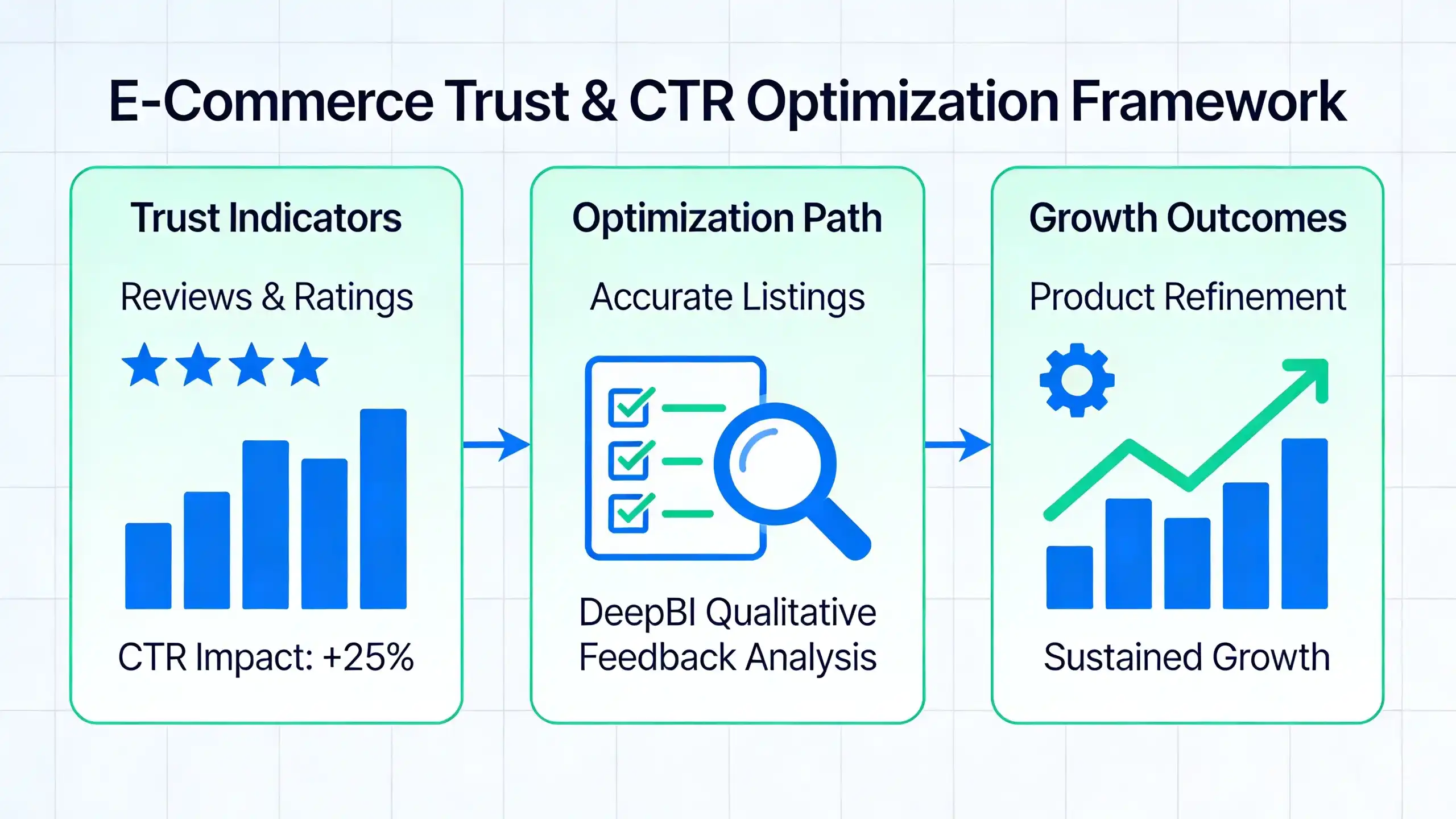
Building a strong review profile requires a proactive, two-pronged approach. First, leverage Amazon's approved channels, such as the Amazon Vine program for early feedback and the "Request a Review" button in Seller Central for post-purchase follow-ups. Second, and more critically, focus on prevention. The foundation of positive reviews is an accurate listing that sets clear customer expectations. By maintaining strict "product entity consistency" and ensuring there is no "image-product mismatch," you can significantly reduce the risk of negative reviews and refunds stemming from customer disappointment.
DeepBI's Insights into Customer Feedback
Simply accumulating reviews is not enough; you must understand the story they tell. Advanced analytics tools like DeepBI empower sellers to move beyond star ratings and analyze the qualitative data within customer feedback at scale. By parsing thousands of reviews, you can identify recurring themes, pinpoint specific product flaws, and discover features that customers love. This data-driven insight allows you to refine your product, update your listing to address common questions, and ultimately create a better customer experience. This, in turn, fuels a virtuous cycle of positive feedback, stronger social proof, and sustained CTR growth.
 Continuous Optimization: A Data-Driven Approach with DeepBI
Achieving a high Click-Through Rate is not a one-time fix but a continuous cycle of analysis, implementation, and measurement. Static listings quickly fall behind market trends and competitor actions. To maintain a competitive edge, sellers must adopt a dynamic, data-driven approach to optimization, transforming it from a periodic project into an ongoing business process.
Moving Beyond Guesswork with Performance Analytics
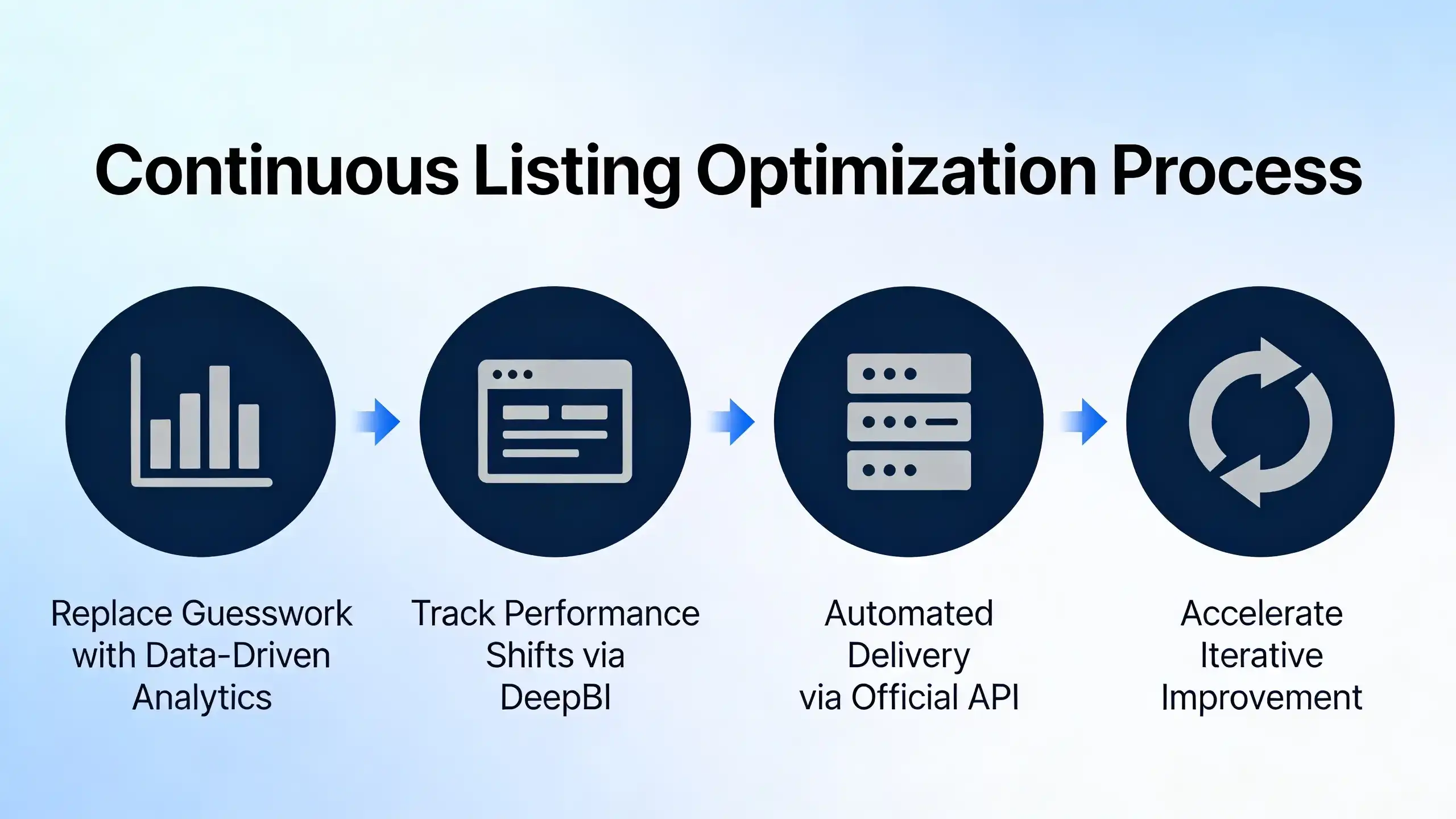
Effective optimization begins with replacing subjective assumptions with objective data. Instead of relying on vague suggestions, a data-centric platform acts as an automated market health check system. It translates abstract goals like "improve image quality" into precise, executable instructions for AI, defining specific parameters for composition, lighting, and background elements.
The crucial next step is closing the feedback loop. After a new visual asset is published to a listing, a system like DeepBI can automatically tag the event within advertising reports. This allows you to directly correlate the change with performance shifts, accurately quantifying the impact of each optimization on key metrics like CTR and conversion rates. This removes ambiguity and provides clear evidence of what works for your audience.
Iterative Improvement, Not Just A/B Testing
While A/B testing is a valuable tool, its strategic value is often crippled by slow, manual implementation. The traditional process of downloading assets, renaming files, logging into Seller Central, and uploading images one by one creates a significant bottleneck. This friction turns what should be a quick test into a time-consuming task, delaying data collection and slowing down the entire optimization cycle.
True iterative improvement requires speed. By leveraging an automated delivery engine via the official SP-API, the entire update process can be streamlined. An operation that once took over 30 minutes of manual work can be reduced to a single click, completed in seconds. This efficiency transforms listing management, enabling you to rapidly deploy changes, gather performance data, and continuously refine your strategy based on real-world results.
 Conclusion: Elevating Your Amazon Listings with DeepBI
Mastering Amazon's digital shelf requires relentless optimization of your main image, title, pricing, and reviews—the core drivers of your Click-Through Rate. However, achieving this has traditionally been a fragmented process, relying on subjective judgment, manual workflows, and a frustrating disconnect between creative efforts and performance data. This is where a data-driven approach becomes a competitive necessity, not a luxury.
DeepBI transforms this paradigm by integrating diagnosis, planning, production, and delivery into a single, intelligent optimization system. Instead of ambiguous feedback, you receive precise, AI-executable instructions. Instead of time-consuming manual updates, you get seamless one-click synchronization. Most critically, DeepBI closes the loop between action and outcome. It automatically tracks how visual changes impact your CTR in ad reports, replacing guesswork with a quantifiable data feedback loop. By embracing this end-to-end approach, you can move beyond incremental tweaks and begin to systematically elevate your listing performance, maximize your CTR, and unlock sustainable growth on Amazon.
Continuous optimization remains essential because Amazon rankings, shopper expectations, and competitive pressure keep changing.