In the hyper-competitive Amazon marketplace, a visually appealing product listing is no longer enough to guarantee success. Many sellers fall into the trap of a disconnected optimization process, where vague directives like "enhance the product's premium feel" lead to subjective changes that fail to move the needle on key metrics. This traditional approach, reliant on aesthetic intuition rather than data, often results in wasted ad spend, low click-through rates (CTR), and poor conversions.
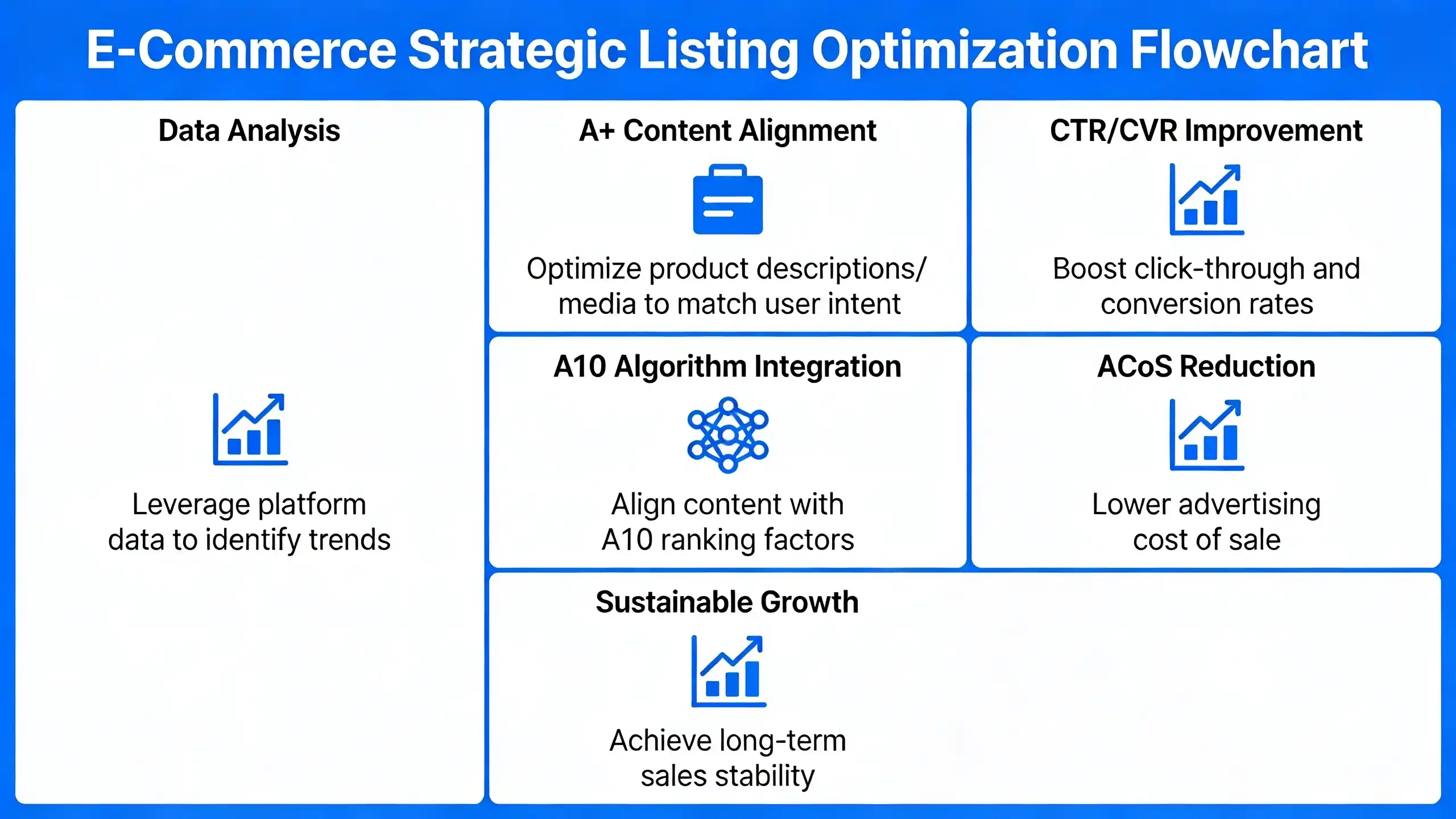
True listing optimization is a strategic discipline that transforms your product page from a simple digital shelf into a powerful commercial engine. It's about systematically using data to understand customer behavior and align every element—from titles and bullet points to images and A+ Content—with the A10 algorithm's ranking factors. The goal is to create a data-driven feedback loop where every update is a calculated move to improve CTR and conversion rates (CVR), directly lowering your Advertising Cost of Sales (ACoS) and boosting organic sales velocity. This guide provides a comprehensive framework for mastering this process, enabling you to outmaneuver competitors and achieve sustainable growth.
 Understanding Amazon's Ranking Dynamics and Sales Velocity
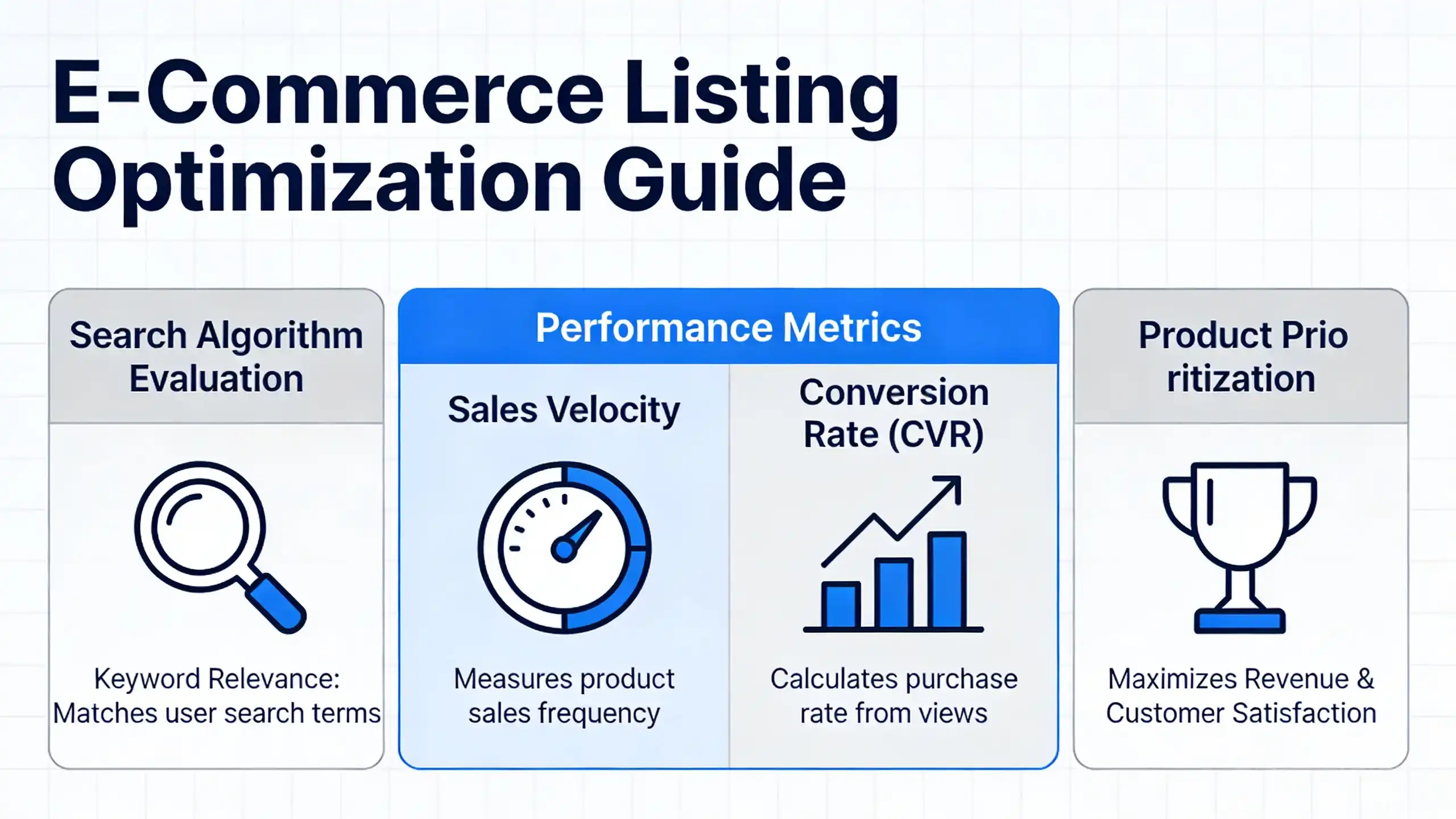
To optimize a listing effectively, you must first understand how Amazon decides which products to show customers. The platform's search algorithm is engineered to maximize revenue and customer satisfaction by prioritizing products that are most likely to sell. Success on Amazon isn't just about having a great product; it's about proving to the algorithm that your product is a top performer.
The Core Principles of Amazon's Algorithm
Amazon's ranking algorithm is a complex system that evaluates numerous factors to determine a product's position in search results. While the exact formula is proprietary, its core objective is clear: connect customers with the products they are most likely to purchase. Key inputs include direct relevance factors, such as the strategic placement of keywords in your title, bullet points, and backend search terms.
However, the algorithm's decisions are heavily weighted by performance metrics. It analyzes historical sales data, customer reviews, seller feedback, and return rates. Industry experts observe that the algorithm's focus evolves, with recent trends suggesting an increased emphasis on overall customer satisfaction and profitability for Amazon, not just raw traffic.
Why Sales Velocity and Conversion Matter
Sales velocity—the volume and consistency of your sales over time—is arguably the most powerful signal you can send to the algorithm. A high sales velocity indicates that a product is in demand, making it a reliable source of revenue for Amazon. The platform rewards this performance with higher organic ranking and increased visibility, such as a better Best Seller Rank (BSR), creating a virtuous cycle.
Equally critical is your listing's Conversion Rate (CVR), the percentage of shoppers who purchase after clicking on your product. A high CVR proves to Amazon that your listing is effective and that the traffic sent to your page is converting well. A well-optimized listing with compelling images, informative copy, and positive reviews directly boosts CVR, which in turn fuels sales velocity and solidifies your ranking.
 Foundational Listing Optimization: Keyword Research and Strategic Integration
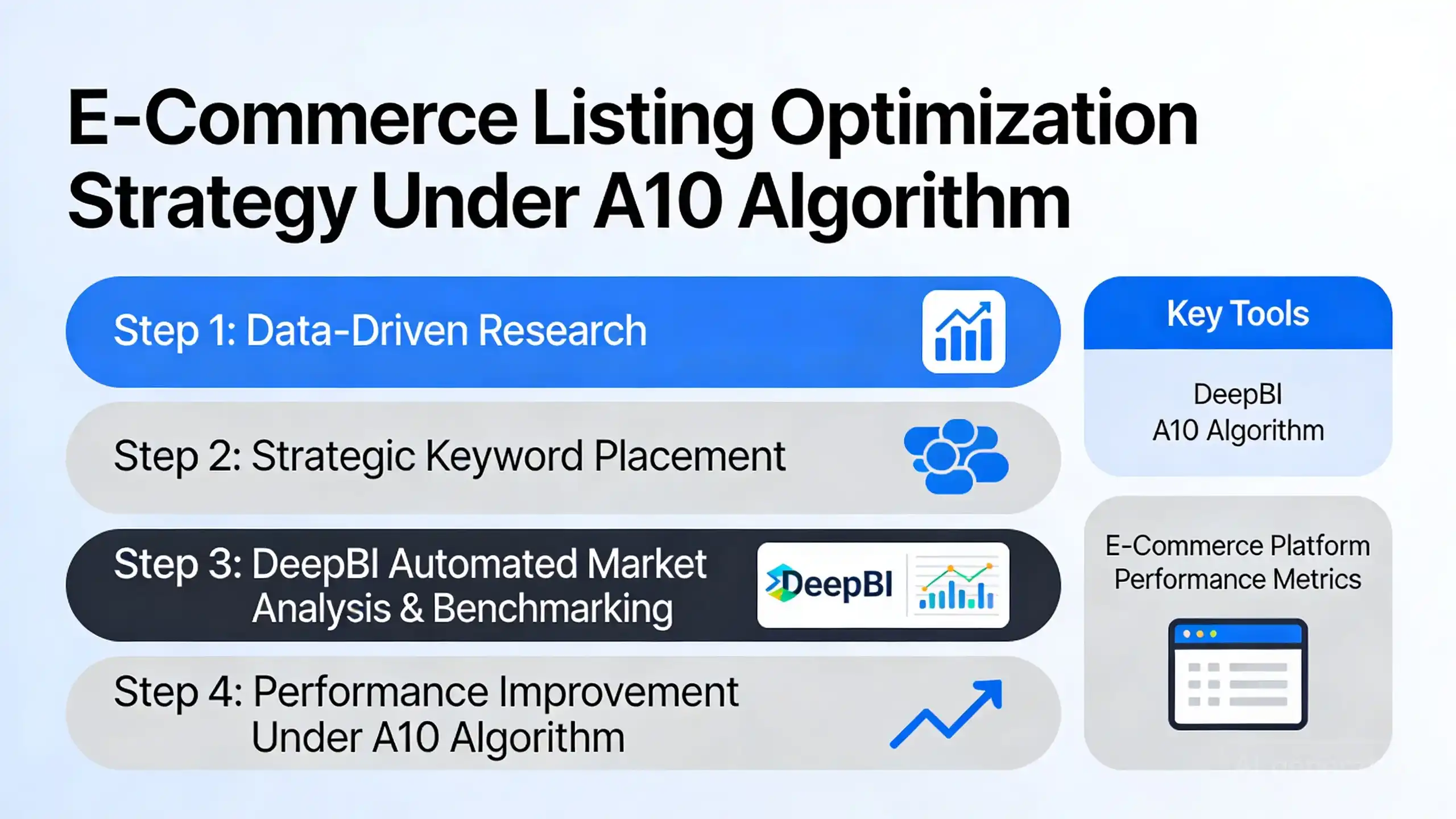
Effective optimization begins not with writing, but with data-driven research. The goal is to align your product listing with the precise language customers use to search, ensuring you appear in the most relevant and high-traffic search results. This foundational step directly impacts your organic ranking, click-through rate (CTR), and ultimately, your sales velocity.
Mastering Keyword Research for High-Converting Terms
Successful keyword strategy involves identifying a balanced portfolio of terms. This includes high-volume "short-tail" keywords for broad visibility and more specific, high-intent "long-tail" keywords that often yield higher conversion rates. A critical, yet often manual, part of this process is competitor analysis—deconstructing the keyword strategies of top-performing listings to uncover what is already working in your market.
Modern tools can automate and elevate this analysis. For instance, DeepBI’s diagnostic scoring functions as an "automated market health check." By systematically analyzing the textual elements of your product and its key competitors, the system performs a quantitative audit. It benchmarks your keyword usage against the market leaders, instantly identifying gaps and opportunities for you to capture more qualified traffic.
Strategic Keyword Placement: Title, Bullet Points, and Backend Search Terms
Once you have your target keywords, their strategic placement is essential for signaling relevance to Amazon's A10 algorithm. Each section of your listing serves a distinct purpose:
- Title: This is the most heavily weighted field for keyword ranking. Your primary and most relevant keywords should be placed here, ideally near the beginning, to maximize their impact on search visibility.
- Bullet Points: These serve a dual function of informing the customer and providing additional keyword indexing. Structuring them in a "pain point-solution" format allows you to naturally integrate keywords while directly addressing customer needs and driving conversion.
- Backend Search Terms: This hidden field is invaluable for capturing traffic from synonyms, related terms, and common misspellings that don't fit cleanly into your visible listing copy. Maximizing this space expands your reach without compromising the readability of your title or bullet points.
 Elevating Listing Content: Visuals, A+ Content, and Customer Experience
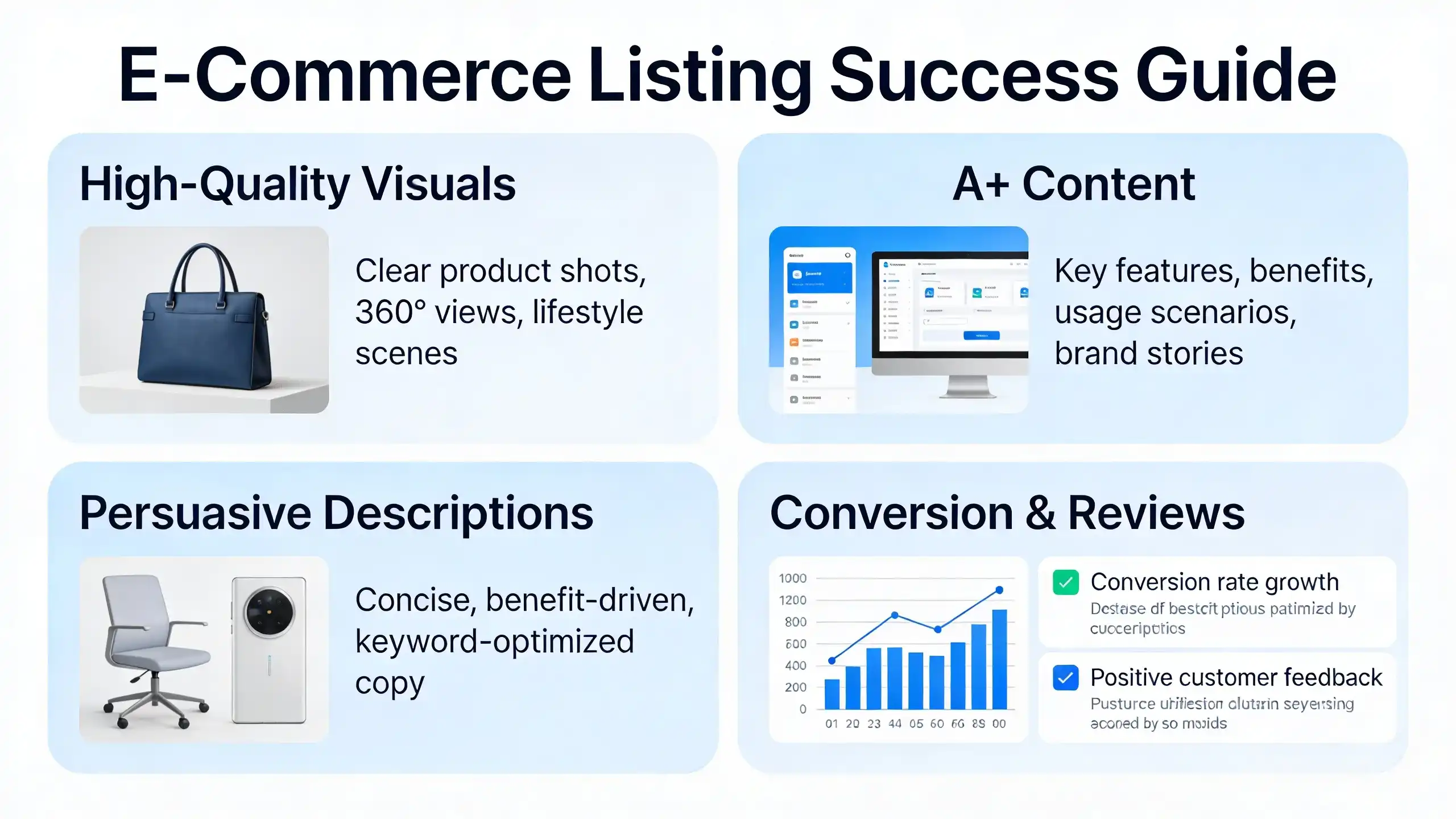
A listing's success hinges on its ability to create a compelling and trustworthy digital showroom experience. This requires a strategic fusion of high-impact visuals, persuasive copy, and authentic social proof.
The Power of High-Quality Product Images and Video
High-resolution images and product videos are critical for capturing shopper attention and driving conversion. However, leveraging general-purpose AI for visual creation carries the significant risk of "AI hallucinations," where the generated image misrepresents the physical product. This "image-product mismatch" is a primary driver of destructive negative reviews and costly returns.
To counter this, an advanced system must enforce 'product entity consistency.' By creating a 'Product DNA' map for each item, AI generation is constrained to ensure authenticity. This approach strictly prohibits any alteration to the product's inherent attributes—its material, color, or industrial design. It transforms abstract goals like "highlight battery life" into precise, AI-executable design blueprints for infographics and lifestyle shots, ensuring visuals are both commercially effective and factually accurate.
Crafting Persuasive Product Descriptions and A+ Content
A+ Content and well-structured descriptions are essential for brand storytelling and communicating value. By combining rich imagery and compelling text, A+ Content can increase conversion rates significantly. The key is ensuring the narrative is cohesive. AI-powered tools can generate SEO-optimized titles, benefit-driven bullet points, and A+ Content layouts that align perfectly with the visual strategy. This synergy creates a seamless and persuasive customer journey on the page, reinforcing brand trust and encouraging a purchase.
The Role of Customer Reviews and Ratings
Customer reviews are the ultimate form of social proof on Amazon, directly influencing a product's credibility and Best Seller Rank (BSR). The foundation of positive reviews is setting and meeting customer expectations. When the product that arrives is exactly what was promised in the listing's images and descriptions, customer satisfaction rises. Enforcing strict consistency between the digital listing and the physical product is the most effective strategy to prevent the disappointment that fuels negative feedback, thereby protecting your brand's reputation and fostering long-term growth.
 The Interplay: Listing Optimization, Advertising Performance, and Organic Rank
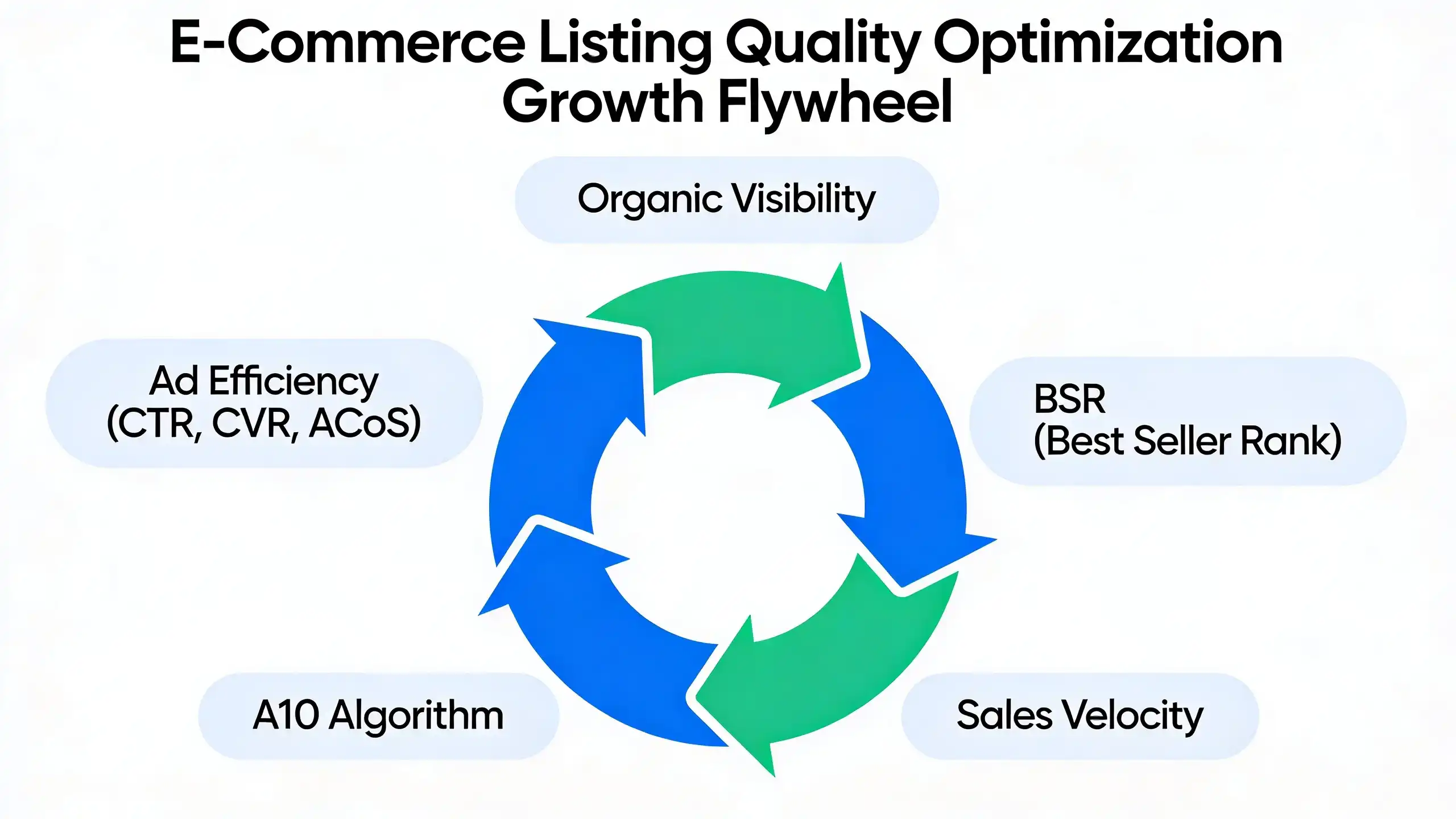
A high-performing Amazon listing is not an isolated asset; it is the engine at the center of your entire sales ecosystem. Its quality directly dictates the efficiency of your advertising spend and the trajectory of your organic growth, creating a powerful flywheel effect that separates top sellers from the rest.
How Optimized Listings Boost Ad Campaign Effectiveness
Driving paid traffic to an unoptimized product page is like pouring water into a leaky bucket. A well-crafted listing—with compelling images, benefit-driven copy, and relevant keywords—fundamentally improves ad performance. It increases the click-through rate (CTR) by capturing shopper interest and boosts the conversion rate (CVR) by effectively persuading visitors to buy. This enhanced CVR directly lowers your Advertising Cost of Sale (ACoS), ensuring every dollar spent on PPC campaigns generates a higher return and contributes positively to your bottom line.
Driving Organic Visibility Through Listing Excellence and Sales Velocity
Amazon's A10 algorithm heavily favors products that sell. An optimized listing increases conversions from all traffic sources, both paid and organic. This rise in overall sales velocity is a critical signal to Amazon that your product is relevant and desirable for specific search terms. As sales velocity increases, your product’s Best Sellers Rank (BSR) improves, and Amazon rewards it with higher organic search rankings. This creates a self-sustaining loop where better visibility drives more organic traffic, leading to more sales and further cementing your position.
Continuous Optimization: Monitoring, Testing, and Adapting
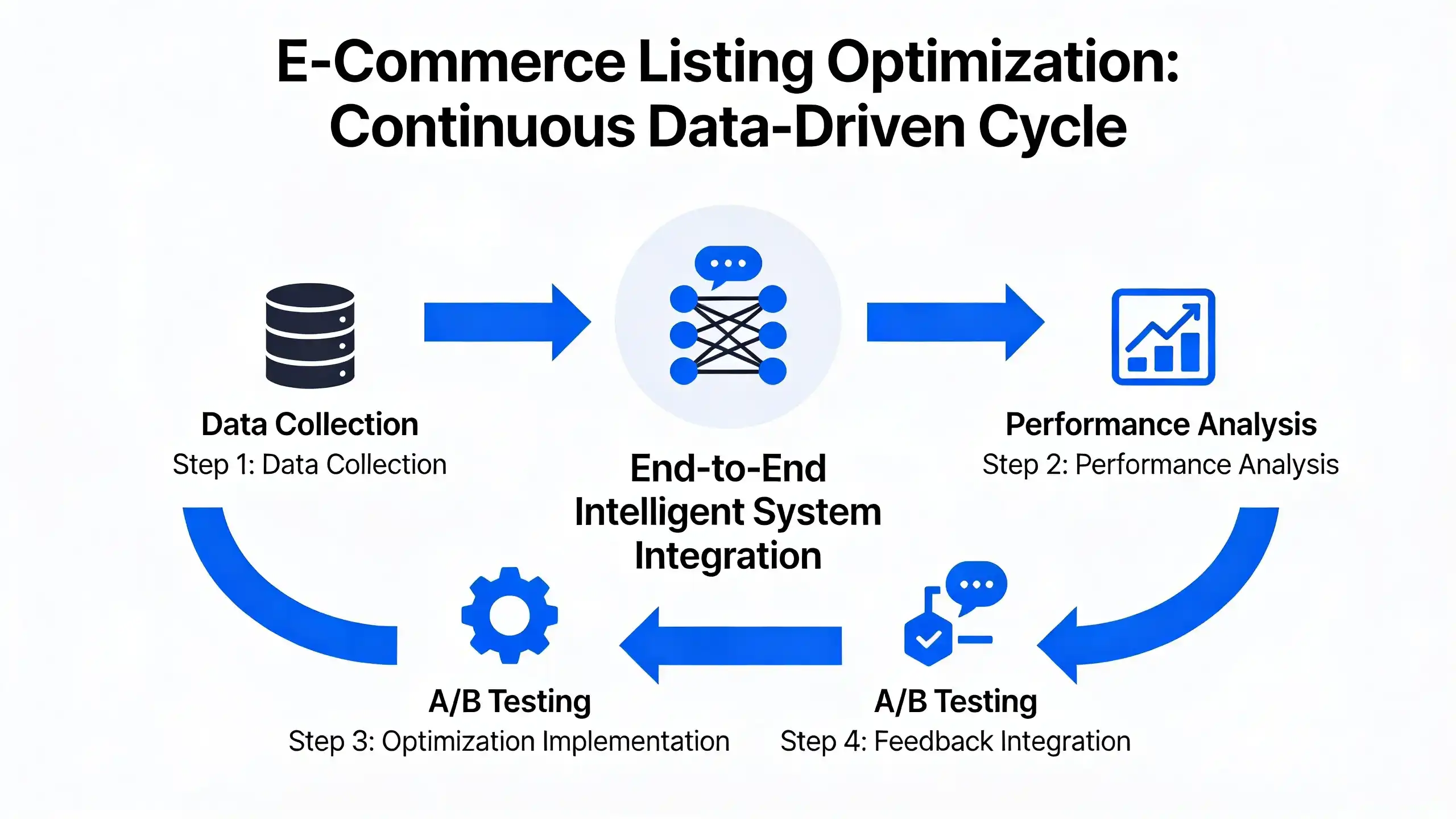
Achieving a top spot is not a one-time effort but a continuous cycle of data-driven refinement. Advanced strategies leverage a multi-layered funnel approach to turn advertising insights into organic gains. By analyzing ad campaign data, sellers can identify the highest-converting keywords and customer search patterns. This intelligence is then used to further refine the listing's SEO and content. This creates a dual growth effect where paid campaigns not only drive immediate sales but also provide the exact data needed to accelerate organic ranking, building a healthy and sustainable growth model.
 DeepBI: Your Partner in Data-Driven Listing Optimization
Effective Amazon strategy requires moving beyond guesswork. DeepBI provides a comprehensive suite of tools designed to replace subjective optimization with a data-driven, end-to-end system, transforming how you manage and improve your product listings.
Leveraging DeepBI for Listing Diagnosis and Competitive Benchmarking
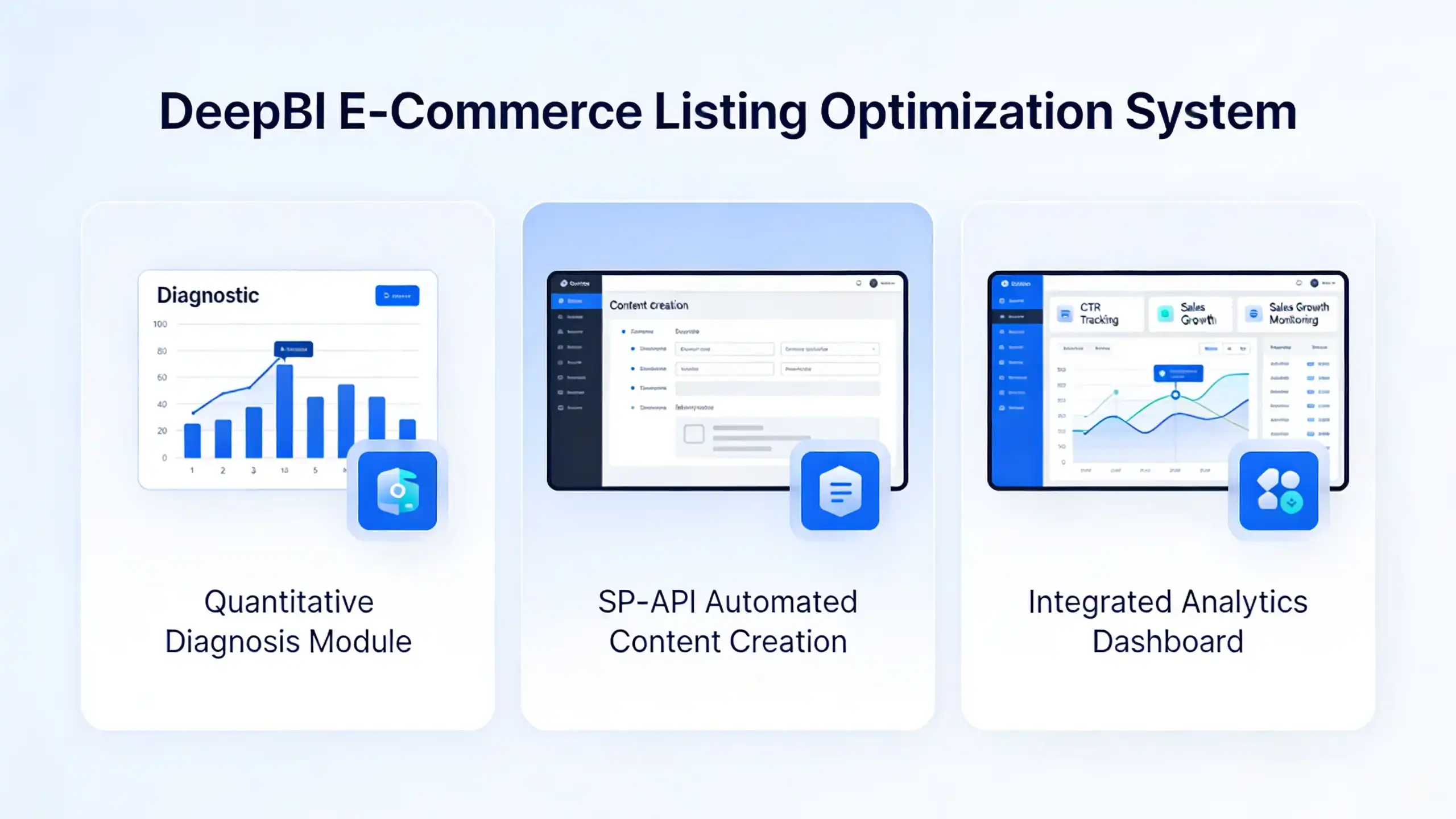
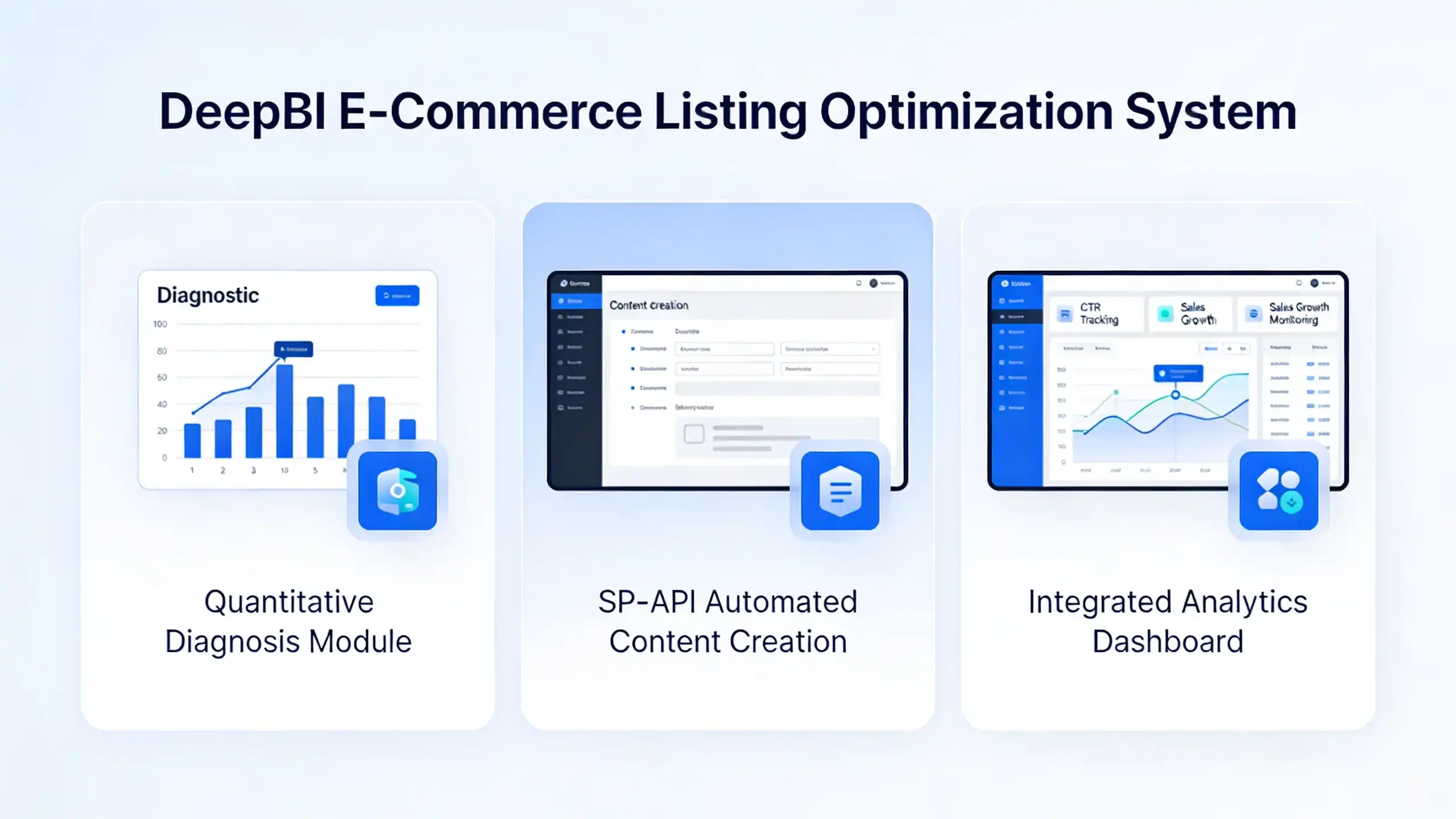
The foundation of effective optimization is a precise diagnosis. DeepBI begins with a quantitative audit of your listings, providing an intelligent score that pinpoints specific weaknesses in your content, from titles to images. This analysis extends to benchmarking your listings against top competitors, offering a clear, data-backed roadmap that prioritizes the most impactful changes needed to improve visibility and conversion rates.
Streamlining Content Creation and Implementation with DeepBI
DeepBI functions as an automated production system, not just a creative tool. Its AI generates high-quality listing content, including compelling images, titles, and bullet points. To prevent the "AI hallucinations" that can lead to product-image mismatches and negative reviews, the system is constrained by a "Product DNA" map, ensuring all generated visuals are authentic to your product. Once content is approved, the One-Click Apply module uses the official SP-API to sync changes directly to your Amazon listing. This reduces an update process that once took over 30 minutes of manual work down to mere seconds.
DeepBI's Holistic Approach to Sales Growth
DeepBI closes the loop between optimization efforts and business results. The platform integrates listing management with advertising analytics to provide a holistic view of performance. For example, when a new main image is applied, the system automatically marks this event in your advertising reports. This allows you to directly observe the impact on key metrics like Click-Through Rate (CTR) in the following weeks, creating a powerful feedback mechanism. This connection enables you to validate your strategy and understand how listing improvements directly contribute to both advertising efficiency and organic sales growth.
 Conclusion: Sustained Success Through Strategic Listing Optimization
Mastering the Amazon marketplace is not a one-time achievement but a continuous process of adaptation and refinement. Your product listing is not a static asset; it is the dynamic engine of your sales, influencing everything from organic search visibility and Best Seller Rank (BSR) to the efficiency of your advertising spend. Treating listing optimization as a cyclical, data-driven discipline is the definitive path to long-term success.
The most competitive sellers move beyond intuition and manual adjustments. They embrace an end-to-end intelligent system that integrates market diagnosis, strategic planning, and flawless execution. This approach transforms optimization from a series of isolated tasks into a cohesive growth strategy. It’s not about guesswork, but about leveraging an automated system driven by rigorous data and constrained by your business goals. While AI executes with precision, human strategy remains paramount. By adopting this forward-thinking mindset, you can ensure your listings consistently attract, convert, and retain customers, securing a durable competitive advantage on Amazon.