1. Why Image Optimization is Non-Negotiable for Amazon Sellers
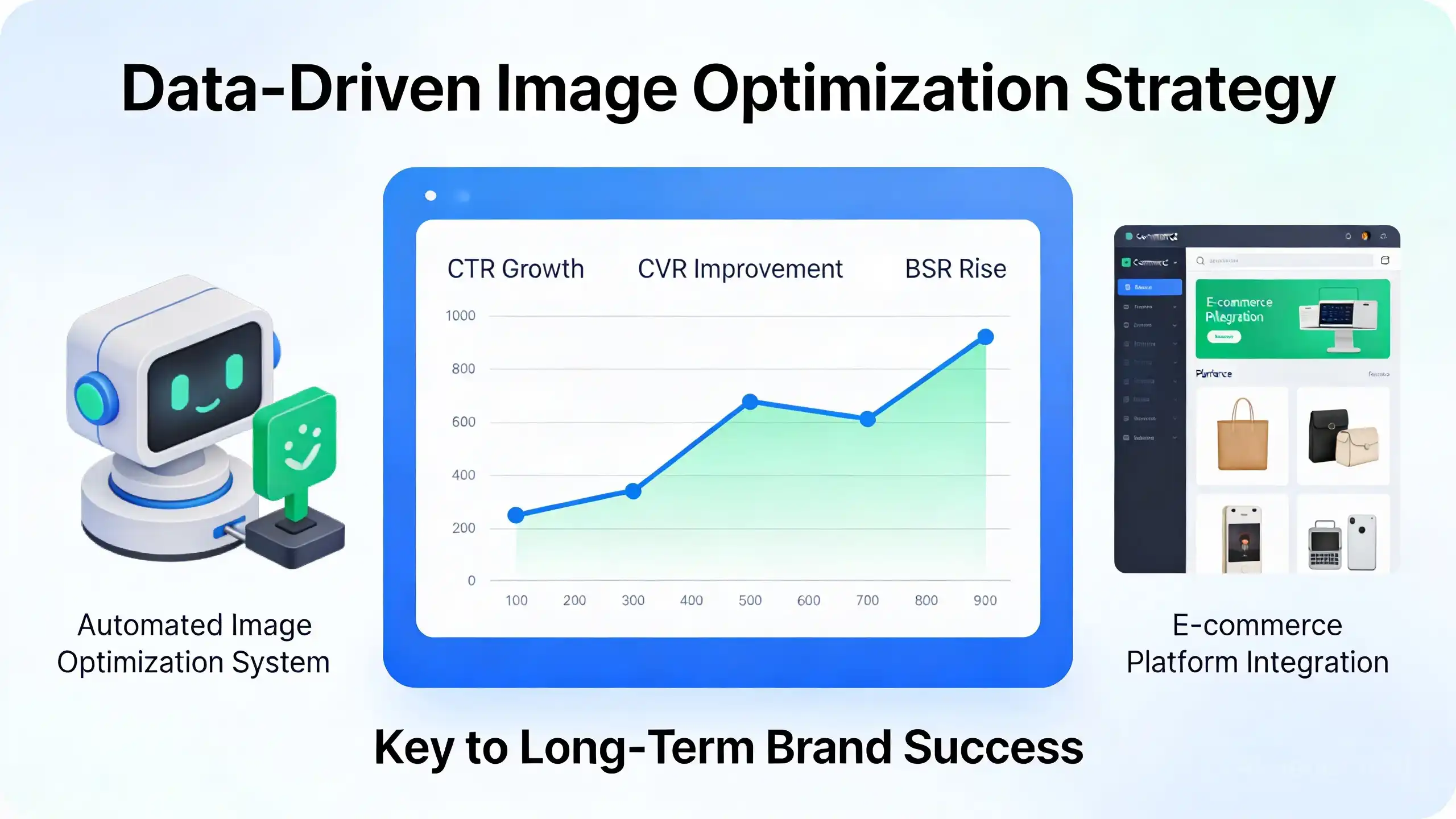
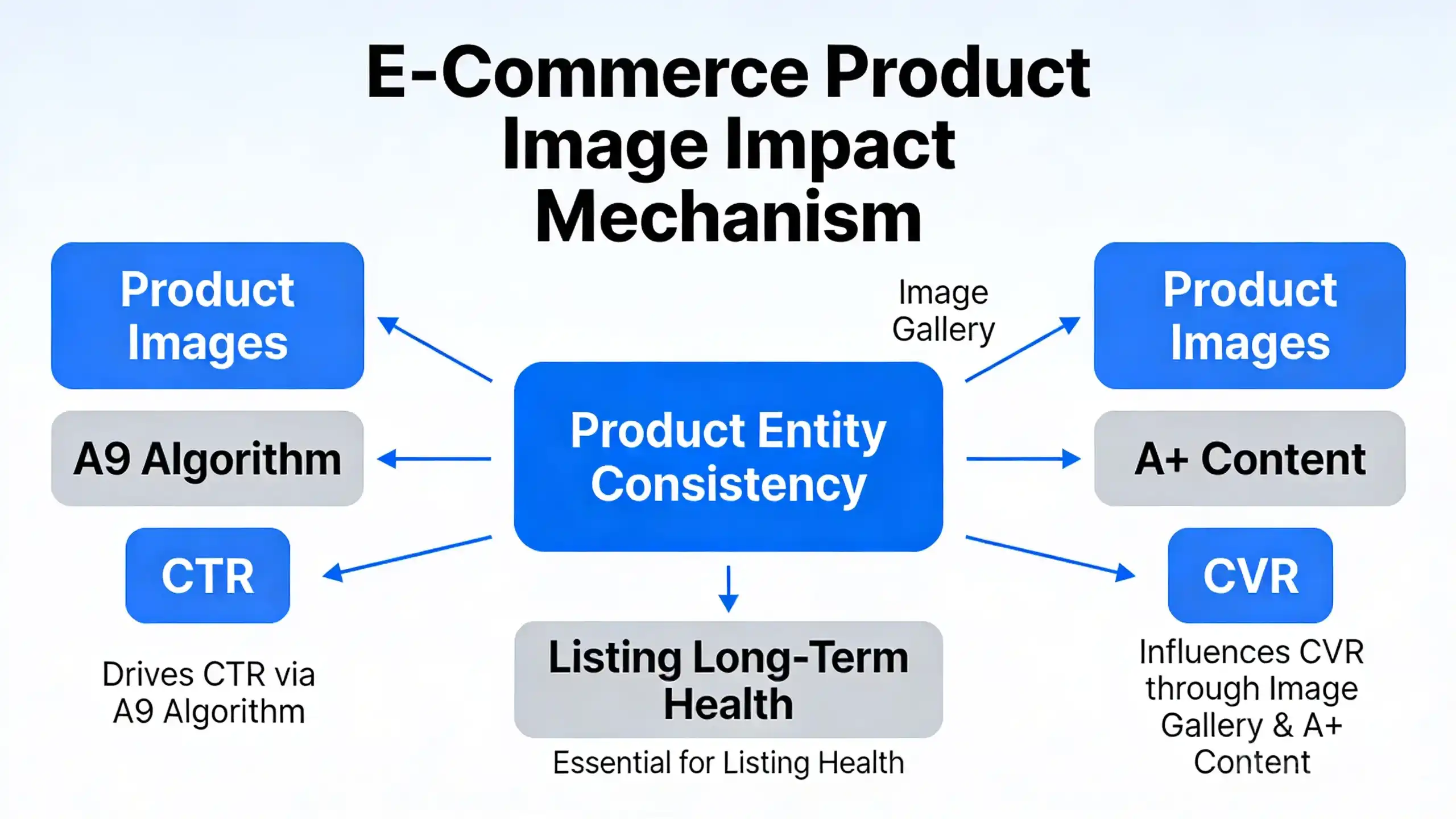
In the competitive Amazon marketplace, product images are not merely decorative; they are a core commercial engine. For most shoppers, your main image is the first and often only chance to make an impression. It is the primary factor that determines whether a customer clicks on your listing or scrolls past to a competitor. This single visual touchpoint dictates your initial Click-Through Rate (CTR), a critical metric that signals relevance to Amazon's A9 algorithm. A higher CTR can lead to improved search rankings, creating a virtuous cycle of increased visibility and traffic.
Beyond the initial click, your complete image gallery—including lifestyle shots, infographics, and A+ Content—works to build brand perception and customer trust. These assets must answer questions, highlight benefits, and create an emotional connection that moves a shopper from consideration to purchase, thereby directly impacting your Conversion Rate (CVR).
However, the most crucial function of your images is to establish authenticity. While compelling visuals are essential, they must maintain strict "product entity consistency." Any optimization that misrepresents the product's true material, color, or design creates a mismatch between customer expectation and reality. This discrepancy is a primary driver of negative reviews and returns, which can quickly erode trust and harm your listing's long-term health. Therefore, strategic image optimization is not an aesthetic exercise but a foundational pillar for driving traffic, increasing sales, and building a resilient brand on Amazon.
 2. The Direct Impact of Optimized Images on Amazon Listing Performance
On Amazon, the quality and strategic composition of your product visuals have a direct, measurable effect on the core metrics that determine your sales velocity and visibility. Your images are not just part of the presentation; they are a primary driver of your listing's performance.
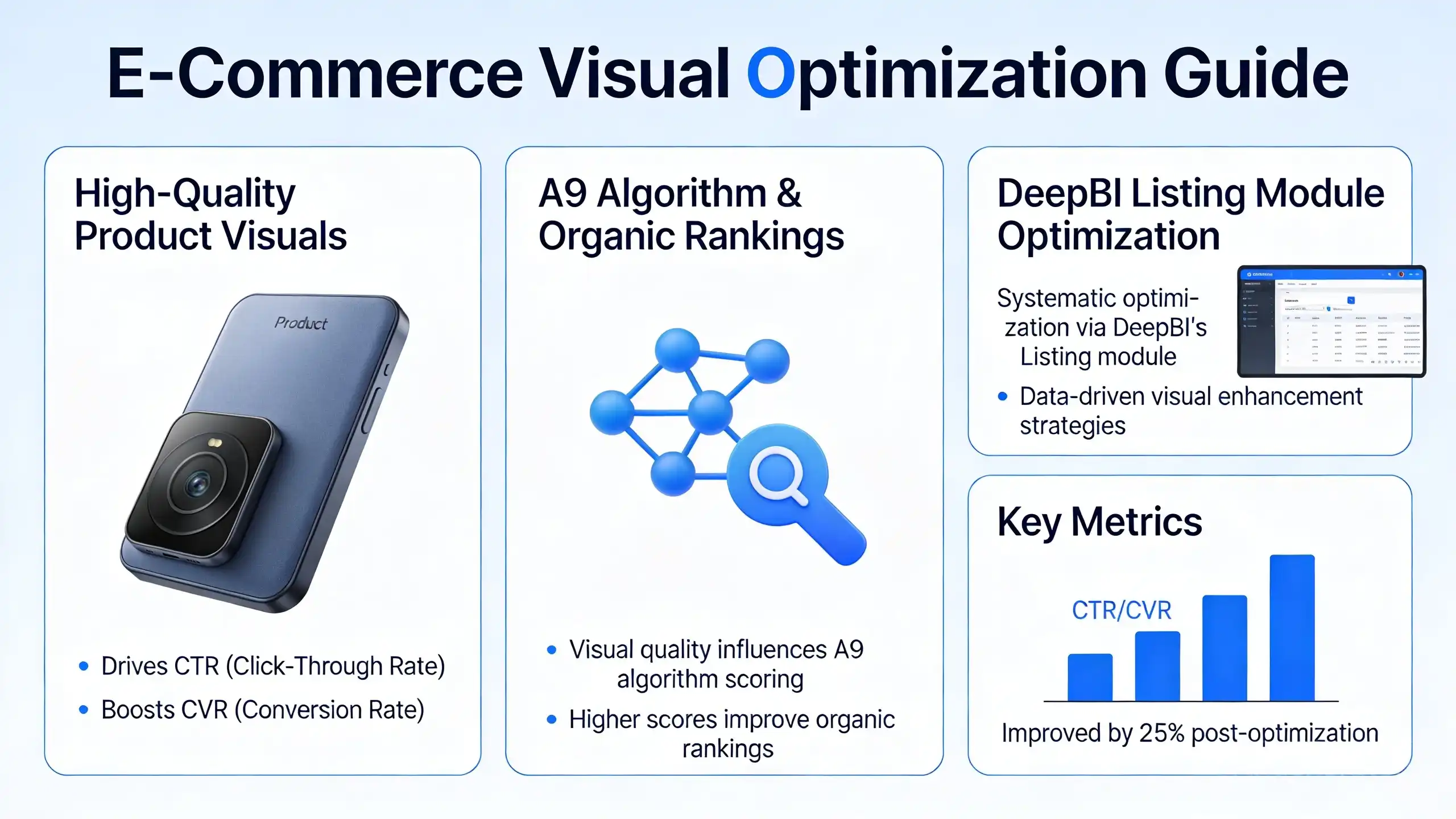
First, your main image is the single most important tool for winning clicks from a crowded search results page. A compelling, clear, and professional hero image that stands out from the competition directly boosts your Click-Through Rate (CTR). A higher CTR signals to Amazon's algorithm that your product is relevant to customer searches, representing the first critical step in the conversion funnel.
Once a shopper clicks through to your listing, your secondary images take on the critical job of converting interest into a purchase. A comprehensive image gallery—featuring lifestyle shots, infographics detailing key features, and benefit-oriented visuals—educates the buyer, answers unasked questions, and reduces purchase uncertainty. This detailed storytelling is essential for maximizing your Conversion Rate (CVR). For instance, instead of vaguely mentioning a feature, an optimized infographic can precisely illustrate a "12-hour ultra-long battery life," directly addressing a customer pain point and driving the purchase decision.
Together, CTR and CVR are powerful signals for Amazon's A9 algorithm. Listings with consistently high rates are rewarded with better organic rankings because they are proven to satisfy customer intent. Systems like DeepBI's Listing module elevate this process from subjective guesswork to a data-driven science. By diagnosing image weaknesses and tracking post-optimization CTR changes, you can create a closed feedback loop that systematically enhances performance.
 3. Core Principles of Effective Amazon Image Optimization
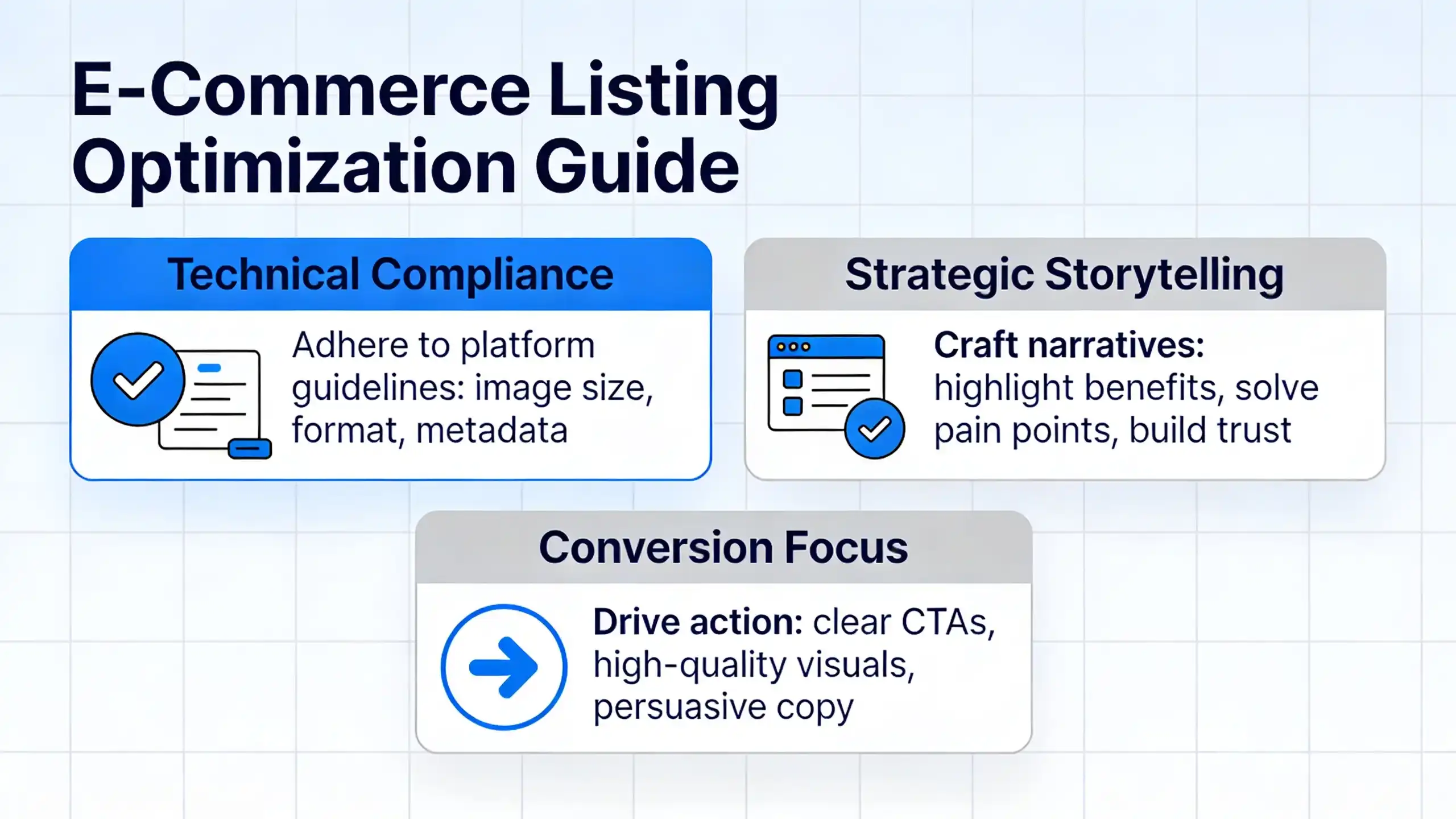
Effective Amazon imagery is built on a foundation of core principles that merge technical compliance with strategic storytelling. Mastering these fundamentals is the first step toward creating a listing that not only avoids suppression but also actively attracts, engages, and converts shoppers. Use the following principles as a checklist to audit and upgrade your product visuals.
- Adhere to Amazon's Technical and Content Policies: Your main image must have a pure white background (RGB 255, 255, 255) and feature only the product. All images should be at least 1000 pixels on the longest side to enable zoom, with 1600 pixels or more being ideal. Ensure you use accepted file formats like JPEG, TIFF, or PNG. Crucially, maintain "product entity consistency" by never altering the product's inherent material, color, or structure in any image to avoid customer complaints and returns.
- Prioritize High-Resolution and Professional Quality: All images must be high-resolution, in sharp focus, and professionally lit. Blurry, pixelated, or poorly lit photos signal low quality and erode customer trust, directly harming your conversion rate (CVR). High-quality visuals are non-negotiable for competing effectively and maximizing the impact of Amazon's zoom feature.
- Employ a Strategic Mix of Image Types: Go beyond a single product shot. A complete image stack tells a full story and addresses different customer questions. This includes main images for search, lifestyle shots showing the product in use, infographics to highlight key features, and size charts or comparison images to manage expectations and reduce returns.
- Design for Mobile-First Viewing: With a majority of Amazon traffic coming from mobile devices, your images must be effective on small screens. Ensure any text on infographics is large and legible. Use bold, simple compositions that are easy to understand at a glance without needing to zoom, ensuring a seamless experience for on-the-go shoppers.
- Leverage Modern Image Formats for Speed: While Amazon re-compresses uploads, providing your images in modern, efficient formats like WebP or AVIF where possible can contribute to faster load times. Faster-loading pages improve the customer experience, which can positively influence your listing's performance and ranking within Amazon's A9 algorithm.
 4. Technical Strategies for Advanced Amazon Image Optimization
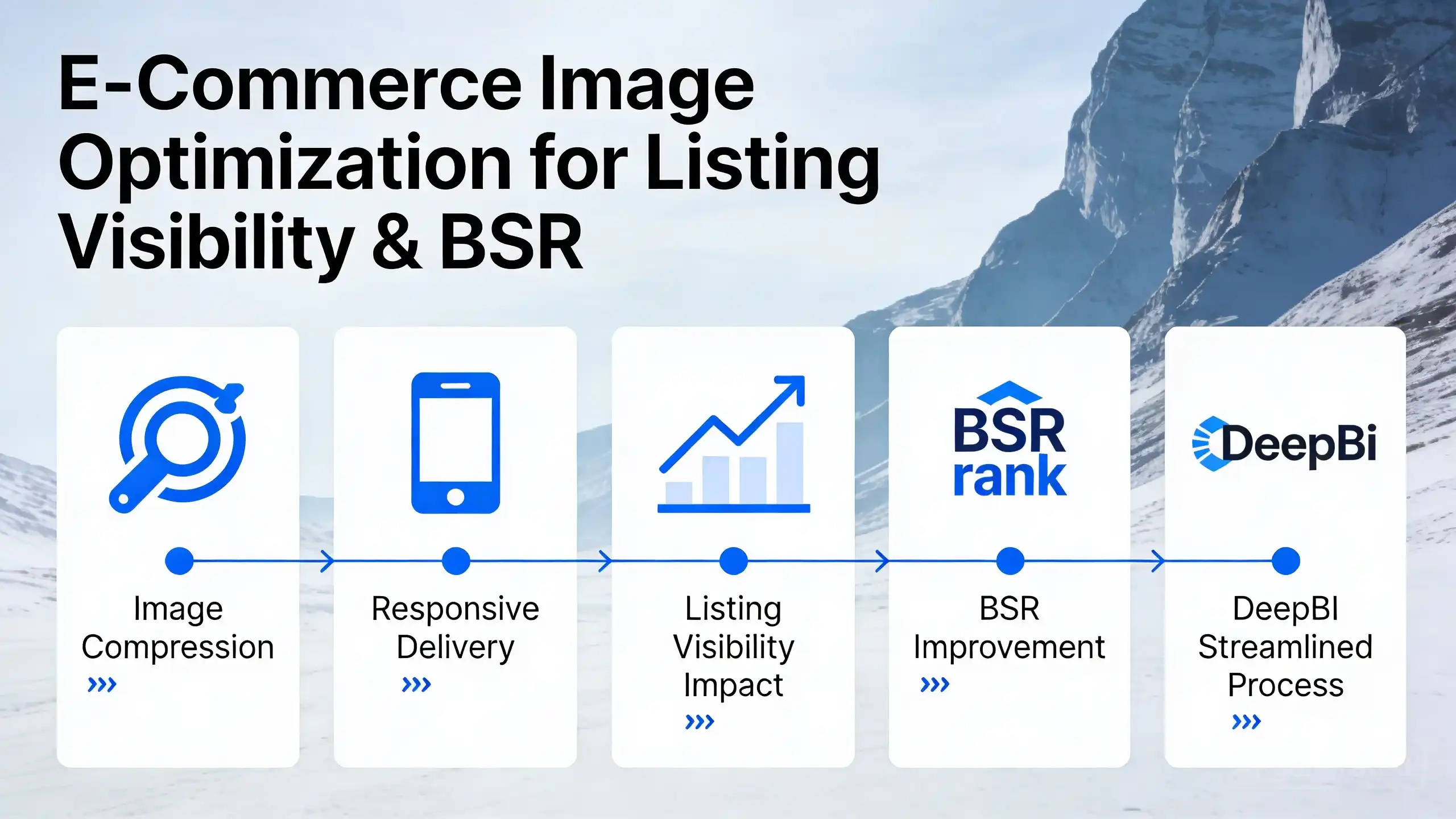
Beyond creative direction, the technical performance of your images directly impacts your listing's visibility and conversion potential. Amazon's algorithm favors fast-loading pages, making technical optimization a critical yet often overlooked growth lever. Mastering these elements ensures a superior customer experience, regardless of a user's device or location.
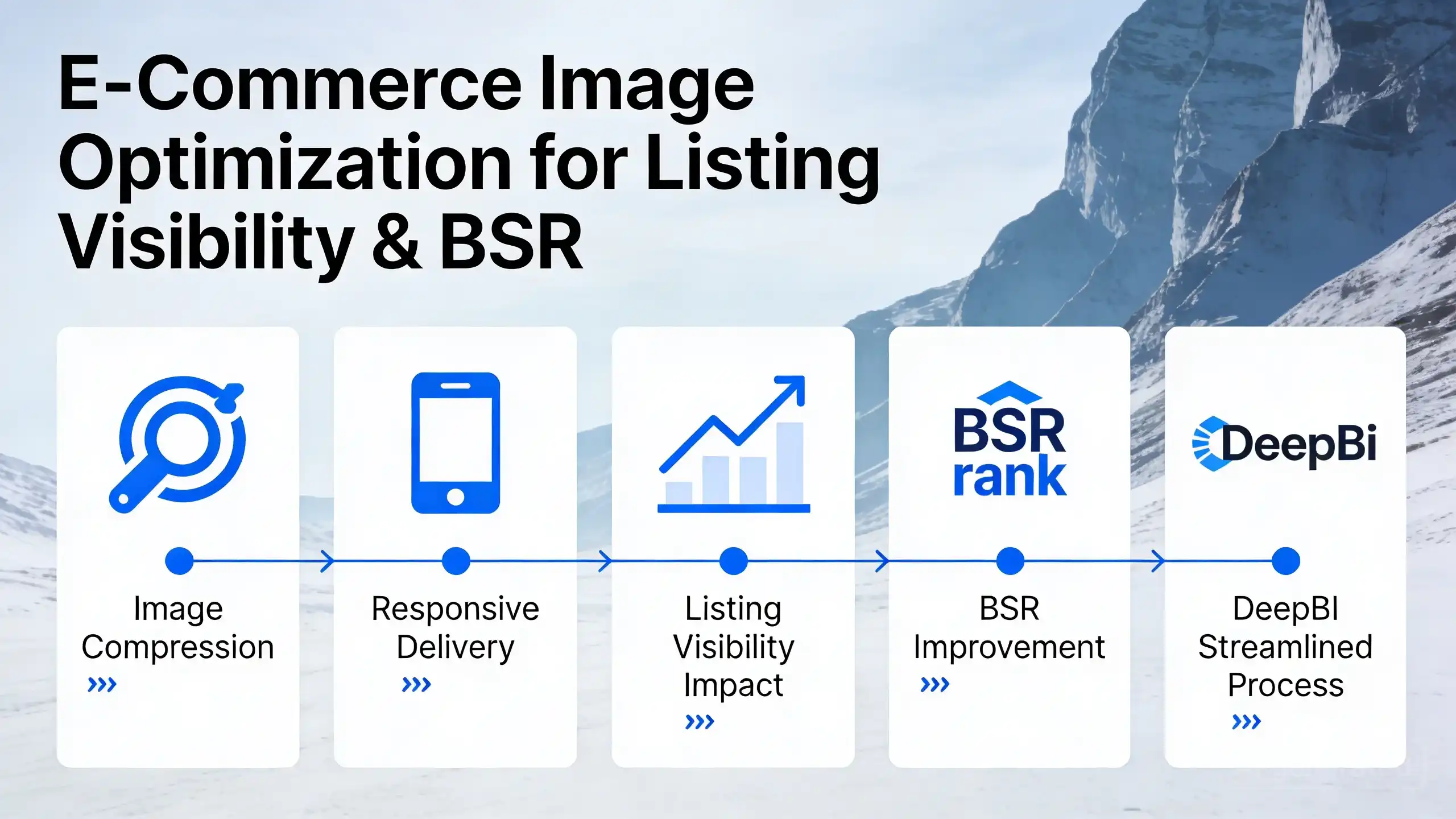
Effective optimization begins with image compression. The goal is to find the perfect balance between file size and visual quality. Lossy compression significantly reduces file size by selectively removing some data, making it ideal for web use where fast loading is paramount. In contrast, lossless compression preserves all original data but results in larger files. For Amazon listings, a well-tuned lossy compression strategy is essential for minimizing load times, which can reduce bounce rates and positively influence your Best Seller Rank (BSR).
Furthermore, modern e-commerce demands a responsive approach. Responsive image delivery involves serving different image resolutions tailored to the user's device, ensuring a crisp display on a large desktop monitor and a fast-loading, appropriately sized version on a smartphone. Techniques like lazy loading enhance this by deferring the loading of images below the fold until the user scrolls to them, which speeds up the initial page view. For global sellers, Content Delivery Networks (CDNs)—a core part of Amazon's infrastructure—reduce latency by serving images from servers geographically closer to the customer.
Manually managing these technical specifications for every image is highly inefficient. Advanced platforms like DeepBI integrate these best practices directly into the content workflow. Its AI-powered generation engine can produce images that are inherently optimized for compression and sizing, ensuring every visual asset is primed for maximum performance from the moment of creation.
 5. DeepBI: Your Partner in Amazon Image Optimization
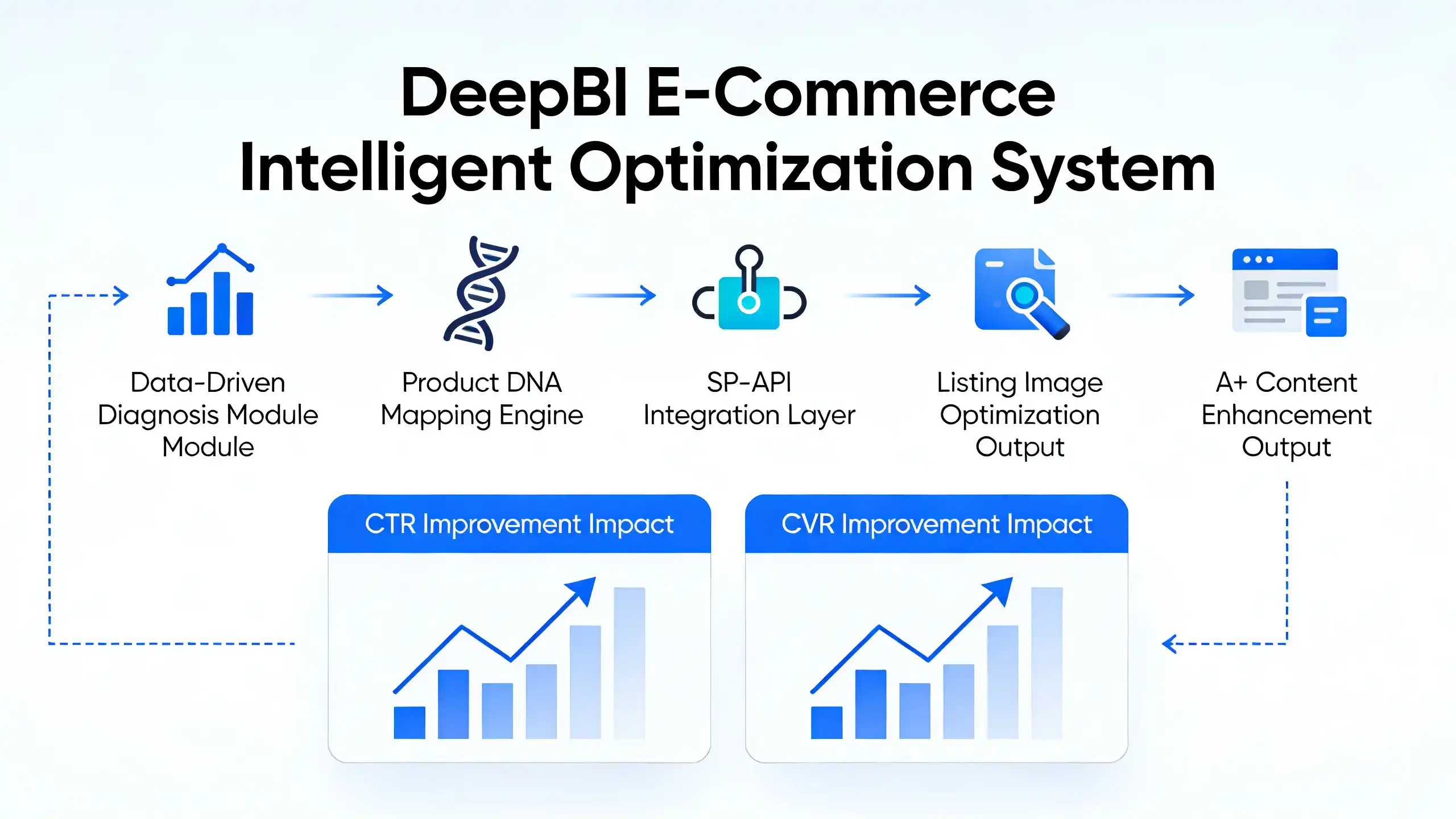
Optimizing your Amazon images should not be a process of trial and error. DeepBI provides an end-to-end intelligent system that replaces subjective decision-making with a data-driven workflow, moving seamlessly from diagnosis to execution.
The process begins with an intelligent image diagnosis, where the platform automatically benchmarks your entire visual portfolio against top-performing competitors and Amazon's best practices. This analysis identifies specific weaknesses and opportunities for improvement. From there, DeepBI’s AI translates optimization strategies into parameterized "design blueprints." These are actionable, structured recommendations for your main images, secondary images, and A+ Content, prioritized by their potential impact on key metrics like Click-Through Rate (CTR) and Conversion Rate (CVR).
To ensure brand consistency and prevent costly "AI hallucinations," DeepBI’s generation engine is constrained by a "Product DNA" map. This detailed map locks in your product's authentic physical attributes, ensuring that all AI-generated visuals remain true to the real item and mitigating the risk of customer complaints or returns.
Finally, DeepBI streamlines implementation. Instead of a manual process of downloading, renaming, and uploading files that can take over 30 minutes, you can apply all optimized content with a single click. The system syncs the new images directly to your Amazon listings via the SP-API in seconds. This allows you to rapidly deploy improvements and track their real-world impact on your advertising CTR, closing the loop from strategy to measurable results.
 6. Implementing and Measuring Your Image Optimization Strategy
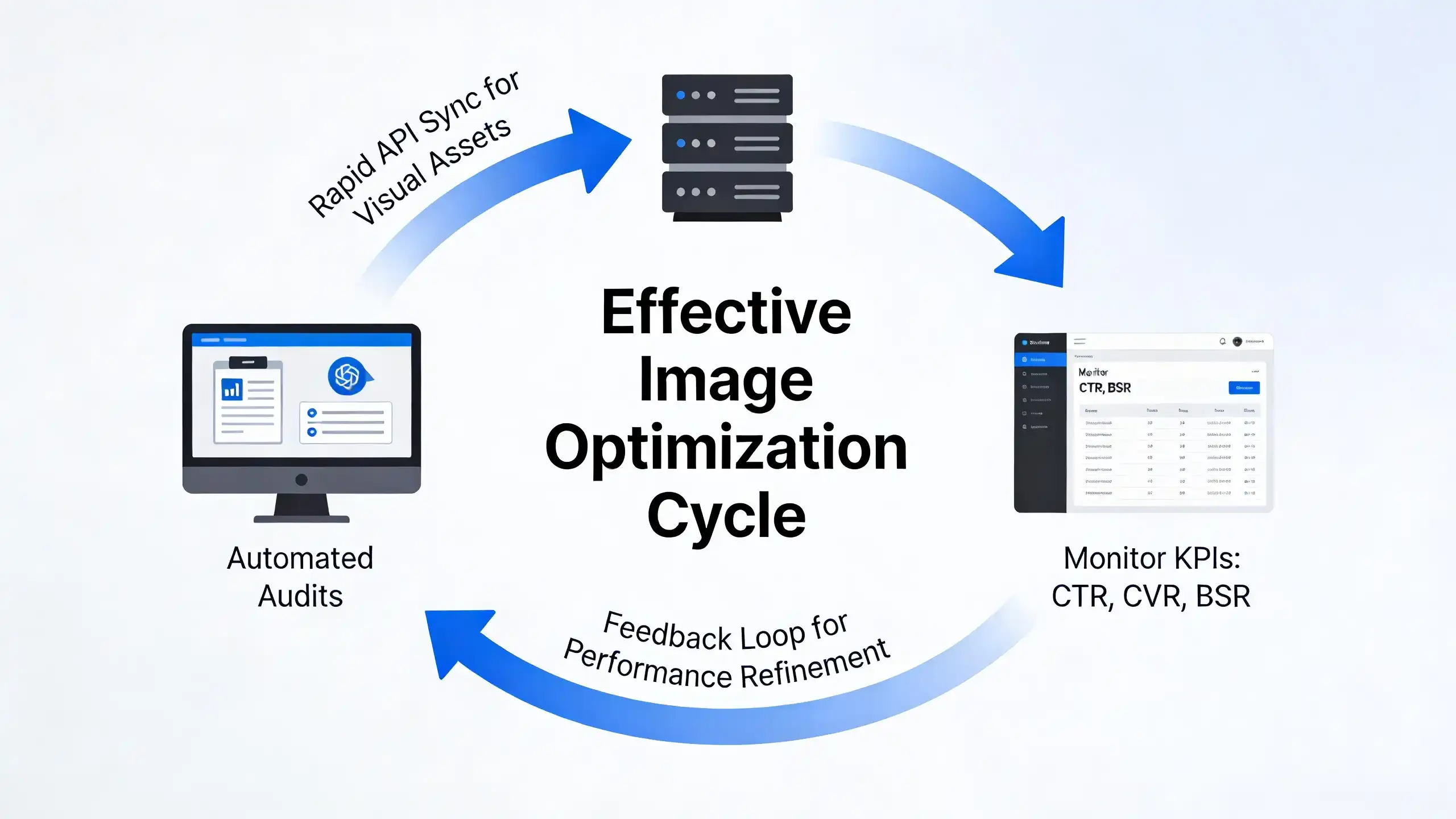
Effective image optimization is not a one-time project but a continuous, data-driven cycle. Transitioning from creative intuition to a quantifiable strategy requires a structured approach that connects diagnosis, execution, and performance measurement into a closed loop.
A successful implementation follows a clear, repeatable process. It begins with a comprehensive audit—an automated "market health check"—to quantitatively score your current images against top competitors and pinpoint specific weaknesses. Based on this diagnosis, you can generate and apply optimized visual assets. Modern tools have transformed this final step, reducing a manual upload process that once took over 30 minutes per ASIN to a one-click API sync that takes mere seconds.
Once your new images are live, the focus shifts to measurement. Instead of relying on aesthetic judgment, you must track the impact on key performance indicators (KPIs). Monitor your Click-Through Rate (CTR) from both organic search and ad reports, your Conversion Rate (CVR) on the product detail page, and any shifts in your Best Sellers Rank (BSR). A crucial practice is to mark a "visual iteration event" when an image is updated, allowing you to precisely correlate the change with CTR performance over the following 7–14 days. This data creates a powerful feedback loop that informs your next round of optimizations, ensuring your strategy evolves based on what truly drives customer engagement and sales.
 7. Conclusion: Unlock Your Amazon Potential with Optimized Images
In the demanding Amazon marketplace, your product images are far more than a gallery; they are a critical performance lever. Moving beyond subjective artistry to a data-driven, systematic approach is no longer optional—it is essential for growth. A robust image optimization strategy directly impacts every stage of the customer journey, from capturing attention in search results to driving the final purchase decision, ultimately boosting your Click-Through Rate (CTR), Conversion Rate (CVR), and Best Sellers Rank (BSR).
The true competitive advantage lies in transforming your visual content from a static asset into a dynamic, performance-tuned engine. This means replacing vague creative briefs with precise, engineered instructions and swapping manual, time-consuming uploads with automated, seconds-long deployments. By establishing a feedback loop that directly connects image iterations to advertising performance data, you can continuously refine your visual strategy with certainty. Embracing this disciplined, technology-driven methodology ensures your images not only look compelling but also consistently outperform the competition, securing your brand’s long-term success on Amazon.