The Conventional View of ACoS: A Double-Edged Sword
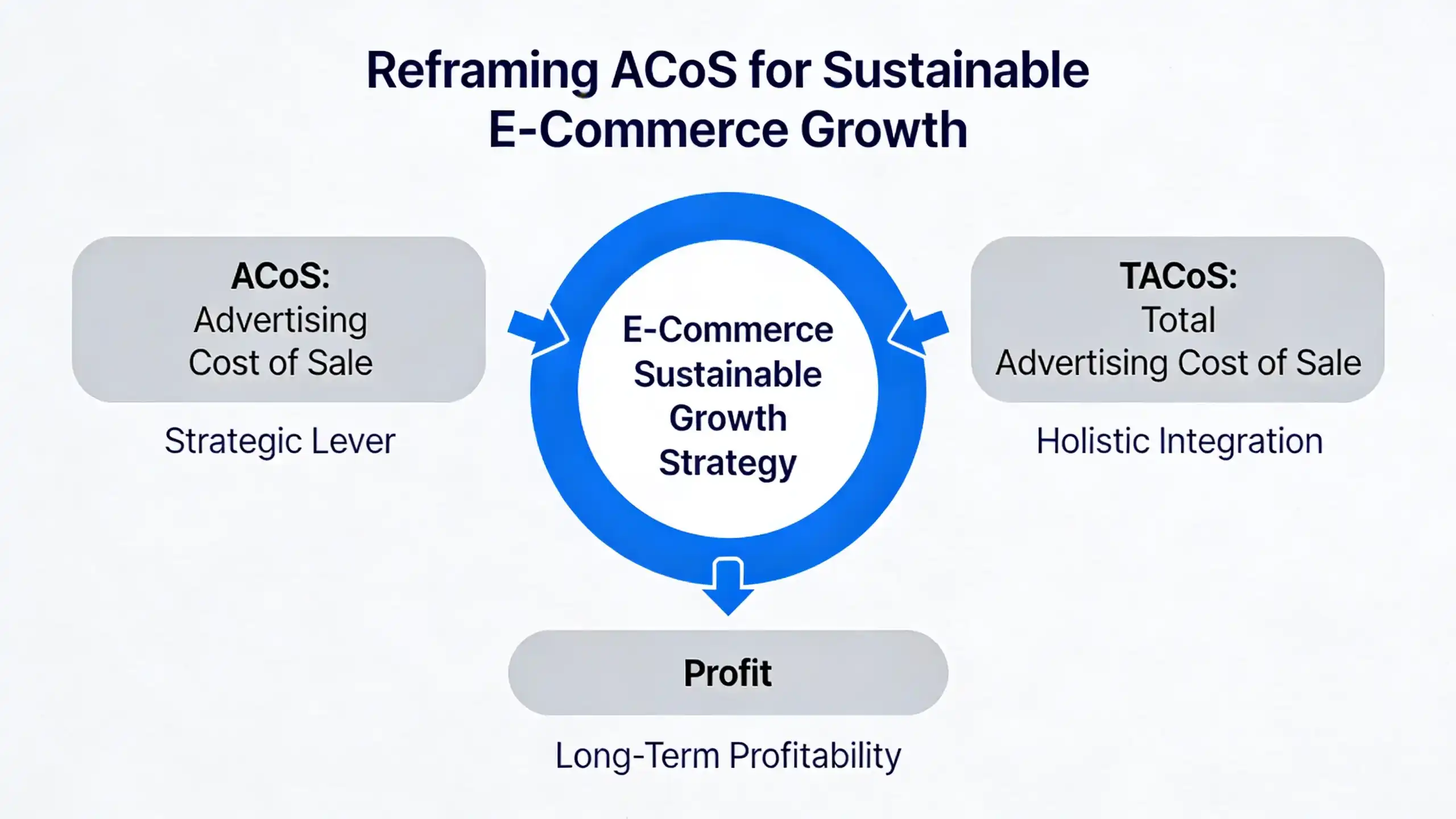
For many Amazon sellers, Advertising Cost of Sales (ACoS) is the primary, and sometimes only, metric used to judge campaign success. While it's a crucial indicator of ad efficiency, an obsessive focus on minimizing it can paradoxically hinder your brand's growth and profitability. Understanding ACoS as a strategic lever, rather than just a cost, is the first step toward a more sophisticated advertising strategy.
What is ACoS and How is it Calculated?
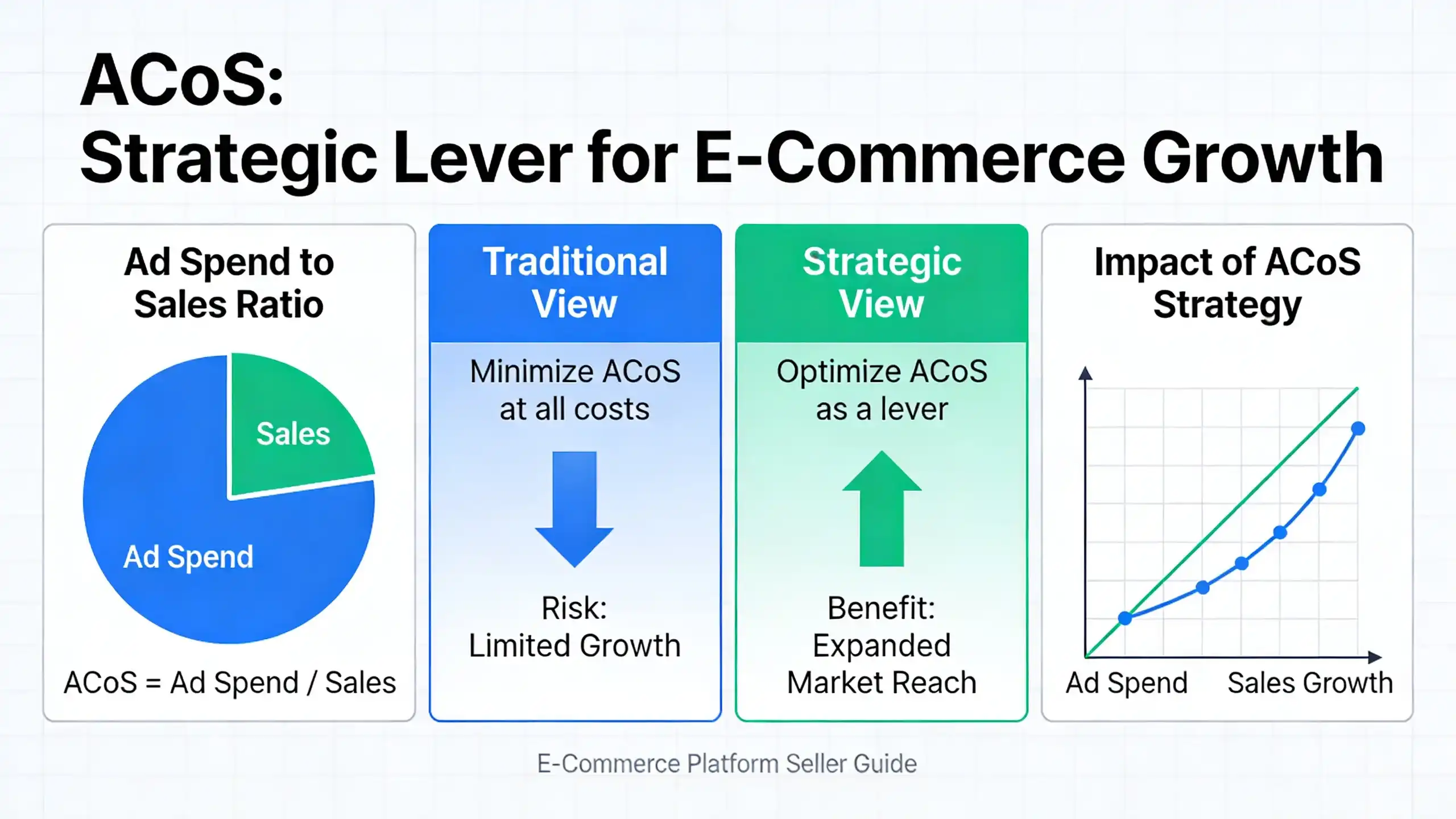
ACoS measures the direct relationship between advertising expenditure and the revenue generated from that spend. It tells you what percentage of your ad-attributed sales was spent on the ads themselves.
The formula is straightforward: ACoS = (Ad Spend / Ad Sales) x 100%
For example, if you spend $84 on a Sponsored Products campaign and it generates $300 in sales directly attributed to those ads, your ACoS would be 28%.
($84 Ad Spend / $300 Ad Sales) x 100% = 28% ACoS
This means that for every dollar of sales generated by the campaign, you spent 28 cents on advertising.
Why a Low ACoS Isn't Always the Best Strategy
The common wisdom is that a lower ACoS is always better. However, treating this as an absolute rule is a strategic mistake. An overly aggressive pursuit of a low ACoS can severely limit your market reach, stifle new customer acquisition, and ultimately reduce your total sales volume and profit.
Think of ACoS as a strategic dial, not a score to be minimized at all costs. The "right" ACoS depends entirely on your business objective:
- Product Launch: A higher ACoS is often necessary to gain initial visibility, drive early sales velocity, and gather performance data.
- Market Share Growth: To compete in a crowded niche or take share from competitors, you may need to accept a higher ACoS to ensure your ads are seen by the widest possible audience.
- Profit Maximization: For mature, established products, a lower, highly optimized ACoS is appropriate to maximize profit margins on each sale.
Chasing a rock-bottom ACoS might feel efficient, but it often means you are only advertising on a few hyper-specific, low-volume keywords, leaving significant sales opportunities on the table.
 Understanding Profitability: Your True North Star on Amazon
While many sellers fixate on achieving the lowest possible ACoS, this narrow focus can lead to missed growth opportunities. True optimization isn't about minimizing ad spend; it's about maximizing profit. The key is to understand your product's financial structure and use ACoS as a flexible lever to achieve specific business goals, even if that sometimes means aiming for a higher ACoS.
Defining Your Profit Margin and Break-Even ACoS
Before you can set a meaningful ACoS target, you must know your pre-ad profit margin. This is the profit you make on a product sale before factoring in advertising costs. Your break-even ACoS is simply equal to this margin. For example, if your product has a pre-ad profit margin of 30%, your break-even ACoS is 30%. At this ACoS, your ad spend exactly cancels out the profit from the sales generated by those ads, meaning you neither make nor lose money on those specific transactions.
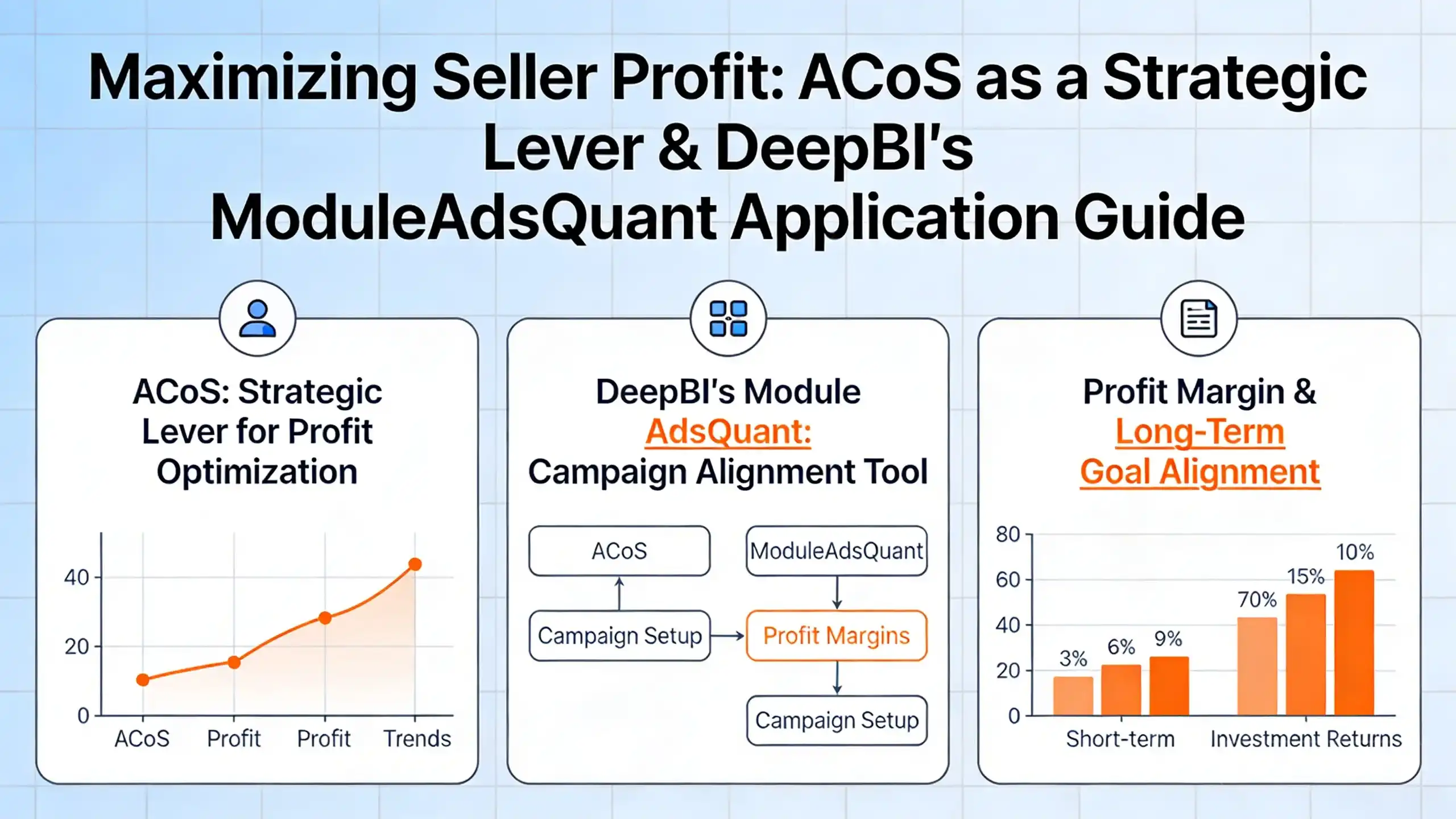
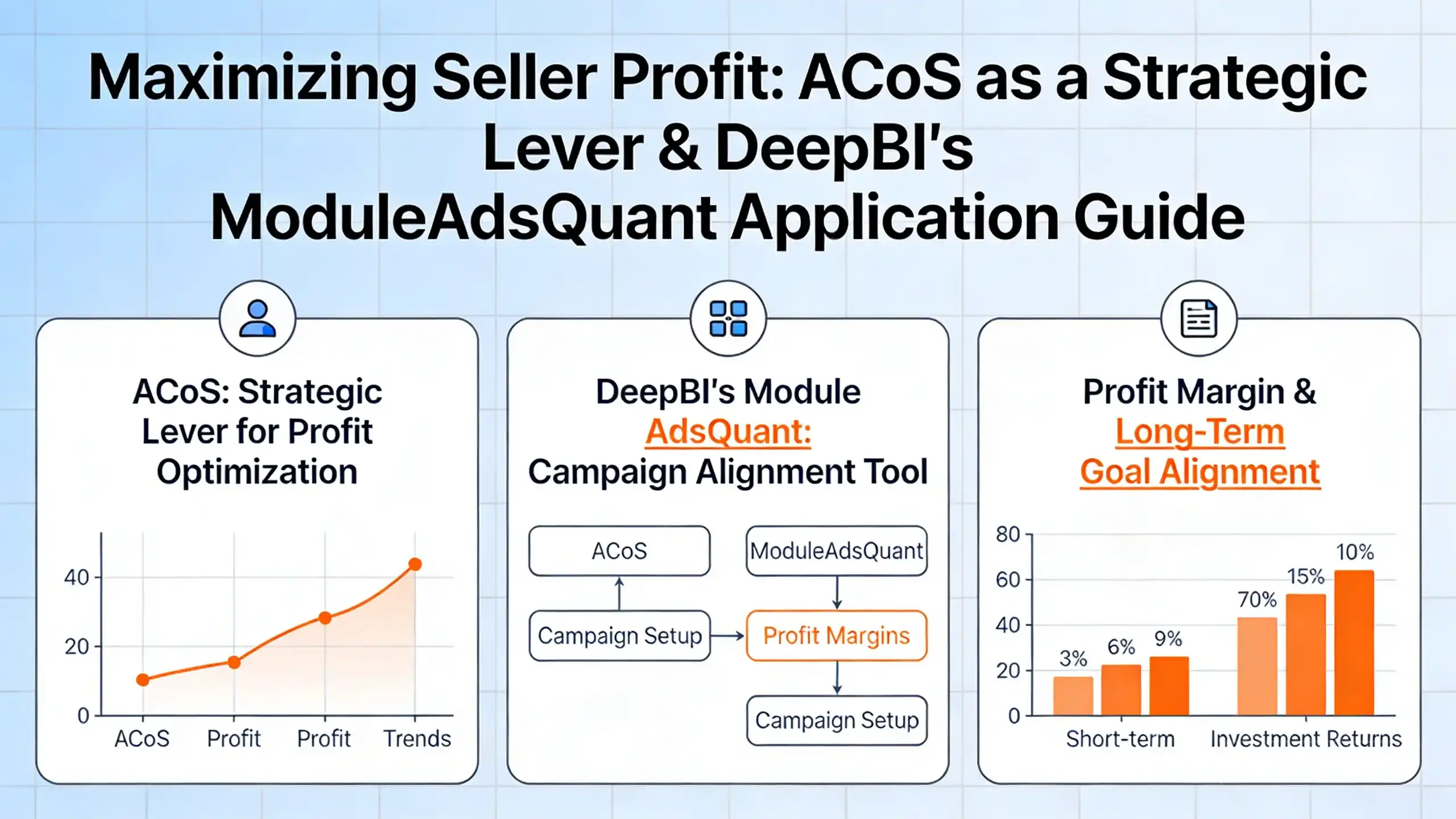
Understanding this threshold is critical for strategic planning. Tools like DeepBI's ModuleAdsQuant allow sellers to input their product profit margins directly, enabling the system to calculate and optimize campaigns toward a target ACoS that aligns with specific profitability goals, rather than a generic low number.
The Strategic Role of ACoS: When High ACoS is a Smart Investment
Exceeding your break-even ACoS isn't always a mistake; it can be a calculated investment. These are planned, temporary campaigns designed to achieve long-term strategic advantages.
- Fueling a New Product Launch: When launching a new product, initial visibility and sales velocity are paramount. A high ACoS strategy can secure top ad placements, drive early sales to climb the Best Seller Rank (BSR), and generate crucial reviews. An Amazon-funded case study on one CPG brand showed a 15% sales lift after acquiring their first review, highlighting the tangible value of this initial investment.
- Dominating a Competitive Market: In a crowded niche, a temporarily high ACoS can be used to aggressively capture market share, push competitors out of top search positions, and establish your brand as a category leader. This offensive strategy sacrifices short-term profit on ad sales for long-term market control and organic ranking benefits.
 The Holistic Perspective: Introducing Total ACoS (TACoS)
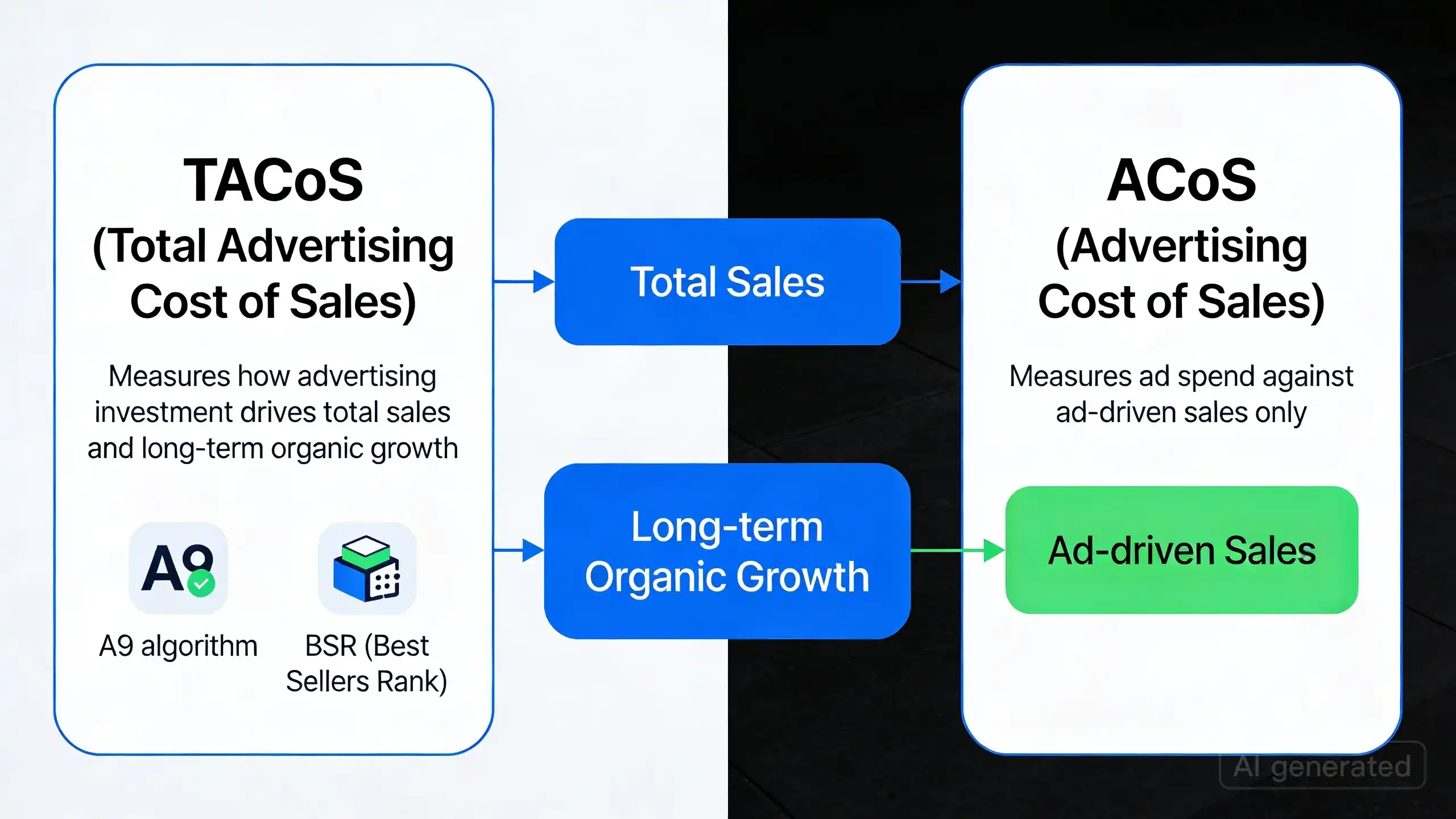
While Advertising Cost of Sale (ACoS) is a vital metric for gauging the direct efficiency of your ad campaigns, it only tells half the story. To understand the true impact of your advertising on overall business health, you need to look at Total Advertising Cost of Sale (TACoS). This metric provides a complete view by measuring your ad investment against your entire revenue stream.
ACoS vs. TACoS: Why You Need Both
ACoS measures the efficiency of your ad spend in isolation, calculated as (Ad Spend / Ad Sales). It answers the question, "How much am I spending on ads to generate one dollar of ad revenue?"
In contrast, TACoS measures the broader impact of that spend, calculated as (Ad Spend / Total Sales). It answers a more strategic question: "How is my advertising investment influencing my overall sales, including organic revenue?"
Relying solely on ACoS can be misleading. A low ACoS might look good, but if your total sales are stagnant, your business isn't growing. Conversely, a rising ACoS isn't always negative if it's driving a disproportionately larger increase in organic sales, thus lowering your TACoS and improving overall profitability.
How Advertising Fuels Organic Growth and Long-Term Profitability
Effective advertising creates a powerful "flywheel effect" that directly boosts your organic performance. When ads drive traffic and sales, they send positive signals to Amazon's A9 algorithm. This initial sales velocity improves your Best Seller Rank (BSR), encourages customer reviews, and builds sales history for your target keywords.
As your product gains this traction, its organic ranking improves. Shoppers begin to discover your product through organic search, not just paid placements. This increased organic visibility leads to more sales that you don't have to pay for directly, reducing your dependence on advertising over time. By analyzing ad performance data to identify high-converting keywords, you can build a targeted strategy to accelerate this cycle, systematically improving organic rank and driving your TACoS down for sustainable, long-term growth.
 DeepBI: Empowering Strategic ACoS and Profit Optimization
Moving beyond reactive ACoS management requires a system that aligns ad spend directly with profitability. DeepBI provides the framework and automation to shift from simply controlling ad costs to strategically investing in sustainable growth, ensuring every dollar spent contributes to your bottom line.
Dynamic Ad Management for Profit-Driven Campaigns
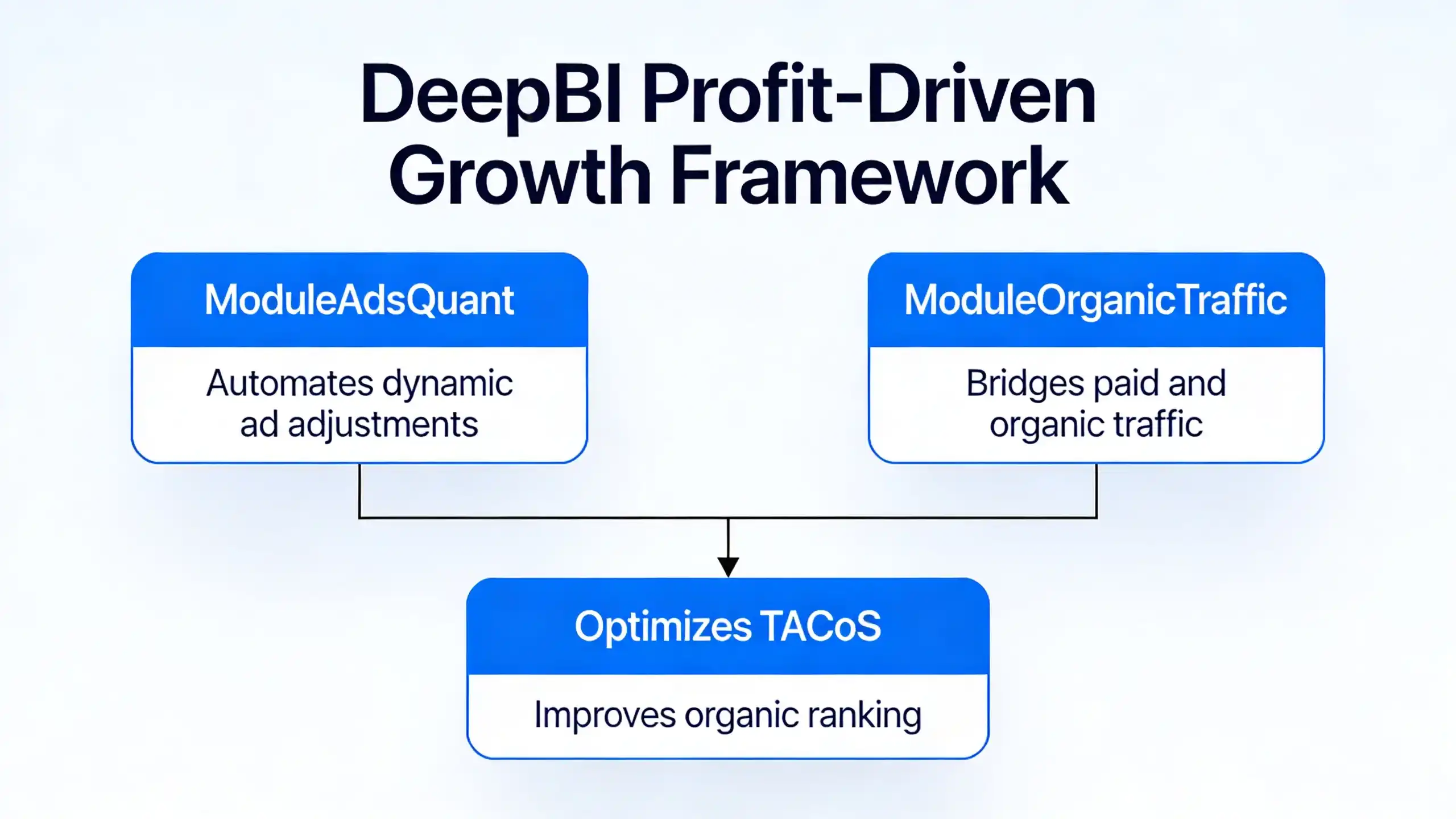
Effective advertising is not about hitting a static ACoS target; it's about maximizing profit. DeepBI’s ModuleAdsQuant facilitates this shift through a dynamic adjustment mechanism that automates bid and budget optimization. The system analyzes a 7-day rolling window of performance data—including clicks, conversions, and spend—to make informed decisions. This approach avoids overreactions to daily market fluctuations, ensuring campaigns are consistently steered toward your true profit objectives.
This process is structured around a four-layer traffic funnel: Explore, Filter, Refine, and Scale. DeepBI systematically guides keywords and campaigns through these stages, using real-time data to allocate budget efficiently, nurture high-potential targets, and scale proven winners for maximum financial return.
Bridging Paid and Organic: DeepBI's Approach to TACoS
True profitability is measured by Total Advertising Cost of Sales (TACoS), which reflects the health of your paid and organic channels combined. DeepBI’s ModuleOrganicTraffic is engineered to create a powerful synergy between them. It functions as a fifth layer to the ad funnel, dedicated to natural traffic growth.
The module identifies keywords with high CTR, CVR, and order values from your ad campaigns. It then enables you to launch dedicated campaigns with a concentrated budget, specifically aiming to secure 'Top of Search' placement. The resulting increase in ad-driven sales directly boosts your organic ranking for those high-value keywords. This creates a virtuous cycle: as organic rank improves, your reliance on paid ads for those terms decreases, driving down your overall TACoS and amplifying total profit.
 Conclusion: Mastering Amazon Ads for Enduring Success
Navigating the complexities of Amazon advertising requires moving beyond a singular focus on Advertising Cost of Sales (ACoS). The key to unlocking sustainable growth is to reframe ACoS not as a simple cost to be minimized, but as a strategic lever to be adjusted based on your business objectives—whether that's aggressively launching a new product or maximizing profitability for a mature one. This strategic mindset is the foundation of long-term success.
However, strategy without the right data is merely guesswork. To truly understand the health of your business, you must adopt a holistic view that integrates ACoS with Total Advertising Cost of Sales (TACoS) and, most importantly, actual profit. This comprehensive perspective reveals the true impact of your ad spend on your brand's overall sales velocity and bottom line. By connecting ad performance to total revenue and profitability, you can make informed decisions that drive not just sales, but enduring, profitable growth. This is the path to mastering the Amazon marketplace.