Understanding Amazon ACoS: Beyond the Basics
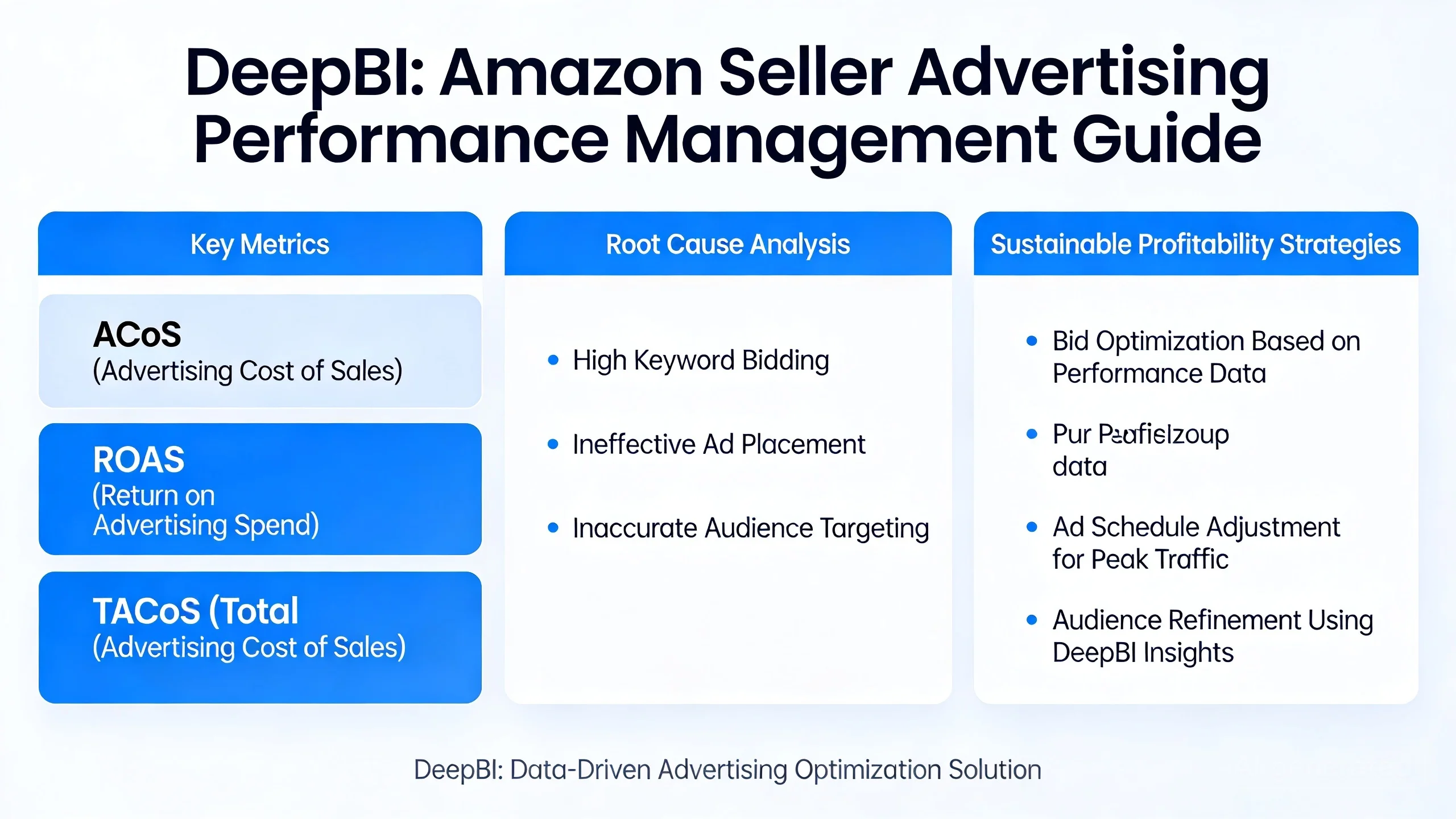
To effectively manage and scale an Amazon business, sellers must master the key metrics that govern advertising performance. The most fundamental of these is the Advertising Cost of Sales (ACoS), which directly measures the efficiency of Pay-Per-Click (PPC) campaigns. However, focusing on ACoS alone provides an incomplete picture. A strategic approach requires understanding its relationship with other vital metrics, such as ROAS and TACoS, to accurately gauge the overall health and growth of your brand.
What is ACoS and Why Does it Matter?
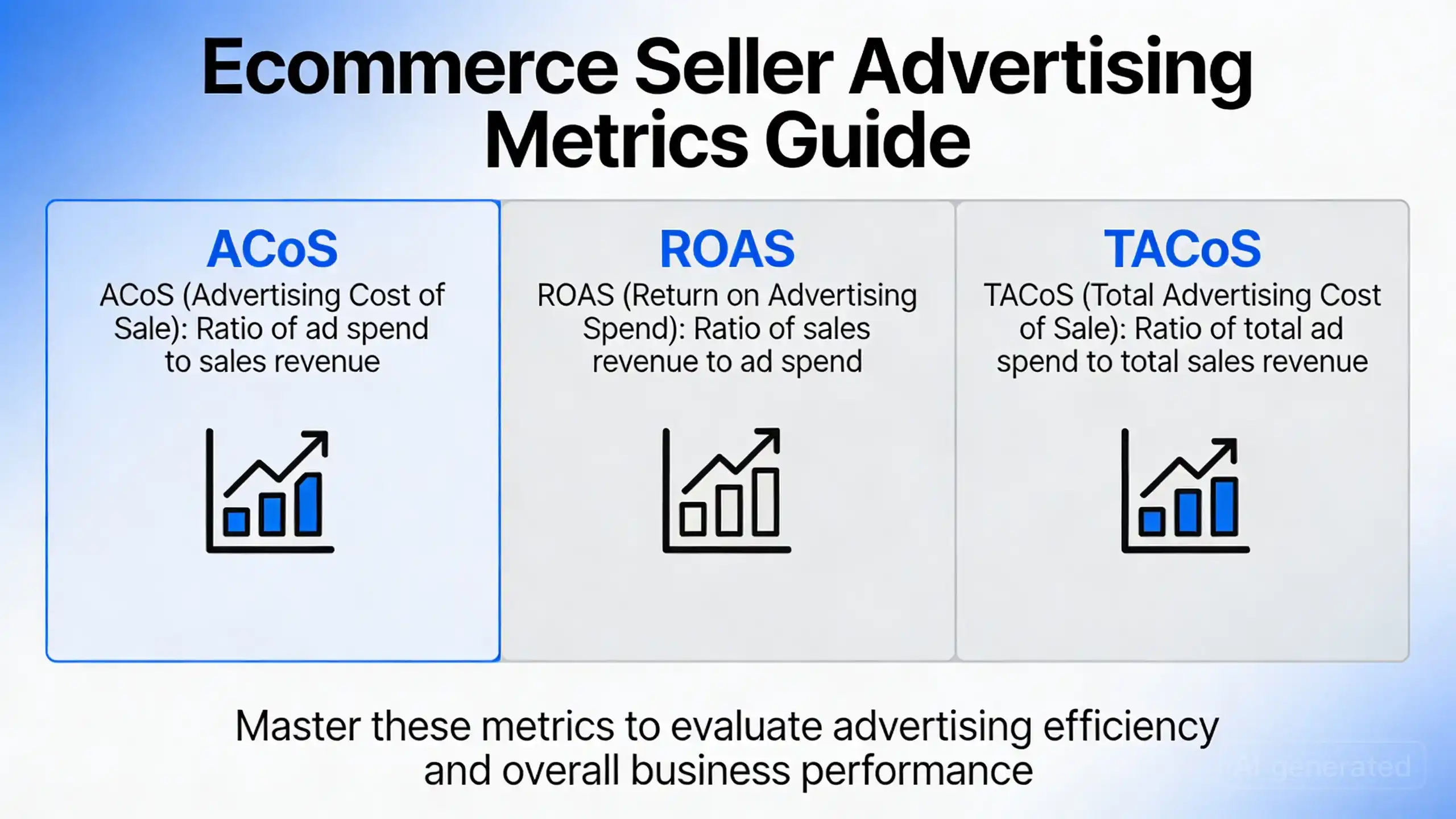
Advertising Cost of Sales (ACoS) is the percentage of attributed sales revenue spent on advertising. It serves as the primary metric for evaluating the direct profitability of your Amazon ad campaigns.
The formula is straightforward: ACoS = (Ad Spend / Ad Sales) x 100
For example, if you spend $30 on ads that generate $150 in sales, your ACoS is 20% ($30 / $150 x 100). A lower ACoS indicates greater efficiency, as you are spending less to generate each dollar of ad-driven revenue. Monitoring ACoS is essential for optimizing bids, targeting, and budget allocation to ensure your advertising investment remains profitable.
ACoS vs. ROAS vs. TACoS: A Holistic View of Ad Performance
While ACoS measures cost efficiency, other metrics offer a broader perspective on campaign performance and its total impact on the business.
- ROAS (Return on Ad Spend): This metric is the inverse of ACoS and measures the revenue generated for every dollar of ad spend. The formula is ROAS = Ad Sales / Ad Spend. Using the previous example, an ACoS of 20% corresponds to a ROAS of 5 ($150 / $30), meaning you earn $5 for every $1 spent.
TACoS (Total Advertising Cost of Sales): This metric offers the most holistic view by measuring your ad spend against your total* sales (organic and ad-generated). The formula is TACoS = (Ad Spend / Total Sales) x 100. TACoS helps you understand the impact of advertising on your overall business health. A declining TACoS over time, even with consistent ad spend, is a strong positive indicator. It suggests your advertising is successfully driving not only direct sales but also boosting organic rank and brand awareness, leading to sustainable, long-term growth.
 The Root Causes of High ACoS on Amazon
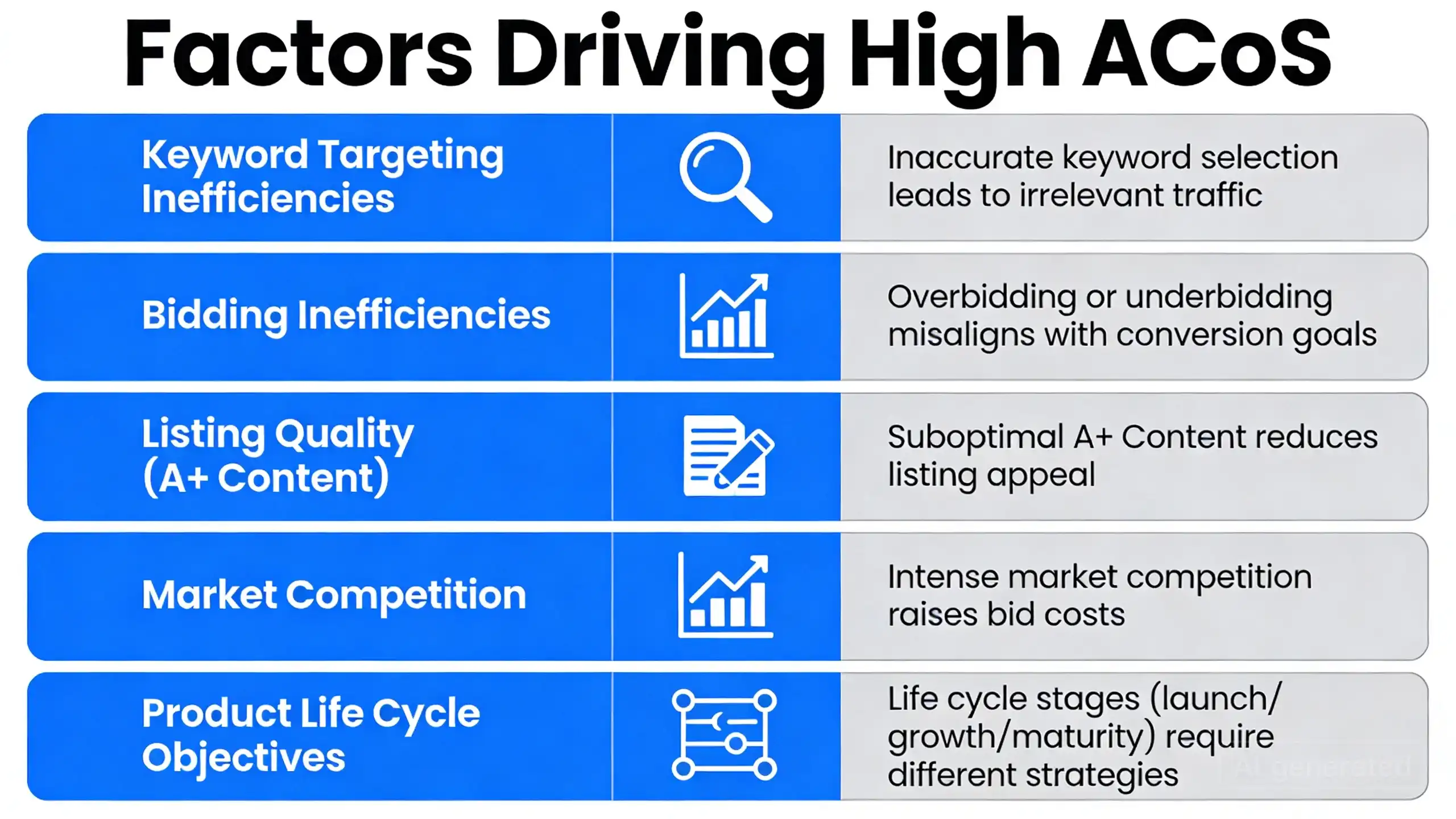
A high Advertising Cost of Sale (ACoS) is rarely caused by a single issue. It is typically a symptom of underlying inefficiencies in your advertising strategy, listing quality, or market positioning. Identifying these root causes is the first step toward building a more profitable advertising engine.
Ineffective Ad Targeting and Keyword Strategy
Wasted ad spend is a primary driver of high ACoS. This often results from using broad match keywords too aggressively, which attracts irrelevant clicks from shoppers with low purchase intent. A poorly managed negative keyword list makes this worse by allowing ads to appear for unrelated searches. The outcome is a low Click-Through Rate (CTR) from your target audience and an inflated cost per conversion.
Suboptimal Bidding and Budget Management
Your bidding strategy directly influences ACoS. Consistently overbidding on competitive keywords without a correspondingly high conversion rate will quickly inflate ad costs. Conversely, underbidding can lead to poor ad placements and minimal traffic, making it difficult to generate enough sales to justify the spend. Inefficiently allocating your budget to underperforming campaigns instead of scaling successful ones also contributes to a bloated overall ACoS.
Low Conversion Rates: The Listing's Role
Even with high-quality traffic, your ACoS will suffer if the product detail page fails to convert. Visual assets are no longer just for display; they are a core commercial driver. A weak main image, unpersuasive copy, or underdeveloped A+ Content will fail to convince shoppers, hurting your Conversion Rate (CVR). Furthermore, a mismatch between product images and the actual item can lead to negative reviews and returns, damaging your listing's performance and wasting ad spend.
Competitive Landscape and Market Dynamics
External factors can also place significant pressure on your ACoS. A surge in new competitors or aggressive bidding from established brands can drive up the average Cost-Per-Click (CPC) in your category. In a saturated market, it simply costs more to capture a customer's attention. If you ignore these market shifts, you risk overspending for diminishing returns.
Product Life Cycle and Business Objectives
A "high" ACoS can be a strategic choice depending on your business objectives. For a new product launch, a higher ACoS is often a necessary investment to gain initial sales velocity, accumulate reviews, and improve organic ranking. Here, the goal is market penetration, not immediate profit. For mature products, the focus shifts to maximizing profitability, which demands a much lower ACoS. A mismatch between your ACoS target and your product's life cycle stage is a common strategic error.
 Strategic Approaches to Lowering ACoS and Boosting Profitability
Optimizing Ad Campaigns with Data-Driven Insights
Effective ad management is the first line of defense against high ACoS. Rather than a "set it and forget it" approach, it requires continuous, data-informed adjustments to maintain campaign health and profitability.
Refining Keyword Targeting and Match Types
Success begins with rigorous keyword management. This involves regularly auditing existing keywords to eliminate wasted spend on underperformers, identifying and scaling high-converting terms, and aggressively expanding negative keyword lists to improve targeting precision.
Dynamic Bid and Budget Adjustments
The Amazon marketplace is not static. To remain competitive and profitable, bids and budgets must be adjusted dynamically based on real-time performance data, responding to shifts in competition and consumer behavior.
Leveraging DeepBI's Four-Layer Funnel for Ad Spend Efficiency
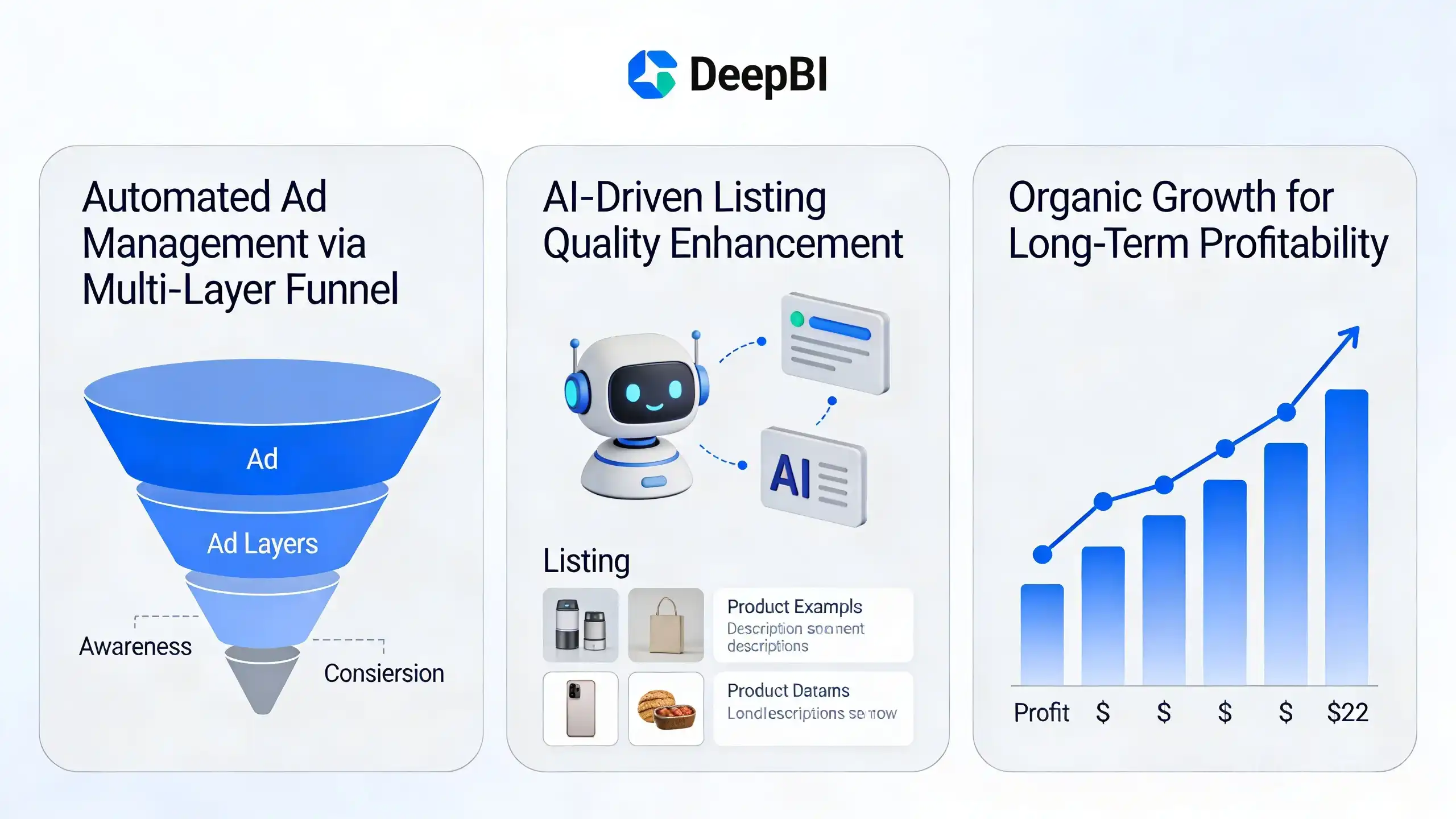
DeepBI's ModuleAdsQuant automates this process with a sophisticated four-layer funnel: exploration, initial screening, precision, and scaling. This system continuously discovers, filters, and optimizes traffic sources. It adjusts bids and budgets daily based on a stable 7-day performance window, ensuring spend is allocated to high-converting opportunities while avoiding knee-jerk reactions to short-term volatility.
Enhancing Listing Performance for Higher Conversion
Driving traffic is only half the battle. A high-quality, fully optimized listing is essential for turning paid clicks into sales, which directly improves your Conversion Rate (CVR) and lowers ACoS.
Diagnosing and Improving Listing Quality with DeepBI
The ModuleListing provides a smart diagnosis by benchmarking your ASIN against top competitors. It performs a multi-dimensional analysis to identify specific weaknesses in main images, titles, bullet points, and A+ content that are suppressing your Click-Through Rate (CTR) and CVR.
AI-Powered Content Optimization for Main Images, Titles, and A+ Content
Unlike general-purpose AI tools that can create product-mismatching "hallucinations" and risk negative reviews, DeepBI's AI operates under the constraint of a "Product DNA" map to ensure authenticity. It generates structured, optimized content that can be applied in one click via the SP-API, cutting a 30-minute manual upload process down to seconds. The system then closes the optimization loop by tracking the new assets' direct impact on CTR.
Integrating Organic Traffic Strategies for Overall Profitability
A truly sustainable Amazon business reduces its long-term reliance on paid advertising. The ultimate goal is to build a strong organic sales foundation that drives profit growth independently.
The Fifth Layer: Driving Organic Growth to Reduce Reliance on Paid Ads
Paid advertising should not just be a sales channel; it should be a strategic tool used to systematically fuel organic ranking for your most valuable and relevant keywords.
Using DeepBI to Identify High-Value Keywords for Organic Rank Improvement
DeepBI's ModuleOrganicTraffic acts as a fifth-layer funnel, screening your advertising data to identify keywords with high CTR, CVR, and order value. It then helps you launch dedicated campaigns specifically designed to boost these terms to Top of Search positions, creating a powerful flywheel effect where paid ads drive sustainable, long-term organic growth.
 Measuring Success: Beyond ACoS
Since a high ACoS often points to deeper issues, sellers must move beyond viewing it in isolation. To truly understand advertising performance, it is essential to adopt a comprehensive framework centered on profitability and strategic goals.
Focusing on Profitability and Break-Even ACoS
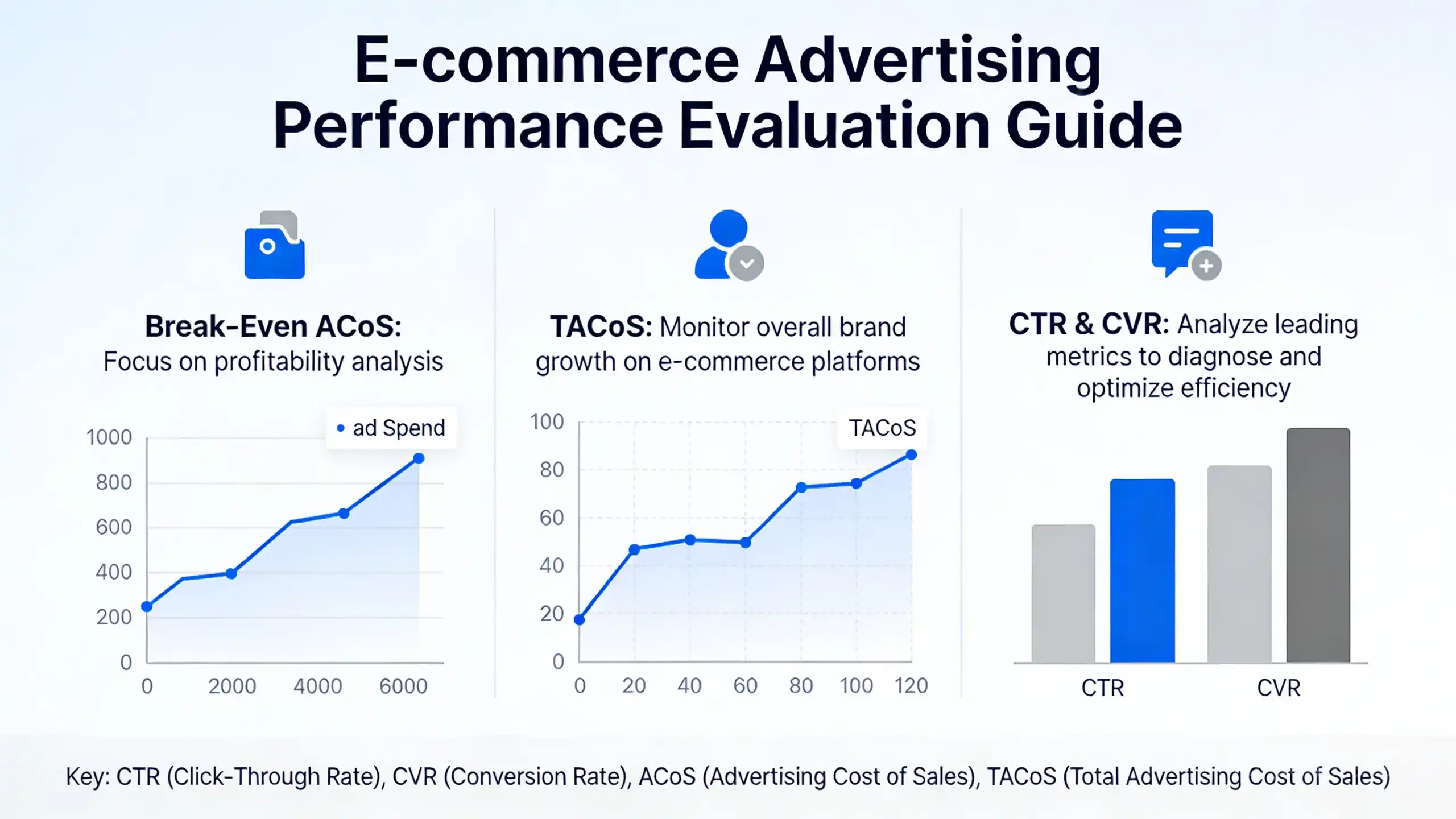
There is no universal "good" ACoS. An acceptable ACoS depends entirely on your product's profit margin and the specific objective of your campaign. The most important benchmark is your Break-Even ACoS, which is equivalent to your pre-ad profit margin.
To calculate it, use the formula: Break-Even ACoS = (Sale Price – Cost of Goods Sold – Amazon Fees) / Sale Price
If your ACoS is below this percentage, every ad-generated sale is profitable. If it is above, you are losing money on each conversion. This context is crucial. A campaign for a new product might justifiably run at or above the break-even ACoS to gain market traction. In contrast, a campaign for an established product should aim for maximum efficiency with a significantly lower ACoS.
The Interplay of ACoS, TACoS, and Overall Business Health
While ACoS measures the efficiency of your ads, Total Advertising Cost of Sales (TACoS) measures their overall effectiveness. TACoS divides total ad spend by total revenue (including organic sales), revealing how advertising impacts your brand's long-term growth. A declining TACoS indicates that your ad spend is successfully boosting organic sales—a sign of the Amazon flywheel effect.
Furthermore, ACoS is a lagging indicator. To diagnose why your ACoS is high, you must analyze leading metrics like impressions, Click-Through Rate (CTR), and Conversion Rate (CVR).
- Low CTR? Your main image, title, or price may not be compelling enough.
- Low CVR? Your product detail page, reviews, or offer may be failing to convert shoppers.
Optimizing these upstream metrics is key. For instance, after updating product images, you can automatically tag that event in your ad reports. This allows you to directly measure the impact of visual optimizations on CTR, connecting creative improvements to tangible performance gains.
 Conclusion: A Strategic Imperative for Amazon Sellers
Ultimately, a high ACoS is not an isolated advertising problem but a critical indicator of deeper inefficiencies within your sales funnel. Addressing it requires moving beyond reactive ad adjustments to a holistic, data-driven strategy. The path to sustainable profitability lies in the synergy between optimized advertising, high-converting listings, and robust organic growth. When these elements work in concert, they create a powerful flywheel effect that lowers advertising dependency while increasing overall sales.
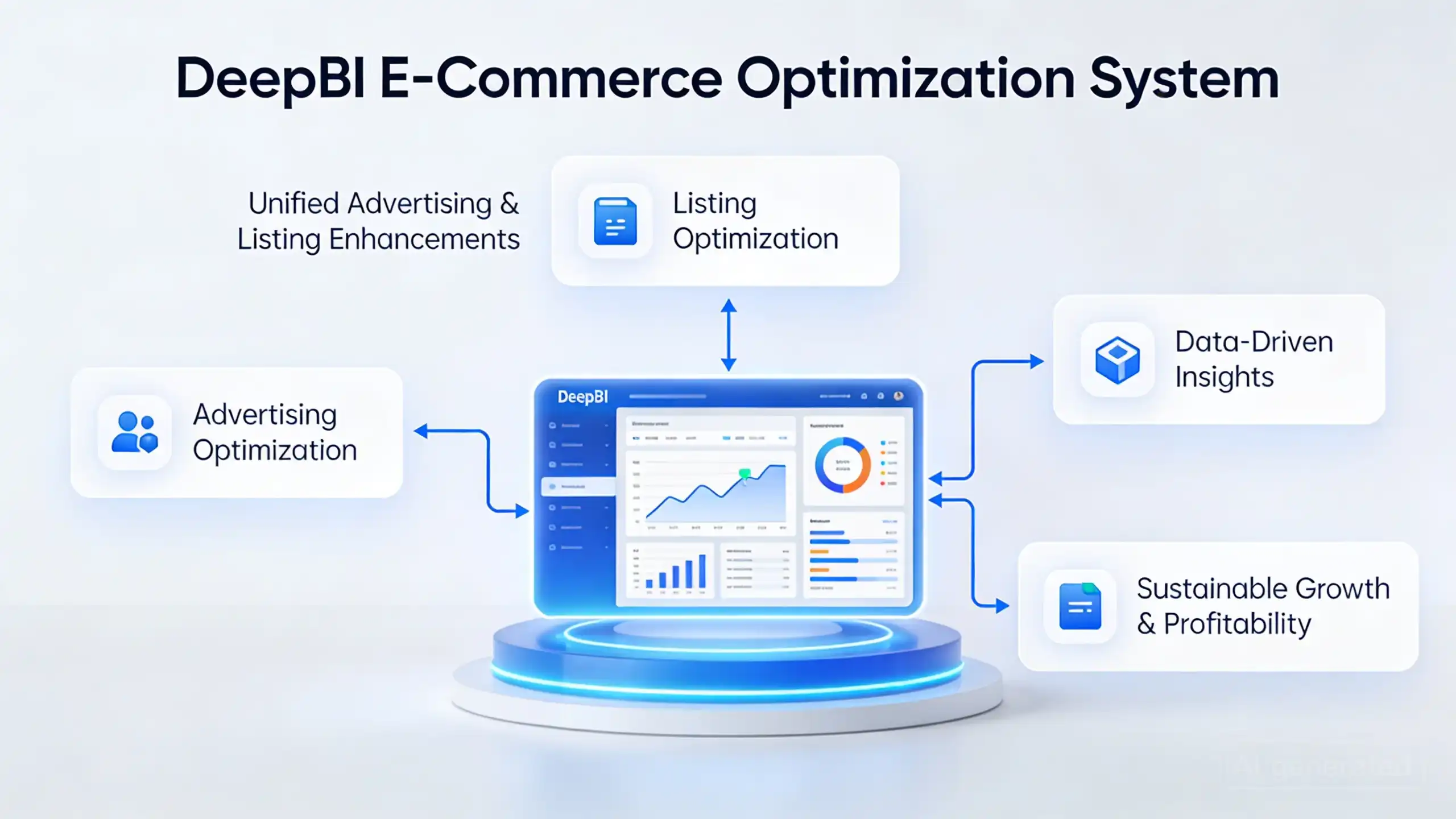
This integrated approach demands a new class of tools. DeepBI provides an end-to-end intelligent optimization system that breaks down the traditional silos between diagnosis, planning, and execution. By leveraging advertising data to inform listing enhancements, sellers can systematically improve core metrics like Click-Through Rate (CTR) and Conversion Rate (CVR). This process transforms your operation from a series of disconnected tasks into a cohesive, data-powered growth engine. For sellers committed to building a healthy and profitable business on Amazon, adopting such a strategic, unified framework is no longer optional—it is an imperative.