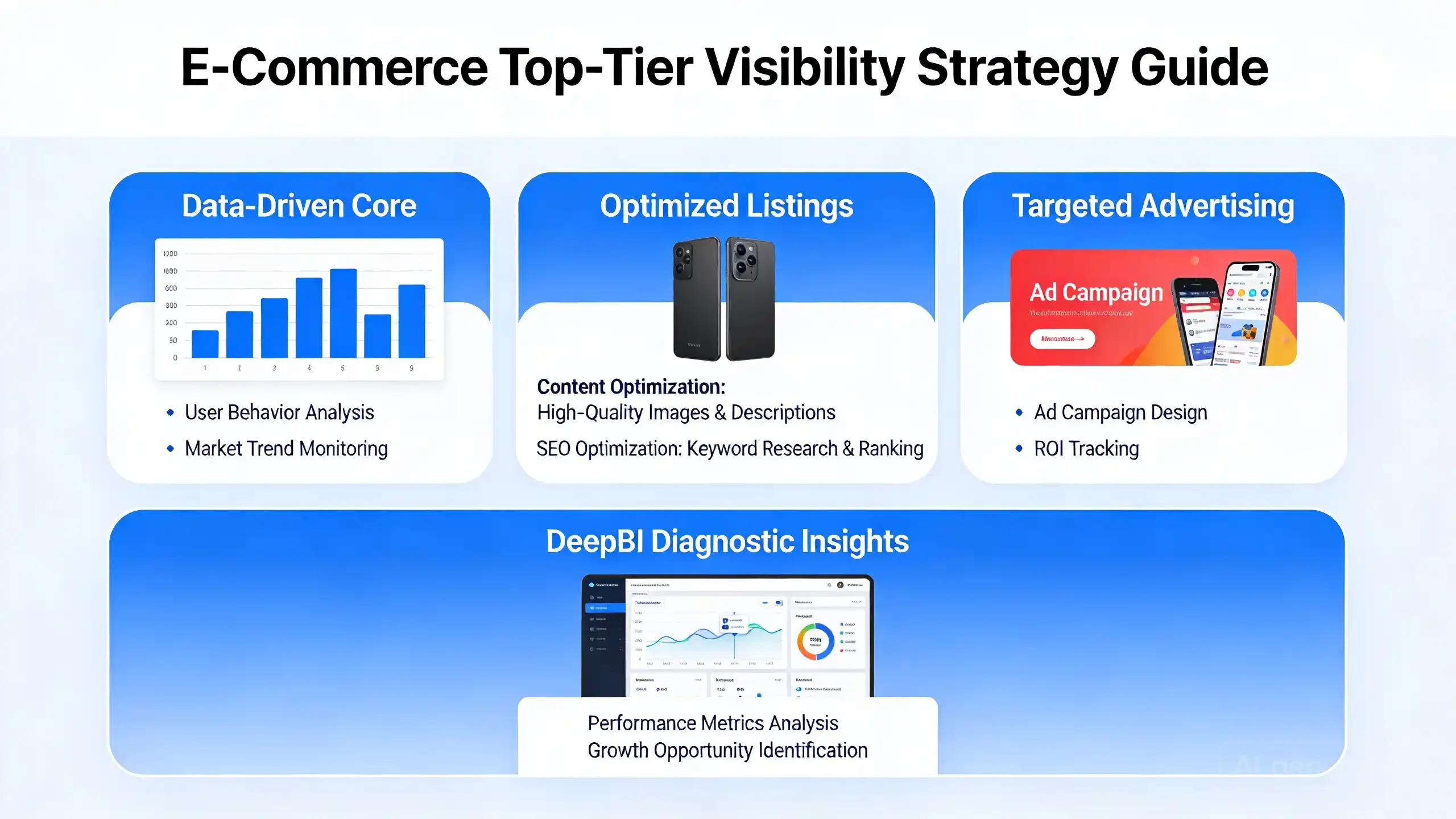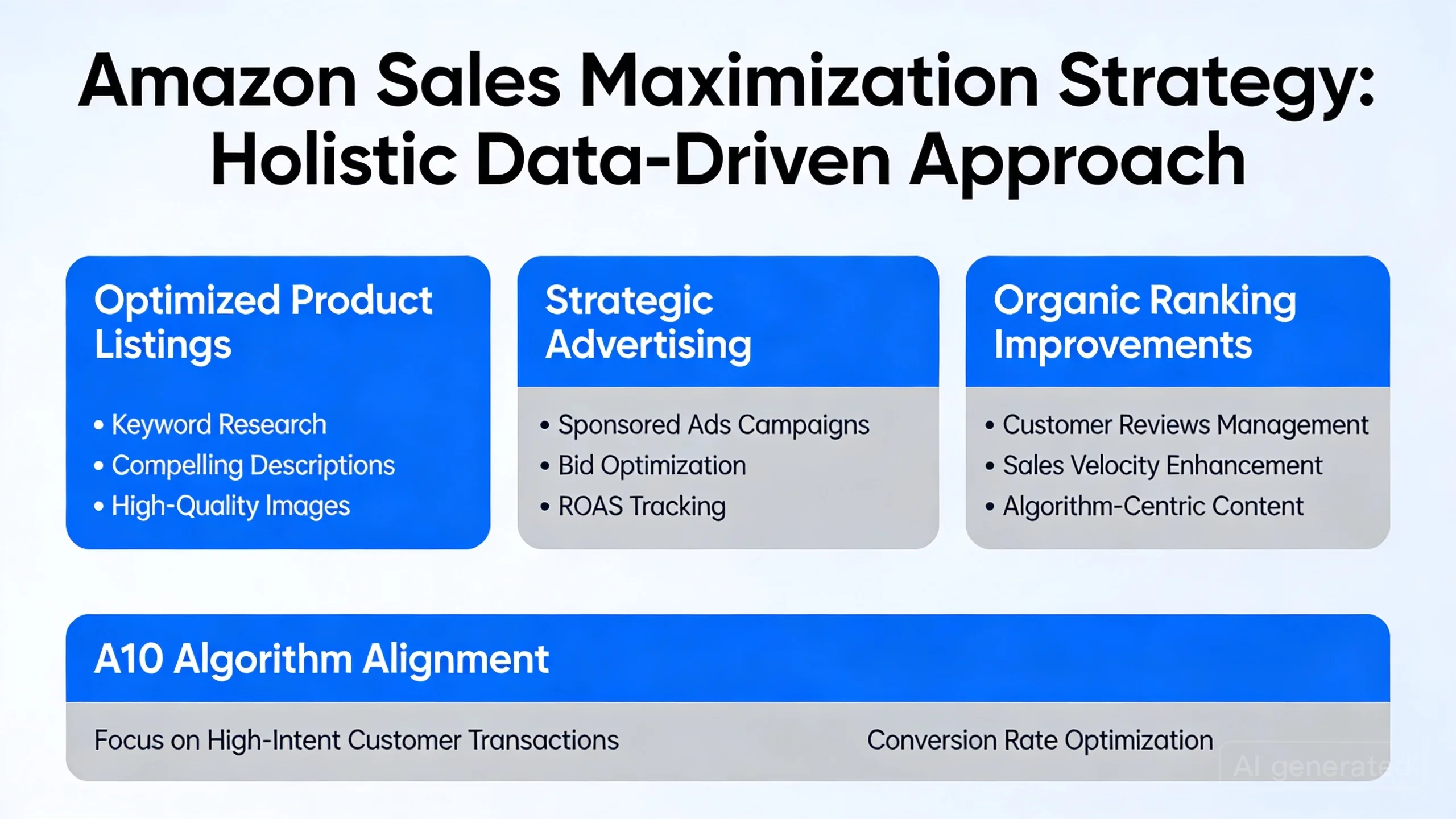
For most brands, Amazon is a marketplace. For the most successful ones, it is the world's most powerful product search engine. Unlike general search engines like Google where users are often researching, shoppers arrive on Amazon with a high-intent, ready-to-buy mindset. Every search query is a direct opportunity for a sale, making visibility on the first page of search results the most critical factor for growth. Winning this prime digital real estate is not a matter of chance or guesswork; it requires a deliberate, holistic strategy.
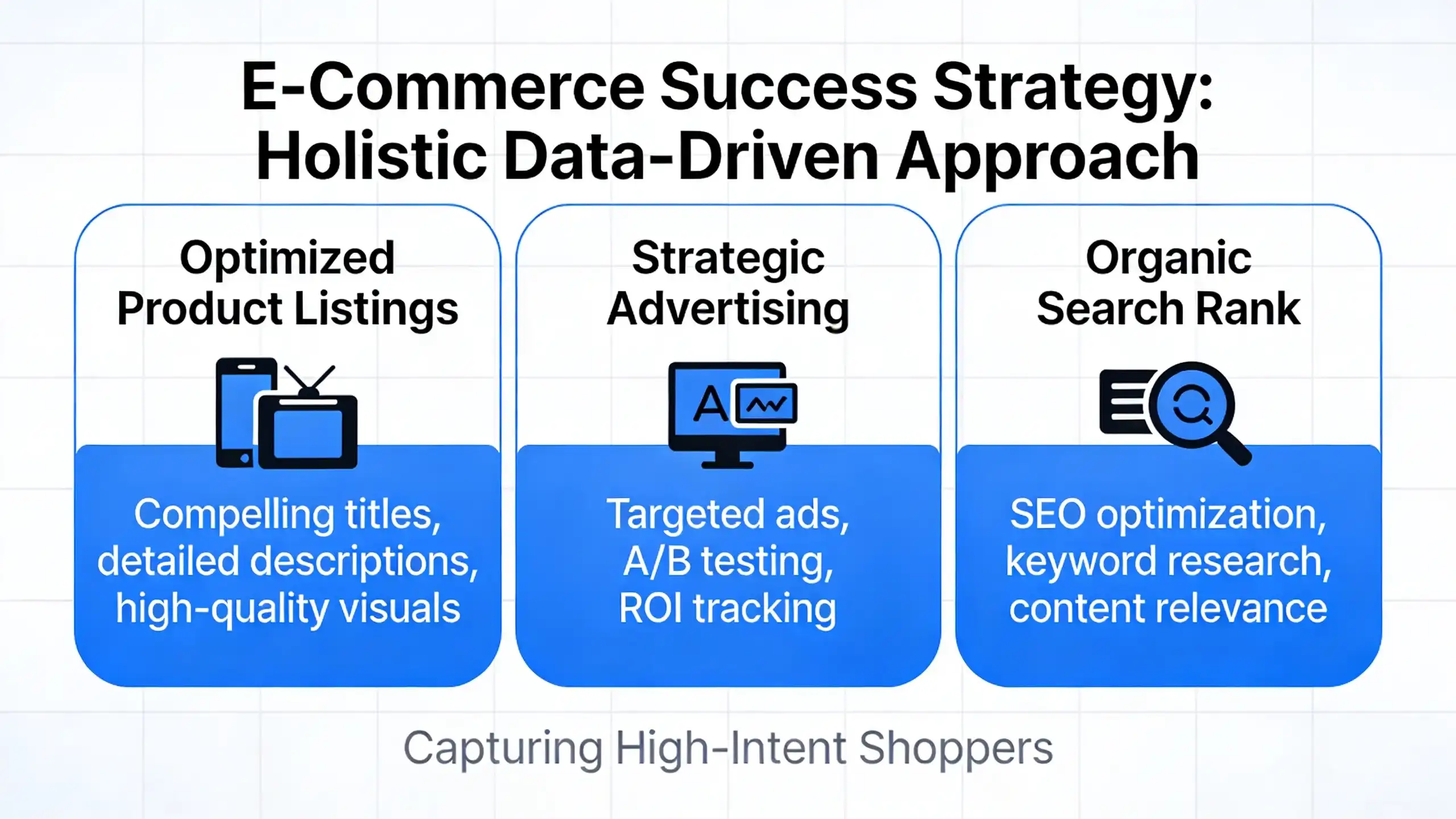
Achieving sustained dominance on Amazon hinges on mastering the interplay of three core pillars: meticulously optimized product listings that drive conversions, strategic advertising campaigns that capture qualified traffic, and a relentless focus on improving organic search rank. A fragmented approach, where these elements are managed in silos, leads to inefficient ad spend and missed opportunities. By integrating them into a single, data-driven growth engine, sellers can ensure their products are not just listed, but are consistently discovered by customers at the precise moment they are ready to make a purchase.
The Amazon Search Ecosystem: Understanding the Unique Landscape
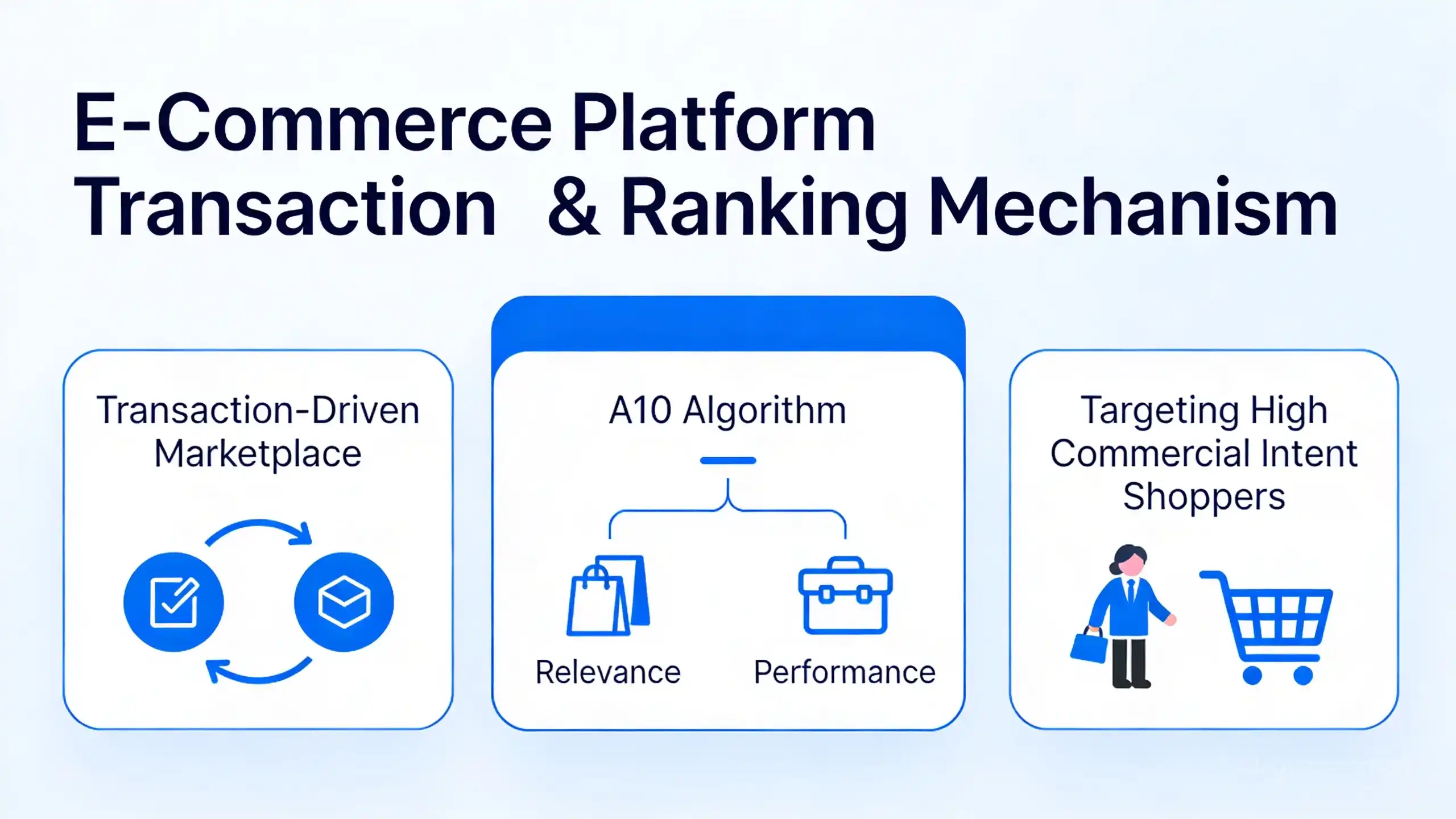
To dominate Amazon's search results, you must first recognize that it is not a general-purpose search engine like Google; it is a product-centric marketplace driven by a singular goal: facilitating transactions. This fundamental difference shapes both customer behavior and the algorithm that determines which products earn visibility.
Amazon's Unique Search Intent
Unlike Google, where users often seek information, conduct research, or ask broad questions, shoppers on Amazon arrive with a powerful commercial intent. They are not just browsing; they are actively looking to make a purchase. This "ready-to-buy" mindset makes every impression and click significantly more valuable. When a customer searches on Amazon, they are at the final stage of the buying funnel. Your primary challenge is not to convince them to buy a product type, but to persuade them that your specific product is the best choice among the available options. This high-stakes environment means that optimizing for visibility directly impacts sales performance.
The A10 Algorithm: Key Ranking Factors
Amazon's search algorithm, commonly referred to as A10, is designed to rank products based on their likelihood of generating a sale and satisfying the customer. Its decisions are primarily driven by two categories of factors: relevance and performance.
- Relevance Factors: These determine how well your product listing matches a customer's search query. The algorithm analyzes keyword placement in your product title, bullet points, description, and backend search terms. A comprehensive and accurately detailed product page signals strong relevance.
- Performance Factors: These metrics prove your product's desirability and quality to Amazon. Key indicators include sales velocity (the volume and speed of your sales), conversion rate (CVR), and customer feedback, including the quantity and quality of reviews and your overall seller rating. Products that consistently convert visitors into buyers and earn positive reviews are rewarded with higher search rankings.
Building the Foundation: Listing Optimization for Maximum Visibility
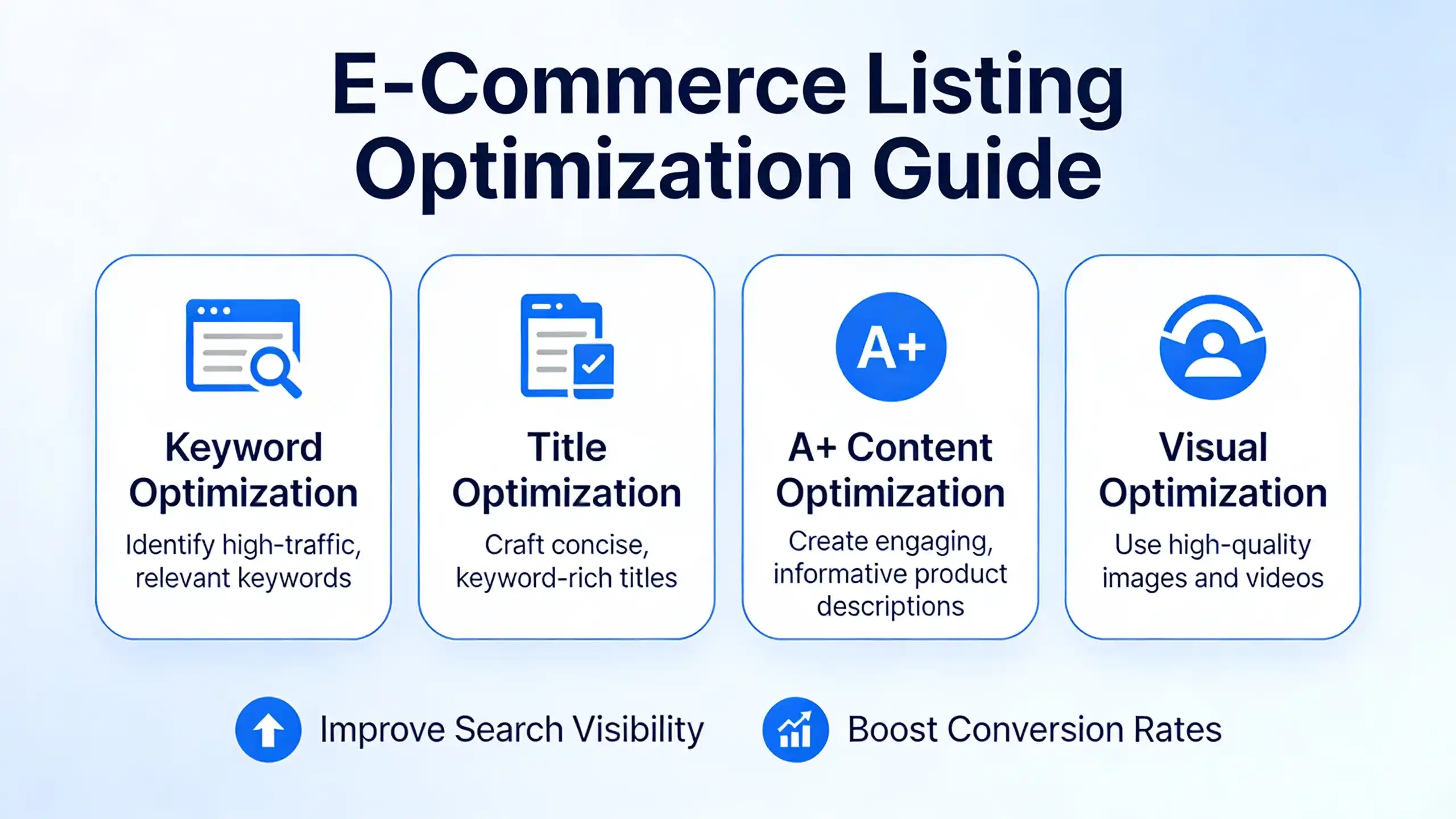
A high-ranking product is built on a meticulously optimized listing. Each component—from keywords to images—is a signal to Amazon's algorithm and a conversion tool for shoppers. Neglecting this foundation means sacrificing visibility, traffic, and sales, regardless of how much you invest in advertising. A systematic approach to optimizing every element is the first step toward dominating search results.
Keyword Research: The Cornerstone of Discovery
Effective keyword research is about understanding customer search intent. The process begins with identifying high-volume, relevant terms using tools like the Amazon search bar, competitor analysis, and specialized software. Advanced strategies involve competitive benchmarking and semantic analysis to uncover high-potential keywords that your rivals have missed. This ensures your product appears not just in broad searches but also in long-tail, high-conversion queries, directly impacting your product's discoverability and initial traffic.
Crafting Compelling Titles and Bullet Points
Your title is the single most important piece of SEO real estate. A strong title follows a clear formula: Brand Name + Main Keyword + Key Features/Benefits + Size/Color. It must be readable and compelling while strategically placing the most critical keywords at the front. Bullet points should expand on the title, transforming features into benefits. By structuring them in a "pain point-solution" format, you directly address customer needs, answer pre-purchase questions, and significantly improve your listing's conversion rate (CVR).
Enhancing Product Descriptions and A+ Content
While the product description provides additional space for keyword indexing, A+ Content is where you tell your brand's story and drive conversions. Use this space to build trust, showcase your brand's value proposition, and visually break down complex features. Systematically deconstructing A+ pages into logical modules—such as brand story, feature spotlights, and comparison charts—allows for targeted optimization. AI-powered tools can accelerate this process by generating SEO-rich text that resonates with both the algorithm and your target audience.
Visuals That Convert: Images and Video
High-quality visuals are non-negotiable. Your main image must be on a pure white background, while secondary images should include lifestyle shots, infographics, and videos to demonstrate the product in use and highlight key benefits. While AI can generate compelling scenes, it introduces the risk of "product-image mismatch," where the generated visual doesn't perfectly match the physical item, leading to negative reviews. To prevent this, an advanced visual production system uses a "Product DNA" map—a detailed blueprint of the product's authentic structure—as a hard constraint, ensuring all AI-generated content is true to the product and mitigates post-sale risks.
Backend Search Terms and Subject Matter
The backend search term fields are a crucial, hidden asset for maximizing keyword coverage. Use this space for terms you couldn't fit on the frontend, including synonyms, common misspellings, and related concepts in different languages. Avoid repeating keywords already present in your title or bullet points, as this provides no additional SEO value. Filling out these fields comprehensively ensures you capture a wider net of customer searches without cluttering your customer-facing content.
Accelerating Visibility with Strategic Advertising
While organic ranking is the ultimate goal, relying on it alone can be a slow and unpredictable process. Strategic advertising, particularly through Amazon Sponsored Products, offers a powerful lever to accelerate growth. It's not just about buying sales; it's about buying data and momentum that fuel the entire visibility flywheel, turning ad spend into a strategic investment.
The Role of Sponsored Products in Driving Discovery
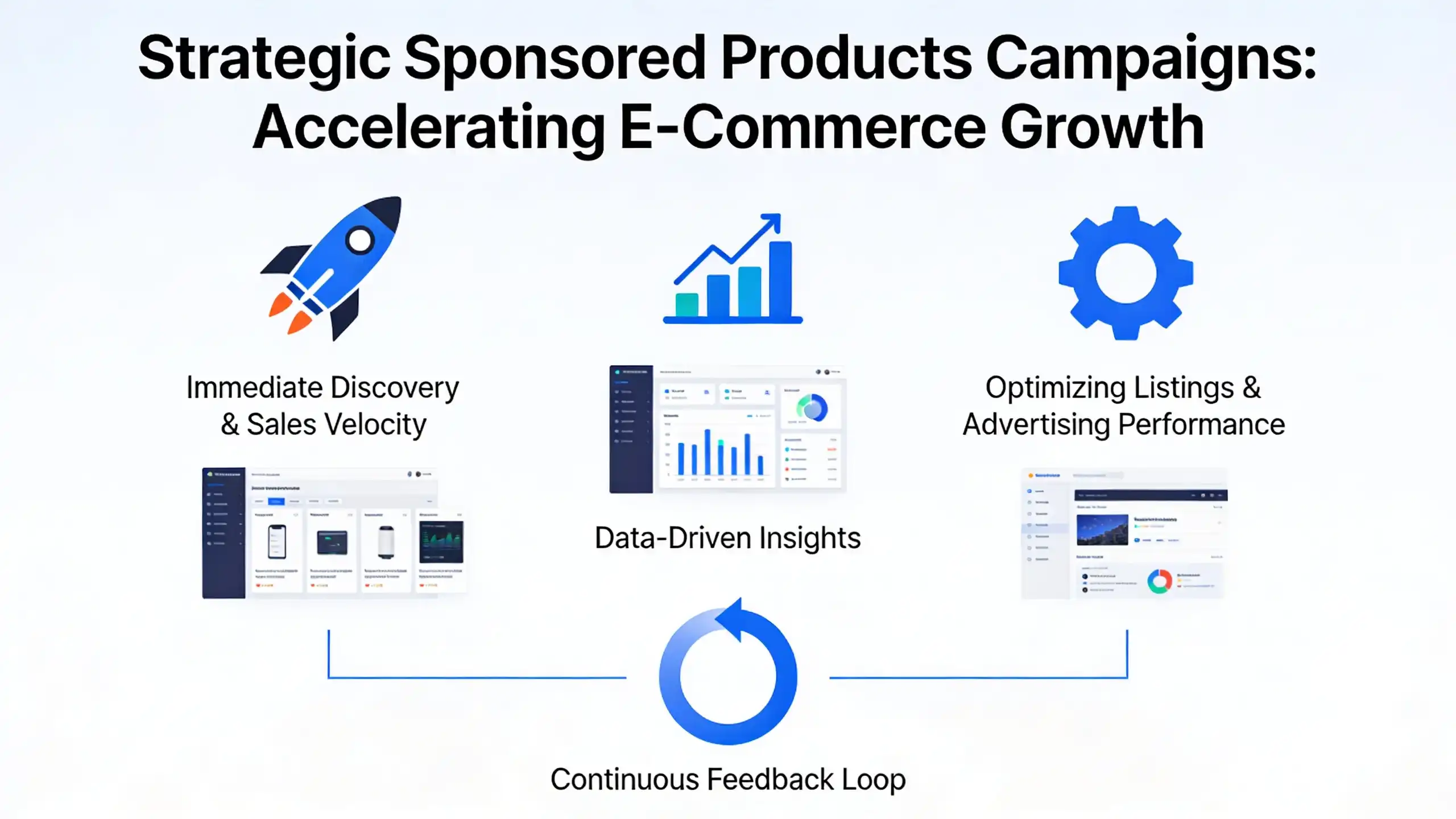
Sponsored Products campaigns provide immediate top-of-search placement, putting your listings in front of high-intent shoppers from day one. This initial exposure is critical for generating the first wave of sales. This sales velocity is a significant factor in Amazon's ranking algorithm, helping to improve your organic position over time. Furthermore, these campaigns are an invaluable source of market intelligence, revealing the exact keywords customers use to find and purchase your products. This data is essential for refining your listing copy, backend search terms, and overall SEO strategy.
Building a Data-Driven Ad Strategy
Effective advertising requires more than just activating a campaign. A successful strategy is built on precise keyword and ASIN targeting to ensure your budget is spent on the most relevant audience. This must be paired with intelligent budget allocation and dynamic bidding strategies to control your Advertising Cost of Sale (ACoS). Advanced approaches structure campaigns into a multi-layered traffic funnel, managing ad spend to guide customers from initial awareness and consideration through to the final purchase, maximizing return on investment at every stage.
Optimizing Campaigns for Traffic and Data Signals
Advertising is not a "set-it-and-forget-it" activity. Continuous monitoring and adjustment are necessary to maintain performance. While modern tools can automate bid and budget adjustments based on real-time data, the true strategic advantage comes from creating a data-driven feedback loop. For instance, a seller struggling with a high ACoS and low Click-Through Rate (CTR) might traditionally rely on subjective design choices to improve their main image. A data-first approach, however, links advertising performance directly to listing changes. By automatically tagging a visual update in ad reports, you can precisely measure its impact on CTR over the following weeks, replacing guesswork with quantifiable results and turning ad spend into a powerful engine for conversion rate optimization.
Sustaining Growth: Elevating Organic Rank
Achieving initial visibility through advertising is only the first step. The ultimate goal is to convert that paid momentum into durable, high-performing organic search positions. This process involves leveraging ad-driven sales to influence Amazon's algorithm and then sustaining that rank through continuous optimization.
From Ad Performance to Organic Lift
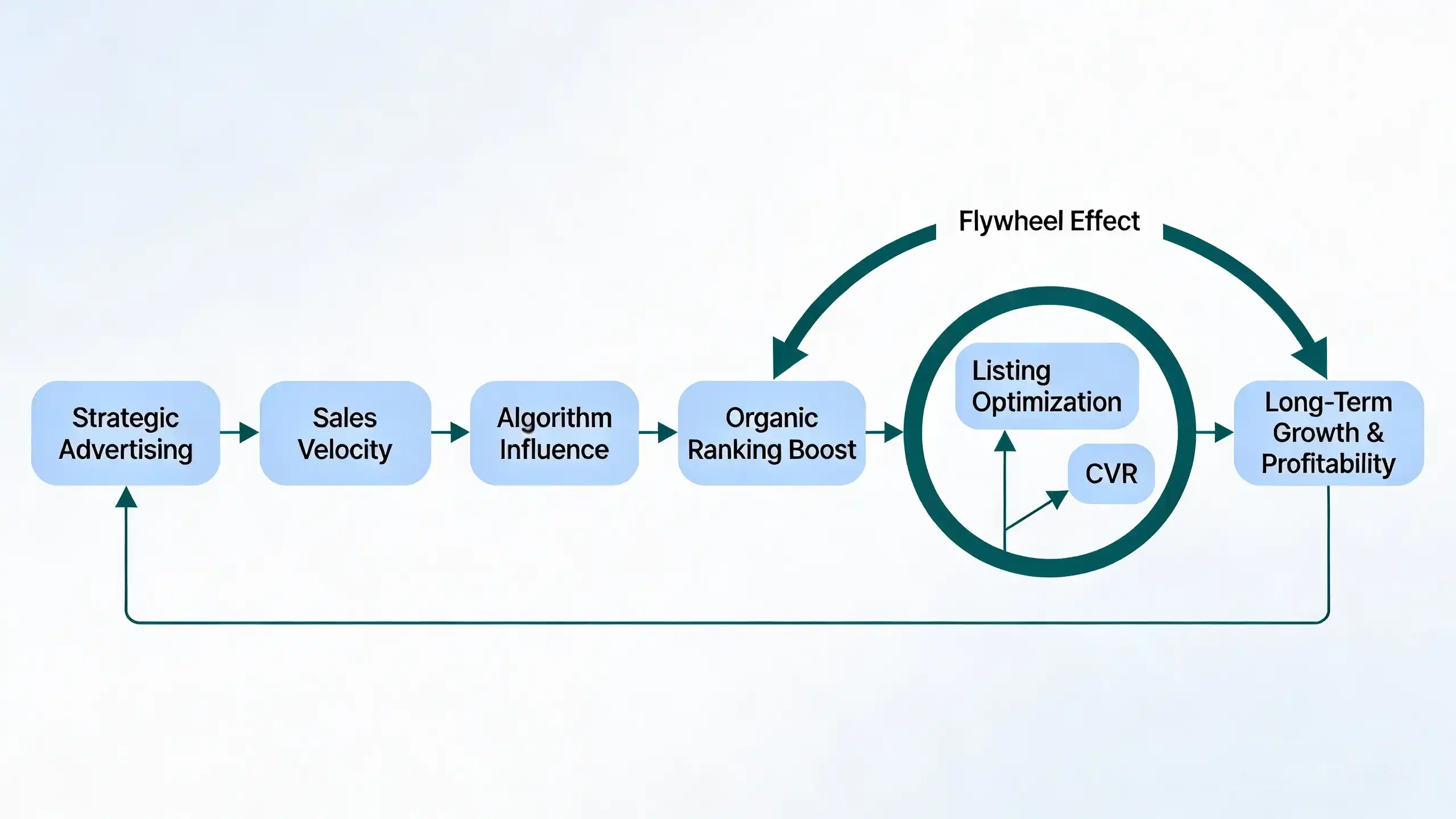
Successful advertising campaigns do more than generate immediate revenue; they send powerful signals to Amazon's ranking algorithm. When ads drive a significant increase in sales velocity for specific keywords, it indicates to Amazon that your product is a popular and relevant choice for those search queries. This creates a direct feedback loop: the sales generated by paid traffic boost your product's organic ranking. In essence, strategic ad spend acts as an investment that kickstarts a cycle of visibility, leading to sustained organic traffic long after the initial campaign.
Monitoring and Improving Organic Rank
Once you gain organic traction, the focus shifts to maintenance and growth. This requires diligent tracking of keyword rankings to measure the impact of your efforts. Sustained organic growth hinges on three core pillars: maintaining a high conversion rate (CVR), actively managing customer reviews, and ensuring consistent product availability. A key strategy is to use advertising data to inform listing improvements that boost natural traffic. This involves analyzing which ad-driven creative elements and keywords convert best and integrating those insights to enhance the listing for organic visitors, thereby improving CVR and solidifying your rank.
The Flywheel Effect: Ads, Listing, and Organic Synergy
The interplay between a highly optimized listing, strategic advertising, and organic rank creates a powerful growth flywheel. It begins with a compelling, data-informed product detail page that maximizes CVR. Targeted ads drive initial, high-intent traffic to this page, generating sales. This sales velocity improves organic keyword rankings, which in turn attracts more "free" traffic. The increased traffic leads to more sales and customer data, providing fresh insights to further refine both the listing and ad campaigns. This self-reinforcing cycle continuously builds momentum, maximizing both visibility and long-term profitability.
Measuring Success and Continuous Optimization
Effective visibility strategy is not a one-time setup; it's a continuous cycle of measurement, analysis, and refinement. To dominate search results, you must track the right metrics and leverage intelligent tools to translate data into actionable improvements.
Key Metrics for Visibility and Performance
Monitoring a holistic set of Key Performance Indicators (KPIs) is essential to understand the true impact of your optimization efforts. Focus on these core metrics to gauge both your search presence and its effect on sales:
- Organic Rank & Impressions: Your product's natural position in search results for target keywords and how often it is shown. These are direct indicators of your visibility.
- Click-Through Rate (CTR): The percentage of shoppers who click your listing after seeing it. A higher CTR suggests your main image, title, and price are compelling.
- Conversion Rate (CVR): The percentage of visitors who purchase after clicking. This measures the overall effectiveness of your entire product detail page.
- Sales Velocity: The speed and volume of your sales, a critical factor that influences Amazon's ranking algorithm.
- Advertising Cost of Sales (ACoS) & Total ACoS (TACOS): These metrics measure advertising efficiency and the overall health of your business, showing how paid efforts support and are supported by organic sales.
Leveraging DeepBI for Insights and Optimization
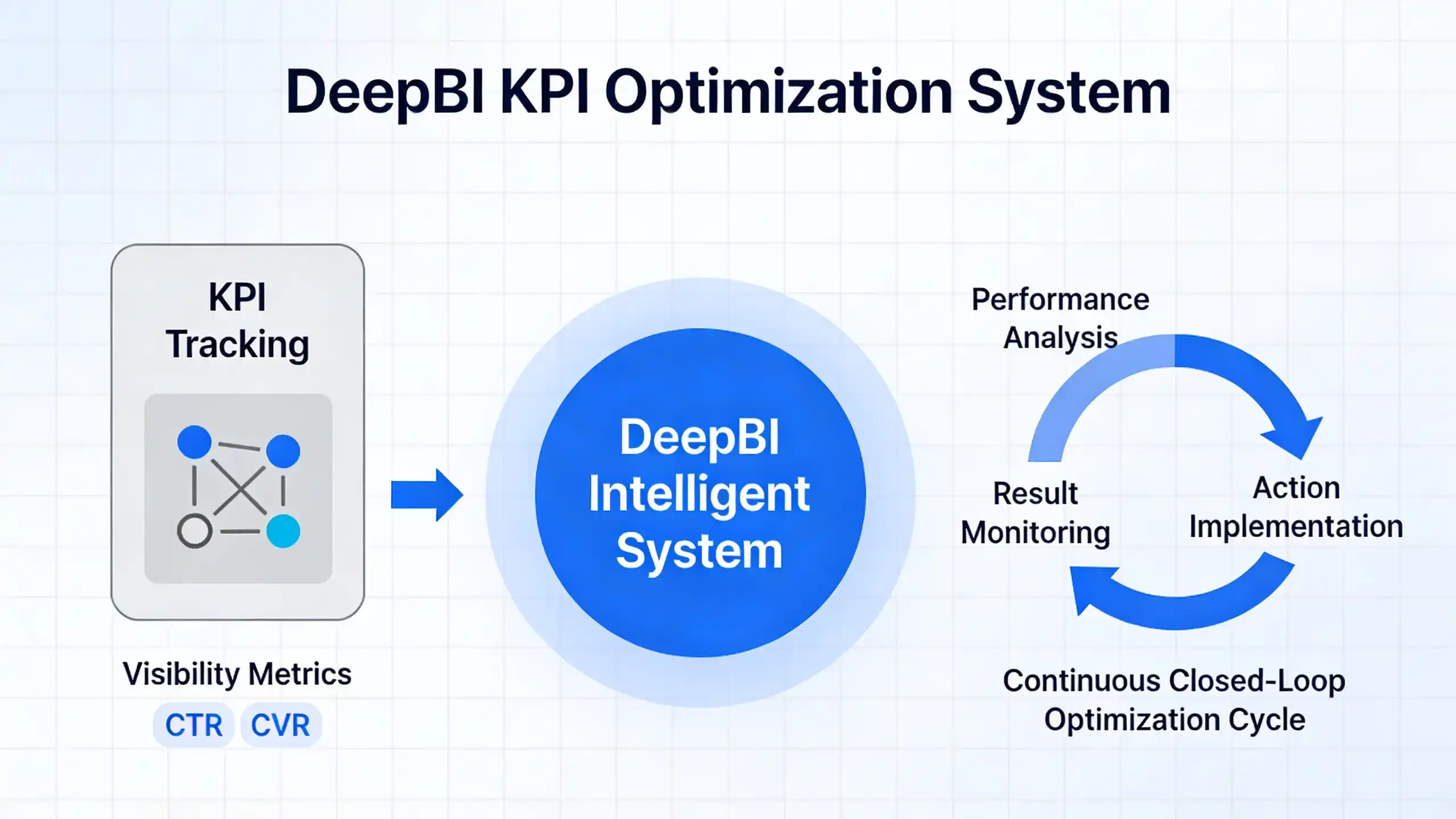
Tracking these metrics is only the first step. DeepBI provides an end-to-end intelligent system that breaks down the silos between diagnosis, planning, production, and delivery. It creates a powerful closed-loop optimization cycle:
- Analysis: The platform consolidates performance data, providing a unified view of your visibility KPIs.
- Strategy: Instead of offering vague advice like "improve image quality," DeepBI translates diagnostic data into precise, AI-executable "design blueprints." It uses a parameterized language to define specific changes to composition, lighting, and camera angles.
- Execution: These clear instructions are sent directly to AI systems for consistent and targeted content generation.
- Optimization: After a new asset is published, DeepBI automatically tags the event in advertising reports, allowing you to directly measure the impact of visual optimizations on business metrics like CTR and CVR, thus restarting the cycle with fresh data.
Conclusion: Your Path to Unrivaled Amazon Visibility
Achieving and maintaining top-tier visibility on Amazon is not the result of a single tactic, but the outcome of a cohesive, data-informed strategy. Success hinges on the powerful synergy between meticulously optimized product listings that drive conversion, strategic advertising campaigns that capture qualified traffic, and the resulting organic growth that solidifies your Best Seller Rank (BSR). These elements are not independent tasks but interconnected components of a single growth engine.
However, managing this complex ecosystem without clear insights is a critical business risk. The key to unlocking sustainable growth is to shift from guesswork to data-driven decision-making. It’s about moving from "groping in the dark" to "precision targeting," where every action is backed by analysis. By implementing the holistic strategies discussed, you can build a formidable market presence. To accelerate this journey and ensure long-term dominance, leveraging advanced analytics tools is no longer optional. Platforms like DeepBI provide the diagnostic power needed to identify opportunities, optimize performance, and turn complex data into a clear path to unrivaled visibility and profitability.