Understanding Amazon Conversion Rate (CVR) as a Growth Multiplier
What Makes Amazon CVR So Critical?
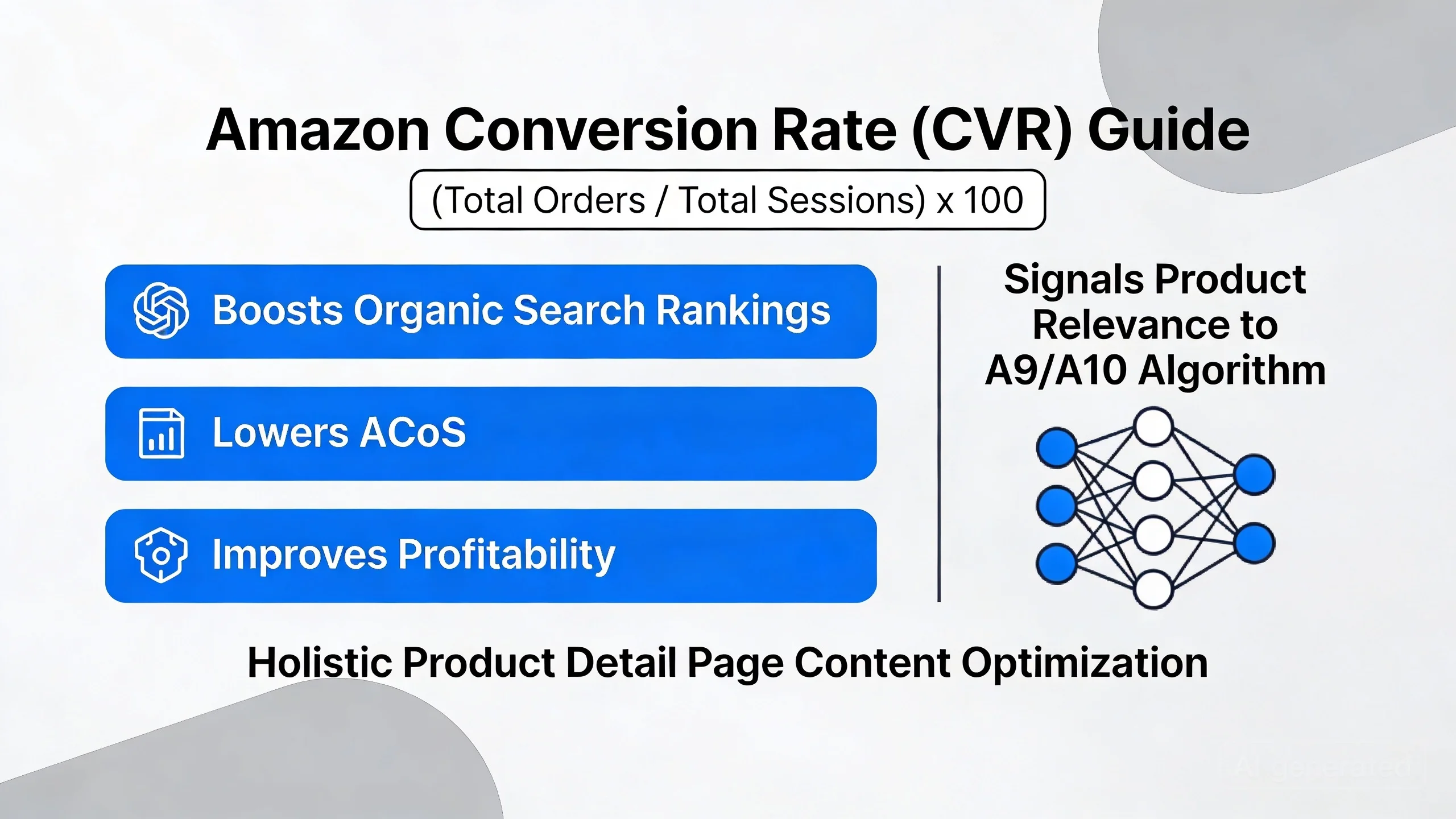
Your Amazon Conversion Rate (CVR) is the percentage of visitors who purchase your product after landing on your listing. While a simple metric—calculated as (Total Orders / Total Sessions) x 100—its implications are profound. Unlike general e-commerce sites that average a 2-3% CVR, Amazon's platform is built on trust and high purchase intent, with Prime members leading the charge. This environment creates a much higher benchmark, where average conversion rates often fall between 10-15%. A CVR in this range isn't just a vanity metric; it's a direct signal to Amazon that your product is relevant, desirable, and effectively meeting customer needs.
The Ripple Effect: How High CVR Fuels Your Amazon Business
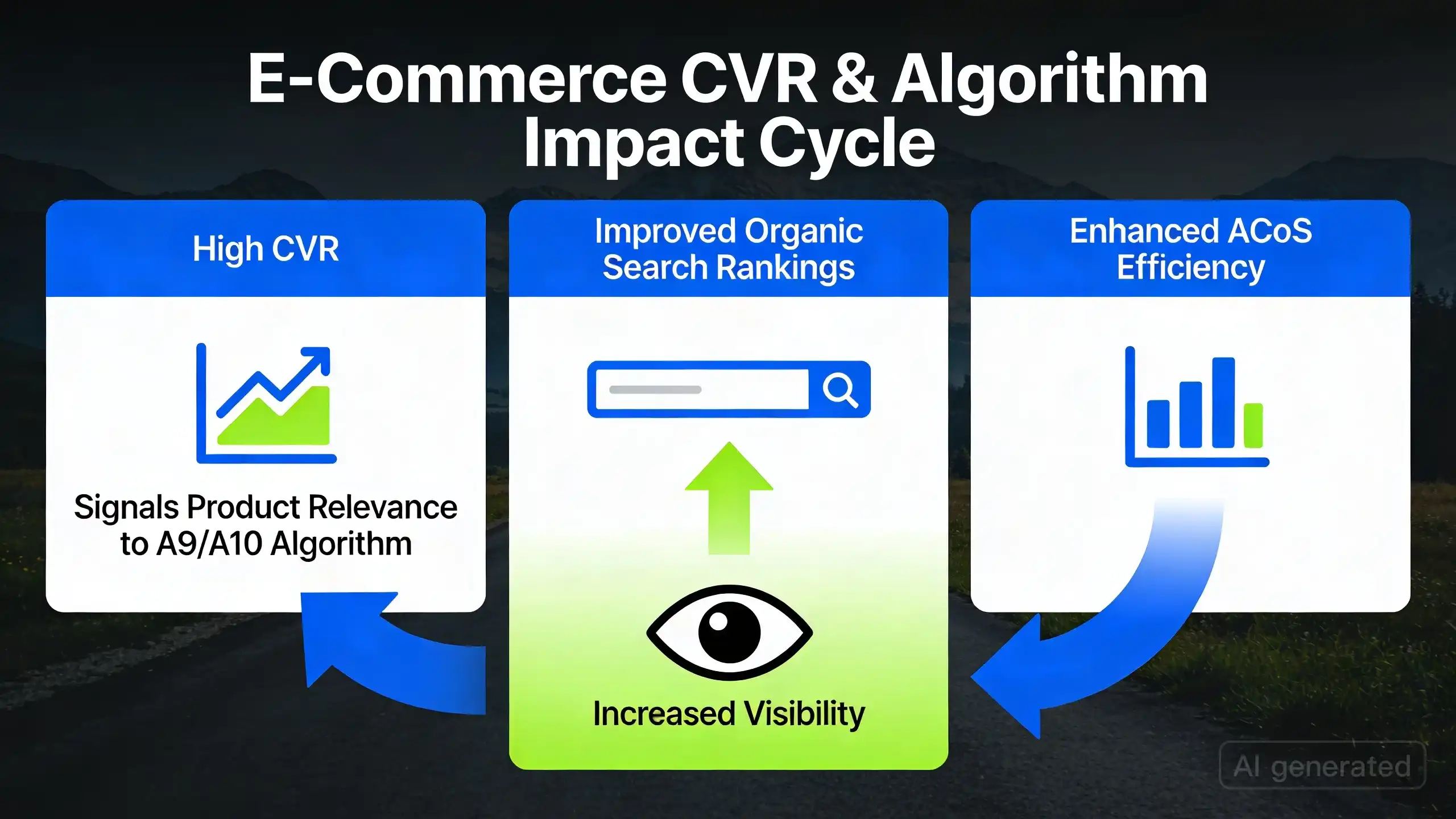
A high CVR is not an isolated success; it's a growth multiplier that creates a powerful, positive feedback loop across your entire Amazon operation. Amazon's A9/A10 algorithm rewards listings that convert well with higher organic search rankings, increasing your visibility and driving more traffic. This organic lift reduces your long-term dependency on paid advertising.
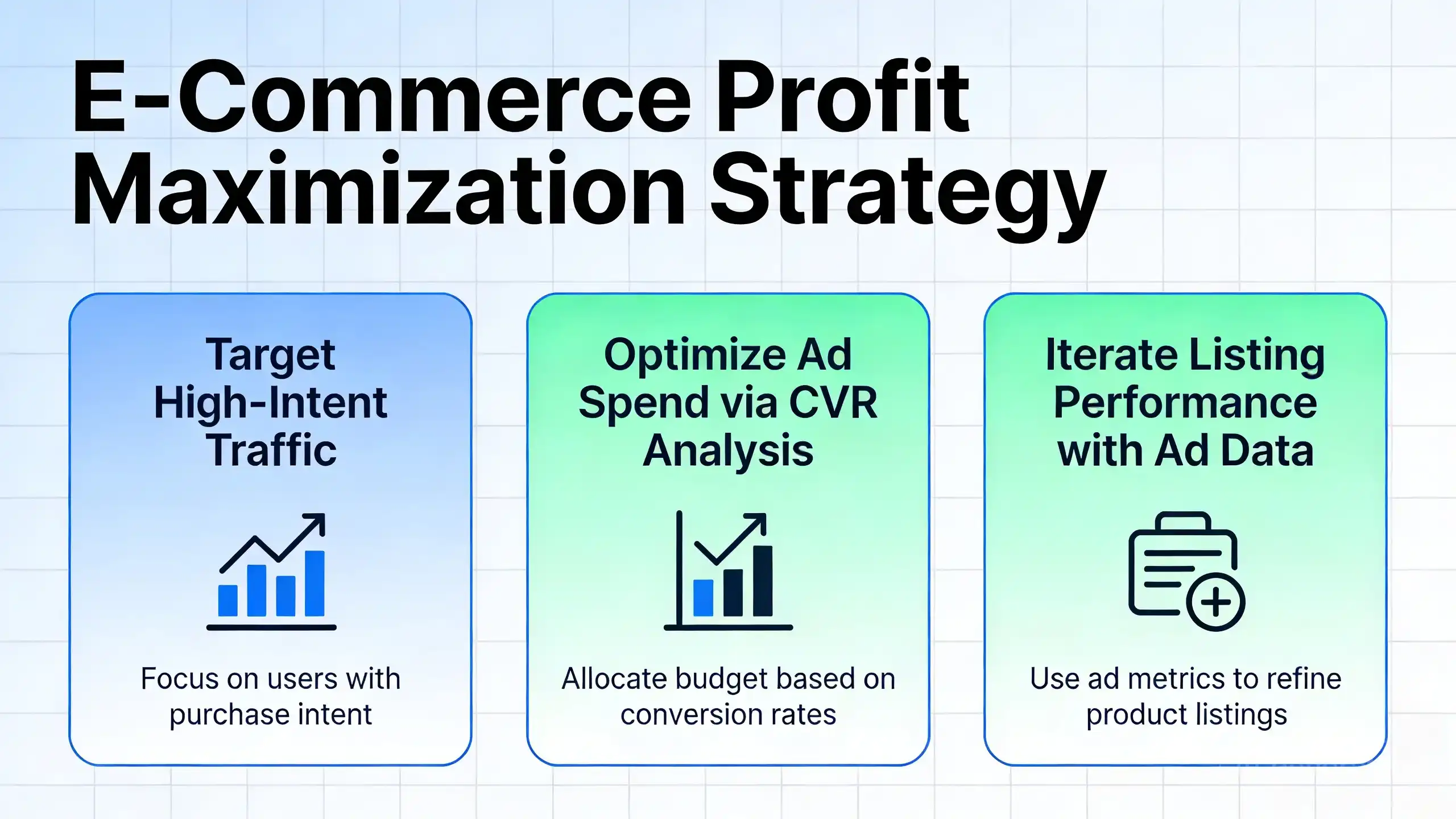
This efficiency extends directly to your ad campaigns. A well-optimized listing with a strong CVR naturally achieves a lower Advertising Cost of Sale (ACoS), maximizing your return on investment. This creates a virtuous cycle where ad data can be used to further refine visual and text content, continuously improving CVR and profitability. The benefits compound from there:
- Improved Profitability: Lower customer acquisition costs directly boost your bottom line.
- Increased Inventory Velocity: Faster sales reduce holding costs and improve your Inventory Performance Index (IPI) score.
- Enhanced Brand Reputation: High conversion signals a quality product, building trust and customer loyalty.
- Eligibility for Programs: Strong sales performance can unlock access to programs like Subscribe & Save.
Deep Dive into Listing Optimization: The Foundation of High CVR
Your product detail page is the digital sales floor where every element—from the title to the last customer review—either builds momentum toward a purchase or creates friction that loses the sale. A holistically optimized listing is the single most powerful lever for improving your Conversion Rate (CVR). It ensures that the traffic you work hard to acquire is met with a clear, compelling, and trustworthy purchasing experience.
Crafting Compelling Product Titles and Bullet Points
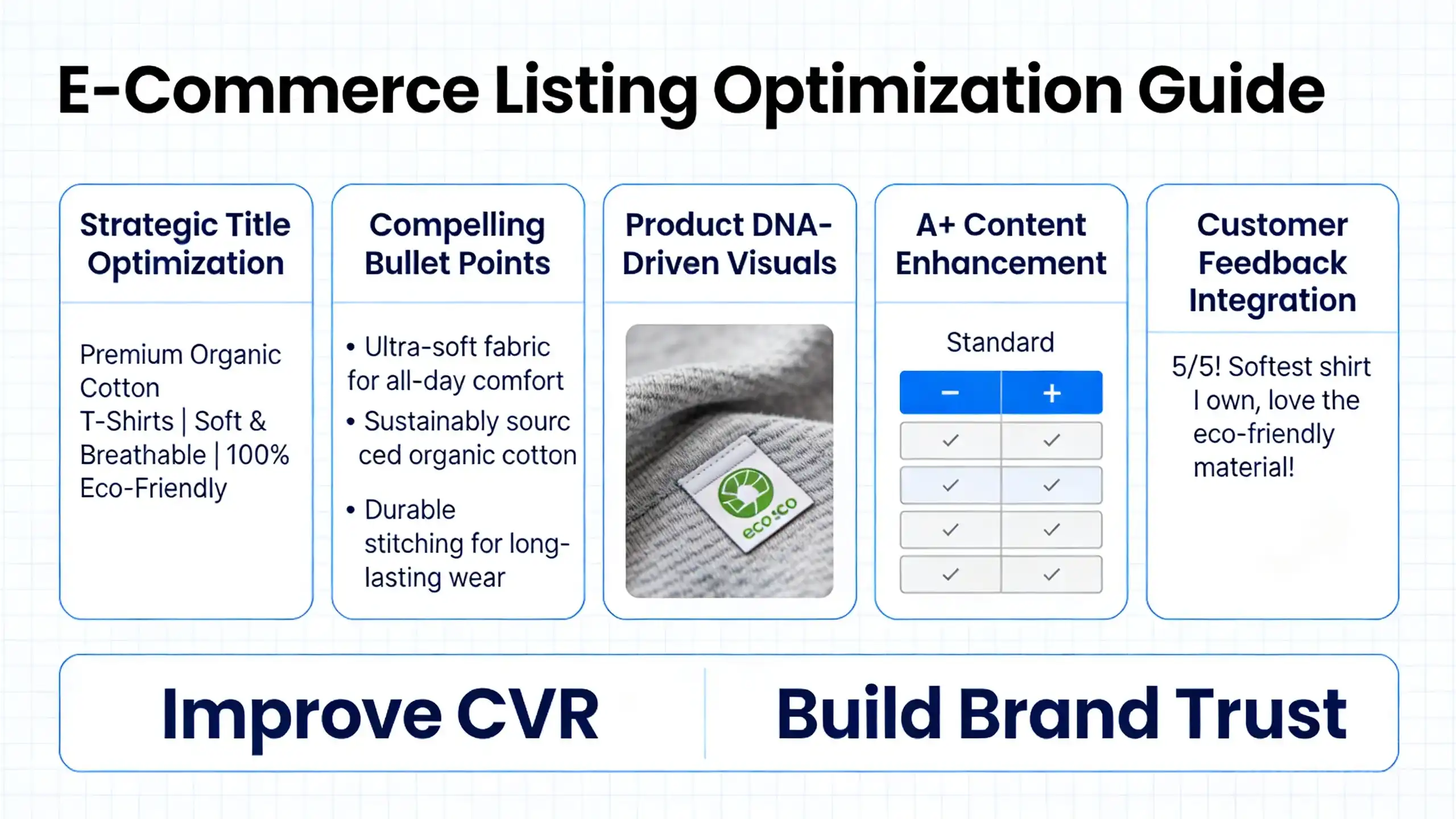
Your title is the first point of contact, responsible for both discoverability and click-through rate (CTR). It must strategically integrate high-volume keywords while clearly communicating the product's primary benefit to a human reader. Avoid keyword stuffing; instead, structure the title logically with brand, key feature, material, and quantity.
Bullet points are your opportunity to sell, not just describe. Lead each bullet with a capitalized, benefit-driven statement that addresses a specific customer pain point or desire. Keep them concise and scannable, highlighting your unique selling propositions (USPs) and transforming technical features into tangible outcomes for the buyer.
Optimizing Product Images and Videos for Maximum Impact
Visuals are the most critical component for conversion. Your image stack should include a high-resolution, white-background main image that complies with Amazon's guidelines, supplemented by lifestyle photos, infographics, and scale shots. However, using generic AI tools for visual creation introduces a significant risk. These tools can create "AI hallucinations," altering a product's material, color, or design, which leads directly to "product-image mismatch," customer disappointment, and destructive negative reviews.
A professional approach requires an automated visual production system, not a creative "AI drawing board." This system must be constrained by the product's core truth, or its "Product DNA," to ensure authenticity. Instead of vague goals like "show long battery life," the system should translate strategy into precise, executable instructions, such as creating a "bottom-left high-visual-impact infographic for '12-hour ultra-long journey'." This ensures visuals are both compelling and accurate, protecting your brand's reputation and CVR.
Developing Persuasive A+ Content and Brand Story
A+ Content is where you move beyond features to build brand trust and tell a compelling story. Use high-quality modules with enhanced visuals and text to showcase your product in action, explain your brand's mission, and dive deeper into key technologies or benefits. Structure the layout logically to guide the customer's eye, making it easily scannable, especially on mobile devices.
Incorporate comparison charts to differentiate your product from competitors or to clarify variations within your own catalog, helping customers self-select the right option and reducing purchase paralysis. A well-designed A+ page acts as a final persuasive argument, reinforcing value and giving shoppers the confidence to click "Add to Cart."
Leveraging Customer Reviews and Q&A for Trust and Conversion
Social proof is a powerful conversion driver. A high volume of positive reviews signals a trustworthy product, while the content within those reviews provides authentic use cases and overcomes potential objections. Encourage legitimate reviews through Amazon's "Request a Review" feature and other compliant follow-up programs.
More importantly, treat your reviews and Q&A section as a direct feedback loop for listing optimization. Systematically analyze negative reviews to identify recurring issues, misunderstandings, or unmet expectations. If customers are consistently confused about a feature, address it directly with a new infographic or a clarified bullet point. Proactively populate the Q&A section with answers to common pre-sale questions to remove friction from the buying process and demonstrate attentive customer service.
Strategic Advertising for Enhanced CVR
Effective advertising on Amazon is not merely about driving traffic; it's about attracting qualified visitors who are primed to convert. By strategically aligning your ad campaigns with your conversion goals, you can significantly improve your CVR and overall profitability.
Driving High-Intent Traffic with Targeted Ads
The foundation of a high-converting ad strategy is attracting the right audience. Instead of casting a wide net, focus on reaching shoppers with strong purchase intent. This involves meticulous keyword research to identify long-tail phrases that signal a user is close to buying, alongside a robust negative keyword strategy to filter out irrelevant clicks that waste your budget. Utilize product and category targeting to place your ads on competitor listings or complementary product pages, capturing customers at the final stages of their decision-making process. The goal is to ensure that every click is from a shopper who is genuinely interested in what your product offers.
Optimizing Ad Spend for Conversion Efficiency
To maximize your return, your ad spend must be directed by conversion data, not just click volume. Continuously analyze your Advertising Cost of Sale (ACoS) and Return on Ad Spend (ROAS) in the context of your CVR. A campaign might have a low ACoS but also a low sales volume, making it less valuable than a campaign with a slightly higher ACoS that drives significant conversions. Implement dynamic bidding strategies that increase bids on keywords and placements with a proven history of high CVR, while reducing spend on those that generate clicks but fail to convert. This data-driven reallocation of your budget ensures your advertising dollars are working as efficiently as possible to generate sales.
The Feedback Loop: Ads Data Informing Listing Improvements
Your advertising data is one of the most powerful tools for diagnosing listing weaknesses. A high Click-Through Rate (CTR) paired with a low CVR is a classic indicator that your ad is compelling but your product page is failing to close the deal. This disconnect transforms your ad spend into expensive market research.
To solve this, you must create a data feedback loop. Previously, the impact of visual optimizations, like updating a main image, was based on subjective judgment. Modern analytics allow you to tag these updates as "visual iteration events" within your ad reports. This enables you to directly observe the impact of a new image on your ASIN's CTR and CVR over the following 7-14 days. This process elevates your visual assets from a simple aesthetic display to a core commercial engine, providing a quantifiable link between your optimization efforts and your conversion performance.
Boosting Organic Traffic Through CVR Excellence
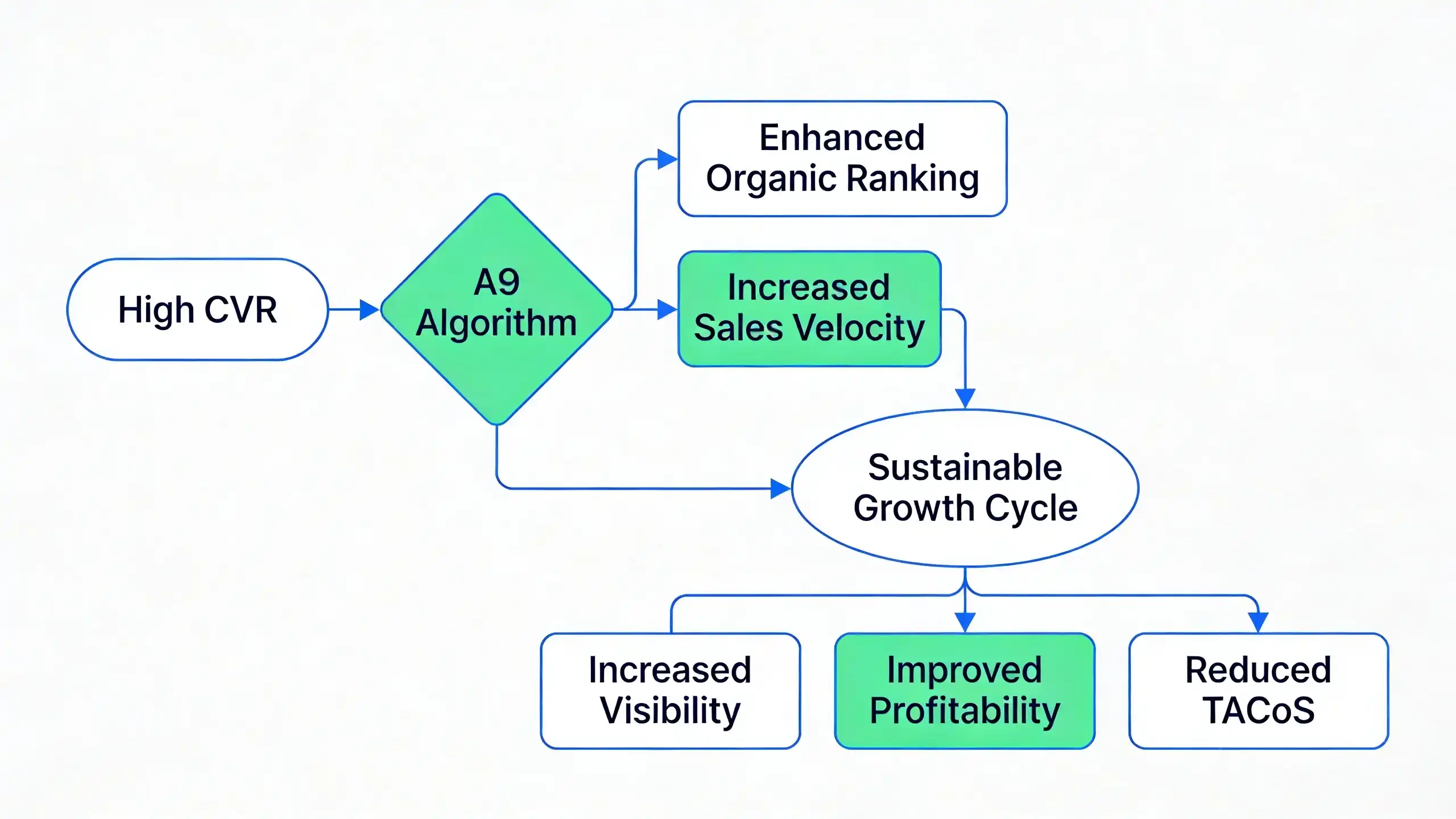
A high conversion rate (CVR) is more than just a sales metric; it's a powerful signal to Amazon's A9 algorithm that your product is a winner. By understanding and optimizing for CVR, you can unlock a virtuous cycle of increased visibility, sales, and profitability.
How CVR Signals Influence Amazon's Algorithm
Amazon's primary goal is to maximize revenue by showing customers products they are most likely to purchase. A high CVR directly tells the algorithm that your product effectively meets customer needs for specific search terms. This indicates strong product relevance and customer satisfaction. When a high CVR is combined with traffic, it generates strong sales velocity—one of the most critical factors in determining organic search ranking. Products that convert well are rewarded with higher placement, as Amazon is confident they will result in a sale.
Strategies to Improve Organic Ranking and Visibility
To trigger this positive feedback loop, you must first ensure your listing is fully optimized for conversion. Once your images, copy, and pricing are primed to turn clicks into sales, the next step is to drive initial traffic. Using targeted advertising campaigns to generate early sales on a high-CVR listing is an effective way to demonstrate sales velocity to the algorithm. This initial push helps your product gain traction and begin climbing the organic rankings for your most important keywords, which you should monitor closely.
Sustaining Growth: The Long-Term Benefits of High CVR
Achieving and maintaining a high CVR creates a self-reinforcing cycle of growth. As your organic rank improves, you receive more free, high-intent traffic, which, on a well-optimized page, leads to more sales and further solidifies your ranking. This increased organic visibility reduces your dependence on paid advertising, lowering your Total Advertising Cost of Sale (TACoS) and boosting overall profitability. Over time, this consistent performance builds significant brand equity and customer loyalty, creating a more resilient and defensible business model.
Measuring and Iterating: The Continuous CVR Optimization Cycle
Achieving a high conversion rate isn't a one-time project; it's a continuous cycle of measurement, analysis, and refinement. Top sellers treat CVR optimization as an ongoing business process, constantly seeking incremental gains that compound over time. Stagnation is a silent profit killer, and the only way to combat it is through a disciplined, data-driven iteration loop.
Key Metrics for Tracking CVR Performance
To effectively manage your CVR, you must first measure it accurately. Your primary source of truth is the "Business Reports" section in Amazon Seller Central. Focus on these core metrics:
- Unit Session Percentage (CVR): This is your primary conversion rate metric. It’s calculated as Total Units Ordered / Total Sessions. It tells you the percentage of sessions that result in a purchase of one or more of your product's units.
- Sessions: The number of unique visits to your product pages within a 24-hour period. A visitor can view your pages multiple times but will only count as one session. This metric is crucial for understanding your traffic volume.
- Page Views: The total number of times your product pages were viewed. A high number of page views per session can indicate either high engagement or customer confusion.
- Orders: The total number of confirmed orders for your product.
By monitoring these KPIs, you can establish a baseline and track the direct impact of your optimization efforts on shopper behavior.
Implementing a Data-Driven Optimization Process
A systematic approach is essential for turning data into results. The process follows a clear, repeatable cycle:
- Set Goals: Define a specific, measurable CVR target. For example, aim to increase your Unit Session Percentage from 10% to 12% over the next quarter.
- Analyze and Hypothesize: Dive into your reports to identify bottlenecks. Is your session count low? Your CVR might be fine, but you have a traffic problem. Is your session count high but your CVR is low? This points to a problem with your listing content, pricing, or reviews. Form a hypothesis about what change will drive the biggest improvement.
- Prioritize and Test: Implement the highest-priority change. This could be updating your main image, rewriting your bullet points, or adjusting your A+ Content.
- Track and Measure: After implementing a change, monitor your key metrics for a statistically significant period to determine its impact. Did the change improve your CVR, have no effect, or make it worse? Use this feedback to inform your next move.
The Role of DeepBI in Continuous CVR Improvement
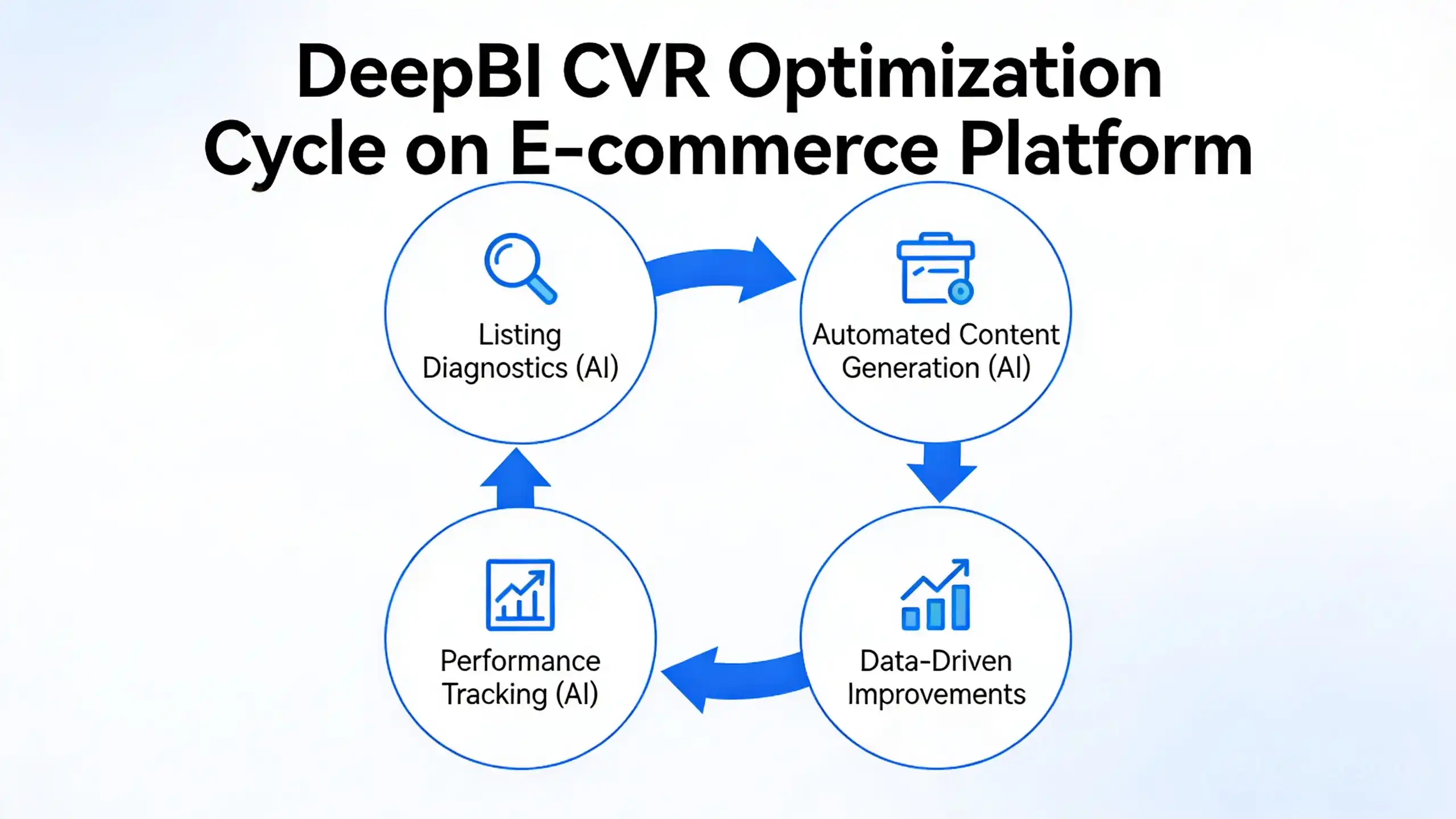
Manually executing this optimization cycle is time-consuming and prone to human error. DeepBI transforms this process into a streamlined, AI-powered workflow. The system creates a closed loop, moving from diagnosis to delivery automatically.
It begins with an AI-driven diagnostic audit of your listings to pinpoint weaknesses. Instead of providing vague suggestions, DeepBI translates optimization strategies into precise, executable instructions for AI content generation. Once new content, such as conversion-focused images, is created, it can be published directly to your Amazon listings across global marketplaces with a single click via the secure SP-API. This reduces a manual process that takes minutes or hours down to seconds.
Crucially, the loop doesn't end at publishing. After a change is applied, the system can mark an event point to help you track the subsequent impact on key advertising and sales metrics, like CTR and CVR, ensuring every optimization is validated by performance data.
Conclusion: Your Path to Sustainable Amazon Growth
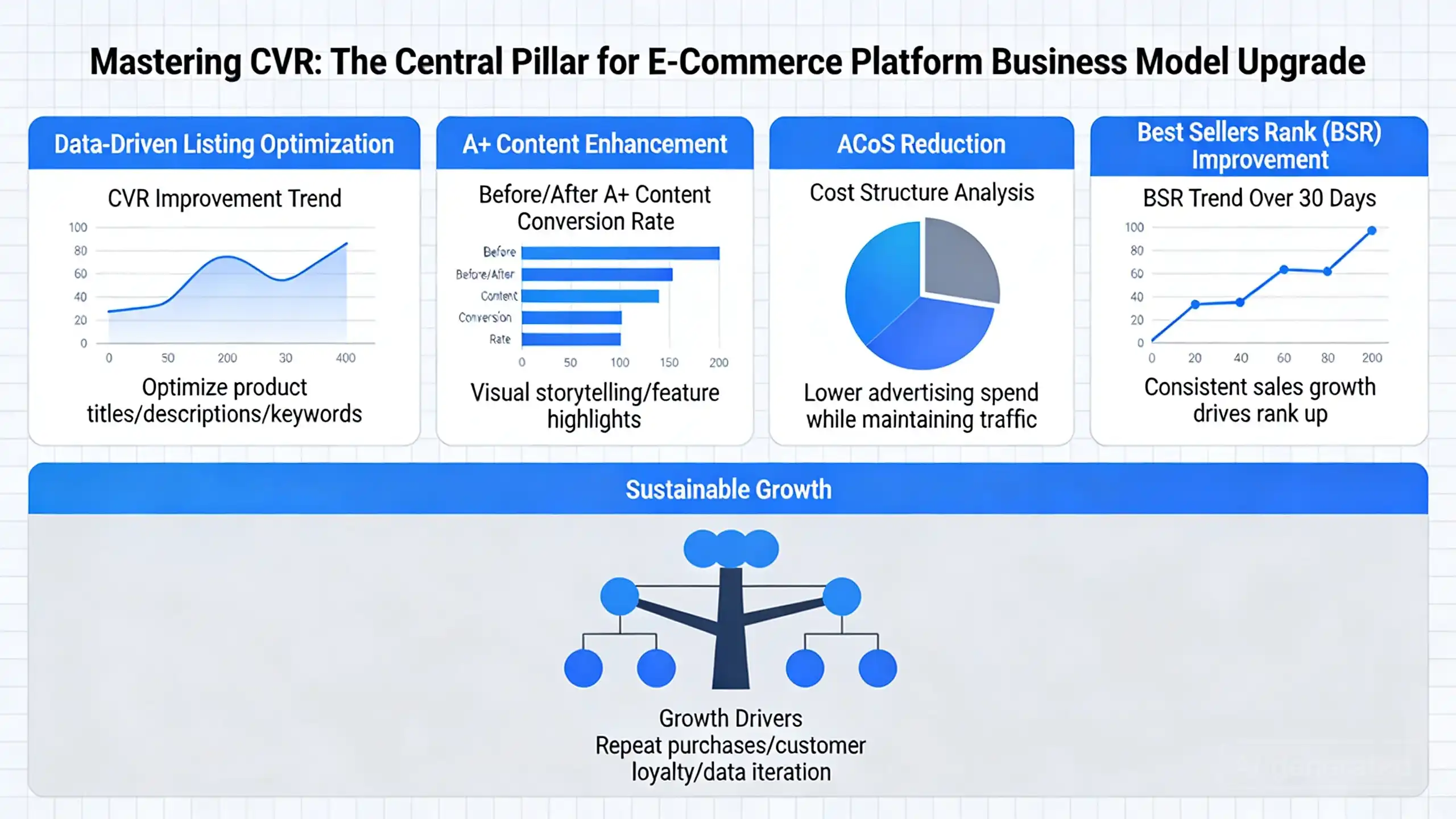
Mastering your conversion rate is not just about improving a single metric; it is about fundamentally upgrading your entire Amazon business model. As we've explored, CVR acts as a powerful growth multiplier, amplifying the return on every dollar spent on advertising and every effort made to drive traffic. A higher conversion rate directly lowers your ACoS, improves your Best Sellers Rank, and creates a virtuous cycle of increased visibility and sales.
The path to optimization is not paved with guesswork. It requires a decisive shift away from 'groping in the dark' and toward a strategy of 'precision targeting.' This means embracing a continuous, data-driven cycle of diagnosis, testing, and refinement. Every element of your listing—from the main image to the last bullet point in your A+ Content—has evolved from a simple display piece into a core commercial engine that must be engineered to convert.
By committing to a holistic and relentless focus on CVR, you are not just making short-term tweaks; you are building a durable competitive advantage. Prioritize conversion rate optimization as the central pillar of your strategy, and you will unlock a new level of profitability and secure your path to sustainable, long-term growth on the Amazon marketplace.