Introduction: The Frustration of Wasted Ad Spend
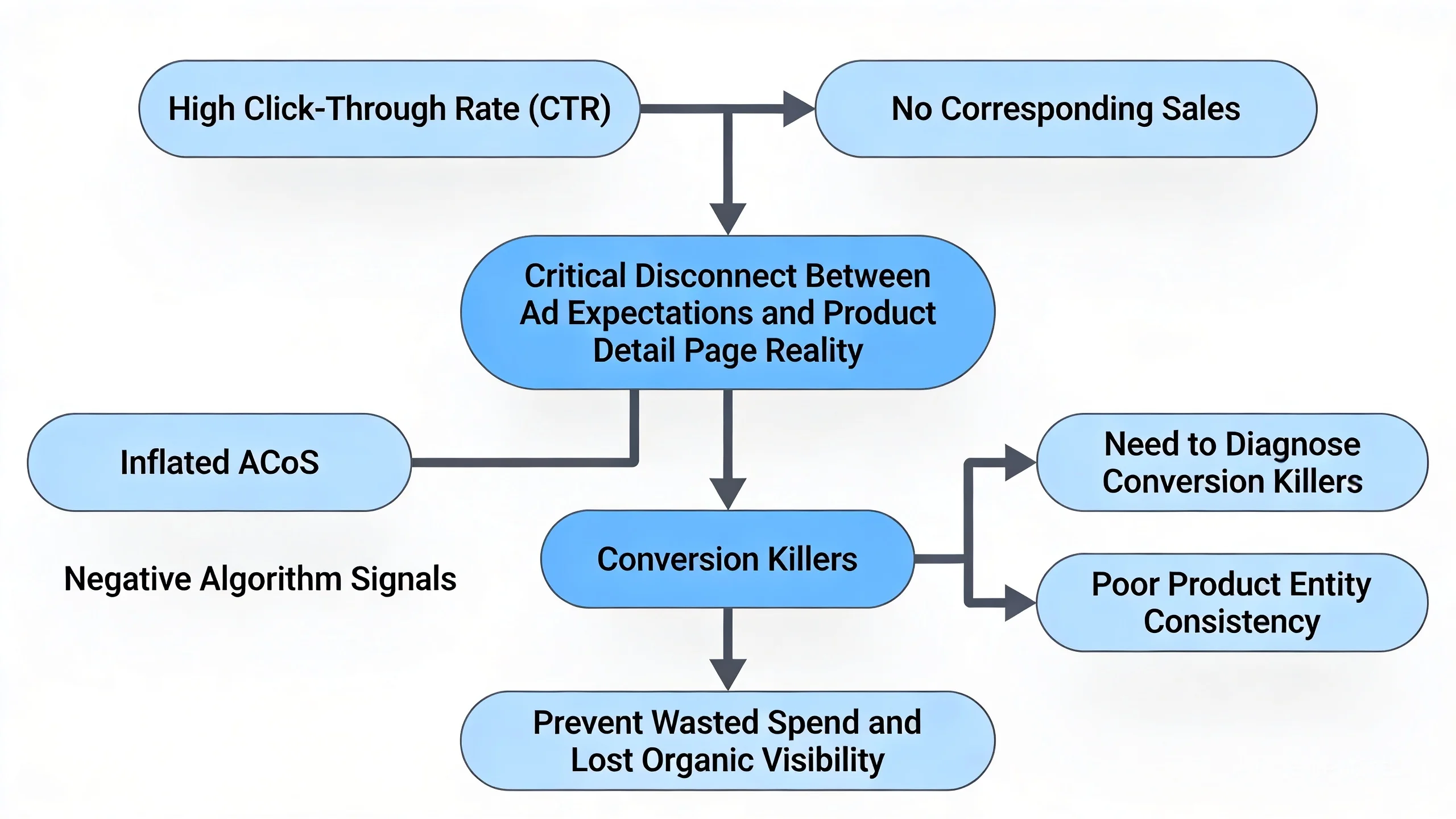
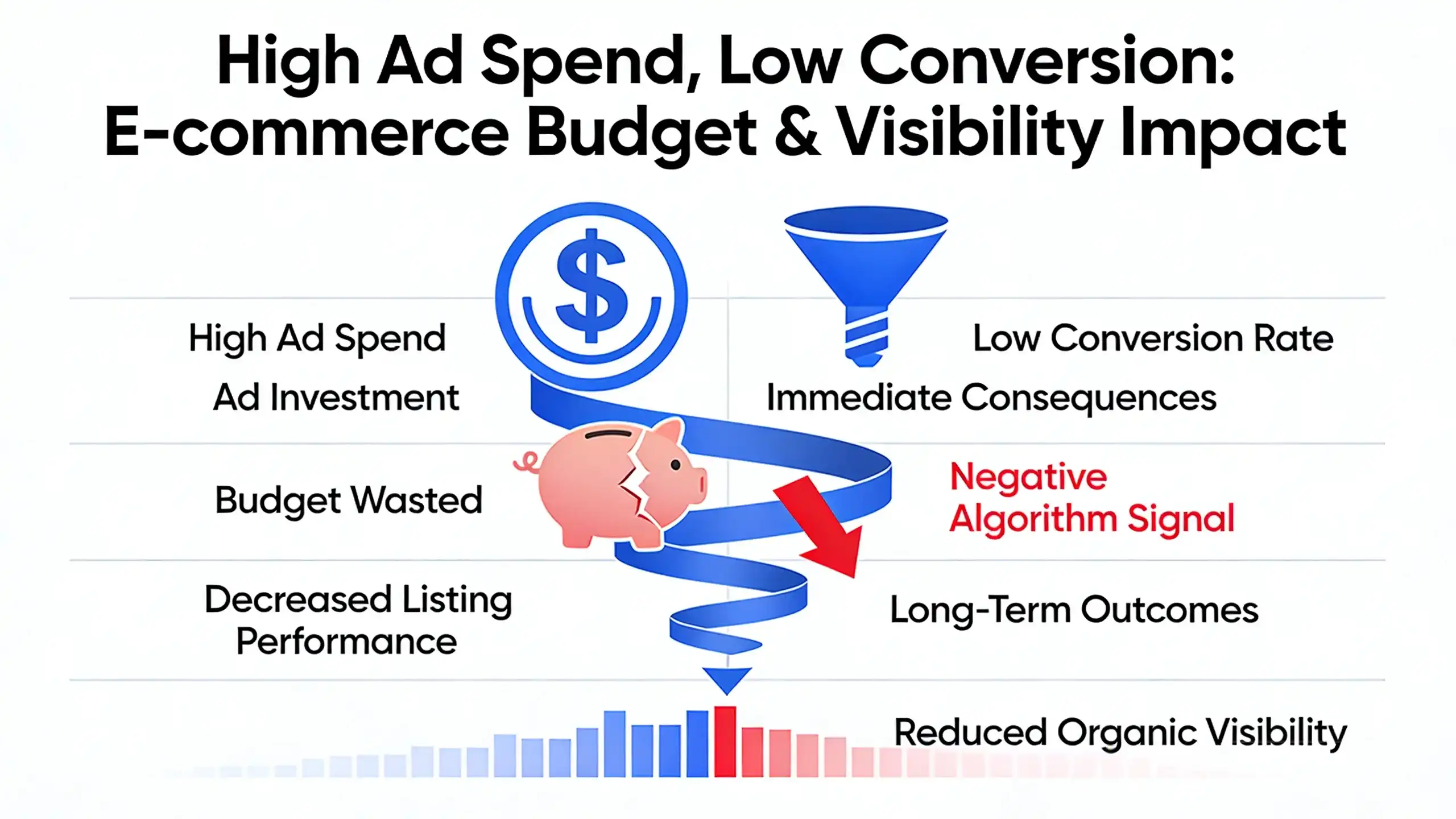
Is your Amazon advertising budget disappearing with little to show for it? You are not alone. Many sellers face a deeply frustrating scenario: their sponsored product ads achieve a high click-through rate (CTR), suggesting strong initial interest, but these clicks rarely translate into actual sales. The result is a high ad spend that inflates your Advertising Cost of Sales (ACoS) and eats directly into your profit margins, turning what should be a growth engine into a financial drain.
The damage, however, extends beyond the immediate waste of your budget. When shoppers consistently click your ad but fail to make a purchase, it sends a negative signal to Amazon's algorithm. This pattern suggests a disconnect between what your ad promises and what your product detail page delivers, indicating a poor customer experience or a lack of relevance. Over time, this can lead to diminished ad performance and visibility as Amazon prioritizes listings that convert more effectively.
Furthermore, this poor conversion performance has broader, indirect consequences. A steady stream of non-converting traffic from your primary advertising channels can suppress your overall sales velocity. Since sales velocity is a significant factor in Amazon's ranking system, a sustained drop can potentially impact your product's organic visibility in the long run. This article will move beyond the symptoms of high ACoS and wasted spend to diagnose the root causes—the hidden "conversion killers" on your product page that are sabotaging your success.
Diagnosing the Disconnect: Where Clicks Fail to Convert
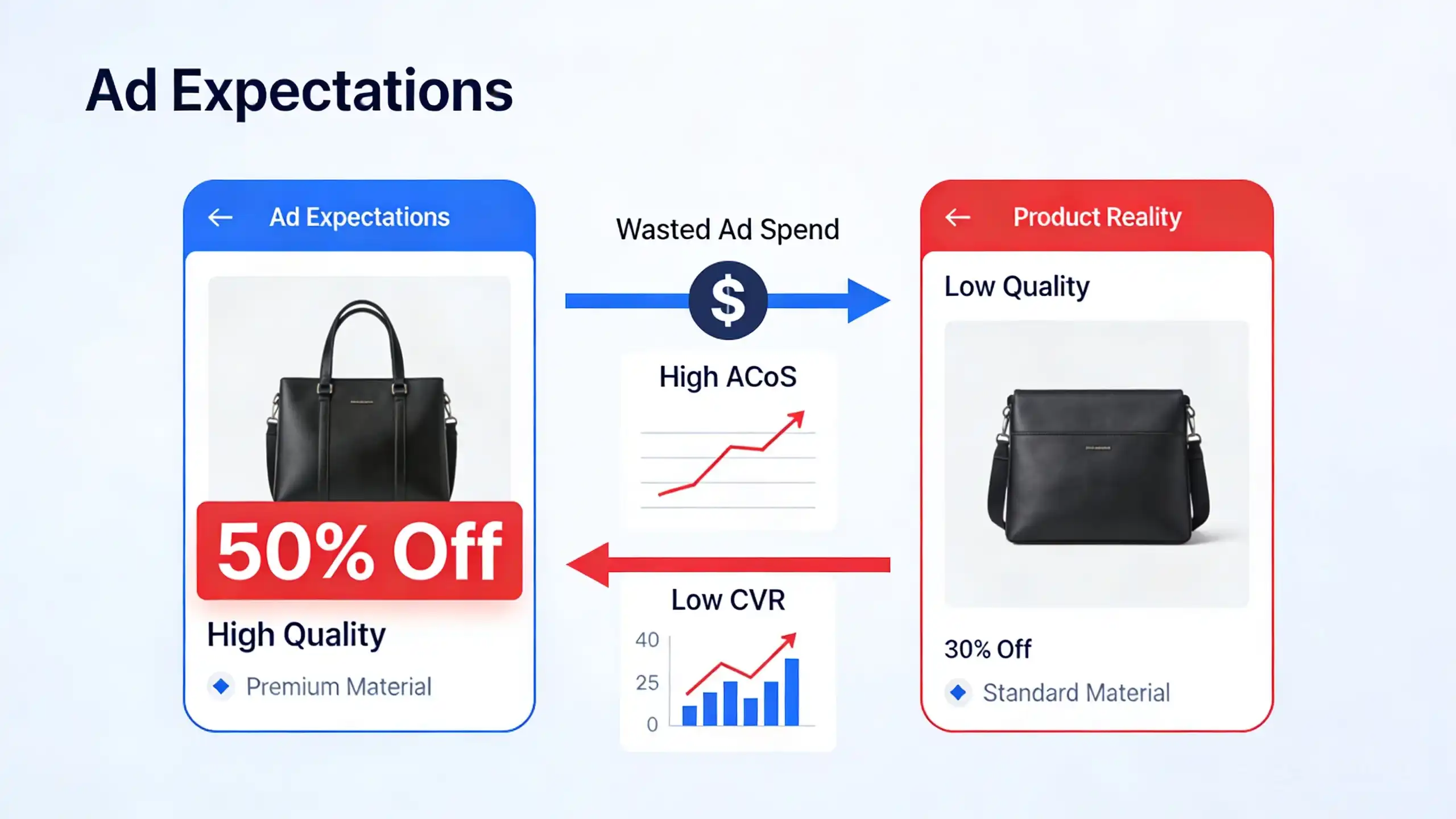
When your Amazon ads generate a healthy click-through rate (CTR) but fail to produce sales, your ad spend is wasted, driving up ACoS and depressing your overall profitability. This common frustration isn't just bad luck; it’s a clear signal of a breakdown in the customer journey. The problem lies in a fundamental disconnect between the expectation your ad creates and the reality the customer finds on your product detail page. A click is a question, and if your listing doesn't provide a compelling answer, the sale is lost.
At its core, this disconnect erodes trust. For instance, if an ad features a visually stunning, AI-enhanced image where the product’s color or material has been altered, it violates what we call 'product entity consistency.' The customer clicks, expecting that exact item, but the listing's other images, description, or—even worse—the product they ultimately receive doesn't match. This mismatch leads directly to abandoned carts, poor conversion rates (CVR), and destructive negative reviews.
To fix this conversion leak, you must diagnose its source. The issues can be grouped into three critical areas:
- Ad Campaign & Targeting: Is your ad reaching the right audience with the right message, or is it attracting unqualified clicks with misleading creative or irrelevant keywords?
- Product Listing Experience: Does your detail page—from the main image and title to bullet points and A+ Content—validate the ad's promise and effectively persuade the customer to buy?
- Post-Click & Competitive Factors: Are non-listing elements like price, shipping speed, low inventory, or a competitor's superior offer derailing the purchase after the click?
Problem Area 1: Ad Campaign Misalignment and Targeting Issues
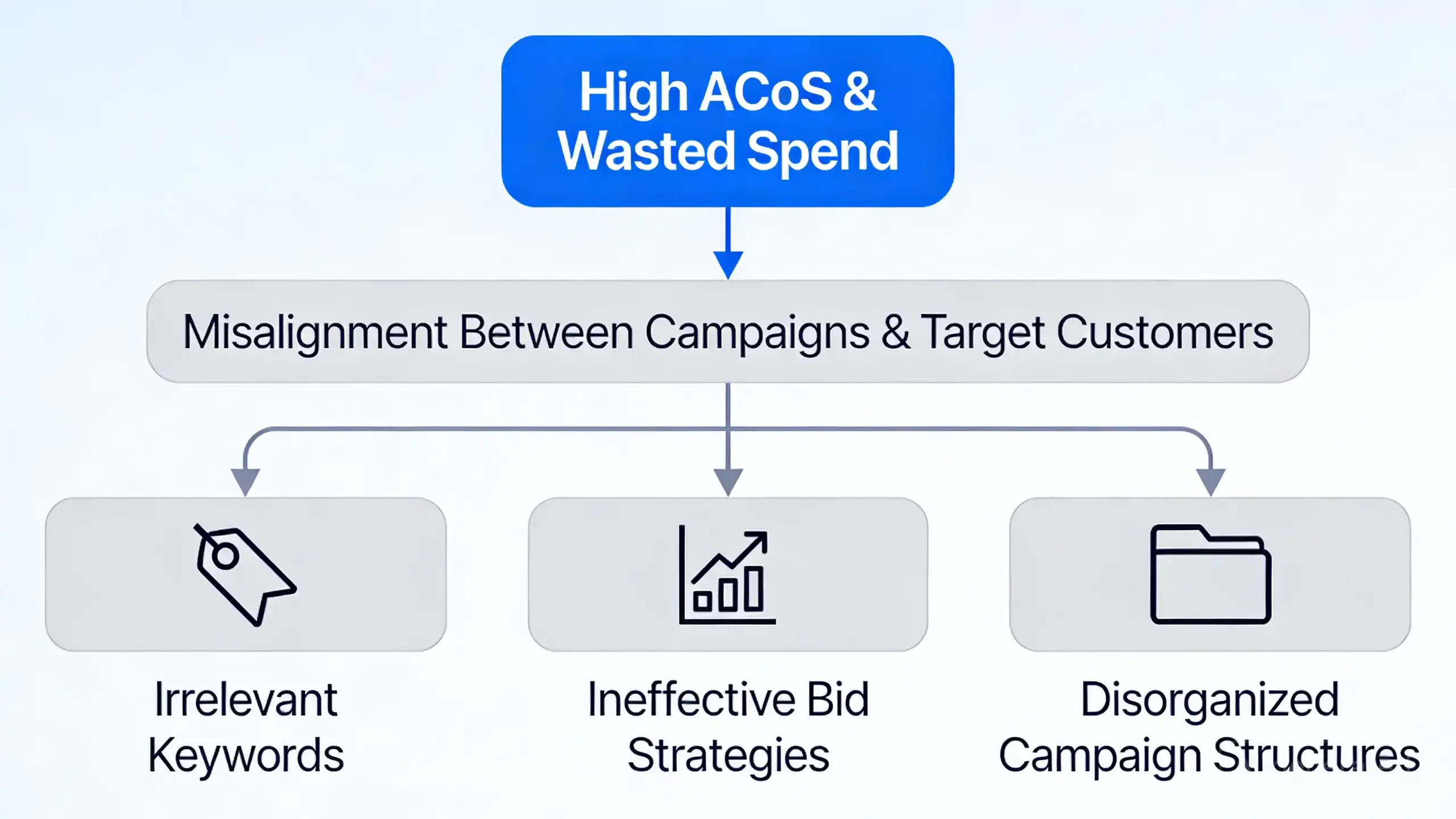
High ad spend with low sales often originates from a fundamental disconnect between your ad campaigns and your target customer. When your ads attract clicks from shoppers who have no intention of buying, your Advertising Cost of Sales (ACoS) will inevitably climb. This misalignment stems from core issues in campaign setup and targeting strategy.
Irrelevant Keywords and Audiences
A primary cause of non-converting traffic is targeting the wrong audience. Using overly broad keywords without a disciplined negative keyword strategy attracts clicks from shoppers with low purchase intent. For example, bidding on "shoes" for a specialized "men's trail running shoe" will generate clicks, but most will be from users looking for different styles, leading to a high click-through rate (CTR) but a dismal conversion rate (CVR). Similarly, poor audience segmentation in Sponsored Display campaigns can show your ads to demographics or interest groups that are a poor match for your product.
Ineffective Bid Strategies
Your bidding strategy directly controls the cost and visibility of your ads. A static or poorly managed approach is a recipe for wasted spend. Overbidding on keywords with high traffic but low conversion history burns through your budget on worthless clicks. Conversely, underbidding on high-performing, long-tail keywords means you lose valuable impression share and sales to competitors who are bidding more effectively. Without dynamic adjustments based on performance data, your budget is either squandered or fails to capture profitable opportunities.
Campaign Structure Flaws
A disorganized campaign structure makes effective management and optimization nearly impossible. Lumping dissimilar products into a single ad group, failing to separate campaigns by strategic objective (e.g., brand defense, competitor targeting, product launch), or allocating budgets improperly prevents you from gaining clear performance insights. Without a logical structure, you cannot accurately assess which keywords, products, or strategies are working, trapping you in a cycle of inefficient spending and poor results.
Problem Area 2: The Listing Experience Breakdown
Driving traffic to your product detail page is only half the battle. If a customer clicks your ad but doesn't buy, the problem often lies within the listing itself. This is where the final purchase decision is made, and any friction or unanswered question can kill your conversion rate (CVR), turning profitable ad clicks into wasted spend. A breakdown in the listing experience signals to the customer that the product may not be the right fit, is low quality, or is offered by an untrustworthy seller.
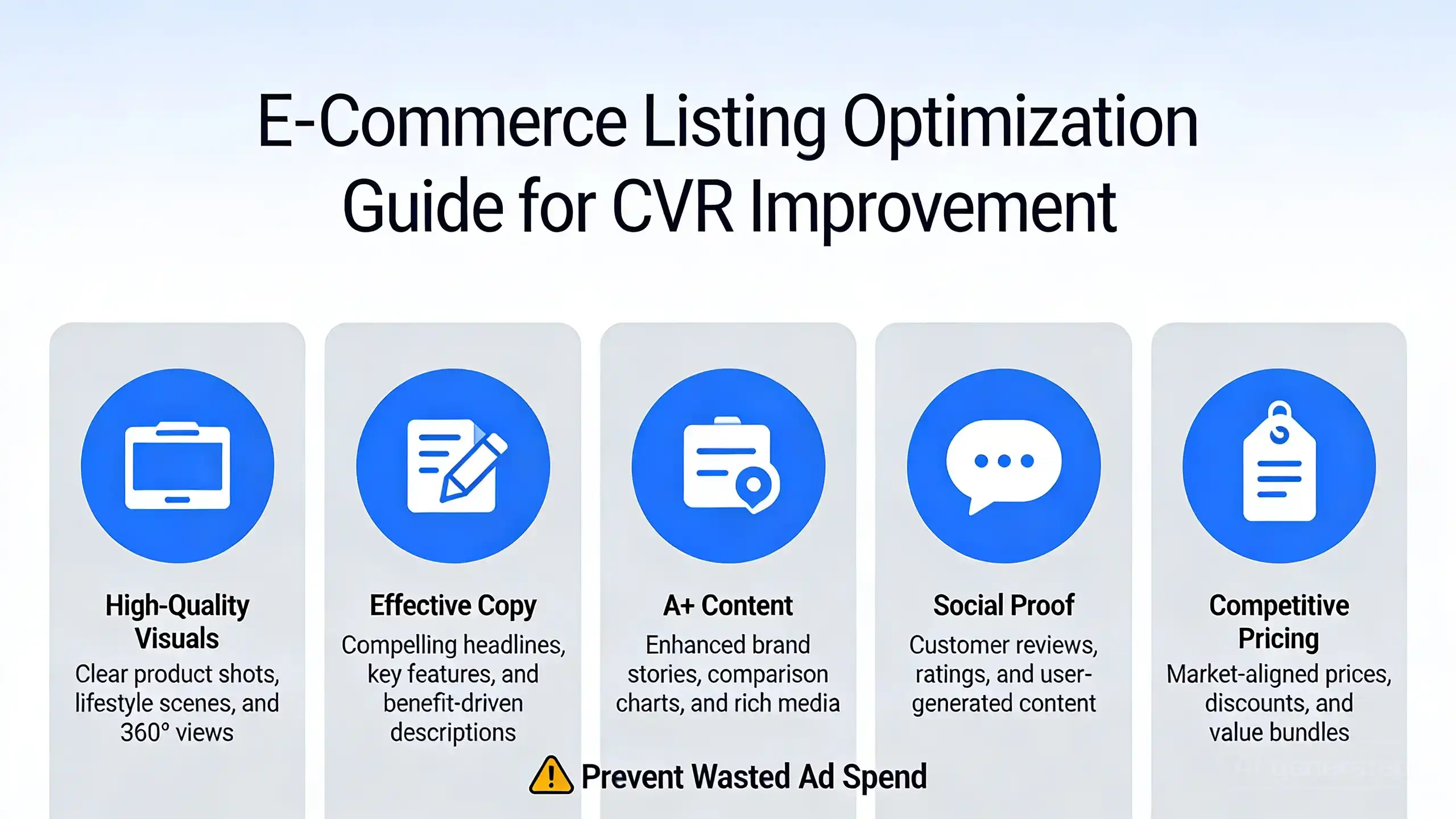
Uncompelling Main Image and Visuals
Your main image is the first handshake with the customer post-click. If it's low-resolution, poorly lit, or fails to clearly showcase the product's value, it creates immediate doubt. Customers expect to see a gallery of high-quality visuals that not only display the product from multiple angles but also demonstrate its use cases and key features. Weak visuals fail to build the perceived value necessary to justify the price, causing shoppers to bounce before they even read your title.
Weak Title and Bullet Points
Customers scan; they don’t read. A title stuffed with keywords but lacking clarity, or bullet points that are just a dry list of features, will not persuade a buyer. Effective copy translates features into tangible benefits that solve a customer's problem. Your title should confirm the shopper is in the right place, while your bullet points must quickly answer their primary questions and overcome purchase hesitations. If the text is confusing or uninspired, the customer will move on to a competitor whose listing is easier to understand.
Inadequate A+ Content and Product Description
The A+ Content and description sections are your primary tools for telling a brand story, building trust, and handling complex objections. Leaving this space blank or using generic templates is a massive missed opportunity. This is where you can use rich visuals and compelling copy to differentiate your product, compare it to other models, and justify a premium price. Without this deeper level of engagement, you fail to build the confidence required for a customer to click "Add to Cart."
Insufficient or Negative Reviews
Social proof is a powerful, non-negotiable conversion factor on Amazon. A product with few reviews—or worse, a pattern of recent, detailed negative reviews—is a major red flag for shoppers. Buyers trust other buyers far more than they trust your marketing copy. A low star rating or critical feedback about product quality, shipping, or "not as described" issues will immediately undermine your ad efforts and send potential customers directly to better-rated competitors.
Pricing and Offer Competitiveness
Even with a perfect listing, an uncompetitive offer will stop a sale cold. Customers are constantly comparing your price, shipping speed (Prime eligibility is key), and available promotions (coupons, deals) against direct competitors. If your product is priced significantly higher without clear, justifiable value communicated through your images and A+ content, you will lose. The total offer must be perceived as fair market value, or the customer will simply choose a better deal elsewhere.
Problem Area 3: Post-Click Experience and External Factors
Even with a perfect ad and a compelling product listing, sales can falter if the post-click journey is flawed. The issues often lie in operational readiness and external market pressures that sabotage the final conversion.
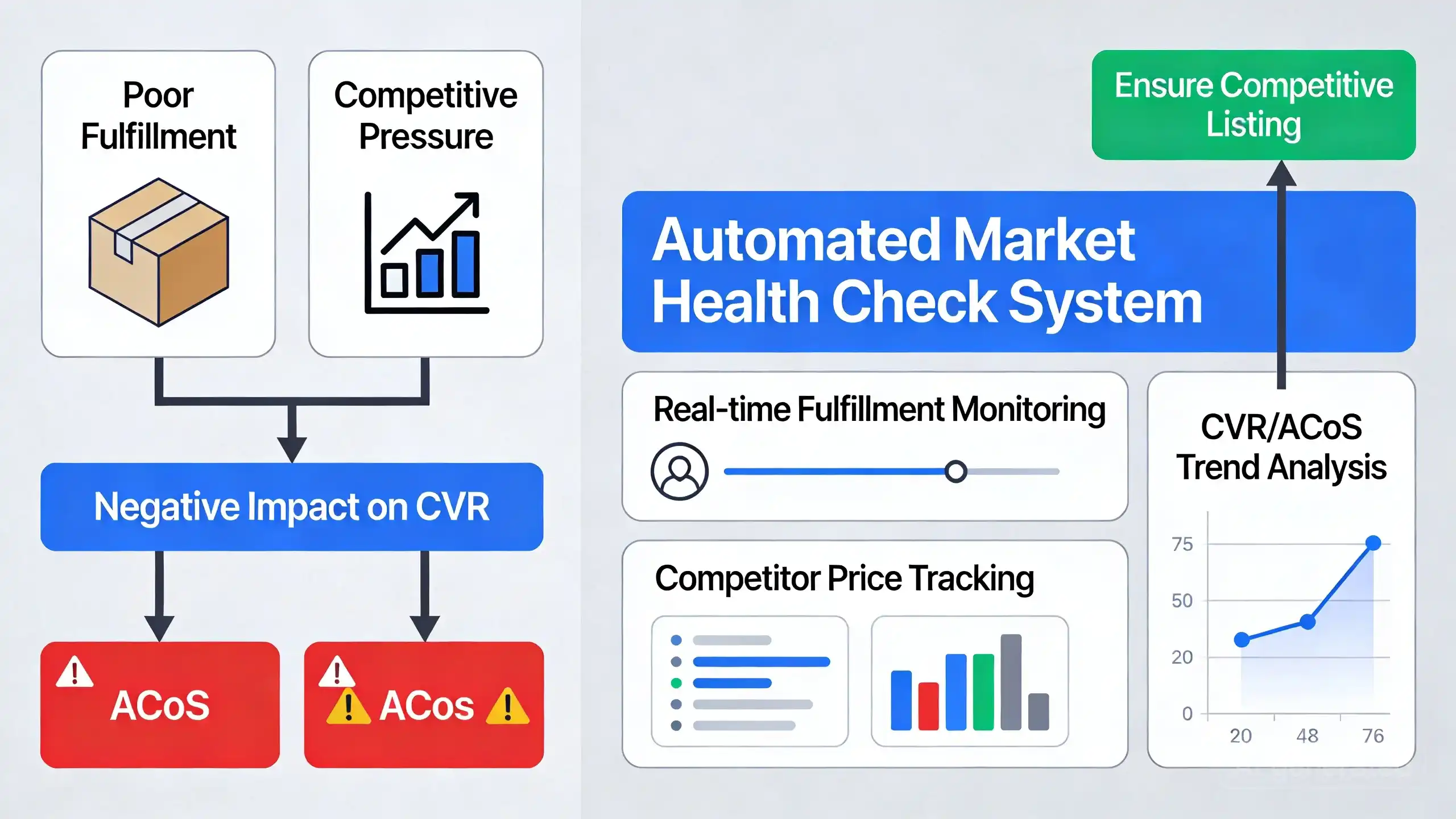
A primary conversion killer is a poor fulfillment experience. Imagine a customer, convinced by your ad, who clicks through ready to buy. If they are met with an "out of stock" message, unexpectedly long shipping times, or high delivery fees, their purchase intent evaporates. This friction leads directly to cart abandonment, destroying your conversion rate (CVR) and inflating your Advertising Cost of Sale (ACoS) as paid clicks fail to materialize into revenue.
Furthermore, your product does not exist in a vacuum. When a shopper lands on your page, Amazon presents them with your competitors' products. If a rival offers a similar item with a lower price, better reviews, or faster Prime shipping, you can lose the sale in that final moment of consideration. To combat this, it's essential to have a clear view of the competitive landscape. Top sellers often leverage what can be described as an 'automated market health check system' to continuously monitor their positioning and ensure their offer remains the most attractive option for the traffic they have paid to acquire.
Leveraging DeepBI for Conversion Optimization
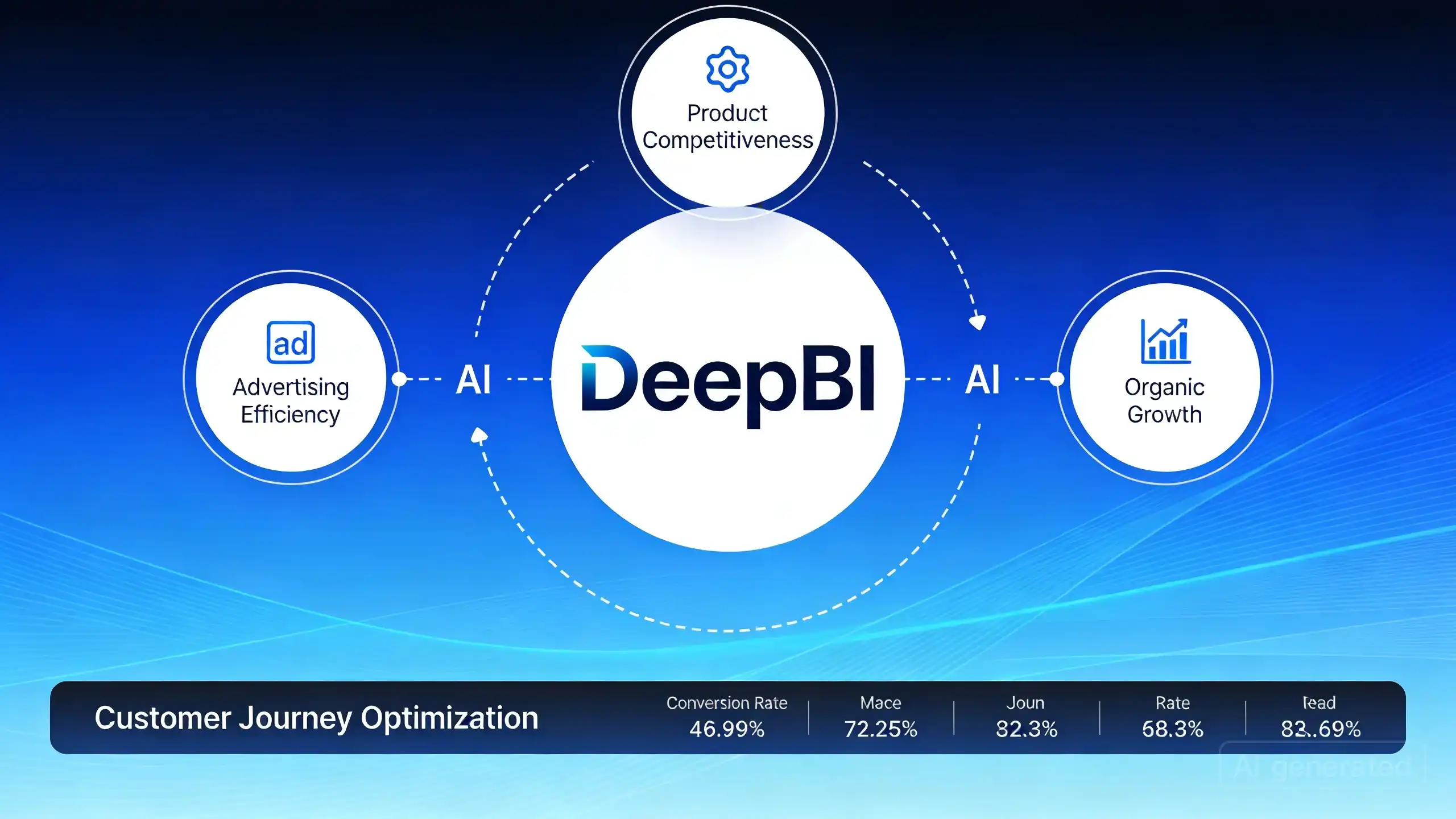
Solving the "clicks but no sales" puzzle requires moving beyond isolated fixes and adopting a holistic strategy. DeepBI is an AI-powered, Amazon-focused operational system designed to optimize the entire customer journey from ad impression to purchase. It breaks down the traditional silos between diagnosis, planning, and execution, creating a single, automated loop that connects product competitiveness, advertising efficiency, and organic growth.
This integrated approach directly addresses the conversion killers identified earlier:
- For Listing Experience Breakdown: DeepBI's ModuleListing acts as an automated market health check, diagnosing weaknesses and benchmarking your content against top competitors. It then uses AI to generate optimized titles, bullets, and images. Crucially, the system enforces "product entity consistency," preventing AI-driven alterations that could cause a mismatch between your images and the physical product, thereby mitigating the risk of negative reviews. All optimizations can be synchronized to your Amazon listing with a single click via the SP-API.
- For Ad Campaign Misalignment: The ModuleAdsQuant intelligently manages traffic acquisition and optimizes your budget allocation, ensuring your ads reach the most relevant, high-intent shoppers. This data then fuels the ModuleOrganicTraffic, which leverages your highest-performing ad keywords to build targeted campaigns aimed at securing "Top of Search" placement. This creates a powerful flywheel where effective ad spend not only drives immediate sales but also builds long-term organic ranking and visibility.
Building a Sustainable Conversion Strategy
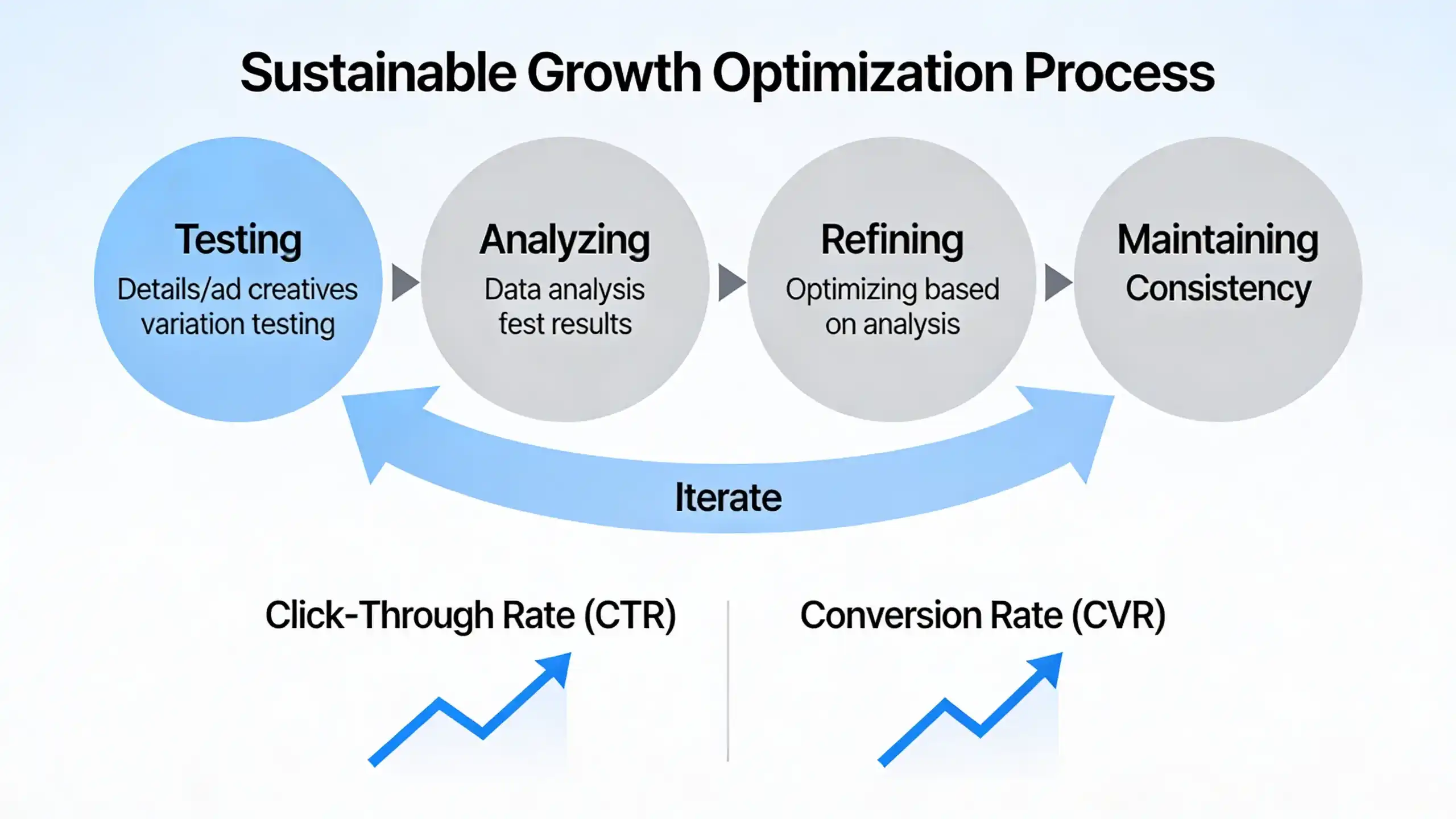
Achieving a high conversion rate is not a one-time fix but a continuous process of refinement. A sustainable strategy moves beyond reactive adjustments and implements a structured, iterative cycle of optimization. This approach ensures that every change is a calculated step toward improving profitability, not just a shot in the dark.
The core of this strategy is a simple yet powerful loop: test, analyze, and refine. This begins with making a specific, data-informed change—such as updating a main image based on a diagnostic report. The next crucial step is to analyze the impact. For instance, after an image update is published, a system can automatically tag the event within ad reports, allowing you to precisely quantify its effect on metrics like Click-Through Rate (CTR) and Conversion Rate (CVR). Based on this data, you can refine your approach for the next iteration.
This entire process must be governed by the principle of consistency. Every optimization, whether for an ad creative or a listing detail, must preserve the core truth of your product and brand. This means strictly adhering to the product's actual attributes, ensuring data authenticity, and complying with brand identity guidelines. When your ad messaging perfectly aligns with your product detail page, you build trust and reduce the friction that kills conversions. By systematically turning strategic insights into precise, executable instructions, you create a powerful synergy between your paid and organic efforts, driving sustainable growth and maximizing your return on ad spend.
Conclusion: Turning Clicks into Profitable Sales
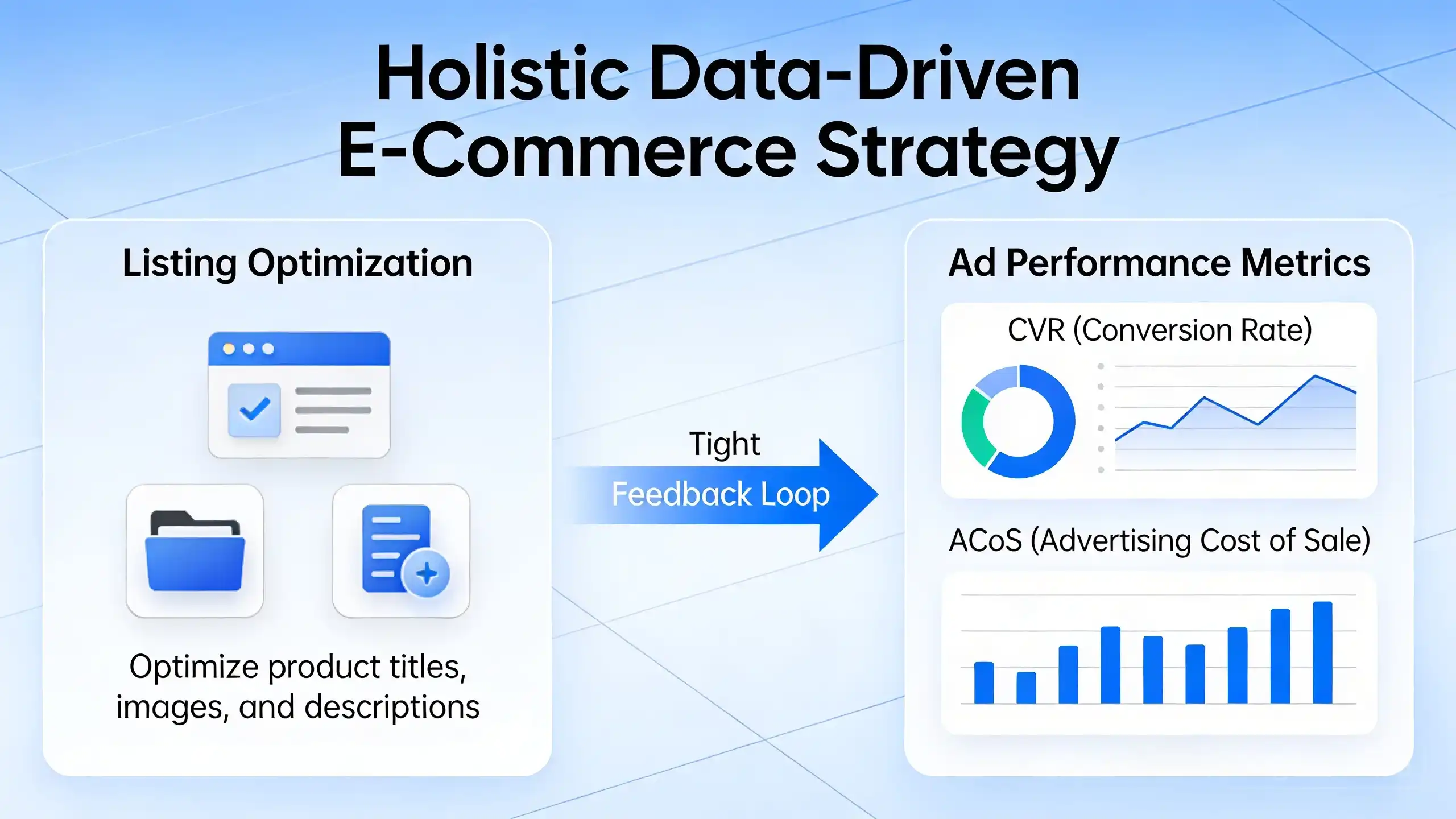
Ultimately, the journey from a high-click, low-conversion ad campaign to a profitable sales engine is not about finding a single magic bullet. It's about adopting a holistic and data-driven strategy. Wasted ad spend is merely a symptom of a deeper disconnect between who your ads attract and what your product detail page communicates. Fixing this requires moving beyond isolated campaign adjustments and treating your advertising and listing optimization as two halves of the same whole.
Success hinges on creating a tight feedback loop where every change to your listing—from a new main image to a rephrased bullet point—is measured against its direct impact on ad performance metrics like CVR and ACoS. This is the core of a modern Amazon strategy: replacing assumptions with data-backed insights. By systematically diagnosing conversion killers on your product page and aligning your ad creative with a fully optimized listing, you transform traffic from a cost center into a predictable source of revenue. This integrated approach is the definitive path to not just getting clicks, but converting them into loyal customers and building a truly scalable Amazon business.