


Amazon listing optimization is the methodical process of refining every component of a product detail page—including titles, high-resolution imagery, bullet points, A+ Content, and backend keywords—to ensure a product secures premium organic placement and converts shoppers effectively. In the 2026 marketplace, this is no longer a static "set and forget" task; it is a continuous, methodical refinement of a brand’s digital storefront to satisfy both human consumers and sophisticated AI discovery engines.
For brands operating at scale, the listing is the critical junction where advertising investment meets consumer intent. If a listing’s CTR falls below 0.35% or its CVR remains under 7%, traffic acquisition costs are essentially wasted, leading to a deteriorating ACoS and a loss of BSR momentum. To mitigate these risks, brands must transition from subjective, aesthetic-based modifications to a structured roadmap rooted in a data-centric assessment of performance gaps.
The defining shift in 2026 is the integration of Amazon’s AI shopping assistant, Rufus. Currently handling over 274 million daily queries and driving $10 billion in incremental sales, Rufus has transformed the search experience from simple keyword matching into a conversational discovery process. This guide outlines the foundational best practices and the AI-driven adjustments necessary to thrive in this new environment.
Key Takeaways for 2026:
- The Three-System Requirement: Modern optimization requires satisfying three distinct layers simultaneously: the A10 keyword algorithm for traditional search, the COSMO semantic knowledge graph for intent matching, and the Rufus AI conversational layer for personalized recommendations.
- AI as a Revenue Driver: Rufus users convert at a significantly higher rate than non-Rufus users. Ensuring a listing is "AI-readable" is now a direct requirement for maximizing incremental sales and improving the conversion chain.
- Fundamentals Still Dictate Performance: Despite the rise of AI, the core pillars of a high-converting listing—clear titles, high-quality visual assets, and a strong review moat—remain the primary drivers of consumer trust and BSR stability.
- Contextual Content Over Keyword Stuffing: AI search rewards content that answers specific shopper questions and connects product features to real-world use cases. Success in 2026 belongs to brands that communicate value rather than those that simply repeat high-volume search terms.
Learn How to Make Listings That Convert in 2025!
To maintain a competitive edge as Amazon transitions toward an AI-first search environment, brands must move beyond basic keyword stuffing toward a methodical framework of data-driven refinement. When performance metrics signal a decline—specifically when CTR drops below 0.35% or CVR falls under 7%—it indicates a breakdown in the conversion funnel that directly threatens BSR and inflates ACoS.
Navigating the nuances of Rufus AI requires a structured performance tuning approach that aligns visual storytelling with the specific data points Amazon’s Large Language Models (LLMs) prioritize. By conducting a performance-based review of your current listings, you can identify the exact friction points causing high listing cycle times and missed ranking opportunities.
Ready to master the next generation of Amazon growth?
- Optimize for Rufus AI: Discover how to structure your listing data to become the top recommendation in conversational search results.
- The 2025 Conversion Blueprint: Access our latest framework for auditing and upgrading your visual assets to meet the evolving standards of AI-driven buyer behavior.
Sign up for our newsletter today to receive your free step-by-step guide and stay updated on the latest AI-driven strategies for Amazon excellence.
Why Amazon Listing Optimization Matters More Than Ever
The Amazon marketplace has evolved into a hyper-competitive arena featuring over 600 million products. Brands no longer just compete with direct rivals; they face constant pressure from Amazon’s own private-label brands, a global influx of international sellers, and an increasingly sophisticated set of ranking algorithms. In this environment, organic search share is not a static achievement but a metric that must be defended through constant refinement.
Drawing from DeepBI’s experience managing listings for over 500 brands, listing optimization consistently emerges as the highest-leverage activity for driving sustainable BSR growth. Many sellers remain trapped in a cycle of subjective visual changes that often lead to a decline in core performance indicators. By shifting toward a data-centric assessment of listing health against market leaders, brands can replace guesswork with a structured methodology for conversion.
The economic necessity of optimization is underscored by the rising cost of traffic. With average CPCs for Sponsored Products increasing year over year, the margin for error in advertising has vanished. A poorly optimized listing results in wasted ad spend and a ballooning ACoS. Conversely, a listing that achieves a high CVR ensures that every paid click has a higher probability of converting, which effectively lowers ACoS and protects profit margins.
Furthermore, organic rank—the lifeblood of long-term profitability—is inextricably linked to conversion performance. Amazon’s A10 algorithm prioritizes products that demonstrate consistent sales velocity and relevance. A high CVR signals to the algorithm that a product satisfies shopper intent, which in turn improves BSR and secures premium organic placement. Without a comprehensive listing overhaul strategy, brands risk a downward spiral where low conversion leads to poor ranking, further suppressing sales and increasing reliance on expensive paid traffic.
The discovery mechanism itself is undergoing a fundamental shift with the integration of generative AI. With over 250 million shoppers already utilizing Rufus, Amazon’s AI-powered shopping assistant, traditional keyword-only strategies are no longer sufficient. Rufus understands shopper intent, scans customer reviews, and analyzes image context to make nuanced recommendations. Brands that fail to optimize for this context-aware discovery are leaving significant revenue on the table. In the current landscape, optimizing for the triad of discovery systems—A10, COSMO, and Rufus—is no longer a luxury; it is a baseline requirement for any brand seeking to maintain its competitive edge.
The Three Systems Your Listing Must Satisfy
In the 2026 Amazon ecosystem, listing optimization has moved beyond simple copywriting into a requirement for multi-system alignment. Traditional methods often rely on subjective human experience, which frequently leads to "ambiguous" listings where images and text do not perfectly align with consumer expectations. This misalignment is a primary driver of low CVR and high refund rates. To drive a consistent improvement in BSR and maintain a competitive ACoS, brands must adopt a data-driven trajectory that satisfies three distinct layers of Amazon’s discovery architecture.
The Structural Indexing System (A10 Algorithm)
This system functions as the technical foundation, where Amazon’s algorithms identify the product’s specific browse node and index its metadata. A performance-based review of the bottom-level category node is the necessary starting point; if a product is not correctly anchored within its category through automated competitive filtering, its visibility is fundamentally throttled. Proper alignment here ensures that the listing is eligible for the right search auctions, directly influencing the initial CTR.
The A10 algorithm remains the foundational mechanism for Amazon’s search engine, functioning through direct keyword matching between shopper queries and listing metadata. It indexes terms across the title, bullet points, description, and backend search terms to determine relevance. Unlike newer generative models, A10 relies on a high-certainty mapping of specific terms to establish a product's initial visibility.
Ranking within this framework is driven by a combination of relevance and performance. Key factors include keyword placement, sales velocity, and conversion rate (CVR). A high click-through rate (CTR) from search results signals immediate relevance, while seller authority and account health provide the stability needed to maintain a competitive Best Seller Rank (BSR).
To follow a structured methodology toward growth, brands must employ methodical refinement of their listings. This involves placing highest-volume keywords in the title and bullet points for maximum weight, while utilizing backend search terms for secondary and long-tail keywords. This quantitative approach ensures that the listing captures broad traffic while maintaining a healthy ACoS. Although Amazon’s search environment is becoming more complex, this traditional keyword-matching foundation remains the essential prerequisite for any successful scaling strategy.
The Semantic Intelligence System (COSMO)
Modern Amazon search utilizes Large Language Models (LLMs) to perform a reverse-engineering of titles and bullet points. This system moves beyond keyword matching to understand the underlying intent and utility of a product. Through methodical refinement, brands must provide structured data that the AI can easily parse. When the semantic layer is optimized, the product becomes more discoverable through generative AI features, which prioritize listings that clearly communicate their specific use cases and value propositions.
Amazon’s introduction of COSMO, a sophisticated semantic knowledge graph, marks a fundamental shift from literal keyword matching to intent-based discovery. By mapping the intricate relationships between product attributes and shopper needs, COSMO enables the platform to understand the "why" behind a search query. During its initial rollout to 10% of U.S. traffic, this system drove a 0.7% increase in purchases and an 8% boost in shopper engagement, proving that semantic relevance directly correlates with higher CVR and CTR.
To succeed under this regime, brands must move beyond a simple data-centric assessment of keywords and adopt a structured performance tuning approach that prioritizes intent-matching. COSMO rewards listings that resolve buyer uncertainty by connecting technical features to real-world outcomes. Instead of a generic title like "Stainless Steel Garlic Press," a methodical framework for conversion involves highlighting specific use cases: "Garlic Press — Easy Squeeze, Dishwasher Safe, No Peeling Required." By answering the shopper's underlying problem rather than just listing materials, brands align with COSMO’s logic, ensuring their products appear in highly relevant, high-intent discovery paths that traditional SEO might miss. This transition from "what" to "why" is essential for protecting BSR and reducing the listing cycle time for new product launches in an AI-driven marketplace.
The Visual Logic System (Rufus)
Amazon’s vision AI now analyzes images to ensure they match the product’s core role and category standards. When sellers fail to define a clear visual strategy, they risk a "visual-textual" gap that confuses both the algorithm and the customer. By using multi-dimensional analysis to refine visual strategies, brands can ensure their imagery provides the structural constraints needed for AI-driven discovery. This alignment is critical for maximizing CVR and shortening the listing cycle time for new product launches across different global marketplaces.
Rufus represents Amazon’s generative AI shopping assistant, a sophisticated conversational layer that ingests an entire listing—including titles, bullet points, A+ Content, images, reviews, and Q&A—to answer natural-language shopper queries. This shift from keyword matching to semantic understanding is backed by massive scale: Rufus has reached 250 million users, generating $10 billion in annualized incremental sales.
For brands, the impact on the bottom line is significant, as Rufus users demonstrate a 60% higher conversion rate (CVR) lift. Engagement continues to accelerate, with interaction growth at 210% and monthly active user growth at 149% year-over-year.
To thrive in this environment, a comprehensive listing overhaul of data is required. Rufus rewards content that utilizes natural language matching how real shoppers ask questions. It prioritizes detailed product attributes—such as materials, dimensions, and specific use cases—alongside strong review sentiment and active Q&A sections. Notably, Rufus employs Optical Character Recognition (OCR) to scan images for readable text, making visual information as indexable as copy. Brands must move away from rigid keyword templates and instead write listings as if answering a customer’s question in a live conversation. This approach ensures the listing remains competitive in the AI era, directly influencing BSR and long-term organic visibility.
How to Optimize Your Amazon Listing: Element by Element
In the current landscape of Amazon’s zero-sum competition, brands face the dual pressure of escalating traffic costs and plateauing Click-Through Rates (CTR) and Conversion Rates (CVR). When a performance-based review reveals a low main image score or a detail page that lags behind competitors in sentiment analysis, the impact is immediate: a spike in Advertising Cost of Sales (ACoS) and a steady decline in Best Sellers Rank (BSR). Relying on subjective "best practices" is no longer sufficient to maintain a competitive edge in an AI-driven marketplace.
To reverse these trends, optimization must move beyond vague aesthetic improvements toward a structured methodology. This requires transforming abstract business strategies into precise, 1:1 instructions that drive high-fidelity AI generation and content synchronization. By leveraging deep integrations such as the Amazon SP-API, brands can ensure that every adjustment—from the title to the backend keywords—is synchronized directly with the Seller Central environment. This methodical refinement not only reduces the listing cycle time but also ensures that every pixel and word is calibrated to satisfy both the A10 algorithm and the end consumer.
The following breakdown provides a rigorous framework for each listing component. By treating each element as a specific lever for performance, brands can move from guesswork to a data-driven execution model that directly addresses the root causes of underperformance, ultimately driving higher organic visibility and improved capital efficiency.
Product Title
The product title remains the single most influential ranking factor within the A10 algorithm. Beyond traditional search, it serves as the primary data source for Rufus, Amazon’s AI shopping assistant, and the COSMO AI, which analyzes buyer intent. A poorly structured title does not just lower search visibility; it creates a disconnect in the AI's understanding of the product's core value proposition, leading to a direct loss in Click-Through Rate (CTR).
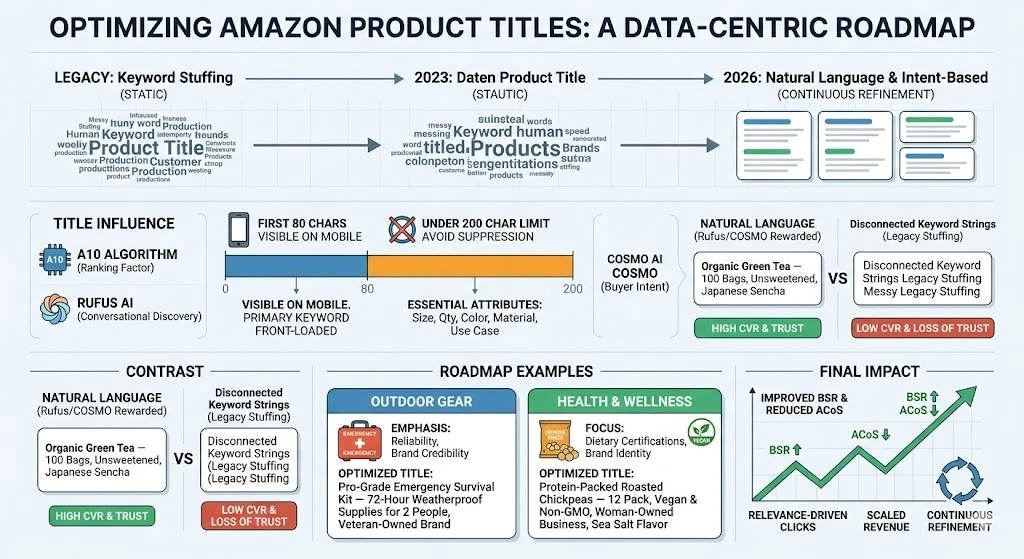
To achieve methodical refinement, brands must balance algorithmic requirements with human readability. The primary keyword should be placed within the first 80 characters to ensure it remains visible on mobile devices, where the majority of Amazon traffic originates. This front-loading strategy is critical for maintaining high engagement. Titles should include essential attributes—such as size, quantity, color, material, and primary use case—while strictly staying under the 200-character limit to avoid truncation and potential listing suppression.
Modern optimization requires moving away from legacy keyword stuffing. Rufus and COSMO reward natural language patterns that reflect how customers actually speak and search. For instance, a title like "Organic Green Tea — 100 Bags, Unsweetened, Japanese Sencha" provides a clear, readable structure that the AI can easily parse into intent-based categories. In contrast, a string of disconnected keywords often results in lower Conversion Rates (CVR) as it fails to build immediate consumer trust.
Through a data-centric assessment of high-performing listings, successful brands follow a structured roadmap to title construction that addresses specific audience segments:
- Outdoor Gear: For an emergency kit, the title must emphasize reliability and brand credibility. An optimized example would be: "Pro-Grade Emergency Survival Kit — 72-Hour Weatherproof Supplies for 2 People, Veteran-Owned Brand." This structure addresses the buyer's need for trust while hitting high-intent search terms.
- Health & Wellness: A snack brand should focus on dietary certifications and brand identity to appeal to conscious consumers. An optimized example would be: "Protein-Packed Roasted Chickpeas — 12 Pack, Vegan & Non-GMO, Woman-Owned Business, Sea Salt Flavor."
By aligning title structure with both AI logic and shopper psychology, brands can significantly improve their BSR and reduce ACoS by ensuring that every click is driven by high-relevance indexing.
Bullet Points
In the 2026 Amazon ecosystem, bullet points serve as the primary conversion engine, functioning as a structured methodology that transitions a shopper from interest to purchase. While the title captures the click (CTR), the bullet points must answer the top five questions a buyer has to secure the conversion (CVR). To satisfy both the human shopper and Amazon’s AI-driven search agents like Rufus, brands must move away from static feature lists toward a methodical refinement of persuasive and technical content.
- Lead with the Outcome (Benefit-First Structure)
Each bullet point should focus on a single, distinct benefit. Start with the outcome in bold, followed by the technical feature that enables it. For example, instead of "10,000mAh Battery," use "Power for the Entire Weekend: The high-density 10,000mAh battery provides up to three full charges for your smartphone." This approach immediately communicates value, which is critical for maintaining high CVR in mobile-first browsing environments where attention spans are limited.
- Define Specific Use Cases for AI Intent Matching
Amazon’s AI now prioritizes intent-based queries. To ensure your product is surfaced for long-tail searches, include specific use cases such as "Perfect for busy mornings" or "Designed for small apartment kitchens." These phrases act as semantic signals, helping the algorithm match your listing to specific lifestyle needs. This relevance directly influences your BSR by capturing high-intent traffic that competitors using generic descriptions miss.
- Integrate Quantitative Specifics
Vague claims like "lightweight" or "durable" fail to convert modern shoppers and provide little data for AI comparison. Conduct a performance-based review of your product specifications and include exact dimensions, weights, materials, and quantities. Providing precise data—such as "304 Food-Grade Stainless Steel" or "Weighs only 1.2 lbs"—reduces buyer uncertainty and lowers return rates, which in turn protects your ACoS by ensuring that the traffic you pay for results in permanent sales.
- Preempt Buyer Objections
Use the bullet points to address common friction points before they lead to a bounce. Analyze competitor reviews to identify recurring complaints and address them proactively. If a competitor’s product is often cited for being difficult to clean, your bullet should state: "Dishwasher Safe & Easy Clean: The non-stick coating and modular design allow for a 30-second rinse, solving the maintenance issues common in traditional models." This proactive strategy builds trust and shortens the listing cycle time from discovery to checkout.
- Prioritize Natural Language over Keyword Density
Modern LLMs are trained to recognize natural human communication. Avoid the "keyword stuffing" tactics of the past, which can trigger suppression or lower the quality score of your listing. Write as if you are explaining the product to a friend. Using natural language ensures that your content remains readable for the customer while allowing the AI to extract semantic meaning more effectively. This methodical refinement balances the need for search visibility with the necessity of human persuasion.
Product Images
In the current Amazon landscape, product images have transitioned from purely aesthetic assets into critical data sources for Rufus, Amazon’s AI shopping assistant. Through a structured roadmap of Optical Character Recognition (OCR), Rufus scans images to extract technical data such as ingredients, certifications, and performance claims. This shift means visual content now directly influences how AI answers customer queries and matches products to specific search intents, moving beyond simple human appeal to become a core component of search indexing.
- Main Image: The main image remains the primary lever for Click-Through Rate (CTR). To maximize visibility and support a healthy BSR, the product must occupy at least 85% of the frame against a pure white background. This clarity ensures that both human shoppers and AI algorithms can instantly identify the core product without visual interference.
- Infographics (Images 2–5): These function as the primary conversion engine. These should include feature callouts and clear dimensions using standard, legible fonts. Because Rufus cannot reliably interpret cursive or highly stylized typography, a methodical refinement of text clarity is essential to ensure the AI correctly indexes your unique selling propositions.
- Lifestyle Images: These provide the contextual data Rufus needs to understand use-case scenarios—such as a supplement being used at a gym or a standing desk in a home office—helping the AI match your product to specific lifestyle-based queries.
- Comparison and Size Charts: These are vital for high-intent shoppers. Rufus parses these graphics to answer direct comparison questions (e.g., "How does this brand compare to the leading competitor?"), which significantly impacts the final Conversion Rate (CVR) and helps lower ACoS by providing the precise data points required for a confident purchase decision.
A+ Content (Enhanced Brand Content)
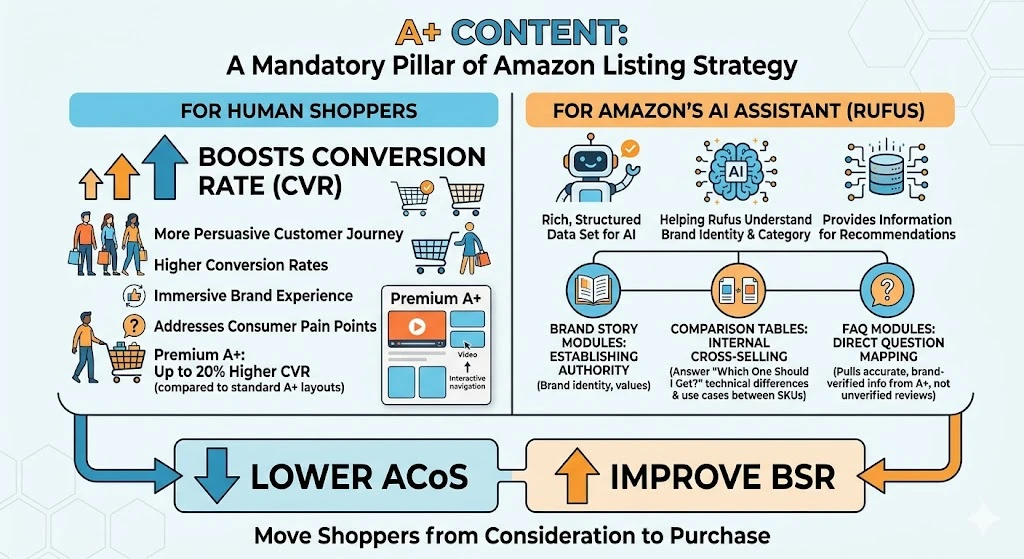
A+ Content has transitioned from an optional aesthetic upgrade to a mandatory pillar of Amazon listing strategy. Its primary value lies in its dual impact: it significantly boosts Conversion Rate (CVR) for human shoppers while providing a rich, structured data set for Amazon’s AI shopping assistant, Rufus. By moving beyond the limitations of text-only descriptions, brands can lower ACoS and improve BSR through a more persuasive and informative customer journey.
For brands eligible for Premium A+, the opportunity for growth is even more pronounced. By utilizing larger modules, integrated video, and interactive navigation, brands have reported up to a 20% higher conversion rate compared to standard A+ layouts. This level of methodical refinement allows for a more immersive brand experience that addresses consumer pain points more effectively than bullet points alone.
To maximize visibility in an AI-driven search environment, brands must follow a structured methodology when selecting A+ modules:
- Brand Story Modules: These are critical for establishing authority. Rufus utilizes brand story data to understand brand identity, helping the AI recommend your products when shoppers search for specific brand values or categories.
- Comparison Tables: These are essential for internal cross-selling. They help Rufus answer "which one should I get?" questions by clearly delineating the technical differences and use cases between your various SKUs.
- FAQ Modules: By including a dedicated FAQ section within the A+, brands can map content directly to the questions shoppers ask Rufus, ensuring the AI pulls accurate information from the brand rather than unverified user reviews.
Strategic A+ Content must avoid repeating bullet points verbatim. Instead, it should provide deeper context that justifies a premium price point. This includes highlighting manufacturing processes, ingredient sourcing, and third-party certifications. For example, an emergency fire kit listing is most effective when it features detailed product flat-lays and component-level breakdowns that demonstrate reliability in outdoor scenarios. Similarly, snack brands can drive CVR by combining lifestyle photography with founder stories and clear certification badges, using comparison tables to highlight nutritional advantages. This depth of content ensures that both the algorithm and the consumer have the necessary information to move from consideration to purchase.
Backend Search Terms
Backend search terms function as the invisible infrastructure of an Amazon listing, providing a dedicated space to influence the algorithm without cluttering the customer-facing copy. While these terms remain hidden from shoppers, they are essential for establishing the structured roadmap between a customer’s query and your product. By capturing high-intent keywords that do not fit naturally into the title or bullet points, brands can significantly expand their indexing footprint, directly impacting BSR and organic visibility.
To maximize the effectiveness of this field, sellers must adhere to a methodical refinement approach centered on the following technical requirements:
- Respect the 249-Byte Limit: Amazon strictly enforces a 249-byte limit (not character limit) for search terms. Exceeding this limit can result in the entire field being ignored by the algorithm. Many sellers underutilize this space; filling it precisely with relevant, non-redundant terms is a prerequisite for maintaining a competitive ACoS.
- Prioritize Non-Visible Keywords: Do not repeat keywords already present in the title, bullet points, or description. Amazon’s indexing engine automatically aggregates visible text; repeating "Organic Coffee" in the backend provides zero incremental benefit and wastes valuable byte space.
- Include Variations and Synonyms: Use this space for synonyms and technical terms that might feel out of place in marketing copy. For example, a supplement brand should include both "Vitamin C" and "ascorbic acid," or "BBQ" alongside "barbecue."
- Capture Misspellings and Regionalisms: Include common misspellings if they show significant search volume. Furthermore, incorporating Spanish-language keywords is a high-leverage tactic for the US marketplace, allowing brands to capture a massive demographic segment that competitors often overlook.
By refining the backend search terms, brands ensure that their products appear in a wider array of relevant search results. This increased relevancy drives higher CTR and CVR, as the product is shown to users whose specific queries match the hidden metadata, ultimately stabilizing the listing's performance in an increasingly AI-driven search environment.
Customer Reviews and Q&A
In the era of AI-driven commerce, customer reviews and Q&A sections have evolved from passive social proof into the primary data source for Amazon’s Rufus. While high star ratings remain essential for maintaining a competitive BSR, the semantic content within these sections now dictates how Rufus interprets a product’s real-world performance.
When a shopper asks, "Which moisturizer is best for sensitive skin?" Rufus does not just look at keywords in the title; it scans thousands of reviews for specific sentiment and experiential data. A listing with consistent mentions of "non-irritating" or "gentle on redness" creates a structured roadmap for the AI to recommend that product, directly boosting CVR.
The Q&A section serves as a critical knowledge base, particularly for high-consideration categories like health, beauty, and supplements. Rufus utilizes answered questions to provide immediate, authoritative responses to shopper inquiries. Leaving questions unanswered is no longer just a customer service lapse; it is a missed opportunity to feed the AI the specific attributes it needs to surface your listing. Brands must treat the Q&A as a living document that clarifies technical specifications and usage scenarios that might be too granular for the main bullet points.
To maintain a competitive edge, brands should implement a methodical refinement strategy for their feedback loops:
- Leverage the Vine Program: For new launches, the Vine program is indispensable for generating the initial high-quality reviews required to establish trust and provide Rufus with its first set of performance data, significantly shortening the listing cycle time.
- Active Q&A Management: Monitor and respond to every customer question. Providing clear, keyword-rich answers ensures that Rufus has the necessary context to include your product in comparative AI responses.
- Competitor Sentiment Analysis: Conduct a performance-based review of competitor negative reviews. By identifying recurring pain points in rival products—such as "leaky packaging" or "difficult assembly"—brands can proactively address these issues in their own listing copy and images to capture market share and improve relative CVR.
Amazon Listing Optimization for AI Search: The 2026 Playbook
The shift from keyword-based search to AI-driven discovery requires a fundamental change in how brands approach listing optimization. In an environment where Amazon’s algorithms prioritize semantic intent and contextual relevance over exact-match strings, brands must move toward a methodical refinement strategy that satisfies both the AI’s data requirements and the customer’s decision-making process.
Transition to Semantic Intent Mapping
Traditional keyword stuffing is no longer effective and can actively harm your ranking. AI models now analyze the structured roadmap of a customer’s search journey, looking for products that solve specific problems rather than those that simply contain the right words.
- Action: Replace repetitive keyword lists with natural language that describes use cases, benefits, and specific problem-solving scenarios. This alignment with consumer intent directly improves CVR by ensuring your product appears in highly relevant AI-generated recommendations and conversational search results.
Execute a Performance-Based Review of Structured Data
AI search engines rely on structured backend data to categorize products and populate comparison tables. Missing attributes are no longer just "optional" fields; they are critical data points that the AI uses to determine product fit.
- Action: Conduct a data-centric assessment of your catalog to ensure every relevant attribute—from material composition to technical specifications—is accurately filled in the "More Details" section. High data integrity reduces the listing cycle time by helping the algorithm index the product faster, leading to a more stable BSR during the launch phase.
Synchronize Visual and Textual Metadata
Amazon’s AI now cross-references visual content with text to ensure listing authenticity. If your images suggest one use case while your bullet points describe another, the algorithm may deprioritize the listing due to "relevance friction."
- Action: Ensure that image Alt-text and metadata are synchronized with your primary value propositions. This cohesion boosts CTR, as the AI can more confidently serve your listing to users whose behavioral data suggests a high affinity for your specific visual style and functional claims.
Optimize for Behavioral Feedback Loops
In the AI era, performance metrics like CTR and CVR act as real-time quality signals. If the AI places your product in a discovery carousel and users do not engage, your organic visibility will drop rapidly.
- Action: Monitor your ACoS and conversion data to identify where the AI might be misinterpreting your product’s purpose. Use A/B testing to refine titles and main images based on which variations yield the highest engagement in AI-driven "Recommended for You" placements. Continuous refinement based on these signals is essential for maintaining long-term BSR stability.
Think in Questions, Not Keywords
The evolution of Amazon’s search architecture from keyword indexing to semantic understanding requires a fundamental shift in content strategy. Historically, brands optimized for fragmented strings like "waterproof hiking boots men size 10" to satisfy basic search algorithms. Today, the integration of the COSMO data graph and Rufus AI means Amazon is no longer just matching strings; it is interpreting intent. A shopper’s query is now more likely to resemble a natural language question: "What are the best waterproof boots for hiking in rainy weather?"
When a listing fails to address the underlying "why" behind a purchase, it risks being bypassed by Rufus in favor of competitors that provide explicit solutions. This shift directly influences CVR and BSR. If your content doesn't resolve the specific concerns surfaced by AI—such as breathability during heavy rain or grip on slippery surfaces—the algorithm perceives a lower relevance score. This misalignment often leads to a spike in ACoS as the brand pays for traffic that fails to convert due to unanswered consumer anxieties.
To align with this methodical refinement model, brands must move beyond static keyword lists. The most effective structured methodology for relevance involves a direct audit of the AI’s own logic.
Action Step: The Rufus Audit
Navigate to your product detail page on the Amazon mobile app and examine the questions Rufus prompts shoppers to ask. These prompts are not random; they represent the most common friction points and information gaps identified by the AI based on vast pools of customer data. Ensure your Bullet Points, A+ Content, and the "Customer questions & answers" section provide direct, authoritative responses to these specific queries. By transforming your listing into a comprehensive knowledge base that answers natural language questions, you improve the listing’s ability to close the sale, driving higher organic ranking and sustained growth.
Communicate Value, Not Just Features
In the evolving landscape of AI-driven commerce, maintaining a high BSR requires more than a list of technical specifications. AI shopping assistants, such as Amazon’s Rufus, are increasingly prioritizing listings that effectively communicate overall value rather than those that merely compete on price or raw features. This shift necessitates a methodical refinement of how product benefits are framed to align with AI reasoning patterns.
Research from Seller Labs indicates that listings providing clear justification for their price—specifically through durability, multi-functionality, and long-term savings—are significantly more likely to be recommended by AI assistants. When the AI can parse the "why" behind a product's cost, it can more accurately match the listing to complex customer queries, directly improving CVR and lowering ACoS by reducing wasted clicks from low-intent shoppers.
To implement this, brands should move away from feature-only descriptions toward value-driven narratives. For example, a standard technical bullet point might state: "Made with 18/10 stainless steel." While factually correct, it fails to provide a reason to buy. A value-driven alternative creates a structured roadmap to purchase: "Made with 18/10 stainless steel — resists rust and corrosion so you will not need to replace it. Designed to last 10+ years with daily use."
By conducting a data-centric assessment of existing listings and replacing technical jargon with benefit-led outcomes, brands can ensure their products are recognized by AI as the superior choice for the consumer’s specific needs, rather than just another entry in a crowded category.
Use Structured Product Attributes
In the era of AI-driven commerce, the backend of an Amazon listing is no longer just a repository for technical specifications; it is the primary data source for Amazon’s Rufus and COSMO algorithms. While keywords in titles and bullet points remain relevant for traditional search, these new AI models rely heavily on structured attribute data to parse complex, intent-based queries. Failing to populate every available field creates a gap in the product's digital identity, directly impacting its visibility in conversational search results.
A methodical refinement of these attributes is essential because Rufus uses them to validate claims made in the marketing copy. For instance, if a shopper asks Rufus, “What’s the best compact coffee maker for small kitchens?” the AI does not just scan for the word "compact" in the title. It cross-references the "size," "item dimensions," and "recommended room type" attributes. If these fields are left blank, Rufus may exclude the product from its recommendations, even if the listing copy emphasizes its small footprint.
This exclusion results in a missed opportunity to capture high-intent traffic, ultimately depressing the conversion rate (CVR) and stalling the Best Sellers Rank (BSR). To maintain a competitive edge, brands must move beyond basic listing creation and adopt a structured methodology toward data completeness. Every attribute field offered for a specific category—from material type to power source—serves as a signal that helps the AI match the product to the right customer segment. By ensuring 100% attribute accuracy, brands can improve their click-through rate (CTR) from AI-generated suggestions and lower their ACoS by reducing spend on broad keywords that the AI can now filter more precisely through structured data.
Allow 7-14 Days for AI Changes to Take Effect
In the traditional Amazon search environment, the A10 algorithm typically processes keyword updates and indexing within 24 hours. However, optimizing for the AI-driven COSMO knowledge graph requires a different temporal strategy. Unlike simple keyword matching, COSMO builds complex semantic relationships between user intent and product attributes, a process that operates on a significantly longer cycle than standard indexing.
Industry analysis indicates that Rufus and the underlying COSMO architecture require a window of 7 to 14 days to fully ingest, validate, and reflect listing modifications in recommendation outputs. This delay occurs because the AI must re-evaluate how the updated content fits into the broader knowledge graph and how it aligns with specific consumer "common sense" queries. This is not merely about being "found" for a search term; it is about the AI learning the context of the product to determine its suitability for complex conversational queries.
Brands must resist the urge to revert changes if immediate improvements in CTR or CVR are not visible within the first 72 hours. Prematurely rolling back updates disrupts the AI's learning phase and prevents a true methodical refinement of the listing. Impatience often leads to a cycle of constant, fragmented changes that confuse the algorithm, ultimately hurting the product's BSR and increasing ACoS due to inconsistent relevance signals. To achieve a stable performance lift, sellers should commit to a minimum 14-day observation period to allow the AI to recalibrate its intent-matching logic and accurately reflect the product's value proposition in Rufus-led interactions.
Common Amazon Listing Optimization Mistakes
Many brands fail to realize that Amazon’s transition toward an AI-native search environment has rendered traditional "hacks" obsolete. Continuing to rely on outdated tactics creates a significant business loss in the form of suppressed visibility and declining conversion metrics.
Keyword Stuffing the Title
In the legacy era of Amazon SEO, "more is better" was the prevailing logic for product titles. However, in 2026, cramming every possible keyword into a title is a direct path to performance degradation. This practice severely compromises readability, leading to a measurable drop in Click-Through Rate (CTR). When a title is a disjointed string of terms, customers struggle to identify the product's core value proposition, which negatively impacts initial engagement and brand trust.
From a technical standpoint, Amazon’s AI-driven search ecosystem—powered by Rufus and COSMO—has moved beyond simple keyword matching. These models prioritize semantic intent and contextual relevance over keyword density. A methodical refinement strategy now requires clarity; Rufus seeks to answer specific shopper queries, and COSMO maps the relationship between products and user needs. Overstuffed titles create noise that interferes with this mapping, potentially lowering your Best Sellers Rank (BSR) as the algorithm fails to categorize the listing accurately for high-intent shoppers.
Instead of an unorganized list, brands must follow a structured roadmap that emphasizes high-intent terms while maintaining a natural flow. Failure to do so results in a cluttered user experience that drives up ACoS, as the traffic you do manage to capture is less likely to convert due to a perceived lack of professionalism and clarity in the listing's presentation.
Ignoring Mobile
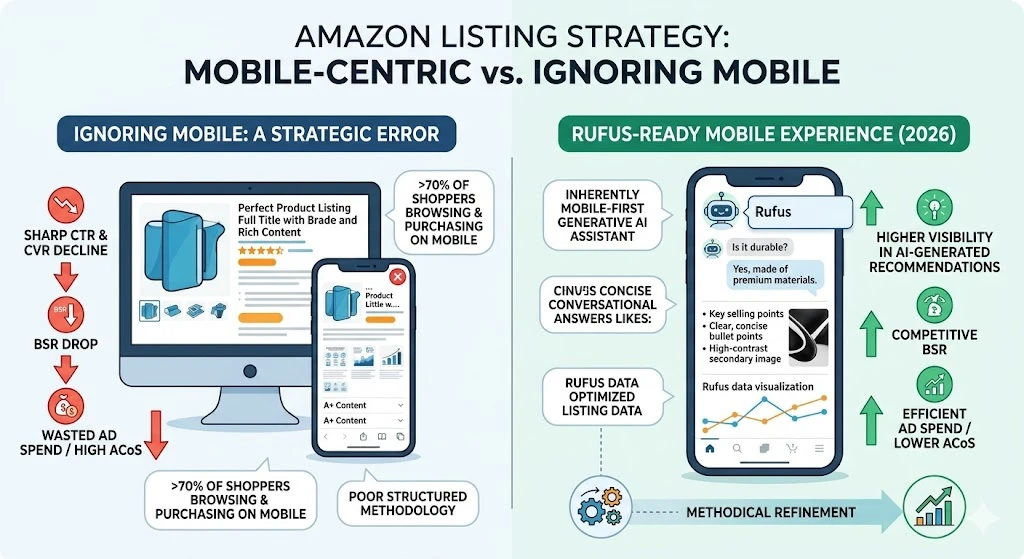
With over 70% of Amazon shoppers now browsing and purchasing via mobile devices, treating mobile optimization as an afterthought is a critical strategic error. A listing that looks perfect on a desktop but fails on a smartphone creates a broken structured methodology for the consumer. When titles are truncated, infographics become unreadable, or A+ Content fails to render correctly on small screens, the immediate result is a sharp decline in CTR and CVR.
This mobile-centric reality is further amplified by Rufus, Amazon’s generative AI shopping assistant. Rufus is inherently a mobile-first experience, designed to provide concise, conversational answers to user queries on the go. If your listing data is not structured for mobile readability, Rufus may fail to parse key selling points, leading to poor visibility in AI-generated recommendations. A methodical refinement approach requires brands to prioritize mobile-first assets—such as high-contrast secondary images and concise bullet points—to maintain a competitive BSR. Neglecting the mobile interface doesn't just hurt user experience; it directly inflates ACoS by wasting ad spend on traffic that cannot convert due to poor legibility. Ensuring your listing is responsive and Rufus-ready is the baseline for performance in 2026.
Copying Competitor Listings
Many brands fall into the trap of "copy-pasting" the top-ranking competitor's strategy, assuming it is a shortcut to success. However, in an AI-driven ecosystem, this approach leads to stagnating BSR and rising ACoS. Amazon’s Rufus and Cosmo algorithms are designed to parse vast amounts of data to find the best match for specific user intents. If your listing is a mirror image of the market leader, the AI has no logical basis to prioritize your product over the incumbent. Differentiation is no longer just a marketing choice; it is a technical requirement for visibility.
To break away from the pack, brands must follow a structured roadmap toward distinctiveness. This involves a performance-based review of competitor weaknesses and a methodical refinement of unique brand assets. Whether it is a superior manufacturing process, ethically sourced ingredients, or a specialized warranty, these details provide the "reason to buy" that Rufus highlights in conversational search. By emphasizing a specific use case that you serve better than anyone else, you improve your CVR and CTR. Instead of competing for the same generic keywords, you carve out a niche that the AI can confidently recommend, ultimately driving long-term growth without relying on unsustainable ad spend.
Neglecting A+ Content
Brands that overlook A+ Content are essentially leaving conversion rate (CVR) and organic visibility on the table. In the current AI-driven landscape, A+ Content has evolved from a purely aesthetic enhancement to a critical data source for Amazon’s Rufus. By providing rich, structured information through these modules, brands create a methodical refinement layer that allows the AI to better understand product nuances, directly influencing how the listing is surfaced in conversational search results.
Failing to utilize these modules results in a missed opportunity to lower ACoS through improved customer trust and reduced bounce rates. For any seller with Brand Registry, there is no strategic justification for skipping this feature. Premium A+ Content, in particular, offers an even more sophisticated structured methodology for conversion, utilizing larger imagery and interactive hotspots that have been shown to significantly outperform standard modules in driving BSR. When the AI scans a listing to answer specific buyer questions, the technical details and lifestyle context embedded within A+ Content provide the necessary depth that standard bullet points often lack. Neglecting this tool does not just hurt the visual appeal; it handicaps the listing’s ability to compete in a search environment where data density determines rank and relevance.
Set-It-and-Forget-It Mentality
Many brands treat listing creation as a terminal task, yet a "set-it-and-forget-it" mentality is a direct threat to long-term profitability. Amazon’s ecosystem is inherently dynamic; consumer search intent evolves, competitors frequently refresh their creative assets, and the search algorithm—now augmented by Rufus—constantly recalibrates how products are indexed and ranked. Failing to adapt leads to a gradual decay in CTR and CVR, which inevitably pushes ACoS higher and erodes BSR.
To maintain a competitive edge, brands must move away from static management toward a structured roadmap of continuous improvement. This requires a methodical refinement framework where listings are treated as living assets rather than static pages. By conducting a data-centric assessment at least quarterly, sellers can identify keyword gaps, update imagery to reflect current market trends, and ensure their content remains compatible with the latest AI-driven search features. Regular iteration ensures that the listing remains relevant to both the shopper and the algorithm, preventing the performance stagnation that occurs when a product is left unmonitored. Continuous refinement is the only way to protect market share and sustain growth in an environment where the "best" version of a listing today may be obsolete by next season.
Amazon Listing Optimization Checklist
To ensure your brand maintains a competitive BSR and minimizes ACoS in an AI-driven marketplace, a methodical refinement of every listing element is required. This checklist provides a structured methodology to maximize CTR and CVR by aligning with both shopper intent and Amazon’s latest indexing algorithms.
Title
- [ ] Place the primary keyword within the first 80 characters to maximize mobile CTR.
- [ ] Include key attributes such as size, quantity, material, and primary use case.
- [ ] Ensure the title reads naturally for human shoppers rather than being keyword-stuffed.
- [ ] Maintain a total length of under 200 characters to avoid search suppression.
Bullet Points
- [ ] Dedicate each bullet to one specific benefit, leading with the outcome before the feature.
- [ ] Include precise technical data such as dimensions, weights, and quantities.
- [ ] Address specific use cases and scenarios relevant to the target audience.
- [ ] Preempt common customer objections to improve CVR and reduce return rates.
- [ ] Use natural language structures instead of raw keyword lists.
Images
- [ ] Set the main image against a pure white background with the product filling 85% or more of the frame.
- [ ] Utilize infographics with clear, high-contrast fonts for easy readability.
- [ ] Include lifestyle images demonstrating the product in real-world use.
- [ ] Provide a comparison chart or size chart to assist in the buyer's decision-making process.
- [ ] Ensure all text on images is legible to facilitate Rufus OCR indexing.
A+ Content
- [ ] Complete the Brand Story module to build long-term brand equity.
- [ ] Include a comparison table to cross-sell and keep shoppers within the brand ecosystem.
- [ ] Incorporate an FAQ section to address common inquiries directly.
- [ ] Provide deeper technical or narrative content that expands beyond the bullet points.
Backend Keywords
- [ ] Utilize all 249 available bytes for backend search terms.
- [ ] Include relevant synonyms, common abbreviations, and frequent misspellings.
- [ ] Avoid duplicating keywords already present in the visible listing text.
- [ ] Add Spanish-language terms where applicable to capture secondary market traffic.
Reviews & Q&A
- [ ] Activate the Vine program for new products to accelerate initial review generation.
- [ ] Ensure all customer Q&A questions are answered promptly and accurately.
- [ ] Analyze negative competitor review themes and address those pain points within the listing copy.
AI Optimization
- [ ] Complete all product attribute fields in the backend to improve Rufus discovery.
- [ ] Verify that the listing copy answers the top questions likely to be prompted by Rufus.
- [ ] Connect every technical feature to a real-world outcome in the copy.
- [ ] Communicate the overall value proposition clearly, moving beyond just features and price.
How DeepBI Approaches Amazon Listing Optimization
DeepBI delivers a multi-platform optimization framework designed for the complexities of Amazon. By moving beyond manual guesswork, the methodology follows a structured roadmap that synchronizes data intelligence with creative execution to maximize organic visibility and advertising efficiency.
Performance-Based Review and Data-Driven Keyword Intelligence
The process begins with a data-centric assessment of the brand’s current performance. DeepBI leverages Amazon Brand Analytics (ABA), Search Query Performance (SQP), and real-time advertising data to move past vanity metrics. Instead of targeting broad terms that inflate ACoS, the focus is on identifying high-intent keywords that historically drive revenue. By capturing global market data and building a "data evidence chain," DeepBI ensures that every backend search term and bullet point is backed by empirical proof of conversion potential.
AI Search Auditing and Rufus Gap Analysis
In the era of AI-driven commerce, a listing must be legible to both humans and LLMs. DeepBI conducts specialized AI search auditing to test how Amazon’s Rufus responds to specific category queries. This diagnostic radar identifies content gaps—areas where the current listing fails to provide the structured data or semantic context Rufus needs to recommend a product. Closing these gaps is essential for maintaining BSR as AI-assisted shopping becomes the primary discovery method.
Conversion-Focused Creative via Multi-Agent AI
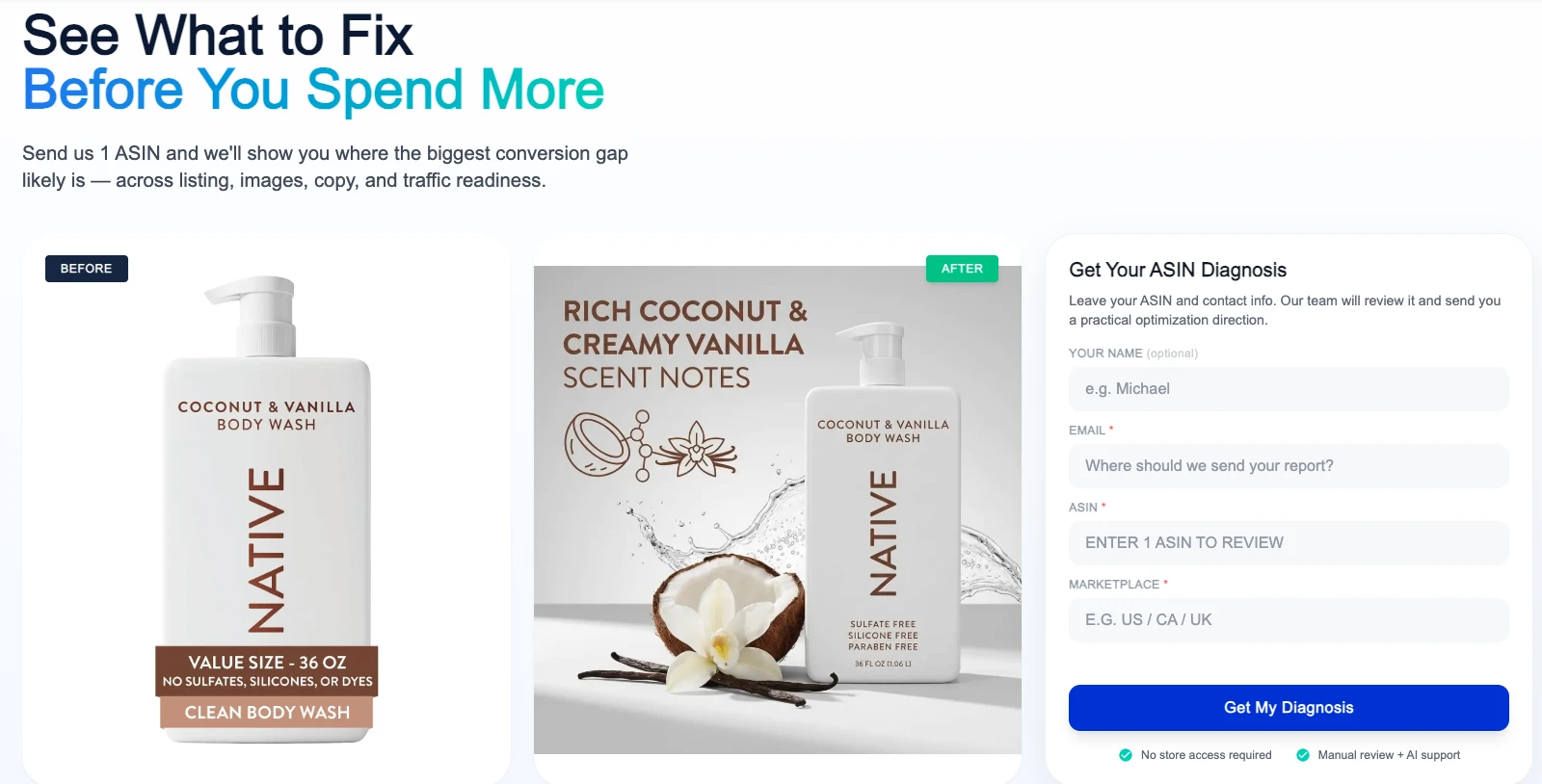
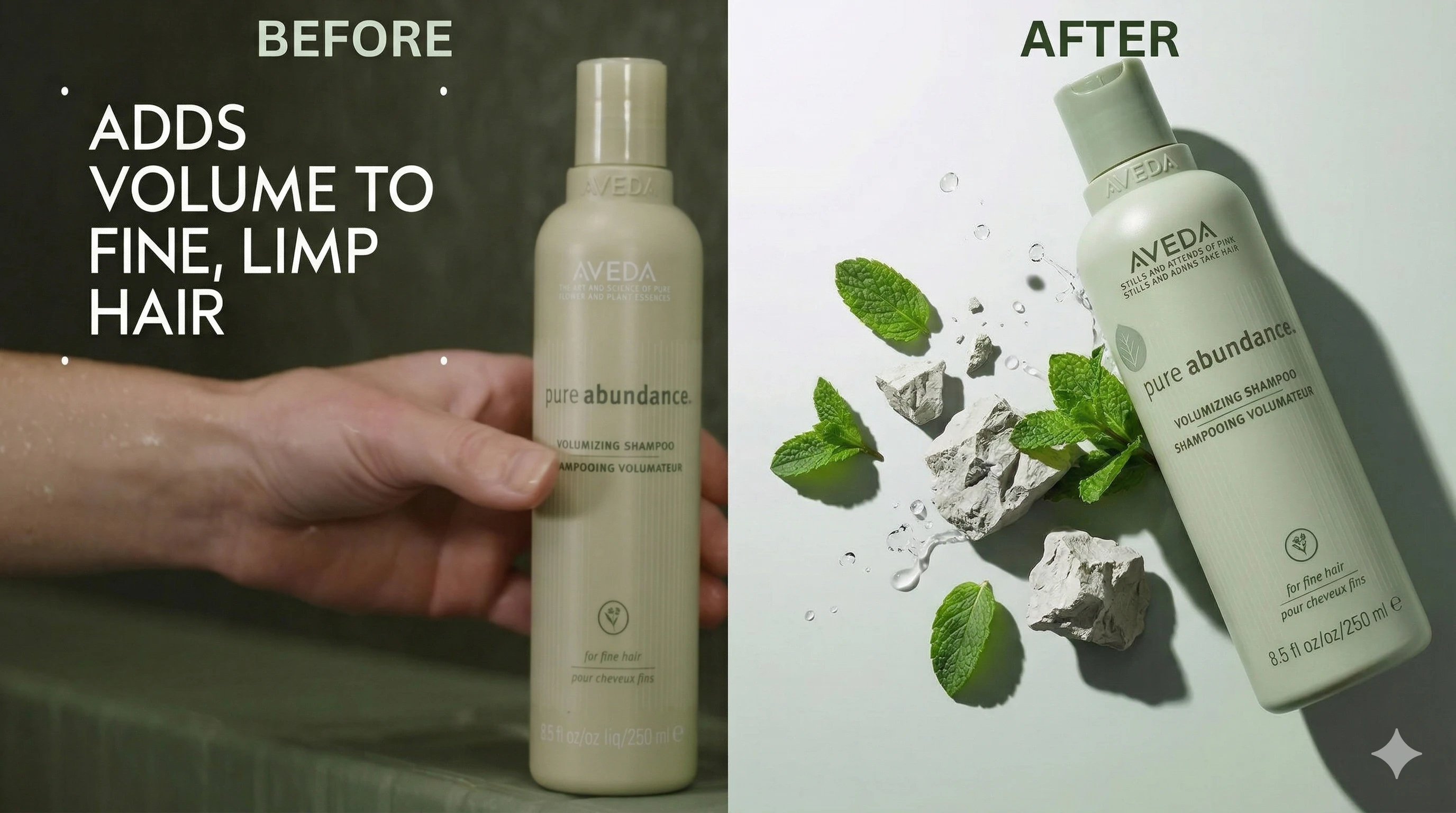
Once the strategy is set, DeepBI transitions from diagnosis to production. Using a multi-agent collaborative engine, the system generates high-fidelity images and A+ Content designed to improve both CTR and CVR. This is not generic AI generation; it is a methodical refinement of visual assets that ensures the creative output aligns perfectly with the brand's strategic positioning. By automating the production of lifestyle images and infographics, brands can significantly reduce their listing cycle time while maintaining high aesthetic standards.
Continuous Monitoring and Iterative Refinement
Optimization is not a one-time event. DeepBI’s four-core module system—Scoring, Strategy, Production, and Delivery—operates in a continuous loop. The system monitors ranking fluctuations, conversion rates, and AI visibility on an ongoing basis. As the algorithm evolves, the listing is updated to ensure the brand remains at the top of search results and recommendation engines.
Brands currently investing heavily in Amazon advertising without an AI-optimized listing strategy are essentially subsidizing inefficiency. Without aligning content for Rufus and modern search behaviors, a brand is likely overpaying for every conversion. DeepBI provides the infrastructure to reclaim that margin and turn AI search into a competitive advantage.

Frequently Asked Questions
What is Amazon listing optimization?
Amazon listing optimization is the process of refining every element of a product detail page—including the title, bullet points, high-quality images, A+ Content, backend keywords, customer reviews, and Q&A. This methodical refinement is designed to enhance product visibility in search results and maximize the CVR once shoppers land on the page, ultimately driving a better BSR.
How does Amazon Rufus affect listing optimization?
Rufus, Amazon’s generative AI shopping assistant, parses the entire listing—including visual assets, customer reviews, and Q&A—to provide tailored recommendations and answer shopper queries. Listings that prioritize natural language, specific product attributes, and clear value communication are more likely to be surfaced by the AI. Because Rufus users typically exhibit a higher CVR than non-users, optimizing for this interface is essential for modern brand growth.
How often should I update my Amazon listings?
Brands should perform a data-centric assessment of their top-performing listings at least quarterly. Immediate updates are required if there is a noticeable decline in CVR or search ranking, or when Amazon introduces new features such as updated attribute fields or A+ Content modules. It is important to note that updates to the COSMO knowledge graph typically require 7–14 days to reflect in search behavior, so adjustments should be planned according to this timeline.
Does A+ Content help with Amazon SEO?
A+ Content does not directly influence keyword ranking; however, it is a vital component of a structured methodology toward higher sales. By significantly boosting CVR—a primary ranking signal for Amazon’s algorithm—it indirectly improves organic visibility. Furthermore, Rufus actively scans A+ Content modules to extract product details, making it a critical asset for AI-driven product discovery.
What is the difference between Amazon SEO and Amazon listing optimization?
Amazon SEO is a specialized discipline focused on keyword strategy to improve organic search ranking. Amazon listing optimization is a broader, holistic strategy that encompasses SEO but also includes visual storytelling, pricing strategy, review management, and AI-readiness. A complete optimization strategy addresses all these factors simultaneously to improve CTR and lower ACoS.
Your Shortcut to Smarter Listings!
Staying ahead of Amazon’s evolving search landscape requires a shift from manual guesswork to a methodical refinement strategy. As Rufus AI becomes a primary driver of customer discovery, brands must refine their structured roadmap to ensure their listings are not just indexed, but actively recommended by the AI shopping assistant.
Sign up for our newsletter to receive an exclusive, step-by-step guide to mastering Rufus AI. This resource provides a performance-based review framework for your current content and actionable tactics to:
- Enhance Discoverability: Align your backend keywords and A+ Content with conversational search queries to surface in AI-generated responses.
- Drive Conversion Performance: Optimize for the specific product attributes Rufus highlights to increase CVR and improve your BSR.
- Optimize Ad Spend: Capture high-intent traffic through AI-driven recommendations to lower ACoS and improve overall listing cycle time.
Don't leave your 2026 growth to chance—get the blueprint for AI-ready listings delivered to your inbox.
Related Posts
To prevent performance stagnation and ensure a methodical refinement of your brand’s presence, it is essential to move beyond basic listing tactics. The following resources provide a structured methodology for conducting a data-centric assessment of your strategy to improve CTR and BSR while managing ACoS effectively:
- Is Your Amazon Strategy Ready for Rufus AI? Optimize…
- BFCM for Amazon Sellers: What Worked and How to…
- 8 Common Mistakes When Linking TikTok Ads to Amazon…
- How to Check and Track Your Organic Ranking on…
LET'S DISCOVER WHAT'S POSSIBLE FOR YOUR BRAND
As Amazon transitions into a high-stakes, AI-driven marketplace, the gap between generic listings and high-performance assets continues to widen. Navigating this landscape requires more than just basic keyword adjustments; it demands a methodical refinement strategy that aligns with the latest algorithmic shifts. DeepBI provides the structured roadmap necessary to transform your brand's presence from a participant to a market leader.
Our approach is built on three core pillars: HANDS-ON LEADERSHIP, AWARD-WINNING PARTNERSHIPS, and CUSTOM-BUILT SOLUTIONS. We do not rely on one-size-fits-all templates. Instead, we focus on the specific levers that drive your business—whether that is reducing ACoS through precision targeting, improving CTR with AI-optimized visuals, or accelerating your BSR through improved CVR.
Ready to see how your brand measures up in the current competitive landscape? Start with a performance-based review of your current performance. Fill out the form below to receive real insights and actionable recommendations tailored to your specific category. Let DeepBI help you unlock the full potential of your Amazon business and secure your competitive edge for 2026 and beyond.