Understanding Amazon Listing Conversion Rate (CVR)
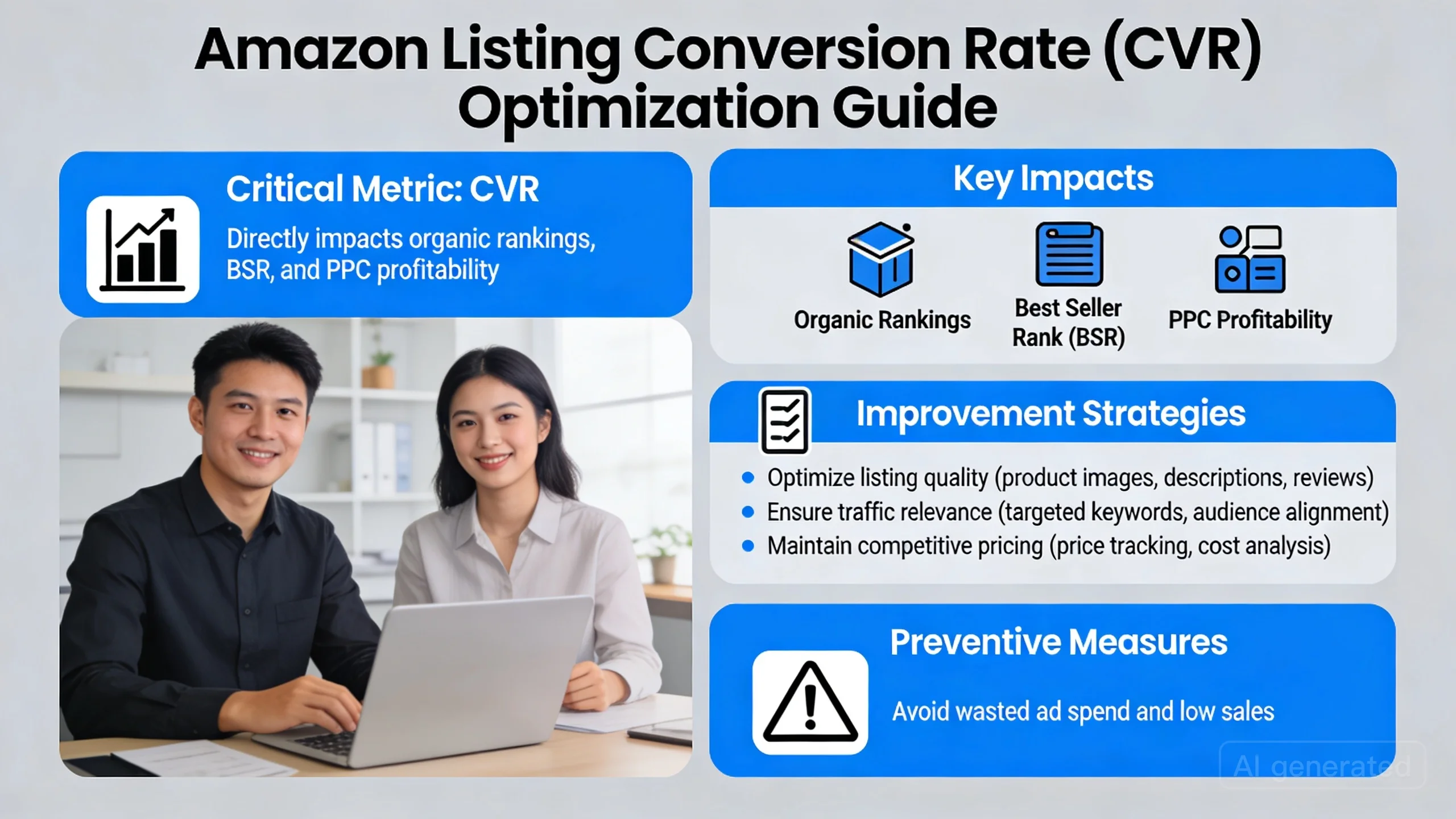
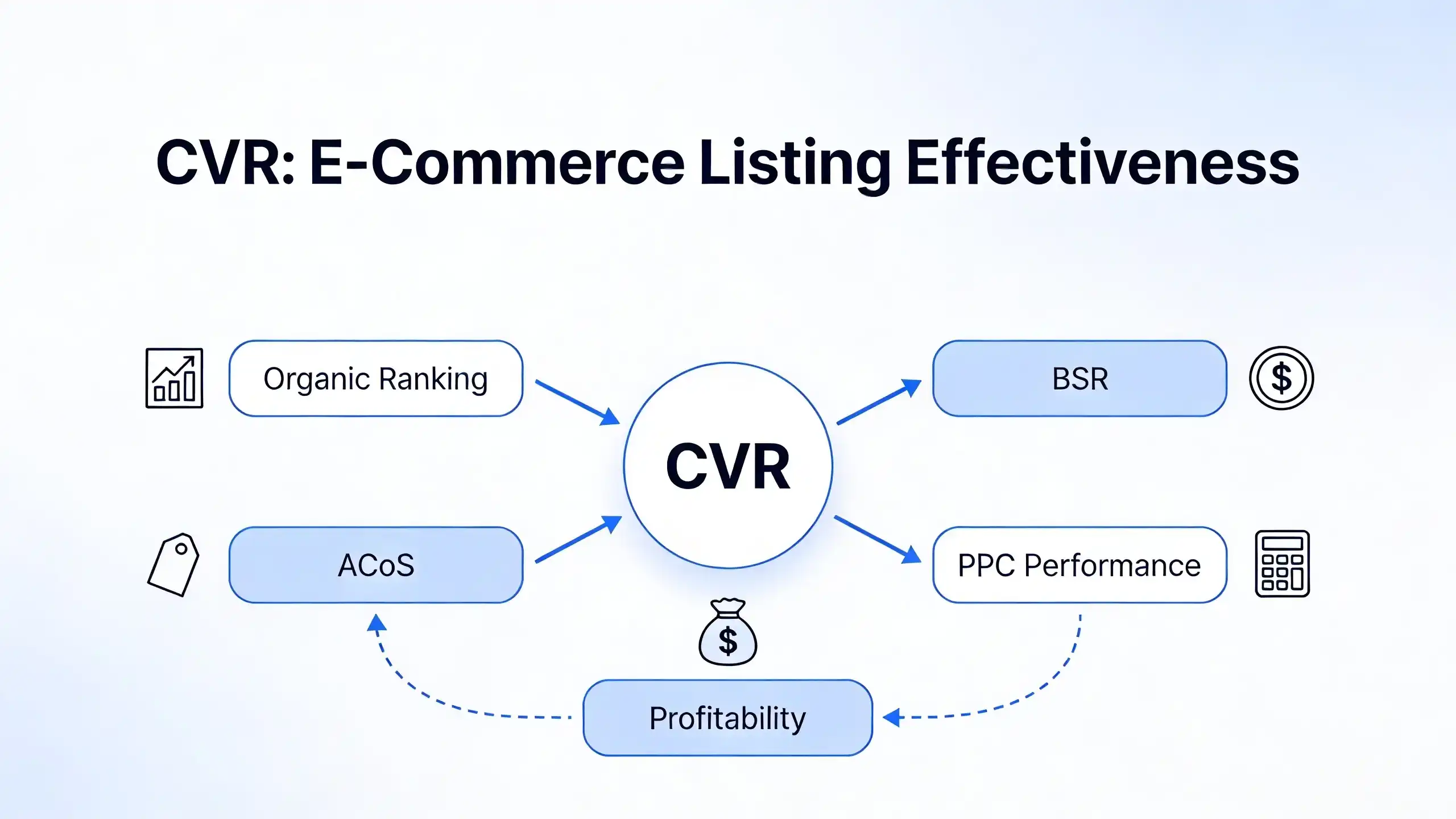
Your Amazon Conversion Rate (CVR) is the percentage of shoppers who purchase your product after visiting your listing page. It is one of the most direct and powerful measures of your product detail page's effectiveness. A high CVR signals to Amazon’s algorithm that your product is a strong match for customer searches, which can significantly boost your organic ranking and improve your Best Seller Rank (BSR). It’s a clear indicator that your listing successfully persuades visitors to become buyers.
From a financial standpoint, CVR has a direct and substantial impact on your profitability. A higher conversion rate means you generate more sales from the same amount of traffic, maximizing the value of every click. This efficiency is especially critical for your advertising performance. A strong CVR makes your Pay-Per-Click (PPC) campaigns more effective, as a greater percentage of paid clicks result in sales. This directly lowers your Advertising Cost of Sale (ACoS), allowing you to acquire customers more profitably. Conversely, a low CVR means you are wasting ad spend on clicks that don’t convert, driving up your ACoS and eroding your margins.
Common Causes of Low Conversion Rates
A low conversion rate (CVR) is rarely caused by a single issue. It's typically a symptom of multiple underlying problems across your listing, traffic strategy, and operations. Understanding these common failure points is the first step toward diagnosing and fixing your performance.
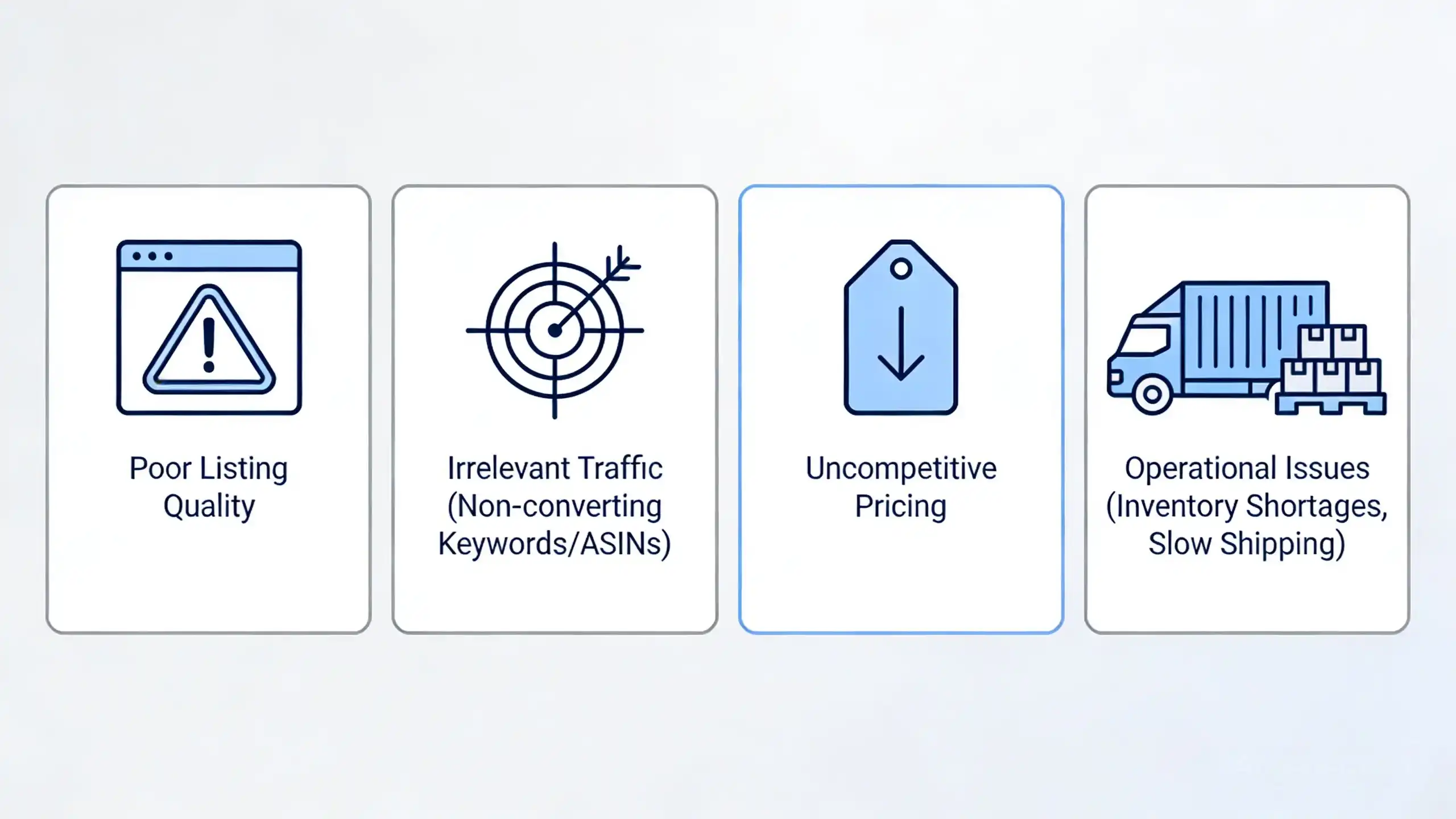
1. Poor Listing Quality and Content
Your product detail page is your digital salesperson. If it's unconvincing, customers will leave without buying. This includes unclear titles, weak bullet points that don't highlight benefits, and a poorly defined value proposition. Most critically, low-quality or unoptimized images—from the main image to infographics—fail to build trust. Using AI tools that alter a product's appearance can create a "product-image mismatch," leading directly to destructive negative reviews and returns that crush your CVR. Ineffective A+ Content and a lack of positive social proof from customer reviews further weaken the purchase incentive.
2. Irrelevant Traffic
Driving traffic to your listing is only half the battle; it must be the right traffic. A low CVR is often a sign that your visitors' intent doesn't match your product. This happens when your Amazon Ads campaigns target non-converting keywords or competitor ASINs, wasting budget and lowering your CVR. Furthermore, a disconnect between your ad copy and your listing content creates a jarring customer experience, causing shoppers who click to quickly abandon the page when their expectations aren't met.
3. Uncompetitive Pricing and Offers
Today's Amazon marketplace is transparent and highly competitive. If your price is not aligned with the product's perceived value or is significantly higher than key competitors without clear justification, shoppers will look elsewhere. Conversion rates also suffer from a lack of compelling offers. Without strategic promotions, coupons, or value-added bundles, your listing may fail to create the urgency or perceived value needed to close the sale against competing products.
4. Inventory and Shipping Issues
Operational friction is a silent CVR killer. Frequent out-of-stock situations bring sales to a complete halt, damaging your sales velocity and Best Seller Rank (BSR). Even if the product is in stock, long shipping times are a major deterrent for customers accustomed to Prime delivery speeds. Finally, poor post-purchase customer service can lead to negative seller feedback and reviews, which erodes the trust future buyers have in your brand and suppresses your conversion rate over time.
DeepBI's Data-Driven Approach to Boosting CVR
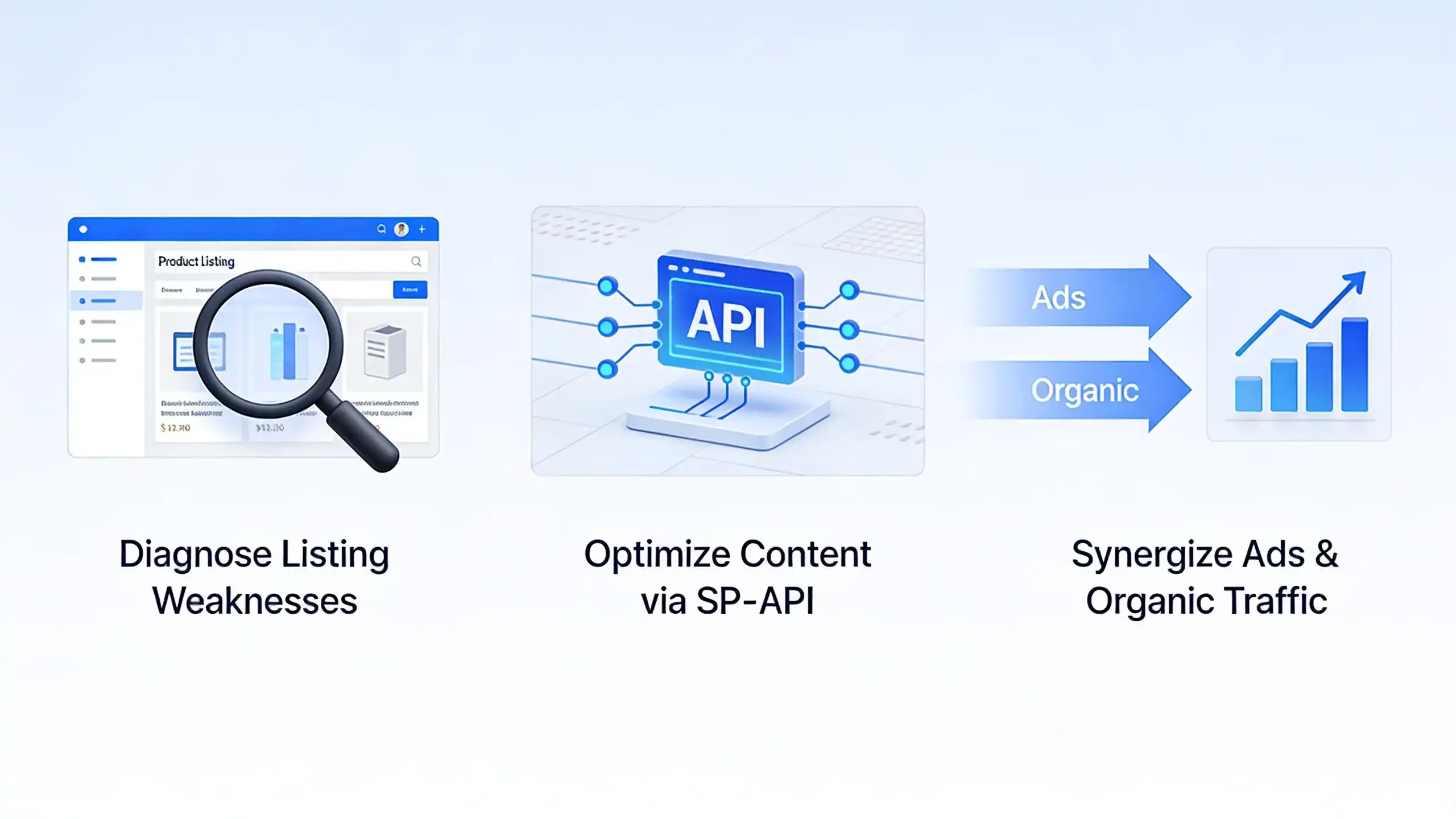
Effective optimization moves beyond guesswork and into a systematic, data-driven process. DeepBI provides an end-to-end solution that breaks down the silos between diagnosis, content creation, and traffic acquisition, creating a powerful flywheel for CVR improvement.
1. Diagnosing Listing Weaknesses with DeepBI
The first step is an automated market health check. DeepBI's intelligent scoring system uses multi-dimensional semantic analysis to benchmark your listing against top competitors. It pinpoints specific weaknesses across your main images, title, bullet points, and A+ Content. Instead of a simple score, you receive a clear diagnostic report that shows what high-performing listings are doing differently, providing a data-backed roadmap for optimization.
2. Optimizing Listing Content for Conversion with DeepBI
With a clear diagnosis, DeepBI's AI generates structured optimization strategies for copywriting, visual expression, and information hierarchy. It creates multiple options for conversion-focused titles, bullet points, and images based on your product's core DNA. Once you approve the new assets, the system uses the Amazon SP-API for one-click application, syncing content in seconds—a process that manually takes over 30 minutes. This allows you to rapidly deploy improvements and track their direct impact on your listing's Click-Through Rate (CTR).
3. Ensuring Relevant Traffic with DeepBI (Ads & Organic Synergy)
A high-converting listing is only effective if it attracts the right shoppers. DeepBI’s Ads Quant module uses a four-layer traffic funnel to acquire high-quality traffic while actively filtering out low-conversion keywords and ASINs, improving ACoS. Simultaneously, the Organic Traffic module leverages the best-performing keywords from your ad campaigns—those with high CTR and CVR—to strengthen your "Top of Search" positions. This synergy ensures that the highly relevant traffic from your ads and organic efforts lands on a fully optimized page, maximizing conversion potential.
Conclusion: Achieving Sustainable CVR Growth with DeepBI
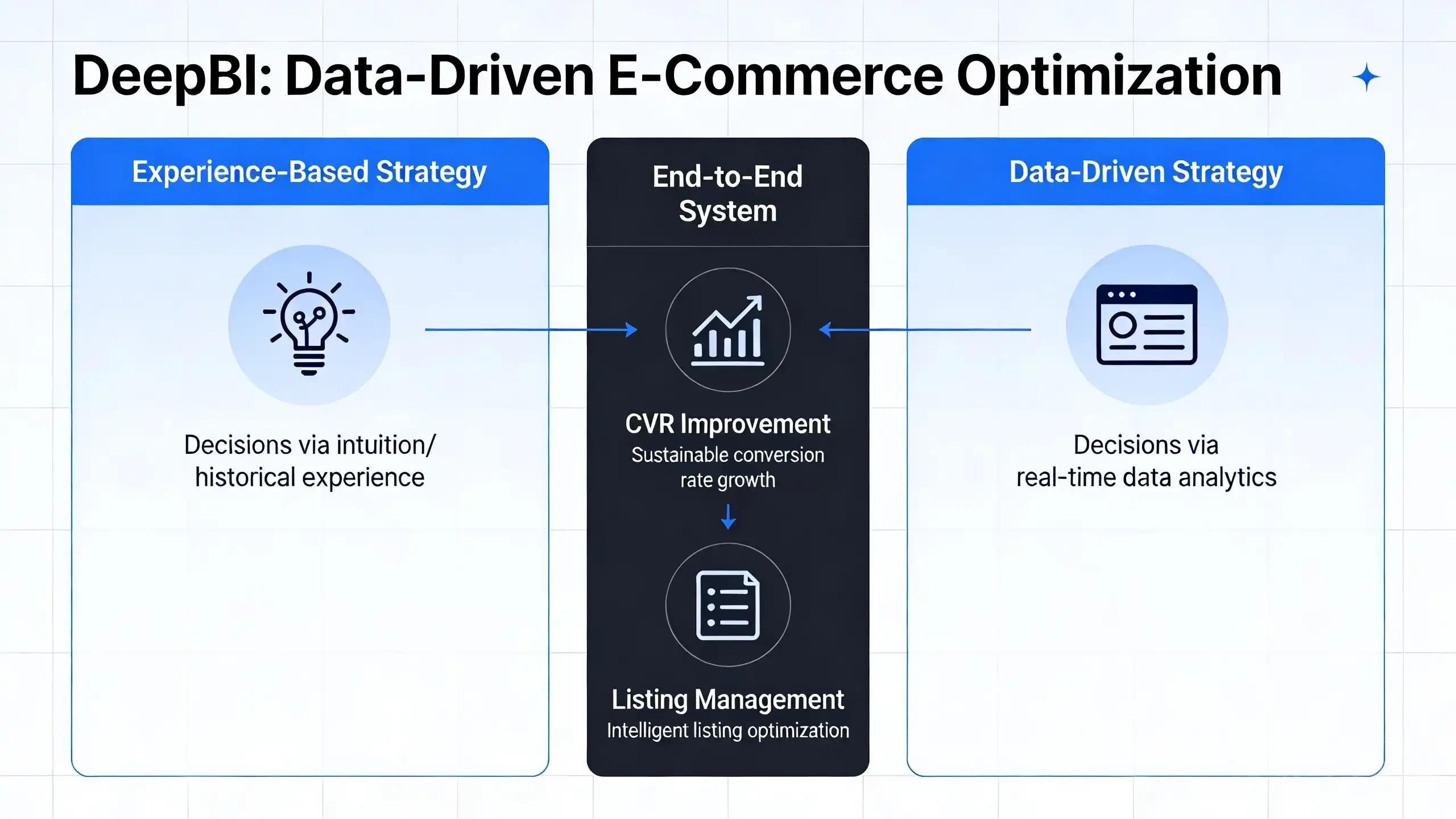
Boosting your Amazon conversion rate is not about isolated tweaks but about implementing a holistic, full-funnel optimization strategy. True growth comes from systematically diagnosing weaknesses, planning data-backed improvements, and executing them with precision. This is where sellers often move from "groping in the dark" to precision targeting, fundamentally changing their operational model from one based on experience to one driven by data.
DeepBI facilitates this crucial transition by providing an end-to-end intelligent optimization system. It breaks down the silos between diagnosis, planning, and delivery, creating a closed loop that ensures every action is informed by data. Instead of relying on vague suggestions like "improve the main image," DeepBI translates strategic goals into parameterized, AI-executable instructions for composition, lighting, and content. By embedding this data-driven discipline into your listing management, you move beyond temporary fixes and begin building a foundation for sustainable CVR improvement, long-term profitability, and a durable competitive advantage in the Amazon marketplace.