Introduction: The Imperative of Strategic Amazon Ad Budgeting
Every click on an Amazon ad represents a shopper with high purchase intent, a key differentiator that establishes the platform as a uniquely powerful advertising channel compared to social media or general search engines. Customers on Amazon are not just browsing; they are actively looking to buy. This dynamic makes Amazon Pay-Per-Click (PPC) an incredibly effective tool for driving sales and accelerating brand growth. However, in a marketplace crowded with millions of sellers, even the most exceptional products can struggle to achieve organic visibility on their own.
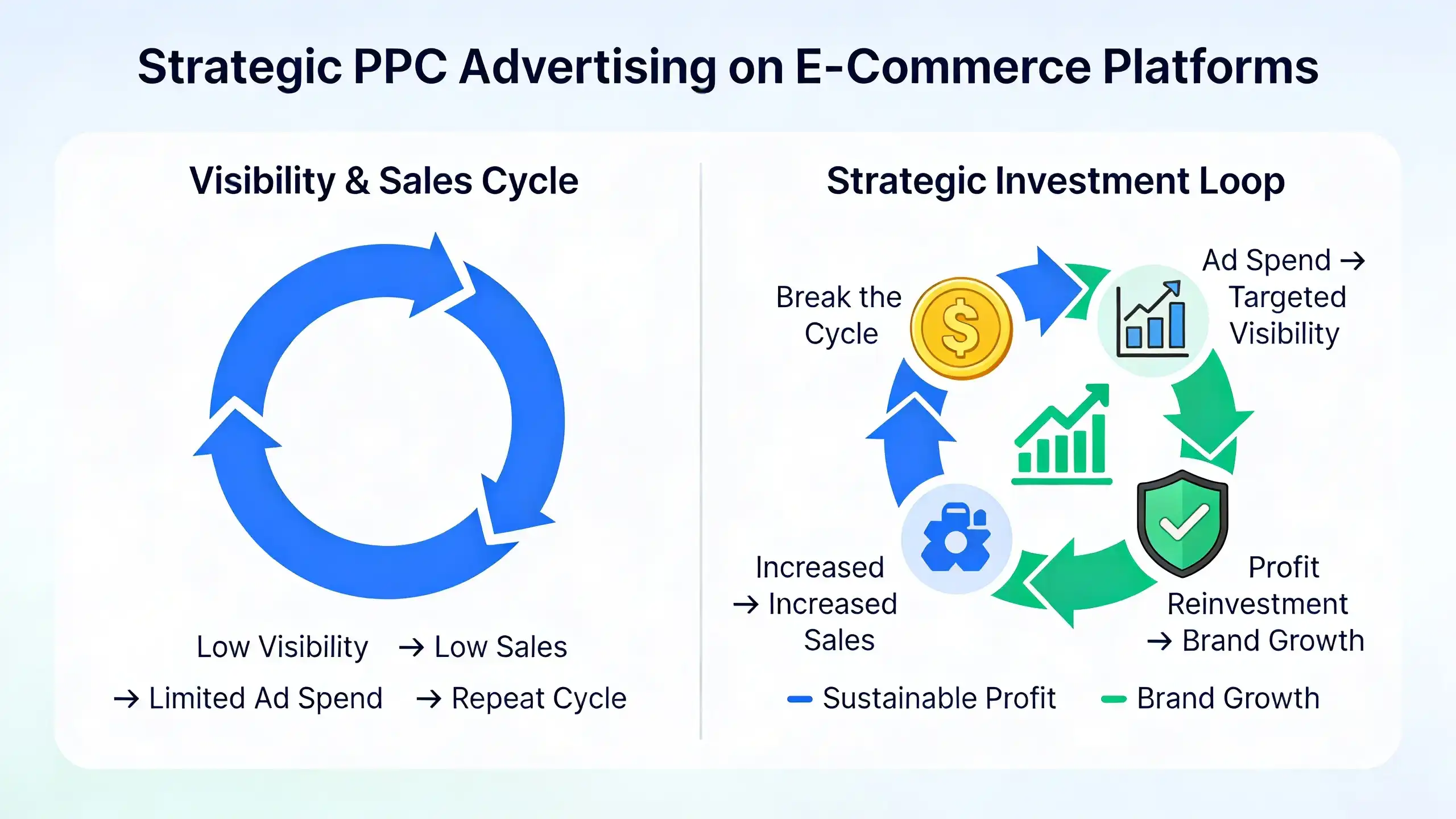
This situation creates a classic "Catch-22" for sellers: sales are necessary to improve organic ranking and build momentum, but visibility and traffic are required to generate those crucial initial sales. A strategic advertising approach is the most reliable method for breaking this cycle, placing your product in front of ready-to-buy customers to kickstart the flywheel of sales velocity and ranking improvement.
However, simply allocating funds to advertising is not a strategy—it is an expense. Without a clear plan, even a substantial budget can be depleted with minimal impact on your financial results. The difference between a top-performing brand and a struggling one often lies not in the size of their ad budget but in how intelligently it is deployed. This guide will help shift your perspective from viewing ad spend as a cost center to wielding it as a strategic investment that fuels sustainable profit, captures market share, and builds long-term brand equity.
 Understanding the Amazon Advertising Ecosystem and Its Costs
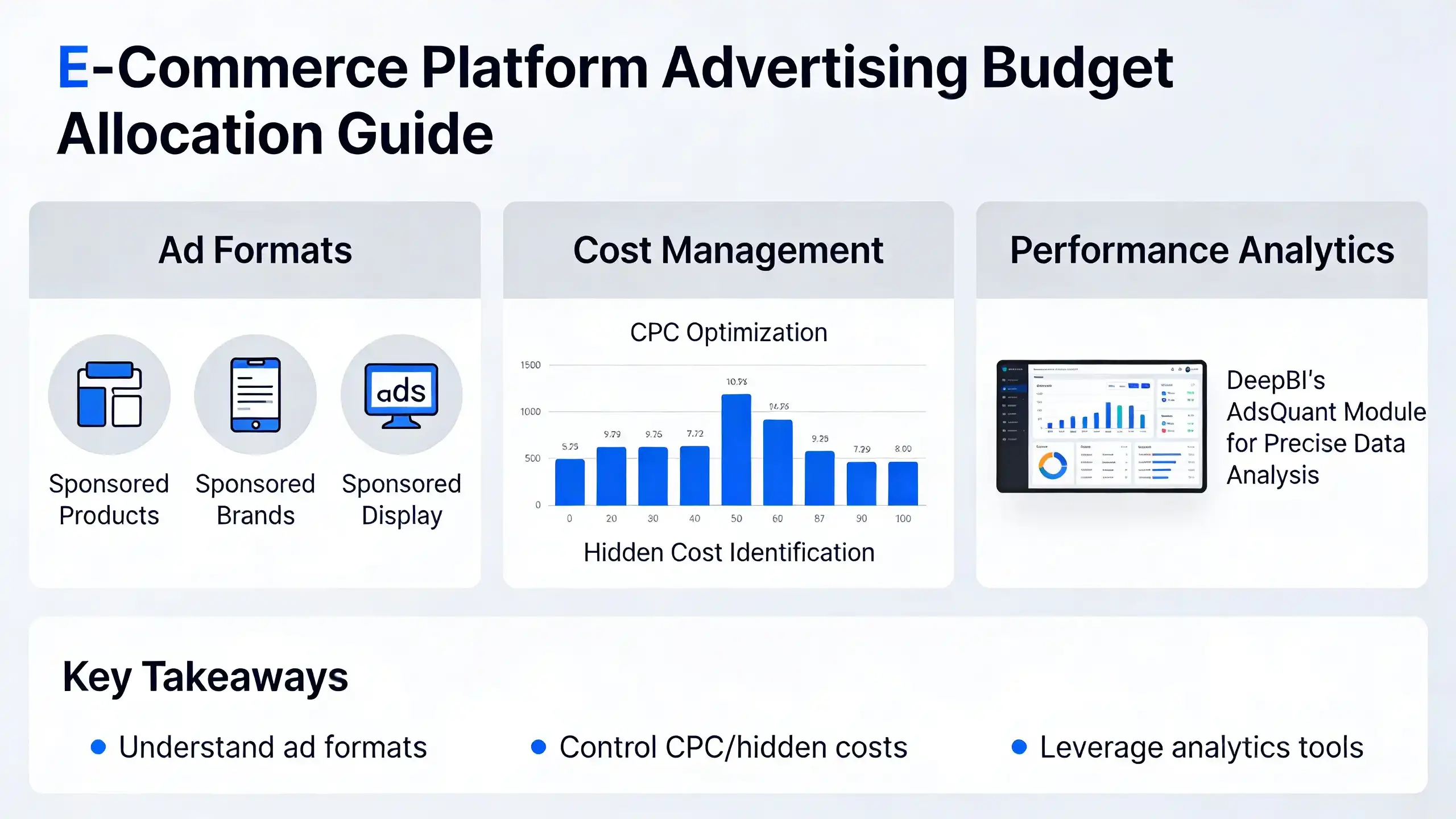
To allocate your budget effectively, you must first understand the competitive landscape. Amazon’s advertising platform operates as an auction where sellers bid for visibility. The primary ad types—Sponsored Products, Sponsored Brands, and Sponsored Display—each serve a distinct purpose. Sponsored Products target high-intent shoppers to drive direct sales, Sponsored Brands build top-of-funnel awareness, and Sponsored Display enables retargeting both on and off Amazon. Each format requires a different budgeting strategy based on its role in your sales funnel.
The direct cost of advertising is measured by Cost-Per-Click (CPC), which is influenced by factors like product category, market competition, and keyword relevance. While a daily budget caps your direct ad spend, the "hidden costs" of management are often overlooked. The most expensive mistake is running unoptimized campaigns that waste money, as effective management demands significant time and expertise for keyword research, bid adjustments, and performance analysis. This is where specialized tools become critical. DeepBI's AdsQuant module provides detailed analytics on ad performance across all campaign types, allowing you to dissect cost drivers and allocate your budget with precision based on real-time data.
 Foundational Metrics for Budget Allocation: Profitability and Performance
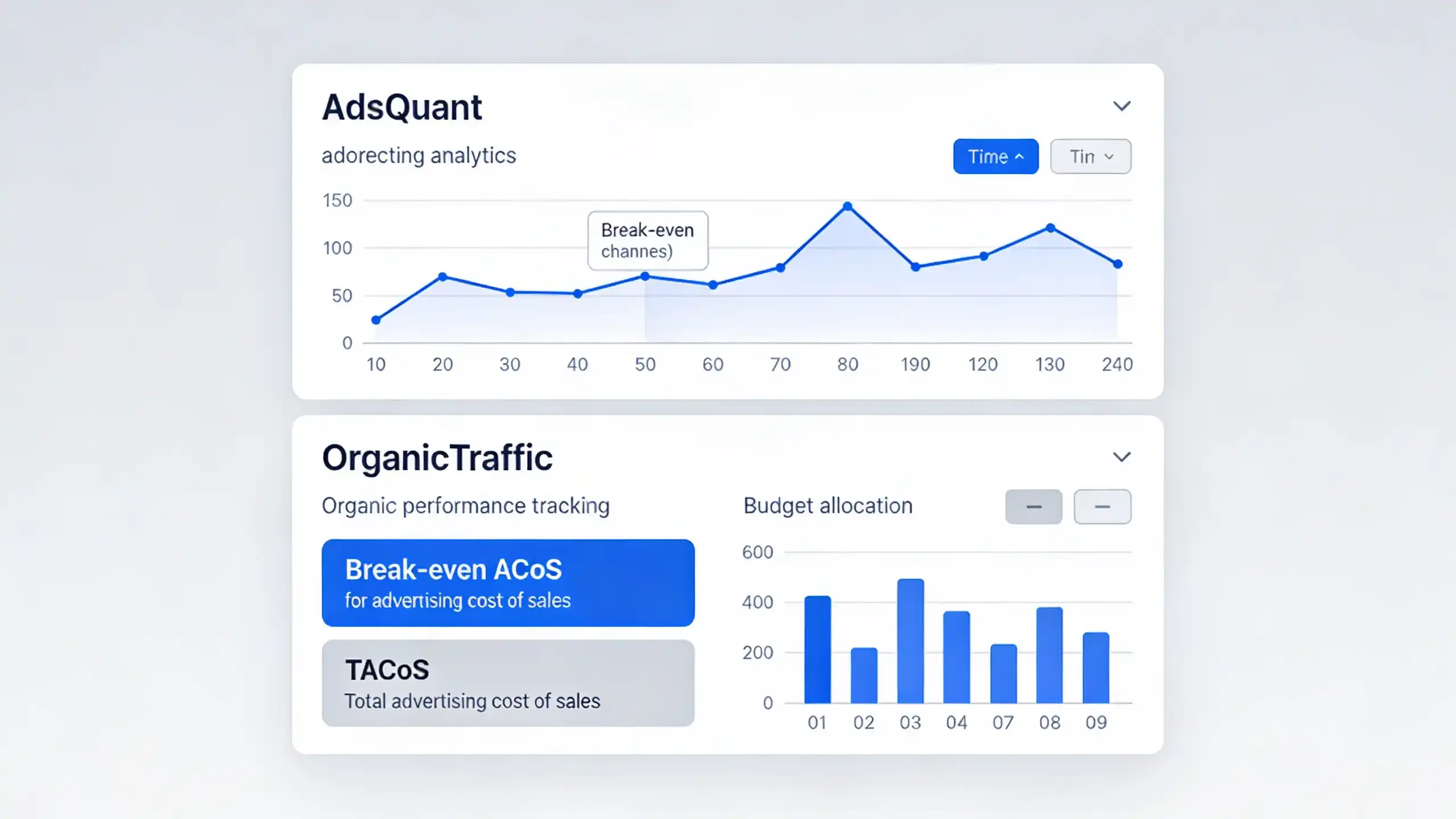
Effective budget allocation requires moving beyond simple ad spend to focus on profitability. To achieve this, you must anchor your strategy in foundational financial metrics that connect advertising performance directly to your business's health. The first critical metric is your Break-even ACoS, which represents the maximum Advertising Cost of Sales your product can sustain before a sale becomes unprofitable. It is calculated from your product's profit margin; for instance, a 30% profit margin means your break-even ACoS is 30%. Advertising above this threshold results in a net loss on each ad-generated sale.
While ACoS is vital for campaign-level assessment, a more holistic metric is needed to gauge overall business performance. This is where Total Advertising Cost of Sales (TACoS) becomes essential. Calculated as total ad spend divided by total sales (from both advertising and organic channels), TACoS reveals the true impact of your advertising on your entire Amazon business. A declining TACoS over time is a strong indicator of sustainable growth, demonstrating that your ad investment is successfully lifting organic sales and improving overall profitability.
Tracking these interconnected metrics is crucial for making informed budget decisions. DeepBI's AdsQuant and OrganicTraffic modules are designed to work in tandem to provide a clear, integrated view. AdsQuant helps you monitor and optimize ACoS at a granular level, while OrganicTraffic supplies the data to track how your ad spend influences natural sales. This allows you to manage TACoS effectively and steer your business toward profitable growth.
 Developing Your Amazon Ad Budget Allocation Strategy
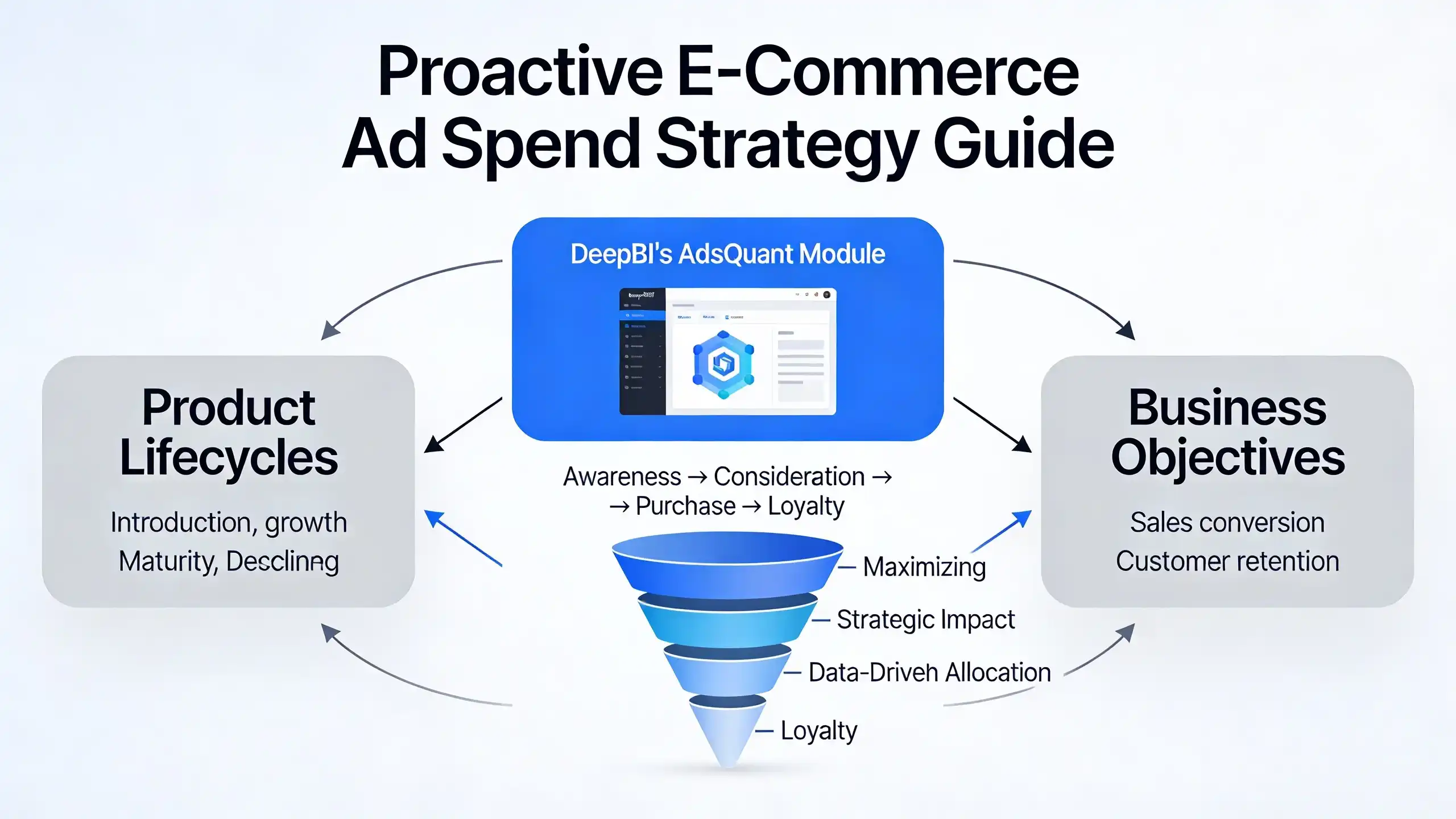
A reactive approach to ad spend leads to wasted budget and missed opportunities. In contrast, a proactive, structured strategy ensures every dollar is invested with purpose and aligned with your specific business goals. The optimal allocation is not a fixed formula but a dynamic model that adapts to your products, market position, and objectives.
Initial Budget Setting
Your starting point for ad spend can be determined in several ways. A common method is to allocate a percentage of your total target revenue, such as 5-10%, to advertising. Alternatively, you can set a fixed daily or monthly budget based on your product's profit margin and what you can afford to invest. A more advanced approach involves competitive analysis to estimate the spend required to capture a desired share of voice in your niche.
Allocation Across Campaign Types
Distribute your budget across Amazon's ad types based on their strategic function:
- Sponsored Products: As the primary driver of conversions, this format should typically receive the largest share of the budget to capture high-intent shoppers and boost sales velocity.
- Sponsored Brands: Allocate funds here to build brand awareness, defend your branded search terms, and drive traffic to your Storefront or a collection of products.
- Sponsored Display: Use this for retargeting audiences who have viewed your products but not purchased, as well as for reaching new, relevant audiences both on and off Amazon.
Budgeting Across Product Lifecycle Stages
Your budget strategy must evolve with your product's maturity:
- New Product Launch: Invest aggressively, especially in automatic campaigns. Allow these campaigns to run for at least 14 days without major changes so Amazon's algorithm can gather sufficient performance data, which is critical for future optimization.
- Growth Phase: As you identify high-performing keywords and targeting strategies, shift more of your budget to scale these successful manual campaigns and maximize your return on ad spend (RoAS).
- Mature Products: Transition to a maintenance budget focused on profitability. The goal is to defend your market share and maintain visibility with a stable, low Advertising Cost of Sales (ACoS).
Strategic Prioritization
Your ultimate business goal dictates the aggressiveness of your budget. If you are prioritizing rapid market share acquisition, you may need to tolerate a higher ACoS to outbid competitors and accelerate growth. Conversely, if your primary objective is maximizing short-term profitability, your budget will be managed tightly to achieve a low, target ACoS. Advanced tools like DeepBI's AdsQuant module help operationalize this by using a four-layer funnel model (Explore, Pre-screen, Precision, Scale) to ensure budget is strategically directed for maximum impact at each phase of the customer journey.
 Optimizing Ad Spend: Continuous Adjustment and Data-Driven Decisions
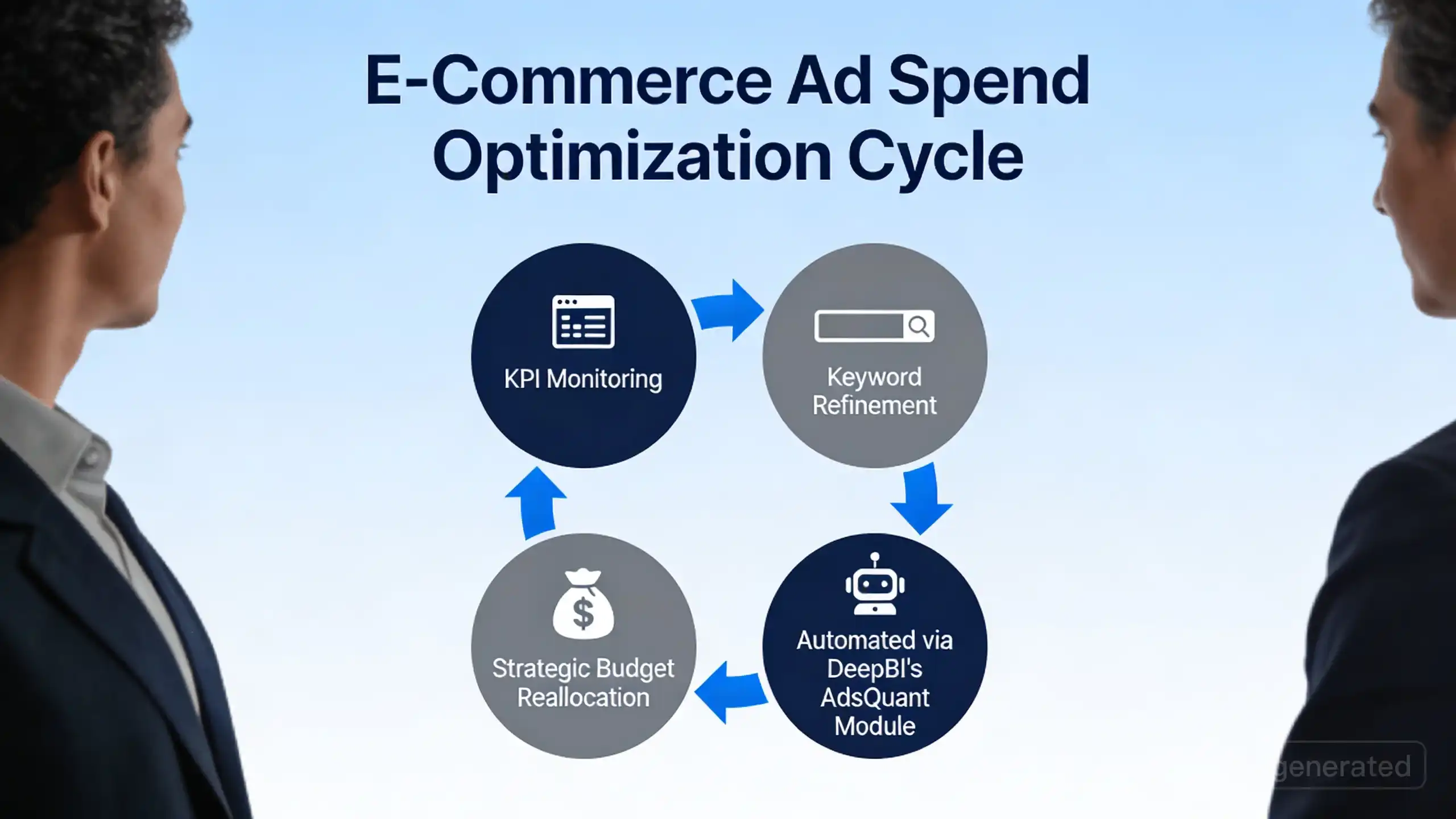
Effective ad spend optimization is not a one-time task; it is a continuous cycle of analysis, adjustment, and refinement. A crucial first step is patience. When launching new campaigns, particularly automatic ones, allow at least 14 days for Amazon's algorithms to gather sufficient performance data. Making drastic changes too early can disrupt this learning phase and lead to flawed conclusions.
Monitoring KPIs
To make informed decisions, you must consistently track Key Performance Indicators (KPIs). Regularly review metrics such as Advertising Cost of Sales (ACoS), Return on Ad Spend (RoAS), Conversion Rate (CVR), and Click-Through Rate (CTR). Monitoring impressions, clicks, and overall sales velocity will also provide a comprehensive view of how your budget is performing and impacting your product's visibility and momentum.
Dynamic Bid Management and Keyword Refinement
Based on your KPI analysis, you can begin making targeted adjustments. Increase bids on keywords that are driving sales efficiently to maximize their visibility. Conversely, reduce bids or pause keywords with high spend and low conversion rates. At the same time, add irrelevant search terms as negative keywords to eliminate wasted ad spend and expand your reach by researching and adding new, profitable keywords.
Budget Shifting
Strategic budget reallocation is fundamental to maximizing your return on investment. This process involves systematically identifying underperforming campaigns, ad groups, or keywords that fail to meet your ACoS or RoAS targets. By reducing or pausing spend in these areas, you can free up capital to reinvest in your top-performing assets that consistently deliver strong results.
Adapting Budgets
A static budget cannot respond to dynamic market conditions. It is essential to adapt your ad spend for predictable fluctuations in demand. Proactively increase your budgets in anticipation of seasonal peaks, promotional periods, and major shopping holidays like Prime Day and Black Friday. This ensures you have the necessary firepower to capture heightened consumer traffic and sales opportunities. For sellers seeking to automate this process, DeepBI's AdsQuant module offers a dynamic adjustment mechanism that optimizes bids and budgets daily by analyzing the past seven days of performance data, ensuring continuous optimization without constant manual intervention.
 Leveraging DeepBI for Intelligent Ad Budget Allocation
Transitioning from manual budget tracking to a data-driven strategy requires a platform built for Amazon's complexity. DeepBI provides an integrated solution that directly addresses the challenges of ad budget allocation, moving sellers from reactive adjustments to proactive, AI-powered optimization. The system uses predictive analytics to identify high-potential budget opportunities, detect areas of inefficient spend, and forecast optimal investment levels to help you reach your targets.
DeepBI’s power lies in its cross-module synergy, creating a holistic growth loop that manual methods cannot replicate:
- AdsQuant forms the foundation by executing precise budget allocation and dynamic, automated adjustments based on your predefined goals, such as a target ACoS or specific growth objectives.
- OrganicTraffic analyzes performance data from your ad campaigns to identify which ad-driven keywords are generating sales. It then leverages these insights to improve your organic search ranking, effectively lowering your Total ACoS (TACoS) over time.
- Listing ensures that the high-quality traffic you acquire through optimized ad spend arrives at a fully converted page. By connecting ad performance to listing quality, it maximizes the return on every dollar spent.
This integrated approach ensures your advertising budget is not just an expense but a strategic investment that simultaneously fuels immediate sales and builds long-term organic strength.
 Advanced Budgeting Strategies for Scaling and Long-Term Growth
For mature sellers, foundational budget management evolves into a sophisticated strategy for scaling. These advanced approaches move beyond simple ACoS targets to align ad spend with broader, long-term business objectives. They require a nuanced understanding of how advertising impacts the entire Amazon flywheel, from market penetration to brand equity.
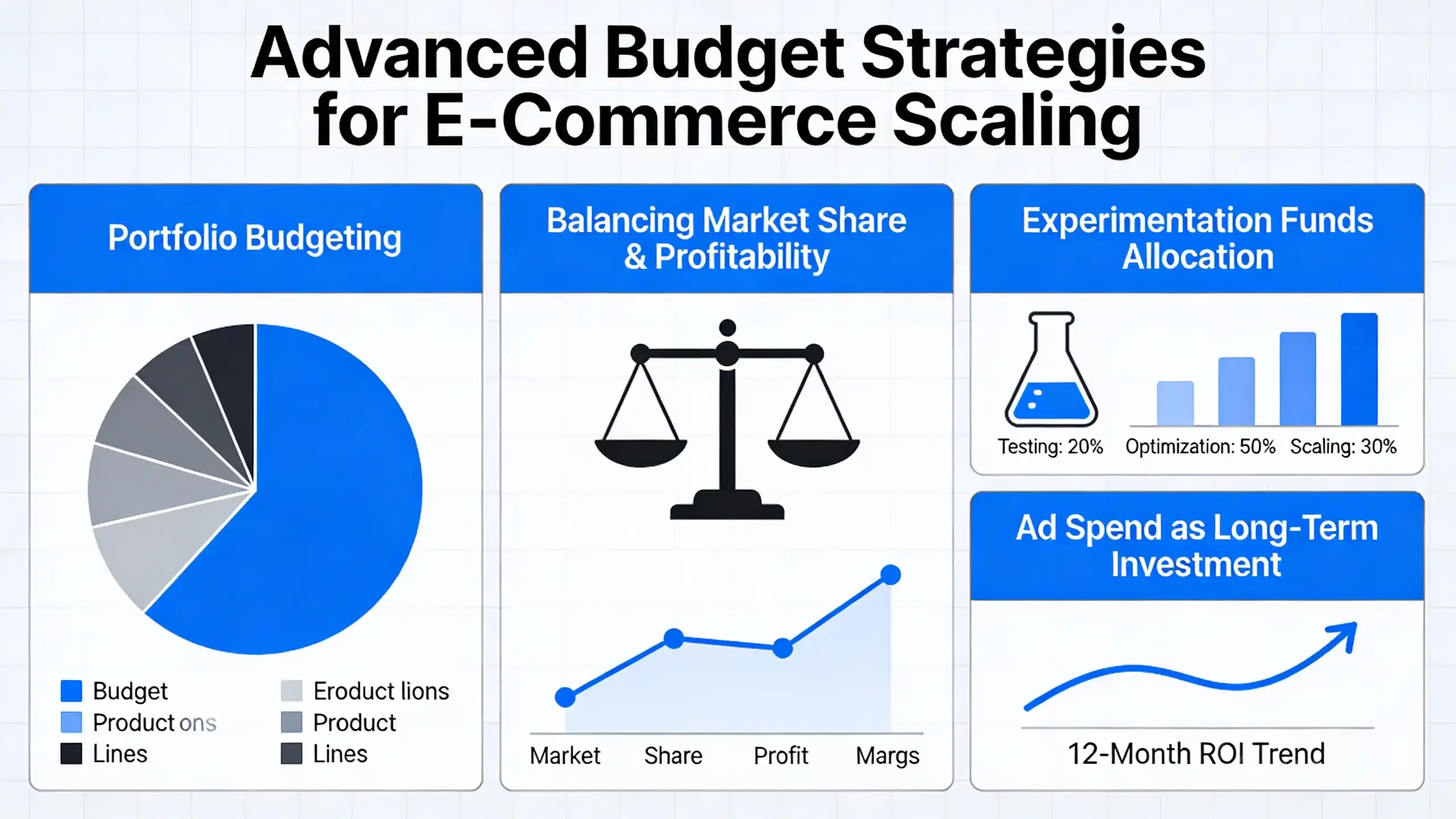
Portfolio Budgeting
Instead of managing budgets on a per-product basis, portfolio budgeting takes a holistic view of your entire catalog. This strategy involves allocating ad spend across products based on their specific role in your business. You might over-invest in a new product launch to gain initial traction, using profits from a mature, high-margin "cash cow" product to fund it. The goal is to optimize the total return on ad spend (RoAS) for the entire brand, not just the ACoS of individual campaigns, ensuring your advertising investment supports overall growth.
Market Share vs. Profitability
A key strategic decision for scaling brands is determining when to prioritize market share over immediate profitability. This often means intentionally accepting a higher ACoS to aggressively outbid competitors, dominate top-of-search placements, and rapidly improve your Best Seller Rank (BSR). This "blitzscaling" approach is an investment in capturing long-term organic ranking and customer loyalty. Once a dominant market position is secured, the strategy can shift back toward optimizing for a lower, more profitable ACoS.
Experimentation Budget
Stagnation is a significant risk on a competitive platform like Amazon. Allocating a dedicated portion of your ad budget—typically 5-10%—for experimentation is crucial for sustained growth. This budget should be used to test new ad formats like Sponsored Display or Sponsored Brands Video, explore new keyword sets, target competitor ASINs, or try different bidding strategies. By isolating these tests from your core campaigns, you can innovate and discover new growth levers without jeopardizing the performance of your proven winners.
Ad Spend as an Investment
Ultimately, the most advanced strategy is a shift in mindset: viewing advertising not as a cost, but as an investment. Every dollar spent on ads contributes to more than just immediate sales; it builds brand awareness, gathers valuable customer data, improves organic search ranking through increased sales velocity, and defends your market position against new entrants. This long-term perspective frames your budget as a capital allocation decision designed to build a defensible brand and a valuable asset on the Amazon marketplace.
 Conclusion: The Future of Amazon Ad Budgeting with DeepBI
Navigating the Amazon marketplace successfully is no longer just about having a great product; it is about making smarter, data-driven decisions. Strategic ad budget allocation is the cornerstone of this success, separating sellers who merely participate from those who dominate their categories. The days of reactive, spreadsheet-based budget management are over. To achieve sustainable growth and protect profitability, sellers must adopt a proactive, holistic approach that connects every dollar of ad spend to its impact on business results.
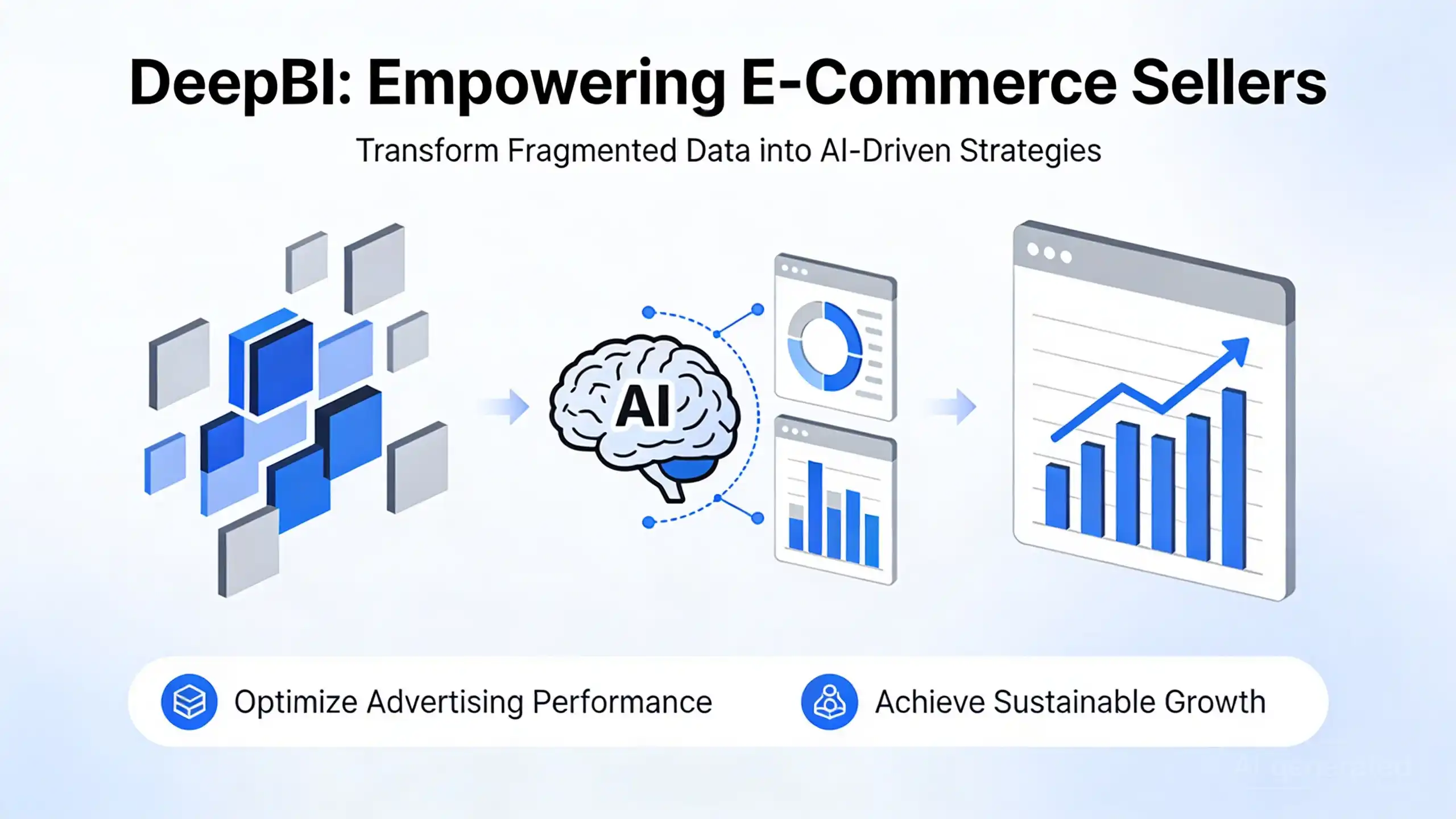
This is where the next generation of analytics tools becomes indispensable. DeepBI empowers sellers to make this critical transition, moving from fragmented data and guesswork to integrated insights and intelligent automation. By providing a unified view of advertising performance, inventory health, and overall profitability, the platform transforms complex data into clear, actionable strategies.
The future of e-commerce will be defined by the synergy between human expertise and artificial intelligence. We believe that AI should not override human decision-making. Instead, platforms like DeepBI are designed to be powerful "executors," handling the heavy lifting of data analysis and optimization so that you, the seller, can focus on high-level strategy and growth. Embracing this partnership is the key to unlocking your brand's full potential on Amazon.