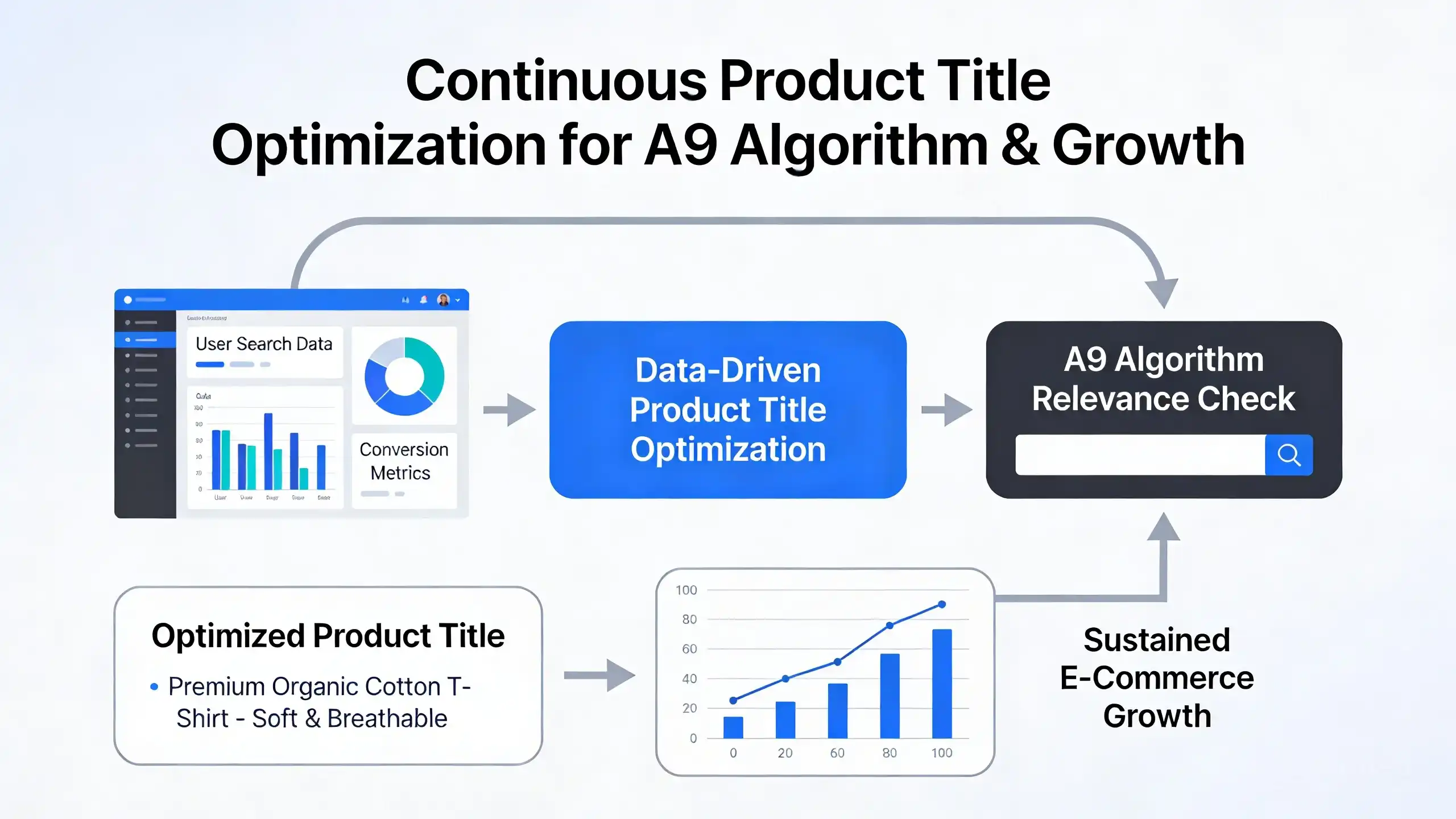
The Unseen Power of Your Amazon Product Title
Why Your Title is More Than Just Words
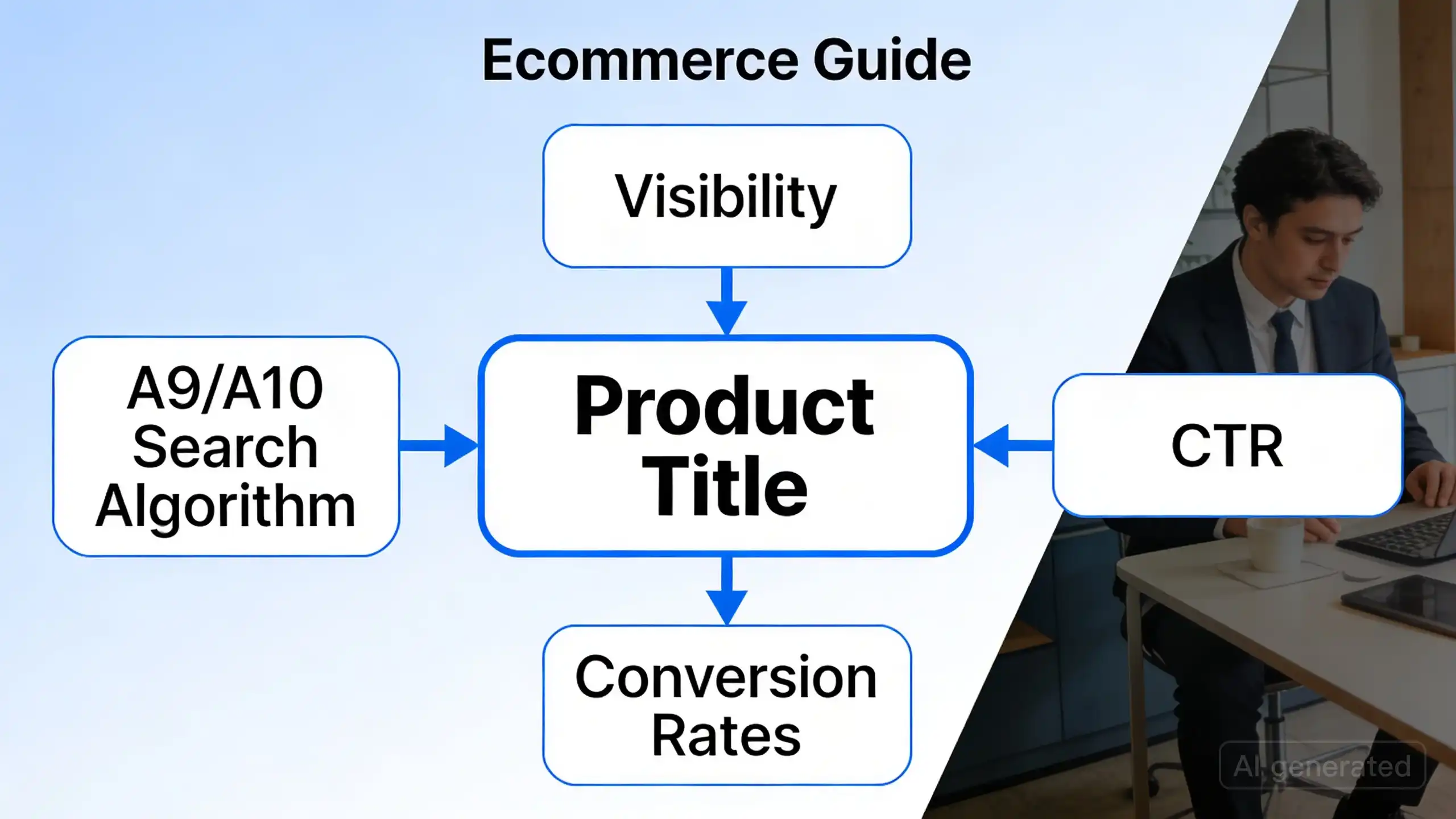
Your product title is far more than a simple label; it's the single most critical piece of text on your Amazon listing. It serves a crucial dual function: it's the first impression you make on potential customers scrolling through search results, and it's a primary indexing field for Amazon's A9/A10 search algorithm. This isn't merely a creative exercise. Amazon enforces strict platform guidelines, such as character limits, and any title that fails to meet these mandatory standards can be suppressed or blocked by the system. The title is a core, auditable dimension of your listing's health, carrying significant weight in determining its overall quality and discoverability.
The Direct Impact on Search Ranking and Customer Engagement
A strategically constructed title directly fuels your product's performance metrics. By embedding the most relevant, high-traffic keywords, you feed the A9/A10 algorithm the exact data it needs to rank your product for customer queries, leading to higher search visibility. A better ranking translates directly into more impressions.
However, visibility without engagement is a wasted opportunity. A compelling title that clearly communicates the product's primary benefit, brand, and key features stands out on a crowded results page. This directly improves your Click-Through Rate (CTR), a powerful signal to Amazon that your listing is relevant to shoppers. This higher CTR not only reinforces your search ranking but also initiates the customer journey, paving the way for a higher conversion rate on your product detail page.
 Amazon's Title Guidelines: The Foundation of Optimization
Before diving into advanced keyword strategies, mastering Amazon's foundational title guidelines is non-negotiable. These rules are not mere suggestions; they are technical requirements that determine whether your product is even visible to shoppers. Failure to comply with mandatory standards, such as character limits, can lead to your listing being suppressed or blocked by the system, effectively halting your sales before they can begin.
Understanding Amazon's Rules and Best Practices
Amazon enforces a strict set of rules to ensure a consistent and trustworthy customer experience. Adhering to these is the first step in building a successful listing. Key prohibitions include:
- Promotional Language: Avoid phrases like "Sale," "Free Shipping," or "Best Seller."
- Subjective Commentary: Do not use subjective descriptors such as "Amazing," "Top-Rated," or "Highest Quality."
- Special Characters: Refrain from using symbols, non-standard characters, or excessive punctuation.
- Seller Information: Never include your seller name, URL, or other contact information in the title.
- Capitalization: Use title case (capitalizing the first letter of most words) and avoid using all caps.
Key Elements of an Effective Amazon Title
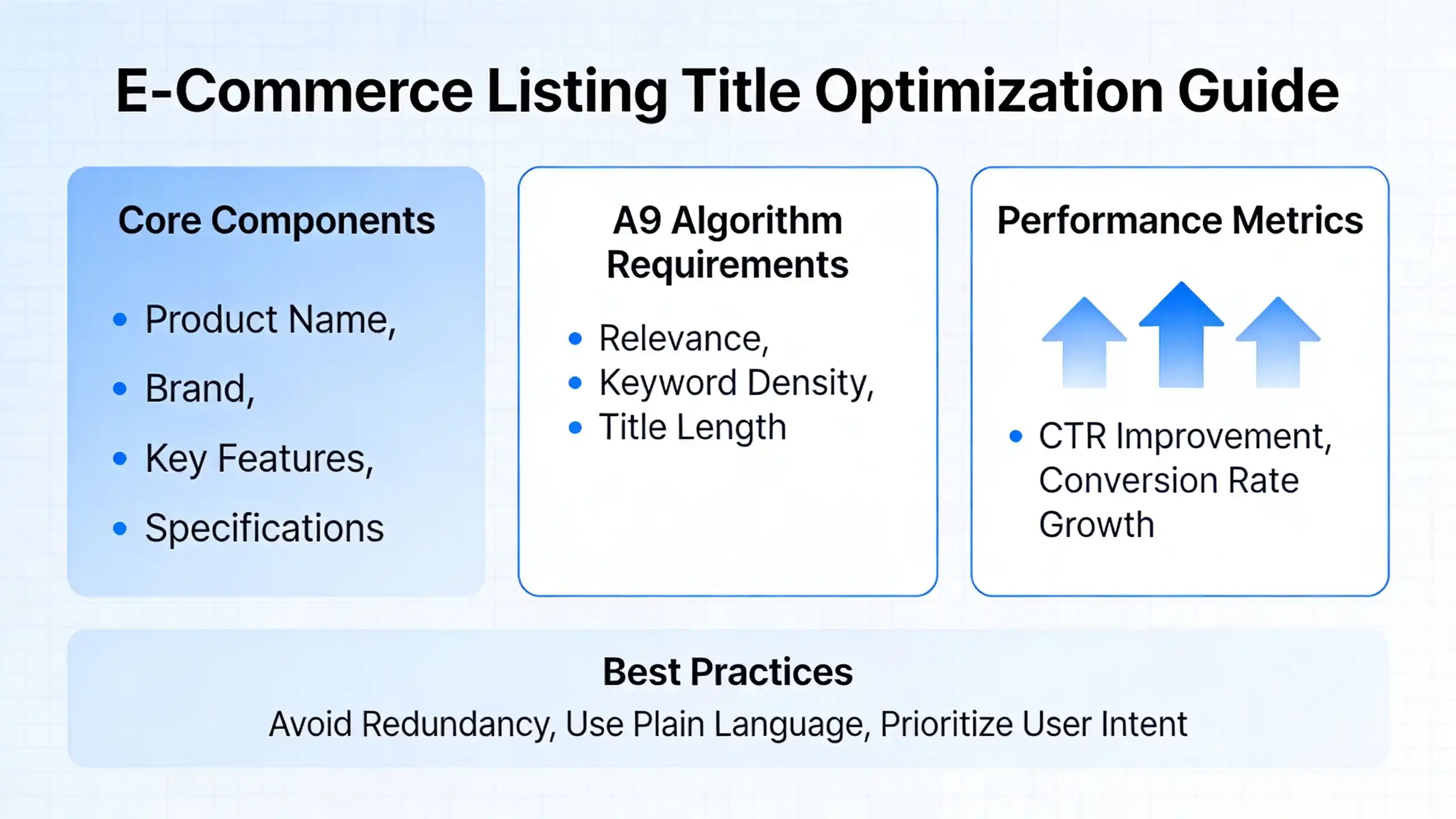
A compliant and effective title provides essential information clearly and concisely, helping both customers and Amazon's A9 algorithm understand your product. A strong title formula typically includes these core components in a logical order:
- Brand Name: Lead with your brand to build recognition.
- Product Type: Clearly state what the product is (e.g., "Electric Kettle," "Yoga Mat").
- Key Features: Include 1-3 critical attributes or benefits (e.g., "Stainless Steel," "Anti-Slip").
- Essential Specifications: Add crucial details like material, size, color, or quantity (e.g., "1.7 Liter," "72-Inch," "Pack of 2").
By structuring your title around these elements, you ensure accuracy and provide the critical information shoppers need to make a confident purchase decision, directly impacting your Click-Through Rate (CTR) and conversion potential.
 Crafting High-Converting Titles: Best Practices
A high-performing title is the single most important element for discoverability and click-through rate (CTR). It must satisfy both Amazon's A9 algorithm and human shoppers. The following best practices provide a framework for creating titles that drive traffic and sales.
Keyword Integration: Balancing Relevance and Readability
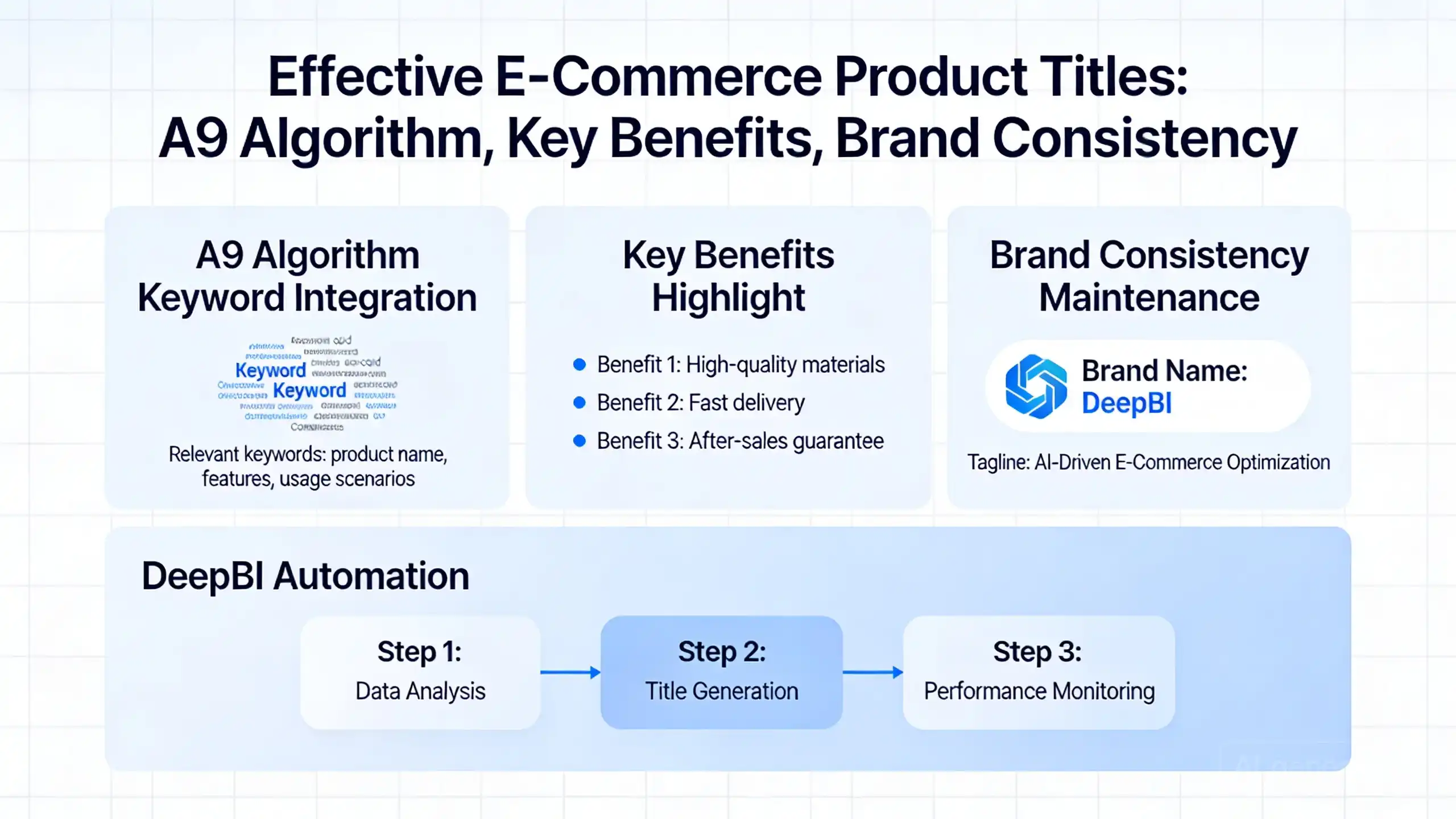
Effective titles begin with strategic keyword placement. Place your most critical, high-volume primary keyword at the beginning for maximum algorithmic weight. Weave in relevant secondary and long-tail keywords naturally, ensuring the title remains coherent and easy to read for a human shopper. Avoid "keyword stuffing," as a confusing or spammy title will deter clicks, negatively impacting your CTR and, consequently, your search ranking. The goal is a seamless blend of machine-readable data and human-centric persuasion.
Highlighting Key Features and Benefits
Beyond keywords, your title must quickly communicate value. Identify your top 2-3 unique selling propositions (USPs) and translate them from technical features into tangible customer benefits. For example, "10,000mAh Battery" becomes "All-Day Power." Use separators like pipes (|) or hyphens (-) to structure this information clearly, making it easy for customers to scan for critical details like size, color, or quantity. This clarity helps shoppers make faster decisions, directly improving your conversion rate (CVR).
Brand Consistency and Professionalism
Your product title is a direct reflection of your brand. To build recognition and trust, always begin your title with your brand name. Maintain a consistent, professional tone across all your listings by using title case and avoiding the use of ALL CAPS, which can appear unprofessional and may violate Amazon's style guides. A clean, well-formatted title builds shopper confidence and reinforces your brand's credibility in a competitive marketplace.
Leveraging DeepBI for Title Optimization
Manually applying these best practices across an entire catalog is time-consuming and prone to error. DeepBI provides an end-to-end intelligent solution to automate and enhance this process.
- Intelligent Scoring and Diagnosis: DeepBI's system acts as an "automated market health check," analyzing your titles against top competitors and platform best practices to deliver a quantitative diagnosis of weaknesses and opportunities.
- Optimization Strategy Generation: Moving beyond vague advice, DeepBI translates diagnostic data into precise, AI-executable instructions. It analyzes textual elements to generate a data-driven blueprint for a higher-performing title.
- AI-Powered Generation: Based on this strategic blueprint, DeepBI’s AI can generate multiple optimized title options, eliminating guesswork and drastically reducing the time required to craft compelling, high-converting copy that is ready to deploy.
 Common Pitfalls to Avoid in Amazon Titles
Crafting a high-performing title requires avoiding common mistakes that can sabotage your visibility and sales. Steering clear of these pitfalls ensures your title works for you, not against you.
Keyword Stuffing and Irrelevant Terms
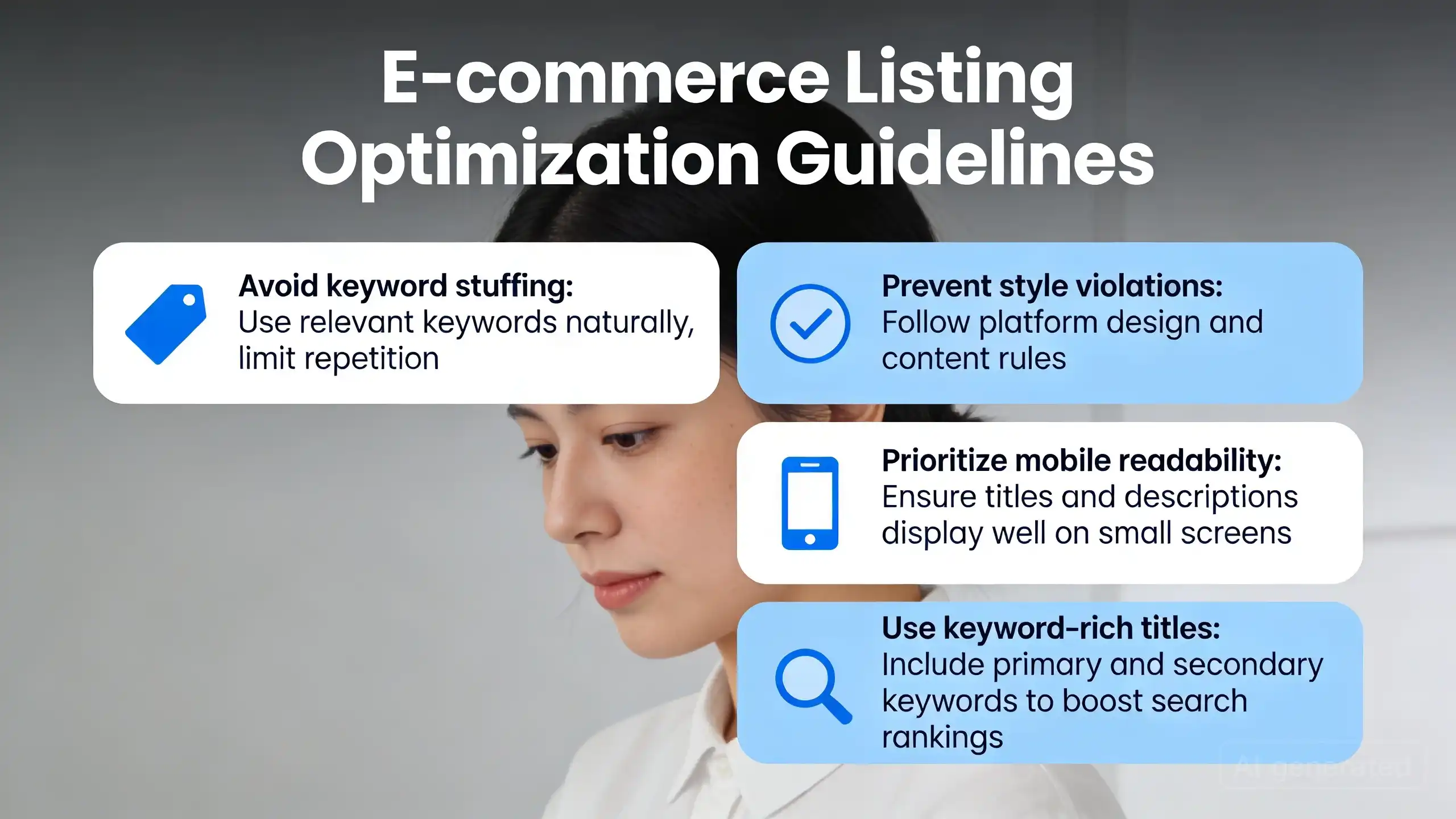
Overloading your title with a long string of keywords creates a poor user experience. While it may seem like a good way to capture every possible search query, this practice makes your title unreadable and appear spammy to potential buyers. This can directly harm your click-through rate (CTR) as shoppers skip over confusing or unprofessional-looking listings. Amazon's algorithm prioritizes relevance and customer experience, and a stuffed title can be penalized, ultimately hurting your search ranking.
Violating Amazon's Style Guidelines
Amazon enforces strict style guidelines for product titles, including character limits, capitalization rules, and prohibitions on promotional language like "Best Seller" or "Sale." Failure to comply is not a minor issue. Any content that does not meet these mandatory standards can be automatically suppressed by the system. This means your listing becomes invisible in search results, effectively halting all traffic and sales until the violation is corrected.
Overlooking Mobile Readability
A significant portion of Amazon customers shop on mobile devices, where titles are often truncated to the first 70-80 characters. If your title's most critical information—such as the brand, product type, and primary benefit—is buried at the end, mobile shoppers will never see it. This oversight can drastically reduce your mobile CTR. Always front-load your most essential keywords and product identifiers to ensure your title is effective on any screen size.
Misconceptions About URL Generation
A common myth suggests that the first five words of your title permanently form the product's canonical URL. While prominent keywords in the title can influence the URL structure and benefit external SEO, Amazon's URL generation is dynamic. The key takeaway is not to obsess over a specific word count for the URL. Instead, focus on creating a comprehensive, keyword-rich title that helps both Amazon's internal search algorithm and external engines like Google understand and rank your product effectively.
 Advanced Strategies for Title Performance
Beyond basic compliance, a truly effective title strategy involves continuous, data-driven refinement. Moving past a "set it and forget it" mindset is crucial for staying ahead in a competitive marketplace. Advanced optimization focuses on competitive positioning, iterative testing, and understanding the title's central role in your listing's ecosystem.
Competitive Analysis and Differentiation
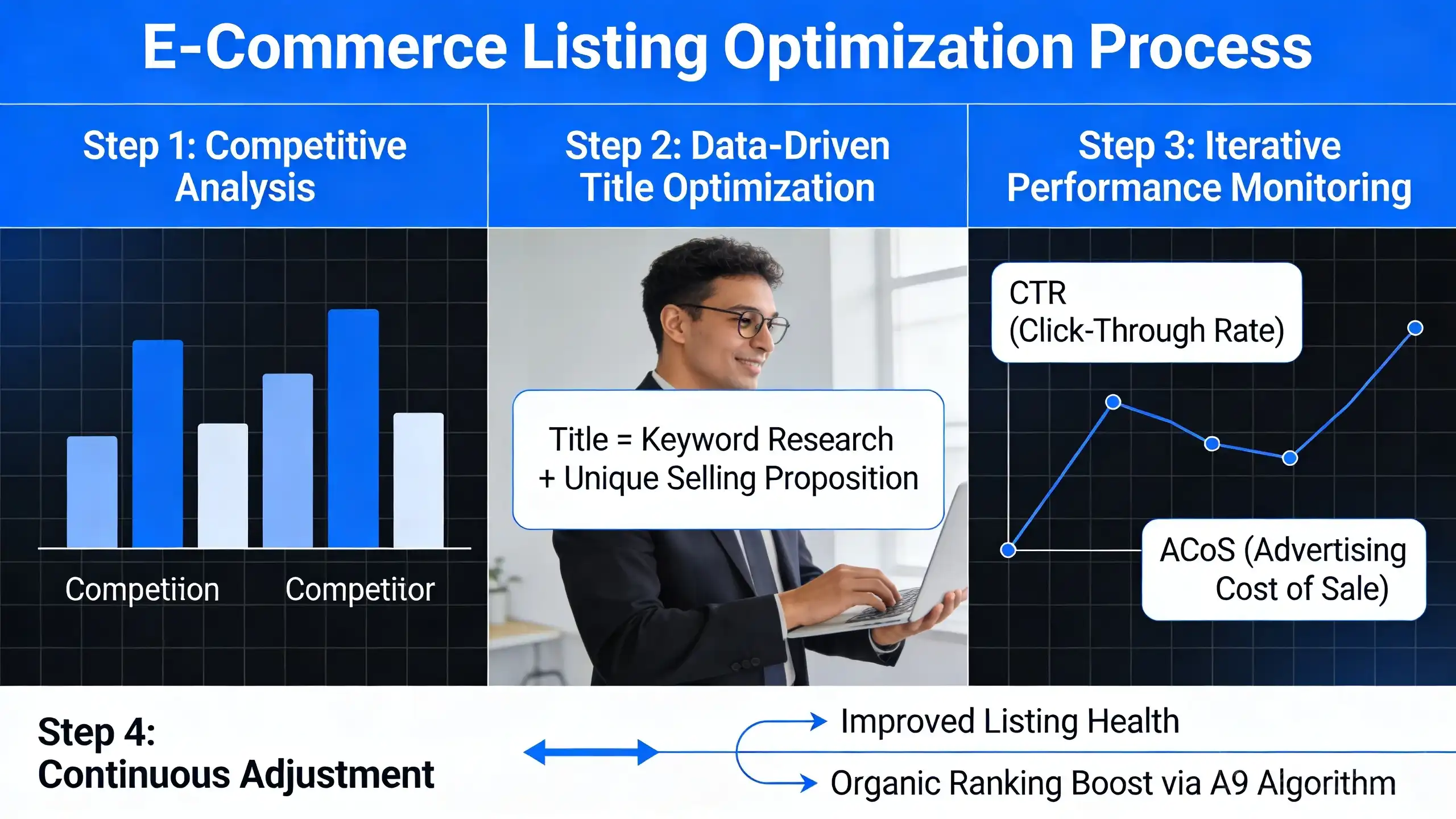
Your competitors' titles are a rich source of market data. Systematically analyze the titles of the top-ranking products for your primary keywords to identify common patterns, primary keyword targets, and value propositions they emphasize. Look for opportunities to differentiate. Can you highlight a feature they neglect? Is there a keyword gap you can fill? By understanding the competitive landscape, you can craft a title that not only targets high-value keywords but also carves out a unique position that captures shopper attention in a crowded search results page.
Iterative Optimization and Performance Monitoring
Title optimization is not a one-time task but an ongoing process. While Amazon lacks a direct A/B testing tool for titles, you can create your own data feedback loop. Treat each title change as a measurable event. After publishing an update, closely monitor your listing's performance over the next 7-14 days. Track key metrics like Click-Through Rate (CTR), sessions, and conversion rate to quantify the impact of your changes. This approach transforms optimization from a process based on subjective judgment into a data-driven strategy, allowing you to validate changes with performance metrics.
Connecting Title Optimization to Overall Listing Health
An optimized title has a powerful ripple effect across your entire listing's performance. A compelling, relevant title directly boosts your CTR, which is a critical signal to Amazon's A9 algorithm. Higher CTR can lead to improved organic search ranking over time. In the context of advertising, your title is a key factor in ad relevance and quality scores. A well-crafted title can lead to better ad placements and a lower Advertising Cost of Sale (ACoS), demonstrating how this single element is fundamental to both organic traffic and paid campaign efficiency.
 DeepBI: Your Partner in Amazon Title Excellence
How DeepBI Elevates Your Listing Strategy
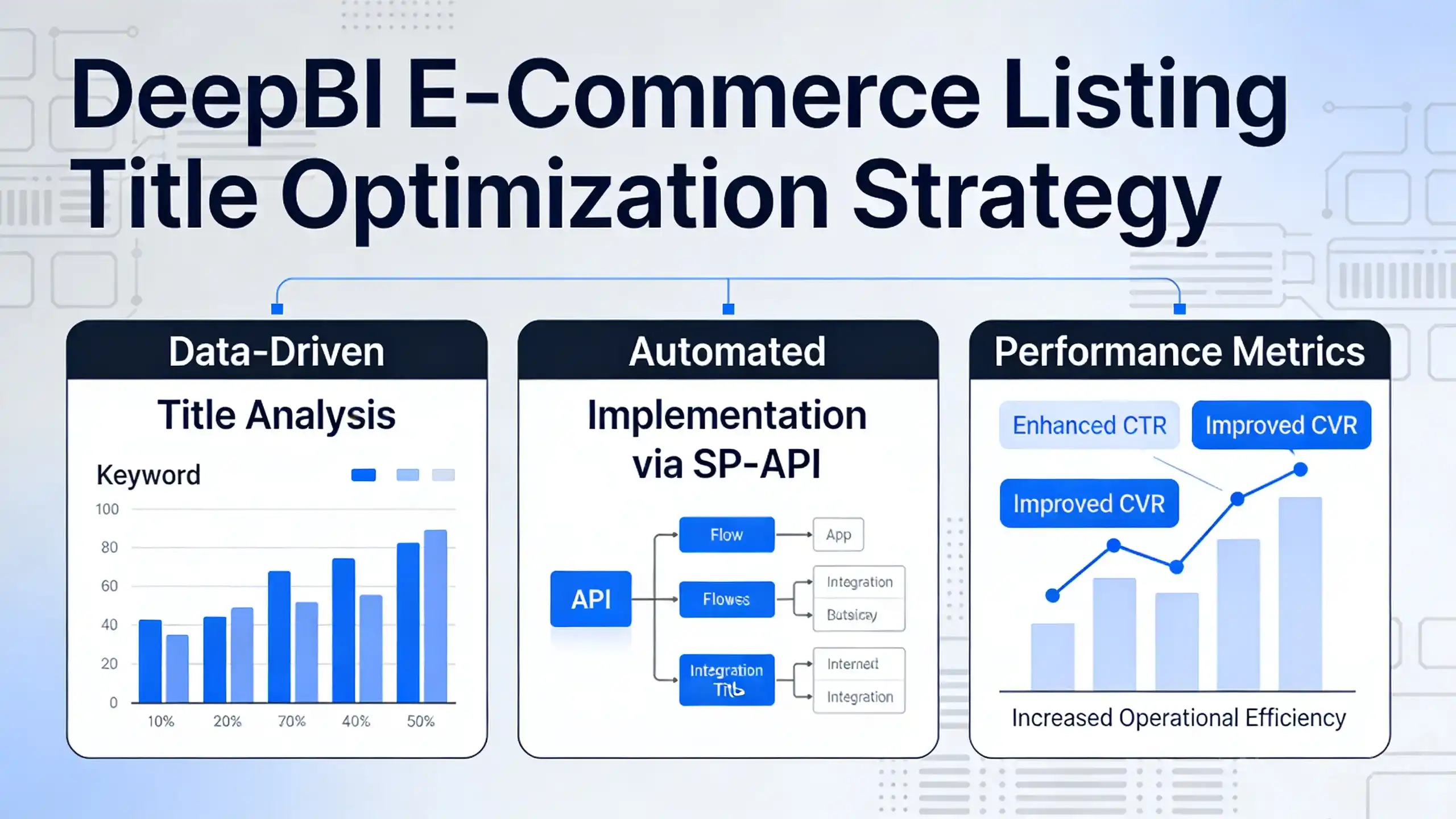
Moving beyond intuition and guesswork is the first step toward market leadership on Amazon. DeepBI transforms your title optimization from a reactive task into a proactive, data-driven strategy. Our platform is engineered to break down the operational silos that exist between diagnosing listing performance, planning improvements, and delivering optimized content. By integrating these stages into a single, intelligent system, DeepBI helps you build titles that function as a core commercial engine for your products. This strategic shift focuses your efforts on what truly matters: creating titles that are precision-engineered to drive higher click-through rates (CTR) and conversion rates (CVR), turning every character into a potential asset for growth.
Achieving Sustainable Growth Through Data-Driven Titles
The true power of a data-backed strategy lies in its execution. DeepBI closes the loop between analysis and implementation with its "One-Click Apply" feature, powered by the official Amazon SP-API. Where sellers once faced a tedious manual process of downloading, renaming, and uploading content—an operation that could take over 30 minutes and introduce security risks—our system automates the entire workflow. This reduces the update process to mere seconds. This radical improvement in efficiency allows you to deploy optimized titles and other listing content almost instantly, ensuring your products are always positioned for maximum impact. By eliminating friction, DeepBI directly enhances your content quality and accelerates your new product launch cycle, creating a sustainable advantage in the marketplace.
 Conclusion: The Ongoing Journey of Title Optimization
Mastering your Amazon product title is not a one-time setup task; it is the cornerstone of a dynamic and successful selling strategy. Your title is the single most critical element for capturing initial customer interest, driving click-through rates, and signaling relevance to Amazon's A9 algorithm. However, the competitive landscape and consumer search behaviors are in constant flux. A title that dominates the search results today may be obsolete tomorrow.
Therefore, the most successful sellers treat title optimization as a continuous process of testing, learning, and adapting. This requires moving beyond intuition and embracing a data-centric approach to stay ahead. Leveraging advanced analytics tools is no longer a luxury but a necessity for maintaining a competitive edge. An 'automated market health check system' driven by rigorous data collection can provide the insights needed to refine your titles proactively, ensuring they consistently outperform competitors and resonate with your target audience. By committing to this ongoing journey of optimization, you transform your product title from a static label into a powerful, ever-improving asset that fuels sustained growth and profitability.