Introduction: The Foundation of Amazon Advertising Success
In the hyper-competitive Amazon marketplace, the single greatest determinant of advertising profitability is often the most neglected: campaign structure. While sellers fixate on keyword selection, bid management, and creative assets, the underlying architecture that organizes these elements is frequently an afterthought. This is a critical oversight. A well-designed campaign structure is not merely an organizational tool; it is the strategic backbone of your entire advertising operation, dictating how effectively you can control budgets, target customers, and harvest performance data.
Without a logical framework, even the most brilliant keyword strategy will falter. Budgets become muddled, performance analysis devolves into guesswork, and scaling successful tactics becomes nearly impossible. The result is a cycle of reactive adjustments, wasted ad spend, and an inflated Advertising Cost of Sale (ACoS) that erodes your margins. Moving beyond a basic, one-size-fits-all setup is no longer optional—it is essential for survival and growth.
This guide moves beyond simplistic advice to provide a sophisticated, data-driven methodology for building and managing a high-performance campaign structure. We will explore how to create a scalable framework that delivers clarity, control, and a clear path to optimization. By mastering the principles of strategic campaign architecture, you can transform your advertising from a cost center into a powerful engine for brand growth, an improved Best Seller Rank (BSR), and sustainable profitability on Amazon.
 Understanding Amazon PPC: Beyond the Basics
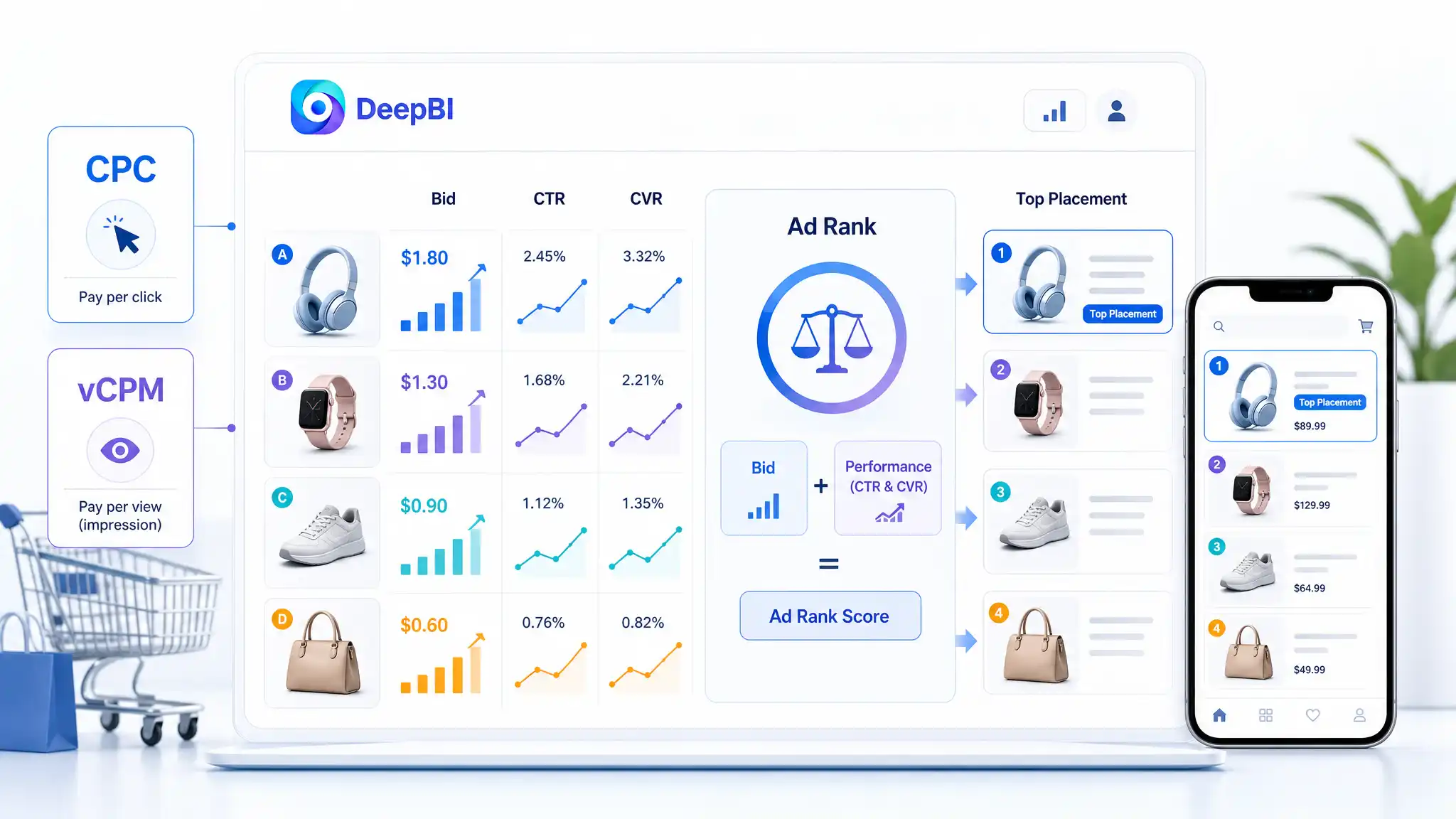
Amazon PPC operates primarily on a pay-per-click model, where advertisers are charged only when a shopper clicks an ad. However, this is not the only billing method. Sponsored Display campaigns, for example, can also be billed on a viewable cost-per-thousand impressions (vCPM) basis, allowing you to pay for ad visibility rather than direct engagement.
A common misconception is that the highest bid automatically wins the ad placement. In reality, Amazon’s algorithm calculates an Ad Rank to prioritize the customer experience. This score considers your bid alongside critical performance metrics like your product's historical click-through rate (CTR), conversion rate (CVR), and overall relevance to the search query. Consequently, a highly relevant product with a strong sales history can win the auction with a lower bid than a less relevant competitor.
To execute your strategy, Amazon provides three primary ad types:
- Sponsored Products target specific keywords or products to drive direct sales, making them ideal for bottom-of-funnel conversions.
- Sponsored Brands build brand awareness with custom headlines and logos, capturing attention at the top of search results.
- Sponsored Display reaches audiences on and off Amazon. It is a powerful tool for remarketing, a capability also offered by Sponsored Brands, which enables you to re-engage shoppers who have previously interacted with your brand.
 Foundational Elements: Optimizing Product Listings for Ad Performance
An advanced advertising strategy is only as strong as the product listing it supports. Directing high-intent traffic to a page that is not "retail-ready" is a primary cause of wasted ad spend and a high Advertising Cost of Sale (ACoS). The quality of your listing elements directly governs critical ad performance metrics. A compelling main image and keyword-rich title are essential for earning the initial click and improving your Click-Through Rate (CTR). Once a shopper lands on your page, your bullet points, secondary images, and A+ Content must work in concert to build trust and communicate value, which is crucial for increasing your Conversion Rate (CVR).
To ensure your listing is optimized for conversion, focus on these core components:
- Product Title: While Amazon may allow up to 200-250 characters depending on the category, prioritize the most critical keywords and benefits within the first 80 characters to ensure full visibility on mobile devices.
- High-Quality Imagery: Use high-resolution images and videos that showcase the product from multiple angles, demonstrate its use, and highlight key features.
- Benefit-Driven Copy: Your bullet points and description should go beyond listing features. Explain how your product solves a customer's problem or improves their life.
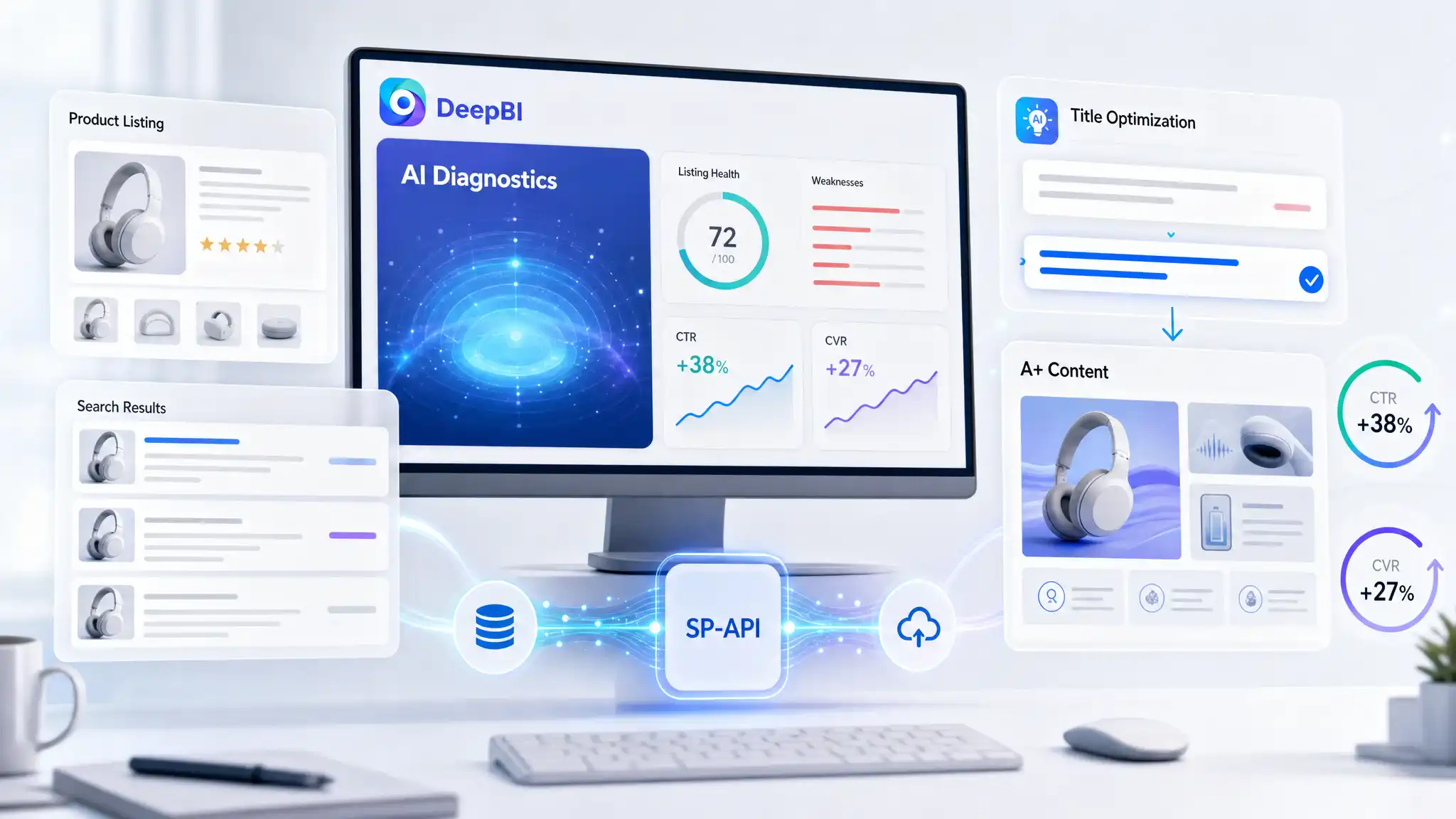
Manually identifying weaknesses in these areas often relies on subjective judgment. DeepBI replaces this guesswork with a data-driven solution. Its intelligent diagnostic tools score your product listing against top competitors, pinpointing specific weak spots in main images, titles, and bullet points that are suppressing your CTR and CVR. Based on this analysis, DeepBI's AI can generate optimized content that can be applied to your listing with a single click via the Amazon SP-API, transforming a time-consuming manual update into a seamless, near-instant process.
 Strategic Campaign Structuring: Building for Scalability and Control
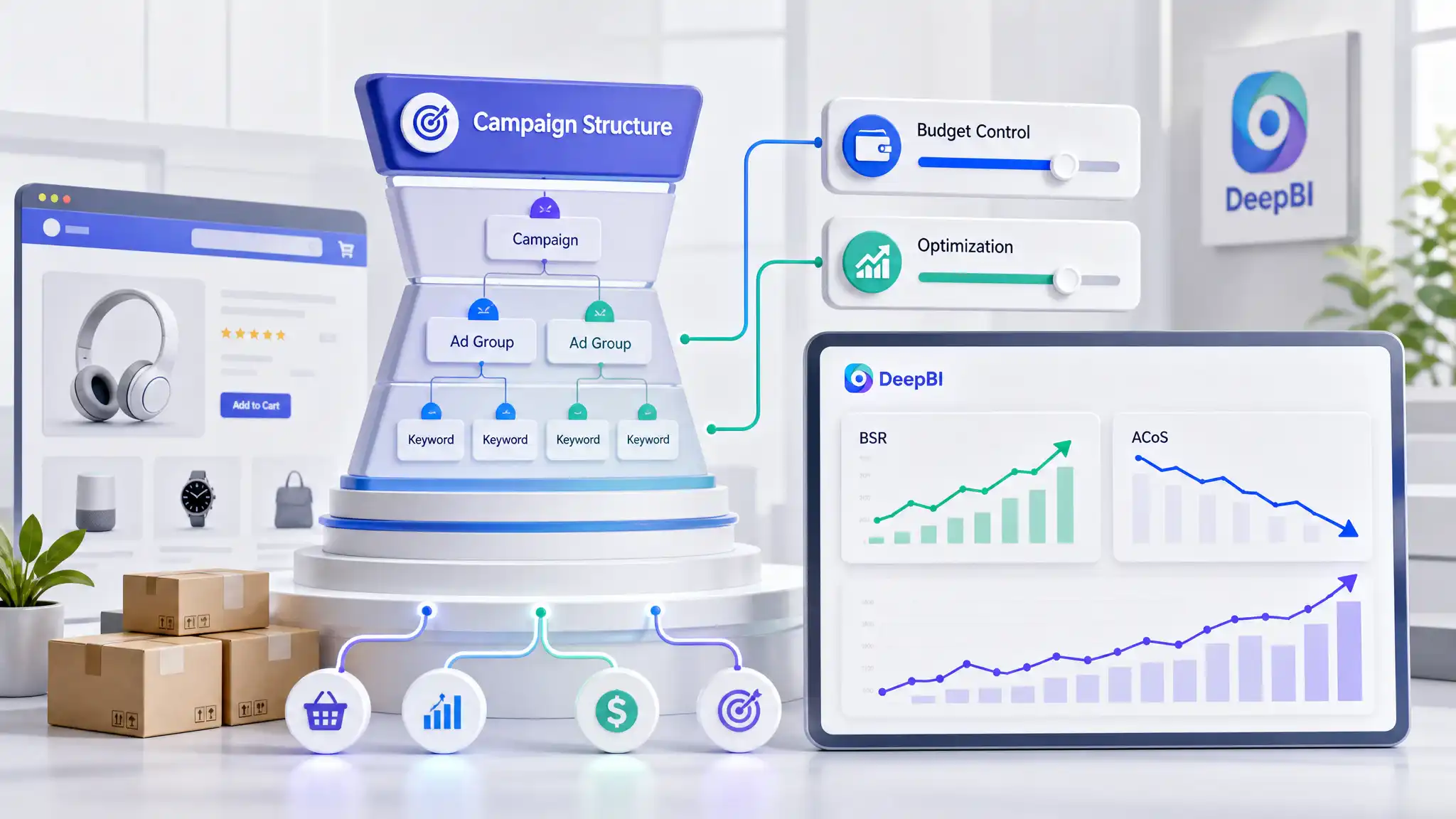
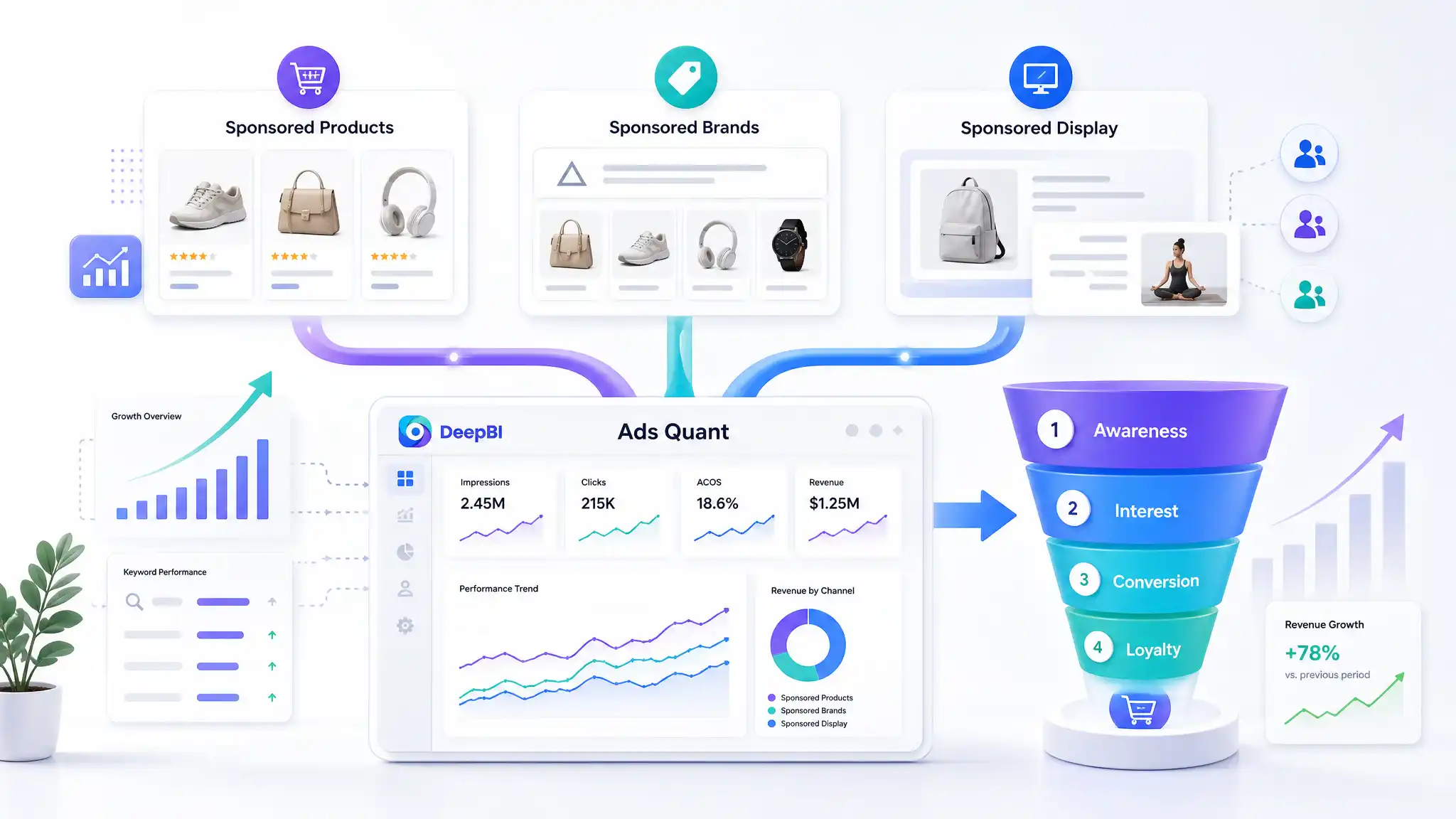
A robust campaign structure is the foundation of scalable and profitable Amazon advertising. The key is to align your campaign types with specific business goals. Sponsored Products (SP) are the workhorse for driving direct sales; for many new sellers, allocating around 80% of the budget here is a sound starting point, though this ratio must adapt to unique market conditions. Sponsored Brands (SB) are crucial for building brand awareness and consideration. While their direct ROAS may be lower, their value in capturing top-of-funnel interest justifies their budget share. Sponsored Display (SD) offers powerful remarketing capabilities to re-engage shoppers and drive repeat purchases, making it a valuable tool for specific lifecycle marketing goals.
Effective structuring balances discovery with precision. Automatic campaigns are essential for harvesting new, high-performing keywords and competitor ASINs. These discoveries are then migrated to manual campaigns, where you can exert precise control using broad, phrase, and exact match types to refine targeting and optimize bids. Grouping campaigns by product category, profitability, or lifecycle stage further enhances control. To manage this complexity, DeepBI's Ads Quant module employs a four-layer traffic funnel model: Explore, Initial Screening, Precision, and Scaling. This system methodically moves from broad traffic acquisition to identifying and scaling high-converting keywords and ASINs, transforming tactical adjustments into a coherent, data-driven growth strategy.
 Budget and Bid Management: Optimizing for ROI and Scale
Effective budget and bid management is the engine of a profitable advertising strategy, directly influencing your return on investment (ROI) and ability to scale. A common mistake is running duplicate campaigns for the same ASIN with identical targeting. This practice is highly inefficient, as it forces your own ads to compete against each other, which splits performance data and makes informed optimization decisions impossible.
A disciplined, data-driven approach is essential. Before making significant adjustments, allow campaigns at least 14 days to accumulate a stable baseline of performance data. Reacting to short-term volatility often leads to poor outcomes. Instead, base your decisions on key metrics like ACoS, ROAS, CVR, and CTR to guide your budget allocation and bidding strategy, whether you are managing it manually or through automation.
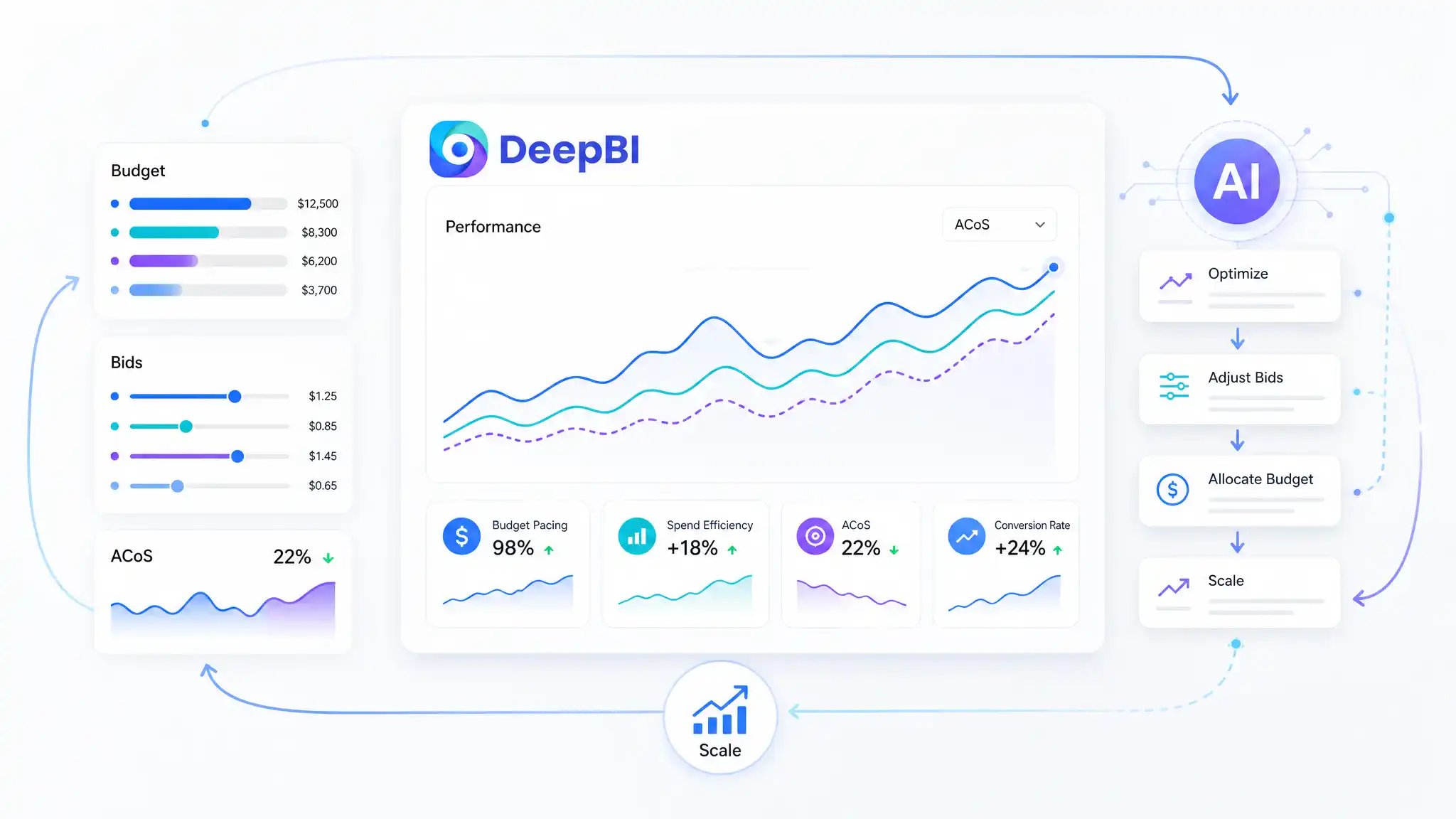
This is where automation provides a critical advantage. DeepBI’s dynamic bid and budget adjustment mechanism automates this discipline. By analyzing the past seven days of performance data—including clicks, conversions, and spend—it makes incremental daily optimizations. This methodology avoids impulsive reactions to daily fluctuations, ensuring your campaigns scale steadily and efficiently while continuously optimizing for your target ACoS.
 Ongoing Optimization and Performance Measurement
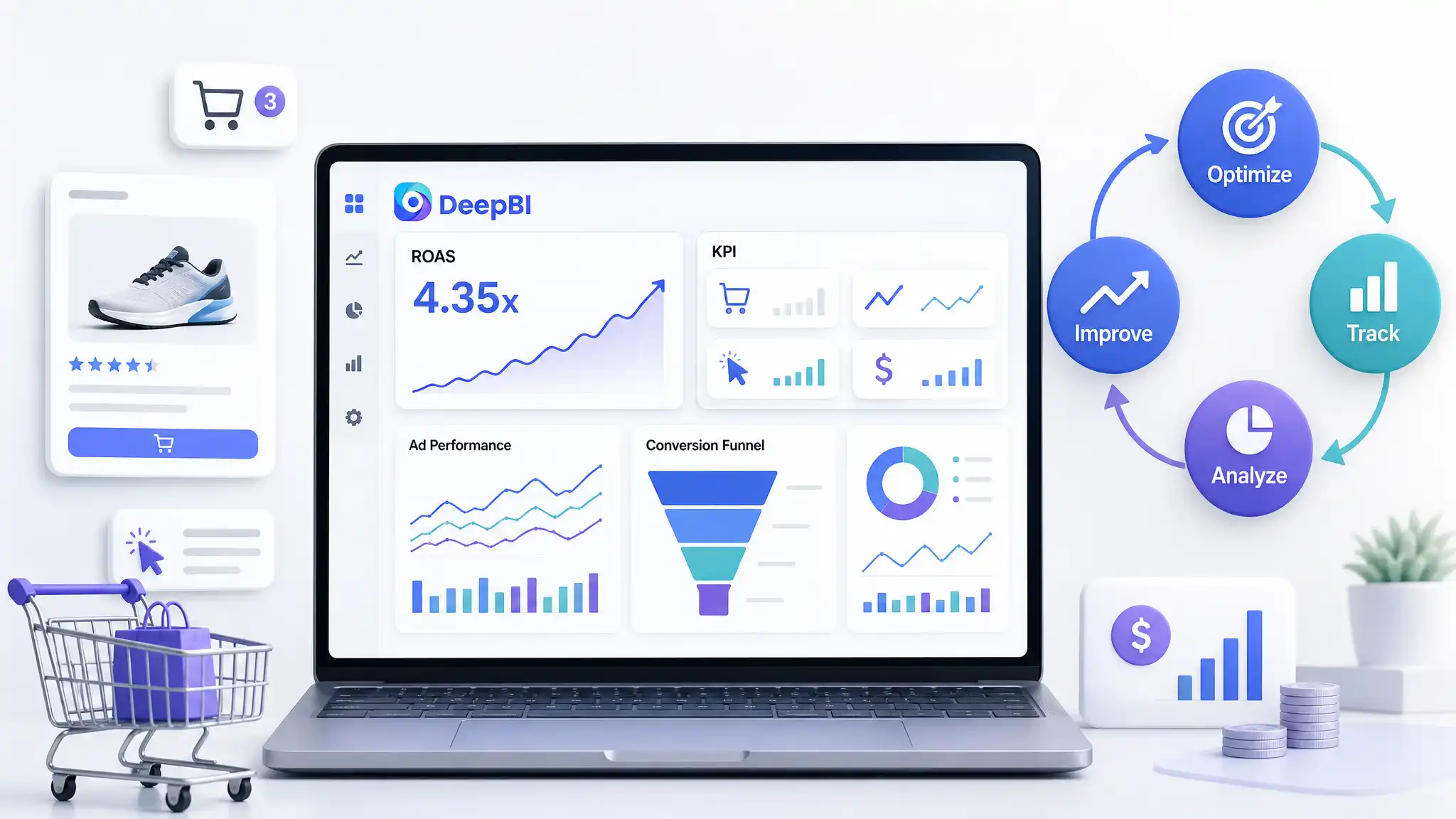
A successful Amazon advertising strategy is not a one-time setup; it is a continuous cycle of analysis, refinement, and improvement. To maximize your return on ad spend (ROAS), you must consistently engage with your campaign data and make strategic adjustments. This iterative process is the key to scaling your advertising efforts profitably.
The core of ongoing optimization involves several key activities:
- Regular Performance Reviews: Systematically analyze campaign reports to identify high-performing keywords, ASINs, and ad placements. This data reveals what's driving conversions and where your budget is most effective.
- Keyword Harvesting: Scrutinize your automatic campaign search term reports to find customer queries that lead to sales. Move these proven terms into manual campaigns as exact or phrase match keywords to gain more control over bidding and improve ACoS.
- Negative Keyword Refinement: Continuously identify and add irrelevant or poor-performing search terms as negative keywords. This simple action prevents wasted ad spend on clicks that are unlikely to convert, directly improving campaign efficiency.
- Ad Placement Adjustments: Analyze performance by placement to determine if your ads perform better at the top of search results, on product pages, or elsewhere. Adjust your placement bids accordingly to increase visibility where it matters most.
Conceptually, this extends to testing different ad creatives and targeting strategies to discover what resonates best with your audience. DeepBI underpins this entire optimization loop by providing comprehensive reporting and actionable insights. The platform allows you to track key performance indicators (KPIs) in detail, making it easier to understand the impact of your strategies and facilitate informed, continuous improvement.
 Leveraging Ads for Organic Growth: The Synergy with DeepBI
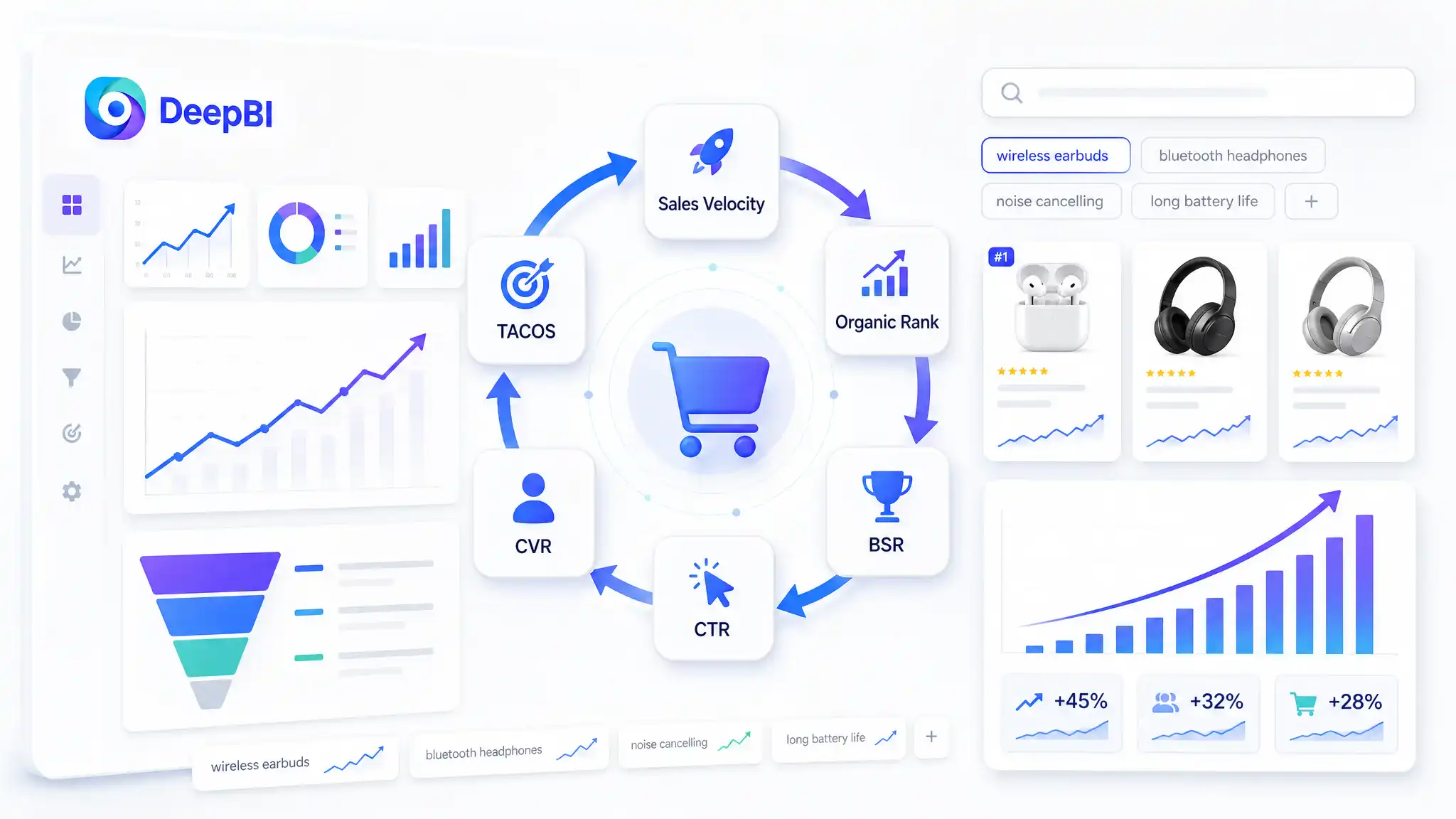
A sophisticated advertising strategy does more than generate immediate sales; it creates a powerful feedback loop that directly enhances your product's organic performance. This synergy is crucial for long-term, profitable growth on Amazon. The core mechanism is sales velocity: successful ad campaigns increase your sales volume, which signals to Amazon's A9 algorithm that your product is relevant and popular, thereby boosting its organic search ranking and Best Seller Rank (BSR).
This process creates a data-rich environment for optimization. High-performing keywords from your ad reports—those with strong Click-Through Rates (CTR) and Conversion Rates (CVR)—are proven winners. By integrating these keywords into your product listing's title, bullet points, and backend search terms, you directly improve its organic relevance for valuable search queries.
The ultimate measure of this synergy is your Total Advertising Cost of Sales (TACOS). As organic sales grow, your reliance on paid traffic diminishes, causing your TACOS to decrease even if your ACoS remains stable. This indicates a healthy, scaling business. DeepBI’s Organic Traffic module is designed to accelerate this cycle. It automatically identifies high-CTR, high-CVR, and high-order-value keywords from ad data to build targeted campaigns aimed at securing "Top of Search" positions. This strategy drives immediate ad volume and strengthens the long-term organic ranking flywheel.
 Conclusion: Sustained Growth Through Structured Optimization
Mastering Amazon advertising is not about finding a single magic bullet, but about building a resilient, intelligent system for growth. A meticulously planned campaign structure is the bedrock of this system. It transforms chaotic performance data into clear, actionable insights, allowing you to move beyond reactive bid adjustments and toward strategic, data-driven decisions. This clarity enables true optimization—systematically refining targeting, allocating budget to the most profitable segments, and scaling what works with confidence.
However, a solid structure alone is not enough in today's dynamic marketplace. The most successful sellers amplify their strategic framework with advanced tools. By automating complex data analysis and surfacing high-impact optimization opportunities, platforms like DeepBI empower you to execute sophisticated strategies with precision and speed. This ensures your campaigns continuously adapt to market shifts and consumer behavior.
Ultimately, the synthesis of a logical campaign architecture, a commitment to ongoing optimization, and the leverage of powerful technology creates a formidable competitive advantage. This integrated approach is your blueprint not just for short-term sales boosts, but for achieving sustained profitability, defending your market share, and building a dominant brand on Amazon for years to come.
Continuous optimization remains essential because Amazon rankings, shopper expectations, and competitive pressure keep changing.