Introduction: The Frustration of Unconverted Traffic
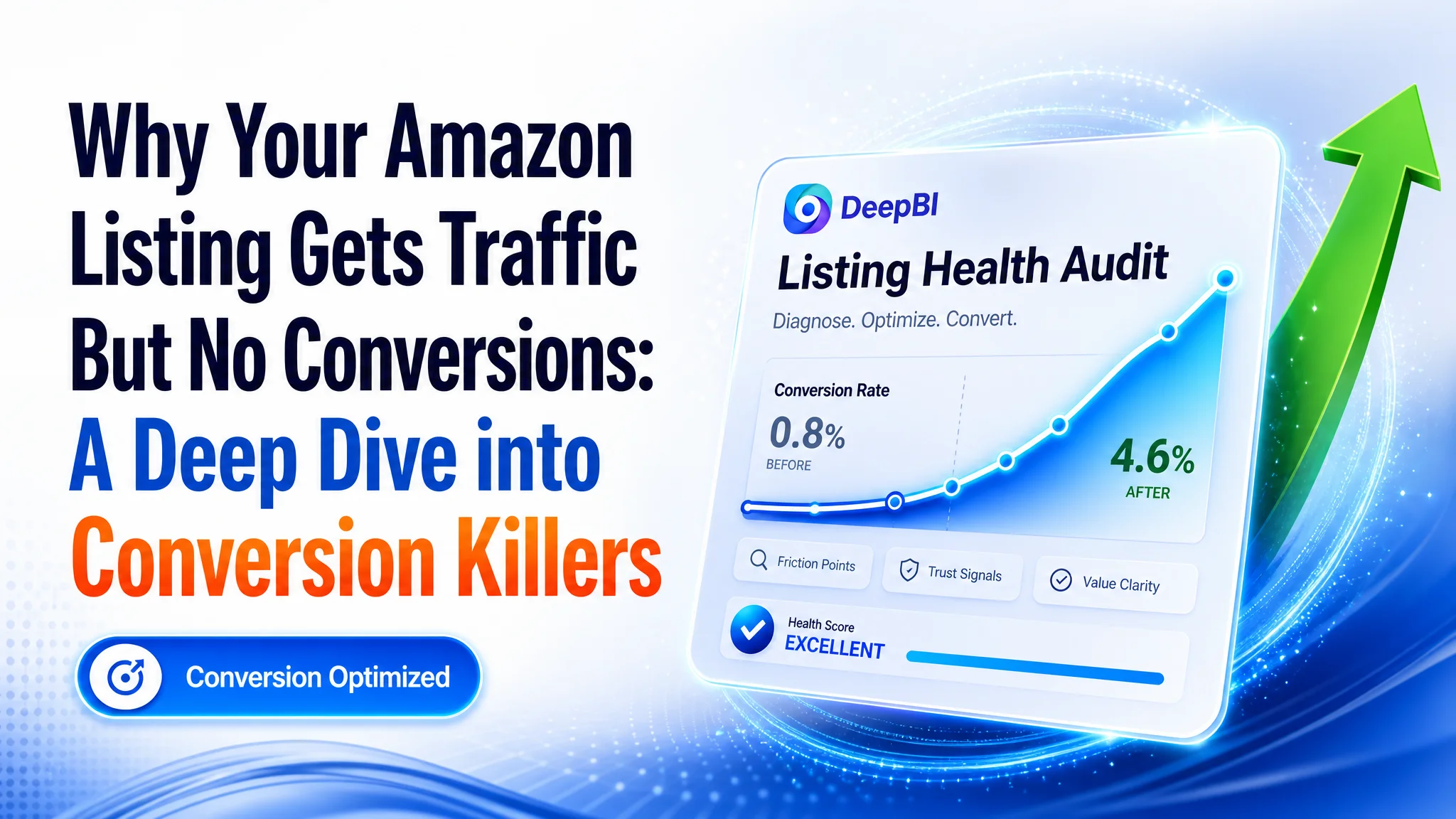
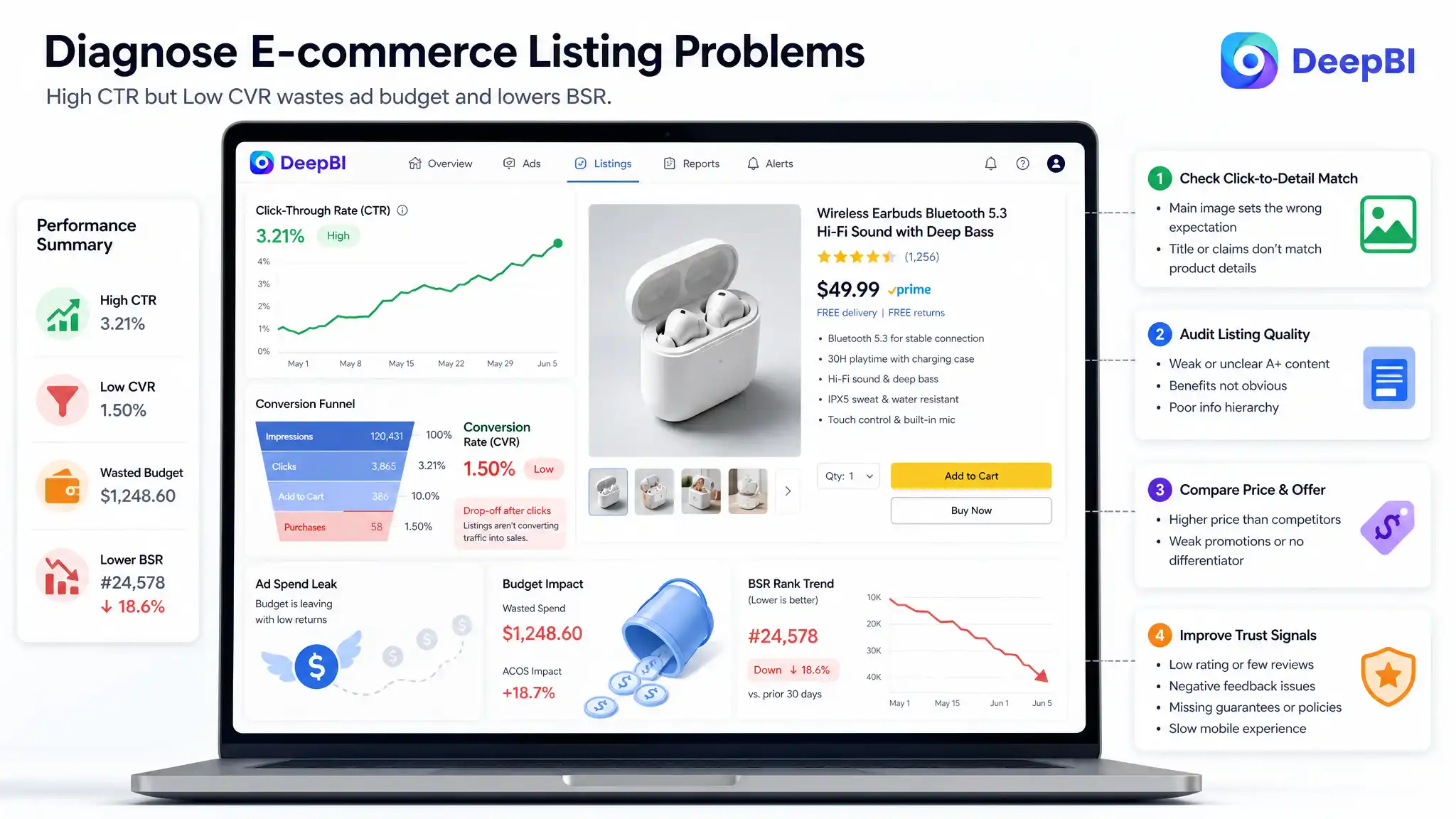
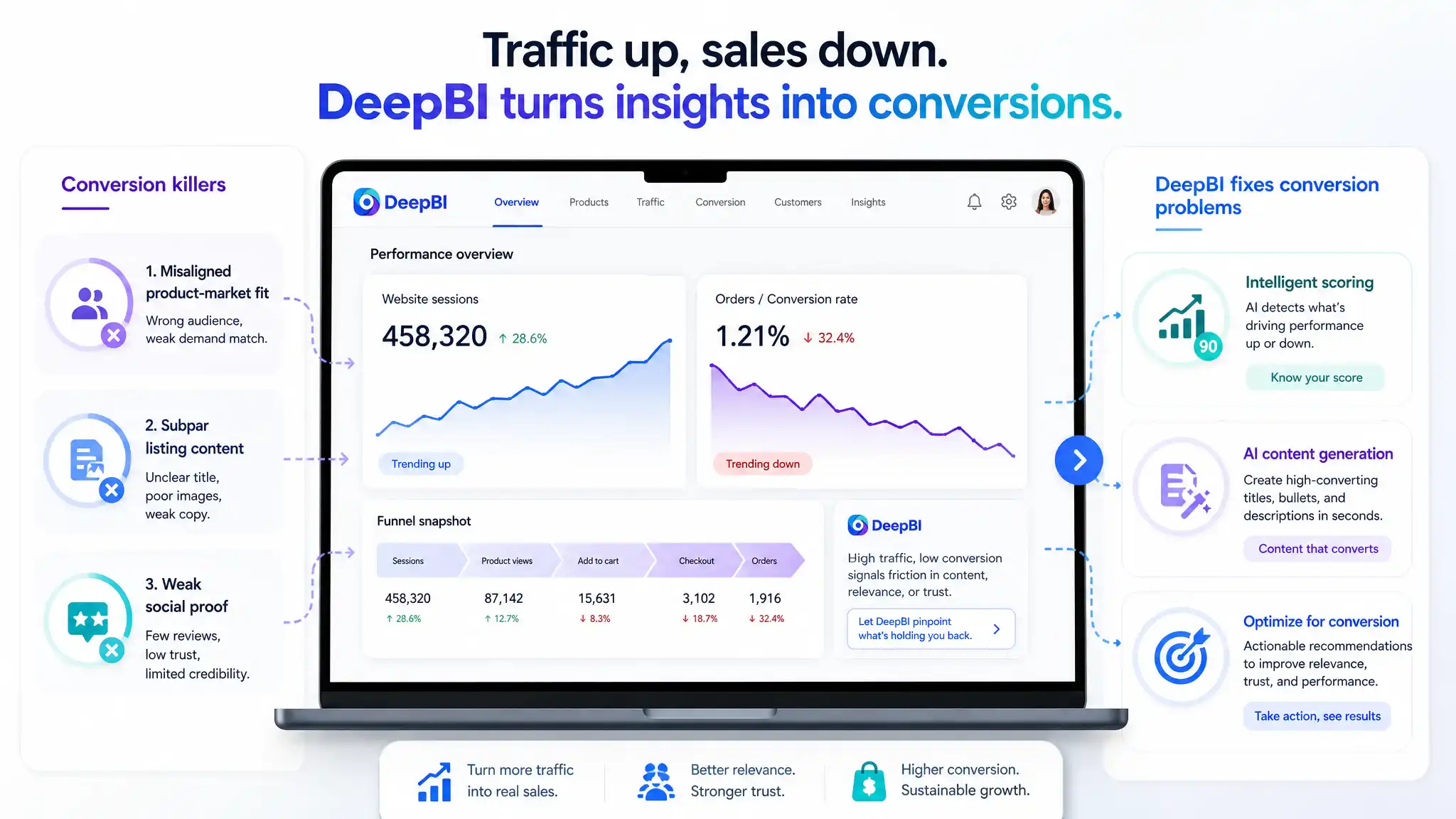
Are you pouring money into Amazon ads, achieving a high click-through rate (CTR), only to see your sales figures flatline? It’s one of the most common and frustrating scenarios for sellers: you’ve successfully captured a shopper's attention, but the moment they land on your product detail page, the interest evaporates. Your ad spend is high, but your conversion rate (CVR) is poor, leaving you with wasted budget and stagnant inventory. This isn't just a missed sale; it's a negative signal to Amazon's algorithm.
Getting shoppers to your page is a crucial first step, but it's only half the journey. Amazon's platform is fundamentally a conversion engine. It prioritizes and rewards products that sell, not just those that attract views. A listing with a high CTR but a low CVR tells the algorithm that your product doesn't meet customer expectations, suggesting a mismatch between what your main image or title promises and what the detail page delivers. Over time, this can damage your organic ranking and Best Seller Rank (BSR), making it even harder to compete.
The problem often lies hidden in plain sight within your product listing itself. The function of visual assets, for example, has evolved from mere 'aesthetic display' to a 'core commercial engine' that must drive conversions, not just initial clicks. This guide will dissect the most common conversion killers that plague Amazon listings. We will provide a data-driven framework to diagnose why your traffic isn't converting and offer actionable strategies to fix these issues, turning your product page into a powerful sales tool.
 The Amazon Flywheel: Traffic Without Conversion Breaks the Cycle
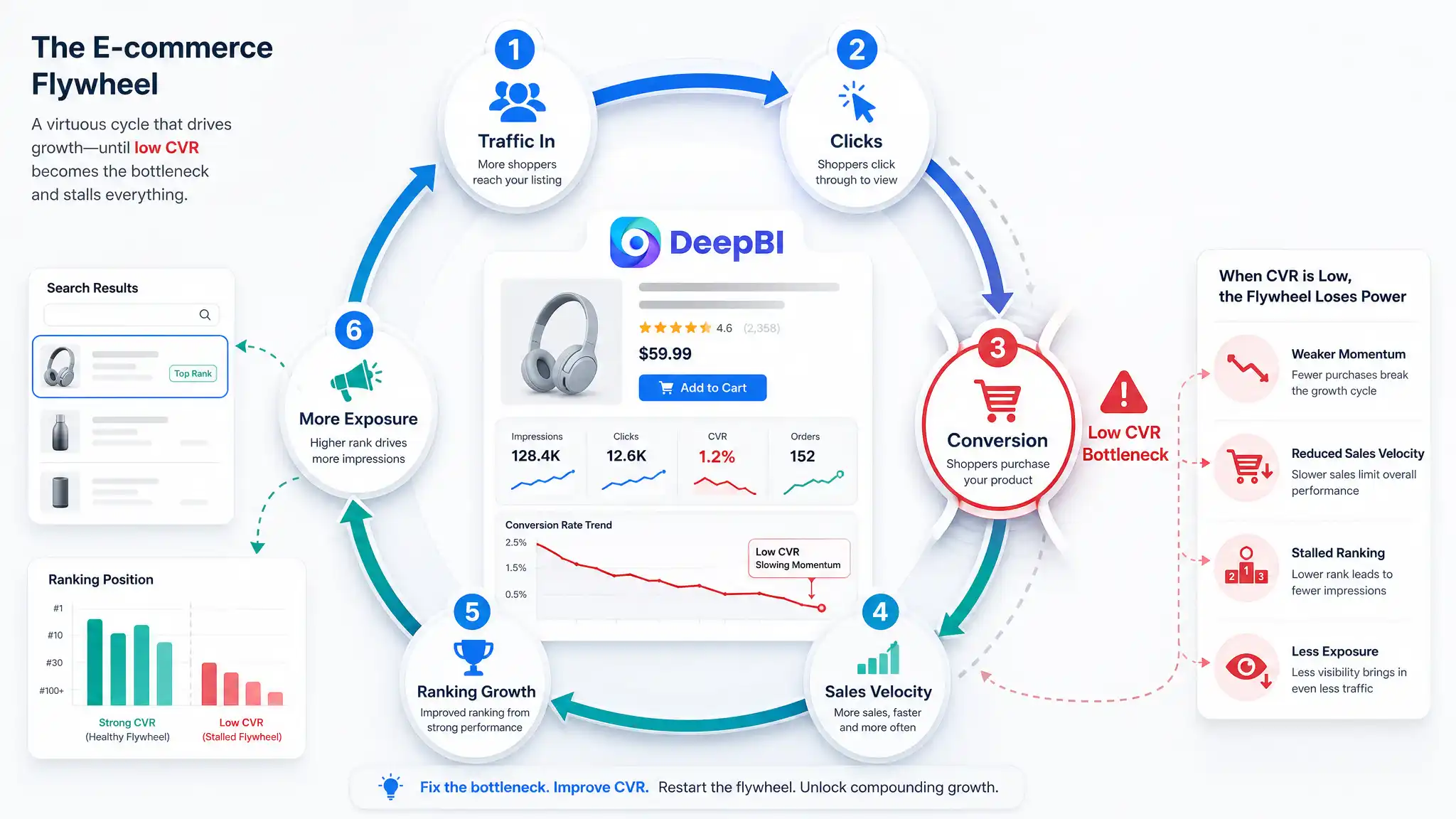
Success on Amazon isn't about a single metric; it's about building momentum. This is the core principle of the Amazon Flywheel, a self-reinforcing cycle that drives organic growth. It works like this: increased visibility leads to more clicks. Clicks that convert into purchases improve your sales velocity and generate reviews. Amazon's algorithm sees these positive signals and rewards your listing with a higher organic ranking, which in turn grants you even more visibility. The cycle then repeats, gaining speed with each rotation.
But what happens when you get the clicks but not the sales? This is where the flywheel grinds to a halt. The critical link between 'Clicks' and 'Purchases' is your Conversion Rate (CVR). A low CVR acts as a major bottleneck. You're successfully attracting shoppers to your page but failing to convince them to buy. To Amazon's algorithm, this is a clear signal that your product or listing is not meeting customer expectations. You are essentially wasting the high-quality traffic Amazon sent your way.
This wasted traffic does more than just stall your growth; it actively damages your ranking potential. A listing that attracts clicks but fails to convert is seen as a poor result for customers. Consequently, Amazon will begin to de-prioritize it in search results, pushing you further down the page and feeding the flywheel of a competitor who is converting that traffic. Before you can fix your sales, you must first understand why your traffic isn't converting.
 Core Conversion Killers: Diagnosing Your Listing's Weaknesses
High traffic with low sales often points to fundamental issues within your listing or strategy. Identifying these conversion killers is the first step toward recovery. By systematically auditing each component, you can pinpoint the exact friction points that are costing you revenue.
Misaligned Product-Market Fit and Value Proposition
Are you attracting the right audience? If your keywords are too broad, you might be paying for clicks from shoppers who were never going to buy. Your product might also be uncompetitive, or its unique selling points (USPs) are buried in a list of features instead of being presented as clear benefits. To diagnose this, you need to see how you stack up. DeepBI's intelligent scoring acts as an automated market health check, benchmarking your ASIN against top competitors to reveal critical gaps in your product positioning and value proposition.
Subpar Listing Content: The Visual and Textual Barriers
First impressions are everything. Poor-quality main images, a lack of lifestyle shots, or a failure to visually highlight key features will stop a buyer's journey cold. Similarly, titles and bullet points stuffed with keywords but lacking clear, persuasive benefits harm readability and CVR. Your A+ Content must tell a compelling story, not just display more specs. DeepBI’s AI-powered generation creates optimized visuals and text. It uses a "Product DNA" map as a hard constraint, ensuring all AI-generated images are authentic to the product and avoid the "product-image mismatch" that leads to negative reviews.
Unconvincing Social Proof: Reviews and Ratings
Modern shoppers rely on social proof to make purchase decisions. A low review count, a poor average star rating, or a series of prominent negative reviews can instantly destroy buyer trust. This psychological barrier is powerful; without sufficient positive validation from other customers, even a perfectly optimized listing will struggle to convert. Analyzing the quantity and sentiment of reviews is crucial for understanding how shoppers perceive your product's credibility.
Pricing and Offer Incompetitiveness
Is your product priced appropriately for its perceived value? Shoppers are constantly comparing. If your price is significantly higher than competitors' without a clear justification (like superior features or branding), buyers will choose the alternative. Likewise, the absence of compelling offers, such as coupons or bundles, can make your listing less attractive. A competitive pricing strategy isn't just about being the cheapest; it's about aligning price with the value you deliver.
Technical Listing Health and Backend Optimization
Some of the most damaging issues are invisible to the customer. Placing your product in the wrong category can hide it from relevant shoppers, while incomplete or poorly chosen backend keywords limit your discoverability in Amazon's search results. Ensuring all technical fields are complete and accurate is foundational. These backend elements are critical for telling Amazon's algorithm exactly what your product is and who it's for, ensuring your hard-earned traffic is qualified and relevant.
 Bridging the Gap: Turning Traffic into Sales with DeepBI
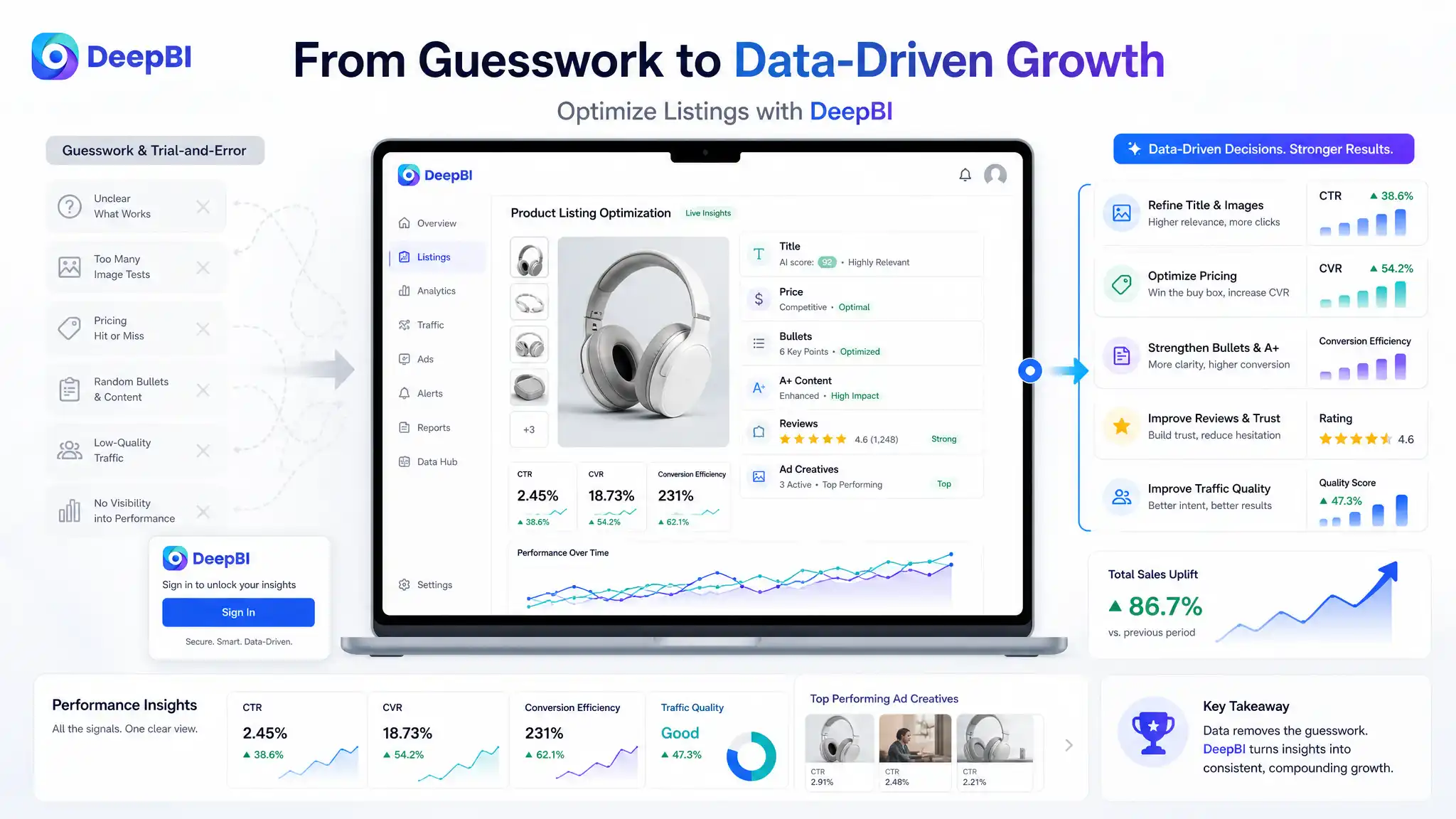
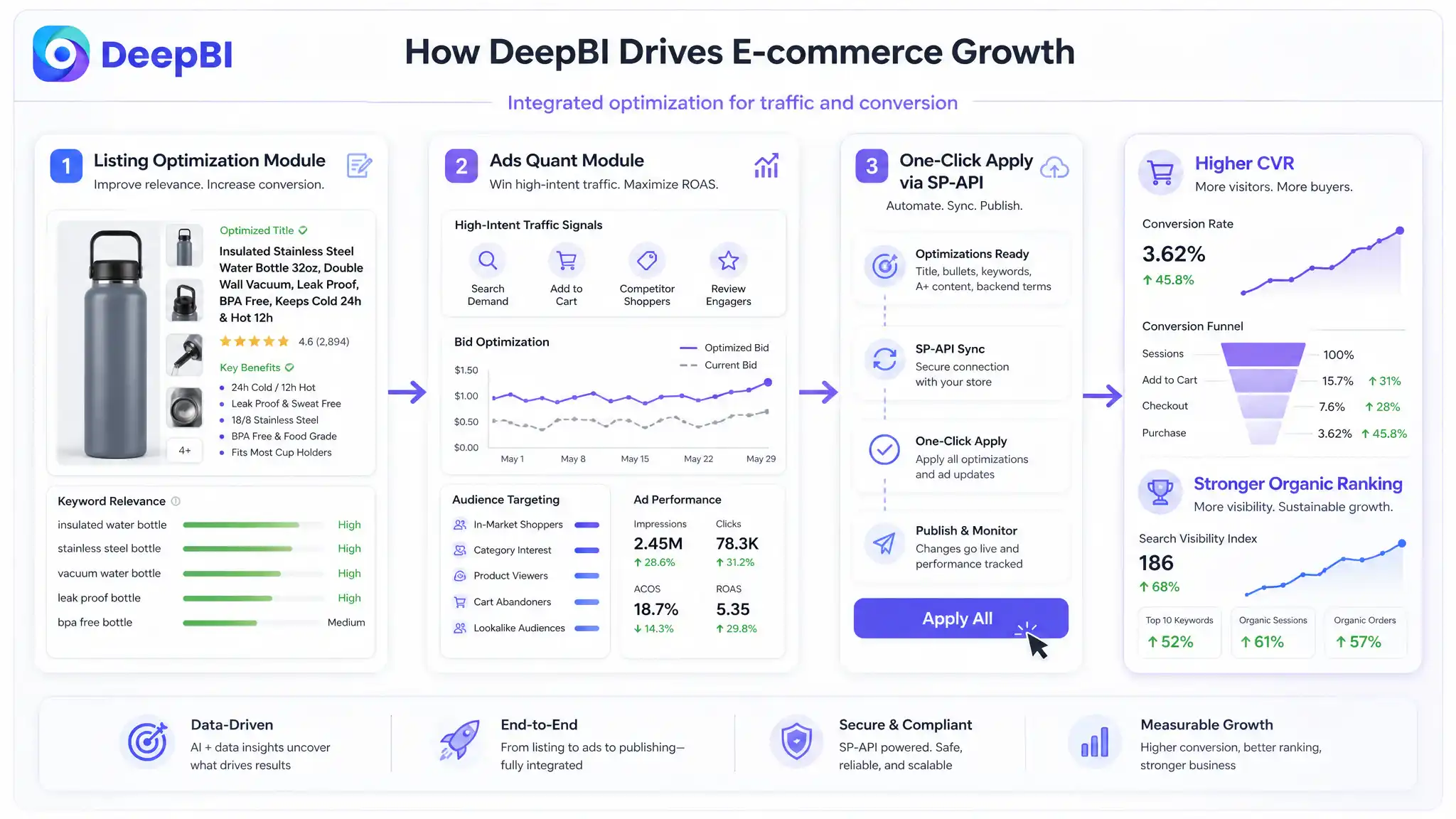
High traffic with low sales indicates a fundamental disconnect between what shoppers expect and what your listing delivers. DeepBI bridges this gap by transforming your operations from siloed tasks into an integrated, end-to-end optimization system. It starts with the Listing Optimization Module, which conducts a data-driven audit of your content against top competitors. Instead of offering vague advice like "improve texture," DeepBI generates precise, actionable strategies with specific parameters for composition, lighting, and selling points, ensuring your listing is engineered to convert from the ground up.
A perfectly optimized listing still needs the right audience. This is where the Ads Quant Module aligns your advertising efforts with your conversion goals. It ensures your campaigns target high-intent keywords and ASINs, driving relevant traffic that is far more likely to convert. This synergy is crucial: when qualified traffic lands on a compelling, optimized page, your Conversion Rate (CVR) naturally increases. This improved CVR signals to Amazon's algorithm that your product is a strong choice, which the Organic Traffic Module leverages to boost your organic rankings, creating a virtuous cycle of growth.
Finally, DeepBI eliminates the friction of implementation. The system’s multi-agent collaboration delivers a prioritized action plan, and the "One-Click Apply" feature uses the official SP-API to seamlessly synchronize your optimized text and visuals to your listing backend. This removes risky manual uploads, allowing you to deploy conversion-boosting changes in seconds and track their direct impact on KPIs like Click-Through Rate (CTR).
 Conclusion: The Path to Conversion-Driven Growth
Driving traffic to your Amazon listing is a significant achievement, but it's only half the journey. Without conversions, that traffic represents wasted ad spend and missed opportunities. As we've explored, the most common conversion killers—from unpersuasive images and weak copy to negative social proof—often stem from a disconnected and subjective optimization process. Relying on "gut feelings" leaves profit on the table and makes it impossible to know what truly works.
The path to sustainable growth requires a holistic, data-driven strategy where every element of your listing is engineered to convert. This is where the paradigm shifts from guesswork to calculated optimization. Integrated tools like DeepBI empower sellers to break free from traditional, inefficient workflows. By directly linking visual and copy enhancements to performance data like CTR and CVR, you can finally measure the true impact of your changes and build a listing that systematically turns shoppers into buyers.
Ultimately, long-term success on Amazon is not a game of traffic volume but of conversion efficiency. By adopting an integrated approach that harmonizes every component of your product detail page, you create a powerful and reliable engine for profitability. Stop treating traffic and conversion as separate goals and start building a unified, data-informed system that maximizes the value of every single click.