The Core Problem: Clicks Without Conversions
Your Amazon Ads are working. You see a healthy Click-Through Rate (CTR), and your ad spend is climbing. But there's a critical disconnect: the sales aren't following. This frustrating scenario, where ad spend is high but conversions are poor, leads to a dangerously high Advertising Cost of Sale (ACoS) and drains your marketing budget with little to show for it.
The immediate instinct for many sellers is to blame the ad campaign itself—tinkering with bids, overhauling keyword targeting, or questioning audience segments. While ad optimization is crucial, it's often a misdiagnosis of the core issue.
Here is the fundamental truth: if your ads are successfully delivering qualified traffic to your page, their primary job is done. The problem isn’t your bids; it’s your listing.
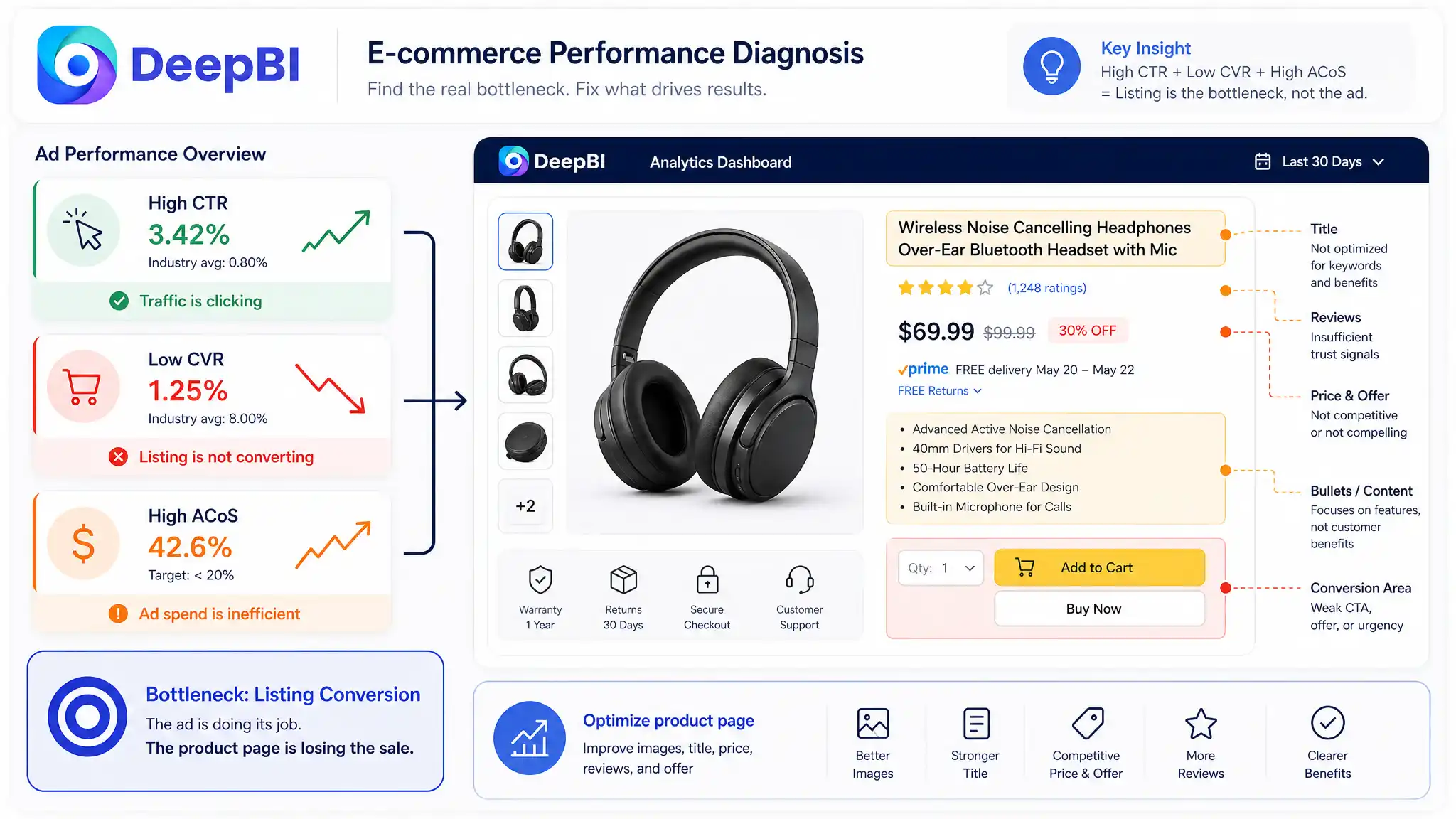
Your product detail page is the final, decisive battleground for the sale. This is where your Conversion Rate (CVR)—the percentage of visitors who complete a purchase—is won or lost. A high CTR paired with a low CVR is the classic symptom of a listing that fails to persuade, inform, and convert interested shoppers into paying customers. The bottleneck isn't getting people to the door; it's what happens once they're inside.
 Diagnosing the Conversion Bottleneck: Beyond Ad Metrics
When your ads generate a high Click-Through Rate (CTR) but your sales remain stagnant, you're facing a classic conversion bottleneck. This pattern is a clear signal that your ad campaigns are working—they successfully attract shopper attention—but your product detail page is failing to persuade them to buy. While a rising Advertising Cost of Sales (ACoS) confirms the financial drain, the most critical diagnostic pair is CTR versus Conversion Rate (CVR). A strong CTR proves your ad creative and targeting are relevant; a low CVR indicates the problem lies squarely with the listing itself.
The challenge then shifts from attracting traffic to understanding why that traffic doesn't convert. Is it weak imagery, unconvincing copy, confusing pricing, or negative social proof in the reviews? Traditionally, sellers have relied on subjective judgment and manual competitor analysis to guess the root cause, a process often disconnected from real performance data. This guesswork is inefficient and risks wasting resources on optimizations that don't address the core issue.
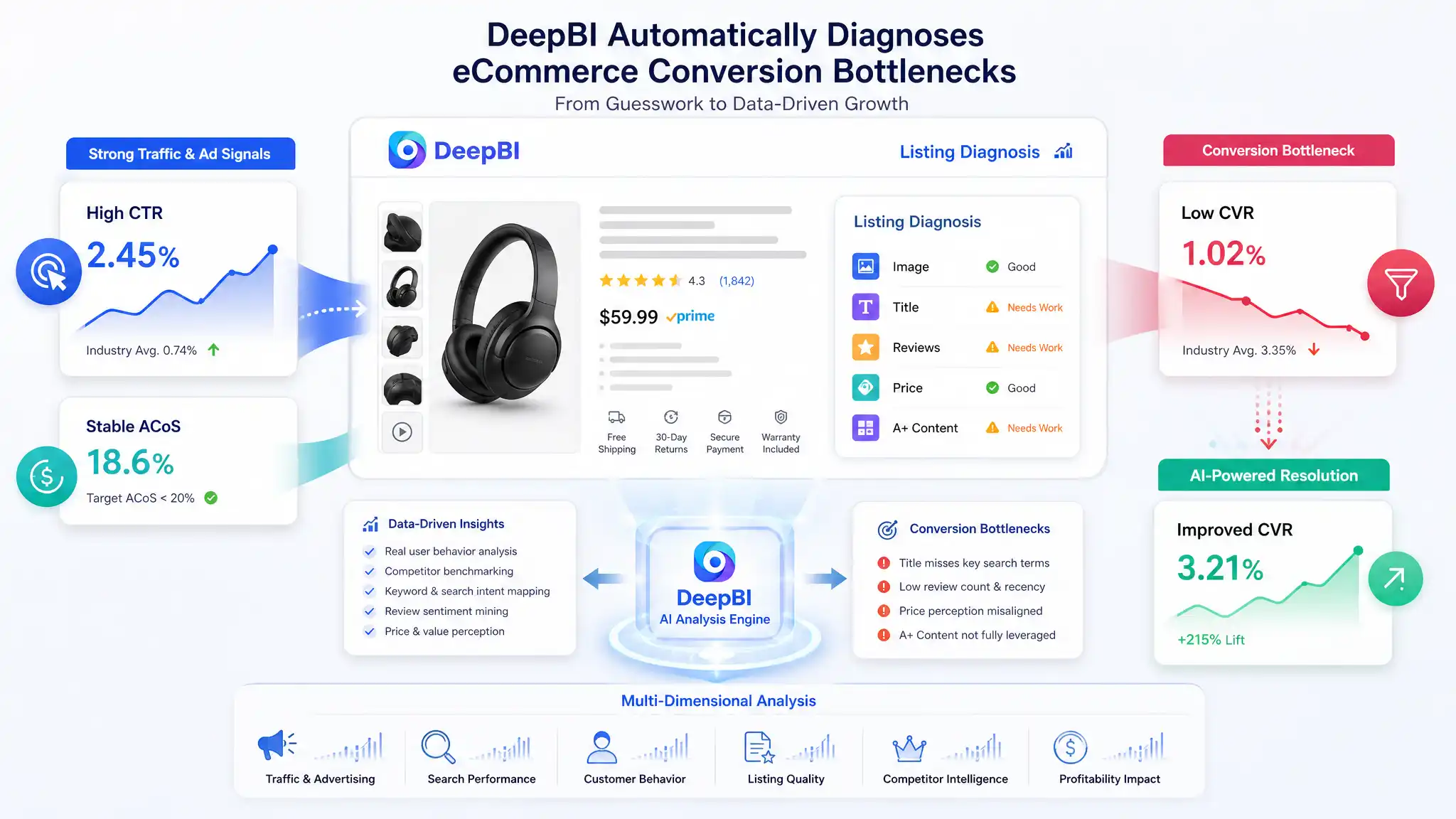
This is where automated analysis provides a decisive advantage. Instead of relying on intuition, a platform like DeepBI acts as an "automated market health check system" for your listings. It moves beyond surface-level metrics to perform a multi-dimensional diagnosis, systematically analyzing your listing's components against top competitors and market benchmarks. By identifying the specific elements suppressing your CVR, this data-driven approach transforms diagnosis from a guessing game into a strategic, evidence-based process.
 The Listing Quality Imperative: Your Product's Digital Storefront
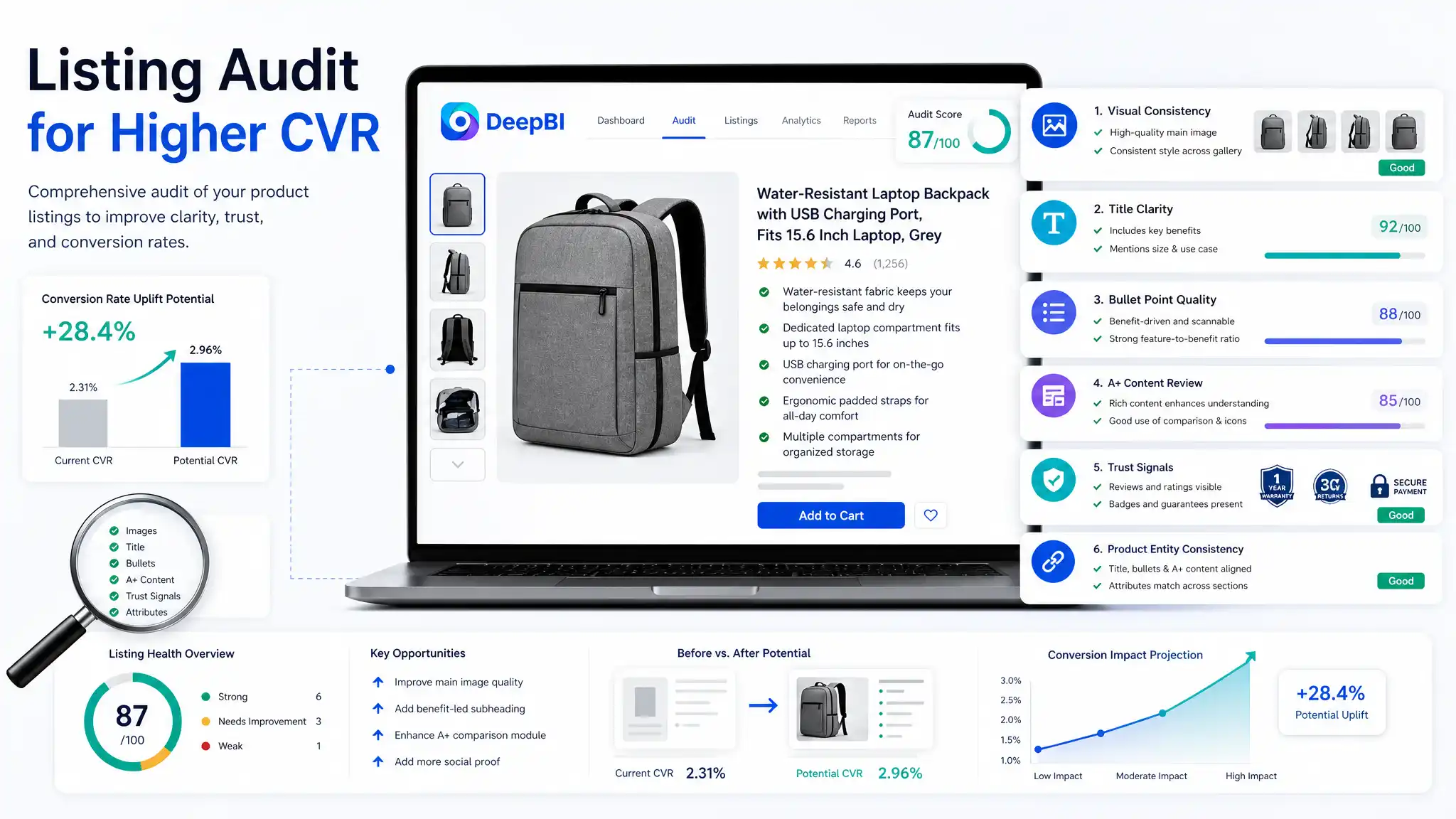
Your product detail page is the final, critical step in the sales funnel. High ad CTR means nothing if this digital storefront fails to convert. A comprehensive listing audit should quantitatively score every element, from visuals to text and social proof, to identify the precise points of failure.
The main image is your primary hook. It must be high-quality and compliant, but authenticity is the highest principle. Using general AI tools for image creation risks 'AI hallucinations' that alter your product's material or design. This 'image-product mismatch' is a direct path to destructive negative reviews and a plummeting CVR. A professional visual system must enforce 'product entity consistency' as a non-negotiable rule.
Your title and bullet points must work in tandem. The title drives discoverability with relevant keywords, while the bullets convert interest into desire by highlighting benefits that solve customer problems. A+ Content deepens this connection through brand storytelling and rich visuals, justifying your price point.
Finally, trust signals seal the deal. The impact of star ratings is profound; a jump from 3.5 to 4.5 stars can dramatically increase CVR. This social proof, combined with a competitive pricing strategy that aligns with perceived value, validates the customer's decision to click 'Add to Cart'.
 Prioritizing Fixes: Stop the Bleeding, Then Optimize Systematically
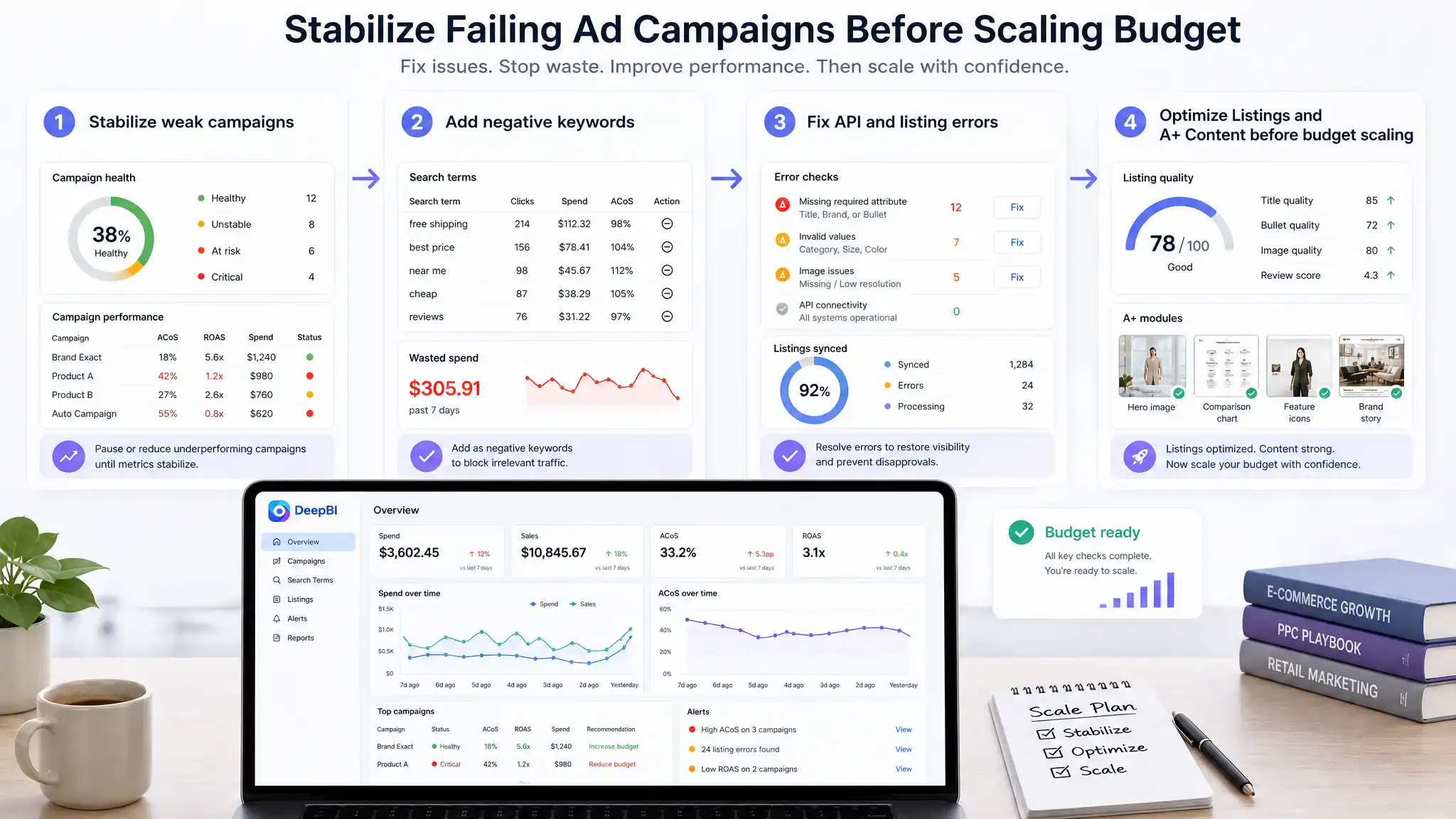
When your ad campaigns are bleeding cash, the immediate priority is triage, not a complete overhaul. A structured, impact-based approach ensures you stop wasting money before you start investing in growth. This process unfolds in two distinct phases: immediate stabilization followed by systematic optimization.
First, stop the bleeding. During the initial week, focus on quick, high-impact fixes that have an immediate effect on your ad spend efficiency. The primary action is to aggressively audit your search term reports and add irrelevant queries as negative keywords. This instantly stops your budget from being spent on clicks that will never convert. Concurrently, perform a rapid review of your product detail page to correct any glaring, conversion-killing errors, such as a misleading primary image, an inaccurate title, or broken bullet points.
Once the major leaks are plugged, you can shift to systematic optimization over the next few weeks. This involves a deeper, more comprehensive enhancement of your listing's core components—upgrading all product images, rewriting persuasive copy, and building out informative A+ Content. It is critical that these listing improvements precede any significant scaling of your ad budget. Driving more traffic to an unoptimized listing only magnifies the conversion problem. Using integrated tools that can sync these updates directly to your listing via API transforms this process, reducing manual upload operations that once took over 30 minutes down to mere seconds.
 Optimizing Amazon Ads for Conversion, Not Just Clicks
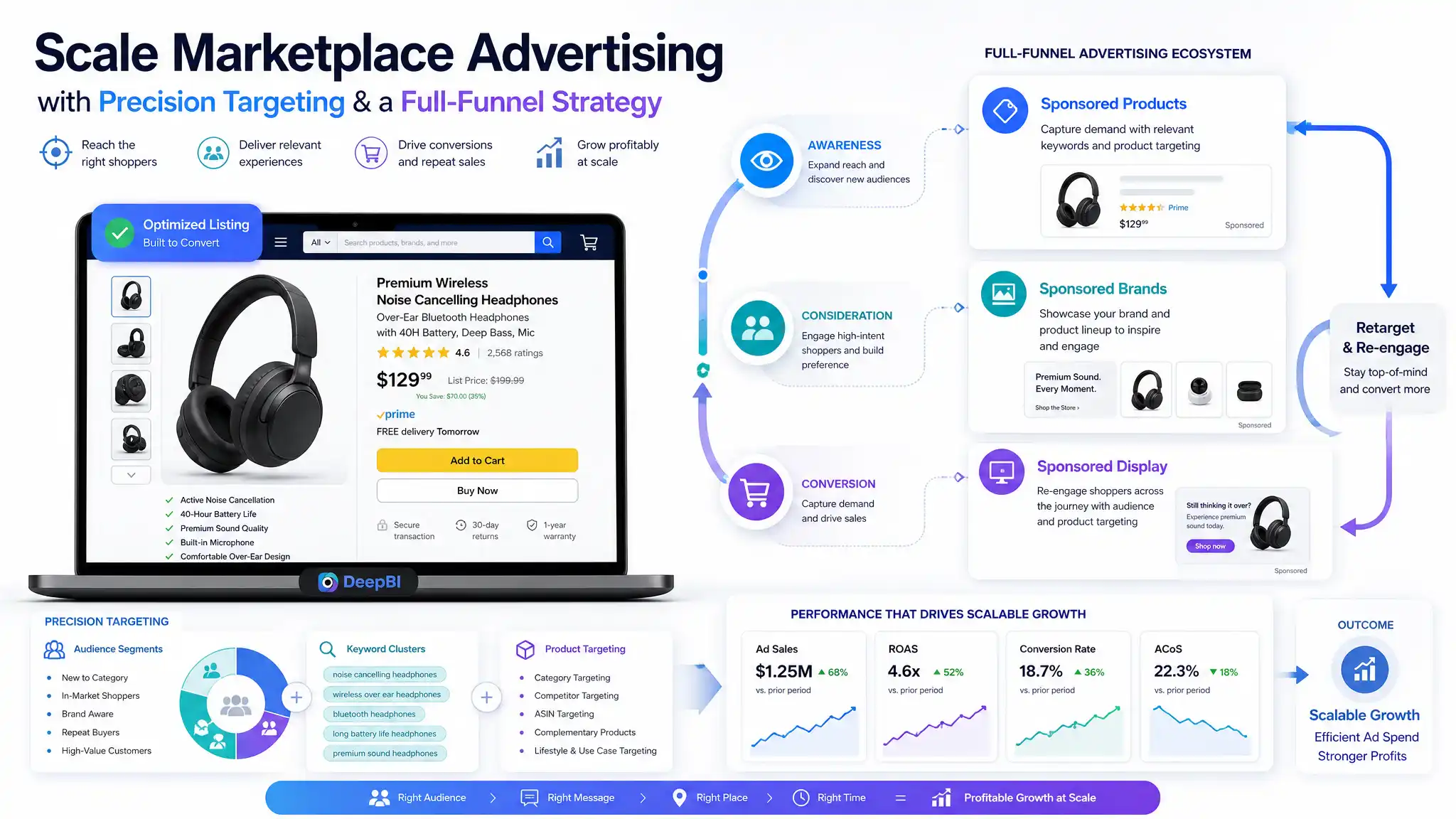
Once your product listing is fully optimized for conversion, the next frontier is refining your advertising strategy to drive high-quality traffic. A high-converting listing fundamentally improves the ROI of your ad spend; every click you pay for is more likely to result in a sale, directly lowering your Advertising Cost of Sale (ACoS) and increasing profitability. Without a solid listing foundation, even the most sophisticated ad campaign will leak money.
The goal is to shift from 'groping in the dark' with broad-match keywords to 'precision targeting' with high-intent phrases that attract ready-to-buy shoppers. This involves filtering out low-quality traffic and focusing your budget on keywords with a proven history of conversion. Your bid management must also evolve from a static to a dynamic strategy. Instead of just winning impressions, the aim is to win the clicks that convert, constantly adjusting bids based on performance data to maximize sales within your target ACoS.
Leveraging a mix of ad types creates a full-funnel approach. Sponsored Products are ideal for capturing bottom-of-funnel demand, while Sponsored Brands build awareness and Sponsored Display can retarget shoppers who have shown interest. This synergy—a conversion-ready listing powered by a precisely targeted ad campaign—is what transforms ad spend from an expense into a powerful engine for scalable growth.
 The Evolving Amazon Ads Landscape: Current Challenges and Future Trends
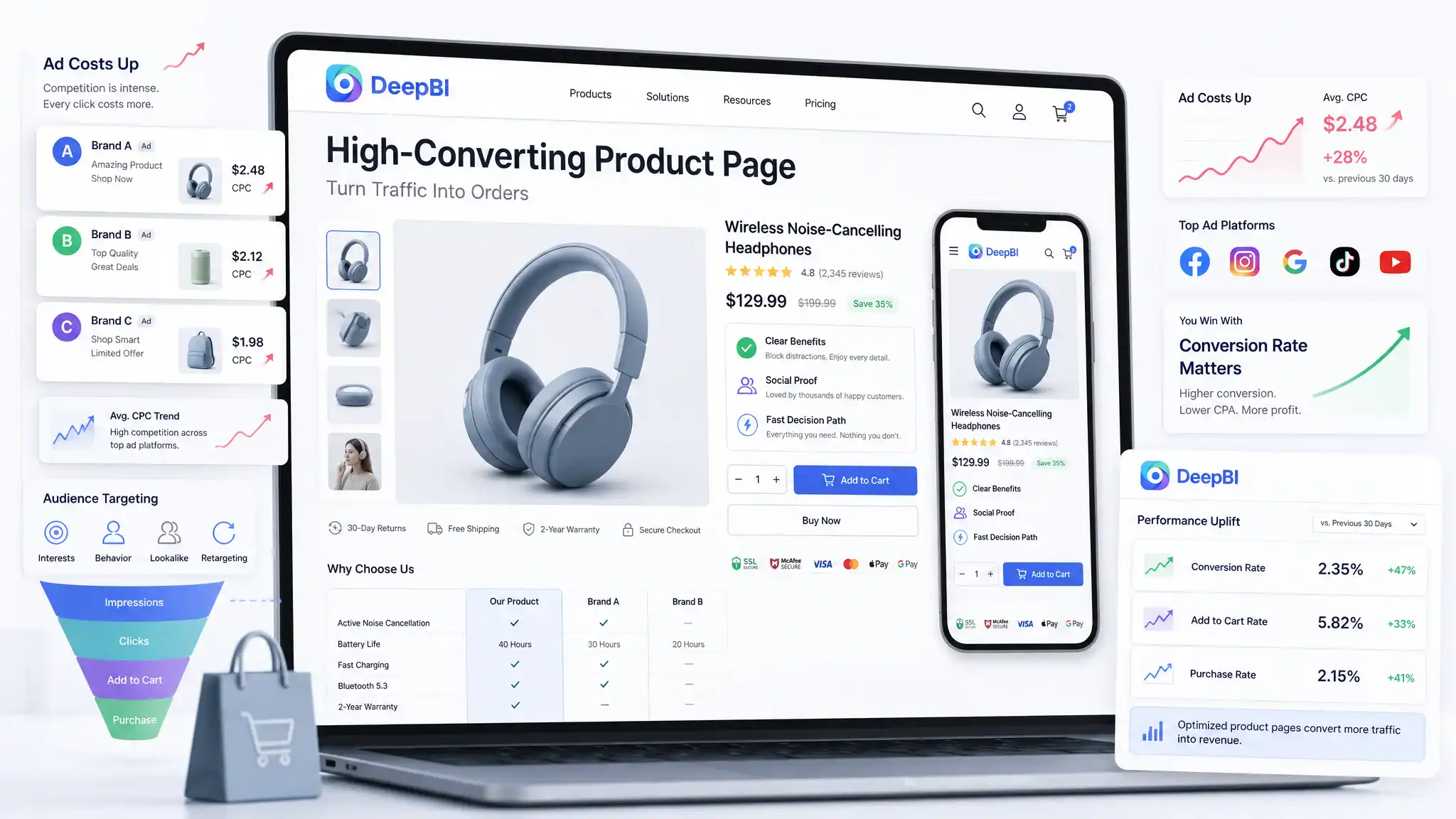
The days of simply driving traffic to a basic Amazon listing and expecting sales are over. The platform's advertising ecosystem is more competitive and sophisticated than ever, creating a new set of challenges that directly impact your profitability. Several key trends are converging, making a high-converting product detail page not just an advantage, but a necessity for survival.
- Rising Ad Costs: As more sellers flood the marketplace, competition for visibility intensifies. This directly drives up the cost-per-click (CPC) for sponsored ads. When each click costs more, a low conversion rate (CVR) becomes financially unsustainable, leading to a dangerously high Advertising Cost of Sale (ACoS) that erodes your margins. Every click must be maximized.
- Smarter Ranking Algorithms: Amazon's search algorithms are continuously refined to prioritize the best possible customer experience. They interpret a high CVR as a strong signal that your product and listing meet customer expectations. Consequently, listings that convert well are rewarded with better organic visibility, while poor converters are penalized, wasting ad spend.
- The Shift to Mobile-First Shopping: A majority of Amazon shoppers now browse and buy on their mobile devices. Listings that aren't optimized for small screens—with cluttered images, unreadable text, or long titles—create friction and cause potential buyers to abandon the page. A seamless mobile journey is essential for protecting your CVR.
- The Content Arms Race: Your competitors are investing heavily in professional lifestyle imagery, compelling video, and detailed A+ Content. This raises the bar for everyone, shaping customer expectations. A listing that fails to meet this new standard appears less trustworthy, directly hurting its ability to convert clicks into sales.
 The Long-Term Play: Sustained Growth Through Organic Traffic
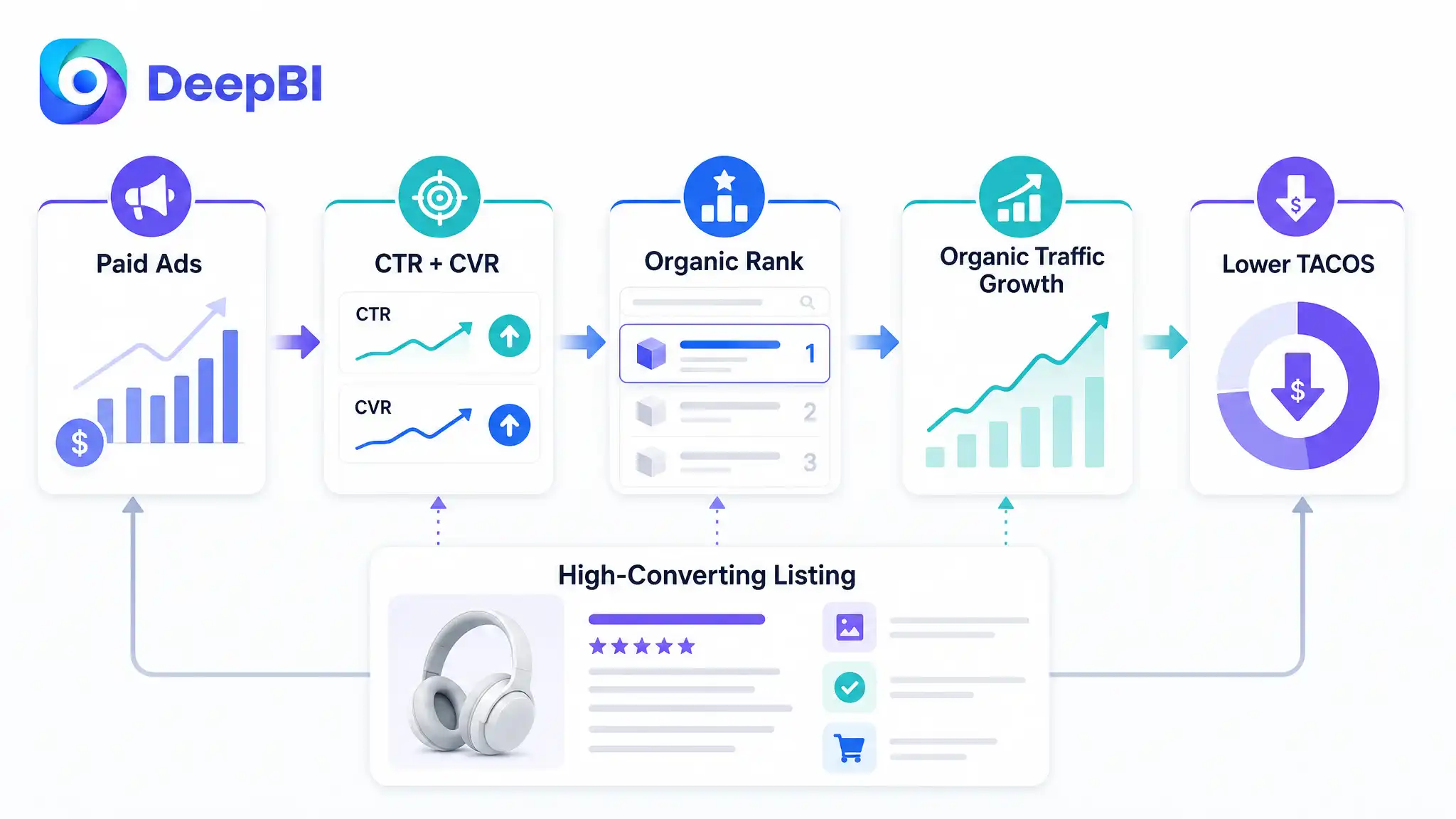
Paid advertising on Amazon should not be viewed as just a short-term sales driver. Its most significant impact is on your long-term organic growth. A high-converting product listing is the fuel for this flywheel, turning ad spend into a sustainable source of free traffic and reducing your overall marketing costs.
When a shopper clicks your ad and makes a purchase, it sends a powerful relevance signal to Amazon's algorithm. A high conversion rate (CVR) for a specific keyword demonstrates that your product is an excellent match for that search query. In response, Amazon rewards your listing with a higher organic ranking for that term, leading to increased visibility and sales that you don't have to pay for directly.
This virtuous cycle is best measured by your Total ACoS (TACOS), which calculates ad spend against your total revenue from both paid and organic sales. As your improved listing boosts ad conversion, your organic sales begin to climb. This growing proportion of organic revenue drives down your TACOS, signifying a healthier, less ad-dependent business model.
Your ad campaign data becomes a strategic roadmap for this process. By identifying keywords with high click-through rates (CTR) and CVR, you pinpoint the exact terms your customers use when they are ready to buy. An effective Organic Traffic Growth Strategy leverages this ad data to ensure these proven keywords are prioritized in your listing's title, bullets, and backend search terms to capture maximum organic rank.
 Real-World Impact: Case Studies and Expected Outcomes
The link between a high-quality product listing and strong ad performance is not theoretical; it delivers measurable financial results. Consider a common scenario: a seller in a competitive category is driving significant traffic through PPC campaigns, achieving a high click-through rate (CTR), but their conversion rate (CVR) stagnates at a low 4%. This forces their Advertising Cost of Sale (ACoS) to an unsustainable level, burning through their budget with minimal returns.
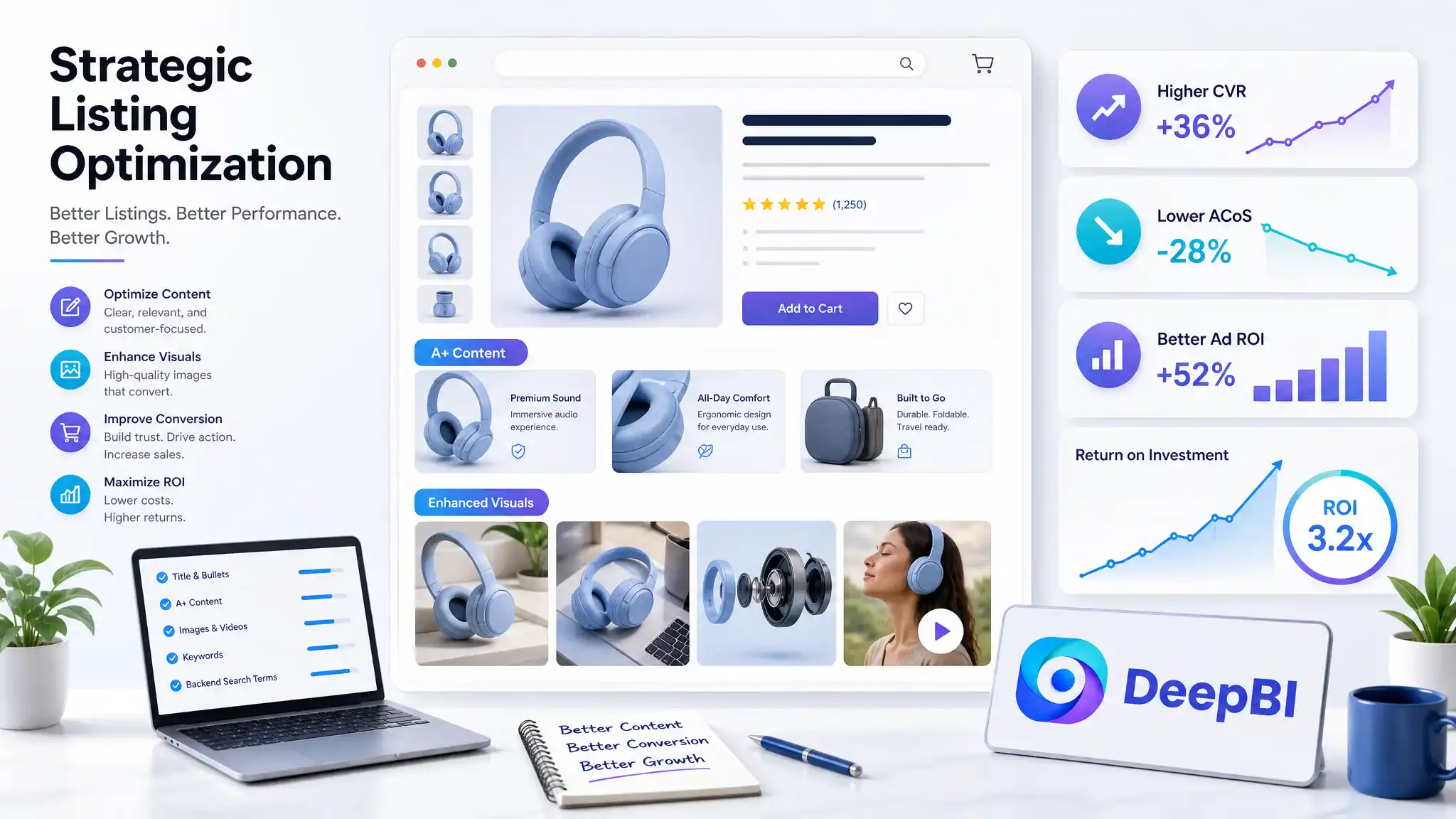
After a strategic overhaul—upgrading the main image to better showcase the product's value, rewriting bullet points to address key customer questions, and building out A+ Content to tell a compelling brand story—the impact can be dramatic. For sellers starting with a weak listing, it is not uncommon to see their CVR double. This improvement directly enhances ad efficiency, often slashing ACoS from an unprofitable 50-60% range down to a healthy, sustainable target.
While every situation is unique, these optimization strategies have helped many sellers achieve significant gains. Some clients have seen their conversion rates climb from 8% to over 15% within 30 days. The most substantial improvements are naturally seen on listings with the most room for growth. However, it's crucial to remember that individual results will always vary based on the product, market competition, and the listing's initial quality. The core principle remains: strategic listing optimization is one of the highest-leverage activities for improving your advertising ROI on Amazon.
 Conclusion: The Synergy of Listing Excellence and Smart Advertising
The persistent problem of getting clicks but no sales is rarely an advertising issue alone. It's a symptom of a fundamental disconnect between your ad's promise and your listing's performance. Pouring a larger budget into ads while ignoring a low-converting product page is an unsustainable strategy that only inflates your ACoS and erodes profit margins. The ultimate solution lies in recognizing that a high-quality, customer-centric product listing is the bedrock of all successful Amazon advertising. It is the engine that converts the traffic your ads deliver into actual revenue.
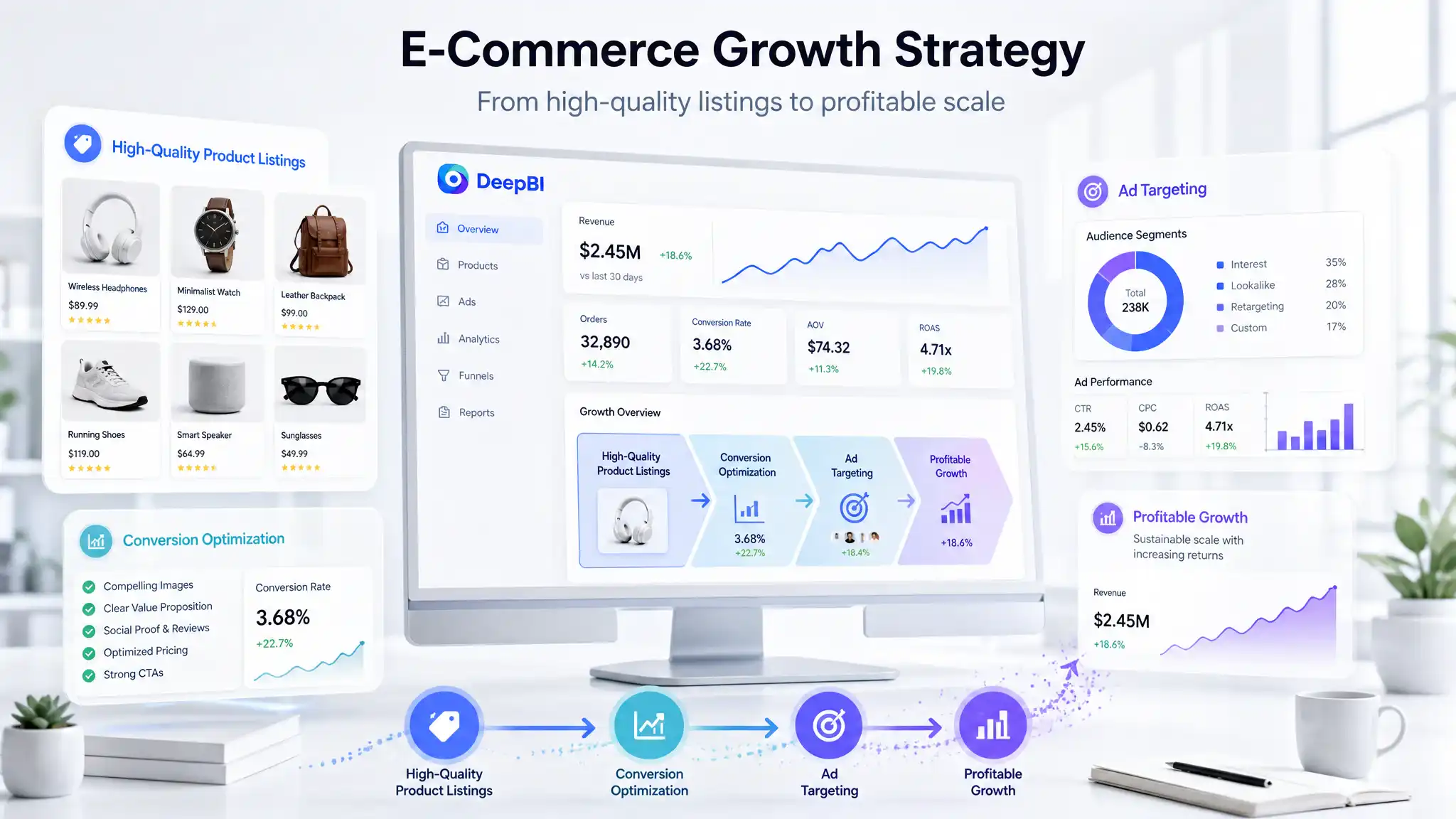
Achieving this requires a strategic shift from siloed operations to an integrated growth cycle: diagnose conversion barriers, optimize the listing to eliminate them, and only then refine ad targeting to drive qualified traffic. This methodical approach ensures your ad spend is an investment, not an expense. By building a powerful conversion asset first, you create a flywheel effect where better CVR improves your ad campaign efficiency and organic rank. Tools like DeepBI are designed to facilitate this exact synergy, providing the insights and capabilities needed to transform your listings and unlock the true potential of your advertising efforts for long-term, profitable growth.