

Introduction
In the hyper-competitive Amazon marketplace, sellers face relentless pressure to capture customer attention and drive sales. As traffic costs rise and market saturation intensifies, the challenge of improving both Click-Through Rate (CTR) and Conversion Rate (CVR) has become a central operational concern. Historically, listing optimization has been a fragmented process, often guided by subjective aesthetics and intuition rather than empirical data. This approach frequently leads to costly and ineffective changes, as optimizations that deviate from real market benchmarks represent wasted effort.
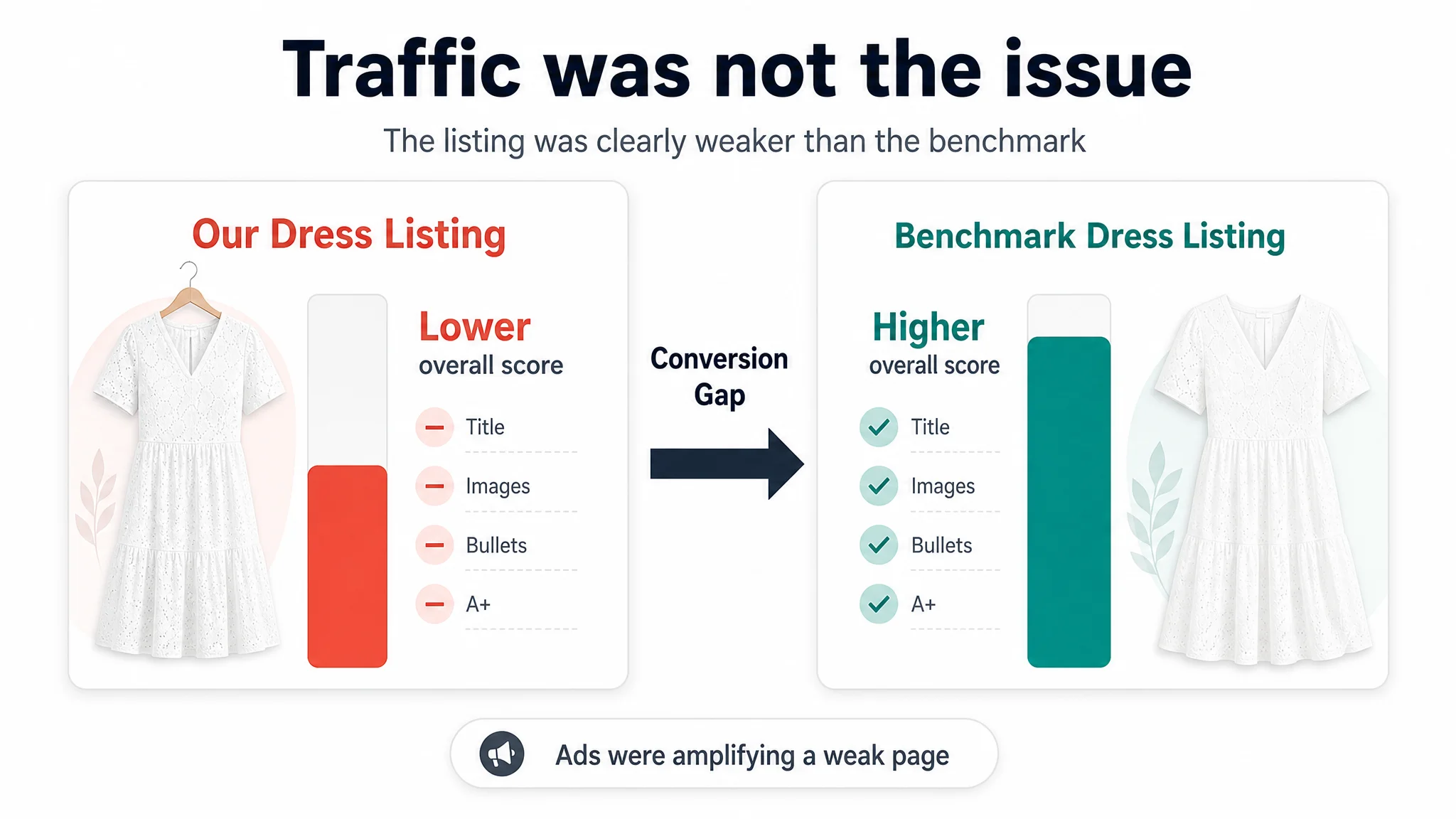
A recent example from a US fashion seller illustrates how damaging this subjectivity can be. The team was pushing a summer eyelet dress with Amazon ads, convinced that high ACoS and unstable orders were a pure traffic problem. For weeks, they cycled through bid changes, keyword expansion, and campaign testing, leaving the listing itself largely unchanged. Only when DeepBI’s diagnostic showed that their page scored significantly lower than a directly comparable dress on key listing elements did it become clear: the ads were doing their job, but the listing was not. Title logic, image sequence, bullets, and A+ structure were systematically weaker than the benchmark, so every extra dollar of traffic was simply being poured into an underperforming page.
The emergence of AI-powered solutions marks a fundamental shift in this paradigm. AI-generated content for Amazon is not merely about automated text or image creation; it represents an end-to-end intelligent optimization system. This technology is designed to break down the traditional silos between the four critical stages of operations—diagnosis, planning, production, and delivery. By integrating these steps into a single, data-driven workflow, AI translates high-level business strategy directly into high-performing listing assets.
The core purpose of this system is to eliminate human uncertainty and subjective bias, ensuring that every change is engineered to produce measurable improvements in CTR and CVR. This process transforms product visuals from simple aesthetic displays into a primary commercial engine. The summer dress seller only began to see advertising make sense again after the page’s sales logic was rebuilt around actual search behavior and buyer concerns. This article will explore how an AI-driven approach elevates listing optimization from an art form to a science, consistently generating content that is not just visually appealing but, more importantly, effective at driving sales.
The Evolution of Amazon Listing Optimization with AI
In today's competitive Amazon marketplace, listing optimization has evolved beyond simple copywriting and image editing into a precise, data-driven discipline. AI-generated listing content refers to the use of artificial intelligence to create and refine every element of a product detail page. This includes drafting compelling titles, bullet points, and product descriptions; generating A+ Content modules; identifying high-intent keywords; and even producing optimized visual assets.
Traditional, manual optimization methods are increasingly falling short. This conventional approach is notoriously time-consuming, subjective, and difficult to scale across a large product catalog. Sellers often make ill-advised modifications based on personal taste, unable to quantify why a competitor's listing performs better. This guesswork can lead to wasted resources and even a decline in key performance metrics. Furthermore, manual processes create a disconnect between implementing a change and measuring its impact, leaving teams unsure if their efforts truly improved CTR or CVR.
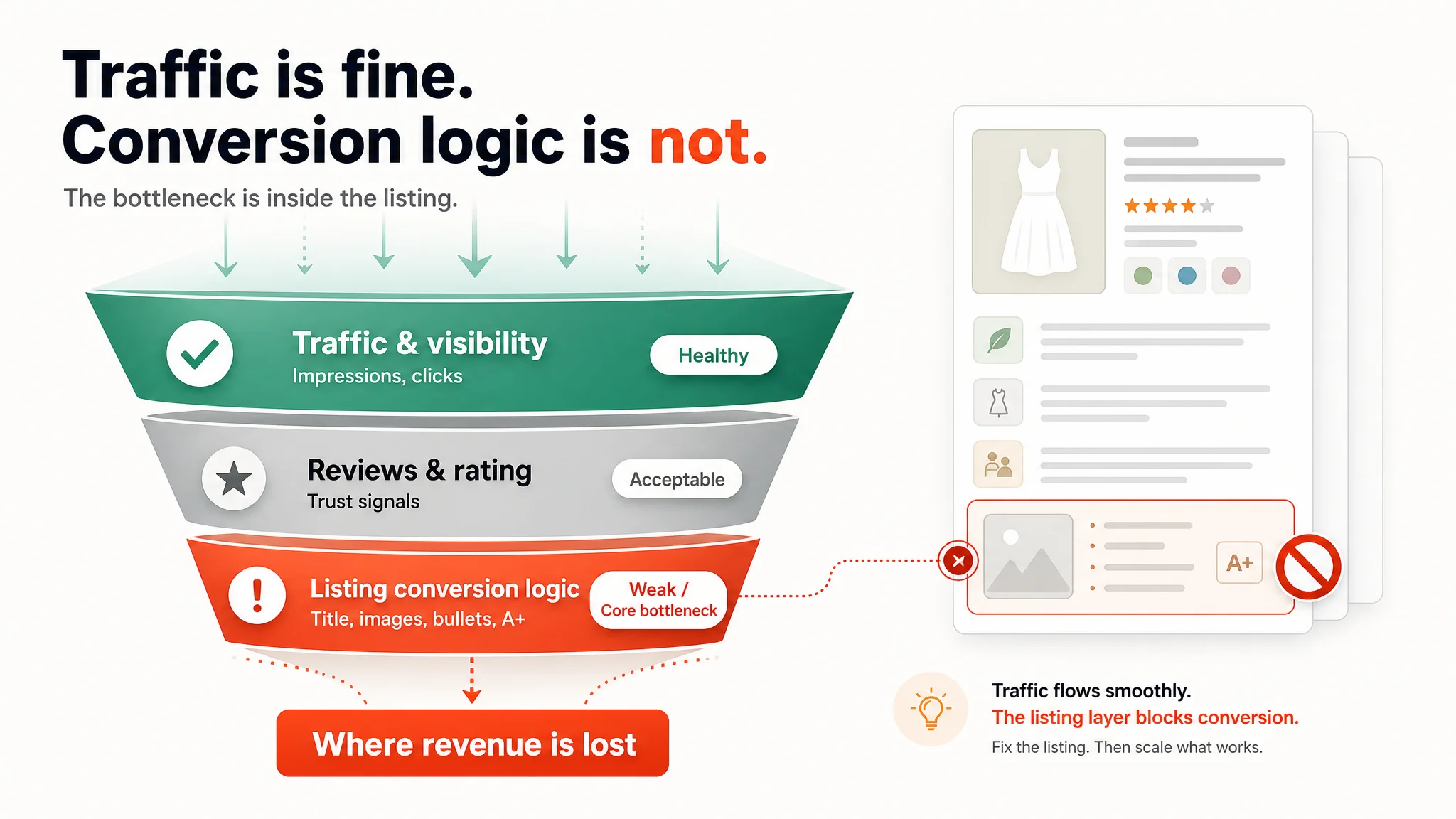
The fashion seller’s experience is a textbook instance of this. Internally, their problem was framed entirely as an ads challenge: “We need more relevant keywords,” “Our bids and match types must be wrong,” “The product page looks fine.” This traffic-first mindset kept the team inside the advertising toolbox while the listing remained static. After several weeks of ad iterations, CVR barely moved and ACoS remained stubbornly high. To the seller, it felt like “ads just got more expensive.” From DeepBI’s perspective, the symptom was different: impressions and clicks were coming in, but the page lacked a coherent buying journey compared to the benchmark dress. Without a structured, data-backed comparison, the team had no way to see that the real problem sat in the listing, not the ad console.
AI introduces a transformative solution by converting ambiguous strategy into an engineered workflow. Instead of relying on intuition, AI-powered systems analyze market data to provide specific, evidence-backed recommendations. They can, for example, quantify how your title structure and keyword choices diverge from what top competitors are doing, or score your images on their ability to follow a stepwise decision path rather than repeat similar angles. They automate tedious tasks, reducing operational cycles from minutes to seconds and establishing a clear feedback loop that connects content changes directly to performance. This shift from trial-and-error to a data-based methodology gives sellers a powerful competitive advantage, enabling faster and more effective optimization at scale.
How AI Enhances Listing Content Effectiveness
AI-powered tools transition listing optimization from a subjective, iterative process to a data-centric strategy. By systematically analyzing market data, competitor performance, and customer feedback, AI provides actionable recommendations that directly influence key Amazon performance indicators, turning content into a vital business asset.
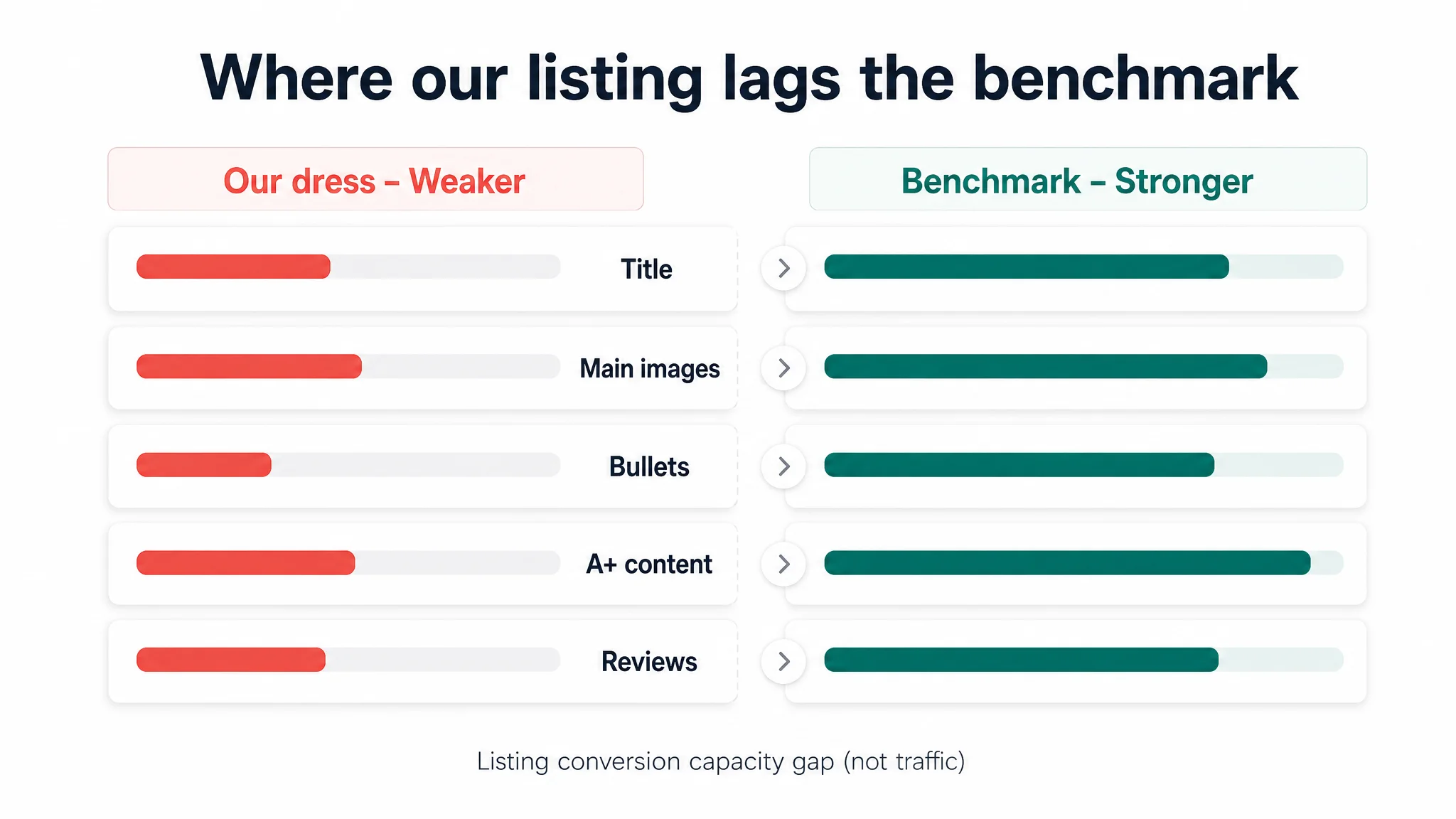
The summer dress listing illustrates how this plays out across multiple content elements. DeepBI’s system did not simply say “improve the page”; it broke the competitor gap into concrete components—title score, main image path, bullet-point persuasion, A+ structure—and showed exactly where the listing was losing conversion capacity. This level of structured insight is where AI moves from being a text generator to being an optimization engine.
Boosting Conversion Rates (CVR)
A higher CVR signals to Amazon that your product effectively meets customer expectations. AI enhances this by first deconstructing top competitor listings and customer reviews to identify high-converting language. It then helps craft compelling titles and bullet points using proven logical structures, such as transforming a simple feature into a "Pain Point -> Solution -> Benefit" narrative that resonates with shoppers. For A+ Content, AI identifies gaps in your modules compared to market leaders and suggests improvements. Crucially, when optimizing visuals, AI operates as an automated production system, not merely a creative tool. It uses a "Product DNA" map to ensure all generated images maintain strict product authenticity, mitigating the risk of an "image-product mismatch" and the damaging negative reviews that harm CVR.
In the dress case, DeepBI’s diagnostics revealed that conversion was being lost not to bad reviews or missing traffic, but to weak sales logic across the page. Reviews were acceptable, yet the listing still lagged a direct competitor. AI-driven analysis showed that:
- The title buried core category phrases and scenarios users actually search for, while foregrounding low-value tokens like the brand name and even an irrelevant year.
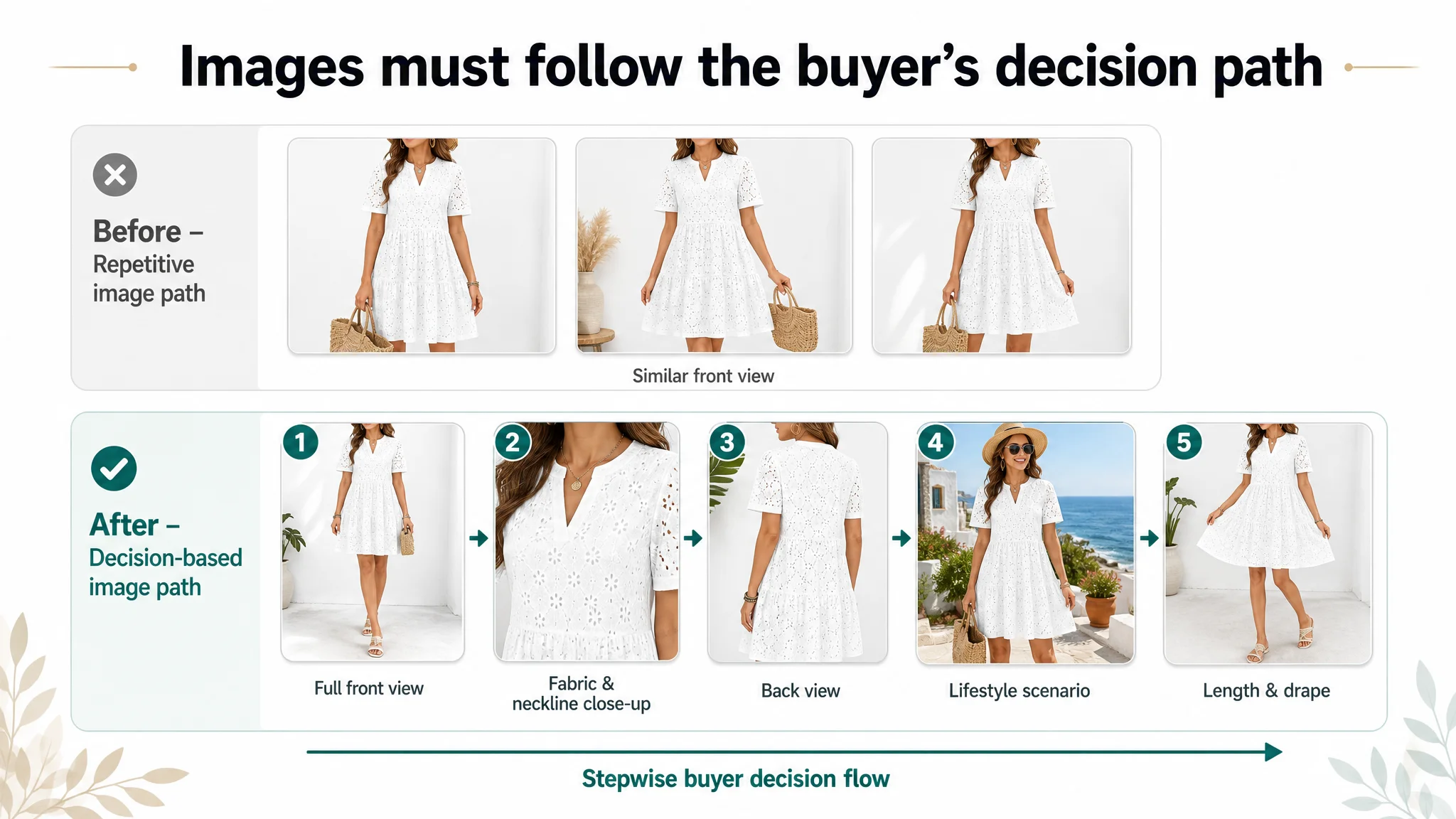
- The image sequence repeated similar front views, sometimes partially blocking the dress with props, instead of walking shoppers through the natural questions they have: “How does it really fit?”, “What does the fabric and detail look like?”, “Is the back consistent with the front?”, “Can I imagine this in real life?”
- Bullet points listed variant names and basic attributes but rarely explained what any of this meant for comfort, body confidence, or real usage scenarios.
- A+ content looked “rich” at a glance but lacked a clear logic to reduce buyer risk around fabric, fit, and sizing.
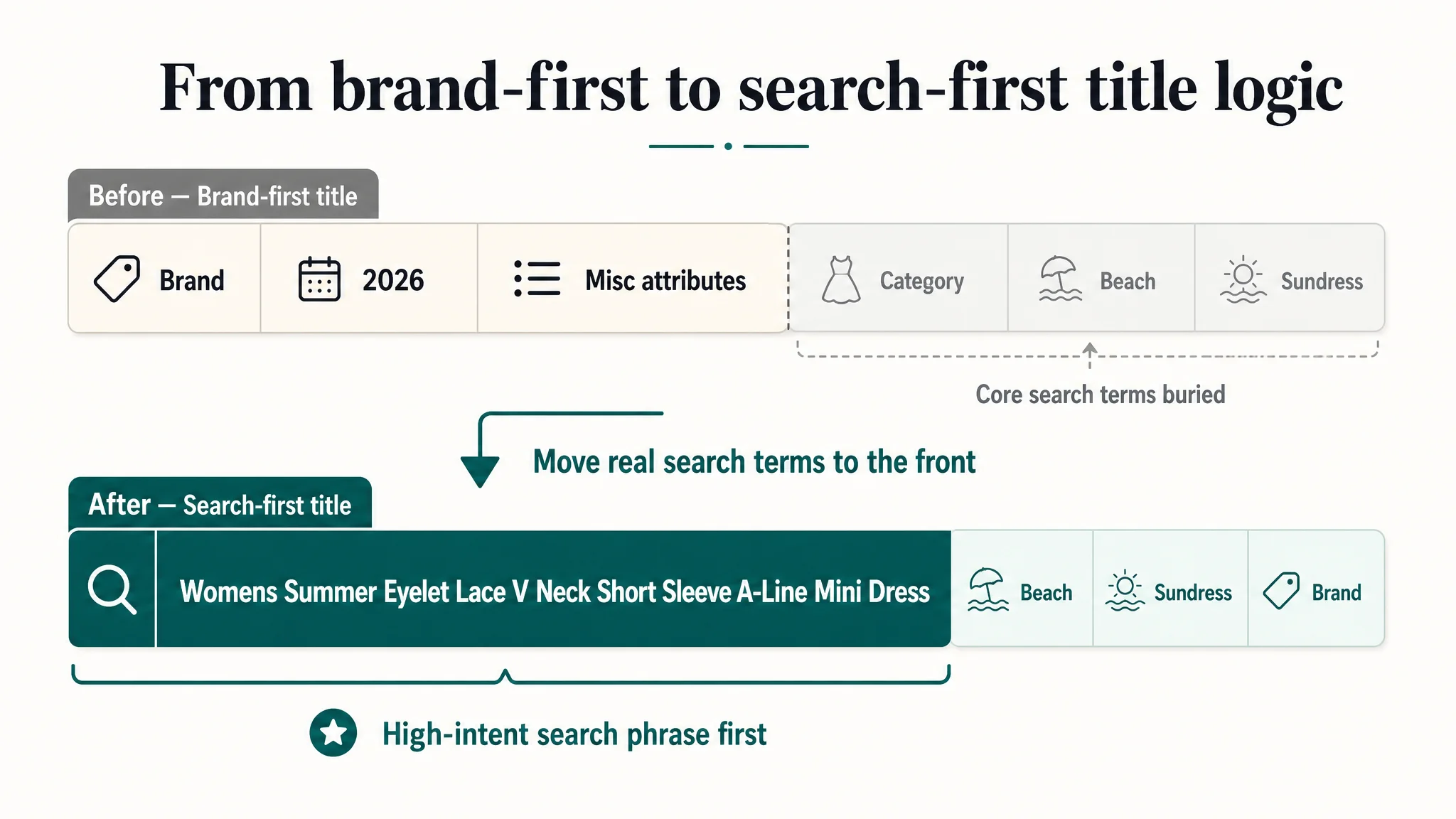
Using these insights, DeepBI’s AI generated a new content direction that systematically turned raw facts into buyer-centric benefits. The title was restructured to lead with “Womens Summer Eyelet Lace V Neck Short Sleeve A-Line Mini Dress” and explicitly include “Beach” and “Sundress” to align with real search terms and seasonal intent. Bullets were rewritten from a variant catalogue into a conversion sequence: fabric as the summer solution (breathable, soft), design that flatters (neckline, sleeves), inclusive silhouette (hides imperfections, suits multiple body types), versatile styling (beach to dressy occasions), and then practical care and scenarios. A+ modules were reorganized to prove fabric, design, and fit before asking for the order. In practice, this is what AI-led CVR optimization looks like: not louder claims, but content that methodically answers the questions real shoppers bring to the page.
Improving Click-Through Rates (CTR)
Before a customer can convert, they must first click. A high CTR from search results is the initial signal of relevance to Amazon's algorithm. AI drives CTR by performing deep keyword analysis, identifying not only high-volume search terms but also high-click "variant feature words" that competitors are using successfully. The system then suggests how to strategically integrate these keywords into your title and bullet points for maximum visibility and algorithmic weight. This ensures your listing is not just discoverable but also compelling enough on the search results page to capture the click, effectively aligning your content with high-intent queries.
In the dress example, the seller initially assumed that “more ads” was the path to better visibility, but the title itself was not fully aligned with how shoppers searched. A manual review might have noticed that competitors tended to include lifestyle cues like “Beach” or “Sundress,” but DeepBI’s analysis could quantify this, showing how the benchmark title made better use of critical search and scenario terms. By recommending a title that front-loaded core phrases and embedded high-intent words the benchmark was already winning with, the AI system improved not only potential organic relevance but also the attractiveness of the listing in sponsored ad placements. When the listing headline mirrors the exact combinations buyers type into the search bar and signals the right use cases, clicks from both paid and organic impressions naturally become more efficient.
Enhancing Organic Visibility and Ranking
Organic rank on Amazon is not a direct target but rather the result of strong performance metrics. A symbiotic relationship exists between CTR, CVR, and your product's ranking. High CTR and CVR tell the A9 algorithm that your listing is highly relevant and satisfying for customers, which in turn boosts your organic visibility. AI's role is to fuel this positive feedback loop. By helping you identify and integrate keywords that both drive traffic and convert effectively, AI helps build a clear line of evidence connecting optimized content directly to healthier, long-term growth in organic search performance.
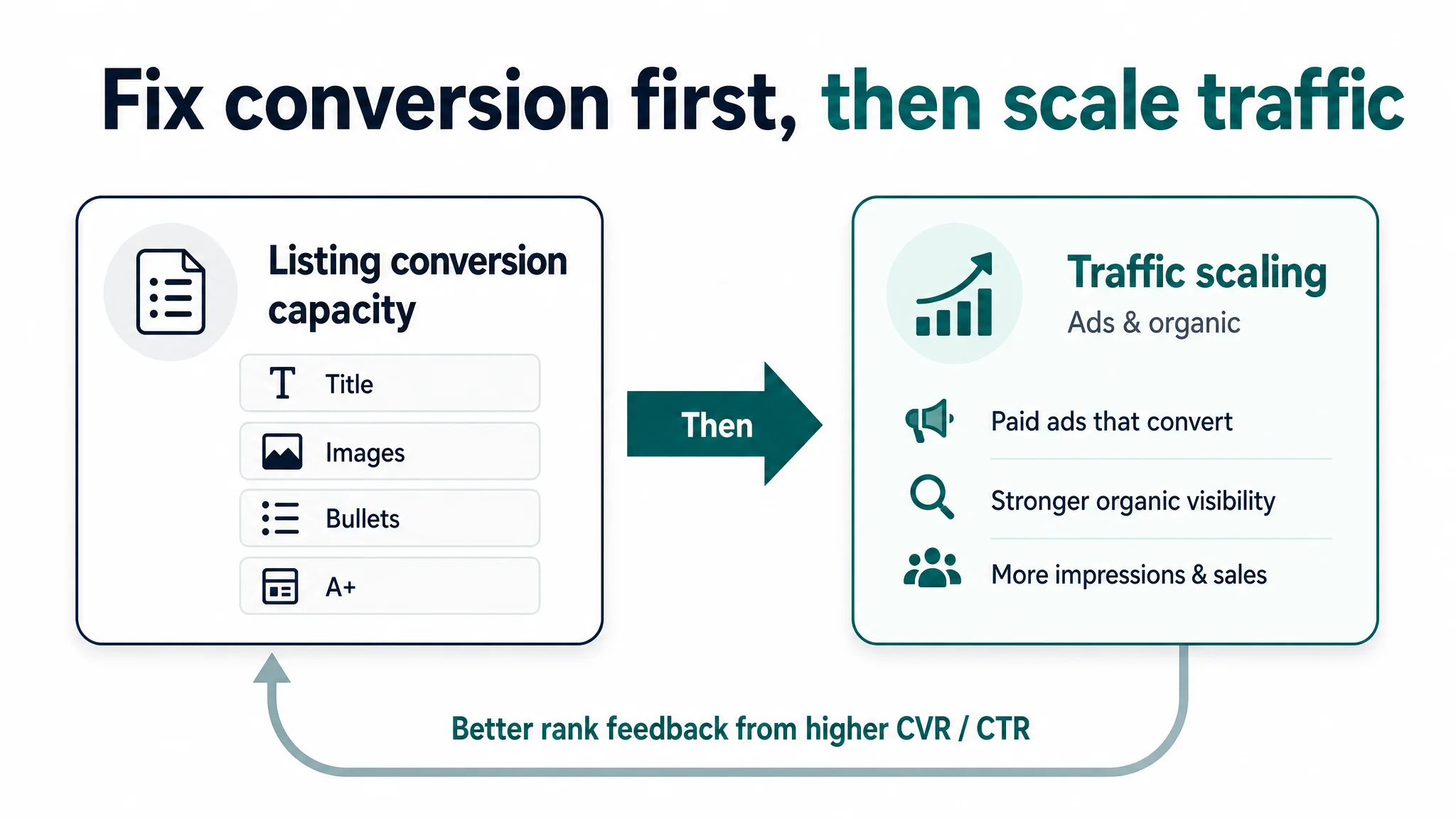
What the dress case underscores is that this loop only works if the listing “deserves” the traffic. Initially, the seller tried to push their rank and sales primarily through increased ad exposure. But with a listing that scored substantially below the benchmark on conversion-driving elements, every additional click made it harder to achieve sustainable ranking gains. AI-led optimization reframed the sequence: fix conversion capacity first by tightening title relevance, building a non-redundant image path that mirrors buyer questions, and turning bullets and A+ into a persuasive narrative. Once the page could convert at a level closer to the category standard, both organic and paid traffic had a much better chance of contributing to long-term ranking improvement.
Strategic Implementation: Leveraging DeepBI for AI Content Excellence
Translating AI potential into tangible business results requires more than just a generative tool; it demands an end-to-end system built for the Amazon ecosystem. DeepBI provides this by integrating the four traditional operational stages of diagnosis, planning, production, and delivery. This holistic approach creates a closed-loop system where every optimization is data-driven and seamlessly executed.
The process begins with intelligent diagnostics. The DeepBI system crawls and analyzes a massive volume of ASINs to identify your true benchmark competitors. It then performs a quantitative audit of your listing, scoring key elements such as main images, title structure, bullet points, and A+ Content richness. This data-driven gap analysis moves beyond vague suggestions to pinpoint the exact weaknesses that are suppressing your conversion rates.
For the summer eyelet dress, this structured diagnosis is what broke the seller’s initial assumption that “the page is fine.” DeepBI’s Listing scoring positioned the product against a directly comparable, better-performing dress and quantified the gap: the target listing scored materially lower overall and, more importantly, underperformed in the precise areas that drive conversion—title, image path, bullets, and A+. Star rating and review count were not drastically worse, so the report made it clear that the real bottleneck was the listing’s conversion capacity rather than ad setup or review volume. This kind of evidence is critical for teams who have been stuck for weeks tuning campaigns; it shifts the conversation from “let’s try another ad experiment” to “we are paying to send traffic into a structurally weaker page.”
Based on this diagnosis, DeepBI’s AI generates optimized content. Critically, it uses a "Product DNA" map to lock in your product's core physical attributes, preventing the AI "hallucinations" common with general-purpose tools that can lead to product-image mismatches and negative reviews. The system produces multiple schemes for titles, bullet points, and images, allowing you to compare and select the most effective options.
In the dress case, this meant creating alternative title formulations that all respected Amazon search behavior, proposing a main image sequence that replaced redundant and partially obstructed shots with a progressive decision path (front view, fabric close-up, back view, scenario, proportion), and rewriting bullet points from variant listings into benefit-driven copy tied to fabric, fit, and scenarios. The A+ recommendations reorganized existing assets into a more disciplined flow: aspirational mood and color choice, then structural design validation, material proof, scenario-based outfits, social proof, and finally size and fit reassurance. Rather than asking the seller to guess which edits might work, DeepBI gave them a set of coherent, benchmark-informed options to choose from.
Finally, DeepBI ensures flawless execution through deep integration with the Amazon Selling Partner API (SP-API). This allows for one-click synchronization, deploying your new, optimized listing content directly to your seller backend in seconds. This automated workflow eliminates the time-consuming manual process of downloading and uploading files, closing the loop from initial analysis to live implementation and accelerating your entire listing optimization cycle.
For teams used to manually copying titles into flat files or clicking through Seller Central modules, this matters. In the dress example, once the seller accepted that the listing—not the ads—was their primary constraint, they needed to test a restructured page quickly and at scale across variants. SP-API-based deployment turned what could have been a slow, error-prone update process into a swift, controlled rollout, allowing the team to see how the new content impacted CVR and ACoS without weeks of operational drag.
Measuring Success: Key Metrics and Continuous Optimization
Deploying AI-generated content is only the first step; real value emerges from a disciplined cycle of measurement and refinement. This process elevates your strategy from guesswork to precision targeting, ensuring every change is supported by data. The most direct indicators of your content's performance are Click-Through Rate (CTR) and Conversion Rate (CVR). A rising CTR signals that your main image and title are effectively capturing shopper attention, while an improved CVR demonstrates that your bullet points and A+ Content are successfully persuading visitors to purchase.
These core metrics have a powerful ripple effect across your business. Higher conversion rates lead to increased sales velocity, which is a key factor in improving your product's organic search rank and Best Sellers Rank (BSR). This creates a virtuous cycle where better content drives more visibility, which in turn generates more sales.
In the summer dress case, the first stage of measurement made an important distinction: ad-level metrics such as impressions and clicks were not the immediate problem—traffic was coming in. The real issue showed up in the listing’s ability to convert that traffic efficiently, which manifested as stubbornly high ACoS and unstable daily orders even after extensive campaign tweaks. Once DeepBI’s recommendations on title, images, bullets, and A+ were implemented, the measurement focus shifted from “Which campaign should we test next?” to “Is the new page logic actually improving CVR and making ACoS more responsive to ad adjustments?” Instead of expecting an instant spike, the seller monitored whether incoming traffic was now better aligned with the listing content and whether a higher proportion of visitors were moving from view to purchase.
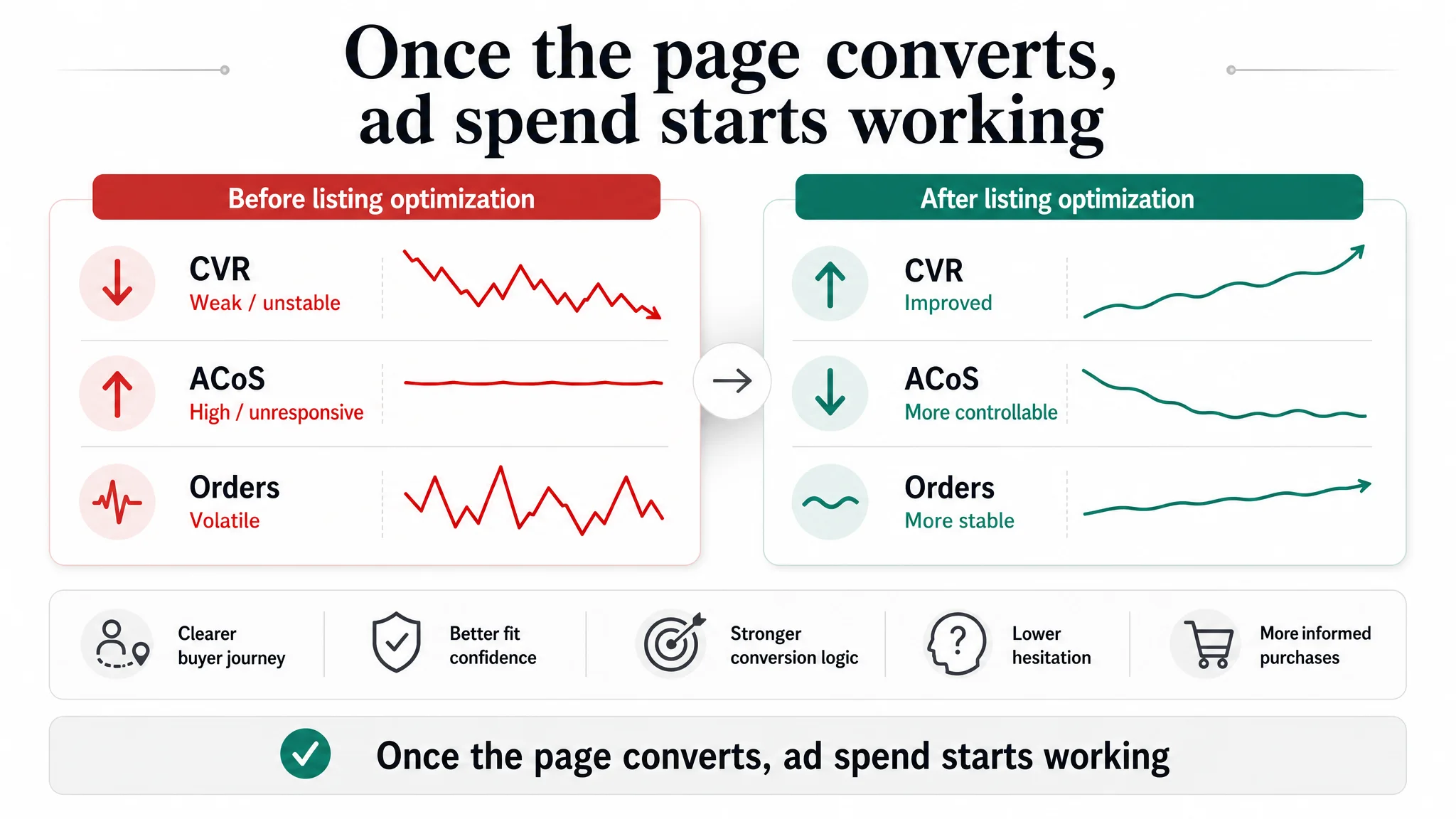
Furthermore, a high-converting listing is the foundation of efficient advertising. When your page effectively converts traffic, every dollar spent on PPC campaigns works harder. This directly lowers your Advertising Cost of Sale (ACoS) and improves the return on ad spend. In the dress example, ads only began to “feel” effective again after the listing started addressing real buyer concerns: fabric comfort in heat, body-flattering silhouette, clear scenarios for wear, and practical sizing guidance. Optimization is not a one-time task but an ongoing loop: analyze performance data, deploy AI-driven adjustments, measure the impact on CTR and CVR, and iterate. This continuous feedback mechanism is what transforms your listing from a static page into a dynamic sales engine.
The Future of Amazon Selling: AI as Your Competitive Edge
As the Amazon marketplace evolves, artificial intelligence is shifting from a peripheral tool to a core strategic partner. The future of competitive selling lies not just in automation but in leveraging AI to anticipate market dynamics and build a sustainable growth engine. By analyzing vast datasets, AI systems can identify emerging consumer preferences and establish the "visual ceiling" set by top competitors, transforming listing optimization from a subjective task into a predictable and quantifiable process.
The summer dress seller’s journey reflects this broader shift. Their initial instinct—to push harder on ads whenever ACoS rose—was shaped by a world where performance marketing alone could often buy growth. But as competition intensified and traffic costs increased, that reflex stopped working. Only when an AI-powered system systematically compared their listing to the actual category standard and exposed a conversion-focused gap did the team recognize that their real lever was not more traffic, but better content that deserved the traffic. This is the kind of judgment call AI makes possible at scale.
This data-driven foundation is what enables sellers to scale effectively. For brands managing hundreds of ASINs, AI automates the laborious processes of competitor research, pain point analysis, and visual asset generation. Operations that once required over thirty minutes of manual work can be completed in seconds, allowing for rapid, batch iterations across an entire product catalog. Instead of treating each underperforming product as a unique, opaque problem, you can apply the same kind of diagnostic used in the dress case—identify true benchmarks, score your listing on the dimensions that matter, and then generate targeted content improvements for titles, images, bullets, and A+.
Ultimately, this capability builds a powerful growth flywheel. By linking every content change directly to performance metrics like CTR and CVR, AI ensures that optimizations are always aimed at improving business outcomes. The summer dress example shows how reframing “an ads problem” into “a conversion-capacity problem” led to smarter decisions about where to invest effort and budget. This leads to more precise traffic acquisition, healthier long-term growth, and reduced reliance on paid advertising alone. Integrating AI as an intelligent decision-making layer is no longer a luxury; it is the foundational element for building a lasting competitive moat on Amazon.