

The Imperative of Organic Visibility on Amazon
Many sellers view Amazon as a marketplace, but its true power lies in its function as the world's leading product search engine. With data showing that over 60% of consumers begin their shopping journey directly on the platform, securing a high rank in search results is not just an advantage—it's a fundamental requirement for growth. As paid advertising costs continue to rise, relying solely on sponsored placements puts immense pressure on key metrics like ACoS and overall profitability.
This tension is very visible in real operations. A fashion seller we observed was aggressively pushing a summer dress with Sponsored Products. Traffic was not the issue—ads were consistently driving visits—but high ACoS, unstable daily orders, and the feeling that “we’re spending, but the listing is not pulling its weight” kept getting worse. Internally, the team insisted it was “an ads problem” and cycled through bid changes, keyword expansions, and new campaigns. For weeks, nothing changed in a meaningful way.
Only when the listing was benchmarked against a directly comparable, better-selling dress did the pattern become obvious: there was no traffic crisis at all; there was a conversion crisis. Ads were amplifying a page that wasn’t ready to convert. Once the seller shifted focus from “more ads” to “deserve the traffic” and rebuilt the title, images, bullets, and A+ content around real search behavior and buyer concerns, ad traffic started to make sense again.
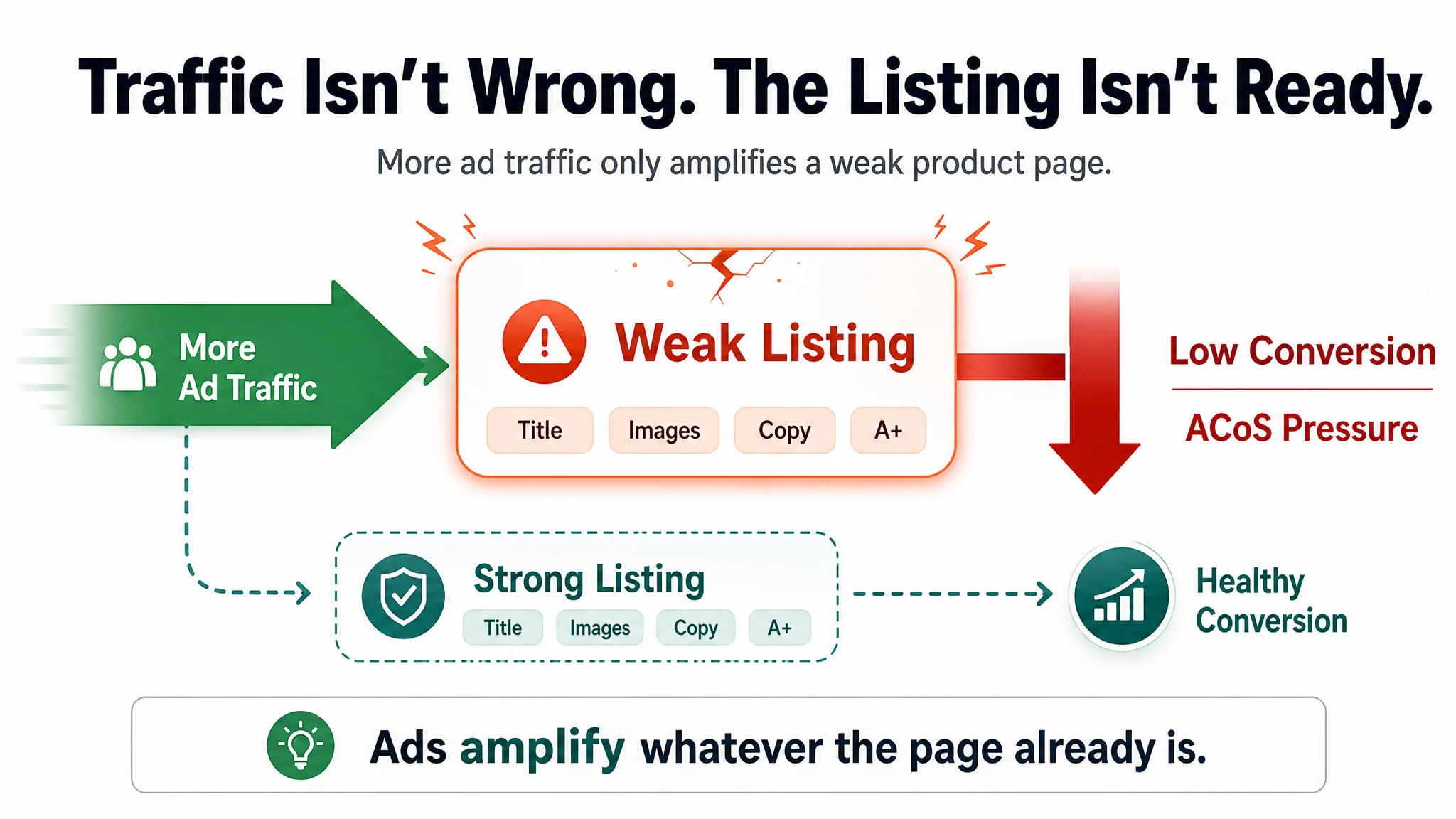
This is where a strategic focus on organic visibility becomes critical. Effective Amazon SEO creates a win-win scenario: by optimizing listings for relevance and conversion, you provide a better experience for shoppers, who find exactly what they need. In turn, Amazon's algorithm rewards your listing with higher organic placement, driving more qualified traffic without the direct cost per click. This creates a sustainable growth loop of a better listing attracting more precise traffic, leading to healthier long-term sales.
The competitive landscape is rapidly evolving. Success is no longer determined by guesswork but by leveraging data to align with intelligent, ever-changing search algorithms. Treating organic visibility as a core growth channel, rather than a secondary bonus, is essential for building a resilient brand on Amazon and reducing dependency on paid traffic.
Understanding Amazon's Search Algorithm and Ranking Factors
To master organic traffic, sellers must first understand that Amazon's search engine is not a web browser; it's a product-buying engine. While sellers often refer to it as the "A10 algorithm," this is an industry term, not an official designation. Unlike search engines that prioritize clicks, Amazon's algorithm is fundamentally designed to maximize revenue by prioritizing products that convert. Industry expert consensus confirms that Conversion Rate (CVR) is the single most powerful signal a seller can send to the algorithm.
A key implication of this “conversion-first” logic becomes clearer when you look at how real listings behave. In the summer dress case, both the underperforming dress and its benchmark competitor were getting traffic. Star ratings and review counts were roughly comparable. Yet when DeepBI scored the two listings, the weaker page lagged significantly—its title, main image sequence, bullets, and A+ structure all underperformed the competitor. The result was straightforward: Amazon had no reason to rank that dress higher organically, because when shoppers did see it, they converted at a lower rate.
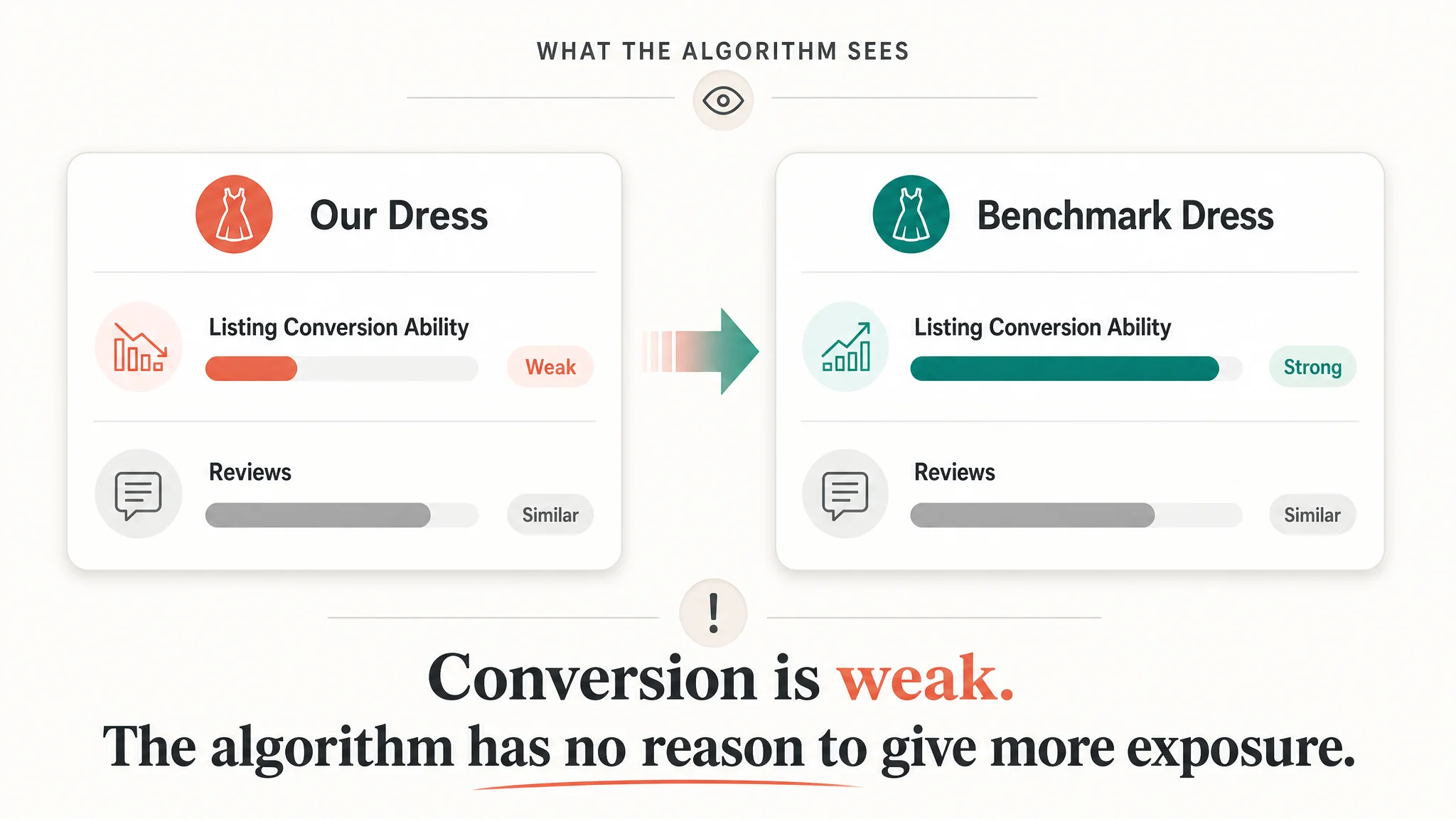
Ranking on Amazon is determined by a combination of factors that can be grouped into three core pillars:
- Relevance: This is the initial filter. Amazon uses keywords in your title, bullet points, description, and backend search terms to match your product with a customer's query. Strategic keyword placement is essential for visibility, but it is only the first step.
- Performance: This is where most ranking influence lies. Amazon tracks performance metrics to determine if customers who see your product actually buy it. Key indicators include sales velocity (the rate and volume of sales), Click-Through Rate (CTR), and, most critically, your overall Conversion Rate (CVR). Strong customer reviews and a high star rating also provide powerful social proof that directly impacts performance.
- Customer Experience: Factors that ensure a smooth purchase journey, such as using Fulfillment by Amazon (FBA), maintaining a low return rate, and positive seller feedback, contribute to your product's trustworthiness and ranking potential.
The dress example shows what happens when a listing passes the relevance filter (it is indexable and gets impressions) but underdelivers on performance. Without a page that converts, the algorithm has no incentive to reward you with better organic placement, regardless of how much you spend on ads. That is why understanding and strengthening these pillars—especially conversion—is non-negotiable.
Foundational Pillar 1: Strategic Keyword Research for Organic Growth
Effective organic growth on Amazon begins with a deep understanding of customer search behavior. The foundation of this understanding is strategic keyword research, which involves identifying the exact terms shoppers use to find products like yours. This process goes beyond simply guessing; it requires a data-driven approach to balance search volume, relevance, and competitive density.
A comprehensive strategy distinguishes between broad, high-volume "short-tail" keywords and more specific, higher-intent "long-tail" keywords. Amazon provides powerful native tools like Product Opportunity Explorer and Brand Analytics to uncover these terms directly from market data. Once identified, these keywords must be strategically embedded within your listing—prioritizing the title, then bullet points, product description, and backend search term fields to maximize indexing and relevance.
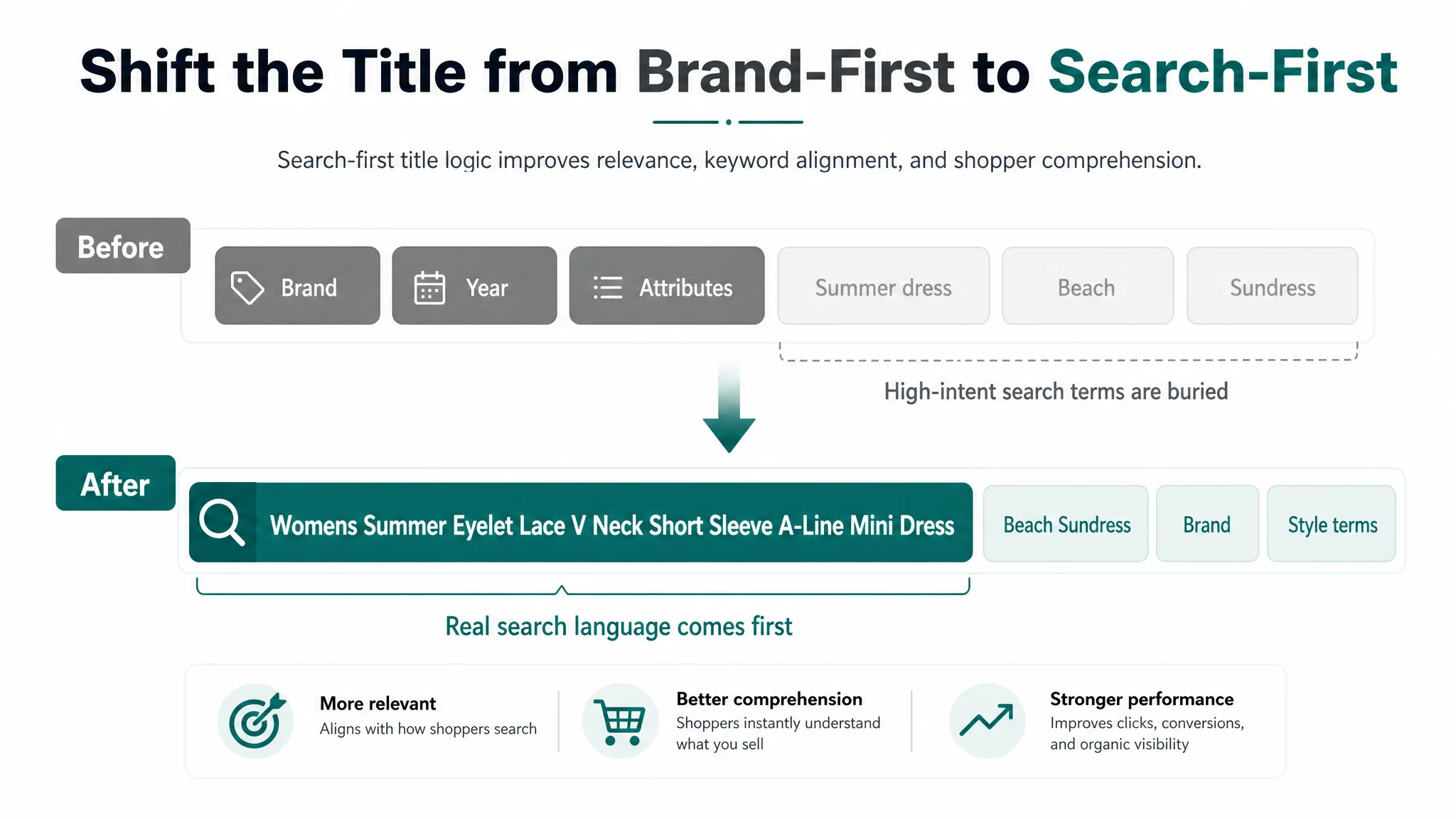
In practice, many teams underestimate how directly keyword alignment affects both traffic and conversion. In the dress case, the original title led with the brand and a long string of attributes, even including a year reference that shoppers were not actually searching for. Meanwhile, high-intent category phrases and scenario terms—such as “womens summer eyelet dress,” “mini dress,” “beach,” and “sundress”—were buried or underutilized. The competing dress, by contrast, led with the exact phrases buyers were typing into Amazon and paired them with clear usage scenarios.
When DeepBI reverse-engineered the benchmark’s title and bullets, it became clear that the weaker listing wasn’t failing to be indexed; it was wasting the most valuable real estate in its title on low-value tokens. Adjusting the title to foreground the real search language (“Womens Summer Eyelet Lace V Neck Short Sleeve A-Line Mini Dress… Beach Sundress”) simultaneously improved relevance, ad keyword alignment, and user comprehension in the search results.
However, manual research often fails to capture the full competitive landscape. Advanced platforms like DeepBI elevate this process by employing multi-dimensional semantic analysis to benchmark your listing against top performers. By reverse-engineering competitor titles and bullet points, this technology extracts their core keyword strategies and identifies high-potential terms you may have missed. This data-driven insight allows you to not only optimize your listing for higher organic ranking and Click-Through Rate (CTR) but also to inform more efficient ad targeting by focusing on proven, high-conversion keywords.
The summer dress team’s experience is a common pattern: once they saw exactly which category and scenario keywords the benchmark was leveraging, their keyword decisions stopped being guesswork and started being evidence-led. Strategic keyword research moved from “add more words” to “speak the language buyers already use,” which is the real foundation of organic growth.
Foundational Pillar 2: Optimizing Your Amazon Listing for Conversion (ModuleListing)
Driving organic traffic is only half the battle; converting it is what signals relevance and value to Amazon's algorithm, directly influencing your organic rank. A high-converting listing is a meticulously engineered asset, integrating keywords strategically across the title, bullet points, product description, and the 250-character backend search terms. High-quality images and video are critical for capturing initial attention and boosting Click-Through Rate (CTR), while A+ Content allows Brand Registered sellers to tell a compelling story that significantly lifts Conversion Rate (CVR).
The dress seller’s journey illustrates what happens when this pillar is weak. For weeks, they treated the problem as purely an ads issue—adjusting bids and structures—while the product page remained almost untouched. When DeepBI’s Listing module scored the page, the result was an overall 62/100 versus 78/100 for a nearly identical but better-selling dress. The star rating and review volume were not catastrophically different, which ruled out “review disaster” as the main cause. The score gap came from the listing elements themselves:
- The title logic didn’t match how shoppers actually search.
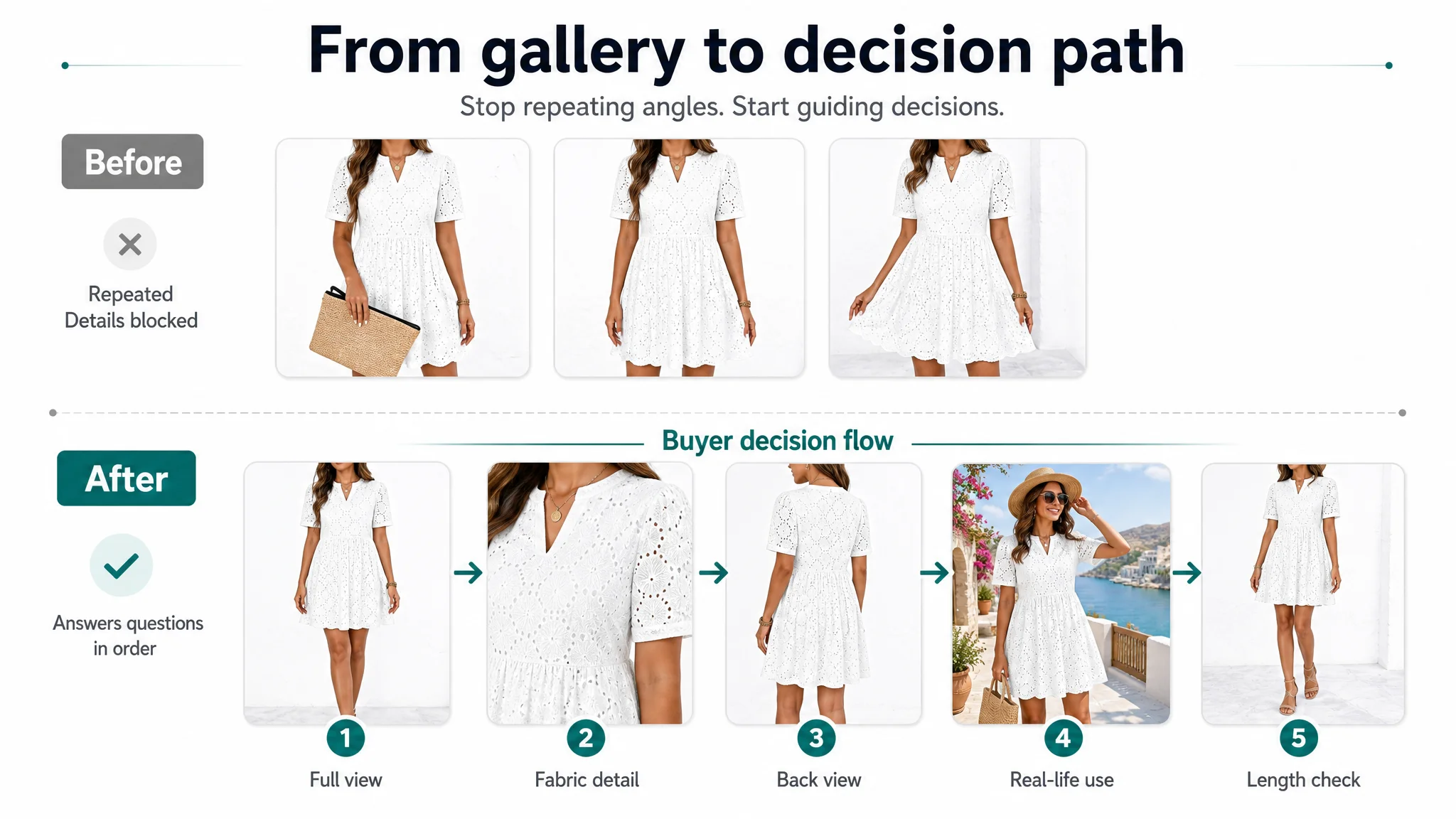
- The main image sequence repeated similar angles and even obscured the dress with a prop bag.
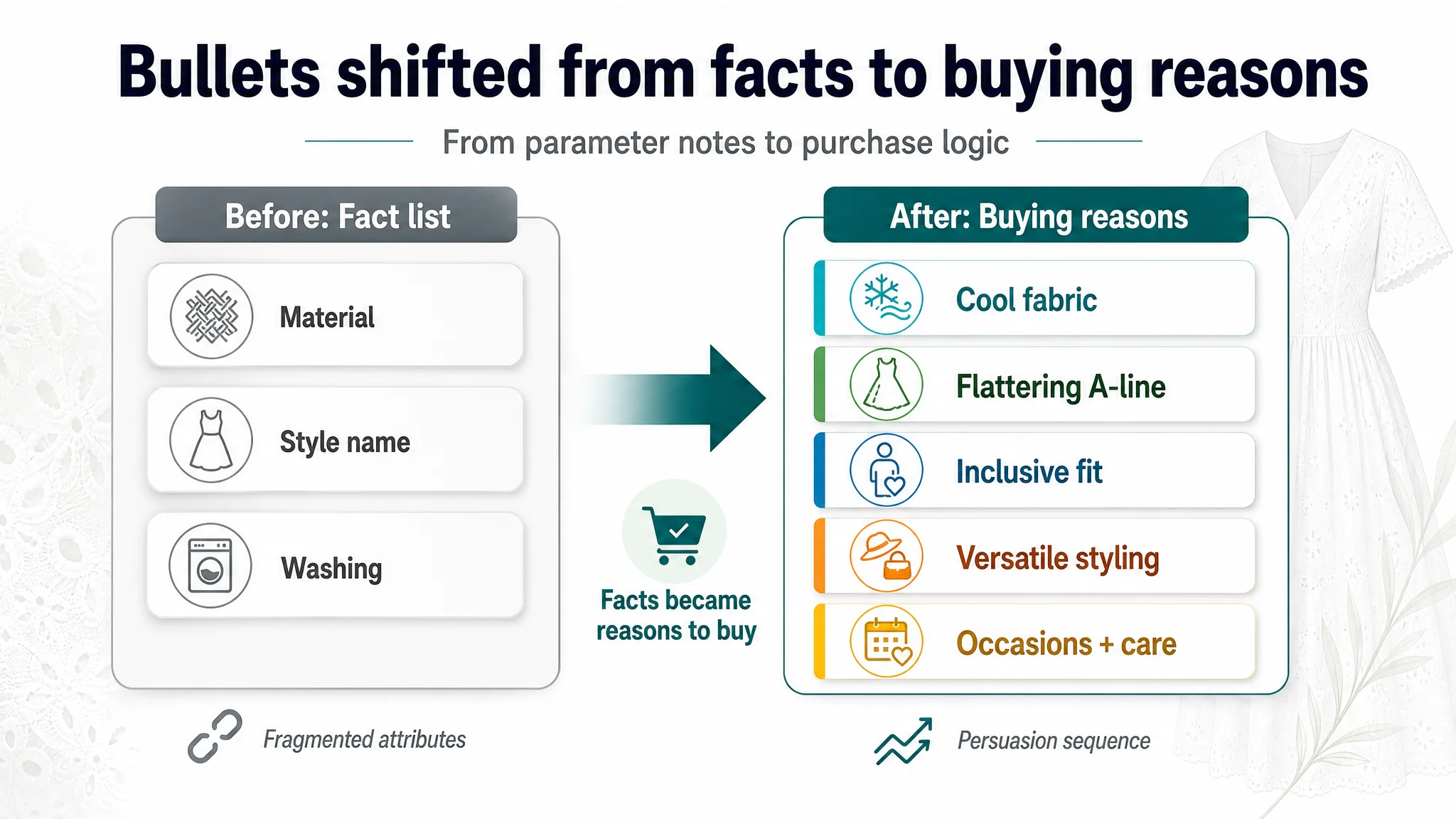
- Bullet points listed facts and variant names but did little to frame benefits, scenarios, or body-flattering advantages.
- A+ content looked visually appealing, yet failed to systematically prove fabric quality, design logic, and fit confidence.
In other words, ads were faithfully bringing traffic to a page that hadn’t been designed to convert.
However, manual optimization is often based on guesswork, and execution is slow. DeepBI’s Listing module replaces this subjectivity with a data-driven workflow. The system first provides an intelligent score for your listing elements—main image, title, bullet points, and A+ content—by benchmarking them against high-performing competitors. It diagnoses specific performance gaps, such as linking a low CTR to a weak main image or a poor CVR to ineffective A+ content.
In the dress case, that diagnosis translated into concrete, behavior-aligned changes:
- Title: Reordered to lead with high-intent category and scenario terms, removed distracting tokens like the year, and preserved style descriptors that matter to shoppers.
- Images: Rebuilt as a stepwise decision path—clear full-body main image, early close-up of eyelet fabric and neckline, timely back view, and lifestyle photos that show real usage scenarios instead of repeated poses.
- Bullets: Transformed from fragmented attributes into a persuasion sequence: fabric comfort in heat, body-flattering A-line silhouette, inclusive fit, versatile styling, and clear occasion coverage plus practical care notes.
- A+ content: Reorganized from mood-first to logic-first: aspirational scenes, then labeled design callouts, material proof, scenario-based outfits, size guidance, and final reassurance on fit.
Based on this diagnosis, DeepBI generates AI-powered, conversion-oriented copy and visual content. This process is constrained by a "Product DNA" map, ensuring the AI enhances your product's presentation without creating "product-image mismatch" issues that lead to negative reviews. Finally, all optimized assets can be applied directly to your Seller Central backend in seconds via the SP-API, reducing an operation that could take 30 minutes to a single click and shortening your listing optimization cycle time.
The dress seller’s experience underscores the core principle of this pillar: until your listing can walk a shopper through a coherent buying journey—from first glance through fabric trust, design understanding, fit confidence, and scenarios—every click, organic or paid, is at risk. Conversion-optimized listings are not an optional refinement; they are the engine that makes all your traffic work.
Leveraging Amazon Ads to Boost Organic Rank (ModuleAdsQuant)
Strategic advertising on Amazon is more than a short-term sales driver; it's a critical lever for improving long-term organic ranking. Paid campaigns directly influence the sales velocity for targeted keywords, signaling product popularity and relevance to Amazon's algorithm. This increase in conversion history helps elevate your product's organic position for those same high-value search terms. Furthermore, ads serve as an invaluable data-harvesting tool, allowing you to test and identify keywords with the highest click-through rates (CTR) and conversion rates (CVR) before embedding them into your core listing content.
What the summer dress case makes clear, however, is that ads can only perform this role if the underlying listing converts. In that situation, the team initially reacted to rising ACoS and unstable orders by “doing more ads”: more tests, more keywords, more structural tweaks. For several weeks, ad metrics moved, but CVR did not meaningfully improve. From the ad dashboard alone, it looked like ads were “getting more expensive.” From a listing perspective, it was the opposite: ads were doing their job, and the page was consuming the traffic without closing.
This is where a systematic approach becomes essential. DeepBI's Ads Quant module optimizes Sponsored Products campaigns through a structured, four-layer traffic funnel: exploration, initial screening, precision, and scaling. By dynamically adjusting parameters at each stage, the system methodically filters and identifies top-performing keywords. It starts by exploring a wide net of potential terms, screens them for initial traction, focuses budget on the precise terms that demonstrate high CVR, and finally scales the investment on proven winners.
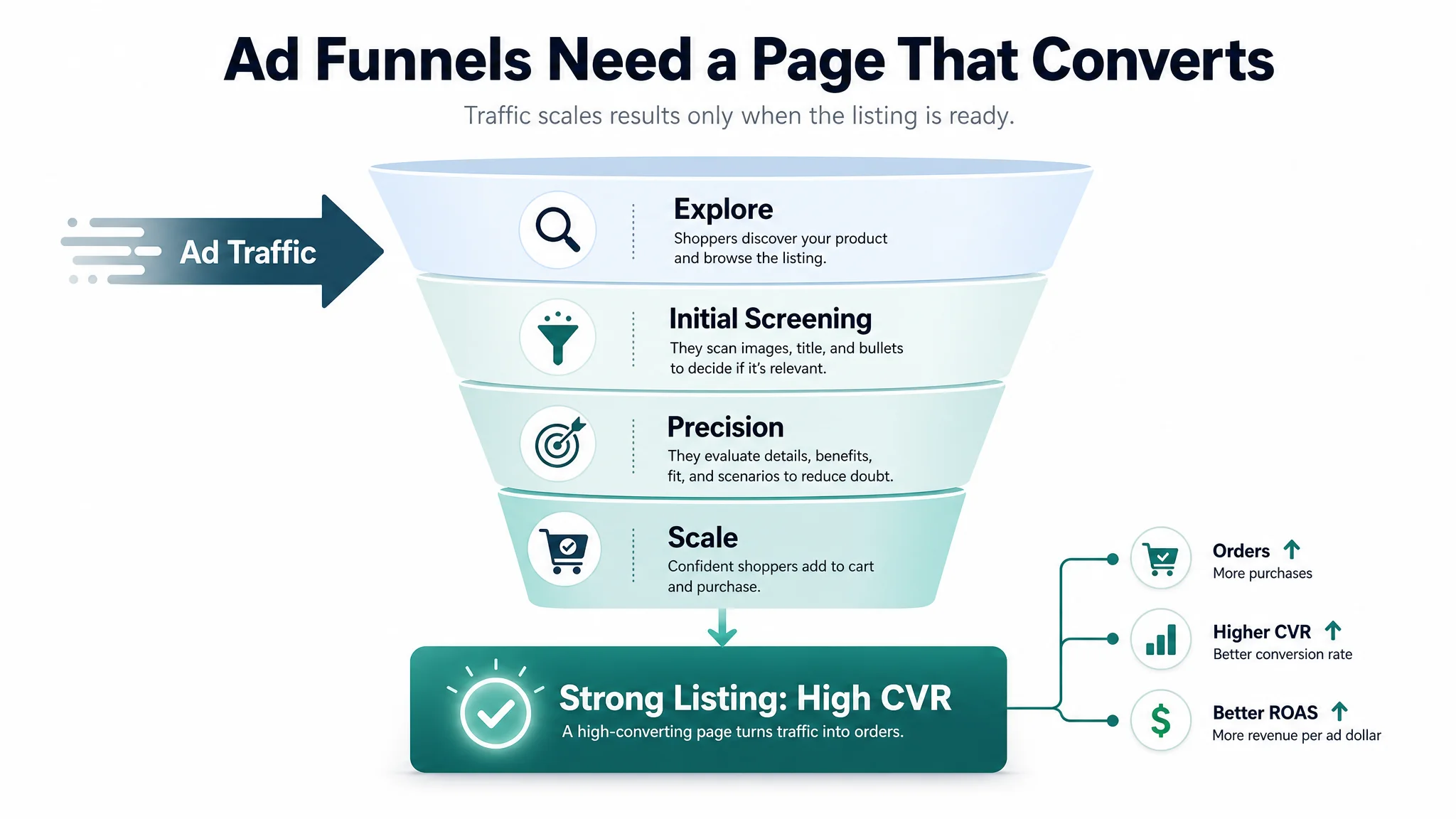
When the dress listing’s conversion capacity improved, the same logic suddenly became much more powerful. Keywords that previously looked “too expensive” under a weak page started to show healthier CVR and more predictable ACoS. Exploration and screening stages could now produce genuinely scalable winners because the landing page had been upgraded to meet shopper expectations on fabric, fit, and scenarios.
The output of this process is a validated list of high-impact keywords. These terms, proven effective through ad spend, are then prioritized for integration into your product title, bullet points, and backend search fields. This creates a powerful flywheel where paid traffic validates keywords that improve organic visibility, leading to higher organic sales and a healthier, more sustainable growth trajectory.
The key lesson is that ads and listing optimization cannot be isolated. AdsQuant can architect a sophisticated traffic funnel, but if the listing at the end of that funnel is weak, you end up amplifying inefficiency. When the listing is strong, that same funnel becomes a compounding engine for both paid and organic growth.
Direct Organic Traffic Growth Strategies (ModuleOrganicTraffic)
Top-performing brands treat Amazon SEO not as a one-time setup, but as a continuous operational system. Achieving and maintaining high organic rankings requires a multi-faceted approach that integrates with your entire sales ecosystem. Key strategies include:
- Continuous Keyword Monitoring: Search trends and competitor tactics are constantly changing. Regularly refining your keyword strategy is essential to adapt and maintain visibility.
- Proactive Review Management: Positive reviews are a critical driver of conversion rate (CVR) and trust, which Amazon’s algorithm rewards. While not a review management tool, DeepBI helps prevent negative reviews caused by "image-product mismatch" by enforcing strict product authenticity in all generated visuals.
- Strategic Pricing and Promotions: Competitive pricing and well-timed promotions directly influence sales velocity. This increase in sales signals relevance to Amazon, which can significantly boost your organic position and Best Sellers Rank (BSR).
- Disciplined Inventory Management: Going out of stock halts your sales momentum and causes your organic rank to drop. Maintaining consistent inventory levels is non-negotiable for sustained organic presence.
- Brand Store Optimization: A well-designed Brand Store enhances brand presence, improves customer experience, and creates valuable internal linking opportunities that can support your product listings.
In the dress example, once the listing’s conversion structure was rebuilt, the seller could finally apply these strategies with impact. Seasonal search shifts (e.g., into summer-related terms), review patterns, and promotional timing all started to translate more cleanly into organic gains because the page was now capable of converting incremental traffic into orders. Before that, efforts like seasonal pricing or occasional coupon pushes only temporarily pushed more visitors into a page that did not fully resolve fabric, fit, and scenario questions—limiting their long-term organic effect.
DeepBI integrates these efforts through its Organic Traffic module, creating a "fifth layer" to the sales funnel. It leverages high-CTR, high-CVR, and high-order-value keywords identified from your advertising data to build targeted campaigns. This dual-growth strategy uses insights from paid traffic to systematically strengthen your "Top of Search" presence, aiming for both short-term ad scaling and long-term, sustainable improvement in natural rankings.
Seen through the lens of the dress case, this approach reduces a common misstep: treating organic SEO as a static checklist done at launch. Instead, organic traffic becomes an ongoing, data-driven program where listing conversion quality, keyword behavior, pricing, reviews, and inventory all reinforce each other over time.
Measuring and Sustaining Organic Growth
Achieving a high organic ranking is a milestone, not a final destination. Sustaining that position requires a disciplined approach to performance measurement and continuous optimization. Amazon’s ecosystem is dynamic, with algorithm updates, policy changes, and competitor actions constantly shifting the landscape. To stay ahead, sellers must move beyond sporadic checks and implement a system for ongoing analysis.
The first step is tracking the right Key Performance Indicators (KPIs). Monitor these metrics closely using tools like Amazon Brand Analytics:
- Organic Sales: The ultimate measure of your organic traffic's value.
- Organic Keyword Ranking: Your visibility for high-intent search terms.
- Total ACoS (TACOS): The ratio of ad spend to total sales, indicating the health of your organic flywheel.
- Natural Order Share: The percentage of total orders coming from organic traffic.
In real operations, the challenge is usually not lack of data but lack of clarity about causality. In the dress case, several rounds of ad changes did not materially shift CVR or stabilize ACoS. Without a structured measurement framework, the team interpreted this as “ads are just getting more expensive,” and kept cycling through the same levers. Only after DeepBI separated listing-level issues (weak title, image path, bullets, A+) from ad-structure issues did it become clear where interventions would actually move conversion.
However, manually connecting performance dips to specific listing weaknesses is often slow and imprecise. This is where an automated system provides a decisive advantage. DeepBI functions as an "automated market health check system," transforming optimization from a reactive task into a continuous, data-driven process. The platform integrates your listing, advertising, and organic data, allowing you to set a primary goal—such as profit or growth—while it handles the iterative adjustments. When an optimization is deployed, DeepBI automatically marks an event point in your reports, enabling you to precisely measure the impact on KPIs like CTR over the following weeks. This converts stable advertising signals into stronger natural rankings and a lower TACOS, ensuring your organic growth is both measurable and sustainable.
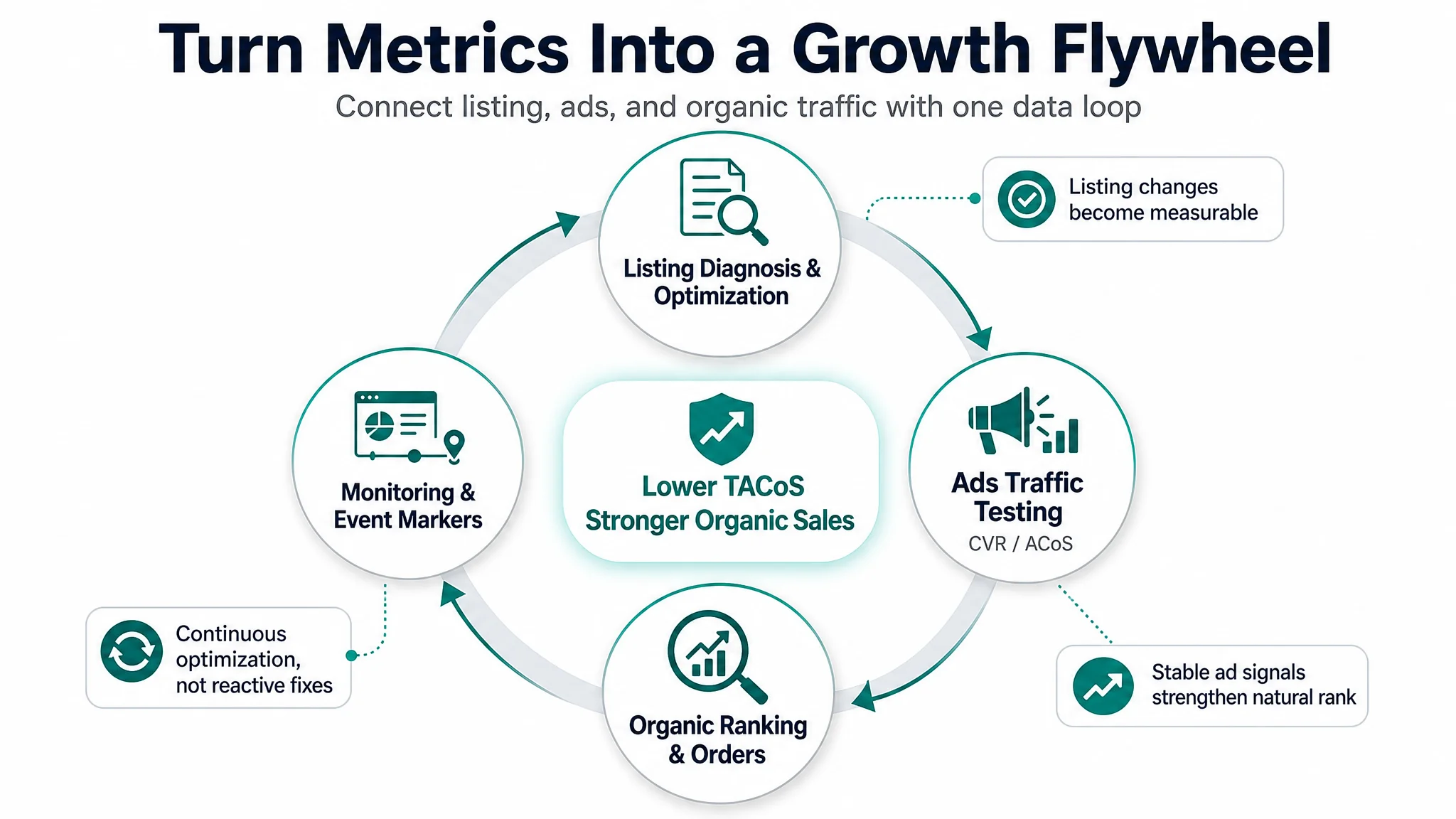
The dress seller’s shift—from “we need another ad experiment” to “we need to measure the impact of a rebuilt listing on all key KPIs”—is exactly the mindset that sustains organic growth. Without tying changes to metrics and timelines, it is easy to overinvest in the wrong levers and underinvest in the listing itself.
Conclusion: Your Path to Amazon Organic Dominance
Achieving sustainable growth on Amazon is not about mastering isolated tactics, but about building a unified, data-driven system. The true path to dominance lies in recognizing the powerful synergy between listing optimization, strategic advertising, and organic ranking efforts. This integrated approach transforms your operations from a series of fragmented tasks—diagnosis, planning, and execution—into a seamless, intelligent flywheel.
The summer dress case is a microcosm of this broader principle. The seller started by assuming that high ACoS and unstable orders were “ad problems.” Only after a data-driven listing diagnosis did they see that the core constraint was conversion capacity: the title did not reflect real search behavior, images did not follow a decision path, bullets listed facts rather than benefits, and A+ content did not fully resolve fabric, design, and fit doubts. Once those elements were rebuilt, ads stopped amplifying a weak page and started reinforcing a strong one. Organic performance had a more solid base, because the listing now deserved the traffic it received.
By using advertising data to inform listing improvements, you create a virtuous cycle: higher conversion rates boost organic rank, which in turn lowers your Total Advertising Cost of Sale (TACoS) and reduces dependency on paid traffic. This investment in a scientific process builds a resilient, long-term asset for your brand. It’s time to move beyond subjective guesswork and "blind trial and error." Embrace a strategy where every decision is part of a clear data evidence chain, converting abstract goals into precise, executable actions that drive measurable results. This is how you build a lasting competitive advantage.