


The Crucial Role of Amazon Product Titles
An Amazon product title is far more than a simple label. It's the first and most critical piece of text a potential customer encounters, appearing prominently in search results and at the top of your product detail page. This initial touchpoint serves a dual purpose: it must capture a shopper's attention while simultaneously signaling relevance to Amazon's A9 search algorithm. A powerful title is the primary driver that turns a search impression into a page visit.
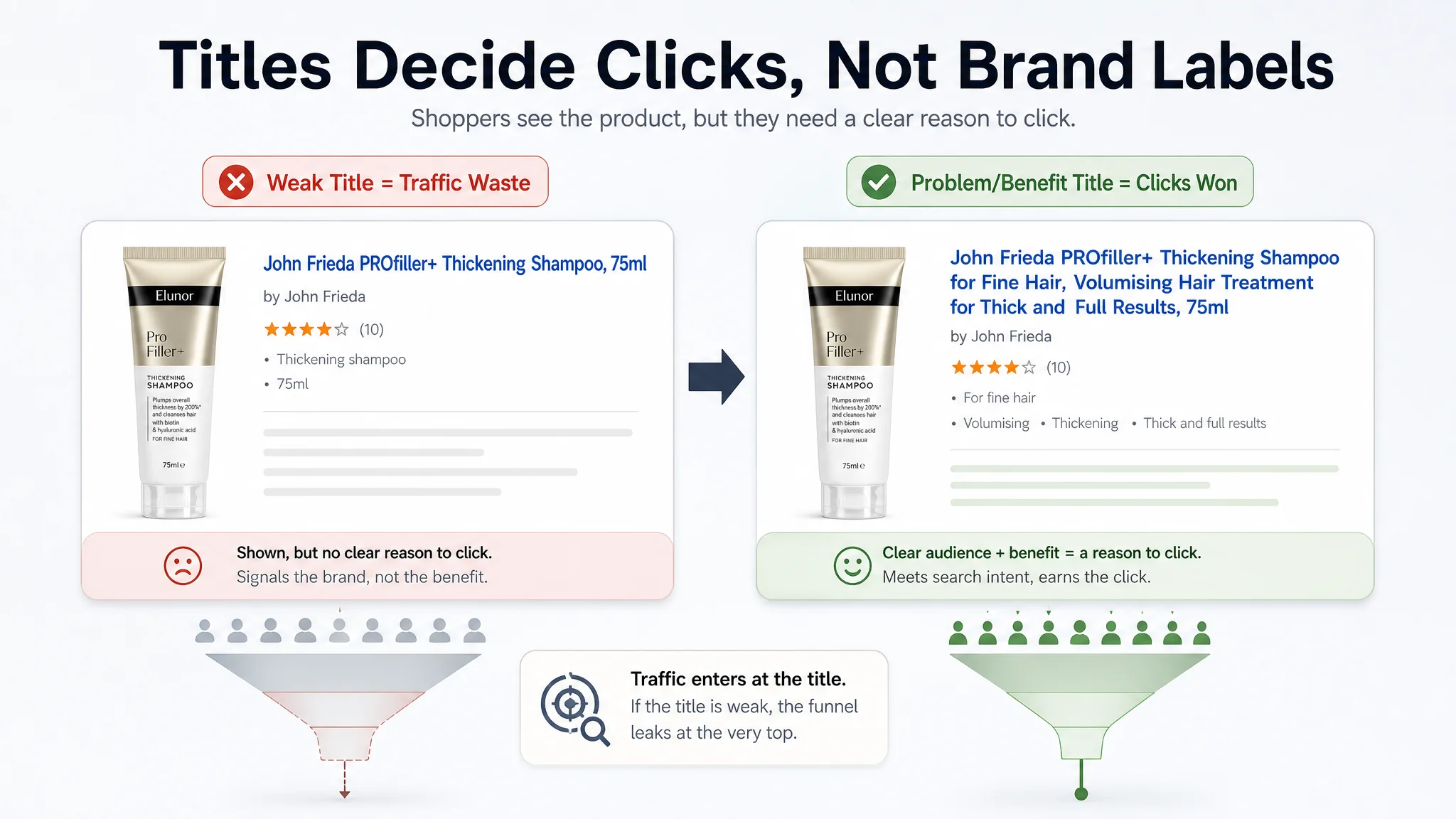
This becomes very obvious once you look at real performance patterns. In a recent fine‑hair shampoo project on Amazon UK, the brand saw “acceptable impressions” but weak CTR and conversion in a category dominated by a competitor with tens of thousands of reviews. Internally, the team immediately focused on their A+ content and “premium storytelling” as the culprit. But DeepBI’s breakdown showed the real constraint sat at the very top of the funnel: the title was essentially a shelf label (“Brand + Product Name + Capacity”), under‑signalling benefit and audience. Shoppers were seeing the product, but they weren’t given a clear reason to click.
Why Title Optimization is Non-Negotiable
In the competitive Amazon marketplace, optimizing your product title is a fundamental requirement for success. A well-structured title is the engine for traffic acquisition, directly influencing your product's visibility and performance metrics. Listing optimization has evolved beyond simple copy editing into a data-driven process where every change is designed to yield measurable improvements in Click-Through Rate (CTR) and Conversion Rate (CVR).
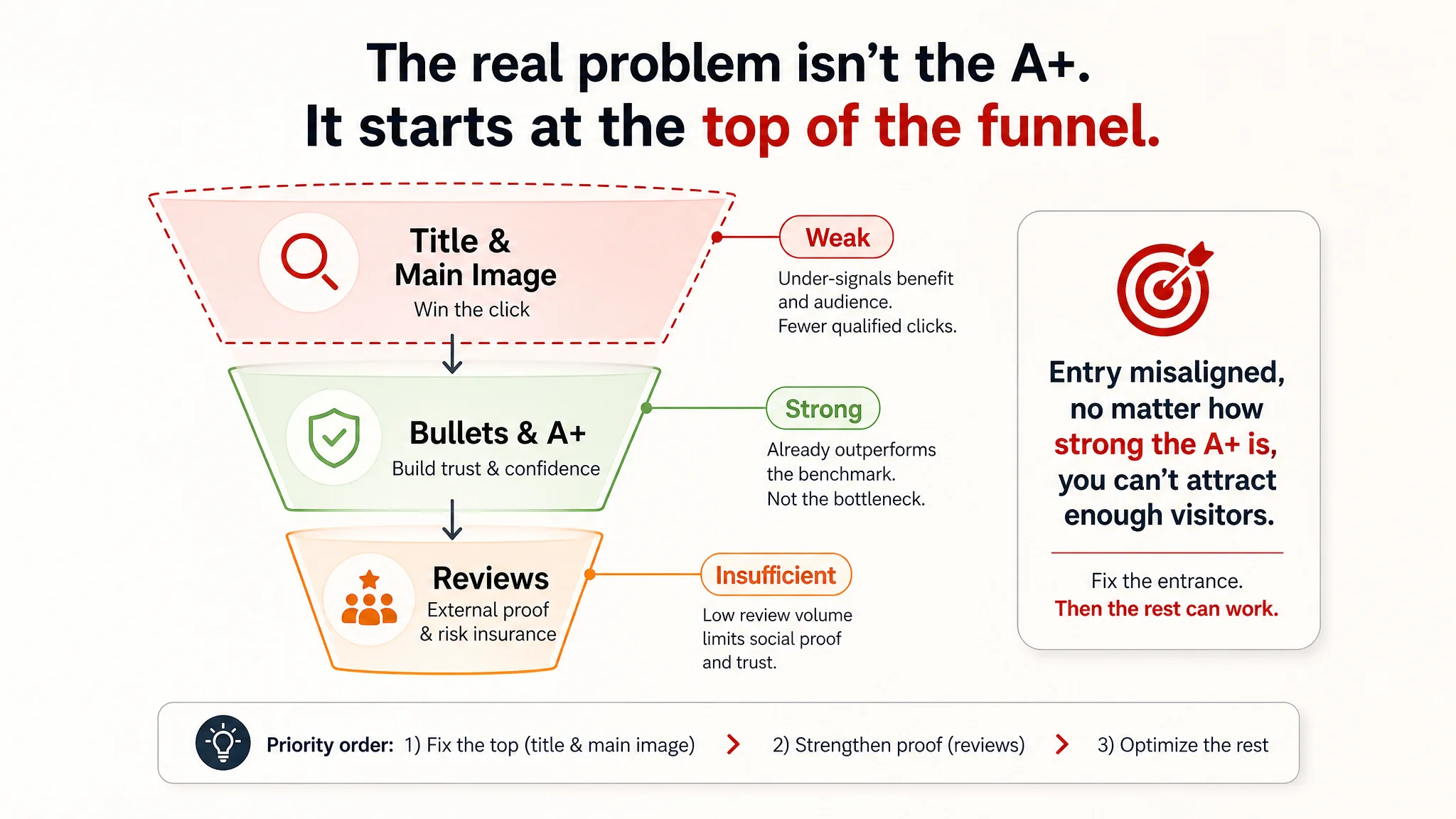
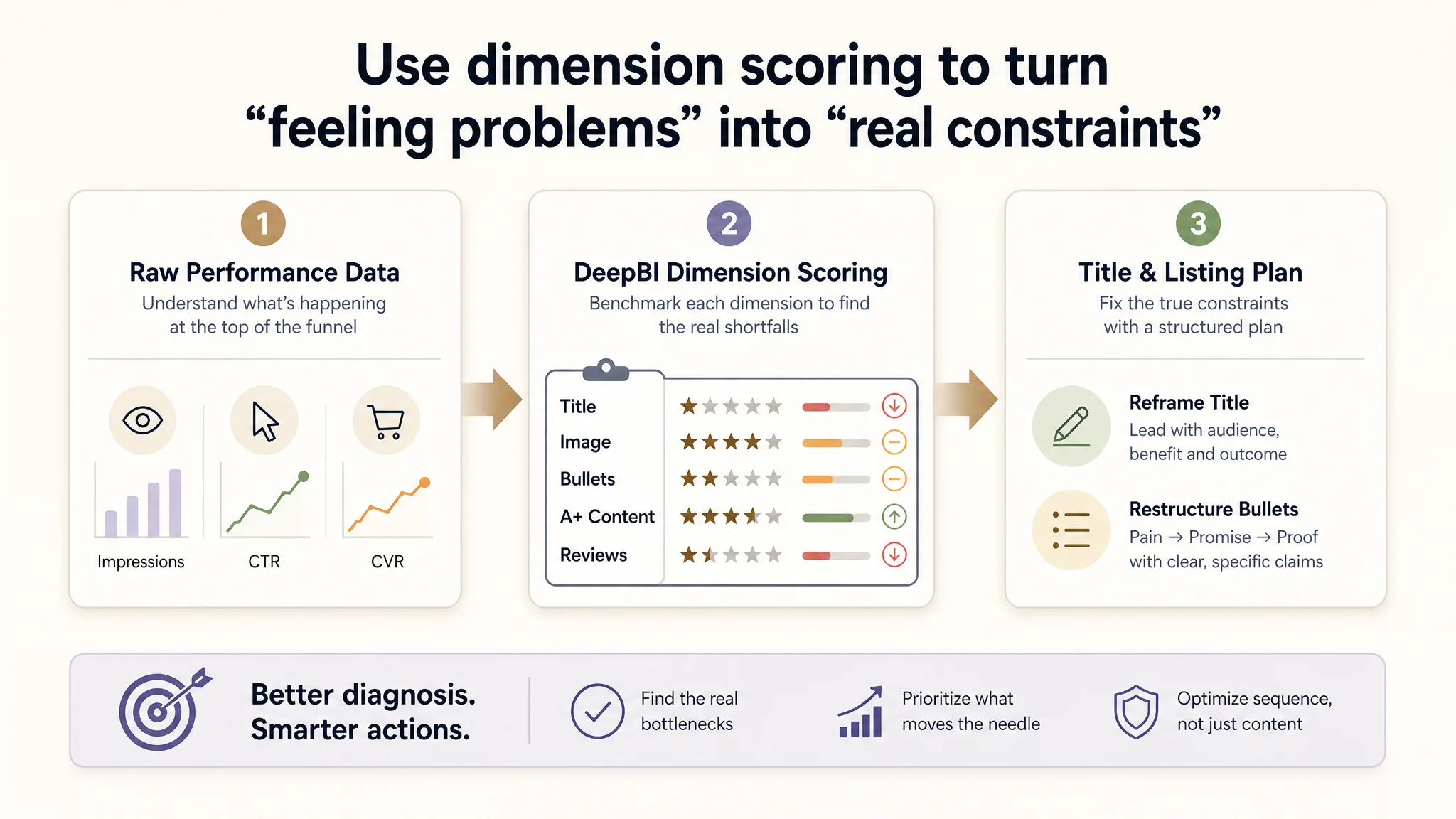
In the shampoo case above, DeepBI scored the listing across several dimensions and compared it to the category leader. The surprising finding: the A+ detail section actually outperformed the benchmark, while the title lagged significantly. The team had been planning to overhaul the part of the listing that was already strong, leaving the weak, under‑specified title untouched. This is exactly what “non‑negotiable” means in practice: if the title is wrong, you can’t compensate later in the funnel, no matter how polished the rest of the page is.
An effective title achieves three core objectives:
- Improves Search Ranking: By strategically embedding high-volume, relevant keywords, you increase the title's "weight" in the A9 algorithm, helping your product rank higher in search results.
- Boosts Click-Through Rate (CTR): A compelling title that clearly communicates the product's core benefit and unique selling proposition entices shoppers to click on your listing instead of a competitor's.
- Increases Conversion Rate (CVR): Once a shopper is on your page, a clear, informative title reinforces their initial interest and builds the confidence needed to make a purchase.
In the shampoo example, reframing the title to lead with the problem (“for fine hair”) and the outcome (“thickening”, “volumising”, “thick and full results”), rather than just the branded SKU name, fundamentally changed how both search and shoppers interpreted the product. The listing stopped behaving like a generic “brand item” and started performing as a solution aligned with real search intent. Failing to optimize means sacrificing exactly this kind of relevance, while adhering to platform guidelines, such as character limits, is essential to avoid listing suppression.
Amazon's Official Title Guidelines and Requirements
Adhering to Amazon's title guidelines is not a suggestion—it's a prerequisite for visibility. These rules apply to all products across global marketplaces, with some exceptions for media categories. Failure to comply can lead to your listing being suppressed from search results or removed entirely, immediately halting traffic and sales. Amazon's systems automatically flag and block listings that violate mandatory standards, making compliance a foundational step in your optimization strategy.
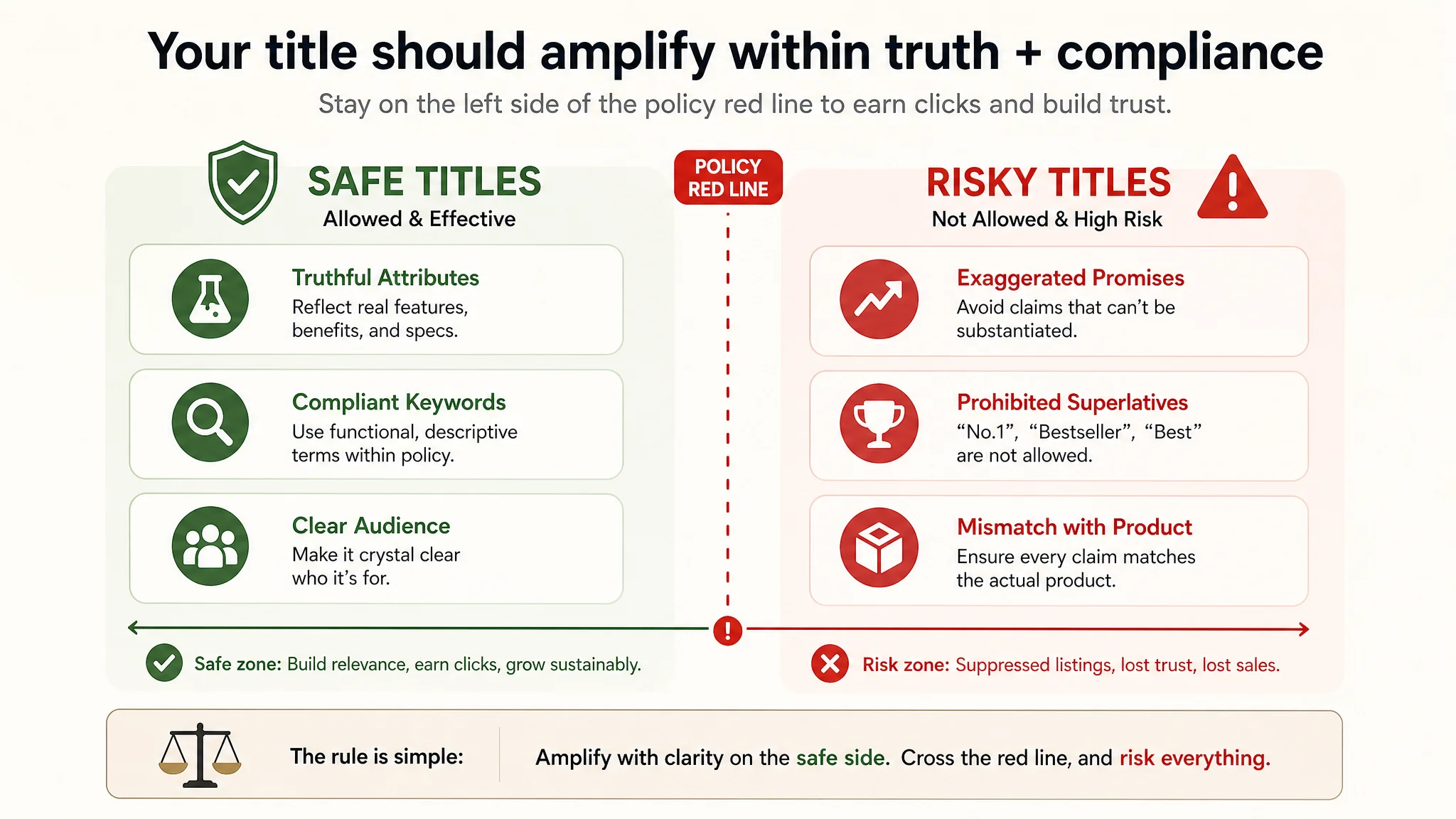
In practice, teams often overlook this when they are preoccupied with branding questions. In the UK haircare case, the initial internal debate was around “premium editorial feel” versus “more scientific, conversion‑driven sales page”. It would have been easy to introduce prohibited promotional phrasing (“No.1 Volume Brand”, “Bestseller”) directly into the title to “catch up” with a powerful competitor. DeepBI’s structured diagnosis forced the team to separate where they express authority (e.g., in images, A+ modules) from what can safely appear in the title without triggering policy issues.
Core Policy Compliance
The primary directive is to create titles that are accurate, concise, and help customers find your product. This means representing the product truthfully without misleading information. Every element of your title must align with Amazon's policies to ensure it remains active and discoverable. Regularly reviewing these guidelines is crucial, as platform updates can impact previously compliant listings.
When DeepBI recommended a new title structure for the shampoo listing, all suggestions stayed tightly bound to existing product truths: fine-hair positioning, volumising function, thickening effect, and actual capacity. The team had been tempted to lean harder into unqualified “lab‑level” claims to sound more technical, but the diagnostic framework made clear that violating “product entity consistency” or introducing non‑substantiated superlatives would simply trade short‑term click appeal for long‑term risk: suppressed listings, negative reviews, and increased returns. Compliance isn’t just a box to tick—it shapes how far you can safely push your promise at the title level.
Prohibited Content and Characters
To maintain a clean and trustworthy customer experience, Amazon strictly forbids certain elements in product titles. Including any of the following can trigger immediate suppression:
- Promotional phrases such as "Free Shipping," "Bestseller," or "Sale."
- Subjective or exaggerated claims like "Best," "Top-Rated," or "Highest Quality."
- Symbols or special characters (e.g., ™, ©, ®, !) that are not part of the product's brand or technical specification.
- Seller-specific information, including URLs or company contact details.
In competitive niches, brands often feel pressure to mirror the most aggressive claims they see on rival pages. The haircare team, for instance, fixated on the competitor’s strong “technology” language and long review history, and their first instinct was to “match the energy” with harder promises in the title and A+. DeepBI’s review dimension analysis showed the competitor’s advantage came from sheer review volume and clear framing, not from bending policy. That distinction helped the brand avoid reacting emotionally and adding risky promotional language into the title just to keep up.
Length and Structure Best Practices
For most categories, Amazon enforces a strict character limit, typically under 200 characters. Exceeding this limit will prevent your listing from being saved or indexed. A proven structure to maximize impact within this constraint is: Brand + Core Selling Point + Product Form + Key Features/Modifiers.
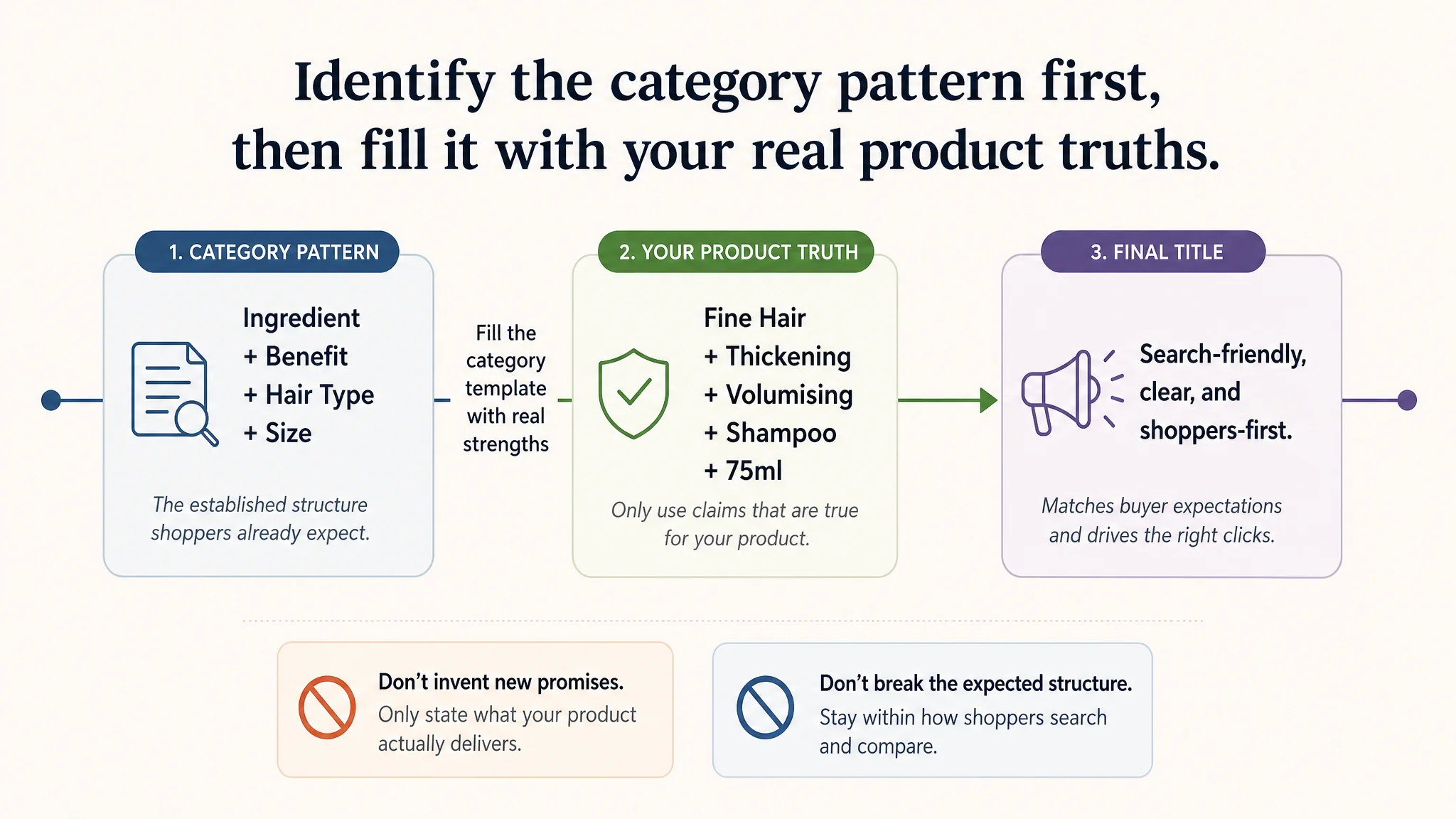
In the shampoo case, the original title followed an offline logic: “Brand + Line Name + Product Name + Capacity”. It looked elegant, but it underused the available character space for search‑relevant, buyer‑oriented information. DeepBI’s restructured version retained the brand while injecting audience tags (“for Fine Hair”) and benefit language (“Thickening Shampoo”, “Volumising Hair Treatment”, “Thick and Full Results”) into the same character budget. The brand didn’t need more space; it needed a better sequence. This is the essence of structure best practice: using limited characters to encode who it’s for, what it does, and what format it takes, in that order.
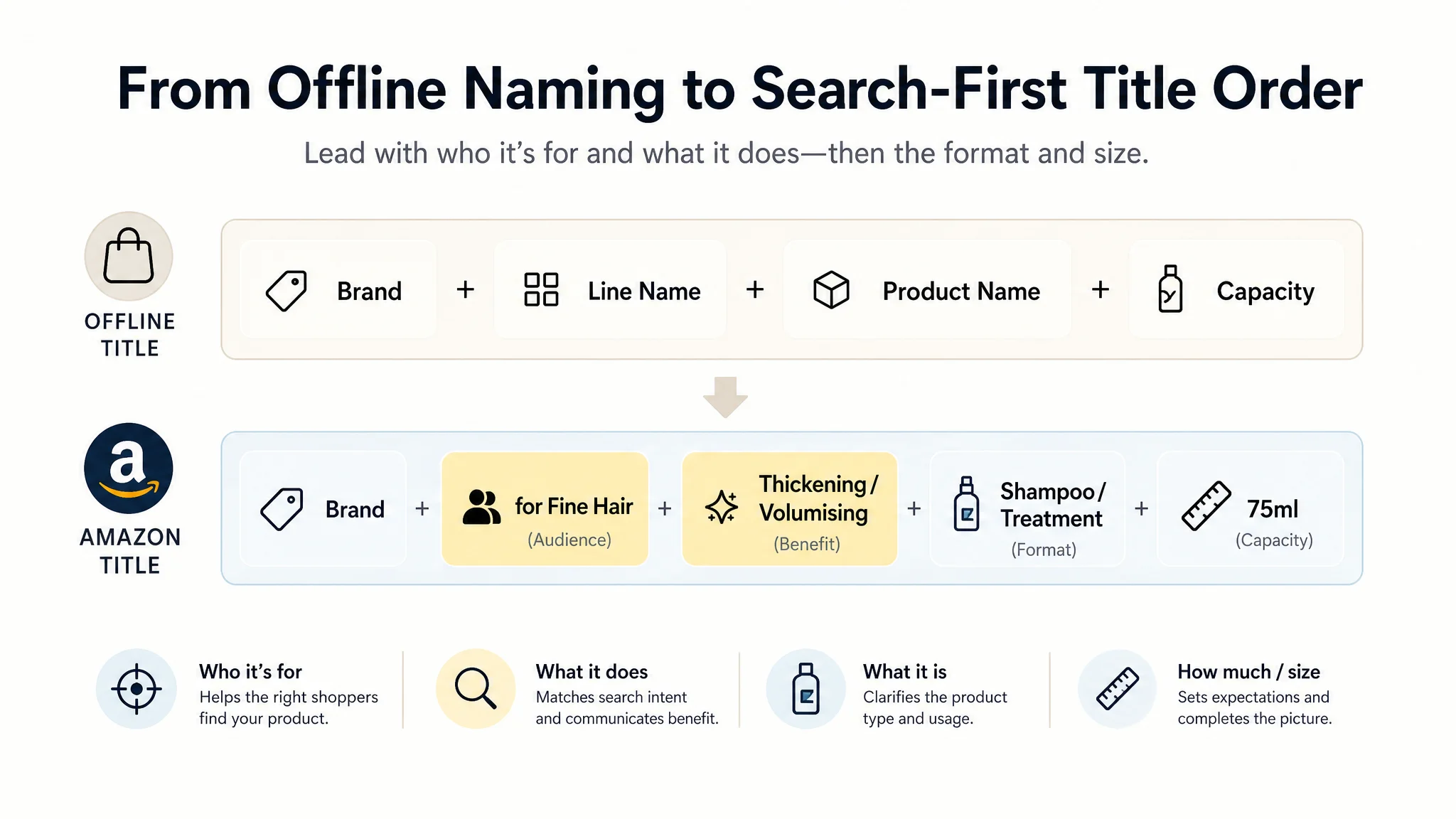
Amazon usually recommends placing the brand name at the beginning for optimal brand recognition and indexing. For less established brands, if your primary goal is immediate keyword discoverability, you can strategically place the brand name later, but weigh this against Amazon's preferred structure and potential long-term brand building. In the UK case, the brand had significant offline equity, but DeepBI’s comparison showed that in this crowded micro‑category, function and fit drove discovery more than brand alone. The recommended compromise was to keep the brand front, but immediately follow it with problem and result language, rather than abstract line names.
Crafting High-Performing Amazon Titles: A Strategic Approach
An effective Amazon title does more than just name a product; it's a powerful tool that must satisfy both the A9 search algorithm and human shoppers. Achieving top performance requires a strategic balance between keyword-driven discoverability, clear communication of value, and strict adherence to platform compliance. Moving beyond basic keyword stuffing to a structured, data-informed approach is essential for improving click-through rates (CTR) and driving sales.
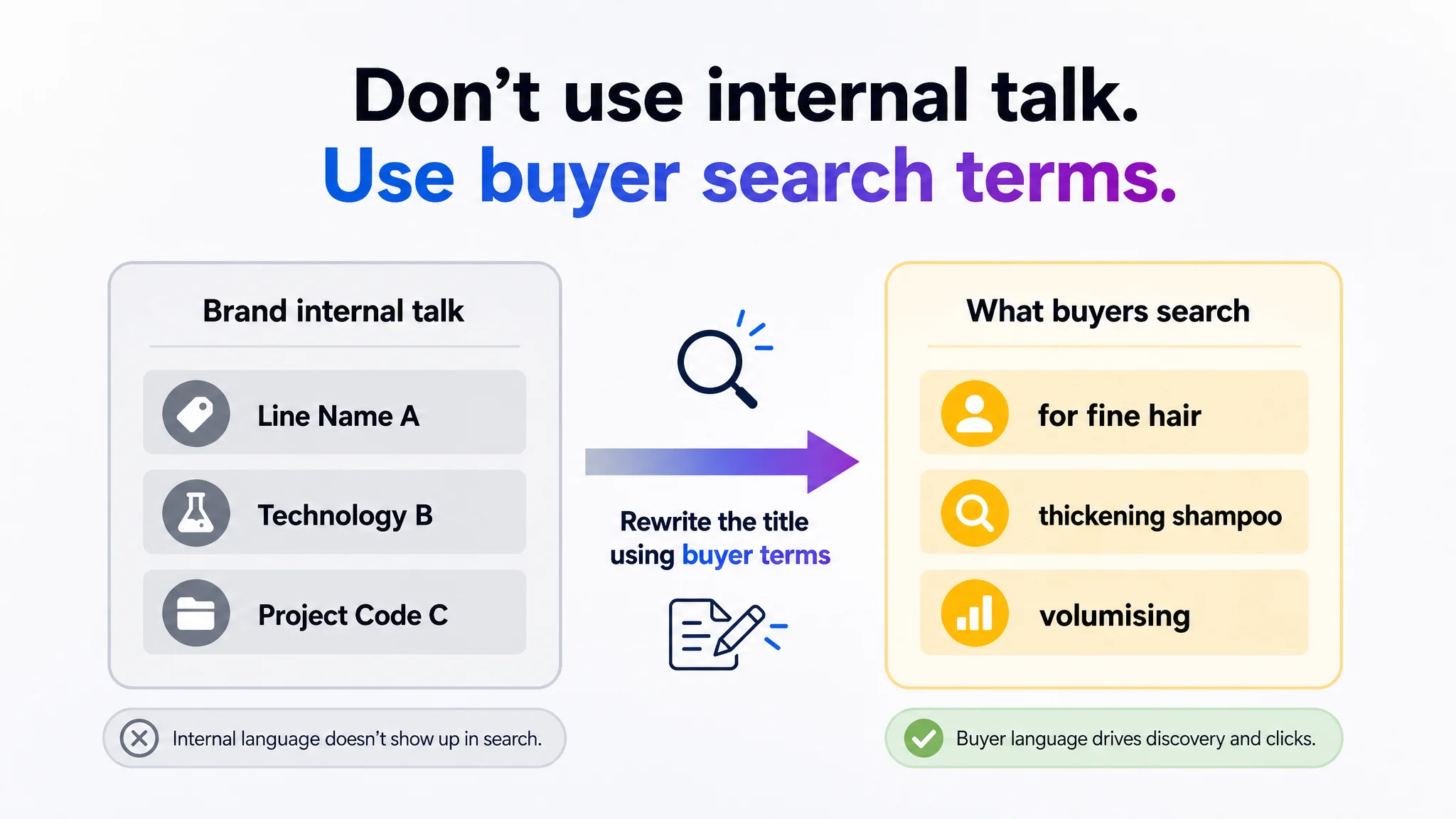
The shampoo project illustrated this tension clearly. The team’s first impulse was to “add more keywords” into the title and bullets, hoping that more technical phrases would automatically improve ranking and perceived expertise. DeepBI’s dimension scoring against the category leader showed that the issue was not keyword count but keyword placement and framing: the core search intents (“fine hair”, “thickening”, “volumising”) were either buried or missing. Once the title was reframed around those buyer phrases, the listing spoke the same language as shoppers, without devolving into spam.
Keyword Integration for Discoverability
To maximize visibility, your title must align with high-frequency customer search terms. This involves analyzing top-performing competitor titles to reverse-extract their core keyword strategies. By identifying and incorporating high-CTR "variant feature words" that your rivals use successfully, you can capture more qualified traffic. The objective is to maximize the title's traffic-driving weight by focusing on terms that actual buyers are using, ensuring your product appears in the most relevant search results.
In the fine‑hair segment, DeepBI’s analysis highlighted exactly these “variant feature words”: “thickening”, “volumising”, “for fine hair”, and outcome phrases such as “thick and full”. The dominant competitor built its title around ingredients and benefits that directly matched those patterns. By contrast, the haircare brand’s original title prioritised internal line naming that meant little in search behaviour. The revised, search‑aligned title didn’t invent new claims—it simply recoded existing product truths in the vocabulary customers already used. That shift is what keyword integration really looks like when grounded in a diagnostic comparison rather than guesswork.
Brand Positioning and Recognition
A standardized title structure builds brand equity and customer trust. A proven formula is to lead with your brand name: Brand + Core Selling Point + Product Form + Supplementary Modifiers. Placing the brand first ensures immediate recognition, which is crucial for building a loyal customer base and encouraging repeat purchases. This consistency across your product catalog reinforces your market presence.
However, real‑world diagnostics often reveal a gap between how brands want to lead and how shoppers actually search. In the UK haircare case, the team initially believed their salon‑level brand alone would pull clicks, so they used the title primarily to display branding and capacity. DeepBI’s comparison against a mass‑market competitor with far higher review volume showed that shoppers in this micro‑category were not starting from brand, but from problem and promise. The recommendation was not to downplay the brand, but to let brand and benefit share the first line: name first, then immediately “for Fine Hair” and “Thickening/Volumising Shampoo”. This subtle repositioning allowed the listing to compete on clarity and trust, not just on logo.
Highlighting Key Product Attributes
After the brand, the title must immediately convey the product's primary benefit or solve a customer's problem. The "Core Selling Point/Result Promise" component is your chance to communicate the most compelling attribute—be it a key feature, a unique benefit, or a solution to a common pain point. It's critical to be concise, removing any redundant or repetitive modifiers to ensure the main value proposition is clear and impactful within the first few words.
DeepBI’s rework of the shampoo title followed exactly this logic. Instead of abstract descriptors, the title layered:
- Audience: “for Fine Hair”
- Benefit: “Thickening”, “Volumising”
- Outcome: “Thick and Full Results”
- Form: “Shampoo”, “Hair Treatment”
- Size: “75ml”
No extra adjectives were added purely for effect; every term either matched a search intent or clarified who should buy. The original internal plan—“sound more scientific in the title”—would likely have added vague lab language without improving discoverability. The diagnostic exercise turned that instinct into a tighter, evidence‑based attribute stack that spoke directly to fine‑hair pain points.
Category-Specific Title Considerations
Every title must operate within Amazon's strict guidelines to avoid listing suppression. This includes adhering to character limits, typically around 200 characters, and avoiding prohibited promotional language like "bestseller" or "free shipping." Furthermore, different product categories have unique style guides and conventions. Ensuring your title is fully compliant and tailored to its specific category is a non-negotiable step for maintaining visibility and account health.
Category conventions were central in the shampoo project. The competitor’s winning title clearly followed the haircare category’s established pattern: ingredient hook + benefit + hair type + key features + capacity. By benchmarking against that pattern, DeepBI could highlight the haircare brand’s divergence from what shoppers expected in this niche. The recommendation was not to copy the competitor, but to adapt the same structural logic using only claims that were true for the product. This is how category‑specific thinking keeps you from reinventing the wheel while still staying aligned with your own product reality.
Leveraging DeepBI for Title Optimization
Optimizing a product title is more than just keyword stuffing; it's a strategic exercise in balancing algorithmic requirements with human psychology. Manual approaches are often inconsistent and struggle to keep pace with market dynamics. An AI-powered system like DeepBI provides a data-driven framework to engineer high-performance titles systematically, moving beyond guesswork to achieve measurable improvements in visibility and conversion.
The UK haircare example shows why this kind of structured diagnosis matters. The brand’s internal narrative was compelling—“our A+ is too emotional; we need more technical selling”—but it didn’t match the data. DeepBI’s listing score broke performance down into title, main image, bullets, detail page, and reviews. The A+ detail page was actually the strongest dimension; the real gaps were title and review volume. Without that dimensioned view, the team was about to invest heavily in optimizing the one area that was not constraining the funnel.
DeepBI's Listing Intelligence for Title Enhancement
DeepBI is an AI-powered optimization system designed for the entire Amazon listing lifecycle, from diagnosis to delivery. Its dedicated Title Analysis Agent transforms title creation from an art into a science. Instead of simply packing in keywords, the system analyzes the keyword layout, clarity of selling points, and structural standards of top competitors to reverse-engineer a winning formula.
In the shampoo project, this meant:
- Benchmarking the brand’s title against the category leader’s structure and terminology.
- Identifying missing or buried “variant feature words” like “for fine hair”, “thickening”, and “volumising”.
- Reassembling the title using a “Brand + Core Selling Point + Product Form + Modifiers” pattern that aligned with both Amazon guidelines and real search behaviour.
The system intelligently deconstructs your product and the competitive landscape to build a title that serves both the A9 algorithm and the customer. It follows proven e-commerce structures, such as "Brand + Core Selling Point + Product Form + Modifiers," while automatically removing redundant words. More importantly, it identifies and incorporates high-click-rate "variant feature words" from market leaders, ensuring your title is not just compliant but also compelling.
Connecting Title Optimization to Organic and Ad Performance
A powerful title directly fuels both organic and paid traffic performance. By improving keyword relevance and readability, an optimized title can significantly boost your Click-Through Rate (CTR), a critical factor in improving your Best Sellers Rank (BSR). A higher organic CTR signals to Amazon that your product is a strong match for customer searches, leading to better visibility.
In the haircare case, the initial data pattern—“impressions fine, CTR and conversion weak”—is exactly what you would expect from a listing where the lower funnel (A+) is strong but the entry point (title) is vague. The A+ couldn’t do its job because too few of the right shoppers were clicking through. DeepBI’s title and bullet recommendations were designed to tighten this connection: clearer audience targeting and benefit language at the top should improve CTR; more aligned expectations also reduce the risk of disappointed clicks that don’t convert.
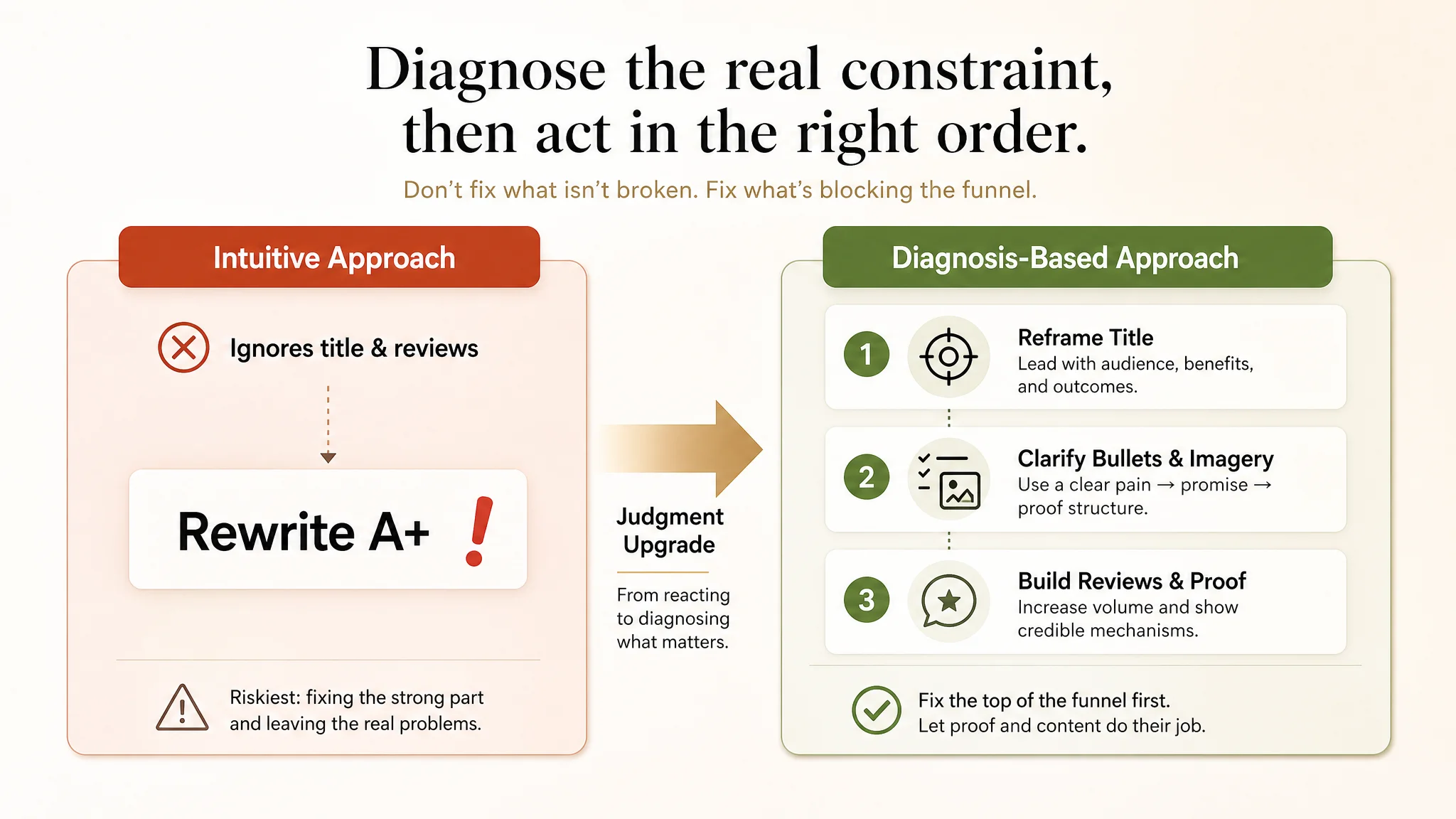
This performance lift extends directly to your advertising campaigns. A higher CTR on your Sponsored Products ads means more shoppers are engaging with your listing for the same number of impressions, which can lead to a lower Advertising Cost of Sale (ACoS). DeepBI helps create a powerful feedback loop: a better listing attracts more precise traffic, which in turn generates data signals to inform future optimizations, driving healthier long-term growth. In practice, the haircare team shifted from planning a broad creative overhaul to a sequenced plan: first fix title and bullets, then sharpen visual proof, and only then consider any incremental A+ changes—so ad spend would be pushing traffic into a funnel tuned from top to bottom.
Common Pitfalls and How to Avoid Them
Navigating Amazon's policies and algorithm requires precision. Even well-intentioned sellers can fall into common traps that suppress listings, damage brand trust, and reduce sales velocity. Understanding these pitfalls is the first step toward building a resilient and high-performing product presence.
The haircare brand’s journey is a textbook illustration of these traps. Nothing about their initial plan was careless: they had invested in high-end imagery and believed their sophisticated, lifestyle-led A+ was “too emotional” for Amazon. Their proposed fix—“let’s make it more technical and salesy”—felt logical. DeepBI’s dimension scores, however, exposed the misalignment: the A+ was outperforming the benchmark, while the title and review profile were dragging the listing down. They were about to fix what wasn’t broken and ignore what was.
Addressing Policy Violations and Suppressed Listings
The most severe listing errors stem from misleading information that creates a gap between customer expectation and reality. Using prohibited promotional terms like "bestseller" or making exaggerated claims can trigger immediate policy flags. However, the most damaging mistake is violating "product entity consistency"—altering a product's inherent attributes like material, color, or industrial design in the title.
This discrepancy between the listing and the physical item is a direct path to destructive negative reviews, increased return rates, and suppressed listings. To avoid this, treat authenticity as your highest principle. Ensure every detail in your title is a factual representation of the product. All optimization efforts must respect the product's core identity to maintain customer trust and account health.
In the shampoo case, DeepBI’s analysis also touched on reviews and expectation management. The product had very few but uniformly positive reviews, compared with the competitor’s massive review base and similar star rating. The temptation was to over‑promise in the title and A+ to accelerate uptake. Instead, DeepBI advised tightening targeting (“for fine hair”, clear volumising/thickening promise) and adding mechanism‑level proof, so that the shoppers who did buy were precisely those who would benefit. This is another way of preventing “product entity” drift: your title and visuals filter for the right user, reducing the risk of negative feedback driven by misaligned expectations.
Avoiding Redundancy and Future-Proofing Titles
Many sellers dilute their title's impact through keyword stuffing and repetitive, low-value modifiers. With a strict character limit, every word must serve a purpose. Redundant titles are difficult for customers to read, which can significantly lower your Click-Through Rate (CTR) from search results. Furthermore, Amazon's algorithm prioritizes relevance and clarity, often down-ranking titles that appear spammy.
To future-proof your titles, adopt a clean, structured formula, such as: Brand + Core Benefit + Product Type + Key Specifiers. Proactively remove ineffective and repetitive words to maximize clarity and impact. This approach not only improves immediate performance but also aligns with the long-term direction of Amazon's search algorithm, ensuring your listing remains competitive and effective.
In the haircare project, “more words” was the team’s first instinct for competing with a high‑information rival page. DeepBI’s bullet‑by‑bullet comparison showed that the competitor wasn’t just longer; it was more structured, following a “pain → promise → proof” pattern. The fix wasn’t to stuff the title or bullets with extra adjectives, but to re‑sequence and condense: each term needed a job, either expressing a buyer pain (“fine hair”), a result (“thick and full”), or a proof element (“technology”, “system usage”). That is what future‑proofing looks like in real listings: leaner, sharper language that will survive algorithm shifts because it is grounded in clarity, not volume.
Conclusion: Sustained Success Through Optimized Amazon Titles
Your product title is far more than a simple descriptor; it is the cornerstone of your Amazon strategy, acting as the primary engine for visibility, clicks, and ultimately, sales. Achieving a high-performing title is not a matter of guesswork but a precise collaboration between human strategy and data-driven algorithms. Sustained success requires a disciplined approach that balances three critical elements: strict adherence to Amazon's platform compliance, strategic keyword integration informed by market analysis, and a relentless focus on measurable KPI improvements like Click-Through Rate (CTR) and Conversion Rate (CVR).
The UK haircare brand’s experience underscores how easy it is to misread where your real constraint lies. Their initial diagnosis focused on “branding tone” and A+ style, when the data showed that title signalling and review depth were the true bottlenecks. DeepBI did not fix this by generating more content; it fixed it by changing the team’s judgment—sequencing title, bullets, visuals, and proof in a rational order that matched how shoppers actually move through the funnel.
The Amazon marketplace is dynamic, meaning title optimization is not a one-time task but a continuous cycle of analysis, refinement, and deployment. To maintain a competitive edge, sellers must move beyond manual trial and error. Leveraging an end-to-end intelligent optimization system like DeepBI transforms this process from a complex, siloed operation into a streamlined workflow. By integrating diagnosis, planning, and execution, such tools turn data insights into direct action, allowing you to build a robust data evidence chain for every change and secure a lasting advantage in a crowded market—while ensuring that every optimisation you make starts at the true constraint, not the most visible symptom.