Introduction: The Power of Strategic Bidding on Amazon
In the hyper-competitive Amazon marketplace, where traffic costs are constantly rising, simply participating in Pay-Per-Click (PPC) advertising is no longer a guarantee of success. Sponsored Products are a powerful engine for driving sales and brand visibility, but their effectiveness hinges entirely on the intelligence of your bidding strategy. Many sellers find themselves trapped in a cycle of high ad spend with disappointing returns, struggling with low Click-Through Rates (CTR) and poor conversions that inflate their Advertising Cost of Sale (ACoS). This challenge highlights a critical shift in e-commerce: success is no longer about who spends the most, but who spends the smartest.
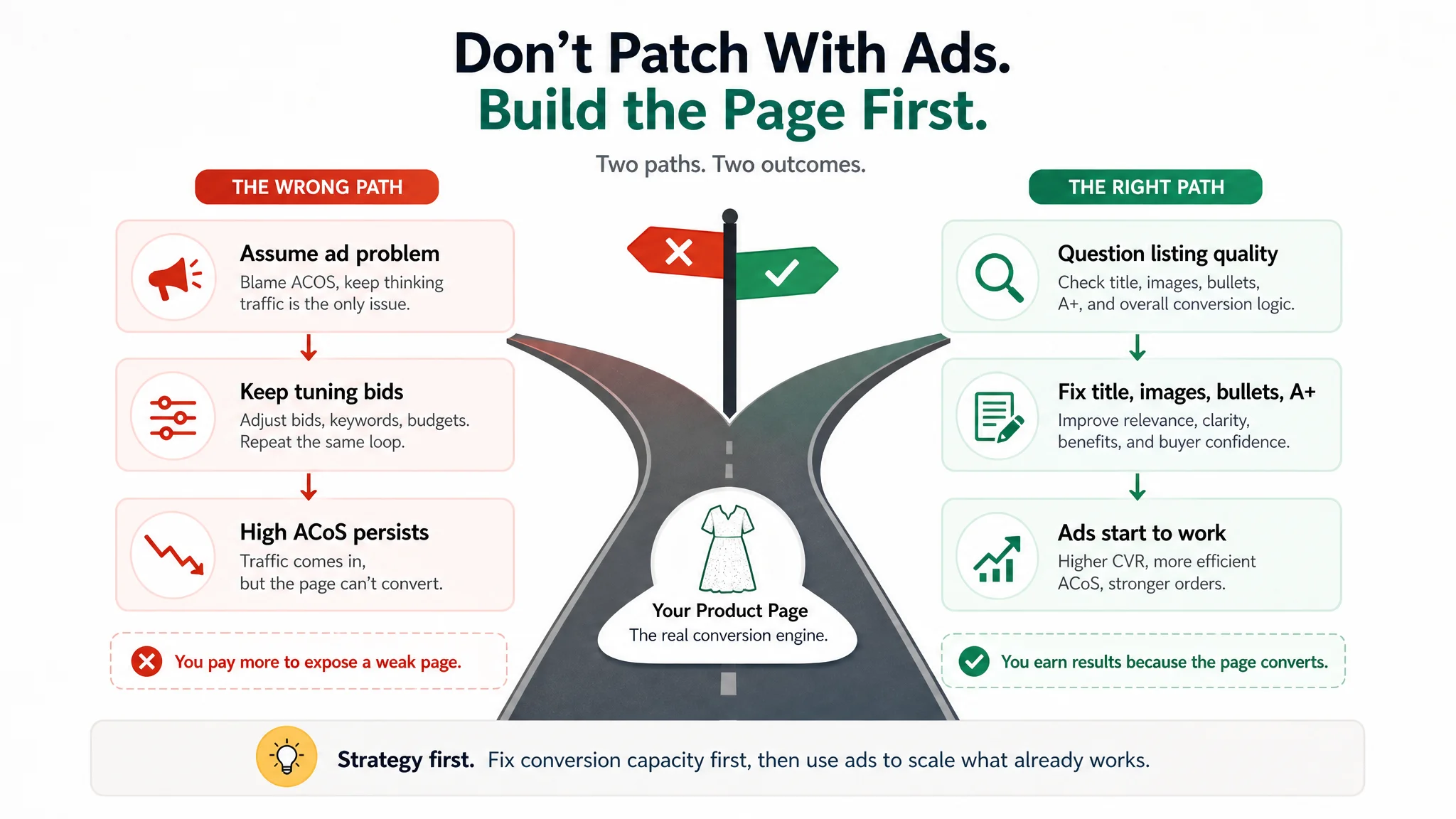
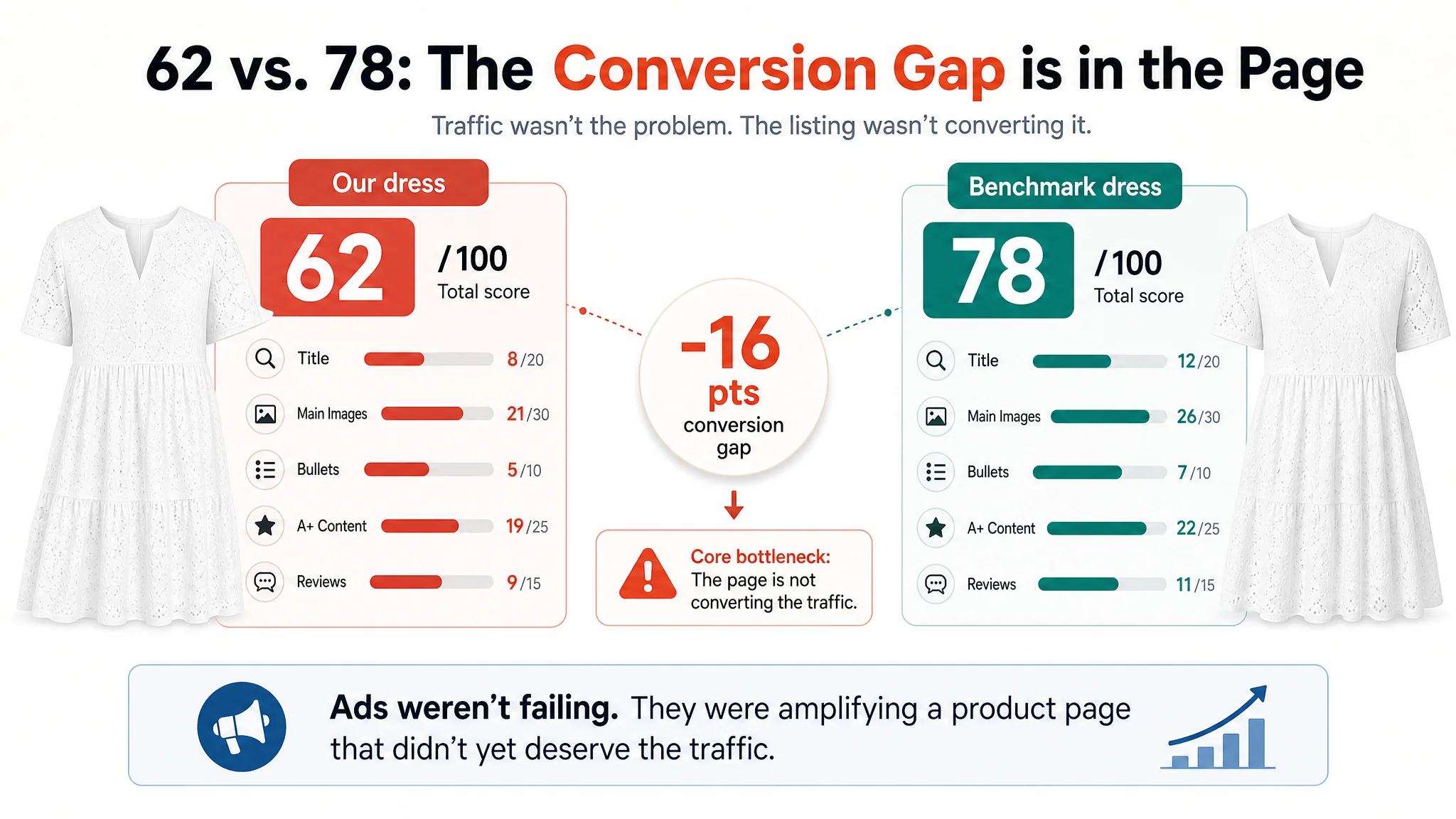
In practice, this “spend more, get less” pattern often hides a deeper problem. A US fashion seller promoting a summer eyelet dress illustrates this. The team reacted to rising ACoS and unstable orders by endlessly tweaking campaigns—adjusting bids, expanding keywords, testing larger budgets—convinced that traffic was the constraint. For weeks, ads kept delivering clicks, but CVR barely moved and ACoS stayed stubbornly high. Only when they ran a DeepBI listing analysis against a directly comparable competitor did the real issue become obvious: the page scored 62/100 versus the competitor’s 78/100. Title logic, main-image sequence, bullet persuasion, and A+ structure were all systematically weaker. Ads weren’t “failing”; they were amplifying a product page that didn’t yet deserve the traffic.
The era of making advertising decisions based on intuition or subjective judgment is over. Today, winning on Amazon requires a data-driven approach where every bid is a calculated investment aimed at a measurable outcome. Optimization has evolved into a precise, algorithm-backed discipline focused on ensuring every adjustment translates into a tangible improvement in CTR and Conversion Rate (CVR). This means moving beyond guesswork and establishing a closed-loop system where you can clearly connect your bidding actions to performance data, creating a cycle of continuous improvement. To navigate this complexity, sellers need advanced tools. Platforms like DeepBI, an AI-driven advertising automation and operational intelligence tool, are designed to provide this data-centric framework, helping transform your ad spend from a mere expense into a core driver of sustainable, long-term growth.
Understanding Amazon PPC Bidding Fundamentals
To master Amazon PPC, you must first understand the engine that drives it: the ad auction. Your bid is not just a number; it's a strategic input into a competitive system. Winning requires knowing the rules of engagement and the key performance indicators (KPIs) that measure success.
The Amazon Ad Auction: How Bids Translate to Clicks
Amazon’s advertising platform operates on a second-price auction model. This means that if you win the ad placement, you don’t pay your maximum bid amount. Instead, you pay just $0.01 more than the second-highest bidder.
For example, imagine you bid $2.00 for a specific keyword, and the next highest competitor bids $1.50. If your ad wins the auction, your actual Cost Per Click (CPC) will be $1.51. This system encourages advertisers to bid their true maximum willingness to pay for a click, as you are rewarded for winning without being penalized by overpaying. Your bid sets the ceiling, but the competition determines the actual price.
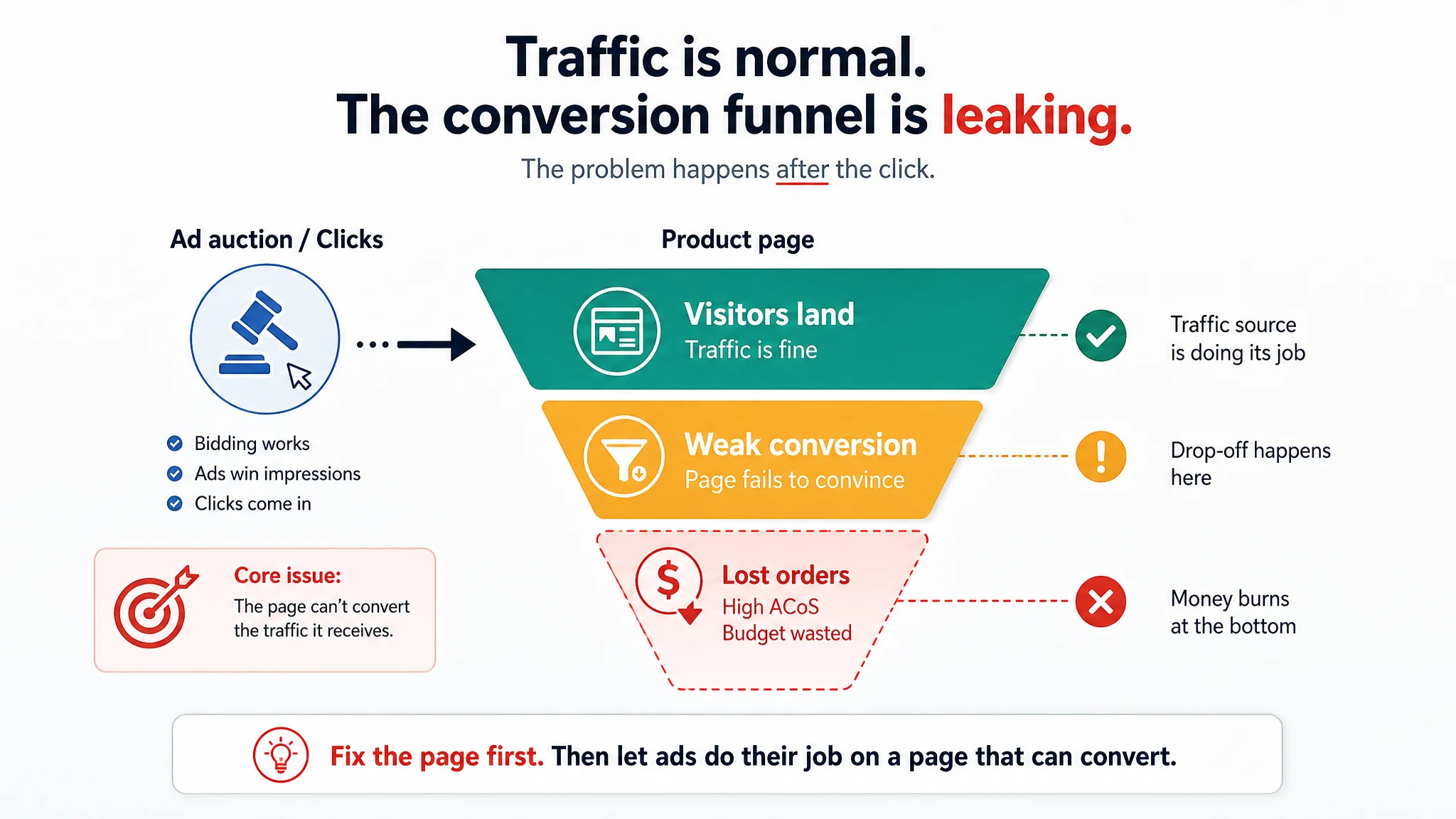
In the summer dress case, the seller’s bid decisions were not inherently irrational—they were willing to pay for traffic in a fairly competitive fashion category. The auction was behaving as designed: bids were winning impressions and generating clicks. Yet the seller experienced the auction as “Amazon ads just got more expensive,” because each click was feeding into a weak conversion funnel. This is a common misinterpretation: sellers blame the auction or “rising CPCs,” when the core issue lies in what happens after the click.
Key Bidding Metrics and Their Impact
Effective bidding is impossible without tracking the right metrics. These KPIs provide the data feedback loop needed to diagnose performance and make informed adjustments.
- Impressions: The number of times your ad is displayed to shoppers.
- Clicks: The number of times shoppers clicked on your ad.
- Click-Through Rate (CTR): The percentage of impressions that result in a click (Clicks ÷ Impressions). A low CTR (e.g., below 0.35%) often signals a problem with your main image's appeal or targeting relevance.
- Conversion Rate (CVR): The percentage of clicks that result in a sale (Orders ÷ Clicks). A low CVR (e.g., below 7%) suggests issues with your detail page, such as weak A+ content or poor reviews.
- Advertising Cost of Sale (ACOS): Your ad spend as a percentage of the revenue generated from those ads (Ad Spend ÷ Ad Sales). This is a primary measure of campaign profitability.
- Return on Ad Spend (ROAS): The revenue generated for every dollar spent on advertising (Ad Sales ÷ Ad Spend). It is the inverse of ACOS.
These metrics work together to tell a story. A high CTR with a low CVR indicates you are attracting clicks but failing to convert them, pointing to a listing optimization issue. Conversely, a profitable ACOS on a high-CVR keyword is a clear signal to increase your bid to capture more volume.
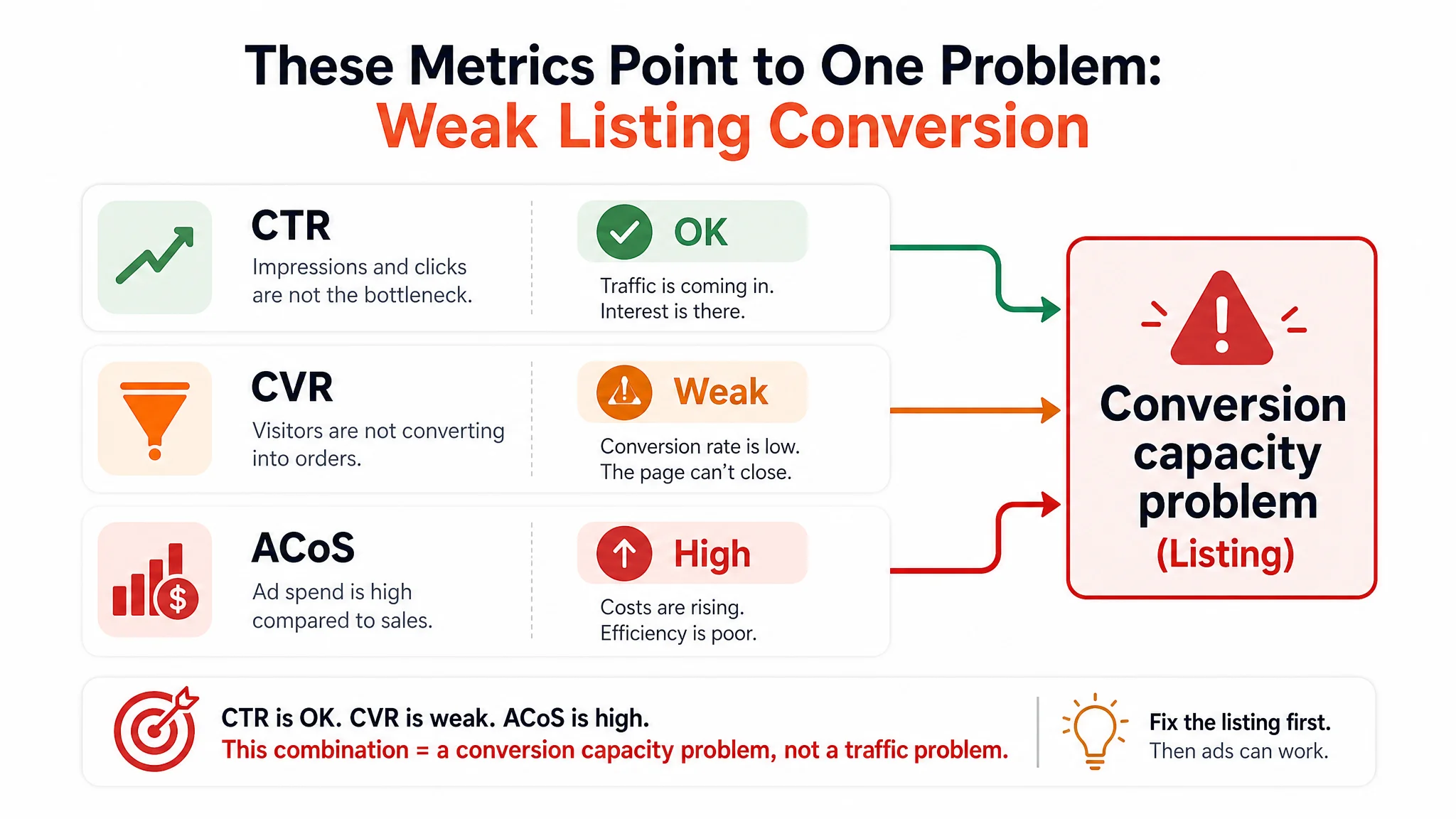
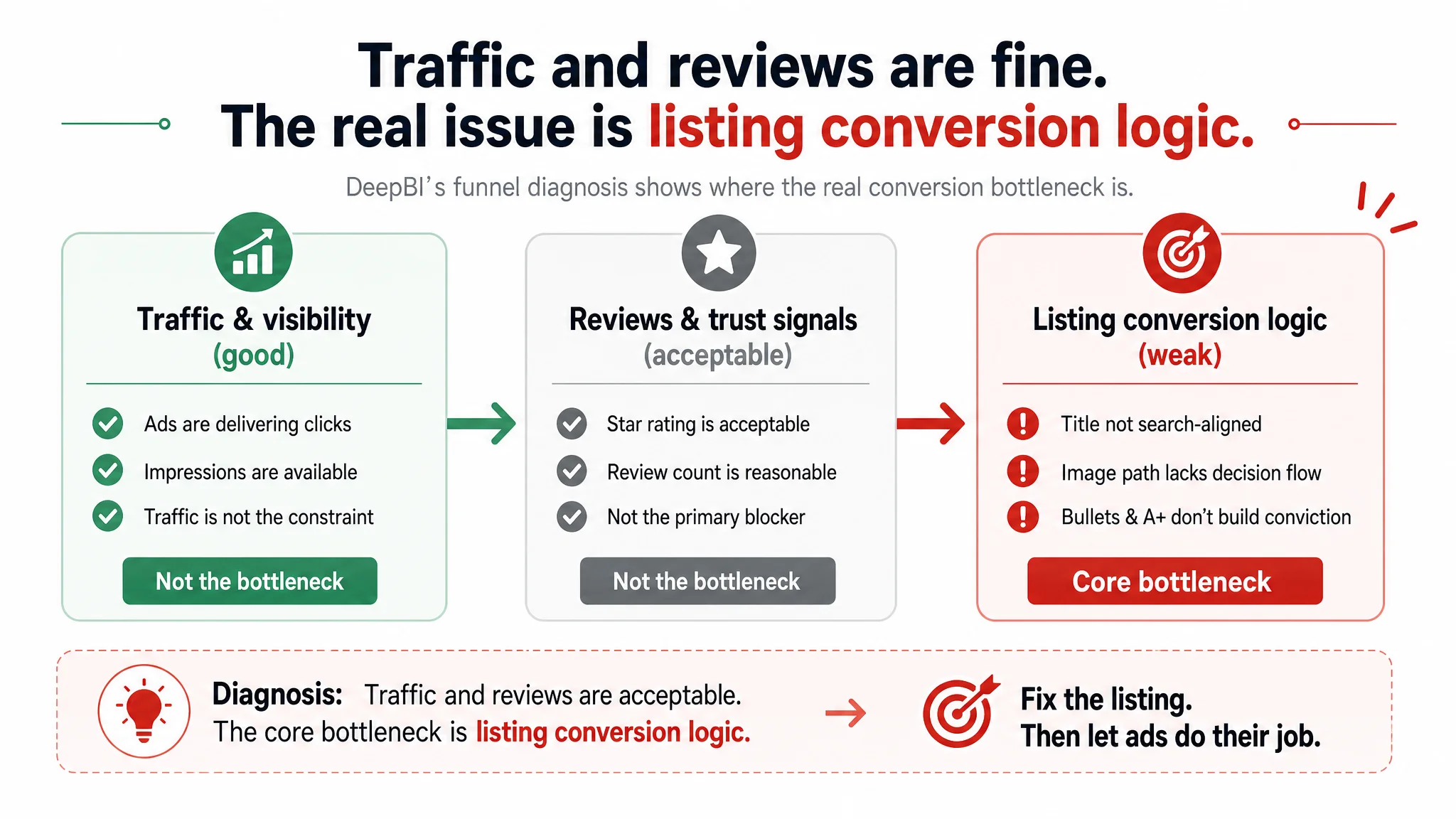
In the dress example, weeks of campaign logs showed that impressions and clicks were not the bottleneck. CTR was not catastrophically low, but CVR stayed weak and ACoS remained elevated. Internally, the team kept reading high ACoS as “we need better traffic,” so they changed bids and keywords while leaving the listing almost untouched. DeepBI’s scoring reframed those same metrics: the combination of adequate CTR and underwhelming CVR aligned perfectly with a 62/100 listing behind a 78/100 competitor. The diagnosis was unmistakable—this was not a traffic volume or auction mechanics problem; it was a conversion capacity problem that any bidding strategy would struggle to overcome until the page improved.
Mastering Dynamic Bidding Strategies for Sponsored Products
Amazon's bidding strategies allow you to automate how you compete in the ad auction, directly impacting your campaign's visibility, cost, and overall performance. Choosing the right strategy is crucial for aligning your advertising spend with your business goals, whether that's maximizing sales velocity or maintaining a target ACoS.
Amazon's Dynamic Bidding Options: "Down Only" vs. "Up and Down"
Amazon provides three core bidding strategies for Sponsored Products campaigns, each with a distinct approach to bid adjustment based on the likelihood of a conversion:
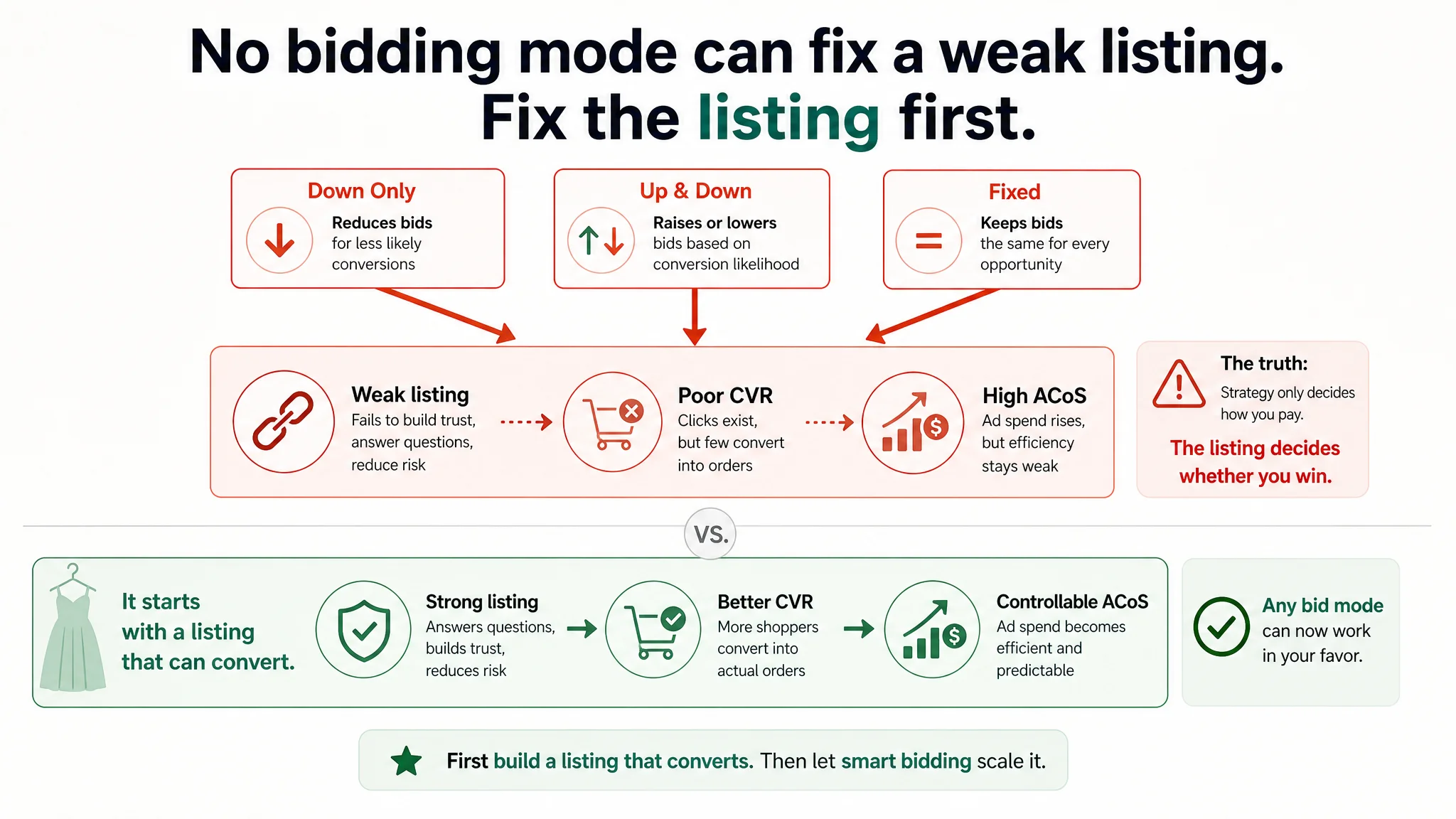
- Dynamic bids - down only: This is the most conservative strategy. Amazon will reduce your bid in real-time for auctions it deems less likely to convert to a sale. Your bid will never be increased above your set amount. This helps prevent wasteful spending on low-quality clicks, protecting your ACoS.
- Dynamic bids - up and down: This strategy gives Amazon the most flexibility. It can increase your bid by up to 100% for placements at the top of the first page of search results and by up to 50% for all other placements when a conversion is highly likely. For example, a $1.00 bid could be raised to as much as $2.00. It will also lower the bid for less promising auctions.
- Fixed bids: With this option, Amazon uses your exact bid for every opportunity without making any dynamic adjustments based on conversion probability. This provides maximum predictability and control but forgoes automated optimization.
Sellers often overestimate how much these strategies can compensate for a weak page. In the fashion case, the team cycled between more cautious and more aggressive settings—toggling between “Down Only,” “Up and Down,” and more tightly controlled “Fixed Bids”—hoping that a different bid logic would “fix” their ACoS. But since the underlying listing could not effectively convert the traffic, no bidding mode meaningfully improved overall efficiency. The dynamic strategy only decides how aggressively you pay for opportunities; it cannot change what happens when shoppers land on your product detail page.
When to Use Each Dynamic Bidding Strategy
Selecting the optimal strategy depends on your campaign objectives and risk tolerance:
- Use "Down Only" when your primary goal is profitability and maintaining a strict ACoS. It's an excellent choice for mature campaigns with stable performance or for sellers working with a limited budget.
- Use "Up and Down" during aggressive growth phases, such as a new product launch or a major sales event like Prime Day. This strategy is designed to maximize impressions and sales opportunities, but be prepared for a potential increase in average CPC and ACoS.
- Use "Fixed Bids" when you have strong data on keyword performance and want to manually control your exact bid without Amazon's algorithm intervening. This is best for experienced advertisers who are actively testing and managing their campaigns at a granular level.
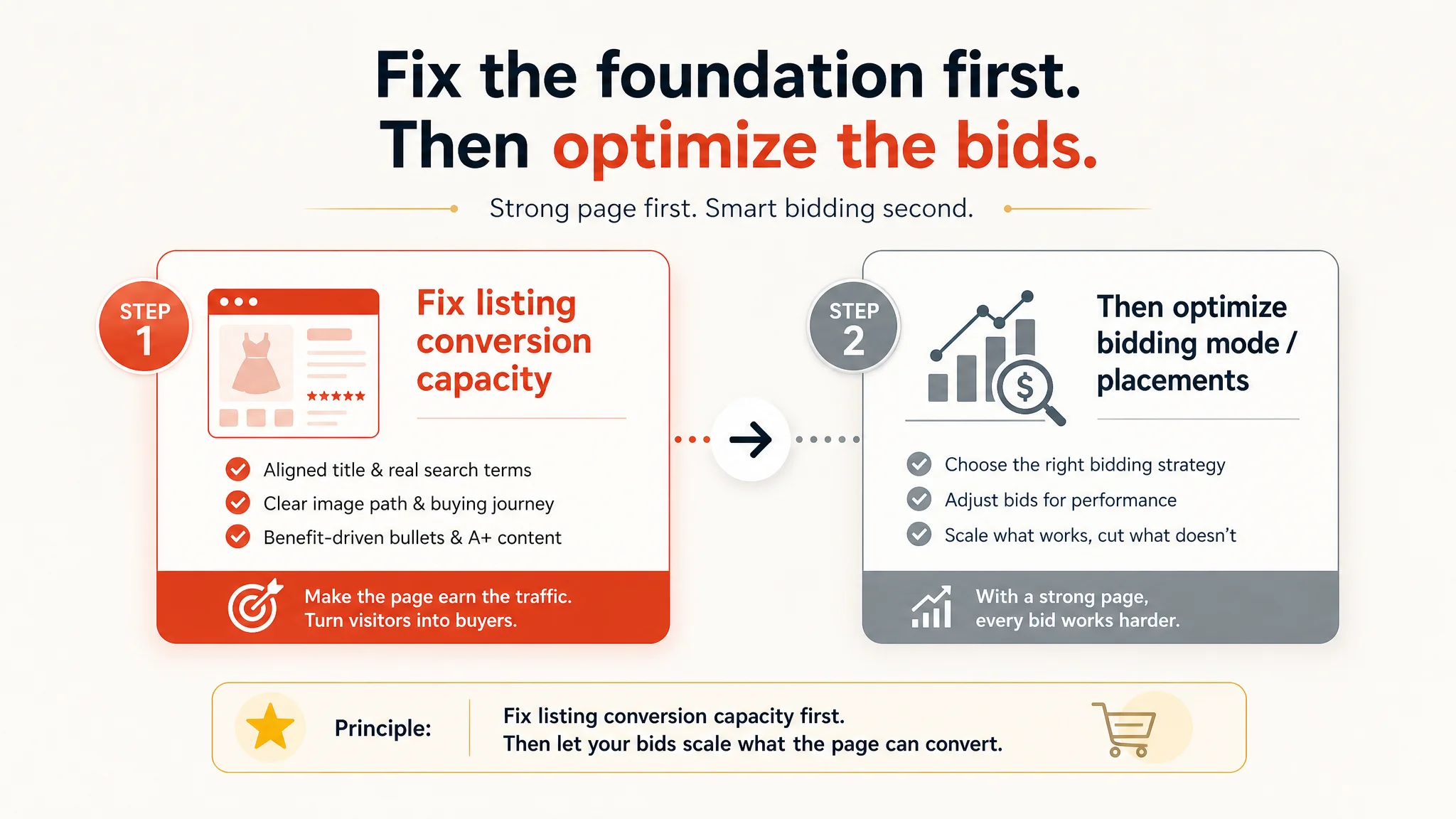
Crucially, in all three modes, you should first ensure your listing is not the true constraint. In the dress case, once DeepBI showed that title structure, image sequencing, and A+ content lagged far behind a strong competitor, it became clear that “choosing the right bidding strategy” was secondary. The most profitable move was to pause further experimentation with bidding modes until the page’s conversion logic was rebuilt. Only after the listing could better convert traffic did the difference between “Down Only” and “Up and Down” start to matter in a meaningful way for ACoS control and volume expansion.
Building a Data-Driven Bid Optimization Framework
Effective PPC management moves beyond reactive adjustments and guesswork. It requires a systematic framework grounded in continuous data analysis and strategic adaptation. Building this framework allows you to translate performance metrics into profitable growth, ensuring every dollar of ad spend is accountable and optimized for a specific business outcome.
Identifying Your Optimization Goals: Performance vs. Profitability
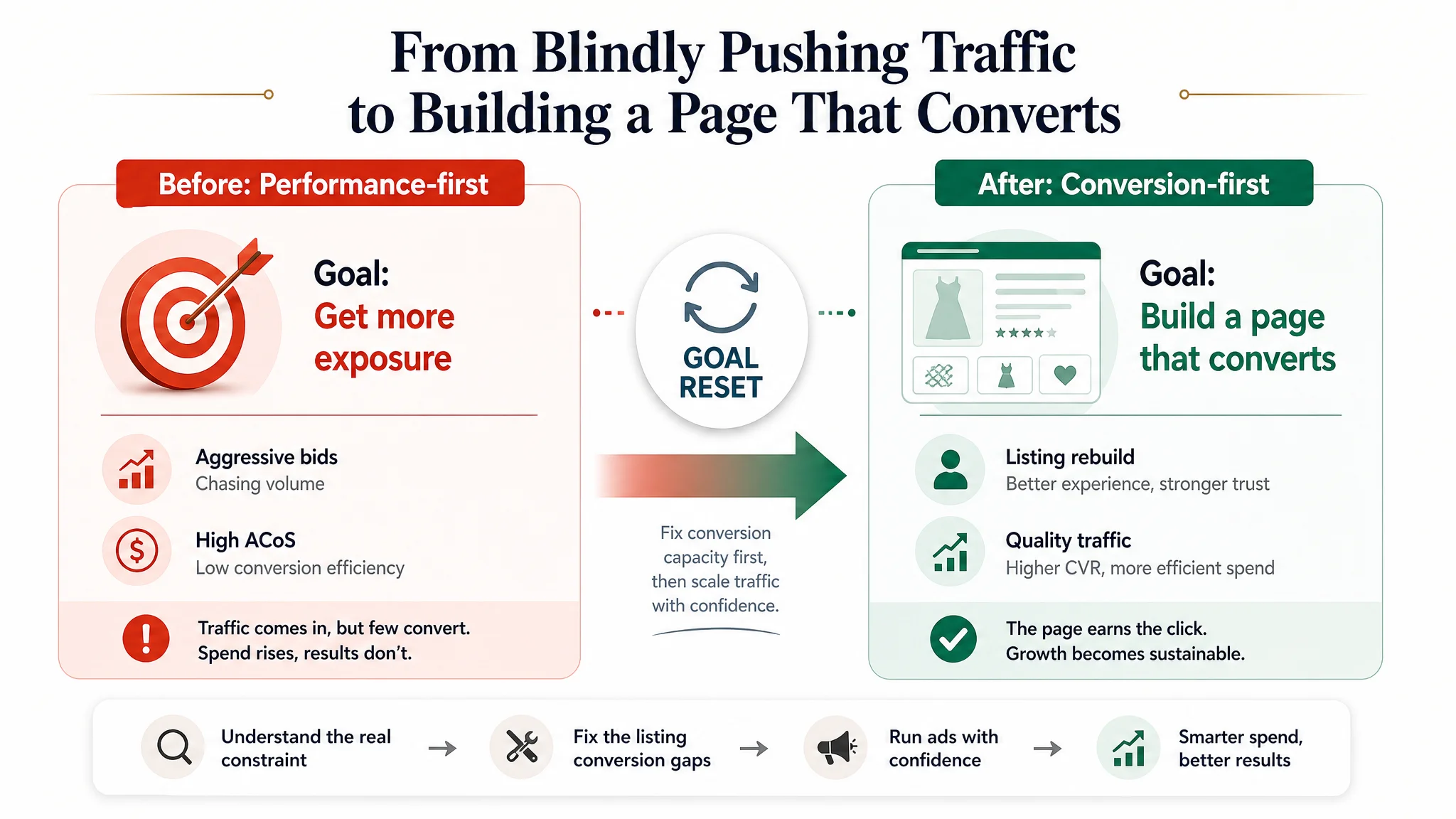
Before adjusting a single bid, you must define your primary objective. Are you aiming for market share and sales velocity (performance), or are you focused on maximizing return on ad spend (profitability)? A goal to maximize sales might justify aggressive bidding and a higher Advertising Cost of Sales (ACoS) to capture traffic and improve Best Seller Rank (BSR). Conversely, a profitability goal demands a stricter focus on conversion rates (CVR) and maintaining a target ACoS, leading to more conservative bid adjustments on lower-performing keywords.
In the summer dress scenario, the team initially chased performance—they wanted more visibility and faster growth in a crowded seasonal niche. That led them to accept a relatively high ACoS and push bids aggressively. But because they had not clearly distinguished between a performance phase and a profitability phase—nor ensured the listing was conversion-ready—the higher ACoS simply translated into harder-to-control costs rather than strategic share gain. DeepBI’s analysis effectively forced a reset of goals: the seller needed to prioritize conversion quality before resuming aggressive bidding, temporarily shifting focus from raw volume to building a page capable of supporting either goal reliably.
Essential Data Points for Bid Adjustments
Your primary tools for analysis are Amazon's performance reports, particularly the Search Term and Campaign Performance reports. From these, you must track key metrics like impressions, click-through rate (CTR), CVR, spend, and ACoS for each keyword and ASIN target. This data allows you to diagnose performance gaps. For example, high impressions with a low CTR may indicate a weak main image or irrelevant targeting, while a high CTR with a low CVR points to conversion issues on your product detail page. Analyzing this data is crucial for identifying high-performing keywords to scale and underperforming ones that require bid reduction or pausing.
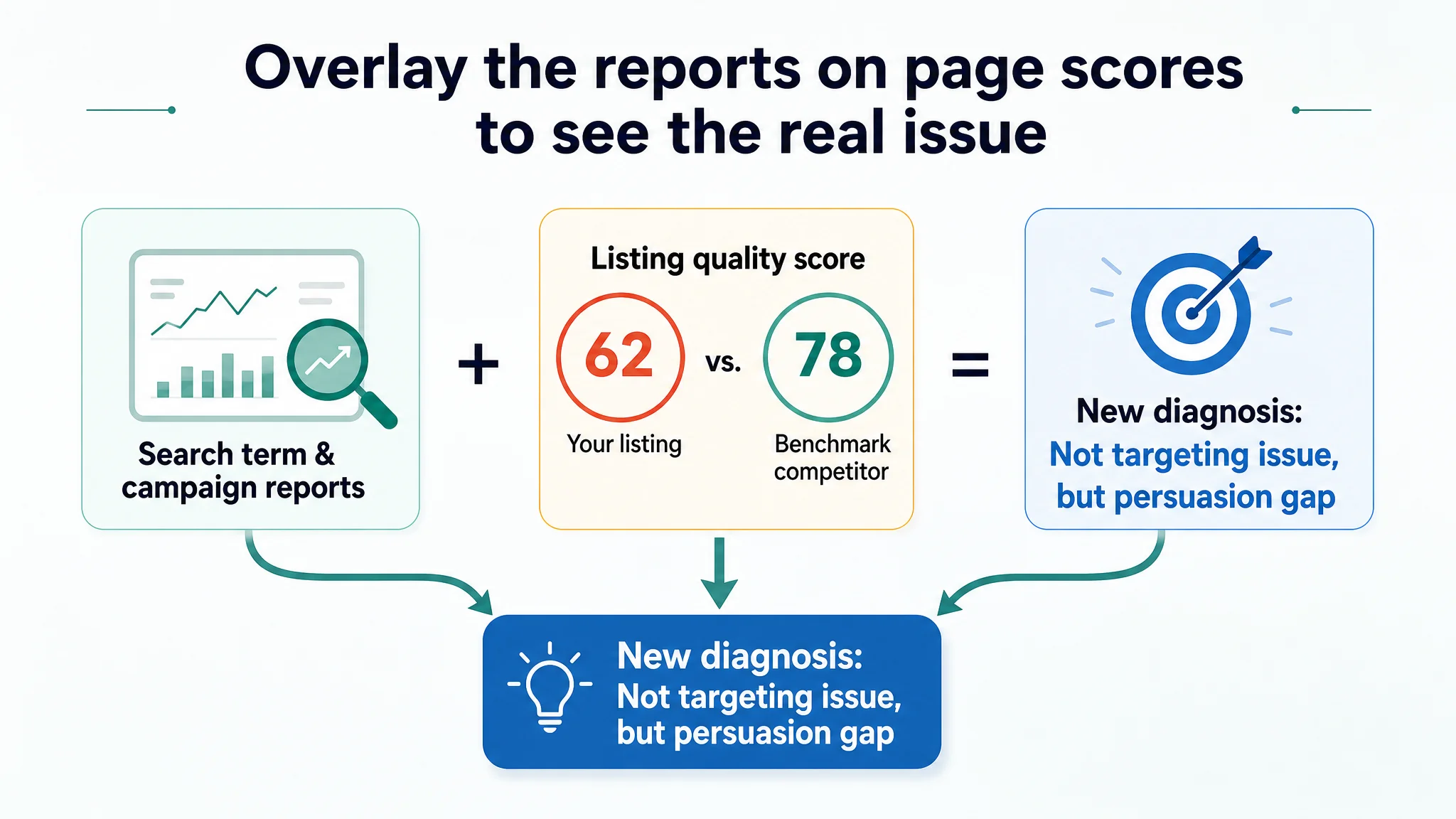
The dress listing’s data was a textbook case of misdiagnosis. The seller’s internal reviews of search term and campaign reports focused almost exclusively on traffic quality: “We need more relevant keywords,” “Maybe match types are wrong,” “Let’s expand our keyword set.” But the underlying pattern—traffic that arrived, engaged enough to click, then failed to convert consistently—matched DeepBI’s 62/100 vs 78/100 listing gap exactly. Once they overlaid listing-quality insights on the same performance reports, the meaning of the numbers changed: instead of “our targeting is off,” the data read as “our page is not persuasive enough for the traffic we already have.”
The Iterative Process of Bid Optimization
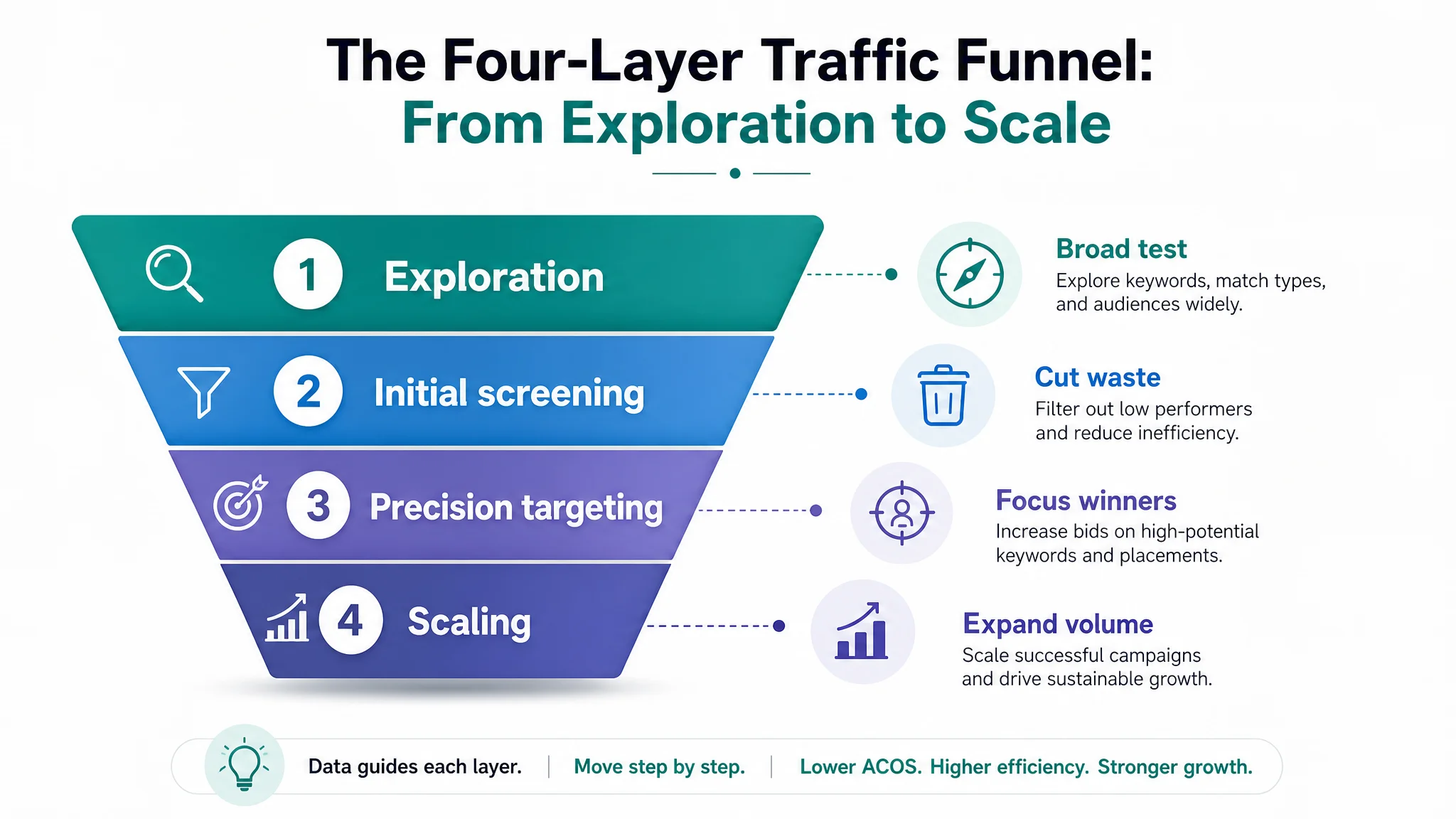
Bid optimization is not a one-time task but a continuous iterative cycle of analysis, adjustment, and measurement. This process involves making data-informed changes and then monitoring their impact on your core KPIs. DeepBI facilitates this with a structured "four-layer traffic funnel model"—spanning exploration, initial screening, precision targeting, and scaling—that guides sellers through a data-driven process to continuously identify and optimize traffic opportunities. This strategy is powered by a "dynamic parameter adjustment mechanism" that automatically fine-tunes bids and budgets daily, leveraging performance data from the past seven days to ensure your campaigns adapt swiftly to market changes and performance trends.
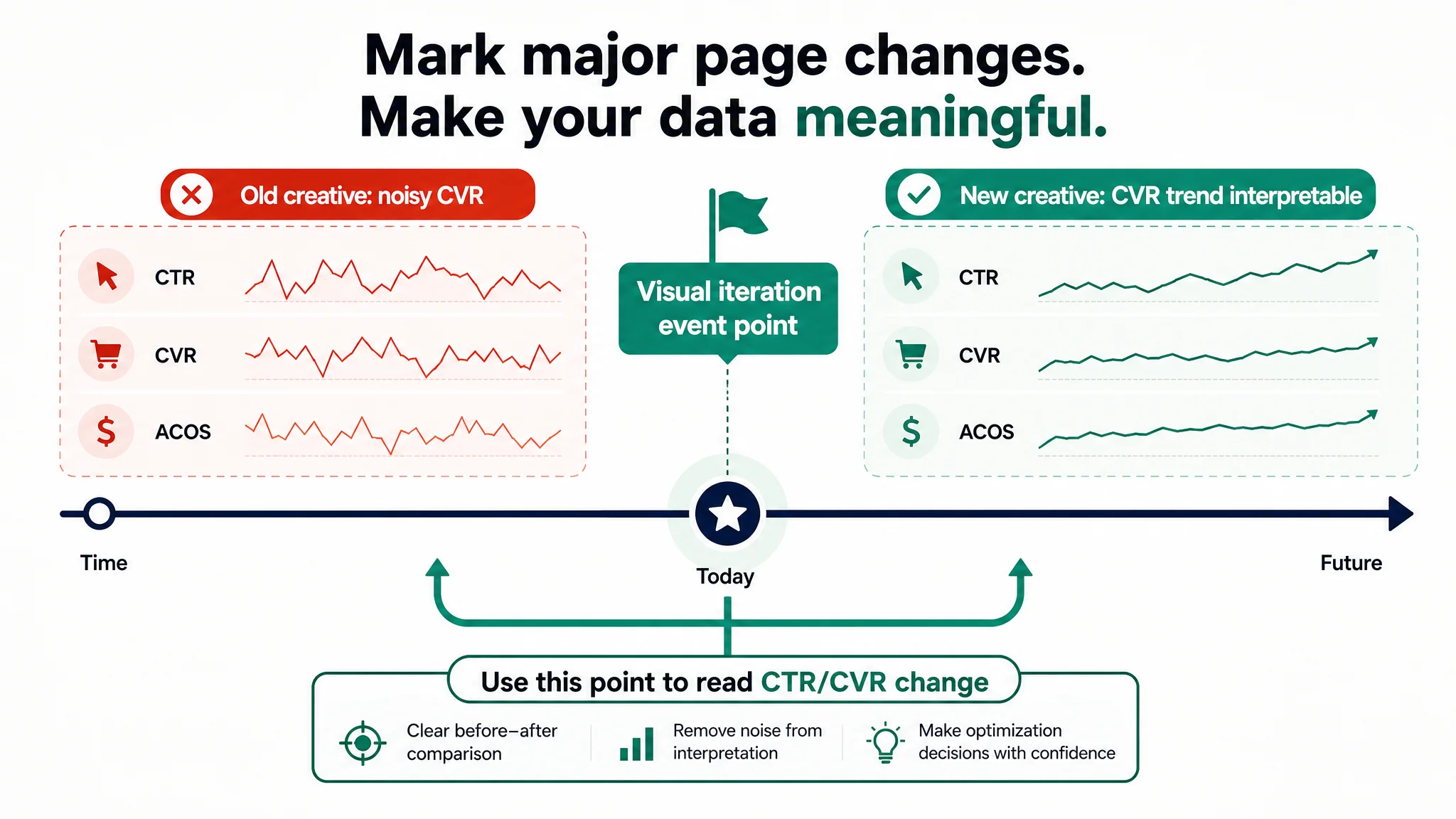
In the summer dress case, plugging the listing into a more structured framework changed the iteration sequence. Instead of immediately tweaking bids at every sign of ACoS pressure, the seller first addressed the listing layer—rewriting the title to align with real search behavior, redesigning the image order into a clear decision path, and turning bullets from fragmented attributes into buyer-centric benefits and scenarios. DeepBI then marked this as a clear “visual iteration event point” so subsequent performance data could be interpreted correctly: changes in CTR and CVR over the following 7–14 days could now be attributed to the new creative, not random noise. Once the listing’s conversion capacity improved, bid adjustments made within the four-layer funnel finally produced the expected impact, turning optimization into a controlled, explainable loop.
Advanced Bid Optimization Techniques
Beyond setting a simple cost-per-click (CPC), sophisticated bidding strategies are essential for outmaneuvering competitors and maximizing return on ad spend (ROAS). Advanced techniques allow you to target high-value impressions with precision, ensuring your budget is allocated to the placements and times that yield the highest conversion rates.
Leveraging Placement Adjustments for Strategic Visibility
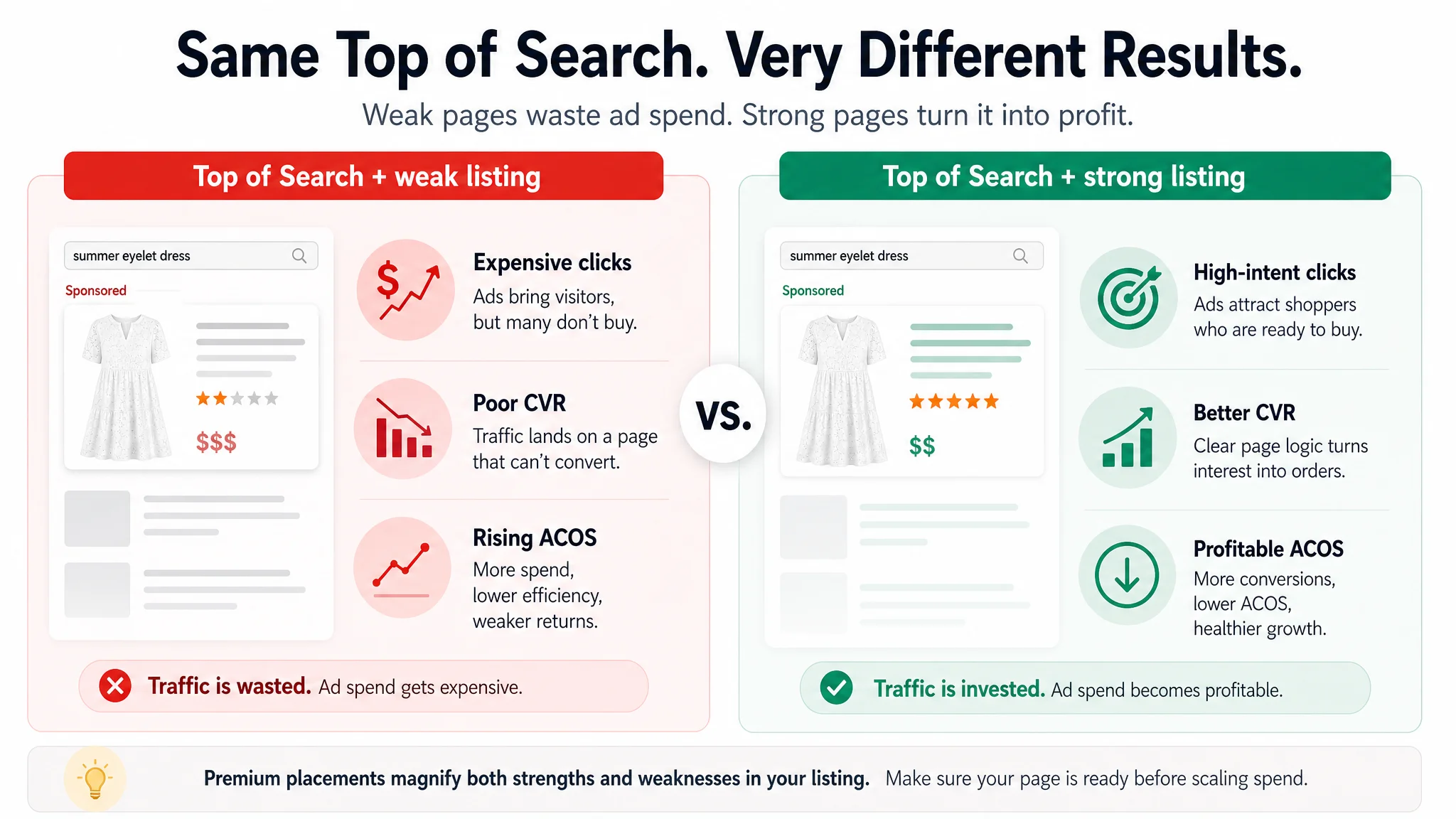
Amazon allows you to modify your bids based on where your ad appears: Top of Search, Product Pages, or Rest of Search. This enables you to bid more aggressively for premium placements that have higher click-through rates (CTR) and conversion potential. For example, if your base bid for a keyword is $1.00, you can apply a +50% adjustment for the Top of Search placement. This means you are willing to bid up to $1.50 for that specific, high-visibility spot, while your bid for other placements remains lower. Strategically using these adjustments ensures your most important products are visible to shoppers at the most critical point in their journey.
However, premium placements magnify both strengths and weaknesses in your listing. In the fashion case, the seller’s instinct was to push harder for Top of Search in order to “solve” visibility issues, adding placement multipliers on top of already assertive bids. But the unresolved listing gap—unclear title hierarchy, repetitive main images that partially hid the dress, and A+ content that focused on mood over proof—meant these high-intent impressions often ended up as expensive, non-converting clicks. The result was rising ACoS without meaningful gains in orders. Only after restructuring the image stack into a proper persuasion sequence and tightening the title and bullets did Top of Search adjustments start to behave like an investment, rather than a cost escalation.
Implementing Rule-Based and Scheduled Bidding
Manual bid management is inefficient and rarely keeps pace with market dynamics. Rule-based bidding automates adjustments based on performance triggers. You can set rules such as, "If ACoS exceeds 35% over 14 days, decrease the bid by 10%." This maintains profitability without constant monitoring.
Furthermore, scheduled bidding, or dayparting, lets you increase bids during peak traffic hours—for instance, boosting bids by 20% on weekend evenings. When combined, these rules create a powerful, layered strategy. A $1.00 base bid increased by a 20% weekend schedule becomes $1.20, and a +50% Top of Search adjustment on that new base could result in a final potential bid of $1.80.
DeepBI’s dynamic parameter adjustment mechanism automates this complexity. It systematically adjusts bids based on performance data, time windows, and strategic goals, removing the guesswork and manual effort required to manage intricate bidding rules effectively.
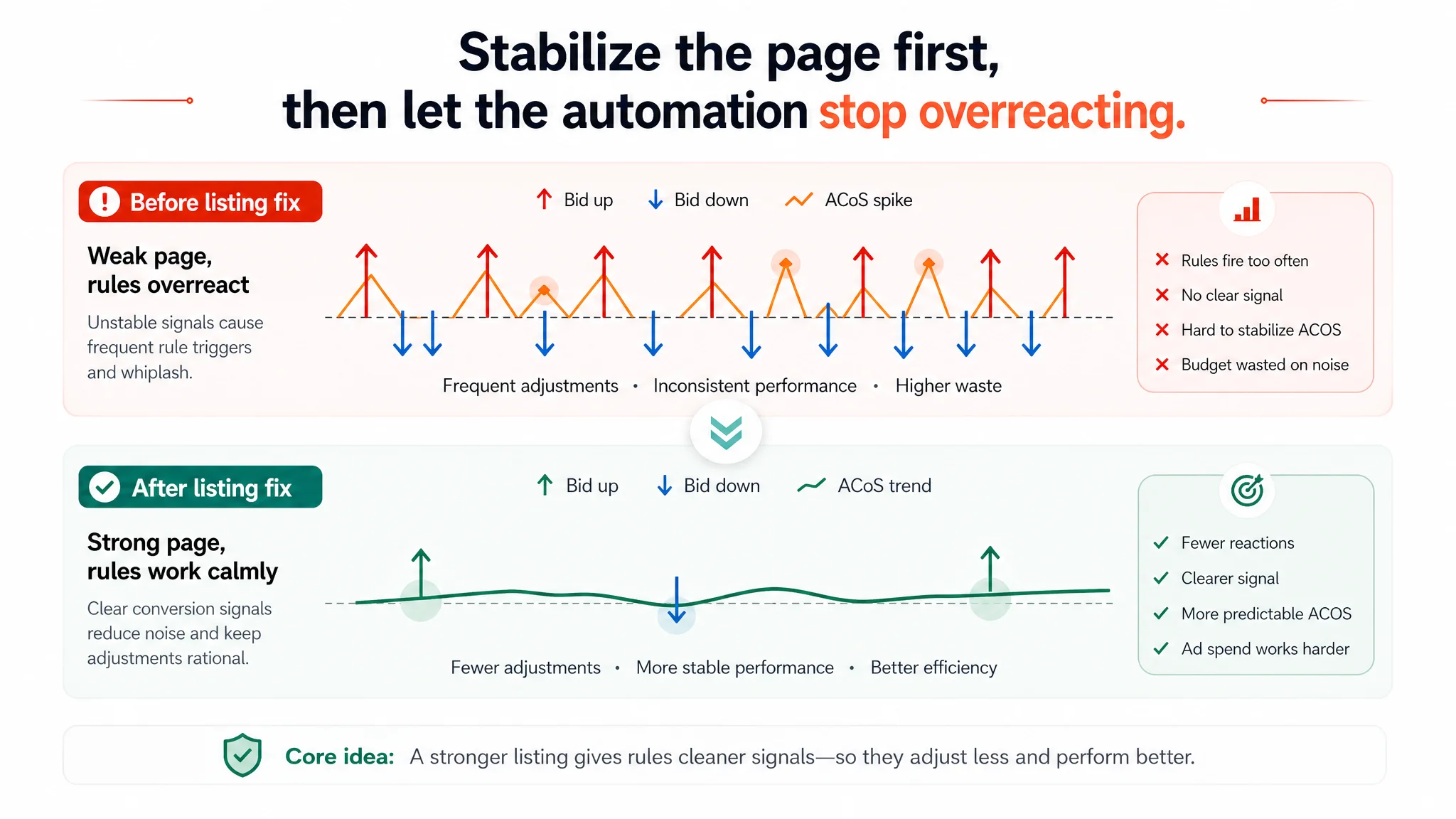
In the summer dress case, the seller initially tried to brute-force their way out of high ACoS with exactly this type of tactical maneuvering—turning knobs on time windows and bid rules while the listing remained fundamentally under-optimized. Rules like “cut bids when ACoS > X” fired frequently because the page itself wasn’t converting, creating a whiplash effect: bids went up to chase volume, then down again when ACoS spiked, with no structural improvement in CVR. After DeepBI guided the listing overhaul, the same rule-based logic became far more stable. Automated adjustments began reflecting genuine profitability changes rather than compensating for a chronically weak page, proving that advanced bidding tactics only deliver full value when built on a solid conversion foundation.
DeepBI: Your AI-Powered Partner for Intelligent Bid Management
Effective bid management goes beyond simply adjusting numbers; it requires a holistic optimization of the entire sales funnel. DeepBI serves as an AI-driven, Amazon-focused system designed to solve core challenges in operational efficiency and profit growth. It transforms stable advertising data signals into stronger organic rankings and a lower Total Advertising Cost of Sales (TACoS), creating a powerful feedback loop where better listings attract more precise traffic, leading to healthier long-term growth. By automating the analysis and optimization of your listing creative based on real-time ad performance, DeepBI ensures your bidding strategy is built on a foundation of high-converting assets.
DeepBI's Four-Layer Traffic Funnel for Precision Targeting
DeepBI employs a systematic, funnel-based diagnostic logic to refine traffic quality and improve targeting. Instead of guessing at the cause of poor campaign performance, the system analyzes key advertising metrics to pinpoint specific weaknesses in your listing. For example, if data reveals an insufficient click-through rate (CTR), the system identifies the main image as the likely bottleneck. If the conversion rate (CVR) is low, it directs optimization efforts toward enhancing the A+ content. By addressing the root cause of underperformance at the listing level, DeepBI ensures that every dollar of your ad spend is directed at traffic with the highest possible conversion potential, making your bids inherently more efficient and precise.
This is exactly how the summer dress case unfolded in practice. The seller’s manual analysis had circled around bids and keywords; DeepBI’s four-layer funnel forced a different question: “Is the listing itself competitive enough to justify more traffic?” The 62/100 vs 78/100 score comparison broke the assumption that “the page is fine.” Drilling into each layer, the system highlighted that title relevance, main-image decision path, bullet persuasion, and A+ structure all lagged behind the benchmark, whereas reviews—often the first suspect—were not dramatically worse. In other words, the funnel didn’t point to a traffic sourcing problem first; it pointed to a conversion bottleneck embedded in the page’s core structure.
Dynamic Bid and Budget Adjustments with DeepBI
While DeepBI does not directly automate bid changes, it provides the critical intelligence and stability needed for you to make dynamic, data-driven adjustments with confidence. The system automates the time-consuming process of competitor analysis and digs into high-conversion "Winning terms" to inform listing optimizations. After a recommended visual change is applied, DeepBI automatically marks a "visual iteration event point" in your ad reports. This allows you to directly observe the impact of the new creative on your CTR over the following 7-14 days. This clear, explainable feedback loop eliminates guesswork, reduces manual analysis, and provides the actionable insights required to adjust bids and budgets effectively for sustained profit growth.
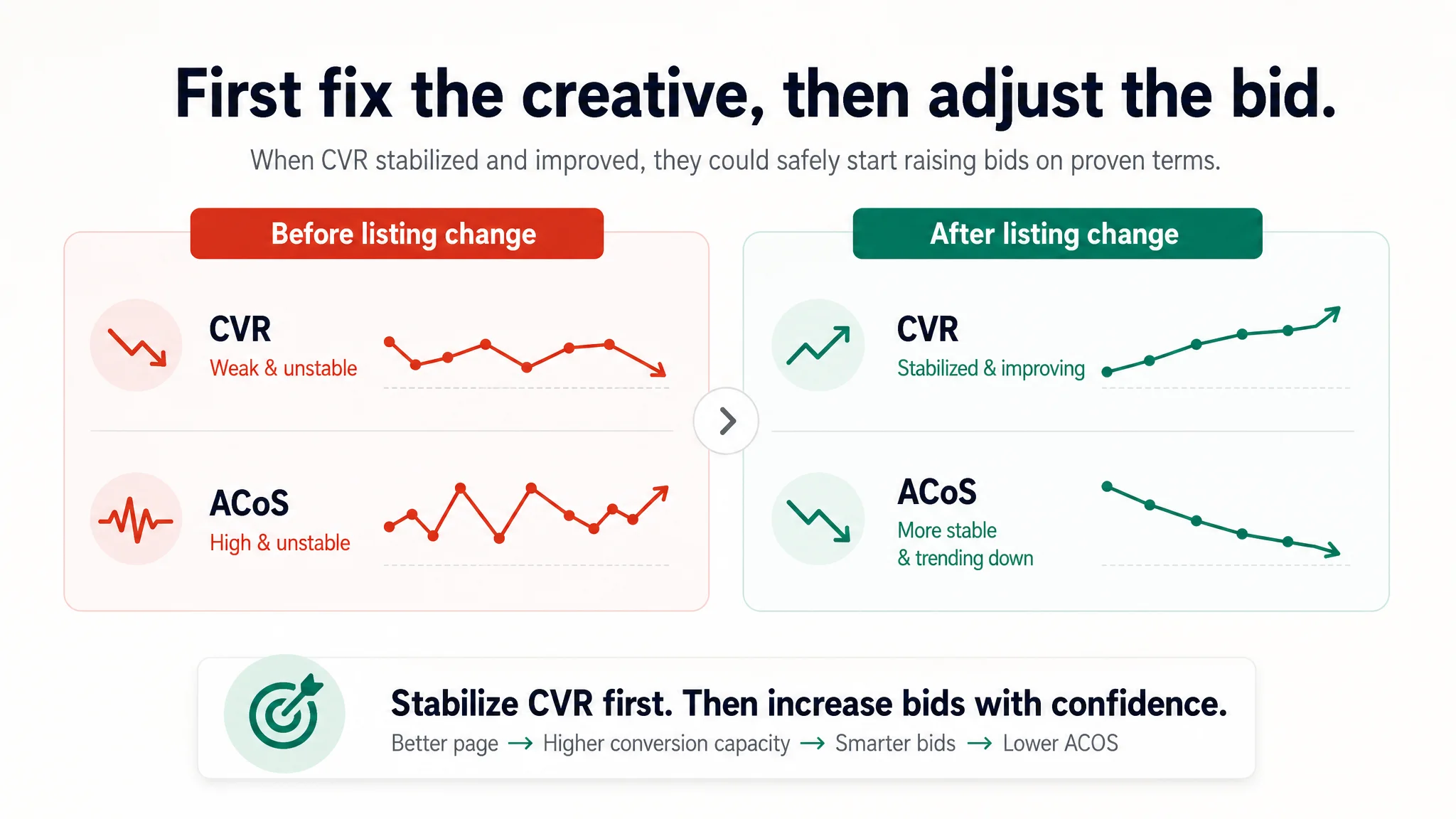
In the dress example, this feedback loop changed how the seller interpreted their PPC data. Previously, any fluctuation in ACoS triggered another round of ad experiments, with no clear link to what was happening on the page. After DeepBI guided changes to the title, images, bullets, and A+ narrative—and tagged that moment as an iteration point—the team could watch CTR and CVR evolve with context. When CVR began to stabilize and improve, they knew it was a page effect, not just random variance, and could safely start raising bids on proven terms. Dynamic bid and budget tweaks now rode on top of solid creative improvements, rather than trying to patch over a structural conversion problem.
Integrating PPC with Organic Growth Strategies
Effective PPC management extends far beyond optimizing for a low ACoS. A sophisticated bidding strategy serves as a powerful engine for long-term organic growth, creating a flywheel effect that increases your product's overall visibility and profitability on Amazon. By viewing paid advertising as an investment in your organic ranking, you can build a more resilient and valuable business.
How Optimized Bidding Fuels Organic Ranking
A successful PPC campaign directly influences your product's organic standing. When your ads generate high sales velocity and maintain a strong conversion rate (CVR), they send powerful positive signals to Amazon's search algorithm. This can lead to a better Best Sellers Rank (BSR) and improved organic placement for your targeted keywords.
This symbiotic relationship is best measured by Total Advertising Cost of Sales (TACOS), which calculates ad spend against total revenue (paid and organic). A declining TACOS indicates that your organic sales are growing faster than your ad spend, proving the effectiveness of your PPC efforts in fueling the overall business. This metric shifts the focus from isolated ad efficiency to holistic, long-term profitability.
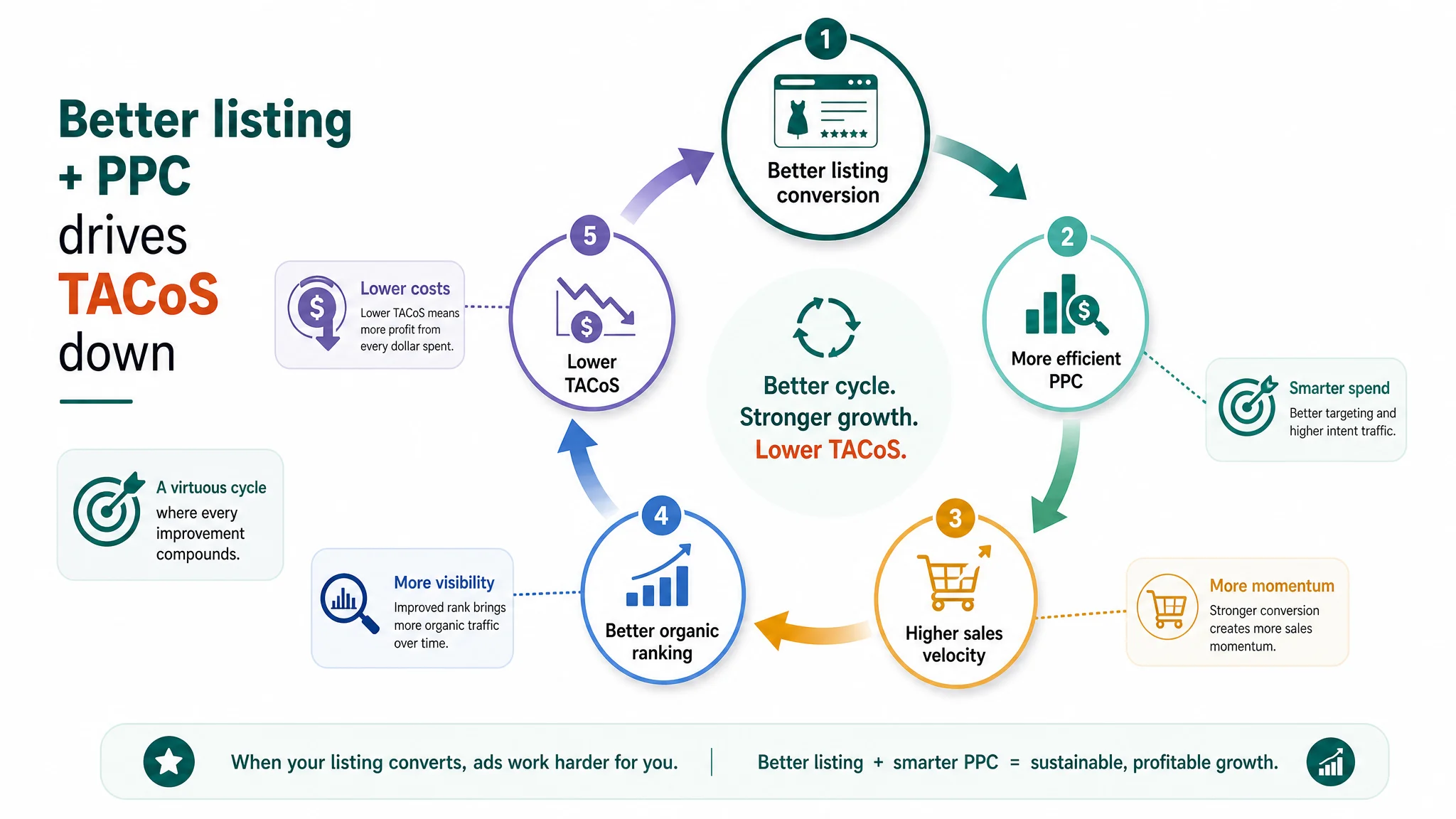
The dress listing’s journey demonstrates how fragile this flywheel can be when the underlying page is weak. Initially, the seller expected that buying more traffic would naturally lift BSR and organic position. Instead, low conversion meant that the surge in paid clicks did not translate into a strong enough sales signal, so organic gains were limited while TACoS stayed uncomfortable. After the listing’s conversion logic was rebuilt—clearer title, images that answered real questions, bullets tied to comfort, fit, and scenarios, and A+ content that reduced risk—each paid click had a better chance of turning into a sale. That gave future bidding an entirely different role: instead of funding a leaky funnel, PPC could now legitimately be used to push up sales velocity and support organic ranking in a more efficient way.
DeepBI's Fifth-Layer Funnel: Bridging Ads and Organic Traffic
DeepBI operationalizes this synergy through its "fifth-layer funnel" strategy, designed to convert ad performance into organic dominance. The system meticulously screens your advertising data to isolate a core set of elite keywords—those demonstrating consistently high Click-Through Rates (CTR), high CVR, and significant order values.
Armed with this intelligence, you can establish dedicated, high-impact campaigns focused exclusively on these proven keywords. The strategic goal is to concentrate your budget to secure "Top of Search" visibility, driving maximum traffic and conversions. This approach achieves a "double growth" effect: it scales ad revenue in the short term while simultaneously accelerating your product's organic ranking for its most valuable search terms, building a sustainable competitive advantage.
In the summer dress case, this meant rethinking which terms truly deserved aggressive bids. Before the listing was optimized, even seemingly relevant keywords struggled to deliver sustainable CVR, making it hard to distinguish genuine “winning terms” from traffic sources that only looked good on the surface. Once the listing improvements were in place and CVR normalized, DeepBI could more cleanly identify the search phrases where the dress consistently converted well. Those became the focus of more concentrated Top-of-Search campaigns, turning a previously noisy keyword set into a small, powerful cluster that could realistically support both profitable ad returns and organic keyword growth over time.
Common Pitfalls in Amazon Bidding and How to Avoid Them
Many sellers undermine their own PPC success by falling into a passive "set and forget" campaign management style. This single mistake is the root cause of most bidding inefficiencies and wasted ad spend. Without active, data-driven oversight, campaigns inevitably drift away from profitability and strategic goals.
The most immediate consequences are improper bid levels and a rising Advertising Cost of Sales (ACoS). A static bid strategy leads to two critical errors:
- Over-bidding: You waste money on search terms with high clicks but low conversion rates (CVR), inflating your ACoS without generating sales.
- Under-bidding: You miss out on valuable impressions and sales for high-performing keywords because your bids are no longer competitive, sacrificing potential revenue.
These issues are compounded by neglecting fundamental campaign maintenance. Failing to regularly review your search term reports means you are blind to how customers are actually finding your products. This report is your primary source for identifying both opportunities and waste. By ignoring it, you fail to harvest irrelevant, money-draining search terms and add them as negative keywords. The solution is a disciplined, active approach: continuously analyze performance data, adjust bids to match keyword profitability, and use negative keywords to surgically cut wasteful ad spend.
Equally dangerous, though, is the opposite mistake highlighted by the summer dress case: obsessively “doing more” on the ads side while ignoring the listing as a potential bottleneck. The seller did not truly “set and forget” their campaigns—they actively tweaked bids, expanded keywords, and rearranged budgets. But they did all of this under a faulty assumption: that high ACoS and unstable sales could only be a traffic problem. As a result, they over-bid on terms that sent reasonable shoppers to a page that wasn’t persuasive enough, repeatedly interpreting symptoms of weak conversion as a signal to “try harder” with ads. DeepBI’s diagnosis broke that loop by quantifying the listing gap versus the competitor (62 vs 78) and showing, dimension by dimension, why continuing to push more traffic without fixing the page was structurally unwise. The deeper lesson is clear: disciplined PPC management must include a disciplined review of listing conversion capacity, or you risk using bids as an expensive bandage on a fundamentally unprepared product page.
Conclusion: Sustained Growth Through Smart Bidding
Mastering Amazon PPC is not a one-time setup but a continuous cycle of strategic adaptation. The core principles of effective bidding—aligning spend with business goals, leveraging data to inform adjustments, and understanding the interplay between paid and organic performance—are foundational. However, true market leadership comes from treating optimization as a dynamic, ongoing process that responds intelligently to real-time market feedback and performance data.
The summer dress example underscores that intelligent bidding cannot be separated from listing quality. For weeks, the seller tried to buy their way out of a conversion problem by pushing harder on ads—changing bids, reshaping campaigns, and experimenting with aggressive strategies—while a 62/100 listing quietly held them back against a 78/100 competitor. Once DeepBI reframed the issue from “ad problem” to “conversion capacity problem,” the direction of work flipped: title relevance was rebuilt around real search behavior, images were reordered into a clear decision path, bullets started speaking to fabric comfort, body confidence, and scenarios, and A+ content began to reduce risk rather than simply set a mood. Only then did bidding strategies, placement adjustments, and rule-based optimizations begin to produce coherent, explainable improvements in CVR, ACoS, and overall funnel health.
This is where a data-driven approach becomes a decisive advantage. DeepBI empowers sellers by transforming this complex cycle into a streamlined, logical workflow. It creates a powerful closed-loop system where ad performance data directly informs listing enhancements, which in turn boost conversion rates and improve ad efficiency. This synergy of "Better Listing + More Precise Traffic" drives down TACoS, improves organic ranking, and establishes a virtuous cycle of growth.
By moving beyond subjective guesswork and embracing intelligent automation, you can turn optimization from a reactive task into a predictable, scientific process. This strategic shift ensures that every dollar spent and every listing modification is a calculated step toward building a healthier, more profitable business, securing a sustainable competitive edge in the dynamic Amazon marketplace.