Introduction
On Amazon, you're not just selling a product; you're competing for visibility on the world's largest product search engine. This is where Amazon Search Engine Optimization (SEO) becomes the cornerstone of your success. Amazon SEO is the strategic process of optimizing every element of your product listings to rank higher in Amazon's organic search results for relevant customer queries. In a marketplace with millions of sellers, simply having a superior product is not enough. If potential buyers can't find your listing, you effectively don't exist.
Effective SEO is the most sustainable and cost-effective path to driving targeted organic traffic, which directly translates into increased sales, an improved Best Seller Rank (BSR), and long-term brand authority. It's the fundamental difference between a listing that languishes on page ten and one that dominates the first page, capturing the vast majority of customer clicks and conversions. This guide will demystify Amazon's A10 algorithm and provide a step-by-step framework for mastering your SEO strategy. We will cover everything from foundational keyword research and competitive analysis to advanced on-page optimization for titles, bullet points, and product descriptions. You will learn how to leverage backend keywords, optimize imagery, and establish a data-driven feedback loop to continuously refine your strategy for maximum impact on your click-through and conversion rates.
 The Foundation of Amazon SEO: Understanding the Algorithm and Its Pillars
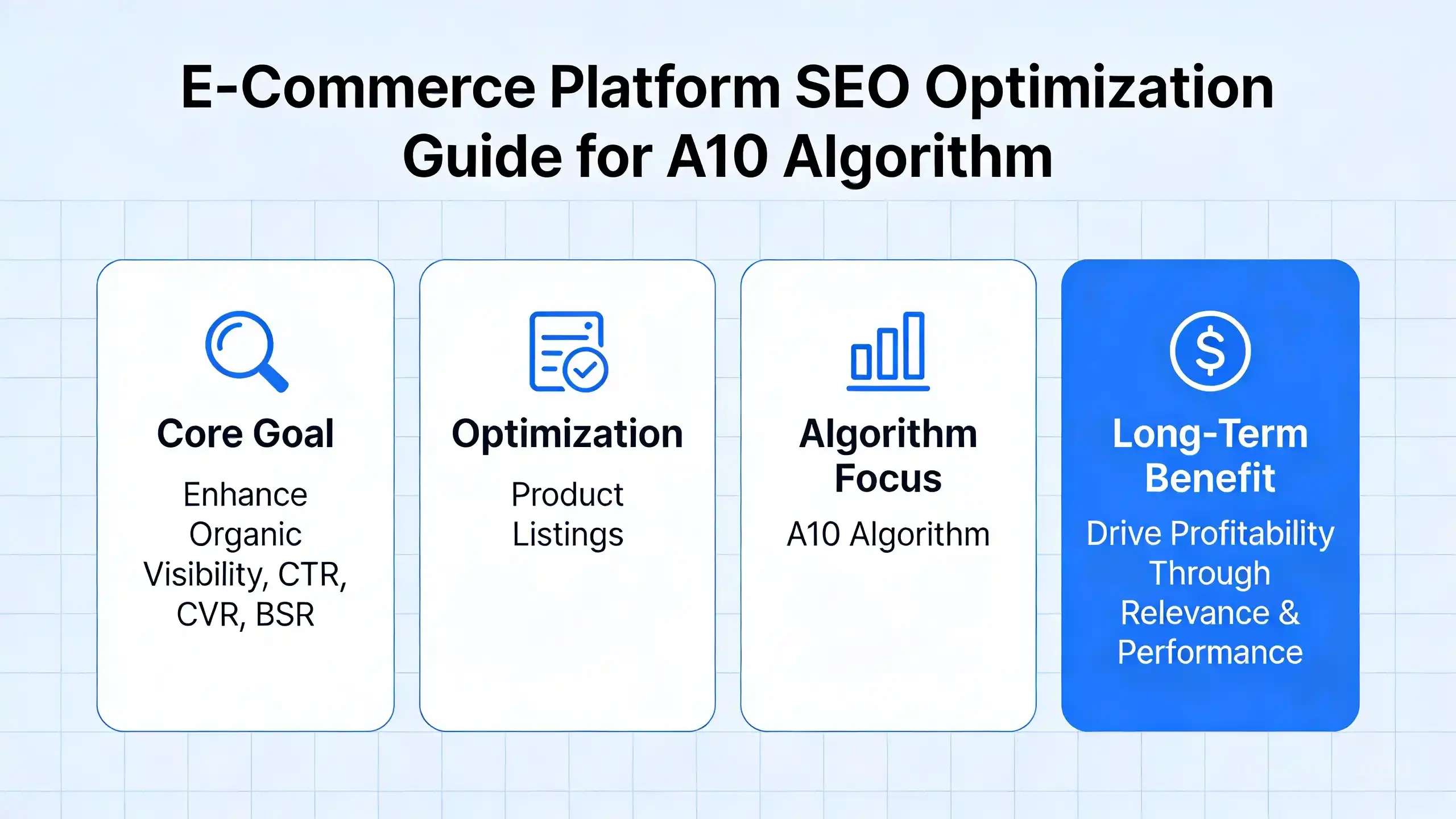
To succeed on Amazon, sellers must treat the platform not just as a marketplace, but as a search engine. Amazon SEO is the process of strategically optimizing your product listings to rank higher in organic search results for relevant customer queries. Mastering this process is critical, as higher rankings directly increase product visibility, which in turn drives higher click-through rates (CTR) and conversion rates (CVR). Ultimately, effective SEO translates into a virtuous cycle of increased sales velocity, improved Best Seller Rank (BSR), and greater profitability.
What is Amazon SEO and Why Does it Matter?
Amazon Search Engine Optimization (SEO) is the methodology for enhancing a product listing's visibility within Amazon's search results. Unlike paid advertising, which rents top positions, SEO earns them organically. When a customer searches for a product, the algorithm instantly sorts through millions of listings to present the most relevant and popular options. A strong SEO strategy ensures your product appears on the first page, where the vast majority of clicks and sales occur. This directly impacts your bottom line by boosting traffic and sales without continuous ad spend, creating a sustainable growth engine for your brand.
Key Ranking Factors on Amazon
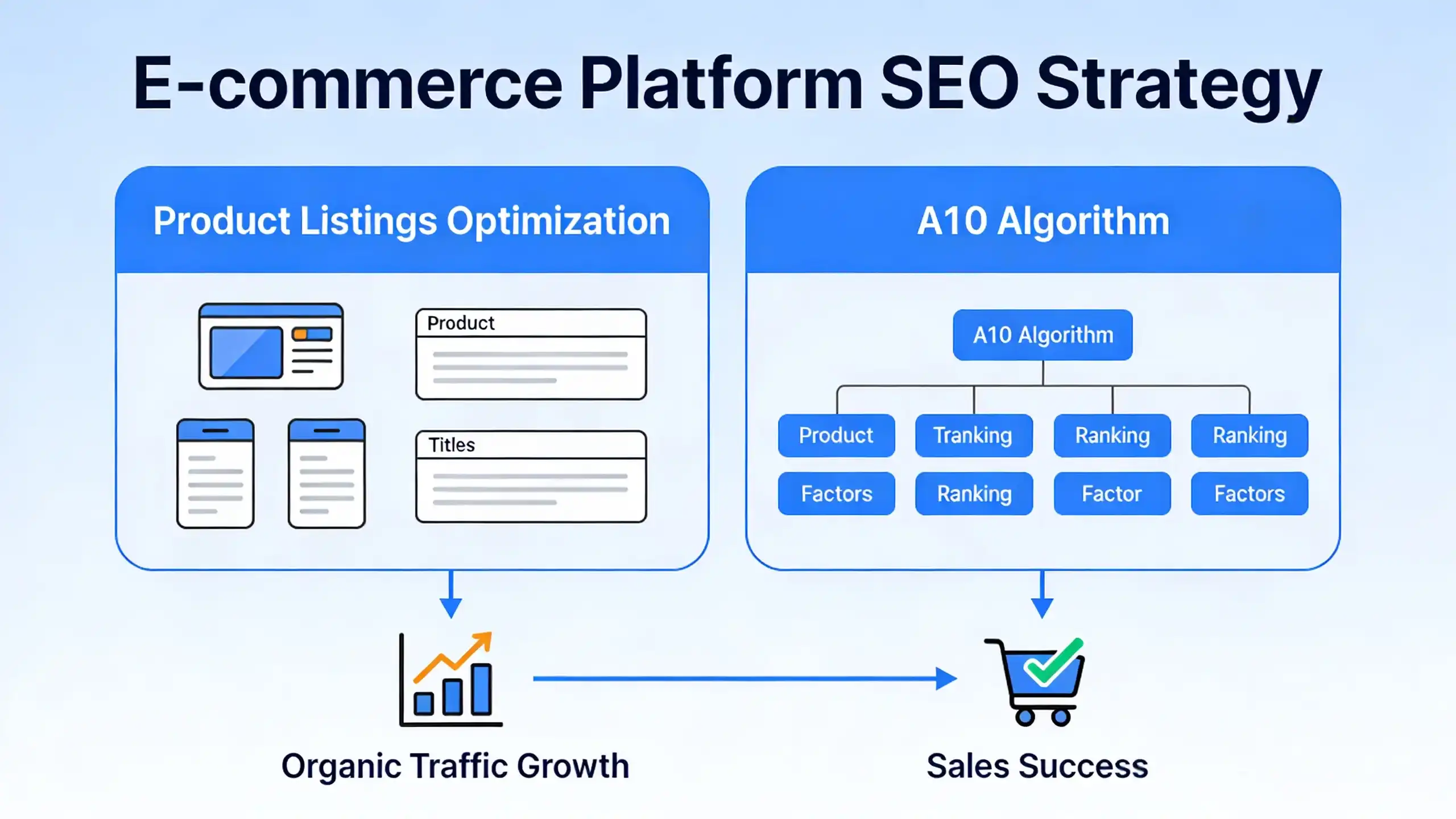
Amazon's A10 algorithm prioritizes one primary goal: customer satisfaction that leads to a purchase. To achieve this, it evaluates listings based on a combination of factors that can be grouped into two core pillars: relevance and performance.
- Relevance Factors: These elements tell Amazon what your product is and which search queries it should appear for. This is achieved through strategic keyword optimization across your listing’s title, bullet points, product description, and backend search terms. A well-researched keyword strategy ensures your product is discoverable by your target audience.
- Performance Factors: These metrics prove to Amazon that your product satisfies customers and generates sales. Key performance indicators include sales velocity, conversion rate (CVR), and click-through rate (CTR). Factors like positive customer reviews, competitive pricing, and efficient fulfillment (such as FBA) also heavily influence performance. A listing that is relevant but fails to convert will quickly lose its ranking, as Amazon’s algorithm rewards products with a proven history of turning clicks into sales.
 Strategic Keyword Research for Amazon Dominance
Effective keyword research is the bedrock of any successful Amazon SEO strategy. Without targeting the right terms, even the most optimized listing will fail to connect with its intended audience. A comprehensive approach ensures your product appears in relevant search results, driving qualified traffic and boosting sales.
Identifying High-Impact Keywords
The initial phase of keyword discovery involves understanding how customers search for products like yours. Foundational methods include:
- Amazon Search Bar Suggestions: Typing a root keyword into Amazon's search bar reveals auto-completed phrases, which are direct insights into common customer queries.
- Competitor Analysis: Manually examining the titles, bullet points, and backend keywords of top-ranking competitors provides a proven list of terms that are already performing well.
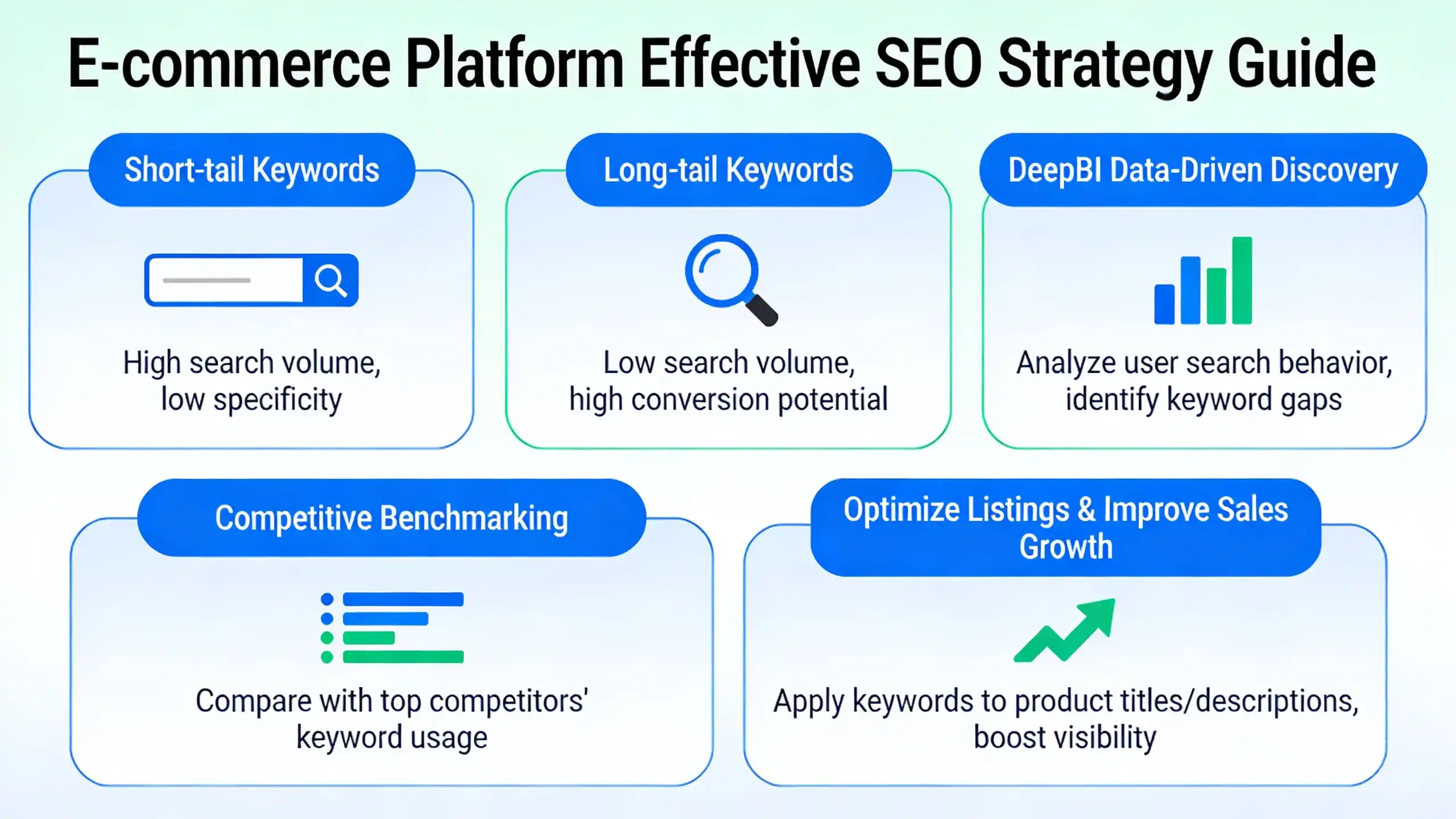
It's crucial to differentiate between keyword types. Short-tail keywords (e.g., "yoga mat") have high search volume but also intense competition. In contrast, long-tail keywords (e.g., "extra thick non-slip yoga mat for hot yoga") are more specific, attracting less traffic but capturing shoppers with higher purchase intent, often leading to a better conversion rate (CVR).
Leveraging DeepBI for Keyword Discovery and Analysis
While manual methods are a good starting point, scaling your strategy requires a more powerful, data-driven tool. DeepBI elevates keyword research from guesswork to a precise science. Its multi-dimensional semantic analysis engine uncovers a wide spectrum of relevant and high-impact keywords that manual research might miss.
Furthermore, DeepBI's competitive benchmarking capabilities allow you to systematically analyze which keywords your competitors are ranking for and identify strategic gaps. By understanding their keyword footprint, you can devise a targeted plan to outrank them for high-value terms. This data-centric approach empowers sellers to build a robust keyword strategy that directly contributes to improved search visibility, higher click-through rates (CTR), and sustained sales growth.
 Optimizing Your Amazon Product Listing for Maximum Impact
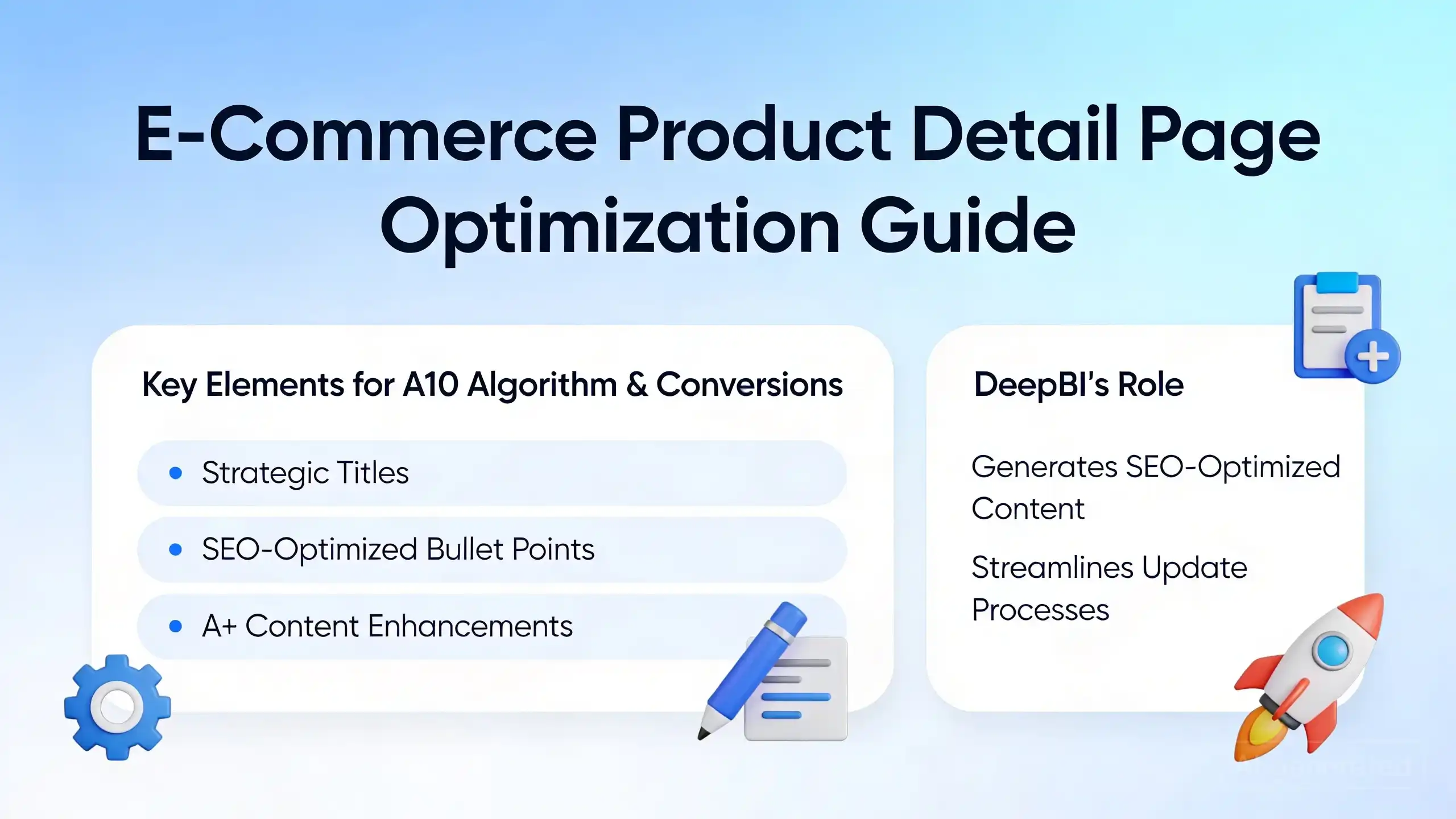
A fully optimized product detail page is your most powerful asset on Amazon. Each component works in concert to attract the A10 algorithm and convert shoppers into customers. Neglecting any single element can create a weak link that undermines your entire SEO strategy, leading to lower rankings, reduced traffic, and lost sales.
Crafting Compelling Product Titles
Your product title is the single most important piece of on-page SEO. It must be engineered to satisfy both Amazon's search algorithm and human shoppers. An effective title places the most critical keywords at the beginning, ensuring maximum relevance for search queries while also being clear and compelling enough to earn the click (CTR). A proven formula is:
[Brand Name] + [Main Keyword/Product Type] + [2-3 Key Features or Benefits] + [Size/Color/Quantity]
This structure ensures you rank for your primary terms while providing shoppers with the essential information they need to evaluate your product from the search results page.
Writing Benefit-Driven Bullet Points
While the title gets the click, the bullet points drive the conversion. Shoppers scan this section to quickly determine if your product solves their problem. Instead of listing dry features, translate them into tangible benefits that address customer pain points. For example, instead of "1.2mm thick steel," write "Built with heavy-duty 1.2mm steel for maximum durability and a wobble-free experience." Each bullet point is an opportunity to handle an objection, highlight a key advantage, and naturally integrate secondary keywords that support your overall ranking strategy.
Developing Rich Product Descriptions and A+ Content
For brand-registered sellers, A+ Content (formerly Enhanced Brand Content) is a critical tool for increasing conversion rates (CVR). It allows you to use rich images, comparison charts, and compelling brand storytelling to go beyond the limitations of a standard text description. This visual real estate helps shoppers better understand your product's value, building trust and reducing purchase friction.
However, creating and deploying high-quality content can be a significant operational bottleneck. AI-powered tools like DeepBI can accelerate this process by generating SEO-optimized and conversion-focused copy for titles, bullets, and A+ modules. The platform can provide intelligent scoring and diagnostics for existing listings to pinpoint weaknesses and then generate multiple creative variations. Crucially, it leverages the Amazon SP-API to apply these updates with a single click, reducing a manual upload process that could take over 30 minutes down to mere seconds.
Visual Excellence: Product Images and Videos
High-quality visuals are non-negotiable for success. Your main image must comply with Amazon's strict requirements—a pure white background with the product filling at least 85% of the frame—to avoid suppression and maximize CTR from search results. Subsequent images should include lifestyle shots, infographics highlighting key benefits, and multiple product angles. A product video can dramatically increase CVR by demonstrating the product in use.
While powerful, AI image generation carries the risk of "hallucinations" that misrepresent the product, leading to negative reviews and returns. An effective solution uses a "Product DNA" map as a hard constraint, ensuring any AI-generated visual is authentic to the physical item. Furthermore, to validate the impact of visual changes, it's essential to close the data loop. By automatically marking an image update as an event in your advertising reports, you can directly measure its effect on CTR, turning subjective design choices into quantifiable business outcomes.
 Beyond the Listing: Other Critical SEO Levers
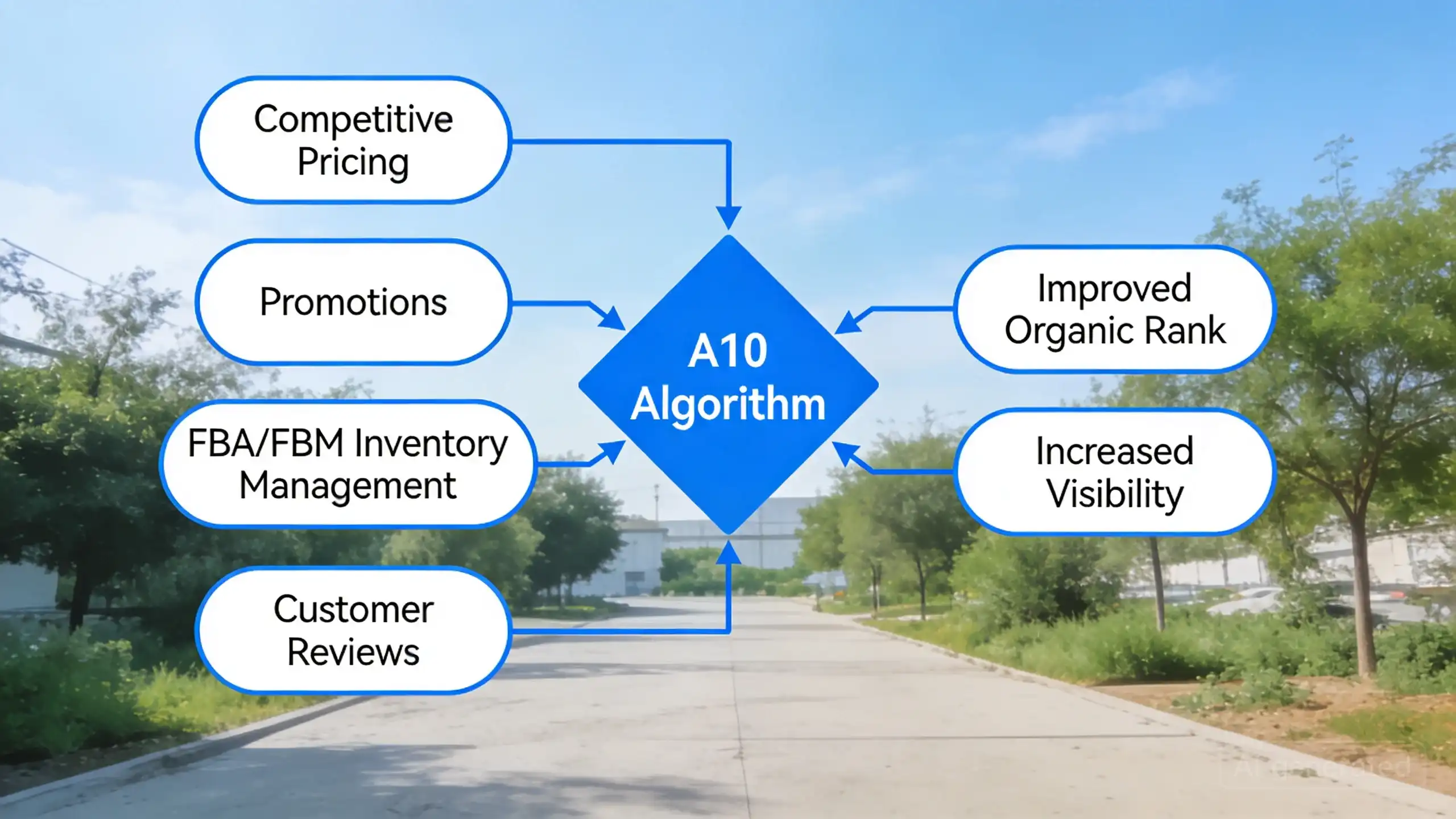
While keyword-optimized content is the foundation of Amazon SEO, several operational factors play a crucial, indirect role in determining your organic rank. These levers are centered on sales performance and customer satisfaction, which are powerful signals to Amazon's A10 algorithm. Mastering them is essential for sustainable visibility.
Competitive Pricing and Promotions
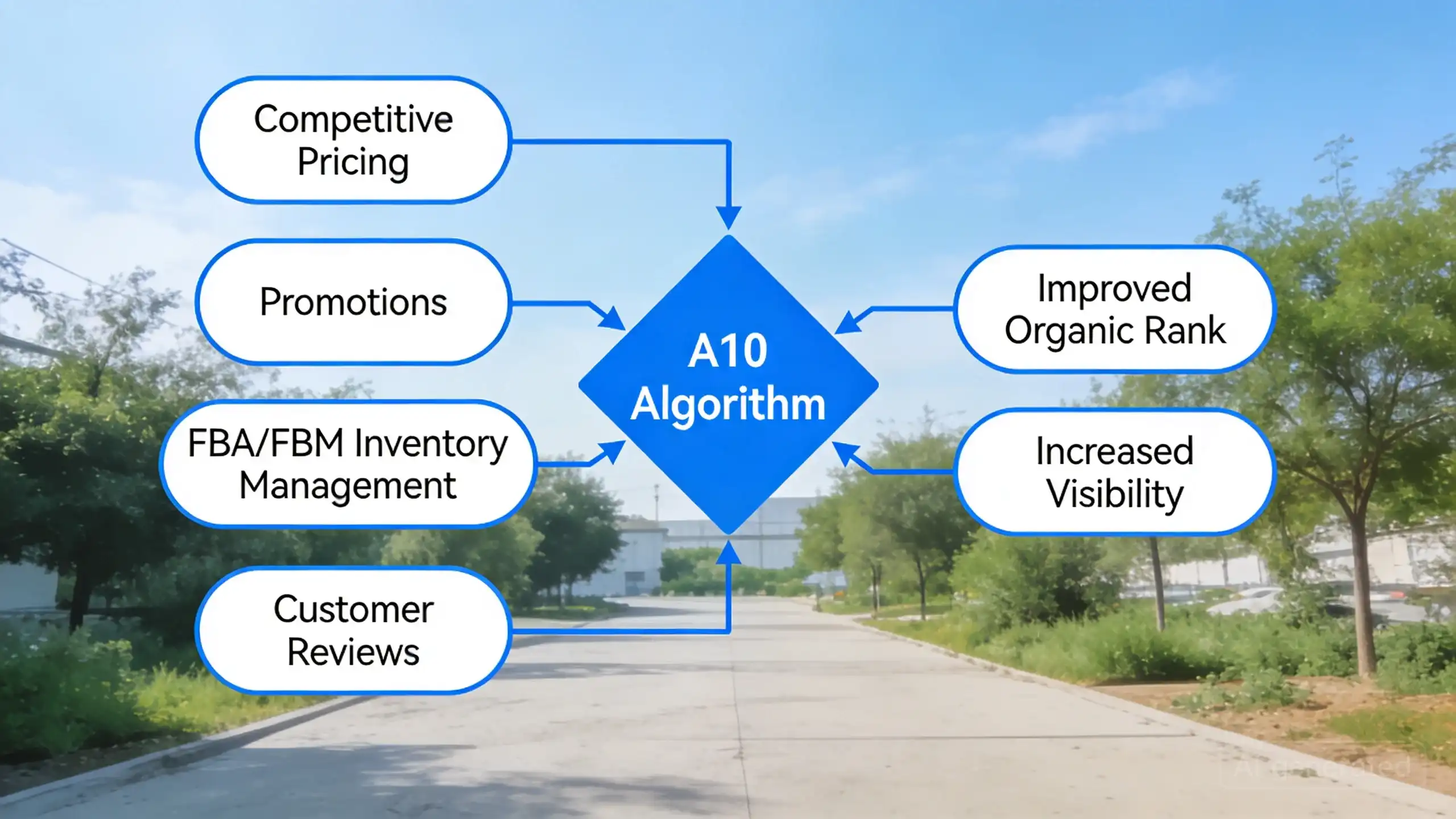
Your pricing strategy is a direct driver of sales velocity—one of the most significant ranking factors on Amazon. A competitively priced product is more likely to win the Buy Box and convert shoppers. Furthermore, strategic promotions, such as coupons, lightning deals, or percentage-off discounts, can create a surge in sales. This spike in sales velocity signals to the A10 algorithm that your product is popular and in demand, which can lead to a rapid improvement in your Best Seller Rank (BSR) and, consequently, higher organic search placement.
Inventory Management and Fulfillment (FBA vs. FBM)
How you manage inventory and fulfill orders directly impacts customer satisfaction and your SEO potential. Using Fulfillment by Amazon (FBA) is generally preferred, as it makes your products Prime-eligible, guaranteeing fast shipping that customers expect. This superior experience is favored by the algorithm. Conversely, frequent stockouts are devastating for SEO. Going out of stock halts your sales momentum, erodes your sales history, and can cause your hard-won keyword rankings to plummet, forcing you to start the ranking process over again.
Customer Reviews and Ratings
Positive reviews and a high average star rating are critical signals of trust and product quality. They function as powerful social proof, directly influencing your listing's conversion rate (CVR). A higher CVR tells Amazon that your product effectively meets customer expectations when they land on your page. The algorithm interprets this as a sign of a high-quality, relevant offer and rewards the listing with better visibility. Consistently generating positive feedback is a long-term investment in your product's organic ranking authority.
 The Synergy of Paid Ads and Organic Growth
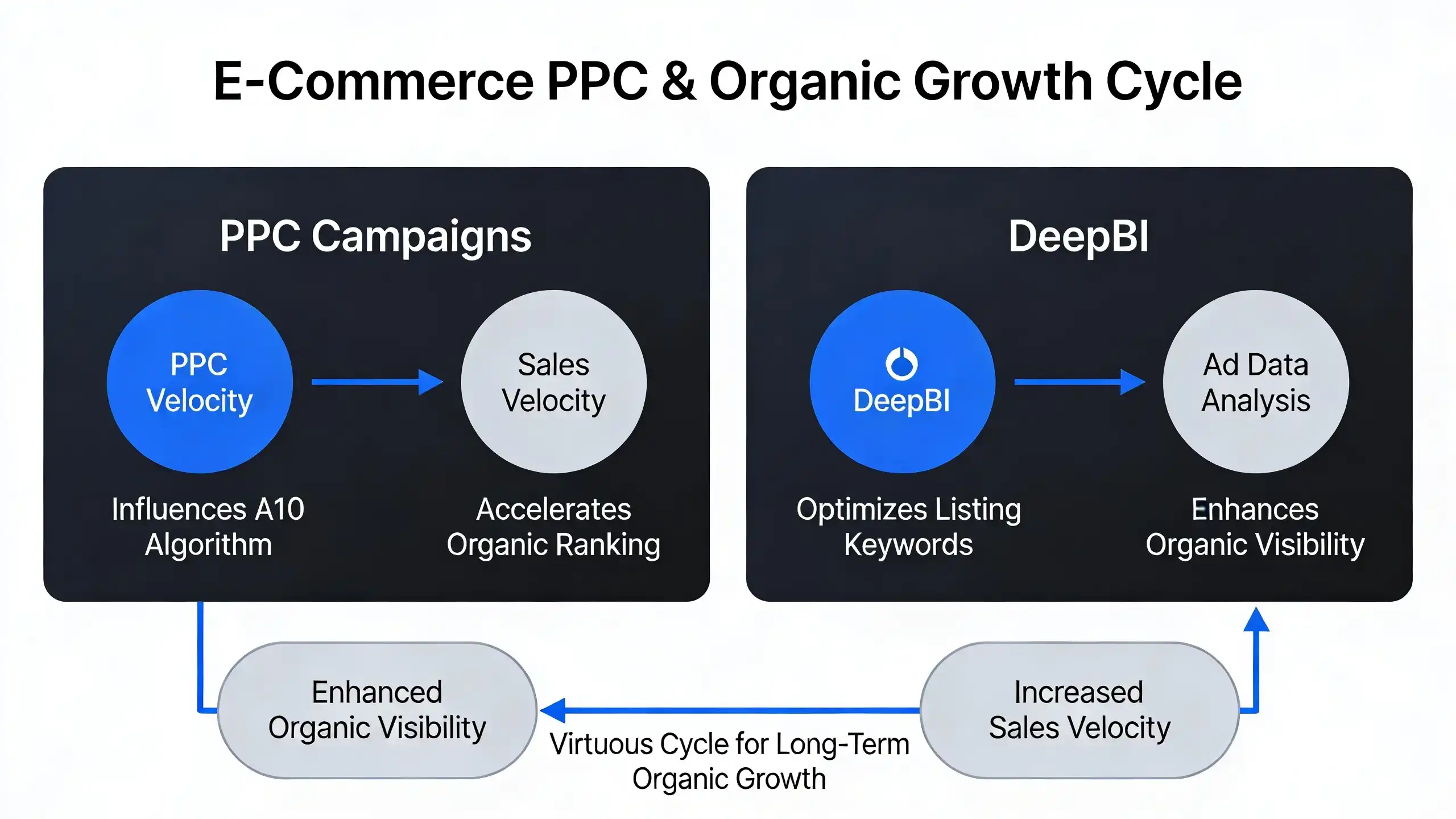
While paid advertising and organic SEO are often managed separately, their true power is unlocked when they work in concert. A strategic Amazon PPC campaign is one of the most effective accelerators for organic ranking, creating a virtuous cycle of visibility and sales. This synergy allows you to leverage ad spend not just for immediate returns, but as an investment in long-term organic growth.
How Amazon PPC Influences Organic Rank
Amazon's A10 algorithm heavily weighs sales velocity when determining organic search rankings. PPC campaigns directly influence this by driving immediate traffic and generating initial sales for your products, especially for new listings. This initial sales history signals to Amazon that your product is relevant and desirable for specific keywords.
The key indirect benefits include:
- Increased Sales Velocity: Ad-driven sales contribute to your overall sales history, which can improve your Best Seller Rank (BSR) and positively influence your organic position for targeted keywords.
- Enhanced Visibility: Ads place your product in front of shoppers even before you have achieved high organic rankings, kickstarting the visibility-to-sales flywheel.
- Keyword Data Collection: PPC campaigns are a real-world laboratory for testing keywords, allowing you to gather crucial performance data like click-through rates (CTR) and conversion rates (CVR) far more quickly than through organic efforts alone.
Using DeepBI Ads Data to Inform Organic Strategy
The data gathered from PPC is only valuable if you act on it. Any optimization detached from real market benchmarks is a waste of resources. This is where analytics tools become critical. DeepBI's Ads Quant module transforms raw ad data into a clear roadmap for organic optimization.
By analyzing campaign performance, the module pinpoints the exact keywords and ASINs that are not just getting clicks, but are consistently converting into sales. This allows you to move beyond guesswork and refine your listing with proven, high-performing terms. This data-driven approach creates a powerful feedback loop: paid ads validate high-conversion keywords, which are then integrated into your listing's title, bullet points, and backend search terms to improve organic rank. This, in turn, boosts organic sales and reduces long-term reliance on ad spend.
 Continuous Optimization: Monitoring and Adapting Your Amazon SEO Strategy
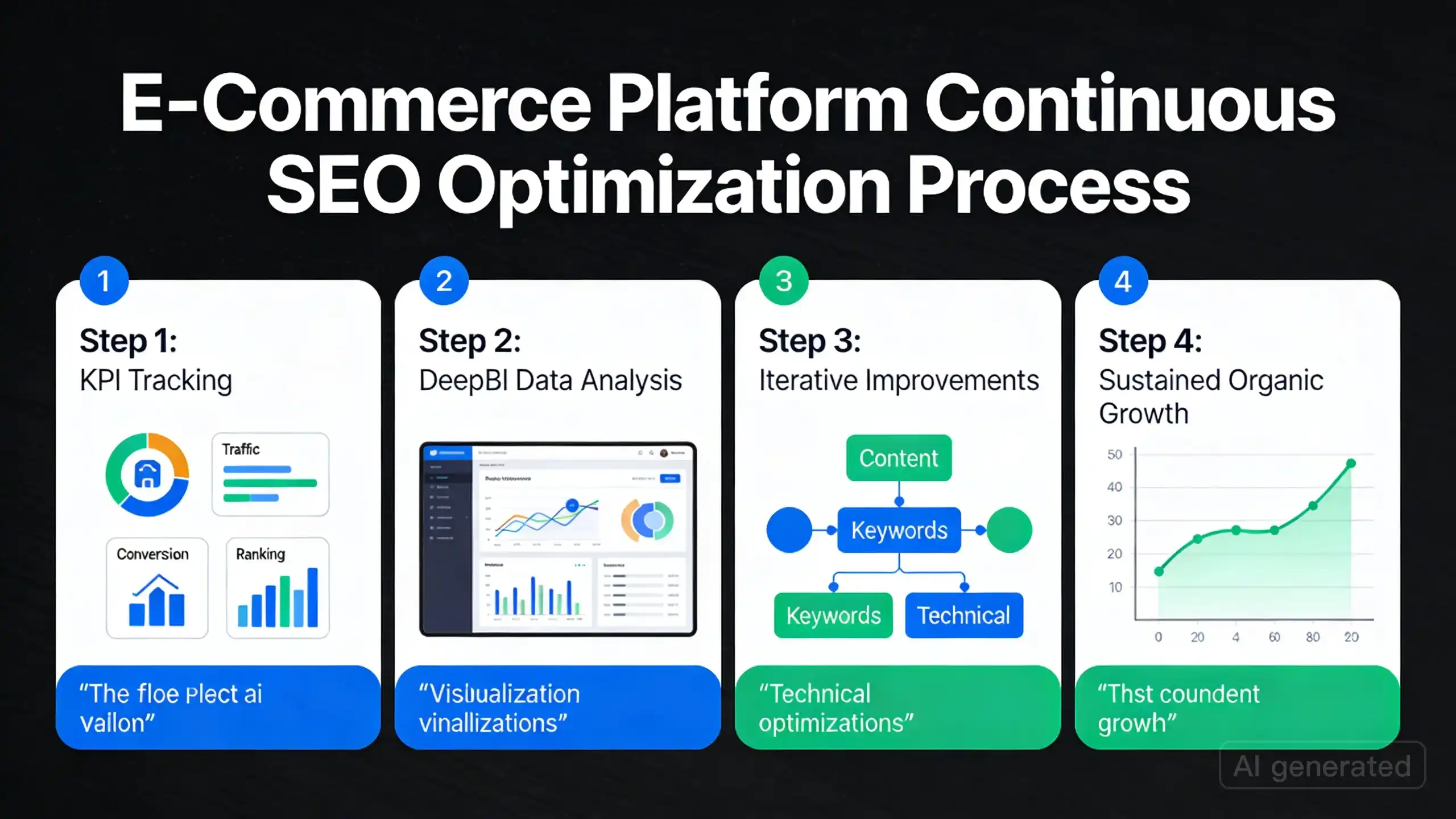
Amazon's marketplace is dynamic, with competitor strategies and algorithm updates constantly shifting the landscape. Effective SEO is not a "set it and forget it" task but an ongoing cycle of monitoring, analysis, and adaptation. To stay ahead, sellers must treat optimization as a continuous process, moving from guesswork to a data-driven strategy.
Tracking Key Performance Indicators (KPIs)
Sustained visibility depends on tracking the right metrics. Monitoring these KPIs provides a clear view of your SEO health and highlights areas needing attention:
- Organic Search Rank: Your product's position for high-value keywords is the most direct measure of SEO success.
- Sales Velocity: The rate and volume of sales directly influence your Best Sellers Rank (BSR) and, consequently, your organic placement.
- Conversion Rate (CVR): A high CVR signals to Amazon that your listing is relevant and compelling, which the A10 algorithm rewards with better ranking.
- Click-Through Rate (CTR): This metric reflects how effectively your main image, title, price, and review rating attract shoppers from the search results page.
- Review Count and Rating: Strong social proof builds trust, directly impacting CVR and serving as a crucial ranking factor.
Iterative Improvement with Data-Driven Insights
Tracking KPIs is only the first step; real growth comes from using that data to make informed adjustments. This transforms optimization from "groping in the dark" to "precision targeting." By systematically analyzing performance, you can identify underperforming elements, hypothesize improvements, and test changes.
Tools like DeepBI provide the necessary framework for this continuous optimization. For example, after updating a product image, the system can automatically tag the event and track subsequent changes in ad report CTR. This allows you to quantify the direct impact of your visual optimization on key business metrics. This data-driven feedback loop enables you to adapt your strategy based on real-world performance, ensuring your efforts lead to sustained organic growth rather than one-off gains.
 Conclusion: Sustained Growth Through Holistic Amazon SEO
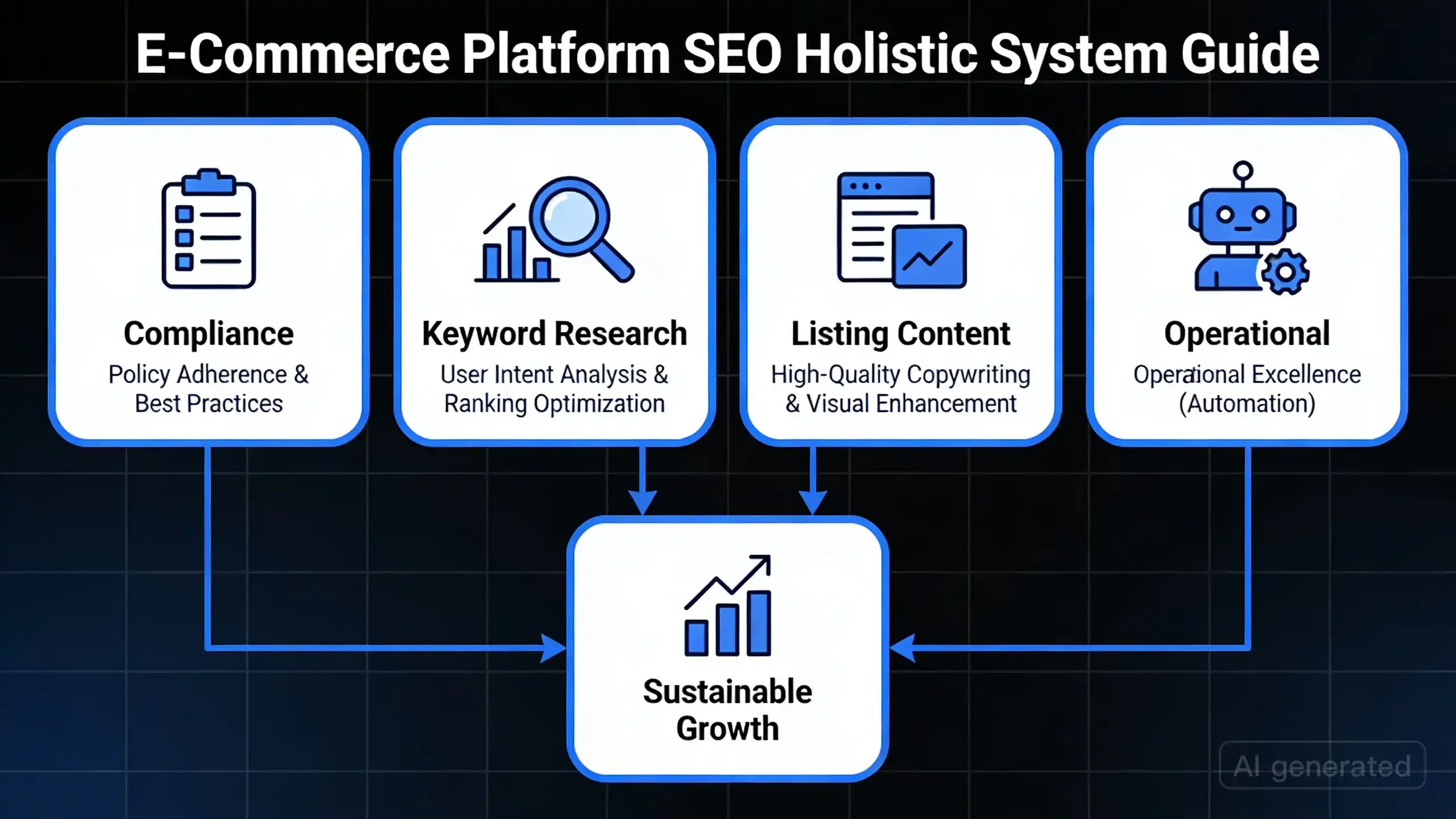
Mastering Amazon SEO is not about a single tactic but about building a comprehensive, disciplined system for sustained success. Your brand's long-term visibility rests on several interconnected pillars. It begins with a non-negotiable foundation of compliance—adhering strictly to Amazon's platform guidelines and ensuring absolute data authenticity and product consistency. On top of this, strategic keyword research and compelling listing content work in tandem to attract and convert shoppers.
However, these efforts only deliver lasting value when integrated into a seamless operational workflow. By embracing automation and secure, standardized processes, you can dramatically reduce the time spent on manual updates from minutes to seconds, minimizing errors and freeing your team to focus on strategic analysis. Ultimately, a holistic approach that combines rule adherence, creative optimization, and operational excellence is the definitive path to sustainable growth. By treating Amazon SEO as a continuous cycle of improvement, you position your brand not just to compete, but to thrive, capturing consistent organic traffic and driving predictable sales in the world's most competitive marketplace.