The Foundation: What is Amazon Keyword Research and Why It Matters
Even the most innovative product on Amazon will fail if customers cannot find it. Low visibility is a direct path to stagnant sales, and the root cause is often a disconnect between how a product is described and how shoppers actually search for it. Amazon keyword research is the strategic process that bridges this gap, forming the foundation of your product's discoverability and commercial success.
Defining Amazon Keyword Research
At its core, Amazon keyword research is the practice of identifying and analyzing the specific terms, phrases, and questions that potential customers enter into the search bar. This process moves beyond simple guesswork, using data to uncover high-volume, relevant, and long-tail keywords that reflect genuine customer intent. The objective is to build a comprehensive vocabulary that aligns your product listing with the language of your target audience.
The Indispensable Role of Keywords in Amazon's A9/A10 Algorithm
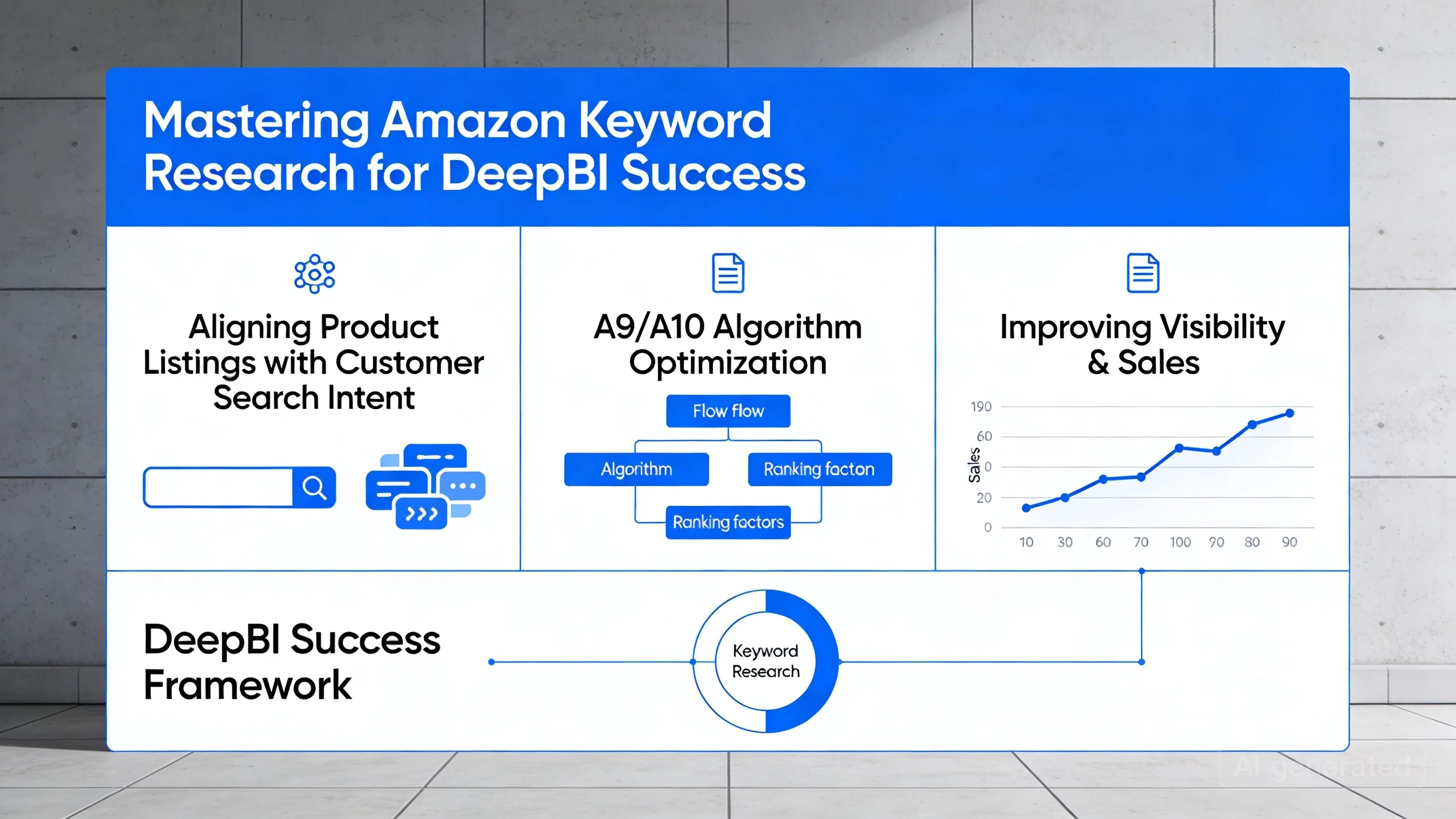
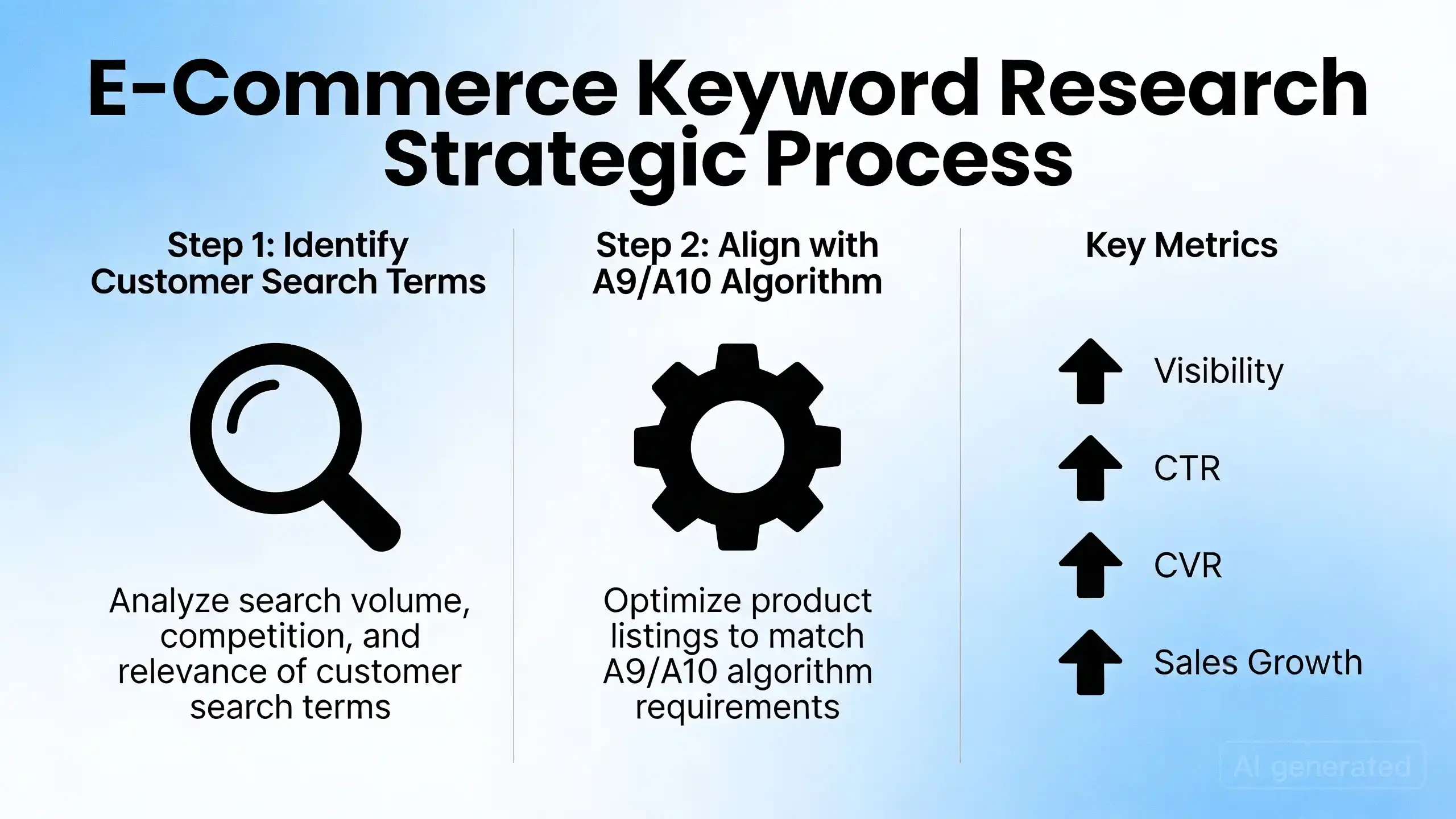
Keywords are the primary language of Amazon's A9/A10 search algorithm. The algorithm's main function is to match a customer's query with the most relevant products in its vast catalog. It analyzes the keywords in your product title, bullet points, backend search terms, and description to understand what your product is and for whom it is intended. Without the correct keywords, your product is effectively invisible to the algorithm during relevant searches, preventing it from ever appearing before qualified buyers.
Impact on Product Visibility and Sales
Effective keyword implementation directly and measurably impacts key performance indicators. By targeting the right terms, you ensure your product is indexed and ranked for relevant searches, which immediately increases its visibility. Higher visibility with relevant keywords leads to a better Click-Through Rate (CTR), as shoppers find exactly what they were seeking. When this targeted traffic lands on a well-optimized listing, it drives a higher Conversion Rate (CVR). This combination of strong CTR and CVR signals to the A9/A10 algorithm that your product is an excellent match for those keywords, further boosting its ranking and creating a powerful, self-reinforcing cycle of visibility and sales growth.
 Decoding Keyword Types for Strategic Advantage
A successful Amazon strategy depends on understanding that not all keywords are equal. By categorizing keywords, you can deploy them with precision to match different stages of the customer journey, thereby optimizing both advertising spend and organic rank. Each type serves a distinct purpose, from casting a wide net to capturing high-intent buyers.
Short-Tail Keywords: Broad Reach, High Competition
Short-tail keywords are broad search terms, typically one to two words long, such as "yoga mat" or "coffee maker." They generate massive search volume, offering significant exposure. However, this reach comes at a price: competition is fierce, which can drive up the Advertising Cost of Sale (ACoS) and make organic ranking difficult. These terms are best suited for top-of-funnel brand awareness campaigns and for establishing a product's presence within a major category.
Long-Tail Keywords: Specificity, Higher Conversion Potential
Consisting of three or more words, long-tail keywords are highly specific phrases like "extra thick non-slip yoga mat for hot yoga." While their search volume is lower, the user's purchase intent is significantly higher. Shoppers using these terms know precisely what they want, which leads to a much better Conversion Rate (CVR). Targeting long-tail keywords is a cost-effective strategy for reaching niche audiences and capturing customers who are ready to buy.
Brand vs. Non-Brand Keywords: Balancing Identity and Discovery
This distinction is crucial for managing your advertising portfolio. Brand keywords include your company name (e.g., "Lululemon yoga mat") and are essential for defending your brand space from competitors and serving customers already seeking you out. Non-brand keywords are generic product terms (e.g., "eco-friendly yoga mat") used to attract new customers who are unaware of your brand, thereby driving discovery and market share growth.
Semantic Keywords: Enhancing Contextual Relevance
Semantic keywords are words and phrases thematically related to your primary keywords. For a "water bottle," these could include "hydration," "BPA-free," "gym accessory," or "leak-proof." Including these terms in your listing helps Amazon's A9 algorithm more comprehensively understand the context and applications of your product. This improves your listing's relevance, increasing its chances of appearing in a wider variety of related customer searches.
The DeepBI Approach: A Step-by-Step Guide to Amazon Keyword Research
A systematic approach transforms keyword research from an intuitive exercise into a strategic advantage. This process combines foundational techniques with powerful data analytics to build a keyword portfolio that drives both paid and organic growth.
Stage 1: Initial Keyword Brainstorming and Seed List Generation
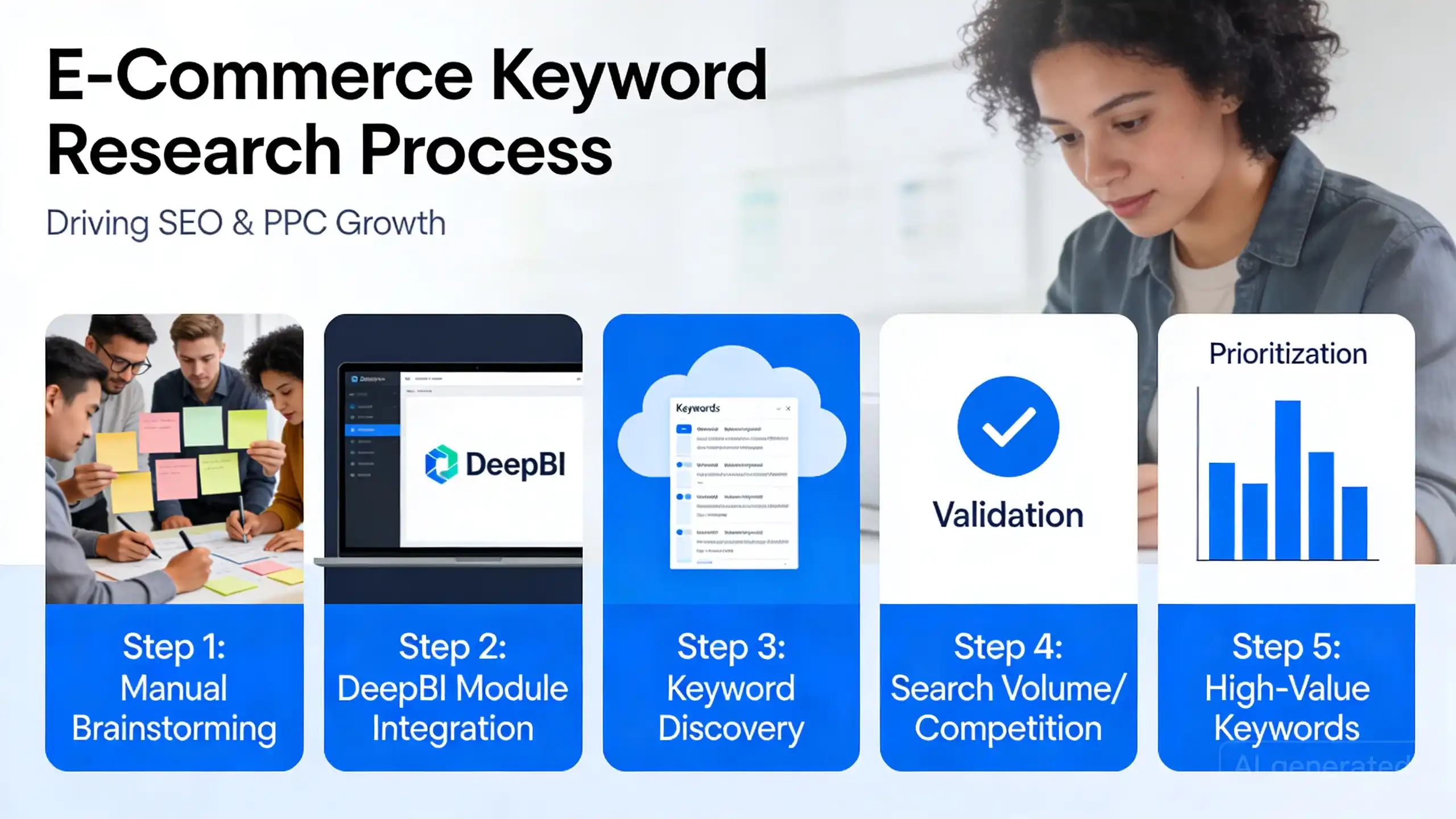
Begin by creating a foundational "seed list." This initial pool of terms is gathered through manual methods, such as analyzing top competitor listings, mining customer reviews and Q&A sections for common language, and leveraging Amazon's own search bar autocomplete suggestions.
Stage 2: Leveraging DeepBI for Data-Driven Keyword Discovery
Once a seed list is established, the next step is to expand and validate it with robust data. DeepBI's integrated modules provide a multi-faceted approach to uncovering high-value keywords that manual research alone cannot find.
Utilizing DeepBI's Listing Module for Keyword Insights
DeepBI’s Listing Module functions as an "automated market health check system." It performs a quantitative audit of your listing against top competitors, scoring elements from your title to your bullet points. This diagnosis pinpoints critical keyword gaps, and the platform’s AI then helps you systematically reconstruct your listing content, integrating these newly found, high-relevance keywords to improve your ranking potential.
DeepBI's Ads Quant Module for Performance-Based Keyword Identification
Your advertising data is a goldmine of proven keywords. DeepBI’s Ads Quant Module analyzes your campaign performance through a four-layer traffic funnel. It identifies terms from your precision ad campaigns that already demonstrate high Click-Through Rates (CTR) and Conversion Rates (CVR), validating their effectiveness with real customer behavior.
DeepBI's Organic Traffic Module for Ranking-Driven Keywords
The highest-performing keywords identified from your ad campaigns become the primary targets for organic growth. DeepBI’s Organic Traffic Module uses these proven terms to structure targeted campaigns aimed specifically at boosting your organic search ranking and improving your Best Sellers Rank (BSR) for those keywords.
Stage 3: Refining and Prioritizing Your Keyword List
Finally, consolidate all discovered keywords into a master list. Prioritize this list based on a balance of key metrics: direct relevance to your product, significant search volume, manageable competition, and high conversion potential. This refined list becomes the backbone of your SEO and PPC strategies.
 Integrating Keywords for Maximum Impact Across Your Amazon Presence
An effective keyword strategy extends beyond discovery; it requires meticulous integration across every customer-facing and backend element of your Amazon presence. This holistic approach ensures that both the A9 algorithm and potential buyers can find and understand your product's value.
Optimizing Product Listings: Titles, Bullet Points, Descriptions, and Backend Search Terms
A fully optimized product listing uses strategic keyword placement to maximize visibility and conversion. Each section—from the title to the hidden backend terms—serves a distinct purpose in the ranking and sales process. Neglecting any one of these areas creates a weak link in your strategy, potentially diminishing your product's discoverability and sales velocity.
Crafting Compelling Titles with High-Value Keywords
Your product title is the most heavily weighted element for keyword ranking. A successful title balances high-volume search terms with readability to attract clicks. Structure it logically, often following a formula like: [Brand Name] + [Main Keyword] + [Key Feature/Benefit] + [Size/Color]. This approach captures algorithmic relevance while providing essential information to shoppers, directly impacting your Click-Through Rate (CTR). Always adhere to Amazon's character limits to avoid suppression.
Enhancing Bullet Points and Product Descriptions
Use your bullet points and product description to weave in secondary and long-tail keywords naturally. Instead of merely listing features, frame them as benefits that solve a customer's problem. For example, rather than "10,000mAh battery," write "All-Day Power: Our 10,000mAh battery keeps you connected on the go." This keyword-rich, benefit-driven copy helps index your product for a wider range of searches and improves your Conversion Rate (CVR).
Strategic Use of Backend Search Terms
Backend search terms are your opportunity to index for keywords that do not fit naturally into your visible listing copy. Use this space for synonyms, common misspellings, and related concepts. Best practices include:
- Do not repeat keywords already present in your title or bullet points.
- Use spaces to separate keywords; no commas or semicolons are needed.
- Stay within the character limit provided by Amazon Seller Central.
- Avoid using competitor brand names or ASINs.
Powering DeepBI Ads Campaigns with Targeted Keywords
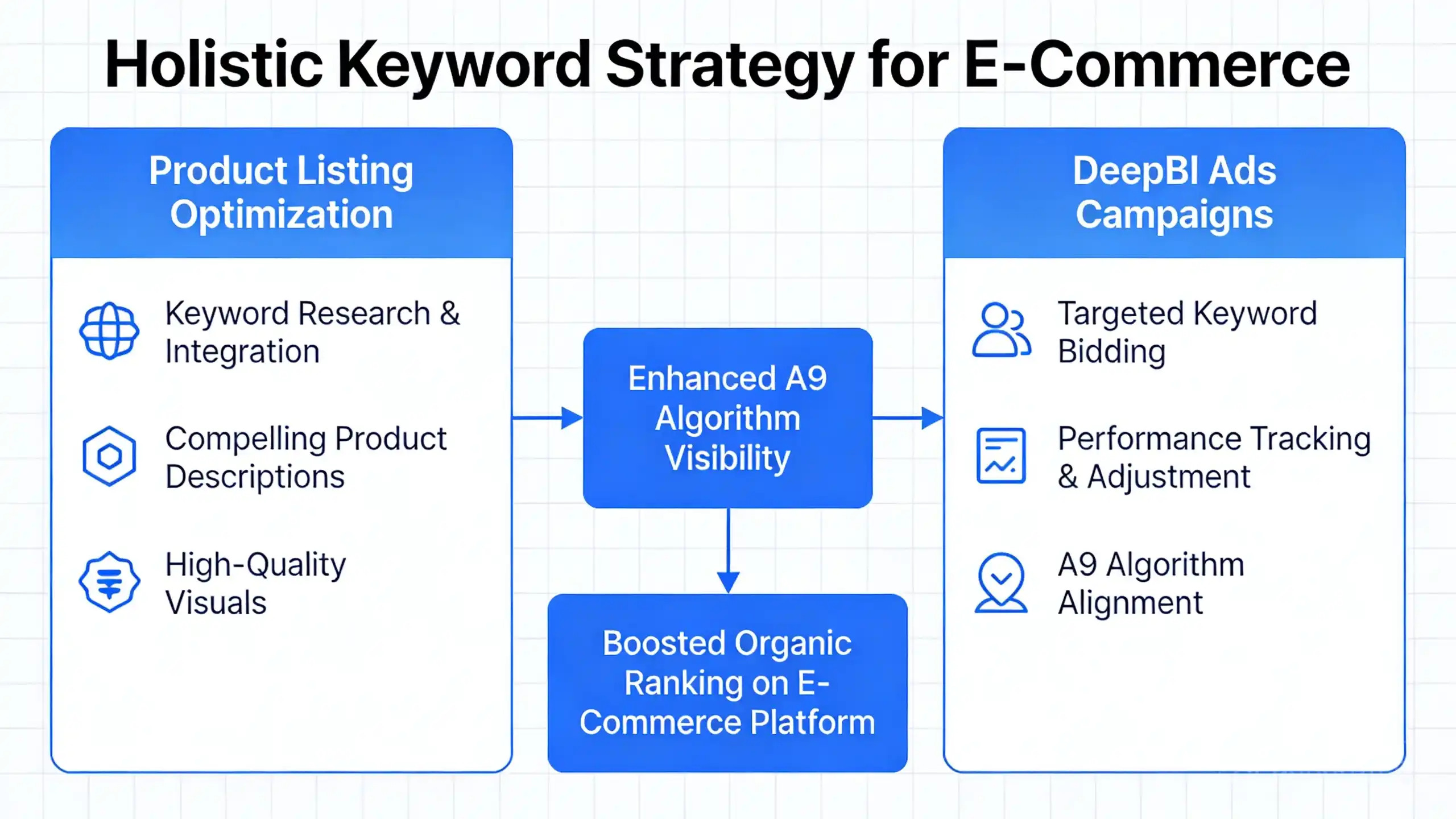
Your keyword research provides the direct fuel for your DeepBI advertising campaigns. The high-intent keywords you identify become the targets for your Sponsored Products ads. By aligning your ad targeting with the most relevant search terms, you ensure your product appears before motivated buyers. This precision improves ad relevance, boosts CTR, and is critical for achieving a lower, more profitable Advertising Cost of Sale (ACoS).
Boosting Organic Ranking Through Keyword-Rich Content and Performance
A powerful synergy exists between your optimized listing and your ad performance. A keyword-rich listing improves your organic relevance, while successful DeepBI ad campaigns drive traffic and sales. This increased sales velocity is a key signal to Amazon's algorithm, proving your product's popularity and relevance. The result is a positive feedback loop where paid advertising success directly contributes to a higher Best Sellers Rank (BSR) and improved organic search positioning.
 Advanced Keyword Strategies and Continuous Optimization
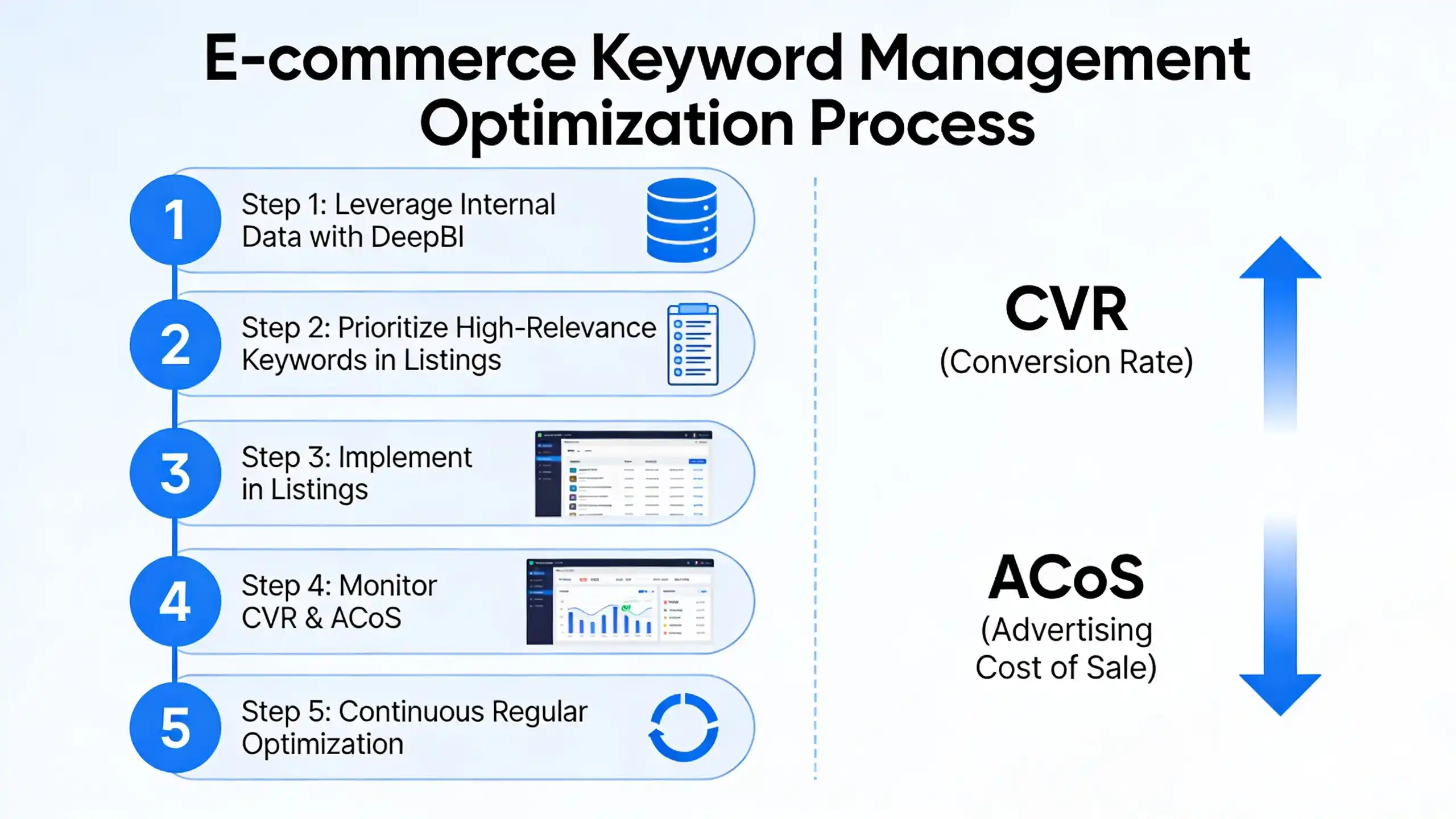
Effective keyword management is not a one-time task but an ongoing cycle of analysis, adaptation, and refinement. While initial research lays the foundation, long-term success depends on continuously optimizing your strategy based on real-world performance data and evolving market dynamics.
Monitoring Keyword Performance with DeepBI Analytics
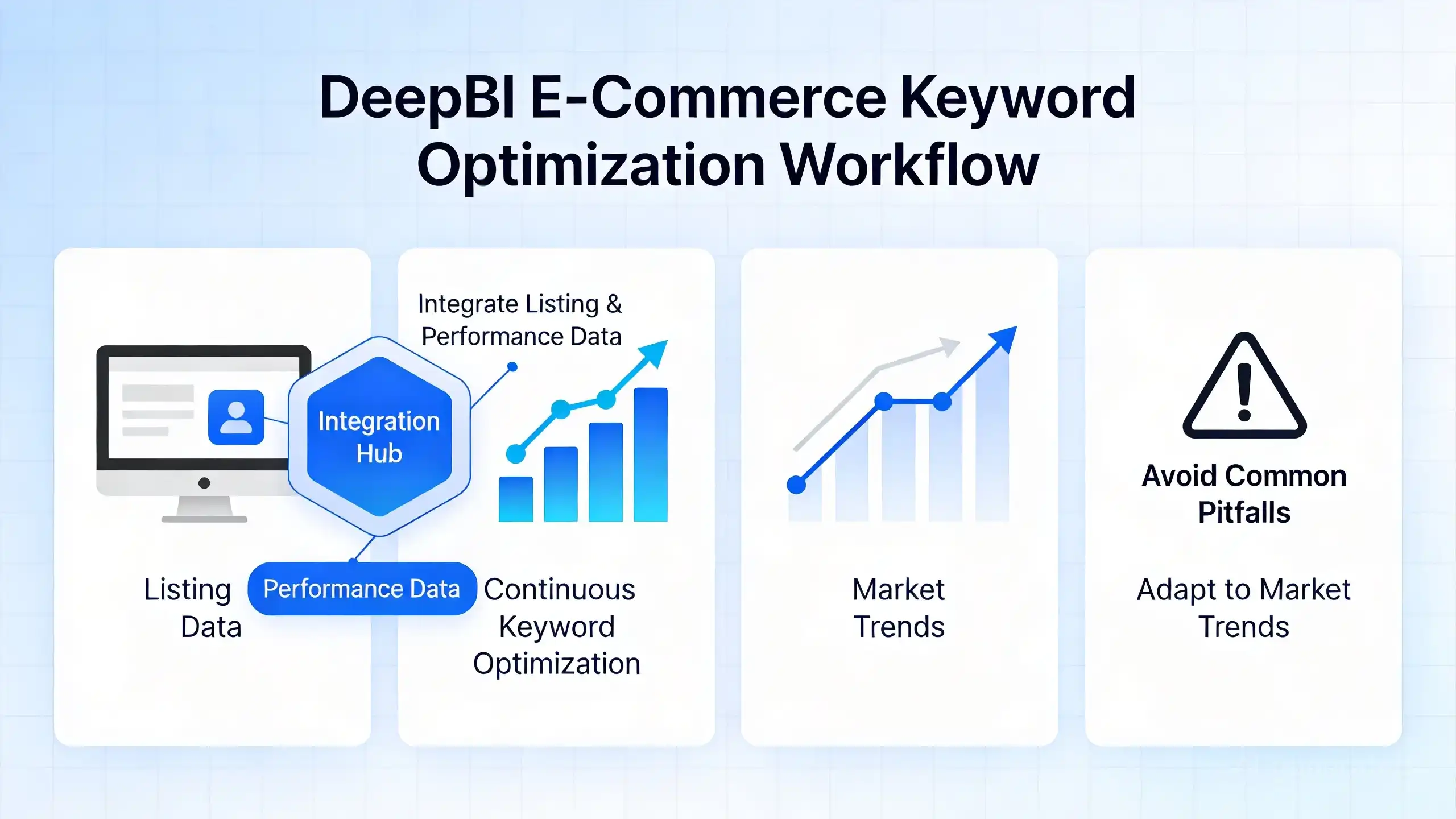
The first step in optimization is accurate measurement. A powerful analytics platform allows you to move beyond speculation and make data-driven decisions. By integrating data across your Listing, Ads, and Organic modules, DeepBI provides a holistic view of how each keyword performs. You can track critical KPIs like search volume, Click-Through Rate (CTR), Conversion Rate (CVR), Advertising Cost of Sales (ACoS), and organic rank in a single dashboard. This unified view helps you identify which keywords are driving profitable sales, which are underperforming, and where new opportunities lie for both paid and organic growth.
Adapting to Market Trends and Competitor Strategies
The Amazon marketplace is in constant flux. Consumer search behavior changes with seasonal trends, new products enter the market, and competitors continually adjust their advertising strategies. A static approach means falling behind. Continuous keyword research is essential to discover emerging terms and adapt to these shifts. By regularly analyzing competitor listings and market reports, you can refine your keyword set to maintain relevance, defend your market share, and capitalize on new trends before they become saturated.
Avoiding Common Keyword Pitfalls
A data-driven approach helps you steer clear of common mistakes that can harm your visibility and profitability. Key pitfalls to avoid include:
- Keyword Stuffing: Overloading your listing with irrelevant or repetitive keywords damages readability and can be penalized by Amazon's algorithm, hurting your organic rank.
- Targeting Irrelevant Terms: Chasing high-volume keywords that do not match customer intent leads to a low CVR and wasted ad spend.
- Neglecting Long-Tail Opportunities: Ignoring specific, multi-word search phrases means missing out on high-intent buyers who are further along in their purchase journey and often convert at a higher rate.
 Frequently Asked Questions about Amazon Keyword Research
What are the best tools for Amazon keyword research?
A robust keyword strategy combines insights from multiple sources. While third-party tools are valuable, begin with Amazon's own powerful, free resources like the Search Query Performance Dashboard and Brand Analytics, which provide direct insight into customer search behavior. For a more comprehensive and integrated approach, a platform like DeepBI is essential. It synthesizes data from various sources, automates opportunity discovery, and connects keyword performance directly to business outcomes. The ideal toolkit combines Amazon's raw customer data with an intelligent analytics platform to streamline analysis and execution.
How many keywords should I target for a product?
There is no single magic number; focus on relevance and quality over sheer quantity. A successful strategy targets a curated set of keywords across different parts of your listing. Prioritize the most critical, high-volume keywords for your title and bullet points. Use your backend search term fields to target a broader set of long-tail keywords, synonyms, and common misspellings. The goal is to cover the primary ways customers search for your product, ensuring every keyword you target has a clear path to conversion. An irrelevant keyword, even one with high traffic, will only hurt your Conversion Rate (CVR) and ACoS.
How often should I update my keywords?
Keyword optimization is a continuous process, not a one-time setup. We recommend a regular review cycle, at a minimum, on a quarterly basis. However, you should conduct a review more frequently under specific circumstances:
- Performance Dips: If you notice a negative trend in click-through rate (CTR), conversion rate (CVR), or a rising ACoS.
- Seasonality: Update keywords proactively before peak seasons (e.g., holidays, back-to-school) to capture emerging trends.
- Market Shifts: When new competitors enter the market or customer search behavior evolves.
- Product Lifecycle: A new product launch requires more frequent monitoring and adjustment than a mature, stable product.