Understanding the Fundamentals: Automatic vs. Manual Campaigns
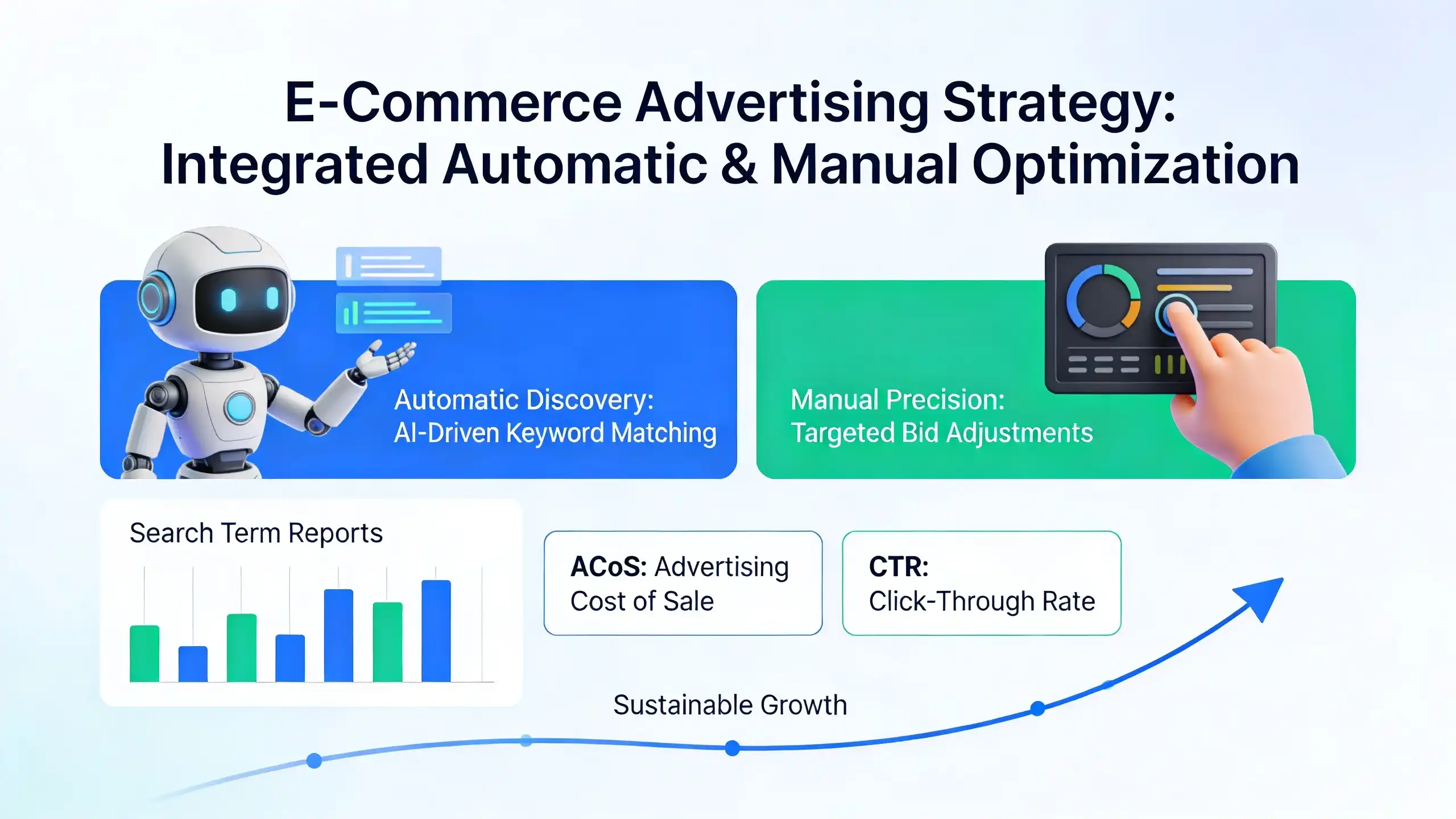
To effectively manage Amazon PPC, sellers must master the two fundamental campaign types: automatic and manual. Each serves a distinct but complementary purpose, and understanding their interplay is the first step toward building a sophisticated advertising strategy.
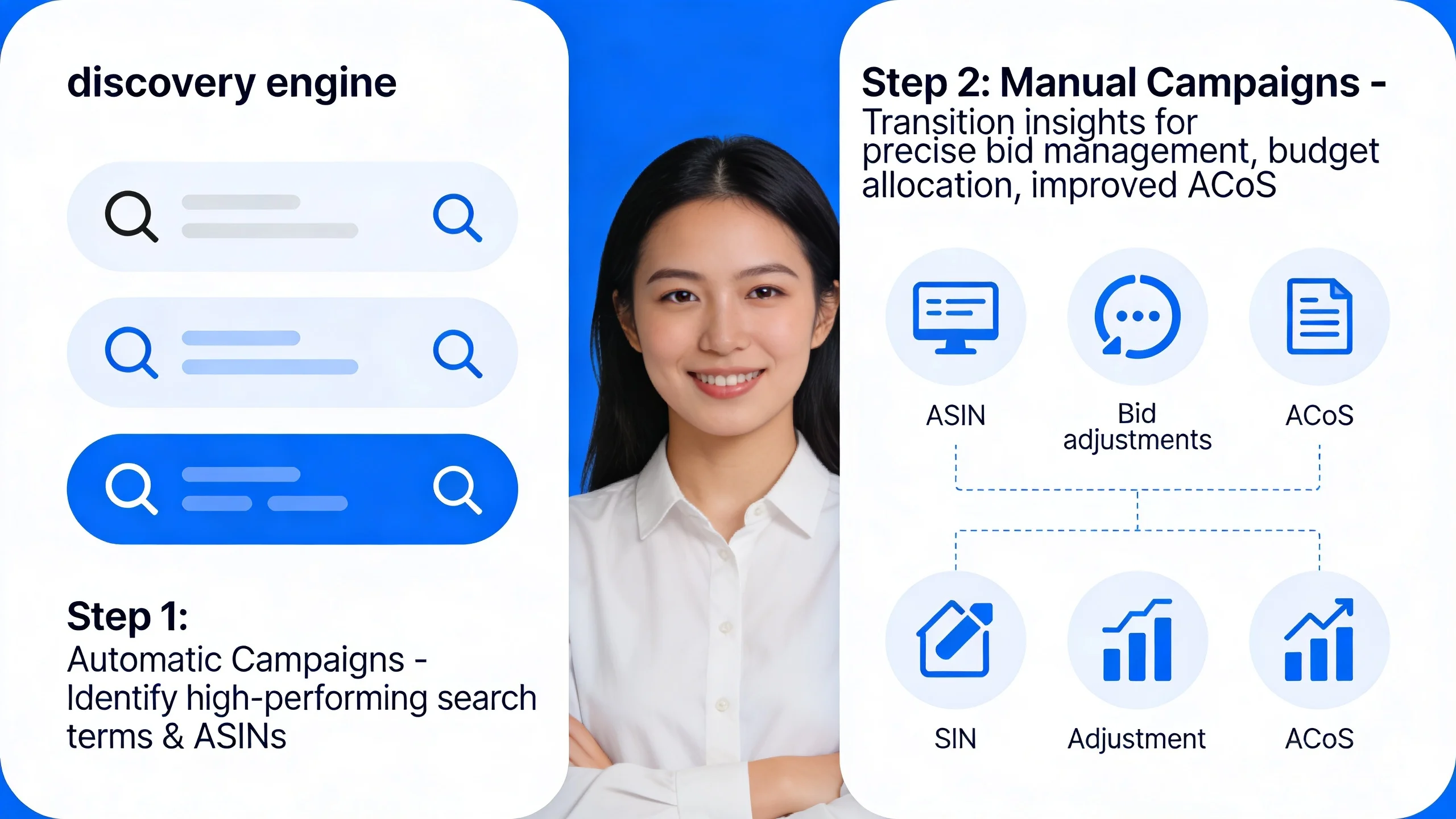
Automatic campaigns are driven by Amazon's algorithm. You provide your product and a budget, and Amazon automatically targets your ads to relevant customer searches and product detail pages. This targeting falls into four categories: close match, loose match, substitutes, and complements. The primary strength of automatic campaigns lies in discovery. They are invaluable for initial data collection, uncovering new, high-performing customer search terms and competitor ASINs that can fuel your entire advertising ecosystem.
Manual campaigns, in contrast, put you in direct control. You decide which specific keywords, ASINs, or categories to target. This granular control allows for precise bid management and budget allocation, enabling you to focus your ad spend on proven, profitable targets. While automatic campaigns are for exploration, manual campaigns are for exploitation—driving efficiency, defending strategic placements, and achieving specific ACoS (Advertising Cost of Sale) goals.
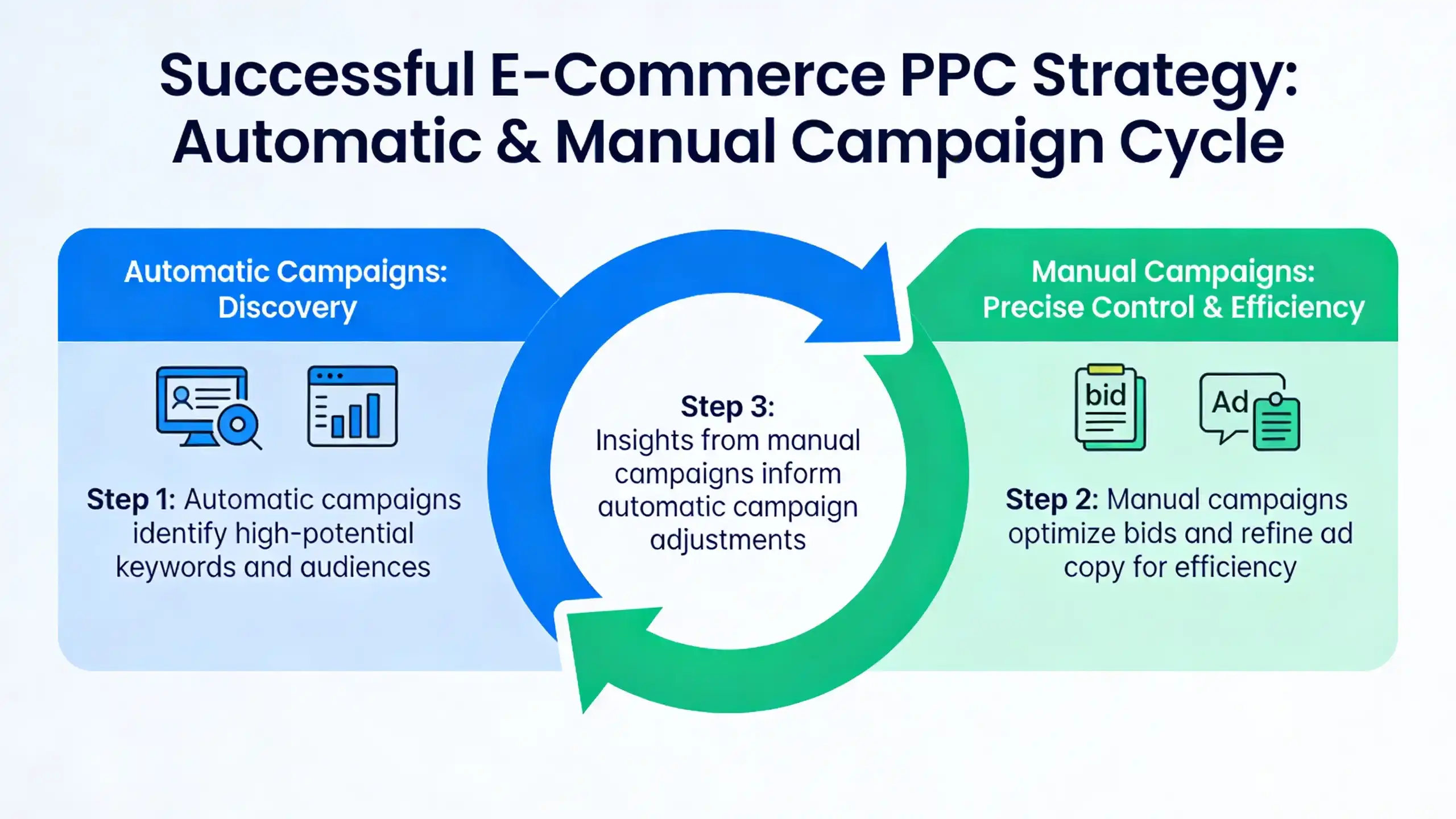
Ultimately, the most effective Amazon advertisers don't choose one over the other. They use both in a continuous cycle: automatic campaigns discover new opportunities, and manual campaigns capitalize on them for scalable, profitable growth.
When to Leverage Automatic Targeting
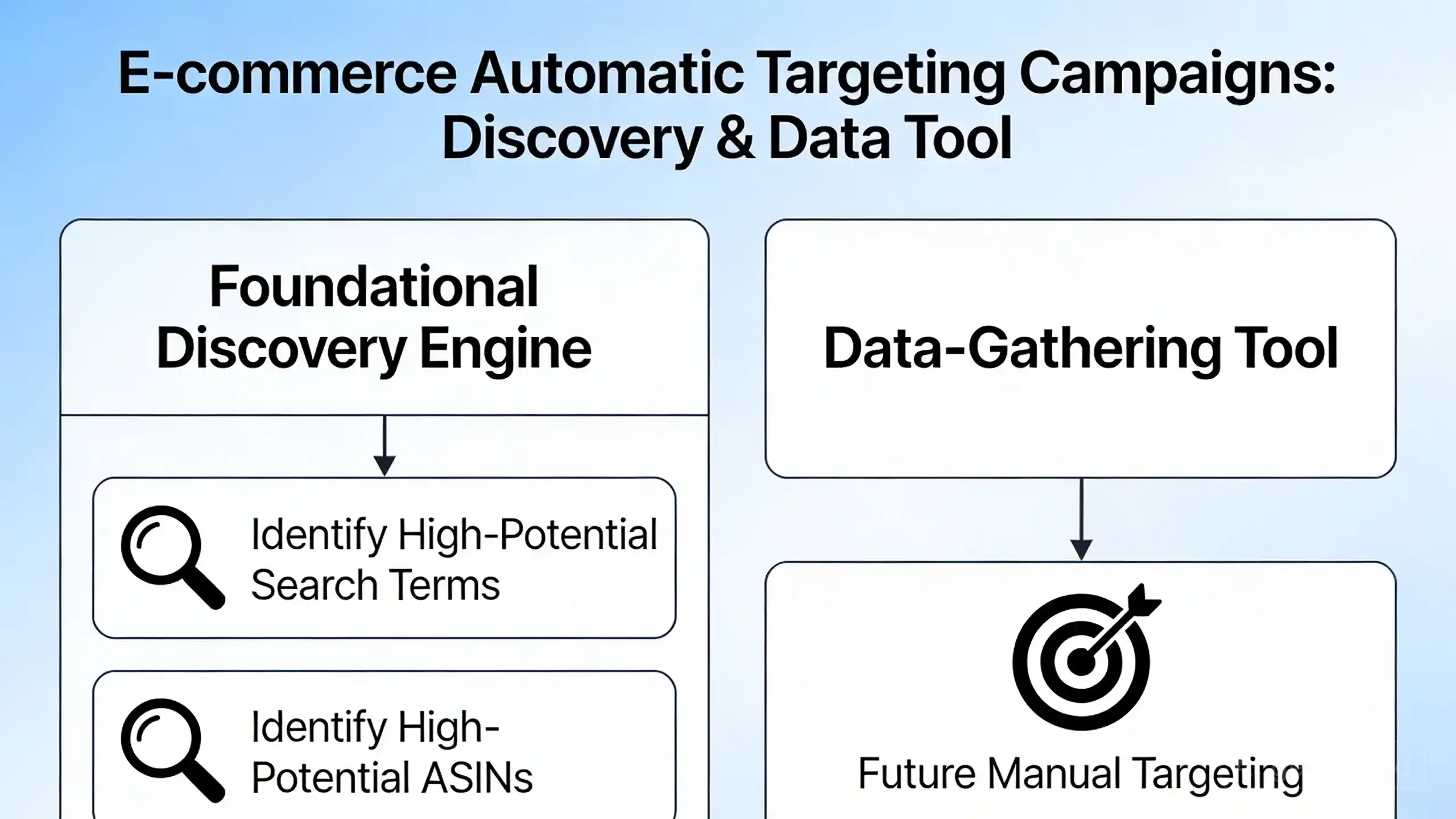
Automatic targeting campaigns are the essential first step in building a robust advertising strategy, acting as a powerful discovery engine and initial testing ground. Their primary value lies in their ability to cast a wide net and gather crucial performance data when you have none, allowing you to explore new traffic opportunities efficiently while managing costs.
This approach is particularly indispensable for new product launches. Without historical sales data or a proven list of keywords, automatic campaigns empower Amazon's algorithm to do the heavy lifting. The system tests your product against a broad spectrum of customer search terms and competitor product pages (ASINs), quickly revealing which traffic sources have the highest potential.
Think of this phase as strategic market research. The goal isn't necessarily immediate, low ACoS, but rather to harvest valuable intelligence. By analyzing the search term report from an automatic campaign, you can:
- Identify high-converting keywords to "graduate" into more controlled manual campaigns.
- Discover unexpected but relevant customer search behaviors and emerging trends.
- Build a comprehensive list of irrelevant search terms to add as negative keywords, preventing wasted ad spend and improving the efficiency of all future campaigns.
By using automatic campaigns as a foundational data-gathering tool, you lay the groundwork for more precise, scalable, and profitable manual targeting down the line.
The Power of Manual Targeting
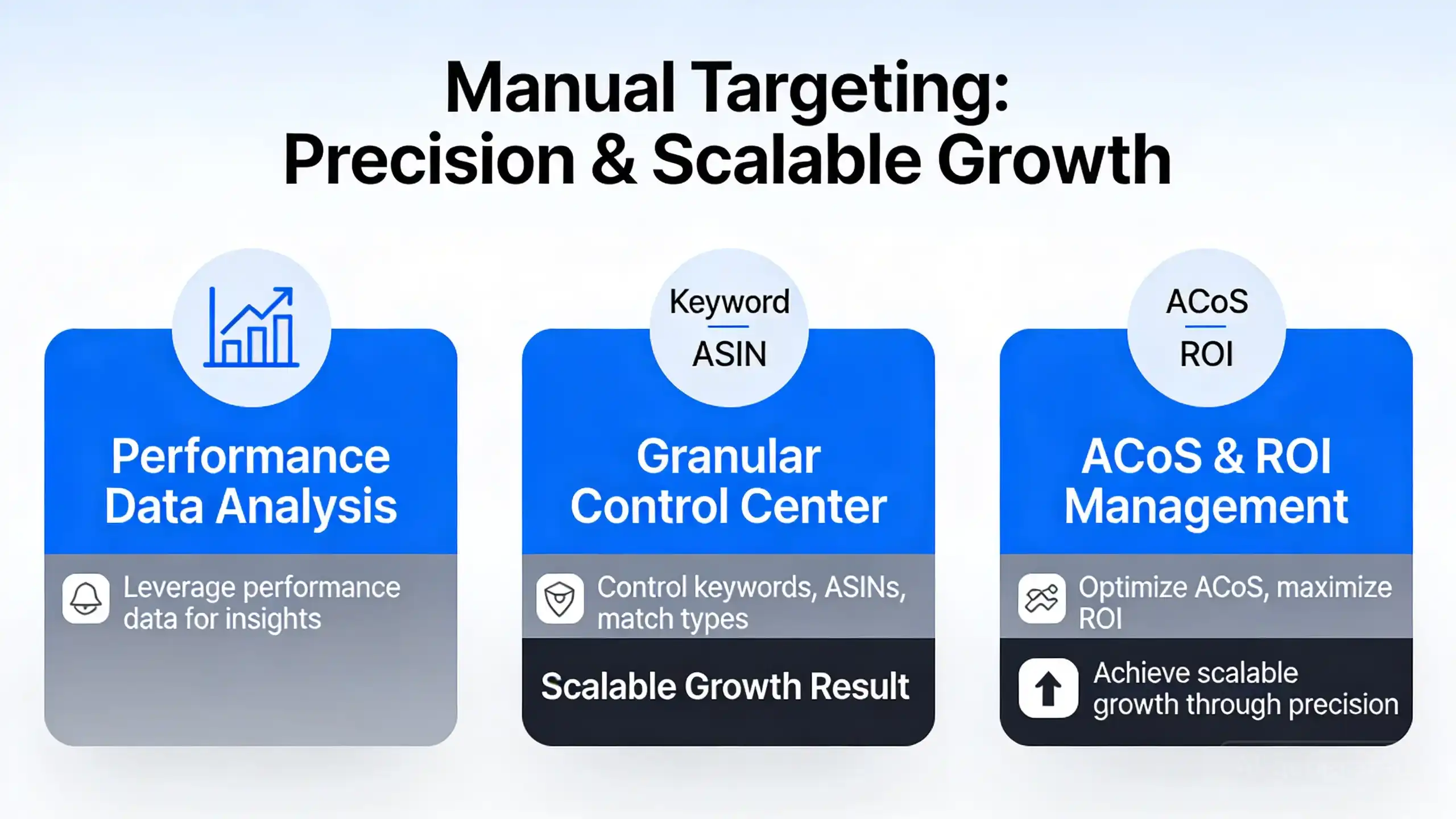
While automatic campaigns excel at discovery, manual targeting is where you achieve precision, control, and profitable scaling. This stage leverages the valuable performance data—specifically, high-converting keywords and ASINs—unearthed by your auto campaigns. By transitioning these proven performers into a manual campaign, you shift from broad exploration to focused execution.
The primary advantage lies in granular control. Manual campaigns allow you to implement different keyword match types to refine your reach:
- Broad Match: Captures a wide audience, useful for initial screening of promising terms.
- Phrase Match: Offers a balance of reach and relevance, targeting more specific search queries.
- Exact Match: Provides maximum control, targeting only the most qualified shoppers with high purchase intent.
This level of specificity enables you to set precise bids for each keyword or product target, directly managing your Advertising Cost of Sale (ACoS) and maximizing return on investment (ROI). Furthermore, it unlocks advanced offensive strategies, such as targeting competitor ASINs, and defensive tactics, like protecting your branded search terms from rivals. By systematically moving keywords through broad, phrase, and finally exact match, you create a structured traffic funnel that refines audience quality and drives scalable growth.
The Synergistic Approach: The "Launch & Harvest" Method
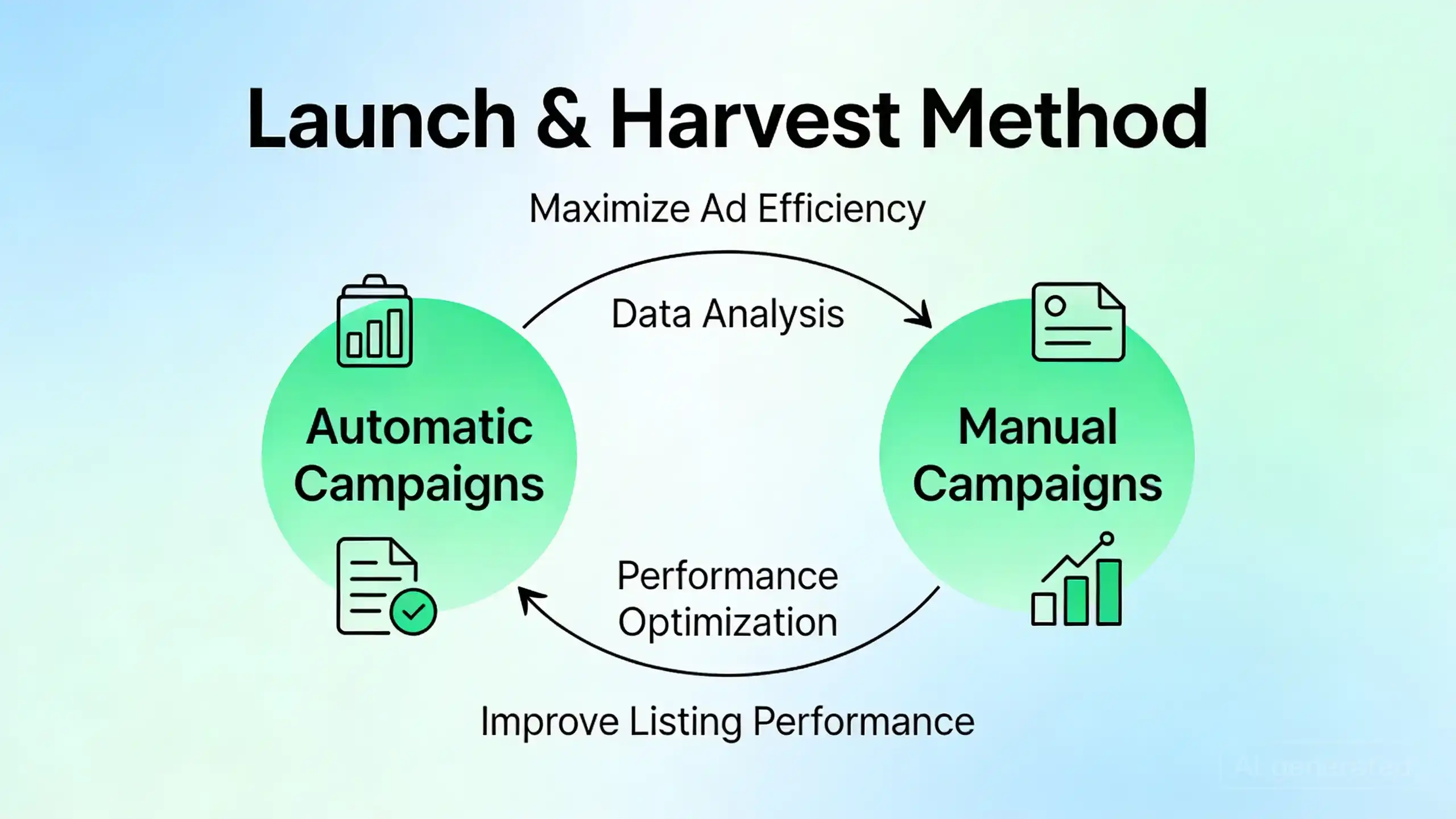
Instead of viewing automatic and manual campaigns as an either/or choice, the most effective strategy combines them in a continuous, data-driven cycle. The "Launch & Harvest" method is a proven workflow that leverages the strengths of both targeting types to maximize ad spend efficiency and scale results.
The process unfolds in three core phases:
- Launch with Automatic Campaigns: Begin by launching a broad automatic campaign for your product. The primary goal here is data collection. Amazon's algorithm will test your listing against a wide array of customer search terms, providing an invaluable foundation of real-world performance data and uncovering unexpected, high-intent keywords.
- Harvest Data and Refine: After gathering sufficient data, analyze the Search Term Report from your automatic campaign. This is the critical "harvest" phase. Identify two key groups: high-performing terms with strong Click-Through Rates (CTR) and Conversion Rates (CVR), and irrelevant terms that generate clicks but no sales. The latter should be added as negative keywords to prevent wasted ad spend.
- Scale with Manual Campaigns: Move the proven, profitable keywords harvested from your automatic campaign into a new, highly-targeted manual campaign. Here, you can set precise bids and allocate budget with confidence, scaling up what you know already works while maintaining control over your ACoS.
This isn't a one-time setup but a continuous optimization loop. Advanced analytics tools can supercharge the "Harvest" phase by automatically screening ad data to pinpoint keywords with the highest CTR, CVR, and order value. This data not only builds powerful manual campaigns but also provides critical feedback for enhancing your listing's content and visual appeal, creating a virtuous cycle of improvement.
Advanced Strategies and Continuous Optimization
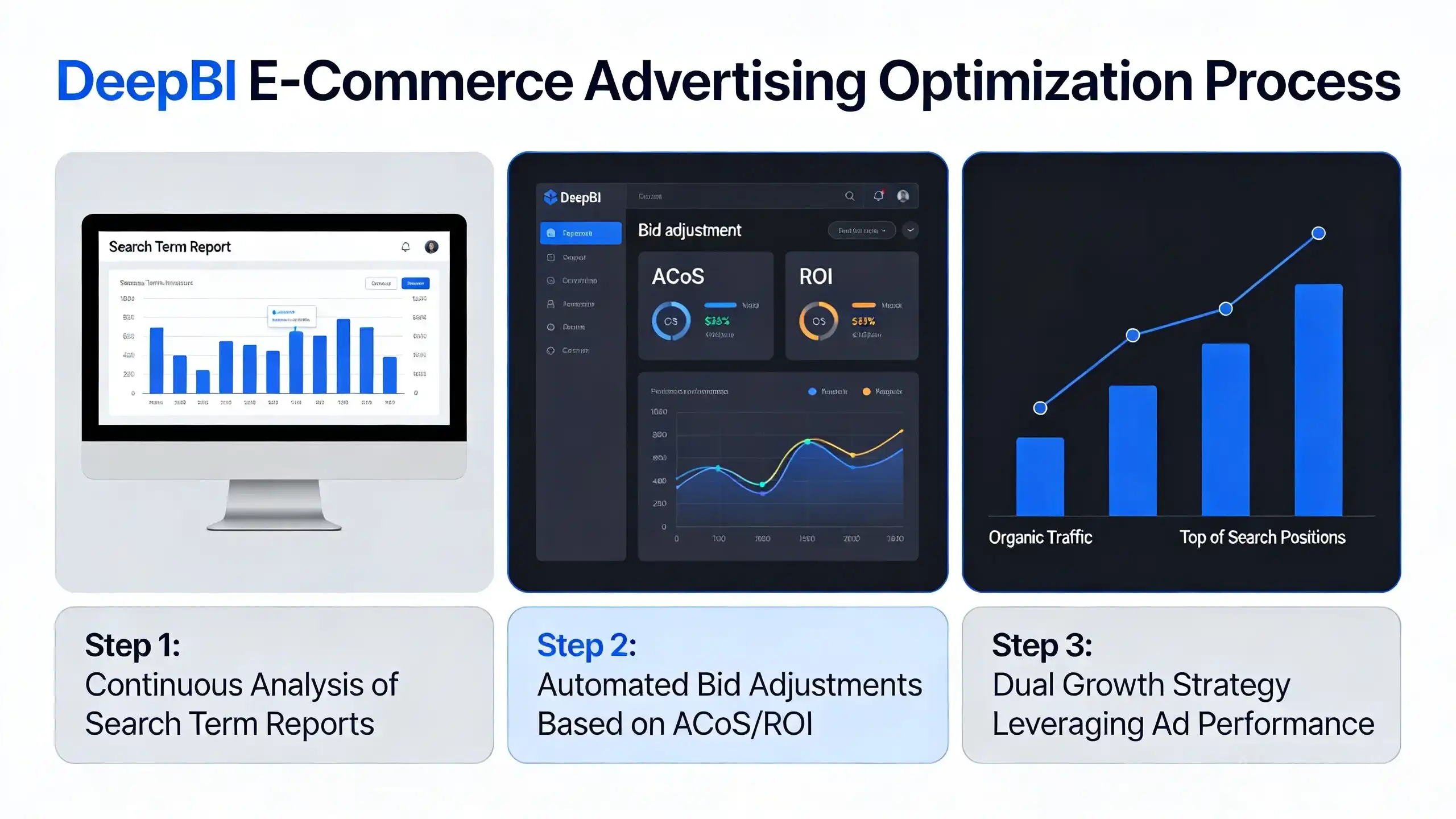
Effective Amazon advertising is not a one-time setup; it is a continuous cycle of analysis, adjustment, and refinement. Sustained performance requires a data-driven approach to campaign management that goes far beyond the initial launch. The foundation of this process is the regular analysis of Search Term Reports. By mining this data, you can discover new, high-converting customer search terms to move into precise manual campaigns while also identifying irrelevant queries to add as negative keywords, preventing wasted ad spend and protecting your ACoS.
Building on this foundation, you must dynamically adjust bids and budgets. Monitor key performance metrics like ACoS, ROI, and Conversion Rate (CVR) to inform your decisions. Increase bids on profitable keywords to maximize impression share and sales velocity, and reduce spend on underperforming targets. A balanced strategy often involves allocating a portion of your budget to automatic campaigns for ongoing keyword discovery and the majority to manual campaigns for aggressive, performance-focused targeting.
This is where intelligent automation creates a significant competitive advantage. For example, DeepBI’s system can automate dynamic bid and budget adjustments by analyzing the past seven days of performance data—including clicks, conversions, spend, and ACoS—to ensure your campaigns are continuously optimized for stable ROI. Furthermore, this creates a powerful flywheel effect. DeepBI's Organic Traffic module can leverage the high-performing keywords identified from your ad campaigns to systematically reinforce your "Top of Search" organic positions. This creates a dual growth strategy where paid ads not only drive immediate sales but also build long-term organic ranking and market dominance.
Conclusion: Data-Driven Decisions for Amazon Success
The debate over automatic versus manual targeting presents a false choice. The most effective Amazon advertising strategy is not about picking a side, but about creating a sophisticated, integrated system that leverages the strengths of both. Automatic campaigns excel at broad discovery, unearthing valuable customer search terms and market trends. Manual campaigns provide the precision needed to capitalize on those discoveries, allowing for focused bidding and optimized scaling on proven performers.
The bridge between these two powerful tools is data. Diligent analysis of your Search Term Reports is non-negotiable; it is the primary mechanism for harvesting high-performing keywords from auto campaigns to fuel your manual targeting efforts. This creates a continuous feedback loop: discover, analyze, transfer, and optimize. Success requires constant monitoring of key metrics like ACoS and CTR to adapt to changing market dynamics and consumer behavior. While the strategy rests on your analysis, powerful tools can act as the executor, streamlining the complex workflows of keyword harvesting and campaign management. Ultimately, your commitment to a data-driven, adaptive approach is the true engine of sustainable growth and profitability on Amazon.