

This case comes from an Amazon seller in the US workwear category. They sell a heavyweight men’s pocket work T‑shirt and had already invested heavily in detailing durability, fabric specs, and industrial scenarios on their Amazon Listing. On paper, their Listing scored slightly higher than a key competitor. Yet ad traffic was not converting as expected, and performance pressure was rising.
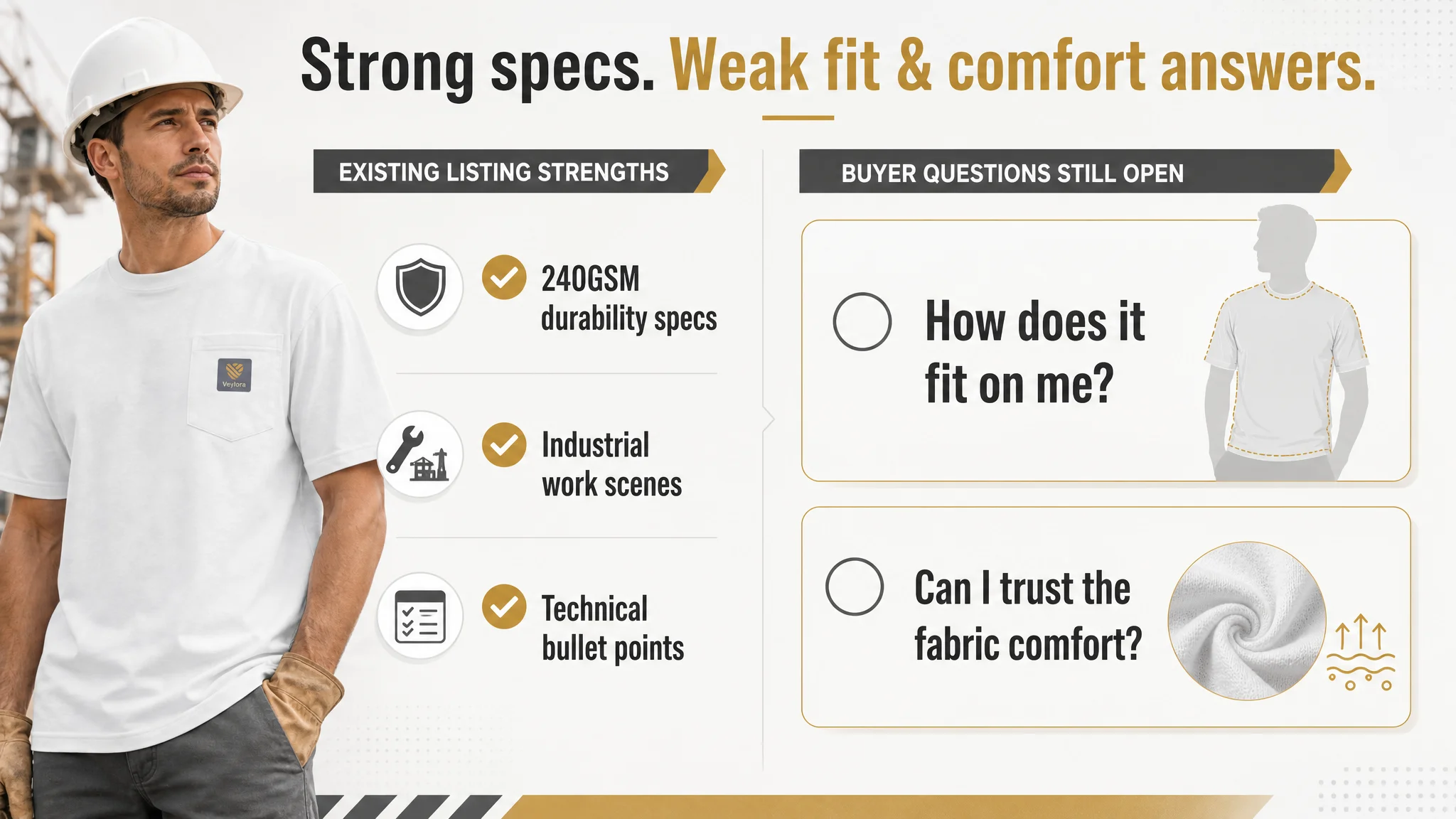
The seller initially judged that the problem lay in Amazon ads: bids, keywords, and campaign structure. But once DeepBI scored the Listing against a benchmark competitor, the picture changed. The core leak was not in the ad console; it was in how the main images and A+ content were sequencing the buying story. The page was strong on “industrial toughness” but weak at answering two basic buyer questions early: “How does it actually fit on me?” and “Can I trust the fabric feel and comfort?”
By restructuring the title, rebuilding the main-image sequence around fit and fabric, and reframing the A+ modules to balance toughness with comfort and sizing clarity (especially Tall sizes), the Listing started to align with how Amazon shoppers actually decide. For other Amazon sellers, this case underlines a familiar problem: as long as the product page doesn’t resolve basic trust and fit concerns, no amount of ad optimization will sustainably fix ACOS or TACOS.
Amazon Ads Were Not Failing. The Page Was Consuming the Traffic.
Before approaching DeepBI, the seller’s internal narrative was clear: “ACOS is creeping up, so we must have an Amazon ads problem.”
They had a heavyweight work T‑shirt positioned to blue‑collar and industrial users. Ads were pushing meaningful traffic, and the Listing itself seemed solid:
- Strong functional copy around durability and 240 GSM fabric
- Clear industrial scenarios (welders, mechanics, warehouse work)
- Title and bullets that mentioned work usage and technical specs
From an operations standpoint, the team responded in the usual way:
- Tweaking bids and keywords
- Shifting budgets across campaigns
- Trying to “buy more data” to find a stable structure
Yet the core business symptoms stayed: traffic came in, but not enough of it converted. ACOS didn’t meaningfully relieve, and the seller became increasingly uncertain whether to keep scaling or retreat on spend.
“The real problem was not that ads failed to bring traffic. It was that the page could not convert the traffic.”
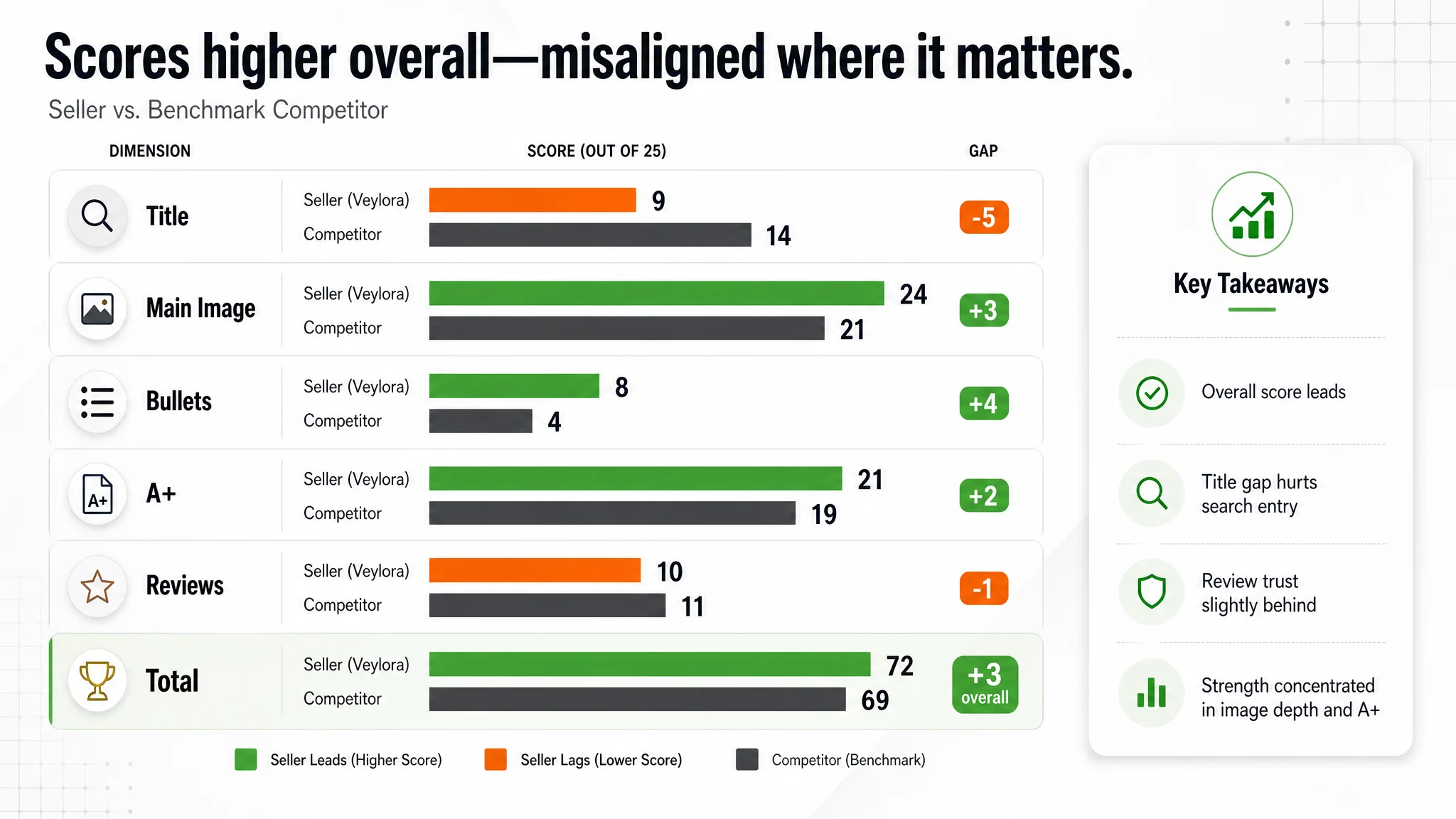
DeepBI’s Listing scoring made the contradiction obvious: despite a total score (72/100) slightly higher than a key competitor (69/100), the seller’s advantage sat in the wrong places for the first impression stage.
- Main image: structurally weak at answering fit and fabric questions
- Title: weaker keyword structure and seasonal/scene coverage
- A+ modules: over‑indexing on “toughness” and industrial mood, under‑indexing on comfort, fit, and visual clarity of Tall sizes
The Listing wasn’t “bad” overall; it was misaligned with the order of buyer questions.
The Real Constraint Was Listing Conversion Capacity, Not Ad Skill
Once DeepBI broke down scores by dimension, the core conflict came into focus.
Score comparison (seller vs. benchmark competitor):
- Title: 9 vs. 14 (‑5)
- Main Image: 24 vs. 21 (+3)
- Bullet Points: 8 vs. 4 (+4)
- Detail/A+: 21 vs. 19 (+2)
- Reviews: 10 vs. 11 (‑1)
- Total: 72 vs. 69 (+3 overall)
On paper, the seller outperformed in main images, bullets, and A+. Yet DeepBI’s visual and semantic analysis showed that these “higher” scores were overweighting depth of industrial detail and underweighting early‑stage decision logic.
Title: Losing the Search Battle Before the Page Loads
The competitor’s title did a few critical things better:
- Front‑loaded “Oversized” and “T‑Shirt” together to lock in a dominant style + category pairing
- Added “Summer” as a seasonal/scene keyword to broaden search capture
- Used a compact, proven Amazon structure:
“Men’s [style] [category] [core attribute] [fabric] [season/scene] [extra description]”
- Closed with a broad standard size range “(S‑XXL)”, clearly signaling coverage to general shoppers
The seller’s original title:
- Split “Loose Fit” from the “T‑Shirt” category term
- Omitted a clear seasonal/scene keyword like “Summer”
- Ended on “(Regular & Tall)” – a real competitive advantage, but not expressed in a way that maximized search breadth and instant recognition
DeepBI’s judgment: the title wasn’t “wrong,” but it left search weight and click intent on the table. For an Amazon ad funnel, that directly hurts CTR and limits how much paid traffic can be converted at reasonable ACOS.
Main Images: Lots of Information, Weak Early Trust
On the main-image sequence, the seller did many “correct” things in isolation:
- White background
- Multiple angles
- Industrial scenarios showing welders and mechanics
- Info overlays mentioning 240 GSM fabric and durability
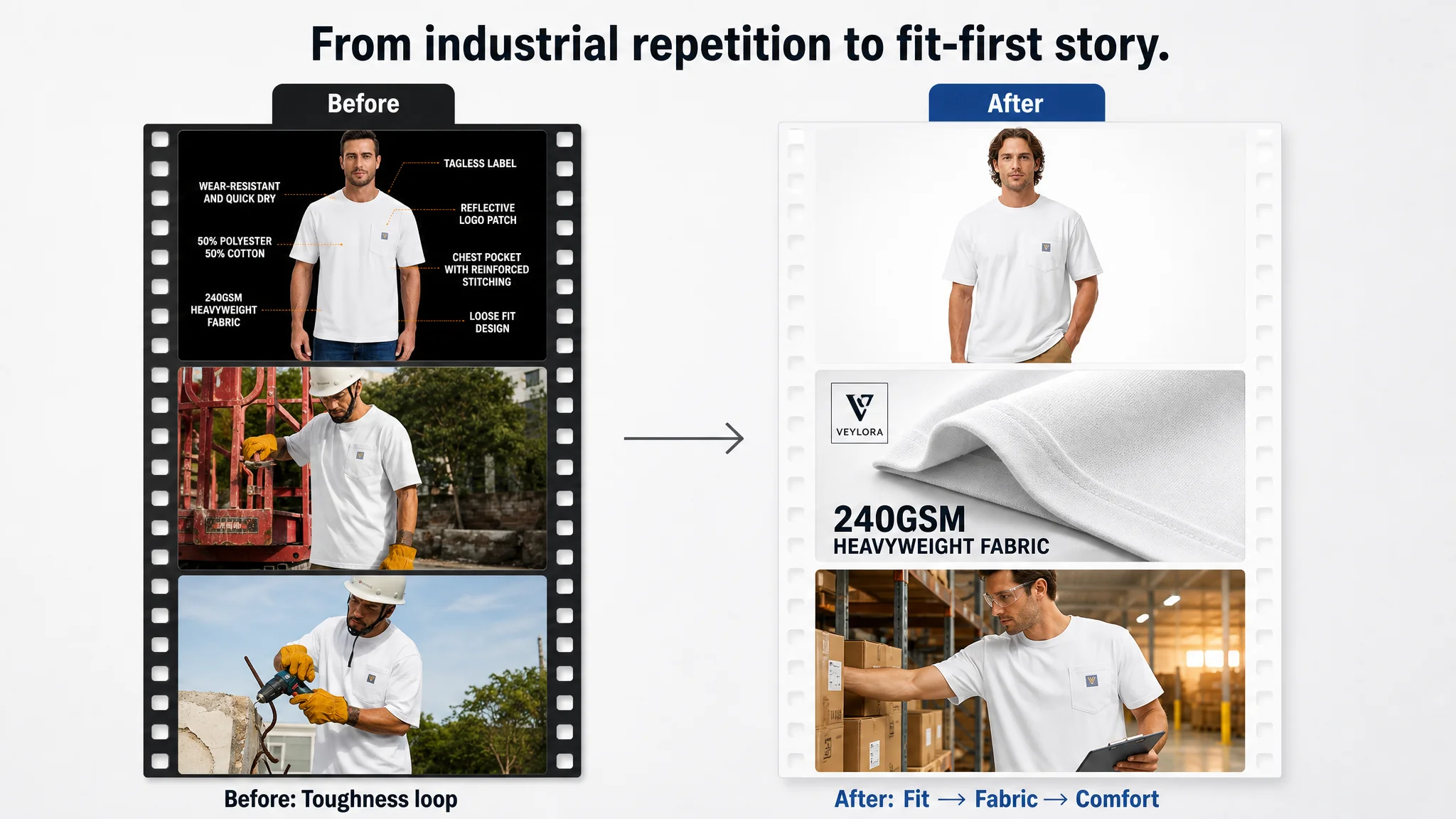
But the sequence itself followed a flat‑lay → flat‑lay → overloaded info graphic → repeated industrial scenes pattern. The early images didn’t immediately answer:
- Does this shirt actually look loose on a real man?
- How does the chest pocket and collar sit when worn?
- Does the fabric visually feel like “heavyweight yet comfortable,” or just read as words?
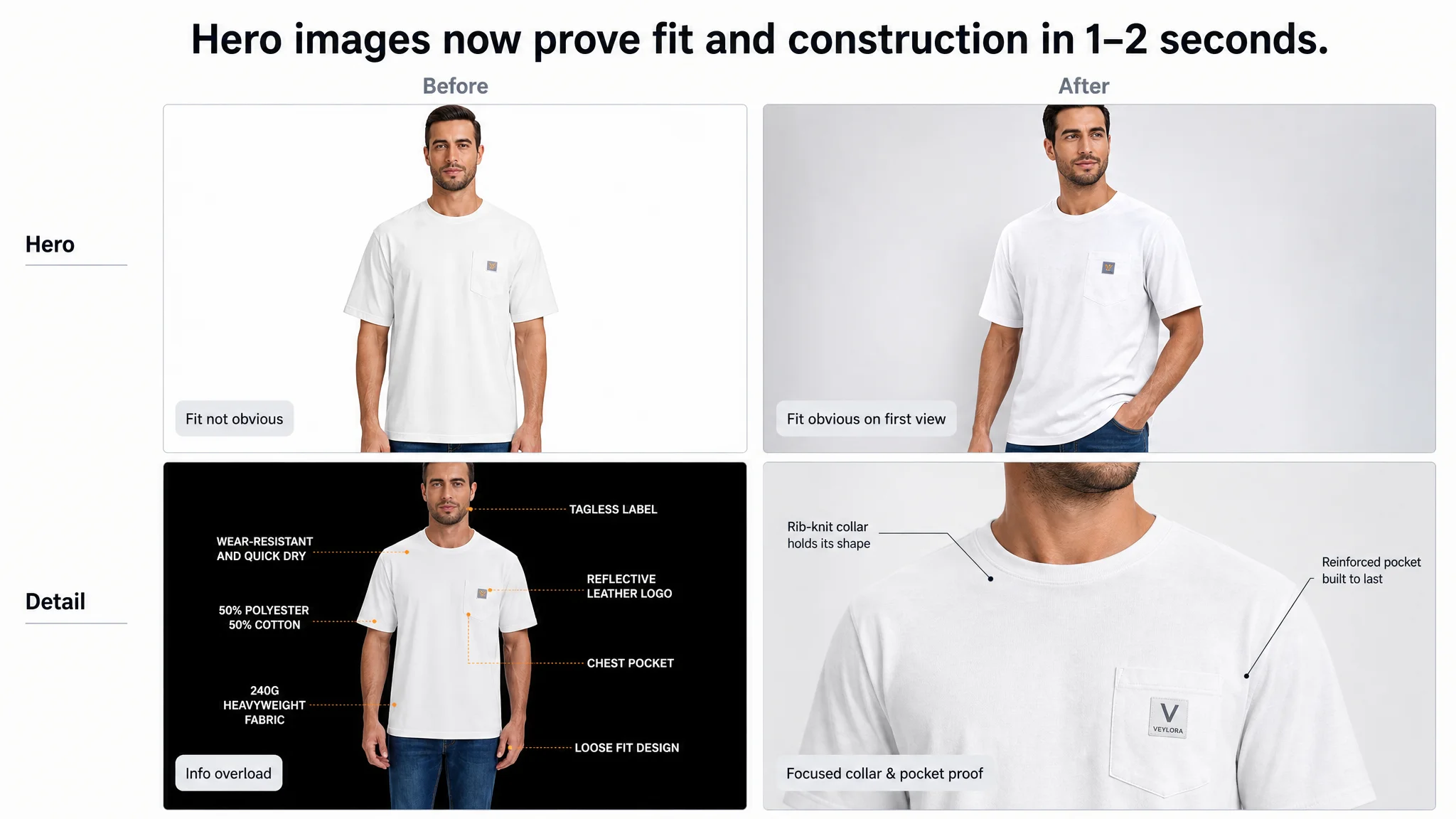
The competitor made a different, more conversion‑aligned choice:
- Hero image: front‑view model shot – instant confirmation of “oversized” fit
- Follow‑up: upper torso close‑up showing collar and pocket construction
- Then: a fabric‑texture shot tied to “heavyweight”
- Later: lifestyle scenes blending style and comfort
DeepBI’s assessment: the seller’s images were “rich” but cognitively heavy. Claims like “HEAVYWEIGHT 240GSM” existed mostly as text overlays without strong visual reinforcement. Industrial scenes repeated instead of progressing the buyer’s understanding.
A+ Detail Page: Strong Industrial Story, Unbalanced Decision Path
On the A+ side, the seller did many things better than the competitor:
- Real industrial scenarios: welding, mechanics, warehouses
- Clear technical modules: double stitching, no‑tag ribbed collar, pocket details
- Explicit fit comparison: loose vs. regular fit, plus Tall size data
But the sequence overemphasized toughness and industrial emotion in the opening modules:
- Module 1: heavy industrial scene tying 240GSM fabric to “dangerous jobs”
- Module 3: more industrial scenes reinforcing “built tough”
- Module 4: construction detail + another fabric weight mention
Missing early in the path:
- A clean, visual verification of comfort + movement
- A clear, human‑body view of Loose Fit and Tall length
- A simple story of “comfort meets performance” for long, hot shifts
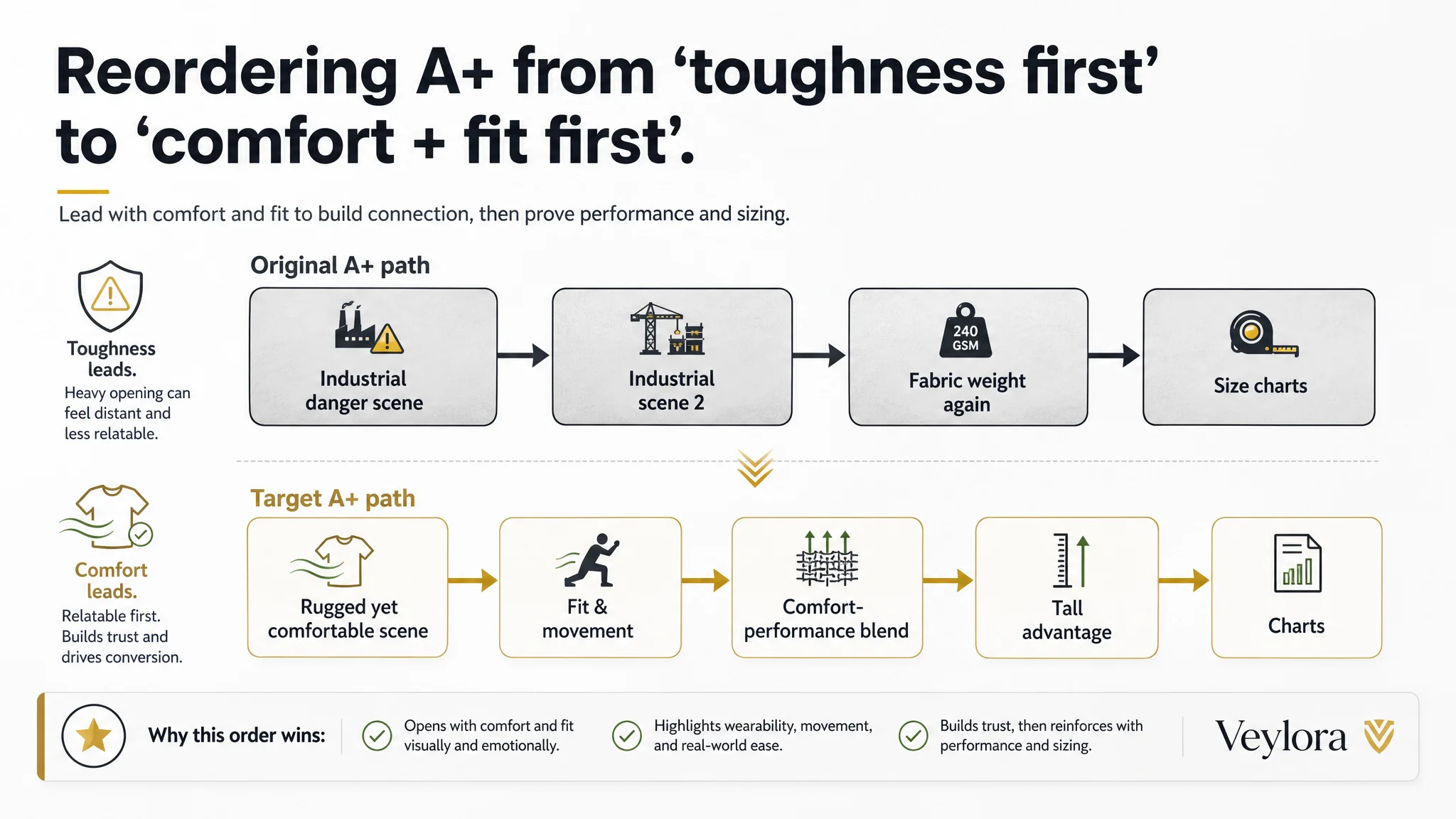
The competitor, although weaker technically, used early A+ modules to answer “Can I wear this all day and look okay?” rather than “Will this survive industrial abuse?” – which is more aligned with the first gut‑level concern of many Amazon shoppers.
Why DeepBI Did Not Keep Tuning the Ads First
From a business‑risk angle, DeepBI’s conclusion was blunt:
- Continuing to scale ads into this page structure would amplify the Listing’s weakest decisions, not its strengths.
- Fixing bids without fixing fit and comfort proof would only push ACOS higher.
- The real bottleneck was conversion on the first three images + top A+ modules, not keyword coverage or ad architecture.
“Advertising does not only amplify advantages. It can also amplify a page’s existing defects.”
The decision order for this seller had to change:
1. Rebuild the title and main-image sequence to better match search intent and early-fit questions.
2. Reframe A+ modules to bring comfort, fit, and Tall-size clarity forward, while keeping industrial toughness as a supporting proof, not the only story.
3. Only then consider restarting aggressive ad scaling.
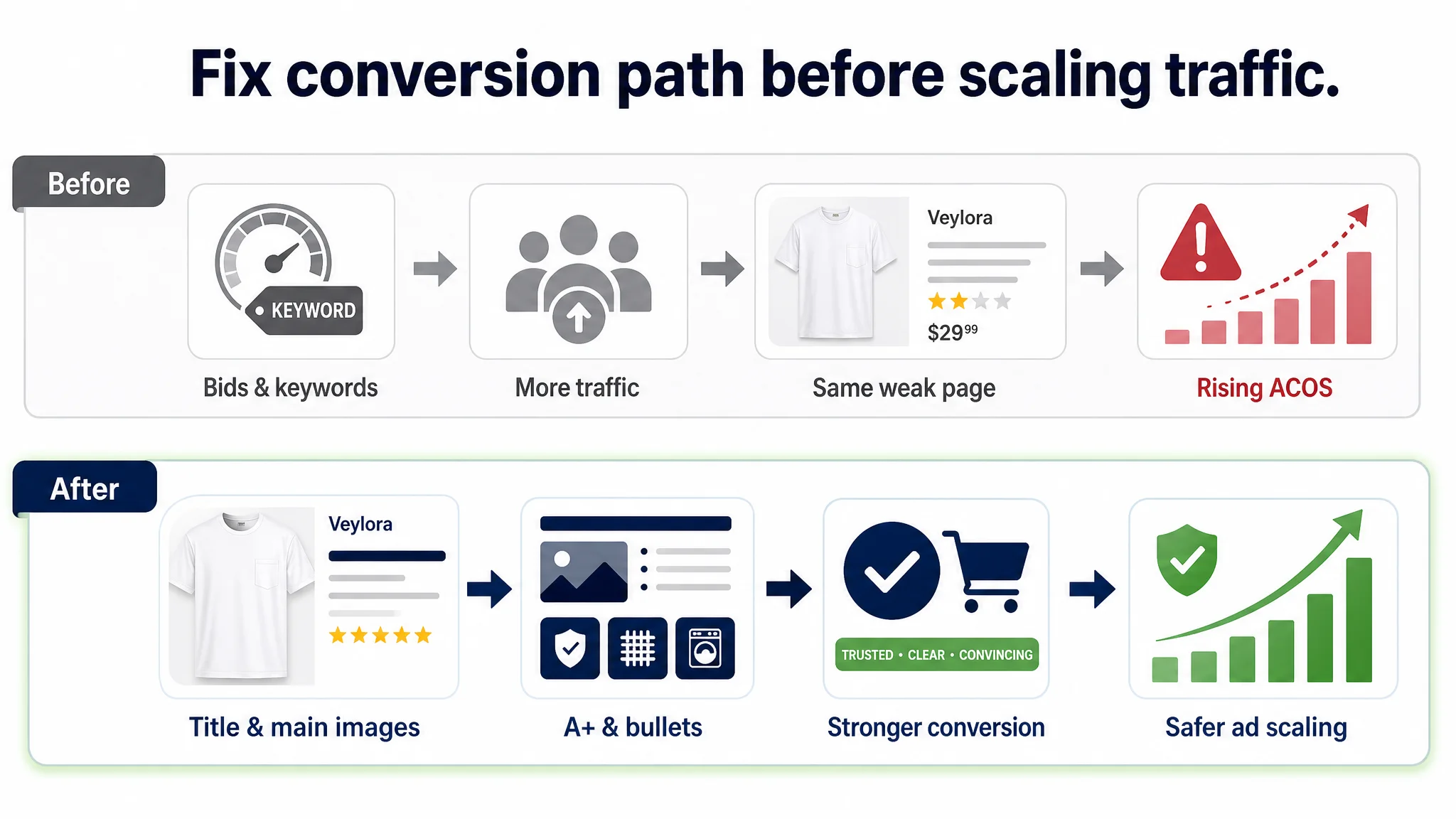
In other words: before buying more clicks, make sure the first 3–5 seconds on the Amazon product page actually answer why someone should stay and buy.
This Product Page Did Not Lack Traffic. It Lacked Trust and Fit Clarity.
DeepBI’s next step was not to list “more to do,” but to reassign roles to each element of the Listing around one central question:
“Can a new buyer, in 5–10 seconds, understand how this shirt feels, fits, and holds up for their use?”
Reframing the Title Around Search and Dual Usage
DeepBI’s recommended title:
Men's Heavyweight Work T‑Shirt Loose Fit Pocket Cotton Short Sleeve Summer Tee Shirt (Regular & Tall)
The logic:
- Core keywords front‑loaded: “Heavyweight Work T‑Shirt Loose Fit Pocket” – exactly what both algorithms and serious buyers search.
- Material and synonyms added: “Cotton” and “Tee Shirt” capture high‑frequency variations and strengthen relevance.
- Season and dual positioning: “Summer” connects to buyers looking for hot‑weather work tees, but the structure still supports both professional workwear and casual use.
- Retention of “Regular & Tall”: this is the seller’s genuine edge; keeping it in the suffix preserves clarity for taller buyers without cannibalizing core keywords.
This doesn’t “decorate” the title; it reorders it to support Amazon search logic and human scanning.
The Main Image Was Not Just a Visual Issue. It Failed to Create a Reason to Click.
DeepBI restructured the image sequence from “flat technical dump” into a progressive trust path:
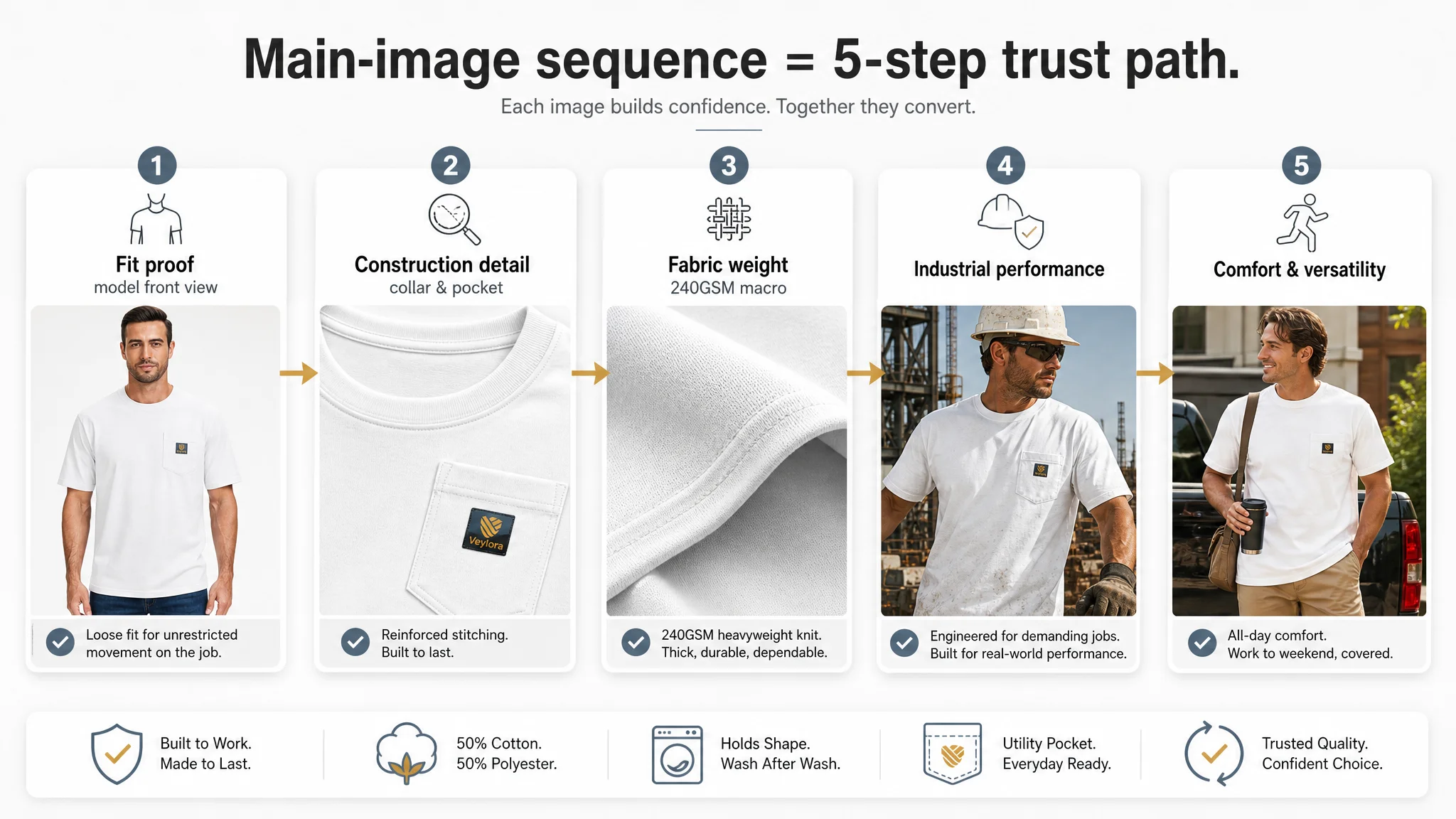
Image 1: Front‑View Model Shot (New Hero)
- Replace static flat lay with a male model in a clean studio setting.
- Show the shirt in white or a light color to reveal fabric texture.
- The image must instantly answer:
- Is it clearly loose fit?
- Is the pocket substantial and practical?
This aligns the hero image with the competitor’s proven decision logic while staying in the seller’s workwear positioning.
Image 2: Upper‑Torso Detail Shot
- Tight crop on collar and pocket.
- Clear visualization of rib‑knit construction and pocket attachment.
- Less redundancy, more focused trust on “it won’t warp or sag.”
Instead of another generic angle, this image deepens confidence in the construction.
Image 3: Fabric Texture – Visual Proof of “240GSM HEAVYWEIGHT”
- Fabric close‑up showing drape and thickness.
- Bold, clean text overlay: “240GSM HEAVYWEIGHT FABRIC”.
- If needed, a small color inset to signal options without clutter.
The key is to visually validate the heavyweight claim, not just write it.
Image 4: Industrial Performance Scene
- A single, differentiated industrial scene – e.g., a worksite or welding environment.
- Text focus: “ENGINEERED FOR DEMANDING JOBS”.
- Highlight abrasion/tear resistance and industrial washing endurance.
This image confirms that the heavy fabric and construction are not just marketing language.
Image 5: Comfort and Versatility, Not More of the Same
- Instead of repeating the same industrial composition, this slot shifts toward comfort meets performance:
- Hot warehouse, outdoor labor, or light activity scene
- Visual hint of movement and ease
- Supporting text: quick‑drying, wrinkle resistance, tagless label comfort
This progression turns images into a story: fit → construction → fabric → heavy use → all‑day comfort, instead of circling around the same concept.
The Bullet Points Had Information, but Not a Buying Logic
The seller’s bullets already leaned toward a professional “pain‑point → technical solution → result” structure, much stronger than the competitor’s generic style descriptions. DeepBI’s work was to tighten the logic and make each bullet carry a specific role in the decision chain.
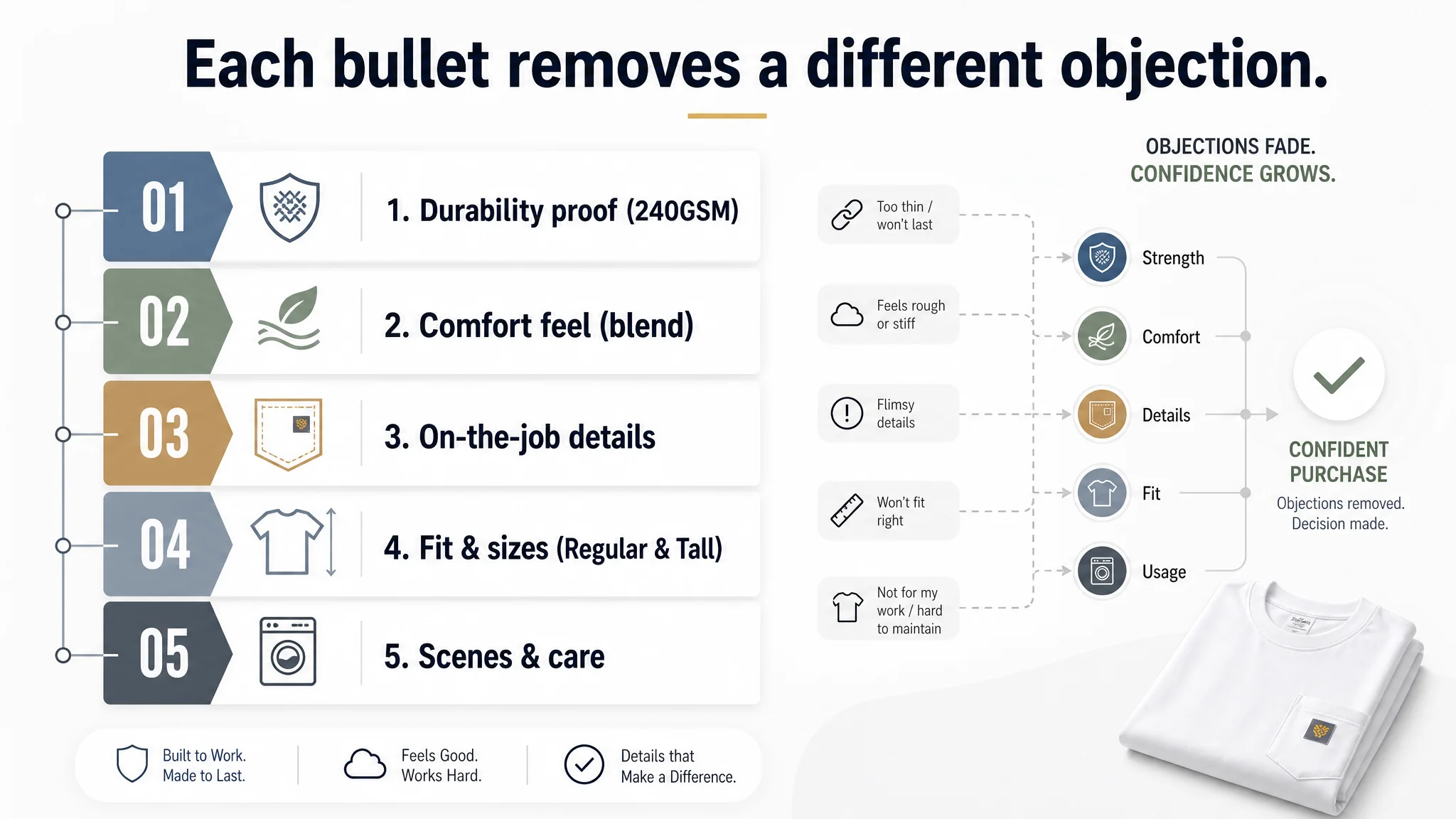
Bullet 1: Proving Toughness, Not Just Claiming It
New direction: Emphasize 240GSM fabric and construction as a quantified answer to “Will this survive real work?”
HEAVYWEIGHT DURABILITY: Engineered with 240GSM heavyweight fabric, this work tee delivers superior abrasion resistance and tear strength. Featuring reinforced seams to withstand daily worksite wear, it is built tough for demanding jobs while maintaining its structure over time.
Bullet 2: Comfort Meets Performance Blend
Move beyond listing 50/50 fabric composition to what it feels like to wear for 10–12 hours.
SUPERIOR COMFORT BLEND: Our premium 50% Cotton and 50% Polyester blend offers the perfect balance of natural breathability and high-performance quick-drying capabilities. This wrinkle-resistant fabric ensures shape retention and all-day comfort, keeping you cool through long, intensive shifts.
Bullet 3: Functional Details That Matter on the Job
Use this bullet to justify price and support work usage.
FUNCTIONAL DESIGN DETAILS: Features a robust rib-knit collar that retains its shape wash after wash, a reinforced left-chest pocket for essential tools, and a tagless printed label to eliminate neck irritation. Its classic solid-color design pairs perfectly with cargo pants, jeans, or work shorts.
Bullet 4: Inclusive Fit and Movement Freedom
Tie Loose Fit + Regular & Tall together explicitly.
UNRESTRICTED LOOSE FIT: Designed with a tailored yet loosened cut, this t-shirt provides a maximum range of motion for any task. Available in Standard Sizes (S–4XL) and Tall Sizes (M–4XL) with extended length, it is crafted to accommodate all body types comfortably.
Bullet 5: Multi‑Scene Usage and Easy Care
Use the final bullet to expand the audience without losing the workwear core.
MULTI-SCENE UTILITY & EASY CARE: Machine washable and resistant to shrinking or deformation even after repeated industrial washing cycles. Ideal for welders, builders, and mechanics, as well as outdoor labor or hot warehouse environments—built to last for seasons to come.
The result is a bullet stack where each point removes a different doubt: durability, comfort, details, fit, care/usage.
A+ Content: Before Ads Could Work Again, the Page Had to Convert
On the A+ page, DeepBI did not ask for “more modules” or “more information.” Instead, the focus was on reassigning roles and simplifying the persuasion path.
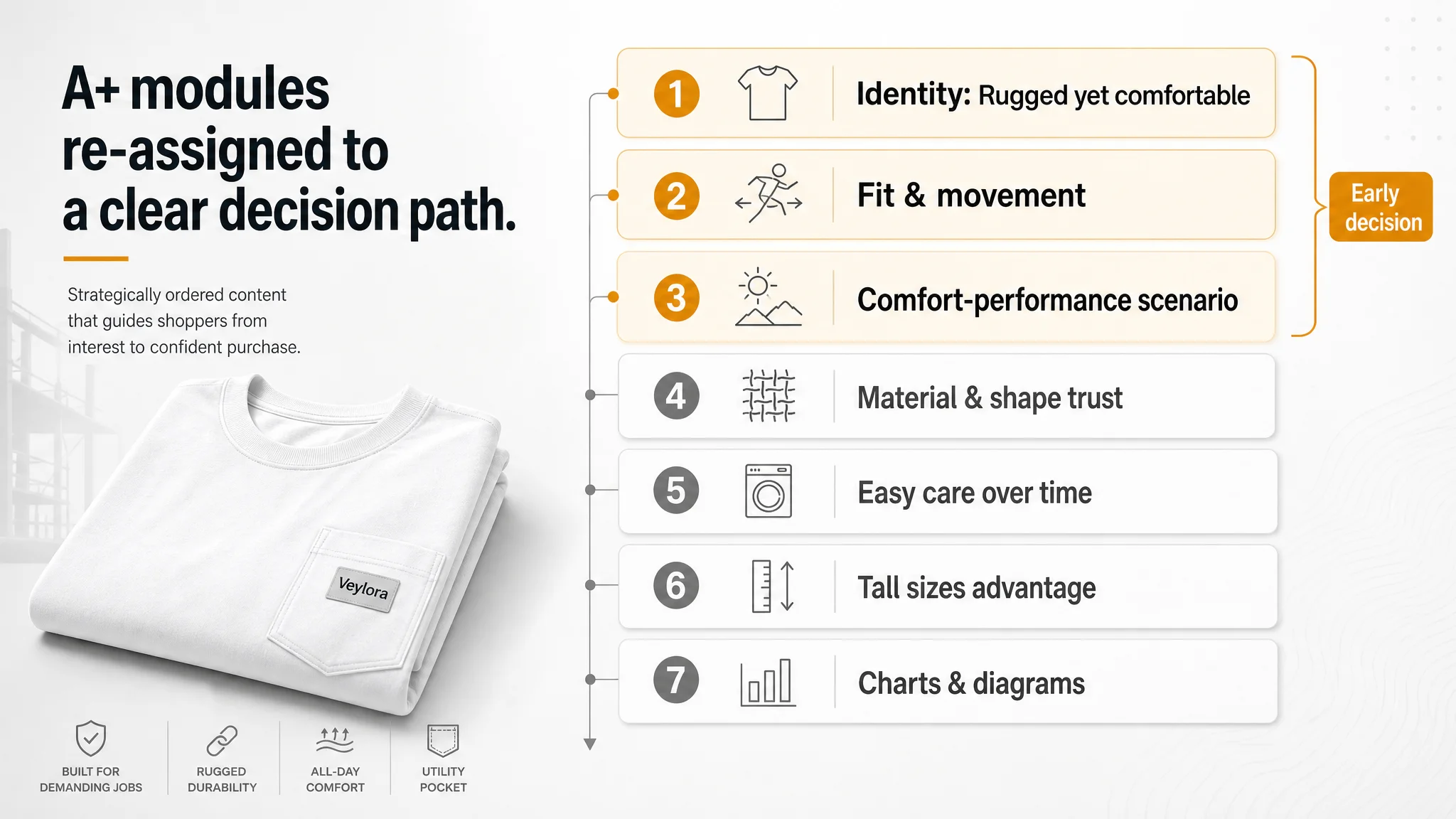
1. From “Only Industrial Toughness” to “Rugged Yet Comfortable”
Module 1 – Establish the Identity: Shift from pure welding/dramatic danger imagery to:
- A strong lifestyle‑work shot showing the loose fit in action
- Position the shirt as a rugged pocket work tee that still looks and feels comfortable
- Visual link between toughness and ease of movement
2. Visualizing Fit and Movement Earlier
Module 2 – Fit Concerns First:
- Show the shirt on a human form with clear Loose Fit visuals (including shoulder drop, sleeve ease)
- Tie this image to the comfort blend: movement without cling, especially in hot conditions
- Reduce early micro detail (neck close‑ups) in favor of body‑level understanding
3. Comfort‑Performance Proof, Not More Industrial Repetition
Module 3 – “Comfort Meets Performance” Scenario:
- Visual cues for breathability / quick‑dry without overpromising
- Scene: hot warehouse, sun‑exposed outdoor work, or similar
- Direct callout: cotton for breathability + polyester for quick‑dry and shape retention
4. Rational Trust in Material Quality
Module 4 – Material & Shape Trust:
- Visualize fabric weave and drape (neatly stacked, folded, or side‑by‑side density comparison)
- Focus on shape retention and wrinkle resistance over another “toughness” repeat
- Keep technical sewing details subordinate to the bigger benefit: the shirt still looks neat after hard use and washing
5. Easy Care Over Time
Module 5 – Long‑Term Reliability:
- Visual proof: shirts holding shape after washes, smooth surfaces, no obvious twisting
- Connect explicitly to industrial washing and “repeat cycles without deformation”
6. Elevating the “Tall Sizes” Advantage
Module 6 – Make Tall Visual, Not Just Numeric:
- Show a tall model next to a standard-height model, both in the shirt
- Visual difference in length while retaining overall proportion
- Short, clear copy reinforcing that taller users stay covered during movement
This is the seller’s unique angle; buried in charts, it was invisible to new buyers.
7. Closing With Technical Diagrams and Size Charts
Module 7 – Rational Decision Closure:
- Move the existing fit diagrams (Loose vs. Regular) and full size chart here
- Use this as the final “proof” for buyers ready to commit, not the opening story
This reordering ensures that by the time a buyer reaches the chart, they already feel good about fit, comfort, and durability. The chart is now a decision tool, not a dry obstacle encountered too early.
What Changed for the Seller—and What Other Amazon Sellers Can Take Away
This case did not end with a list of generic “optimizations.” It ended with a change in how the seller thinks about Amazon ads and Listings.
Operating State and Risk Shift
After DeepBI’s reframing:
- The seller stopped treating ad metrics as a pure “media problem” and started reading them as feedback on Listing conversion capacity.
- They recognized that pushing more Amazon ads into a page that over‑indexed on industrial mood while under‑delivering on fit and comfort visuals was structurally risky.
- Priority shifted to main image and A+ restructuring before any serious ad scaling decisions.
Even without quoting specific post‑change numbers, the business effect was clear:
- The Listing became more capable of converting both organic and paid traffic.
- The traffic structure grew more controllable; ACOS was no longer solely at the mercy of bid tweaks.
- The page started regaining its ability to stand on its own, rather than relying on ever‑increasing ad spend.
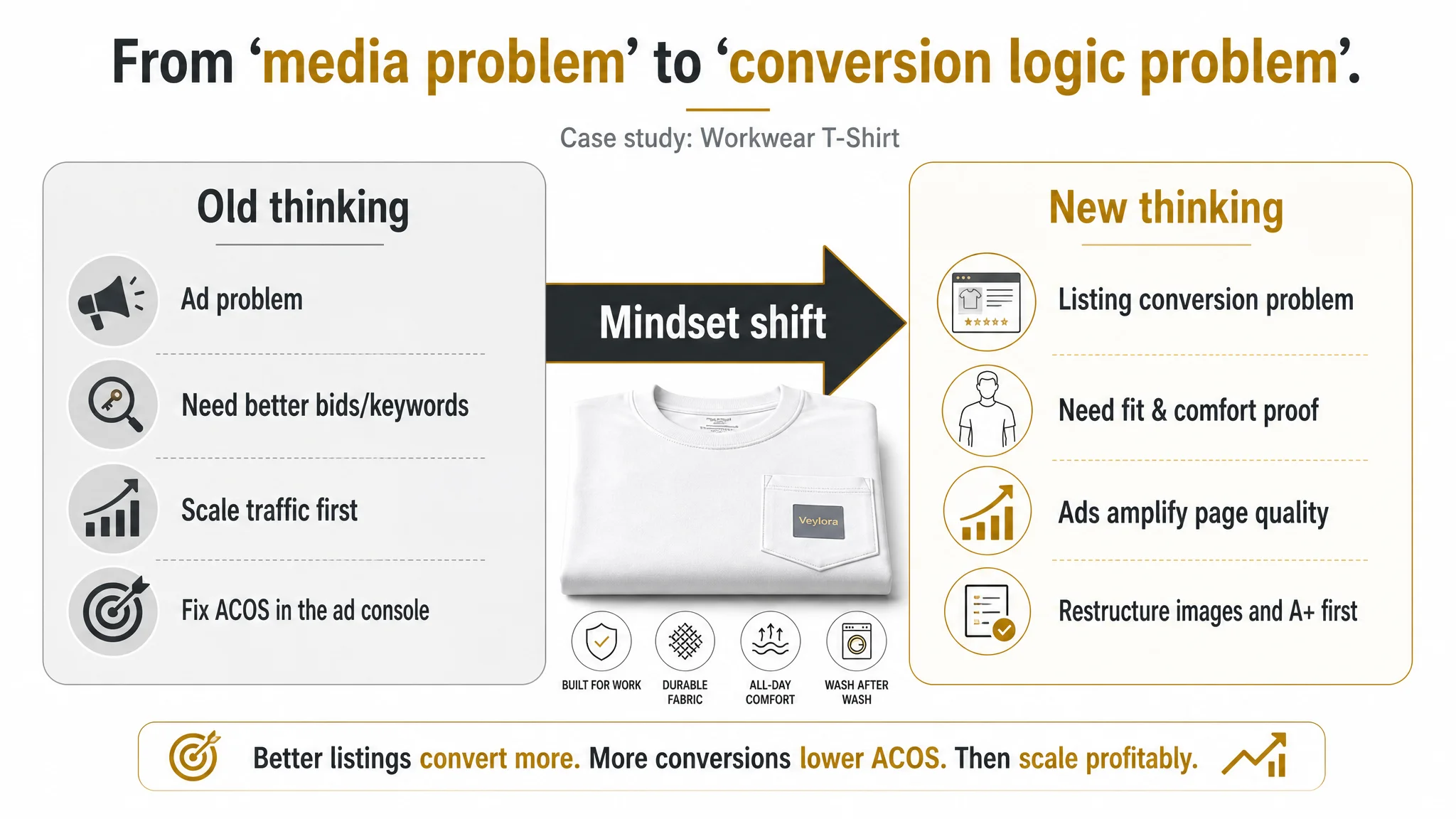
Understanding Shift
The seller’s internal understanding moved from:
- “Our ads aren’t good enough; we need better keyword and bid optimization,” to
- “Our Listing does a great job convincing existing industrial users, but it fails to quickly reassure new buyers about fit, comfort, and Tall sizes.”
In practical terms:
- Amazon ads cannot fix a trust gap on the product page.
- Title, main image, bullets, and A+ must answer fit, comfort, and usage questions in the right order, not just list technical strengths.
- Before scaling spend, the team now asks:
“If we double the traffic to this Listing, will the page convert better—or just burn budget faster?”
For other Amazon sellers, especially in apparel and workwear, this case is a reminder that:
- Having more technical detail than your competitor does not automatically mean better conversion.
- A Listing can outperform in score but still underperform in revenue if it ignores the sequence of how buyers decide.
- The role of a tool like DeepBI is not to generate more content, but to reveal where your current Listing logic is out of sync with how Amazon shoppers actually buy—and to help you fix that before you pour more money into ads.