

This case comes from an Amazon seller in the premium personal-care category. On paper, their Amazon Listing already looked strong: higher overall Listing score than a key competitor, polished lifestyle A+ content, and a clear high-end fragrance story. Yet in Amazon ads and day-to-day operations, they were feeling pressure: ad costs were hard to control, star rating and reviews lagged behind a slightly lower-scoring competitor, and traffic from Amazon ads was not converting as expected.
The seller’s first instinct was to push the same direction harder—keep strengthening the brand atmosphere, add more lifestyle imagery, and rely on the fragrance story to justify a premium position. From their point of view, the main issue was “we need even more high-end brand feel” rather than a core conversion problem on the product page. DeepBI’s Listing analysis came to a different conclusion: the Listing’s visual and textual logic was under-serving the most basic questions Amazon buyers ask about liquid hand soap—“How does it feel? Is it safe for my skin? Will it work in my kitchen and bathroom every day?” The result: Amazon ads were pouring traffic into a page that felt beautiful but incomplete.
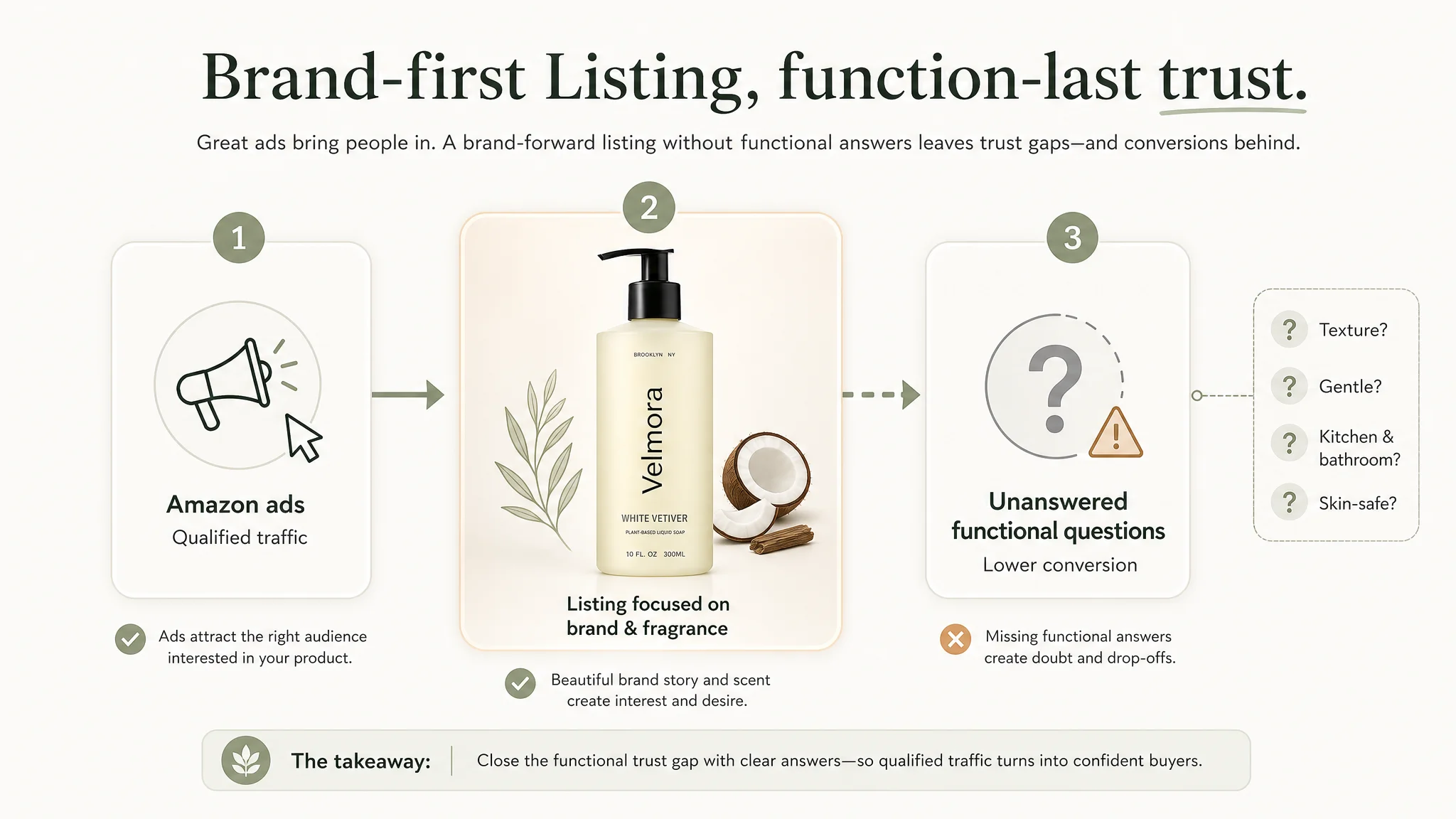
Once the diagnosis shifted, the optimization direction changed completely. Instead of continuing to polish lifestyle scenes, the focus moved to restructuring the image sequence, bullet points, and A+ content around functional authority, texture expectation, safety signals, and clear usage scenarios—while keeping the premium fragrance story. For other Amazon sellers, the lesson is simple but uncomfortable: a Listing can “score well” and look on-brand, yet still leave a functional trust gap that kills conversion and makes Amazon ads look worse than they are.
The Listing Looked Strong, but Ads Were Carrying a Weak Conversion Engine
From a structural standpoint, this Amazon liquid hand soap Listing did not look like a typical “problem Listing”:
- Overall Listing score: 81/100 vs. the benchmark competitor at 78/100
- Title, main images, and A+ content all appeared more refined and brand-consistent
- Only review and bullet-point dimensions were slightly behind
Yet in operation, the seller was under familiar pressure:
- Amazon ads were delivering traffic, but orders were not keeping pace
- The competitor enjoyed a higher rating (4.4 vs. 4.2) and more total reviews
- Negative review share on the first page was meaningfully higher for this Listing
- The team felt forced to lean harder on ads to maintain sales
From the seller’s perspective, the obvious explanation was external: ads felt “expensive,” and they believed the brand’s sophisticated positioning just needed more exposure and time. Internally, the team did not see a clear page-level bottleneck, because every major module had already been built.
DeepBI’s starting assumption was different: if ads are bringing qualified traffic but conversion lags behind a similar competitor, the first suspect is the Listing’s conversion capacity, not the ads.
“The real problem was not that ads failed to bring traffic. It was that the page could not convert the traffic.”

The Misdiagnosis: Treating a Functional Trust Gap as a Brand-Story Problem
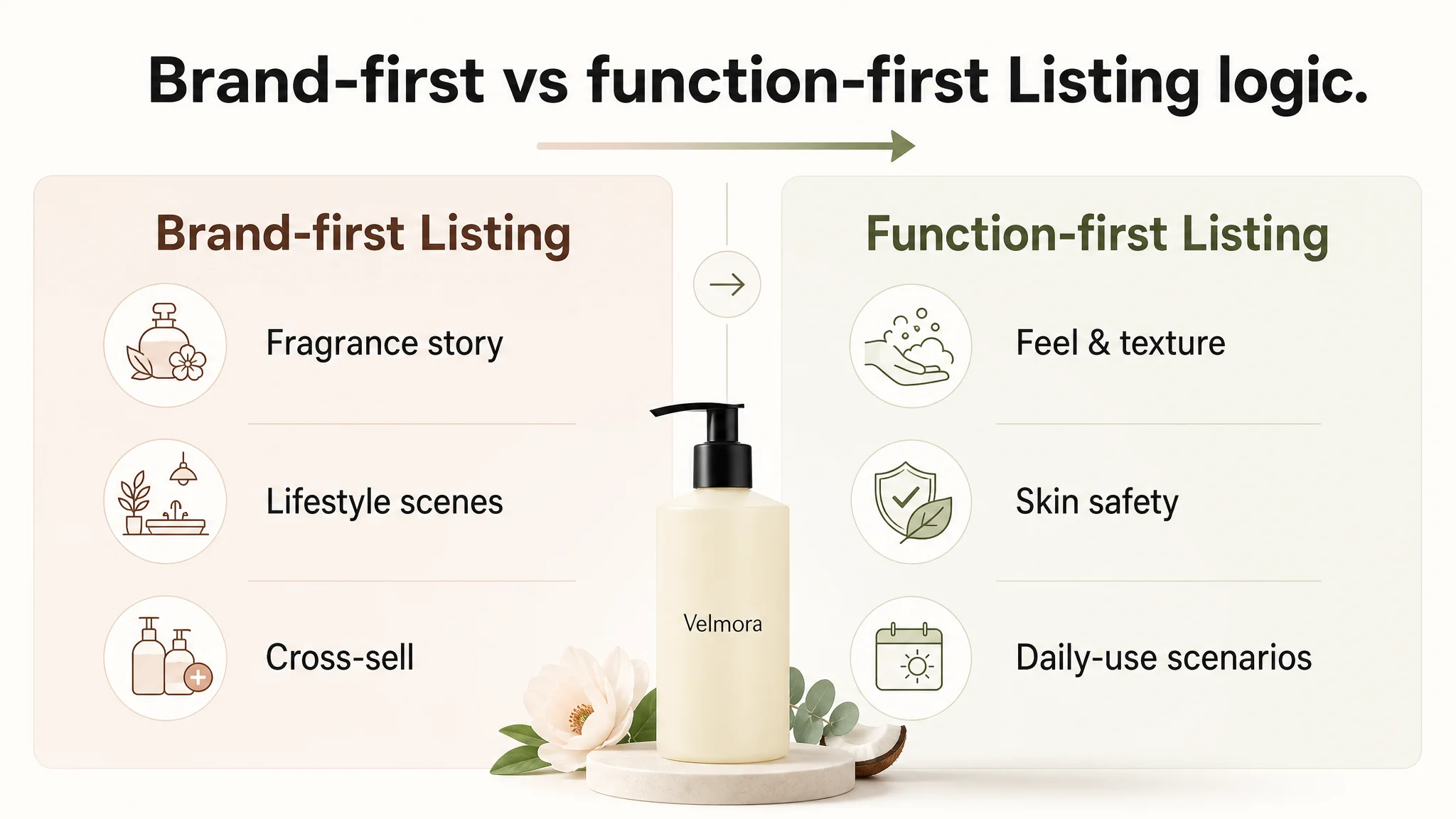
Looking at the Listing side-by-side with a benchmark competitor, DeepBI saw the same pattern across multiple modules: this product page led with brand and fragrance, while the competitor led with function, feel, and trust.
Title: Strong on Keywords, Light on Immediate Outcome
The seller’s title was, on the surface, well-constructed:
- Core category term “Liquid Hand Soap” was front-loaded
- It used conversion-oriented phrases like “Hydrating” and “Gently Cleanses, Moisturizes & Rejuvenates Skin”
- It explicitly called out usage scenes: “for Kitchen & Bathroom”
In contrast, the competitor sacrificed some keyword density to highlight brand collection and key ingredients like aloe vera and shea butter. On DeepBI’s scoring, the seller actually edged ahead in the title dimension.
Yet operationally, the seller still felt click-through and conversion pressure. Why? Because the title alone cannot carry the full outcome story; the rest of the page has to complete that logic. And that’s where the gap appeared.
Main Images: Beautiful, Premium, but Slow to Answer “Will It Work?”
In the main-image carousel, a clear misalignment emerged between what buyers needed to see and what the images actually did.
- Image 1: Verified volume and plant-based positioning, but did not immediately build deep confidence. “Brooklyn, NY” and minimalist branding gave style, not professional skin-care assurance.
- Image 2: Focused almost entirely on fragrance notes. At this point in the funnel, most Amazon buyers are still asking “Is this gentle? How will it feel on my hands?” The competitor used this slot to show lather and texture.
- Image 3: Dedicated to product dimensions. Useful, but not at this early persuasion stage; it consumed a high-value position without adding emotional or functional trust.
- Image 4: Repeated ingredient text in a kitchen setting, without a strong visual tie to skin feel or result.
- Image 5: Introduced a different product (hand lotion), pulling attention away from the hand soap decision.
The seller had interpreted the main-image strip as a brand and line-education channel. DeepBI’s judgment was harsher: for Amazon search traffic, these slots must operate as a functional persuasion funnel first, brand-education channel second.
“Advertising does not only amplify advantages. It can also amplify a page’s existing defects.”
By prioritizing fragrance storytelling, collection cross-sell, and dimensions too early, the Listing made buyers work too hard to answer basic risk questions: “Is it moisturizing enough?” “Is it gentle for frequent washing?” “Is it suitable for both kitchen and bathroom?” “Is it free from ingredients I worry about?”
The competitor, with slightly lower overall Listing score, systematically answered those in images and bullets before talking about its broader line.
Bullet Points: Poetic Language Without a Full Buying Logic
In the bullet-point section, the gap became even clearer.
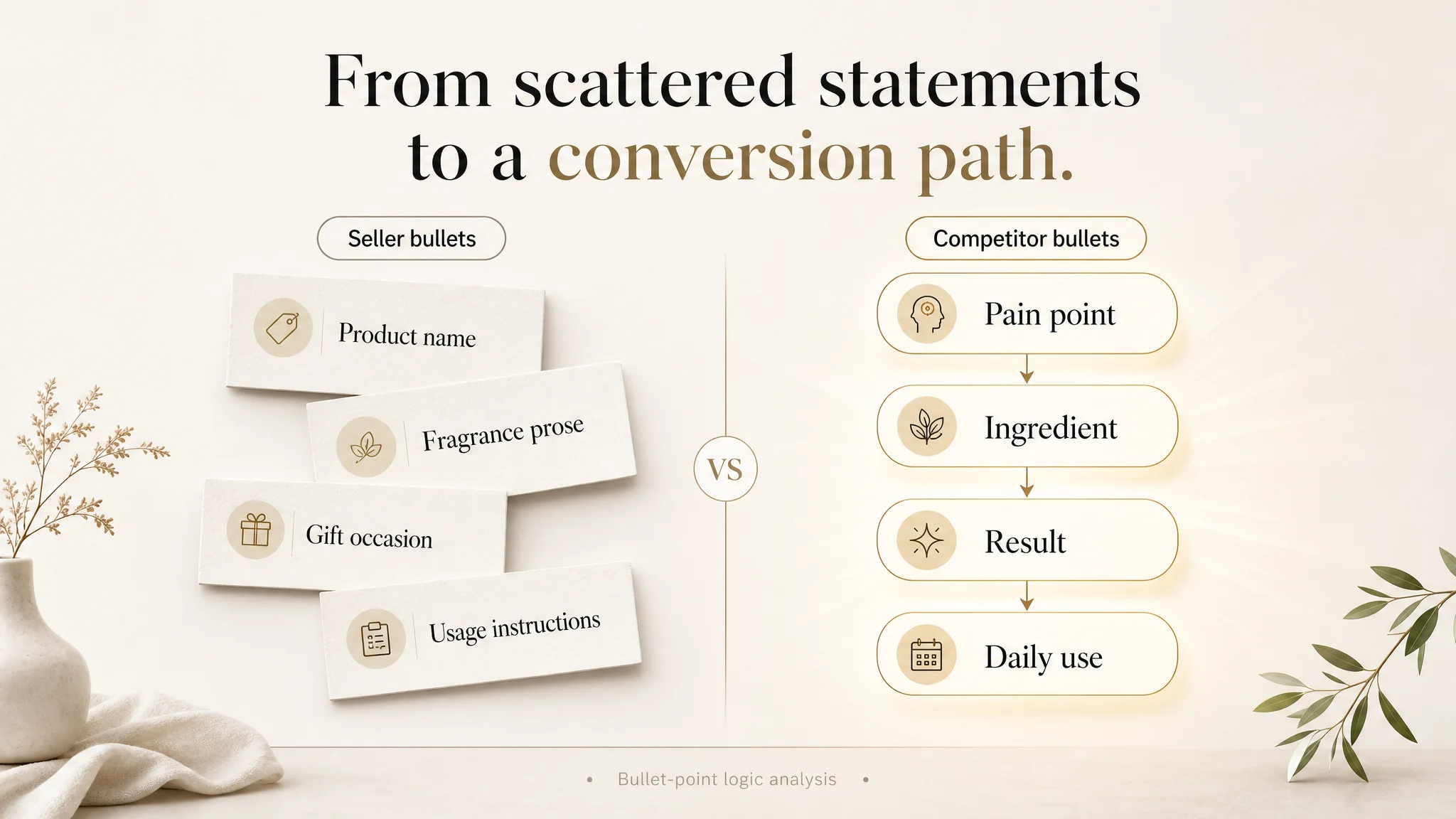
The competitor structured bullets as a conversion engine:
1. Lead with core use experience (gentle clean + feel after washing)
2. Tie pain-point resolution to specific ingredients (glycerin, shea butter, almond protein)
3. Provide explicit quality/ethical backing (cruelty-free, made in USA, paraben-free)
4. Extend to the rest of the collection to increase basket size
5. Anchor daily-usage scenarios
The seller’s bullets, by contrast, leaned toward brand tone and gifting:
- Opening with product name and basic function
- Rich, almost poetic fragrance descriptions
- General ingredient and benefit language without a tight “pain point → ingredient → result” chain
- A separate gifting bullet emphasizing occasion use
- A final bullet focused on usage instructions
DeepBI’s assessment: the bullets had information, but not a buying logic. They did not form a clear, low-friction path from “Why this soap?” to “Why now?” The gifting angle added value, but it was filling a slot that, in this category, typically builds rational trust.
This misalignment matters even more under Amazon ads. When paid traffic lands on the page, the bullets are a key zone where undecided buyers are looking for hard reasons to proceed.
A+ Content: High-End Lifestyle, Underused for Trust and Choice
The A+ (detail page) content was visually impressive:
- Immersive lifestyle imagery in gardens and home settings
- Consistent brand tone and strong premium positioning
- Full ecosystem coverage: hand soap, candles, diffusers, scent towers, lotions
- A clear “brand world” that felt cohesive and aspirational
By contrast, the competitor’s A+ was more fragmented visually, but used modules to:
- Show multi-product combos
- Confirm collection breadth
- Provide scent matrices and comparative tables
- Ground abstract descriptions in structured, rational information
DeepBI’s diagnosis:
- The seller’s A+ built desire and brand recognition, but did not systematically reduce scent-mismatch risk or formula trust concerns.
- It introduced unrelated product types (charcoal bottles, other categories) in the middle of a liquid hand soap decision path, increasing cognitive friction.
- It repeated general themes (“scents that last”, “uplifting the senses”) without adding new, concrete reasons to buy this specific soap now.
From an Amazon ads perspective, this created a dangerous pattern: A+ was acting like a brand brochure instead of a conversion tool. It helped explain who the brand was, but not decisively why this ASIN was the right choice for frequent, skin-safe hand washing in kitchen and bathroom.
What DeepBI Saw in the Data: A Trust and Relevance Gap, Not a Creative Gap
On DeepBI’s Listing scoring:
- Total score: 81 vs. competitor’s 78
- Title: slightly ahead
- Main image: ahead on structural completeness, behind on role allocation
- Detail page (A+): ahead in richness and coherence
- Bullets and reviews: slightly behind
But the review layer told a different story:
- 4.2 stars vs. competitor’s 4.4
- Fewer total reviews
- Meaningfully higher proportion of lower-star reviews on the first page
For DeepBI, this combination—slightly better structural score, weaker review sentiment, and a competitor that prioritized functional claims—pointed to one central issue:
The Listing lacked enough visible, structured proof that the soap would be gentle, moisturizing, and safe for frequent use across kitchen and bathroom.
Until that was fixed, tuning Amazon ads—bids, keywords, campaign structure—would only feed more traffic into a page that did not fully resolve buyer doubts.

Why Listing Conversion Had to Be Fixed Before Aggressive Ad Optimization
DeepBI’s core judgment was straightforward:
1. Ads were not the primary failure point. Traffic existed; the benchmark competitor showed that the category could convert under similar conditions.
2. The current Listing over-indexed on brand and fragrance, under-indexed on functional and rational trust.
3. Every high-value visual slot and bullet line had to be re-tasked around the decision journey, not just aesthetic coherence.
Keeping ad budgets high without resolving this would:
- Increase TACOS without a proportional lift in orders
- Push more traffic into reviews that slightly underperformed, reinforcing a negative loop
- Mask the real bottleneck by making everything look like a “traffic problem”
So DeepBI’s recommendation was to rebuild the Listing’s persuasion logic first, then use ads to amplify a page that actually deserved more traffic.
Reframing the Main Image Strip: From Brand Gallery to Functional Storyline
The key shift in the main-image carousel was not “make it prettier,” but “assign each image a precise role in the buyer’s decision.”
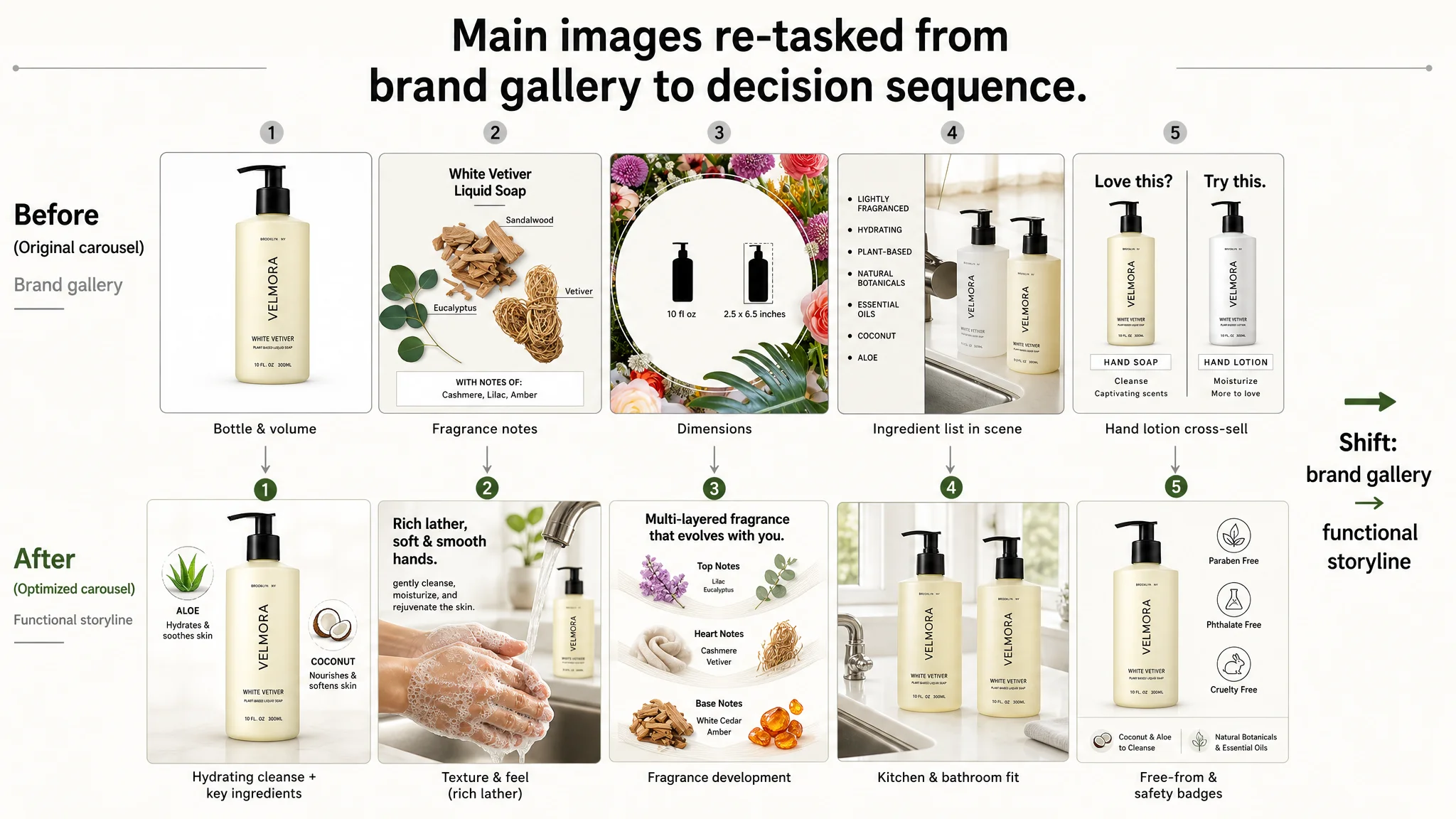
Image 1: Establish Functional Authority Instantly
Instead of only verifying volume and “plant-based,” Image 1’s role became:
- Visually anchor “moisturizing cleanse” and “hydrating” as primary benefits
- Use clear, legible text callouts near the bottle
- Pair those claims with visual cues of key botanical ingredients (e.g., aloe, coconut imagery or iconography), while keeping the product itself untouched
This helps search-page scrollers answer, with one glance: “This is a hydrating, skin-friendly hand soap that’s more than just a nice scent.”
Image 2: Show Texture and Feel, Not Just Fragrance
For the second image, DeepBI advised shifting from fragrance graphics to texture visualization:
- Close-up of hands under running water with rich lather
- Overlay text tied directly to benefits: “Rich lathering,” “Gently cleanses & rejuvenates”
This mirrors the competitor’s conversion pattern and addresses the “How does it feel?” question in the highest-visibility slot after the main image.
Image 3: Replace Early Dimensions with Scent Complexity
Dimensions, while useful, were demoted in importance. Instead, this slot was redefined to deepen the premium fragrance experience:
- A structured “scent development” map: Opening / Heart / Base
- Use of terms like “silky cashmere,” “earthy vetiver,” “creamy sandalwood,” “crisp amber,” “white cedar”
- A clear, conceptual ladder from freshness to warmth
This sequence lets buyers first trust the function, then appreciate the complexity of the scent.
Image 4: Confirm Placement and Versatility
Using an existing scene of two bottles on a counter, the module’s role shifted from repeating ingredients to reducing psychological risk:
- Clear text confirming “Ideal for kitchen and bathroom”
- Visual cue that it looks natural in both environments
- Direct tie-back to Bullet 1’s usage scenes
The goal is to eliminate any lingering “Is it okay by my sink? Is it overkill for a bathroom?” hesitation.
Image 5: Rational Trust Signals, Not Early Cross-Sell
Rather than introducing hand lotion here, this slot became a trust badge board:
- Simple, credible icons for “Paraben Free,” “Phthalate Free,” “Cruelty Free”
- Clean composition, minimal text, high legibility on mobile
Cross-sell of other products did not disappear; it was simply moved downstream (A+), so the early images could fully support the soap’s own purchase decision.
Rebuilding the Bullets as a Conversion Path, Not a Catalog of Traits
DeepBI’s bullet-point recommendations followed a clear logic: each bullet must move the buyer one step closer to “yes.”
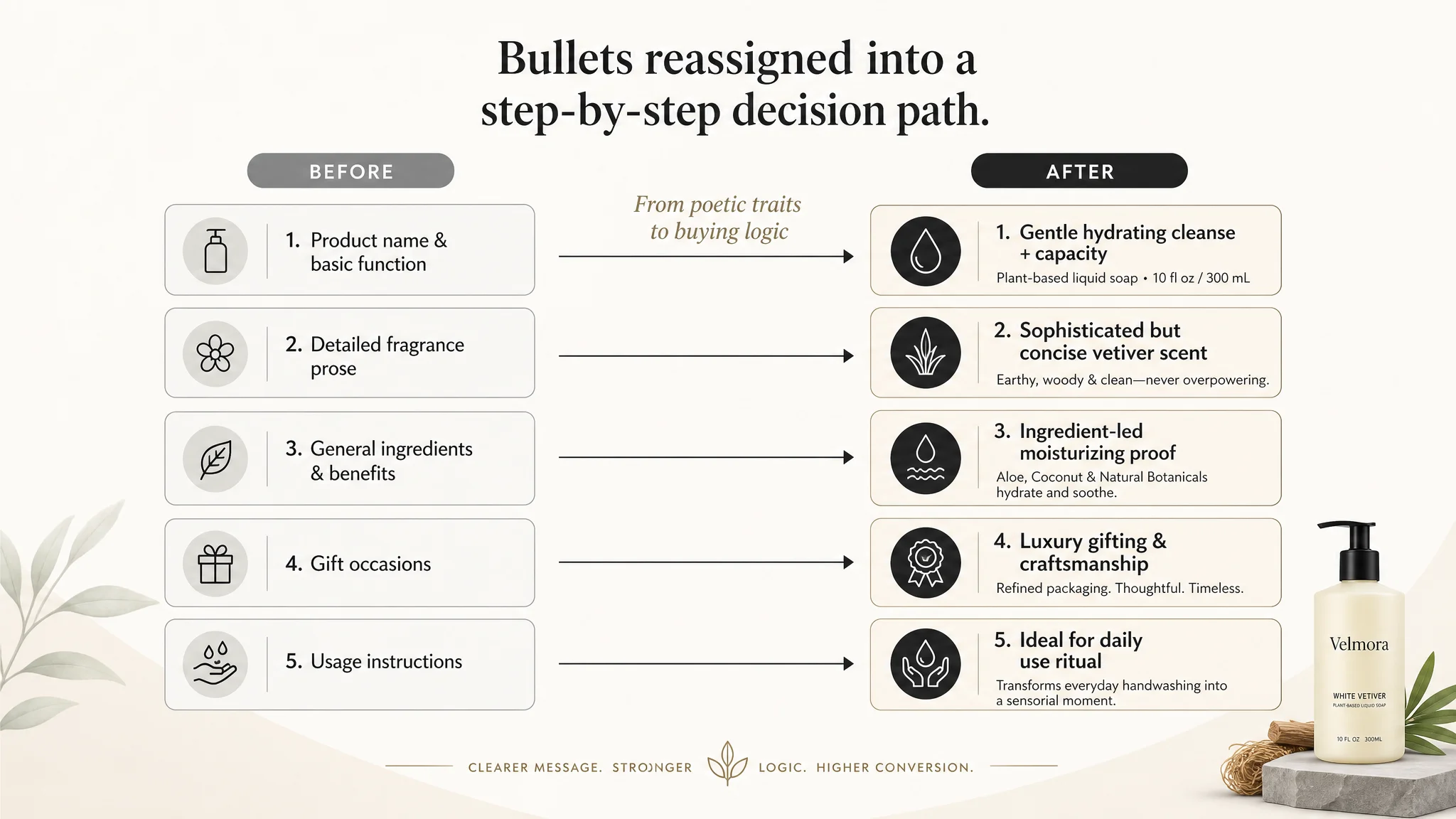
Bullet 1: Lead With Feel and Capacity
Instead of generic product naming, the first bullet was repositioned to combine gentle cleansing + hydration + capacity:
GENTLE HYDRATING CLEANSE: Keep your hands hydrated with this liquid soap. This high-lathering formula provides a moisturizing cleanse that leaves skin feeling soft and smooth. Each bottle contains 10 fl oz of premium liquid soap.
This mirrors the competitor’s opening move and anchors expectation on what hands will feel like after repeated use.
Bullet 2: Compact, Sophisticated Scent Positioning
A refined bullet for fragrance followed:
SOPHISTICATED VETIVER FRAGRANCE: A unique and elegant scent profile that combines silky cashmere, eucalyptus, and lilac with earthy vetiver, creamy sandalwood, crisp amber, and white cedar. This refined fragrance provides a lasting, spa-like aromatic experience with every wash.
Shorter, clearer, and outcome-oriented (“spa-like”) while preserving the brand’s layered scent story.
Bullet 3: Ingredient-Led Moisturizing Proof
The third bullet focused on ingredients as evidence of care:
MOISTURIZING BOTANICAL BLEND: Our liquid soap cares for your skin by blending natural botanicals and essential oils with coconut and aloe. These skin-conditioning ingredients work together to gently cleanse, moisturize, and rejuvenate while maintaining the skin’s natural barrier.
This answers “Why can I trust it to be gentle?” with explicit ingredient → benefit logic.
Bullet 4: Gifting Elevated by Craftsmanship, Not Just Occasion
Rather than generic gift language, the gifting bullet was elevated to match the price point:
LUXURY GIFTING & CRAFTSMANSHIP: Expertly crafted and beautifully packaged, this liquid hand soap serves as a sophisticated addition to any home. It makes a luxurious gift for housewarmings, holidays, birthdays, or any moment worth celebrating with a touch of elegance.
Here, gifting supports perceived value and brand positioning without replacing quality/ethical assurances.
Bullet 5: Daily Usage as Lifestyle, Not Instructions
The final bullet shifted from basic “how to use” into daily ritual positioning:
IDEAL FOR DAILY USE: Transform your daily routine by dispensing a generous amount to work into a rich, fragrant lather. Perfect for frequent use, this hydrating wash uplifts the senses and leaves a lingering, sophisticated scent on the skin.
Now, the last bullet doesn't stall momentum; it paints a sensory routine that aligns with repeat purchase behavior.
Repurposing A+ Content: From Brand Universe to Decision Engine
In the A+ section, DeepBI did not reject the brand’s lifestyle direction; it reassigned each module a sharper role in the hand soap decision journey.
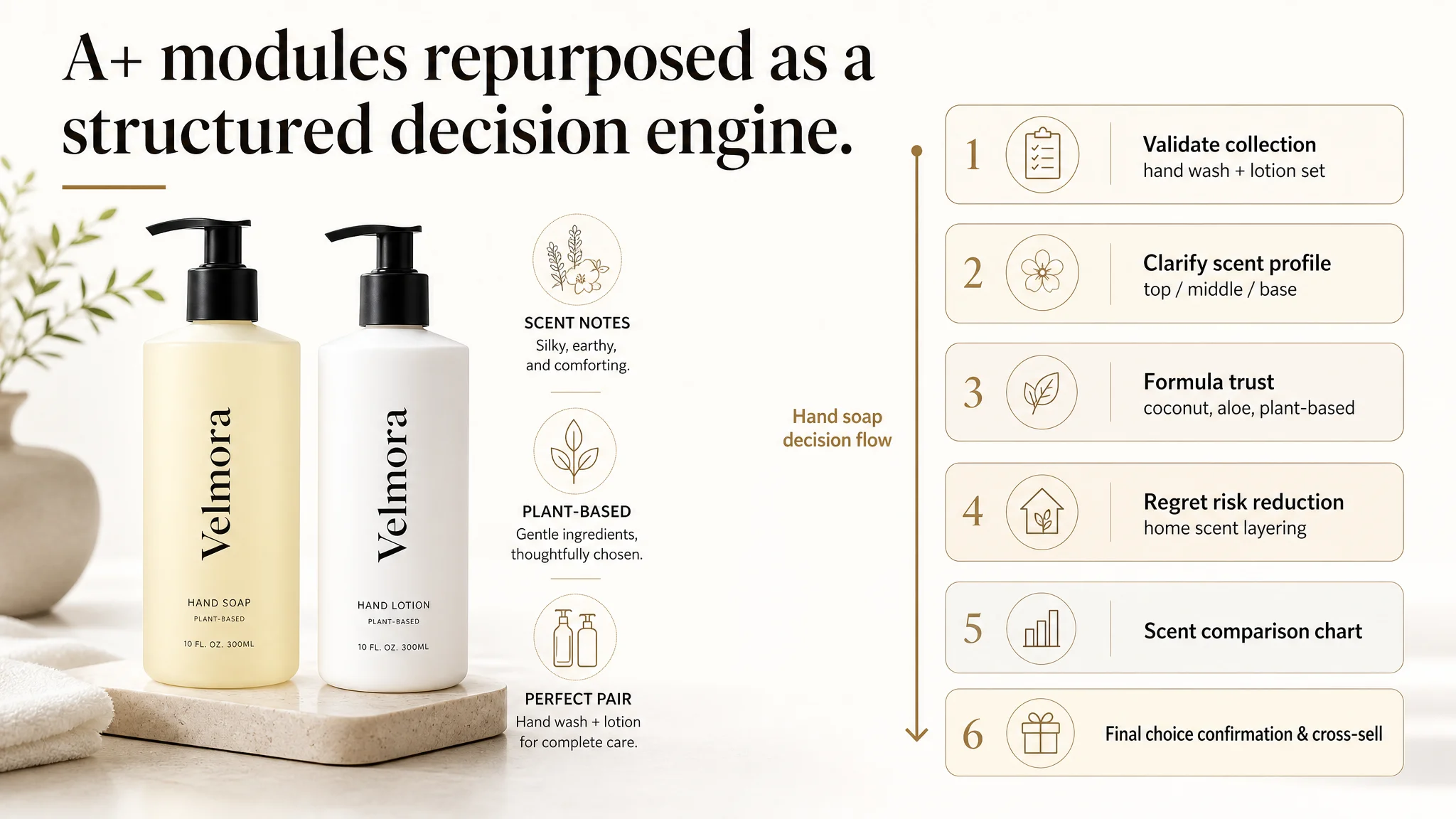
Early Modules: Validate the Collection, Then Deepen Scent Understanding
- Module 1: Shift from static scene-setting to showing multiple products in the same scent line (e.g., hand wash + lotion together as a set). This validates the collection and hints at layering potential without derailing the soap decision.
- Module 2: Expand scent analysis with clearly structured top/middle/base notes, minimizing scent-misinterpretation risk for online buyers who cannot smell the product.
Mid Modules: Formula Trust and Regret-Risk Reduction
- Module 3: Dedicated to formula trust with close-up visuals of coconut, aloe, and other safe hero ingredients. The charcoal bottle is removed to avoid cross-scent confusion.
- Module 4: Shows how to build a lasting home scent profile using matching candles or complementary home scents, but framed explicitly as a way to enhance satisfaction with the hand wash, not as a separate product push.
Later Modules: Choice Architecture and Final Confirmation
- Module 5: Either removed or repurposed to stay anchored on hand wash contexts (kitchen/bathroom), not unrelated diffusers.
- Module 6: Introduced a visual comparison chart of other available scents within the brand, giving rational scent confirmation and helping buyers pick the right fit on the first purchase.
- Module 7: Used as final rational confirmation and cross-sell, summarizing why this specific scent (and the wider line) is a solid choice for the buyer’s usage scenarios and preferences.
The effect is to keep buyers in a tight loop of:
“Do I trust the formula?” → “Is the scent right for me?” → “How will it fit into my home and routine?”
instead of dragging them into loosely related brand tech or product categories.
How the Listing’s Sales Logic Started to Recover
Once the Listing was reframed around functional trust, texture, safety, and clear usage positioning, the internal logic of the page changed:
- Search-page thumbnails and early images started answering functional questions faster. Buyers who clicked from Amazon ads no longer had to dig for reassurance about feel and safety.
- Bullets became a structured argument rather than a collection of statements. Each line pulled buyers further into commitment instead of forcing them to piece together benefits.
- A+ content stopped competing with the product decision and started supporting it. Brand world and cross-sell elements now followed, rather than interrupted, the core conversion path.
- Reviews were no longer the only source of “real” trust. Rational signals—free-from claims, ingredient visuals, usage scenarios—reduced the weight placed on review-star comparison alone.
As a result, the Listing began to regain its ability to convert both organic and paid traffic. Amazon ads could now deliver traffic into a page that was built to close the sale instead of simply hosting the brand story.
What This Means for Other Amazon Sellers
Several lessons from this case apply broadly to Amazon sellers, especially those in premium categories:
1. A higher Listing score than a competitor does not guarantee stronger conversion. If that score is driven by brand coherence while functional trust is underdeveloped, ads will still underperform.
2. Main images must be treated as a decision sequence, not a gallery. Each slot has a job: first trust, then feel, then scent, then placement, then rational proof.
3. Bullets are not a specification dump. They should mirror a “pain point → ingredient → result → lifestyle” logic that answers why your product is the safe, satisfying choice.
4. A+ is not a brand brochure; it is a structured decision engine. Lifestyle and brand narrative matter, but only when they reinforce—not distract from—the purchase decision triggered by Amazon ads.
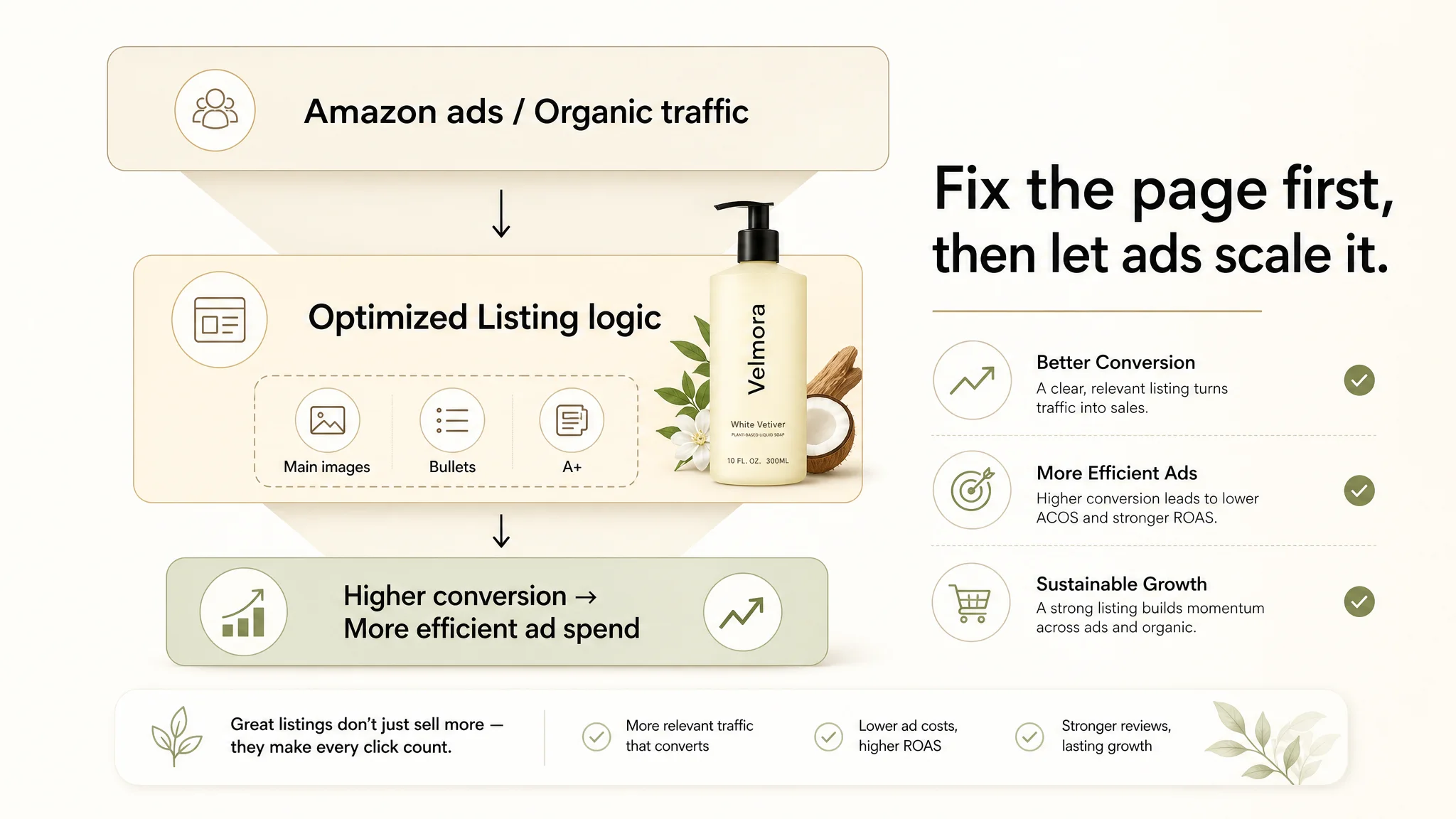
5. Amazon ads often expose Listing problems; they rarely create them. When rising ACOS and stagnant CVR show up, the first place to audit is how well your Listing converts existing traffic before touching bids and budgets.
DeepBI’s role in this case was not to “beautify” the Listing, but to re-judge where the real bottleneck lay and reassign each Amazon page element to the correct role in the conversion funnel. For sellers, the takeaway is clear: before you assume your Amazon ads are failing, ask whether your product page truly deserves more traffic.