

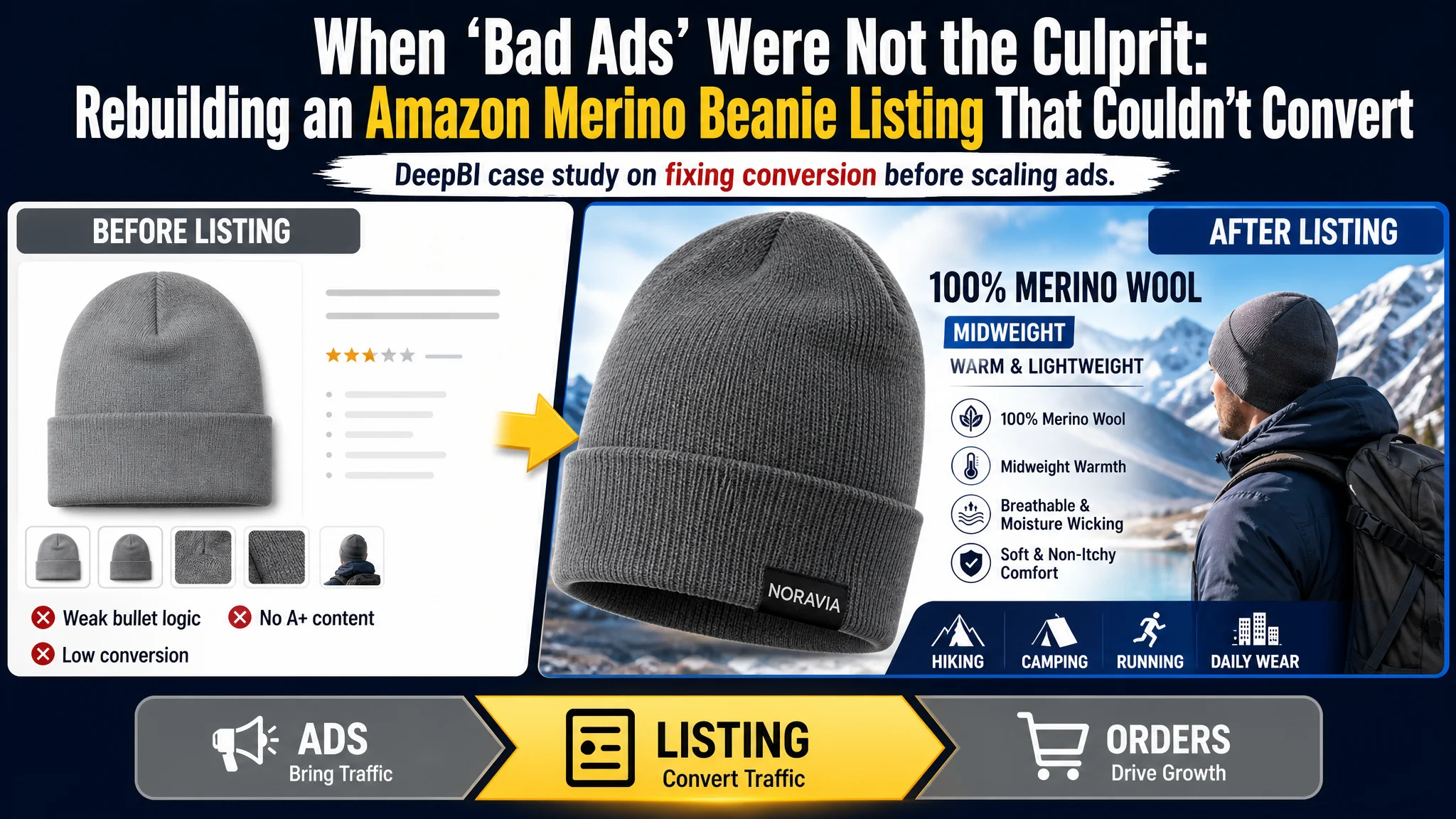
The brand in this case is a US Amazon seller in the outdoor accessories category, running a 100% Merino wool beanie. On the surface, their challenge looked like a classic advertising problem: traffic from Amazon ads was getting more expensive, orders were not keeping up, and the team felt the ads “weren’t working anymore.” The natural response was to keep tuning keywords, bids, and campaigns.
DeepBI’s diagnosis told a different story. When we benchmarked their Amazon Listing against a high-performing Merino beanie competitor, the page scored just 50/100 versus the competitor’s 89/100. The biggest gap wasn’t in ad setup at all, but in product-page conversion capacity—especially a completely missing A+ section, weak bullet-point logic, and images that failed to build trust or show real outdoor scenarios.
This shifted the whole optimization path. Instead of pushing more traffic into a leaking funnel, the focus moved to rebuilding the Amazon product page: reframing the title around core search terms and outcomes, restructuring the bullet points around user pain points, and designing a full A+ “story” that connects material, warmth, comfort, and use cases. For other Amazon sellers, this case is a reminder: when ACOS feels “uncontrollable,” it may be the Listing—not the ads—that has quietly hit its ceiling.
The Core Conflict: A Listing That Could Not Carry the Traffic
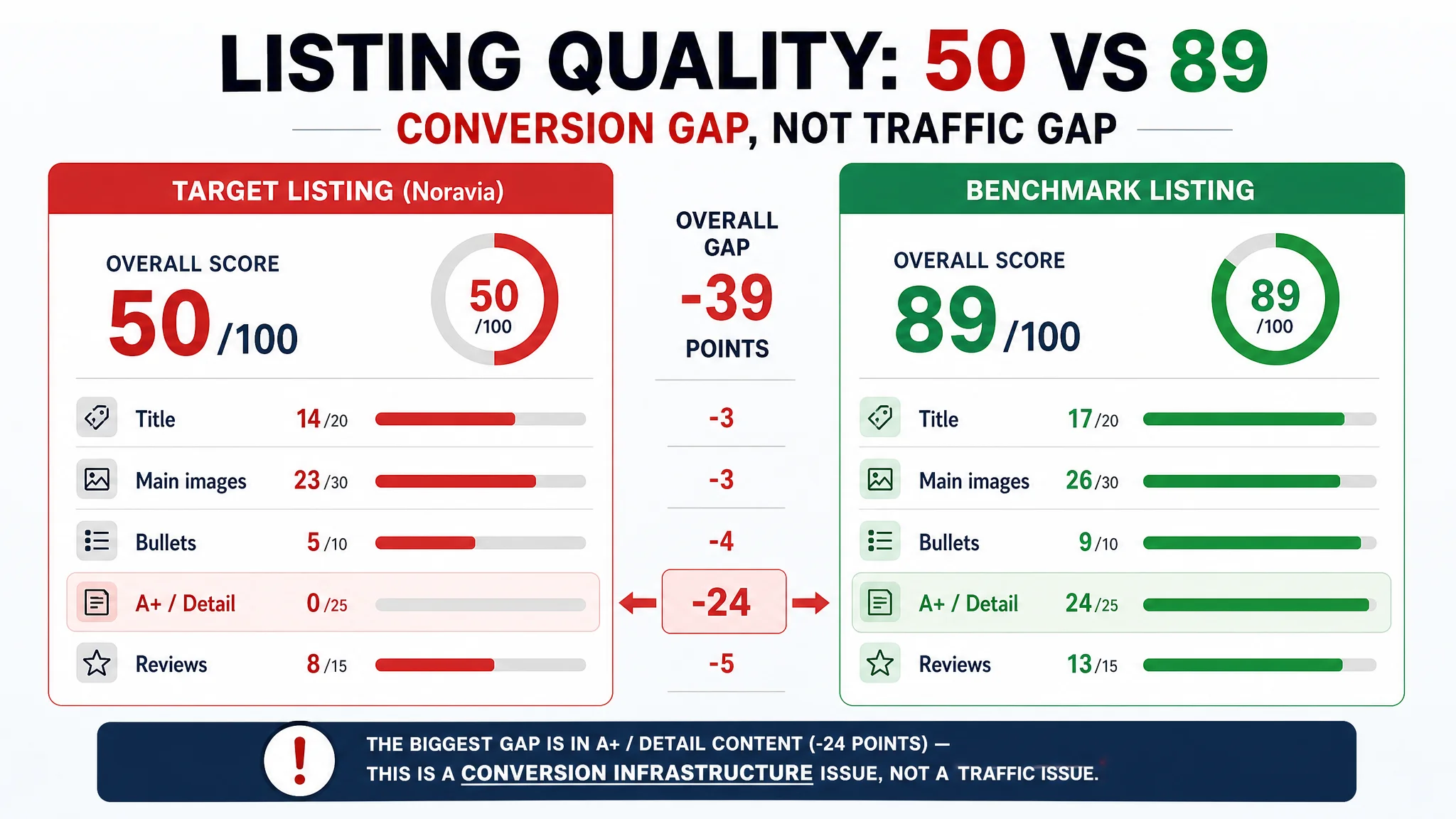
DeepBI’s scoring showed a stark gap:
- Target Listing: 50 / 100
- Benchmark Listing: 89 / 100
- Overall gap: -39 points
Across key dimensions:
- Title: 14 vs. 17 (–3)
- Main images: 23 vs. 26 (–3)
- Bullet points: 5 vs. 9 (–4)
- Detail / A+ content: 0 vs. 24 (–24)
- Reviews: 8 vs. 13 (–5)
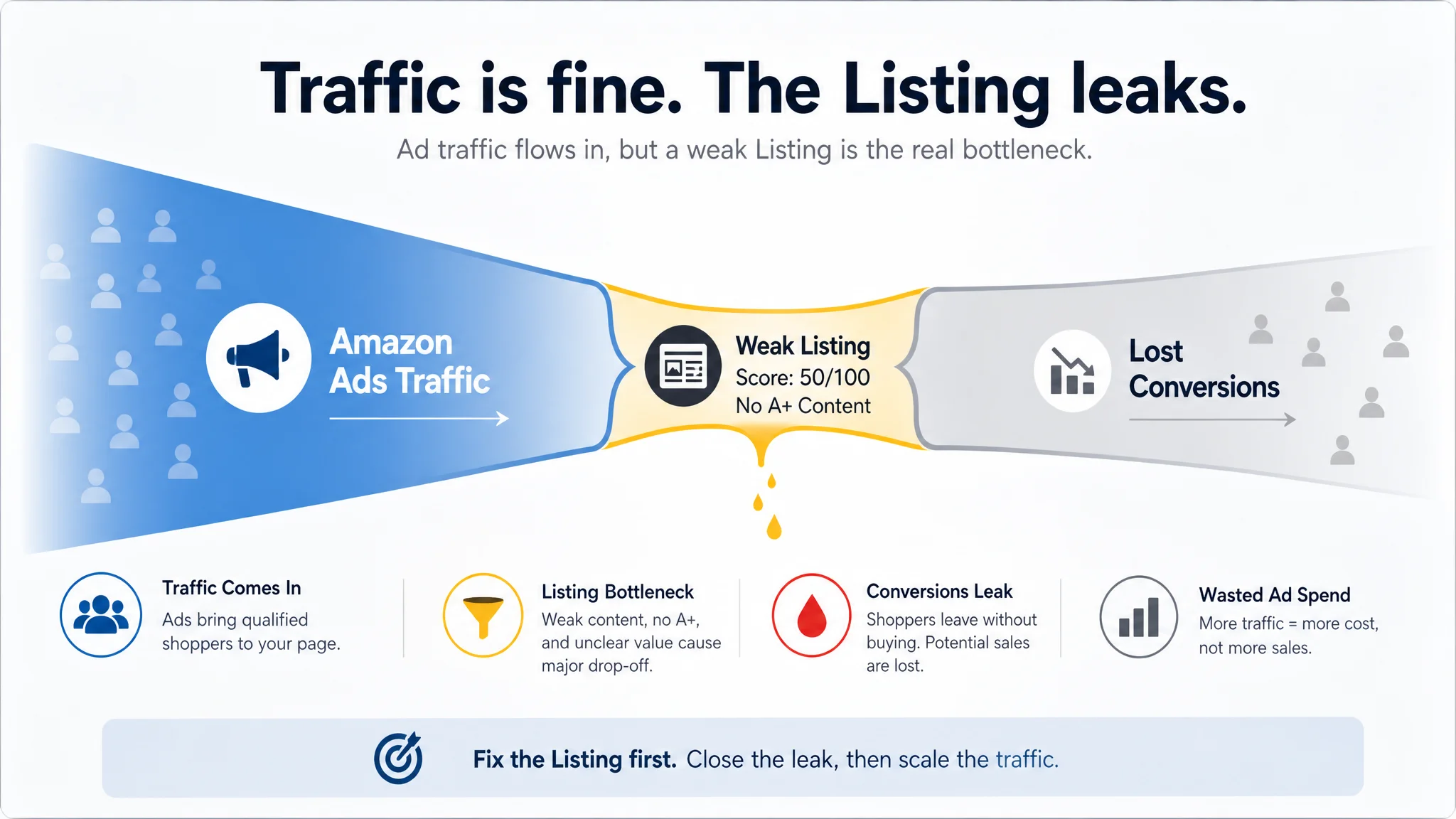
The real bottleneck was not traffic volume. It was the page’s ability to convert that traffic.
“The real problem was not that ads failed to bring traffic. It was that the page could not convert the traffic.”
From a business perspective:
- Ad cost pressure was rising.
- Conversion efficiency lagged category leaders.
- The page had almost no structured trust or scenario content beyond the basic images and bullets.
- Every new click from Amazon ads was being sent into a page that stopped persuading after the first screen.
Treating this as an “ad problem” was essentially misreading where the funnel was breaking.
What the Seller Originally Misdiagnosed
Internally, the seller’s narrative was familiar:
- “ACOS is too high; this must be an Amazon ads issue.”
- “Maybe we need better keywords or more granular campaigns.”
- “The images don’t look that bad—maybe just tweak some creatives.”
This kept the team locked on the advertising console:
- Rebuilding ad groups and campaigns.
- Adjusting bids and match types.
- Expanding or contracting keyword coverage.
Yet the page itself looked like this compared with the benchmark:
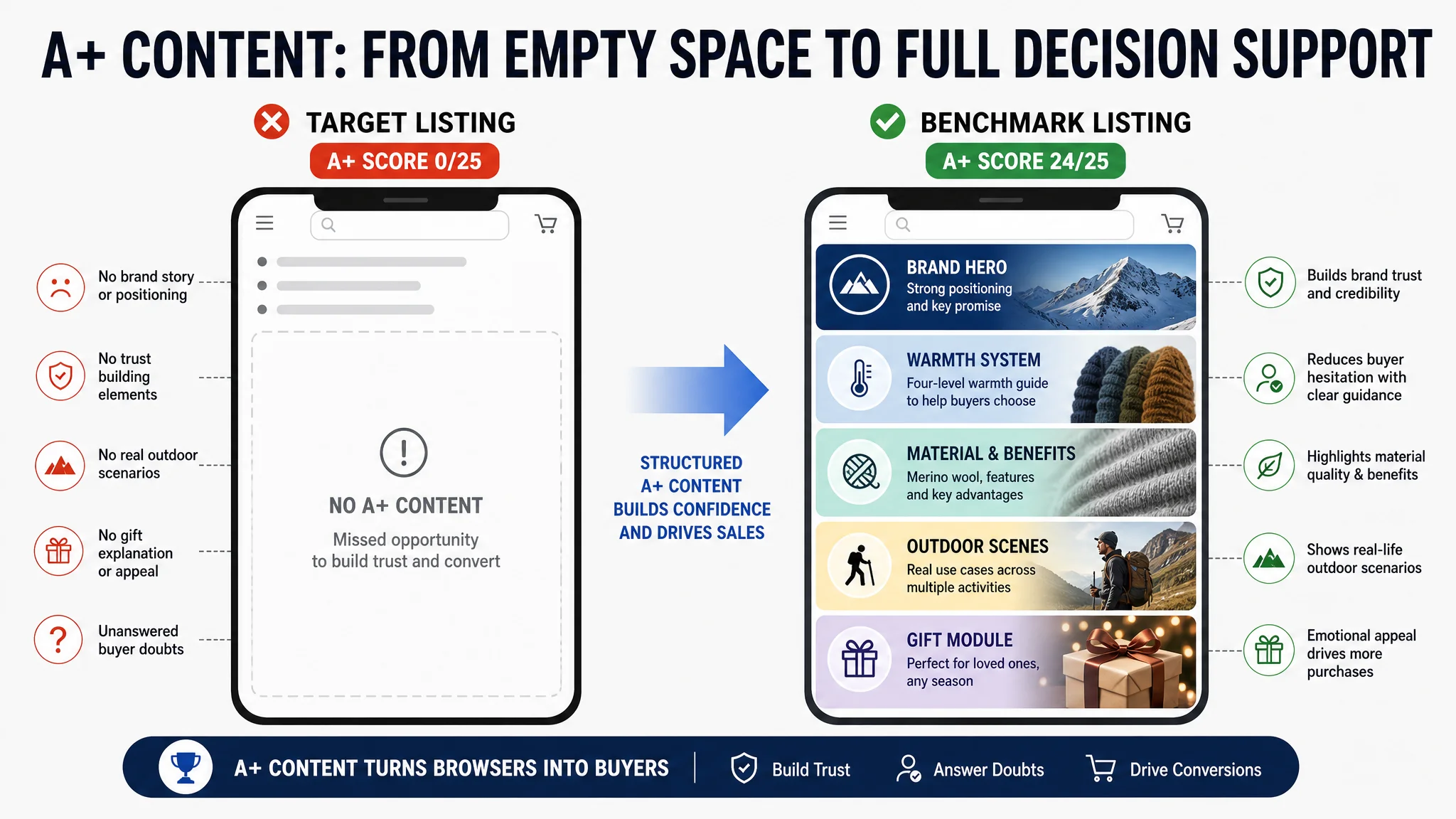
- No A+ content at all.
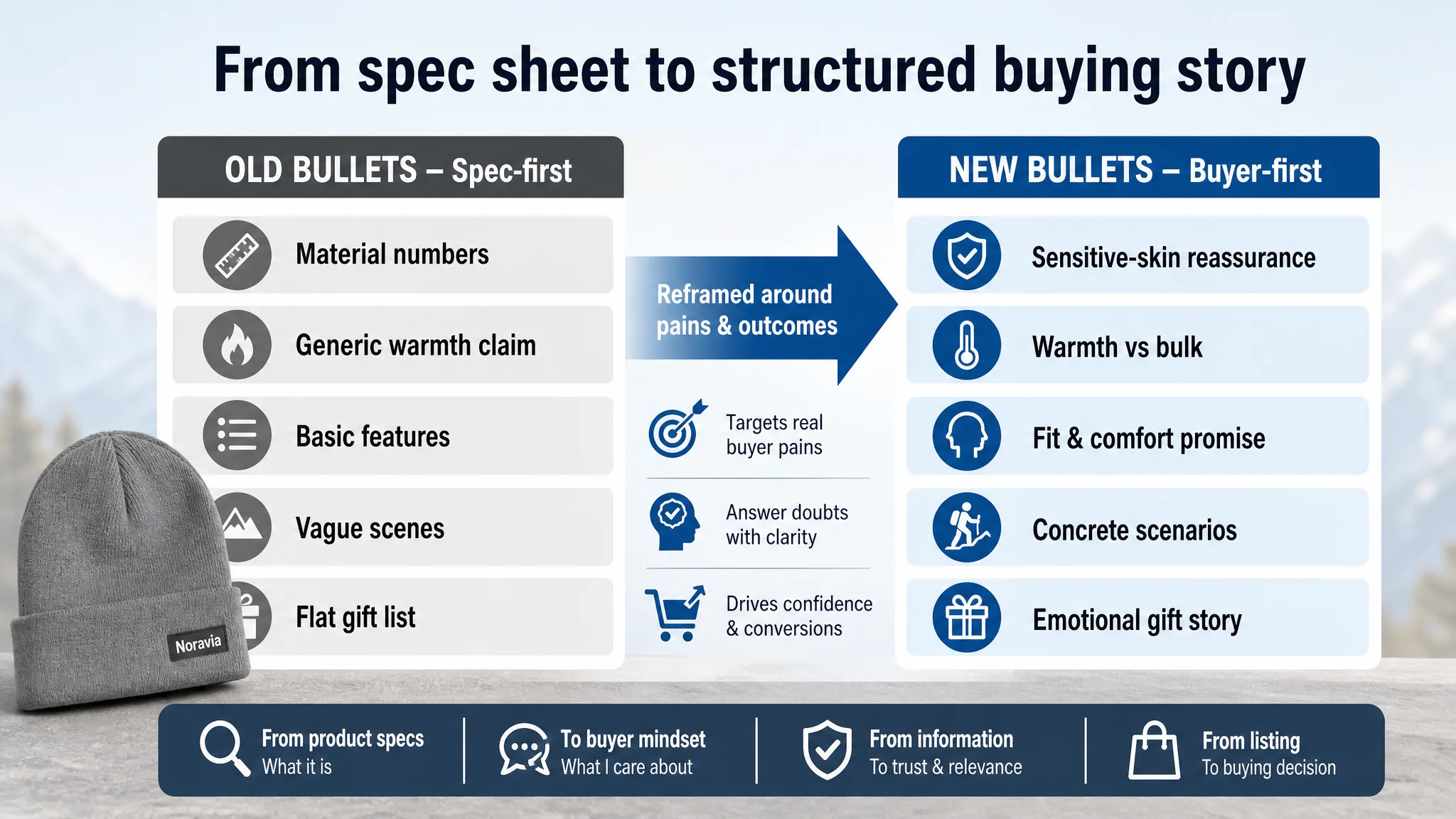
- Bullet points that read like a spec sheet rather than a buying story.
- Main images that remained heavily studio-based with limited real outdoor context.
- A title that buried core keywords and lacked clear differentiation.
- Reviews weaker in both quantity and perceived reliability.
In other words, they were trying to fix CVR problems with CPC tactics.
Where Traditional Amazon Ad Optimization Starts to Fail
Once ads are already bringing qualified traffic, further gains from ad tuning become stepwise smaller if the page cannot:
- Give a strong click reason on search (title + main image).
- Build trust and emotional resonance on the first scroll.
- Resolve key doubts (fit, warmth, itchiness, real use cases).
- Translate material advantages into purchasing decisions.
In this case, the constraints were clear:
- CTR ceiling: Main images lacked in-context outdoor scenes and clear, visual claims about warmth and material advantages.
- CVR ceiling: No A+ content; bullets did not follow a “pain point → solution → outcome” structure.
- Trust ceiling: Fewer reviews, slightly lower rating (4.2 vs 4.6), and weaker review content with little visual proof.
Continuing to “optimize ads” first would have done one thing consistently: pay more to send buyers into the same underperforming page.
DeepBI’s Judgment: Listing Conversion Was the Real Constraint
The Detail Page Gap Was Too Large to Ignore
A single metric stood out:
- Detail/A+ score: 0 vs. 24, a gap of –24 points.
The benchmark Listing used its A+ to:
- Lead with a strong brand visual and clear positioning.
- Explain a “four-level warmth system” (Lite/Core/Shield/Pro) so buyers could self-select.
- Combine fiber close-ups, real outdoor scenes, and scenario combinations (city commute, hiking, skiing, camping).
- Showcase material origin, 8 functional benefits of Merino wool, 30-year craftsmanship, and gift scenarios.
Our target Listing had none of this. No modules. No visual story. No warmth classification. No structured trust.
From DeepBI’s perspective, this was not a cosmetic gap; it was a conversion infrastructure gap.
Bullet Points Were Information Without Buying Logic
Bullet point scoring:
- Target: 5 / 10
- Benchmark: 9 / 10
The competitor’s bullets:
- Start from user pains: big heads, tight hats, overheating.
- Use concrete measurements and sizing guides.
- Compare Merino to synthetic materials.
- Close the loop with emotional, giftable value (“Where’d you get that hat?”).
The target Listing:
- Leads with technical parameters and generic function descriptions.
- Lacks explicit contrast (“vs synthetic hats”).
- Lists gift targets, but without emotional or social proof closure.
This meant that even buyers who scrolled down were not being guided through a structured, decision-friendly narrative.
Visual Story: Weak Scenario and Trust
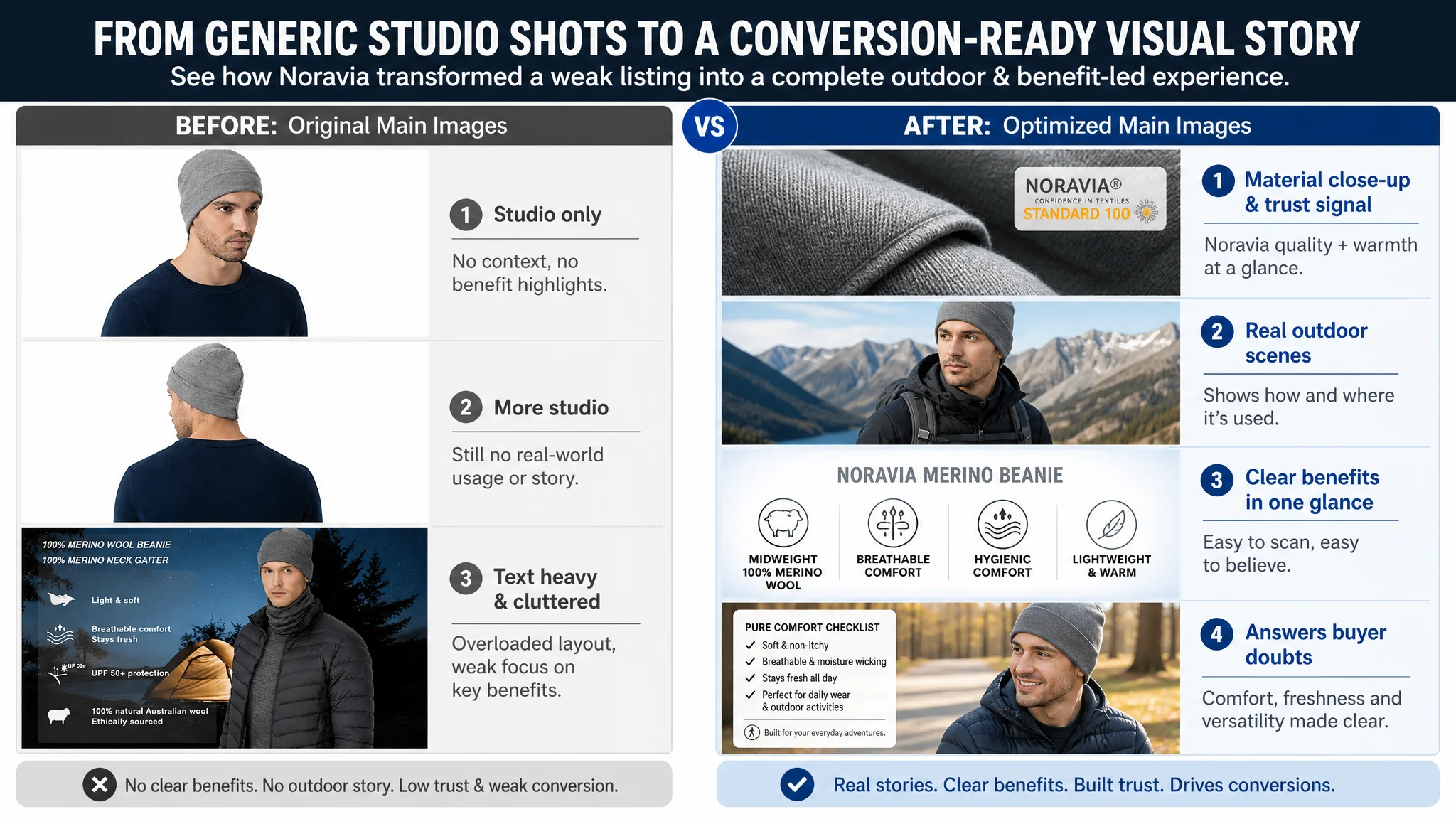
Images also told a clear story:
- The competitor integrates:
- Multiple outdoor scenes (snow hiking, couple outings).
- A “benefit checklist + real wear + snow atmosphere” in a single high-impact image.
- Material trust elements (brand mark, certifications, emotional copy).
- The target Listing:
- Uses static, less immersive scenes.
- Overloads one image with product variants and text (beanie + neck gaiter + tent).
- Spends visual real estate without reinforcing the core “warm, non-itchy, outdoor-ready” message.
From a scoring perspective, this was “only” a 3-point gap in main images. From a decision perspective, it meant the page never fully proved warmth, comfort, and real-world suitability on screen.
Why Listing Conversion Had to Be Fixed Before More Ads
DeepBI’s decision order was simple:
1. Stop treating ACOS as purely an ad-parameter issue when page scores show a structural conversion gap.
2. Prioritize the highest-leverage bottleneck: the missing A+ and weak bullet logic.
3. Only then consider scaling or further granularizing ads.
“Advertising does not only amplify advantages. It can also amplify a page’s existing defects.”
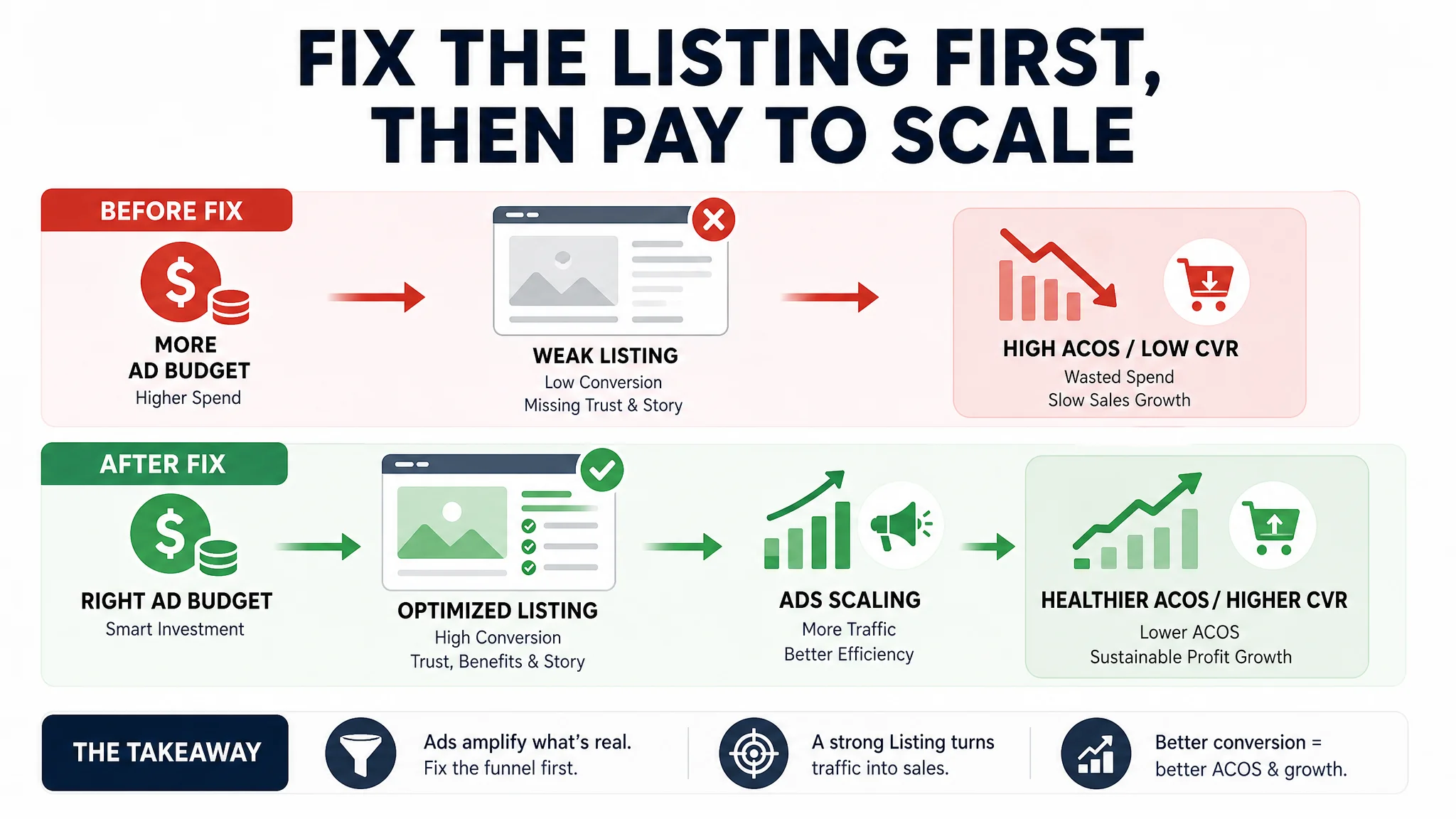
The business risk if we did not do this:
- Each incremental click from ads would carry the same low conversion probability.
- The brand would become more dependent on paid traffic, without building a stable organic conversion base.
- Organic ranking gains would stall because the conversion signal feeding Amazon’s ranking algorithm remained weak.
Fixing the Listing first was not about perfectionism; it was about protecting every future dollar of ad spend.
How DeepBI Reframed the Page: From Spec Sheet to Buying Story
1. Rewriting the Title Around Outcomes and Search Logic
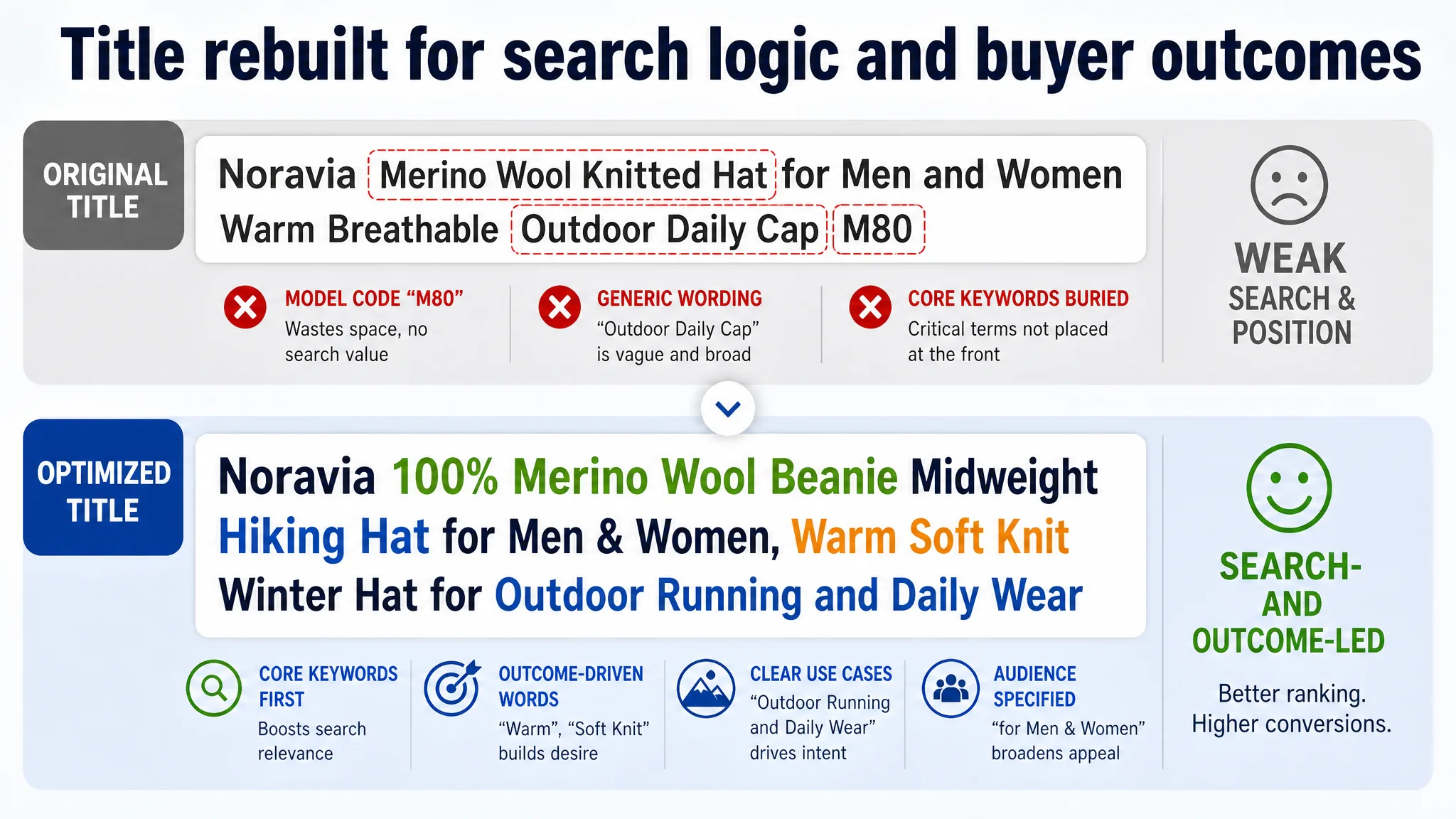
The original title:
- Pushed core keywords back in the sequence.
- Used “Outdoor Daily Cap” generically.
- Included an internal model code (“M80”) that wasted characters.
- Did not clearly frame use cases or outcomes.
DeepBI’s suggested structure:
Brand + 100% Merino Wool Beanie + Product Type & Weight + Audience + Outcome & Scene
Recommended title:
LAPASA 100% Merino Wool Beanie Midweight Hiking Hat for Men & Women, Warm Soft Knit Winter Hat for Outdoor Running and Daily Wear
Key changes in logic:
- Core keyword prioritization: “100% Merino Wool Beanie Midweight Hiking Hat” is placed immediately after the brand to increase search relevance.
- Outcome words added: “Warm” and “Soft Knit” make the benefit explicit and emotionally resonant.
- Scene anchoring: “Outdoor Running and Daily Wear” broadens appeal while staying specific.
- Noise removal: Internal model code replaced with “Winter Hat,” a high-frequency search term.
This aligns the title with both Amazon’s A9 logic and buyer expectations: they see what it is, who it’s for, how it feels, and where to use it.
2. Rebuilding Bullet Points Around Pain Points and Trust
The new bullets were not “new text for its own sake.” They were rewritten to match the competitor’s logical structure while staying true to the product’s real attributes.
Bullet 1: Material Trust and Sensitive Skin
Original issue: Technical data without emotional translation.
New logic:
- Keep the technical strengths (18.5 micron, 250 g/m², OEKO-TEX).
- Directly address the itch and synthetic comparison.
Suggested bullet:
【100% PREMIUM MERINO WOOL – SOFT & CERTIFIED】 Crafted from 18.5 micron, 250g/m² midweight Merino wool, this beanie offers a luxurious, skin-friendly feel without the itch associated with synthetic hats. Our STANDARD 100 by OEKO-TEX certification ensures the textile is tested for harmful substances, providing safe, natural warmth and superior breathability for all-day wear.
Effect: Material becomes a comfort and safety story, not just a spec line.
Bullet 2: Warmth vs. Bulk, Especially for Active Use
Original issue: Warmth mentioned, but not framed against bulk or overheating.
Suggested bullet:
【LIGHTWEIGHT WARMTH WITHOUT THE BULK】 Experience the thermal efficiency of heavy fleece in a much sleeker profile. This 100% Merino wool knit provides comparable warmth while remaining naturally moisture-wicking and odor-resistant. It keeps you warm in the chill but stays breathable to prevent overheating during active use.
Effect: Warmth is positioned as efficient, not heavy, addressing the dual need of warmth and breathability.
Bullet 3: Wearing Experience and Fit
Original issue: Limited description of how it actually feels on the head.
Suggested bullet:
【ERGONOMIC COMFORT & STAY-PUT FIT】 Designed for real-world comfort, this beanie features a flexible interlock structure that adapts to your head shape without riding up or feeling too tight. Its soft, plush texture provides a secure fit that stays in place, whether you’re covering your ears on a windy day or wearing it as a casual accessory.
Effect: The bullet turns into a behavioral promise: no more constant readjusting, no squeezing.
Bullet 4: Concrete Daily and Outdoor Scenarios
Original issue: Generic scenes (“outdoor use,” “daily wear”) without granularity.
Suggested bullet:
【VERSATILE STYLE FROM TRAIL TO STREET】 Sleek and minimal, this beanie complements everything from technical outdoor gear to everyday streetwear. Its packable design makes it easy to fold into a pocket, making it the perfect companion for hiking, skiing, camping, or simply walking the dog in the crisp morning air.
Effect: Buyers can see themselves in specific situations: hiking, skiing, dog walking.
Bullet 5: Giftability as Emotional Closure
Original issue: Gift targets listed, but no emotional or social closure.
Suggested bullet:
【A THOUGHTFUL GIFT OF LUXURY & FUNCTION】 Looking for a practical yet premium gift? This cozy 100% Merino wool beanie is an ideal choice for parents, partners, and friends. Combining timeless fashion with the high-performance benefits of natural wool, it’s a thoughtful gesture for birthdays, holidays, or any cold-weather occasion.
Effect: The product becomes a socially shareable choice, not just a personal utility item.
3. Re-Architecting the Main Image Set for Trust and Scenario
DeepBI’s analysis treated each main image not as an isolated visual, but as a step in a decision journey.
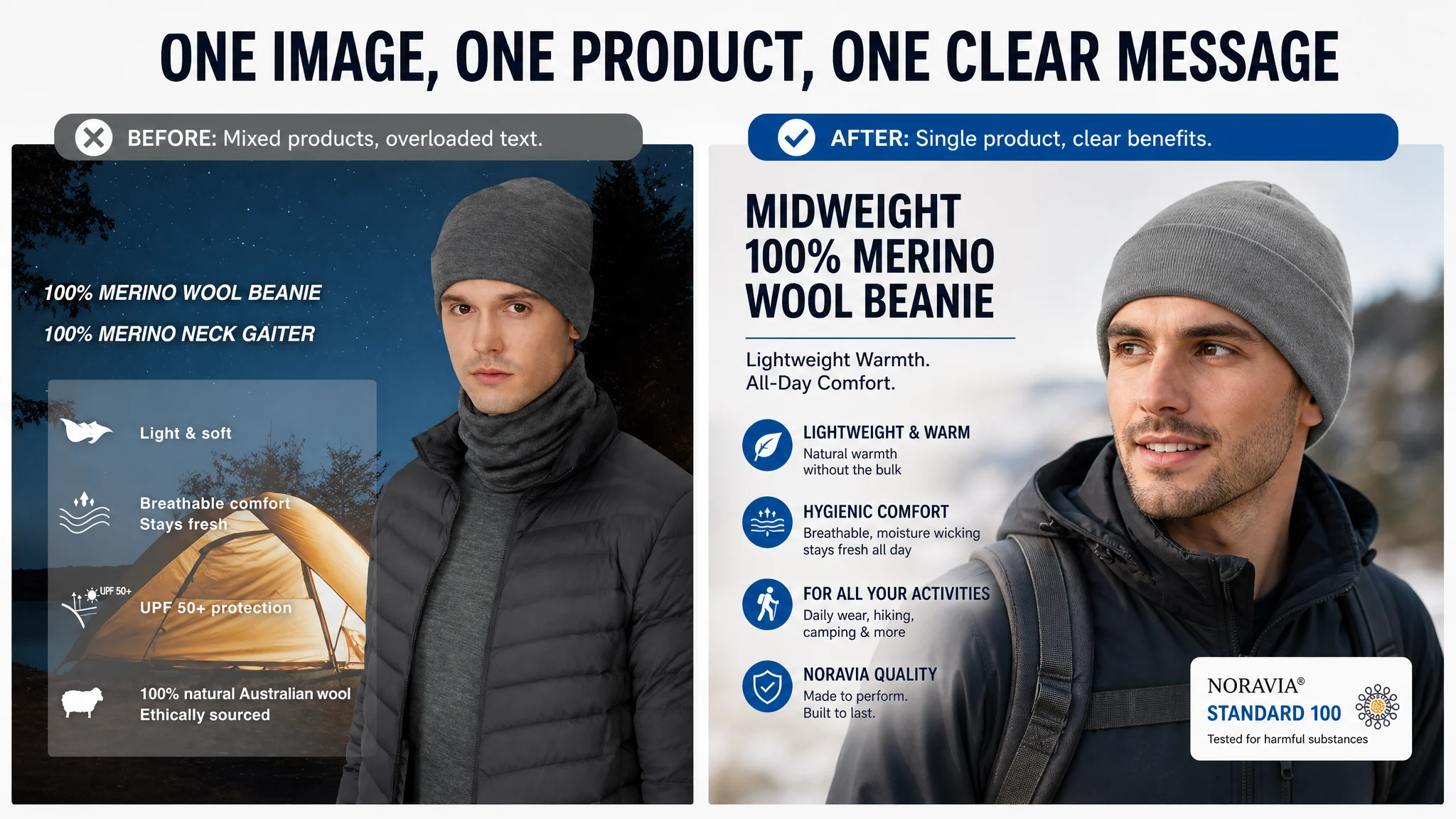
Image 1: Immediate Identification and Material Claim
- Keep the model shot, but add micro-overlays such as:
- “100% Merino Wool”
- “Warm & Lightweight”
Purpose: At thumbnail level, buyers see product type + key material benefit without reading.
Image 2: Replace Redundant Rear View with Outdoor Scene
- Remove the studio rear shot.
- Replace with an in-context outdoor image (e.g., hiking in cool weather).
- Center the message on warmth and use: “Midweight Merino – Built for the Trail.”
Purpose: Validate the warmth claim in a real environment, not just text.
Image 3: Simplify and Focus on One Scenario
- Remove:
- Neck gaiter.
- Tent confusion.
- Overloaded text blocks.
- Focus on:
- One strong camping or evening outdoor scene.
- Clean claims about warmth, breathability, and freshness.
Purpose: Avoid product bundle confusion and keep one product, one message, one scenario per image.
Image 4: Turn Collage into a Clean Checklist
- Replace four small panels with:
- One clear daily-wear scene (e.g., walking in a park).
- A simple checklist: “Soft, Not Itchy,” “Breathable,” “Cool-Weather Ready.”
Purpose: Address discomfort fears directly, without seasonal over-claiming (no “summer beanie” confusion).
Image 5: Pure Fabric Trust Close-Up
- Keep the OEKO-TEX logo.
- Remove background clutter and secondary products.
- Emphasize texture and stitching in a clean close-up.
Purpose: Anchor the premium fabric story visually and build rational trust.
4. Filling the Biggest Hole: Building an A+ Detail Page That Actually Sells
The A+ reconstruction was designed as a sequence of logical modules rather than a single long banner.
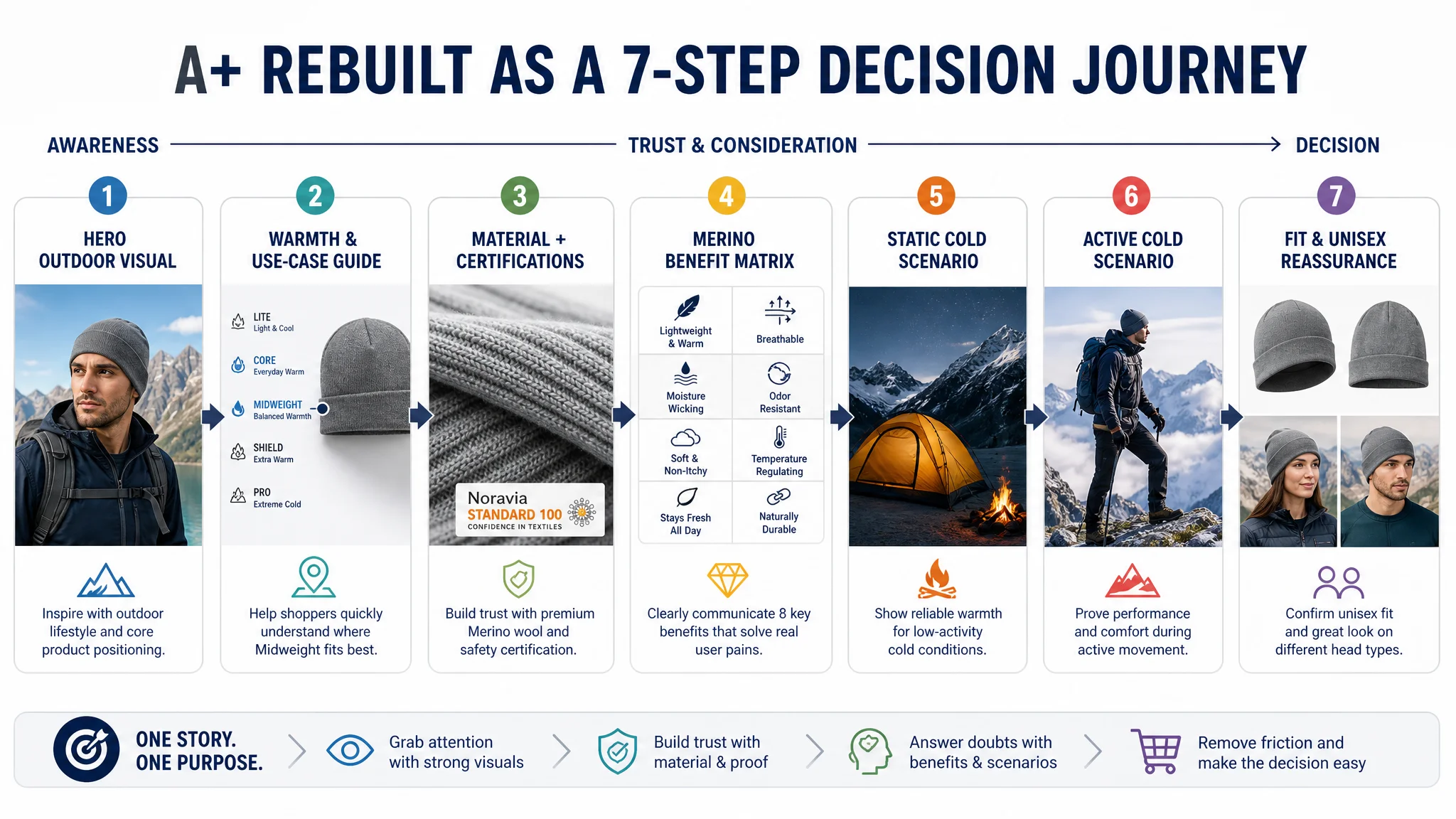
Module 1: Outdoor Opening Visual + Product Confirmation
- Strong outdoor visual (hiking, winter city).
- Clear headline: “100% Merino Wool Midweight Beanie for Active Cold-Weather Days.”
Objective: Answer the first question: “Is this the type of beanie I’m looking for?”
Module 2: Warmth and Use-Case Positioning
- Structured matrix explaining:
- What “Midweight” and “250 g/m²” mean.
- Suitable temperature ranges and use cases (commute, hiking, camping, light running).
Objective: Help buyers self-qualify: “Is this warmth level right for my needs?”
Module 3: Material Close-Up + Certification Icons
- Macro shot of wool texture.
- Icons for:
- Breathable.
- Odor-resistant.
- OEKO-TEX Standard 100.
Objective: Convert materials into a safety and comfort proof module.
Module 4: Full Material-Benefit Matrix
- Simple, clear list:
- Lightweight vs fleece.
- Moisture wicking.
- Odor resistance.
- Warmth without bulk.
- Skin-friendly feel.
Objective: Reduce misuse and regret by pre-answering common concerns.
Module 5: Static Cold Scenario (Camping / Sitting Outdoors)
- Visual of winter camping, or seated outdoor use.
- Copy to emphasize comfort when not moving: “Reliable warmth when you’re staying still in the cold.”
Objective: Address the typical camper doubt: “Will I freeze if I’m not moving?”
Module 6: Active Cold Scenario (Hiking / Running)
- Visual of trail running, hiking, or climbing.
- Copy: “Stays in place, wicks sweat, keeps you comfortably warm.”
Objective: Confirm the product works in high-movement, sweat-prone scenarios.
Module 7: Fit and Unisex Reassurance
- Different models, hair types, head shapes if available.
- Copy reinforcing:
- Unisex styling.
- Soft, secure fit.
- No feeling of tightness or slippage.
Objective: Resolve remaining doubts about fit and styling across genders.
Once this A+ was in place, the Listing moved from “no story at all” to a full trust and scenario engine that supports both paid and organic traffic.
Reviews: A Reality Check, Not an Excuse
Review reality:
- Target: 4.2 stars, 46 reviews (one 2-star visible on the first page).
- Benchmark: 4.6 stars, 169 reviews, no 3-star or below on the first page.
DeepBI’s judgment was not that reviews “didn’t matter,” but that:
- The page itself was not doing enough to counterbalance the weaker review base.
- The lack of detail, photos, and A+ meant buyers leaned heavily on reviews for trust—and found fewer signals.
By improving the Listing first, the brand gives itself a chance to:
- Capture more satisfied buyers.
- Encourage richer, scenario-based reviews.
- Gradually narrow the trust gap via social proof.
How the Page’s Sales Logic Started to Recover
After these changes, several key shifts became possible, even without inventing hard numbers:
- The Listing gained an independent conversion capacity instead of relying on ads to carry it.
- Buyers saw a consistent story:
- 100% Merino → premium, certified.
- Midweight → specific warmth level.
- Outdoor scenes → validated use cases.
- Bullets → resolved pains logically.
- Ad traffic became “worth paying for” because each click had a better chance to convert.
- The brand’s dependence on “more budget” as the only growth lever began to decline.
Ad structure, keywords, and bids still matter—but only now, with a Listing that can actually convert the traffic being purchased.
What the Seller Learned—and What Other Amazon Sellers Can Take Away
The most important shift was conceptual, not cosmetic.
Before:
- High ACOS = ad problem.
- Improve ACOS = adjust bids, clean up campaigns, test more keywords.
- Listing = secondary; change when time permits.
After:
- High ACOS with weak Listing scores = conversion problem first.
- Improve ACOS sustainably = fix the product page’s ability to convert, then tune ads.
- Listing = the foundation of both organic and paid performance.
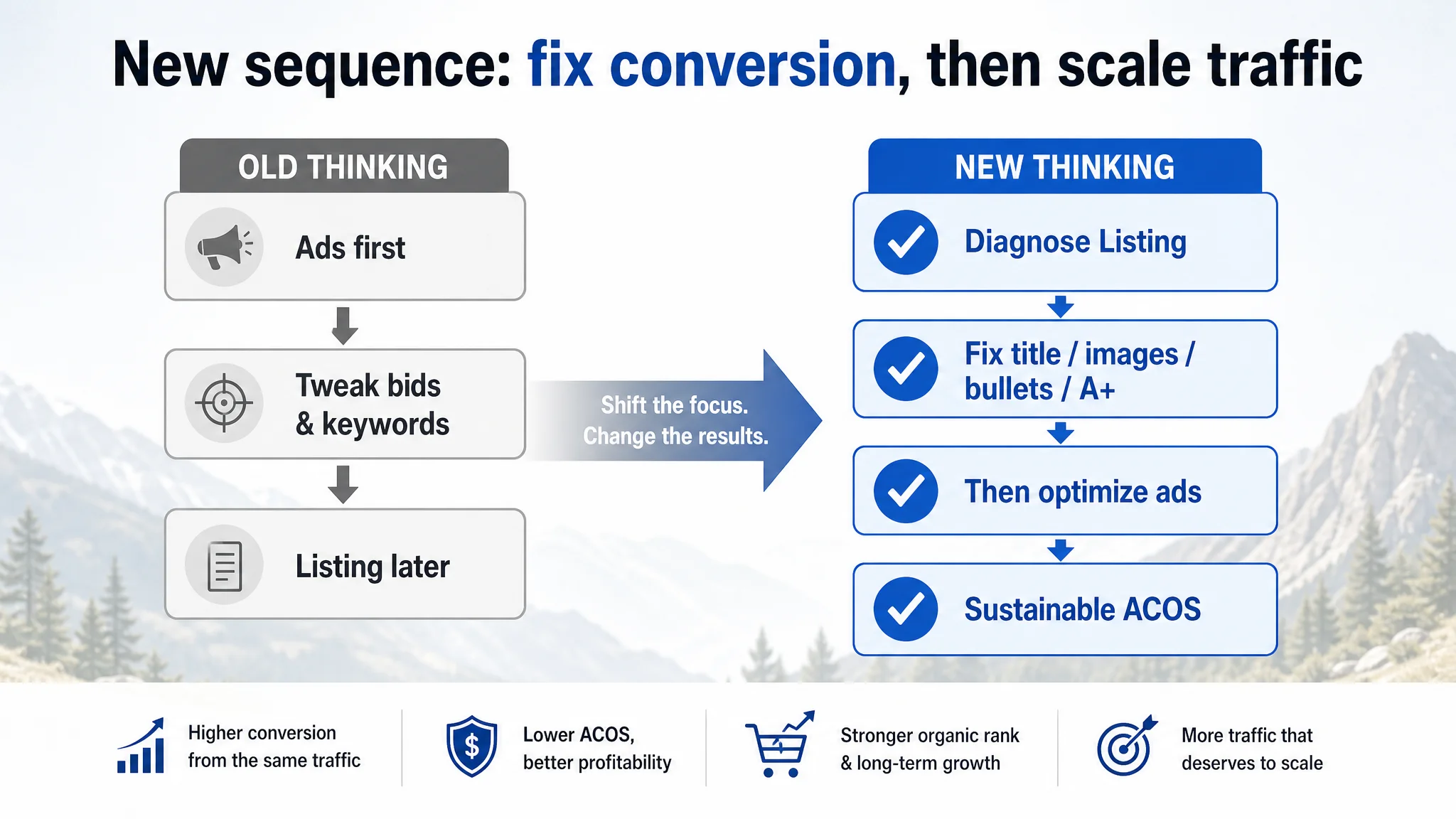
Key lessons other Amazon sellers can draw:
1. Do not let ads mask a weak Listing. If your A+ is empty and bullets read like raw specs, you are leaving conversion on the table.
2. Title, main images, bullets, and A+ must function as one system, not four independent elements.
3. Ads amplify page logic, not replace it. A weak page makes even good ad traffic feel “expensive.”
4. Before “pushing budget,” ask: Does this Listing deserve more traffic?
DeepBI’s role in this case was not to provide another tool, but to force the right judgment: the constraint was Listing conversion, not ad settings. Once that was accepted, the path to a healthier Amazon business became clearer—and each advertising dollar finally started working in a more controlled, predictable way.