Why Amazon Listing Optimization is Crucial for Your Your Business
In today's e-commerce landscape, Amazon functions as the primary product search engine for a vast number of global consumers. This immense scale, however, creates a hyper-competitive "stock competition" environment where countless sellers vie for the same customer attention, causing traffic costs to rise. Standing out is no longer optional; it's a fundamental requirement for survival and growth. Without a deliberate optimization strategy, your products risk becoming invisible among a sea of competitors.
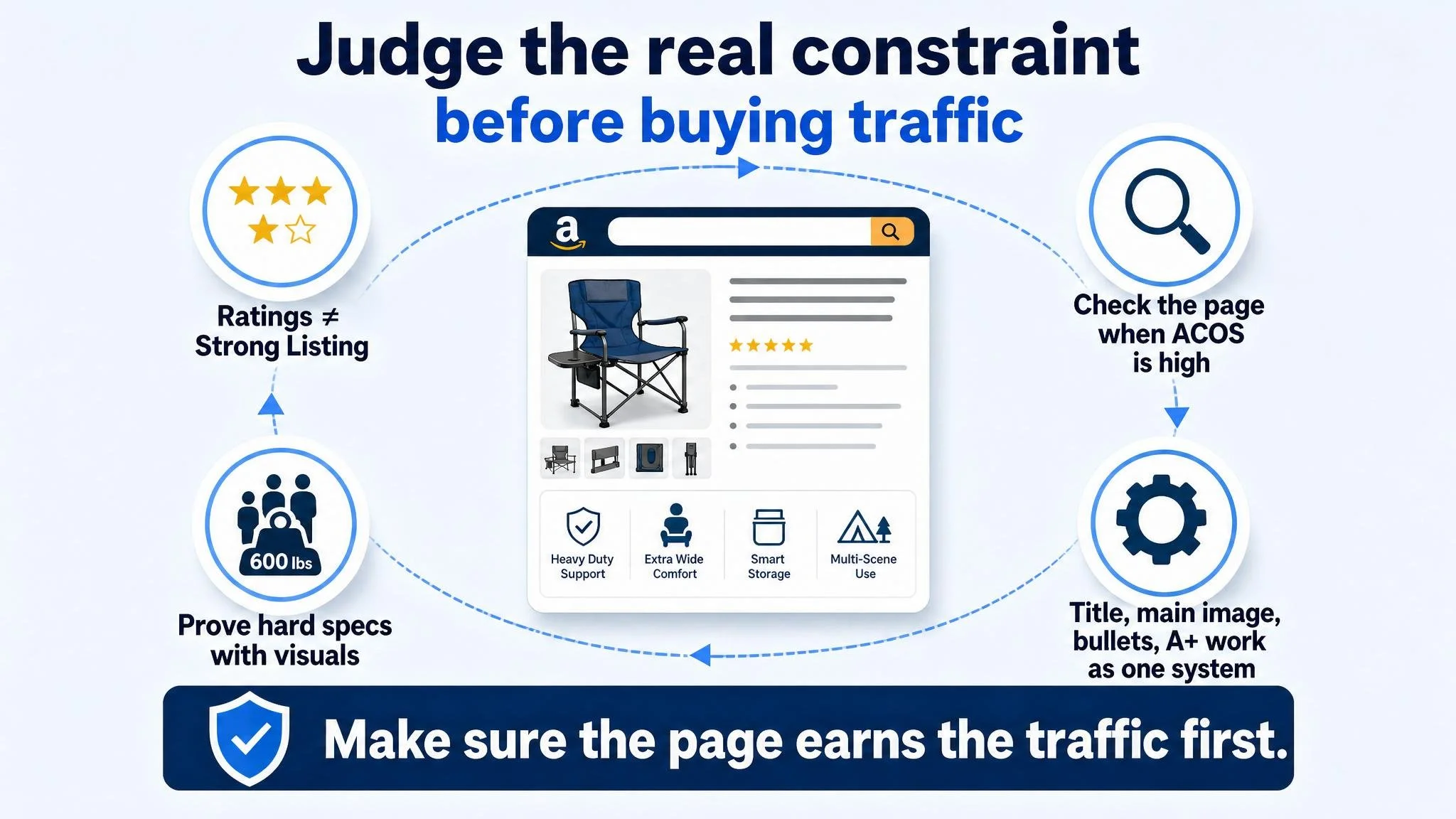
This isn’t just a theoretical risk. In the outdoor category, for example, we’ve seen a seller with a heavy‑duty camping director’s chair who believed their situation was fundamentally healthy: ratings at 4.6 stars, hundreds of solid reviews, and a product spec sheet that looked as strong as the category leader. Yet, despite all this, their listing consistently under‑performed a direct benchmark in both click‑through and conversion. To keep sales from slipping, they had to keep pushing ad spend, which made the business feel increasingly “expensive” to run.
The challenge was not that traffic didn’t exist, but that the listing itself wasn’t competitive enough in how it converted that traffic. This is exactly how Amazon’s environment punishes “average” content: a page can look acceptable on the surface, but because the algorithm prioritizes listings with high relevance and strong performance metrics (especially Click-Through Rate (CTR) and Conversion Rate (CVR)), even a small structural disadvantage in your title, images, or A+ content can add up to a persistent ranking gap.
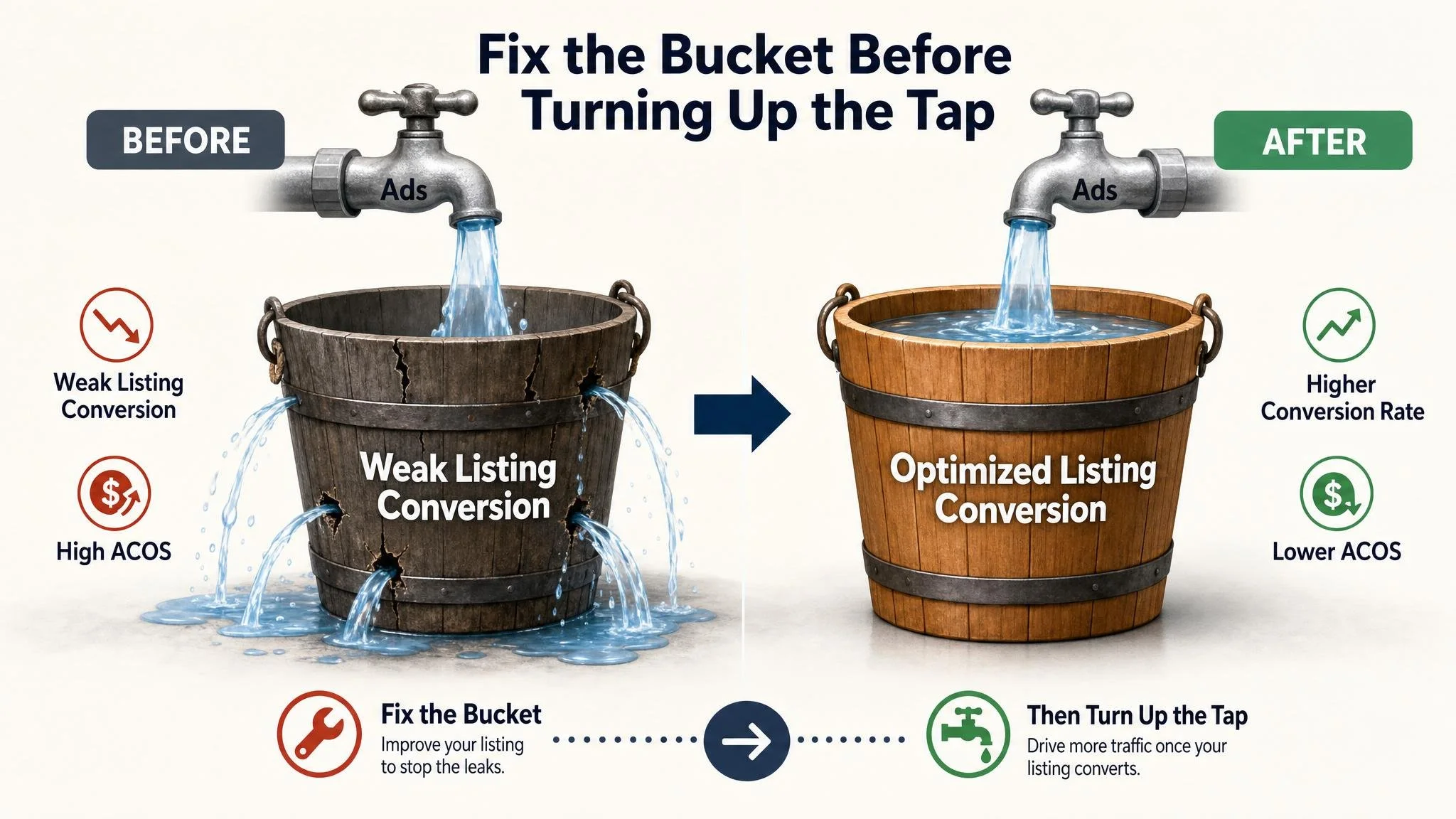 While you cannot directly control your product's rank, you have significant influence over these factors. An unoptimized listing with a low CTR signals to the algorithm that it is less relevant to customer searches, diminishing its visibility over time. In the camping chair case, DeepBI’s diagnosis showed that the core leak wasn’t in ad keywords or bids at all—it was in how the product page told its story versus the benchmark. Ads were bringing traffic; the listing simply wasn’t converting it efficiently enough.
Therefore, optimizing your product listing is not merely about aesthetics; it is a core commercial function. Every element—from the title and bullet points to the main image and A+ Content—must be engineered to drive clicks and conversions. Effective optimization creates a positive feedback loop, attracting more qualified traffic, improving key performance indicators, and building a foundation for sustainable growth. Conversely, if you ignore listing optimization and only push harder on ads, you risk amplifying the wrong outcome: more spend flowing into a page that quietly loses the comparison battle.
Mastering the Core Elements of Your Amazon Product Description
Crafting Compelling Product Titles
Your product title is the first, and often only, text a customer reads in search results, making it critical for both algorithmic visibility and click-through rate (CTR). A strong title integrates primary keywords naturally while clearly communicating the product's identity. Follow a structure like: Brand + Core Feature + Product Type + Key Specifiers (e.g., size, color). While keywords are essential, Amazon's algorithm only requires a term to be mentioned once across your entire listing; repetition provides no extra value. Adhere to character limits and prioritize readability to attract human clicks.
This is an area where seemingly “minor” differences can translate into real CTR and conversion gaps. In the camping chair case, DeepBI’s scoring showed that the seller’s title was only slightly behind the benchmark on paper—16 out of 20 vs 18—but that small gap encapsulated deeper issues: the benchmark title made the “oversized / XXL” dimension and “heavy‑duty” nature instantly obvious, while the seller’s title buried the same ideas in a less focused way. Both titles had the keywords; only one made the core promise unmissable in a split second.
The seller originally believed their title was “good enough” because it contained the main specs and category terms. But under direct comparison, it lacked a strong emotional hook and clear selling logic. Once they reframed the title around what buyers actually care about first—extra‑wide comfort and reliable 600 lbs support—the title stopped being just a keyword container and started functioning as a real click driver.
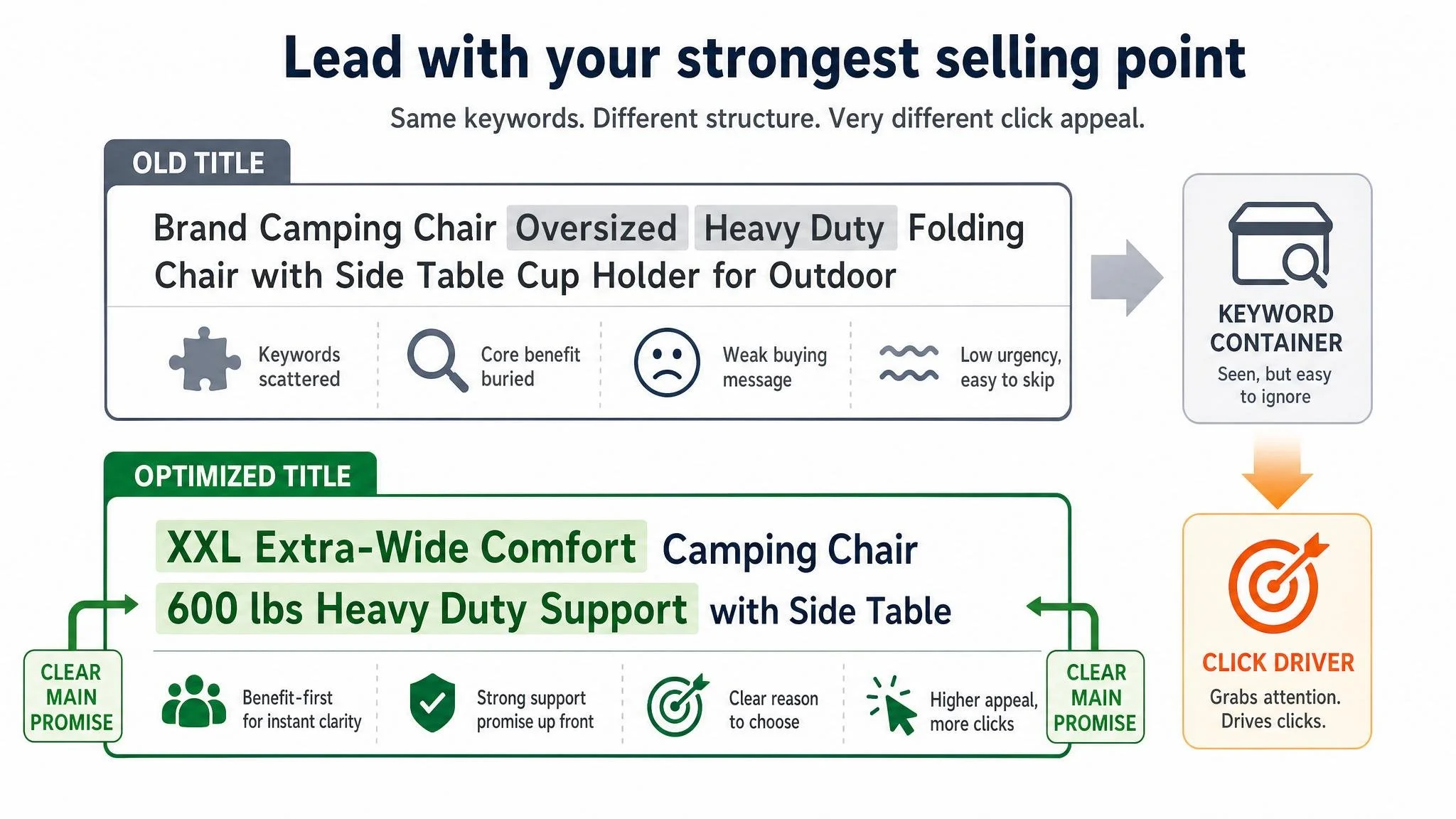 The lesson: title optimization is not about cramming more words; it’s about compressing your most powerful promise into a structure that both the algorithm and the shopper understand immediately.
Maximizing Bullet Points for Conversion
Bullet points are your primary sales pitch, transforming shopper interest into a purchase. Instead of listing dry features, frame each point as a direct benefit that solves a customer's problem. A powerful structure is: Benefit-Driven Headline + Feature/Data + Pain Point Solved. For example, instead of just stating "10000mAh," write "[All-Day Power] Features a 10000mAh core to eliminate battery anxiety during your travels." This approach directly addresses customer needs, answers unasked questions, and significantly boosts your conversion rate (CVR).
In real listings, the difference between “feature listing” and “buying logic” is often subtle but decisive. In the camping chair example, both the under‑performing listing and its benchmark had five bullet points, all covering familiar elements: size, comfort, frame strength, side table, pockets, usage scenes. On the surface, the information was there in both.
The performance gap emerged from how that information was structured:
- The benchmark led with OVERSIZED DIMENSION, immediately anchoring the extra sitting space as the main reason to care.
- It gave MAXIMUM COMFORT its own dedicated bullet, treating comfort as a central outcome, not a side note.
- Heavy‑duty frame and 600 lbs support were packaged as a clear promise plus specific materials.
- Side table and insulated pocket were framed as real use cases, not just named parts.
- A final bullet tied everything together with multi‑scenario use.
By contrast, the seller spread these same ideas across multiple bullets, diluting their impact. Comfort was mentioned but never elevated as a core promise. The 600 lbs capacity was a spec, not a reassurance. Scenario usage existed but felt like a list, not a coherent path.
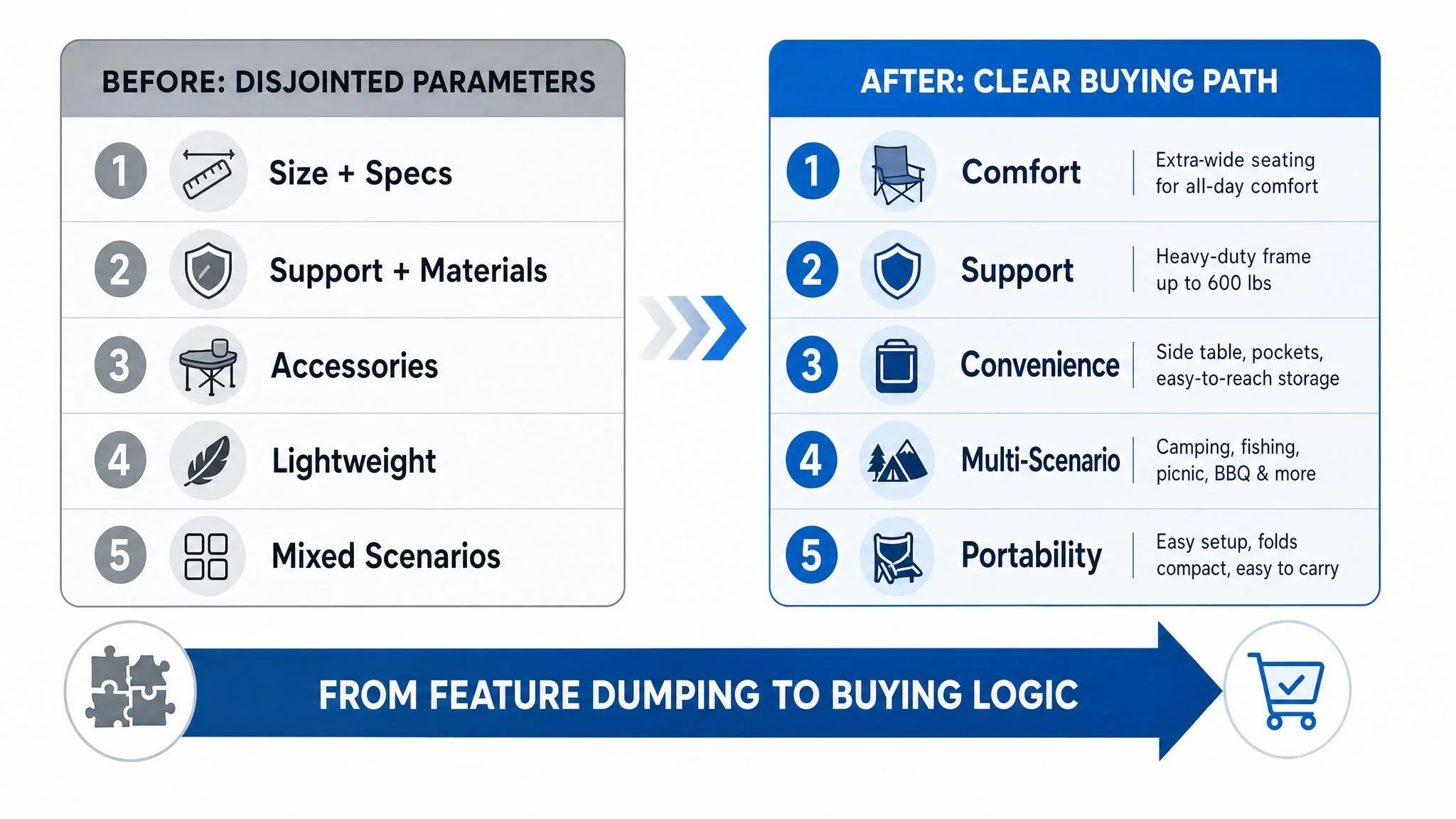 DeepBI helped re‑architect their bullet structure into a more persuasive sequence: starting with extra‑wide comfort, then heavy‑duty support, then convenience features, then multi‑scenario use, and finally ease of setup/portability. None of this invented new features; it simply reorganized existing content into a path that mirrored how buyers actually decide.
This illustrates the core point: bullet points are not a dumping ground for parameters. They are your structured argument for why someone should choose you over the next listing.
Developing an Engaging Product Description (A+ Content)
For brand-registered sellers, A+ Content is an invaluable tool for telling a compelling brand story and showcasing product value in rich detail. Use this space to combine high-quality images, comparison charts, and narrative text to build trust and differentiate your product from competitors. By providing a more immersive and informative experience, A+ Content is proven to increase conversion rates and can also help reduce returns by setting clearer customer expectations before purchase.
However, simply having many A+ modules does not guarantee a strong outcome. In the camping chair case, the seller’s detail page was full of content: brand scenes, specs, close‑ups of the steel frame and wide seat, side table details, side pocket features, folding size, assembly steps, and multi‑person usage. Individually, each module made sense. Collectively, they did not form a clear, emotionally resonant story.
The benchmark listing in the same niche offered a sharp contrast. Its A+ content:
- Opened with family‑oriented outdoor scenes, immediately positioning the chair as part of a relaxed, aspirational lifestyle.
- Summarized core specs in a single clean panel with icons, letting the buyer grasp the essentials at a glance.
- Visually proved heavy‑duty stability with close‑ups and multiple adults using the chair.
- Highlighted unique features like an insulated pocket and detachable strap with focused, zoomed‑in shots.
- Closed with a four‑scene collage (Camping, Fishing, Picnic, BBQ), making multi‑scenario value obvious.
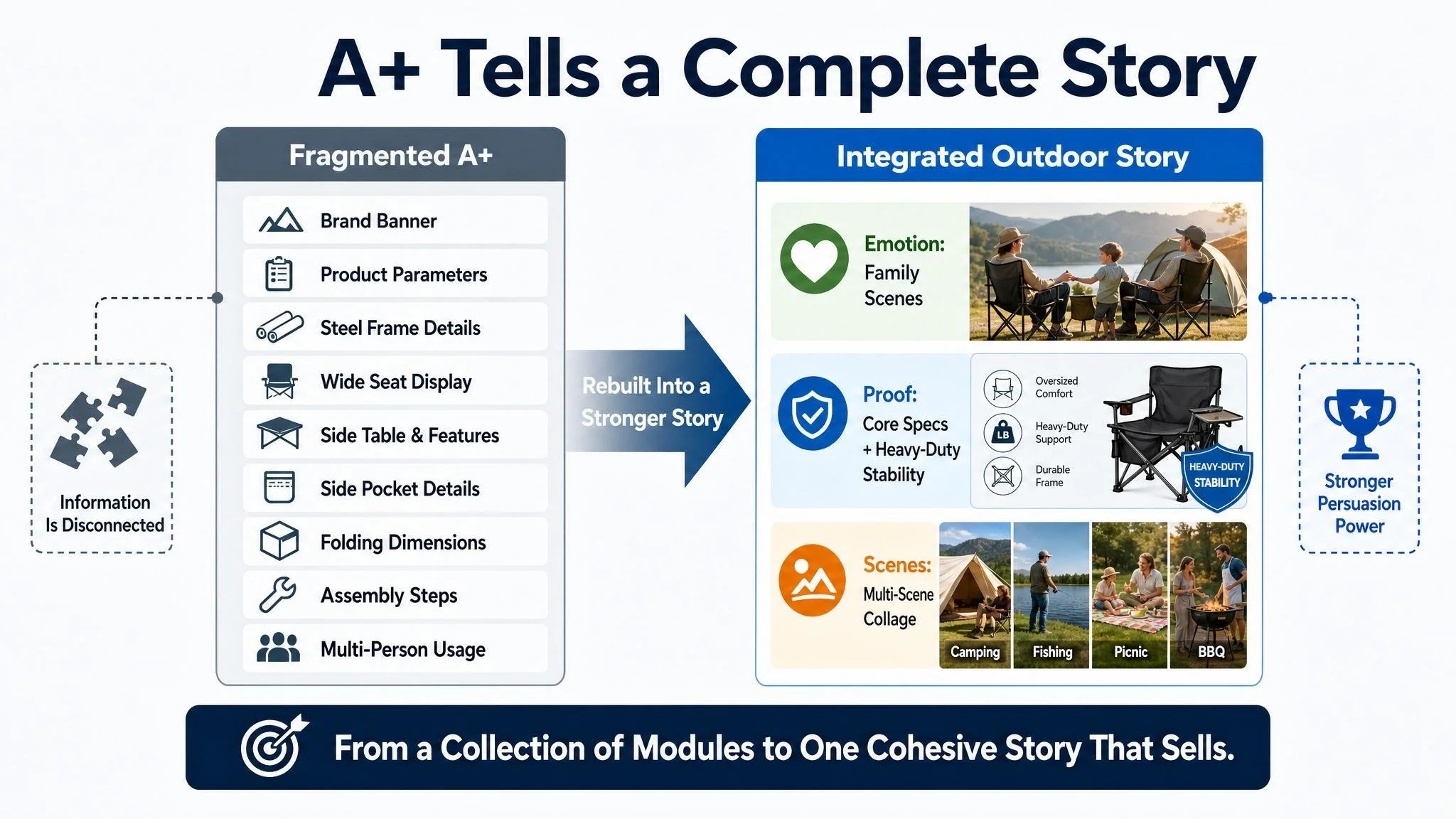 DeepBI’s restructuring guidance for the seller followed similar principles: reorder modules to address emotion, logic, and risk in sequence; shift from a “collection of images” to a coherent outdoor story; and ensure that key anxieties (stability, comfort, portability) are each tackled with specific visuals, not just text.
The result was a detail page that did what A+ is supposed to do: not just show more, but persuade better. For any seller, this case underlines that A+ optimization is less about adding modules and more about architecting a narrative that completes the sales job your bullets and main images begin.
Strategic Use of Backend Search Terms
Backend search terms are a powerful, invisible tool for expanding your search visibility. In the "Generic Keywords" field of your listing, you can add relevant search terms that are not visible to customers but are indexed by Amazon's algorithm. This is the ideal place for synonyms, common misspellings, and related concepts that don't fit naturally into your title or bullet points (e.g., for a "headset," include "headphones" and "earbuds"). Never include competitor brand names, as this is a direct violation of Amazon's policy.
In practice, sellers often overestimate the impact of backend terms while underestimating the role of visible content. In the camping chair case, the seller’s backend keywords were not the primary issue—core queries like “camping chair,” “director’s chair,” “heavy duty chair,” and related synonyms were already covered. Yet they still under‑performed the benchmark.
DeepBI’s benchmarking highlighted that the larger gap lay in how the visible parts of the listing interpreted those keywords into a story. Both pages could be found under “oversized camping chair”; only one made “oversized” feel clearly desirable and convincingly proven once the buyer clicked through.
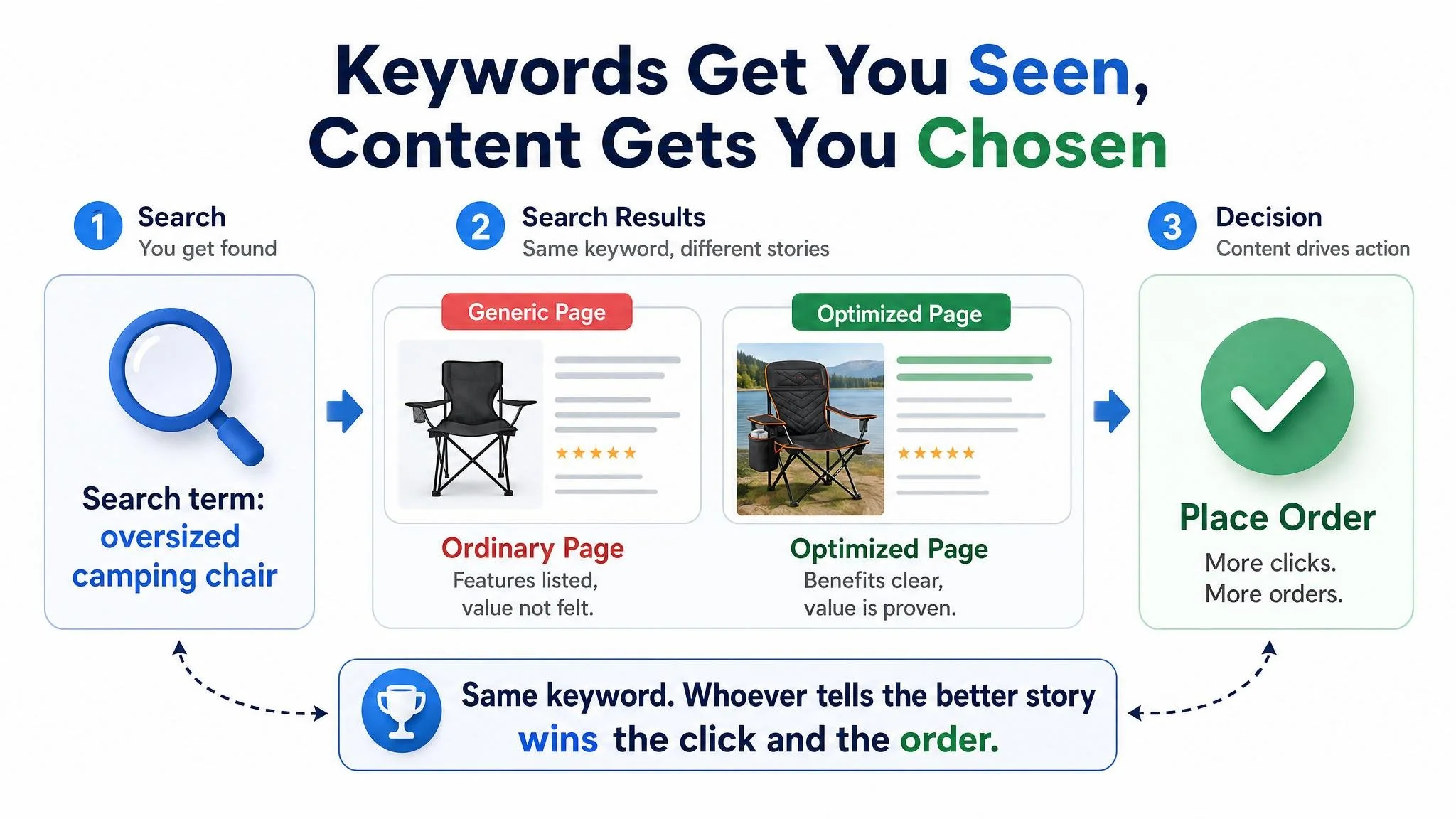 This is a reminder that backend search terms expand your reach, but they do not substitute for strong on‑page messaging. Backend fields help you show up; your title, bullets, images, and A+ determine what happens after the shopper finds you.
Visual Optimization: Images and Video
On Amazon, visual assets have evolved from simple aesthetic displays into a core commercial engine driving both Click-Through Rate (CTR) and Conversion Rate (CVR). Your main image is the most critical visual element. It must be a high-quality, professional photograph set against a pure white background and meet Amazon's technical standards, such as a minimum of 1600 pixels on the longest side to enable the zoom feature.
Sellers have seven total slots: one main image and six auxiliary slots. These should be used strategically to build a compelling visual narrative. Fill these spaces with a mix of:
- Lifestyle Images: Show the product in a real-world context to help customers visualize using it.
- Infographics: Communicate key features, benefits, or specifications in an easily digestible format.
- Detail Shots: Highlight material quality, unique design elements, and specific functionalities.
One of these auxiliary slots can be dedicated to a product video, a powerful tool for demonstrating functionality and boosting customer engagement.
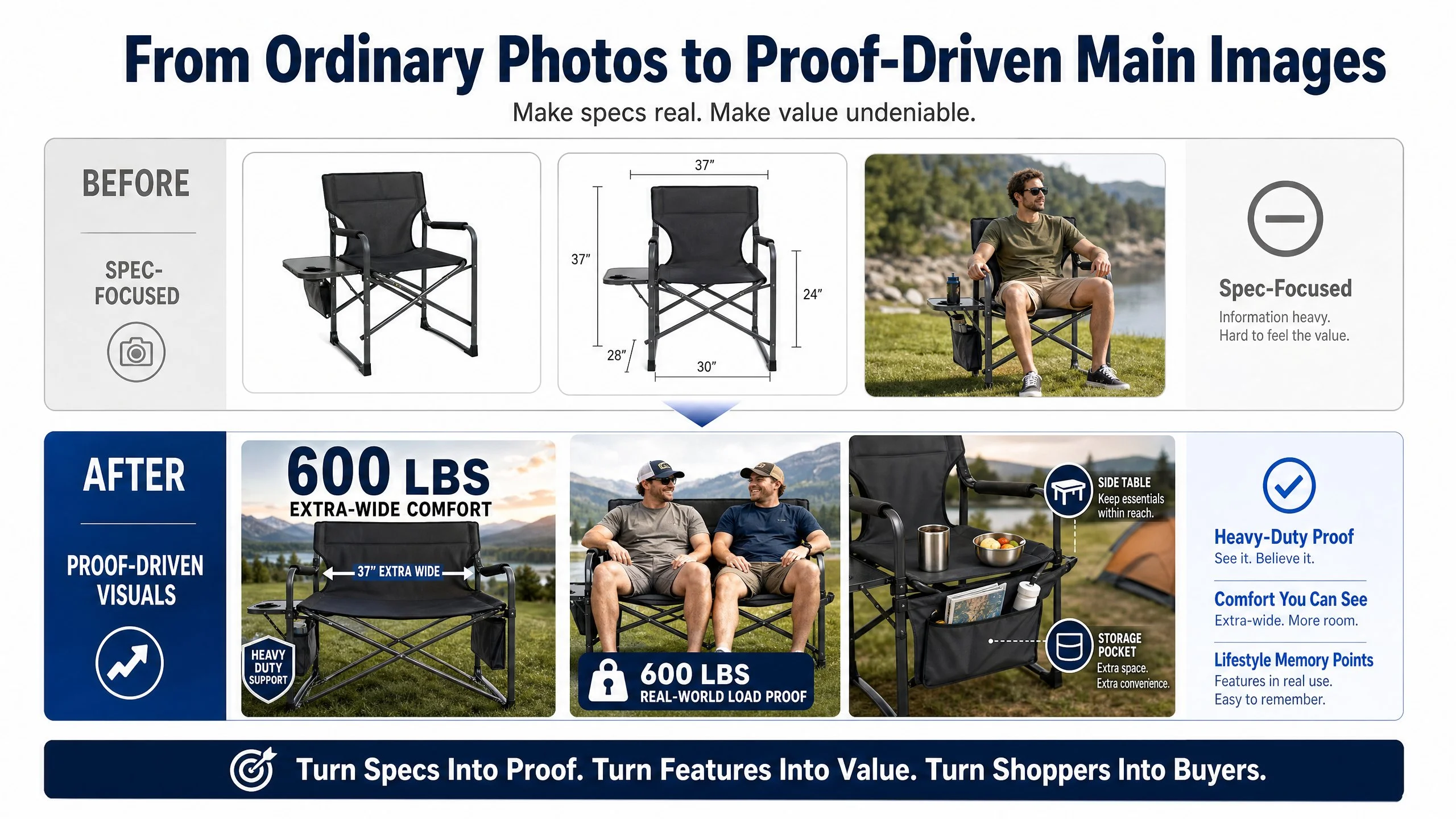
The camping chair case illustrates how critical this “visual narrative” is. When DeepBI scored the seller’s listing against a leading benchmark, the main image set alone accounted for a 3‑point gap. Both listings used high‑quality photos and complied with Amazon’s technical requirements, yet the benchmark consistently attracted more clicks and converted more visitors.
The difference lay in what the images proved:
- The benchmark’s hero image made the XXL, heavy‑duty positioning instantly visible—large chair, strong stance, clear emphasis on size and solidity.
- Secondary images showed two adults sitting on the chair, making the 600 lbs capacity feel real rather than hypothetical.
- Family‑oriented lifestyle shots (parents and children, picnic scenes) broadened emotional appeal to the actual decision maker in many households.
- Accessory close‑ups (side table, cooler pocket, detachable strap) created memorable visual hooks that stuck in the buyer’s mind.
By contrast, the seller’s images, while technically sound, leaned heavily on labels and generic social scenes. The 600 lbs spec appeared as text, not as a visceral proof shot. Comfort and extra width were stated, but not visually dramatized. Family usage was under‑represented, narrowing resonance.
DeepBI’s recommendations were specific: redesign the hero image to visually anchor “600 lbs + extra‑wide comfort,” add a dimension comparison shot, create a real‑world load proof image with two adults, and turn features like the side table and storage pocket into lifestyle scenes instead of simple callouts. After this visual restructuring, the listing stopped relying on text to do work that images are better suited for at the CTR and early CVR stages.
 Creating a full suite of compliant and authentic images is a major operational hurdle. General-purpose AI image tools risk creating "hallucinations" that misrepresent the product, leading to customer returns and negative reviews. DeepBI’s Listing module solves this by acting as an automated visual production system. It first constructs a "Product DNA" map to lock in the product's exact physical attributes, ensuring all AI-generated images are authentic. The system automatically enforces Amazon's guidelines, producing a complete set of visuals optimized for customer appeal and platform compliance.
In the camping chair project, this “Product DNA” approach was especially important: the chair’s true differentiators—extra‑wide seat, reinforced steel frame, specific folding size—had to be rendered accurately to avoid over‑promising. By grounding image generation in the real product, the seller could safely upgrade their visual storytelling without drifting into misrepresentation.
The Role of Keywords in Description Optimization
Keywords are the fundamental link between a customer's search query and your product listing. A successful keyword strategy is not about guessing what customers want; it's about data-driven analysis. The process begins by identifying high-frequency search terms within your market and reverse-engineering the titles of top-performing competitors to extract their core keywords and understand their structural layout.
A robust strategy balances broad, high-volume terms with specific, long-tail phrases. While core keywords capture a wide audience, incorporating high-click-through-rate (CTR) "variant feature words" from competitor analysis can attract highly qualified buyers with specific intent, directly improving your conversion rate (CVR).
Strategic placement is crucial for both the algorithm and the reader. Keywords should be woven naturally into your content, not awkwardly stuffed. For titles, a powerful formula is Brand + Core Selling Point + Product Form + Supplementary Modifiers. For bullet points, shift from a simple feature list to a "Pain Point-Solution" structure. Each bullet should form a complete logical argument that addresses a customer need.
In practice, keyword strategy only achieves its full potential when it is tightly integrated with content structure. The camping chair case makes this clear. Both the seller and the benchmark targeted similar head terms (“camping chair,” “director’s chair,” “heavy duty chair”) and similar modifier phrases (“oversized,” “folding,” “with side table,” etc.). The keyword sets, on paper, were not dramatically different.
Yet when DeepBI decomposed their titles and bullets, it found that the benchmark not only had these terms but used them to frame a sharper promise: “oversized” and “XXL” were consistently connected to comfort and space; “heavy duty” was tied to a specific capacity and reinforced frame; scenario terms like “camping,” “fishing,” and “BBQ” were organized into a clear multi‑scene map rather than scattered mentions.
By contrast, the seller’s listing treated many of the same words as interchangeable tags. “Oversized” appeared but without strong visual or narrative reinforcement. Scenario keywords were present but not woven into a cohesive use‑case story. As a result, the algorithm might see the terms, but buyers did not feel their implications as strongly.
Finally, keyword optimization is a continuous process. Your own advertising data provides the most valuable insights. By deeply mining high-converting search terms—the "winning terms" from your campaigns—you create a closed feedback loop. This data should guide the ongoing refinement of your listing's text, ensuring you adapt to shifting search trends and maintain a competitive edge. In the camping chair project, this was particularly important: once the listing’s conversion architecture improved, the seller could more accurately see which search terms truly drove profitable orders, rather than misattributing performance issues to “bad keywords” when the real issue had been page‑level persuasion.
Continuous Optimization with DeepBI: A Data-Driven Approach
Effective Amazon listing optimization is not a one-time project but a continuous cycle of data-driven refinement. To stay ahead, sellers must constantly monitor key metrics like conversion rate (CVR) and click-through rate (CTR) and use that data to inform their next move. This is where a systematic approach becomes essential.
The camping chair case shows how easily teams can misinterpret these signals. The seller saw rising bids, stubborn ACOS, and a plateauing organic rank. The intuitive conclusion was: “Our ads need more precise keywords” or “Our campaign structure isn’t optimized enough.” They invested significant effort in tuning Sponsored Products and Sponsored Brands, but the pressure remained. Each incremental improvement in campaign structure was being neutralized by a page that converted worse than the benchmark.
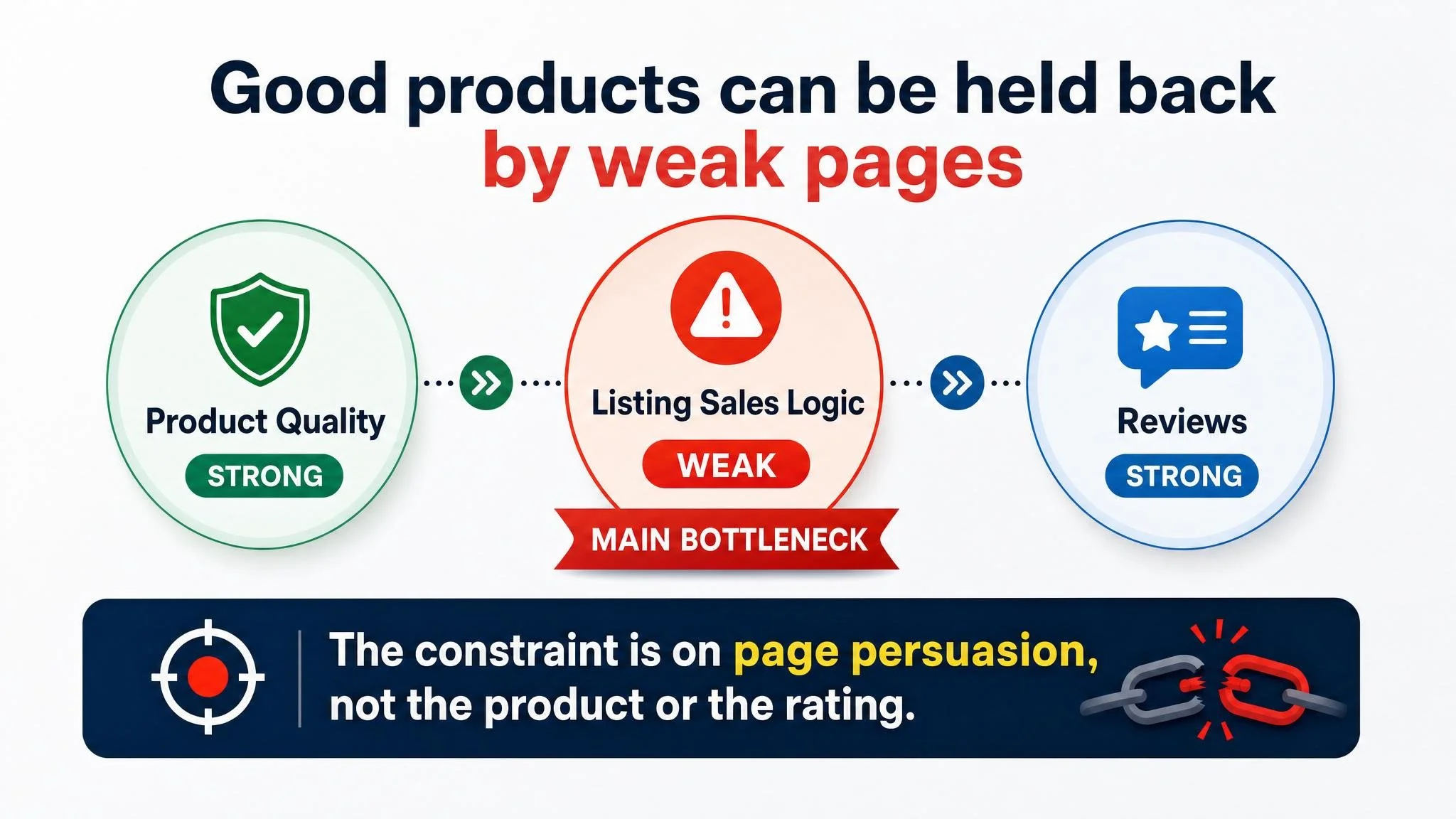
When DeepBI entered, it treated the listing as a system to be measured, not assumed. It scored the core elements—title, main images, bullet points, A+ content, reviews—and benchmarked them against a leading competitor in the same sub‑niche. The result was clear: a roughly 10‑point gap in overall listing score, driven primarily by content and visual expression, not product quality or review sentiment. In other words, the bottleneck was conversion capacity, not traffic volume.
 DeepBI serves as an automated market health check, systematically scoring your listing's core elements—main image, title, bullet points, and A+ content—by benchmarking them against top-performing competitor ASINs. It diagnoses specific weaknesses and generates structured, actionable optimization strategies for copy, visual expression, and information hierarchy. These AI-generated improvements can then be applied directly to your listing in seconds via the Amazon SP-API, complete with a side-by-side comparison of the old and new versions.
In the camping chair project, this meant very tangible guidance: clarify the XXL positioning in the title, recast bullets into a pain‑point/promise structure, rebuild the main image system to visually prove “600 lbs heavy‑duty + extra‑wide comfort,” and reorganize the A+ modules into a family‑oriented outdoor story. Only after these foundational elements were strengthened did it make sense to revisit ad scaling and further keyword refinement.
This integrated system creates powerful synergies across your growth strategy. An optimized listing with a higher CVR directly signals quality to Amazon's algorithm, improving organic rankings for high-value keywords identified by DeepBI's Organic Traffic module. Simultaneously, this high CVR makes your Sponsored Products campaigns more efficient. DeepBI's Ads Quant module leverages this enhanced listing quality to drive down your Advertising Cost of Sales (ACoS) and maximize ROI, creating a virtuous cycle where better listings and more precise traffic fuel long-term growth.
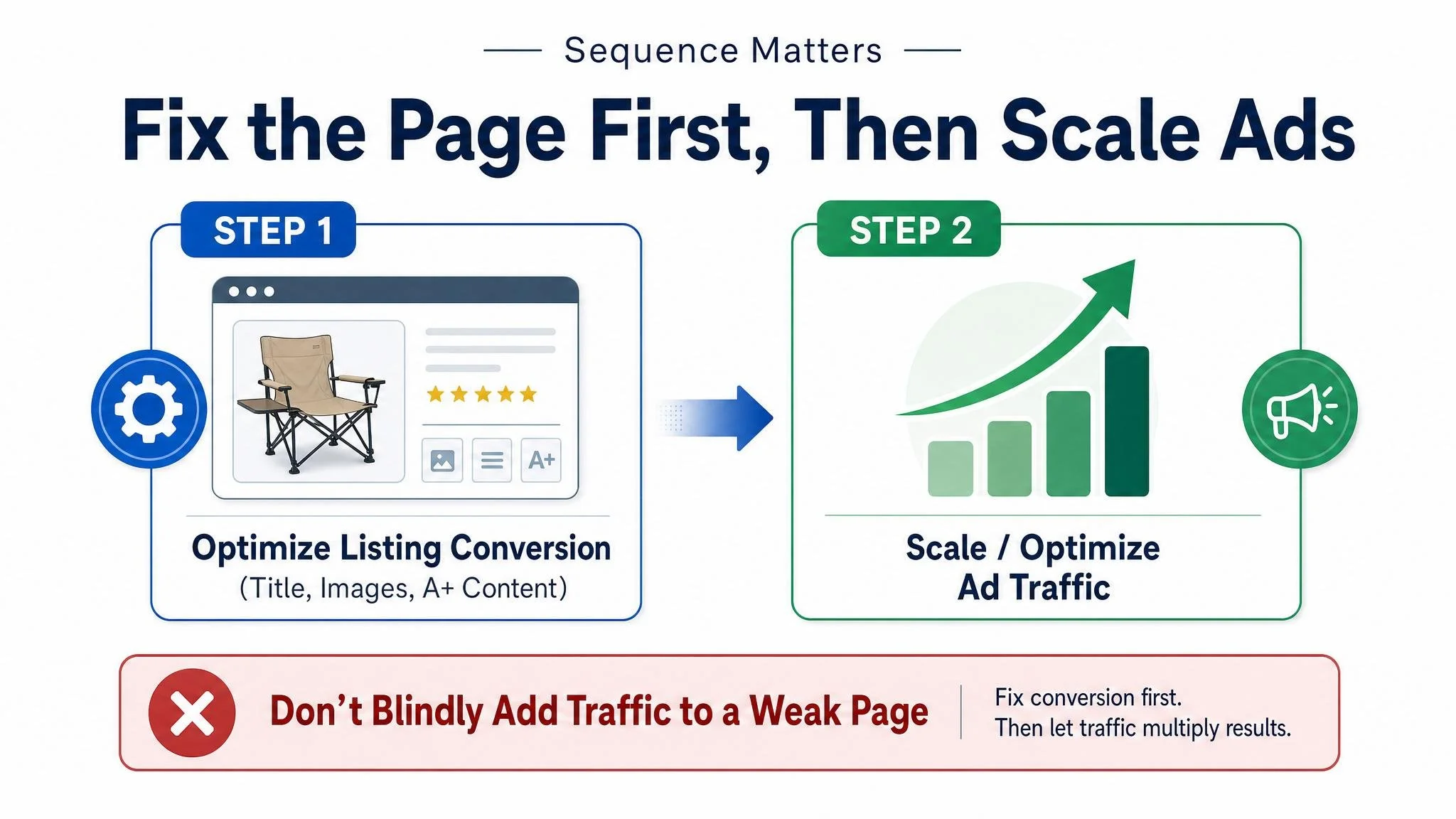
In business terms, the key insight is sequencing: if you try to push more traffic into a structurally weak listing, you primarily amplify its weaknesses. By diagnosing and repairing listing conversion first, you turn ads into a compounding lever instead of a subsidy for under‑performing content.
 Conclusion: Elevating Your Amazon Presence
Mastering the art and science of product descriptions is fundamental to thriving on Amazon. A strategically optimized listing is not merely descriptive text; it is a core commercial engine that directly translates into higher Click-Through Rates (CTR), improved Conversion Rates (CVR), and sustained sales growth. The journey from a potential click to a completed purchase is paved with compelling copy, relevant keywords, and persuasive visual storytelling.
The camping chair case illustrates how easily a listing can be “good on paper”—strong reviews, solid specs, decent images—yet still lose systematically to a sharper competitor. The seller’s initial misdiagnosis (“this is an ad problem”) is a common one: when ACOS feels high and rank feels stuck, many teams reach first for campaign tools instead of examining whether the page itself is truly benchmark‑level in its conversion architecture.
To maintain a competitive advantage, sellers must move beyond treating listing optimization as a one-time project. The most successful brands adopt a dynamic, continuous process, transforming subjective operational guesswork into a predictable, data-driven evidence chain. This systematic approach allows you to iterate based on market feedback and performance data, ensuring every adjustment is a calculated step toward better performance. By treating your listings as a living asset, you can make precise strikes against competitor weaknesses, improve your natural search ranking, and build a resilient, profitable presence in the marketplace.
Most importantly, before you decide to “buy more traffic,” ask whether your page truly deserves it. If your listing quietly under‑performs a clear benchmark in title clarity, visual proof, bullet logic, or A+ storytelling, no amount of ad tuning will unlock its full potential. Fix the conversion engine first—then let your traffic strategy amplify a page that is already capable of winning the comparison battle.