

Understanding the Ads Halo Effect on Amazon
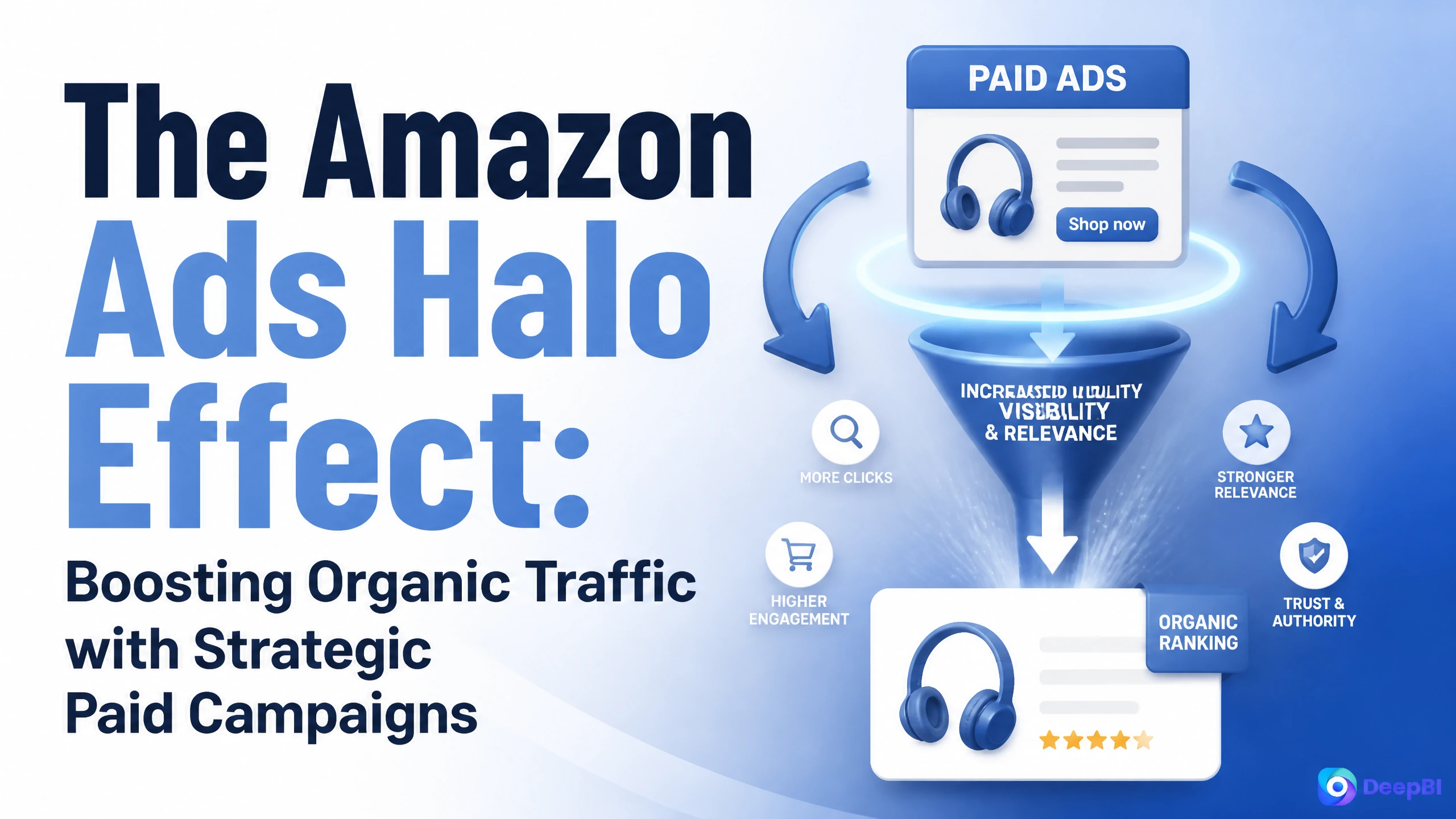
The Amazon Ads Halo Effect is a phenomenon where strategic paid advertising does more than generate immediate sales—it significantly boosts a product's organic visibility and search ranking over time. This occurs because successful ad campaigns, characterized by strong click-through rates (CTR) and conversion rates (CVR), send favorable signals to Amazon's algorithm. The algorithm interprets this ad-driven sales velocity and customer engagement as evidence of the product's relevance and appeal, consequently rewarding it with a higher position in organic search results.
In real operations, this “extra” impact is easy to underestimate, especially when teams are trapped in the day‑to‑day of bid changes and campaign tweaks. A fishing‑gear seller we observed illustrates this well. On paper, their fishing tackle backpack Listing looked healthy: 4.6 stars, over 400 reviews, a complete A+ page, and a decent image set. Ad traffic was coming in, but ACOS remained stubborn and CVR did not behave like a page with that level of social proof. The team’s instinct was to keep “fixing the ads”—assuming that if they just tuned bids and keywords enough, the economics would improve.
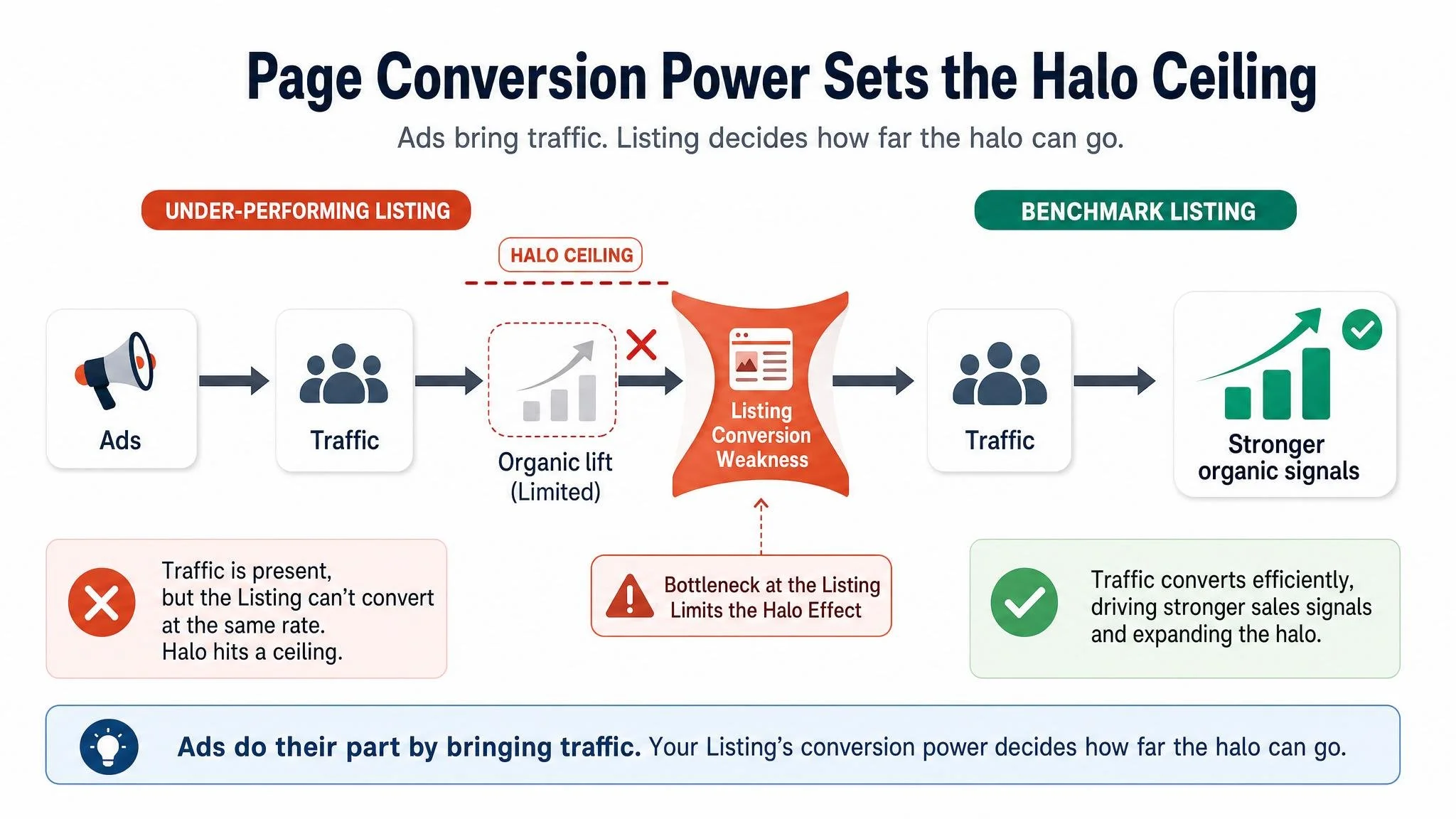
DeepBI’s diagnostic work showed something more important for understanding the halo effect: ads were already doing their part by bringing traffic in. The Listing, however, wasn’t fully converting that traffic into consistent sales velocity, especially compared with a top benchmark backpack in the same subcategory. In other words, the halo effect had a ceiling—because the page itself could not turn paid visits into strong sales signals at the same rate as its competitors.
 Leveraging this effect, therefore, is crucial for building a sustainable and profitable Amazon business. The primary strategic goal is to create a long-term, healthy revenue flywheel where paid traffic initiates a cycle of increasing organic sales. As organic rank improves, you capture more unpaid traffic, which reduces your dependency on continuous ad spend. This directly translates into a lower Advertising Cost of Sale (ACoS) and, more importantly, a lower Total Advertising Cost of Sale (TACoS). By converting advertising performance data into a stronger organic presence—and ensuring your Listing can actually carry the traffic—you can shift from a purely ad-dependent model to one of resilient, long-term growth.
The Direct Impact of Paid Advertising on Visibility and Sales
Amazon advertising, particularly through formats like Sponsored Products, provides an immediate path to product visibility. These paid placements position your products directly before high-intent shoppers, ensuring they appear prominently in search results and on competitor product pages. This initial exposure is essential for generating traffic and driving the first wave of sales, especially for new or underperforming listings.
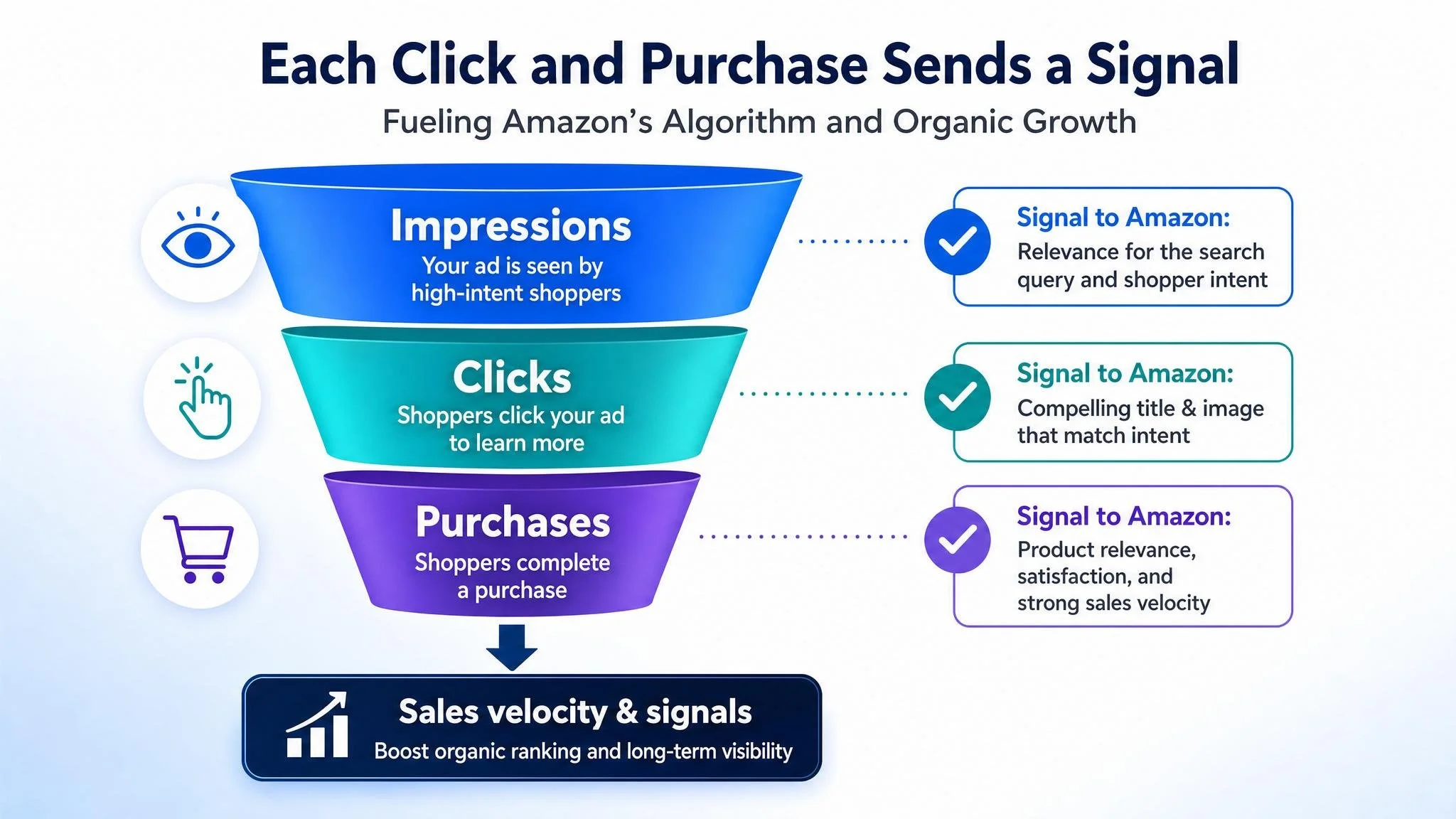
This early sales momentum contributes more than just initial revenue; it establishes sales velocity, a key metric for Amazon's algorithm. Each ad-driven purchase signals that your product is relevant and satisfying customer demand. This positive reinforcement helps build the foundation for an improved organic search ranking over time, as the algorithm prioritizes products with a proven sales history.
 However, the fishing backpack example shows how easily this direct impact can be misread. In that case, ad impressions and clicks were not the bottleneck. The seller kept interpreting rising ACOS as an “ad problem,” continuously editing bids, expanding keyword coverage, and rearranging campaign types. Yet when DeepBI benchmarked the Listing against a leading competitor, it became clear that:
- The title lagged behind in search-intent alignment (scoring 9/20 vs. a competitor at 16/20).
- The main image set, although visually acceptable, did not sequence comfort, capacity, and real‑world usage in the order buyers actually evaluate.
- Bullet points listed features but did not build a clear decision logic.
Ads were delivering visibility and traffic; the page wasn’t doing enough with it. Each additional dollar in ads was simply pushing more shoppers into a Listing that lost the argument early—either at the search results level (keyword and title relevance) or within the first few images.
Beyond immediate sales, paid campaigns serve as an invaluable source of market intelligence. They allow you to test and identify high-performing keywords—the "Winning terms" that resonate most with your target audience. Furthermore, campaign data provides direct feedback on your listing's effectiveness. A low Click-Through Rate (CTR) can indicate a weak main image or an under-optimized title that doesn’t match buyer language, while a low Conversion Rate (CVR) suggests that your product detail page is not effectively persuading visitors to buy.
In the backpack case, campaign data highlighted the mismatch: impressions and clicks were there, but conversion lagged when compared with category norms and benchmark listings. DeepBI’s Listing score placed the product at 73/100 versus a benchmark at 82/100—not disastrous, but enough to consistently lose in a mature category. By analyzing this advertising data and relating it to Listing performance, you can diagnose specific weaknesses and transform ad spend into a strategic tool for continuous listing optimization instead of an endless subsidy.
Mechanisms: How Paid Ads Influence Organic Rankings
The relationship between paid advertising and organic ranking is not a direct transaction but an indirect influence governed by Amazon's algorithm. Successful ad campaigns generate performance data and a sales history that the algorithm interprets as indicators of product relevance and customer satisfaction. This halo effect operates through three primary mechanisms.
First, ad campaigns directly boost sales velocity. Each conversion from a paid ad contributes to your product's overall sales history, a primary factor in improving its Best Seller Rank (BSR). A strong BSR indicates to Amazon that your product is a popular choice in its category, a powerful signal that often translates into higher organic visibility.
Second, ads provide crucial customer engagement data. A high Click-Through Rate (CTR) on a sponsored ad demonstrates that your main image and title are compelling for specific search terms. When that traffic results in a high Conversion Rate (CVR), it further validates that your product detail page effectively meets customer expectations. The algorithm registers these strong performance metrics as confirmation of relevance, which can elevate your organic position for those same high-performing keywords.
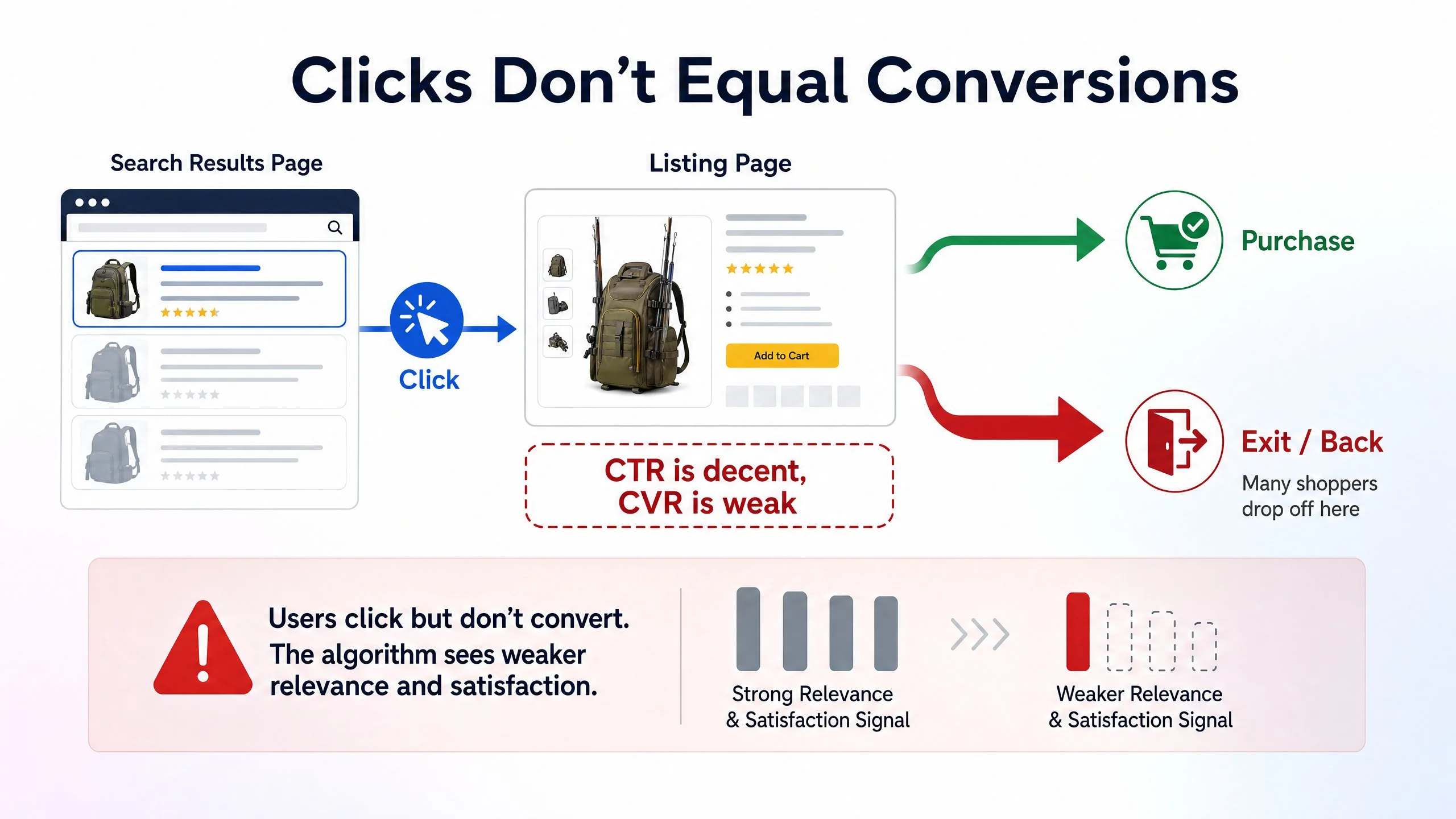
The fishing tackle backpack diagnostics made this mechanism tangible. DeepBI saw that CTR from certain ad placements was not catastrophic—shoppers were willing to click. But conversion performance lagged behind the category benchmark, especially on traffic that came in through core category searches like “fishing tackle backpack” and “fishing gear bag.” When the algorithm observes many sessions where shoppers click but fail to convert, it interprets that pattern as weaker relevance and satisfaction, especially when competitors convert better on the same terms. That dulls the halo effect: paid sales do not accumulate into a strong enough relevance signal to push organic rank meaningfully.
 Finally, consistent ad-driven sales strengthen keyword relevance. When the algorithm repeatedly observes customers searching for a term, clicking an ad, and completing a purchase, it establishes a strong transactional link between that keyword and your product. This process reinforces your product's indexing and perceived authority for that query, making it more likely to rank organically for those valuable terms over time.
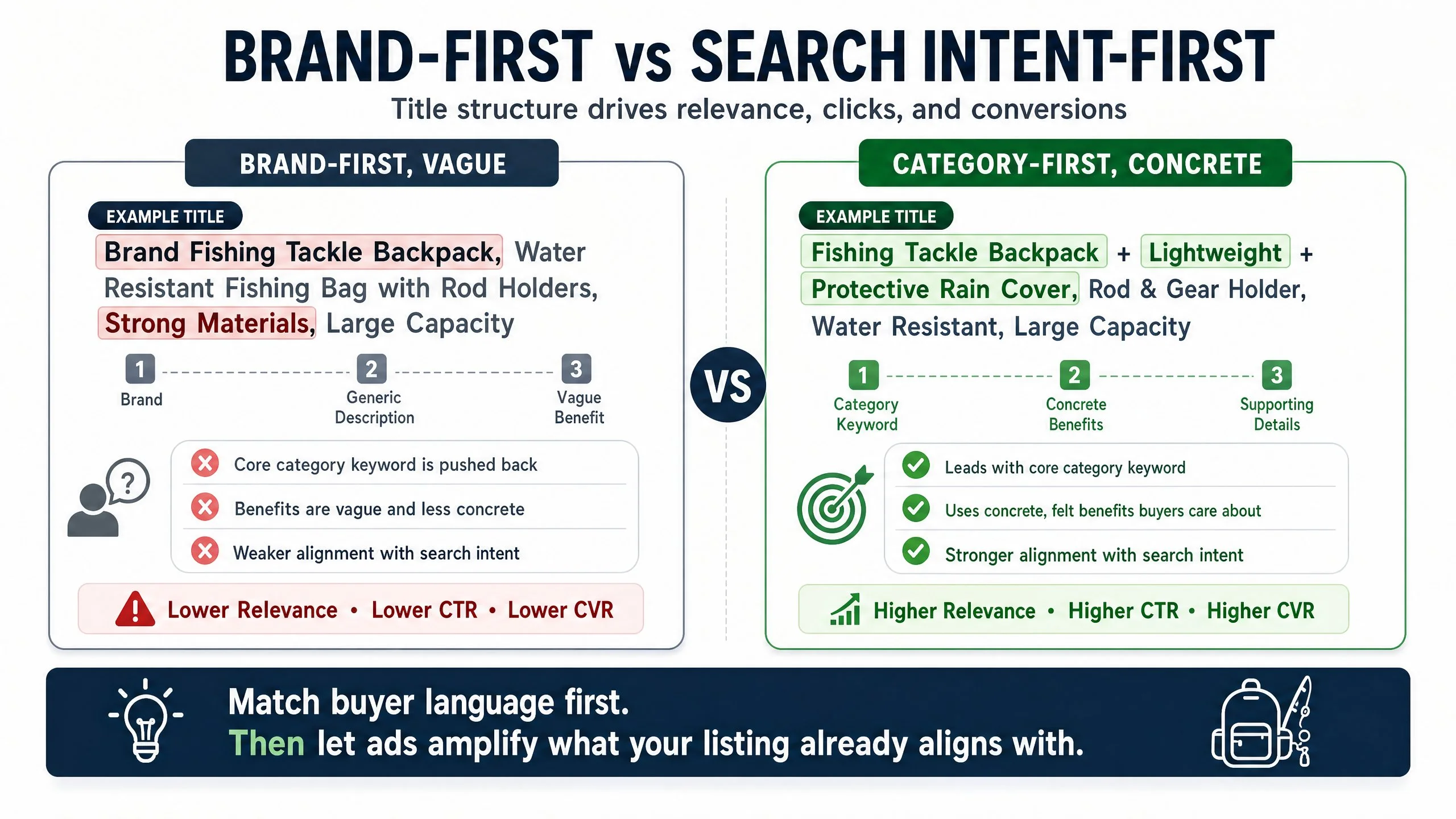
But this only works if the Listing itself is aligned with buyer language and intent. In the backpack case, the initial title opened with the brand name and used vague benefit language like “strong materials,” while the benchmark led with “Fishing Tackle Backpack” plus concrete advantages like “lightweight” and “protective rain cover.” That misalignment meant that even when ads delivered clicks, the algorithm received weaker validation that this Listing was the most relevant “fishing tackle backpack” for the searcher. It underscores a critical mechanism: ads can only solidify keyword relevance when Title, images, and bullets speak the same language as the keywords you’re bidding on.
Strategies to Maximize the Ads Halo Effect
Harnessing the Ads Halo Effect requires a systematic, data-driven approach that synchronizes paid campaigns with organic optimization efforts. The foundation is an integrated keyword strategy that treats ad performance data as a primary source of market intelligence. By analyzing your campaigns, you can identify keywords with high Click-Through Rates (CTR), Conversion Rates (CVR), and order values. Tools like DeepBI's ModuleOrganicTraffic are designed to screen this advertising data, revealing proven search terms that should be prioritized in your product titles, bullet points, and backend fields to enhance organic visibility.
In the fishing backpack scenario, DeepBI did exactly this: it compared the Listing’s keyword expression to what actually drove conversions in the category. The benchmark Listing front‑loaded “Fishing Tackle Backpack” and layered benefits like “lightweight” and “protective rain cover” straight into the title. The underperforming Listing, by contrast, buried core search phrases behind a brand name and leaned on generic claims like “strong materials.” From a halo-effect standpoint, this meant that even with ads driving traffic on “fishing tackle backpack” and related terms, the title wasn’t reinforcing the same intent. DeepBI’s recommendation was to re-center the title around the buyer’s search language—shifting from brand‑first to category‑first titling—and to encode concrete, tested benefits right where shoppers scan first.
 Strategic budget allocation is also critical. By concentrating ad spend to achieve a significant sales velocity on these high-potential keywords, you send strong relevance signals to Amazon's algorithm, which can directly contribute to a higher organic ranking. However, traffic alone is insufficient; it must convert. A compelling listing—with a clear title, benefit-driven bullet points, and high-quality images and A+ content—ensures that ad-driven visitors become buyers.
Here again, the backpack case shows what happens when teams get the order wrong. Before DeepBI’s intervention, the seller repeatedly increased scope and complexity on the ads side: more campaigns, broader keyword mixes, and finer bid segmentation. Yet Listing scoring showed a 9‑point gap against the category benchmark (73 vs. 82). The early image sequence focused heavily on diagrams and pocket maps, while putting comfort and real‑world usage photos later. Bullets overlapped and listed features rather than anchoring each point in a “pain point → design → outcome” structure. DeepBI’s optimization plan reversed the workflow: fix the Listing’s conversion capacity first—reorder images to address comfort and scenarios earlier, clarify titles and bullets—then revisit ad budgets once each click had a stronger probability of converting.
Leveraging DeepBI's ModuleListing capabilities for smart scoring, diagnosis, and AI-powered content generation helps ensure your listing is fully optimized to capture this value and amplify the halo effect. In the fishing backpack case, DeepBI did not invent new features; it reorganized existing strengths (e.g., 14 compartments, waterproof fabric, adjustable dividers, hidden strap system) into clearer decision logic and pushed proof‑oriented A+ content to the front. Only after the page was structurally stronger did it make sense to re-intensify ad traffic, so that every paid click contributed more effectively to the halo effect.
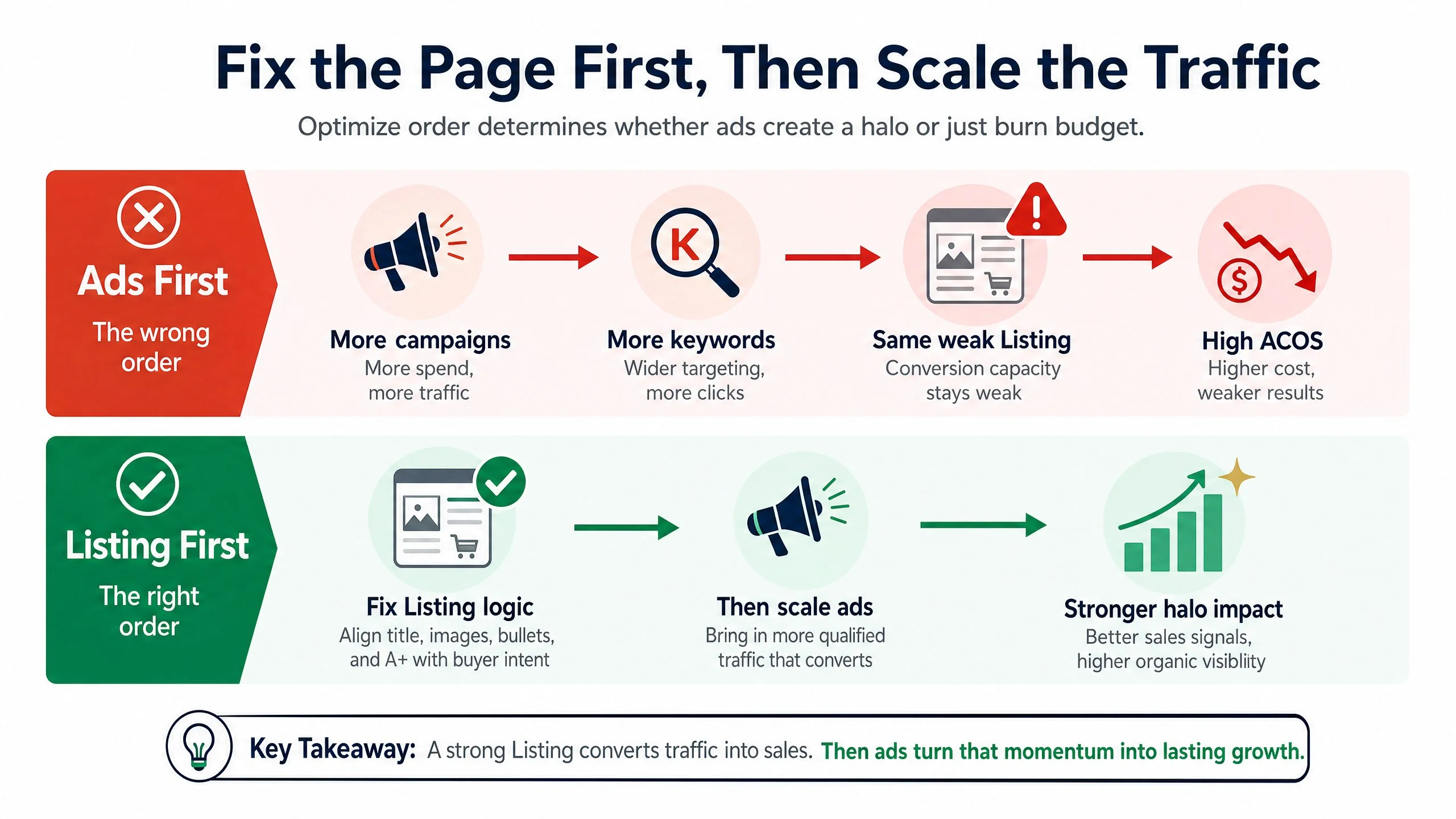 Finally, this process is iterative. You must continuously monitor the performance of both your ads and your organic rank. After implementing listing changes, track the impact on key metrics to validate your strategy and identify the next opportunity for optimization, creating a powerful, self-reinforcing growth loop. The key is to avoid the trap the backpack seller fell into initially: treating ads as the primary lever while assuming a “good rating” Listing will automatically convert. The halo effect is maximized when each loop of ad traffic is followed by a deliberate round of Listing refinement based on concrete performance signals.
Leveraging DeepBI for an Integrated Ads and Organic Strategy
To fully capitalize on the Ads Halo Effect, sellers should move beyond manual analysis and adopt an integrated system that connects paid advertising performance directly to their organic growth strategy. DeepBI provides such a unified platform, creating a powerful feedback loop where ad data informs and strengthens your organic presence.
The process begins with intelligent ad management. DeepBI's ModuleAdsQuant provides data-driven campaign optimization by dynamically adjusting bids and budgets daily based on performance metrics from the preceding seven days. This ensures your ad spend is consistently allocated for maximum impact. Simultaneously, the ModuleOrganicTraffic identifies your highest-value keywords from ad data and implements a fifth-layer funnel strategy, launching dedicated campaigns to boost their Top of Search rankings and accelerate organic visibility.
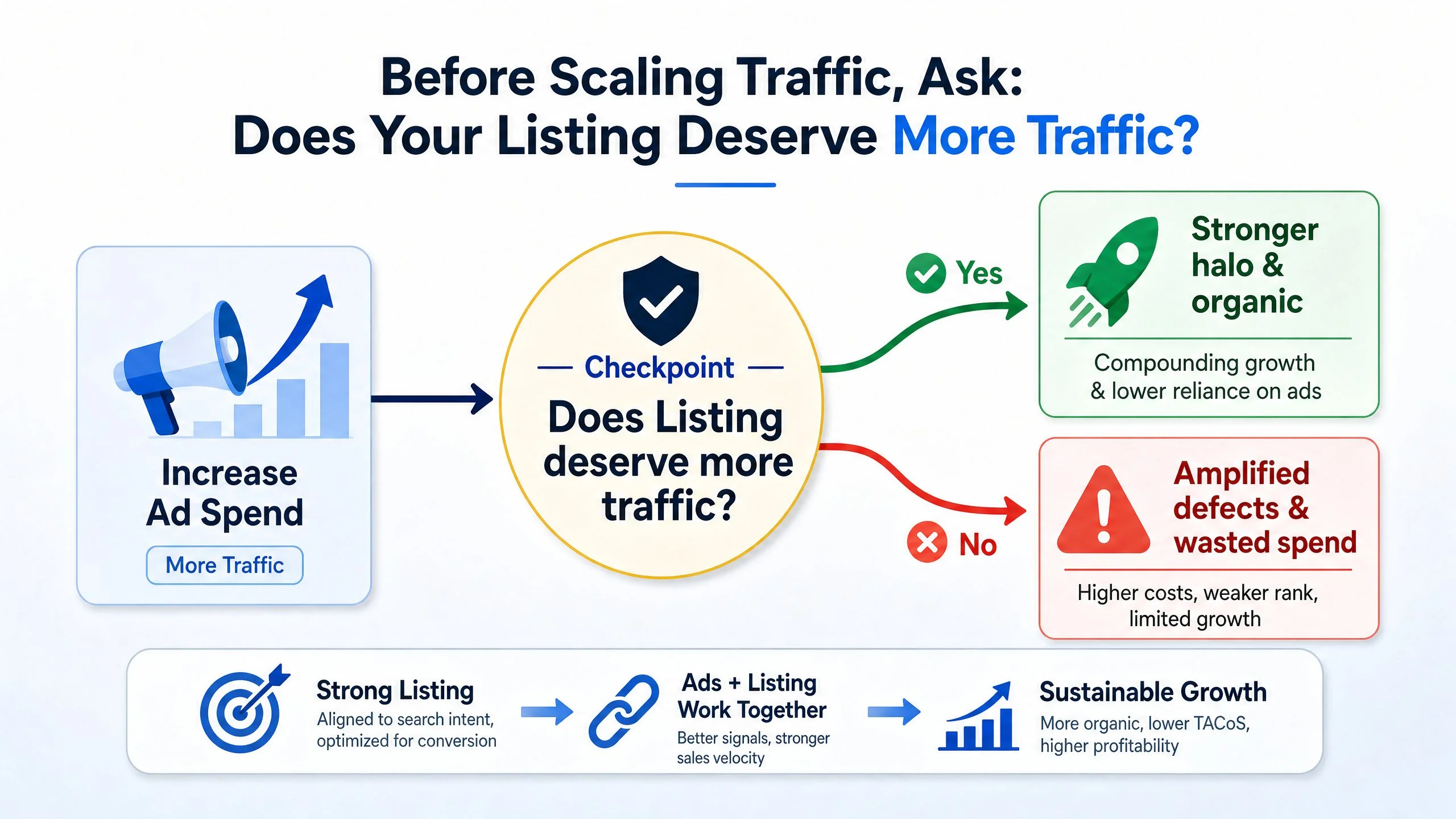
The fishing backpack case underscores why this “ads plus Listing” integration matters. Before DeepBI, the seller’s process was siloed: Ads were tuned repeatedly without a structured view of where the Listing stood relative to category benchmarks. DeepBI’s Listing scoring surfaced a clear picture: the Listing did not yet “deserve” more traffic, because its title weight, image order, and bullet narrative lagged behind the top competitor. ModuleListing’s diagnosis essentially answered a foundational question: is this page ready to convert incremental traffic, or will ads just amplify its defects?
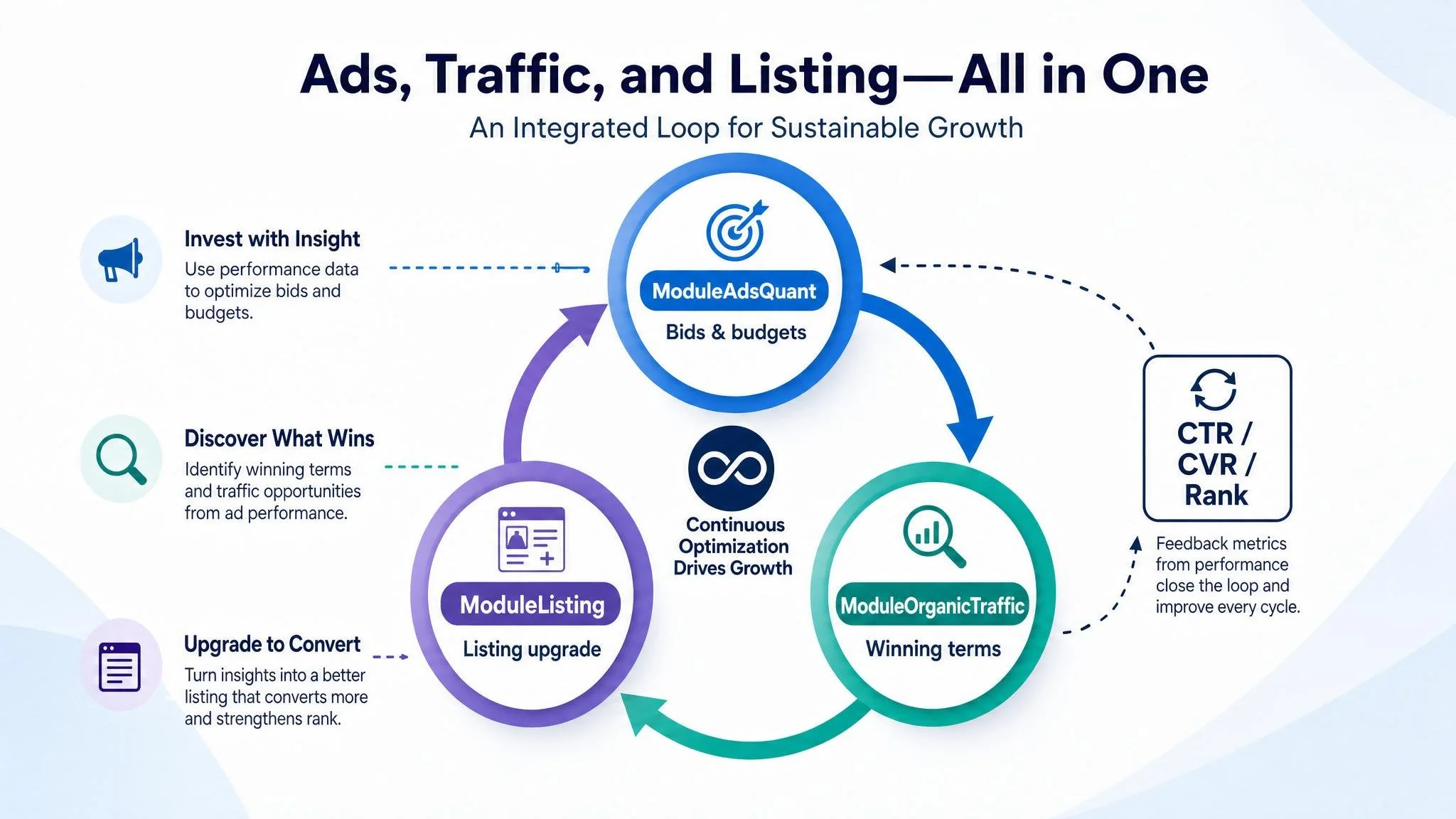 These insights are then used to enhance the core conversion asset: your product listing. DeepBI uses proven "Winning terms" from ad reports to guide the optimization of titles, bullet points, and images, ensuring your content resonates with high-intent shoppers. With the ModuleListing capability, these enhancements can be applied with a single click via the secure Amazon SP-API. This holistic approach allows you to track the direct impact of listing changes on both paid and organic KPIs like CTR and CVR, closing the loop between investment and sustainable rank improvement.
In the backpack example, once DeepBI restructured the title around “Fishing Tackle Backpack,” reordered main images to emphasize use cases and comfort earlier, and re-framed bullets and A+ modules from generic features to concrete outcomes, ad traffic behaved differently. The same categories of traffic that previously produced fragile conversion now had a stronger path to purchase. The halo effect strengthened indirectly: better conversion improved sales velocity and relevance signals, which in turn supported more resilient organic positions. DeepBI’s integrated system was less about chasing short-term ACOS improvements and more about aligning ads, Listing, and organic growth around a single, coherent strategy.
Case Studies and Success Stories
The true power of the Ads Halo Effect is best understood through real-world application. Although individual results vary, the underlying strategic patterns of success are consistent. Consider these common scenarios where a data-driven approach transforms ad spend into sustainable organic growth.
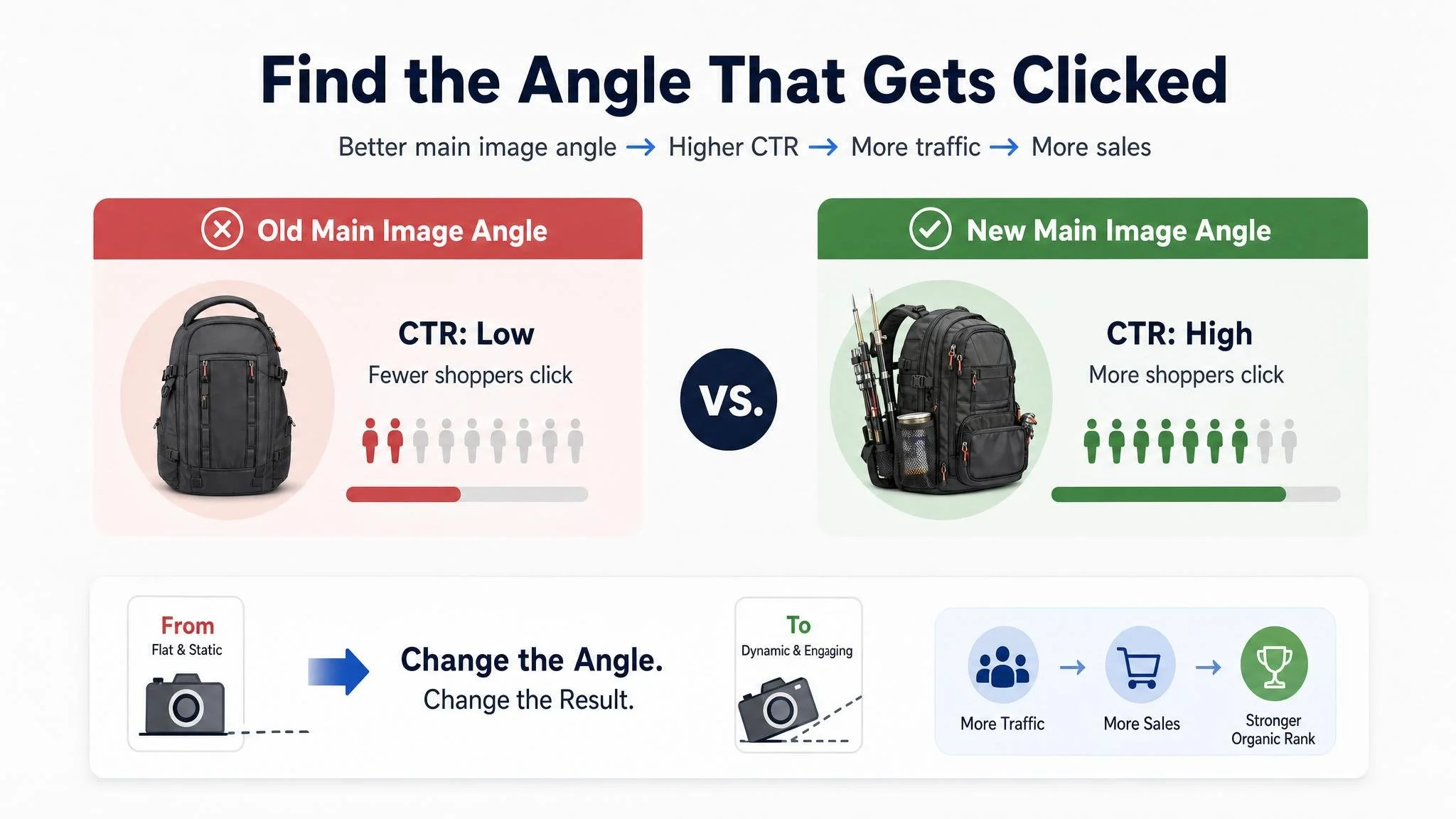
For instance, one seller faced a high Advertising Cost of Sale (ACoS) caused by a low Click-Through Rate (CTR). Instead of subjectively redesigning the main image, the seller analyzed ad campaign data. They identified that campaigns featuring a specific product angle consistently achieved higher clicks. By applying this visual insight to their main product image, they saw a significant lift in CTR for both their ads and organic listings. This surge in traffic and sales velocity directly improved their organic search ranking, gradually lowering their Total ACoS (TACoS) and reducing their dependency on paid placements.
 Another common challenge is a low Conversion Rate (CVR) despite healthy ad-driven traffic. A seller in this position used their ad data to diagnose weaknesses in their A+ content. Their campaigns revealed that ads highlighting a specific feature, such as "premium fabric feel," had a much higher conversion rate. They then systematically updated their A+ content and secondary images to emphasize this proven selling point. The result was a marked improvement in CVR, which indicated to Amazon's algorithm that the product was highly relevant. This led to a better organic rank, creating a self-sustaining cycle of increased visibility and sales.
The fishing tackle backpack case adds another layer of nuance to these patterns. Here, the misdiagnosis was not just “low CTR” or “low CVR,” but a deeper assumption that strong ratings and a complete A+ automatically meant the Listing was not the problem. The team’s repeated ad tweaks produced limited relief because the core conversion structure lagged category leaders:
- The title under-leveraged search intent by burying “Fishing Tackle Backpack” and leaning on vague benefit wording.
- The main image sequence invested early slots in detailed diagrams rather than scenario proof and comfort reassurance.
- Bullets duplicated information and failed to translate features into clear, outcome-driven benefits.
DeepBI’s intervention did not start with another wave of campaign restructuring. Instead, it prioritized Listing conversion capacity as the primary constraint: reorganizing the title around buyer queries, promoting comfort and real usage images earlier, re-theming bullets around decisive advantages (durability, capacity, comfort, versatility), and reordering A+ modules to lead with proof before atmosphere. Once these changes took effect, the same ad ecosystem produced more meaningful sales velocity. The halo effect was no longer dampened by a “half-convincing” page; paid signals could accumulate into stronger organic relevance.
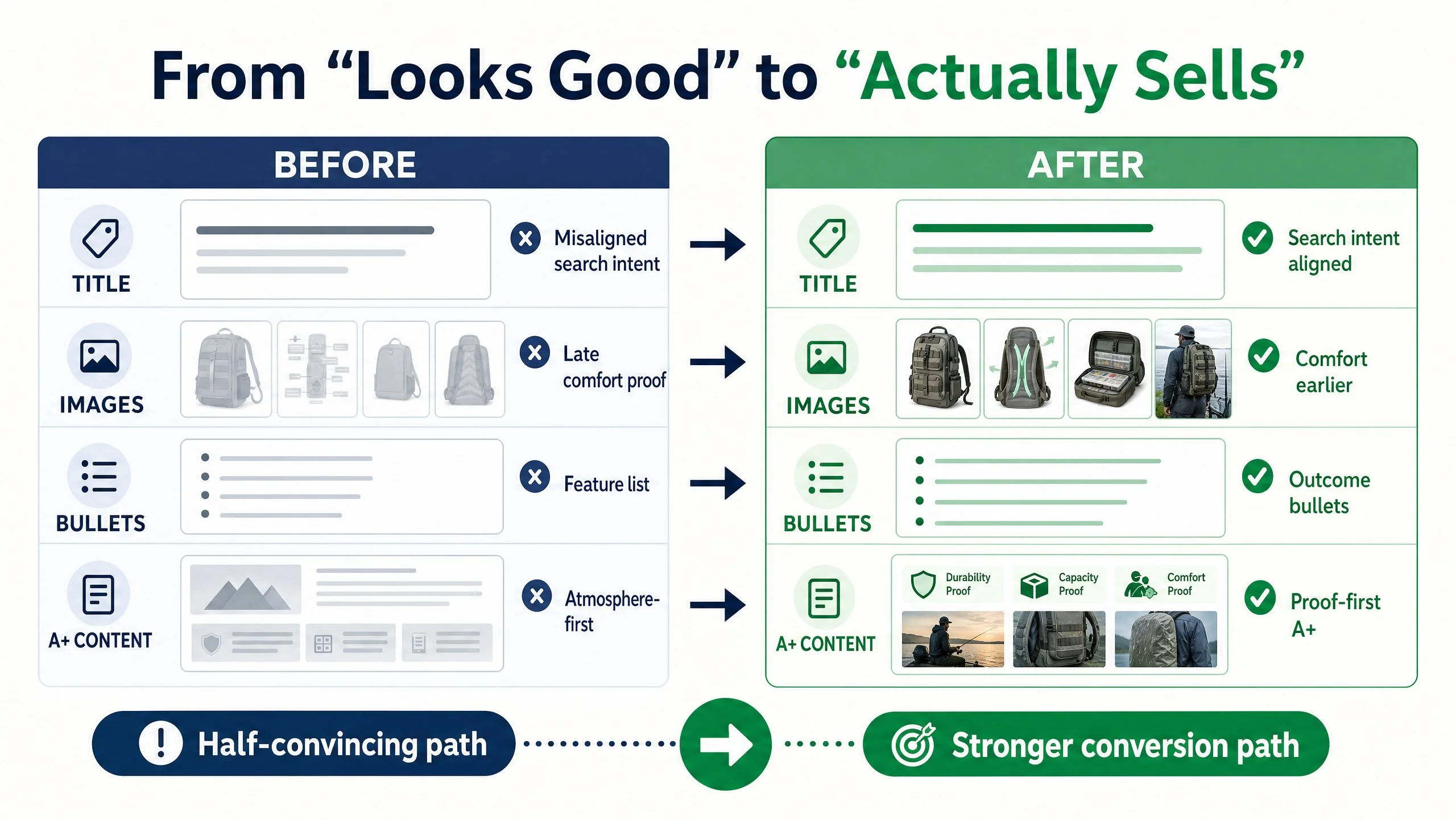 Across these cases, a common principle emerges: advertising does not only amplify advantages; it also amplifies defects. When the Listing is misaligned with search intent or decision logic, ad spend magnifies those weaknesses and limits the halo effect. When the Listing is structurally sound and benchmark-competitive, ad spend becomes a force multiplier for organic growth.
Conclusion: Sustainable Growth Through Synergistic Strategies
The Amazon Ads Halo Effect is far more than a passive benefit; it is a powerful engine for growth when actively managed. The most successful sellers understand that paid advertising and organic performance are not isolated channels but are intertwined in a symbiotic relationship. By treating them as a single, integrated system, you can create a virtuous cycle where each element strengthens the other, driving sustainable momentum for your brand.
The fishing tackle backpack case highlights what happens when that integration is missing. The seller initially treated ads as the primary solution, assuming that a 4.6‑star Listing with full A+ would naturally pull its weight. DeepBI’s diagnostic evidence showed the opposite: the Listing’s decision logic—title, image order, bullet structure, and A+ sequencing—was under-competitive versus benchmarks, creating a hidden conversion leak. Ads were doing their job in bringing traffic; the page was not consistently turning that traffic into the kind of sales history and engagement that feed the halo effect.
 The key is to establish a data-driven feedback loop where insights from your ad campaigns—such as high-performing keywords and compelling creative elements that boost CTR—directly inform your listing optimization strategy. This approach transforms listing management from a process based on subjective assumptions (“our page looks fine”) into a quantifiable, scientific method grounded in competitive benchmarks and performance signals. Each data-backed modification enhances your listing's relevance and conversion power, leading to better organic rankings.
Ultimately, this synergy creates a sustainable growth engine. As organic visibility improves, your reliance on paid traffic decreases, leading to a lower Total Advertising Cost of Sale (TACoS) and increased overall profitability. The deeper lesson from the fishing backpack and similar cases is straightforward: before scaling traffic, ask whether your Listing truly deserves more traffic. When you synchronize ad strategy with Listing conversion capacity and category benchmarks, the Amazon Ads Halo Effect becomes not a fortunate side effect, but a deliberate, controllable driver of long-term growth.