Understanding Amazon's Conversion-Driven Algorithm
Success on Amazon hinges on aligning a seller's strategy with the platform's fundamental objective. The search and ranking algorithm is not an enigma but a sophisticated business tool engineered for a single primary purpose.
The Core Principle: Maximizing Revenue Per Customer
At its core, Amazon operates as a massive conversion engine. The platform's success is contingent on its ability to convert visitor searches into purchases with maximum efficiency. Therefore, its algorithm is designed to identify and reward listings that exhibit the highest probability of a sale. Products with a strong sales history and high conversion rates are deemed more valuable to the Amazon ecosystem. The algorithm grants these listings greater visibility in search results, as they have demonstrated a capacity to generate revenue effectively.
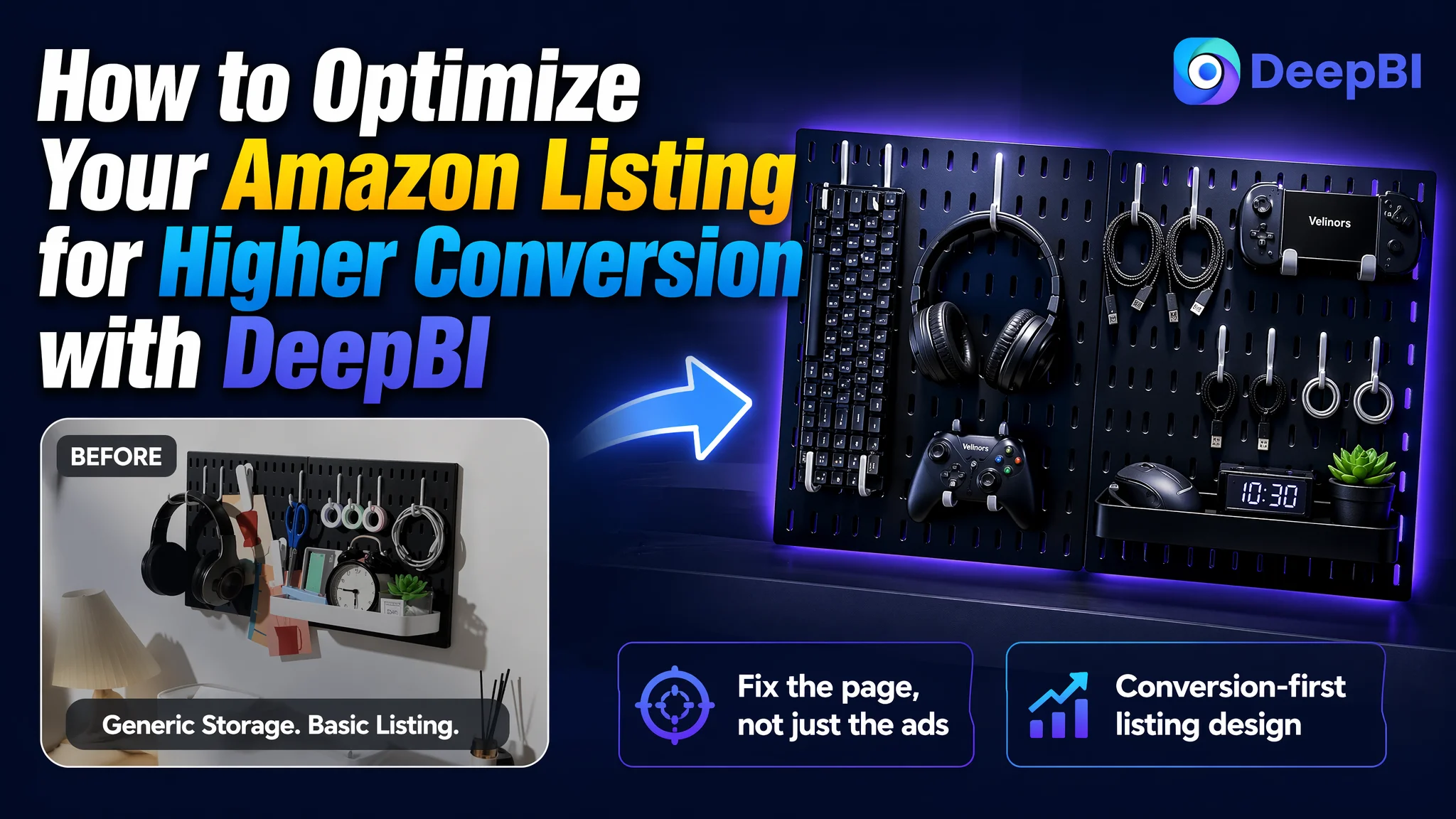
In real operations, this “conversion engine” logic becomes very visible when a listing looks strong on the surface but underperforms against a tight competitor. One home‑organization seller we worked with had a plastic pegboard kit on the US marketplace. On paper, the listing seemed “algorithm‑friendly”: over 1,600 reviews, a 4.3‑star rating, and an overall DeepBI listing score only a few points below a benchmark competitor. The team assumed that with such social proof, Amazon should already view their product as highly valuable—so when ACOS stayed high, they concluded the problem must be advertising.
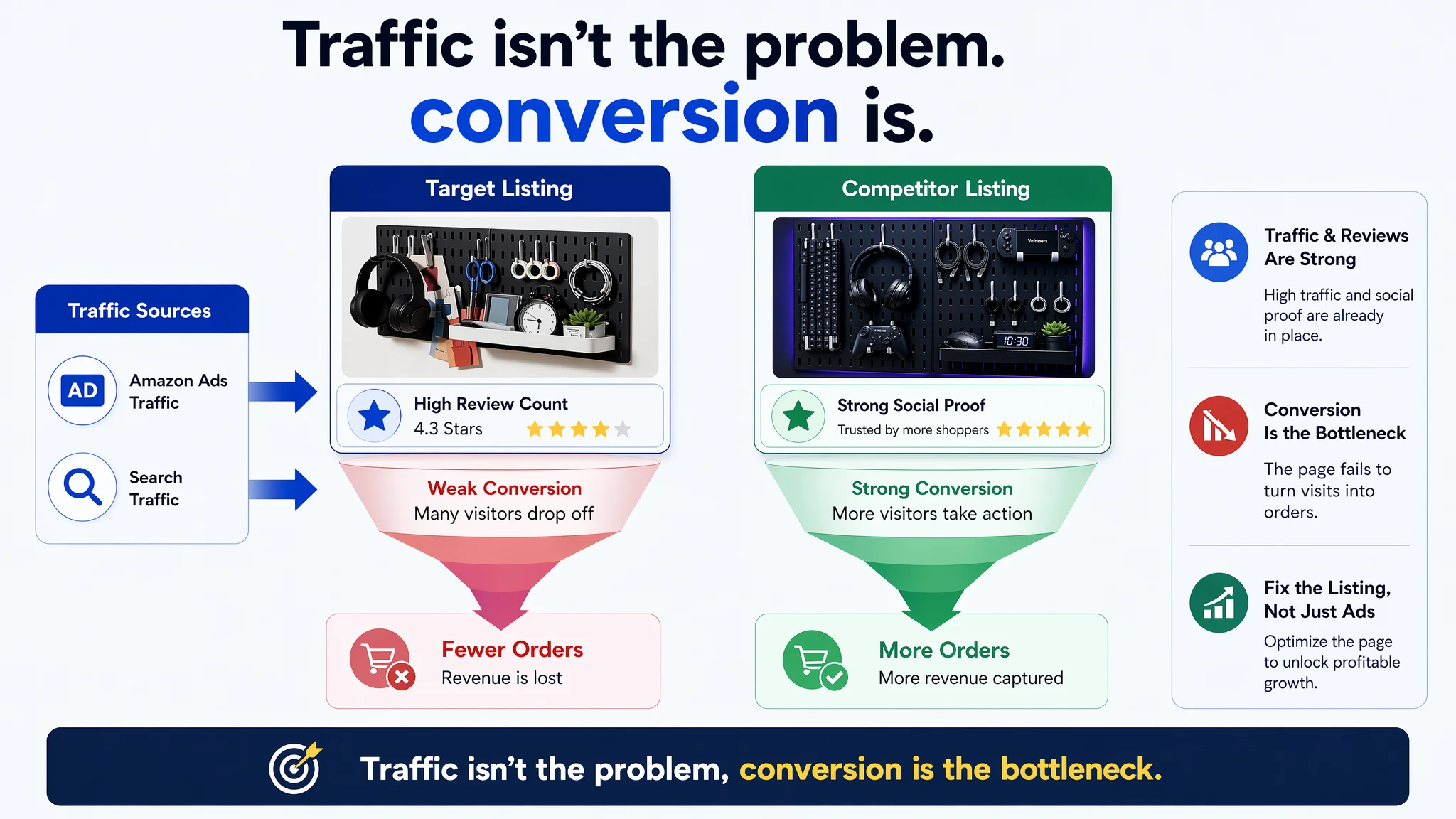
Once the listing was benchmarked, it became clear that Amazon’s algorithm was reacting to something the seller couldn’t see from the ad dashboard: the page was consistently converting worse than the category’s best listing, especially for high‑value gaming and home‑office shoppers. The star rating and review count were not enough to offset weaker page‑level conversion signals. In other words, the algorithm was doing its job—favoring the listing that turned traffic into revenue more efficiently.
This kind of situation underlines the core principle: Amazon’s primary concern is not how many reviews you have or how much you spend on ads, but how reliably your listing converts visits into orders relative to other options.
Key Factors Influencing Listing Performance
A high search ranking is the outcome of excelling in key performance areas that indicate a listing's potential to convert. The algorithm gives significant weight to metrics such as conversion rate (CVR), sales velocity, and customer satisfaction signals like product reviews.
These factors are interconnected and are influenced by the entire product detail page. For example, a low Click-Through Rate (CTR) from search results often suggests a main image that fails to capture shopper attention. Conversely, a healthy CTR followed by a low CVR may indicate that the A+ content, bullet points, or customer reviews are not persuasive enough to secure the sale. While keyword targeting is vital for initial visibility, sustained success requires the holistic optimization of pricing, reviews, and visual assets, which now function as the primary commercial drivers of a listing.
That pegboard seller’s experience illustrates how these signals blend together. Their title and reviews were not materially worse than the competitor’s; DeepBI’s scores for title, main image, and review quality were all within a narrow range. However, when we compared the structure of the page, the competitor did a better job of:
- Framing a clear “before/after” problem and outcome (cluttered vs. organized, generic vs. gaming‑ready).
- Using images and bullets to reduce installation anxiety and clarify what exactly was included in the kit.
- Converting functional features into emotional and social value (e.g., showing giftability and aspirational gaming setups).
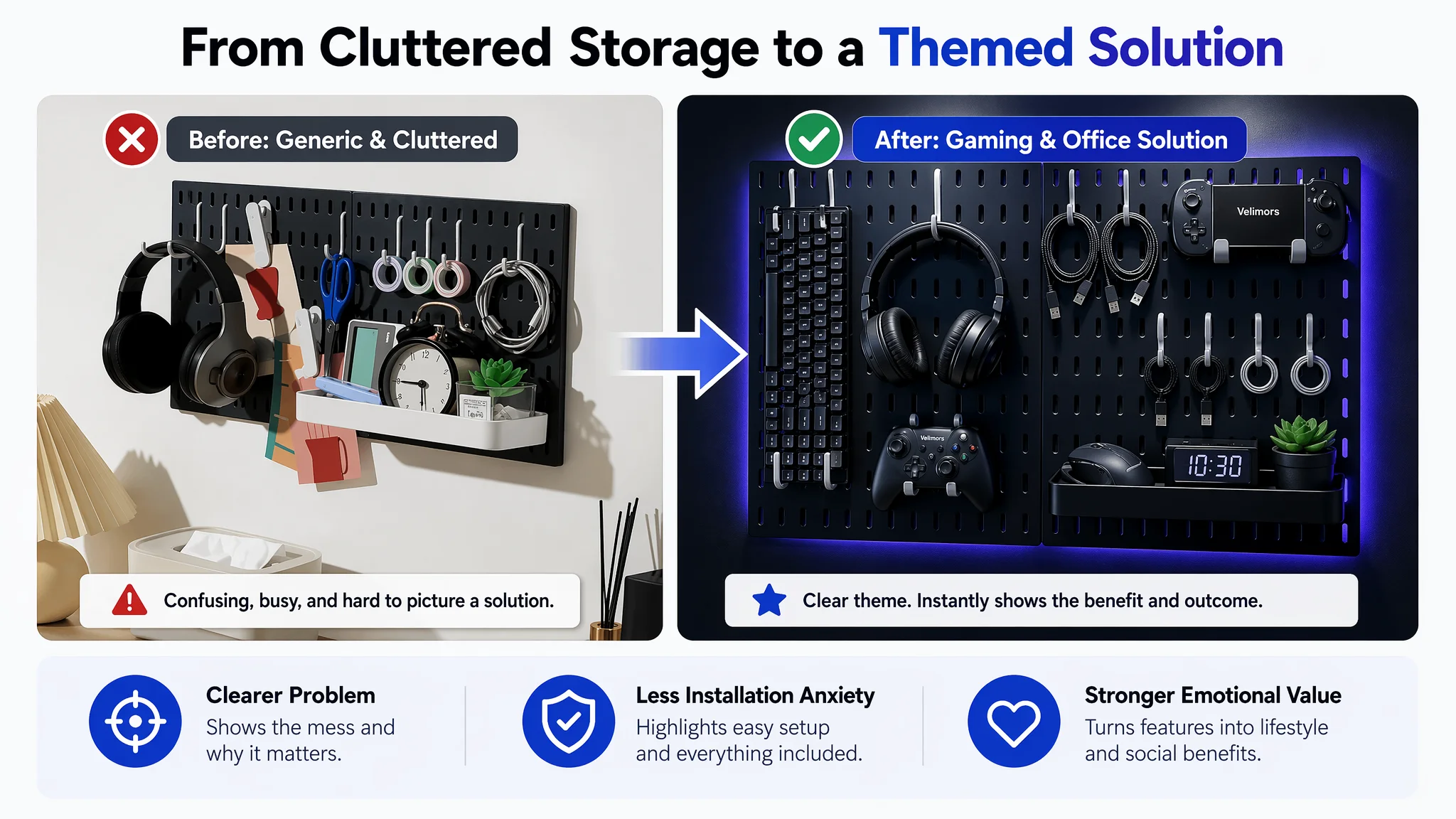
The result was a subtle but meaningful advantage in CVR. From Amazon’s perspective, that competitor listing generated more revenue per 100 clicks, so it earned more organic visibility. From the seller’s perspective, it initially looked like “our ads aren’t working,” but the data showed that the algorithm was simply rewarding higher conversion performance.
The Pillars of a High-Converting Amazon Listing
A high-converting Amazon listing rests on a foundation of interconnected components, each optimized to attract, inform, and persuade potential buyers. Mastering these elements is essential for converting traffic into sales and improving your Best Sellers Rank (BSR).
Strategic Keyword Research and Placement
An effective keyword strategy is the cornerstone of visibility and relevance on Amazon. The objective is to identify high-converting, relevant keywords that the target audience uses when searching for similar products. Strategic placement of these keywords within the title, bullet points, product description, and backend search terms is critical for both ranking and indexing.
DeepBI streamlines this process through multi-dimensional semantic analysis, automatically identifying high-impact keywords by benchmarking a listing against top competitors. The system provides suggestions for optimal keyword placement to help ensure the product appears before the most qualified buyers, which directly influences traffic quality and conversion rates (CVR).
In the pegboard example, the seller’s initial instinct was to treat keyword targeting as the main growth lever. They repeatedly cycled through new search terms, match types, and ad group structures, expecting that “better” keywords would fix rising ACOS. However, DeepBI’s semantic benchmark showed that the title and on‑page keywords were already broadly aligned with the category and that the listing was not losing traffic due to missing search terms. The gap was in what happened after those keywords successfully brought the visitor to the page.
This kind of diagnosis is crucial: if your core keywords are already competitive and your listing still underperforms, it is usually a signal to shift attention from “who you attract” to “how well you convert who you already attract.”
Crafting a Compelling Product Title
The product title is typically the first point of contact a customer has with a listing in search results, making it a critical factor for the click-through rate (CTR). An effective title should be clear and concise, incorporating primary keywords naturally while adhering to Amazon's character limits. A proven structure is: Brand + Core Selling Point + Product Form + Key Modifiers. DeepBI’s Title Analysis Agent helps automate this process by comparing a title against high-frequency search terms and competitor structures, identifying redundant words and suggesting high-impact alternatives.
When we compared the pegboard seller’s title to their key competitor, both were reasonably well‑constructed. The target listing followed best practices: it named the brand, product type, material, system type, and primary usage scenarios (home office, craft room, gaming setup), and even included precise dimensions. The competitor, by contrast, sacrificed some technical detail to lead with more benefit‑oriented language about revamping and organizing space.
DeepBI’s scoring made an important distinction:
- The seller’s title was not “wrong” or keyword‑poor.
- The competitor’s title was slightly better at turning an impression into a click by promising a transformation instead of just naming a product.
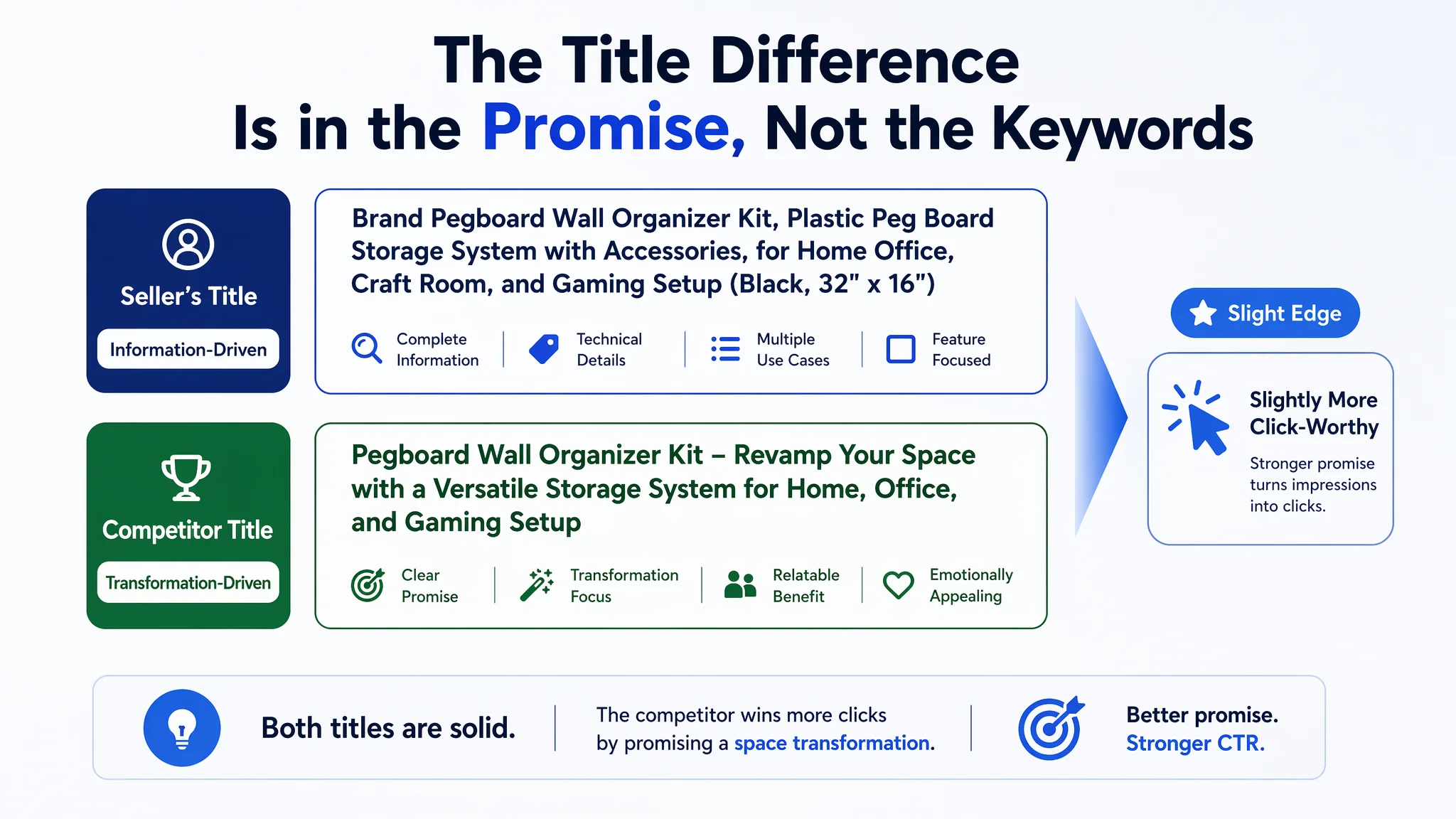
This showed the seller that title optimization in their case was about sharpening the promise, not stuffing in more words. It also highlighted a common misjudgment: assuming a detailed, keyword‑rich title is automatically the strongest option, even when a competitor’s more emotionally framed title may win more clicks from the same search results.
Engaging Bullet Points for Key Features
Once a shopper clicks on a listing, the bullet points must quickly convey value and address their needs. It is important to focus on benefits rather than features, using scannable, easy-to-read language that resolves customer pain points. A powerful formula for each bullet is: Benefit-driven Headline + Feature/Data Support + Pain Point Resolution. For instance, instead of stating "10000mAh," a more compelling bullet would be "All-Day Power for Travel (10000mAh Core) - Never worry about finding an outlet on the go." This approach clarifies the product's value and encourages a purchase.
In the pegboard case, side‑by‑side bullet comparison exposed the difference between “information present” and “buying logic present”:
- The competitor opened with the pain (cluttered, inefficient space) and immediately positioned the pegboard as the solution.
- Subsequent bullets walked through materials, exact accessory counts, multi‑scene usage, emotional and social value (e.g., as a gift), and finally a brand‑level promise.
- The seller’s bullets, by contrast, started with where you can use the product, then mentioned load capacity and installation, and finally touched on modularity and accessories—but without organizing these into a narrative path.
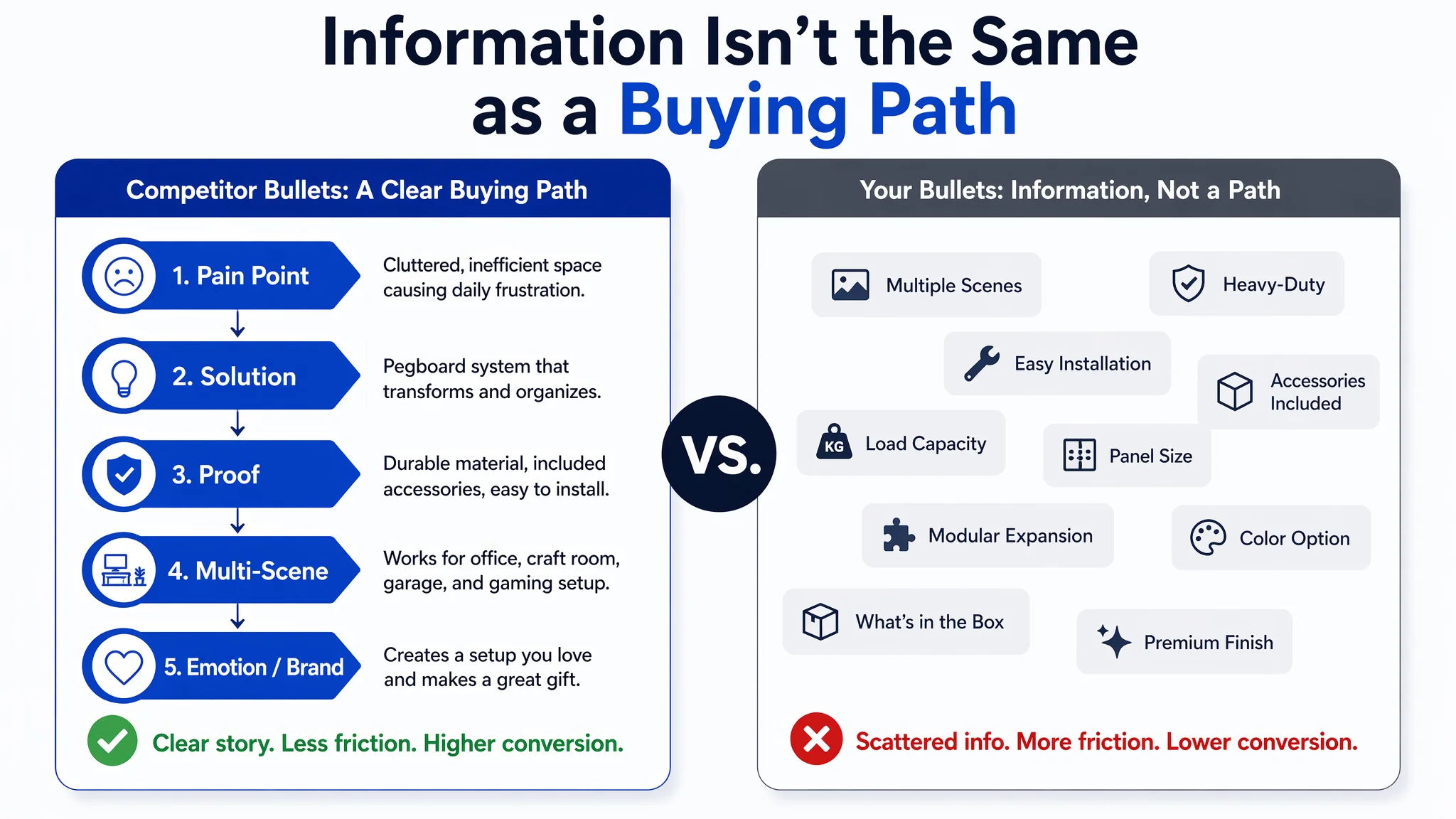
To a shopper, both sets of bullets answered questions. But only one sequence guided the decision from “I have a problem” to “this solves it practically and emotionally.” DeepBI’s analysis flagged bullets as a structural weakness on the seller’s listing, despite all the right themes being mentioned somewhere.
This is exactly where a benefit‑driven formula helps. When the seller reworked their bullets to lead with outcomes (maximized space, enhanced ambience, versatile setups), then back them with concrete details (load limit, dual mounting options, accessory list), and close with emotional and gifting cues, the page began to feel less like a spec sheet and more like a solution narrative. That shift is often what moves CVR in categories that are crowded with similar functional offerings.
High-Quality Product Images and Video
High-quality visuals are a critical component of e-commerce success. A listing should feature professional, high-resolution images from multiple angles, lifestyle shots that show the product in use, and infographics to clarify complex features. Product videos are particularly effective for demonstrating value and can significantly boost CVR.
DeepBI’s AI generation engine is designed to create conversion-optimized main images, lifestyle shots, and A+ content. It operates under a "product entity consistency" principle, creating a 'Product DNA' map that prevents the AI from altering the product's material, color, or design. This approach mitigates the risk of an "image-product mismatch" and the resulting negative reviews, ensuring that AI-generated visuals are both compelling and authentic.
On the pegboard listing, screenshots told a story the seller hadn’t fully noticed. Numerically, main image scores were close to the competitor’s, but the visual logic diverged:
- The seller’s main image showed a generic home/office scene with relatively flat lighting. It made the product look like “just another organizer.”
- The competitor’s hero image leaned hard into a high‑contrast gaming setup: LED backlighting, centered board, key accessories like headsets and controllers prominently displayed, and clear accessory count callouts.
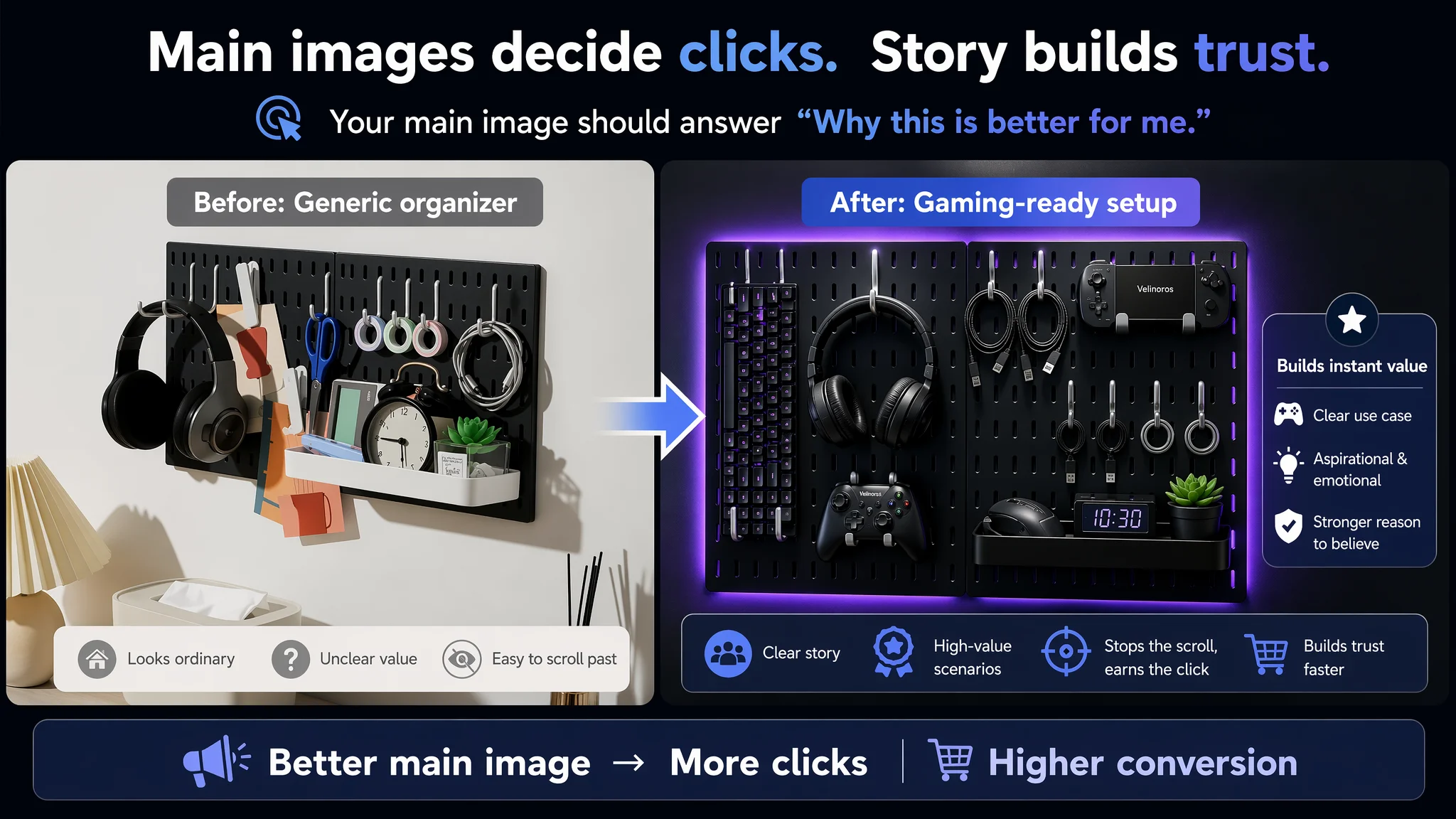
For shoppers browsing search results, that difference meant:
- The competitor’s thumbnail acted as a “reason to click” for gaming and tech‑focused buyers.
- Clear overlays about what you get created an instant “reason to believe” that this kit was complete and high value.
- Later images reinforced capacity, modular expansion, and gift potential, while the seller’s listing ended on more cluttered, less story‑driven collages.
DeepBI surfaced this as a conversion risk: ads were bringing in plenty of high‑intent traffic, but the visual sequence wasn’t matching the intent as precisely as the competitor’s did. When the seller rebuilt the main and secondary images around a sharper gaming and workspace narrative—while still showing other scenes—they were effectively telling the algorithm, “These clicks are now more likely to convert,” rather than hoping ads alone would compensate.
Detailed Product Description and A+ Content
The product description and A+ Content sections offer an opportunity for brand storytelling and providing in-depth information. This content is vital for shoppers who are seriously considering a purchase. A+ Content, in particular, enables the use of enhanced visuals and a richer brand narrative, which has been shown to improve conversion rates. DeepBI uses AI-powered text generation to create SEO-optimized and persuasive A+ copy that aligns with a product’s core attributes and brand voice, transforming detailed information into an effective sales tool.
In the pegboard case, the A+ section turned out to be the single largest structural gap:
- The seller’s A+ relied on broad multi‑scene collages and media mentions. It showed that the product could be used in many settings but didn’t walk the shopper through the full decision sequence.
- The competitor’s A+ led with an immersive gaming visual and brand message, then moved through clearly separated modules: gaming use, home office, kitchen, crafts, installation steps, function icons, “before vs. after” transformation, accessory overview, and a Q&A segment addressing typical objections.
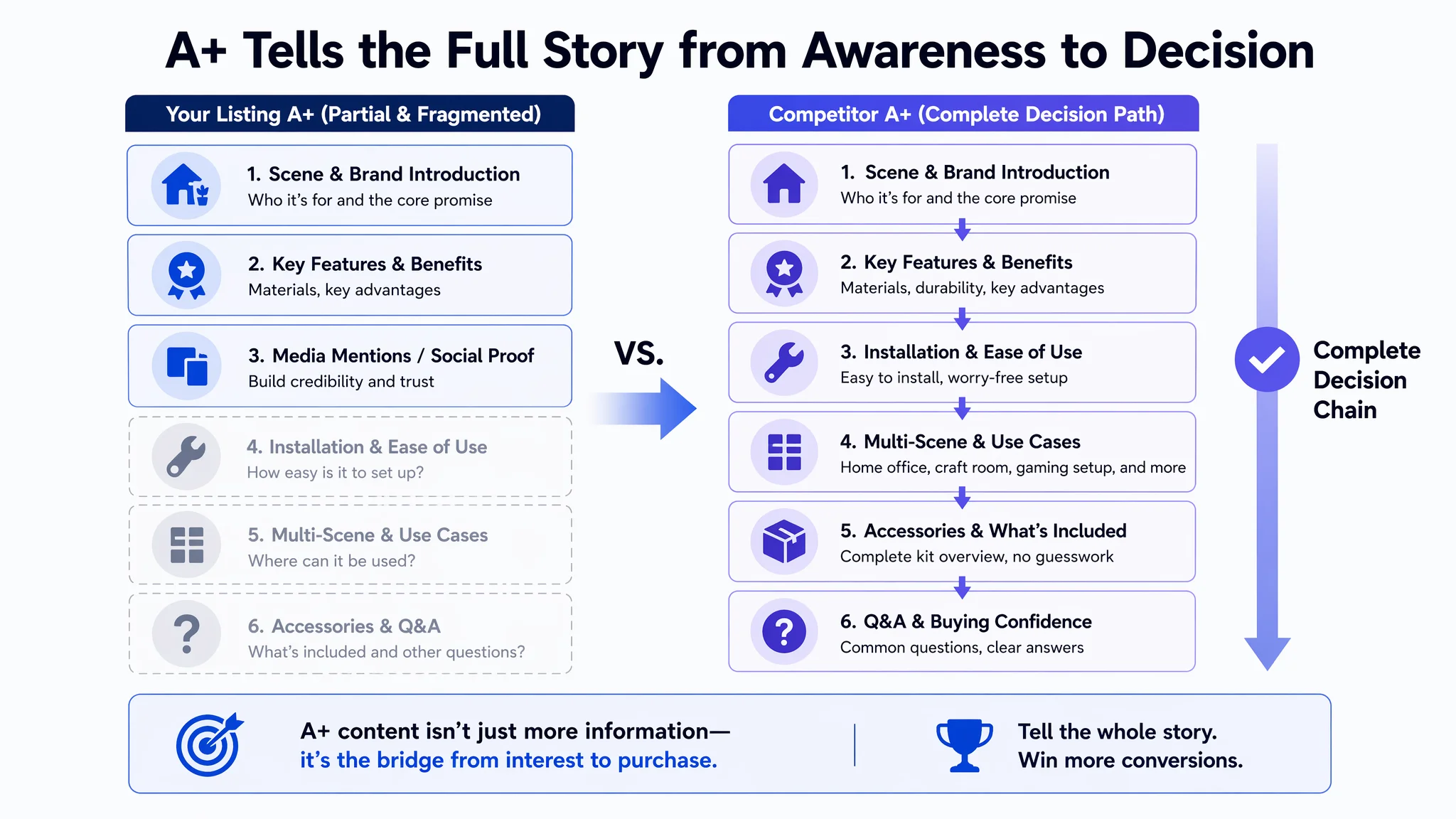
DeepBI’s scoring captured this difference not just as a higher numeric score, but as a more complete decision chain. When the seller re‑structured their A+ to:
- Open with a strong gaming workspace transformation visual,
- Dedicate a module to simple, visual installation (adhesive vs. screws),
- Show clean, single‑scene use in kitchen, entryway, and office,
- Visually summarize all included components,
- And then integrate media logos and trust copy in a focused way,
the page began to do what A+ is meant to do: convert serious consideration into confident purchase, instead of just adding more images for the sake of variety.
Beyond the Listing: Driving Conversion Through Holistic Strategies
Creating a high-converting listing requires a comprehensive strategy that extends beyond written content and images. To maximize sales, sellers must manage several interconnected factors that influence the entire customer journey, from discovery to purchase.
Pricing Strategy and Buy Box Ownership
Competitive pricing is a primary driver of customer choice and a crucial factor in securing the Amazon Buy Box. Winning the Buy Box places an offer in the default purchasing position, which dramatically increases visibility and captures the majority of sales for a given ASIN. An intelligent pricing strategy, therefore, focuses not only on margin but also on maximizing sales velocity and market share.
In the pegboard scenario, pricing was not the obvious pain point—there was no dramatic undercutting or overpricing relative to the benchmark listing. This, however, made the underlying issue easier to misread. The seller saw stable pricing and strong review numbers, concluded that the “offer fundamentals” were sound, and focused on tweaking ad parameters instead. DeepBI’s holistic view highlighted that, even with acceptable pricing and Buy Box status, a page that converts worse than its peers will still underperform financially.
This is a recurring pattern: sellers often try to “fix ACOS” either by cutting bids or shaving price, when the bigger lever is improving how effectively the existing price point is justified and presented on the product page.
Cultivating Positive Customer Reviews and Feedback
Customer reviews provide the social proof necessary to build trust and directly impact conversion rates. Since a majority of shoppers consult reviews before buying, a strong rating and a high volume of feedback are essential. Proactively encouraging reviews and professionally addressing negative feedback demonstrates excellent customer service and can mitigate damage to a brand's reputation.
The pegboard listing is a useful reminder that review volume and star rating are necessary but not sufficient. In that case, the seller actually had significantly more reviews than the competitor at the same 4.3‑star rating. From their point of view, this meant “customers clearly like us; the listing should be fine.” But because the rest of the page—title promise, images, bullets, and A+—was not orchestrated as well as the competitor’s, the reviews functioned more like a latent asset than an active conversion driver.
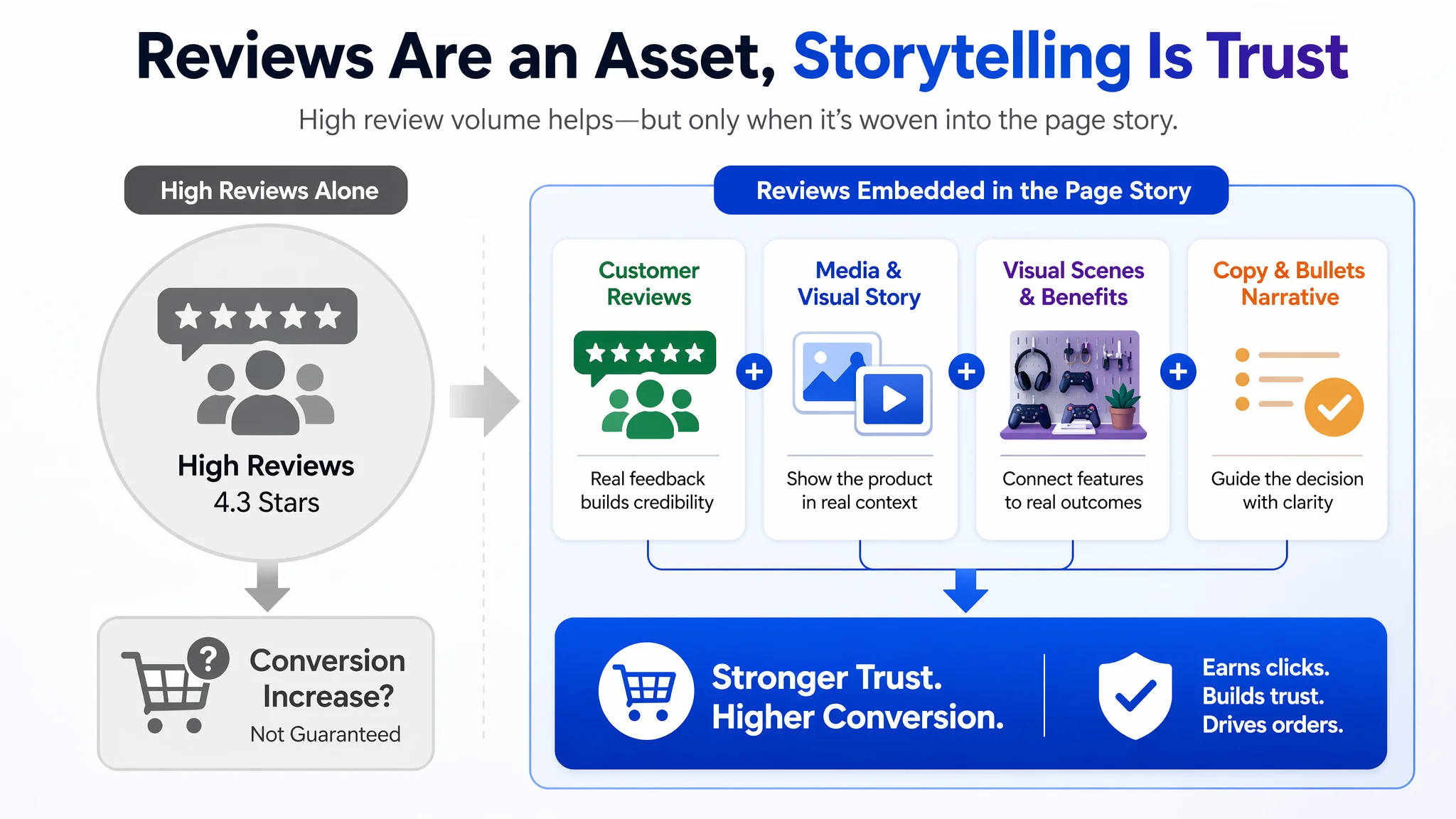
After restructuring the bullets and A+ content, the seller could integrate social proof more purposefully: referencing media logos in proximity to an aspirational office setup, surfacing specific review themes (sturdiness, ease of installation) in copy and visuals, and making the “high review count” feel like part of a larger trust story instead of a standalone number. DeepBI’s review and content analysis modules help make this linkage explicit, so sellers don’t assume that “good reviews” alone will protect conversion.
Leveraging Advertising to Boost Organic Conversion
Targeted Amazon advertising campaigns do more than generate immediate sales; they also create the sales velocity that signals relevance to the platform's algorithm, which can improve organic ranking over time. DeepBI enhances this process by analyzing advertising data to identify high-converting keywords and target ASINs. These "winning terms" offer a data-driven roadmap for refining listing content, creating a feedback loop where paid traffic insights directly improve organic CVR.
The pegboard seller’s journey shows what happens when this loop is broken. For a long time, ad reports were treated as proof that “ads were the problem”: ACOS was stubborn, experiments with new keyword sets produced only marginal changes, and the gap to the competitor remained. When we overlaid ad data with listing benchmarks, the picture sharpened:
- The ads were successfully attracting audiences interested in gaming setups, modular storage, and workspace organization.
- Those visitors hit a listing that visually resembled a more generic organizer and offered a weaker narrative for those specific use cases.
- As a result, ad spend amplified the page’s structural weaknesses instead of its strengths.
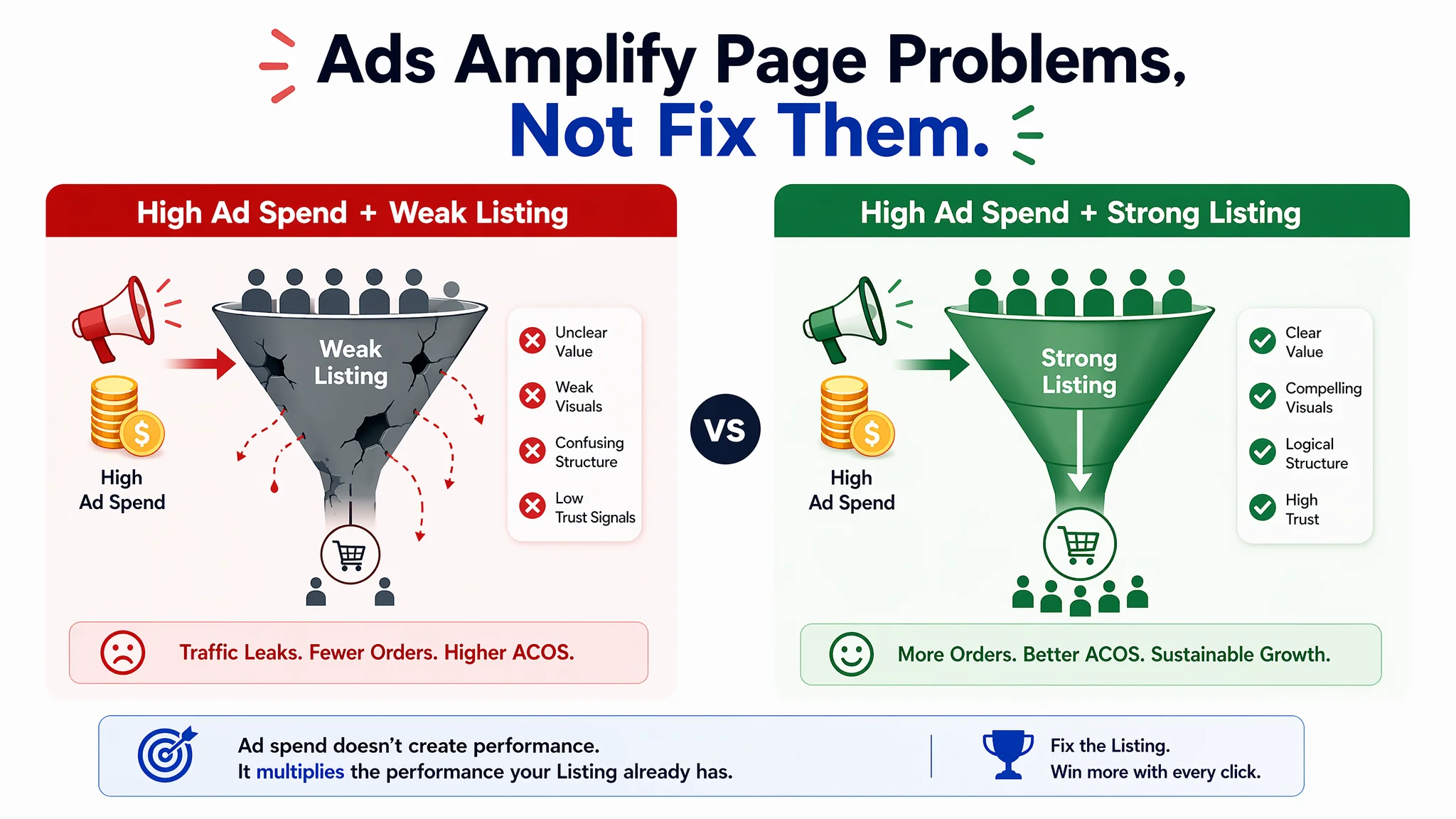
Once the listing was re‑engineered to speak directly to the intents revealed in the ad data (e.g., more gaming‑centric visual above the fold, stronger emphasis on modular expansion and installation clarity), further ad investments began to behave more like the seller expected: they not only drove short‑term orders but also contributed to better organic performance through improved CVR. This is the kind of paid‑to‑organic feedback loop DeepBI is designed to uncover and reinforce.
Continuous Optimization and Performance Monitoring
The Amazon marketplace is dynamic, meaning yesterday's winning strategy may not be effective tomorrow. Continuous performance monitoring of key metrics like CTR and CVR is essential. DeepBI functions as an automated market health check, using its intelligent scoring module to benchmark a listing against top competitors continuously. By diagnosing specific weaknesses, such as a low CTR indicating a main image issue, it generates actionable optimization strategies. This enables a cycle of iterative testing and refinement to help sellers maintain a competitive edge.
For the pegboard brand, the turning point was accepting that their previous “set and forget” approach to a listing with strong reviews was no longer enough. DeepBI’s breakdown—title vs. images vs. bullets vs. A+ vs. reviews—made it obvious where the micro‑gaps accumulated into a real conversion drag. Rather than chasing a new ad setup every few weeks, the team could focus on structural experiments:
- Testing a more gaming‑anchored main image and tracking CTR changes.
- Reordering bullet points to lead with space transformation and installation clarity, then watching for shifts in CVR.
- Restructuring the A+ decision flow and observing whether organic and ad‑driven sessions began to convert at a higher rate.
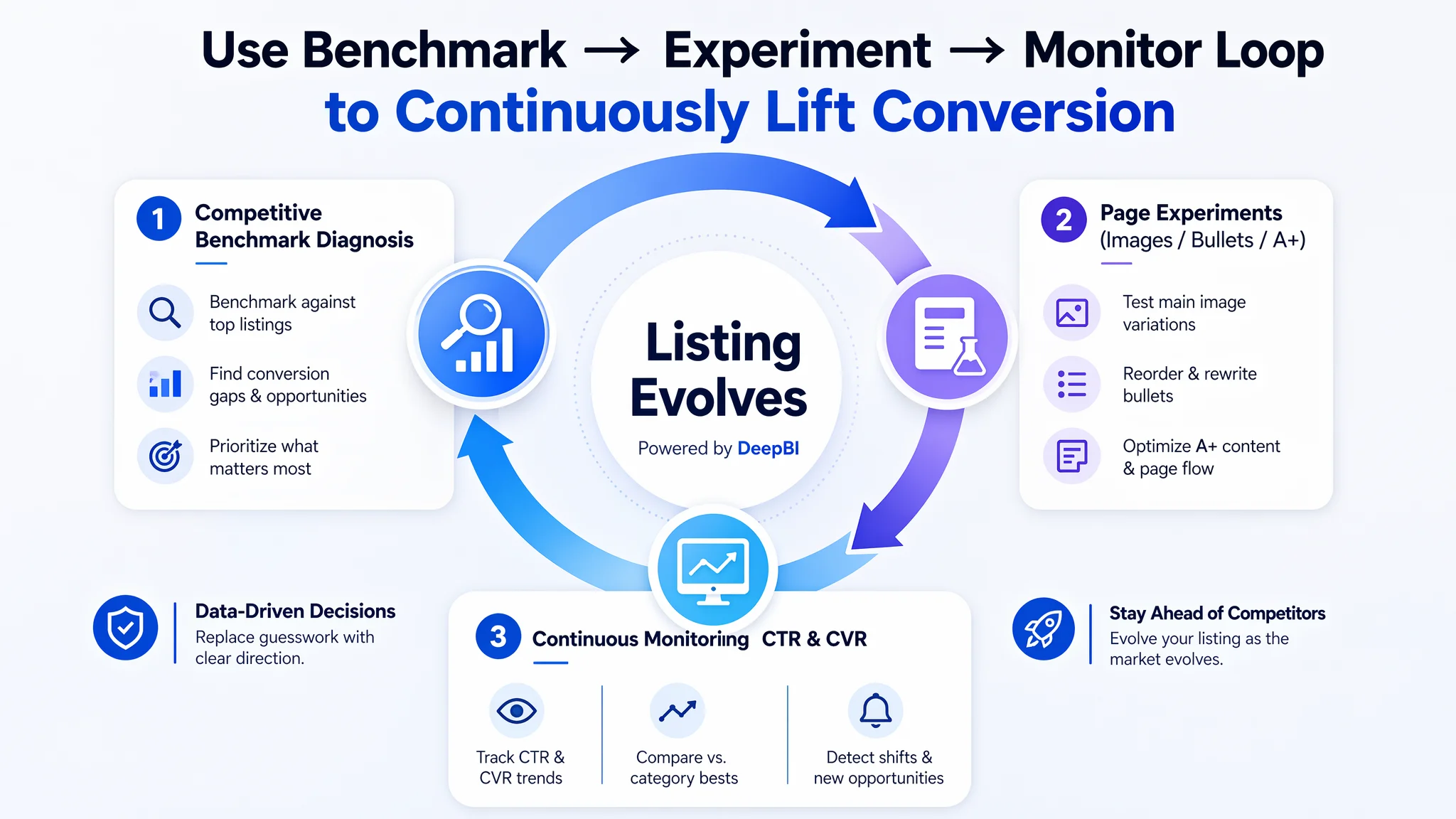
Because DeepBI continuously benchmarks against top listings, the seller could see whether improvements were closing the gap or if competitors were also evolving in parallel. This shift—from reactive ad tweaks to systematic listing evolution—turned continuous monitoring into a practical tool instead of just another report.
Conclusion: Elevate Your Amazon Sales with DeepBI
Sustained success on Amazon requires moving beyond fragmented tactics and subjective guesswork. A comprehensive, data-driven approach to listing optimization is no longer optional but is instead a core driver of profitability. DeepBI provides an end-to-end system for executing this strategy effectively.
The pegboard listing highlights what is at stake. For a long period, the seller treated rising ACOS and flat orders as an “ads problem,” even though the real constraint was a product page that underperformed against the category’s best listing in subtle but decisive ways. Only when the listing’s conversion logic—title promise, image story, bullet narrative, and A+ decision chain—was rebuilt did ad spend begin to produce the returns they had expected from the start.
By breaking down the traditional silos between diagnosis, planning, production, and delivery, the platform transforms listing management into a unified, intelligent workflow. It replaces unreliable intuition with a data-driven evidence chain, ensuring every optimization is engineered to produce measurable improvements in critical KPIs like Click-Through Rate (CTR) and Conversion Rate (CVR). This integrated system makes listing evolution a more predictable and quantifiable process.
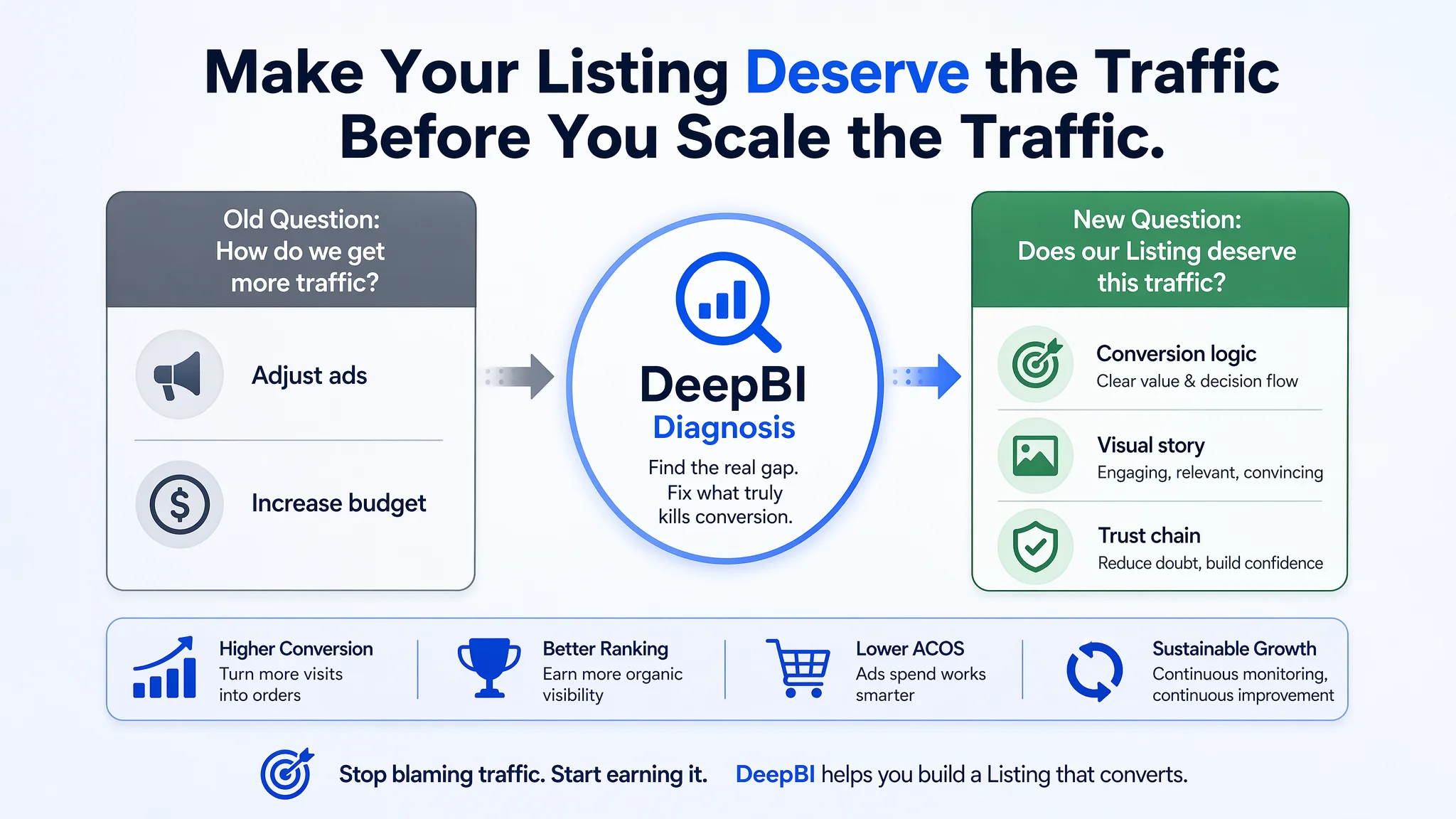
Ultimately, DeepBI empowers sellers to transition from analysis to execution, converting visual and textual assets into an engine for higher rankings, increased sales, and long-term growth. It helps teams avoid the common misjudgment of blaming traffic alone and instead focus on the deeper question: “Does my Amazon listing truly deserve the traffic it’s getting?” In a marketplace where every click has a cost, that distinction is what separates incremental improvements from sustained competitive advantage.