

This case comes from an Amazon seller in the dietary supplement category, focused on a NADH energy and healthy-aging product on the US marketplace. On paper, their Amazon Listing looked “better than the competition”: higher main-image and A+ scores, strong scientific storytelling, and a clear functional positioning around caffeine‑free energy. Yet advertising performance and conversion stability were not matching the perceived page quality.
The customer’s first reaction was to treat this as a pure Amazon ads problem: tune bids, refine keyword targeting, add more high‑intent terms, and continue “polishing” the visuals they already believed were their edge. DeepBI’s diagnosis showed something different. In the direct side‑by‑side scoring against a benchmark NADH competitor, the biggest gap was not in visuals or scientific detail, but in a single dimension: reviews and social proof. The Listing’s “professional but distant” tone, combined with almost no reviews, was quietly undermining trust and making every paid click more expensive.
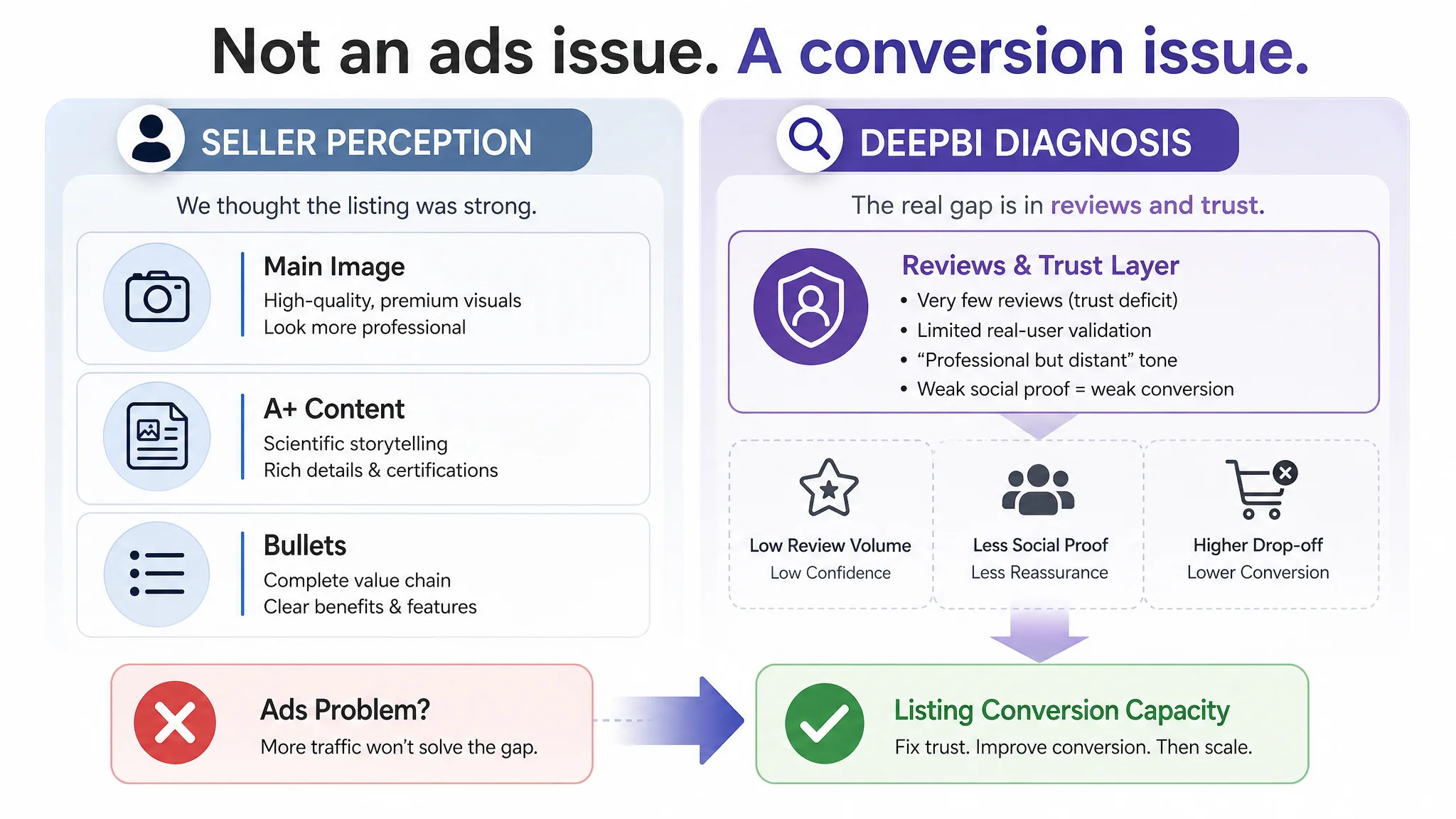
DeepBI reframed the problem as a Listing conversion capacity issue, not an ad optimization issue. The core judgment was: if the product page cannot close the sale for the traffic it already receives, pushing more traffic through Amazon ads will only amplify waste. The subsequent optimization focused on tightening the title’s trust logic, recalibrating bullet points to integrate biochemical authority with accessible metaphors, and reshaping imagery and A+ to blend lab‑grade science with everyday energy scenarios—while the team worked in parallel on building a review base. For other Amazon sellers, this case is a reminder that when ACOS pressures rise, it is rarely enough to “fix the ads”; you must first make sure your Listing actually deserves the traffic.
Amazon Ads Were Not Failing. The Page Was Consuming the Traffic.
From the seller’s internal perspective, the Amazon Listing was already “advanced”:
- Main image and visual system: a high‑tech, metallic aesthetic with 3D renders, cellular diagrams, and detailed mechanism illustrations.
- A+ content: structured modules covering scientific backing, multi‑layer capsule design, certifications, and manufacturing quality.
- Bullet points: a complete “problem–solution–value–trust–convenience” chain, clearly articulating stomach‑acid protection, jitter‑free energy, anti‑aging support, and UK GMP / NSF certifications.
DeepBI’s Listing score (76/100) against a benchmark competitor (77/100) seemed to confirm that the page was competitive overall. Title, main image, bullets, and details were either on par or ahead.
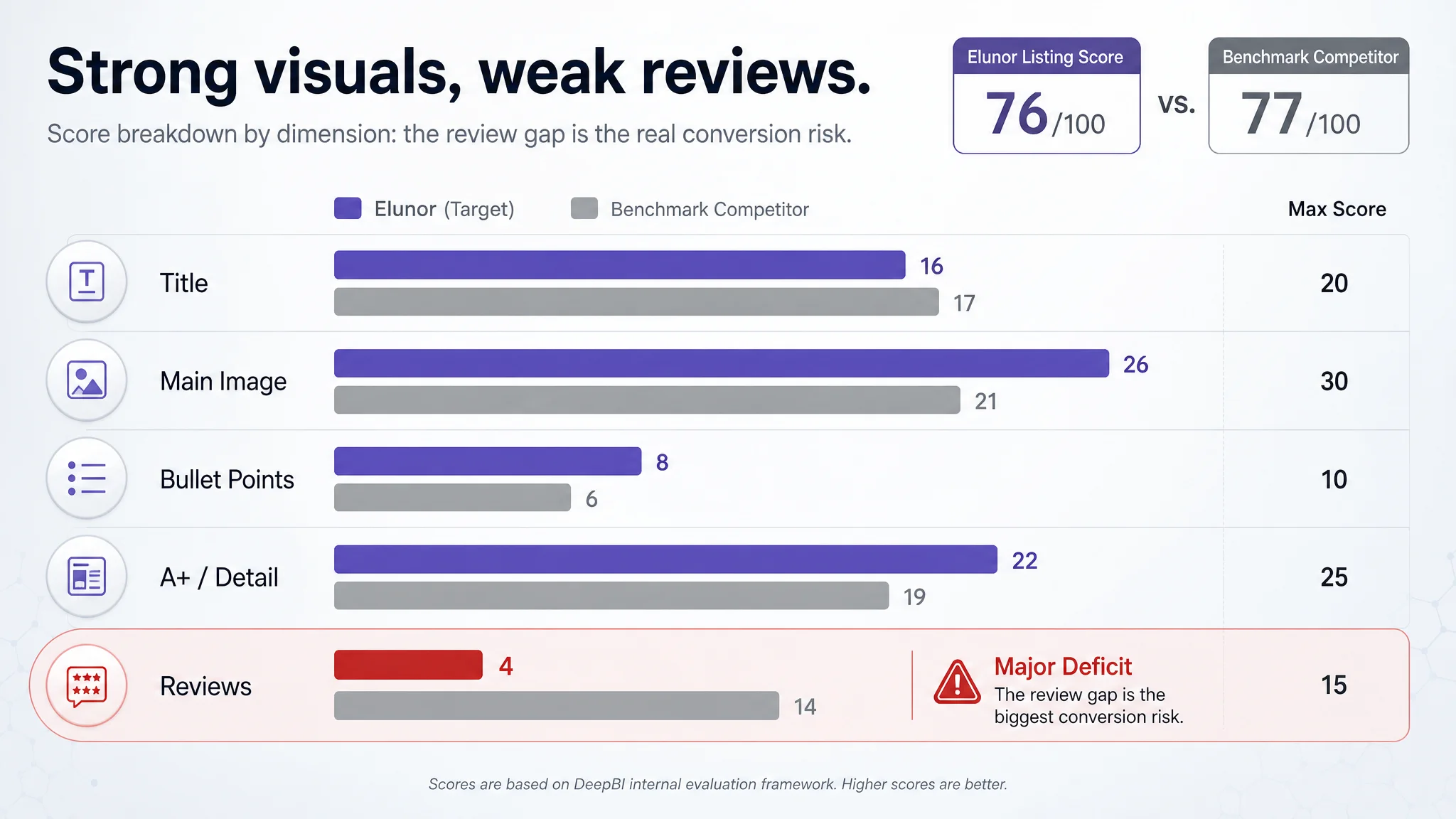
The surprise came from the review dimension:
- The target Listing: 4.5 stars, but only 2 reviews.
- Benchmark Listing: 4.7 stars, 32 reviews, with richer, more varied feedback.
In numerical terms, the main structural gap was:
- Title: –1 point vs. competitor.
- Main image: +5 points vs. competitor.
- Bullet points: +2 points vs. competitor.
- A+ / detail: +3 points vs. competitor.
- Reviews: –10 points vs. competitor.
“The real problem was not that ads failed to bring traffic. It was that the page could not convert the traffic.”
From a traffic‑funnel viewpoint, this meant:
- Ads could still generate impressions and clicks.
- But once users reached the page, the trust layer that should be carried by reviews and guarantees was missing.
- Every extra click bought with ads was being pushed into a page with a visible social‑proof deficit.
The seller’s prior optimization attempts—tweaking bids, increasing traffic, refining keyword lists—could not break this structural bottleneck, because the page itself was not providing enough reasons to complete the purchase.
The Real Constraint Was Listing Conversion Capacity
DeepBI’s scoring analysis reframed the core issue as:
“This Listing does not lack professionalism. It lacks trust and decision clarity at the moment of purchase.”
Three elements drove that judgment.
1. Reviews as a Silent Conversion Ceiling
With only 2 reviews, the Listing was effectively asking buyers to trust a lab story without real‑world validation.
By contrast, the benchmark NADH Listing:
- Showed more reviews on the first page of feedback.
- Offered more detailed, diverse experiences (energy, tolerance, daily use).
- Held a slightly higher star rating, but more importantly, a stronger “volume” of social proof.
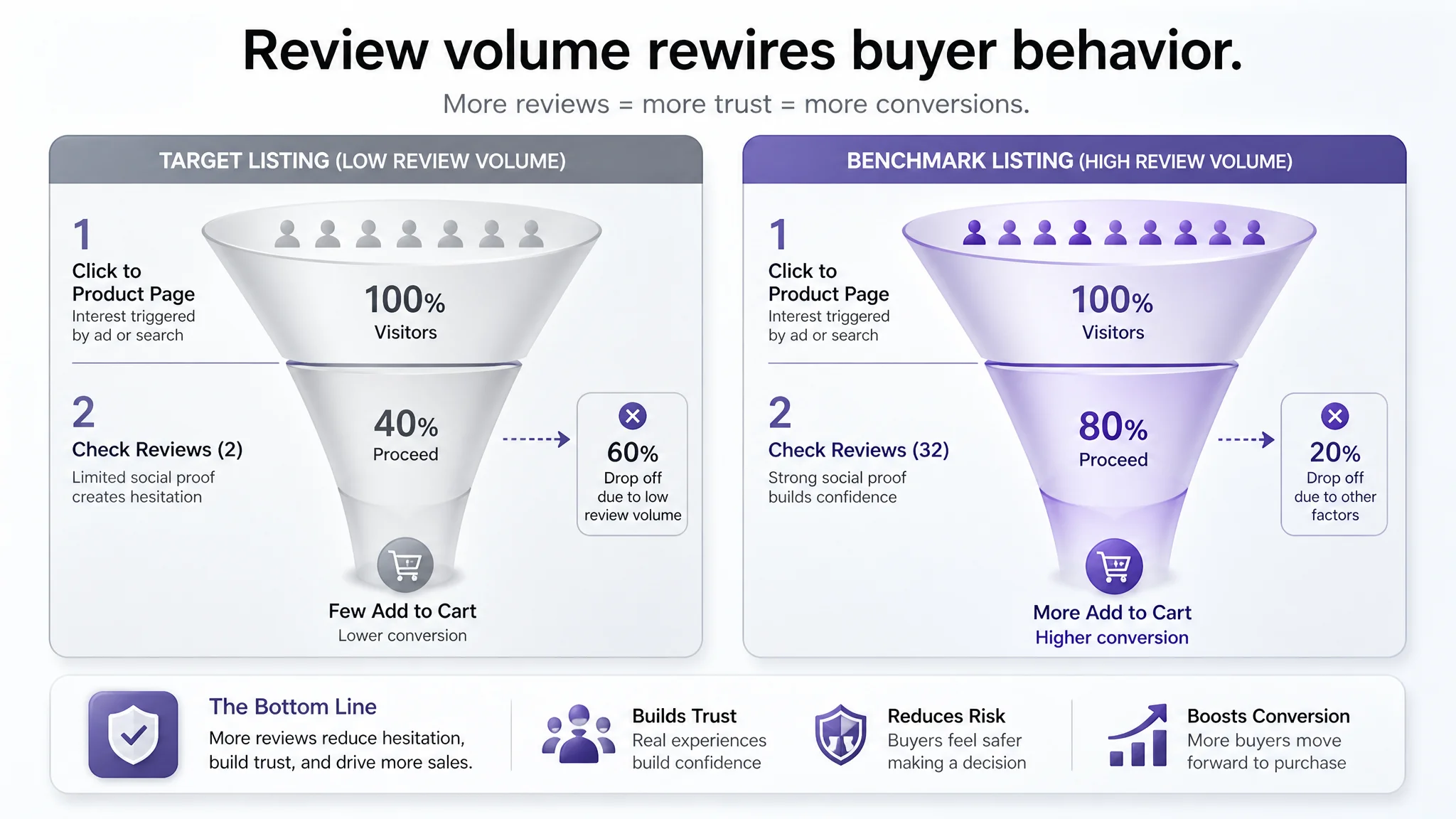
In a category where safety, efficacy, and consistency matter, this difference is not cosmetic. It rewires buyer behavior:
- On the benchmark page, the A+ and bullet logic is reinforced by user stories and volume.
- On the target page, the same scientific claims are perceived as more theoretical.
Under these conditions, ACOS pressure will naturally rise: you pay to bring new visitors who then retreat to a competitor with stronger review reassurance.
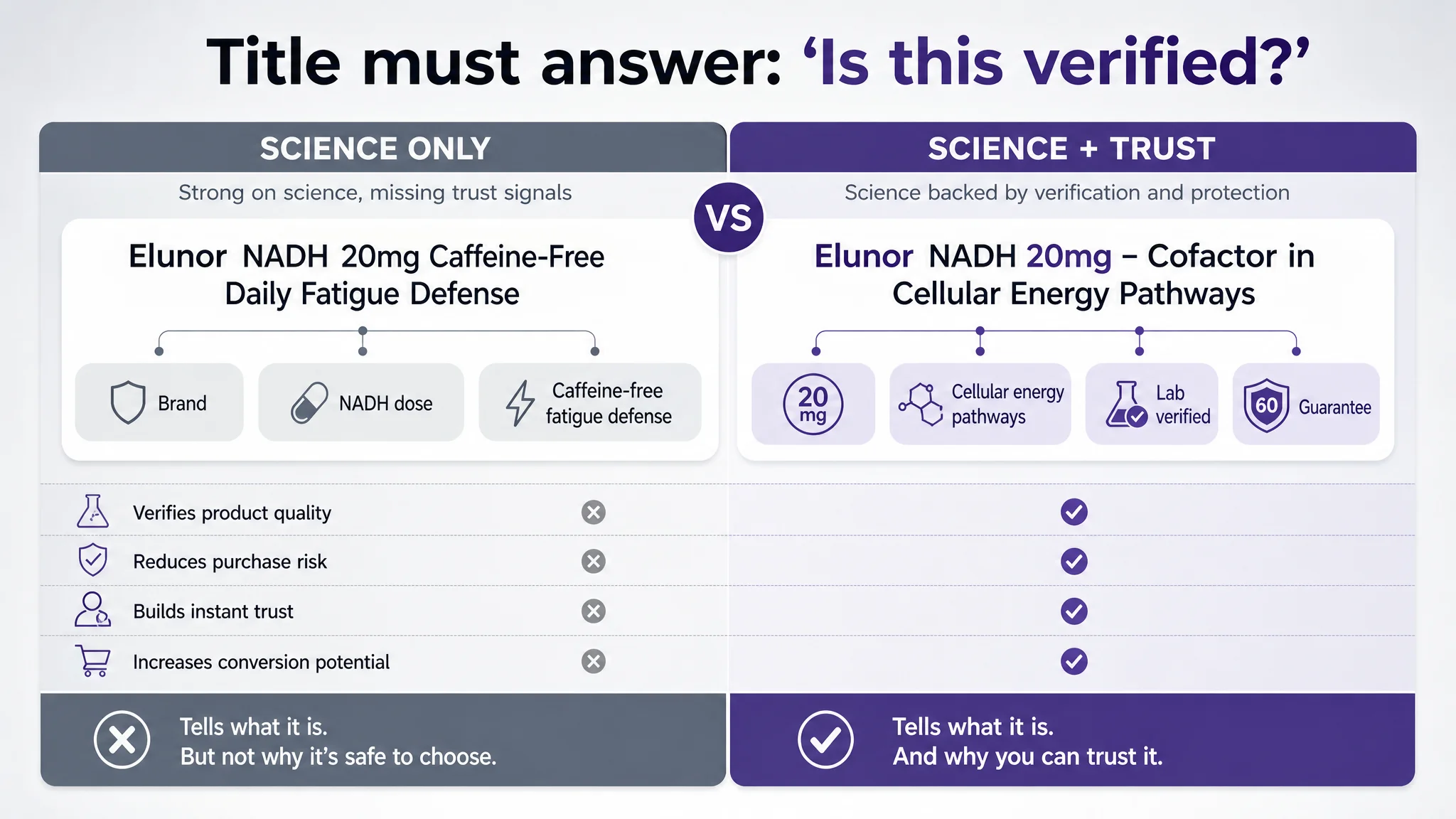
2. A Professional Title That Stopped Short of a Trust Promise
The original title leaned into:
- Brand name
- NADH dose
- “Caffeine‑Free Daily Fatigue Defense”
- Technological positioning and scientific tone
The competitor’s title, however, layered in:
- Clear dosage (“10 mg”)
- Biochemical role (“Cofactor in Cellular Energy Pathways”)
- Trust elements (“Lab Verified”, “60‑Day Guarantee”)
- Clean attributes (Gluten Free, etc.)
DeepBI’s judgment: the target Listing was strong on science but light on risk reduction and third‑party validation at the title level. When someone arrives from an ad, the title is still the first structured signal they re‑read before scrolling. If the title does not answer “Is this verified, safe, and backed?”, even a strong A+ further down the page may never get a chance to work.
3. Scientific Visuals Without Emotional Anchors
The main image and A+ modules were designed as:
- Cold, high‑tech, metallic visuals
- Cellular diagrams and NADH cycles
- Multi‑layer capsule cross‑sections
- Certification layouts (FDA‑registered plant, SGS, HACCP, COO, etc.)
Visually, this was stronger than the competitor in pure professionalism and technical density. But DeepBI’s analysis highlighted a critical gap: lack of life‑integration scenes.
The benchmark listing, although less advanced visually, anchored its messaging with:
- Brand mission visuals
- Production photos
- Raw material origin and sustainability
- Basic lifestyle cues
In other words, the benchmark told a “human story”: who uses this, in what life context, and why they trust it. The target Listing told a “lab story”: how the molecule works, how the capsule is built, and which certifications exist.
For a broad Amazon audience, a purely lab‑driven page can feel “professional but distant,” especially with almost no reviews to humanize the experience.
“Advertising does not only amplify advantages. It can also amplify a page’s existing defects.”
Why DeepBI Did Not Keep Tuning the Ads First
Given this diagnosis, DeepBI’s recommendation was clear:
1. Do not treat ACOS as an ad‑only problem.
2. Do not push more budget into a page that lacks trust closure.
3. First, repair the Listing’s conversion logic, then re‑evaluate advertising.
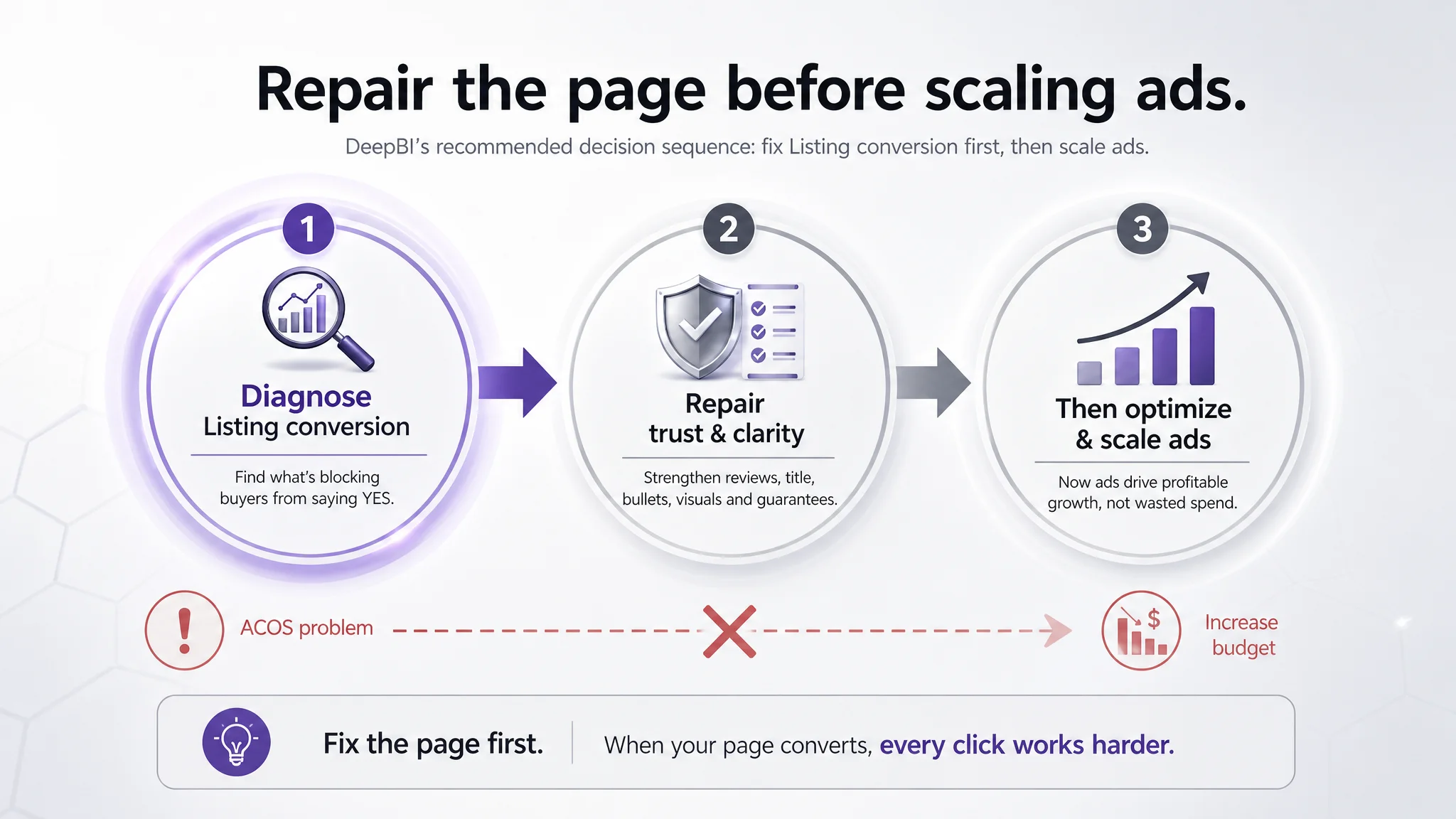
The business risk in continuing ad tuning first was straightforward:
- Every incremental dollar spent on traffic would hit the same review gap + distant tone.
- Organic conversion capacity would remain weak, forcing continued dependence on ads.
- Tuning bids and keywords without adjusting the page would only redistribute inefficiency, not remove it.
DeepBI’s judgment was that Listing conversion had become the limiting factor. Repairing it first was the safest way to:
- Lower wasted ad spend over time.
- Stabilize CVR from both organic and paid traffic.
- Build a healthier traffic structure where ads fuel, rather than compensate for, the Listing.
This Product Page Did Not Lack Traffic. It Lacked Trust.
With the core constraint identified, DeepBI focused on how the page persuaded, not just on what it said.
The title needed to communicate outcome and verification
The proposed title direction:
NADH 20mg Supplement, 60 Veggie Tablets - Reduced Nicotinamide Adenine Dinucleotide, Boosts NAD+ for Cellular Energy Pathways, Healthy Aging & Fatigue Defense - Non-GMO, Gluten-Free
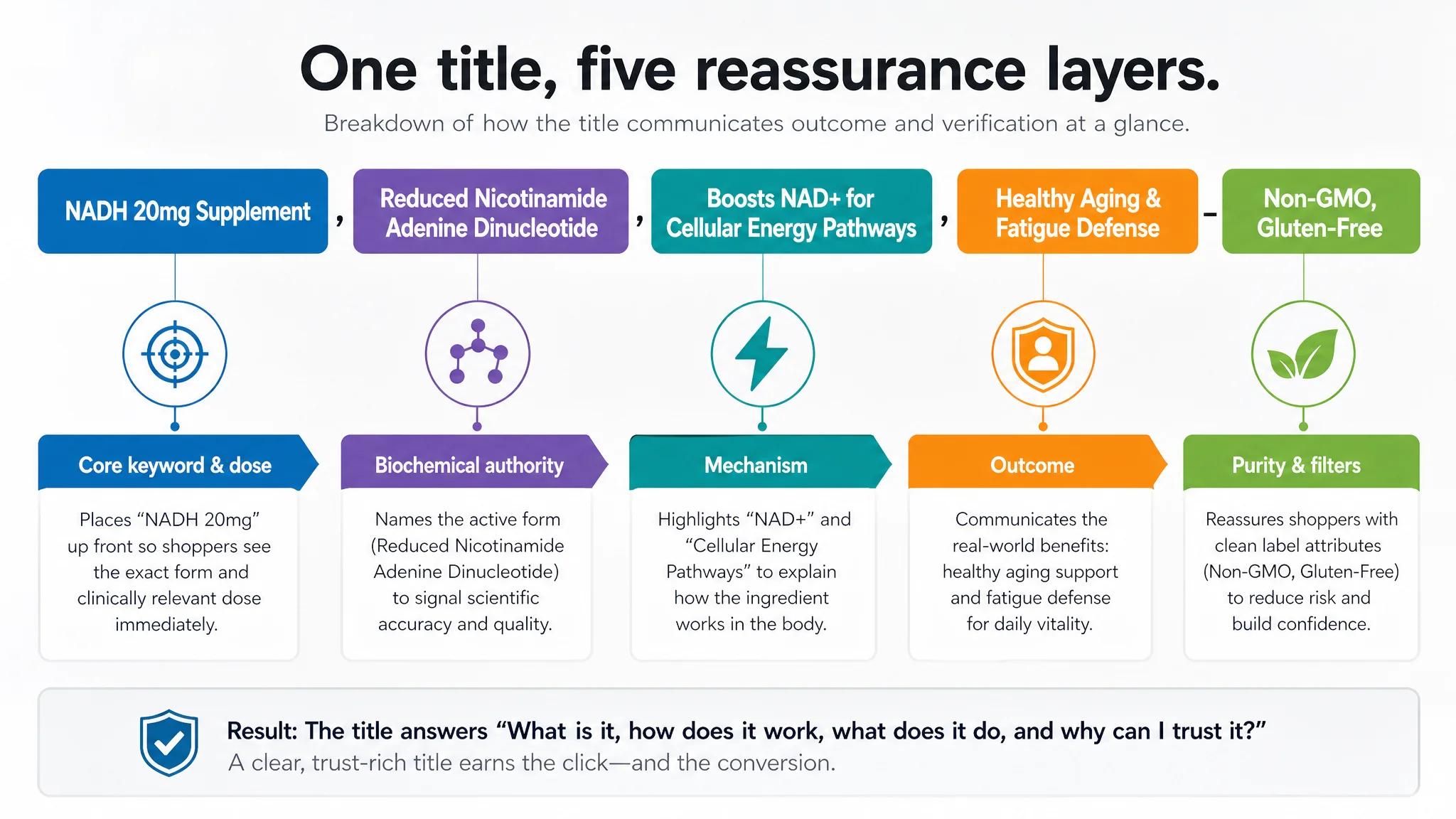
Key shifts:
- Core term front‑loading: “NADH 20mg” at the head, making the dose and active form immediately visible on the Amazon search results and on the product page.
- Biochemical clarity: “Reduced Nicotinamide Adenine Dinucleotide” and “Boosts NAD+ for Cellular Energy Pathways” mirror the competitor’s professional tone, but with a clearly higher dose.
- Outcome framing: “Healthy Aging & Fatigue Defense” maintains the original scenario‑based benefit.
- Clean attributes: Non‑GMO, Gluten‑Free, aligning with common shopper filters.
While the competitor’s “Lab Verified” and “60‑Day Guarantee” were strong trust hooks, the target Listing was already building a heavy trust stack in A+ via certifications. DeepBI’s approach was to bring more of that reassurance closer to the top of the page, through precise scientific wording and purity attributes in the title, while avoiding unverified or invented claims.
The bullet points had information, but not a buying logic tuned to trust
DeepBI kept the seller’s “problem–solution–value–trust–convenience” skeleton, but re‑wired the content:
BP #1: From simple explanation to biochemical authority
Original strength: stomach acid protection and energy outcomes.
Optimized direction:
[POWERFUL COENZYME FOR CELLULAR ENERGY] - NADH is the biologically active form of Vitamin B3 and a vital cofactor in metabolic processes. Our formula acts as a key component in cellular energy pathways, supporting your body’s ability to convert nutrients into cellular fuel efficiently for overall vitality.
This gives buyers a reason to believe the energy claim, anchored in biochemical role—not just in marketing copy.
BP #2: Stability and absorption as the bridge between technology and results
Original: focus on acid resistance and UK technology.
Optimized direction:
[ADVANCED UK TECHNOLOGY & STABILITY] - Standard NADH is highly unstable and easily destroyed by stomach acid. Utilizing advanced UK stabilization technology, our tablets feature superior gastric resistance. This ensures the NADH remains intact until it reaches the optimal absorption site, maximizing bioavailability and potency.
This connects technology to absorption, and absorption to actual effect, stitching together what would otherwise be seen as abstract lab language.
BP #3: A metaphor to lower cognitive load
The competitor’s phrase “spark plug” was not trivial—it made a complex concept simple.
Optimized direction:
[THE BIOLOGICAL SPARK PLUG] - Known as the body's 'spark plug,' NADH is essential for ATP production. Our stimulant-free formula provides clean, steady energy for your brain and muscles without the jitters or crashes of caffeine, helping you maintain peak mental clarity and physical performance all day long.
This metaphor makes the mechanism memorable, while reinforcing the caffeine‑free positioning.
BP #4: Active aging and long‑term logic
The original anti‑aging narrative existed, but it was not tightly tied to NAD+ decline.
Optimized direction:
[ACTIVE AGING & NAD+ REPLENISHMENT] - As NAD+ levels naturally decline with age, cellular function and metabolic balance can decrease. Consistent supplementation with our stabilized NADH helps maintain healthy NAD+ levels, supporting long-term wellness, cellular repair, and vitality for aging adults or those with demanding lifestyles.
This frames NADH not only as an energy fix, but as part of a long‑term health strategy, speaking directly to mid‑life and high‑stress users.
BP #5: Trust closure and usage practicality
Original: certifications and convenience, but in separate pieces.
Optimized direction:
[PREMIUM UK GMP & NSF CERTIFIED QUALITY] - Proudly manufactured in the UK under rigorous GMP and NSF standards, our formula is 100% vegetarian, Non-GMO, and gluten-free. Each compact, easy-to-swallow tablet is laboratory-tested for purity, offering a safe and convenient routine to support your cellular health.
Here, all the scattered trust pieces—UK GMP, NSF, vegetarian, Non‑GMO, lab testing—are woven into one coherent closing argument.
The Main Image Was Not Just a Visual Issue. It Failed to Create a Reason to Click.
From DeepBI’s visual analysis, the target Listing’s main image and gallery had a strong industrial design advantage:
- A distinctive round metallic cap and transparent base.
- Technically sophisticated renders and diagrams.
But the current white‑background product images were under‑leveraging these strengths. The competitor’s simpler images still felt more “alive” because of better light, depth, and occasional context. DeepBI’s guidance was to rebuild the main image set around a “high‑end science + everyday energy” dual narrative.
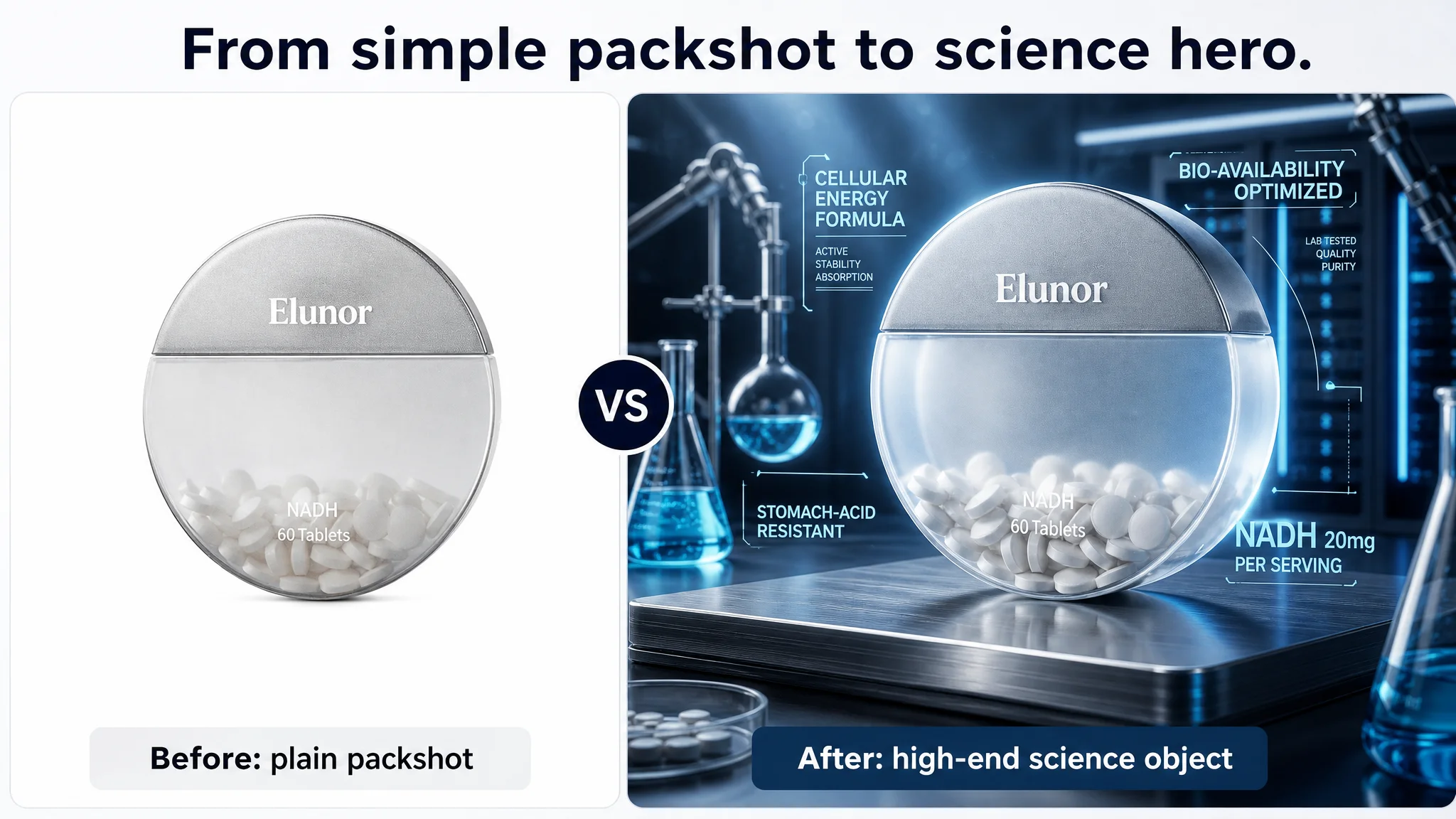
Elevating the hero image to “high‑end science object”
Example transformation:
- Product centered, occupying ~75% of the frame.
- Shot from a low 30° angle, with light from the upper left to carve out edges.
- Dark matte metallic background with subtle reflections, cold color tone, and a soft product reflection underneath.
Purpose:
- Make the NADH bottle feel like a precision instrument, not just a plastic supplement bottle.
- Increase thumbnail click appeal by emphasizing unique design and premium cues.
Visualizing the “1 pill = 4 pills” advantage
Current issue: the “1 NADH = 4 NAD+” benefit existed in scattered text, not as a visual hook.
Optimized concept:
- Product on the right, angle at 30°, ~40% of frame.
- Left side: clean sans‑serif text “1 Pill NADH = 4 Pill NAD+” inside a semi‑transparent glowing circle.
- Minimal lab‑style background.
This gives shoppers an instant, quantifiable reason to consider this product over ordinary NAD+ options, even at the thumbnail level.
Making “20 mg” impossible to miss
Another image redesign:
- Product on a black marble surface, top‑down view, hard side‑lighting.
- “NADH 20mg” in clean white typography near the product.
- Fine lines connecting to three glowing purple dots representing energy points.
Result: the dose advantage becomes a visual centerpiece, not a buried line in copy.
Turning features into a 3‑step logic
DeepBI suggested:
- A three‑segment vertical layout: key functions on the left, product on the right.
- White‑to‑light grey radial gradient background.
- Faint molecular structure lines to support the “scientific” vibe.
This compresses:
- Energy pathways
- Stability / gastric protection
- Active aging support
into a clear visual “ladder” that users can scan in seconds.
Injecting everyday life: from desk to handbag
The biggest missing piece: real‑world context.
Two key images:
1. Morning work scene:
- Product on a wooden desk next to a closed laptop, with a bright cityscape and morning light.
- Warm tones, suggesting a calm, productive start without caffeine spikes.
1. Handbag portability:
- Product in the opening of a leather work bag, with a notebook and pen nearby, café background blurred.
- Warm, “premium lifestyle” tone.
These images reposition NADH from a cold lab product to a trusted daily companion, softening the “professional but distant” perception.
The A+ Content Needed to Connect Science, Energy, and Safety in One Story
DeepBI did not judge that the target Listing lacked A+ content—on the contrary, it had more technical depth and stronger certification coverage than the competitor.
The issue was story order and emotional balance, not volume.
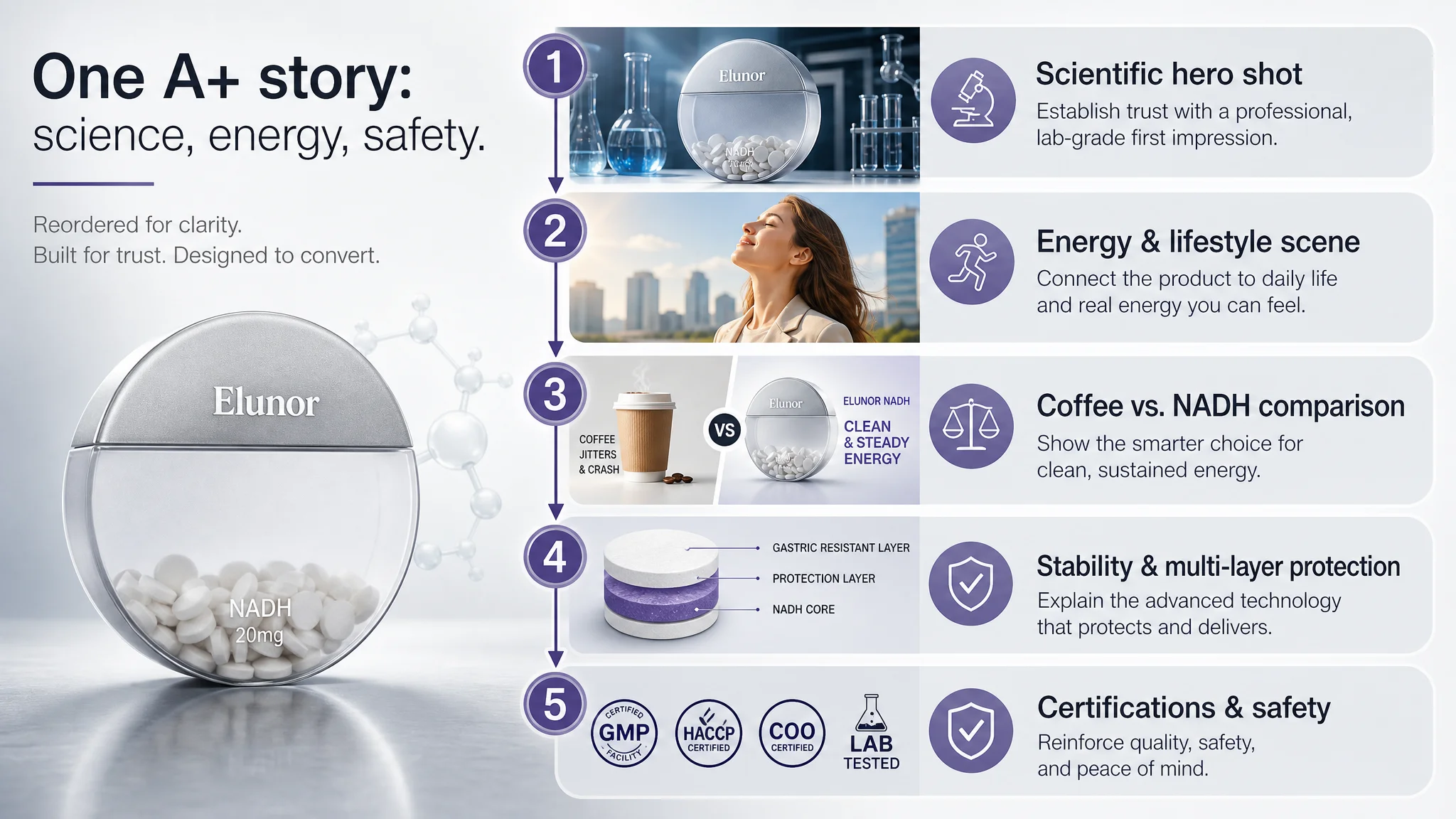
Key A+ adjustments:
1. Opening module — a cleaner hero shot:
- Minimal, high‑tech product image with a half‑opened bottle showing tablets.
- Cold, industrial light, no clutter.
- Clear brand and product name.
- Sets a premium, scientific baseline without overwhelming text.
1. Energy and lifestyle bridge:
- A scene of a mid‑career professional facing the sun, with the product anchored in the frame.
- This makes “energy” visible and relatable, not abstract.
1. Coffee vs. NADH comparison:
- Split visual with a hot coffee on the left and the NADH product on the right.
- Slightly cooler tone on the coffee side, warmer on the NADH side.
- Implicit message: longer, smoother, stimulant‑free energy.
1. Stability and multi‑layer protection:
- High‑detail cross‑section of the tablet showing three layers.
- Each layer color‑coded and labeled (protection, stability, core).
- This turns “advanced UK technology & stability” into a clear mental image.
1. Portable, always‑with‑you scenario:
- Product in a work bag at a café, as described earlier.
- Reinforces usage frequency and ease.
1. Certification wall:
- FDA registration, HACCP, and other certs arranged cleanly with the product.
- No heavy text—just clear, readable documents.
- Visualizes safety and compliance, closing remaining doubts.
1. Mechanism pathway illustration:
- Product bottle leading via a glowing path to a stylized mitochondria.
- Emphasizes the product–cell–energy chain in a single graphic.
In total, these changes do not “add more science”; they balance science with energy, safety, and everyday life, making the story easier to digest and trust.
Before Ads Could Work Again, the Page Had to Convert
DeepBI’s role in this case was not to “beautify” the Listing in a vacuum. It was to reorder the seller’s decision path:
1. Stop assuming ad metrics are purely ad problems.
2. Check whether the Listing can close the sale for current traffic.
3. Identify which page dimension is the true bottleneck.
4. Fix that dimension first.
Here, the bottleneck was:
- Trust deficit from reviews and social proof, amplified by a distant, lab‑heavy tone.
- Not a lack of detail in A+, not a lack of professionalism in imagery, and not weak bullet logic.
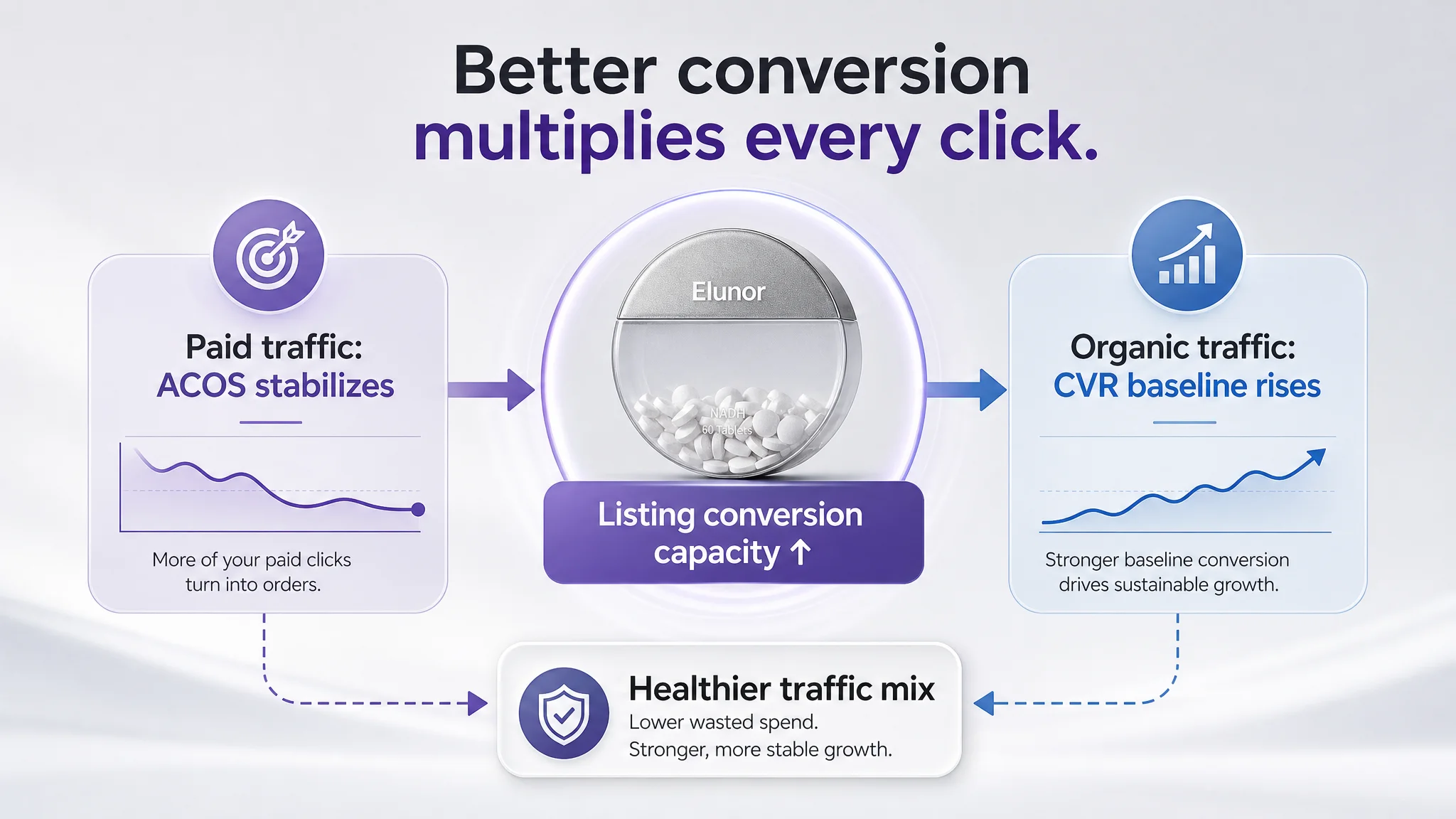
Once the page’s sales logic is rebuilt—title clarity, bullet‑level authority, visual reasons to click, everyday scenarios, and visible certifications—two operational changes follow naturally:
- Ad traffic becomes useful again: more of the clicks you pay for will convert, and ACOS can begin to stabilize rather than drift upward.
- Organic traffic becomes more productive: the Listing’s baseline CVR improves, reducing long‑term dependence on ads.
Even without inventing outcomes or quoting specific numbers, the directional change is clear:
- Review count is recognized as a critical priority.
- The Listing’s professional strength is preserved but made more human and trust‑oriented.
- Ad spend is no longer tasked with “forcing” a page that has not yet earned buyer confidence.
What Other Amazon Sellers Can Take From This Case
Several lessons generalize beyond this NADH supplement:
- High technical quality does not guarantee high conversion. A Listing can be visually impressive and scientifically detailed yet still fail at the trust layer if reviews are sparse and the tone is overly clinical.
- Amazon ads cannot compensate for a weak trust foundation. If review count and page reassurance are not in place, ad optimization will only increase the cost of revealing the same problem.
- Title, bullets, main image, and A+ must tell one coherent story. Here, aligning biochemical explanations with vivid metaphors (“biological spark plug”), visual energy cues, and clear certification displays made the Listing more readable and believable.
- Listing conversion is the foundation of advertising efficiency. Only after the page reliably converts existing traffic does it make sense to scale budget, expand keyword coverage, and test new campaigns.
DeepBI’s value in this case was not in generating more assets; it was in identifying the true constraint and reordering the seller’s operational priorities. For Amazon sellers facing rising ACOS and flat orders, this case is a reminder to ask: Is my real problem in the ads—or in a product page that has not yet earned the right to receive more traffic?