


Does Your Chatbot Spy on You? Why Memory Beats Answer Quality
The real story is in the pasted text. A typical listing session opens with a title draft, three bullet variants, a block of A+ copy, an image brief, a launch date, and a supplier name—often in one thread, sometimes in one message. That bundle is commercially sensitive before it is ever published, and it is exactly the material a tool can retain, not merely the polished answer it hands back.
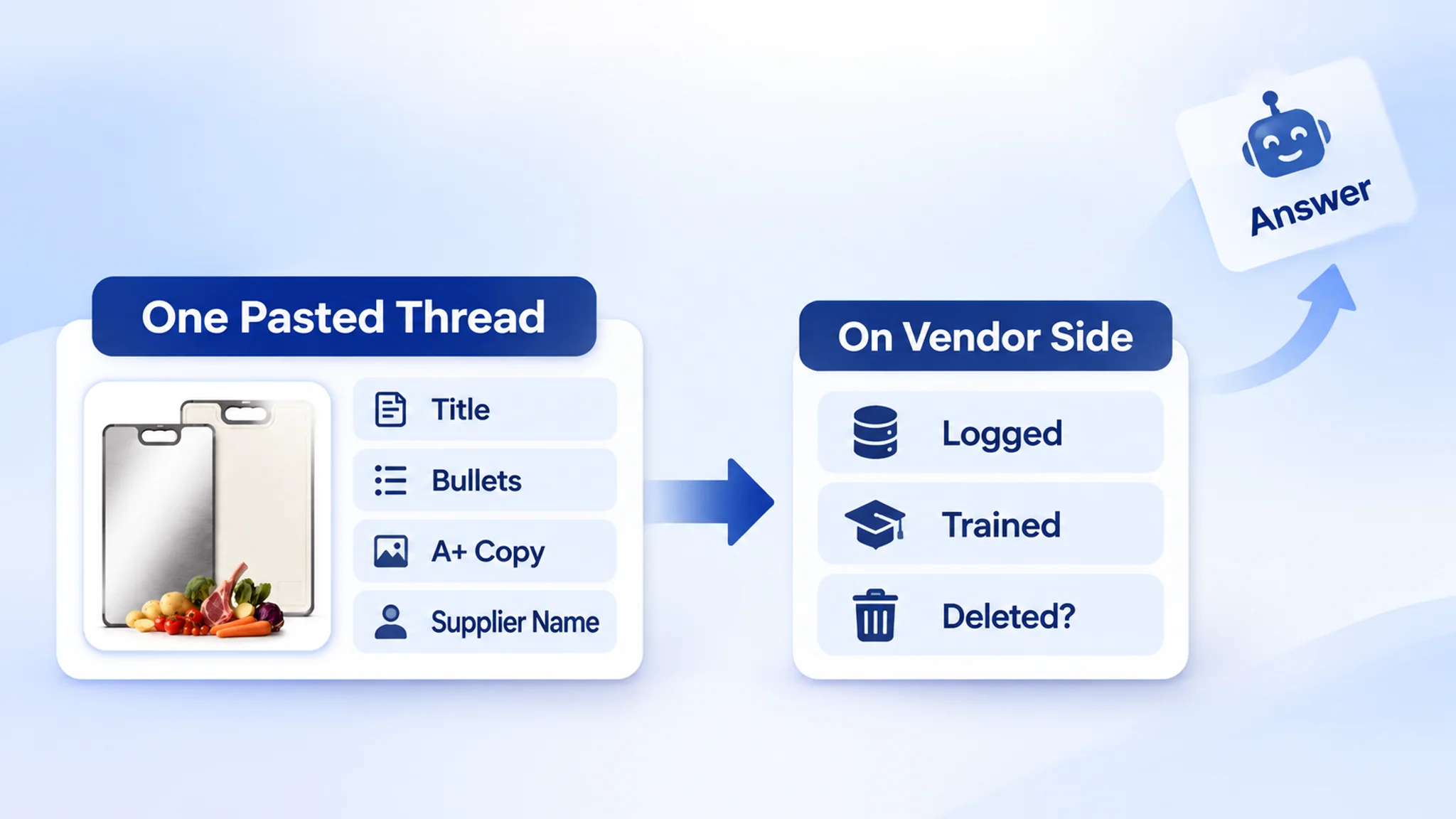
Answer quality is the easier question to test and the less consequential one. Memory and reuse decide what remains on a vendor's side after the tab closes: whether prompts are logged, whether drafts feed model training, and what deletion actually removes. That is the data-handling family. The second family is IP: who owns the generated copy and images, whether a phrase or visual clears against existing rights, and what confidentiality you owe to supplier names and unannounced launch dates.
A kitchen prep seller's stainless steel cutting board page makes the privacy question less abstract. The review depended on title structure, bullet hierarchy, A+ modules, image slots, and competitor ASIN signals—image sequence, A+ flow, and bullet order. None of that is a generic prompt. It is commercial context. The team's first instinct was to treat weak orders as a campaign-structure, bid, or keyword problem; the diagnosis instead found the largest gaps in the A+ page and review footprint, with the main image and bullets trailing by smaller margins. The point for privacy is not the score itself. It is that listing inputs carry strategy, positioning, and claim choices that a tool may retain long after the answer is delivered.
DeepBI's workflow makes the boundary concrete. It operates on Amazon listing inputs—title, bullets, images, A+ modules—and includes a seller approval step with an original-versus-proposed comparison before anything syncs through SP-API. Approved images then map to slots such as Main, PT01–PT06, and A+ modules. Those are the surfaces worth naming when you review any tool's defaults.
The 2025 Edition Lens: Retention, Opt-Out Design, and Business Model
A published 2025 comparison weighted prompt retention most heavily, at about 25%, followed by training opt-out at about 20%, then jurisdiction and transparency at about 15% each. That is a rubric, not a verdict. The weights express what the authors valued; another rubric could prioritize vendor auditability or data location and produce a different ranking. Read any comparison by asking what is weighted and why, not by scanning the final order. Different tools optimize different dimensions, so the result should inform a choice, not crown a single winner.
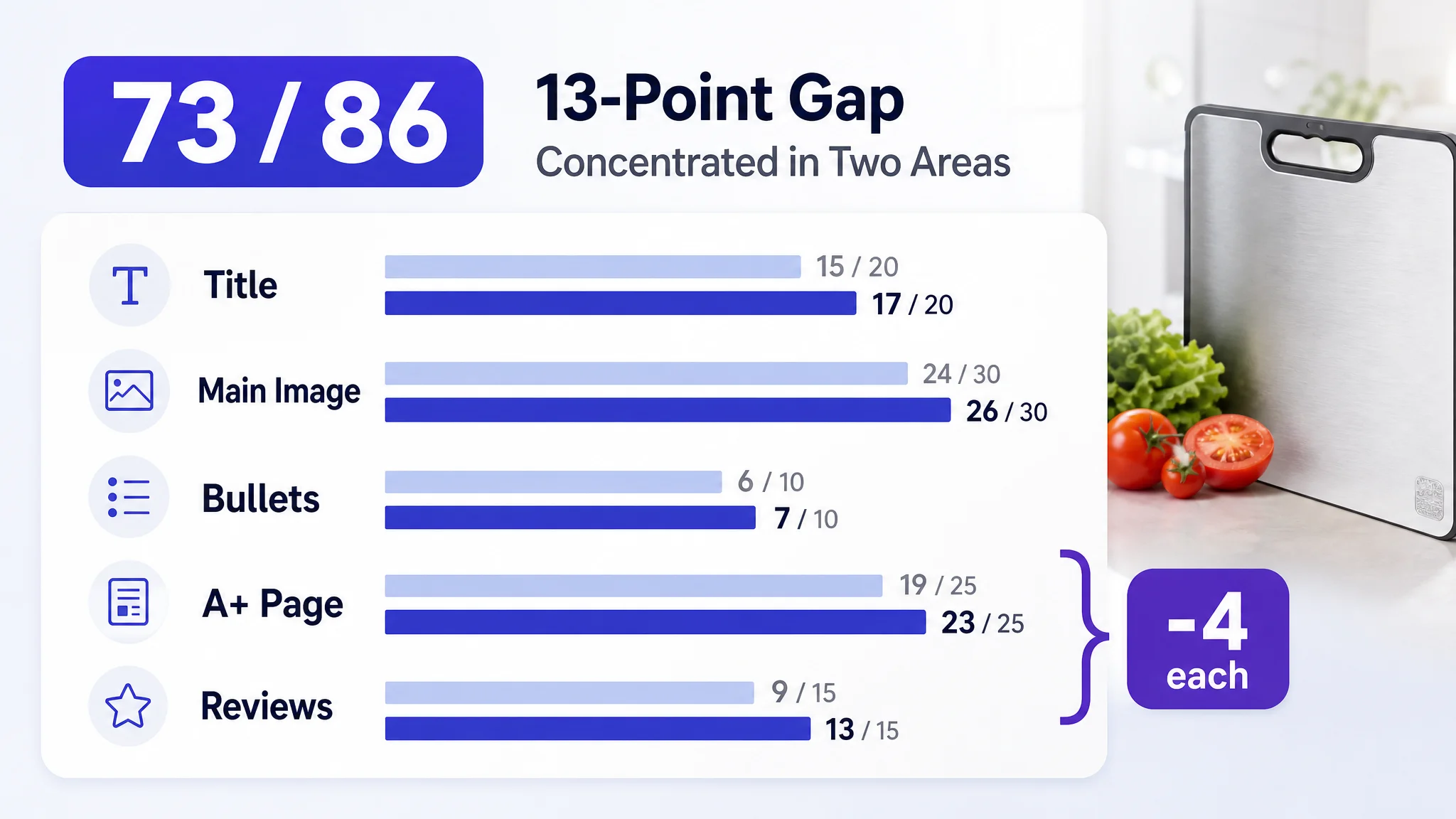
The same discipline applies when a score looks authoritative. In the cutting-board review, the total was 73 against an 86-point benchmark—a 13-point gap. Read as a single number, it could have justified another round of ad tuning. Read as a distribution, it told a different story: title scored 15 against 17 out of 20; main image 24 against 26 out of 30; bullets 6 against 7 out of 10; A+ page 19 against 23 out of 25; reviews 9 against 13 out of 15. The title, main image, and bullets were each within two points. Those are refinements. The A+ page and review footprint were four points behind each, and together they accounted for most of the 13-point spread. A rubric or benchmark is useful only when you ask which dimensions it weights and whether the gap is concentrated. A total score can point at the wrong work.
The stronger signal lies in the business model beneath the policy. Subscription tools have less incentive to monetize prompts as training data; advertising-supported tools may face a different pull. Incentives are not guarantees, though. Default settings and opt-out design matter more than stated language: a tool that enables training by default and buries the switch behaves differently from one that asks before use, even when both policies say they respect seller data. Policy text alone is weak evidence because it describes intent and exceptions, not the actual path a pasted title or bullet takes.
Run four checks on the inputs you paste into any external AI surface, and before you approve and apply generated assets: Does the tool retain the pasted title and bullets after the session? Is training use on by default? Which jurisdiction governs the data? Is the retention sentence readable by a non-lawyer?
DeepBI's scope in this comparison is deliberately narrow: Amazon listing work only. These checks concern which external AI surface touches those inputs, not a DeepBI privacy claim.
Self-Hosted or On-Device Models: What Local Processing Does and Does Not Change
A local model changes where inference runs, not whether the work leaves a record. When a seller drafts listing copy or A+ text on a laptop, the prompt may never travel to a vendor's inference server, which can remove a round trip and reduce exposure in transit. That is a narrower claim than “nothing is kept.” The generated text, prompt history, and application state can still sit in local storage, sync folders, backups, and crash logs. Retention is a design choice, not a property of local execution.
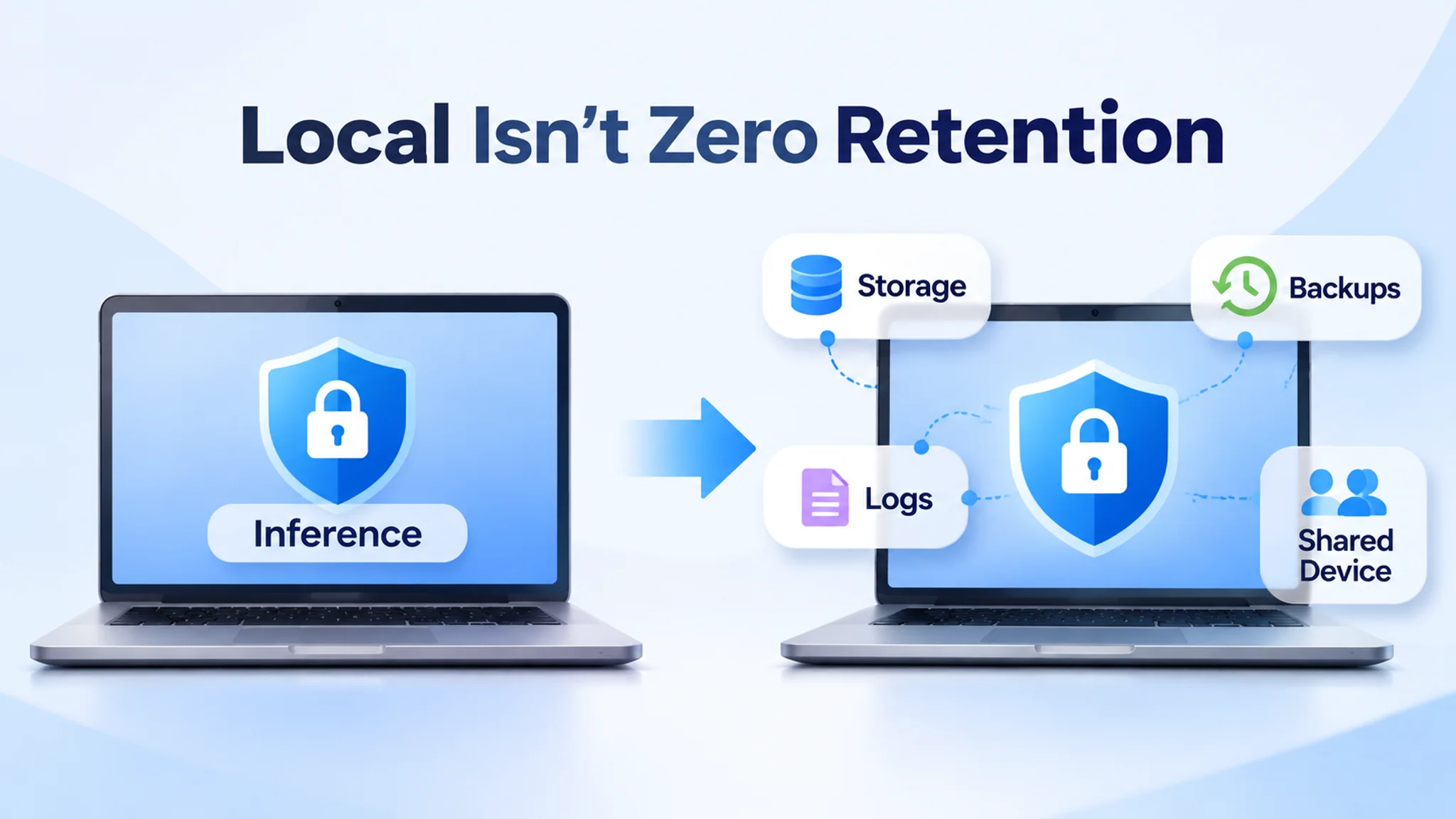
- Device-level access is a separate risk. Other people, shared accounts, or software on the same machine can reach stored drafts even when no inference server is involved.
- Model weights and app behavior still come from a vendor. A downloaded model or desktop app carries defaults, logging, update, and retention behavior the seller does not control.
- The practical test is the retention setting, not the location label: check what is saved, where it syncs, how backups are handled, and who can access the device.
Proton Lumo: Encryption-First Design and Where Its Boundary Sits
With Proton Lumo, encryption-first design is best treated as one point on a spectrum, not a blanket assurance. Three stages matter. Encryption in transit protects copy, image briefs, and A+ drafts while they move between a seller's browser and the service. Encryption at rest protects stored prompts, uploaded assets, and generated outputs on disk. Inference is the boundary: a remote model must read plaintext input to produce an answer. If the tool cannot explain which stage is encrypted and which is not, an “end-to-end” claim is too broad to guide operational decisions.
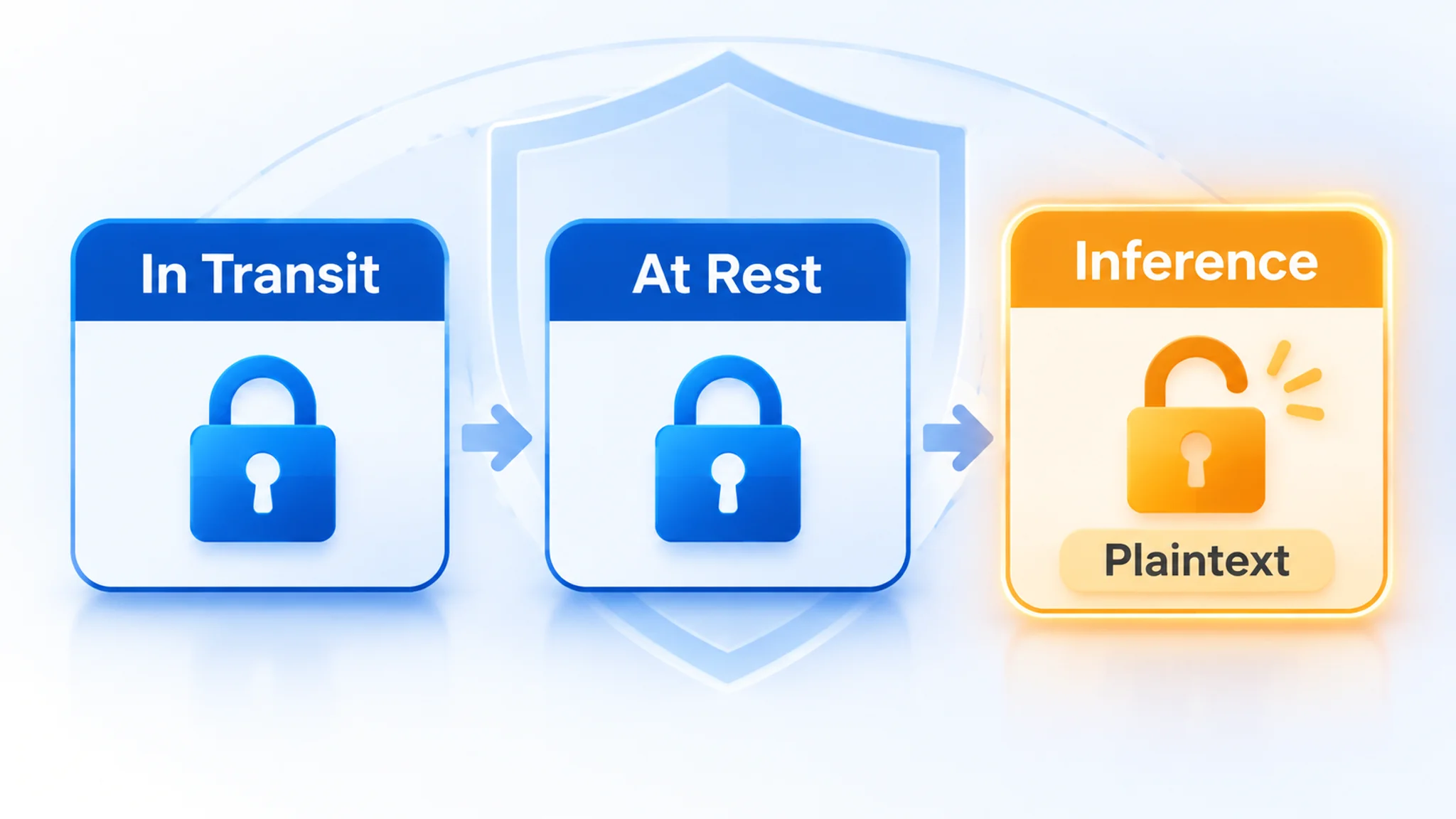
That does not make encryption-first design unimportant. It makes the definition decisive. For Amazon sellers, the practical test is whether sensitive listing work—supplier details, unreleased product angles, image references—is separated from data the model must process. Deletion periods and default retention settings belong in the same claim, and they should be read as changeable defaults rather than permanent guarantees. A short verification step before uploading source files is cheaper than discovering later that a retention window or plan setting has shifted. Treat the boundary as part of the product, not fine print.
Brave Leo AI: Anonymity-First Patterns and Their Limits
Brave Leo AI illustrates an anonymity-first pattern: it strips account identity and IP addresses before a prompt is processed, reducing the link between a query and a seller's account. That is useful when a small team is drafting listing copy or testing claim language, because fewer identifiers travel with the request. The limit matters equally. Anonymity at the client edge does not determine retention by an underlying model provider when the prompt is proxied through the service. Stripping identifiers changes who can be linked to the request; it does not change what the model provider may store. Open-source code adds a second layer of scrutiny, because independent reviewers can inspect the implementation. It still does not prove that the deployed service runs that code; confirming deployed behavior requires audits or reproducible builds. Treat anonymity as one control in the workflow, not as proof of upstream data handling.
Before You Paste Anything: A Four-Check Screen for Listing Inputs
Before a draft, image brief, or A+ outline leaves your workspace, run a short screen. It is not a blanket ban on AI; it separates unapproved consumer tools from approved tools under contract, and ordinary personal data from regulated categories such as education records, health data, and payment data. Use four checks:
1. Necessity — Decide whether the task needs the real value or a placeholder, because a title rewrite often works with a redacted attribute and a competitor benchmark rather than unreleased copy.
2. Retention and training — Check the current default, not the marketing page, because retention windows and training opt-outs can change what you can safely put into a prompt.
3. Jurisdiction and deletion mechanics — Map where the data lands and what deletion actually removes, because a delete button may remove prompt history but not backups, logs, or derived outputs.
4. Contractual allocation — Confirm who owns the output, what copyright warranties exist, and what indemnity is offered for training-data claims, because ownership and indemnity are negotiated terms, not model features.
The cutting-board review is a concrete example of why necessity comes first. The team did not need to paste unreleased copy into a third-party assistant to see the problem. Competitor ASIN listing signals—image sequence, A+ structure, bullet hierarchy—were enough to show that the benchmark proved safety first while the target page described it. That is gap analysis from observable listing surfaces, not from confidential launch material. When the work moves into DeepBI's Listing flow, drafts are generated, reviewed, and then applied via SP-API sync; that approval gate is the natural place to ask which AI surface saw the draft and whether the input needed the real value or a placeholder. A competitor-gap review can work from competitor ASIN listing signals—image sequence, A+ structure, bullet hierarchy—so gap analysis does not require pasting unreleased copy into a third-party assistant.
Data Hygiene: Masking, Tokenization, and the "AI Doesn't Forget" Problem
Pseudonymization swaps identifiers for substitutes while keeping a re-identification route, often through a mapping table, key, or vault. Anonymization aims to remove that route so the data cannot reasonably be tied back to a person or account. The distinction matters because tokenization looks cleaner than it is. A tokenized field is reversible when the mapping table or vault is exposed; treat it as pseudonymization, not true anonymization.
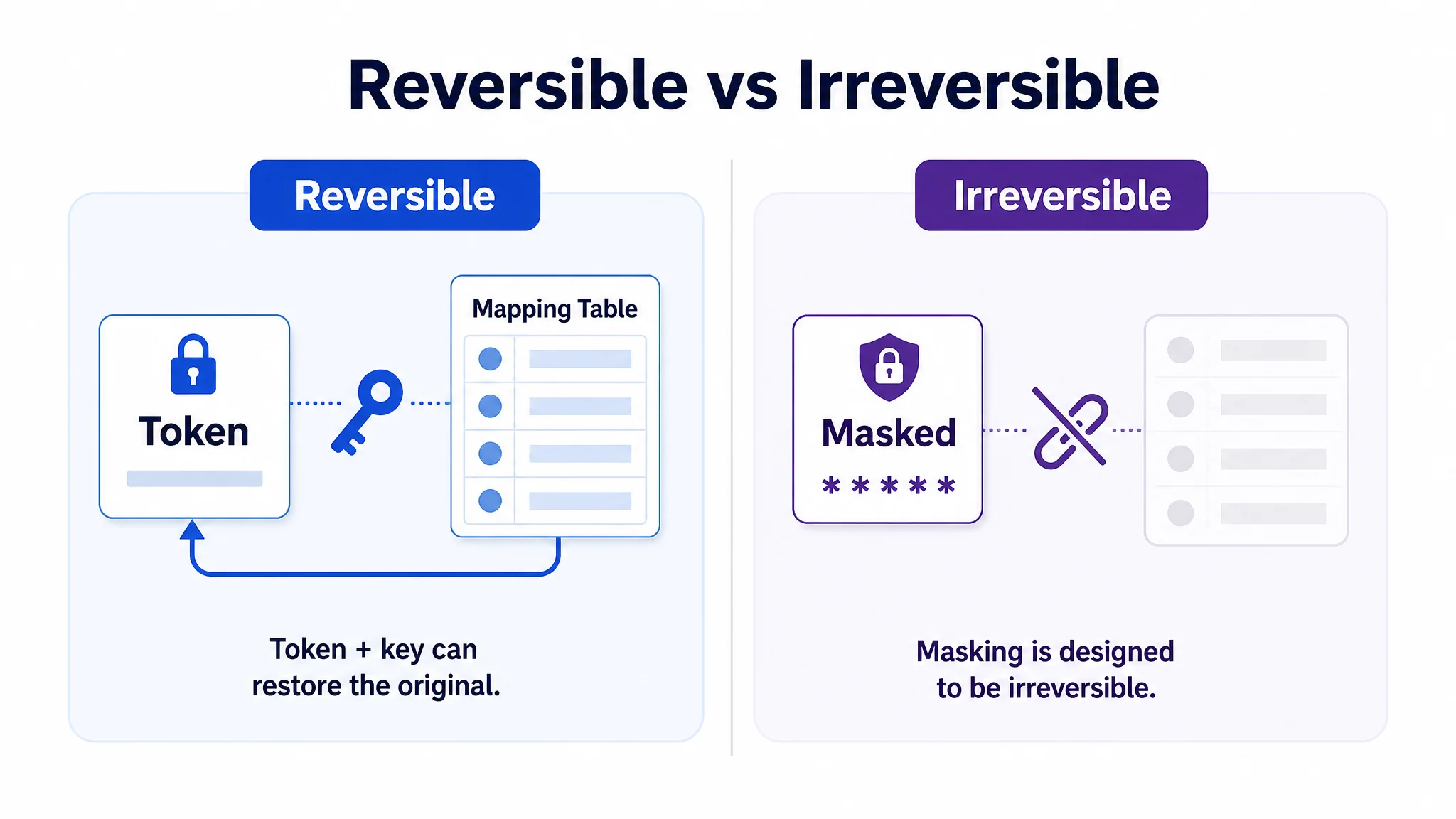
Static masking is designed to be irreversible. It is a strong control before data enters a pipeline, especially when paired with access controls and audit trails. The goal is not decoration; it is to reduce the blast radius if a prompt, log, or vendor interface is later inspected.
“AI doesn't forget” is shorthand. The practical risk is memorization: models can memorize and later expose training data. Sensitive data should stay out of pipelines unless it is irreversibly masked and governed. That includes cost structures, supplier terms, and unannounced launch dates.
The listing-generation step needs product attributes, not your margin sheet. A bullet draft requires shape, material, visible structure, confirmed dimensions, logo placement, and selling points. It does not require cost structures, supplier terms, or unannounced launch dates. Keep those out, and use least-privilege access and traceable inputs so the draft can improve CTR and CVR without dragging commercial secrets into the model.
The cutting-board page is a useful test of that boundary. A bullet draft for that product needed material facts—304 food-grade stainless steel, a non-toxic wheat straw side, a non-porous surface, the raw/cooked separation logic, a juice groove, a non-slip edge—not margin data or supplier terms. The diagnosis also had to distinguish a description from a proof: the benchmark quantified groove capacity and depth where it could, while the target listing stayed qualitative. Those are product attributes and claim evidence. They are not the commercial secrets that should be dragged into a model.
Who Owns AI-Assisted Listing Copy, Images, and Brand Assets?
Ownership is not one question. A listing package can contain patentable features, copyrightable listing copy or images, brand identifiers, and confidential workflow data, each governed by different rules.
Patent law asks who invented. U.S. patent law and the European Patent Convention require a human inventor; an AI tool cannot be named as inventor, even when it generates candidate designs.
Copyright asks who authored. U.S. copyright law requires human authorship. European copyright treatment is less uniform; the UK, for example, has a statutory provision addressing computer-generated works. Vendor terms can allocate rights in outputs, but they do not turn non-human generation into human authorship.
Human contribution is central to inventorship and authorship, but it is not the governing test for trademark or trade secret. Trademark asks whether a sign is used in commerce as a source identifier. Ownership of AI-assisted branding does not follow automatically from deploying the tool; use, registration, and contracts matter.
Trade secret protection is earned through access controls, confidentiality obligations, and audit trails, not asserted after the fact.
Outputs lacking copyright may be vulnerable to copying, but that does not make them free to take. Trademark rights, patent rights, trade secret duties, platform rules, and contractual restrictions may still apply.
The cutting-board review shows why this is not a theoretical distinction. The benchmark's A+ strength came substantially from third-party certification visuals, a professional endorsement, and a comparison module. Copying that structure would have been the obvious move and the wrong one: the seller did not hold those certifications and had no credentialed expert to attach to the brand. An AI-drafted module that imitates a certification badge or expert endorsement does not become safe to use because a tool generated it. Copyright, trademark, platform rules, and false-endorsement risk can all attach to the asset, not just to the prompt that produced it. Competing on the same anxiety with verifiable material facts—304 stainless steel, wheat straw, non-porous surface, separation mechanism—was slower and more defensible.
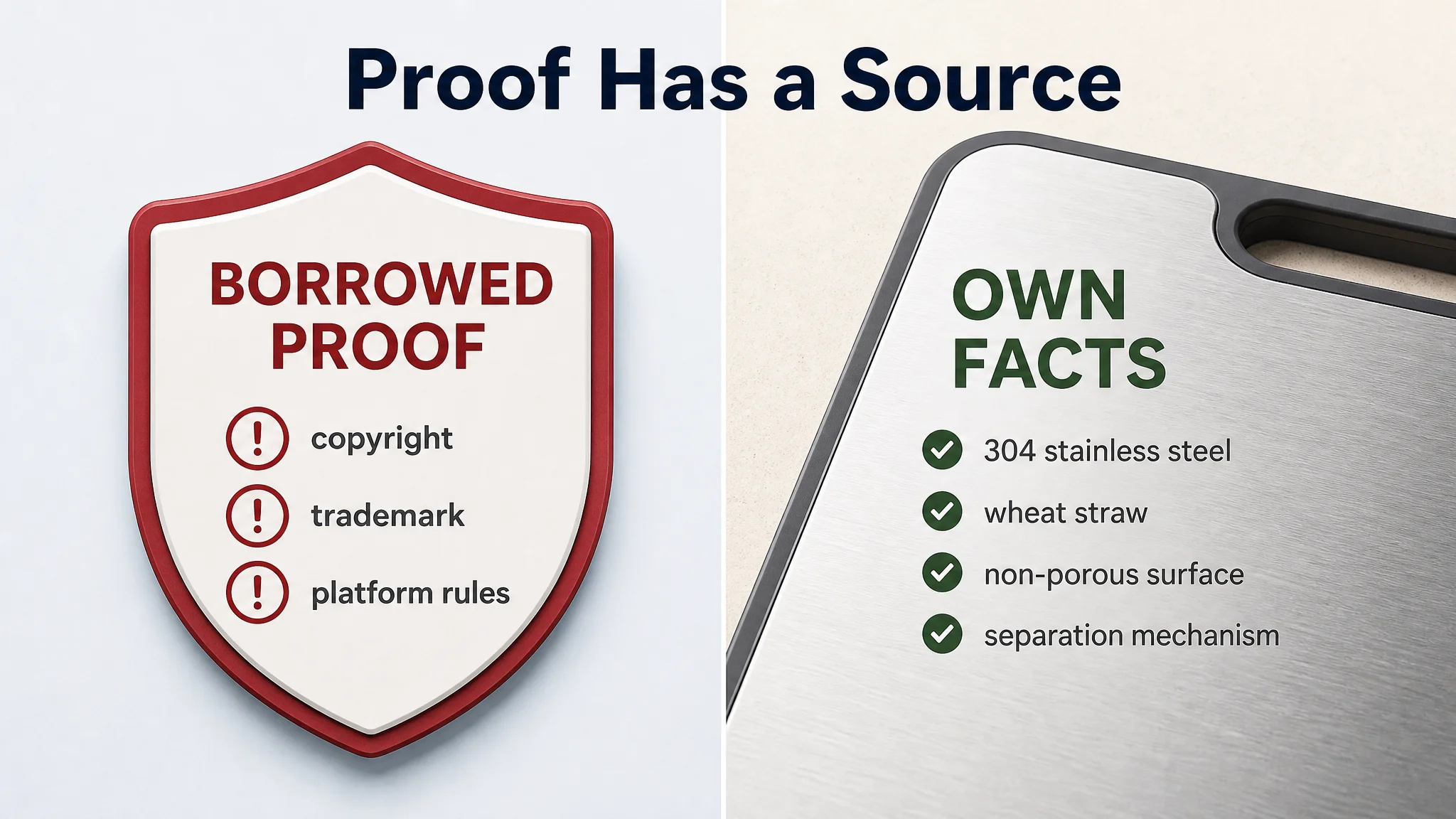
DeepBI's listing image-and-text generation produces drafts that a seller reviews and applies. Who owns those drafts is answered by the seller's contracts and by authorship doctrine, not by the tool that drafted them.
Five Misconceptions That Quietly Raise Your AI Data Risk
Risk rarely arrives through one dramatic breach. It accumulates through small assumptions made while drafting listing copy, approving images, and syncing content live.
- Opt-out equals deletion. An opt-out typically changes future use, not the copy already stored or logged. Ask what is deleted, from where, and whether backups follow the same schedule; confirm that before a draft moves through approval and sync.
- The vendor automatically owns AI-generated listing copy. Ownership is set by contract, platform terms, and applicable law, not by who supplied the prompt. Check the commercial terms before treating generated titles or A+ text as freely transferable assets.
- Local processing or a “private” tool means nothing is retained. On-device work can still leave caches, logs, exports, and device backups, while many private tools save chats locally by default. Separate server-side retention from what sits on your laptop or shared drive before uploading supplier images or unreleased copy.
- Open source means the live service is verified. Public code does not prove how a hosted service is configured, which subprocessors it uses, or what it retains. Review the service terms and data-flow documentation, not only the repository.
- No training opt-out exists. A blanket claim is often wrong; an opt-out may exist but be narrow, buried, or limited to certain models. Locate its scope and record it, rather than assuming either full protection or no option.
Putting It Together: A Repeatable Privacy-and-IP Routine
A privacy checklist that lives in one person's head rarely survives a team, a resignation, or a busy launch week. The same is true of an IP review performed once at contract signing. What holds up is a short sequence that runs on every listing draft, whether the copy came from a person, an approved AI workspace, or a mix of both.
1. Classify the input before drafting — separate public product facts from regulated or commercially sensitive material, and route the second category to an approved tool only.
2. Apply the four checks to the draft before it moves downstream, since a check run after upload is a cleanup rather than a control.
3. Mask or placeholder anything that cannot be irreversibly masked, remembering that tokenization is reversible when the mapping is exposed, while static masking is designed not to be.
4. Confirm output ownership in writing, because vendor terms vary and the agreement, not the interface, may govern what you can reuse.
5. Log the approval with a date, a named reviewer, and the asset it covers, so traceability does not rest on memory.
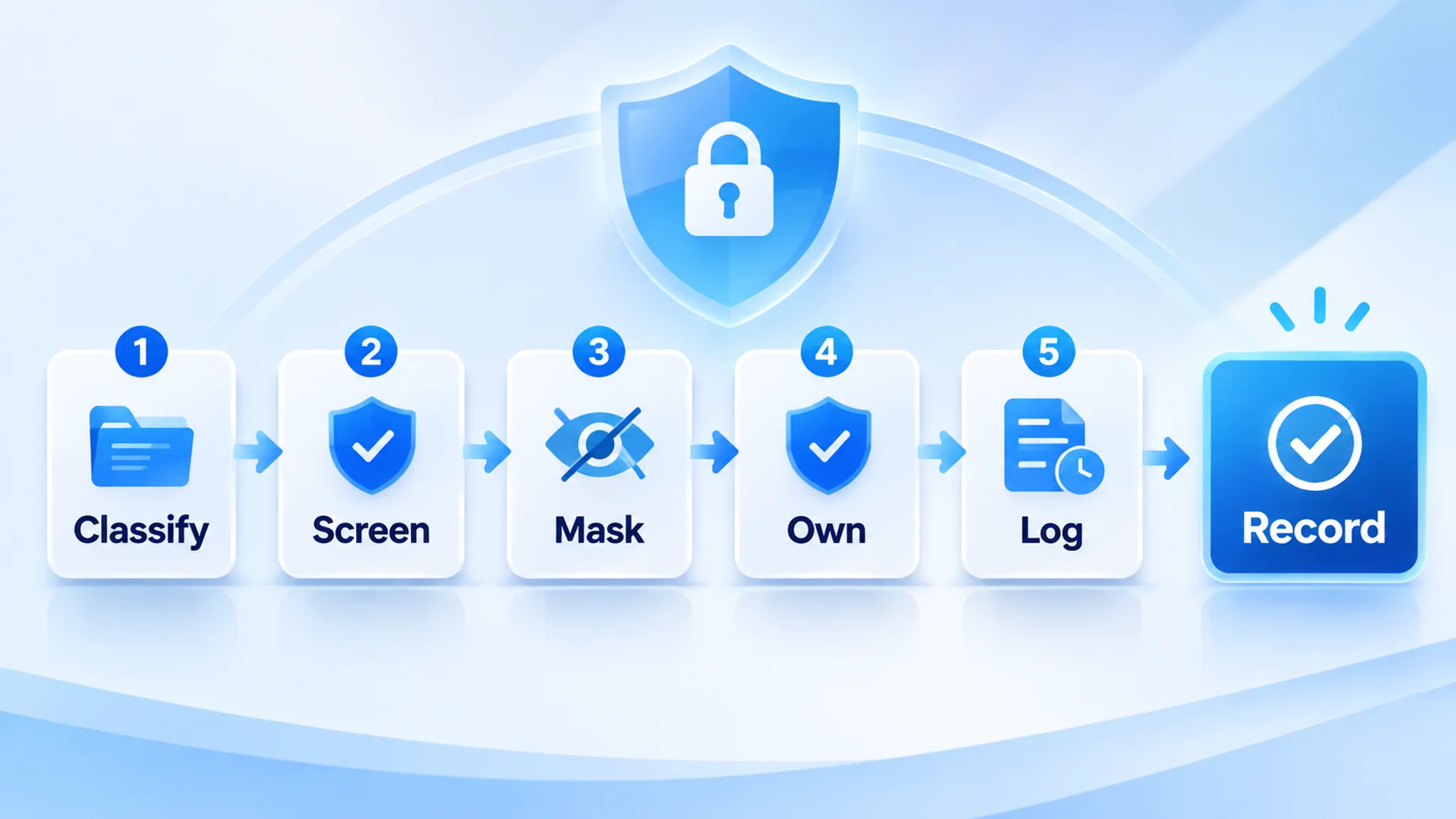
The cutting-board project shows why the routine has to run before the spend decision, not after. The team's first instinct was campaign structure, bids, and keyword precision; the score distribution pointed to A+ and review footprint as the largest gaps, with title, main image, and bullets as refinements. Fixing the title would have been visible work; fixing the A+ page was the work that mattered. A privacy-and-IP routine follows the same order: classify the input, apply the checks before the draft moves downstream, mask what cannot be safely used, confirm ownership, and log the approval with a date and a named reviewer. That record is what remains when a claim, takedown request, or internal audit arrives—and it is more useful than a one-time vendor review that answered the question once.
A one-time vendor review answers the question once. This routine answers it on every SKU and every listing cycle, and leaves a record you can produce when a claim, a takedown request, or an internal audit arrives.