

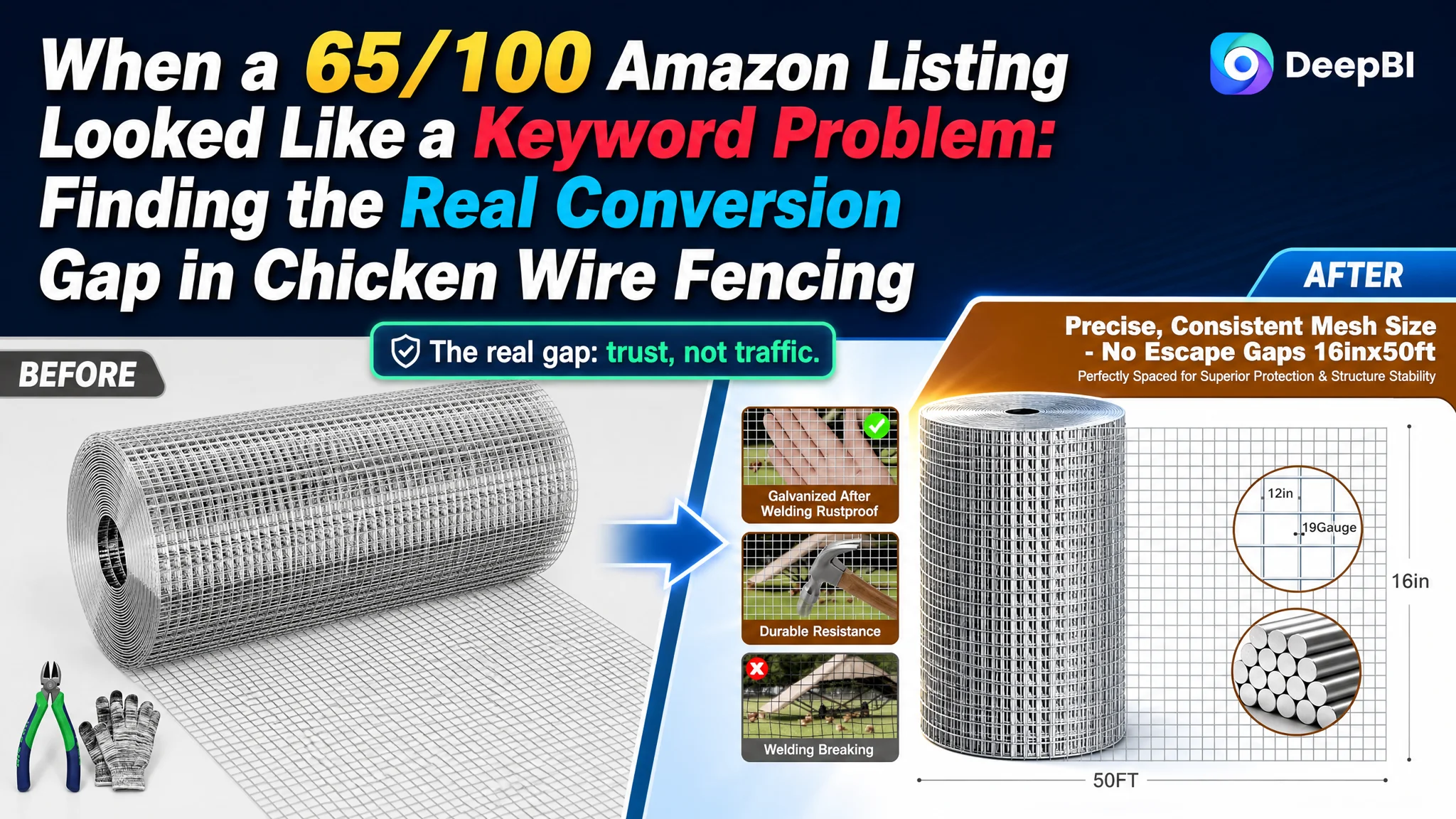
An Amazon seller in the US hardware cloth category was facing a familiar problem: the product page contained the expected specifications, applications, and technical claims, yet its Listing was still materially weaker than a comparable high-performing Amazon Listing. The initial instinct was to improve keyword placement, refine the title, and make the product images more attractive.
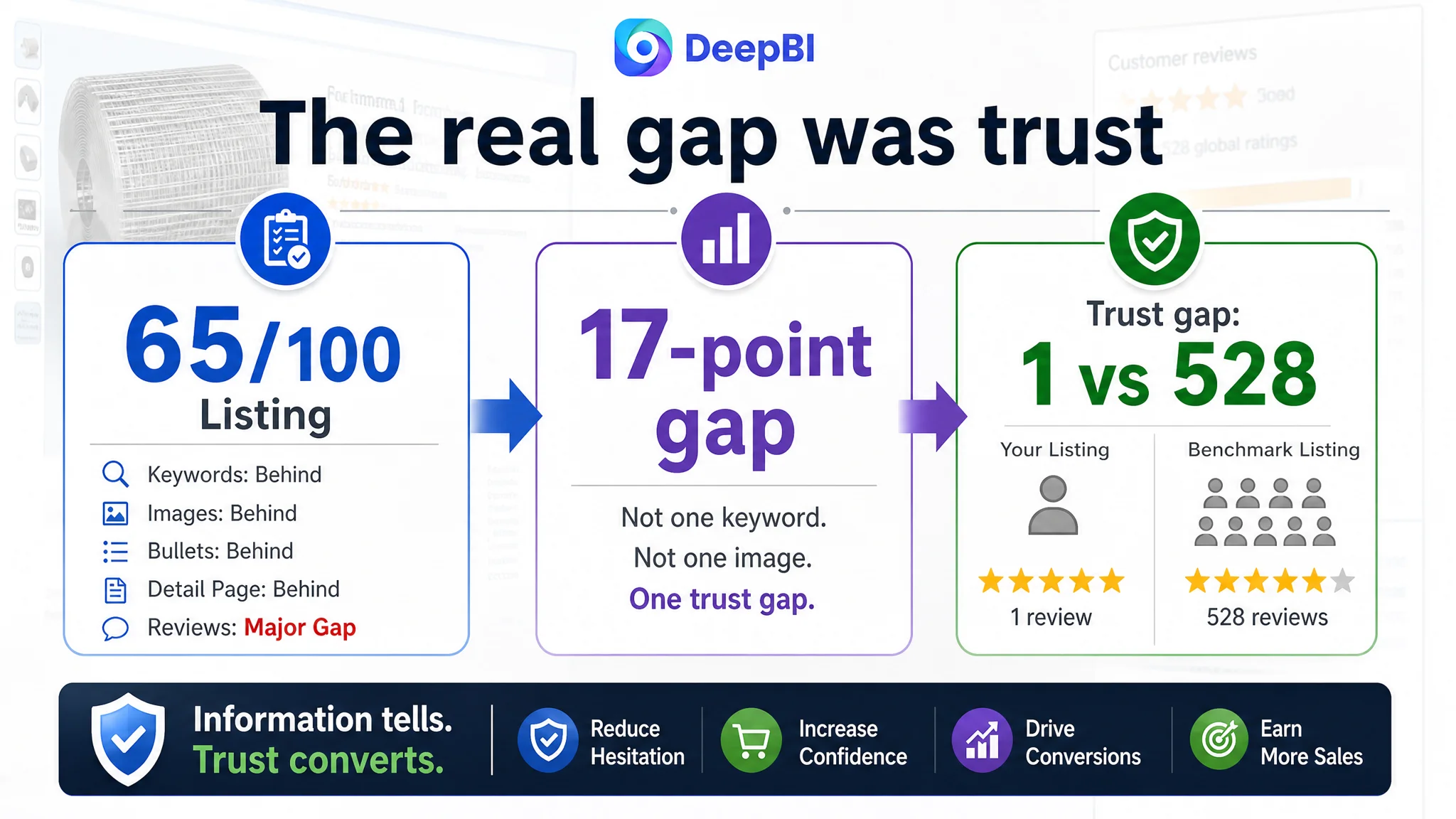
DeepBI found that the larger issue was not one missing keyword or one weak image. The Listing lacked enough trust-building evidence to convert traffic confidently. Its score was 65/100 against the benchmark Listing’s 82/100, with the most serious gap appearing in customer proof: one review versus 528.
The later optimization therefore focused on rebuilding the Amazon product page as a decision path: make the product’s specifications easier to understand, show how it protects poultry and gardens, demonstrate the “welded first, galvanized after” process, reduce installation uncertainty, and add stronger A+ content. The case offers a practical lesson for Amazon sellers: before sending more traffic to a product page, determine whether the page has enough proof to deserve that traffic.
The Amazon Listing Had Information. It Did Not Yet Have Enough Persuasion.
The product was a galvanized hardware cloth roll designed for applications such as chicken coops, garden fencing, animal cages, tree guards, and other DIY protection projects.
On paper, the Listing covered many of the right subjects:
- Product dimensions
- Vinyl coating and galvanized construction
- Outdoor and garden applications
- Protection against animals and pests
- Compatibility with different installation methods
- Safety details around handling and cutting
The problem was not a complete absence of information. The problem was how that information performed against a stronger Amazon Listing.
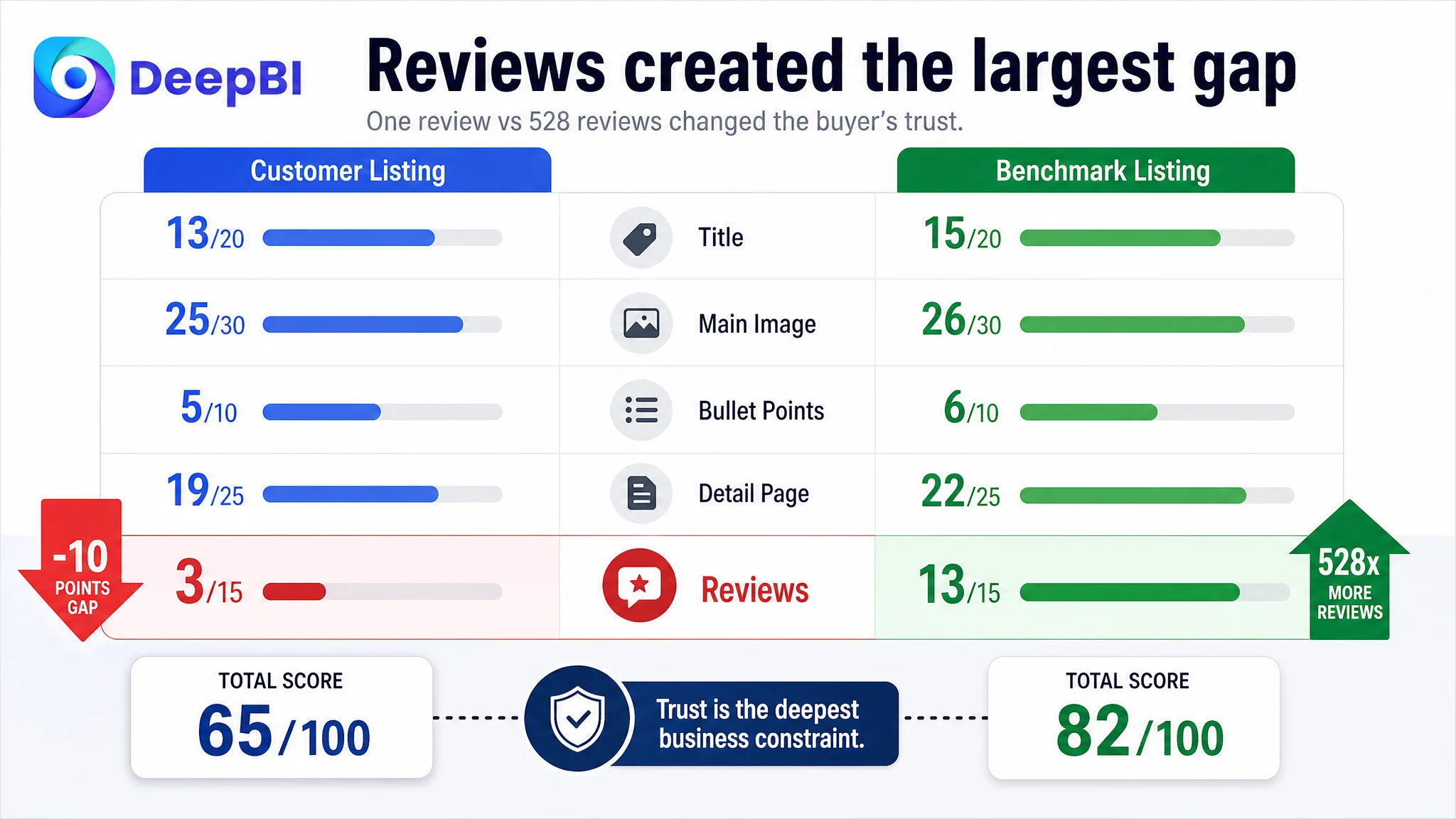
The benchmark Listing scored 82 out of 100. The customer’s Listing scored 65.
That 17-point difference was not evenly distributed. The title, main image, bullet points, and detail page were behind, but only by one to three points in each dimension. The review dimension was different:
- Title: Customer Listing: 13/20, Benchmark Listing: 15/20
- Main image: Customer Listing: 25/30, Benchmark Listing: 26/30
- Bullet points: Customer Listing: 5/10, Benchmark Listing: 6/10
- Detail page: Customer Listing: 19/25, Benchmark Listing: 22/25
- Reviews: Customer Listing: 3/15, Benchmark Listing: 13/15
- Total: Customer Listing: 65/100, Benchmark Listing: 82/100
The most visible content gaps were not the deepest business constraint. Trust was.
The Original Direction Focused on Keywords, Specifications, and Visual Polish
The Listing’s title did have a keyword structure problem. “Hardware Cloth” appeared early, but the longer vinyl-coating description weakened the position of later terms such as “Chicken Wire.” The title also repeated the product dimensions and spread use cases across too many applications.
That made title refinement reasonable. A stronger title could place “Chicken Wire Fence” and “Galvanized Hardware Cloth” closer together, retain the 19-gauge and 1/2-inch mesh information, and connect the product to specific use cases such as chicken coops, garden fencing, and predator barriers.
The same was true of the images. The customer’s visual assets included useful technical details, such as a digital caliper measurement and close-ups of the steel roll. But the overall presentation leaned toward a product instruction sheet. It did not create the same immediate connection between the product and the buyer’s concern:
- Will this protect my chickens?
- Can it block smaller animals?
- How large is a 1/2-inch opening in real life?
- Can I cut and install it myself?
- Will the welded points resist outdoor corrosion?
- What does the product look like when installed?
This can lead teams toward a familiar diagnosis: the Listing needs better keywords, more images, or more polished creative.
Those actions address real weaknesses. They were simply not enough to explain the scale of the conversion gap.
The Review Gap Changed the Meaning of Every Other Gap
The most important finding was the difference in customer proof.
The customer Listing had:
- A 5.0-star rating
- One total review
- No review displayed on the first page
The benchmark Listing had:
- A 4.6-star rating
- 528 total reviews
- Eight reviews visible on the first page
The customer’s rating was technically higher, but that advantage had little persuasive value. One five-star review does not provide the same level of market validation as hundreds of reviews, especially for a product used in outdoor protection projects where buyers are concerned about durability, corrosion, cutting, installation, and actual animal resistance.
This is why the review score was only 3 out of 15 compared with the benchmark’s 13.
A buyer may understand the product specifications and still hesitate at the final decision point. For hardware cloth, the purchase is not only about the roll itself. It is about whether the material will perform after installation, whether the mesh size is accurate, whether the welds will hold, and whether the product can be trusted around poultry, gardens, or animals.
Without enough customer evidence, the page had to do more work through its own content. Instead, several of its claims remained largely declarative.
The Listing did not only need to explain what the product was. It needed to show why a buyer should believe it would work.
DeepBI Reframed the Problem as Listing Conversion Capacity
DeepBI’s diagnosis did not treat the 65/100 score as a general quality problem. It examined where the score was being lost and how the individual gaps interacted.
The conclusion was that the Listing’s primary constraint was conversion capacity: the product page was not yet strong enough to convert paid or organic Amazon traffic with confidence.
This distinction matters.
If the problem had been primarily search visibility, the first priority would have been keyword coverage and title structure. If the problem had been only click-through rate, the main image would have carried more weight. But the evidence showed a broader issue:
- The title did not express the product’s value in the most concentrated way.
- The main image lacked a strong application or scale cue.
- The bullet points described features more often than outcomes.
- The detail page lacked visual proof for important technical claims.
- The review base did not provide meaningful validation.
These were not isolated content defects. Together, they created a weak decision path.
The customer’s Listing told shoppers that the product was galvanized, flexible, multi-purpose, and suitable for outdoor use. The benchmark Listing more consistently connected those attributes to outcomes: corrosion resistance, predator protection, installation guidance, cutting convenience, and service reassurance.
That difference explains why a small score gap in several content dimensions could become a much larger commercial problem when combined with a ten-point review gap.
The Title Needed to Support Conversion, Not Just Search Coverage
The title optimization was not about adding every possible use case. It was about making the product’s commercial role easier to understand.
The existing title covered broad applications such as rabbit and snake fencing, but its keyword layout was somewhat dispersed. It also repeated the dimensions at the end after already presenting them near the beginning.
The recommended direction concentrated the title around:
- Chicken wire fence
- Galvanized hardware cloth
- 19-gauge metal wire mesh
- 16-inch by 50-foot dimensions
- Chicken coop and garden fencing
- Barriers against snakes, rabbits, raccoons, and foxes
This structure improves more than search relevance. It gives the shopper a clearer answer to three immediate questions:
1. What is the product?
2. What is it used for?
3. What problem does it help prevent?
The change is therefore not simply a keyword rearrangement. It is a move from broad product description toward a more direct buying context.
The Bullet Points Had Features, but Not a Full Buying Logic
The customer’s bullet points emphasized material, dimensions, protection, applications, and safety. The benchmark Listing arranged those subjects into a more persuasive sequence.
The recommended structure followed a clearer progression.
Start with the technical reason to trust the material
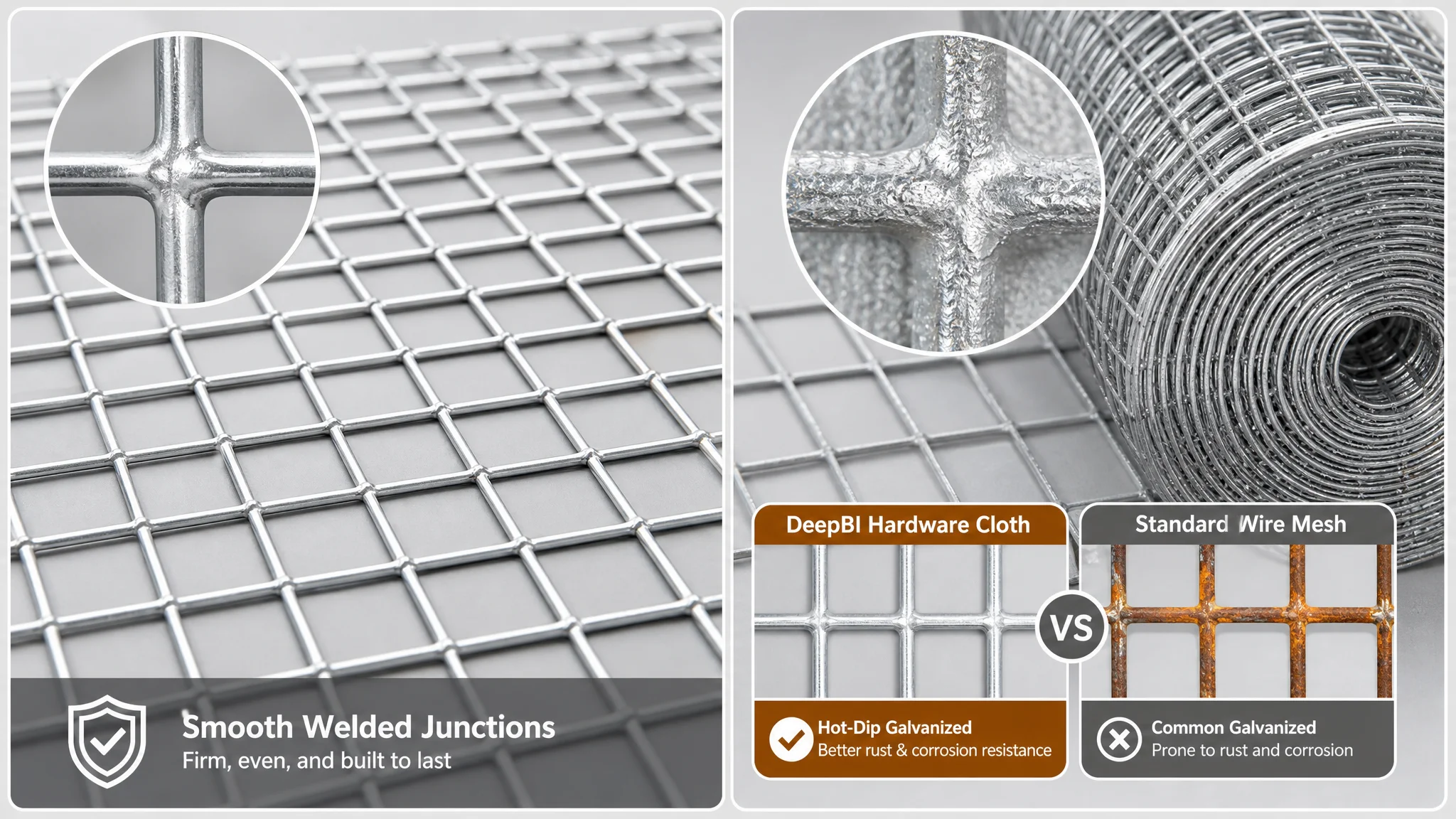
The first bullet should explain the “welded first, galvanized after” process and why it matters. The point is not to use technical language for its own sake. It is to connect the manufacturing sequence to outdoor corrosion resistance and long-term use.
Make the size understandable
“19 gauge,” “16 inches by 50 feet,” and “1/2-inch by 1/2-inch openings” are important specifications, but specifications alone are abstract. The copy should also clarify how the product can be cut, bent, and installed, while retaining the handling reminder to wear gloves.
Expand use cases without losing focus
The Listing could connect the product to chicken coops, rabbit cages, bird aviaries, tree guards, soil screening, gutter guards, and window protection. These applications help different buyers recognize their own project in the page.
Turn predator protection into a concrete use case
Rather than describing the mesh only as a general fence, the copy can connect the 1/2-inch openings to specific animals such as snakes, squirrels, raccoons, gophers, and foxes. Installation guidance, such as extending part of the fence below ground to help address burrowing animals, adds practical value.
End with safety and support
The final bullet can combine sanded edges, compatibility with stakes and zip ties, and responsive installation support. This gives the page a more complete close: product capability, application guidance, and reassurance.
The goal was not to make the bullets longer. It was to make each bullet answer a different decision question.
The Main Image Was a Click Problem, but Not Only a Click Problem
The customer’s main-image set contained technically credible details, but the visual system did not consistently communicate scale, use, or urgency.
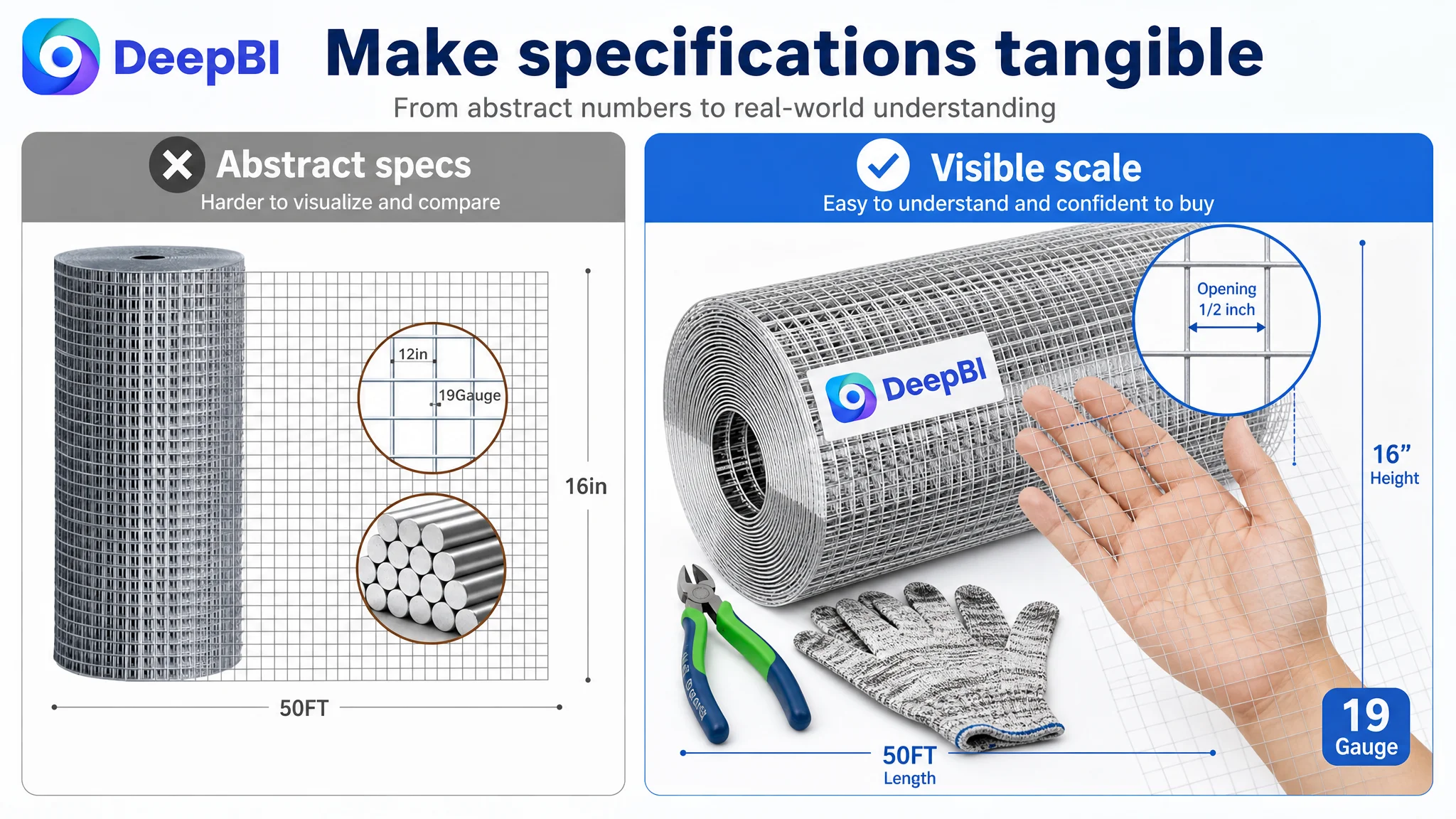
A mesh product is difficult to evaluate from a flat roll alone. The buyer may not immediately understand:
- How large the openings are
- How thick the wire appears in real use
- How the roll is handled
- How it looks when installed
- Whether cutting will be difficult
- What type of animal or project it is intended to protect
The proposed visual direction therefore combined industrial precision with real outdoor application:
- A clear product-centered composition
- A scale reference for the 1/2-inch mesh
- Close-up detail of the welded and galvanized surface
- Real installation around a chicken coop or garden
- Demonstration of cutting and customization
- Outdoor scenes that show the product’s practical role
For Amazon execution, these visual ideas should be assigned to the appropriate image positions and A+ modules. The primary image must remain within Amazon’s image requirements; explanatory graphics, predator scenarios, measurement callouts, and installation demonstrations belong in compliant secondary images or A+ content where appropriate.
The deeper decision was not “make the images more attractive.” It was:
Use each visual position to remove one specific source of buyer uncertainty.
The A+ Content Was Missing the Evidence Layer
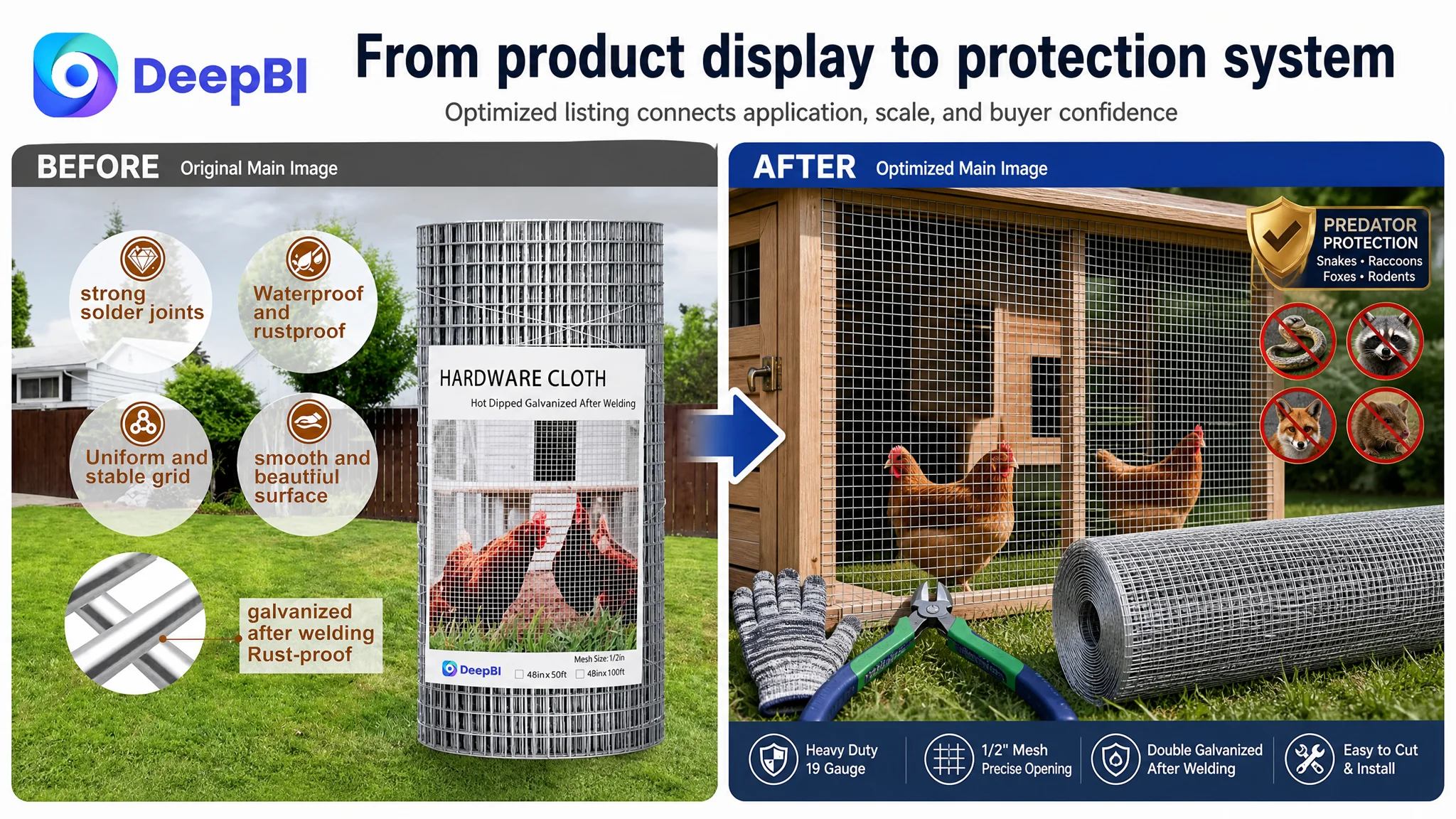
The customer’s detail page included a main application scene, feature icons, animal-protection graphics, process comparisons, and multi-use scenes. But compared with the benchmark Listing, it lacked several forms of tangible evidence.
The benchmark Listing made important claims easier to see:
- The 1/2-inch opening shown in close-up
- A hand used as a scale reference
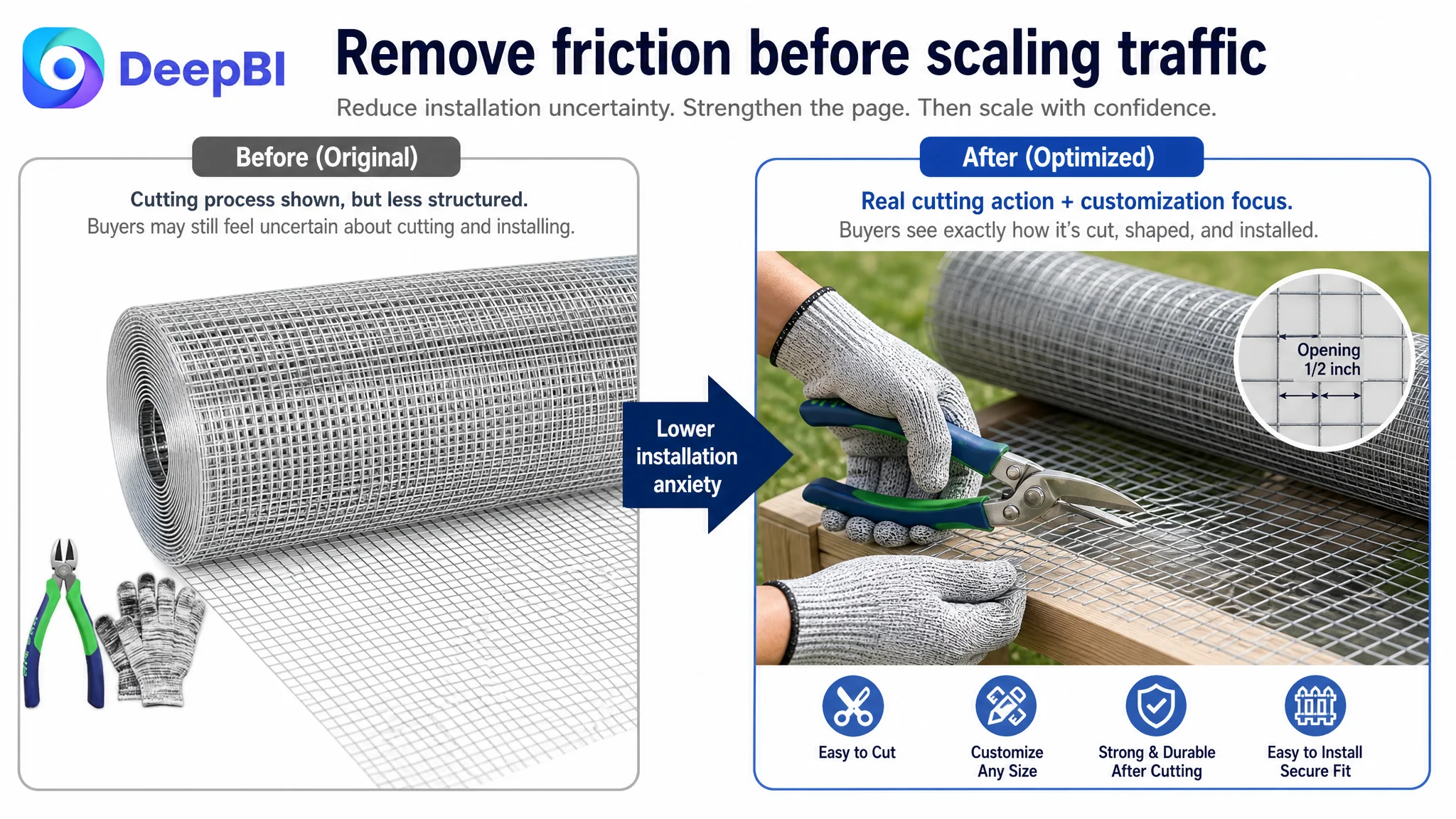
- Cutting demonstrated with a real tool
- The product shown in installed environments
- A more consistent visual color system
- A question-and-answer structure addressing technical concerns
By contrast, the customer’s page relied more heavily on written statements such as “hot-dip galvanized after welding.” That wording may be accurate, but it asks the shopper to accept the claim without enough visual confirmation.
The recommended A+ direction followed a sequence of buyer questions.
What is this product used for?
Open with the roll in a real chicken-coop or outdoor setting, supported by concise benefit cues such as rust resistance, heavy-duty construction, pet safety, and multi-purpose use.
What problem does it address?
Show the installed mesh as a physical barrier in a farm or garden environment, with specific predator and pest concerns represented clearly.
Why should the material be trusted?
Use a close-up of the welded points and galvanized surface, connected to the outdoor durability claim without adding unsupported technical promises.
What does the specification look like in practice?
Use a close-up of the 1/2-inch opening and a hand reference so shoppers can understand the scale visually.
Can I install it myself?
Show the cutting process and the product being adapted to a cage, frame, or garden structure. The emphasis should be on practical handling, not merely on saying “easy to use.”
What else can I do with it?
Present garden fencing, tree protection, rodent barriers, and other applications in a consistent visual system.
What questions might stop the purchase?
Use a concise Q&A section to address the galvanizing sequence, whether the product is coated or woven, and its intended pest-protection uses.
This is how A+ content becomes part of conversion strategy rather than a collection of decorative modules.
Why DeepBI Did Not Recommend Tuning Ads First
The case material does not include post-optimization advertising data such as CTR, CVR, ACOS, or TACOS. It would therefore be inaccurate to claim that ad performance improved after the Listing changes.
The decision logic is still clear.
If Amazon ads are sending shoppers to a page with weak proof, increasing bids or expanding campaigns can amplify the page’s existing limitations. More impressions may create more opportunities to be judged, but they do not automatically create more trust.
At this stage, continuing to adjust ads first would risk treating a page-level conversion constraint as a traffic problem.
The Listing needed to be strengthened before the team could fairly evaluate the value of additional traffic. That meant improving the page’s ability to:
- Communicate the product’s purpose quickly
- Make technical specifications tangible
- Connect features to protection outcomes
- Reduce installation anxiety
- Demonstrate outdoor use
- Compensate, as far as content can, for limited review proof
Advertising can bring a shopper to the product page. It cannot provide the product page’s missing evidence.
The Final Direction Was a More Complete Amazon Buying Path
The recommended change was not one isolated title rewrite or one new image. It was a coordinated Listing direction:
- Concentrate the title around the core product and its most relevant applications.
- Reorder bullet points around technical proof, specifications, use cases, protection, and support.
- Use secondary images to explain scale, handling, installation, and application.
- Rebuild A+ content around product introduction, pain points, material credibility, dimensions, DIY use, and broader applications.
- Use a consistent visual system so the page feels like one professional product story.
- Recognize the review gap as a major trust limitation rather than assuming a 5.0-star rating alone solved the problem.
The intended operating state was a page capable of receiving both organic and paid Amazon traffic with a clearer sales logic.
Because no after-change metrics were provided, the case does not claim a specific CVR increase, ACOS decline, or organic-order recovery. The supported result is a change in diagnosis and decision order: the seller had a clearer understanding that Listing conversion quality had to be addressed before traffic expansion could be judged properly.
What This Amazon Case Changes for Sellers
This hardware cloth Listing illustrates a common Amazon operating trap. A page can have the right keywords, acceptable images, and a perfect star rating while still lacking the evidence needed to convert at scale.
The more useful questions are:
- Is the title describing the product or clarifying its buying purpose?
- Do the bullet points connect specifications to outcomes?
- Can shoppers understand the mesh size without touching the product?
- Does the page demonstrate how the product is installed and used?
- Are technical claims supported by visible proof?
- Does the Listing have enough review depth to carry trust on its own?
- Would more advertising improve the result, or simply expose the same conversion weakness to more shoppers?
For Amazon sellers, the central lesson is not to stop optimizing ads. It is to diagnose the funnel in the correct order.
Before scaling traffic, confirm that the Amazon product page can convert the traffic it already receives.